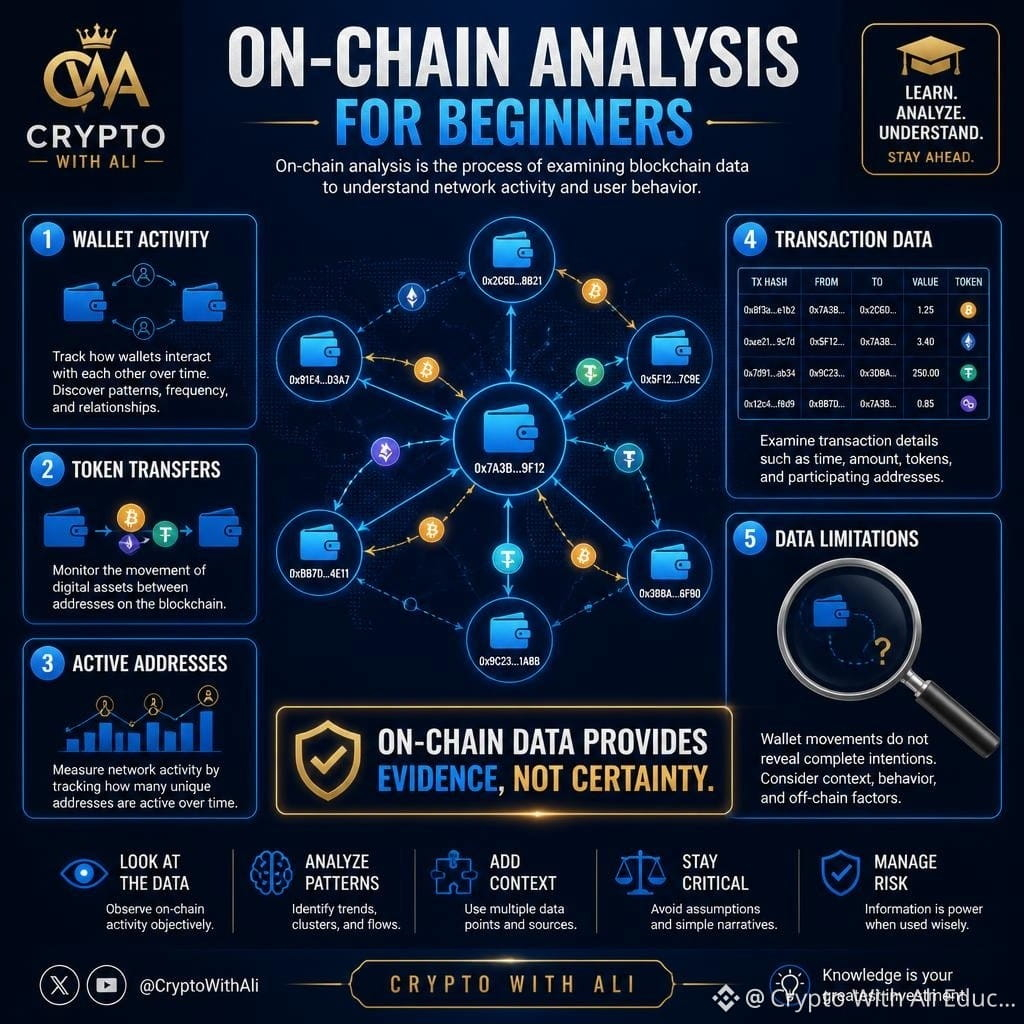
On-Chain Analysis for Beginners: Wallet Activity, Transfers & Their Limitations
Blockchain networks record transactions publicly, creating data that can help people understand network activity.
This is the foundation of on-chain analysis. But interpreting that data requires context.
1. What Is On-Chain Analysis?
On-chain analysis involves studying publicly available blockchain data, such as transactions, wallet activity and asset movements.
It can provide insights into how a network is being used.
2. Wallet Activity
Wallet activity helps track interactions with a blockchain.
However, one person may control multiple wallets, and one wallet may be used by several services. Wallet addresses do not automatically reveal real-world identities.
3. Token Transfers
Tracking transfers can show when assets move between addresses.
But a large transfer does not necessarily mean someone is preparing to sell. It could involve internal transfers, custody changes, smart contracts or other operational activity.
4. Active Addresses
Active addresses measure wallet addresses participating in transactions during a particular period.
This can help assess network activity, but it does not directly measure unique users or genuine adoption.
5. Understand the Limitations
On-chain data does not always explain:
Who controls an address
Why a transaction occurred
Whether assets will be sold or held
What the market will do next
The Key Lesson
Blockchain data provides useful evidence, not complete explanations.
Always combine on-chain metrics with market structure, liquidity and broader context instead of assuming every wallet movement reveals market intent.
Question: Which on-chain metric would you like to understand better?
#OnChainAnalysis #blockchaineducation #CryptoResearch #Web3 #CryptoWithAli
Educational content only. Not financial advice.