Tokenization Explained: Why Real-World Assets Are Becoming a Crypto Narrative
Crypto isn't only about digital-native assets.
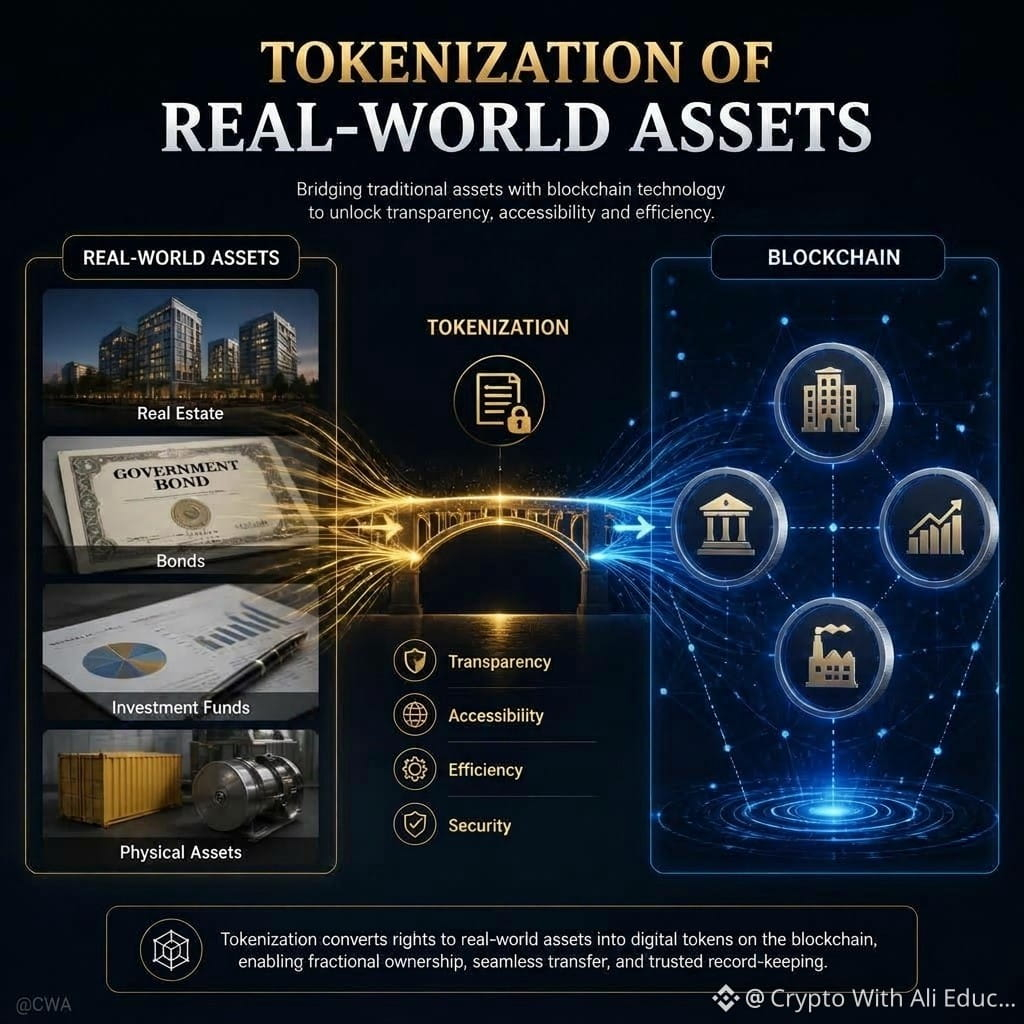
One of the bigger ideas in blockchain is tokenization — representing ownership or rights connected to real-world assets using blockchain-based tokens.
🔹 What Can Be Tokenized?
In theory, many types of assets or financial interests can be represented digitally, including:
🏠 Real estate
💵 Bonds
📊 Funds
🏢 Private assets
💰 Other financial or physical assets
The goal isn't simply to put an asset “on a blockchain.”
The bigger idea is to create a digital representation that can potentially make certain processes more efficient.
🔹 Why Does Tokenization Matter?
Traditional assets can involve:
• Multiple intermediaries
• Manual record keeping
• Limited trading hours
• Complex settlement processes
• High barriers to access
Blockchain-based systems may offer programmable ownership records, faster settlement and greater transparency in some use cases.
But tokenization does not automatically solve every problem.
🔹 The Important Question
If an asset is tokenized, someone still needs to establish:
Who owns the underlying asset?
What rights does the token represent?
How is ownership verified?
What happens if the underlying asset changes?
This is where legal frameworks, trusted institutions, infrastructure and blockchain technology all become important.
🧠 The Bigger Picture
Tokenization could connect traditional assets with digital infrastructure.
But the real value will depend on how the system is designed, regulated and used—not simply on putting an asset on-chain.
💬 Which area do you think has the biggest tokenization opportunity:
Real Estate, Bonds, Funds, or Other Assets?
Educational content only — not financial advice.
Sharing what I learn in crypto every day — follow along
#Tokenization #RWA #realworldassets #blockchain #BinanceSquare
Crypto isn't only about digital-native assets.
One of the bigger ideas in blockchain is tokenization — representing ownership or rights connected to real-world assets using blockchain-based tokens.
🔹 What Can Be Tokenized?
In theory, many types of assets or financial interests can be represented digitally, including:
🏠 Real estate
💵 Bonds
📊 Funds
🏢 Private assets
💰 Other financial or physical assets
The goal isn't simply to put an asset “on a blockchain.”
The bigger idea is to create a digital representation that can potentially make certain processes more efficient.
🔹 Why Does Tokenization Matter?
Traditional assets can involve:
• Multiple intermediaries
• Manual record keeping
• Limited trading hours
• Complex settlement processes
• High barriers to access
Blockchain-based systems may offer programmable ownership records, faster settlement and greater transparency in some use cases.
But tokenization does not automatically solve every problem.
🔹 The Important Question
If an asset is tokenized, someone still needs to establish:
Who owns the underlying asset?
What rights does the token represent?
How is ownership verified?
What happens if the underlying asset changes?
This is where legal frameworks, trusted institutions, infrastructure and blockchain technology all become important.
🧠 The Bigger Picture
Tokenization could connect traditional assets with digital infrastructure.
But the real value will depend on how the system is designed, regulated and used—not simply on putting an asset on-chain.
💬 Which area do you think has the biggest tokenization opportunity:
Real Estate, Bonds, Funds, or Other Assets?
Educational content only — not financial advice.
Sharing what I learn in crypto every day — follow along
#Tokenization #RWA #realworldassets #blockchain #BinanceSquare