
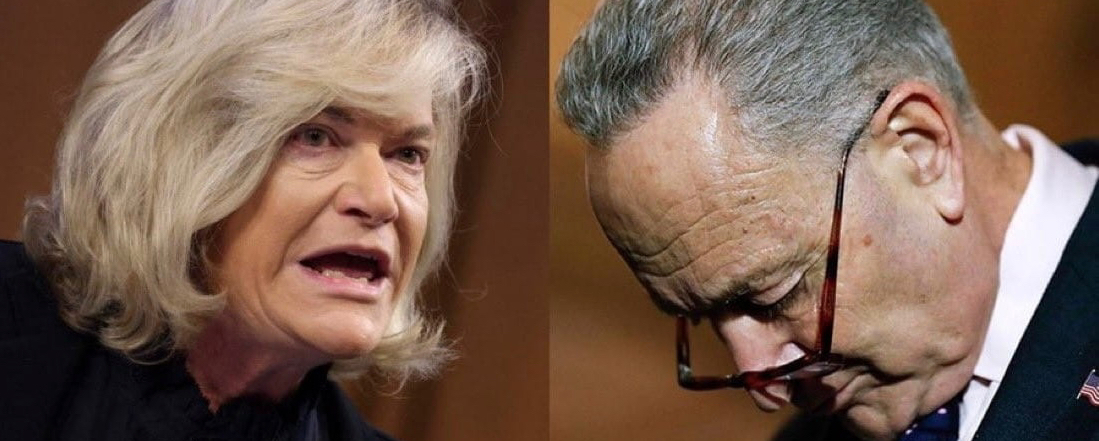

Washington, D.C. — The legislative battle over the future of digital assets reached a boiling point on Capitol Hill following a decisive and polarized Senate vote. The highly anticipated Digital Asset Market CLARITY Actfailed to clear a critical procedural hurdle on a 49–50 party-line vote, with every Senate Democrat voting down the motion to proceed.
The defeat triggered a furious response from the bill’s champion and Senate Banking Digital Assets Subcommittee Chair, Senator Cynthia Lummis (R-WY). Lummis did not mince words, directly accusing the opposition of political sabotage and warning that stalling the framework hands an immense strategic advantage to foreign superpowers like China.
“Today, Senate Democrats proved they were never truly serious about protecting consumers and preserving American leadership,” Lummis said in a blistering statement. “They voted against American leadership, and handed China and every one of our foreign competitors exactly what they wanted. Democrats chose politics over the American people—again.”
The Anatomy of a Collapse
For over a year, lawmakers have negotiated the finer points of the CLARITY Act, which was designed to establish the first comprehensive federal regulatory framework for digital assets. The legislation sought to define regulatory boundaries between the Securities and Exchange Commission (SEC) and the Commodity Futures Trading Commission (CFTC), inject $150 million into regulatory enforcement, crack down on illicit finance, and safeguard customer property during crypto exchange bankruptcies.
While an earlier iteration of the bill passed the House with substantial bipartisan support, the Senate version became bogged down in fierce partisan disputes. Republicans argued that sponsors bent over backwards to accommodate the minority party, claiming they incorporated more than 120 Democratic-requested changes—including stricter measures against fraudsters and enhanced oversight provisions.
However, Democrats maintained that the concessions still fell short, pointing to lingering disagreements over ethics safeguards, restrictions on personal crypto investments by politicians, and stronger provisions to prevent conflicts of interest at the highest levels of government.
A Geopolitical Gamble?
Lummis framed the failure of the vote far beyond domestic partisan squabbling, positioning it as a major national security and economic threat. As global economic powers race to dominate financial technology, blockchain, and central bank digital infrastructure, proponents of the bill have long argued that regulatory limbo in the U.S. drives talent, capital, and innovation overseas.
By blocking the vote, Lummis argues that Washington has effectively abdicated its dominance in financial innovation.
“The once-proud Democratic party is anti-consumer and pro-illicit finance, anti-ethics, anti-free enterprise... The Democrats are now anti-American. Sad!” Lummis added.
What Happens Next?
With the legislative calendar rapidly tightening amid the approach of the midterm elections, the immediate future of the CLARITY Act looks bleak. Ahead of the vote, Lummis warned reporters that a failed cloture vote would effectively mean the end of current negotiations, signaling that a comprehensive market structure bill might not see light again for years.
While a faction of Democratic senators have maintained that they remain open to future bipartisan compromise, the depth of the rift leaves the crypto industry facing prolonged regulatory uncertainty—and leaves lawmakers deeply entrenched in a high-stakes blame game.
What are your thoughts on the failure of the CLARITY Act? Is this a necessary stand for stricter ethics, or a massive missed opportunity for American tech leadership? Let us know below.
#CLARITYAct #Lummis #CryptoNews #Bilverse


