🚀 Analyse du marché AXS : Axie Infinity renforce l'économie "Risk-to-Earn"
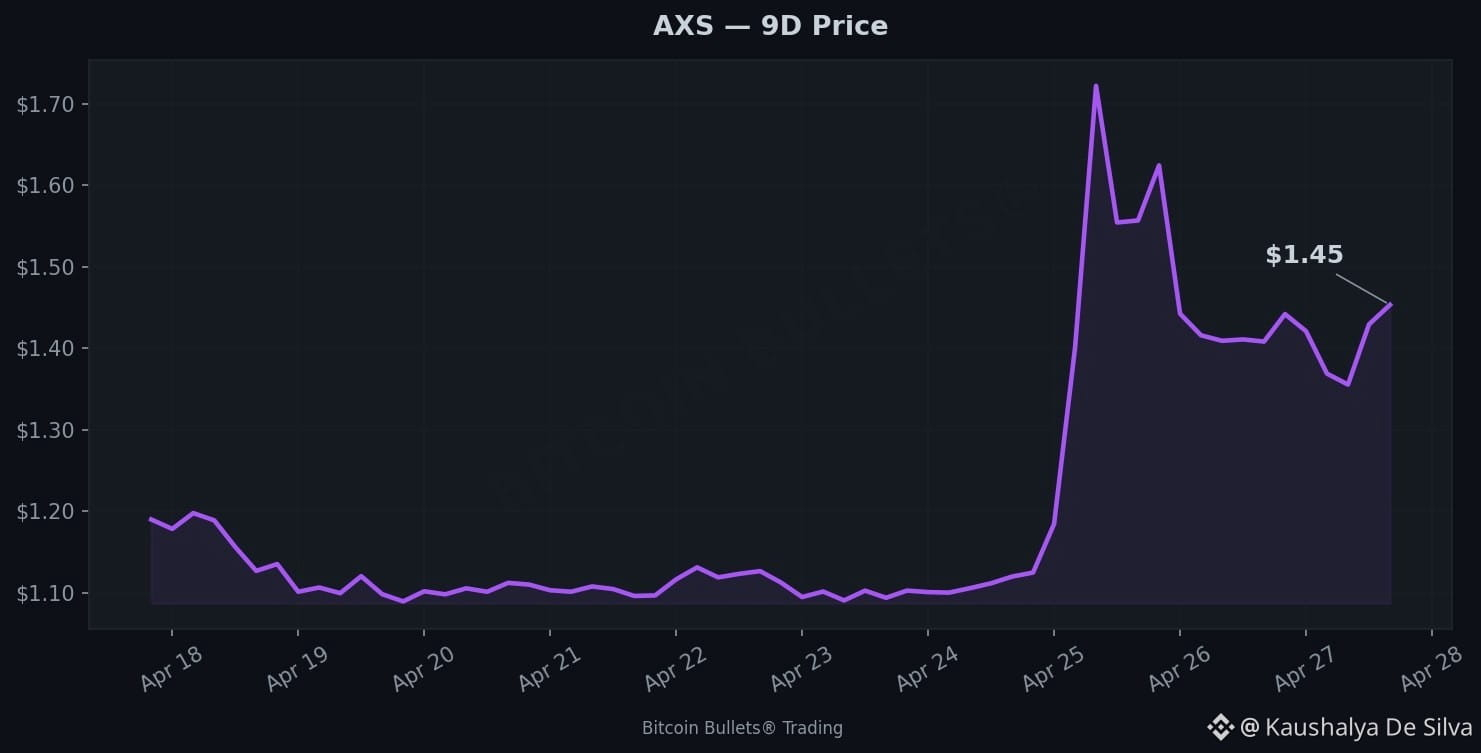
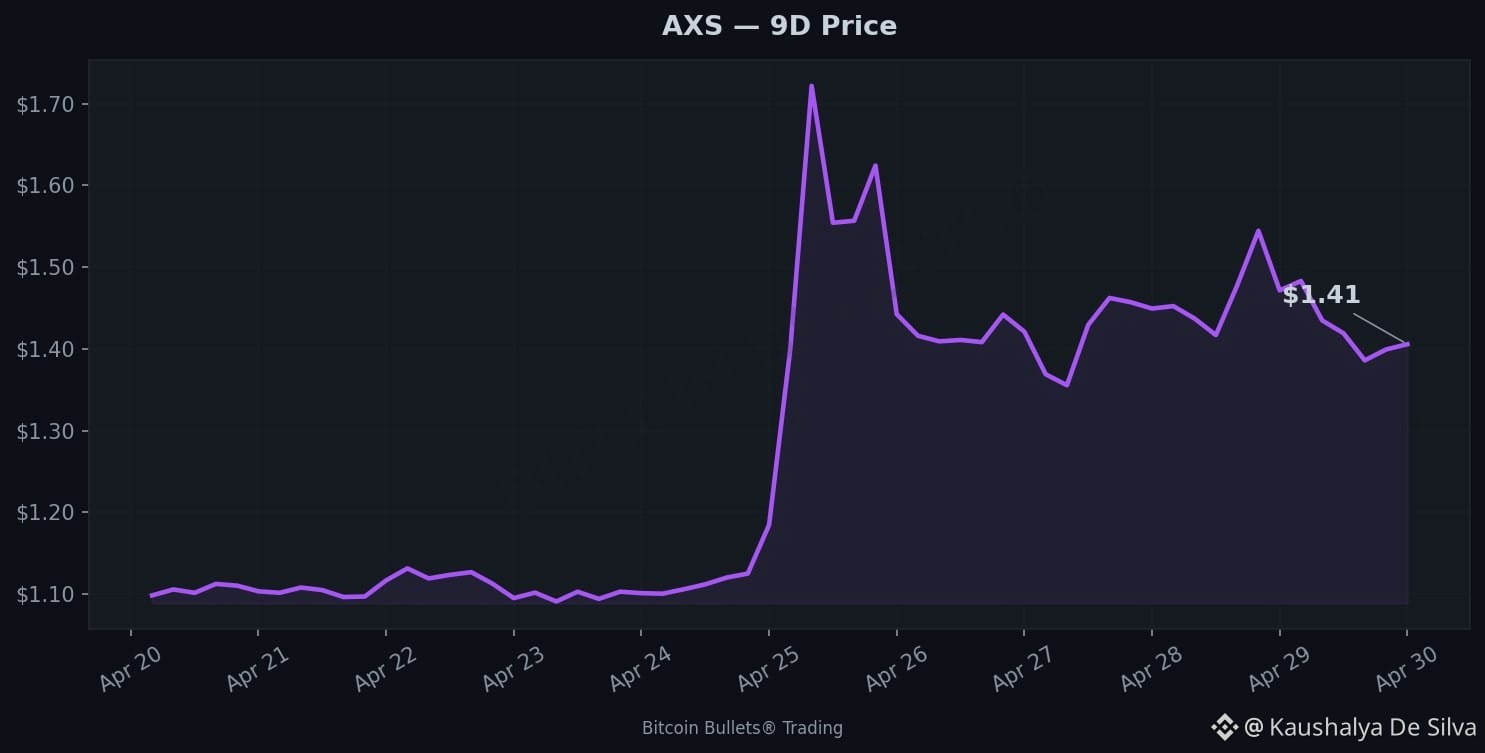
À partir du 28 avril 2026, AXS/USDT maintient une solide trajectoire haussière, se négociant près de 1,37 $. L'écosystème a subi un énorme changement fondamental ce mois-ci avec le lancement de l'AXS lié (bAXS).
Ce nouveau cadre "Risk-to-Earn" a réussi à freiner l'inflation en supprimant les émissions de SLP d'Origins et en les remplaçant par des récompenses bAXS non transférables pour les jeux compétitifs de haut niveau, réduisant ainsi considérablement la pression de vente immédiate. 🎮💎
⚖️ Perspectives stratégiques
🐂 Le scénario haussier : AXS connaît une tendance haussière mensuelle constante, soutenue par un RSI près de 60 et une demande constante pour le staking lié. Il est essentiel de maintenir le prix au-dessus du pivot structurel de 1,355 pour garder l'élan dirigé vers la résistance de 1,45 $. Une rupture à fort volume ici pourrait signaler un changement vers la zone de 1,60 $ à mesure que le marché digère les tokenomics améliorés. 🎯
🐻 Le scénario baissier : Malgré la force générale, un MACD baissier suggère un risque de purge de liquidité à court terme. Une rupture décisive en dessous du plancher de 1,355 invaliderait la structure actuelle de "buy-the-dip", risquant un repli plus profond vers la zone de demande de 1,09 $, surtout si la volatilité du marché plus large impacte le secteur du jeu. ⚠️
📍 Pivot critique : Surveillez de près 1,355. C'est la "ligne dans le sable" directionnelle ; tant que le prix reste au-dessus de ce niveau, le chemin de moindre résistance reste à la hausse. Une rupture, cependant, indiquerait que le rallye actuel nécessite un réajustement plus profond avant un mouvement supplémentaire. 🛡️👀
🌐 Principaux moteurs de l'écosystème
Durcissement économique : La transition vers le bAXS a efficacement "durci" l'économie Axie, déplaçant le focus de la ferme spéculative vers une véritable utilité de l'écosystème et un staking à long terme.
Stabilité du réseau : Les adresses actives quotidiennes sur le réseau Ronin se sont stabilisées tout au long d'avril, reflétant une base d'utilisateurs mature et fidèle qui est moins sensible aux fluctuations de prix à court terme que lors des cycles précédents.
#AxieInfinity #AXS #Web3Gaming #CryptoAnalysis #RoninNetwork #AnalyseTechnique
$AXS