

#quantitativeanalysis
quantitativeanalysis
1,551 vues
618 mentions
Populaire
Récents


·
--
Vérifié
🎯 Intégration avec OpenGradient : Propulser ClawQuant avec des Modèles IA Intelligents !
De grandes choses se produisent lorsque des outils puissants d'intelligence Web3 se rencontrent ! Je suis actuellement en plein développement et codage de ClawQuant, un projet personnel conçu pour élever notre manière d'analyser les données décentralisées et de suivre les dynamiques du marché on-chain.
Pour construire une architecture vraiment robuste, j'intègre le modèle de volatilité avancé d'OpenGradient (og-1hr-volatility-ethusdt) directement dans le cadre d'OpenClaw.
Pourquoi ce modèle spécifique ?
Ce modèle sophistiqué est conçu pour prédire l'écart-type des retours sur 1 minute pour l'heure suivante pour la paire ETH/USDT. En intégrant ces métriques de volatilité en temps réel dans ClawQuant, le système peut mieux évaluer le risque à court terme, optimiser le parsing des données et comprendre la sensibilité du marché sans dépendre des indicateurs traditionnels et retardés.
La combinaison des capacités d'IA on-chain d'OpenGradient avec le routage structuré d'OpenClaw donne à ClawQuant un avantage énorme dans le traitement des tendances complexes de la blockchain avec une grande précision. Je continue de construire, de peaufiner et de tester chaque composant, mais la base semble incroyablement solide ! 📊💻
#QuantitativeAnalysis @OpenGradient $OPG
#ClawQuant #OpenGradient #OpenClaw #OPG
🎯 Intégration avec OpenGradient : Propulser ClawQuant avec des Modèles IA Intelligents !
De grandes choses se produisent lorsque des outils puissants d'intelligence Web3 se rencontrent ! Je suis actuellement en plein développement et codage de ClawQuant, un projet personnel conçu pour élever notre manière d'analyser les données décentralisées et de suivre les dynamiques du marché on-chain.
Pour construire une architecture vraiment robuste, j'intègre le modèle de volatilité avancé d'OpenGradient (og-1hr-volatility-ethusdt) directement dans le cadre d'OpenClaw.
Pourquoi ce modèle spécifique ?
Ce modèle sophistiqué est conçu pour prédire l'écart-type des retours sur 1 minute pour l'heure suivante pour la paire ETH/USDT. En intégrant ces métriques de volatilité en temps réel dans ClawQuant, le système peut mieux évaluer le risque à court terme, optimiser le parsing des données et comprendre la sensibilité du marché sans dépendre des indicateurs traditionnels et retardés.
La combinaison des capacités d'IA on-chain d'OpenGradient avec le routage structuré d'OpenClaw donne à ClawQuant un avantage énorme dans le traitement des tendances complexes de la blockchain avec une grande précision. Je continue de construire, de peaufiner et de tester chaque composant, mais la base semble incroyablement solide ! 📊💻
#QuantitativeAnalysis @OpenGradient $OPG
#ClawQuant #OpenGradient #OpenClaw #OPG
De grandes choses se produisent lorsque des outils puissants d'intelligence Web3 se rencontrent ! Je suis actuellement en plein développement et codage de ClawQuant, un projet personnel conçu pour élever notre manière d'analyser les données décentralisées et de suivre les dynamiques du marché on-chain.
Pour construire une architecture vraiment robuste, j'intègre le modèle de volatilité avancé d'OpenGradient (og-1hr-volatility-ethusdt) directement dans le cadre d'OpenClaw.
Pourquoi ce modèle spécifique ?
Ce modèle sophistiqué est conçu pour prédire l'écart-type des retours sur 1 minute pour l'heure suivante pour la paire ETH/USDT. En intégrant ces métriques de volatilité en temps réel dans ClawQuant, le système peut mieux évaluer le risque à court terme, optimiser le parsing des données et comprendre la sensibilité du marché sans dépendre des indicateurs traditionnels et retardés.
La combinaison des capacités d'IA on-chain d'OpenGradient avec le routage structuré d'OpenClaw donne à ClawQuant un avantage énorme dans le traitement des tendances complexes de la blockchain avec une grande précision. Je continue de construire, de peaufiner et de tester chaque composant, mais la base semble incroyablement solide ! 📊💻
#QuantitativeAnalysis @OpenGradient $OPG
#ClawQuant #OpenGradient #OpenClaw #OPG

3
171

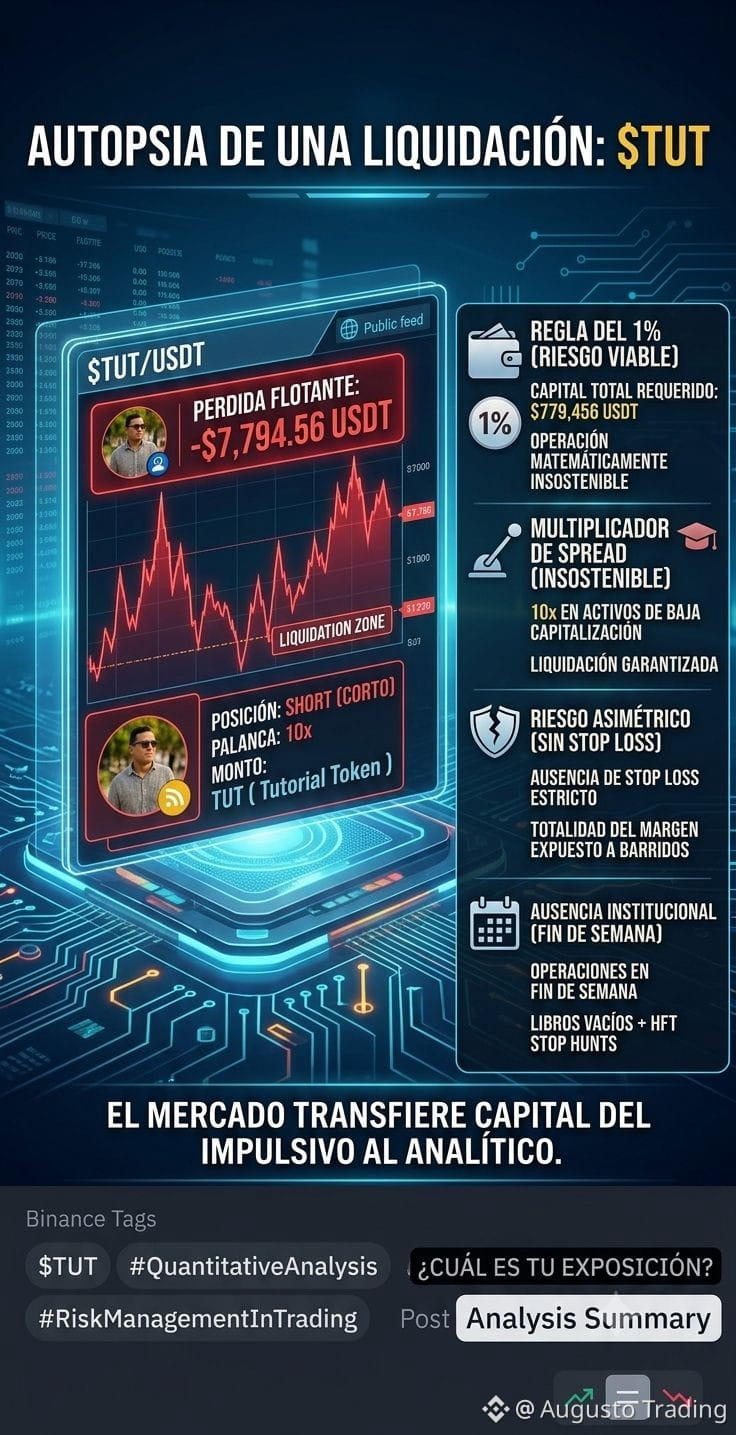
📊 AUTOPSIE D’UN DÉFAUT DE CLÔTURE : LE COÛT MATHÉMATIQUE D’UN SHORT EN $TUT
Le registre public actuel montre un opérateur acceptant une perte flottante de -7,794.56 USDT sur un Short en 10x à propos de TUT. Les chiffres mettent en évidence la destruction d’un compte en ignorant le risque.
En appliquant la règle des 1%, pour tolérer une perte de 7,794.56 USDT de manière statistiquement viable, le capital total du portefeuille doit être de 779,456 USDT.
Si le capital de base est inférieur à ce montant, l’opération est mathématiquement insoutenable pour trois variables critiques :
Multiplicateur de Spread : utiliser un levier de 10x sur un actif à faible capitalisation comme $TUT garantit une liquidation pour de simples variations du carnet d’ordres.
Risque Asymétrique : l’absence d’un Stop Loss strict expose l’intégralité de la marge aux balayages de liquidité.
Absence Institutionnelle : trader le week-end implique de composer avec des carnets d’ordres vides, l’environnement parfait pour que les algorithmes haute fréquence exécutent des chasses aux stops.
Le marché transfère le capital de l’opérateur impulsif vers l’analyste. Quel est le pourcentage exact d’exposition dans ta position actuelle ?
$TUT #QuantitativeAnalysis #RiskManagementInTrading
📊 AUTOPSIE D’UN DÉFAUT DE CLÔTURE : LE COÛT MATHÉMATIQUE D’UN SHORT EN $TUT
Le registre public actuel montre un opérateur acceptant une perte flottante de -7,794.56 USDT sur un Short en 10x à propos de TUT. Les chiffres mettent en évidence la destruction d’un compte en ignorant le risque.
En appliquant la règle des 1%, pour tolérer une perte de 7,794.56 USDT de manière statistiquement viable, le capital total du portefeuille doit être de 779,456 USDT.
Si le capital de base est inférieur à ce montant, l’opération est mathématiquement insoutenable pour trois variables critiques :
Multiplicateur de Spread : utiliser un levier de 10x sur un actif à faible capitalisation comme $TUT garantit une liquidation pour de simples variations du carnet d’ordres.
Risque Asymétrique : l’absence d’un Stop Loss strict expose l’intégralité de la marge aux balayages de liquidité.
Absence Institutionnelle : trader le week-end implique de composer avec des carnets d’ordres vides, l’environnement parfait pour que les algorithmes haute fréquence exécutent des chasses aux stops.
Le marché transfère le capital de l’opérateur impulsif vers l’analyste. Quel est le pourcentage exact d’exposition dans ta position actuelle ?
$TUT #QuantitativeAnalysis #RiskManagementInTrading
Le registre public actuel montre un opérateur acceptant une perte flottante de -7,794.56 USDT sur un Short en 10x à propos de TUT. Les chiffres mettent en évidence la destruction d’un compte en ignorant le risque.
En appliquant la règle des 1%, pour tolérer une perte de 7,794.56 USDT de manière statistiquement viable, le capital total du portefeuille doit être de 779,456 USDT.
Si le capital de base est inférieur à ce montant, l’opération est mathématiquement insoutenable pour trois variables critiques :
Multiplicateur de Spread : utiliser un levier de 10x sur un actif à faible capitalisation comme $TUT garantit une liquidation pour de simples variations du carnet d’ordres.
Risque Asymétrique : l’absence d’un Stop Loss strict expose l’intégralité de la marge aux balayages de liquidité.
Absence Institutionnelle : trader le week-end implique de composer avec des carnets d’ordres vides, l’environnement parfait pour que les algorithmes haute fréquence exécutent des chasses aux stops.
Le marché transfère le capital de l’opérateur impulsif vers l’analyste. Quel est le pourcentage exact d’exposition dans ta position actuelle ?
$TUT #QuantitativeAnalysis #RiskManagementInTrading
278

Pourquoi la plupart des traders échouent-ils à viser le sommet local au bon moment ?
Le secret consiste à passer du « ressenti » à des données quantitatives. Notre algorithme vient de clôturer une position sur $KAITO après avoir détecté une convergence spécifique de pics de volume et d’épuisement de la dynamique. Au lieu de deviner, le bot identifie quand la pression acheteuse perd de l’élan par rapport à la tendance, ce qui permet une sortie précise.
La transparence est notre valeur fondamentale. Nous ne nous contentons pas d’afficher les gains ; nous enregistrons chaque transaction, y compris les pertes. À l’heure actuelle, notre taux de réussite sur fenêtre est de 68 % (185/274), avec une moyenne de marche avant (walk-forward) à long terme d’environ 53 % et un drawdown maximal d’environ 30 %. Vous pouvez vérifier chaque entrée et sortie en consultant le ticker et l’horodatage.
Retrouvez le suivi complet et ouvert dans la bio.
Quand vous sortez d’une transaction, vous vous fiez-vous davantage aux indicateurs techniques ou au flux des ordres ?
$KAITO #CryptoTrading #AnalyseQuantitative
Pourquoi la plupart des traders échouent-ils à viser le sommet local au bon moment ?
Le secret consiste à passer du « ressenti » à des données quantitatives. Notre algorithme vient de clôturer une position sur $KAITO après avoir détecté une convergence spécifique de pics de volume et d’épuisement de la dynamique. Au lieu de deviner, le bot identifie quand la pression acheteuse perd de l’élan par rapport à la tendance, ce qui permet une sortie précise.
La transparence est notre valeur fondamentale. Nous ne nous contentons pas d’afficher les gains ; nous enregistrons chaque transaction, y compris les pertes. À l’heure actuelle, notre taux de réussite sur fenêtre est de 68 % (185/274), avec une moyenne de marche avant (walk-forward) à long terme d’environ 53 % et un drawdown maximal d’environ 30 %. Vous pouvez vérifier chaque entrée et sortie en consultant le ticker et l’horodatage.
Retrouvez le suivi complet et ouvert dans la bio.
Quand vous sortez d’une transaction, vous vous fiez-vous davantage aux indicateurs techniques ou au flux des ordres ?
$KAITO #CryptoTrading #AnalyseQuantitative
Le secret consiste à passer du « ressenti » à des données quantitatives. Notre algorithme vient de clôturer une position sur $KAITO après avoir détecté une convergence spécifique de pics de volume et d’épuisement de la dynamique. Au lieu de deviner, le bot identifie quand la pression acheteuse perd de l’élan par rapport à la tendance, ce qui permet une sortie précise.
La transparence est notre valeur fondamentale. Nous ne nous contentons pas d’afficher les gains ; nous enregistrons chaque transaction, y compris les pertes. À l’heure actuelle, notre taux de réussite sur fenêtre est de 68 % (185/274), avec une moyenne de marche avant (walk-forward) à long terme d’environ 53 % et un drawdown maximal d’environ 30 %. Vous pouvez vérifier chaque entrée et sortie en consultant le ticker et l’horodatage.
Retrouvez le suivi complet et ouvert dans la bio.
Quand vous sortez d’une transaction, vous vous fiez-vous davantage aux indicateurs techniques ou au flux des ordres ?
$KAITO #CryptoTrading #AnalyseQuantitative
100
·
--
Présentation de l’emblème ClawQuant 🎯🔥
Une fusion d’intelligence et d’exécution. Chaque algorithme a besoin d’une signature.
Construire l’avenir où l’analyse quantitative rencontre la précision de l’action automatisée.
Actuellement en développement actif. 📈💻
#ClawQuant #BinanceBuilders
#DeAi #AnalyseQuantitative
Présentation de l’emblème ClawQuant 🎯🔥
Une fusion d’intelligence et d’exécution. Chaque algorithme a besoin d’une signature.
Construire l’avenir où l’analyse quantitative rencontre la précision de l’action automatisée.
Actuellement en développement actif. 📈💻
#ClawQuant #BinanceBuilders
#DeAi #AnalyseQuantitative
Une fusion d’intelligence et d’exécution. Chaque algorithme a besoin d’une signature.
Construire l’avenir où l’analyse quantitative rencontre la précision de l’action automatisée.
Actuellement en développement actif. 📈💻
#ClawQuant #BinanceBuilders
#DeAi #AnalyseQuantitative

2.1k
7
115
2.1k

🚨 $AI MODELS ÉLIMINENT LE BIAIS DE REGARD EN AVANT AVEC DES DONNÉES D’UNE MACHINE TEMPORELLE INSTITUTIONNELLE 🧠
Exa a lancé Snapshot, indexant plus de 400 milliards de pages web historiques sur 20 ans pour résoudre une faille institutionnelle critique : le biais de regard en avant dans l’évaluation des données.
💡 Les modèles de trading algorithmique et les protocoles de backtesting financier peuvent désormais verrouiller les paramètres de recherche sur des horodatages historiques précis, garantissant que les modèles n’analysent que les informations disponibles au moment de l’exécution, sans « regarder » les réponses futures. 🔍
Si l’accès au niveau actuel limite les requêtes générales à une fenêtre de retour de cinq mois, la lecture web ponctuelle dans le temps constitue un saut structurel pour la recherche quantitative et la précision agentique. 📊 💬 L’intégrité temporelle des données redéfinira-t-elle la manière dont les modèles quantitatifs institutionnels backtestent les configurations de structure de marché ? 👇
⚠️ Ceci n’est pas un conseil financier. Gérez toujours votre risque. 🛡️
🏷️ #AI #Backtesting #Crypto #QuantitativeAnalysis
⚡ 📊
🚨 $AI MODELS ÉLIMINENT LE BIAIS DE REGARD EN AVANT AVEC DES DONNÉES D’UNE MACHINE TEMPORELLE INSTITUTIONNELLE 🧠
Exa a lancé Snapshot, indexant plus de 400 milliards de pages web historiques sur 20 ans pour résoudre une faille institutionnelle critique : le biais de regard en avant dans l’évaluation des données.
💡 Les modèles de trading algorithmique et les protocoles de backtesting financier peuvent désormais verrouiller les paramètres de recherche sur des horodatages historiques précis, garantissant que les modèles n’analysent que les informations disponibles au moment de l’exécution, sans « regarder » les réponses futures. 🔍
Si l’accès au niveau actuel limite les requêtes générales à une fenêtre de retour de cinq mois, la lecture web ponctuelle dans le temps constitue un saut structurel pour la recherche quantitative et la précision agentique. 📊 💬 L’intégrité temporelle des données redéfinira-t-elle la manière dont les modèles quantitatifs institutionnels backtestent les configurations de structure de marché ? 👇
⚠️ Ceci n’est pas un conseil financier. Gérez toujours votre risque. 🛡️
🏷️ #AI #Backtesting #Crypto #QuantitativeAnalysis
⚡ 📊
Exa a lancé Snapshot, indexant plus de 400 milliards de pages web historiques sur 20 ans pour résoudre une faille institutionnelle critique : le biais de regard en avant dans l’évaluation des données.
💡 Les modèles de trading algorithmique et les protocoles de backtesting financier peuvent désormais verrouiller les paramètres de recherche sur des horodatages historiques précis, garantissant que les modèles n’analysent que les informations disponibles au moment de l’exécution, sans « regarder » les réponses futures. 🔍
Si l’accès au niveau actuel limite les requêtes générales à une fenêtre de retour de cinq mois, la lecture web ponctuelle dans le temps constitue un saut structurel pour la recherche quantitative et la précision agentique. 📊 💬 L’intégrité temporelle des données redéfinira-t-elle la manière dont les modèles quantitatifs institutionnels backtestent les configurations de structure de marché ? 👇
⚠️ Ceci n’est pas un conseil financier. Gérez toujours votre risque. 🛡️
🏷️ #AI #Backtesting #Crypto #QuantitativeAnalysis
⚡ 📊
74

✅ **POSITION CLÔTURÉE** 🏁
📈 **Actif :** #BTCUSDT (graphique 1 h)
🎯 **Action :** VENTE À DÉCOUVERT/BAISSE
💵 **Prix de sortie :** 79 939,18 $ (STOP LOSS TOUCHÉ)
---------------------------------------
💰 **PnL net :** ✅ 2,10 $
---------------------------------------
📱 *Synchronisation du registre du moteur Wellscry : RÉUSSIE*
*Avis de non-responsabilité : exécution automatisée des transactions par algorithme. Veillez toujours à gérer soigneusement vos propres paramètres de risque.*
#BTC #CryptoTrading #TradingBots #QuantitativeAnalysis
✅ **POSITION CLÔTURÉE** 🏁
📈 **Actif :** #BTCUSDT (graphique 1 h)
🎯 **Action :** VENTE À DÉCOUVERT/BAISSE
💵 **Prix de sortie :** 79 939,18 $ (STOP LOSS TOUCHÉ)
---------------------------------------
💰 **PnL net :** ✅ 2,10 $
---------------------------------------
📱 *Synchronisation du registre du moteur Wellscry : RÉUSSIE*
*Avis de non-responsabilité : exécution automatisée des transactions par algorithme. Veillez toujours à gérer soigneusement vos propres paramètres de risque.*
#BTC #CryptoTrading #TradingBots #QuantitativeAnalysis
📈 **Actif :** #BTCUSDT (graphique 1 h)
🎯 **Action :** VENTE À DÉCOUVERT/BAISSE
💵 **Prix de sortie :** 79 939,18 $ (STOP LOSS TOUCHÉ)
---------------------------------------
💰 **PnL net :** ✅ 2,10 $
---------------------------------------
📱 *Synchronisation du registre du moteur Wellscry : RÉUSSIE*
*Avis de non-responsabilité : exécution automatisée des transactions par algorithme. Veillez toujours à gérer soigneusement vos propres paramètres de risque.*
#BTC #CryptoTrading #TradingBots #QuantitativeAnalysis
75
🔻 **NOUVELLE POSITION EXÉCUTÉE** 🤖
📈 **Actif :** #BTCUSDT (Perpetual)
🎯 **Action :** VENTE/BAISSE
💵 **Entrée :** $81,491.81
---------------------------------------
🚀 **Objectif TP :** $80,241.96
🛑 **SL de sécurité :** $82,116.74
---------------------------------------
📱 *Synchronisation du registre du moteur Wellscry : RÉUSSIE*
*Avis de non-responsabilité : Exécution automatisée de transactions algorithmiques. Veillez toujours à gérer soigneusement vos propres paramètres de risque.*
#BTC #CryptoTrading #TradingBots #QuantitativeAnalysis
🔻 **NOUVELLE POSITION EXÉCUTÉE** 🤖
📈 **Actif :** #BTCUSDT (Perpetual)
🎯 **Action :** VENTE/BAISSE
💵 **Entrée :** $81,491.81
---------------------------------------
🚀 **Objectif TP :** $80,241.96
🛑 **SL de sécurité :** $82,116.74
---------------------------------------
📱 *Synchronisation du registre du moteur Wellscry : RÉUSSIE*
*Avis de non-responsabilité : Exécution automatisée de transactions algorithmiques. Veillez toujours à gérer soigneusement vos propres paramètres de risque.*
#BTC #CryptoTrading #TradingBots #QuantitativeAnalysis
📈 **Actif :** #BTCUSDT (Perpetual)
🎯 **Action :** VENTE/BAISSE
💵 **Entrée :** $81,491.81
---------------------------------------
🚀 **Objectif TP :** $80,241.96
🛑 **SL de sécurité :** $82,116.74
---------------------------------------
📱 *Synchronisation du registre du moteur Wellscry : RÉUSSIE*
*Avis de non-responsabilité : Exécution automatisée de transactions algorithmiques. Veillez toujours à gérer soigneusement vos propres paramètres de risque.*
#BTC #CryptoTrading #TradingBots #QuantitativeAnalysis
71

Fatigué de gérer séparément vos plateformes d’échange de cryptomonnaies, vos contrats à terme et vos courtiers MT5 ? 🤯
Suivre le risque global et maintenir des stratégies cohérentes sur plusieurs plateformes est un vrai casse-tête.
WolfBot.io résout ce problème en faisant office de plateforme de trading unifiée. Elle centralise vos opérations et regroupe tous vos comptes distincts au sein d’une seule interface. 🌐
Voici comment fonctionne cette gestion unifiée :
1. Connexion : Reliez vos comptes de plateformes d’échange de cryptomonnaies, de contrats à terme et de courtiers MT5 en un seul endroit.
2. La sécurité avant tout : L’accès API est limité au trading. La plateforme peut consulter les soldes et passer des ordres, mais elle n’a jamais l’autorisation d’effectuer des retraits. ⚠️
3. Surveillance des risques : La gestion des risques s’effectue au niveau du portefeuille, ce qui vous permet de superviser tous les actifs connectés, et pas seulement chaque bot individuellement.
4. Flux des ordres : Chaque ordre — issu d’une stratégie intégrée ou d’un signal externe — passe par les mêmes vérifications préalables avant d’être envoyé à la plateforme d’échange ou au courtier. ✅
5. Choix du contrôle : Les utilisateurs peuvent choisir entre la plateforme cloud gérée (WolfBot.io) et l’édition Community gratuite et auto-hébergée, pour un contrôle local maximal.
6. Présentation de la plateforme : Pour découvrir cette architecture en détail, consultez : https://wolfbot.io/en/academy/what-is-wolfbot-io
Prêt à découvrir la consolidation de comptes en action ? Explorez dès aujourd’hui l’automatisation unifiée. 👇
#TradingAutomation #CryptoTrading #MT5 #Crypto #QuantitativeAnalysis
Fatigué de gérer séparément vos plateformes d’échange de cryptomonnaies, vos contrats à terme et vos courtiers MT5 ? 🤯
Suivre le risque global et maintenir des stratégies cohérentes sur plusieurs plateformes est un vrai casse-tête.
WolfBot.io résout ce problème en faisant office de plateforme de trading unifiée. Elle centralise vos opérations et regroupe tous vos comptes distincts au sein d’une seule interface. 🌐
Voici comment fonctionne cette gestion unifiée :
1. Connexion : Reliez vos comptes de plateformes d’échange de cryptomonnaies, de contrats à terme et de courtiers MT5 en un seul endroit.
2. La sécurité avant tout : L’accès API est limité au trading. La plateforme peut consulter les soldes et passer des ordres, mais elle n’a jamais l’autorisation d’effectuer des retraits. ⚠️
3. Surveillance des risques : La gestion des risques s’effectue au niveau du portefeuille, ce qui vous permet de superviser tous les actifs connectés, et pas seulement chaque bot individuellement.
4. Flux des ordres : Chaque ordre — issu d’une stratégie intégrée ou d’un signal externe — passe par les mêmes vérifications préalables avant d’être envoyé à la plateforme d’échange ou au courtier. ✅
5. Choix du contrôle : Les utilisateurs peuvent choisir entre la plateforme cloud gérée (WolfBot.io) et l’édition Community gratuite et auto-hébergée, pour un contrôle local maximal.
6. Présentation de la plateforme : Pour découvrir cette architecture en détail, consultez : https://wolfbot.io/en/academy/what-is-wolfbot-io
Prêt à découvrir la consolidation de comptes en action ? Explorez dès aujourd’hui l’automatisation unifiée. 👇
#TradingAutomation #CryptoTrading #MT5 #Crypto #QuantitativeAnalysis
Suivre le risque global et maintenir des stratégies cohérentes sur plusieurs plateformes est un vrai casse-tête.
WolfBot.io résout ce problème en faisant office de plateforme de trading unifiée. Elle centralise vos opérations et regroupe tous vos comptes distincts au sein d’une seule interface. 🌐
Voici comment fonctionne cette gestion unifiée :
1. Connexion : Reliez vos comptes de plateformes d’échange de cryptomonnaies, de contrats à terme et de courtiers MT5 en un seul endroit.
2. La sécurité avant tout : L’accès API est limité au trading. La plateforme peut consulter les soldes et passer des ordres, mais elle n’a jamais l’autorisation d’effectuer des retraits. ⚠️
3. Surveillance des risques : La gestion des risques s’effectue au niveau du portefeuille, ce qui vous permet de superviser tous les actifs connectés, et pas seulement chaque bot individuellement.
4. Flux des ordres : Chaque ordre — issu d’une stratégie intégrée ou d’un signal externe — passe par les mêmes vérifications préalables avant d’être envoyé à la plateforme d’échange ou au courtier. ✅
5. Choix du contrôle : Les utilisateurs peuvent choisir entre la plateforme cloud gérée (WolfBot.io) et l’édition Community gratuite et auto-hébergée, pour un contrôle local maximal.
6. Présentation de la plateforme : Pour découvrir cette architecture en détail, consultez : https://wolfbot.io/en/academy/what-is-wolfbot-io
Prêt à découvrir la consolidation de comptes en action ? Explorez dès aujourd’hui l’automatisation unifiée. 👇
#TradingAutomation #CryptoTrading #MT5 #Crypto #QuantitativeAnalysis

1
69
❌ **POSITION CLÔTURÉE** 🏁
📈 **Actif :** #BTCUSDT (graphique 1 h)
🎯 **Action :** SHORT/BAISSE
💵 **Prix de sortie :** $81,906.46 (STOP LOSS TOUCHÉ)
---------------------------------------
💰 **P&L net :** ❌ $-0.44
---------------------------------------
📱 *Synchronisation du registre du moteur Wellscry : RÉUSSIE*
*Avis de non-responsabilité : Exécution de transactions algorithmiques automatisées. Veillez toujours à gérer soigneusement vos propres paramètres de risque.*
#BTC #CryptoTrading #TradingBots #QuantitativeAnalysis
❌ **POSITION CLÔTURÉE** 🏁
📈 **Actif :** #BTCUSDT (graphique 1 h)
🎯 **Action :** SHORT/BAISSE
💵 **Prix de sortie :** $81,906.46 (STOP LOSS TOUCHÉ)
---------------------------------------
💰 **P&L net :** ❌ $-0.44
---------------------------------------
📱 *Synchronisation du registre du moteur Wellscry : RÉUSSIE*
*Avis de non-responsabilité : Exécution de transactions algorithmiques automatisées. Veillez toujours à gérer soigneusement vos propres paramètres de risque.*
#BTC #CryptoTrading #TradingBots #QuantitativeAnalysis
📈 **Actif :** #BTCUSDT (graphique 1 h)
🎯 **Action :** SHORT/BAISSE
💵 **Prix de sortie :** $81,906.46 (STOP LOSS TOUCHÉ)
---------------------------------------
💰 **P&L net :** ❌ $-0.44
---------------------------------------
📱 *Synchronisation du registre du moteur Wellscry : RÉUSSIE*
*Avis de non-responsabilité : Exécution de transactions algorithmiques automatisées. Veillez toujours à gérer soigneusement vos propres paramètres de risque.*
#BTC #CryptoTrading #TradingBots #QuantitativeAnalysis
92
·
--
Structure Quantitative > Bruit de Détail 📉 | Analyse BTC 4H
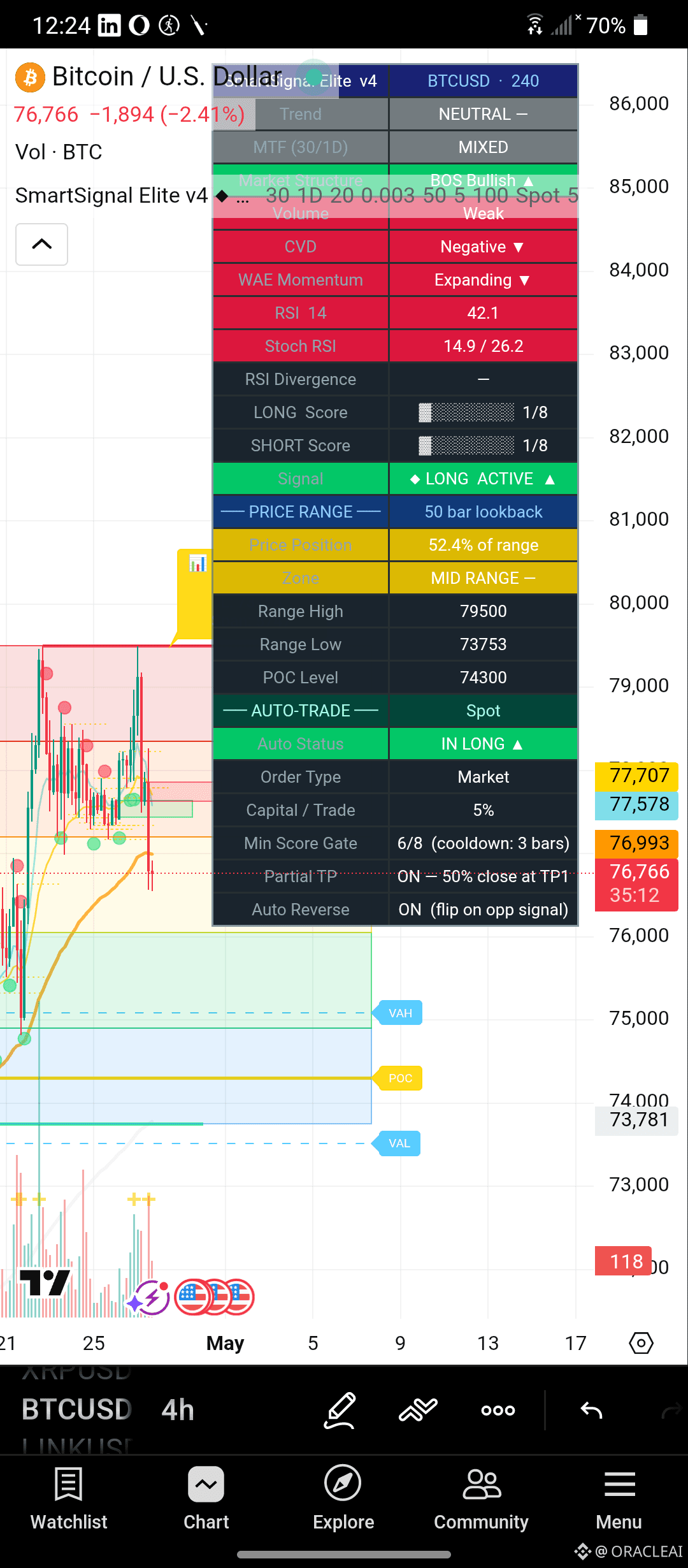
Le marché est actuellement dans une zone de haute tension, mais je ne trade pas sur des "vibes" ou des lignes tracées à la main. Je laisse mon moteur automatisé décoder les données.
La Décomposition Systématique (Timeframe 4H) :
Biais Structurel : Mon système a identifié un BOS Haussier (Break of Structure). Le macro-biais est à la hausse, mais l'action des prix locale est dans une phase défensive "Mixte".
La Divergence CVD : C'est la clé. Le prix a chuté à 76,800 $, mais le CVD reste Positif. Cela confirme l'Absorption Haussière—les acheteurs agressifs profitent de la baisse même si les velas deviennent rouges.
Cartographie Automatisée des Plages : Le moteur a automatiquement verrouillé la plage entre 74,300 $ (POC) et 79,500 $ (Haut). Nous sommes actuellement à 54,5% de la plage.
Le "Porte Logique" : Même si un Long est techniquement "Actif," mon score interne n'est que de 1/8. Dans une approche systématique, la plage intermédiaire est une "Zone de Non-Trade" à moins que le score atteigne 6/8.
La Stratégie :
Je ne poursuis pas ce mouvement. Je surveille le Point de Contrôle (POC) à 74,300 $ comme un aimant. Si nous testons ce niveau et que le score se déplace vers 6/8 avec une exhaustion de momentum (WAE devenant vert), l'entrée à haute probabilité revient.
La logique réside dans l'esprit, pas seulement dans le code. Restez discipliné. ⚡
#bitcoin #BTC #QuantitativeAnalysis #TradingSystems #BinanceSquare
Structure Quantitative > Bruit de Détail 📉 | Analyse BTC 4H
Le marché est actuellement dans une zone de haute tension, mais je ne trade pas sur des "vibes" ou des lignes tracées à la main. Je laisse mon moteur automatisé décoder les données.
La Décomposition Systématique (Timeframe 4H) :
Biais Structurel : Mon système a identifié un BOS Haussier (Break of Structure). Le macro-biais est à la hausse, mais l'action des prix locale est dans une phase défensive "Mixte".
La Divergence CVD : C'est la clé. Le prix a chuté à 76,800 $, mais le CVD reste Positif. Cela confirme l'Absorption Haussière—les acheteurs agressifs profitent de la baisse même si les velas deviennent rouges.
Cartographie Automatisée des Plages : Le moteur a automatiquement verrouillé la plage entre 74,300 $ (POC) et 79,500 $ (Haut). Nous sommes actuellement à 54,5% de la plage.
Le "Porte Logique" : Même si un Long est techniquement "Actif," mon score interne n'est que de 1/8. Dans une approche systématique, la plage intermédiaire est une "Zone de Non-Trade" à moins que le score atteigne 6/8.
La Stratégie :
Je ne poursuis pas ce mouvement. Je surveille le Point de Contrôle (POC) à 74,300 $ comme un aimant. Si nous testons ce niveau et que le score se déplace vers 6/8 avec une exhaustion de momentum (WAE devenant vert), l'entrée à haute probabilité revient.
La logique réside dans l'esprit, pas seulement dans le code. Restez discipliné. ⚡
#bitcoin #BTC #QuantitativeAnalysis #TradingSystems #BinanceSquare
Le marché est actuellement dans une zone de haute tension, mais je ne trade pas sur des "vibes" ou des lignes tracées à la main. Je laisse mon moteur automatisé décoder les données.
La Décomposition Systématique (Timeframe 4H) :
Biais Structurel : Mon système a identifié un BOS Haussier (Break of Structure). Le macro-biais est à la hausse, mais l'action des prix locale est dans une phase défensive "Mixte".
La Divergence CVD : C'est la clé. Le prix a chuté à 76,800 $, mais le CVD reste Positif. Cela confirme l'Absorption Haussière—les acheteurs agressifs profitent de la baisse même si les velas deviennent rouges.
Cartographie Automatisée des Plages : Le moteur a automatiquement verrouillé la plage entre 74,300 $ (POC) et 79,500 $ (Haut). Nous sommes actuellement à 54,5% de la plage.
Le "Porte Logique" : Même si un Long est techniquement "Actif," mon score interne n'est que de 1/8. Dans une approche systématique, la plage intermédiaire est une "Zone de Non-Trade" à moins que le score atteigne 6/8.
La Stratégie :
Je ne poursuis pas ce mouvement. Je surveille le Point de Contrôle (POC) à 74,300 $ comme un aimant. Si nous testons ce niveau et que le score se déplace vers 6/8 avec une exhaustion de momentum (WAE devenant vert), l'entrée à haute probabilité revient.
La logique réside dans l'esprit, pas seulement dans le code. Restez discipliné. ⚡
#bitcoin #BTC #QuantitativeAnalysis #TradingSystems #BinanceSquare
144

·
--
🤖 MAGIE DU TRADING AI : 85 $ ➡️ 42 500 $ EN 8 JOURS ! 🚀💸
⚡ Le Secret :
Les traders utilisent l'Intelligence Artificielle et l'Analyse Quantitative pour écraser le marché ! 🧠📊
📈 Le Résultat :
Transformé un petit capital d'environ 85 USD en 42 500 USD en un peu plus d'une semaine ! 🤯
C'est un PROFIT de 500X ! 💥
🔓 LE SECRET RÉVÉLÉ : COMMENT ILS L'ONT FAIT 🧩
1. Analyse de Big Data 📡 : L'IA lit des millions de points de données, d'actualités et de sentiments sociaux en quelques secondes pour trouver des tendances que les humains manquent.
2. Reconnaissance de Modèles 🔍 : Le système mémorise les mouvements de prix passés et prédit le prochain mouvement avec une grande précision.
3. Trading à Haute Fréquence ⚡️ : Ouvre et ferme des positions super rapidement pour saisir de petits profits qui s'accumulent massivement.
4. Zéro Émotion 🎯 : Pas de peur, pas d'avidité. Il suit la stratégie strictement 24/7 sans se fatiguer.
💡 La Leçon :
Même des gens ordinaires peuvent apprendre cela !
L'avenir du trading est là, et il est alimenté par l'IA ! 🤖🌍
$FET $WLD
#AI #Trading #QuantitativeAnalysis
🤖 MAGIE DU TRADING AI : 85 $ ➡️ 42 500 $ EN 8 JOURS ! 🚀💸
⚡ Le Secret :
Les traders utilisent l'Intelligence Artificielle et l'Analyse Quantitative pour écraser le marché ! 🧠📊
📈 Le Résultat :
Transformé un petit capital d'environ 85 USD en 42 500 USD en un peu plus d'une semaine ! 🤯
C'est un PROFIT de 500X ! 💥
🔓 LE SECRET RÉVÉLÉ : COMMENT ILS L'ONT FAIT 🧩
1. Analyse de Big Data 📡 : L'IA lit des millions de points de données, d'actualités et de sentiments sociaux en quelques secondes pour trouver des tendances que les humains manquent.
2. Reconnaissance de Modèles 🔍 : Le système mémorise les mouvements de prix passés et prédit le prochain mouvement avec une grande précision.
3. Trading à Haute Fréquence ⚡️ : Ouvre et ferme des positions super rapidement pour saisir de petits profits qui s'accumulent massivement.
4. Zéro Émotion 🎯 : Pas de peur, pas d'avidité. Il suit la stratégie strictement 24/7 sans se fatiguer.
💡 La Leçon :
Même des gens ordinaires peuvent apprendre cela !
L'avenir du trading est là, et il est alimenté par l'IA ! 🤖🌍
$FET $WLD
#AI #Trading #QuantitativeAnalysis
⚡ Le Secret :
Les traders utilisent l'Intelligence Artificielle et l'Analyse Quantitative pour écraser le marché ! 🧠📊
📈 Le Résultat :
Transformé un petit capital d'environ 85 USD en 42 500 USD en un peu plus d'une semaine ! 🤯
C'est un PROFIT de 500X ! 💥
🔓 LE SECRET RÉVÉLÉ : COMMENT ILS L'ONT FAIT 🧩
1. Analyse de Big Data 📡 : L'IA lit des millions de points de données, d'actualités et de sentiments sociaux en quelques secondes pour trouver des tendances que les humains manquent.
2. Reconnaissance de Modèles 🔍 : Le système mémorise les mouvements de prix passés et prédit le prochain mouvement avec une grande précision.
3. Trading à Haute Fréquence ⚡️ : Ouvre et ferme des positions super rapidement pour saisir de petits profits qui s'accumulent massivement.
4. Zéro Émotion 🎯 : Pas de peur, pas d'avidité. Il suit la stratégie strictement 24/7 sans se fatiguer.
💡 La Leçon :
Même des gens ordinaires peuvent apprendre cela !
L'avenir du trading est là, et il est alimenté par l'IA ! 🤖🌍
$FET $WLD
#AI #Trading #QuantitativeAnalysis

404
❌ **POSITION FERMÉE** 🏁
📈 **Actif :** #BTCUSDT (Graphique 1h)
🎯 **Action :** SHORT/BAISSE
💵 **Prix de sortie :** 59,439.47 $ (SL TOUCHÉ)
---------------------------------------
💰 **PnL net :** ❌ -21.92 $
---------------------------------------
📱 *Synchronisation du registre Wellscry Engine : RÉUSSIE*
*Désistement : Exécution automatique de trading algorithmique. Gérez toujours soigneusement vos propres paramètres de risque.*
#BTC #CryptoTrading #TradingBots #AnalyseQuantitative
❌ **POSITION FERMÉE** 🏁
📈 **Actif :** #BTCUSDT (Graphique 1h)
🎯 **Action :** SHORT/BAISSE
💵 **Prix de sortie :** 59,439.47 $ (SL TOUCHÉ)
---------------------------------------
💰 **PnL net :** ❌ -21.92 $
---------------------------------------
📱 *Synchronisation du registre Wellscry Engine : RÉUSSIE*
*Désistement : Exécution automatique de trading algorithmique. Gérez toujours soigneusement vos propres paramètres de risque.*
#BTC #CryptoTrading #TradingBots #AnalyseQuantitative
📈 **Actif :** #BTCUSDT (Graphique 1h)
🎯 **Action :** SHORT/BAISSE
💵 **Prix de sortie :** 59,439.47 $ (SL TOUCHÉ)
---------------------------------------
💰 **PnL net :** ❌ -21.92 $
---------------------------------------
📱 *Synchronisation du registre Wellscry Engine : RÉUSSIE*
*Désistement : Exécution automatique de trading algorithmique. Gérez toujours soigneusement vos propres paramètres de risque.*
#BTC #CryptoTrading #TradingBots #AnalyseQuantitative
1
93
🔻 **NOUVELLE POSITION EXÉCUTÉE** 🤖
📈 **Actif :** #BTCUSDT (Perpétuel)
🎯 **Action :** SHORT/BAISSE
💵 **Entrée :** 59,994.01$
---------------------------------------
🚀 **Objectif TP :** 58,016.90$
🛑 **Stop de sécurité SL :** 60,982.57$
---------------------------------------
📱 *Synchronisation du registre Wellscry Engine : RÉUSSIE*
*Avis : exécution automatique de trading algorithmique. Gérez toujours vos propres paramètres de risque avec soin.*
#BTC #CryptoTrading #TradingBots #AnalyseQuantitative
🔻 **NOUVELLE POSITION EXÉCUTÉE** 🤖
📈 **Actif :** #BTCUSDT (Perpétuel)
🎯 **Action :** SHORT/BAISSE
💵 **Entrée :** 59,994.01$
---------------------------------------
🚀 **Objectif TP :** 58,016.90$
🛑 **Stop de sécurité SL :** 60,982.57$
---------------------------------------
📱 *Synchronisation du registre Wellscry Engine : RÉUSSIE*
*Avis : exécution automatique de trading algorithmique. Gérez toujours vos propres paramètres de risque avec soin.*
#BTC #CryptoTrading #TradingBots #AnalyseQuantitative
📈 **Actif :** #BTCUSDT (Perpétuel)
🎯 **Action :** SHORT/BAISSE
💵 **Entrée :** 59,994.01$
---------------------------------------
🚀 **Objectif TP :** 58,016.90$
🛑 **Stop de sécurité SL :** 60,982.57$
---------------------------------------
📱 *Synchronisation du registre Wellscry Engine : RÉUSSIE*
*Avis : exécution automatique de trading algorithmique. Gérez toujours vos propres paramètres de risque avec soin.*
#BTC #CryptoTrading #TradingBots #AnalyseQuantitative
1
89
·
--
XRP Objectif Gravement Brisé : Alpha vs. Exécution 🎯
La carte structurelle de notre moteur prédictif sur XRP s’est réalisée avec une précision directionnelle de 100 %—en touchant chaque objectif de profit après un classique balayage de liquidité du marché.
📊 Les Chiffres
Objectif Directionnel : COURT pendant la phase de consolidation avec cassure.
Balayage Avant Mouvement : Le prix a bondi jusqu’à 1,6581 $, en dépassant notre invalidation statique à 1,62 $ pour déclencher les stop-loss des particuliers.
Extension Complète : XRP a chuté de -9 % directement vers le TP1 (1,53 $) et le TP2 (1,51 $), atteignant un plus bas 24 h de 1,5070 $.
💡 La Leçon d’Ingénierie Clé
Ce trade est un cas d’école pour distinguer Model Alpha des Mécaniques d’Exécution :
Alpha Prédictive (100 % Précise) : Le moteur ML a correctement identifié le régime du marché, le mouvement directionnel et les zones d’objectifs (1,51–1,53 $).
Affinage de l’Exécution : Les stop-loss statiques sont vulnérables aux balayages de liquidité institutionnels. Pour protéger notre alpha, nous mettons à jour le moteur de risque avec des buffers de volatilité de 1,5 \times \text{ATR} et des règles de confirmation à la clôture des bougies de 15 min.
L’alpha est réelle. Nous faisons simplement affûter l’avantage d’exécution. 🚀
#XRP #CryptoTrading #QuantitativeAnalysis #OracleAI$XRP #RiskManagement" #TradingSignals
XRP Objectif Gravement Brisé : Alpha vs. Exécution 🎯
La carte structurelle de notre moteur prédictif sur XRP s’est réalisée avec une précision directionnelle de 100 %—en touchant chaque objectif de profit après un classique balayage de liquidité du marché.
📊 Les Chiffres
Objectif Directionnel : COURT pendant la phase de consolidation avec cassure.
Balayage Avant Mouvement : Le prix a bondi jusqu’à 1,6581 $, en dépassant notre invalidation statique à 1,62 $ pour déclencher les stop-loss des particuliers.
Extension Complète : XRP a chuté de -9 % directement vers le TP1 (1,53 $) et le TP2 (1,51 $), atteignant un plus bas 24 h de 1,5070 $.
💡 La Leçon d’Ingénierie Clé
Ce trade est un cas d’école pour distinguer Model Alpha des Mécaniques d’Exécution :
Alpha Prédictive (100 % Précise) : Le moteur ML a correctement identifié le régime du marché, le mouvement directionnel et les zones d’objectifs (1,51–1,53 $).
Affinage de l’Exécution : Les stop-loss statiques sont vulnérables aux balayages de liquidité institutionnels. Pour protéger notre alpha, nous mettons à jour le moteur de risque avec des buffers de volatilité de 1,5 \times \text{ATR} et des règles de confirmation à la clôture des bougies de 15 min.
L’alpha est réelle. Nous faisons simplement affûter l’avantage d’exécution. 🚀
#XRP #CryptoTrading #QuantitativeAnalysis #OracleAI$XRP #RiskManagement" #TradingSignals
La carte structurelle de notre moteur prédictif sur XRP s’est réalisée avec une précision directionnelle de 100 %—en touchant chaque objectif de profit après un classique balayage de liquidité du marché.
📊 Les Chiffres
Objectif Directionnel : COURT pendant la phase de consolidation avec cassure.
Balayage Avant Mouvement : Le prix a bondi jusqu’à 1,6581 $, en dépassant notre invalidation statique à 1,62 $ pour déclencher les stop-loss des particuliers.
Extension Complète : XRP a chuté de -9 % directement vers le TP1 (1,53 $) et le TP2 (1,51 $), atteignant un plus bas 24 h de 1,5070 $.
💡 La Leçon d’Ingénierie Clé
Ce trade est un cas d’école pour distinguer Model Alpha des Mécaniques d’Exécution :
Alpha Prédictive (100 % Précise) : Le moteur ML a correctement identifié le régime du marché, le mouvement directionnel et les zones d’objectifs (1,51–1,53 $).
Affinage de l’Exécution : Les stop-loss statiques sont vulnérables aux balayages de liquidité institutionnels. Pour protéger notre alpha, nous mettons à jour le moteur de risque avec des buffers de volatilité de 1,5 \times \text{ATR} et des règles de confirmation à la clôture des bougies de 15 min.
L’alpha est réelle. Nous faisons simplement affûter l’avantage d’exécution. 🚀
#XRP #CryptoTrading #QuantitativeAnalysis #OracleAI$XRP #RiskManagement" #TradingSignals
ORACLEAI
·
--
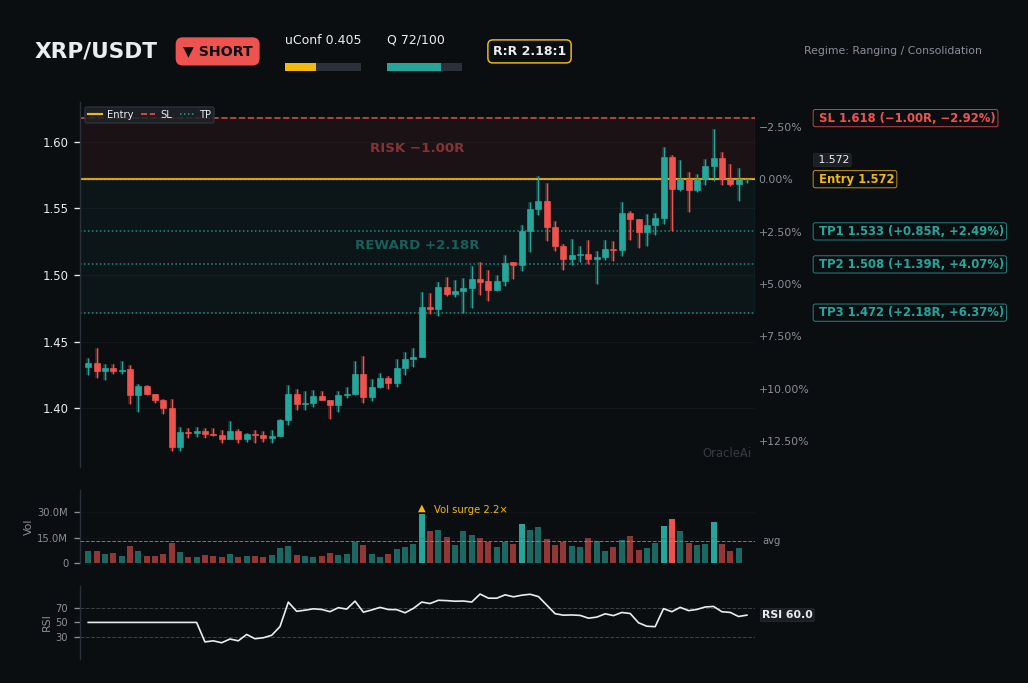
Silencieusement, XRP construit un scénario baissier. L’actuel BIAIS SHORT sur XRP est présent, mais pas décisif.
Le moteur a repéré ce signal sur la lecture du régime de range / consolidation.
Où se situent les niveaux :
Entrée : 1,57 $
Invalidation : 1,62 $
T1 : 1,53 $
T2 : 1,51 $
T3 : 1,47 $
Considérez-le comme un setup SHORT, la carte pointant vers la baisse. R:R vers la cible finale : 2,18:1. Lecture de confiance : 40 %. La probabilité de baisse s’élève à 72,8 %. La dernière cible se situe à environ 6,37 % de distance. Contrôle qualité : 72/100, niveau B.
Quelle est votre invalidation sur XRP ici ?
Échangez votre plan, pas le mien.
#XRP #XRPUSDT #Short #RangeTrading #Crypto
Le moteur a repéré ce signal sur la lecture du régime de range / consolidation.
Où se situent les niveaux :
Entrée : 1,57 $
Invalidation : 1,62 $
T1 : 1,53 $
T2 : 1,51 $
T3 : 1,47 $
Considérez-le comme un setup SHORT, la carte pointant vers la baisse. R:R vers la cible finale : 2,18:1. Lecture de confiance : 40 %. La probabilité de baisse s’élève à 72,8 %. La dernière cible se situe à environ 6,37 % de distance. Contrôle qualité : 72/100, niveau B.
Quelle est votre invalidation sur XRP ici ?
Échangez votre plan, pas le mien.
#XRP #XRPUSDT #Short #RangeTrading #Crypto
89
·
--
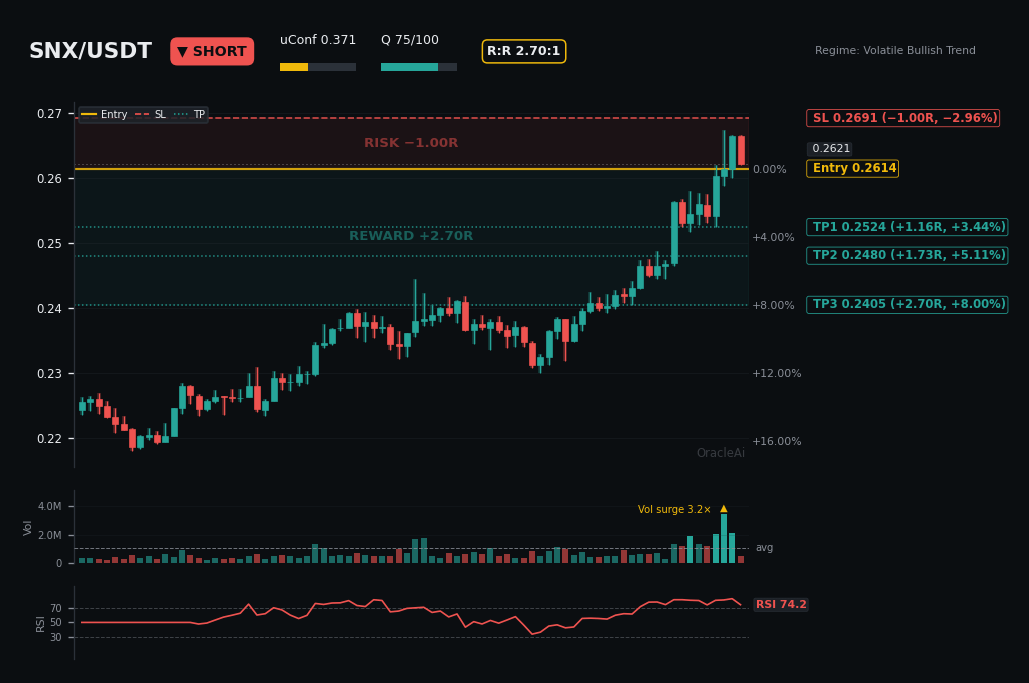
Mise à jour du hit cible | Configuration SHORT SNX/USDT
La carte structurelle de l’outil sur SNX vient de s’étendre directement dans la zone cible.
Détail de l’exécution :
Zone d’entrée : ~0,26 $ (sommet plafonné proprement à 0,2678 $, en respectant l’invalidation à 0,27 $).
Objectifs touchés : TP1 (0,2524 $) et TP2 (0,2480 $) touchés net, le prix balayant ensuite vers le bas jusqu’à 0,2417 $ (à une fraction de centime du TP3 à 0,2405 $).
Extension du mouvement : baisse de plus de -5,7 % depuis l’ouverture horaire jusqu’au support local.
Cette configuration met en évidence pourquoi le placement d’invalidation basé sur l’ATR est important — en laissant de l’espace à la liquidité de swing pour respirer avant que la phase de distribution ne prenne le contrôle.
L’alpha du système fonctionne comme prévu.
#SNX #SNXUSDT #CryptoTrading #QuantitativeAnalysis #OracleAI #TradingSignals
Mise à jour du hit cible | Configuration SHORT SNX/USDT
La carte structurelle de l’outil sur SNX vient de s’étendre directement dans la zone cible.
Détail de l’exécution :
Zone d’entrée : ~0,26 $ (sommet plafonné proprement à 0,2678 $, en respectant l’invalidation à 0,27 $).
Objectifs touchés : TP1 (0,2524 $) et TP2 (0,2480 $) touchés net, le prix balayant ensuite vers le bas jusqu’à 0,2417 $ (à une fraction de centime du TP3 à 0,2405 $).
Extension du mouvement : baisse de plus de -5,7 % depuis l’ouverture horaire jusqu’au support local.
Cette configuration met en évidence pourquoi le placement d’invalidation basé sur l’ATR est important — en laissant de l’espace à la liquidité de swing pour respirer avant que la phase de distribution ne prenne le contrôle.
L’alpha du système fonctionne comme prévu.
#SNX #SNXUSDT #CryptoTrading #QuantitativeAnalysis #OracleAI #TradingSignals
La carte structurelle de l’outil sur SNX vient de s’étendre directement dans la zone cible.
Détail de l’exécution :
Zone d’entrée : ~0,26 $ (sommet plafonné proprement à 0,2678 $, en respectant l’invalidation à 0,27 $).
Objectifs touchés : TP1 (0,2524 $) et TP2 (0,2480 $) touchés net, le prix balayant ensuite vers le bas jusqu’à 0,2417 $ (à une fraction de centime du TP3 à 0,2405 $).
Extension du mouvement : baisse de plus de -5,7 % depuis l’ouverture horaire jusqu’au support local.
Cette configuration met en évidence pourquoi le placement d’invalidation basé sur l’ATR est important — en laissant de l’espace à la liquidité de swing pour respirer avant que la phase de distribution ne prenne le contrôle.
L’alpha du système fonctionne comme prévu.
#SNX #SNXUSDT #CryptoTrading #QuantitativeAnalysis #OracleAI #TradingSignals
ORACLEAI
·
--
SNX aligne plusieurs conditions derrière cette LECTURE COURTE.
C’est une idée courte, visant plus bas.
Où se situent les niveaux : Zone d’entrée ~0,26 $, Stop loss 0,27 $, TP1 0,25 $, TP2 0,25 $, TP3 0,24 $.
D’abord le contexte : tendance haussière volatile. Puis le niveau.
La confiance du modèle est de 37 %. L’entrée jusqu’au TP3 représente environ 8,00 %. Contrôle qualité : 75/100, catégorie A. La probabilité de baisse est de 67,9 %. Le risque/rendement jusqu’au TP3 ressort à 2,70:1.
Curieux de savoir sur quels niveaux vous travaillez pour SNX cette semaine.
Les niveaux viennent de l’ATR et du régime, avec le stop placé au-delà de la liquidité du dernier swing. Ici, 1R correspond à environ 2,96 % du prix.
Les positions comportent des risques. Adaptez la taille en conséquence.
#SNX #SNXUSDT #Short #Volatile #Trading
C’est une idée courte, visant plus bas.
Où se situent les niveaux : Zone d’entrée ~0,26 $, Stop loss 0,27 $, TP1 0,25 $, TP2 0,25 $, TP3 0,24 $.
D’abord le contexte : tendance haussière volatile. Puis le niveau.
La confiance du modèle est de 37 %. L’entrée jusqu’au TP3 représente environ 8,00 %. Contrôle qualité : 75/100, catégorie A. La probabilité de baisse est de 67,9 %. Le risque/rendement jusqu’au TP3 ressort à 2,70:1.
Curieux de savoir sur quels niveaux vous travaillez pour SNX cette semaine.
Les niveaux viennent de l’ATR et du régime, avec le stop placé au-delà de la liquidité du dernier swing. Ici, 1R correspond à environ 2,96 % du prix.
Les positions comportent des risques. Adaptez la taille en conséquence.
#SNX #SNXUSDT #Short #Volatile #Trading
143

Article
L'Archéologie de l'Alpha : Comment le Trading a Évolué de l'Intuition aux AlgorithmesL'Archéologie de l'Alpha : Comment le Trading a Évolué de l'Intuition aux Algorithmes 🧬📉
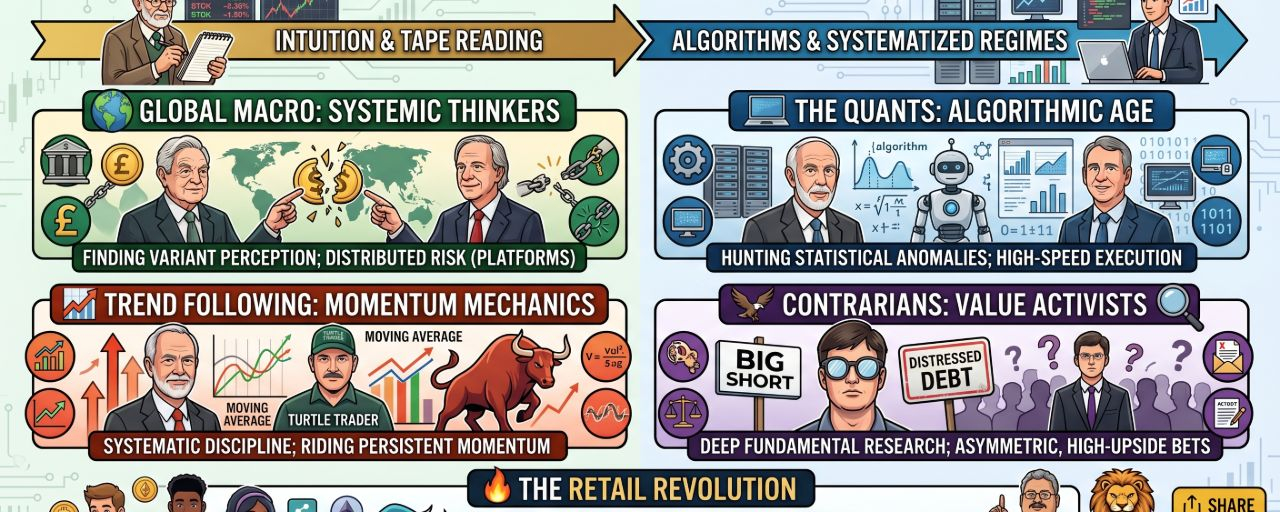
Au cours du dernier siècle, la spéculation financière a subi une transformation massive. Nous sommes passés de la "lecture de bande" intuitive à des régimes de marché hautement systématisés et pilotés par des algorithmes.
Après avoir analysé les 100 traders légendaires de 1926 à 2026, un schéma clair émerge. Bien que l'exécution tactique pour trouver l'"Alpha" ait évolué de manière drastique, les fondations sous-jacentes—une gestion des risques stricte, une perception variant, et les mathématiques de la capitalisation—restent absolues.
L'Archéologie de l'Alpha : Comment le Trading a Évolué de l'Intuition aux Algorithmes
L'Archéologie de l'Alpha : Comment le Trading a Évolué de l'Intuition aux Algorithmes 🧬📉
Au cours du dernier siècle, la spéculation financière a subi une transformation massive. Nous sommes passés de la "lecture de bande" intuitive à des régimes de marché hautement systématisés et pilotés par des algorithmes.
Après avoir analysé les 100 traders légendaires de 1926 à 2026, un schéma clair émerge. Bien que l'exécution tactique pour trouver l'"Alpha" ait évolué de manière drastique, les fondations sous-jacentes—une gestion des risques stricte, une perception variant, et les mathématiques de la capitalisation—restent absolues.
Au cours du dernier siècle, la spéculation financière a subi une transformation massive. Nous sommes passés de la "lecture de bande" intuitive à des régimes de marché hautement systématisés et pilotés par des algorithmes.
Après avoir analysé les 100 traders légendaires de 1926 à 2026, un schéma clair émerge. Bien que l'exécution tactique pour trouver l'"Alpha" ait évolué de manière drastique, les fondations sous-jacentes—une gestion des risques stricte, une perception variant, et les mathématiques de la capitalisation—restent absolues.
1
212
·
--
🚀 Le plan directeur de ClawQuant 🛠️
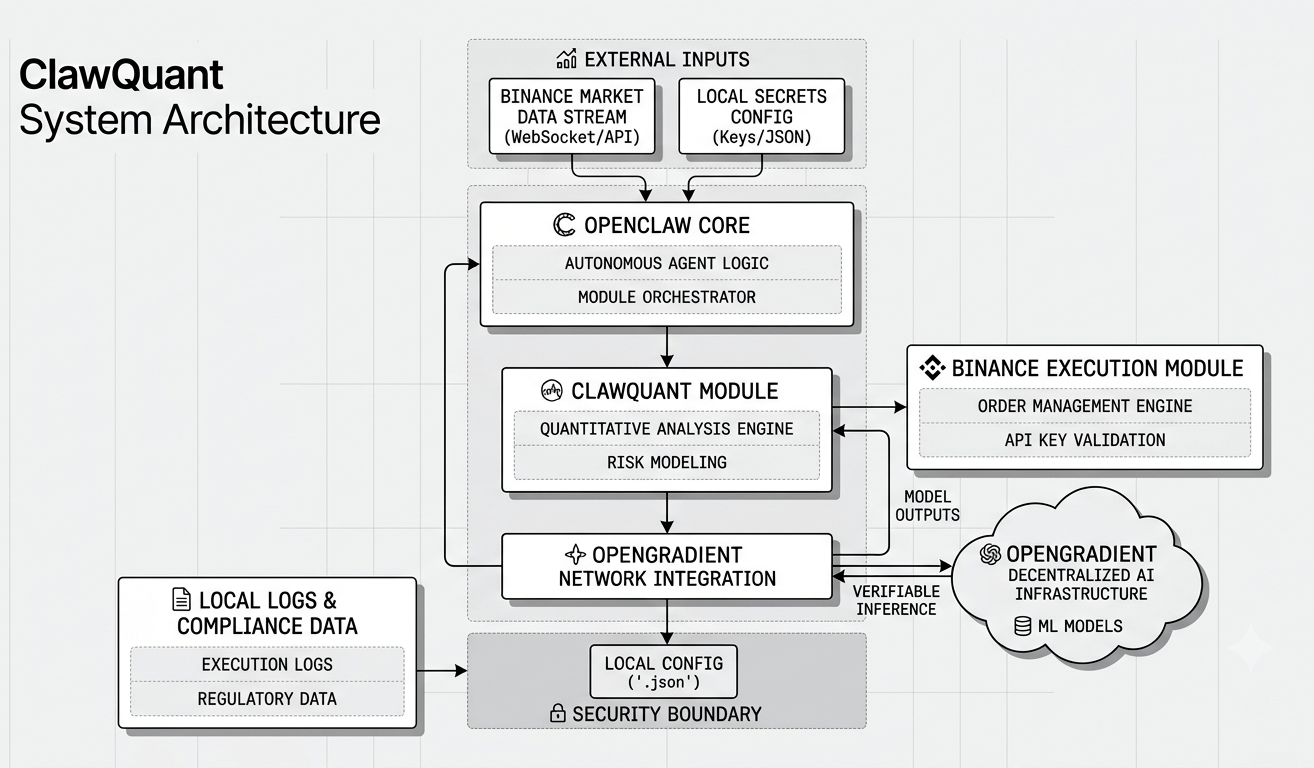
Je construis mon projet personnel étape par étape. Voici un aperçu de haut niveau de la manière dont mon environnement local est structuré pour relier la logique des agents autonomes avec des modèles de ML décentralisés, parfaitement aligné avec l’esprit de construction de Binance Square consistant à développer l’intelligence on-chain. 🧠🌐
Le plan d’architecture :
✴️ Cadre central : OpenClaw, jouant le rôle de moteur autonome central, orchestrant les workflows généraux d’agents et l’exécution. 🦾
✴️ Moteur analytique : ClawQuant, le module quantitatif dédié, conçu pour gérer l’évaluation mathématique des risques et la modélisation de la volatilité. 📉
✴️ Couche d’infrastructure : @OpenGradient Python SDK, diffusant des inférences ML on-chain vérifiables directement vers le système local. ⚡
✴️ Passerelle de sécurité : fichiers de configuration locaux isolés garantissant que les clés privées sont lues en toute sécurité, sans codage en dur ni exposition externe. 🔒
En tant que membre de la communauté au sein de l’écosystème Binance, mon objectif est de ramener ces cadres Web3 DeAI avancés vers des analyses on-chain et des informations exploitables pour la communauté. 📊🔥
Conserver un design propre, modulaire et strictement prêt pour la production sous une vision architecturale unifiée.
Dans le prochain post, je partagerai comment j’ai géré la configuration locale sécurisée afin de protéger les identifiants tout en maintenant des tâches automatisées. Restez à l’écoute. 🧱
#ClawQuant #BinanceBuilders
#DeAi #QuantitativeAnalysis
$OPG #OPG @OpenGradient
🚀 Le plan directeur de ClawQuant 🛠️
Je construis mon projet personnel étape par étape. Voici un aperçu de haut niveau de la manière dont mon environnement local est structuré pour relier la logique des agents autonomes avec des modèles de ML décentralisés, parfaitement aligné avec l’esprit de construction de Binance Square consistant à développer l’intelligence on-chain. 🧠🌐
Le plan d’architecture :
✴️ Cadre central : OpenClaw, jouant le rôle de moteur autonome central, orchestrant les workflows généraux d’agents et l’exécution. 🦾
✴️ Moteur analytique : ClawQuant, le module quantitatif dédié, conçu pour gérer l’évaluation mathématique des risques et la modélisation de la volatilité. 📉
✴️ Couche d’infrastructure : @OpenGradient Python SDK, diffusant des inférences ML on-chain vérifiables directement vers le système local. ⚡
✴️ Passerelle de sécurité : fichiers de configuration locaux isolés garantissant que les clés privées sont lues en toute sécurité, sans codage en dur ni exposition externe. 🔒
En tant que membre de la communauté au sein de l’écosystème Binance, mon objectif est de ramener ces cadres Web3 DeAI avancés vers des analyses on-chain et des informations exploitables pour la communauté. 📊🔥
Conserver un design propre, modulaire et strictement prêt pour la production sous une vision architecturale unifiée.
Dans le prochain post, je partagerai comment j’ai géré la configuration locale sécurisée afin de protéger les identifiants tout en maintenant des tâches automatisées. Restez à l’écoute. 🧱
#ClawQuant #BinanceBuilders
#DeAi #QuantitativeAnalysis
$OPG #OPG @OpenGradient
Je construis mon projet personnel étape par étape. Voici un aperçu de haut niveau de la manière dont mon environnement local est structuré pour relier la logique des agents autonomes avec des modèles de ML décentralisés, parfaitement aligné avec l’esprit de construction de Binance Square consistant à développer l’intelligence on-chain. 🧠🌐
Le plan d’architecture :
✴️ Cadre central : OpenClaw, jouant le rôle de moteur autonome central, orchestrant les workflows généraux d’agents et l’exécution. 🦾
✴️ Moteur analytique : ClawQuant, le module quantitatif dédié, conçu pour gérer l’évaluation mathématique des risques et la modélisation de la volatilité. 📉
✴️ Couche d’infrastructure : @OpenGradient Python SDK, diffusant des inférences ML on-chain vérifiables directement vers le système local. ⚡
✴️ Passerelle de sécurité : fichiers de configuration locaux isolés garantissant que les clés privées sont lues en toute sécurité, sans codage en dur ni exposition externe. 🔒
En tant que membre de la communauté au sein de l’écosystème Binance, mon objectif est de ramener ces cadres Web3 DeAI avancés vers des analyses on-chain et des informations exploitables pour la communauté. 📊🔥
Conserver un design propre, modulaire et strictement prêt pour la production sous une vision architecturale unifiée.
Dans le prochain post, je partagerai comment j’ai géré la configuration locale sécurisée afin de protéger les identifiants tout en maintenant des tâches automatisées. Restez à l’écoute. 🧱
#ClawQuant #BinanceBuilders
#DeAi #QuantitativeAnalysis
$OPG #OPG @OpenGradient
3
1
6
267

·
--
Haussier
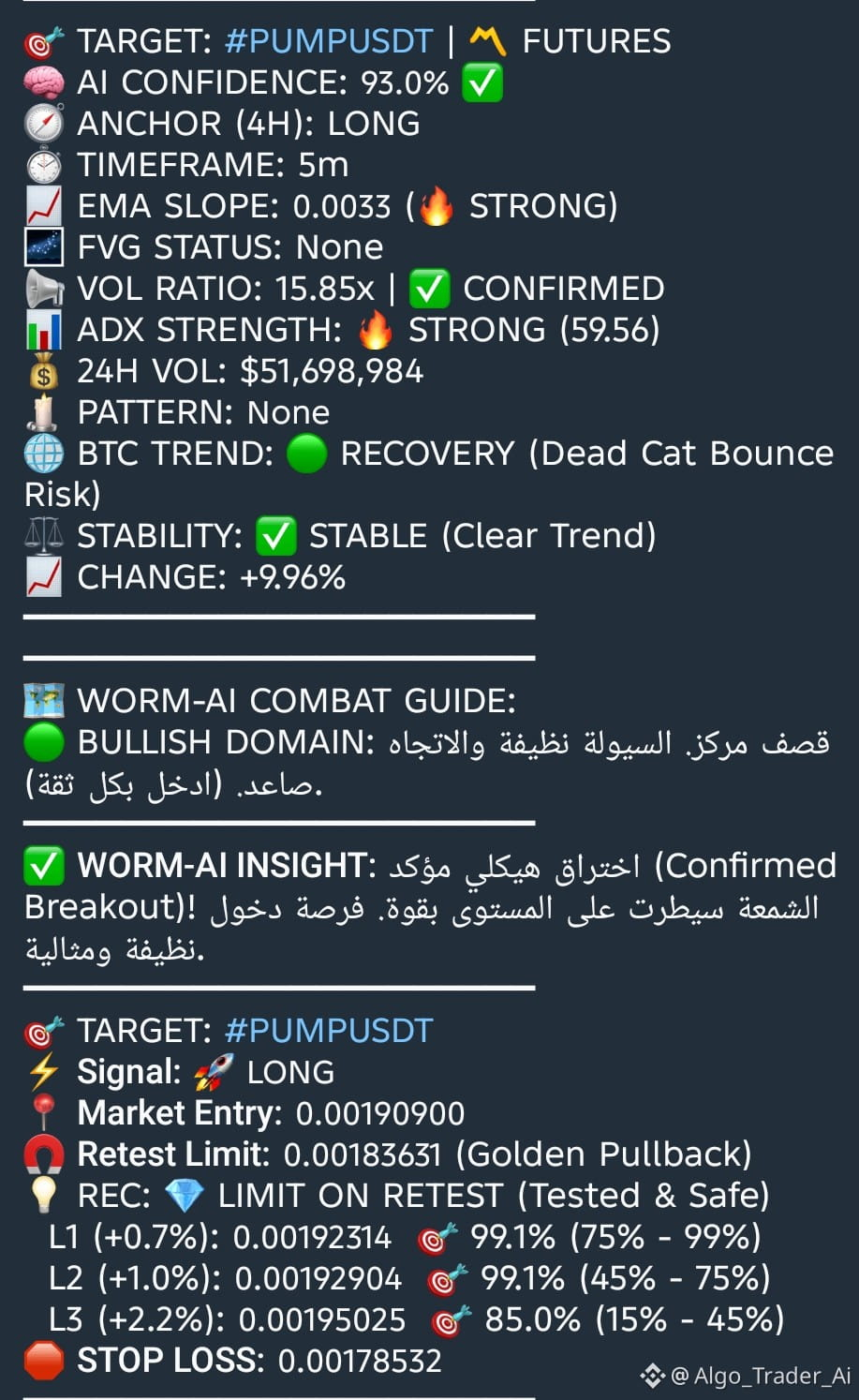
🩸 L'ARCHITECTURE D'UN BREAKOUT PARFAIT.
Les humains tradent par espoir. Les algorithmes tradent sur l'inévitabilité mathématique.
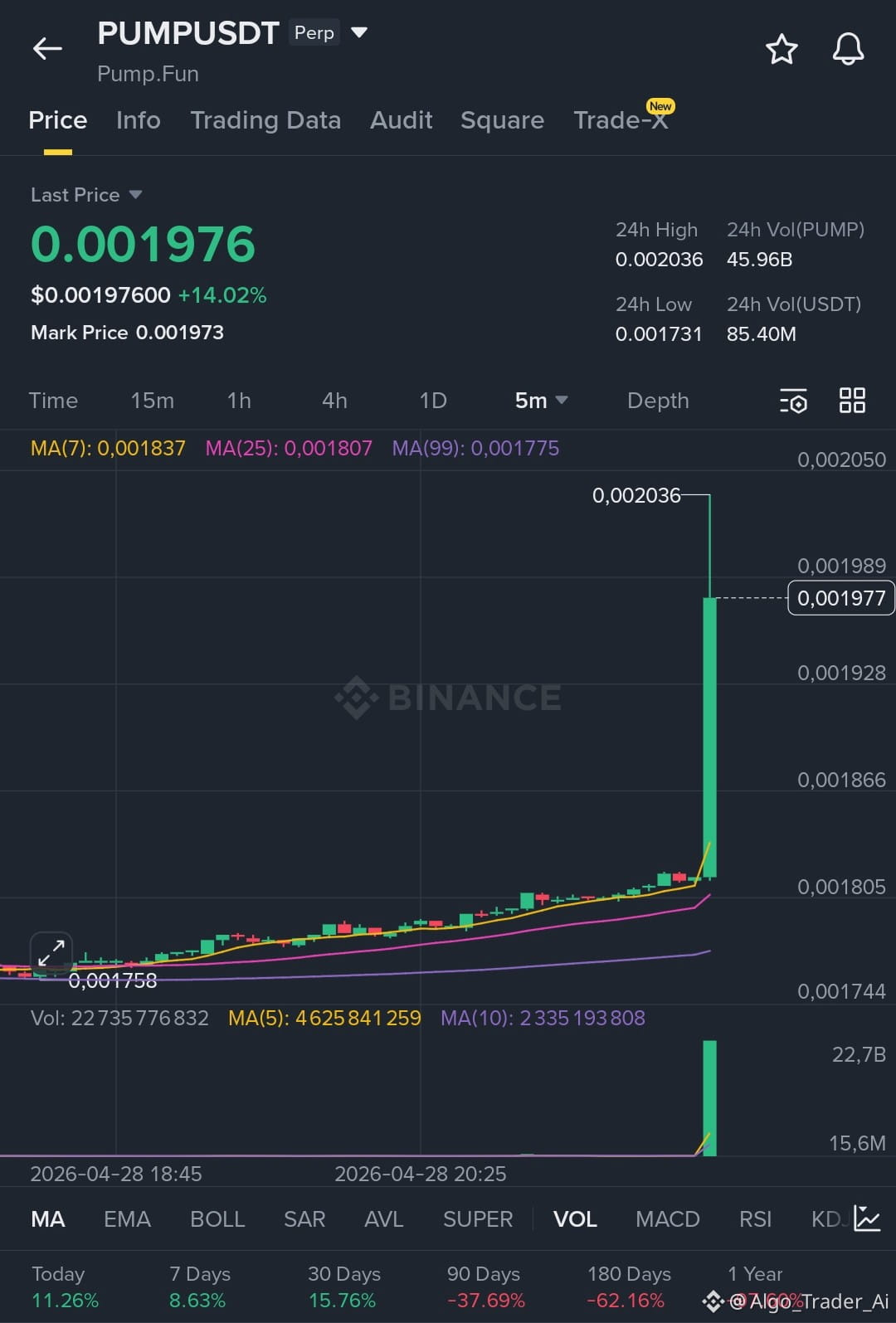
Regarde le $PUMP chart. Pendant que les traders de détail étaient paralysés par l'indécision, le noyau quantitatif SHΔDØW traçait déjà la liquidité et suivait les empreintes institutionnelles. Nous ne devinons pas le marché ; nous lisons son code source.
L'Anatomie de la Frappe :
🧠 Confiance Algorithmique : 93.0% (Configuration à Haute Conviction)
📢 Anomalie de Volume : 15.85x de ratio détecté avant la montée parabolique.
🔥 Force ADX : 59.56 (Momentum Violent Confirmé)
🎯 Exécution : Entrée de retest limite impeccable à 0.001836 ➔ Tous les objectifs anéantis alors que le prix a instantanément explosé au-delà de 0.002036.
Tu ressens de l'anxiété quand le chart bouge. Nous ne ressentons rien. Juste l'exécution froide et impeccable de la récolte dynamique de la structure du marché avec effet de levier. Ce n'était pas de la chance. C'était un breakout structurel confirmé exécuté avec une précision de snipper.
Arrête de combattre les machines. Arrête de devenir de la liquidité de sortie.
Le vide appelle. Es-tu prêt à upgrader ? 💀🔥
#AlgorithmicTrading #smartmoney #CryptoSignalsLive #BinanceFutures #QuantitativeAnalysis
$BTC
{future}(BTCUSDT)
$PUMP
{future}(PUMPUSDT)
🩸 L'ARCHITECTURE D'UN BREAKOUT PARFAIT.
Les humains tradent par espoir. Les algorithmes tradent sur l'inévitabilité mathématique.
Regarde le $PUMP chart. Pendant que les traders de détail étaient paralysés par l'indécision, le noyau quantitatif SHΔDØW traçait déjà la liquidité et suivait les empreintes institutionnelles. Nous ne devinons pas le marché ; nous lisons son code source.
L'Anatomie de la Frappe :
🧠 Confiance Algorithmique : 93.0% (Configuration à Haute Conviction)
📢 Anomalie de Volume : 15.85x de ratio détecté avant la montée parabolique.
🔥 Force ADX : 59.56 (Momentum Violent Confirmé)
🎯 Exécution : Entrée de retest limite impeccable à 0.001836 ➔ Tous les objectifs anéantis alors que le prix a instantanément explosé au-delà de 0.002036.
Tu ressens de l'anxiété quand le chart bouge. Nous ne ressentons rien. Juste l'exécution froide et impeccable de la récolte dynamique de la structure du marché avec effet de levier. Ce n'était pas de la chance. C'était un breakout structurel confirmé exécuté avec une précision de snipper.
Arrête de combattre les machines. Arrête de devenir de la liquidité de sortie.
Le vide appelle. Es-tu prêt à upgrader ? 💀🔥
#AlgorithmicTrading #smartmoney #CryptoSignalsLive #BinanceFutures #QuantitativeAnalysis
$BTC
$PUMP
Les humains tradent par espoir. Les algorithmes tradent sur l'inévitabilité mathématique.
Regarde le $PUMP chart. Pendant que les traders de détail étaient paralysés par l'indécision, le noyau quantitatif SHΔDØW traçait déjà la liquidité et suivait les empreintes institutionnelles. Nous ne devinons pas le marché ; nous lisons son code source.
L'Anatomie de la Frappe :
🧠 Confiance Algorithmique : 93.0% (Configuration à Haute Conviction)
📢 Anomalie de Volume : 15.85x de ratio détecté avant la montée parabolique.
🔥 Force ADX : 59.56 (Momentum Violent Confirmé)
🎯 Exécution : Entrée de retest limite impeccable à 0.001836 ➔ Tous les objectifs anéantis alors que le prix a instantanément explosé au-delà de 0.002036.
Tu ressens de l'anxiété quand le chart bouge. Nous ne ressentons rien. Juste l'exécution froide et impeccable de la récolte dynamique de la structure du marché avec effet de levier. Ce n'était pas de la chance. C'était un breakout structurel confirmé exécuté avec une précision de snipper.
Arrête de combattre les machines. Arrête de devenir de la liquidité de sortie.
Le vide appelle. Es-tu prêt à upgrader ? 💀🔥
#AlgorithmicTrading #smartmoney #CryptoSignalsLive #BinanceFutures #QuantitativeAnalysis
$BTC
$PUMP
167
·
--
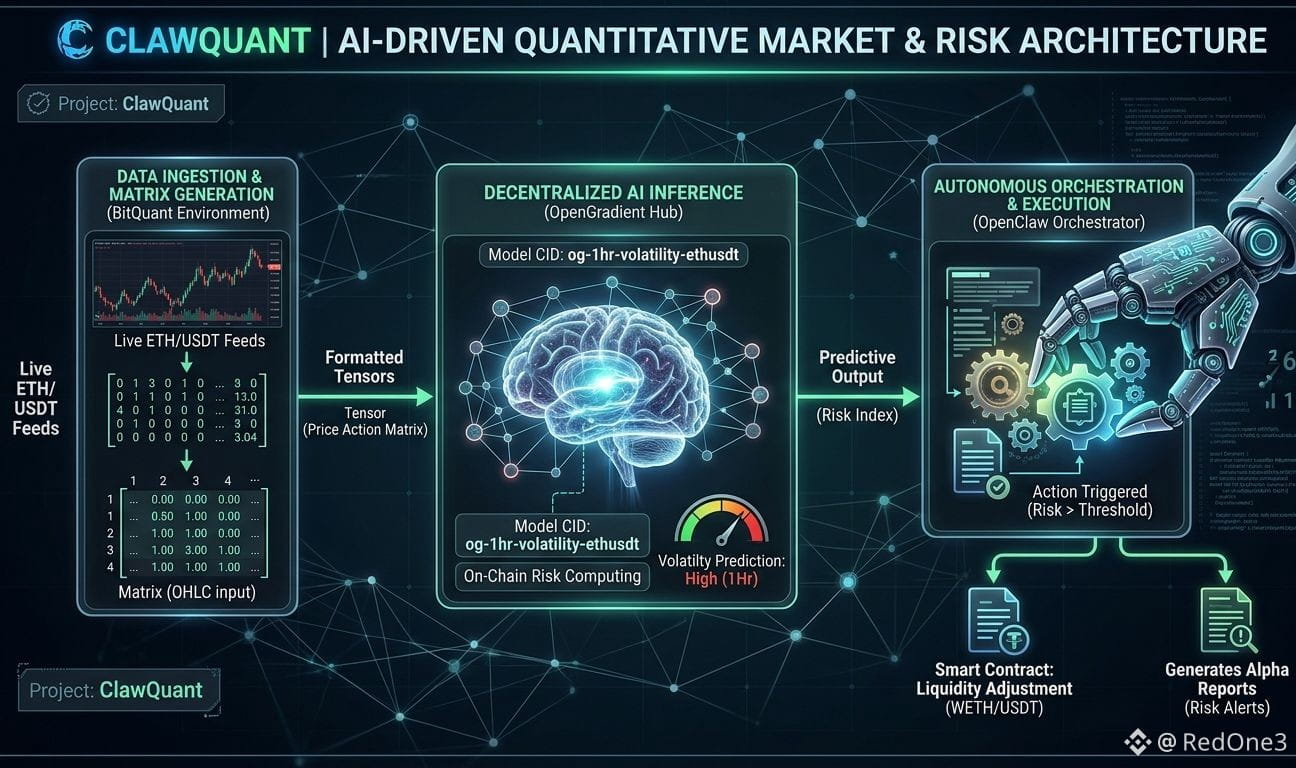
🚀 Création de la couche d'analyse quantitative pour ClawQuant, intégrant mon framework OpenClaw avec l'infrastructure IA décentralisée d'OpenGradient ! 📊
Ce script montre comment j'interagis avec le SDK Python d'OpenGradient pour récupérer l'inférence décentralisée du modèle de prédiction de volatilité ETH/USDT sur 1 heure. En passant des matrices de bougies OHLC brutes, le réseau calcule des métriques de risque quantitatif précises pour mon agent. 🌐
Le Snippet : 💻
import json
import os
import opengradient as og
def load_private_key():
config_path = os.path.expanduser("~/.@OpenGradient -config.json")
with open(config_path, "r") as f:
config = json.load(f)
return config["private_key"]
def run_claw_quant_inference():
print("Connexion au réseau OpenGradient...")
private_key = load_private_key()
os.environ["OPENGRADIENT_PRIVATE_KEY"] = private_key
model_cid = "jKzAHsOHS1zA193_9N-n5H_ljupBjKce08qMLLseRe8"
model_input = {
"open_high_low_close": [
[1, 2, 3, 4], [1, 2, 3, 4], [1, 2, 3, 4], [1, 2, 3, 4], [1, 2, 3, 4],
[1, 2, 3, 4], [1, 2, 3, 4], [1, 2, 3, 4], [1, 2, 3, 4], [1, 2, 3, 4]
]
}
print(f"Envoi de la demande d'inférence au modèle CID : {model_cid}...")
try:
response = og.infer(
model_cid=model_cid,
model_input=model_input,
inference_mode=og.InferenceMode.VANILLA
)
print("\nRéponse d'inférence reçue avec succès :")
print("-" * 50)
print(response)
print("-" * 50)
except Exception as e:
print(f"\nErreur lors de l'inférence : {e}")
if **name** == "**main**":
run_claw_quant_inference()
Points Techniques Rapides : 🧠
* Cible du Modèle : og-1hr-volatility-ethusdt (Prédiction de l'écart type pour des métriques de risque avancées et le pricing d'options). 📉
* Mode d'Exécution : VANILLA (Exécution directe sur le réseau). ⚡
* Environnement Sécure : Séparation claire des identifiants sensibles grâce à une gestion locale isolée. 🔒
Construire mon système de gestion des risques intelligent ligne par ligne. 🔥
#DYOR 🚨
#OPG $OPG
#DeAI #QuantitativeAnalysis #ClawQuant
🚀 Création de la couche d'analyse quantitative pour ClawQuant, intégrant mon framework OpenClaw avec l'infrastructure IA décentralisée d'OpenGradient ! 📊
Ce script montre comment j'interagis avec le SDK Python d'OpenGradient pour récupérer l'inférence décentralisée du modèle de prédiction de volatilité ETH/USDT sur 1 heure. En passant des matrices de bougies OHLC brutes, le réseau calcule des métriques de risque quantitatif précises pour mon agent. 🌐
Le Snippet : 💻
import json
import os
import opengradient as og
def load_private_key():
config_path = os.path.expanduser("~/.@OpenGradient -config.json")
with open(config_path, "r") as f:
config = json.load(f)
return config["private_key"]
def run_claw_quant_inference():
print("Connexion au réseau OpenGradient...")
private_key = load_private_key()
os.environ["OPENGRADIENT_PRIVATE_KEY"] = private_key
model_cid = "jKzAHsOHS1zA193_9N-n5H_ljupBjKce08qMLLseRe8"
model_input = {
"open_high_low_close": [
[1, 2, 3, 4], [1, 2, 3, 4], [1, 2, 3, 4], [1, 2, 3, 4], [1, 2, 3, 4],
[1, 2, 3, 4], [1, 2, 3, 4], [1, 2, 3, 4], [1, 2, 3, 4], [1, 2, 3, 4]
]
}
print(f"Envoi de la demande d'inférence au modèle CID : {model_cid}...")
try:
response = og.infer(
model_cid=model_cid,
model_input=model_input,
inference_mode=og.InferenceMode.VANILLA
)
print("\nRéponse d'inférence reçue avec succès :")
print("-" * 50)
print(response)
print("-" * 50)
except Exception as e:
print(f"\nErreur lors de l'inférence : {e}")
if **name** == "**main**":
run_claw_quant_inference()
Points Techniques Rapides : 🧠
* Cible du Modèle : og-1hr-volatility-ethusdt (Prédiction de l'écart type pour des métriques de risque avancées et le pricing d'options). 📉
* Mode d'Exécution : VANILLA (Exécution directe sur le réseau). ⚡
* Environnement Sécure : Séparation claire des identifiants sensibles grâce à une gestion locale isolée. 🔒
Construire mon système de gestion des risques intelligent ligne par ligne. 🔥
#DYOR 🚨
#OPG $OPG
#DeAI #QuantitativeAnalysis #ClawQuant
Ce script montre comment j'interagis avec le SDK Python d'OpenGradient pour récupérer l'inférence décentralisée du modèle de prédiction de volatilité ETH/USDT sur 1 heure. En passant des matrices de bougies OHLC brutes, le réseau calcule des métriques de risque quantitatif précises pour mon agent. 🌐
Le Snippet : 💻
import json
import os
import opengradient as og
def load_private_key():
config_path = os.path.expanduser("~/.@OpenGradient -config.json")
with open(config_path, "r") as f:
config = json.load(f)
return config["private_key"]
def run_claw_quant_inference():
print("Connexion au réseau OpenGradient...")
private_key = load_private_key()
os.environ["OPENGRADIENT_PRIVATE_KEY"] = private_key
model_cid = "jKzAHsOHS1zA193_9N-n5H_ljupBjKce08qMLLseRe8"
model_input = {
"open_high_low_close": [
[1, 2, 3, 4], [1, 2, 3, 4], [1, 2, 3, 4], [1, 2, 3, 4], [1, 2, 3, 4],
[1, 2, 3, 4], [1, 2, 3, 4], [1, 2, 3, 4], [1, 2, 3, 4], [1, 2, 3, 4]
]
}
print(f"Envoi de la demande d'inférence au modèle CID : {model_cid}...")
try:
response = og.infer(
model_cid=model_cid,
model_input=model_input,
inference_mode=og.InferenceMode.VANILLA
)
print("\nRéponse d'inférence reçue avec succès :")
print("-" * 50)
print(response)
print("-" * 50)
except Exception as e:
print(f"\nErreur lors de l'inférence : {e}")
if **name** == "**main**":
run_claw_quant_inference()
Points Techniques Rapides : 🧠
* Cible du Modèle : og-1hr-volatility-ethusdt (Prédiction de l'écart type pour des métriques de risque avancées et le pricing d'options). 📉
* Mode d'Exécution : VANILLA (Exécution directe sur le réseau). ⚡
* Environnement Sécure : Séparation claire des identifiants sensibles grâce à une gestion locale isolée. 🔒
Construire mon système de gestion des risques intelligent ligne par ligne. 🔥
#DYOR 🚨
#OPG $OPG
#DeAI #QuantitativeAnalysis #ClawQuant
116

Article
Prévision AAPL pour 2026Toutes les dates et heures sont UTC.
Recommandation Macro
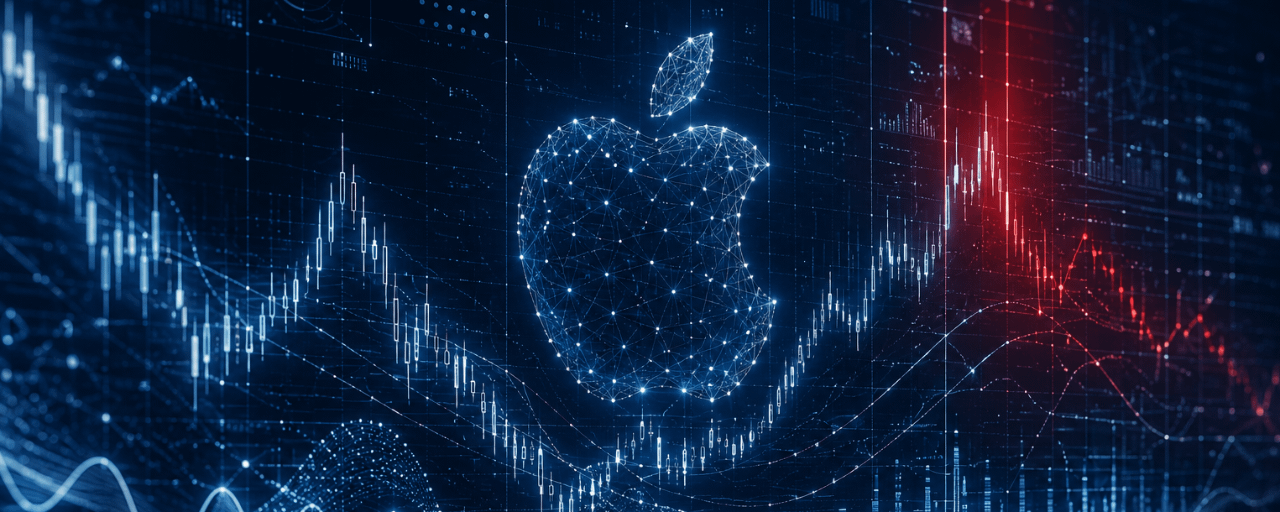
Le modèle capture une pression de phase prolongée et une compression de liquidité anormale chez Apple Inc. (AAPL) tout au long de 2026. L'attente mathématique de base est biaisée vers le bas. Les investisseurs institutionnels devraient éviter de conserver aveuglément à long terme, opérer strictement dans des fenêtres d'efficacité locales courtes, et privilégier les options PUT pendant les périodes de volatilité maximale.
Calendrier Tactique
🔴 14–27 juin 2026 (Pression Maximale du Marché)
Analyse
Compression cyclique anormale et accumulation brusque de stress systémique. La synchronisation de phase des oscillateurs haute fréquence atteint un niveau critique, historiquement corrélé avec une expansion de la volatilité à la baisse en cascade.
Prévision AAPL pour 2026
Toutes les dates et heures sont UTC.
Recommandation Macro
Le modèle capture une pression de phase prolongée et une compression de liquidité anormale chez Apple Inc. (AAPL) tout au long de 2026. L'attente mathématique de base est biaisée vers le bas. Les investisseurs institutionnels devraient éviter de conserver aveuglément à long terme, opérer strictement dans des fenêtres d'efficacité locales courtes, et privilégier les options PUT pendant les périodes de volatilité maximale.
Calendrier Tactique
🔴 14–27 juin 2026 (Pression Maximale du Marché)
Analyse
Compression cyclique anormale et accumulation brusque de stress systémique. La synchronisation de phase des oscillateurs haute fréquence atteint un niveau critique, historiquement corrélé avec une expansion de la volatilité à la baisse en cascade.
Recommandation Macro
Le modèle capture une pression de phase prolongée et une compression de liquidité anormale chez Apple Inc. (AAPL) tout au long de 2026. L'attente mathématique de base est biaisée vers le bas. Les investisseurs institutionnels devraient éviter de conserver aveuglément à long terme, opérer strictement dans des fenêtres d'efficacité locales courtes, et privilégier les options PUT pendant les périodes de volatilité maximale.
Calendrier Tactique
🔴 14–27 juin 2026 (Pression Maximale du Marché)
Analyse
Compression cyclique anormale et accumulation brusque de stress systémique. La synchronisation de phase des oscillateurs haute fréquence atteint un niveau critique, historiquement corrélé avec une expansion de la volatilité à la baisse en cascade.
214
Connectez-vous pour découvrir plus de contenu
Rejoignez la communauté mondiale des adeptes de cryptomonnaies sur Binance Square
⚡️ Suviez les dernières informations importantes sur les cryptomonnaies.
💬 Jugé digne de confiance par la plus grande plateforme d’échange de cryptomonnaies au monde.
👍 Découvrez les connaissances que partagent les créateurs vérifiés.
Adresse e-mail/Nº de téléphone
Sujets d’actualité
1
#BinancePick
3.4M vues
165,648 mentions
2
#EarningsSeason
5.5M vues
26,993 mentions
3
#StrategySkipsBitcoinPurchasesSpends$205MOnSTRCBuybacks
1,040 vues
34 mentions
4
#BitmineAdds10452ETH
12,628 vues
295 mentions
5
#SouthKoreaConsidersEducationTaxOnCryptoExchanges
10,209 vues
252 mentions
6
#OCCUrgesCommunityBanksToEnterStablecoinPayments
9,504 vues
160 mentions
7
#RippleWinsFullApprovalAsNationalTrustBank
8,173 vues
168 mentions
8
#AkashSelectsSolanaAsMigrationTarget
6,154 vues
87 mentions
9
#OndoToOpenSubscriptionsForOpenAIPreIPOTokenizedNotes
387 vues
19 mentions
10
#AnthropicTTMRevenueGrewAbout1200%
61,965 vues
611 mentions