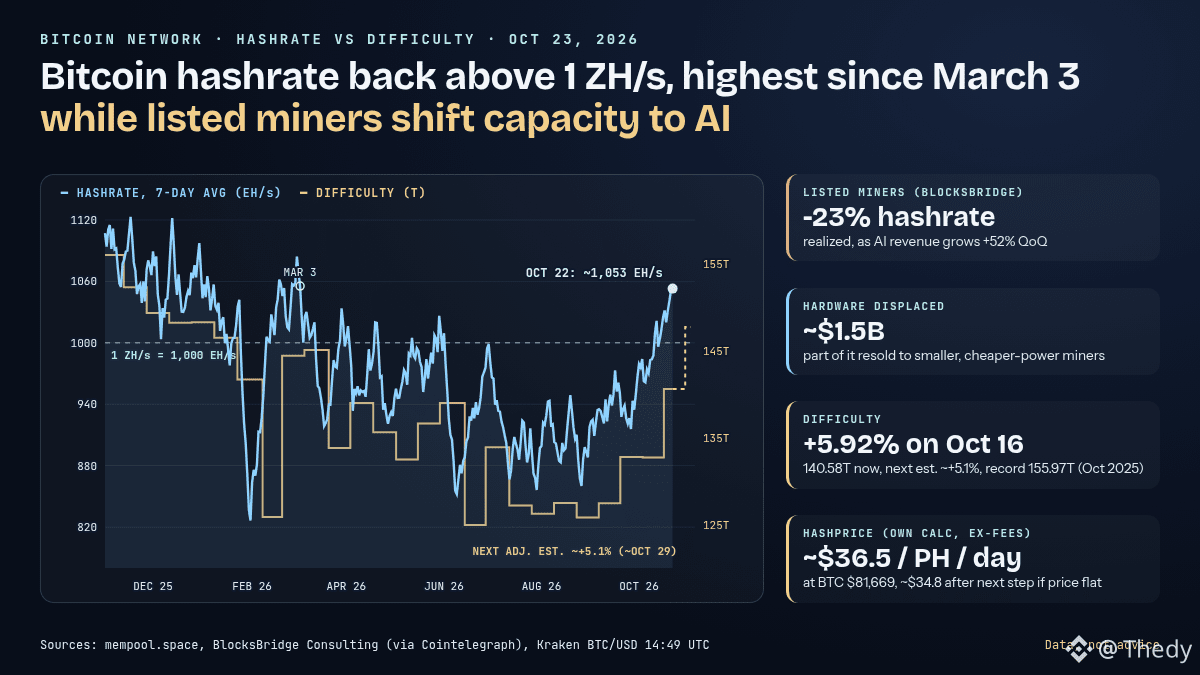
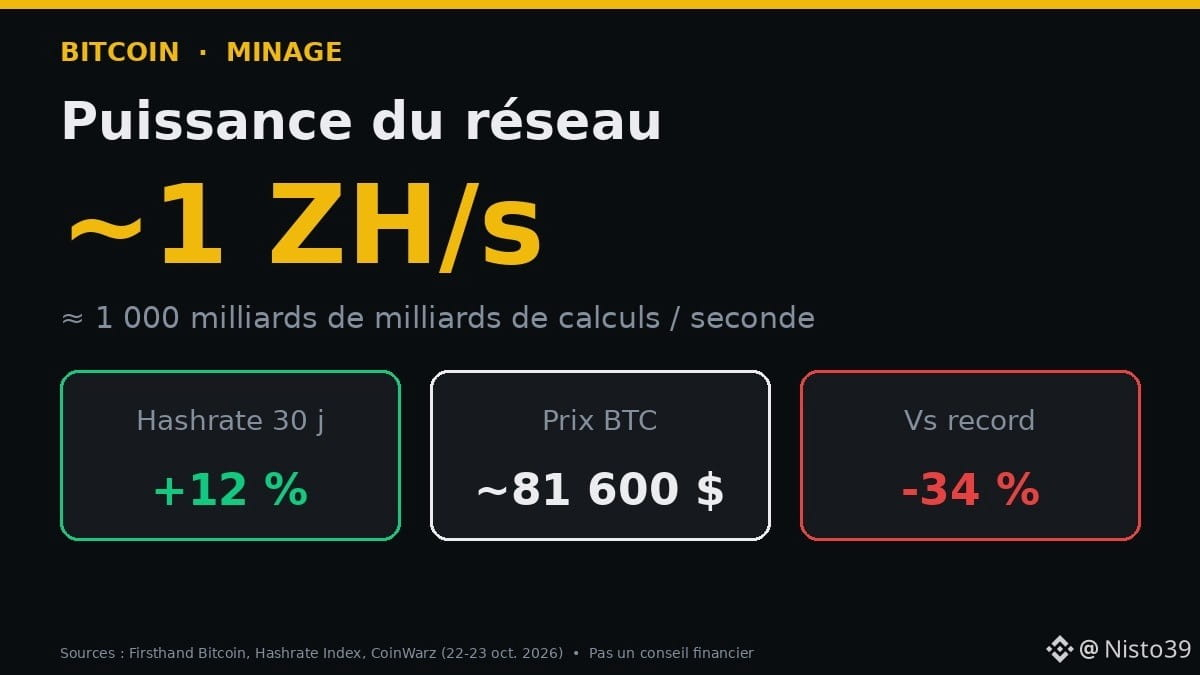
⛏️ Le Bitcoin vaut ~81 600 $, 34 % sous son record… et pourtant les mineurs n'ont jamais été aussi nombreux à se battre. La puissance du réseau tourne autour de 1 000 milliards de milliards de calculs par seconde (~1 ZH/s).
📌 Les chiffres (Firsthand Bitcoin, Hashrate Index, CoinWarz, 22-23 oct. 2026)
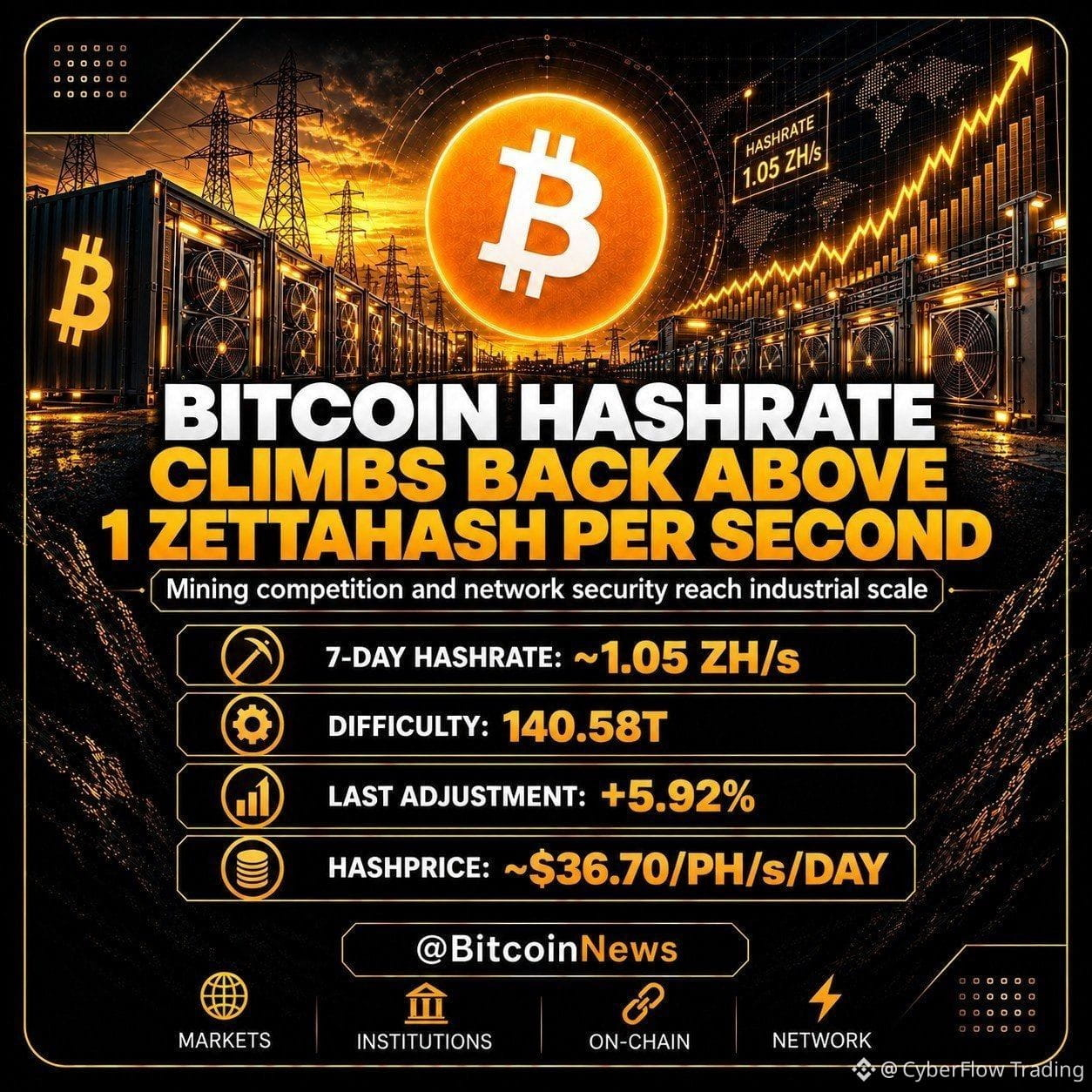
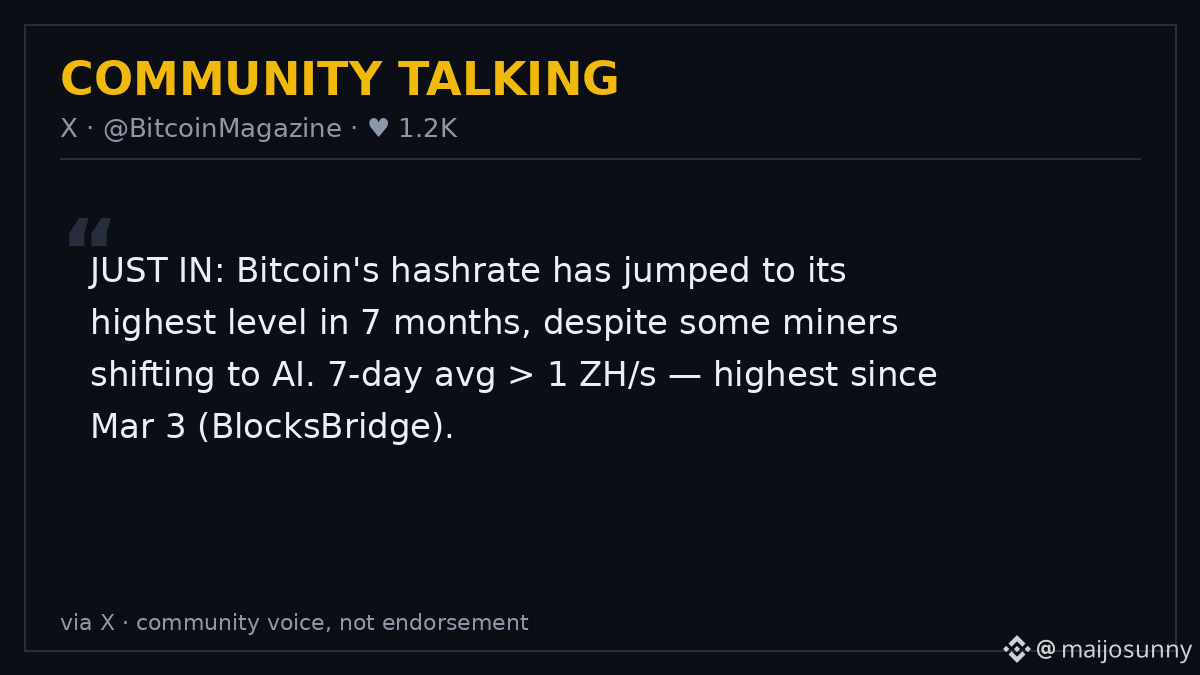
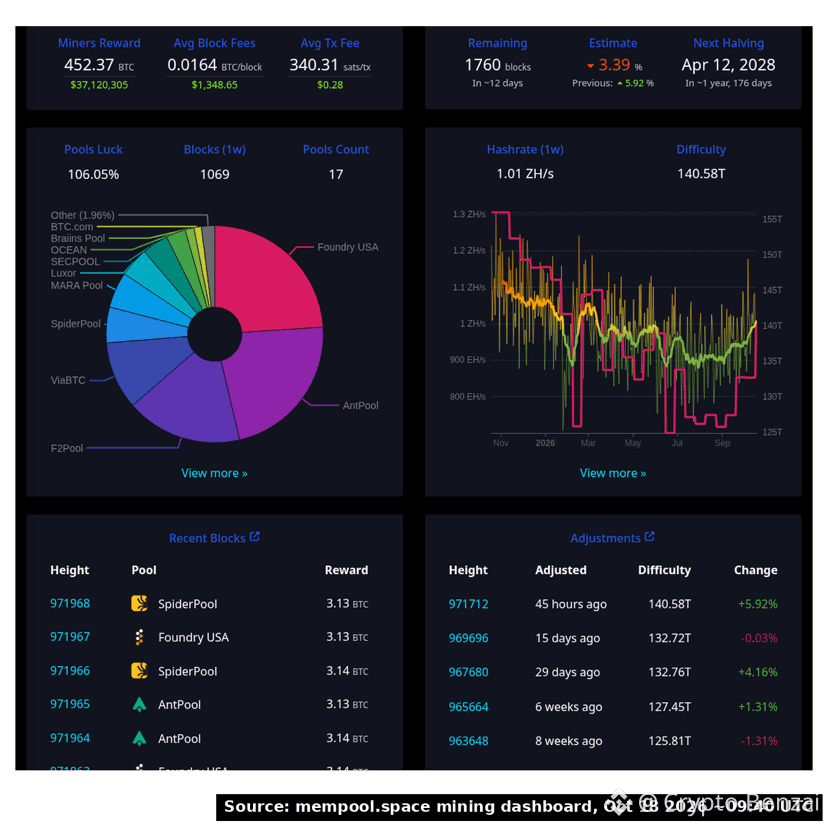
• Hashrate : ~1 040 à 1 053 EH/s, +12 % en 30 jours
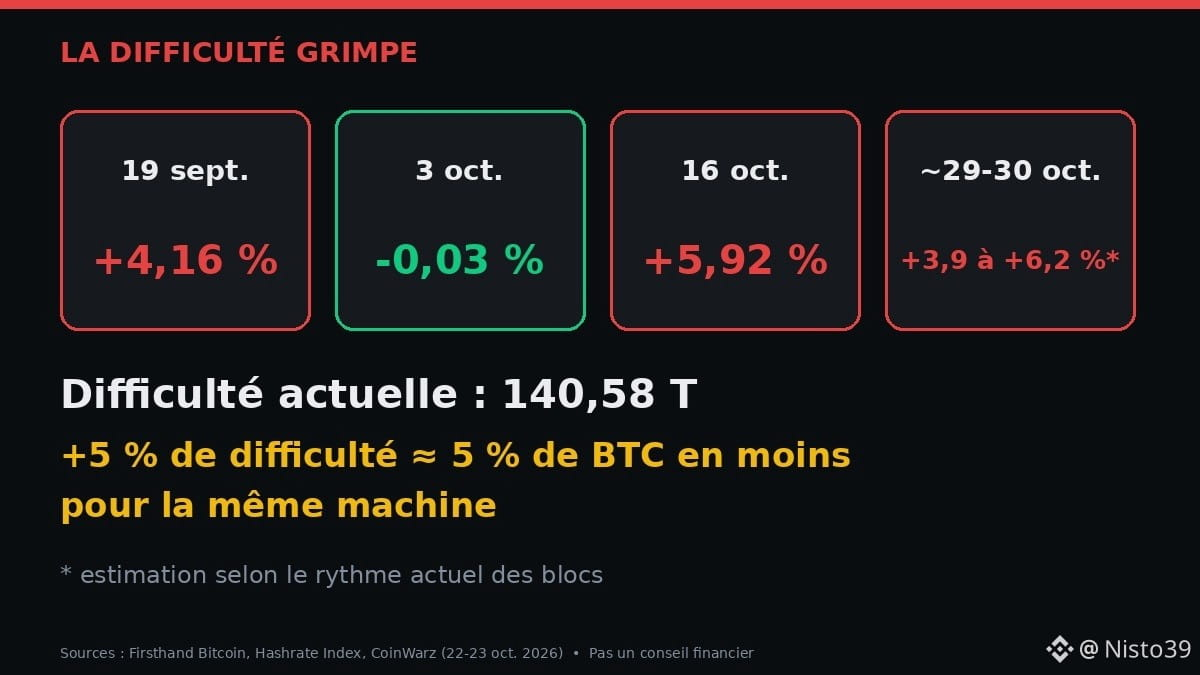
• Difficulté : 140,58 T après +5,92 % le 16 octobre
• Prochain ajustement vers le 29-30 oct. : estimé entre +3,9 % et +6,2 %
• Revenu d'un mineur (hashprice) : ~36,70 $ par PH/s et par jour
🧠 C'est quoi la « difficulté » ?
Toutes les 2 016 blocs (~2 semaines), Bitcoin règle la dureté de son « concours » pour garder un bloc toutes les 10 minutes. Plus de machines ➜ concours plus dur. Pour un mineur, +5 % de difficulté = environ 5 % de BTC en moins pour la même machine.
👤 Imagine Moussa (personnage fictif), qui loue quelques machines dans un petit site de minage alimenté par l'hydroélectricité. Prix en baisse + difficulté en hausse = sa paie fond des deux côtés. Les mineurs avec l'électricité la moins chère tiennent, les autres débranchent ou vendent leurs BTC.
⚖️ La nuance
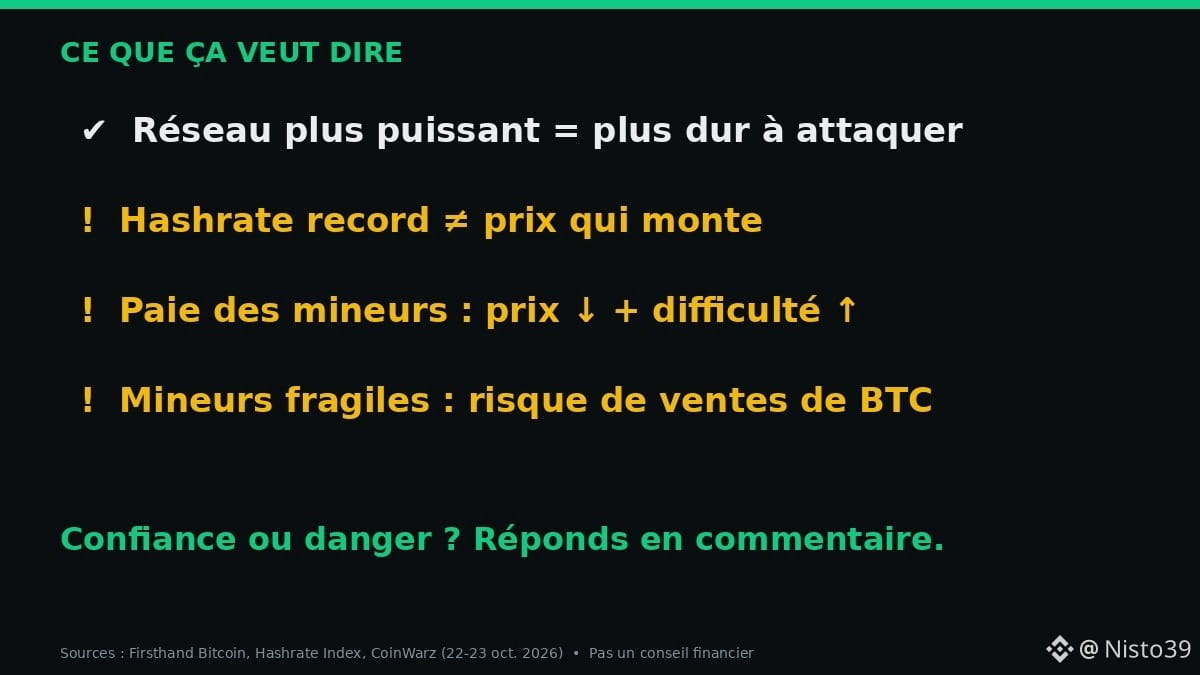
• Hashrate record ≠ prix qui monte : il reflète surtout des machines achetées il y a des mois
• Mais un réseau plus puissant est plus coûteux à attaquer : c'est sa sécurité
• À surveiller : si les mineurs fragiles vendent, ça peut peser sur le prix à court terme
✅ Pour toi, des mineurs qui investissent malgré la baisse de
$BTC , c'est un signal 🟢 de confiance ou 🔴 de danger ? 👇
Pas un conseil financier. DYOR.
Sources : Firsthand Bitcoin, Hashrate Index, CoinWarz, opensourceminers.de (22-23 oct. 2026).
#Bitcoin #Mining #CryptoNews