

#camping
camping
6,483 vues
184 mentions
Populaire
Récents

·
--
Haussier
#FalconFianance
$FF
Prévision du prix de Falcon Finance d'ici 2040
Selon votre prévision selon laquelle Falcon Finance changera à un rythme de 5 % chaque année, le prix de Falcon Finance serait de 0,11 $ en 2026, 0,14 $ en 2030, 0,17 $ en 2035 et 0,22 $ en 2040.
Les coffres de staking de Falcon (lancés le 19 nov. 2025) verrouillent FF pendant 180 jours pour gagner des rendements en USDf, réduisant l'offre en circulation. Les 2,34 milliards de FF en circulation subissent une pression de vente de la part des jetons acquis (76,6 % de l'offre maximale encore verrouillée), mais le staking actif pourrait compenser cela si la participation augmente.
Cela signifie que le pic de volume à court terme de 53,5 % sur 24 heures suggère que les traders réagissent aux incitations, mais des blocages prolongés (jusqu'à la date limite de réclamation du 28 déc.) pourraient stabiliser les prix si l'adoption croît.
$USDC
$BTC
#camping
#FalconFianance
$FF
Prévision du prix de Falcon Finance d'ici 2040
Selon votre prévision selon laquelle Falcon Finance changera à un rythme de 5 % chaque année, le prix de Falcon Finance serait de 0,11 $ en 2026, 0,14 $ en 2030, 0,17 $ en 2035 et 0,22 $ en 2040.
Les coffres de staking de Falcon (lancés le 19 nov. 2025) verrouillent FF pendant 180 jours pour gagner des rendements en USDf, réduisant l'offre en circulation. Les 2,34 milliards de FF en circulation subissent une pression de vente de la part des jetons acquis (76,6 % de l'offre maximale encore verrouillée), mais le staking actif pourrait compenser cela si la participation augmente.
Cela signifie que le pic de volume à court terme de 53,5 % sur 24 heures suggère que les traders réagissent aux incitations, mais des blocages prolongés (jusqu'à la date limite de réclamation du 28 déc.) pourraient stabiliser les prix si l'adoption croît.
$USDC
$BTC
#camping
$FF
Prévision du prix de Falcon Finance d'ici 2040
Selon votre prévision selon laquelle Falcon Finance changera à un rythme de 5 % chaque année, le prix de Falcon Finance serait de 0,11 $ en 2026, 0,14 $ en 2030, 0,17 $ en 2035 et 0,22 $ en 2040.
Les coffres de staking de Falcon (lancés le 19 nov. 2025) verrouillent FF pendant 180 jours pour gagner des rendements en USDf, réduisant l'offre en circulation. Les 2,34 milliards de FF en circulation subissent une pression de vente de la part des jetons acquis (76,6 % de l'offre maximale encore verrouillée), mais le staking actif pourrait compenser cela si la participation augmente.
Cela signifie que le pic de volume à court terme de 53,5 % sur 24 heures suggère que les traders réagissent aux incitations, mais des blocages prolongés (jusqu'à la date limite de réclamation du 28 déc.) pourraient stabiliser les prix si l'adoption croît.
$USDC
$BTC
#camping
2
1
2
28
Analyse Technique de la Blockchain Injective#injective
#camping
Au 2 décembre 2025, Injective (INJ) présente des indicateurs techniques baissiers à court terme et en consolidation, avec de fortes perspectives haussières à long terme, soutenues par son écosystème DeFi en expansion. Le prix a été noté autour de 5,23 $.
Indicateurs techniques et analyse
Tendance à court terme : L'analyse technique actuelle pour INJ montre une tendance baissière à court terme, avec une volatilité des prix notée au cours des derniers jours.
Moyennes mobiles (MAs) : Les moyennes mobiles à court terme donnent des signaux baissiers, indiquant une pression à la baisse sur les prix. Cependant, le prix se négocie actuellement au-dessus de la moyenne mobile sur 50 périodes (12,840 $) sur le graphique mensuel, ce qui pourrait fournir un support dynamique.
Analyse Technique de la Blockchain Injective
#injective
#camping
Au 2 décembre 2025, Injective (INJ) présente des indicateurs techniques baissiers à court terme et en consolidation, avec de fortes perspectives haussières à long terme, soutenues par son écosystème DeFi en expansion. Le prix a été noté autour de 5,23 $.
Indicateurs techniques et analyse
Tendance à court terme : L'analyse technique actuelle pour INJ montre une tendance baissière à court terme, avec une volatilité des prix notée au cours des derniers jours.
Moyennes mobiles (MAs) : Les moyennes mobiles à court terme donnent des signaux baissiers, indiquant une pression à la baisse sur les prix. Cependant, le prix se négocie actuellement au-dessus de la moyenne mobile sur 50 périodes (12,840 $) sur le graphique mensuel, ce qui pourrait fournir un support dynamique.
#camping
Au 2 décembre 2025, Injective (INJ) présente des indicateurs techniques baissiers à court terme et en consolidation, avec de fortes perspectives haussières à long terme, soutenues par son écosystème DeFi en expansion. Le prix a été noté autour de 5,23 $.
Indicateurs techniques et analyse
Tendance à court terme : L'analyse technique actuelle pour INJ montre une tendance baissière à court terme, avec une volatilité des prix notée au cours des derniers jours.
Moyennes mobiles (MAs) : Les moyennes mobiles à court terme donnent des signaux baissiers, indiquant une pression à la baisse sur les prix. Cependant, le prix se négocie actuellement au-dessus de la moyenne mobile sur 50 périodes (12,840 $) sur le graphique mensuel, ce qui pourrait fournir un support dynamique.
2
1
2
47


Vérifié
Article
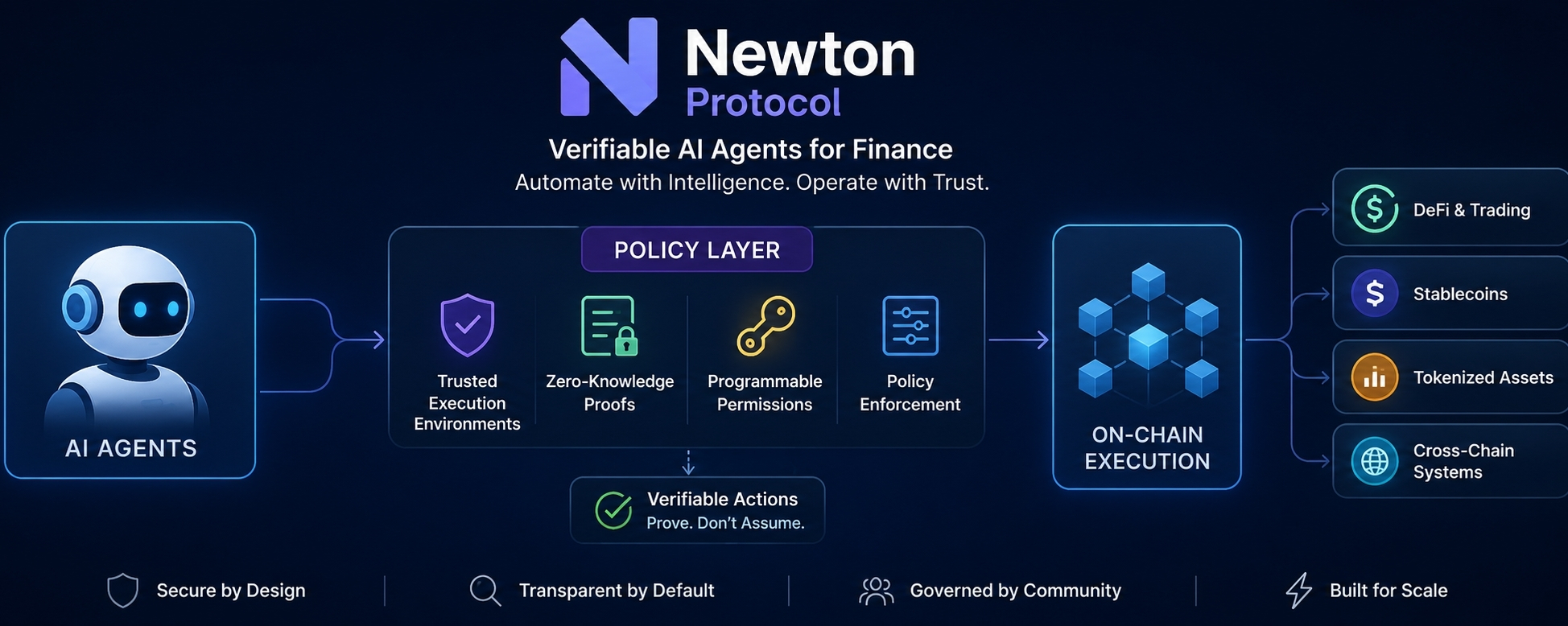
Le protocole Newton et le problème dont personne en cryptomonnaie d’IA ne veut parlerJe lisais encore une annonce liée à la cryptomonnaie et à l’IA, à une heure du matin, après minuit : le genre d’annonce qui promet l’automatisation, l’intelligence, la coordination, l’efficacité, et un avenir où des logiciels font discrètement de l’argent pendant que les humains dorment. À ce stade, j’ai vu tellement de variantes de cette histoire que je les fais presque défiler automatiquement.
La cryptomonnaie a toujours eu un talent pour prendre une tendance technologique légitime et l’étirer jusqu’à ce que chaque jeton y soit d’une manière ou d’une autre rattaché. Il y a quelques années, ce sont les projets de métaverse. Puis le gaming. Ensuite les actifs du monde réel. Maintenant, c’est l’IA.
Le protocole Newton et le problème dont personne en cryptomonnaie d’IA ne veut parler
Je lisais encore une annonce liée à la cryptomonnaie et à l’IA, à une heure du matin, après minuit : le genre d’annonce qui promet l’automatisation, l’intelligence, la coordination, l’efficacité, et un avenir où des logiciels font discrètement de l’argent pendant que les humains dorment. À ce stade, j’ai vu tellement de variantes de cette histoire que je les fais presque défiler automatiquement.
La cryptomonnaie a toujours eu un talent pour prendre une tendance technologique légitime et l’étirer jusqu’à ce que chaque jeton y soit d’une manière ou d’une autre rattaché. Il y a quelques années, ce sont les projets de métaverse. Puis le gaming. Ensuite les actifs du monde réel. Maintenant, c’est l’IA.
La cryptomonnaie a toujours eu un talent pour prendre une tendance technologique légitime et l’étirer jusqu’à ce que chaque jeton y soit d’une manière ou d’une autre rattaché. Il y a quelques années, ce sont les projets de métaverse. Puis le gaming. Ensuite les actifs du monde réel. Maintenant, c’est l’IA.
156
80
334

·
--
Baissier
"Préparez-vous à surfer sur la vague de l'innovation avec BNB, la cryptomonnaie native de l'écosystème Binance ! Avec sa technologie de pointe et sa forte présence sur le marché, BNB révolutionne notre façon de penser aux actifs numériques.
*Caractéristiques Clés:*
- *Transactions Rapides et Sécurisées*: BNB alimente la BNB Chain, permettant des transactions fluides et l'exécution de contrats intelligents.
- *Token de Gouvernance*: Les détenteurs peuvent participer aux votes sur des propositions de développement cruciales, façonnant l'avenir de l'écosystème Binance.
- *Token Déflationniste*: Le mécanisme d'auto-brûlage de BNB réduit l'offre totale au fil du temps, augmentant potentiellement la valeur.
*Analyses du Marché:*
- *Prix Actuel*: 1 020,43 $ USD (sujet à changement)
- *Capitalisation du Marché*: 142,02 milliards $ USD
- *Volume de Trading sur 24h*: 4,35 milliards $ USD
*Pourquoi BNB?*
- *Adoption Croissante*: L'utilité de BNB s'étend au-delà des frais de trading, avec des applications dans le divertissement, les jeux et les paiements de voyage.
- *Écosystème Fort*: La vaste base d'utilisateurs de Binance et son infrastructure robuste soutiennent la croissance de BNB.
Rejoignez la conversation et restez à jour sur les derniers développements de BNB ! #BNB #Binance #Cryptomonnaie" ¹
#BNBATH #camping #bath #bnb #BNBATH $BNB
"Préparez-vous à surfer sur la vague de l'innovation avec BNB, la cryptomonnaie native de l'écosystème Binance ! Avec sa technologie de pointe et sa forte présence sur le marché, BNB révolutionne notre façon de penser aux actifs numériques.
*Caractéristiques Clés:*
- *Transactions Rapides et Sécurisées*: BNB alimente la BNB Chain, permettant des transactions fluides et l'exécution de contrats intelligents.
- *Token de Gouvernance*: Les détenteurs peuvent participer aux votes sur des propositions de développement cruciales, façonnant l'avenir de l'écosystème Binance.
- *Token Déflationniste*: Le mécanisme d'auto-brûlage de BNB réduit l'offre totale au fil du temps, augmentant potentiellement la valeur.
*Analyses du Marché:*
- *Prix Actuel*: 1 020,43 $ USD (sujet à changement)
- *Capitalisation du Marché*: 142,02 milliards $ USD
- *Volume de Trading sur 24h*: 4,35 milliards $ USD
*Pourquoi BNB?*
- *Adoption Croissante*: L'utilité de BNB s'étend au-delà des frais de trading, avec des applications dans le divertissement, les jeux et les paiements de voyage.
- *Écosystème Fort*: La vaste base d'utilisateurs de Binance et son infrastructure robuste soutiennent la croissance de BNB.
Rejoignez la conversation et restez à jour sur les derniers développements de BNB ! #BNB #Binance #Cryptomonnaie" ¹
#BNBATH #camping #bath #bnb #BNBATH $BNB
*Caractéristiques Clés:*
- *Transactions Rapides et Sécurisées*: BNB alimente la BNB Chain, permettant des transactions fluides et l'exécution de contrats intelligents.
- *Token de Gouvernance*: Les détenteurs peuvent participer aux votes sur des propositions de développement cruciales, façonnant l'avenir de l'écosystème Binance.
- *Token Déflationniste*: Le mécanisme d'auto-brûlage de BNB réduit l'offre totale au fil du temps, augmentant potentiellement la valeur.
*Analyses du Marché:*
- *Prix Actuel*: 1 020,43 $ USD (sujet à changement)
- *Capitalisation du Marché*: 142,02 milliards $ USD
- *Volume de Trading sur 24h*: 4,35 milliards $ USD
*Pourquoi BNB?*
- *Adoption Croissante*: L'utilité de BNB s'étend au-delà des frais de trading, avec des applications dans le divertissement, les jeux et les paiements de voyage.
- *Écosystème Fort*: La vaste base d'utilisateurs de Binance et son infrastructure robuste soutiennent la croissance de BNB.
Rejoignez la conversation et restez à jour sur les derniers développements de BNB ! #BNB #Binance #Cryptomonnaie" ¹
#BNBATH #camping #bath #bnb #BNBATH $BNB
2
3
8
14

NPEX et la Fondation Dusk Ouvrent la Porte aux Titres Réglementés sur Chaîne en EuropeL'application décentralisée NPEX est enfin là. C'est un événement majeur pour les marchés européens qui traitent des actifs du monde réel. C'est également un pas en avant pour la Fondation @Dusk_Foundation et ce qu'elle souhaite accomplir. L'application décentralisée NPEX a été construite avec un échange des Pays-Bas appelé NPEX. Cette plateforme met en place, plus de trois cent millions d'euros d'actifs réels sur la blockchain. Elle fait tout cela tout en respectant toutes les règles établies par les régulateurs européens.
L'application décentralisée NPEX n'est pas un test ni un essai. C'est un système destiné à être utilisé pour l'émission, le commerce et le règlement d'instruments financiers réels.
NPEX et la Fondation Dusk Ouvrent la Porte aux Titres Réglementés sur Chaîne en Europe
L'application décentralisée NPEX est enfin là. C'est un événement majeur pour les marchés européens qui traitent des actifs du monde réel. C'est également un pas en avant pour la Fondation @Dusk et ce qu'elle souhaite accomplir. L'application décentralisée NPEX a été construite avec un échange des Pays-Bas appelé NPEX. Cette plateforme met en place, plus de trois cent millions d'euros d'actifs réels sur la blockchain. Elle fait tout cela tout en respectant toutes les règles établies par les régulateurs européens.
L'application décentralisée NPEX n'est pas un test ni un essai. C'est un système destiné à être utilisé pour l'émission, le commerce et le règlement d'instruments financiers réels.
L'application décentralisée NPEX n'est pas un test ni un essai. C'est un système destiné à être utilisé pour l'émission, le commerce et le règlement d'instruments financiers réels.
4
67
Connectez-vous pour découvrir plus de contenu
Rejoignez la communauté mondiale des adeptes de cryptomonnaies sur Binance Square
⚡️ Suviez les dernières informations importantes sur les cryptomonnaies.
💬 Jugé digne de confiance par la plus grande plateforme d’échange de cryptomonnaies au monde.
👍 Découvrez les connaissances que partagent les créateurs vérifiés.
Adresse e-mail/Nº de téléphone
Sujets d’actualité
1
#FedMinutesFocusOnOctoberPause
320,032 vues
1,946 mentions
2
#XRPSpotETFsHold$1.7BWeeklyInflowsSlow
0 vues
1 mentions
3
#FrenchHillUrgesCLARITYActPassageInLameDuck
0 vues
7 mentions
4
#EthereumSpotETFRecords$161MNetOutflows
0 vues
1 mentions
5
#IMFGrantsWaiverForElSalvadorBitcoinBreach
5,490 vues
166 mentions
6
#BinanceLaunchesBinanceIntelligence
1.2M vues
6,985 mentions
7
#EvernorthDelaysNasdaqDebutToOct12
46,048 vues
492 mentions
8
#RobinhoodAdds$25MInBitcoinToBalanceSheet
16,261 vues
101 mentions
9
#SP500AndNasdaqHitRecordHighs
50,494 vues
634 mentions
10
#USMortgageRatesRiseTo7.49%
40,149 vues
499 mentions