

#walru
walru
15,250 vues
1,202 mentions
Populaire
Récents


Article
Walrus : Révolutionner le stockage décentralisé pour l'ère Web3Alors que la technologie blockchain continue d'évoluer, la demande pour un stockage de données évolutif, sécurisé et décentralisé augmente rapidement. Un projet qui attire une attention significative est Walrus, un protocole de stockage décentralisé construit au sein de l'écosystème Sui.
Qu'est-ce que Walrus ?
$OPEN Walrus est conçu pour fournir un stockage décentralisé efficace et rentable pour de gros fichiers de données. Contrairement aux blockchains traditionnelles optimisées pour le traitement des transactions, Walrus se concentre sur le stockage et la récupération de masses de données tout en maintenant la décentralisation et la sécurité.
Walrus : Révolutionner le stockage décentralisé pour l'ère Web3
Alors que la technologie blockchain continue d'évoluer, la demande pour un stockage de données évolutif, sécurisé et décentralisé augmente rapidement. Un projet qui attire une attention significative est Walrus, un protocole de stockage décentralisé construit au sein de l'écosystème Sui.
Qu'est-ce que Walrus ?
$OPEN Walrus est conçu pour fournir un stockage décentralisé efficace et rentable pour de gros fichiers de données. Contrairement aux blockchains traditionnelles optimisées pour le traitement des transactions, Walrus se concentre sur le stockage et la récupération de masses de données tout en maintenant la décentralisation et la sécurité.
167


·
--
Article
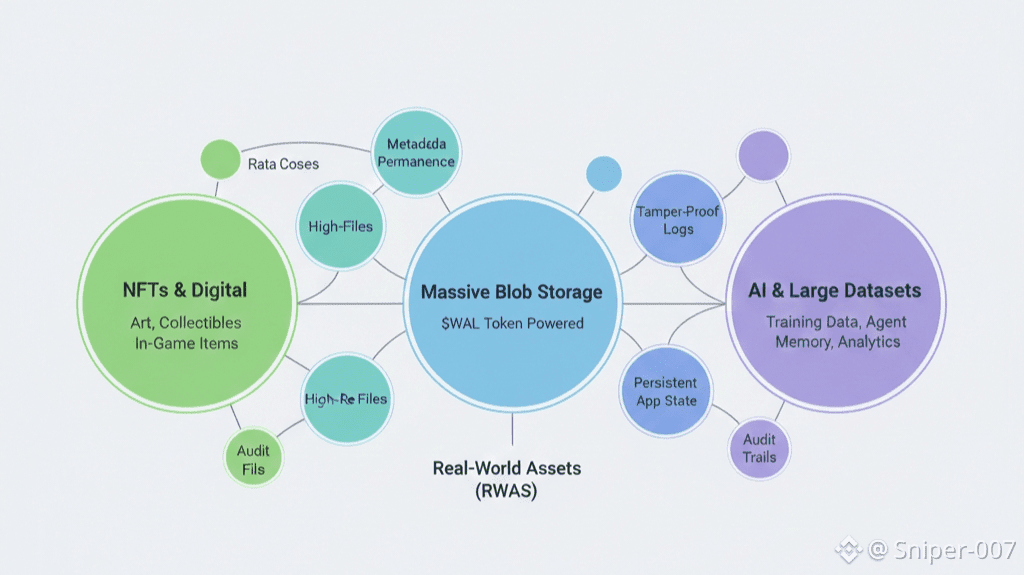
Walrus et son impact dans le stockage décentraliséLe stockage décentralisé est en pleine expansion dans le Web3 car tout le monde souhaite se débarrasser des grands géants du cloud centralisés comme AWS ou Google pour quelque chose de plus sécurisé, privé, et réellement possédé par les utilisateurs. Walrus est l'un de ces projets qui attire l'attention en ce moment—c'est un protocole de stockage à part entière étroitement lié à la blockchain Sui, visant à gérer des fichiers massifs (pensez aux vidéos, ensembles de données d'IA, blobs média) d'une manière fiable, peu coûteuse et programmable sans les maux de tête habituels des autres options décentralisées.
Walrus et son impact dans le stockage décentralisé
Le stockage décentralisé est en pleine expansion dans le Web3 car tout le monde souhaite se débarrasser des grands géants du cloud centralisés comme AWS ou Google pour quelque chose de plus sécurisé, privé, et réellement possédé par les utilisateurs. Walrus est l'un de ces projets qui attire l'attention en ce moment—c'est un protocole de stockage à part entière étroitement lié à la blockchain Sui, visant à gérer des fichiers massifs (pensez aux vidéos, ensembles de données d'IA, blobs média) d'une manière fiable, peu coûteuse et programmable sans les maux de tête habituels des autres options décentralisées.
2
242

Voir la traduction
#walrus $WAL In my previous post We described #walru potential. So now next question arises , Can Walrus compete with existing Storage services ?
My answer is "Yes" it can.
Walrus can compete with existing storage services, but not in the same way that Amazon S3, Google Cloud Storage, or Dropbox do today.
Its competition is structural, not superficial.
Let's have a clear, balanced breakdown.
1. Different Trust Model (Big Advantage)
In Traditional storage You trust a company but Data can be censored, frozen, deleted, or repriced.
Walrus:
Trust is minimized No single owner can block or erase data.
Also Storage persists as long as the network is incentivized
2. Built for Onchain & Web3 Use Cases
Walrus is optimized for:
A) NFTs & media permanence✅
B) DePIN and AI datasets✅
C) Rollups & blockchain data availability✅
D) Censorship-resistant publishing✅
Where Traditional storage was never designed for these.🚫
📌 Walrus is not replacing S3 — it’s replacing what S3 cannot do.
3. Economic Alignment via $WAL
Storage providers are economically incentivized
In Walrus Protocol Users pay the network ✅, not a corporation🚫
Long-term storage economics are transparent.
4. Composable & Programmable
Walrus integrates with:
A) Smart contracts✅
B) Onchain verification✅
C) Permissionless access✅
Traditional cloud storage is:
A) Closed🚫
B)API-gated🚫
C)Platform-dependent🚫
Now let's be fair and talk about Walrus limitations .
Where Walrus Cannot Compete (Yet)
1. User Experience:
Cloud storage has One-click setup and Enterprise dashboards along with Global SLAs
Where Walrus today is Developer-heavy and tooling still maturing. Also Requires Web3 understanding.
2. Enterprises won’t migrate overnight:
Latency & Performance is also a concern for Walrus. Where Centralized clouds excel at low latency.
3. Regulatory & Enterprise Adoption
Corporations need Compliance, Contracts and Legal accountability
But Walrus is Permissionless and there is No central entity to sue or negotiate with.
1
7

Walrus Protocol : L'avenir du stockage de données décentralisées dans le Web3Prêt à surfer sur la prochaine vague DeFi ? @WalrusProtocol offre des expériences sécurisées et gratifiantes pour $WAL holders. Embrassez le voyage #Walrus ! Walrus émerge comme un protocole d'infrastructure puissant conçu pour résoudre l'un des plus grands défis du Web3 : le stockage et la disponibilité des données décentralisées. Contrairement aux systèmes traditionnels qui s'appuient sur des serveurs centralisés, Walrus introduit une manière évolutive, sécurisée et économique de stocker de grandes quantités de données sur la blockchain tout en les rendant accessibles pour les applications décentralisées.
Walrus Protocol : L'avenir du stockage de données décentralisées dans le Web3
Prêt à surfer sur la prochaine vague DeFi ? @Walrus 🦭/acc offre des expériences sécurisées et gratifiantes pour $WAL holders. Embrassez le voyage #Walrus ! Walrus émerge comme un protocole d'infrastructure puissant conçu pour résoudre l'un des plus grands défis du Web3 : le stockage et la disponibilité des données décentralisées. Contrairement aux systèmes traditionnels qui s'appuient sur des serveurs centralisés, Walrus introduit une manière évolutive, sécurisée et économique de stocker de grandes quantités de données sur la blockchain tout en les rendant accessibles pour les applications décentralisées.
12
12
@WalrusProtocol $WAL #walru Explorer des solutions de stockage décentralisé et vraiment impressionné par la vision derrière @walrusprotocol. La disponibilité évolutive des données est essentielle pour la croissance de Web3, et des projets comme celui-ci peuvent avoir un réel impact. Je surveille $WAL au fur et à mesure que l’écosystème évolue. #Walrus 🚀
@Walrus 🦭/acc $WAL #walru Explorer des solutions de stockage décentralisé et vraiment impressionné par la vision derrière @walrusprotocol. La disponibilité évolutive des données est essentielle pour la croissance de Web3, et des projets comme celui-ci peuvent avoir un réel impact. Je surveille $WAL au fur et à mesure que l’écosystème évolue. #Walrus 🚀
11
16

·
--
Walrus Protocol et la couche de stockage dont Web3 a encore besoin pour se généraliser@WalrusProtocol #walrus $WAL
Web3 est souvent expliqué à travers les blockchains, les contrats intelligents, les jetons et le trading. C’est la partie visible. Mais derrière chaque produit numérique utile, il y a quelque chose d’aussi important : les données. Les images, les vidéos, les documents, les métadonnées, les jeux de données, les fichiers d’application, le contenu généré par les utilisateurs et les archives sont les véritables éléments constitutifs d’Internet. Si Web3 veut passer d’une adoption de niche à une utilisation généralisée, il ne peut pas s’appuyer sur des fournisseurs de stockage centralisés pour les aspects les plus essentiels de l’expérience utilisateur.
Walrus Protocol et la couche de stockage dont Web3 a encore besoin pour se généraliser
@Walrus 🦭/acc #walrus $WAL
Web3 est souvent expliqué à travers les blockchains, les contrats intelligents, les jetons et le trading. C’est la partie visible. Mais derrière chaque produit numérique utile, il y a quelque chose d’aussi important : les données. Les images, les vidéos, les documents, les métadonnées, les jeux de données, les fichiers d’application, le contenu généré par les utilisateurs et les archives sont les véritables éléments constitutifs d’Internet. Si Web3 veut passer d’une adoption de niche à une utilisation généralisée, il ne peut pas s’appuyer sur des fournisseurs de stockage centralisés pour les aspects les plus essentiels de l’expérience utilisateur.
Web3 est souvent expliqué à travers les blockchains, les contrats intelligents, les jetons et le trading. C’est la partie visible. Mais derrière chaque produit numérique utile, il y a quelque chose d’aussi important : les données. Les images, les vidéos, les documents, les métadonnées, les jeux de données, les fichiers d’application, le contenu généré par les utilisateurs et les archives sont les véritables éléments constitutifs d’Internet. Si Web3 veut passer d’une adoption de niche à une utilisation généralisée, il ne peut pas s’appuyer sur des fournisseurs de stockage centralisés pour les aspects les plus essentiels de l’expérience utilisateur.
1
22


Article
Redéfinir le DeFi axé sur la communauté pour l'avenir@WalrusProtocol walrusprotocol façonne sa place avec un fort accent sur la scalabilité, l'expérience utilisateur et la gouvernance communautaire. L'#Walru écosystème est conçu pour rassembler des outils financiers décentralisés comme des pools de liquidité, le yield farming, des mécanismes de staking et des plateformes d'échange intuitives qui donnent du pouvoir à la fois aux traders expérimentés et aux nouveaux venus. Construit avec la performance et la sécurité à l'esprit, Walrus vise à offrir des transactions rapides et à faible coût qui rendent l'engagement quotidien dans le DeFi plus fluide et plus gratifiant pour les utilisateurs.$WAL
Redéfinir le DeFi axé sur la communauté pour l'avenir
@Walrus 🦭/acc walrusprotocol façonne sa place avec un fort accent sur la scalabilité, l'expérience utilisateur et la gouvernance communautaire. L'#Walru écosystème est conçu pour rassembler des outils financiers décentralisés comme des pools de liquidité, le yield farming, des mécanismes de staking et des plateformes d'échange intuitives qui donnent du pouvoir à la fois aux traders expérimentés et aux nouveaux venus. Construit avec la performance et la sécurité à l'esprit, Walrus vise à offrir des transactions rapides et à faible coût qui rendent l'engagement quotidien dans le DeFi plus fluide et plus gratifiant pour les utilisateurs.$WAL
1
6

#walrus $WAL
🚀 Walrus… parce que l'avenir ne se stocke pas sur des serveurs centraux !
Avez-vous déjà pensé à où vos données sont stockées ?
Walrus vous propose une alternative révolutionnaire : un stockage décentralisé résistant à la censure, fonctionnant sur la blockchain Sui, utilisant des technologies avancées pour la distribution de fichiers.
Ce n'est pas juste du stockage… c'est une véritable indépendance numérique.
Rejoignez la campagne Walrus et soyez parmi les premiers à écrire l'avenir des données !
#Walru #BinanceSquare $WAL @WalrusProtocol
#walrus $WAL
🚀 Walrus… parce que l'avenir ne se stocke pas sur des serveurs centraux !
Avez-vous déjà pensé à où vos données sont stockées ?
Walrus vous propose une alternative révolutionnaire : un stockage décentralisé résistant à la censure, fonctionnant sur la blockchain Sui, utilisant des technologies avancées pour la distribution de fichiers.
Ce n'est pas juste du stockage… c'est une véritable indépendance numérique.
Rejoignez la campagne Walrus et soyez parmi les premiers à écrire l'avenir des données !
#Walru #BinanceSquare $WAL @Walrus 🦭/acc
1
51
Connectez-vous pour découvrir plus de contenu
Rejoignez la communauté mondiale des adeptes de cryptomonnaies sur Binance Square
⚡️ Suviez les dernières informations importantes sur les cryptomonnaies.
💬 Jugé digne de confiance par la plus grande plateforme d’échange de cryptomonnaies au monde.
👍 Découvrez les connaissances que partagent les créateurs vérifiés.
Adresse e-mail/Nº de téléphone
Sujets d’actualité
1
#BinanceProcesses$4.65BWithdrawals
2,336 vues
50 mentions
2
#WithdrawalsBack: 15 networks live
4,093 vues
98 mentions
3
#BinanceUpdatesProofofReservesAddresses
82,295 vues
1,270 mentions
4
#BinanceToResumePhaseOneOfWithdrawals
122,085 vues
1,422 mentions
5
#BinanceHadAlreadyCovered$6BofHackLoss
8,355 vues
127 mentions
6
#FBIConfirmsNorthKoreaIsResponsibleForBinanceCryptoHack
42,712 vues
138 mentions
7
#CZDismissesClaimsBinanceHackWasPredicted
59,216 vues
641 mentions
8
#B14gReportsUnauthorizedTransferOfAbout97MCORE
17,977 vues
312 mentions
9
#USSpotETHETFsPost23StraightDaysOfNetOutflows
21,681 vues
284 mentions
10
#IntelHasItsWorstDaySince1974
110,866 vues
890 mentions