

Mr Mian 92
1.8k Publications

Mr Mian 92
Signaler
Bloquer l’utilisateur
Mr Mian anwer crypto trader and visionary content creator and article writer who weaves words into compelling narratives. x id @samsun33727
Ouvert au trading

Détenteur pour BNCB
Trade fréquemment
4.9 an(s)
9.9K+ Suivis
2.3K+ Abonnés
1.3K+ J’aime
Publications
Portefeuille
Tous
Citations
Vidéos
Direct
·
--
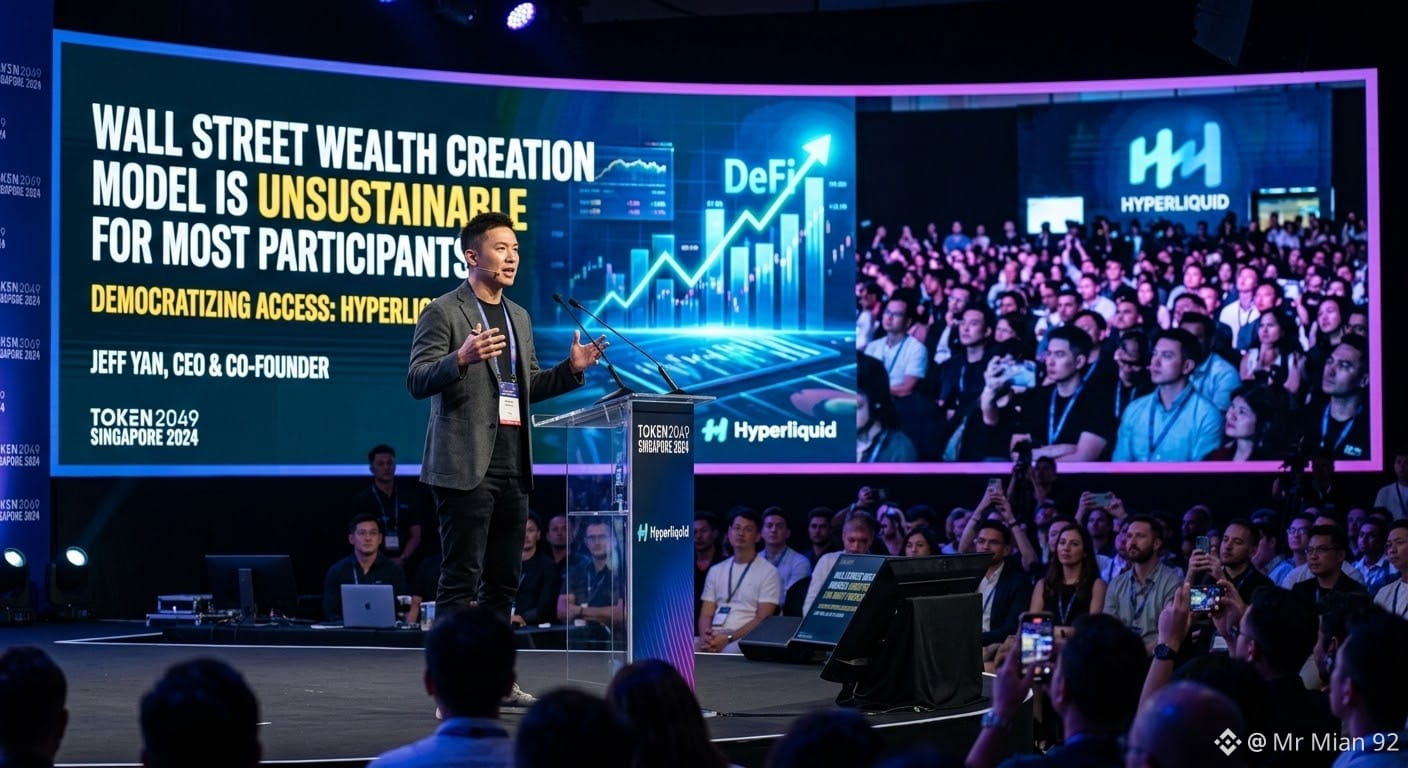
Hyperliquid CEO Jeff Yan delivered a sharp critique of traditional Wall Street wealth-creation models at Token2049 Singapore, arguing that the existing financial paradigm is inherently unsustainable for the vast majority of market participants.
The Wall Street Bottleneck
Under the traditional financial system, the most lucrative wealth-creation opportunities are locked behind private markets. Venture capital firms and institutional insiders capture the bulk of a company's early valuation growth long before retail investors are allowed access via an Initial Public Offering (IPO). By the time a firm goes public, much of the exponential upside has already been extracted, leaving everyday traders with slower, diminished returns while taking on public-market downside risks.
Decentralized Alternatives and Hyperliquid's Approach
Yan outlined Hyperliquid’s strategy to shift this dynamic toward a more equitable, open financial ecosystem:
Democratized Early Access: Leveraging decentralized finance (DeFi) infrastructure to offer retail traders direct, permissionless entry to wealth-building opportunities previously reserved for accredited or institutional investors.
Simplified Perpetual Contracts: Utilizing non-expiring perpetual contracts to eliminate the friction, roll-over costs, and operational complexities common in traditional derivatives markets.
Proved Revenue Model: Demonstrating high protocol activity and underlying demand by generating $72 million in revenue over a single month.
Wall Street Takes Notice
The platform's rapid expansion and revenue generation have caught the attention of major traditional finance institutions. Entities such as the Intercontinental Exchange (ICE)—the parent company of the New York Stock Exchange—are increasingly watching decentralized venues as the debate grows around market access, liquidity fragmentation, and the push for a more transparent global trading landscape.
Hyperliquid CEO Jeff Yan delivered a sharp critique of traditional Wall Street wealth-creation models at Token2049 Singapore, arguing that the existing financial paradigm is inherently unsustainable for the vast majority of market participants.
The Wall Street Bottleneck
Under the traditional financial system, the most lucrative wealth-creation opportunities are locked behind private markets. Venture capital firms and institutional insiders capture the bulk of a company's early valuation growth long before retail investors are allowed access via an Initial Public Offering (IPO). By the time a firm goes public, much of the exponential upside has already been extracted, leaving everyday traders with slower, diminished returns while taking on public-market downside risks.
Decentralized Alternatives and Hyperliquid's Approach
Yan outlined Hyperliquid’s strategy to shift this dynamic toward a more equitable, open financial ecosystem:
Democratized Early Access: Leveraging decentralized finance (DeFi) infrastructure to offer retail traders direct, permissionless entry to wealth-building opportunities previously reserved for accredited or institutional investors.
Simplified Perpetual Contracts: Utilizing non-expiring perpetual contracts to eliminate the friction, roll-over costs, and operational complexities common in traditional derivatives markets.
Proved Revenue Model: Demonstrating high protocol activity and underlying demand by generating $72 million in revenue over a single month.
Wall Street Takes Notice
The platform's rapid expansion and revenue generation have caught the attention of major traditional finance institutions. Entities such as the Intercontinental Exchange (ICE)—the parent company of the New York Stock Exchange—are increasingly watching decentralized venues as the debate grows around market access, liquidity fragmentation, and the push for a more transparent global trading landscape.
The Wall Street Bottleneck
Under the traditional financial system, the most lucrative wealth-creation opportunities are locked behind private markets. Venture capital firms and institutional insiders capture the bulk of a company's early valuation growth long before retail investors are allowed access via an Initial Public Offering (IPO). By the time a firm goes public, much of the exponential upside has already been extracted, leaving everyday traders with slower, diminished returns while taking on public-market downside risks.
Decentralized Alternatives and Hyperliquid's Approach
Yan outlined Hyperliquid’s strategy to shift this dynamic toward a more equitable, open financial ecosystem:
Democratized Early Access: Leveraging decentralized finance (DeFi) infrastructure to offer retail traders direct, permissionless entry to wealth-building opportunities previously reserved for accredited or institutional investors.
Simplified Perpetual Contracts: Utilizing non-expiring perpetual contracts to eliminate the friction, roll-over costs, and operational complexities common in traditional derivatives markets.
Proved Revenue Model: Demonstrating high protocol activity and underlying demand by generating $72 million in revenue over a single month.
Wall Street Takes Notice
The platform's rapid expansion and revenue generation have caught the attention of major traditional finance institutions. Entities such as the Intercontinental Exchange (ICE)—the parent company of the New York Stock Exchange—are increasingly watching decentralized venues as the debate grows around market access, liquidity fragmentation, and the push for a more transparent global trading landscape.
203
·
--
📰 Crypto PAC announces support for 32 House candidates in US midterms
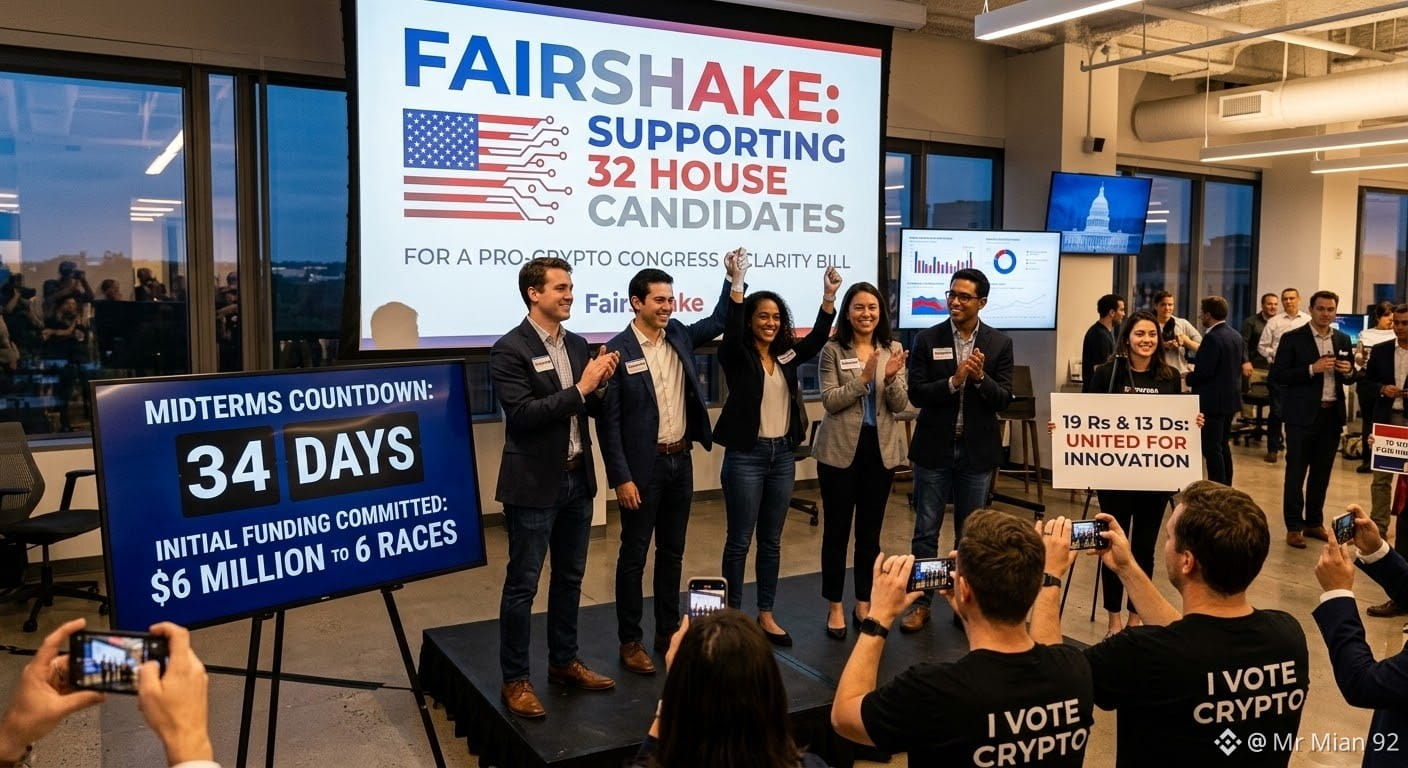
Fairshake, a political action committee supported by major crypto firms like Coinbase and Ripple Labs, announced it will financially back 32 House candidates who voted for the stalled CLARITY market structure bill, initially committing $6 million to six candidates ahead of the 2026 midterm elections. The PAC plans to spend over $100 million on ads for House and Senate candidates, including $30 million in Ohio's Senate race, aiming to build a pro-crypto caucus. Fairshake's support spans 19 Republicans and 13 Democrats, all of whom endorsed the Digital Asset Market Clarity Act, which is currently facing uncertainty in the Senate.AspectStatus & Impact
ObjectiveDesigned to establish clear statutory definitions and regulatory boundaries for U.S. financial regulators (specifically division between the CFTC and SEC) overseeing digital assets.
Current Senate StatusAfter advancing through the House, the bill failed to pass a crucial Senate vote, leaving statutory market structure rules in limbo ahead of the midterms.
Fairshake StrategyBy locking in early backing for House lawmakers who voted to advance the framework, Fairshake aims to ensure that regardless of which party controls Congress after the election, a dedicated pro-crypto caucus will be in place to reintroduce and champion similar regulatory clarity.
📰 Crypto PAC announces support for 32 House candidates in US midterms
Fairshake, a political action committee supported by major crypto firms like Coinbase and Ripple Labs, announced it will financially back 32 House candidates who voted for the stalled CLARITY market structure bill, initially committing $6 million to six candidates ahead of the 2026 midterm elections. The PAC plans to spend over $100 million on ads for House and Senate candidates, including $30 million in Ohio's Senate race, aiming to build a pro-crypto caucus. Fairshake's support spans 19 Republicans and 13 Democrats, all of whom endorsed the Digital Asset Market Clarity Act, which is currently facing uncertainty in the Senate.AspectStatus & Impact
ObjectiveDesigned to establish clear statutory definitions and regulatory boundaries for U.S. financial regulators (specifically division between the CFTC and SEC) overseeing digital assets.
Current Senate StatusAfter advancing through the House, the bill failed to pass a crucial Senate vote, leaving statutory market structure rules in limbo ahead of the midterms.
Fairshake StrategyBy locking in early backing for House lawmakers who voted to advance the framework, Fairshake aims to ensure that regardless of which party controls Congress after the election, a dedicated pro-crypto caucus will be in place to reintroduce and champion similar regulatory clarity.
Fairshake, a political action committee supported by major crypto firms like Coinbase and Ripple Labs, announced it will financially back 32 House candidates who voted for the stalled CLARITY market structure bill, initially committing $6 million to six candidates ahead of the 2026 midterm elections. The PAC plans to spend over $100 million on ads for House and Senate candidates, including $30 million in Ohio's Senate race, aiming to build a pro-crypto caucus. Fairshake's support spans 19 Republicans and 13 Democrats, all of whom endorsed the Digital Asset Market Clarity Act, which is currently facing uncertainty in the Senate.AspectStatus & Impact
ObjectiveDesigned to establish clear statutory definitions and regulatory boundaries for U.S. financial regulators (specifically division between the CFTC and SEC) overseeing digital assets.
Current Senate StatusAfter advancing through the House, the bill failed to pass a crucial Senate vote, leaving statutory market structure rules in limbo ahead of the midterms.
Fairshake StrategyBy locking in early backing for House lawmakers who voted to advance the framework, Fairshake aims to ensure that regardless of which party controls Congress after the election, a dedicated pro-crypto caucus will be in place to reintroduce and champion similar regulatory clarity.
73
·
--
#美伊局势持续紧张,G7将释放最多1亿桶储备
G7说要放1亿桶储备,油价没崩,BTC也没跟涨。这事得拆开看。
放储是缓冲垫,不是解药。1亿桶听起来多,但霍尔木兹海峡的风险还在,供应不确定性的根子没拔掉。G7这么做,只是给市场争取点时间,不是解决问题。
对BTC的影响分两层。短期,油价被压住,通胀预期降温,加息压力减小,对风险资产是边际利好。但别高兴太早,储备释放是消耗库存,一旦地缘再升级,油价可能报复性反弹,通胀重新起来,BTC照样承压。中期,放储反而暴露了供应的脆弱性,各国手里能用的弹药越来越少,这种担忧会慢慢渗透到定价里。
BTC现在在8.5万附近震荡,上方8.7万是阻力,下方8.4万是支撑。放储这条消息,短期能压一压油价,但改变不了BTC的方向。真要看多,等油价持续回落加上BTC放量突破8.7万,两个信号一起出现再说。
操作上别把放储当利好去追。它只是把短期风险往后推,不是把风险消掉。区间没破之前,看戏比下场安全。
我是刺哥。$BTC
#美伊局势持续紧张,G7将释放最多1亿桶储备
G7说要放1亿桶储备,油价没崩,BTC也没跟涨。这事得拆开看。
放储是缓冲垫,不是解药。1亿桶听起来多,但霍尔木兹海峡的风险还在,供应不确定性的根子没拔掉。G7这么做,只是给市场争取点时间,不是解决问题。
对BTC的影响分两层。短期,油价被压住,通胀预期降温,加息压力减小,对风险资产是边际利好。但别高兴太早,储备释放是消耗库存,一旦地缘再升级,油价可能报复性反弹,通胀重新起来,BTC照样承压。中期,放储反而暴露了供应的脆弱性,各国手里能用的弹药越来越少,这种担忧会慢慢渗透到定价里。
BTC现在在8.5万附近震荡,上方8.7万是阻力,下方8.4万是支撑。放储这条消息,短期能压一压油价,但改变不了BTC的方向。真要看多,等油价持续回落加上BTC放量突破8.7万,两个信号一起出现再说。
操作上别把放储当利好去追。它只是把短期风险往后推,不是把风险消掉。区间没破之前,看戏比下场安全。
我是刺哥。$BTC
G7说要放1亿桶储备,油价没崩,BTC也没跟涨。这事得拆开看。
放储是缓冲垫,不是解药。1亿桶听起来多,但霍尔木兹海峡的风险还在,供应不确定性的根子没拔掉。G7这么做,只是给市场争取点时间,不是解决问题。
对BTC的影响分两层。短期,油价被压住,通胀预期降温,加息压力减小,对风险资产是边际利好。但别高兴太早,储备释放是消耗库存,一旦地缘再升级,油价可能报复性反弹,通胀重新起来,BTC照样承压。中期,放储反而暴露了供应的脆弱性,各国手里能用的弹药越来越少,这种担忧会慢慢渗透到定价里。
BTC现在在8.5万附近震荡,上方8.7万是阻力,下方8.4万是支撑。放储这条消息,短期能压一压油价,但改变不了BTC的方向。真要看多,等油价持续回落加上BTC放量突破8.7万,两个信号一起出现再说。
操作上别把放储当利好去追。它只是把短期风险往后推,不是把风险消掉。区间没破之前,看戏比下场安全。
我是刺哥。$BTC

1
204
·
--
io
📰 El Salvador receives $138 million from IMF after Bitcoin waivers granted
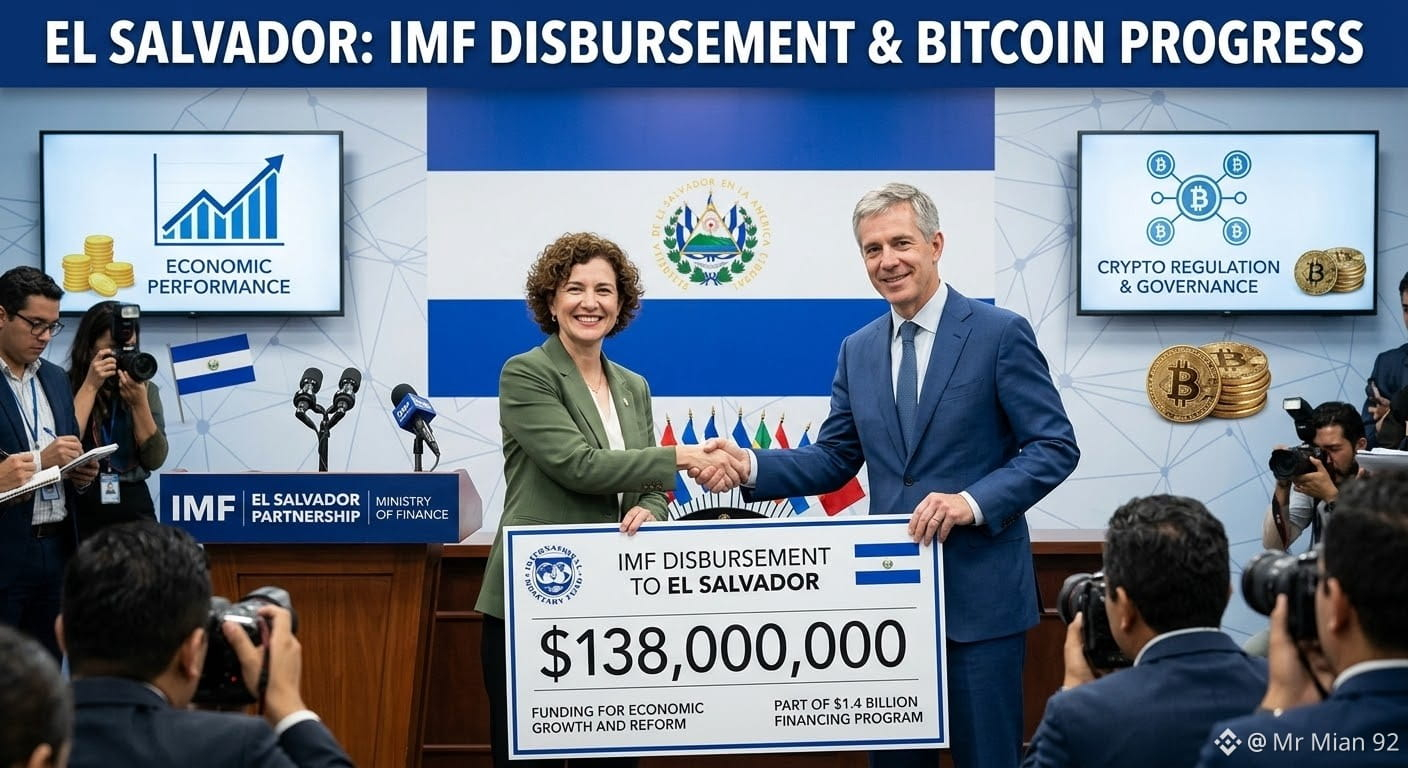
The International Monetary Fund (IMF) has approved a $138 million disbursement to El Salvador as part of its $1.4 billion financing program, despite the country missing some performance criteria related to Bitcoin accumulation. The IMF emphasized the need to reduce state involvement in Bitcoin activities and enhance crypto regulation and governance, while noting that El Salvador's recent Bitcoin holdings were funded through private donations rather than public resources. Additionally, the majority control of the government-operated Chivo Bitcoin wallet has been transferred to a private operator, with the government retaining a minority stake.
io
📰 El Salvador receives $138 million from IMF after Bitcoin waivers granted
The International Monetary Fund (IMF) has approved a $138 million disbursement to El Salvador as part of its $1.4 billion financing program, despite the country missing some performance criteria related to Bitcoin accumulation. The IMF emphasized the need to reduce state involvement in Bitcoin activities and enhance crypto regulation and governance, while noting that El Salvador's recent Bitcoin holdings were funded through private donations rather than public resources. Additionally, the majority control of the government-operated Chivo Bitcoin wallet has been transferred to a private operator, with the government retaining a minority stake.
📰 El Salvador receives $138 million from IMF after Bitcoin waivers granted
The International Monetary Fund (IMF) has approved a $138 million disbursement to El Salvador as part of its $1.4 billion financing program, despite the country missing some performance criteria related to Bitcoin accumulation. The IMF emphasized the need to reduce state involvement in Bitcoin activities and enhance crypto regulation and governance, while noting that El Salvador's recent Bitcoin holdings were funded through private donations rather than public resources. Additionally, the majority control of the government-operated Chivo Bitcoin wallet has been transferred to a private operator, with the government retaining a minority stake.
1
83
·
--
Headline: 🚨 Are Retail Traders Just Wall Street’s Exit Liquidity? 🛑📉
Everyone is cheering for spot ETFs, corporate treasuries, and multi-billion-dollar institutional inflows.
But here is the uncomfortable reality nobody wants to admit:
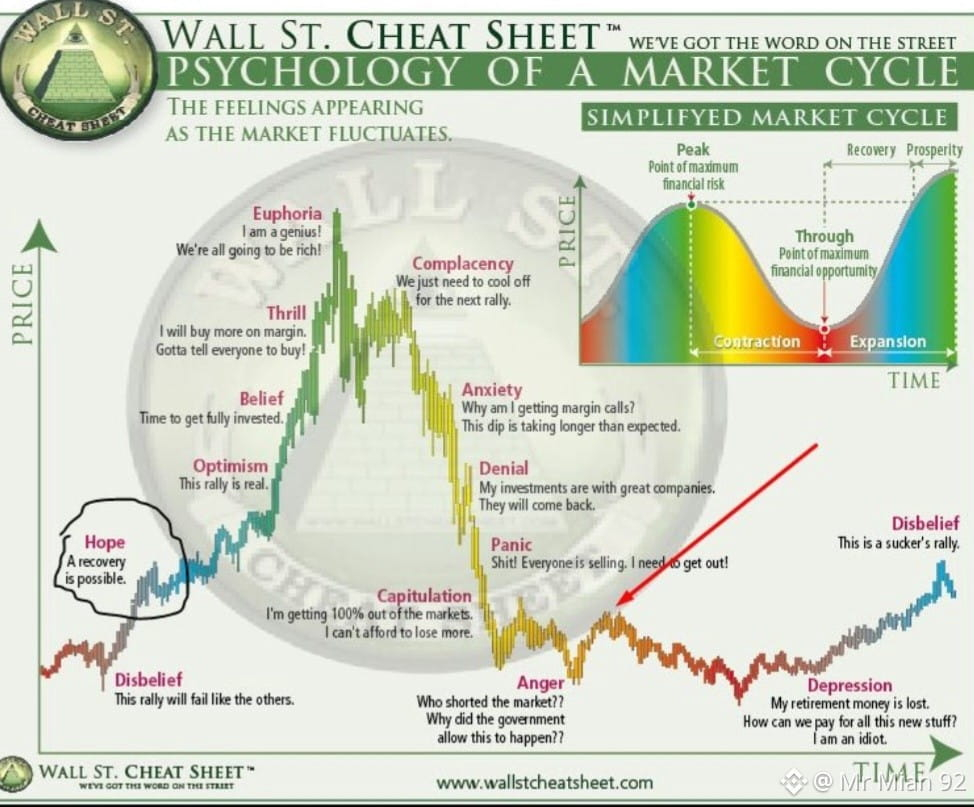
Every time retail enthusiasm peaks, Wall Street uses that exact spot liquidity to cash out.
Here are 3 historical proofs. 👇
Slide 2 / Tweet 2 (Proof #1)
1. The 2017 CME Futures Launch 📉
In late 2017, the launch of CME Bitcoin futures was hyped as the ultimate institutional validation.
Retail rushed in, driving Bitcoin toward $20k.
Institutional desks used the derivative market and spot liquidity to short the top.
Result: An 84% drawdown into a brutal bear market.
Slide 3 / Tweet 3 (Proof #2)
2. The 2021 Coinbase IPO & Meme Coin Mania 🏦
In April 2021, Coinbase listed on NASDAQ at a $100B valuation right as retail buying hit peak frenzy around meme tokens.
Insiders and VC funds offloaded billions in stock on day one.
Smart money dumped crypto into retail FOMO.
Result: Marked the exact local top for BTC ($64k) before a 50% crash in weeks.
Slide 4 / Tweet 4 (Proof #3)
3. The Spot ETF & Corporate Treasury Frenzy 📊
When ETFs hit the market, retail bought spot assets and shares at peak valuations based on headline hype.
Sophisticated funds ran cash-and-carry basis trades (long ETF, short futures).
They extracted risk-free yield while distributing inventory to retail buying the range high.
Result: Retail held spot exposure while funds extracted pure yield.
Slide 5 / Tweet 5 (The Takeaway & CTA)
The Bottom Line 💡
When Wall Street enters crypto, they don't play by retail rules. They operate with algorithms, deep capital reserves, and yield strategies built to extract profit at every turn.
Without a strict risk management framework and clear entry-exit targets, you aren't an investor in the institutional cycle—you are the counterparty funding their gains.
Trade smart. Protect your capital. 📌
Headline: 🚨 Are Retail Traders Just Wall Street’s Exit Liquidity? 🛑📉
Everyone is cheering for spot ETFs, corporate treasuries, and multi-billion-dollar institutional inflows.
But here is the uncomfortable reality nobody wants to admit:
Every time retail enthusiasm peaks, Wall Street uses that exact spot liquidity to cash out.
Here are 3 historical proofs. 👇
Slide 2 / Tweet 2 (Proof #1)
1. The 2017 CME Futures Launch 📉
In late 2017, the launch of CME Bitcoin futures was hyped as the ultimate institutional validation.
Retail rushed in, driving Bitcoin toward $20k.
Institutional desks used the derivative market and spot liquidity to short the top.
Result: An 84% drawdown into a brutal bear market.
Slide 3 / Tweet 3 (Proof #2)
2. The 2021 Coinbase IPO & Meme Coin Mania 🏦
In April 2021, Coinbase listed on NASDAQ at a $100B valuation right as retail buying hit peak frenzy around meme tokens.
Insiders and VC funds offloaded billions in stock on day one.
Smart money dumped crypto into retail FOMO.
Result: Marked the exact local top for BTC ($64k) before a 50% crash in weeks.
Slide 4 / Tweet 4 (Proof #3)
3. The Spot ETF & Corporate Treasury Frenzy 📊
When ETFs hit the market, retail bought spot assets and shares at peak valuations based on headline hype.
Sophisticated funds ran cash-and-carry basis trades (long ETF, short futures).
They extracted risk-free yield while distributing inventory to retail buying the range high.
Result: Retail held spot exposure while funds extracted pure yield.
Slide 5 / Tweet 5 (The Takeaway & CTA)
The Bottom Line 💡
When Wall Street enters crypto, they don't play by retail rules. They operate with algorithms, deep capital reserves, and yield strategies built to extract profit at every turn.
Without a strict risk management framework and clear entry-exit targets, you aren't an investor in the institutional cycle—you are the counterparty funding their gains.
Trade smart. Protect your capital. 📌
Everyone is cheering for spot ETFs, corporate treasuries, and multi-billion-dollar institutional inflows.
But here is the uncomfortable reality nobody wants to admit:
Every time retail enthusiasm peaks, Wall Street uses that exact spot liquidity to cash out.
Here are 3 historical proofs. 👇
Slide 2 / Tweet 2 (Proof #1)
1. The 2017 CME Futures Launch 📉
In late 2017, the launch of CME Bitcoin futures was hyped as the ultimate institutional validation.
Retail rushed in, driving Bitcoin toward $20k.
Institutional desks used the derivative market and spot liquidity to short the top.
Result: An 84% drawdown into a brutal bear market.
Slide 3 / Tweet 3 (Proof #2)
2. The 2021 Coinbase IPO & Meme Coin Mania 🏦
In April 2021, Coinbase listed on NASDAQ at a $100B valuation right as retail buying hit peak frenzy around meme tokens.
Insiders and VC funds offloaded billions in stock on day one.
Smart money dumped crypto into retail FOMO.
Result: Marked the exact local top for BTC ($64k) before a 50% crash in weeks.
Slide 4 / Tweet 4 (Proof #3)
3. The Spot ETF & Corporate Treasury Frenzy 📊
When ETFs hit the market, retail bought spot assets and shares at peak valuations based on headline hype.
Sophisticated funds ran cash-and-carry basis trades (long ETF, short futures).
They extracted risk-free yield while distributing inventory to retail buying the range high.
Result: Retail held spot exposure while funds extracted pure yield.
Slide 5 / Tweet 5 (The Takeaway & CTA)
The Bottom Line 💡
When Wall Street enters crypto, they don't play by retail rules. They operate with algorithms, deep capital reserves, and yield strategies built to extract profit at every turn.
Without a strict risk management framework and clear entry-exit targets, you aren't an investor in the institutional cycle—you are the counterparty funding their gains.
Trade smart. Protect your capital. 📌
59
·
--
The technical setup for $PENDLE shows a classic trend-continuation pattern forming on higher timeframes. After an extended consolidation phase that established a solid support floor, the price is testing its macro multi-month dynamic downtrend line. [First Target: $4.00] ───► 🚀
/
Clean Break /
────────────► / (Accelerated Momentum)
/ /
/ (Testing) /
───/─────────────┴───────────────────── [Long-Term Downtrend Line]
\ /
\__ Base ___/ Key Technical Dynamics
Base Construction: PENDLE’s recent lateral movement allowed volume to accumulate, effectively shifting the market structure from a markdown phase to an accumulation phase.
Trendline Pressure: Repeated retests of a long-term downtrend gradually exhaust sell-side liquidity. A high-volume breakout above this boundary signals a shift from a bearish regime to a bullish mark-up phase.
The $4.00 Target: Breaking through current dynamic resistance opens up a liquidity void toward $4.00, which serves as the next significant psychological and structural resistance zone.
What to Watch for Execution
Volume Expansion: A valid breakout requires above-average trading volume to confirm institutional buying interest and avoid a false breakout.
Support Swap: Look for the prior downtrend line—or immediate horizontal resistance—to flip into clear support on a lower-timeframe retest.
DeFi Yield Catalysts: As a core protocol for yield tokenization, PENDLE often moves alongside total value locked (TVL) expansion and broader yield-trading volume across crypto markets.
The technical setup for $PENDLE shows a classic trend-continuation pattern forming on higher timeframes. After an extended consolidation phase that established a solid support floor, the price is testing its macro multi-month dynamic downtrend line. [First Target: $4.00] ───► 🚀
/
Clean Break /
────────────► / (Accelerated Momentum)
/ /
/ (Testing) /
───/─────────────┴───────────────────── [Long-Term Downtrend Line]
\ /
\__ Base ___/ Key Technical Dynamics
Base Construction: PENDLE’s recent lateral movement allowed volume to accumulate, effectively shifting the market structure from a markdown phase to an accumulation phase.
Trendline Pressure: Repeated retests of a long-term downtrend gradually exhaust sell-side liquidity. A high-volume breakout above this boundary signals a shift from a bearish regime to a bullish mark-up phase.
The $4.00 Target: Breaking through current dynamic resistance opens up a liquidity void toward $4.00, which serves as the next significant psychological and structural resistance zone.
What to Watch for Execution
Volume Expansion: A valid breakout requires above-average trading volume to confirm institutional buying interest and avoid a false breakout.
Support Swap: Look for the prior downtrend line—or immediate horizontal resistance—to flip into clear support on a lower-timeframe retest.
DeFi Yield Catalysts: As a core protocol for yield tokenization, PENDLE often moves alongside total value locked (TVL) expansion and broader yield-trading volume across crypto markets.
/
Clean Break /
────────────► / (Accelerated Momentum)
/ /
/ (Testing) /
───/─────────────┴───────────────────── [Long-Term Downtrend Line]
\ /
\__ Base ___/ Key Technical Dynamics
Base Construction: PENDLE’s recent lateral movement allowed volume to accumulate, effectively shifting the market structure from a markdown phase to an accumulation phase.
Trendline Pressure: Repeated retests of a long-term downtrend gradually exhaust sell-side liquidity. A high-volume breakout above this boundary signals a shift from a bearish regime to a bullish mark-up phase.
The $4.00 Target: Breaking through current dynamic resistance opens up a liquidity void toward $4.00, which serves as the next significant psychological and structural resistance zone.
What to Watch for Execution
Volume Expansion: A valid breakout requires above-average trading volume to confirm institutional buying interest and avoid a false breakout.
Support Swap: Look for the prior downtrend line—or immediate horizontal resistance—to flip into clear support on a lower-timeframe retest.
DeFi Yield Catalysts: As a core protocol for yield tokenization, PENDLE often moves alongside total value locked (TVL) expansion and broader yield-trading volume across crypto markets.
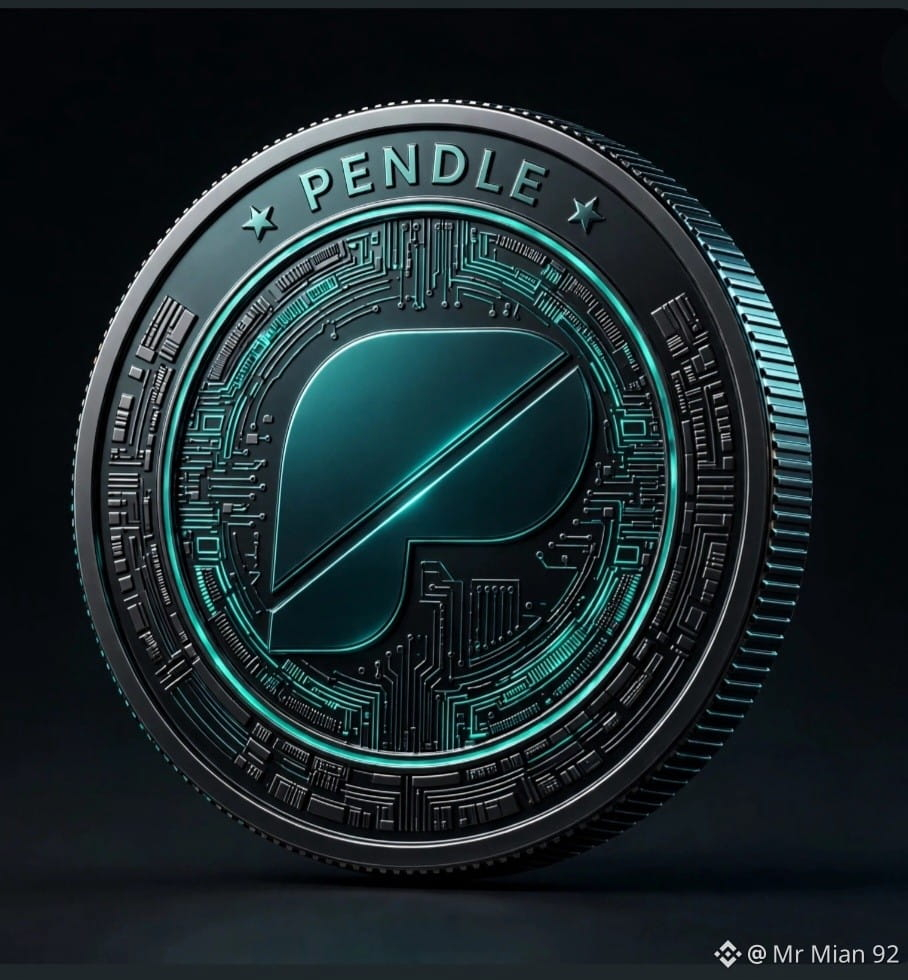
209
·
--
Anchorage Digital Cuts 17% of Workforce Amid Crypto Headwinds
Anchorage Digital, the federally chartered crypto bank valued at $4.2 billion, has laid off 17% of its workforce—approximately 68 employees—to navigate ongoing turbulence in the digital asset market.
CEO Nathan McCauley announced the cuts to staff this week, pointing to persistent market headwinds and a prolonged crypto winter as primary drivers for the decision. Despite major cryptocurrencies remaining well below their peak historical highs, the downsizing underscores the broader financial pressure on institutional crypto infrastructure providers.
The workforce reduction comes as a notable shift, given Anchorage Digital’s recent aggressive moves to scale its operations. The institutional custodian recently expanded its ecosystem by supporting stablecoin issuance and securing a high-profile $100 million investment from Tether, the issuer behind USDT.
Founded in 2017, Anchorage achieved historic regulatory status in 2021 by becoming the first crypto-native firm to receive a federal bank charter from the OCC. While the firm maintains that its core custodian, staking, and trading services remain fully operational and well-capitalized, these layoffs highlight how even heavily regulated, top-tier crypto institutions are forced to streamline operations to stay resilient in a disciplined market environment.
Anchorage Digital Cuts 17% of Workforce Amid Crypto Headwinds
Anchorage Digital, the federally chartered crypto bank valued at $4.2 billion, has laid off 17% of its workforce—approximately 68 employees—to navigate ongoing turbulence in the digital asset market.
CEO Nathan McCauley announced the cuts to staff this week, pointing to persistent market headwinds and a prolonged crypto winter as primary drivers for the decision. Despite major cryptocurrencies remaining well below their peak historical highs, the downsizing underscores the broader financial pressure on institutional crypto infrastructure providers.
The workforce reduction comes as a notable shift, given Anchorage Digital’s recent aggressive moves to scale its operations. The institutional custodian recently expanded its ecosystem by supporting stablecoin issuance and securing a high-profile $100 million investment from Tether, the issuer behind USDT.
Founded in 2017, Anchorage achieved historic regulatory status in 2021 by becoming the first crypto-native firm to receive a federal bank charter from the OCC. While the firm maintains that its core custodian, staking, and trading services remain fully operational and well-capitalized, these layoffs highlight how even heavily regulated, top-tier crypto institutions are forced to streamline operations to stay resilient in a disciplined market environment.
Anchorage Digital, the federally chartered crypto bank valued at $4.2 billion, has laid off 17% of its workforce—approximately 68 employees—to navigate ongoing turbulence in the digital asset market.
CEO Nathan McCauley announced the cuts to staff this week, pointing to persistent market headwinds and a prolonged crypto winter as primary drivers for the decision. Despite major cryptocurrencies remaining well below their peak historical highs, the downsizing underscores the broader financial pressure on institutional crypto infrastructure providers.
The workforce reduction comes as a notable shift, given Anchorage Digital’s recent aggressive moves to scale its operations. The institutional custodian recently expanded its ecosystem by supporting stablecoin issuance and securing a high-profile $100 million investment from Tether, the issuer behind USDT.
Founded in 2017, Anchorage achieved historic regulatory status in 2021 by becoming the first crypto-native firm to receive a federal bank charter from the OCC. While the firm maintains that its core custodian, staking, and trading services remain fully operational and well-capitalized, these layoffs highlight how even heavily regulated, top-tier crypto institutions are forced to streamline operations to stay resilient in a disciplined market environment.

64
·
--
Dogecoin is an open-source, peer-to-peer cryptocurrency launched in December 2013 by software engineers Billy Markus and Jackson Palmer. Created as a lighthearted joke based on the famous "Doge" internet meme featuring a Shiba Inu dog, it was intended to satirize the speculative nature of Bitcoin and early crypto projects.
Despite its humorous origins, Dogecoin quickly established a vibrant, active global community. It operates on a proof-of-work blockchain using the Scrypt algorithm—a technology inherited from Litecoin that allows for faster transaction validation (roughly one minute per block) and lower transaction fees than Bitcoin. Unlike capped assets like Bitcoin, Dogecoin has no maximum supply limit; 10,000 new DOGE are issued per minute, making it inherently inflationary.
Dogecoin became widely used for micro-transactions, online tipping, and charitable causes, including funding clean water projects and sports sponsorships. Its profile skyrocketed in 2021, fueled by social media viral trends and high-profile endorsements from figures like Elon Musk. Known as the original "meme coin," Dogecoin remains one of the largest digital assets by market capitalization, bridging internet culture with peer-to-peer digital payments.
Dogecoin is an open-source, peer-to-peer cryptocurrency launched in December 2013 by software engineers Billy Markus and Jackson Palmer. Created as a lighthearted joke based on the famous "Doge" internet meme featuring a Shiba Inu dog, it was intended to satirize the speculative nature of Bitcoin and early crypto projects.
Despite its humorous origins, Dogecoin quickly established a vibrant, active global community. It operates on a proof-of-work blockchain using the Scrypt algorithm—a technology inherited from Litecoin that allows for faster transaction validation (roughly one minute per block) and lower transaction fees than Bitcoin. Unlike capped assets like Bitcoin, Dogecoin has no maximum supply limit; 10,000 new DOGE are issued per minute, making it inherently inflationary.
Dogecoin became widely used for micro-transactions, online tipping, and charitable causes, including funding clean water projects and sports sponsorships. Its profile skyrocketed in 2021, fueled by social media viral trends and high-profile endorsements from figures like Elon Musk. Known as the original "meme coin," Dogecoin remains one of the largest digital assets by market capitalization, bridging internet culture with peer-to-peer digital payments.
Despite its humorous origins, Dogecoin quickly established a vibrant, active global community. It operates on a proof-of-work blockchain using the Scrypt algorithm—a technology inherited from Litecoin that allows for faster transaction validation (roughly one minute per block) and lower transaction fees than Bitcoin. Unlike capped assets like Bitcoin, Dogecoin has no maximum supply limit; 10,000 new DOGE are issued per minute, making it inherently inflationary.
Dogecoin became widely used for micro-transactions, online tipping, and charitable causes, including funding clean water projects and sports sponsorships. Its profile skyrocketed in 2021, fueled by social media viral trends and high-profile endorsements from figures like Elon Musk. Known as the original "meme coin," Dogecoin remains one of the largest digital assets by market capitalization, bridging internet culture with peer-to-peer digital payments.

1
145
·
--

Article
THE PROBLEM IS SOLVESWhen you use hosted AI APIs (like OpenAI, Anthropic, or specialized model providers), two main things track you:
The Payment Layer: Credit cards, billing profiles, and KYC-bound accounts tie every single dollar spent directly to your identity.
The Usage Layer: Standard API keys link every prompt, query, and agentic workflow back to a persistent user profile.
Even if an AI company claims they don't train on your data, your usage patterns, prompt histories, and metadata remain tied to your payment account.
How zkAPI Works
Developed jointly by the Ethereum Foundation and The Open Anonymity Project, zkAPI operates as an "anti-tracking inference layer" built on Zero-Knowledge proofs (using the Groth16 scheme over BN254):
Vault Deposit: You deposit funds (ETH or USDC) into a smart contract vault on the Ethereum mainnet.
ZK Credit Proof: Your local client generates zero-knowledge proofs certifying you have available funds without revealing your wallet address, funding origin, or remaining total balance.
Ephemeral Credentials: The system issues short-lived, ephemeral local keys with dollar-denominated spending caps.
Decoupled Roles:
The Payment Layer sees the transaction/spend, but has zero visibility into what prompts or models were used.
The AI Provider receives and processes the prompt, but only sees an ephemeral key; they cannot link the request to a bank account, wallet, or persistent profile.
Why It Matters
Native Agent Economics: Autonomous AI agents need to hold capital and spend it independently. With zkAPI, AI agents can pay for their own compute on-demand without needing human-linked credit cards or exposing their operator's identity.
Plug-and-Play Integration: The local zkAPI client emulates standard OpenAI and Ollama API specifications. Developers can plug existing UIs, code editors, or agent frameworks into it simply by pointing requests to localhost.
Beyond AI: While designed for AI inference (where sensitive health, financial, or personal context is common), the same zero-knowledge credit architecture works for any usage-based API—such as blockchain RPC nodes, image generation, and cloud compute.
A Quick Caveat: While zkAPI completely decouples your identity from the financial transaction, the Open Anonymity team notes that the prompt text itself still goes to the model provider. Users still need to avoid embedding personal details or unique stylometric signatures in their prompts to maintain full operational security.
THE PROBLEM IS SOLVES
When you use hosted AI APIs (like OpenAI, Anthropic, or specialized model providers), two main things track you:
The Payment Layer: Credit cards, billing profiles, and KYC-bound accounts tie every single dollar spent directly to your identity.
The Usage Layer: Standard API keys link every prompt, query, and agentic workflow back to a persistent user profile.
Even if an AI company claims they don't train on your data, your usage patterns, prompt histories, and metadata remain tied to your payment account.
How zkAPI Works
Developed jointly by the Ethereum Foundation and The Open Anonymity Project, zkAPI operates as an "anti-tracking inference layer" built on Zero-Knowledge proofs (using the Groth16 scheme over BN254):
Vault Deposit: You deposit funds (ETH or USDC) into a smart contract vault on the Ethereum mainnet.
ZK Credit Proof: Your local client generates zero-knowledge proofs certifying you have available funds without revealing your wallet address, funding origin, or remaining total balance.
Ephemeral Credentials: The system issues short-lived, ephemeral local keys with dollar-denominated spending caps.
Decoupled Roles:
The Payment Layer sees the transaction/spend, but has zero visibility into what prompts or models were used.
The AI Provider receives and processes the prompt, but only sees an ephemeral key; they cannot link the request to a bank account, wallet, or persistent profile.
Why It Matters
Native Agent Economics: Autonomous AI agents need to hold capital and spend it independently. With zkAPI, AI agents can pay for their own compute on-demand without needing human-linked credit cards or exposing their operator's identity.
Plug-and-Play Integration: The local zkAPI client emulates standard OpenAI and Ollama API specifications. Developers can plug existing UIs, code editors, or agent frameworks into it simply by pointing requests to localhost.
Beyond AI: While designed for AI inference (where sensitive health, financial, or personal context is common), the same zero-knowledge credit architecture works for any usage-based API—such as blockchain RPC nodes, image generation, and cloud compute.
A Quick Caveat: While zkAPI completely decouples your identity from the financial transaction, the Open Anonymity team notes that the prompt text itself still goes to the model provider. Users still need to avoid embedding personal details or unique stylometric signatures in their prompts to maintain full operational security.
The Payment Layer: Credit cards, billing profiles, and KYC-bound accounts tie every single dollar spent directly to your identity.
The Usage Layer: Standard API keys link every prompt, query, and agentic workflow back to a persistent user profile.
Even if an AI company claims they don't train on your data, your usage patterns, prompt histories, and metadata remain tied to your payment account.
How zkAPI Works
Developed jointly by the Ethereum Foundation and The Open Anonymity Project, zkAPI operates as an "anti-tracking inference layer" built on Zero-Knowledge proofs (using the Groth16 scheme over BN254):
Vault Deposit: You deposit funds (ETH or USDC) into a smart contract vault on the Ethereum mainnet.
ZK Credit Proof: Your local client generates zero-knowledge proofs certifying you have available funds without revealing your wallet address, funding origin, or remaining total balance.
Ephemeral Credentials: The system issues short-lived, ephemeral local keys with dollar-denominated spending caps.
Decoupled Roles:
The Payment Layer sees the transaction/spend, but has zero visibility into what prompts or models were used.
The AI Provider receives and processes the prompt, but only sees an ephemeral key; they cannot link the request to a bank account, wallet, or persistent profile.
Why It Matters
Native Agent Economics: Autonomous AI agents need to hold capital and spend it independently. With zkAPI, AI agents can pay for their own compute on-demand without needing human-linked credit cards or exposing their operator's identity.
Plug-and-Play Integration: The local zkAPI client emulates standard OpenAI and Ollama API specifications. Developers can plug existing UIs, code editors, or agent frameworks into it simply by pointing requests to localhost.
Beyond AI: While designed for AI inference (where sensitive health, financial, or personal context is common), the same zero-knowledge credit architecture works for any usage-based API—such as blockchain RPC nodes, image generation, and cloud compute.
A Quick Caveat: While zkAPI completely decouples your identity from the financial transaction, the Open Anonymity team notes that the prompt text itself still goes to the model provider. Users still need to avoid embedding personal details or unique stylometric signatures in their prompts to maintain full operational security.
1
105
·
--
European Union regulatory authorities and the European Securities and Markets Authority (ESMA) are questioning Binance over its continued regional operations following a licensing rejection and wind-down mandate 😎😎under the Markets in Crypto-Assets (MiCA) framework.
The scrutiny centers on Binance's reliance on reverse solicitation—a narrow legal provision within MiCA. This exemption allows offshore crypto firms without a full EU license to serve local clients only if the customers initiate contact entirely on their own. Watchdogs are investigating whether Binance misused this loophole to bypass regulatory registration and retain access to millions of European users.
ESMA emphasized that reverse solicitation must be interpreted strictly as an exception rather than a workaround for licensing compliance. National regulators have requested detailed operational information from Binance and warned that failure to justify its practices could result in severe enforcement actions, including substantial fines or additional bans.
In response, Binance stated that it operates within current rules while actively seeking MiCA authorization to establish a permanent compliant presence across the bloc. The probe highlights growing friction between strict EU market rules and large-scale global crypto platforms.
European Union regulatory authorities and the European Securities and Markets Authority (ESMA) are questioning Binance over its continued regional operations following a licensing rejection and wind-down mandate 😎😎under the Markets in Crypto-Assets (MiCA) framework.
The scrutiny centers on Binance's reliance on reverse solicitation—a narrow legal provision within MiCA. This exemption allows offshore crypto firms without a full EU license to serve local clients only if the customers initiate contact entirely on their own. Watchdogs are investigating whether Binance misused this loophole to bypass regulatory registration and retain access to millions of European users.
ESMA emphasized that reverse solicitation must be interpreted strictly as an exception rather than a workaround for licensing compliance. National regulators have requested detailed operational information from Binance and warned that failure to justify its practices could result in severe enforcement actions, including substantial fines or additional bans.
In response, Binance stated that it operates within current rules while actively seeking MiCA authorization to establish a permanent compliant presence across the bloc. The probe highlights growing friction between strict EU market rules and large-scale global crypto platforms.
The scrutiny centers on Binance's reliance on reverse solicitation—a narrow legal provision within MiCA. This exemption allows offshore crypto firms without a full EU license to serve local clients only if the customers initiate contact entirely on their own. Watchdogs are investigating whether Binance misused this loophole to bypass regulatory registration and retain access to millions of European users.
ESMA emphasized that reverse solicitation must be interpreted strictly as an exception rather than a workaround for licensing compliance. National regulators have requested detailed operational information from Binance and warned that failure to justify its practices could result in severe enforcement actions, including substantial fines or additional bans.
In response, Binance stated that it operates within current rules while actively seeking MiCA authorization to establish a permanent compliant presence across the bloc. The probe highlights growing friction between strict EU market rules and large-scale global crypto platforms.

47
·
--
嗨,亲爱的,我送给你一个大大的拥抱 ❤️。我关注了你的帖子,希望你也能关注我。 🥰💝💝💝💝💝💝 Hi dear i wish you ♥️ huge i flowed your pin 📌 post i hope you folow me now thank you dear
嗨,亲爱的,我送给你一个大大的拥抱 ❤️。我关注了你的帖子,希望你也能关注我。 🥰💝💝💝💝💝💝 Hi dear i wish you ♥️ huge i flowed your pin 📌 post i hope you folow me now thank you dear

لبیک یاحسین
·
--
[Revoir] 🎙️ BTC这个行情,来聊聊怎么做单!
05 h 22 min 28 sec · 30.4k auditeurs
1
1
23
·
--
September 2026 delivered a devastating blow to the cryptocurrency industry as monthly security losses breached $768 million, officially marking it as the most destructive month for crypto security this year.
The sharp spike was overwhelmingly driven by two massive exploits. A security breach targeting Bitget resulted in a staggering $388 million loss, while a sophisticated exploit on the Liquid Network drained another $320 million. Together, these two incidents accounted for the vast majority of the month’s damage. Smaller platforms also fell victim to the surge: Safe Wallet, DCENT, and Duelbits suffered collective losses nearing $20 million across multiple smaller-scale security compromises.
Data compiled by leading blockchain security firms showed between 55 and 97 total incidents throughout September, representing a steep acceleration from August's figures. The only silver lining came from aggressive recovery efforts, which successfully retrieved over $270 million of the stolen assets.
Security analytics firm CertiK emphasized that this uptick is part of a broader, worrisome trend in the digital asset landscape. Following 2023's record of 656 security incidents totaling $2.68 billion in losses, September's figures highlight that exchange vulnerabilities, cross-chain exploits, and private key compromises remain critical existential risks for web3 infrastructure.
September 2026 delivered a devastating blow to the cryptocurrency industry as monthly security losses breached $768 million, officially marking it as the most destructive month for crypto security this year.
The sharp spike was overwhelmingly driven by two massive exploits. A security breach targeting Bitget resulted in a staggering $388 million loss, while a sophisticated exploit on the Liquid Network drained another $320 million. Together, these two incidents accounted for the vast majority of the month’s damage. Smaller platforms also fell victim to the surge: Safe Wallet, DCENT, and Duelbits suffered collective losses nearing $20 million across multiple smaller-scale security compromises.
Data compiled by leading blockchain security firms showed between 55 and 97 total incidents throughout September, representing a steep acceleration from August's figures. The only silver lining came from aggressive recovery efforts, which successfully retrieved over $270 million of the stolen assets.
Security analytics firm CertiK emphasized that this uptick is part of a broader, worrisome trend in the digital asset landscape. Following 2023's record of 656 security incidents totaling $2.68 billion in losses, September's figures highlight that exchange vulnerabilities, cross-chain exploits, and private key compromises remain critical existential risks for web3 infrastructure.
The sharp spike was overwhelmingly driven by two massive exploits. A security breach targeting Bitget resulted in a staggering $388 million loss, while a sophisticated exploit on the Liquid Network drained another $320 million. Together, these two incidents accounted for the vast majority of the month’s damage. Smaller platforms also fell victim to the surge: Safe Wallet, DCENT, and Duelbits suffered collective losses nearing $20 million across multiple smaller-scale security compromises.
Data compiled by leading blockchain security firms showed between 55 and 97 total incidents throughout September, representing a steep acceleration from August's figures. The only silver lining came from aggressive recovery efforts, which successfully retrieved over $270 million of the stolen assets.
Security analytics firm CertiK emphasized that this uptick is part of a broader, worrisome trend in the digital asset landscape. Following 2023's record of 656 security incidents totaling $2.68 billion in losses, September's figures highlight that exchange vulnerabilities, cross-chain exploits, and private key compromises remain critical existential risks for web3 infrastructure.

39
·
--
😍Binance Futures Launches TradFi USDⓈ-Margined Perpetual Contracts
Binance Futures has officially expanded its trading offerings by launching five new USDⓈ-Margined Perpetual Contracts linked to Traditional Finance (TradFi) equities. Rolled out sequentially on September 28, 2026, between 09:00 UTC and 09:20 UTC, these contracts allow users to trade top stock equities with USDT settlement 24/7.
Newly Listed TradFi Contracts
The newly available trading pairs track prominent common stocks:
OKLOUSDT – Oklo Inc. Class A (NYSE: OKLO)
TWSTUSDT – Twist Bioscience Corporation (Nasdaq: TWST)
CVNAUSDT – Carvana Co. Class A (NYSE: CVNA)
RUMUSDT – RUM Group Inc. Class A (Nasdaq: RUM)
XOMUSDT – ExxonMobil Holdings Corporation (NYSE: XOM)
Key Contract Specifications
All five contracts offer standardized parameters for a seamless trading experience:
Maximum Leverage: Up to 20x
Settlement & Notional Value: Settled in USDT with a minimum order value of 5 USDT and minimum trade size of 0.01 units.
Funding Rate Structure: Capped at +2.00% / -2.00% with settlements occurring every eight hours. These pairs are exempt from standard automatic funding interval adjustments.
Features: Supports 24/7 trading and Multi-Assets Mode, enabling users to utilize assets like BTC as margin.
😍Binance Futures Launches TradFi USDⓈ-Margined Perpetual Contracts
Binance Futures has officially expanded its trading offerings by launching five new USDⓈ-Margined Perpetual Contracts linked to Traditional Finance (TradFi) equities. Rolled out sequentially on September 28, 2026, between 09:00 UTC and 09:20 UTC, these contracts allow users to trade top stock equities with USDT settlement 24/7.
Newly Listed TradFi Contracts
The newly available trading pairs track prominent common stocks:
OKLOUSDT – Oklo Inc. Class A (NYSE: OKLO)
TWSTUSDT – Twist Bioscience Corporation (Nasdaq: TWST)
CVNAUSDT – Carvana Co. Class A (NYSE: CVNA)
RUMUSDT – RUM Group Inc. Class A (Nasdaq: RUM)
XOMUSDT – ExxonMobil Holdings Corporation (NYSE: XOM)
Key Contract Specifications
All five contracts offer standardized parameters for a seamless trading experience:
Maximum Leverage: Up to 20x
Settlement & Notional Value: Settled in USDT with a minimum order value of 5 USDT and minimum trade size of 0.01 units.
Funding Rate Structure: Capped at +2.00% / -2.00% with settlements occurring every eight hours. These pairs are exempt from standard automatic funding interval adjustments.
Features: Supports 24/7 trading and Multi-Assets Mode, enabling users to utilize assets like BTC as margin.
Binance Futures has officially expanded its trading offerings by launching five new USDⓈ-Margined Perpetual Contracts linked to Traditional Finance (TradFi) equities. Rolled out sequentially on September 28, 2026, between 09:00 UTC and 09:20 UTC, these contracts allow users to trade top stock equities with USDT settlement 24/7.
Newly Listed TradFi Contracts
The newly available trading pairs track prominent common stocks:
OKLOUSDT – Oklo Inc. Class A (NYSE: OKLO)
TWSTUSDT – Twist Bioscience Corporation (Nasdaq: TWST)
CVNAUSDT – Carvana Co. Class A (NYSE: CVNA)
RUMUSDT – RUM Group Inc. Class A (Nasdaq: RUM)
XOMUSDT – ExxonMobil Holdings Corporation (NYSE: XOM)
Key Contract Specifications
All five contracts offer standardized parameters for a seamless trading experience:
Maximum Leverage: Up to 20x
Settlement & Notional Value: Settled in USDT with a minimum order value of 5 USDT and minimum trade size of 0.01 units.
Funding Rate Structure: Capped at +2.00% / -2.00% with settlements occurring every eight hours. These pairs are exempt from standard automatic funding interval adjustments.
Features: Supports 24/7 trading and Multi-Assets Mode, enabling users to utilize assets like BTC as margin.

646
·
--
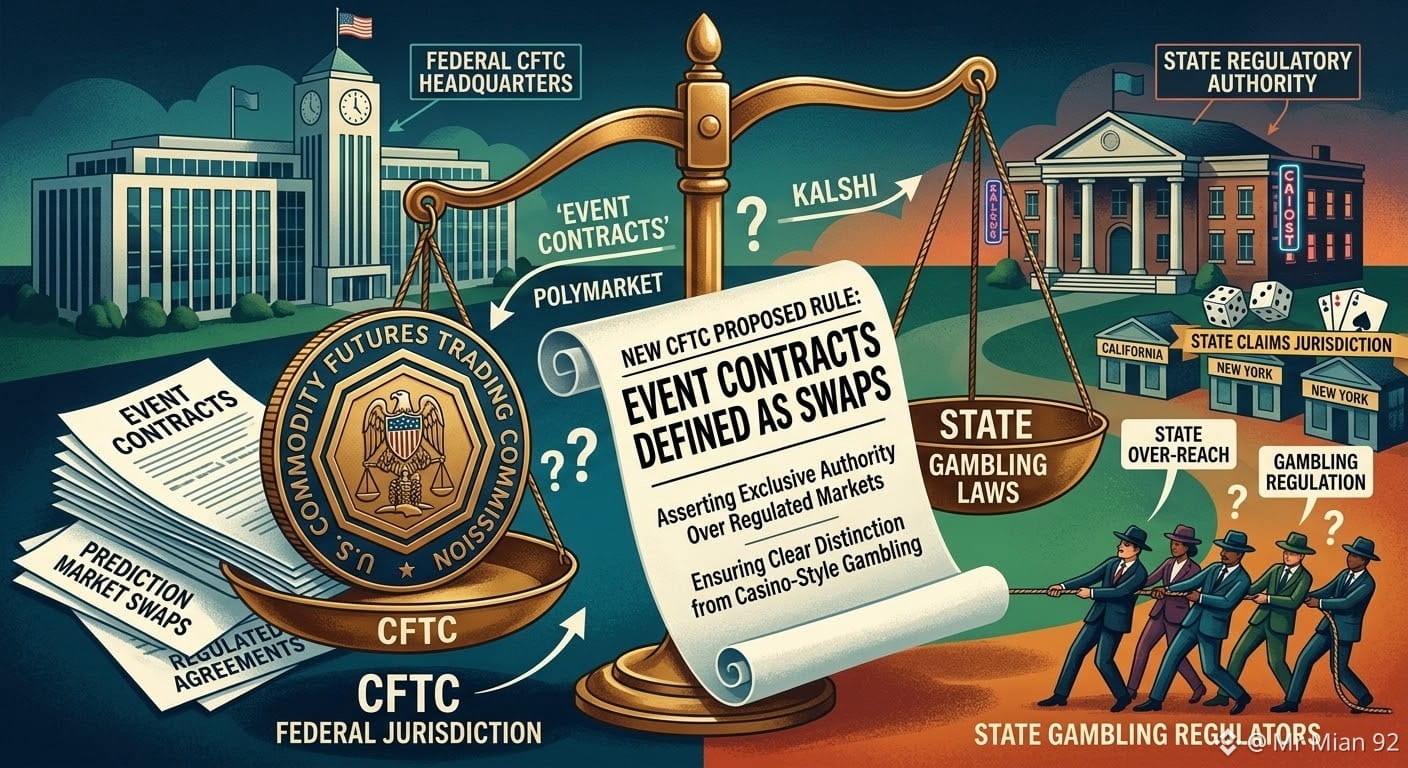
📰 CFTC seeks to define event contracts as swaps amid prediction market fight
The US Commodity Futures Trading Commission (CFTC) is seeking to clarify the definition of a "swap" to assert its exclusive federal jurisdiction over event contracts in regulated prediction markets, amid a jurisdictional dispute with state gambling regulators. The CFTC has proposed a rule to expand the definition of "swap" to include event contracts while excluding casino-style gambling products, which is currently under review. This classification is crucial as it could solidify the CFTC's authority over platforms like Polymarket and Kalshi, which offer such contracts, despite state regulators' claims that these should fall under state gambling laws.
📰 CFTC seeks to define event contracts as swaps amid prediction market fight
The US Commodity Futures Trading Commission (CFTC) is seeking to clarify the definition of a "swap" to assert its exclusive federal jurisdiction over event contracts in regulated prediction markets, amid a jurisdictional dispute with state gambling regulators. The CFTC has proposed a rule to expand the definition of "swap" to include event contracts while excluding casino-style gambling products, which is currently under review. This classification is crucial as it could solidify the CFTC's authority over platforms like Polymarket and Kalshi, which offer such contracts, despite state regulators' claims that these should fall under state gambling laws.
The US Commodity Futures Trading Commission (CFTC) is seeking to clarify the definition of a "swap" to assert its exclusive federal jurisdiction over event contracts in regulated prediction markets, amid a jurisdictional dispute with state gambling regulators. The CFTC has proposed a rule to expand the definition of "swap" to include event contracts while excluding casino-style gambling products, which is currently under review. This classification is crucial as it could solidify the CFTC's authority over platforms like Polymarket and Kalshi, which offer such contracts, despite state regulators' claims that these should fall under state gambling laws.
1
62
·
--

Article
Standard Chartered set a $2.00 long-term price target for Ethena’s native governance token (ENA) byStandard Chartered set a $2.00 long-term price target for Ethena’s native governance token (ENA) by the end of 2028. With ENA trading near $0.26–$0.28, the forecast implies a potential 700%+ rally, outpacing the bank's long-term growth projections for both Bitcoin and Ethereum over the same period.
1. The Core Catalyst: Standard Chartered’s Trajectory
Standard Chartered’s crypto research desk outlines a step-by-step price ladder for ENA:
End of 2026: $0.42
End of 2027: $1.10
End of 2028: $2.00
The thesis relies on Ethena expanding its synthetic dollar (USDe) and evolving ENA from a pure governance token into a value-capturing asset supported by protocol revenue.
2. What Needs to Go Right for the $2 Target?
Expansion of USDe Supply
The core engine behind the bank's model is a massive expansion of USDe circulating supply:
Current state: USDe supply stands near $4.9 billion (rebounding after a drop from its peak above $10 billion).
Target projection: Standard Chartered estimates USDe needs to reach $40 billion by 2028.
Diversity Beyond Perpetual Basis Yields
Ethena initially generated yield via a delta-neutral basis strategy (holding spot ETH/BTC while shorting equal perpetual futures). To absorb tens of billions in supply without yield compression, Ethena is expanding its strategy mix:
Institutional and DeFi lending markets.
Liquid real-world assets (RWAs) and tokenized short-term debt.
Basis trades across broader asset classes (equities and commodities).
The Fee-Switch & Buyback Flywheel
Milestone Threshold: Ethena’s governance framework dictates that its fee-switch mechanism activates once USDe supply crosses $7.5 billion.
Value Capture: Crossing this threshold allows protocol revenue to fund automated ENA repurchases and burns (or direct staking yields).
3. Immediate Market Technicals & Near-Term Headwinds
While the 2028 vision is ultra-bullish, the token faces key technical levels and tokenomic events in the short term:Standard Chartered set a $2.00 long-term price target for Ethena’s native governance token (ENA) by the end of 2028. With ENA trading near $0.26–$0.28, the forecast implies a potential 700%+ rally, outpacing the bank's long-term growth projections for both Bitcoin and Ethereum over the same period.
1. The Core Catalyst: Standard Chartered’s Trajectory
Standard Chartered’s crypto research desk outlines a step-by-step price ladder for ENA:
End of 2026: $0.42
End of 2027: $1.10
End of 2028: $2.00
The thesis relies on Ethena expanding its synthetic dollar (USDe) and evolving ENA from a pure governance token into a value-capturing asset supported by protocol revenue.
2. What Needs to Go Right for the $2 Target?
Expansion of USDe Supply
The core engine behind the bank's model is a massive expansion of USDe circulating supply:
Current state: USDe supply stands near $4.9 billion (rebounding after a drop from its peak above $10 billion).
Target projection: Standard Chartered estimates USDe needs to reach $40 billion by 2028.
Diversity Beyond Perpetual Basis Yields
Ethena initially generated yield via a delta-neutral basis strategy (holding spot ETH/BTC while shorting equal perpetual futures). To absorb tens of billions in supply without yield compression, Ethena is expanding its strategy mix:
Institutional and DeFi lending markets.
Liquid real-world assets (RWAs) and tokenized short-term debt.
Basis trades across broader asset classes (equities and commodities).
The Fee-Switch & Buyback Flywheel
Milestone Threshold: Ethena’s governance framework dictates that its fee-switch mechanism activates once USDe supply crosses $7.5 billion.
Value Capture: Crossing this threshold allows protocol revenue to fund automated ENA repurchases and burns (or direct staking yields).
3. Immediate Market Technicals & Near-Term Headwinds
While the 2028 vision is ultra-bullish, the token faces key technical levels and tokenomic events in the short term:
Standard Chartered set a $2.00 long-term price target for Ethena’s native governance token (ENA) by
Standard Chartered set a $2.00 long-term price target for Ethena’s native governance token (ENA) by the end of 2028. With ENA trading near $0.26–$0.28, the forecast implies a potential 700%+ rally, outpacing the bank's long-term growth projections for both Bitcoin and Ethereum over the same period.
1. The Core Catalyst: Standard Chartered’s Trajectory
Standard Chartered’s crypto research desk outlines a step-by-step price ladder for ENA:
End of 2026: $0.42
End of 2027: $1.10
End of 2028: $2.00
The thesis relies on Ethena expanding its synthetic dollar (USDe) and evolving ENA from a pure governance token into a value-capturing asset supported by protocol revenue.
2. What Needs to Go Right for the $2 Target?
Expansion of USDe Supply
The core engine behind the bank's model is a massive expansion of USDe circulating supply:
Current state: USDe supply stands near $4.9 billion (rebounding after a drop from its peak above $10 billion).
Target projection: Standard Chartered estimates USDe needs to reach $40 billion by 2028.
Diversity Beyond Perpetual Basis Yields
Ethena initially generated yield via a delta-neutral basis strategy (holding spot ETH/BTC while shorting equal perpetual futures). To absorb tens of billions in supply without yield compression, Ethena is expanding its strategy mix:
Institutional and DeFi lending markets.
Liquid real-world assets (RWAs) and tokenized short-term debt.
Basis trades across broader asset classes (equities and commodities).
The Fee-Switch & Buyback Flywheel
Milestone Threshold: Ethena’s governance framework dictates that its fee-switch mechanism activates once USDe supply crosses $7.5 billion.
Value Capture: Crossing this threshold allows protocol revenue to fund automated ENA repurchases and burns (or direct staking yields).
3. Immediate Market Technicals & Near-Term Headwinds
While the 2028 vision is ultra-bullish, the token faces key technical levels and tokenomic events in the short term:Standard Chartered set a $2.00 long-term price target for Ethena’s native governance token (ENA) by the end of 2028. With ENA trading near $0.26–$0.28, the forecast implies a potential 700%+ rally, outpacing the bank's long-term growth projections for both Bitcoin and Ethereum over the same period.
1. The Core Catalyst: Standard Chartered’s Trajectory
Standard Chartered’s crypto research desk outlines a step-by-step price ladder for ENA:
End of 2026: $0.42
End of 2027: $1.10
End of 2028: $2.00
The thesis relies on Ethena expanding its synthetic dollar (USDe) and evolving ENA from a pure governance token into a value-capturing asset supported by protocol revenue.
2. What Needs to Go Right for the $2 Target?
Expansion of USDe Supply
The core engine behind the bank's model is a massive expansion of USDe circulating supply:
Current state: USDe supply stands near $4.9 billion (rebounding after a drop from its peak above $10 billion).
Target projection: Standard Chartered estimates USDe needs to reach $40 billion by 2028.
Diversity Beyond Perpetual Basis Yields
Ethena initially generated yield via a delta-neutral basis strategy (holding spot ETH/BTC while shorting equal perpetual futures). To absorb tens of billions in supply without yield compression, Ethena is expanding its strategy mix:
Institutional and DeFi lending markets.
Liquid real-world assets (RWAs) and tokenized short-term debt.
Basis trades across broader asset classes (equities and commodities).
The Fee-Switch & Buyback Flywheel
Milestone Threshold: Ethena’s governance framework dictates that its fee-switch mechanism activates once USDe supply crosses $7.5 billion.
Value Capture: Crossing this threshold allows protocol revenue to fund automated ENA repurchases and burns (or direct staking yields).
3. Immediate Market Technicals & Near-Term Headwinds
While the 2028 vision is ultra-bullish, the token faces key technical levels and tokenomic events in the short term:
1. The Core Catalyst: Standard Chartered’s Trajectory
Standard Chartered’s crypto research desk outlines a step-by-step price ladder for ENA:
End of 2026: $0.42
End of 2027: $1.10
End of 2028: $2.00
The thesis relies on Ethena expanding its synthetic dollar (USDe) and evolving ENA from a pure governance token into a value-capturing asset supported by protocol revenue.
2. What Needs to Go Right for the $2 Target?
Expansion of USDe Supply
The core engine behind the bank's model is a massive expansion of USDe circulating supply:
Current state: USDe supply stands near $4.9 billion (rebounding after a drop from its peak above $10 billion).
Target projection: Standard Chartered estimates USDe needs to reach $40 billion by 2028.
Diversity Beyond Perpetual Basis Yields
Ethena initially generated yield via a delta-neutral basis strategy (holding spot ETH/BTC while shorting equal perpetual futures). To absorb tens of billions in supply without yield compression, Ethena is expanding its strategy mix:
Institutional and DeFi lending markets.
Liquid real-world assets (RWAs) and tokenized short-term debt.
Basis trades across broader asset classes (equities and commodities).
The Fee-Switch & Buyback Flywheel
Milestone Threshold: Ethena’s governance framework dictates that its fee-switch mechanism activates once USDe supply crosses $7.5 billion.
Value Capture: Crossing this threshold allows protocol revenue to fund automated ENA repurchases and burns (or direct staking yields).
3. Immediate Market Technicals & Near-Term Headwinds
While the 2028 vision is ultra-bullish, the token faces key technical levels and tokenomic events in the short term:Standard Chartered set a $2.00 long-term price target for Ethena’s native governance token (ENA) by the end of 2028. With ENA trading near $0.26–$0.28, the forecast implies a potential 700%+ rally, outpacing the bank's long-term growth projections for both Bitcoin and Ethereum over the same period.
1. The Core Catalyst: Standard Chartered’s Trajectory
Standard Chartered’s crypto research desk outlines a step-by-step price ladder for ENA:
End of 2026: $0.42
End of 2027: $1.10
End of 2028: $2.00
The thesis relies on Ethena expanding its synthetic dollar (USDe) and evolving ENA from a pure governance token into a value-capturing asset supported by protocol revenue.
2. What Needs to Go Right for the $2 Target?
Expansion of USDe Supply
The core engine behind the bank's model is a massive expansion of USDe circulating supply:
Current state: USDe supply stands near $4.9 billion (rebounding after a drop from its peak above $10 billion).
Target projection: Standard Chartered estimates USDe needs to reach $40 billion by 2028.
Diversity Beyond Perpetual Basis Yields
Ethena initially generated yield via a delta-neutral basis strategy (holding spot ETH/BTC while shorting equal perpetual futures). To absorb tens of billions in supply without yield compression, Ethena is expanding its strategy mix:
Institutional and DeFi lending markets.
Liquid real-world assets (RWAs) and tokenized short-term debt.
Basis trades across broader asset classes (equities and commodities).
The Fee-Switch & Buyback Flywheel
Milestone Threshold: Ethena’s governance framework dictates that its fee-switch mechanism activates once USDe supply crosses $7.5 billion.
Value Capture: Crossing this threshold allows protocol revenue to fund automated ENA repurchases and burns (or direct staking yields).
3. Immediate Market Technicals & Near-Term Headwinds
While the 2028 vision is ultra-bullish, the token faces key technical levels and tokenomic events in the short term:
1
69
·
--
嗨,亲爱的,我送给你一个大大的拥抱 ❤️。我关注了你的帖子,希望你也能关注我。 🥰💝💝💝💝💝💝 Hi dear i wish you ♥️ huge i flowed your pin 📌 post i hope you folow me now thank you dear
嗨,亲爱的,我送给你一个大大的拥抱 ❤️。我关注了你的帖子,希望你也能关注我。 🥰💝💝💝💝💝💝 Hi dear i wish you ♥️ huge i flowed your pin 📌 post i hope you folow me now thank you dear
Votre contenu coté a été supprimé
16
·
--
Вот перевод на русский язык:
*Соглашение Трампа призывает технологические компании самостоятельно регулировать свой передовой ИИ*
Президент США Дональд Трамп и руководители ведущих технологических компаний подписали добровольное соглашение «Совместное обязательство по ответственности за передовые разработки», направленное на обеспечение безопасной разработки передовых систем ИИ. Это соглашение возлагает ответственность за управление рисками ИИ на разработчиков, призывая к внутреннему контролю, независимым аудитам и надзору со стороны совета директоров для предотвращения непредвиденных последствий. Хотя Трамп подчеркнул необходимость саморегулирования на фоне конкуренции с Китаем, соглашение оставляет открытой возможность будущих правовых или регуляторных мер. Встреча также отметила предпочтение Трампа термину «Суперинтеллект» вместо «Искусственный интеллект», чтобы лучше отразить потенциал технологии.
Вот перевод на русский язык:
*Соглашение Трампа призывает технологические компании самостоятельно регулировать свой передовой ИИ*
Президент США Дональд Трамп и руководители ведущих технологических компаний подписали добровольное соглашение «Совместное обязательство по ответственности за передовые разработки», направленное на обеспечение безопасной разработки передовых систем ИИ. Это соглашение возлагает ответственность за управление рисками ИИ на разработчиков, призывая к внутреннему контролю, независимым аудитам и надзору со стороны совета директоров для предотвращения непредвиденных последствий. Хотя Трамп подчеркнул необходимость саморегулирования на фоне конкуренции с Китаем, соглашение оставляет открытой возможность будущих правовых или регуляторных мер. Встреча также отметила предпочтение Трампа термину «Суперинтеллект» вместо «Искусственный интеллект», чтобы лучше отразить потенциал технологии.
*Соглашение Трампа призывает технологические компании самостоятельно регулировать свой передовой ИИ*
Президент США Дональд Трамп и руководители ведущих технологических компаний подписали добровольное соглашение «Совместное обязательство по ответственности за передовые разработки», направленное на обеспечение безопасной разработки передовых систем ИИ. Это соглашение возлагает ответственность за управление рисками ИИ на разработчиков, призывая к внутреннему контролю, независимым аудитам и надзору со стороны совета директоров для предотвращения непредвиденных последствий. Хотя Трамп подчеркнул необходимость саморегулирования на фоне конкуренции с Китаем, соглашение оставляет открытой возможность будущих правовых или регуляторных мер. Встреча также отметила предпочтение Трампа термину «Суперинтеллект» вместо «Искусственный интеллект», чтобы лучше отразить потенциал технологии.
31
·
--
这是您要求的中文翻译:
*特朗普协议要求科技公司对其前沿AI进行“自我监管”*
美国总统唐纳德·特朗普与主要科技公司高管签署了一项自愿协议——《前沿责任联合承诺》,旨在确保前沿AI系统的安全开发。该协议将管理AI风险的责任交由开发者承担,要求实施内部管控、独立审计和董事会监督,以防止意外后果。特朗普在与中国竞争的背景下强调了自我监管的必要性,但该协议也为未来采取法律或监管措施留下了空间。此次会议还体现了特朗普更倾向于使用“超级智能”而非“人工智能”一词,以更好地反映该技术的潜力。
这是您要求的中文翻译:
*特朗普协议要求科技公司对其前沿AI进行“自我监管”*
美国总统唐纳德·特朗普与主要科技公司高管签署了一项自愿协议——《前沿责任联合承诺》,旨在确保前沿AI系统的安全开发。该协议将管理AI风险的责任交由开发者承担,要求实施内部管控、独立审计和董事会监督,以防止意外后果。特朗普在与中国竞争的背景下强调了自我监管的必要性,但该协议也为未来采取法律或监管措施留下了空间。此次会议还体现了特朗普更倾向于使用“超级智能”而非“人工智能”一词,以更好地反映该技术的潜力。
*特朗普协议要求科技公司对其前沿AI进行“自我监管”*
美国总统唐纳德·特朗普与主要科技公司高管签署了一项自愿协议——《前沿责任联合承诺》,旨在确保前沿AI系统的安全开发。该协议将管理AI风险的责任交由开发者承担,要求实施内部管控、独立审计和董事会监督,以防止意外后果。特朗普在与中国竞争的背景下强调了自我监管的必要性,但该协议也为未来采取法律或监管措施留下了空间。此次会议还体现了特朗普更倾向于使用“超级智能”而非“人工智能”一词,以更好地反映该技术的潜力。
1
46
·
--
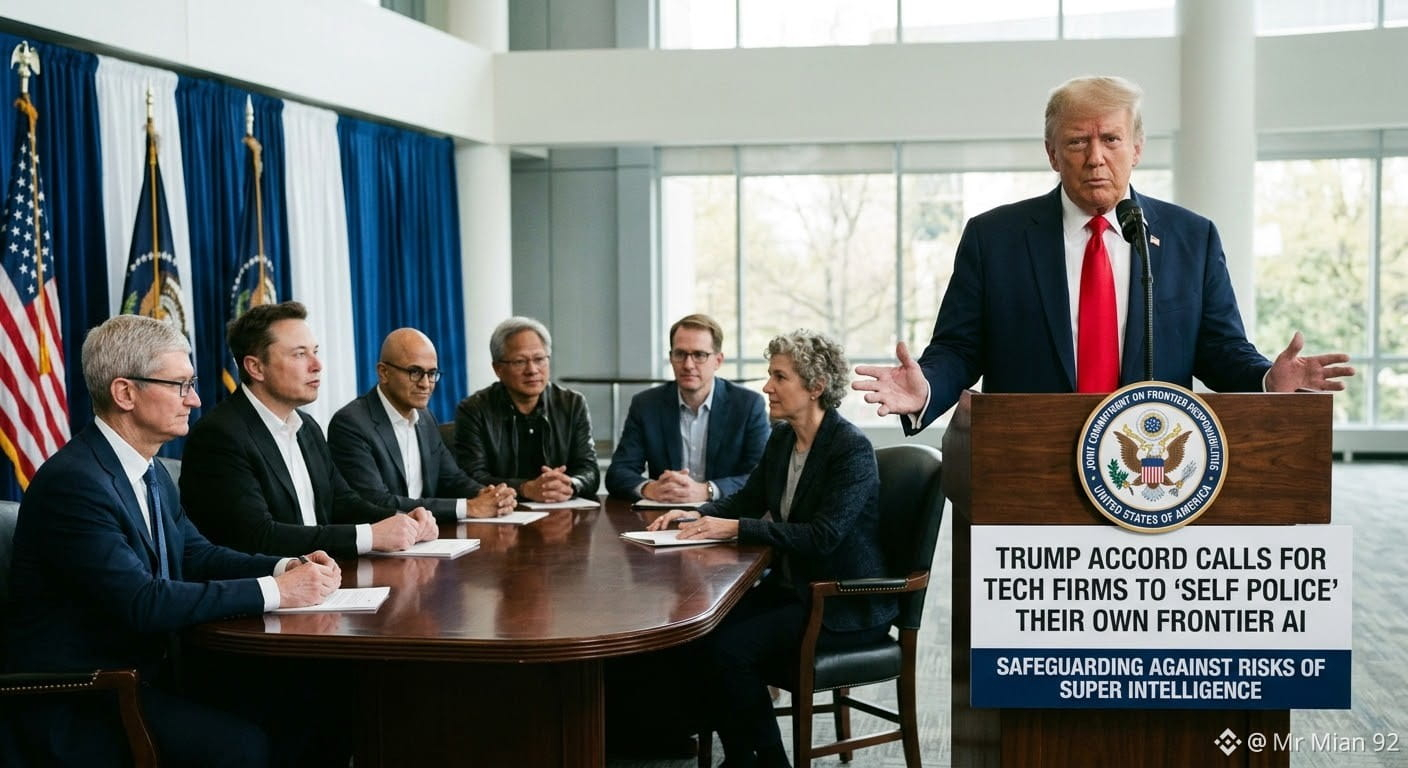
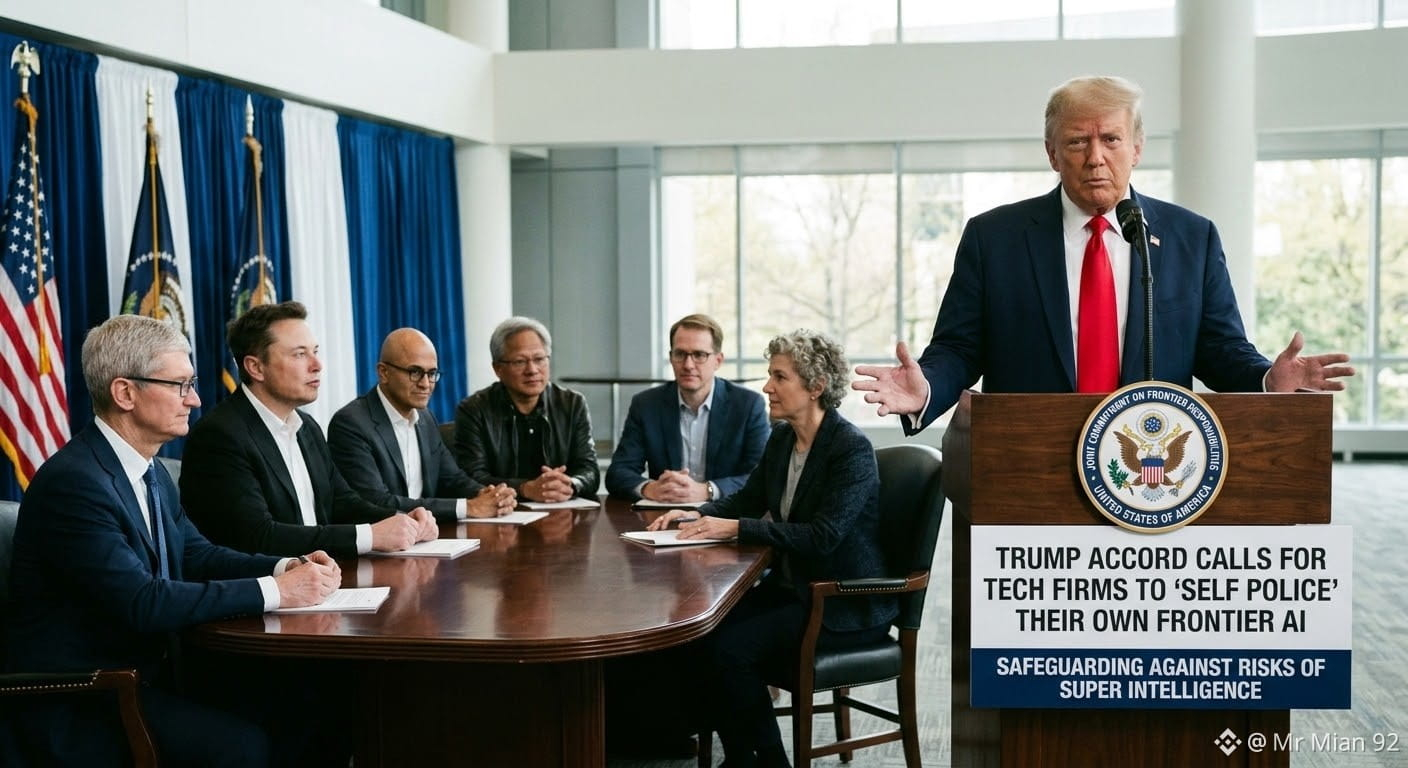
Trump accord calls for tech firms to ‘self police’ their own frontier AI
US President Donald Trump and leading tech executives have signed a voluntary accord, the "Joint Commitment on Frontier Responsibilities," aimed at ensuring the safe development of frontier AI systems. This agreement places the onus of managing AI risks on developers, calling for internal controls, independent audits, and board oversight to prevent unintended consequences. While Trump emphasized the need for self-regulation amid competition with China, the accord leaves open the possibility of future legal or regulatory measures. The meeting also marked Trump's preference for the term "Super Intelligence" over "Artificial Intelligence" to better reflect the technology's potential.
Trump accord calls for tech firms to ‘self police’ their own frontier AI
US President Donald Trump and leading tech executives have signed a voluntary accord, the "Joint Commitment on Frontier Responsibilities," aimed at ensuring the safe development of frontier AI systems. This agreement places the onus of managing AI risks on developers, calling for internal controls, independent audits, and board oversight to prevent unintended consequences. While Trump emphasized the need for self-regulation amid competition with China, the accord leaves open the possibility of future legal or regulatory measures. The meeting also marked Trump's preference for the term "Super Intelligence" over "Artificial Intelligence" to better reflect the technology's potential.
US President Donald Trump and leading tech executives have signed a voluntary accord, the "Joint Commitment on Frontier Responsibilities," aimed at ensuring the safe development of frontier AI systems. This agreement places the onus of managing AI risks on developers, calling for internal controls, independent audits, and board oversight to prevent unintended consequences. While Trump emphasized the need for self-regulation amid competition with China, the accord leaves open the possibility of future legal or regulatory measures. The meeting also marked Trump's preference for the term "Super Intelligence" over "Artificial Intelligence" to better reflect the technology's potential.
65
·
--
Bitcoin bounces to $84K after US 30-year bond yield sets 24-year high
Bitcoin's price stabilized after early-week losses, maintaining crucial support around $82,500 amid geopolitical uncertainty and rising bond yields. Trading in a narrow range below $84,300, analysts warned of potential profit-taking pressures as macroeconomic data releases loom. Despite these challenges, Bitcoin's technical indicators suggest a trend-defining moment, with recent patterns hinting at a possible retest of the $60,000-80,000 range. Onchain analytics indicate a significant increase in profit-taking among investors, raising concerns about price momentum as profitability levels reach highs not seen since January.
Bitcoin bounces to $84K after US 30-year bond yield sets 24-year high
Bitcoin's price stabilized after early-week losses, maintaining crucial support around $82,500 amid geopolitical uncertainty and rising bond yields. Trading in a narrow range below $84,300, analysts warned of potential profit-taking pressures as macroeconomic data releases loom. Despite these challenges, Bitcoin's technical indicators suggest a trend-defining moment, with recent patterns hinting at a possible retest of the $60,000-80,000 range. Onchain analytics indicate a significant increase in profit-taking among investors, raising concerns about price momentum as profitability levels reach highs not seen since January.
Bitcoin's price stabilized after early-week losses, maintaining crucial support around $82,500 amid geopolitical uncertainty and rising bond yields. Trading in a narrow range below $84,300, analysts warned of potential profit-taking pressures as macroeconomic data releases loom. Despite these challenges, Bitcoin's technical indicators suggest a trend-defining moment, with recent patterns hinting at a possible retest of the $60,000-80,000 range. Onchain analytics indicate a significant increase in profit-taking among investors, raising concerns about price momentum as profitability levels reach highs not seen since January.

BTC-2,61%
TLTETF-0,12%
78
Connectez-vous pour découvrir plus de contenu
Rejoignez la communauté mondiale des adeptes de cryptomonnaies sur Binance Square
⚡️ Suviez les dernières informations importantes sur les cryptomonnaies.
💬 Jugé digne de confiance par la plus grande plateforme d’échange de cryptomonnaies au monde.
👍 Découvrez les connaissances que partagent les créateurs vérifiés.
Adresse e-mail/Nº de téléphone
Sujets d’actualité
FedMinutesFocusOnOctoberPause
133,877 vues
1,185 mentions
🚨 HIGH ALERT ‼️ PLEASE DON’T TRADE BLINDLY FOR THE NEXT HOUR 🚨
Guys, we have FOMC Minutes coming in less than 1 hour.
And after the kind of volatility we already saw today, I really don’t want anyone opening random high-leverage positions just before this release.
The biggest reaction I’m watching will be in Gold (XAU), Silver (XAG), BTC and ETH. Then coins like SOL and other highly leveraged mid/low-cap alts can exaggerate whatever move BTC makes.
Gold and Silver are especially sensitive tonight because the market is already reacting to the US dollar + Treasury yields, and both metals have been under heavy pressure ahead of the Fed minutes.
Briefly speaking
📉Hawkish Fed Minutes → Dollar/yields can push higher → pressure on BTC, crypto, Gold & silver
📈Dovish Fed Minutes → Dollar/yields can cool → BTC, Gold, Silver and risk assets can bounce hard.
And please remember the first candle can be a trap. We can get a pump, immediate dump, liquidations on both sides, and then the real direction.
So for now, protect your positions, reduce unnecessary leverage and don’t FOMO into the first move.
Tonight I’m watching $XAU , $XAG and $BTC first. These will tell us very quickly how the market is reading the Fed.
I will Update you guys on time
Follow @Panda Traders and Turn on Your notifications right now
#FedMinutesFocusOnOctoberPause
Panda Traders
·18 mentions J’aime
·3.6k vues
BinanceLaunchesBinanceIntelligence
1.1M vues
6,384 mentions
EvernorthDelaysNasdaqDebutToOct12
9,761 vues
251 mentions