

Restive Abdullah
3 Publications

Restive Abdullah
Signaler
Bloquer l’utilisateur
0 Suivis
4 Abonnés
1 J’aime
Publications
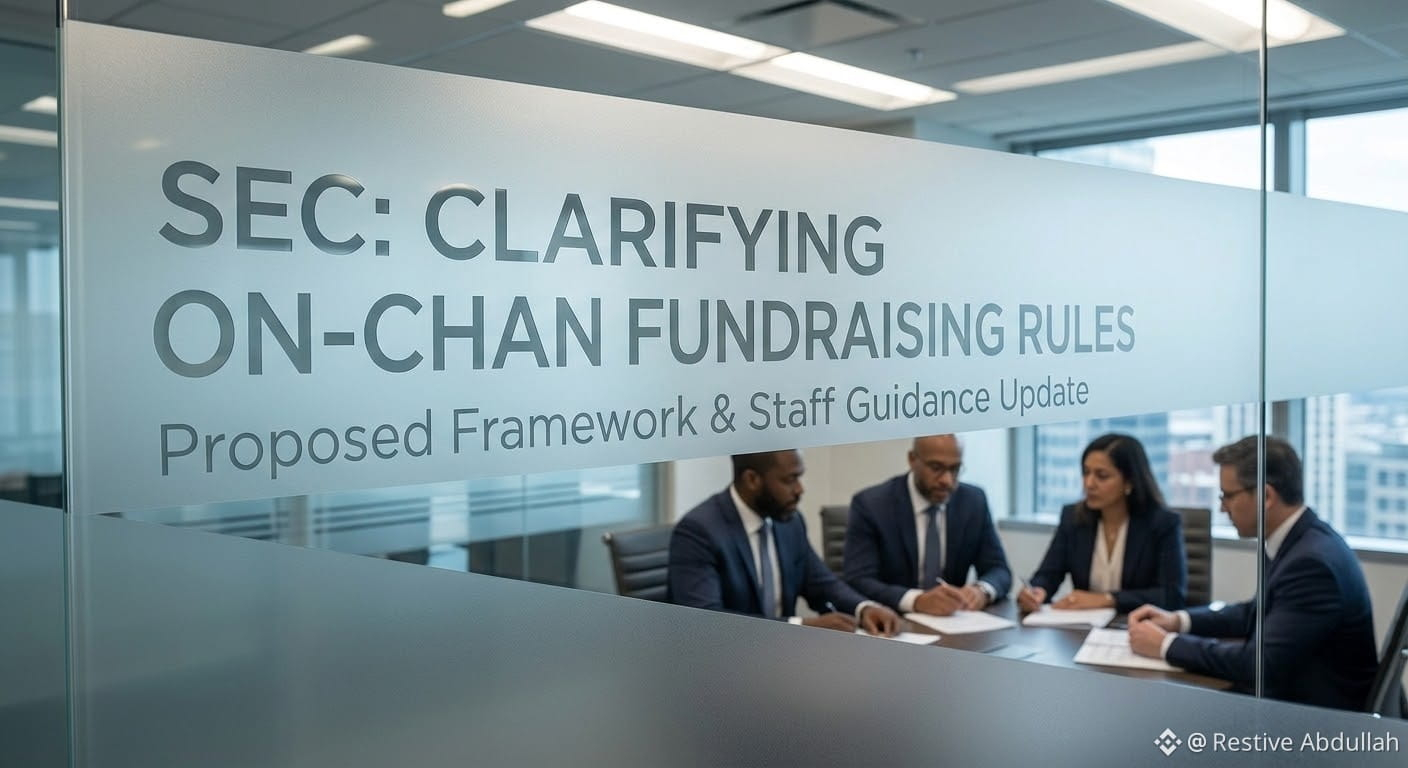
#SECToClarifyOnChainFundraisingRules
The SEC is finally drawing the lines for on-chain fundraising. 🇺🇸
The days of guessing what the SEC thinks about your token launch might be coming to an end. Between the recently proposed "Regulation Crypto Assets" and the new SEC Division of Corporation Finance FAQs published on September 25, we are seeing the first comprehensive offering frameworks tailored specifically for crypto.
Here is the insider breakdown of what this actually means for builders and investors:
Clearer Capital Raising: The SEC's proposed framework seeks to provide clear pathways for crypto entrepreneurs to raise capital on-chain while complying with federal securities laws. This provides a structured alternative to the legal gray areas that have historically plagued initial token offerings.
The Buyback Nuance: The recent guidance clarifies that token buybacks do not automatically classify a token as a security. However, the SEC warns that if a project explicitly promotes a buyback as a mechanism to generate yield or returns, it can trigger an investment-contract analysis under the Howey test.
DeFi & Network Upgrades: The FAQs also address staking receipt tokens, secondary market trading, and network upgrades. By clarifying the types of promises that constitute an investment contract, decentralized exchanges (DEXs) and DeFi protocols now have a clearer roadmap for planning fundraising and protocol updates while managing regulatory risk.
The Analyst Takeaway: While this is still strictly staff guidance and not a change to existing law, it signals a massive shift from pure "regulation by enforcement" to actionable compliance rubrics. For the first time, projects have a tangible picture of what the SEC will look at when scrutinizing token economics and decentralized networks.
Do you think these clearer guidelines will spark a new wave of compliant on-chain capital raising, or will the rules still feel too restrictive for decentralized builders? Let us know your thoughts below!!!
#SECToClarifyOnChainFundraisingRules
The SEC is finally drawing the lines for on-chain fundraising. 🇺🇸
The days of guessing what the SEC thinks about your token launch might be coming to an end. Between the recently proposed "Regulation Crypto Assets" and the new SEC Division of Corporation Finance FAQs published on September 25, we are seeing the first comprehensive offering frameworks tailored specifically for crypto.
Here is the insider breakdown of what this actually means for builders and investors:
Clearer Capital Raising: The SEC's proposed framework seeks to provide clear pathways for crypto entrepreneurs to raise capital on-chain while complying with federal securities laws. This provides a structured alternative to the legal gray areas that have historically plagued initial token offerings.
The Buyback Nuance: The recent guidance clarifies that token buybacks do not automatically classify a token as a security. However, the SEC warns that if a project explicitly promotes a buyback as a mechanism to generate yield or returns, it can trigger an investment-contract analysis under the Howey test.
DeFi & Network Upgrades: The FAQs also address staking receipt tokens, secondary market trading, and network upgrades. By clarifying the types of promises that constitute an investment contract, decentralized exchanges (DEXs) and DeFi protocols now have a clearer roadmap for planning fundraising and protocol updates while managing regulatory risk.
The Analyst Takeaway: While this is still strictly staff guidance and not a change to existing law, it signals a massive shift from pure "regulation by enforcement" to actionable compliance rubrics. For the first time, projects have a tangible picture of what the SEC will look at when scrutinizing token economics and decentralized networks.
Do you think these clearer guidelines will spark a new wave of compliant on-chain capital raising, or will the rules still feel too restrictive for decentralized builders? Let us know your thoughts below!!!
The SEC is finally drawing the lines for on-chain fundraising. 🇺🇸
The days of guessing what the SEC thinks about your token launch might be coming to an end. Between the recently proposed "Regulation Crypto Assets" and the new SEC Division of Corporation Finance FAQs published on September 25, we are seeing the first comprehensive offering frameworks tailored specifically for crypto.
Here is the insider breakdown of what this actually means for builders and investors:
Clearer Capital Raising: The SEC's proposed framework seeks to provide clear pathways for crypto entrepreneurs to raise capital on-chain while complying with federal securities laws. This provides a structured alternative to the legal gray areas that have historically plagued initial token offerings.
The Buyback Nuance: The recent guidance clarifies that token buybacks do not automatically classify a token as a security. However, the SEC warns that if a project explicitly promotes a buyback as a mechanism to generate yield or returns, it can trigger an investment-contract analysis under the Howey test.
DeFi & Network Upgrades: The FAQs also address staking receipt tokens, secondary market trading, and network upgrades. By clarifying the types of promises that constitute an investment contract, decentralized exchanges (DEXs) and DeFi protocols now have a clearer roadmap for planning fundraising and protocol updates while managing regulatory risk.
The Analyst Takeaway: While this is still strictly staff guidance and not a change to existing law, it signals a massive shift from pure "regulation by enforcement" to actionable compliance rubrics. For the first time, projects have a tangible picture of what the SEC will look at when scrutinizing token economics and decentralized networks.
Do you think these clearer guidelines will spark a new wave of compliant on-chain capital raising, or will the rules still feel too restrictive for decentralized builders? Let us know your thoughts below!!!
54
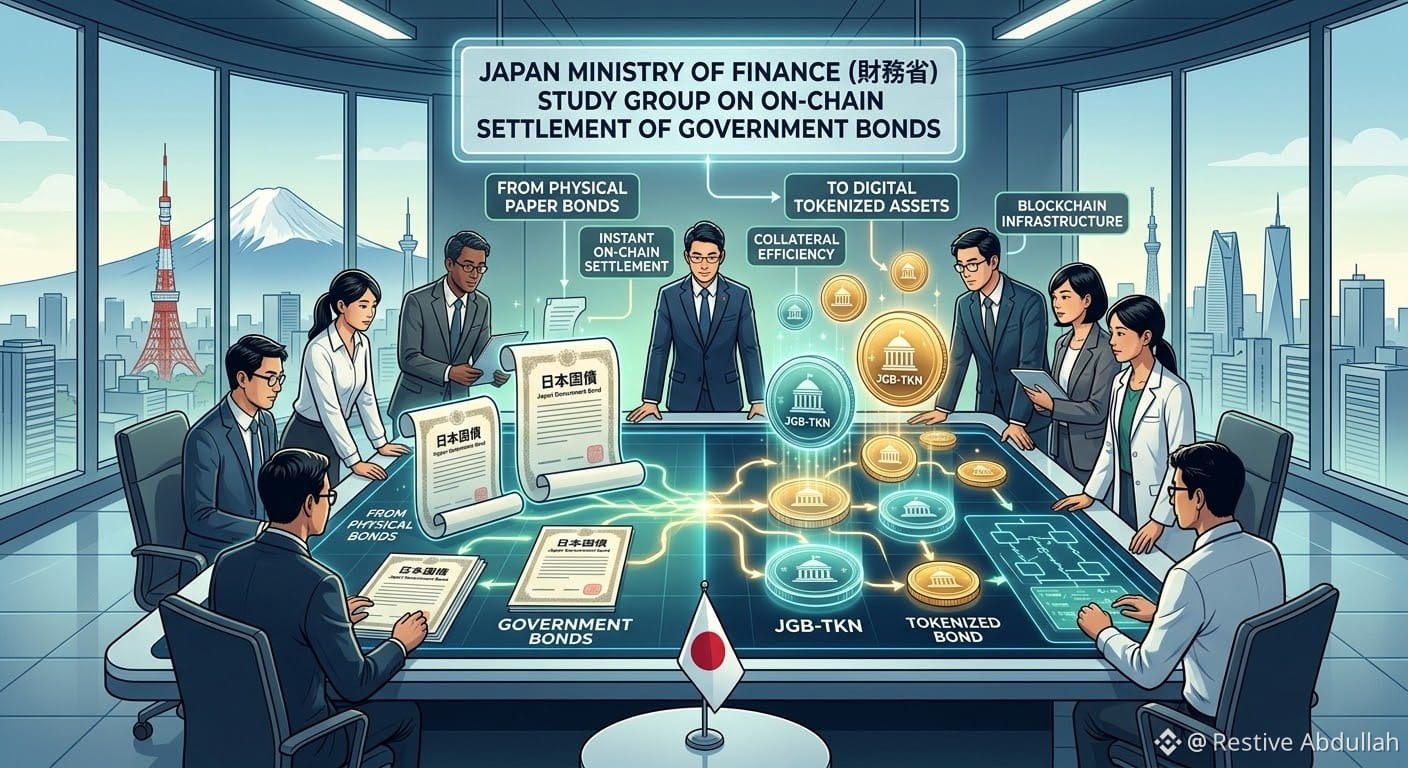
#JapanMOFStudyGroupOnTokenizedGovtBonds
Japan Eyes Tokenized Government Bonds: MOF Launches Study Group 🇯🇵
Japan’s Ministry of Finance (MOF) has officially established a dedicated study group to evaluate the tokenization and on-chain settlement of Japanese Government Bonds (JGBs).
Here is the quick breakdown about MOF :
Real-Time Settlement: JGBs currently settle on a next-business-day basis. The MOF is exploring blockchain rails to achieve instantaneous settlement, drastically cutting operational friction.
Institutional Backing: The initiative includes prominent researchers from the University of Tokyo and Waseda University, with direct observation from the Bank of Japan (BOJ) and the Financial Services Agency (FSA).
Collateral Efficiency: Moving JGBs on-chain enables instant, 24/7 collateralization in repurchase (repo) agreements, unlocking massive capital efficiency and liquidity.
Timeline: The first closed-door session meets on October 8, 2026, with initial findings and discussion points slated for release between December 2026 and January 2027.
Sovereign debt moving on-chain is one of the strongest validations for Real-World Asset (RWA) tokenization to date.
Will tokenized sovereign bonds become standard treasury practice sooner than the market expects? Drop your view below! 👇
#JapanMOFStudyGroupOnTokenizedGovtBonds
Japan Eyes Tokenized Government Bonds: MOF Launches Study Group 🇯🇵
Japan’s Ministry of Finance (MOF) has officially established a dedicated study group to evaluate the tokenization and on-chain settlement of Japanese Government Bonds (JGBs).
Here is the quick breakdown about MOF :
Real-Time Settlement: JGBs currently settle on a next-business-day basis. The MOF is exploring blockchain rails to achieve instantaneous settlement, drastically cutting operational friction.
Institutional Backing: The initiative includes prominent researchers from the University of Tokyo and Waseda University, with direct observation from the Bank of Japan (BOJ) and the Financial Services Agency (FSA).
Collateral Efficiency: Moving JGBs on-chain enables instant, 24/7 collateralization in repurchase (repo) agreements, unlocking massive capital efficiency and liquidity.
Timeline: The first closed-door session meets on October 8, 2026, with initial findings and discussion points slated for release between December 2026 and January 2027.
Sovereign debt moving on-chain is one of the strongest validations for Real-World Asset (RWA) tokenization to date.
Will tokenized sovereign bonds become standard treasury practice sooner than the market expects? Drop your view below! 👇
Japan Eyes Tokenized Government Bonds: MOF Launches Study Group 🇯🇵
Japan’s Ministry of Finance (MOF) has officially established a dedicated study group to evaluate the tokenization and on-chain settlement of Japanese Government Bonds (JGBs).
Here is the quick breakdown about MOF :
Real-Time Settlement: JGBs currently settle on a next-business-day basis. The MOF is exploring blockchain rails to achieve instantaneous settlement, drastically cutting operational friction.
Institutional Backing: The initiative includes prominent researchers from the University of Tokyo and Waseda University, with direct observation from the Bank of Japan (BOJ) and the Financial Services Agency (FSA).
Collateral Efficiency: Moving JGBs on-chain enables instant, 24/7 collateralization in repurchase (repo) agreements, unlocking massive capital efficiency and liquidity.
Timeline: The first closed-door session meets on October 8, 2026, with initial findings and discussion points slated for release between December 2026 and January 2027.
Sovereign debt moving on-chain is one of the strongest validations for Real-World Asset (RWA) tokenization to date.
Will tokenized sovereign bonds become standard treasury practice sooner than the market expects? Drop your view below! 👇
1
88
Vérifié
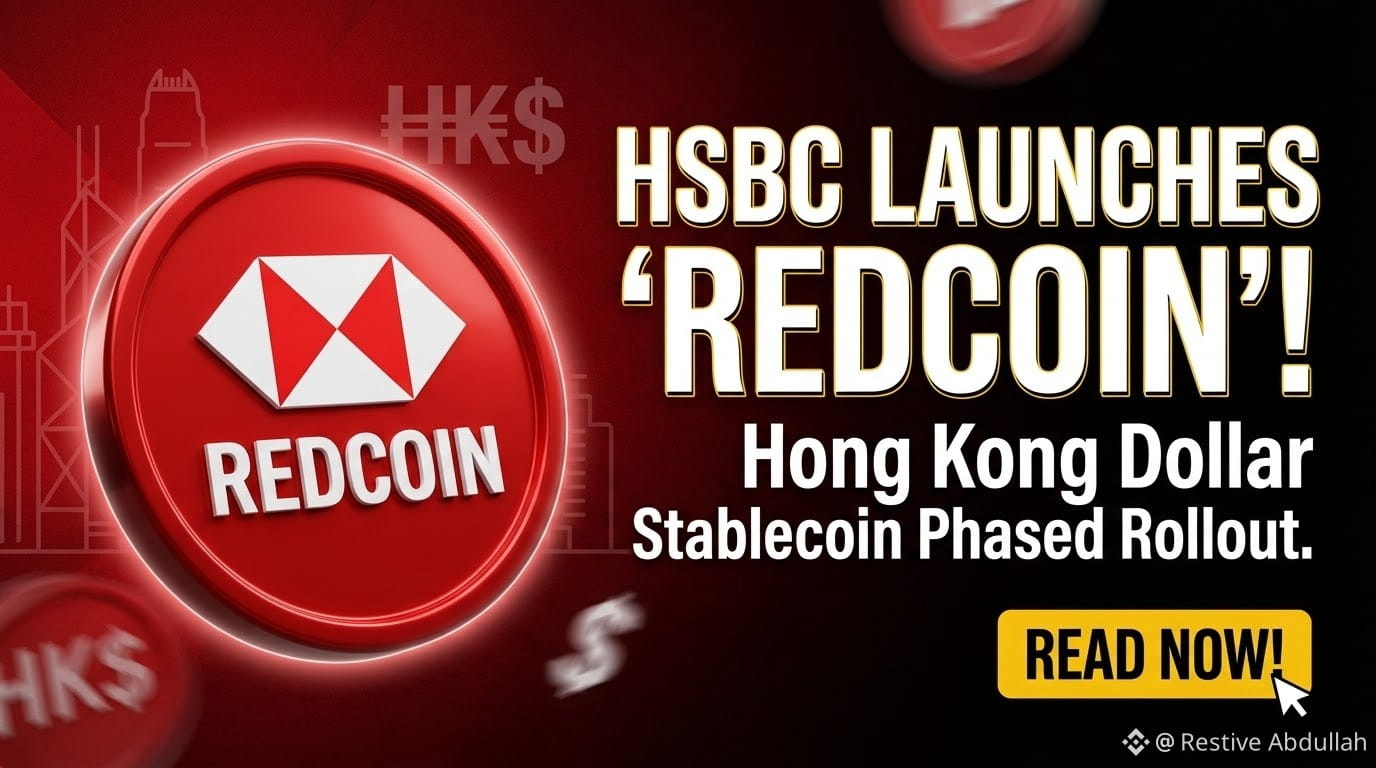
#HSBCNamesStablecoinRedCoinForPhasedLaunch
TradFi Giants Are Making Moves: HSBC Unveils 'RedCoin' Stablecoin 🇭🇰
HSBC has officially named its forthcoming Hong Kong Dollar-pegged stablecoin HSBC RedCoin, setting the stage for a highly anticipated rollout in the second half of 2026.
Here is the breakdown of this major traditional finance (TradFi) milestone:
Retail-First Rollout: Rather than targeting institutional liquidity right away, the launch will focus on everyday utility. The initial phase will support Peer-to-Peer (P2P) transfers and Peer-to-Merchant (P2M) payments. Corporate wholesale use cases will be introduced in later phases.
Mass Distribution Channel: RedCoin will be directly accessible via the HSBC HK Mobile Banking App and PayMe—one of Hong Kong's most widely used consumer payment platforms. This integration creates a frictionless entry point for millions of retail users.
Fully Regulated Framework: The token is being developed under a strict regulatory umbrella, utilizing the stablecoin issuer license granted to HSBC by the Hong Kong Monetary Authority (HKMA) in April 2026. It is designed for a secure 1:1 redemption with the HKD.
Strong Consumer Awareness: The launch is backed by solid market data. A recent HSBC survey of over 1,000 customers revealed that 74% already recognize at least one practical use case for stablecoins.
The Binance Square Takeaway: This is a massive signal for global crypto adoption. By embedding a regulated stablecoin directly into familiar consumer banking apps, HSBC is essentially bypassing the steep learning curve of Web3 wallets. They are betting that everyday digital payments—not just corporate treasury operations—will be the primary catalyst for stablecoin adoption in the region.
Do you think bank-issued stablecoins like RedCoin will ultimately compete with or complement decentralized stablecoins like USDT and USDC? Let us know your thoughts below! 👇
#HSBCNamesStablecoinRedCoinForPhasedLaunch
TradFi Giants Are Making Moves: HSBC Unveils 'RedCoin' Stablecoin 🇭🇰
HSBC has officially named its forthcoming Hong Kong Dollar-pegged stablecoin HSBC RedCoin, setting the stage for a highly anticipated rollout in the second half of 2026.
Here is the breakdown of this major traditional finance (TradFi) milestone:
Retail-First Rollout: Rather than targeting institutional liquidity right away, the launch will focus on everyday utility. The initial phase will support Peer-to-Peer (P2P) transfers and Peer-to-Merchant (P2M) payments. Corporate wholesale use cases will be introduced in later phases.
Mass Distribution Channel: RedCoin will be directly accessible via the HSBC HK Mobile Banking App and PayMe—one of Hong Kong's most widely used consumer payment platforms. This integration creates a frictionless entry point for millions of retail users.
Fully Regulated Framework: The token is being developed under a strict regulatory umbrella, utilizing the stablecoin issuer license granted to HSBC by the Hong Kong Monetary Authority (HKMA) in April 2026. It is designed for a secure 1:1 redemption with the HKD.
Strong Consumer Awareness: The launch is backed by solid market data. A recent HSBC survey of over 1,000 customers revealed that 74% already recognize at least one practical use case for stablecoins.
The Binance Square Takeaway: This is a massive signal for global crypto adoption. By embedding a regulated stablecoin directly into familiar consumer banking apps, HSBC is essentially bypassing the steep learning curve of Web3 wallets. They are betting that everyday digital payments—not just corporate treasury operations—will be the primary catalyst for stablecoin adoption in the region.
Do you think bank-issued stablecoins like RedCoin will ultimately compete with or complement decentralized stablecoins like USDT and USDC? Let us know your thoughts below! 👇
TradFi Giants Are Making Moves: HSBC Unveils 'RedCoin' Stablecoin 🇭🇰
HSBC has officially named its forthcoming Hong Kong Dollar-pegged stablecoin HSBC RedCoin, setting the stage for a highly anticipated rollout in the second half of 2026.
Here is the breakdown of this major traditional finance (TradFi) milestone:
Retail-First Rollout: Rather than targeting institutional liquidity right away, the launch will focus on everyday utility. The initial phase will support Peer-to-Peer (P2P) transfers and Peer-to-Merchant (P2M) payments. Corporate wholesale use cases will be introduced in later phases.
Mass Distribution Channel: RedCoin will be directly accessible via the HSBC HK Mobile Banking App and PayMe—one of Hong Kong's most widely used consumer payment platforms. This integration creates a frictionless entry point for millions of retail users.
Fully Regulated Framework: The token is being developed under a strict regulatory umbrella, utilizing the stablecoin issuer license granted to HSBC by the Hong Kong Monetary Authority (HKMA) in April 2026. It is designed for a secure 1:1 redemption with the HKD.
Strong Consumer Awareness: The launch is backed by solid market data. A recent HSBC survey of over 1,000 customers revealed that 74% already recognize at least one practical use case for stablecoins.
The Binance Square Takeaway: This is a massive signal for global crypto adoption. By embedding a regulated stablecoin directly into familiar consumer banking apps, HSBC is essentially bypassing the steep learning curve of Web3 wallets. They are betting that everyday digital payments—not just corporate treasury operations—will be the primary catalyst for stablecoin adoption in the region.
Do you think bank-issued stablecoins like RedCoin will ultimately compete with or complement decentralized stablecoins like USDT and USDC? Let us know your thoughts below! 👇
113
Connectez-vous pour découvrir plus de contenu
Rejoignez la communauté mondiale des adeptes de cryptomonnaies sur Binance Square
⚡️ Suviez les dernières informations importantes sur les cryptomonnaies.
💬 Jugé digne de confiance par la plus grande plateforme d’échange de cryptomonnaies au monde.
👍 Découvrez les connaissances que partagent les créateurs vérifiés.
Adresse e-mail/Nº de téléphone