
Abdul Rauf35
173 Publications

Abdul Rauf35
Signaler
Bloquer l’utilisateur
I write about where crypto is heading — AI agents, execution infrastructure, utility, and the systems that quietly power adoption.
25 Suivis
7 Abonnés
79 J’aime
Publications
·
--
#baby $BABY
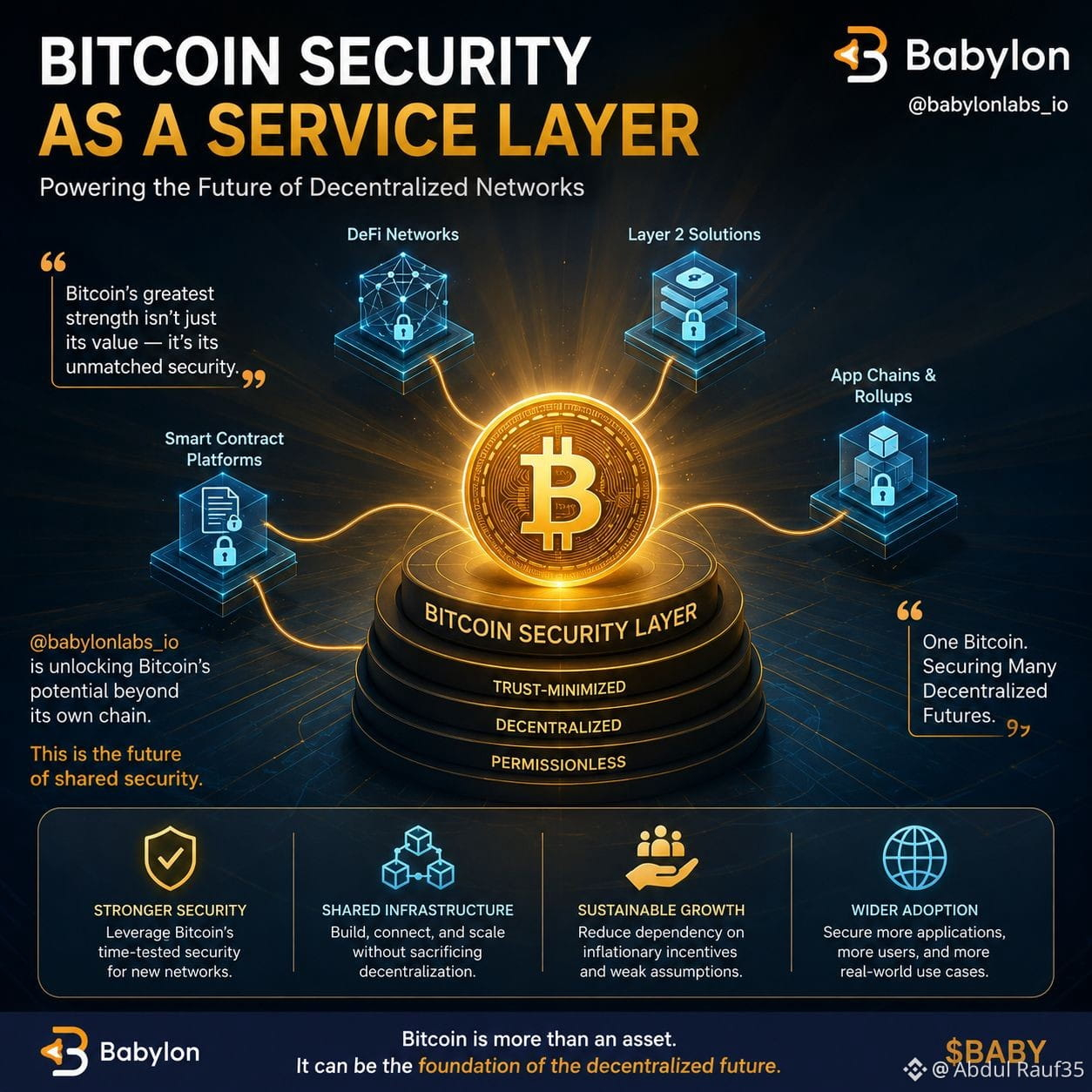
Avez-vous déjà envisagé que la contribution la plus importante de Bitcoin à la crypto ne soit pas la liquidité, les paiements, voire même son rôle de réserve de valeur ? Récemment, j’ai pensé à une autre possibilité : la sécurité de Bitcoin elle-même devenant une couche de service pour l’écosystème blockchain dans son ensemble.
Une croyance courante veut que l’objectif principal de Bitcoin soit de préserver la richesse. Même si ce récit reste puissant, il peut passer à côté d’un des atouts les plus précieux de Bitcoin : son modèle de sécurité. À mesure que de nouvelles blockchains apparaissent, beaucoup rencontrent le même défi : comment obtenir une sécurité solide sans s’appuyer sur des incitations en jetons extrêmement inflationnistes ni sur des hypothèses de confiance complexes ?
C’est là que @babylonlabs_io a attiré mon attention. Plutôt que de considérer Bitcoin comme un actif passif, @babylonlabs_io explore comment la sécurité de Bitcoin peut contribuer à protéger des réseaux décentralisés grâce à une approche minimisant la confiance. L’idée est intéressante car elle déplace la conversation de « Que peut faire Bitcoin ? » vers « Que peut sécuriser Bitcoin ? »
Ce que je trouve le plus souvent négligé, c’est que la croissance durable d’une blockchain peut dépendre moins de la création de nouveaux systèmes de sécurité que de la réutilisation de ceux qui ont fait leurs preuves. Si plusieurs réseaux peuvent tirer parti des propriétés de sécurité de Bitcoin, l’industrie pourrait passer moins de temps à réinventer la confiance et davantage à construire des applications utiles. Dans ce sens, la sécurité de Bitcoin pourrait évoluer vers une infrastructure de base, plutôt que de rester isolée au sein de son propre écosystème.
Pour moi, l’importance à long terme ne concerne pas les récompenses de staking ni les récits à court terme. Il s’agit de savoir si Bitcoin peut devenir une couche de sécurité partagée qui aide les réseaux décentralisés à croître de façon plus sûre et plus efficace. Des projets comme @babylonlabs_io et des écosystèmes autour de $BABY font avancer cette discussion d’une manière significative.
Quel pourrait être le rôle le plus important que Bitcoin peut jouer au-delà d’être une réserve de valeur ?
#babylonlabs $BABY @babylonlabs_io
#baby $BABY
Avez-vous déjà envisagé que la contribution la plus importante de Bitcoin à la crypto ne soit pas la liquidité, les paiements, voire même son rôle de réserve de valeur ? Récemment, j’ai pensé à une autre possibilité : la sécurité de Bitcoin elle-même devenant une couche de service pour l’écosystème blockchain dans son ensemble.
Une croyance courante veut que l’objectif principal de Bitcoin soit de préserver la richesse. Même si ce récit reste puissant, il peut passer à côté d’un des atouts les plus précieux de Bitcoin : son modèle de sécurité. À mesure que de nouvelles blockchains apparaissent, beaucoup rencontrent le même défi : comment obtenir une sécurité solide sans s’appuyer sur des incitations en jetons extrêmement inflationnistes ni sur des hypothèses de confiance complexes ?
C’est là que @BabylonLabs_io a attiré mon attention. Plutôt que de considérer Bitcoin comme un actif passif, @BabylonLabs_io explore comment la sécurité de Bitcoin peut contribuer à protéger des réseaux décentralisés grâce à une approche minimisant la confiance. L’idée est intéressante car elle déplace la conversation de « Que peut faire Bitcoin ? » vers « Que peut sécuriser Bitcoin ? »
Ce que je trouve le plus souvent négligé, c’est que la croissance durable d’une blockchain peut dépendre moins de la création de nouveaux systèmes de sécurité que de la réutilisation de ceux qui ont fait leurs preuves. Si plusieurs réseaux peuvent tirer parti des propriétés de sécurité de Bitcoin, l’industrie pourrait passer moins de temps à réinventer la confiance et davantage à construire des applications utiles. Dans ce sens, la sécurité de Bitcoin pourrait évoluer vers une infrastructure de base, plutôt que de rester isolée au sein de son propre écosystème.
Pour moi, l’importance à long terme ne concerne pas les récompenses de staking ni les récits à court terme. Il s’agit de savoir si Bitcoin peut devenir une couche de sécurité partagée qui aide les réseaux décentralisés à croître de façon plus sûre et plus efficace. Des projets comme @BabylonLabs_io et des écosystèmes autour de $BABY font avancer cette discussion d’une manière significative.
Quel pourrait être le rôle le plus important que Bitcoin peut jouer au-delà d’être une réserve de valeur ?
#babylonlabs $BABY @BabylonLabs_io
Avez-vous déjà envisagé que la contribution la plus importante de Bitcoin à la crypto ne soit pas la liquidité, les paiements, voire même son rôle de réserve de valeur ? Récemment, j’ai pensé à une autre possibilité : la sécurité de Bitcoin elle-même devenant une couche de service pour l’écosystème blockchain dans son ensemble.
Une croyance courante veut que l’objectif principal de Bitcoin soit de préserver la richesse. Même si ce récit reste puissant, il peut passer à côté d’un des atouts les plus précieux de Bitcoin : son modèle de sécurité. À mesure que de nouvelles blockchains apparaissent, beaucoup rencontrent le même défi : comment obtenir une sécurité solide sans s’appuyer sur des incitations en jetons extrêmement inflationnistes ni sur des hypothèses de confiance complexes ?
C’est là que @BabylonLabs_io a attiré mon attention. Plutôt que de considérer Bitcoin comme un actif passif, @BabylonLabs_io explore comment la sécurité de Bitcoin peut contribuer à protéger des réseaux décentralisés grâce à une approche minimisant la confiance. L’idée est intéressante car elle déplace la conversation de « Que peut faire Bitcoin ? » vers « Que peut sécuriser Bitcoin ? »
Ce que je trouve le plus souvent négligé, c’est que la croissance durable d’une blockchain peut dépendre moins de la création de nouveaux systèmes de sécurité que de la réutilisation de ceux qui ont fait leurs preuves. Si plusieurs réseaux peuvent tirer parti des propriétés de sécurité de Bitcoin, l’industrie pourrait passer moins de temps à réinventer la confiance et davantage à construire des applications utiles. Dans ce sens, la sécurité de Bitcoin pourrait évoluer vers une infrastructure de base, plutôt que de rester isolée au sein de son propre écosystème.
Pour moi, l’importance à long terme ne concerne pas les récompenses de staking ni les récits à court terme. Il s’agit de savoir si Bitcoin peut devenir une couche de sécurité partagée qui aide les réseaux décentralisés à croître de façon plus sûre et plus efficace. Des projets comme @BabylonLabs_io et des écosystèmes autour de $BABY font avancer cette discussion d’une manière significative.
Quel pourrait être le rôle le plus important que Bitcoin peut jouer au-delà d’être une réserve de valeur ?
#babylonlabs $BABY @BabylonLabs_io
70
·
--
#newt $NEWT
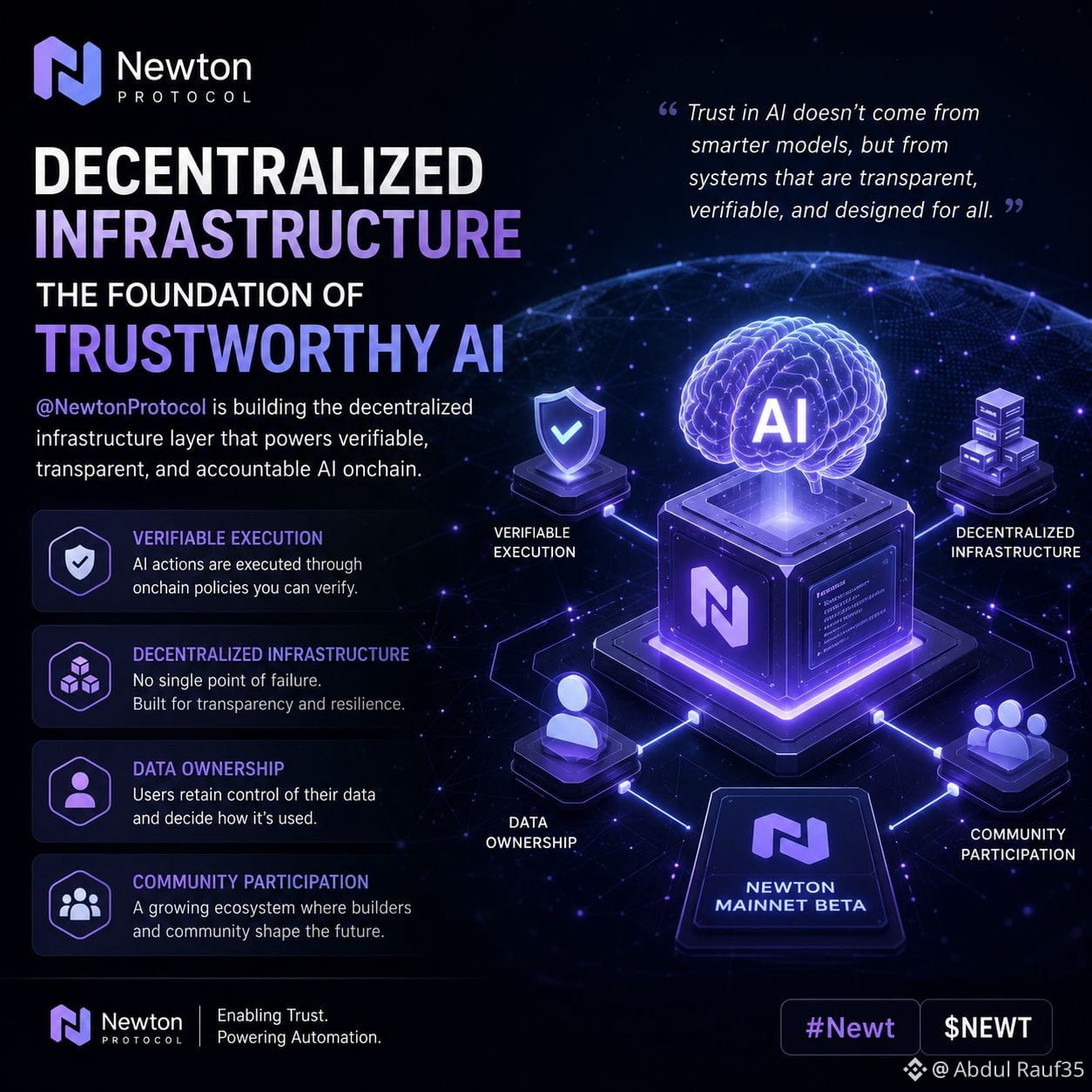
Plus j’explore l’IA, plus je suis convaincu que la confiance vient de l’infrastructure qui la sous-tend, et pas seulement de l’intelligence des modèles. @NewtonProtocol adopte une approche intéressante en combinant une infrastructure décentralisée avec des politiques programmables et une exécution vérifiable, donnant aux utilisateurs davantage de confiance dans le fait que les actions de l’IA suivent des règles transparentes et prédéfinies, plutôt que de reposer sur une confiance aveugle.
Pour moi, la leçon la plus importante est que l’IA digne de confiance nécessitera des systèmes où les utilisateurs peuvent vérifier les résultats, participer à la gouvernance et conserver davantage de contrôle sur la manière dont l’automatisation fonctionne. @NewtonProtocol explore ce socle grâce à son écosystème en pleine croissance et à la Newton Mainnet Beta. #Newt $NEWT
Que pensez-vous de l’avenir de $NEWT et de la technologie IA ? Dites-nous ce que vous en pensez en commentaires !
#Newt $NEWT @NewtonProtocol
#newt $NEWT
Plus j’explore l’IA, plus je suis convaincu que la confiance vient de l’infrastructure qui la sous-tend, et pas seulement de l’intelligence des modèles. @NewtonProtocol adopte une approche intéressante en combinant une infrastructure décentralisée avec des politiques programmables et une exécution vérifiable, donnant aux utilisateurs davantage de confiance dans le fait que les actions de l’IA suivent des règles transparentes et prédéfinies, plutôt que de reposer sur une confiance aveugle.
Pour moi, la leçon la plus importante est que l’IA digne de confiance nécessitera des systèmes où les utilisateurs peuvent vérifier les résultats, participer à la gouvernance et conserver davantage de contrôle sur la manière dont l’automatisation fonctionne. @NewtonProtocol explore ce socle grâce à son écosystème en pleine croissance et à la Newton Mainnet Beta. #Newt $NEWT
Que pensez-vous de l’avenir de $NEWT et de la technologie IA ? Dites-nous ce que vous en pensez en commentaires !
#Newt $NEWT @NewtonProtocol
Plus j’explore l’IA, plus je suis convaincu que la confiance vient de l’infrastructure qui la sous-tend, et pas seulement de l’intelligence des modèles. @NewtonProtocol adopte une approche intéressante en combinant une infrastructure décentralisée avec des politiques programmables et une exécution vérifiable, donnant aux utilisateurs davantage de confiance dans le fait que les actions de l’IA suivent des règles transparentes et prédéfinies, plutôt que de reposer sur une confiance aveugle.
Pour moi, la leçon la plus importante est que l’IA digne de confiance nécessitera des systèmes où les utilisateurs peuvent vérifier les résultats, participer à la gouvernance et conserver davantage de contrôle sur la manière dont l’automatisation fonctionne. @NewtonProtocol explore ce socle grâce à son écosystème en pleine croissance et à la Newton Mainnet Beta. #Newt $NEWT
Que pensez-vous de l’avenir de $NEWT et de la technologie IA ? Dites-nous ce que vous en pensez en commentaires !
#Newt $NEWT @NewtonProtocol
2
1
73
·
--
Article
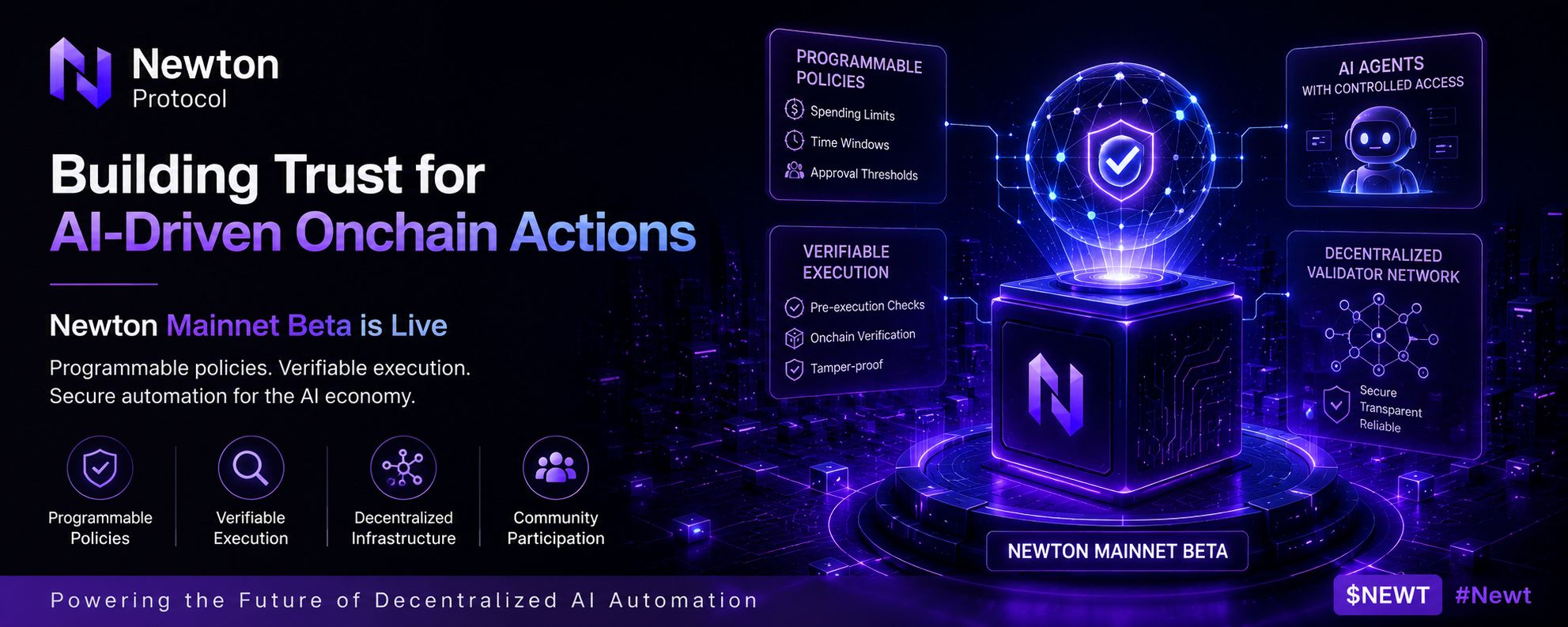
L’étape suivante pour l’automatisation par l’IAÀ mesure que l’IA s’intègre davantage à la blockchain, je pense que l’une des plus grandes questions n’est plus de savoir à quel point les agents d’IA peuvent devenir intelligents, mais plutôt à quel point ils peuvent fonctionner en toute sécurité au nom des utilisateurs. C’est l’une des raisons pour lesquelles @NewtonProtocol ol a retenu mon attention lors du lancement de la Newton Mainnet Beta.
De nombreuses applications blockchain s’appuient encore sur le fait que les utilisateurs approuvent manuellement chaque transaction. Bien que cette approche offre un contrôle direct, elle limite également ce que des systèmes d’IA autonomes peuvent accomplir. Newton Protocol explore une voie différente en introduisant des politiques programmables et une exécution vérifiable, permettant aux agents d’IA d’effectuer des tâches dans le cadre de règles prédéfinies plutôt que de recevoir des autorisations illimitées.
L’étape suivante pour l’automatisation par l’IA
À mesure que l’IA s’intègre davantage à la blockchain, je pense que l’une des plus grandes questions n’est plus de savoir à quel point les agents d’IA peuvent devenir intelligents, mais plutôt à quel point ils peuvent fonctionner en toute sécurité au nom des utilisateurs. C’est l’une des raisons pour lesquelles @NewtonProtocol ol a retenu mon attention lors du lancement de la Newton Mainnet Beta.
De nombreuses applications blockchain s’appuient encore sur le fait que les utilisateurs approuvent manuellement chaque transaction. Bien que cette approche offre un contrôle direct, elle limite également ce que des systèmes d’IA autonomes peuvent accomplir. Newton Protocol explore une voie différente en introduisant des politiques programmables et une exécution vérifiable, permettant aux agents d’IA d’effectuer des tâches dans le cadre de règles prédéfinies plutôt que de recevoir des autorisations illimitées.
De nombreuses applications blockchain s’appuient encore sur le fait que les utilisateurs approuvent manuellement chaque transaction. Bien que cette approche offre un contrôle direct, elle limite également ce que des systèmes d’IA autonomes peuvent accomplir. Newton Protocol explore une voie différente en introduisant des politiques programmables et une exécution vérifiable, permettant aux agents d’IA d’effectuer des tâches dans le cadre de règles prédéfinies plutôt que de recevoir des autorisations illimitées.
4
66
·
--
#newt $NEWT
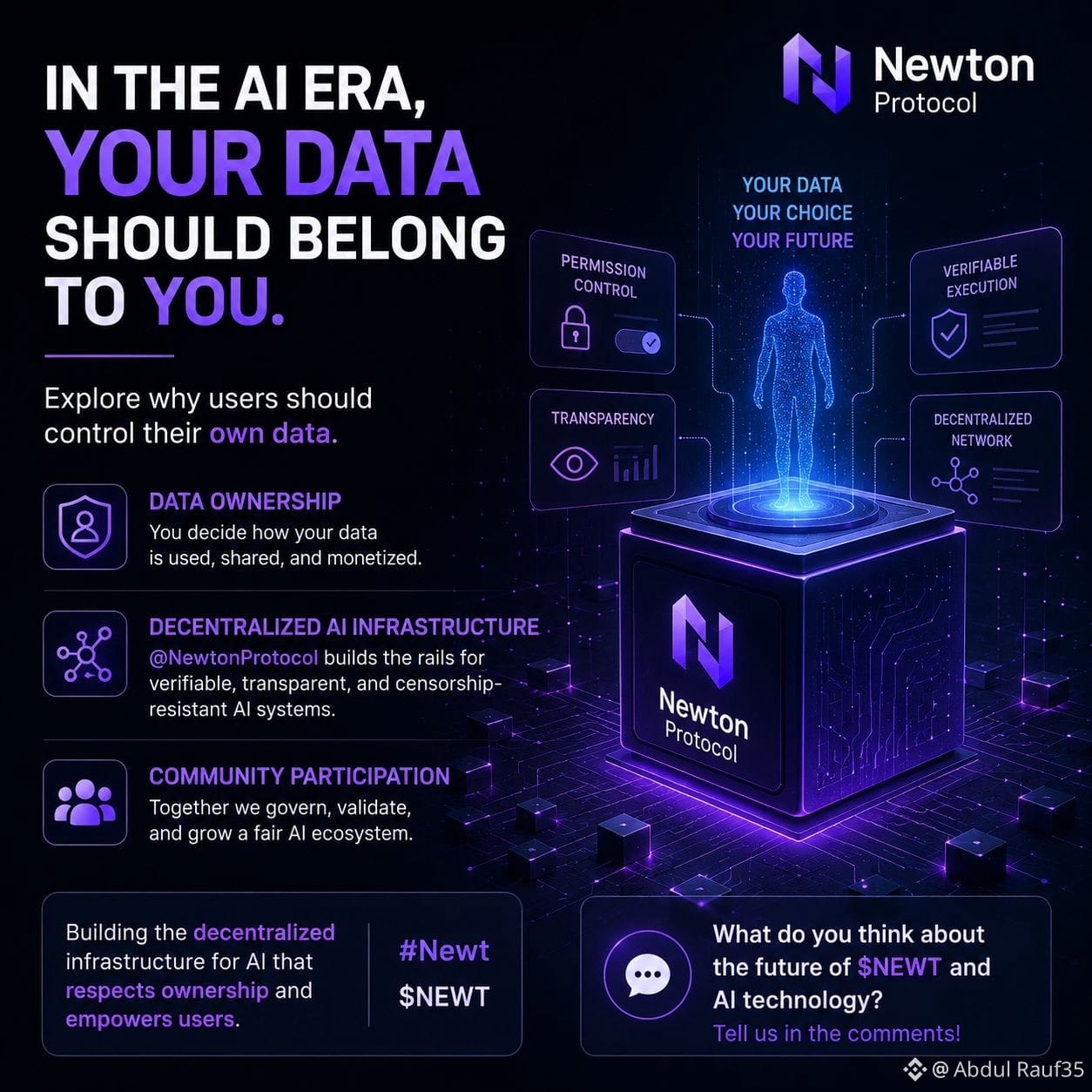
Plus j’en apprends sur l’IA, plus je pense que les utilisateurs devraient décider de l’usage de leurs données, plutôt que de céder le contrôle par défaut. @NewtonProtocol explore un modèle où une infrastructure décentralisée peut offrir aux gens une plus grande visibilité, une propriété accrue et une participation au sein de l’écosystème de l’IA, ce qui me semble essentiel pour instaurer une confiance durable.
Pour moi, la leçon la plus importante est qu’une IA puissante, à elle seule, ne suffit pas : la propriété transparente des données et des systèmes vérifiables comptent tout autant. Je suis curieux de voir comment @NewtonProtocol continue de développer cette vision et comment la communauté contribue à la façonner. #Newt $NEWT
Que pensez-vous de l’avenir de $NEWT et de la technologie de l’IA ? Dites-le nous en commentaire !
#Newt $NEWT @NewtonProtocol
#newt $NEWT
Plus j’en apprends sur l’IA, plus je pense que les utilisateurs devraient décider de l’usage de leurs données, plutôt que de céder le contrôle par défaut. @NewtonProtocol explore un modèle où une infrastructure décentralisée peut offrir aux gens une plus grande visibilité, une propriété accrue et une participation au sein de l’écosystème de l’IA, ce qui me semble essentiel pour instaurer une confiance durable.
Pour moi, la leçon la plus importante est qu’une IA puissante, à elle seule, ne suffit pas : la propriété transparente des données et des systèmes vérifiables comptent tout autant. Je suis curieux de voir comment @NewtonProtocol continue de développer cette vision et comment la communauté contribue à la façonner. #Newt $NEWT
Que pensez-vous de l’avenir de $NEWT et de la technologie de l’IA ? Dites-le nous en commentaire !
#Newt $NEWT @NewtonProtocol
Plus j’en apprends sur l’IA, plus je pense que les utilisateurs devraient décider de l’usage de leurs données, plutôt que de céder le contrôle par défaut. @NewtonProtocol explore un modèle où une infrastructure décentralisée peut offrir aux gens une plus grande visibilité, une propriété accrue et une participation au sein de l’écosystème de l’IA, ce qui me semble essentiel pour instaurer une confiance durable.
Pour moi, la leçon la plus importante est qu’une IA puissante, à elle seule, ne suffit pas : la propriété transparente des données et des systèmes vérifiables comptent tout autant. Je suis curieux de voir comment @NewtonProtocol continue de développer cette vision et comment la communauté contribue à la façonner. #Newt $NEWT
Que pensez-vous de l’avenir de $NEWT et de la technologie de l’IA ? Dites-le nous en commentaire !
#Newt $NEWT @NewtonProtocol
12
3
75
·
--
Article
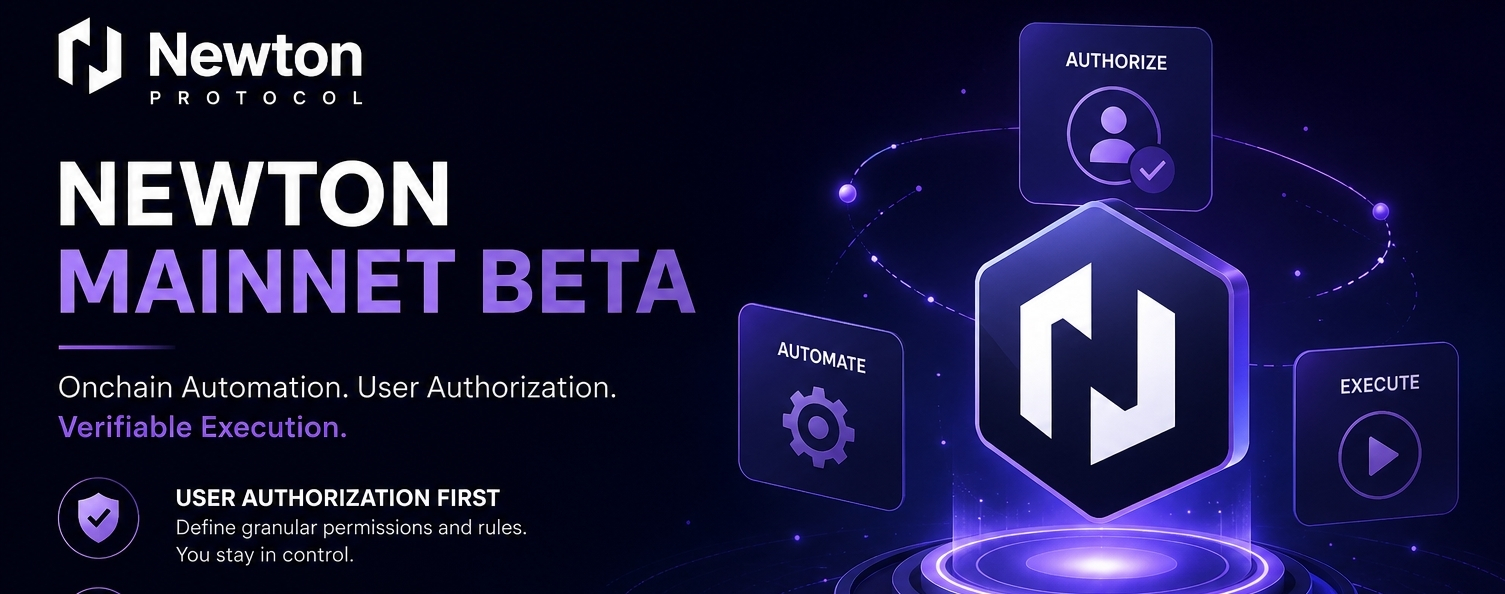
Newton Mainnet Beta : Construire l’avenir de l’exécution intelligente en chaîneUne des tendances les plus intéressantes de Web3 est le passage de la simple propriété d’actifs à l’exécution intelligente et automatisée en chaîne. @NewtonProtocol contribue à cette transition grâce à Newton Mainnet Beta, où l’objectif ne consiste pas seulement à déplacer des actifs, mais aussi à permettre une automatisation sécurisée et vérifiable. À mesure que les outils alimentés par l’IA deviennent plus courants, la capacité à autoriser des actions sans pour autant renoncer à un contrôle total pourrait devenir une caractéristique déterminante de l’infrastructure blockchain de la prochaine génération. Avec $NEWT et #Newt , l’écosystème encourage des discussions axées sur l’utilité concrète plutôt que sur des récits à court terme.
Newton Mainnet Beta : Construire l’avenir de l’exécution intelligente en chaîne
Une des tendances les plus intéressantes de Web3 est le passage de la simple propriété d’actifs à l’exécution intelligente et automatisée en chaîne. @NewtonProtocol contribue à cette transition grâce à Newton Mainnet Beta, où l’objectif ne consiste pas seulement à déplacer des actifs, mais aussi à permettre une automatisation sécurisée et vérifiable. À mesure que les outils alimentés par l’IA deviennent plus courants, la capacité à autoriser des actions sans pour autant renoncer à un contrôle total pourrait devenir une caractéristique déterminante de l’infrastructure blockchain de la prochaine génération. Avec $NEWT et #Newt , l’écosystème encourage des discussions axées sur l’utilité concrète plutôt que sur des récits à court terme.
15
2
57
·
--
Article
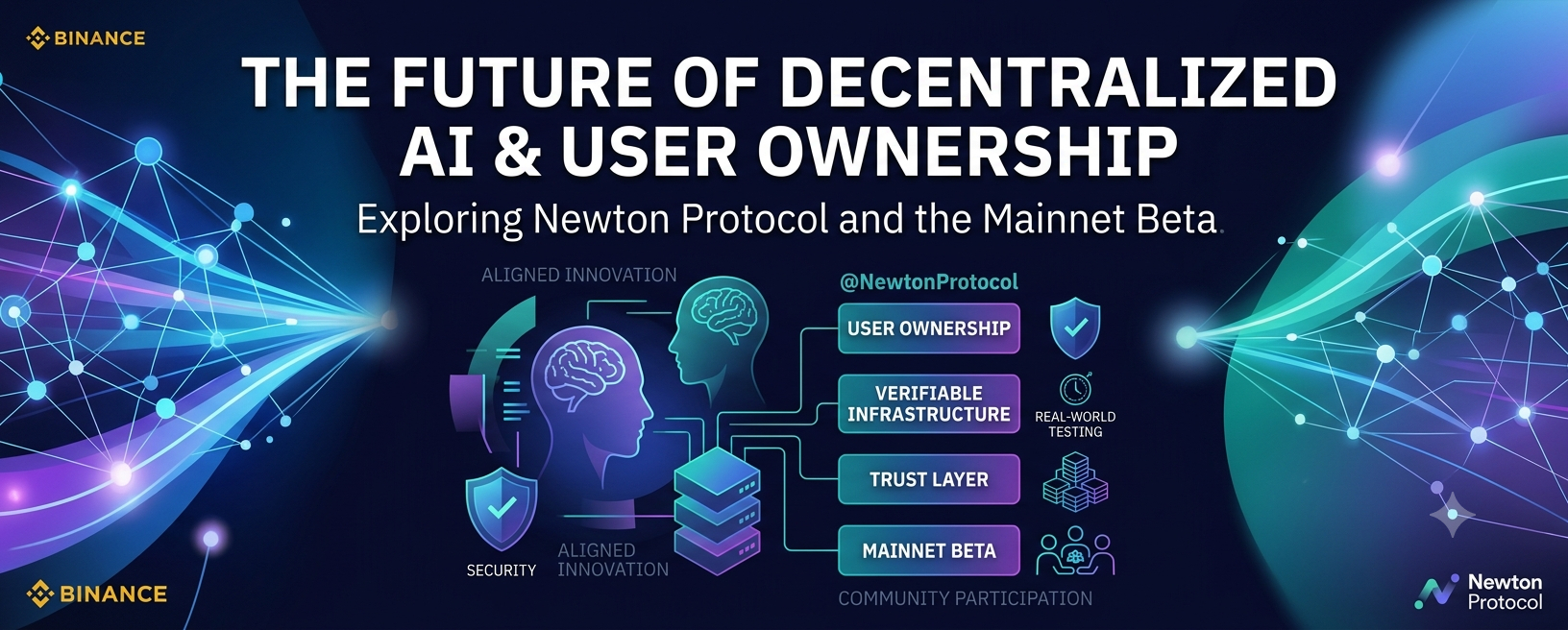
L’avenir de l’IA décentralisée commence avec @NewtonProtocol #NewtJ'essaie depuis un moment de suivre l’évolution de l’IA décentralisée, et une question revient sans cesse : à qui devrait vraiment appartenir les données qui alimentent les systèmes intelligents ? Pour ma part, @NewtonProtocol propose une réponse intéressante en construisant un écosystème où l’IA, l’infrastructure décentralisée et la propriété des utilisateurs peuvent fonctionner ensemble au lieu de se concurrencer. À mesure que l’IA s’intègre aux applications du quotidien, offrir aux utilisateurs davantage de visibilité et de contrôle sur la façon dont leurs données sont utilisées pourrait devenir l’une des innovations les plus précieuses de Web3. C’est pourquoi je pense que les projets axés sur une infrastructure vérifiable et transparente méritent qu’on s’y attarde. #Newt $NEWT
L’avenir de l’IA décentralisée commence avec @NewtonProtocol #Newt
J'essaie depuis un moment de suivre l’évolution de l’IA décentralisée, et une question revient sans cesse : à qui devrait vraiment appartenir les données qui alimentent les systèmes intelligents ? Pour ma part, @NewtonProtocol propose une réponse intéressante en construisant un écosystème où l’IA, l’infrastructure décentralisée et la propriété des utilisateurs peuvent fonctionner ensemble au lieu de se concurrencer. À mesure que l’IA s’intègre aux applications du quotidien, offrir aux utilisateurs davantage de visibilité et de contrôle sur la façon dont leurs données sont utilisées pourrait devenir l’une des innovations les plus précieuses de Web3. C’est pourquoi je pense que les projets axés sur une infrastructure vérifiable et transparente méritent qu’on s’y attarde. #Newt $NEWT
7
2
70
·
--
#newt $NEWT
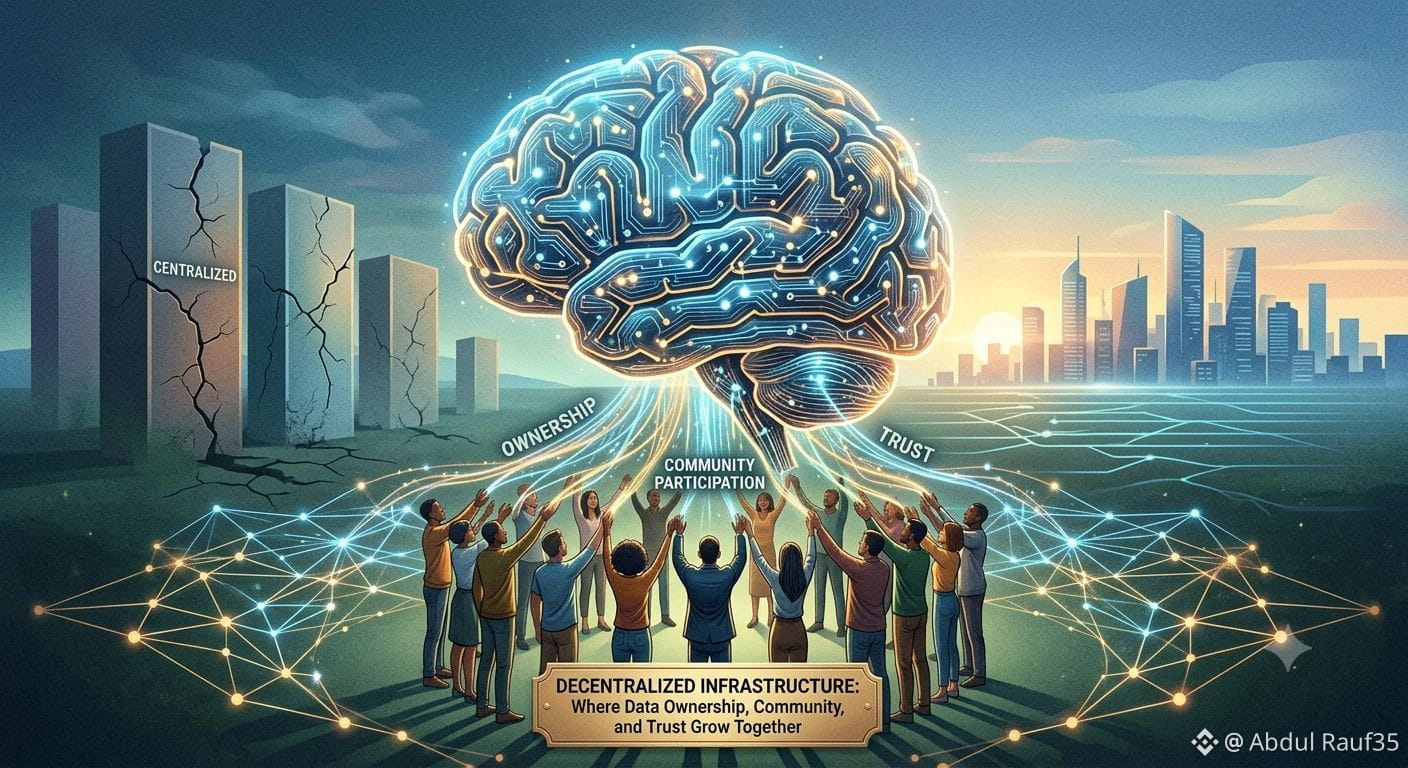
Je réfléchis à la façon dont l’IA évolue, et @NewtonProtocol se distingue en faisant évoluer la conversation : au lieu de se limiter à l’utilisation des données, elle met l’accent sur la capacité à en être véritablement propriétaire. Lorsque les utilisateurs ont un meilleur contrôle sur leurs informations, l’IA peut devenir plus transparente, plus responsable et mieux alignée sur les intérêts de chacun plutôt que sur ceux de plateformes centralisées.
Pour moi, @NewtonProtocol met en lumière une leçon importante : l’avenir de l’IA ne consiste pas seulement à créer des modèles plus performants—il s’agit aussi de bâtir une infrastructure décentralisée où la propriété des données, la participation de la communauté et la confiance progressent ensemble. Si l’IA respecte la propriété dès le départ, est-ce que cela pourrait devenir le socle de la prochaine génération d’innovations Web3 ?
#Newt $NEWT @NewtonProtocol
#newt $NEWT
Je réfléchis à la façon dont l’IA évolue, et @NewtonProtocol se distingue en faisant évoluer la conversation : au lieu de se limiter à l’utilisation des données, elle met l’accent sur la capacité à en être véritablement propriétaire. Lorsque les utilisateurs ont un meilleur contrôle sur leurs informations, l’IA peut devenir plus transparente, plus responsable et mieux alignée sur les intérêts de chacun plutôt que sur ceux de plateformes centralisées.
Pour moi, @NewtonProtocol met en lumière une leçon importante : l’avenir de l’IA ne consiste pas seulement à créer des modèles plus performants—il s’agit aussi de bâtir une infrastructure décentralisée où la propriété des données, la participation de la communauté et la confiance progressent ensemble. Si l’IA respecte la propriété dès le départ, est-ce que cela pourrait devenir le socle de la prochaine génération d’innovations Web3 ?
#Newt $NEWT @NewtonProtocol
Je réfléchis à la façon dont l’IA évolue, et @NewtonProtocol se distingue en faisant évoluer la conversation : au lieu de se limiter à l’utilisation des données, elle met l’accent sur la capacité à en être véritablement propriétaire. Lorsque les utilisateurs ont un meilleur contrôle sur leurs informations, l’IA peut devenir plus transparente, plus responsable et mieux alignée sur les intérêts de chacun plutôt que sur ceux de plateformes centralisées.
Pour moi, @NewtonProtocol met en lumière une leçon importante : l’avenir de l’IA ne consiste pas seulement à créer des modèles plus performants—il s’agit aussi de bâtir une infrastructure décentralisée où la propriété des données, la participation de la communauté et la confiance progressent ensemble. Si l’IA respecte la propriété dès le départ, est-ce que cela pourrait devenir le socle de la prochaine génération d’innovations Web3 ?
#Newt $NEWT @NewtonProtocol
8
78
·
--
#newt $NEWT
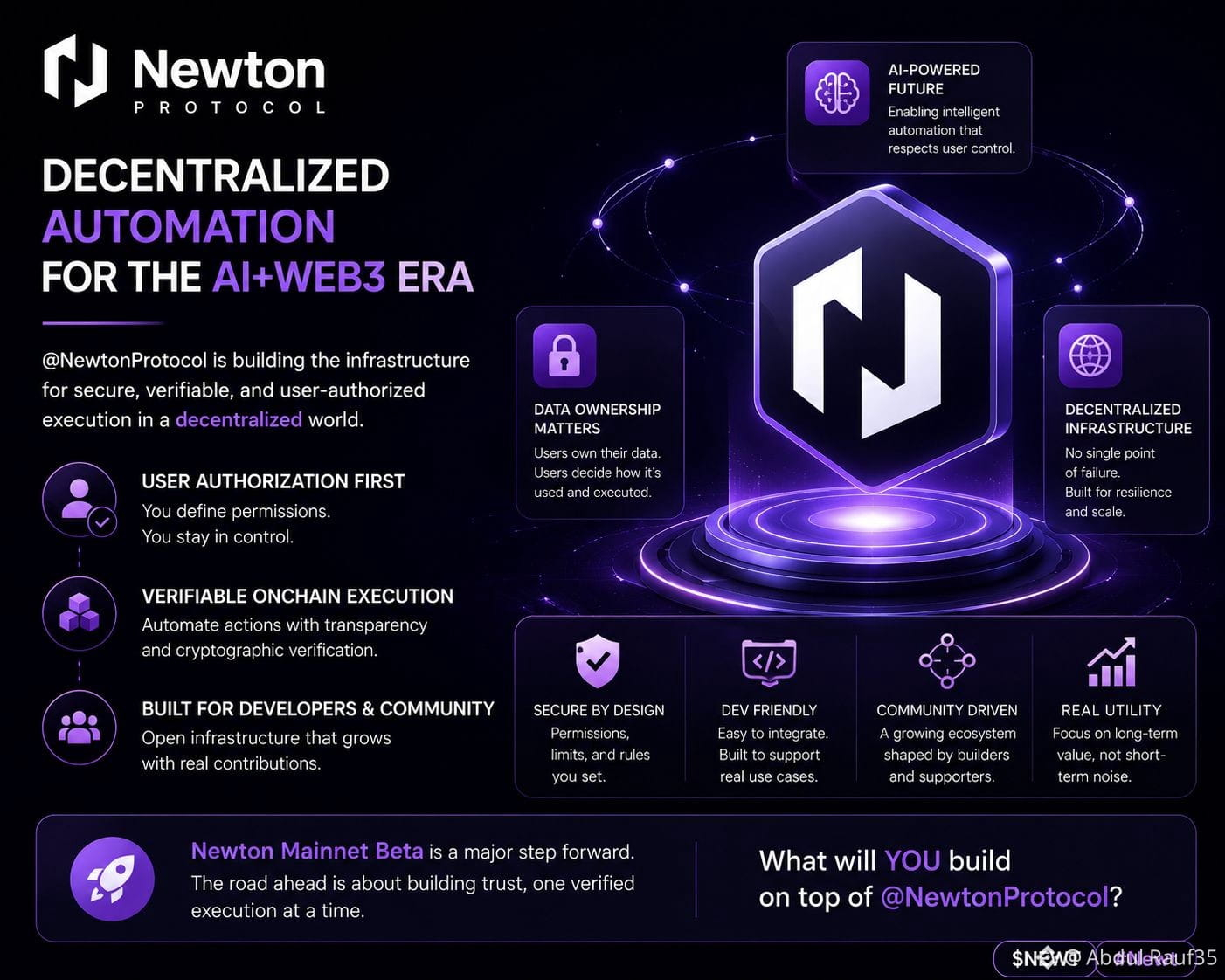
J’ai prêté davantage attention à la façon dont l’IA et la Web3 commencent à se croiser, et @NewtonProtocol se distingue parce qu’elle met l’accent sur le fait de donner aux utilisateurs plus de contrôle sur les actions onchain automatisées, plutôt que de se fier uniquement à la prise de décision centralisée. Je pense que cet équilibre entre l’automatisation et l’autorisation de l’utilisateur deviendra de plus en plus important à mesure que les applications décentralisées se développeront.
Ce qui m’intéresse le plus dans @NewtonProtocol , c’est qu’une infrastructure solide est souvent invisible lorsqu’elle fonctionne correctement. Si les développeurs peuvent créer des applications IA et Web3 avec une exécution transparente et des autorisations vérifiables, les utilisateurs gagnent en confiance sans renoncer à la propriété ni au contrôle. À mon avis, l’adoption à long terme dépendra de la confiance créée par la conception plutôt que par des promesses. Selon vous, quel sera le facteur le plus important pour déclencher la prochaine vague d’automatisation décentralisée ?
#Newt $NEWT @NewtonProtocol
#newt $NEWT
J’ai prêté davantage attention à la façon dont l’IA et la Web3 commencent à se croiser, et @NewtonProtocol se distingue parce qu’elle met l’accent sur le fait de donner aux utilisateurs plus de contrôle sur les actions onchain automatisées, plutôt que de se fier uniquement à la prise de décision centralisée. Je pense que cet équilibre entre l’automatisation et l’autorisation de l’utilisateur deviendra de plus en plus important à mesure que les applications décentralisées se développeront.
Ce qui m’intéresse le plus dans @NewtonProtocol , c’est qu’une infrastructure solide est souvent invisible lorsqu’elle fonctionne correctement. Si les développeurs peuvent créer des applications IA et Web3 avec une exécution transparente et des autorisations vérifiables, les utilisateurs gagnent en confiance sans renoncer à la propriété ni au contrôle. À mon avis, l’adoption à long terme dépendra de la confiance créée par la conception plutôt que par des promesses. Selon vous, quel sera le facteur le plus important pour déclencher la prochaine vague d’automatisation décentralisée ?
#Newt $NEWT @NewtonProtocol
J’ai prêté davantage attention à la façon dont l’IA et la Web3 commencent à se croiser, et @NewtonProtocol se distingue parce qu’elle met l’accent sur le fait de donner aux utilisateurs plus de contrôle sur les actions onchain automatisées, plutôt que de se fier uniquement à la prise de décision centralisée. Je pense que cet équilibre entre l’automatisation et l’autorisation de l’utilisateur deviendra de plus en plus important à mesure que les applications décentralisées se développeront.
Ce qui m’intéresse le plus dans @NewtonProtocol , c’est qu’une infrastructure solide est souvent invisible lorsqu’elle fonctionne correctement. Si les développeurs peuvent créer des applications IA et Web3 avec une exécution transparente et des autorisations vérifiables, les utilisateurs gagnent en confiance sans renoncer à la propriété ni au contrôle. À mon avis, l’adoption à long terme dépendra de la confiance créée par la conception plutôt que par des promesses. Selon vous, quel sera le facteur le plus important pour déclencher la prochaine vague d’automatisation décentralisée ?
#Newt $NEWT @NewtonProtocol
3
2
75
·
--
#opg $OPG
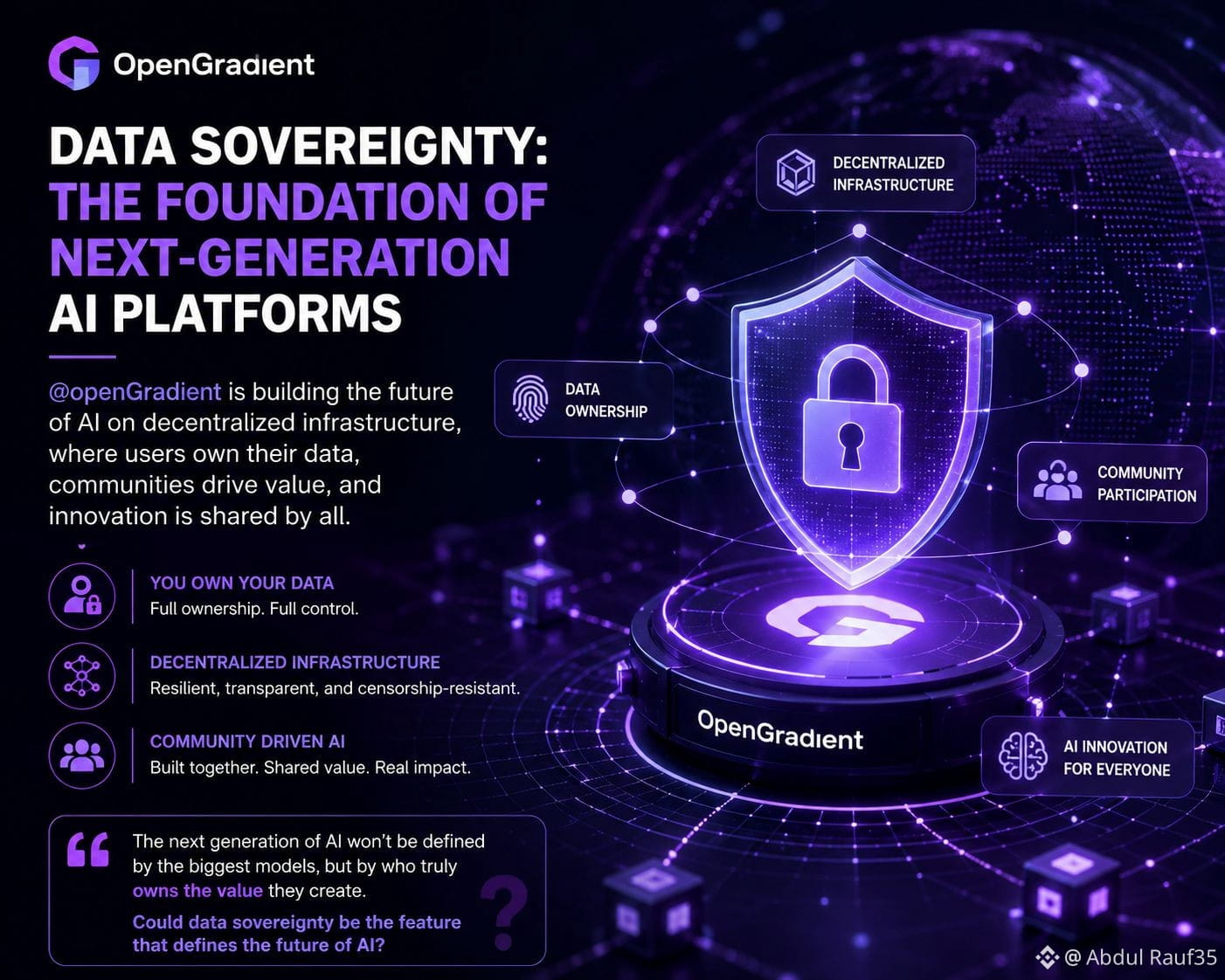
J’ai beaucoup réfléchi à l’évolution de l’IA, et @openGradient se distingue parce qu’elle traite la souveraineté des données comme une base plutôt que comme une simple réflexion après coup. Lorsque les utilisateurs disposent d’une meilleure maîtrise et d’un contrôle vérifiable de leurs données, l’IA peut devenir à la fois plus fiable et plus collaborative.
Pour moi, @openGradient montre comment une infrastructure décentralisée et des incitations Web3 peuvent aligner l’innovation avec la participation de la communauté, plutôt que de s’en remettre uniquement au contrôle centralisé. La prochaine génération d’IA ne sera peut-être pas définie par les plus grands modèles, mais par ceux qui possèdent réellement la valeur qu’ils créent. La souveraineté des données pourrait-elle devenir la fonctionnalité qui définit l’avenir de l’IA ?
#OpenGreadient $OPG @OpenGradient
#opg $OPG
J’ai beaucoup réfléchi à l’évolution de l’IA, et @openGradient se distingue parce qu’elle traite la souveraineté des données comme une base plutôt que comme une simple réflexion après coup. Lorsque les utilisateurs disposent d’une meilleure maîtrise et d’un contrôle vérifiable de leurs données, l’IA peut devenir à la fois plus fiable et plus collaborative.
Pour moi, @openGradient montre comment une infrastructure décentralisée et des incitations Web3 peuvent aligner l’innovation avec la participation de la communauté, plutôt que de s’en remettre uniquement au contrôle centralisé. La prochaine génération d’IA ne sera peut-être pas définie par les plus grands modèles, mais par ceux qui possèdent réellement la valeur qu’ils créent. La souveraineté des données pourrait-elle devenir la fonctionnalité qui définit l’avenir de l’IA ?
#OpenGreadient $OPG @OpenGradient
J’ai beaucoup réfléchi à l’évolution de l’IA, et @openGradient se distingue parce qu’elle traite la souveraineté des données comme une base plutôt que comme une simple réflexion après coup. Lorsque les utilisateurs disposent d’une meilleure maîtrise et d’un contrôle vérifiable de leurs données, l’IA peut devenir à la fois plus fiable et plus collaborative.
Pour moi, @openGradient montre comment une infrastructure décentralisée et des incitations Web3 peuvent aligner l’innovation avec la participation de la communauté, plutôt que de s’en remettre uniquement au contrôle centralisé. La prochaine génération d’IA ne sera peut-être pas définie par les plus grands modèles, mais par ceux qui possèdent réellement la valeur qu’ils créent. La souveraineté des données pourrait-elle devenir la fonctionnalité qui définit l’avenir de l’IA ?
#OpenGreadient $OPG @OpenGradient
4
2
101
·
--
#opg $OPG
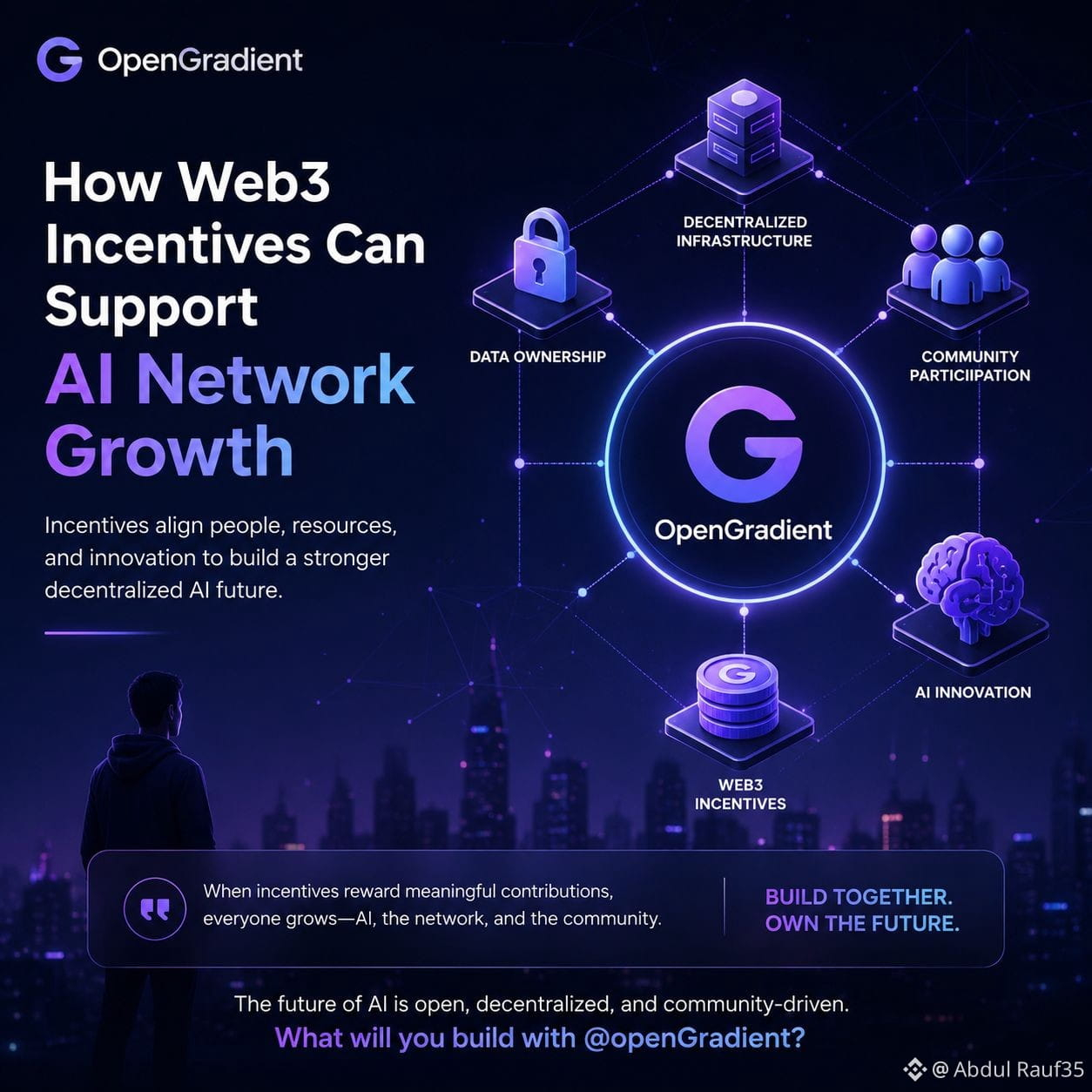
Je pense que la prochaine vague de croissance de l’IA dépendra autant des incitations que de la qualité des modèles. @openGradient montre comment la Web3 peut encourager les développeurs, les opérateurs de nœuds et les contributeurs à renforcer l’infrastructure d’IA tout en préservant la transparence et la propriété des données.
Ce qui m’impressionne chez @openGradient, c’est l’idée selon laquelle les participants peuvent aider à étendre le réseau, car les incitations récompensent des contributions significatives au lieu de s’appuyer uniquement sur des plateformes centralisées. Cet alignement entre la communauté et la technologie pourrait-il devenir le socle d’écosystèmes d’IA plus dignes de confiance ?
#OpenGreadient $OPG @OpenGradient
#opg $OPG
Je pense que la prochaine vague de croissance de l’IA dépendra autant des incitations que de la qualité des modèles. @openGradient montre comment la Web3 peut encourager les développeurs, les opérateurs de nœuds et les contributeurs à renforcer l’infrastructure d’IA tout en préservant la transparence et la propriété des données.
Ce qui m’impressionne chez @openGradient, c’est l’idée selon laquelle les participants peuvent aider à étendre le réseau, car les incitations récompensent des contributions significatives au lieu de s’appuyer uniquement sur des plateformes centralisées. Cet alignement entre la communauté et la technologie pourrait-il devenir le socle d’écosystèmes d’IA plus dignes de confiance ?
#OpenGreadient $OPG @OpenGradient
Je pense que la prochaine vague de croissance de l’IA dépendra autant des incitations que de la qualité des modèles. @openGradient montre comment la Web3 peut encourager les développeurs, les opérateurs de nœuds et les contributeurs à renforcer l’infrastructure d’IA tout en préservant la transparence et la propriété des données.
Ce qui m’impressionne chez @openGradient, c’est l’idée selon laquelle les participants peuvent aider à étendre le réseau, car les incitations récompensent des contributions significatives au lieu de s’appuyer uniquement sur des plateformes centralisées. Cet alignement entre la communauté et la technologie pourrait-il devenir le socle d’écosystèmes d’IA plus dignes de confiance ?
#OpenGreadient $OPG @OpenGradient
12
3
92
·
--
#opg $OPG
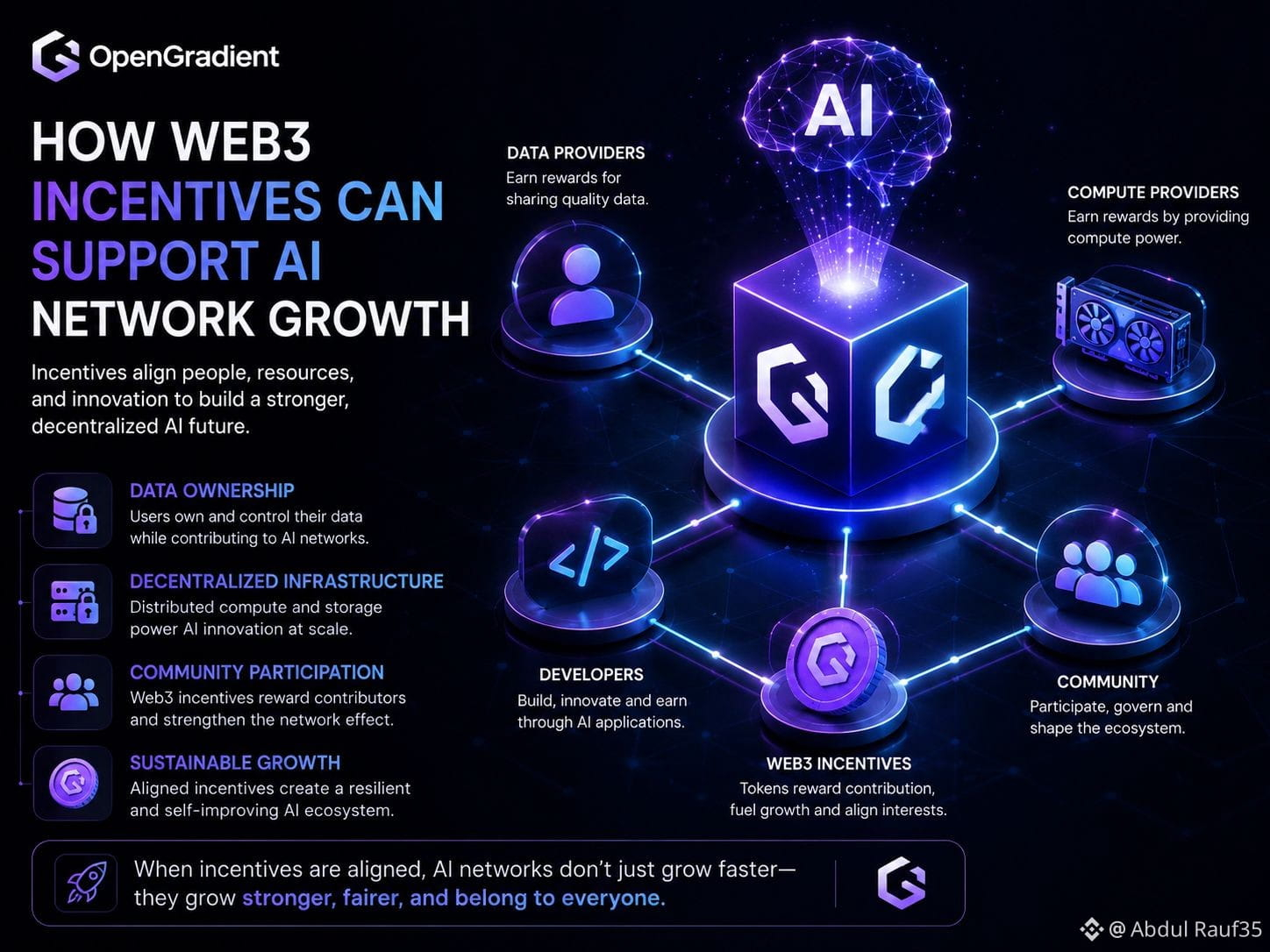
Je suis venu à croire que les réseaux de forte IA ont besoin de plus que des modèles avancés : ils ont aussi besoin d'incitations qui récompensent une participation significative. @openGradient met en évidence la manière dont la Web3 peut encourager les contributeurs à partager la puissance de calcul, les données et les idées tout en gardant l'ownership et la transparence au cœur.
@openGradient me rappelle que la croissance durable de l'IA n'est pas uniquement portée par la technologie, mais aussi par l'alignement des incitations entre les développeurs et les communautés. Quand chacun a une raison de contribuer, l'IA décentralisée devient plus résiliente. La conception des incitations pourrait-elle être le véritable moteur derrière la prochaine génération de réseaux d'IA ?
#OpenGradient $OPG @OpenGradient
#opg $OPG
Je suis venu à croire que les réseaux de forte IA ont besoin de plus que des modèles avancés : ils ont aussi besoin d'incitations qui récompensent une participation significative. @openGradient met en évidence la manière dont la Web3 peut encourager les contributeurs à partager la puissance de calcul, les données et les idées tout en gardant l'ownership et la transparence au cœur.
@openGradient me rappelle que la croissance durable de l'IA n'est pas uniquement portée par la technologie, mais aussi par l'alignement des incitations entre les développeurs et les communautés. Quand chacun a une raison de contribuer, l'IA décentralisée devient plus résiliente. La conception des incitations pourrait-elle être le véritable moteur derrière la prochaine génération de réseaux d'IA ?
#OpenGradient $OPG @OpenGradient
Je suis venu à croire que les réseaux de forte IA ont besoin de plus que des modèles avancés : ils ont aussi besoin d'incitations qui récompensent une participation significative. @openGradient met en évidence la manière dont la Web3 peut encourager les contributeurs à partager la puissance de calcul, les données et les idées tout en gardant l'ownership et la transparence au cœur.
@openGradient me rappelle que la croissance durable de l'IA n'est pas uniquement portée par la technologie, mais aussi par l'alignement des incitations entre les développeurs et les communautés. Quand chacun a une raison de contribuer, l'IA décentralisée devient plus résiliente. La conception des incitations pourrait-elle être le véritable moteur derrière la prochaine génération de réseaux d'IA ?
#OpenGradient $OPG @OpenGradient
13
2
99
·
--
#opg $OPG
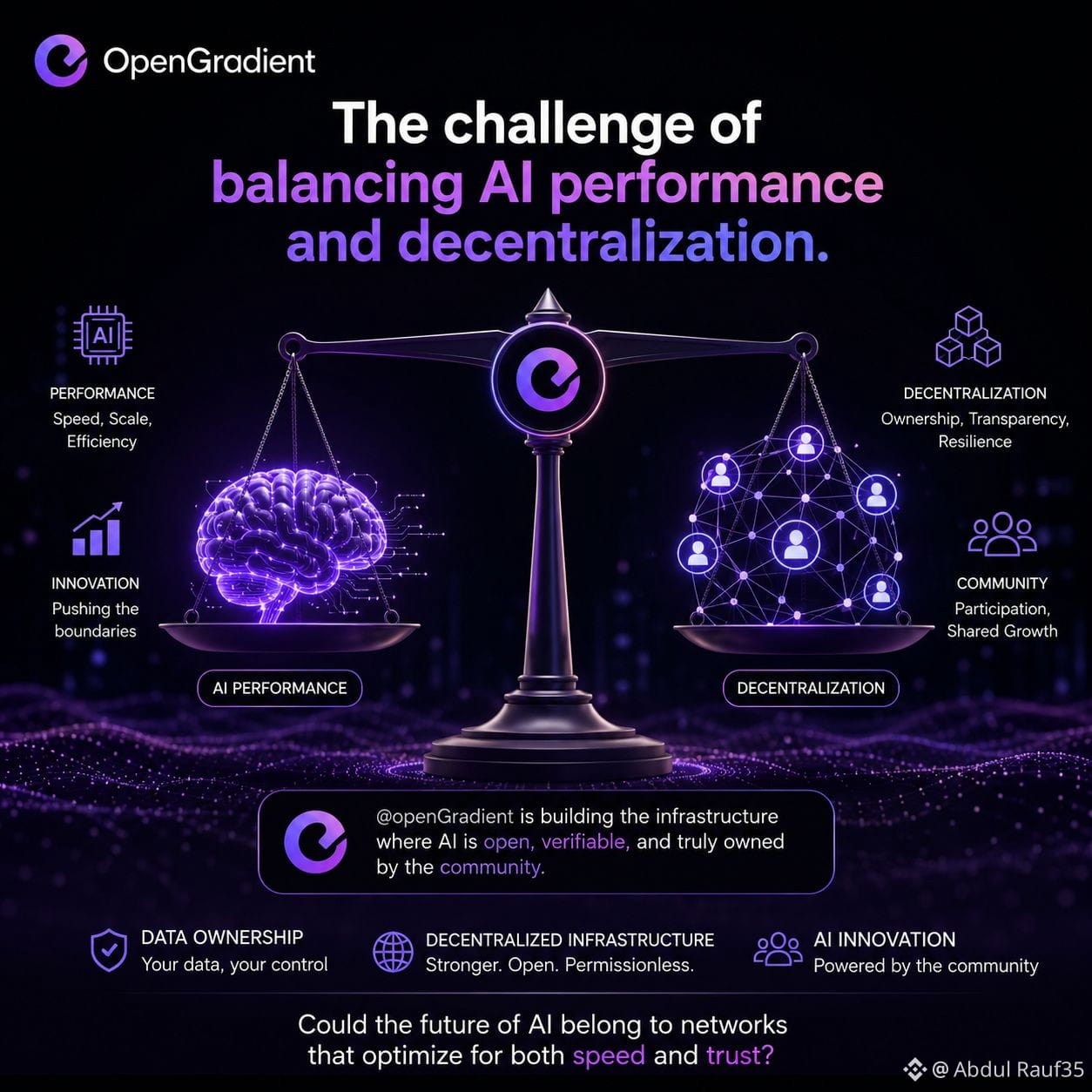
Je me suis demandé si l’IA la plus rapide est toujours la plus précieuse. @openGradient m’a fait réfléchir : la décentralisation ne consiste pas à ralentir l’innovation — elle vise à rendre l’intelligence plus transparente, vérifiable et résiliente. Cet arbitrage est peut-être plus difficile à mettre en place, mais il crée une confiance durable plus solide.
@openGradient montre que l’équilibre entre les performances de l’IA et une infrastructure décentralisée ne dépend pas tant du choix de l’une plutôt que de l’autre : il s’agit de concevoir des systèmes où l’efficacité, la propriété des données et la participation de la communauté se renforcent mutuellement. Le futur de l’IA appartiendra-t-il à des réseaux qui optimisent à la fois la vitesse et la confiance ?
#OpenGradient $OPG @OpenGradient
#opg $OPG
Je me suis demandé si l’IA la plus rapide est toujours la plus précieuse. @openGradient m’a fait réfléchir : la décentralisation ne consiste pas à ralentir l’innovation — elle vise à rendre l’intelligence plus transparente, vérifiable et résiliente. Cet arbitrage est peut-être plus difficile à mettre en place, mais il crée une confiance durable plus solide.
@openGradient montre que l’équilibre entre les performances de l’IA et une infrastructure décentralisée ne dépend pas tant du choix de l’une plutôt que de l’autre : il s’agit de concevoir des systèmes où l’efficacité, la propriété des données et la participation de la communauté se renforcent mutuellement. Le futur de l’IA appartiendra-t-il à des réseaux qui optimisent à la fois la vitesse et la confiance ?
#OpenGradient $OPG @OpenGradient
Je me suis demandé si l’IA la plus rapide est toujours la plus précieuse. @openGradient m’a fait réfléchir : la décentralisation ne consiste pas à ralentir l’innovation — elle vise à rendre l’intelligence plus transparente, vérifiable et résiliente. Cet arbitrage est peut-être plus difficile à mettre en place, mais il crée une confiance durable plus solide.
@openGradient montre que l’équilibre entre les performances de l’IA et une infrastructure décentralisée ne dépend pas tant du choix de l’une plutôt que de l’autre : il s’agit de concevoir des systèmes où l’efficacité, la propriété des données et la participation de la communauté se renforcent mutuellement. Le futur de l’IA appartiendra-t-il à des réseaux qui optimisent à la fois la vitesse et la confiance ?
#OpenGradient $OPG @OpenGradient
15
1
103
·
--
#opg $OPG
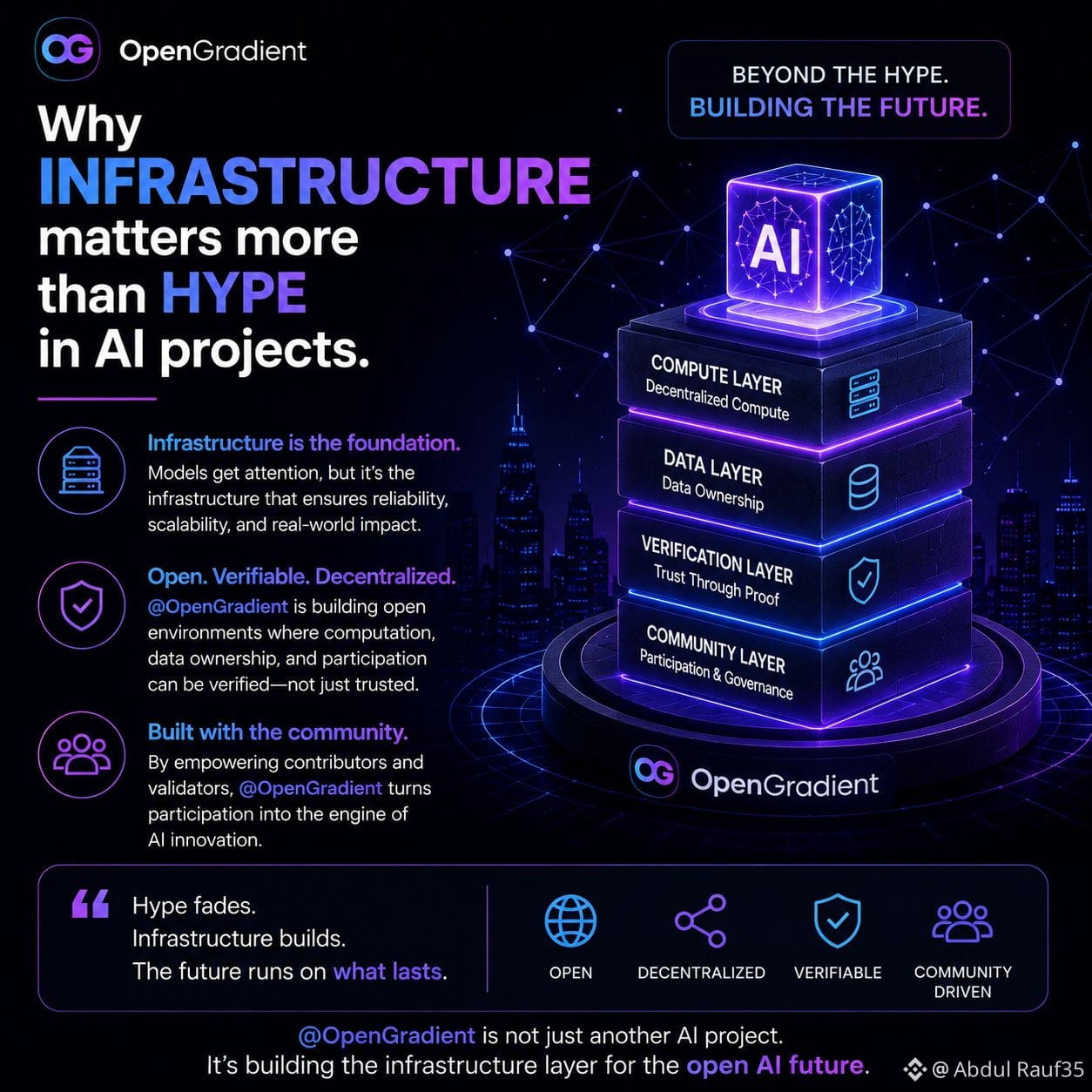
J’ai remarqué que de nombreuses discussions sur l’IA se concentrent sur les performances des modèles, mais rarement sur l’infrastructure qui rend ces systèmes fiables. C’est l’une des raisons pour lesquelles @openGradient attire mon attention. À long terme, une IA durable dépendra peut-être davantage d’une infrastructure transparente et décentralisée que de cycles d’emballement médiatique à court terme.
Ce qui ressort à propos de @openGradient, c’est son objectif de créer des environnements ouverts où le calcul, la propriété des données et la participation peuvent être vérifiés plutôt que simplement être approuvés sur la confiance. Poser cette base est plus difficile que de lancer un nouveau récit, mais c’est souvent là que naît une valeur durable.
@openGradient me rappelle que les écosystèmes d’IA les plus solides ne sont peut-être pas les plus bruyants : ce sont peut-être ceux dont l’infrastructure est suffisamment robuste pour soutenir l’innovation pendant des années. À mesure que l’IA évolue, l’infrastructure deviendra-t-elle le véritable avantage concurrentiel ?
#OpenGradient $OPG @OpenGradient
#opg $OPG
J’ai remarqué que de nombreuses discussions sur l’IA se concentrent sur les performances des modèles, mais rarement sur l’infrastructure qui rend ces systèmes fiables. C’est l’une des raisons pour lesquelles @openGradient attire mon attention. À long terme, une IA durable dépendra peut-être davantage d’une infrastructure transparente et décentralisée que de cycles d’emballement médiatique à court terme.
Ce qui ressort à propos de @openGradient, c’est son objectif de créer des environnements ouverts où le calcul, la propriété des données et la participation peuvent être vérifiés plutôt que simplement être approuvés sur la confiance. Poser cette base est plus difficile que de lancer un nouveau récit, mais c’est souvent là que naît une valeur durable.
@openGradient me rappelle que les écosystèmes d’IA les plus solides ne sont peut-être pas les plus bruyants : ce sont peut-être ceux dont l’infrastructure est suffisamment robuste pour soutenir l’innovation pendant des années. À mesure que l’IA évolue, l’infrastructure deviendra-t-elle le véritable avantage concurrentiel ?
#OpenGradient $OPG @OpenGradient
J’ai remarqué que de nombreuses discussions sur l’IA se concentrent sur les performances des modèles, mais rarement sur l’infrastructure qui rend ces systèmes fiables. C’est l’une des raisons pour lesquelles @openGradient attire mon attention. À long terme, une IA durable dépendra peut-être davantage d’une infrastructure transparente et décentralisée que de cycles d’emballement médiatique à court terme.
Ce qui ressort à propos de @openGradient, c’est son objectif de créer des environnements ouverts où le calcul, la propriété des données et la participation peuvent être vérifiés plutôt que simplement être approuvés sur la confiance. Poser cette base est plus difficile que de lancer un nouveau récit, mais c’est souvent là que naît une valeur durable.
@openGradient me rappelle que les écosystèmes d’IA les plus solides ne sont peut-être pas les plus bruyants : ce sont peut-être ceux dont l’infrastructure est suffisamment robuste pour soutenir l’innovation pendant des années. À mesure que l’IA évolue, l’infrastructure deviendra-t-elle le véritable avantage concurrentiel ?
#OpenGradient $OPG @OpenGradient
3
3
102
·
--
#opg $OPG
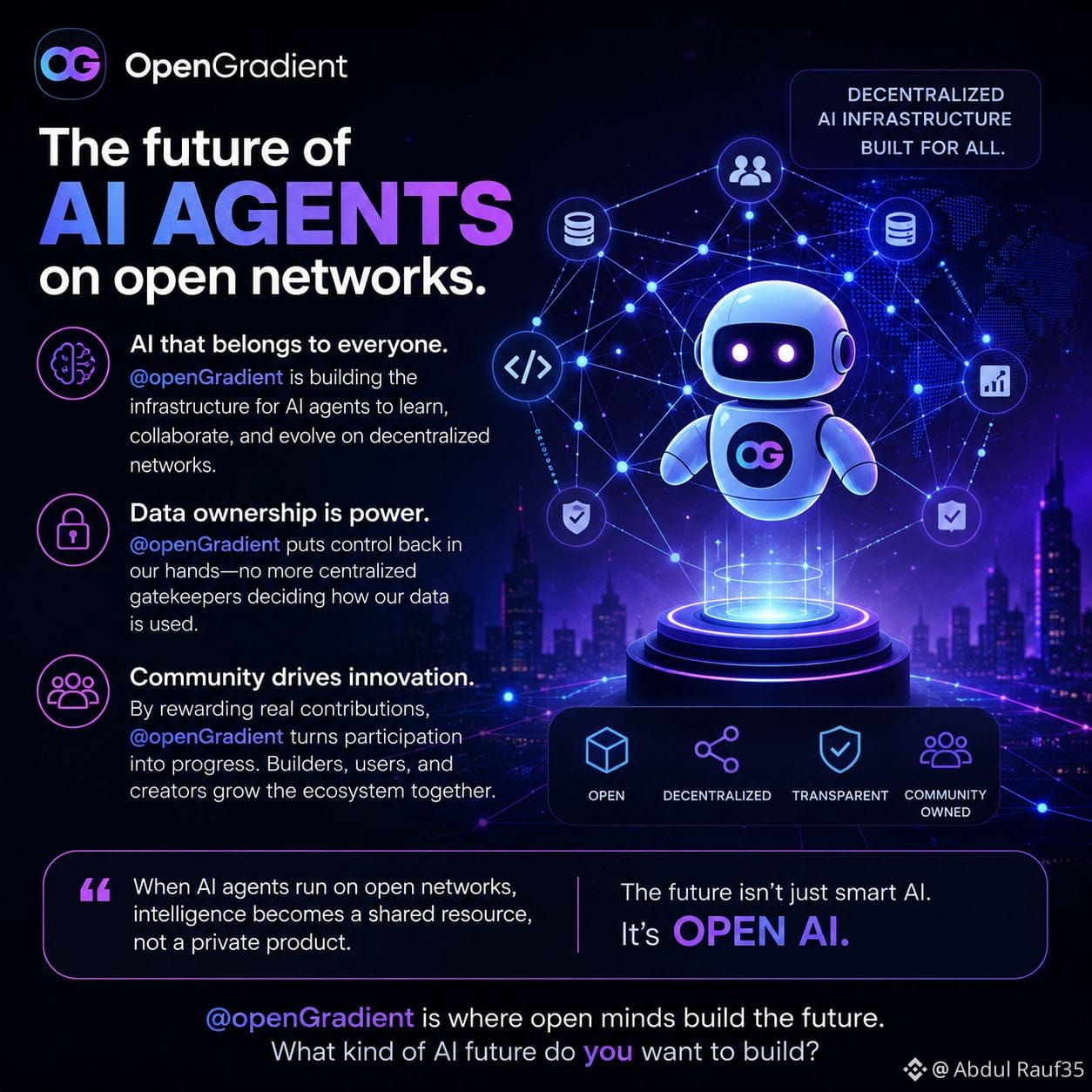
J'ai réfléchi à ce à quoi pourraient ressembler les agents IA dans un monde où ils opèrent sur des réseaux ouverts plutôt que sur des plateformes fermées. @openGradient se démarque parce qu'il explore un avenir où l'intelligence peut être vérifiée, partagée et améliorée par une communauté plus large plutôt que contrôlée par quelques gardiens.
Ce que je trouve le plus intéressant chez @openGradient, c'est le défi de la coordination. Les réseaux ouverts créent plus d'opportunités d'innovation, mais ils nécessitent également de meilleures façons de valider les contributions et de maintenir la confiance. Si cela est bien résolu, les agents IA pourraient devenir plus transparents, résilients et alignés avec les intérêts des utilisateurs.
@openGradient me rappelle que l'avenir de l'IA pourrait dépendre moins de qui possède les modèles et plus de qui peut participer à leur construction. Les réseaux ouverts deviendront-ils la base de la prochaine génération d'agents IA ?
#OpenGradient $OPG @OpenGradient
#opg $OPG
J'ai réfléchi à ce à quoi pourraient ressembler les agents IA dans un monde où ils opèrent sur des réseaux ouverts plutôt que sur des plateformes fermées. @openGradient se démarque parce qu'il explore un avenir où l'intelligence peut être vérifiée, partagée et améliorée par une communauté plus large plutôt que contrôlée par quelques gardiens.
Ce que je trouve le plus intéressant chez @openGradient, c'est le défi de la coordination. Les réseaux ouverts créent plus d'opportunités d'innovation, mais ils nécessitent également de meilleures façons de valider les contributions et de maintenir la confiance. Si cela est bien résolu, les agents IA pourraient devenir plus transparents, résilients et alignés avec les intérêts des utilisateurs.
@openGradient me rappelle que l'avenir de l'IA pourrait dépendre moins de qui possède les modèles et plus de qui peut participer à leur construction. Les réseaux ouverts deviendront-ils la base de la prochaine génération d'agents IA ?
#OpenGradient $OPG @OpenGradient
J'ai réfléchi à ce à quoi pourraient ressembler les agents IA dans un monde où ils opèrent sur des réseaux ouverts plutôt que sur des plateformes fermées. @openGradient se démarque parce qu'il explore un avenir où l'intelligence peut être vérifiée, partagée et améliorée par une communauté plus large plutôt que contrôlée par quelques gardiens.
Ce que je trouve le plus intéressant chez @openGradient, c'est le défi de la coordination. Les réseaux ouverts créent plus d'opportunités d'innovation, mais ils nécessitent également de meilleures façons de valider les contributions et de maintenir la confiance. Si cela est bien résolu, les agents IA pourraient devenir plus transparents, résilients et alignés avec les intérêts des utilisateurs.
@openGradient me rappelle que l'avenir de l'IA pourrait dépendre moins de qui possède les modèles et plus de qui peut participer à leur construction. Les réseaux ouverts deviendront-ils la base de la prochaine génération d'agents IA ?
#OpenGradient $OPG @OpenGradient
9
1
85
·
--
#opg $OPG
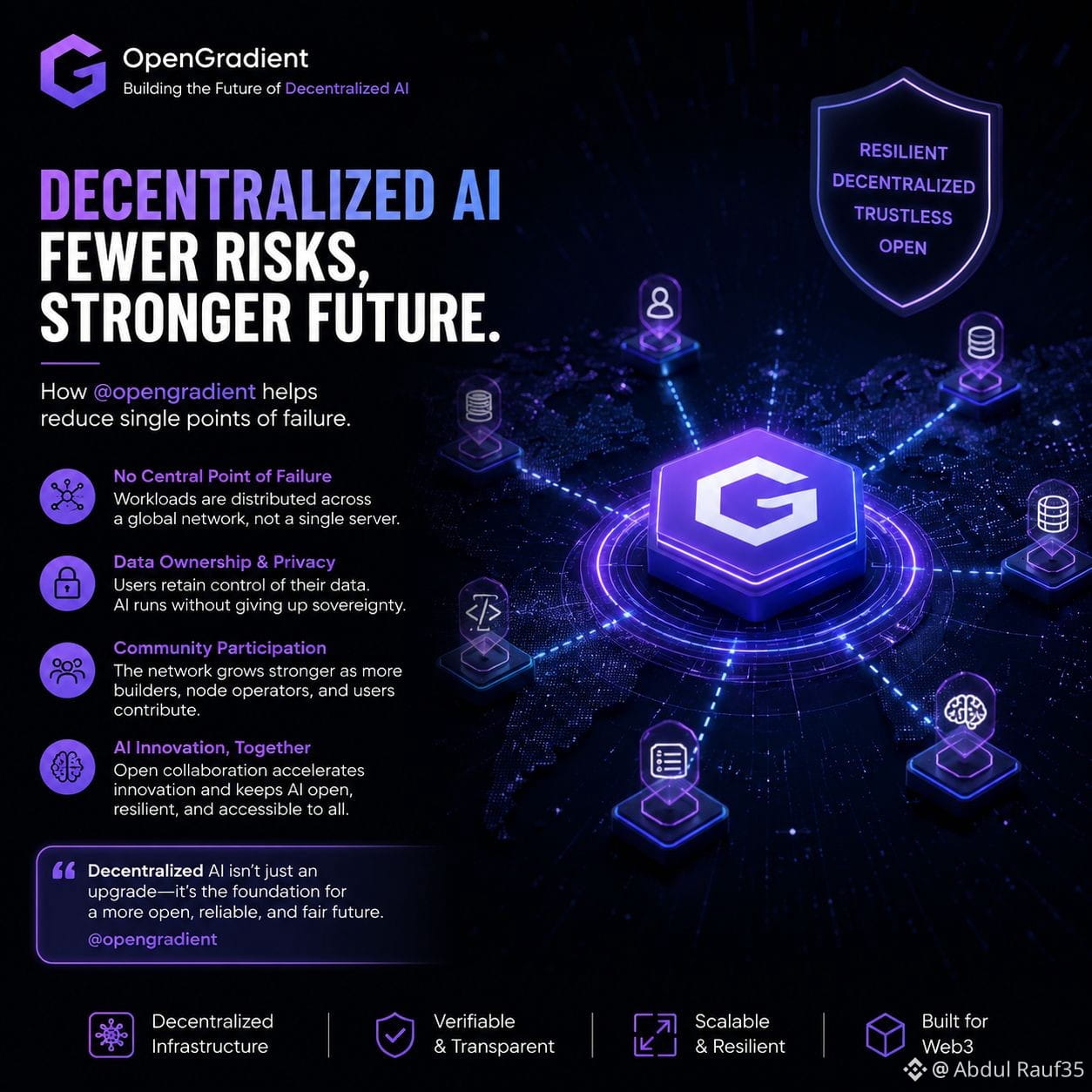
J'ai réfléchi à la fragilité de nombreux systèmes d'IA. Quand un seul fournisseur contrôle les modèles, l'infrastructure et les données, une seule panne ou un changement de politique peut perturber tout un écosystème.
@OpenGradient dient adopte une approche différente en explorant l'infrastructure d'IA décentralisée, où le calcul et l'intelligence sont répartis sur un réseau plus large. Ce qui me frappe, c'est que la résilience n'est pas seulement une caractéristique technique—c'est un avantage piloté par la communauté. Plus il y a de participants qui contribuent, plus il est difficile pour un point de défaillance unique d'impacter le système.
@OpenGradient adient souligne également une leçon importante pour le Web3 : la véritable innovation ne consiste pas seulement à construire une IA plus intelligente, mais à construire une IA qui reste accessible, vérifiable et résiliente sous pression.
À mesure que l'adoption de l'IA augmente, les réseaux décentralisés deviendront-ils la fondation qui maintient l'intelligence ouverte et fiable pour tout le monde ?
#OpenGradient $OPG @OpenGradient
#opg $OPG
J'ai réfléchi à la fragilité de nombreux systèmes d'IA. Quand un seul fournisseur contrôle les modèles, l'infrastructure et les données, une seule panne ou un changement de politique peut perturber tout un écosystème.
@OpenGradient dient adopte une approche différente en explorant l'infrastructure d'IA décentralisée, où le calcul et l'intelligence sont répartis sur un réseau plus large. Ce qui me frappe, c'est que la résilience n'est pas seulement une caractéristique technique—c'est un avantage piloté par la communauté. Plus il y a de participants qui contribuent, plus il est difficile pour un point de défaillance unique d'impacter le système.
@OpenGradient adient souligne également une leçon importante pour le Web3 : la véritable innovation ne consiste pas seulement à construire une IA plus intelligente, mais à construire une IA qui reste accessible, vérifiable et résiliente sous pression.
À mesure que l'adoption de l'IA augmente, les réseaux décentralisés deviendront-ils la fondation qui maintient l'intelligence ouverte et fiable pour tout le monde ?
#OpenGradient $OPG @OpenGradient
J'ai réfléchi à la fragilité de nombreux systèmes d'IA. Quand un seul fournisseur contrôle les modèles, l'infrastructure et les données, une seule panne ou un changement de politique peut perturber tout un écosystème.
@OpenGradient dient adopte une approche différente en explorant l'infrastructure d'IA décentralisée, où le calcul et l'intelligence sont répartis sur un réseau plus large. Ce qui me frappe, c'est que la résilience n'est pas seulement une caractéristique technique—c'est un avantage piloté par la communauté. Plus il y a de participants qui contribuent, plus il est difficile pour un point de défaillance unique d'impacter le système.
@OpenGradient adient souligne également une leçon importante pour le Web3 : la véritable innovation ne consiste pas seulement à construire une IA plus intelligente, mais à construire une IA qui reste accessible, vérifiable et résiliente sous pression.
À mesure que l'adoption de l'IA augmente, les réseaux décentralisés deviendront-ils la fondation qui maintient l'intelligence ouverte et fiable pour tout le monde ?
#OpenGradient $OPG @OpenGradient
4
4
92
·
--
#opg $OPG
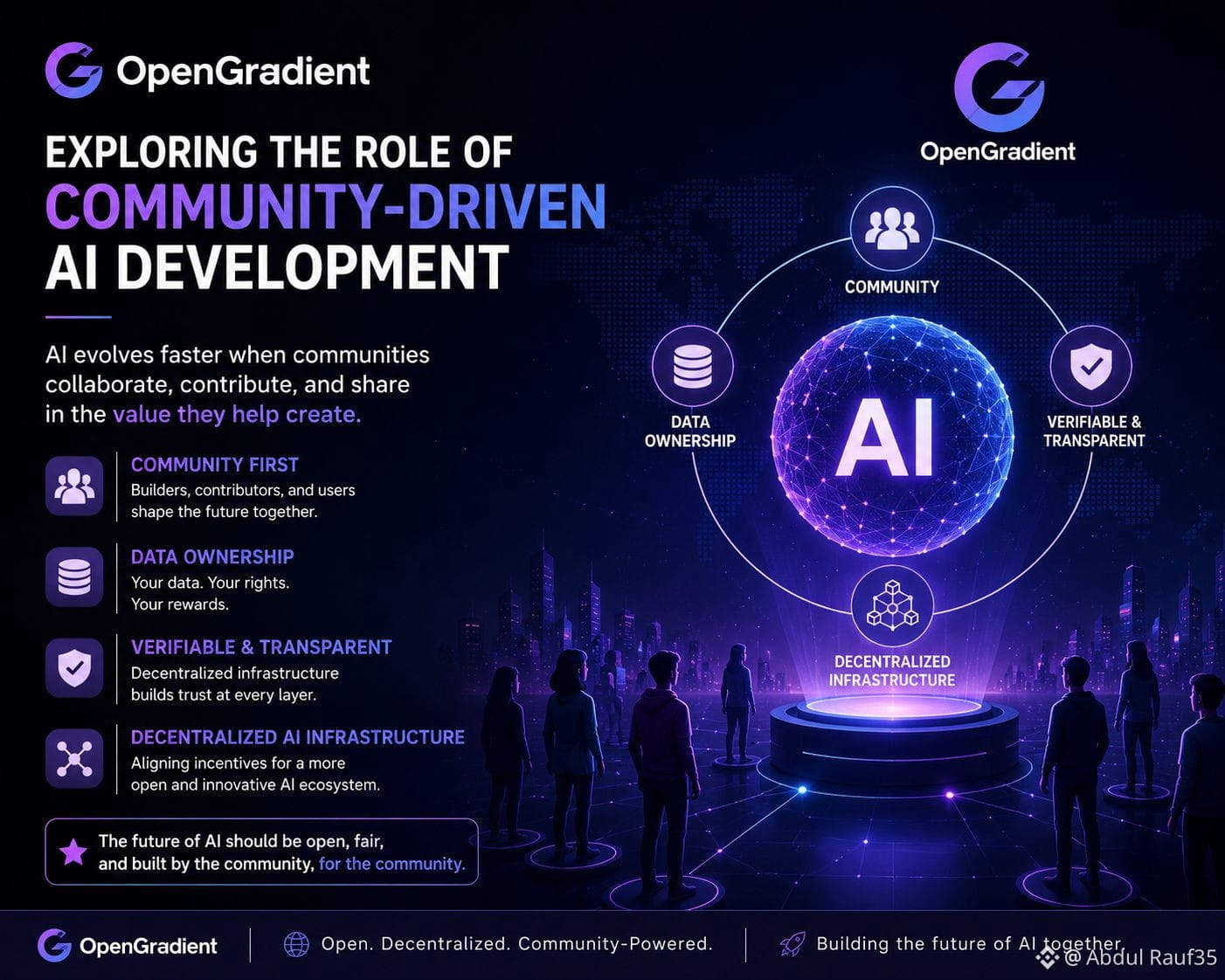
Je réfléchis à la manière dont la plupart des conversations sur l’IA se concentrent sur les modèles, tandis que les personnes qui contribuent aux données, aux retours et aux infrastructures restent souvent invisibles. C’est l’une des raisons pour lesquelles @opengradient attire mon attention. L’idée est d’explorer si le développement de l’IA peut devenir plus communautaire, avec une participation reconnue plutôt que simplement absorbée par des plateformes centralisées.
Ce qui ressort avec @opengradient, c’est l’idée que des infrastructures décentralisées peuvent aligner les incitations entre les concepteurs, les contributeurs et les utilisateurs. Dans la Web3, la propriété compte. Dans l’IA, elle pourrait devenir tout aussi importante. Si les communautés contribuent à créer de la valeur, devraient-elles aussi partager les bénéfices ?
@opengradient soulève une question intéressante : et si la prochaine génération d’IA était façonnée non seulement par des algorithmes, mais aussi par les communautés qui la rendent possible ? La réponse pourrait définir l’évolution conjointe de la confiance et de l’innovation.
#OpenGradient $OPG @OpenGradient
#opg $OPG
Je réfléchis à la manière dont la plupart des conversations sur l’IA se concentrent sur les modèles, tandis que les personnes qui contribuent aux données, aux retours et aux infrastructures restent souvent invisibles. C’est l’une des raisons pour lesquelles @opengradient attire mon attention. L’idée est d’explorer si le développement de l’IA peut devenir plus communautaire, avec une participation reconnue plutôt que simplement absorbée par des plateformes centralisées.
Ce qui ressort avec @opengradient, c’est l’idée que des infrastructures décentralisées peuvent aligner les incitations entre les concepteurs, les contributeurs et les utilisateurs. Dans la Web3, la propriété compte. Dans l’IA, elle pourrait devenir tout aussi importante. Si les communautés contribuent à créer de la valeur, devraient-elles aussi partager les bénéfices ?
@opengradient soulève une question intéressante : et si la prochaine génération d’IA était façonnée non seulement par des algorithmes, mais aussi par les communautés qui la rendent possible ? La réponse pourrait définir l’évolution conjointe de la confiance et de l’innovation.
#OpenGradient $OPG @OpenGradient
Je réfléchis à la manière dont la plupart des conversations sur l’IA se concentrent sur les modèles, tandis que les personnes qui contribuent aux données, aux retours et aux infrastructures restent souvent invisibles. C’est l’une des raisons pour lesquelles @opengradient attire mon attention. L’idée est d’explorer si le développement de l’IA peut devenir plus communautaire, avec une participation reconnue plutôt que simplement absorbée par des plateformes centralisées.
Ce qui ressort avec @opengradient, c’est l’idée que des infrastructures décentralisées peuvent aligner les incitations entre les concepteurs, les contributeurs et les utilisateurs. Dans la Web3, la propriété compte. Dans l’IA, elle pourrait devenir tout aussi importante. Si les communautés contribuent à créer de la valeur, devraient-elles aussi partager les bénéfices ?
@opengradient soulève une question intéressante : et si la prochaine génération d’IA était façonnée non seulement par des algorithmes, mais aussi par les communautés qui la rendent possible ? La réponse pourrait définir l’évolution conjointe de la confiance et de l’innovation.
#OpenGradient $OPG @OpenGradient
16
2
96
·
--
#opg $OPG
J’ai beaucoup réfléchi à la façon dont les discussions sur l’IA se concentrent souvent sur les performances du modèle, tandis que la confiance reçoit bien moins d’attention. Plus l’IA devient performante, plus il est crucial de savoir d’où viennent les données, comment les décisions sont prises, et si les sorties peuvent être vérifiées. C’est une des raisons pour lesquelles @OpenGradient radient se distingue pour moi.
Ce qui m’intéresse avec @OpenGradient radient, c’est qu’il aborde la confiance comme un problème d’infrastructure plutôt que comme un problème d’image de marque. En combinant l’IA avec une infrastructure décentralisée, @OpenGradient radient explore comment la vérification, la propriété des données et la participation de la communauté peuvent devenir partie intégrante du système, au lieu de reposer sur une confiance aveugle envers des fournisseurs centralisés.
Une leçon que j’ai tirée du Web3, c’est que la transparence se développe souvent mieux que les promesses. Si l’IA doit alimenter des applications critiques, les utilisateurs auront besoin de moyens pour vérifier les résultats, comprendre les incitations et garder le contrôle sur leurs contributions. @OpenGradient radient fait avancer cette conversation.
À mesure que les écosystèmes d’IA se développent, la confiance deviendra-t-elle l’actif le plus précieux — et les réseaux décentralisés pourront-ils contribuer à la créer plus efficacement que les modèles traditionnels ?
#OpenGradient $OPG @OpenGradient
#opg $OPG
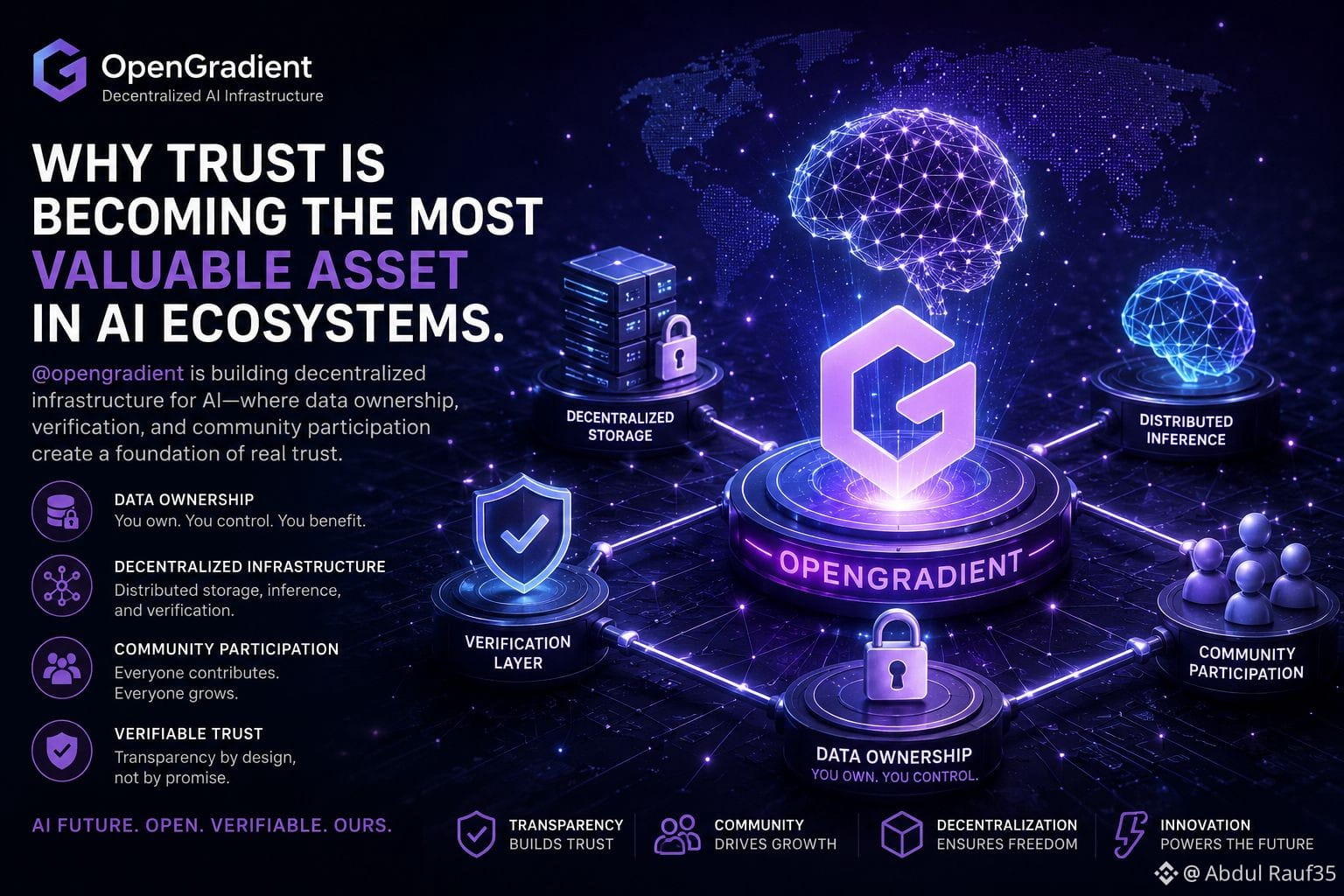
J’ai beaucoup réfléchi à la façon dont les discussions sur l’IA se concentrent souvent sur les performances du modèle, tandis que la confiance reçoit bien moins d’attention. Plus l’IA devient performante, plus il est crucial de savoir d’où viennent les données, comment les décisions sont prises, et si les sorties peuvent être vérifiées. C’est une des raisons pour lesquelles @OpenGradient radient se distingue pour moi.
Ce qui m’intéresse avec @OpenGradient radient, c’est qu’il aborde la confiance comme un problème d’infrastructure plutôt que comme un problème d’image de marque. En combinant l’IA avec une infrastructure décentralisée, @OpenGradient radient explore comment la vérification, la propriété des données et la participation de la communauté peuvent devenir partie intégrante du système, au lieu de reposer sur une confiance aveugle envers des fournisseurs centralisés.
Une leçon que j’ai tirée du Web3, c’est que la transparence se développe souvent mieux que les promesses. Si l’IA doit alimenter des applications critiques, les utilisateurs auront besoin de moyens pour vérifier les résultats, comprendre les incitations et garder le contrôle sur leurs contributions. @OpenGradient radient fait avancer cette conversation.
À mesure que les écosystèmes d’IA se développent, la confiance deviendra-t-elle l’actif le plus précieux — et les réseaux décentralisés pourront-ils contribuer à la créer plus efficacement que les modèles traditionnels ?
#OpenGradient $OPG @OpenGradient
J’ai beaucoup réfléchi à la façon dont les discussions sur l’IA se concentrent souvent sur les performances du modèle, tandis que la confiance reçoit bien moins d’attention. Plus l’IA devient performante, plus il est crucial de savoir d’où viennent les données, comment les décisions sont prises, et si les sorties peuvent être vérifiées. C’est une des raisons pour lesquelles @OpenGradient radient se distingue pour moi.
Ce qui m’intéresse avec @OpenGradient radient, c’est qu’il aborde la confiance comme un problème d’infrastructure plutôt que comme un problème d’image de marque. En combinant l’IA avec une infrastructure décentralisée, @OpenGradient radient explore comment la vérification, la propriété des données et la participation de la communauté peuvent devenir partie intégrante du système, au lieu de reposer sur une confiance aveugle envers des fournisseurs centralisés.
Une leçon que j’ai tirée du Web3, c’est que la transparence se développe souvent mieux que les promesses. Si l’IA doit alimenter des applications critiques, les utilisateurs auront besoin de moyens pour vérifier les résultats, comprendre les incitations et garder le contrôle sur leurs contributions. @OpenGradient radient fait avancer cette conversation.
À mesure que les écosystèmes d’IA se développent, la confiance deviendra-t-elle l’actif le plus précieux — et les réseaux décentralisés pourront-ils contribuer à la créer plus efficacement que les modèles traditionnels ?
#OpenGradient $OPG @OpenGradient
5
2
63
·
--
#opg $OPG
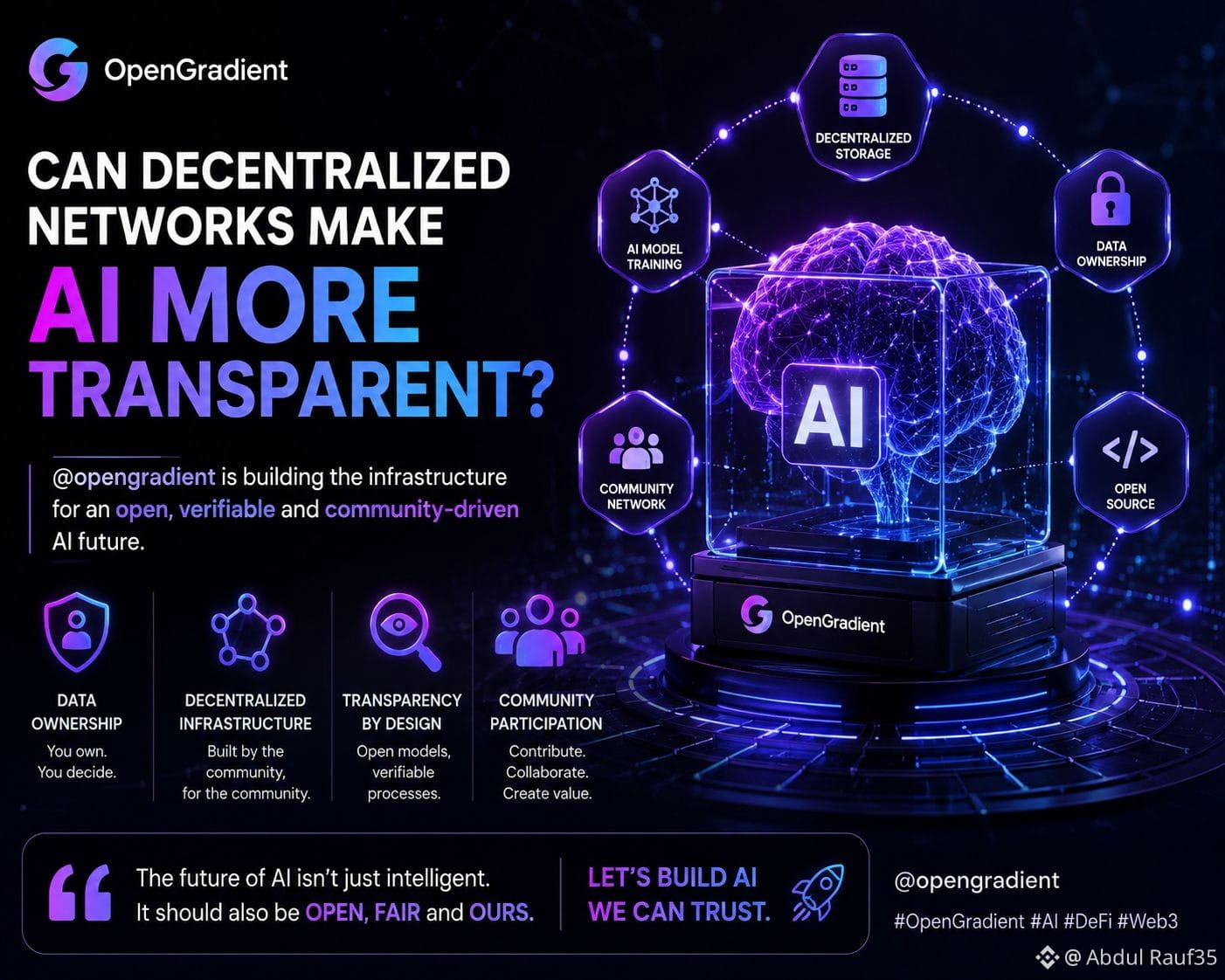
#Dernièrement, je réfléchis à la difficulté de faire confiance aux systèmes d'IA lorsque les données sous-jacentes, les modèles et les processus décisionnels restent cachés. La transparence est souvent discutée comme une fonctionnalité, mais je commence à la voir comme un défi d'infrastructure. @opengradient explore comment les réseaux décentralisés peuvent rendre le développement de l'IA plus ouvert, vérifiable et axé sur la communauté.
Ce qui me frappe chez @opengradient, c'est l'idée que les contributeurs ne devraient pas seulement fournir des données et des ressources, mais aussi avoir une visibilité sur la manière dont la valeur est créée. En combinant l'IA avec une infrastructure décentralisée, @opengradient soulève des questions importantes sur la propriété des données, la participation et la responsabilité dans la prochaine génération de systèmes intelligents.
Si l'IA devient une couche fondamentale de l'économie numérique, la transparence viendra-t-elle uniquement de meilleurs algorithmes, ou de réseaux plus ouverts et décentralisés comme ceux envisagés par @opengradient ?
#OpenGradient $OPG @OpenGradient
#opg $OPG
#Dernièrement, je réfléchis à la difficulté de faire confiance aux systèmes d'IA lorsque les données sous-jacentes, les modèles et les processus décisionnels restent cachés. La transparence est souvent discutée comme une fonctionnalité, mais je commence à la voir comme un défi d'infrastructure. @opengradient explore comment les réseaux décentralisés peuvent rendre le développement de l'IA plus ouvert, vérifiable et axé sur la communauté.
Ce qui me frappe chez @opengradient, c'est l'idée que les contributeurs ne devraient pas seulement fournir des données et des ressources, mais aussi avoir une visibilité sur la manière dont la valeur est créée. En combinant l'IA avec une infrastructure décentralisée, @opengradient soulève des questions importantes sur la propriété des données, la participation et la responsabilité dans la prochaine génération de systèmes intelligents.
Si l'IA devient une couche fondamentale de l'économie numérique, la transparence viendra-t-elle uniquement de meilleurs algorithmes, ou de réseaux plus ouverts et décentralisés comme ceux envisagés par @opengradient ?
#OpenGradient $OPG @OpenGradient
#Dernièrement, je réfléchis à la difficulté de faire confiance aux systèmes d'IA lorsque les données sous-jacentes, les modèles et les processus décisionnels restent cachés. La transparence est souvent discutée comme une fonctionnalité, mais je commence à la voir comme un défi d'infrastructure. @opengradient explore comment les réseaux décentralisés peuvent rendre le développement de l'IA plus ouvert, vérifiable et axé sur la communauté.
Ce qui me frappe chez @opengradient, c'est l'idée que les contributeurs ne devraient pas seulement fournir des données et des ressources, mais aussi avoir une visibilité sur la manière dont la valeur est créée. En combinant l'IA avec une infrastructure décentralisée, @opengradient soulève des questions importantes sur la propriété des données, la participation et la responsabilité dans la prochaine génération de systèmes intelligents.
Si l'IA devient une couche fondamentale de l'économie numérique, la transparence viendra-t-elle uniquement de meilleurs algorithmes, ou de réseaux plus ouverts et décentralisés comme ceux envisagés par @opengradient ?
#OpenGradient $OPG @OpenGradient
16
5
242
·
--
#opg $OPG
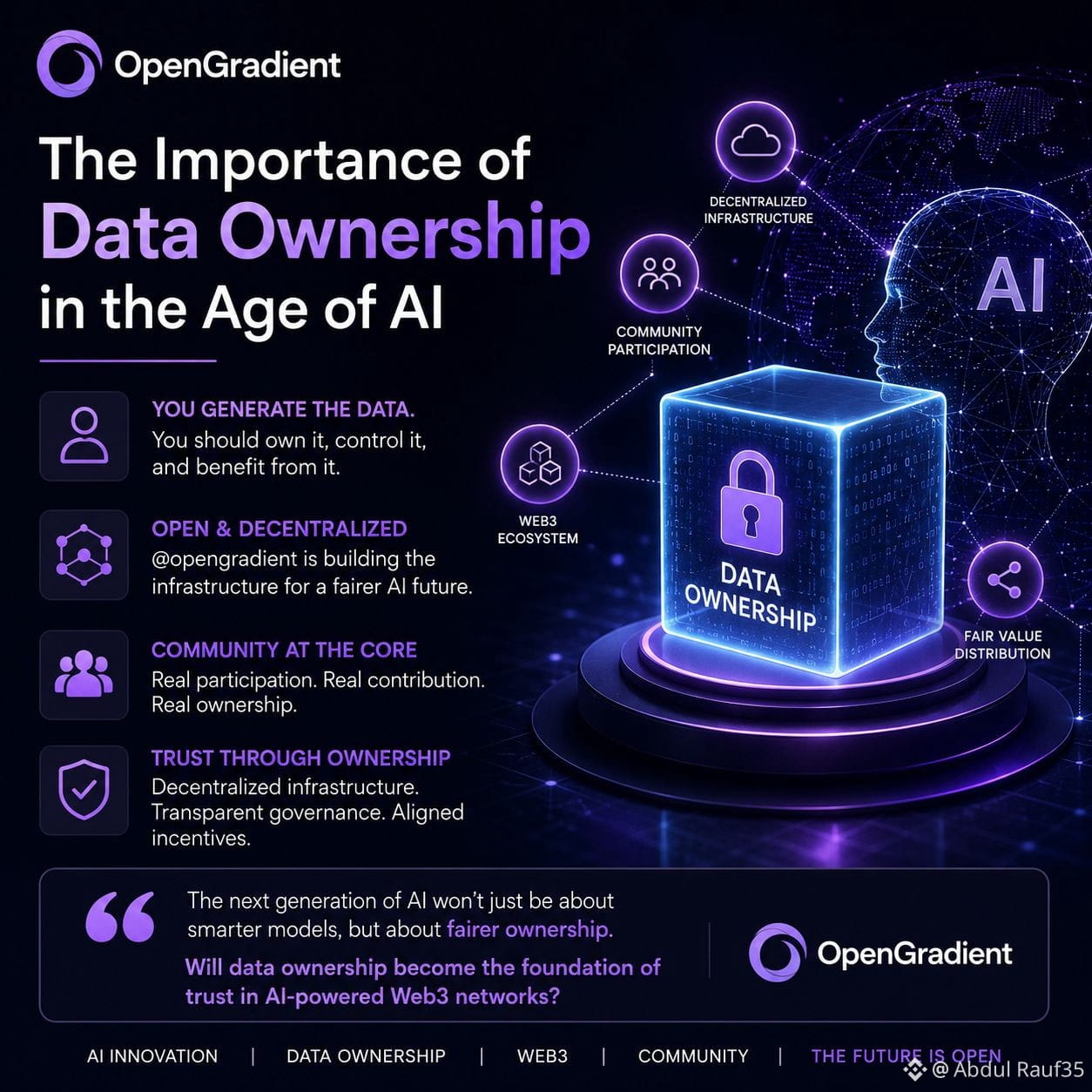
Dernièrement, je réfléchis à combien l'avenir de l'IA dépend de qui possède les données qui l'alimentent. On se concentre souvent sur la performance des modèles, mais @opengradient me rappelle que la propriété des données peut être tout aussi importante que l'intelligence elle-même.
Ce qui distingue @opengradient, c'est son approche pour combiner innovation IA et infrastructure décentralisée. Au lieu de traiter les utilisateurs comme des sources de données passives, @opengradient explore un modèle où la participation, la contribution et la propriété peuvent coexister. Ce changement pourrait créer des incitations plus fortes pour les builders et les communautés.
À mesure que l'IA s'intègre davantage dans la vie quotidienne, les questions autour du contrôle, de la transparence et de la répartition de la valeur deviennent plus difficiles à ignorer. @opengradient souligne un défi important : les écosystèmes IA peuvent-ils rester ouverts et orientés vers la communauté à mesure qu'ils évoluent ?
Ce que je retiens, c'est que la prochaine génération d'IA ne sera peut-être pas définie uniquement par des modèles plus intelligents, mais par des structures de propriété plus équitables. La propriété des données deviendra-t-elle le fondement de la confiance dans les réseaux Web3 alimentés par l'IA ?
#OpenGradient $OPG @OpenGradient
#opg $OPG
Dernièrement, je réfléchis à combien l'avenir de l'IA dépend de qui possède les données qui l'alimentent. On se concentre souvent sur la performance des modèles, mais @opengradient me rappelle que la propriété des données peut être tout aussi importante que l'intelligence elle-même.
Ce qui distingue @opengradient, c'est son approche pour combiner innovation IA et infrastructure décentralisée. Au lieu de traiter les utilisateurs comme des sources de données passives, @opengradient explore un modèle où la participation, la contribution et la propriété peuvent coexister. Ce changement pourrait créer des incitations plus fortes pour les builders et les communautés.
À mesure que l'IA s'intègre davantage dans la vie quotidienne, les questions autour du contrôle, de la transparence et de la répartition de la valeur deviennent plus difficiles à ignorer. @opengradient souligne un défi important : les écosystèmes IA peuvent-ils rester ouverts et orientés vers la communauté à mesure qu'ils évoluent ?
Ce que je retiens, c'est que la prochaine génération d'IA ne sera peut-être pas définie uniquement par des modèles plus intelligents, mais par des structures de propriété plus équitables. La propriété des données deviendra-t-elle le fondement de la confiance dans les réseaux Web3 alimentés par l'IA ?
#OpenGradient $OPG @OpenGradient
Dernièrement, je réfléchis à combien l'avenir de l'IA dépend de qui possède les données qui l'alimentent. On se concentre souvent sur la performance des modèles, mais @opengradient me rappelle que la propriété des données peut être tout aussi importante que l'intelligence elle-même.
Ce qui distingue @opengradient, c'est son approche pour combiner innovation IA et infrastructure décentralisée. Au lieu de traiter les utilisateurs comme des sources de données passives, @opengradient explore un modèle où la participation, la contribution et la propriété peuvent coexister. Ce changement pourrait créer des incitations plus fortes pour les builders et les communautés.
À mesure que l'IA s'intègre davantage dans la vie quotidienne, les questions autour du contrôle, de la transparence et de la répartition de la valeur deviennent plus difficiles à ignorer. @opengradient souligne un défi important : les écosystèmes IA peuvent-ils rester ouverts et orientés vers la communauté à mesure qu'ils évoluent ?
Ce que je retiens, c'est que la prochaine génération d'IA ne sera peut-être pas définie uniquement par des modèles plus intelligents, mais par des structures de propriété plus équitables. La propriété des données deviendra-t-elle le fondement de la confiance dans les réseaux Web3 alimentés par l'IA ?
#OpenGradient $OPG @OpenGradient
26
3
115
·
--
#opg $OPG
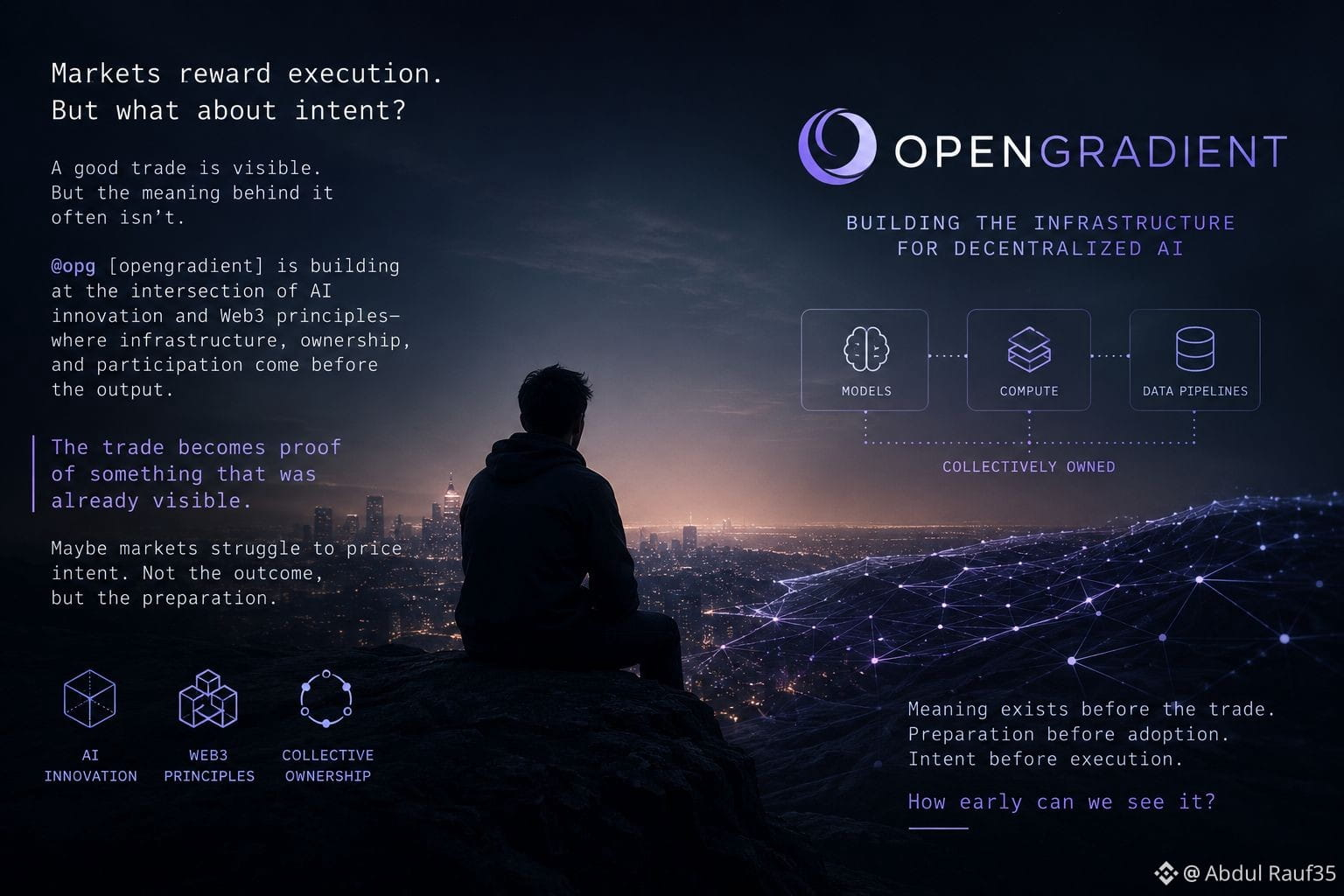
Dernièrement, je me demande si les marchés passent trop de temps à récompenser l'exécution et pas assez à comprendre l'intention.
Un trade rentable est facile à identifier. Une bonne entrée, une sortie bien chronométrée, une narration solide. Nous traitons souvent ces résultats comme des explications en soi. Mais plus je regarde l'évolution de la crypto, moins je suis convaincu que le résultat visible est là où le sens commence.
Ce qui a récemment attiré mon attention à propos de @opg [opengradient] n'était pas un mouvement de prix ou un indicateur. C'était la façon dont le projet semble aborder la relation entre l'IA et le Web3. Plutôt que de se concentrer uniquement sur ce que l'IA peut produire, il soulève des questions sur qui possède l'infrastructure, qui y contribue, et comment la participation est coordonnée avant même que le résultat n'apparaisse.
Ce changement semble subtil, mais important.
Dans le trading, nous cherchons souvent une confirmation après qu'un événement se soit produit. Pourtant, les projets reliant l'innovation IA aux principes du Web3 semblent se concentrer sur la préparation avant que l'adoption n'arrive.
Le trade devient la preuve de quelque chose qui était déjà visible.
Peut-être que c'est la partie que les marchés ont du mal à évaluer. Pas le résultat lui-même, mais l'intention intégrée dans la structure bien avant que quiconque ne le remarque.
Et si c'est vrai, combien de ce que nous appelons prévision n'est en réalité que d'apprendre à reconnaître la préparation suffisamment tôt ?
#opg $OPG @OpenGradient
#opg $OPG
Dernièrement, je me demande si les marchés passent trop de temps à récompenser l'exécution et pas assez à comprendre l'intention.
Un trade rentable est facile à identifier. Une bonne entrée, une sortie bien chronométrée, une narration solide. Nous traitons souvent ces résultats comme des explications en soi. Mais plus je regarde l'évolution de la crypto, moins je suis convaincu que le résultat visible est là où le sens commence.
Ce qui a récemment attiré mon attention à propos de @opg [opengradient] n'était pas un mouvement de prix ou un indicateur. C'était la façon dont le projet semble aborder la relation entre l'IA et le Web3. Plutôt que de se concentrer uniquement sur ce que l'IA peut produire, il soulève des questions sur qui possède l'infrastructure, qui y contribue, et comment la participation est coordonnée avant même que le résultat n'apparaisse.
Ce changement semble subtil, mais important.
Dans le trading, nous cherchons souvent une confirmation après qu'un événement se soit produit. Pourtant, les projets reliant l'innovation IA aux principes du Web3 semblent se concentrer sur la préparation avant que l'adoption n'arrive.
Le trade devient la preuve de quelque chose qui était déjà visible.
Peut-être que c'est la partie que les marchés ont du mal à évaluer. Pas le résultat lui-même, mais l'intention intégrée dans la structure bien avant que quiconque ne le remarque.
Et si c'est vrai, combien de ce que nous appelons prévision n'est en réalité que d'apprendre à reconnaître la préparation suffisamment tôt ?
#opg $OPG @OpenGradient
Dernièrement, je me demande si les marchés passent trop de temps à récompenser l'exécution et pas assez à comprendre l'intention.
Un trade rentable est facile à identifier. Une bonne entrée, une sortie bien chronométrée, une narration solide. Nous traitons souvent ces résultats comme des explications en soi. Mais plus je regarde l'évolution de la crypto, moins je suis convaincu que le résultat visible est là où le sens commence.
Ce qui a récemment attiré mon attention à propos de @opg [opengradient] n'était pas un mouvement de prix ou un indicateur. C'était la façon dont le projet semble aborder la relation entre l'IA et le Web3. Plutôt que de se concentrer uniquement sur ce que l'IA peut produire, il soulève des questions sur qui possède l'infrastructure, qui y contribue, et comment la participation est coordonnée avant même que le résultat n'apparaisse.
Ce changement semble subtil, mais important.
Dans le trading, nous cherchons souvent une confirmation après qu'un événement se soit produit. Pourtant, les projets reliant l'innovation IA aux principes du Web3 semblent se concentrer sur la préparation avant que l'adoption n'arrive.
Le trade devient la preuve de quelque chose qui était déjà visible.
Peut-être que c'est la partie que les marchés ont du mal à évaluer. Pas le résultat lui-même, mais l'intention intégrée dans la structure bien avant que quiconque ne le remarque.
Et si c'est vrai, combien de ce que nous appelons prévision n'est en réalité que d'apprendre à reconnaître la préparation suffisamment tôt ?
#opg $OPG @OpenGradient
20
1
129
Connectez-vous pour découvrir plus de contenu
Rejoignez la communauté mondiale des adeptes de cryptomonnaies sur Binance Square
⚡️ Suviez les dernières informations importantes sur les cryptomonnaies.
💬 Jugé digne de confiance par la plus grande plateforme d’échange de cryptomonnaies au monde.
👍 Découvrez les connaissances que partagent les créateurs vérifiés.
Adresse e-mail/Nº de téléphone
Sujets d’actualité
BTCBreaks80K
17,822 vues
579 mentions
🚨 Le BITCOIN à 80 000 $ revient au centre de l’attention ! 🔥
Le BTC pousse vers la résistance psychologique des 80 000 $ après avoir repris la zone des 78 000 $. Une cassure nette et un maintien au-dessus de 80 000 $ pourraient faire ressortir ensuite la zone des 82 000 à 85 000 $. 📈
Mais les traders doivent surveiller attentivement la zone de rejet : perdre 77 000 à 78 000 $ pourrait déclencher un autre repli.
🎯 Niveaux clés :
• 🔥 Cassure : 80K
• 🚀 Prochaine zone : 82K–85K
• ⚠️ Support : 77K–78K
80K n’est pas qu’un chiffre — c’est le niveau que les haussiers doivent conquérir.
Allons-nous assister à la prochaine cassure du BTC ? 👇
#bitcoin #BTC #BinanceSquare #btcbreaks80k
$BTC
ASHFAQ NAEEM
·3 mentions J’aime
·4.4k vues
BuffettBecomesBerkshireChairmanEmeritus
1,017 vues
128 mentions
ZcashSpotETFTops$230MMonthlyInflow
657 vues
41 mentions