

Neel_Proshun_DXC
8.1k Publications

Neel_Proshun_DXC
Signaler
Bloquer l’utilisateur
Binance Square Content Creator | Crypto Lover | Learning Trading | Friendly | Altcoins | X- @Neel_Proshun
448 Suivis
19.2K+ Abonnés
6.5K+ J’aime
Publications
Tous
Citations
Longing #ZEC here
Long (10x-20x)
Entry: $1200
Reason: Chart looks bullish for it. Worth a long for short-mid term quick profits too.
Targets: $1270, $1331, $1390, $1451, $1572, $1650
Stop-loss: $1065
$ZEC
Longing #ZEC here
Long (10x-20x)
Entry: $1200
Reason: Chart looks bullish for it. Worth a long for short-mid term quick profits too.
Targets: $1270, $1331, $1390, $1451, $1572, $1650
Stop-loss: $1065
$ZEC
Long (10x-20x)
Entry: $1200
Reason: Chart looks bullish for it. Worth a long for short-mid term quick profits too.
Targets: $1270, $1331, $1390, $1451, $1572, $1650
Stop-loss: $1065
$ZEC
78
🚨 GLOBAL CYBER ALERT: Critical PHP Flaw Impacts Government Infrastructure
Cyber security experts are urging immediate action after a severe vulnerability in PHP was discovered, impacting government websites and public portals across multiple nations. 🌐🔒
#PHPCriticalVulnerabilityHitsGovernmentWebsites
The security flaw has disrupted essential public services, reigniting serious discussions around critical internet infrastructure security and the reliance on legacy codebases. System administrators and developers worldwide are being advised to patch their servers immediately to prevent further exploits.
⚠️ Attention Devs & Admins: Double-check your server patches today to keep your infrastructure safe!
#CyberSecurity #PHP #technews
🚨 GLOBAL CYBER ALERT: Critical PHP Flaw Impacts Government Infrastructure
Cyber security experts are urging immediate action after a severe vulnerability in PHP was discovered, impacting government websites and public portals across multiple nations. 🌐🔒
#PHPCriticalVulnerabilityHitsGovernmentWebsites
The security flaw has disrupted essential public services, reigniting serious discussions around critical internet infrastructure security and the reliance on legacy codebases. System administrators and developers worldwide are being advised to patch their servers immediately to prevent further exploits.
⚠️ Attention Devs & Admins: Double-check your server patches today to keep your infrastructure safe!
#CyberSecurity #PHP #technews
Cyber security experts are urging immediate action after a severe vulnerability in PHP was discovered, impacting government websites and public portals across multiple nations. 🌐🔒
#PHPCriticalVulnerabilityHitsGovernmentWebsites
The security flaw has disrupted essential public services, reigniting serious discussions around critical internet infrastructure security and the reliance on legacy codebases. System administrators and developers worldwide are being advised to patch their servers immediately to prevent further exploits.
⚠️ Attention Devs & Admins: Double-check your server patches today to keep your infrastructure safe!
#CyberSecurity #PHP #technews

146
📉 Tesla Q3 Financials: Flat Revenue & Profit Squeeze
Tesla’s Q3 earnings report is officially in, and it’s a mixed bag for EV enthusiasts and investors. While Tesla's revenue remained roughly flat year-over-year, net profit took a significant hit—dropping by 43%! 🚗⚡
The main contributor to this margin compression was a sharp 39% rise in operating expenses, alongside competitive pricing pressures in the global EV market. Despite the temporary setback, Tesla continues to invest heavily in next-gen tech and autonomous driving capabilities.
🤔 Will Tesla bounce back in Q4, or are tough times ahead for the EV market? Share your predictions! 👇
#Tesla #Q3Earnings #EVNews $TSLAB
{spot}(TSLABUSDT)
📉 Tesla Q3 Financials: Flat Revenue & Profit Squeeze
Tesla’s Q3 earnings report is officially in, and it’s a mixed bag for EV enthusiasts and investors. While Tesla's revenue remained roughly flat year-over-year, net profit took a significant hit—dropping by 43%! 🚗⚡
The main contributor to this margin compression was a sharp 39% rise in operating expenses, alongside competitive pricing pressures in the global EV market. Despite the temporary setback, Tesla continues to invest heavily in next-gen tech and autonomous driving capabilities.
🤔 Will Tesla bounce back in Q4, or are tough times ahead for the EV market? Share your predictions! 👇
#Tesla #Q3Earnings #EVNews $TSLAB
Tesla’s Q3 earnings report is officially in, and it’s a mixed bag for EV enthusiasts and investors. While Tesla's revenue remained roughly flat year-over-year, net profit took a significant hit—dropping by 43%! 🚗⚡
The main contributor to this margin compression was a sharp 39% rise in operating expenses, alongside competitive pricing pressures in the global EV market. Despite the temporary setback, Tesla continues to invest heavily in next-gen tech and autonomous driving capabilities.
🤔 Will Tesla bounce back in Q4, or are tough times ahead for the EV market? Share your predictions! 👇
#Tesla #Q3Earnings #EVNews $TSLAB

69
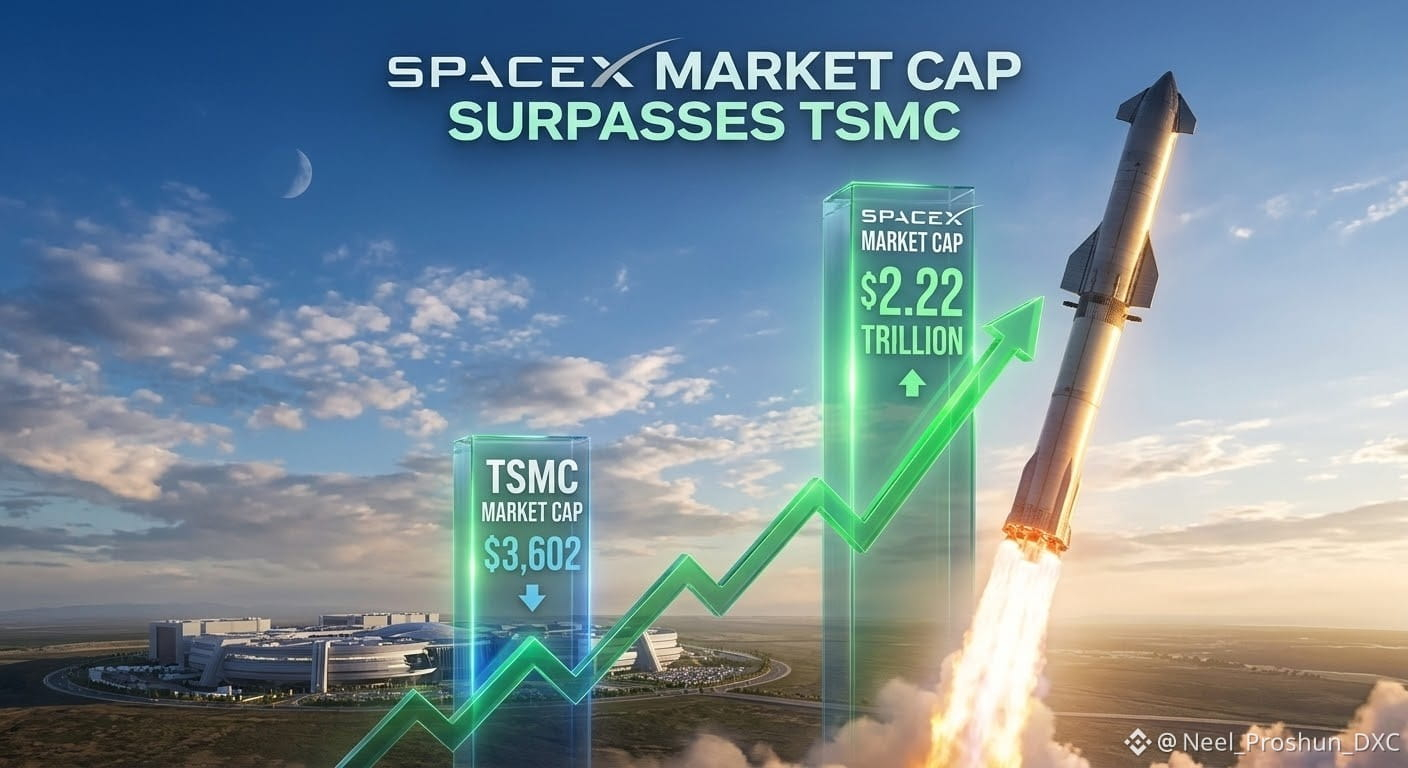
🌌 HISTORIC MILESTONE: SpaceX Hits $2.22 Trillion Valuation!
#SpaceXMarketCapSurpassesTSMC
In an unprecedented market move, SpaceX's market capitalization has officially reached a staggering $2.22 Trillion, officially surpassing semiconductor titan TSMC! 🚀
Following a massive post-earnings rally, Elon Musk’s aerospace giant continues to redefine industry standards. From commercial spaceflight to global satellite connectivity via Starlink, SpaceX is proving that the sky is no longer the limit—it’s just the starting line.
💡 Do you think SpaceX will eventually become the world's most valuable company? Let’s discuss! ⚡
#SpaceX #marketcap #stockmarket $SPCXB
{spot}(SPCXBUSDT)
🌌 HISTORIC MILESTONE: SpaceX Hits $2.22 Trillion Valuation!
#SpaceXMarketCapSurpassesTSMC
In an unprecedented market move, SpaceX's market capitalization has officially reached a staggering $2.22 Trillion, officially surpassing semiconductor titan TSMC! 🚀
Following a massive post-earnings rally, Elon Musk’s aerospace giant continues to redefine industry standards. From commercial spaceflight to global satellite connectivity via Starlink, SpaceX is proving that the sky is no longer the limit—it’s just the starting line.
💡 Do you think SpaceX will eventually become the world's most valuable company? Let’s discuss! ⚡
#SpaceX #marketcap #stockmarket $SPCXB
#SpaceXMarketCapSurpassesTSMC
In an unprecedented market move, SpaceX's market capitalization has officially reached a staggering $2.22 Trillion, officially surpassing semiconductor titan TSMC! 🚀
Following a massive post-earnings rally, Elon Musk’s aerospace giant continues to redefine industry standards. From commercial spaceflight to global satellite connectivity via Starlink, SpaceX is proving that the sky is no longer the limit—it’s just the starting line.
💡 Do you think SpaceX will eventually become the world's most valuable company? Let’s discuss! ⚡
#SpaceX #marketcap #stockmarket $SPCXB
128
Mark Zuckerberg’s vision is paying off! Meta reported a massive 26% Year-over-Year revenue growth in Q3, comfortably beating Wall Street’s expectations across key metrics. 📈
While legal expenses and heavy Capital Expenditures (CapEx) into Artificial Intelligence continue to put pressure on short-term profitability, Meta’s core ad model remains rock-solid. Investors are increasingly confident that Meta’s huge AI investments will unlock long-term revenue streams.
🤖 What are your thoughts on Meta's aggressive AI strategy? Is it a game-changer or a risky bet? 👇
#Meta #Aitrends #TechTrends $METAB
{spot}(METABUSDT)
Mark Zuckerberg’s vision is paying off! Meta reported a massive 26% Year-over-Year revenue growth in Q3, comfortably beating Wall Street’s expectations across key metrics. 📈
While legal expenses and heavy Capital Expenditures (CapEx) into Artificial Intelligence continue to put pressure on short-term profitability, Meta’s core ad model remains rock-solid. Investors are increasingly confident that Meta’s huge AI investments will unlock long-term revenue streams.
🤖 What are your thoughts on Meta's aggressive AI strategy? Is it a game-changer or a risky bet? 👇
#Meta #Aitrends #TechTrends $METAB
While legal expenses and heavy Capital Expenditures (CapEx) into Artificial Intelligence continue to put pressure on short-term profitability, Meta’s core ad model remains rock-solid. Investors are increasingly confident that Meta’s huge AI investments will unlock long-term revenue streams.
🤖 What are your thoughts on Meta's aggressive AI strategy? Is it a game-changer or a risky bet? 👇
#Meta #Aitrends #TechTrends $METAB
65
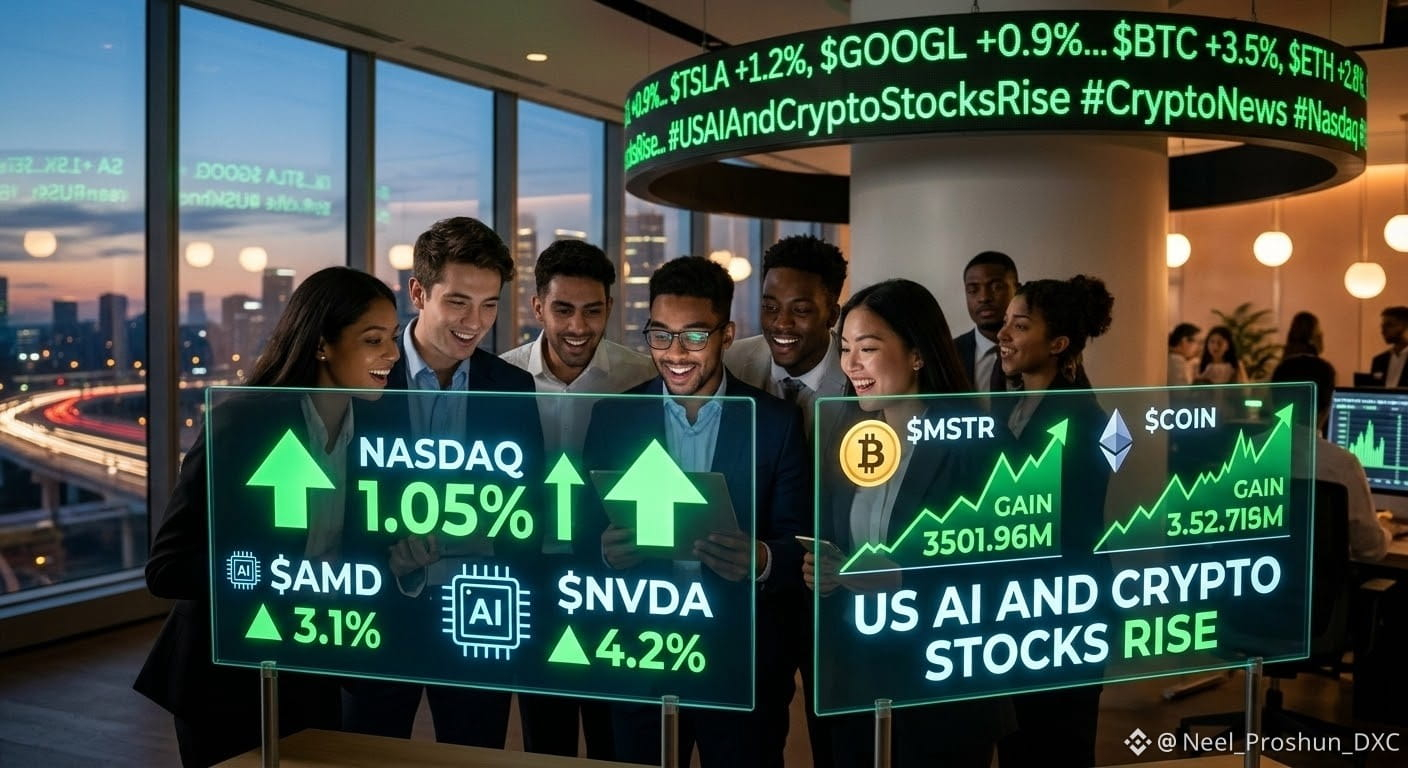
The Tech & Crypto Bull Run Continues!
Wall Street is buzzing today as the Nasdaq surged by 1.05%, driven by heavy buying in top AI and crypto-linked stocks! 📈
Heavy weights like $AMD ,$NVDA , MSTR and COIN led the charge, proving once again that the intersection of Artificial Intelligence, semiconductor technology, and digital assets is where the real market momentum lies. Investors are doubling down as tech innovation accelerates at an unprecedented pace.
💬 Is your portfolio aligned with the AI & Crypto revolution, or are you watching from the sidelines? Drop your favorite stock ticker below! 👇
#TechStocks #CryptoNews #Nasdaq
The Tech & Crypto Bull Run Continues!
Wall Street is buzzing today as the Nasdaq surged by 1.05%, driven by heavy buying in top AI and crypto-linked stocks! 📈
Heavy weights like $AMD ,$NVDA , MSTR and COIN led the charge, proving once again that the intersection of Artificial Intelligence, semiconductor technology, and digital assets is where the real market momentum lies. Investors are doubling down as tech innovation accelerates at an unprecedented pace.
💬 Is your portfolio aligned with the AI & Crypto revolution, or are you watching from the sidelines? Drop your favorite stock ticker below! 👇
#TechStocks #CryptoNews #Nasdaq
Wall Street is buzzing today as the Nasdaq surged by 1.05%, driven by heavy buying in top AI and crypto-linked stocks! 📈
Heavy weights like $AMD ,$NVDA , MSTR and COIN led the charge, proving once again that the intersection of Artificial Intelligence, semiconductor technology, and digital assets is where the real market momentum lies. Investors are doubling down as tech innovation accelerates at an unprecedented pace.
💬 Is your portfolio aligned with the AI & Crypto revolution, or are you watching from the sidelines? Drop your favorite stock ticker below! 👇
#TechStocks #CryptoNews #Nasdaq
199
Bitcoin briefly slipped below $80K, but large holders kept accumulating. Santiment reported that the number of wallets holding 10–10,000 BTC reached a record 20,338 the same day $BTC dipped below $80K for roughly two hours.
That matters because it points to a possible supply-absorption trend: this cohort reportedly added around 85,000 BTC in three weeks, while spot ETFs recorded about $770M in outflows.
CryptoQuant’s estimate of nearly 3M BTC held by whales off exchanges adds to the picture, but exchange balances don’t prove those coins are permanently unavailable for sale.
If accumulation persists, it could help absorb sell pressure and tighten liquid supply. But the wallet count is not a direct headcount: one holder can control many addresses, and the data may reflect buying after the rebound rather than a call on the bottom. The previous time this pace appeared, BTC later suffered a sharp drawdown.
Bullish confirmation: BTC holds $80K, reclaims $83K on a daily close, and whale accumulation continues.
Bearish risk: BTC loses $80K as ETF outflows resume and selling pressure overwhelms large-wallet demand.
Invalidation: the whale count rolls over while BTC loses $80K.
#CelestiaRises16%To2026High #StrategySharesFall9%OnFriday $BTC
{future}(BTCUSDT)
Bitcoin briefly slipped below $80K, but large holders kept accumulating. Santiment reported that the number of wallets holding 10–10,000 BTC reached a record 20,338 the same day $BTC dipped below $80K for roughly two hours.
That matters because it points to a possible supply-absorption trend: this cohort reportedly added around 85,000 BTC in three weeks, while spot ETFs recorded about $770M in outflows.
CryptoQuant’s estimate of nearly 3M BTC held by whales off exchanges adds to the picture, but exchange balances don’t prove those coins are permanently unavailable for sale.
If accumulation persists, it could help absorb sell pressure and tighten liquid supply. But the wallet count is not a direct headcount: one holder can control many addresses, and the data may reflect buying after the rebound rather than a call on the bottom. The previous time this pace appeared, BTC later suffered a sharp drawdown.
Bullish confirmation: BTC holds $80K, reclaims $83K on a daily close, and whale accumulation continues.
Bearish risk: BTC loses $80K as ETF outflows resume and selling pressure overwhelms large-wallet demand.
Invalidation: the whale count rolls over while BTC loses $80K.
#CelestiaRises16%To2026High #StrategySharesFall9%OnFriday $BTC
That matters because it points to a possible supply-absorption trend: this cohort reportedly added around 85,000 BTC in three weeks, while spot ETFs recorded about $770M in outflows.
CryptoQuant’s estimate of nearly 3M BTC held by whales off exchanges adds to the picture, but exchange balances don’t prove those coins are permanently unavailable for sale.
If accumulation persists, it could help absorb sell pressure and tighten liquid supply. But the wallet count is not a direct headcount: one holder can control many addresses, and the data may reflect buying after the rebound rather than a call on the bottom. The previous time this pace appeared, BTC later suffered a sharp drawdown.
Bullish confirmation: BTC holds $80K, reclaims $83K on a daily close, and whale accumulation continues.
Bearish risk: BTC loses $80K as ETF outflows resume and selling pressure overwhelms large-wallet demand.
Invalidation: the whale count rolls over while BTC loses $80K.
#CelestiaRises16%To2026High #StrategySharesFall9%OnFriday $BTC

235
Vérifié
#nil $NIL @nillionnetwork
Most people know Nillion for privacy tech. Fewer know Dusk the first release of Covenants is live on Ethereum mainnet.
That's not a small detail. A Covenant is an encrypted instruction nobody can read until it fires. You seal it to a condition, post it onchain, and when the condition becomes true, it executes.
Dusk is era one of Nillion's seven-era roadmap. More releases coming before the end of the year.
Been watching privacy infra since 2016. Most of it stayed theoretical. This one's actually running.
Sharing my recent trade below. Curious what the 7-era roadmap unlocks next.
$NIL #NIL @nillionnetwork
#nil $NIL @Nillion
Most people know Nillion for privacy tech. Fewer know Dusk the first release of Covenants is live on Ethereum mainnet.
That's not a small detail. A Covenant is an encrypted instruction nobody can read until it fires. You seal it to a condition, post it onchain, and when the condition becomes true, it executes.
Dusk is era one of Nillion's seven-era roadmap. More releases coming before the end of the year.
Been watching privacy infra since 2016. Most of it stayed theoretical. This one's actually running.
Sharing my recent trade below. Curious what the 7-era roadmap unlocks next.
$NIL #NIL @Nillion
Most people know Nillion for privacy tech. Fewer know Dusk the first release of Covenants is live on Ethereum mainnet.
That's not a small detail. A Covenant is an encrypted instruction nobody can read until it fires. You seal it to a condition, post it onchain, and when the condition becomes true, it executes.
Dusk is era one of Nillion's seven-era roadmap. More releases coming before the end of the year.
Been watching privacy infra since 2016. Most of it stayed theoretical. This one's actually running.
Sharing my recent trade below. Curious what the 7-era roadmap unlocks next.
$NIL #NIL @Nillion
134
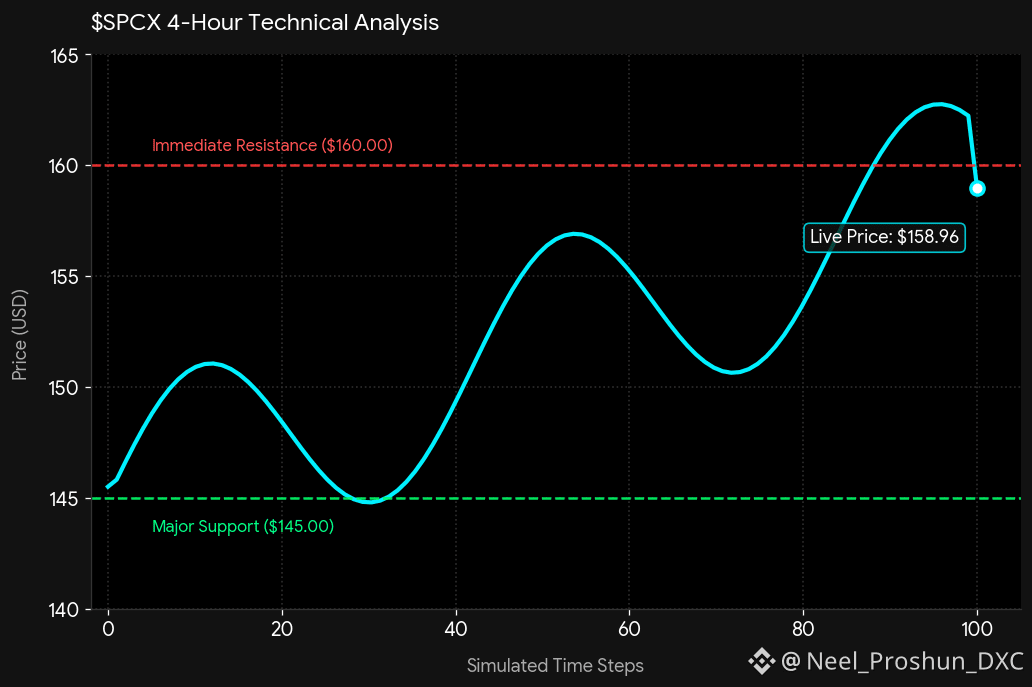
🚨 $SPCX Whales are cooking something massive on the charts!
Quick Market Scan. Look at the tape on $SPCXperpetuals right now. The order book is heavy, and price action looks clean as hell. We are staring directly at a massive accumulation zone that big players have been building for weeks.
The spot order flow shows significant block trades shifting, meaning the whales are buying aggressively before the next macro breakout.
Key Technical Levels to watch closely:
• Major Accumulation Support: $145.00• Immediate Breakout Resistance: $160.00• Current Live Price: $158.96
Momentum oscillators are ticking straight up into the bullish quadrant. Volume is expanding on every minor dip, proving retail FOMO hasn't even kicked in yet. Once $160.00flips into rock-solid support, expect a massive squeeze toward previous highs. Don't sleep on this setup while the big money is clearly positioning.
Are you buying this move or waiting for lower numbers? Let me know below! 👇
$SPCX
{spot}(SPCXBUSDT)
$SPCXB
*Disclaimer: Market commentary based on current live data. Not financial advice. Always DYOR.*
#SPCX #cryptotrading #WhaleAlert
🚨 $SPCX Whales are cooking something massive on the charts!
Quick Market Scan. Look at the tape on $SPCXperpetuals right now. The order book is heavy, and price action looks clean as hell. We are staring directly at a massive accumulation zone that big players have been building for weeks.
The spot order flow shows significant block trades shifting, meaning the whales are buying aggressively before the next macro breakout.
Key Technical Levels to watch closely:
• Major Accumulation Support: $145.00• Immediate Breakout Resistance: $160.00• Current Live Price: $158.96
Momentum oscillators are ticking straight up into the bullish quadrant. Volume is expanding on every minor dip, proving retail FOMO hasn't even kicked in yet. Once $160.00flips into rock-solid support, expect a massive squeeze toward previous highs. Don't sleep on this setup while the big money is clearly positioning.
Are you buying this move or waiting for lower numbers? Let me know below! 👇
$SPCX
$SPCXB
*Disclaimer: Market commentary based on current live data. Not financial advice. Always DYOR.*
#SPCX #cryptotrading #WhaleAlert
Quick Market Scan. Look at the tape on $SPCXperpetuals right now. The order book is heavy, and price action looks clean as hell. We are staring directly at a massive accumulation zone that big players have been building for weeks.
The spot order flow shows significant block trades shifting, meaning the whales are buying aggressively before the next macro breakout.
Key Technical Levels to watch closely:
• Major Accumulation Support: $145.00• Immediate Breakout Resistance: $160.00• Current Live Price: $158.96
Momentum oscillators are ticking straight up into the bullish quadrant. Volume is expanding on every minor dip, proving retail FOMO hasn't even kicked in yet. Once $160.00flips into rock-solid support, expect a massive squeeze toward previous highs. Don't sleep on this setup while the big money is clearly positioning.
Are you buying this move or waiting for lower numbers? Let me know below! 👇
$SPCX
$SPCXB
*Disclaimer: Market commentary based on current live data. Not financial advice. Always DYOR.*
#SPCX #cryptotrading #WhaleAlert
651
Crypto is a sea of green ahead of Friday's U.S. jobs report.
Bitcoin traded above $86,000 at 9:10 UTC, up 3.4% over 24 hours. Ether ETH $2,747.71, XRP (XRP), solana (SOL) and BNB also rose, though none kept pace with bitcoin.
The bigger moves came further down the list. SKY, AAVE and APT jumped 7% to 10%, making them the best performers among the 100 largest coins by market value.
Bitcoin's dominance, or its share of the total crypto market, is closing in on 60%. Meanwhile, the share held by USDT, the largest dollar-pegged stablecoin, slipped to around 6.3%, suggesting traders are moving out of cash and into tokens. These two gauges point to a market growing more comfortable with risk.
The nonfarm payrolls report, due at 8:30 a.m. ET, is expected to show the U.S. economy added 90,000 jobs in September, down from 162,000 in August. The unemployment rate is forecast to hold at 4.1%, according to FactSet's consensus estimates.
The bigger question for bitcoin is how Treasury yields react, especially inflation-adjusted, or real, yields. Analysts are watching the jobs data and the Oct. 14 consumer price index report for that reason.
$BTC $SOL $XRP
Crypto is a sea of green ahead of Friday's U.S. jobs report.
Bitcoin traded above $86,000 at 9:10 UTC, up 3.4% over 24 hours. Ether ETH $2,747.71, XRP (XRP), solana (SOL) and BNB also rose, though none kept pace with bitcoin.
The bigger moves came further down the list. SKY, AAVE and APT jumped 7% to 10%, making them the best performers among the 100 largest coins by market value.
Bitcoin's dominance, or its share of the total crypto market, is closing in on 60%. Meanwhile, the share held by USDT, the largest dollar-pegged stablecoin, slipped to around 6.3%, suggesting traders are moving out of cash and into tokens. These two gauges point to a market growing more comfortable with risk.
The nonfarm payrolls report, due at 8:30 a.m. ET, is expected to show the U.S. economy added 90,000 jobs in September, down from 162,000 in August. The unemployment rate is forecast to hold at 4.1%, according to FactSet's consensus estimates.
The bigger question for bitcoin is how Treasury yields react, especially inflation-adjusted, or real, yields. Analysts are watching the jobs data and the Oct. 14 consumer price index report for that reason.
$BTC $SOL $XRP
Bitcoin traded above $86,000 at 9:10 UTC, up 3.4% over 24 hours. Ether ETH $2,747.71, XRP (XRP), solana (SOL) and BNB also rose, though none kept pace with bitcoin.
The bigger moves came further down the list. SKY, AAVE and APT jumped 7% to 10%, making them the best performers among the 100 largest coins by market value.
Bitcoin's dominance, or its share of the total crypto market, is closing in on 60%. Meanwhile, the share held by USDT, the largest dollar-pegged stablecoin, slipped to around 6.3%, suggesting traders are moving out of cash and into tokens. These two gauges point to a market growing more comfortable with risk.
The nonfarm payrolls report, due at 8:30 a.m. ET, is expected to show the U.S. economy added 90,000 jobs in September, down from 162,000 in August. The unemployment rate is forecast to hold at 4.1%, according to FactSet's consensus estimates.
The bigger question for bitcoin is how Treasury yields react, especially inflation-adjusted, or real, yields. Analysts are watching the jobs data and the Oct. 14 consumer price index report for that reason.
$BTC $SOL $XRP
180
BTC IS STUCK, BUT NOT FOR LONG
Bitcoin briefly swept below the range and then reclaimed the mid-range S/R almost immediately
It’s Saturday, so I’m not expecting much meaningful expansion from the market today
Most likely, we keep moving sideways inside this tight LTF range while BTC builds the next move
The imbalance around 85.7K is still the main retest area for me
If price reaches it and gets rejected, I’ll expect move lower
At the same time, I’m expecting BTC to print a new local high next week, with the bigger local top forming within the next couple of weeks
For now, BTC is having a pretty quiet Saturday.
No need to force anything.
$BTC $SOL
{future}(SOLUSDT)
{future}(BTCUSDT)
BTC IS STUCK, BUT NOT FOR LONG
Bitcoin briefly swept below the range and then reclaimed the mid-range S/R almost immediately
It’s Saturday, so I’m not expecting much meaningful expansion from the market today
Most likely, we keep moving sideways inside this tight LTF range while BTC builds the next move
The imbalance around 85.7K is still the main retest area for me
If price reaches it and gets rejected, I’ll expect move lower
At the same time, I’m expecting BTC to print a new local high next week, with the bigger local top forming within the next couple of weeks
For now, BTC is having a pretty quiet Saturday.
No need to force anything.
$BTC $SOL
Bitcoin briefly swept below the range and then reclaimed the mid-range S/R almost immediately
It’s Saturday, so I’m not expecting much meaningful expansion from the market today
Most likely, we keep moving sideways inside this tight LTF range while BTC builds the next move
The imbalance around 85.7K is still the main retest area for me
If price reaches it and gets rejected, I’ll expect move lower
At the same time, I’m expecting BTC to print a new local high next week, with the bigger local top forming within the next couple of weeks
For now, BTC is having a pretty quiet Saturday.
No need to force anything.
$BTC $SOL
94
🚨 BLACKROCK IS BUYING THE DIP? 👀
BlackRock’s iShares Bitcoin Trust (IBIT) has reportedly added 656.661 BTC, worth around $BTC.
That’s another major institutional flow into Bitcoin, and IBIT’s holdings are already around 795K BTC based on recent disclosed data.
The interesting part? October is just around the corner. 📈
Bitcoin has historically performed strongly in October, while recent ETF flows have also shown renewed institutional demand.
🔥 BTC Setup
Bias: Bullish above key support
Confirmation: Continued ETF inflows + reclaim of major resistance
Upside: A breakout could open the door toward the next major resistance zones
Invalidation: Losing key support with strong selling volume could trigger another correction
BlackRock buying is a bullish demand signal, but it doesn’t guarantee an October rally. Traders should watch spot ETF flows, BTC volume, liquidity and market structure before chasing.
UPTOBER loading? 👀🚀
#Bitcoin #BTC #blackRock #IBIT #Crypto $BTC
🚨 BLACKROCK IS BUYING THE DIP? 👀
BlackRock’s iShares Bitcoin Trust (IBIT) has reportedly added 656.661 BTC, worth around $BTC .
That’s another major institutional flow into Bitcoin, and IBIT’s holdings are already around 795K BTC based on recent disclosed data.
The interesting part? October is just around the corner. 📈
Bitcoin has historically performed strongly in October, while recent ETF flows have also shown renewed institutional demand.
🔥 BTC Setup
Bias: Bullish above key support
Confirmation: Continued ETF inflows + reclaim of major resistance
Upside: A breakout could open the door toward the next major resistance zones
Invalidation: Losing key support with strong selling volume could trigger another correction
BlackRock buying is a bullish demand signal, but it doesn’t guarantee an October rally. Traders should watch spot ETF flows, BTC volume, liquidity and market structure before chasing.
UPTOBER loading? 👀🚀
#Bitcoin #BTC #blackRock #IBIT #Crypto $BTC
BlackRock’s iShares Bitcoin Trust (IBIT) has reportedly added 656.661 BTC, worth around $BTC .
That’s another major institutional flow into Bitcoin, and IBIT’s holdings are already around 795K BTC based on recent disclosed data.
The interesting part? October is just around the corner. 📈
Bitcoin has historically performed strongly in October, while recent ETF flows have also shown renewed institutional demand.
🔥 BTC Setup
Bias: Bullish above key support
Confirmation: Continued ETF inflows + reclaim of major resistance
Upside: A breakout could open the door toward the next major resistance zones
Invalidation: Losing key support with strong selling volume could trigger another correction
BlackRock buying is a bullish demand signal, but it doesn’t guarantee an October rally. Traders should watch spot ETF flows, BTC volume, liquidity and market structure before chasing.
UPTOBER loading? 👀🚀
#Bitcoin #BTC #blackRock #IBIT #Crypto $BTC
142
Bitget’s hot wallet was reportedly compromised in an attack involving around $350M in assets.
What makes this incident particularly notable is that the attacker reportedly did not obtain private keys. Instead, a critical wallet backend was compromised, allowing fraudulent transfer data to be created and the signing process to be triggered.
Bitget says its cold wallets remain unaffected, while its $464M+ User Protection Fund is intended to cover the affected amount.
The bigger lesson is clear: crypto security doesn’t end with private keys. The infrastructure connecting wallets, backend systems, transaction data, and signing mechanisms can become a critical attack surface too.
For users, it’s another reminder to think carefully about exchange custody and avoid keeping all of your crypto on a single CEX.
Not your keys, not your crypto. Stay safe.
Bitget’s hot wallet was reportedly compromised in an attack involving around $350M in assets.
What makes this incident particularly notable is that the attacker reportedly did not obtain private keys. Instead, a critical wallet backend was compromised, allowing fraudulent transfer data to be created and the signing process to be triggered.
Bitget says its cold wallets remain unaffected, while its $464M+ User Protection Fund is intended to cover the affected amount.
The bigger lesson is clear: crypto security doesn’t end with private keys. The infrastructure connecting wallets, backend systems, transaction data, and signing mechanisms can become a critical attack surface too.
For users, it’s another reminder to think carefully about exchange custody and avoid keeping all of your crypto on a single CEX.
Not your keys, not your crypto. Stay safe.
What makes this incident particularly notable is that the attacker reportedly did not obtain private keys. Instead, a critical wallet backend was compromised, allowing fraudulent transfer data to be created and the signing process to be triggered.
Bitget says its cold wallets remain unaffected, while its $464M+ User Protection Fund is intended to cover the affected amount.
The bigger lesson is clear: crypto security doesn’t end with private keys. The infrastructure connecting wallets, backend systems, transaction data, and signing mechanisms can become a critical attack surface too.
For users, it’s another reminder to think carefully about exchange custody and avoid keeping all of your crypto on a single CEX.
Not your keys, not your crypto. Stay safe.

93
Nvidia CEO Jensen Huang says we’re heading into a “low‑IQ era,” arguing that children won’t need to learn basic math.
Now can we send $NVDA.US to $300?
$NVDAB
{spot}(NVDABUSDT)
Nvidia CEO Jensen Huang says we’re heading into a “low‑IQ era,” arguing that children won’t need to learn basic math.
Now can we send $NVDA.US to $300?
$NVDAB
Now can we send $NVDA.US to $300?
$NVDAB
NVDAB+0,65%
NVDAUS+0,78%
1
142
Bitcoin Whale Activity: An On-Chain Update
$BTC 100–1,000 BTC wallet cohort has shown notable activity in recent months.
According to data attributed to Santiment, this group has increased its combined Bitcoin holdings since mid-July, with total holdings reaching around 5.24 million BTC.
This type of on-chain data can provide useful insight into how Bitcoin supply is distributed across different wallet sizes. However, wallet accumulation by itself does not confirm a future price direction or guarantee that the market will move higher.
Bitcoin’s broader market structure is influenced by multiple factors, including liquidity, ETF flows, trading activity, derivatives positioning and overall market demand.
For traders and investors, whale-wallet activity can therefore be viewed as one data point among many, rather than a standalone market signal.
On-chain data shows what is happening with wallet balances the market decides how that information is ultimately reflected in price.
Educational content only. Not financial advice.
#BTCShortTermPullback $BTC $SOL
#ShareWeekly
Bitcoin Whale Activity: An On-Chain Update
$BTC 100–1,000 BTC wallet cohort has shown notable activity in recent months.
According to data attributed to Santiment, this group has increased its combined Bitcoin holdings since mid-July, with total holdings reaching around 5.24 million BTC.
This type of on-chain data can provide useful insight into how Bitcoin supply is distributed across different wallet sizes. However, wallet accumulation by itself does not confirm a future price direction or guarantee that the market will move higher.
Bitcoin’s broader market structure is influenced by multiple factors, including liquidity, ETF flows, trading activity, derivatives positioning and overall market demand.
For traders and investors, whale-wallet activity can therefore be viewed as one data point among many, rather than a standalone market signal.
On-chain data shows what is happening with wallet balances the market decides how that information is ultimately reflected in price.
Educational content only. Not financial advice.
#BTCShortTermPullback $BTC $SOL
#ShareWeekly
$BTC 100–1,000 BTC wallet cohort has shown notable activity in recent months.
According to data attributed to Santiment, this group has increased its combined Bitcoin holdings since mid-July, with total holdings reaching around 5.24 million BTC.
This type of on-chain data can provide useful insight into how Bitcoin supply is distributed across different wallet sizes. However, wallet accumulation by itself does not confirm a future price direction or guarantee that the market will move higher.
Bitcoin’s broader market structure is influenced by multiple factors, including liquidity, ETF flows, trading activity, derivatives positioning and overall market demand.
For traders and investors, whale-wallet activity can therefore be viewed as one data point among many, rather than a standalone market signal.
On-chain data shows what is happening with wallet balances the market decides how that information is ultimately reflected in price.
Educational content only. Not financial advice.
#BTCShortTermPullback $BTC $SOL
#ShareWeekly
93
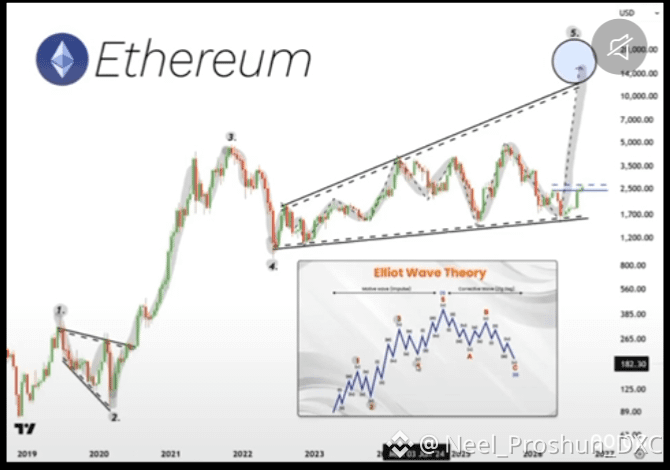
$ETH IS EYEING FIVE DIGITS
Waves 1-4 are reportedly complete. Now Wave 5 could be the move that changes everything.
$BTCUSDT is also showing strength, while $ETH USDT continues to attract attention as the broader crypto market enters another major expansion phase.
$5,000 could become just another level.
$10,000 could be left behind.
The bullish chart structure is pointing toward the $14,000-$20,000 zone if the final expansion plays out.
With $BTC leading the market and $ETHpotentially entering its final expansion, the next major move could be absolutely explosive.
Are you bullish enough?
$ETH IS EYEING FIVE DIGITS
Waves 1-4 are reportedly complete. Now Wave 5 could be the move that changes everything.
$BTCUSDT is also showing strength, while $ETH USDT continues to attract attention as the broader crypto market enters another major expansion phase.
$5,000 could become just another level.
$10,000 could be left behind.
The bullish chart structure is pointing toward the $14,000-$20,000 zone if the final expansion plays out.
With $BTC leading the market and $ETHpotentially entering its final expansion, the next major move could be absolutely explosive.
Are you bullish enough?
Waves 1-4 are reportedly complete. Now Wave 5 could be the move that changes everything.
$BTCUSDT is also showing strength, while $ETH USDT continues to attract attention as the broader crypto market enters another major expansion phase.
$5,000 could become just another level.
$10,000 could be left behind.
The bullish chart structure is pointing toward the $14,000-$20,000 zone if the final expansion plays out.
With $BTC leading the market and $ETHpotentially entering its final expansion, the next major move could be absolutely explosive.
Are you bullish enough?
118
Bitcoin’s latest move above the 50-week average is giving bulls a signal worth watching.
Since 2011, there have been 13 weekly closes back above the 50-week average during completed bear markets. In 11 of those cases, Bitcoin never returned to take out the prior cycle low. Sunday’s close at $BTCmarks the 14th reclaim, coming after 45 weeks below the average, which now sits near $78.8K. The four reclaims that began major new cycles came in January 2012, October 2015, May 2019, and March 2023. Each preceded a much larger advance, despite looking late at the time.
Timing is also important. Galaxy’s data shows confirmed reclaims historically appeared 130 to 284 days after the cycle bottom, with $BTC already up roughly 63% to 80%. This signal arrived just 82 days after the June 30 low near $58,525,with Bitcoin up about 39%.
That leaves the current setup less extended than previous clean reclaims.
Bitcoin is now around $85,150, while $89.6K marks the 2.0 Fibonacci extension of the $74.9K–$82.3K move. The two-year average sits near $88.8K making $90K a key technical magnet.
The big test now is whether the $78.8K–$82K zone can become support.
#BTC #bitcoin #bitcoinwarm $BTC #Write2Earn
{future}(BTCUSDT)
$SOL
{spot}(SOLUSDT)
Bitcoin’s latest move above the 50-week average is giving bulls a signal worth watching.
Since 2011, there have been 13 weekly closes back above the 50-week average during completed bear markets. In 11 of those cases, Bitcoin never returned to take out the prior cycle low. Sunday’s close at $BTCmarks the 14th reclaim, coming after 45 weeks below the average, which now sits near $78.8K. The four reclaims that began major new cycles came in January 2012, October 2015, May 2019, and March 2023. Each preceded a much larger advance, despite looking late at the time.
Timing is also important. Galaxy’s data shows confirmed reclaims historically appeared 130 to 284 days after the cycle bottom, with $BTC already up roughly 63% to 80%. This signal arrived just 82 days after the June 30 low near $58,525,with Bitcoin up about 39%.
That leaves the current setup less extended than previous clean reclaims.
Bitcoin is now around $85,150, while $89.6K marks the 2.0 Fibonacci extension of the $74.9K–$82.3K move. The two-year average sits near $88.8K making $90K a key technical magnet.
The big test now is whether the $78.8K–$82K zone can become support.
#BTC #bitcoin #bitcoinwarm $BTC #Write2Earn
$SOL
Since 2011, there have been 13 weekly closes back above the 50-week average during completed bear markets. In 11 of those cases, Bitcoin never returned to take out the prior cycle low. Sunday’s close at $BTCmarks the 14th reclaim, coming after 45 weeks below the average, which now sits near $78.8K. The four reclaims that began major new cycles came in January 2012, October 2015, May 2019, and March 2023. Each preceded a much larger advance, despite looking late at the time.
Timing is also important. Galaxy’s data shows confirmed reclaims historically appeared 130 to 284 days after the cycle bottom, with $BTC already up roughly 63% to 80%. This signal arrived just 82 days after the June 30 low near $58,525,with Bitcoin up about 39%.
That leaves the current setup less extended than previous clean reclaims.
Bitcoin is now around $85,150, while $89.6K marks the 2.0 Fibonacci extension of the $74.9K–$82.3K move. The two-year average sits near $88.8K making $90K a key technical magnet.
The big test now is whether the $78.8K–$82K zone can become support.
#BTC #bitcoin #bitcoinwarm $BTC #Write2Earn
$SOL
1
113
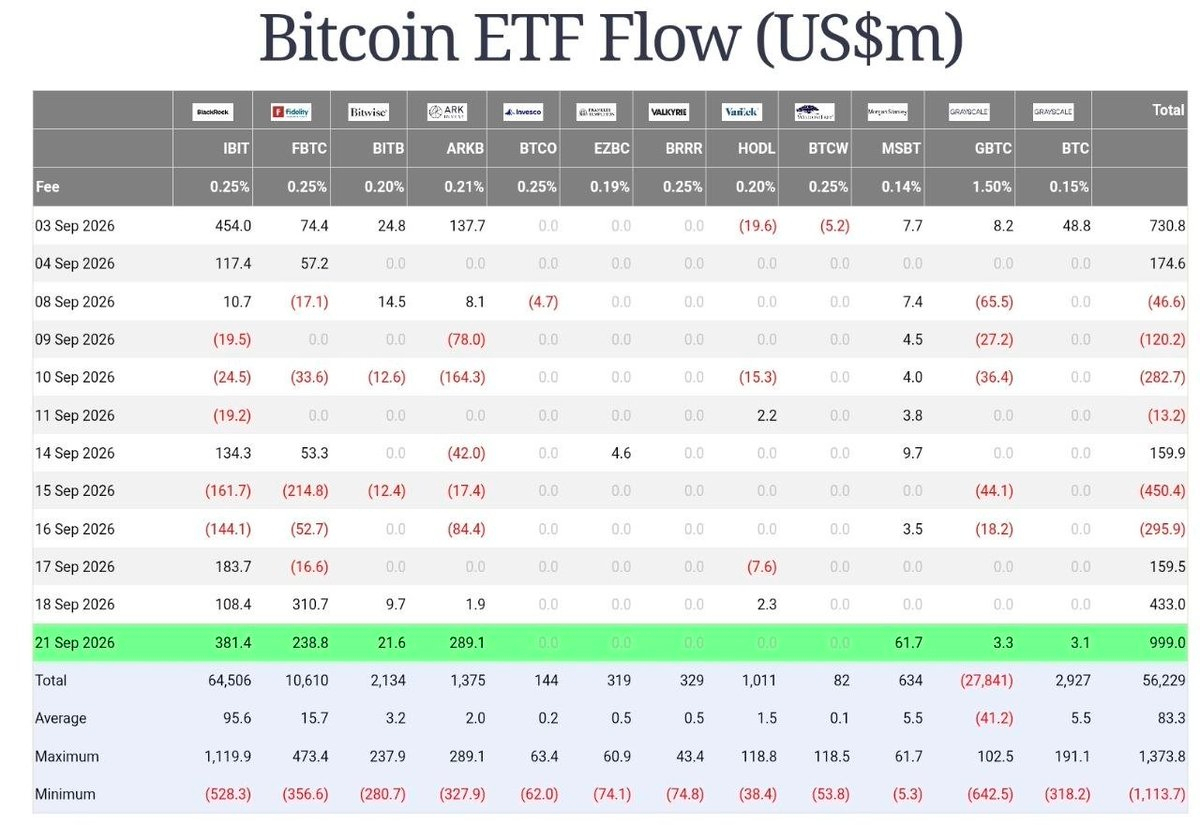
🚨 Bitcoin ETFs just pulled in nearly $BTC BILLION in a single day.
U.S. spot Bitcoin ETFs recorded $998.95Min net inflows on September 21.
That’s the biggest daily inflow since October 2025.
BlackRock’s IBIT led with $381.4M,followed by ARKB with $289.1Mand Fidelity’s FBTC with $238.8M.At the same time, Bitcoin briefly pushed above $87,000.The interesting part?
This wasn’t just one fund driving the move.
Several major ETFs recorded strong inflows simultaneously.
Institutional demand is clearly worth watching again.
Now the question is:
Was this just a one-day liquidity surge, or the start of a stronger ETF flow trend?
#BTC #Write2Earn $BTC $FORM
{future}(FORMUSDT)
🚨 Bitcoin ETFs just pulled in nearly $BTC BILLION in a single day.
U.S. spot Bitcoin ETFs recorded $998.95Min net inflows on September 21.
That’s the biggest daily inflow since October 2025.
BlackRock’s IBIT led with $381.4M,followed by ARKB with $289.1Mand Fidelity’s FBTC with $238.8M.At the same time, Bitcoin briefly pushed above $87,000.The interesting part?
This wasn’t just one fund driving the move.
Several major ETFs recorded strong inflows simultaneously.
Institutional demand is clearly worth watching again.
Now the question is:
Was this just a one-day liquidity surge, or the start of a stronger ETF flow trend?
#BTC #Write2Earn $BTC $FORM
U.S. spot Bitcoin ETFs recorded $998.95Min net inflows on September 21.
That’s the biggest daily inflow since October 2025.
BlackRock’s IBIT led with $381.4M,followed by ARKB with $289.1Mand Fidelity’s FBTC with $238.8M.At the same time, Bitcoin briefly pushed above $87,000.The interesting part?
This wasn’t just one fund driving the move.
Several major ETFs recorded strong inflows simultaneously.
Institutional demand is clearly worth watching again.
Now the question is:
Was this just a one-day liquidity surge, or the start of a stronger ETF flow trend?
#BTC #Write2Earn $BTC $FORM
73
$ARB Forecast
The rationale for this trade is an upward leg on the higher timeframe, followed by a suitable corrective move on the lower timeframe. The final bearish leg has weakened significantly, suggesting that a new upward move may be starting. A good positive HD on the lower timeframe could also support the upside.
This is a trigger-based trade, not a limit order.
⚠ Risk Disclaimer
Markets are risky, so trade carefully and manage your risk.
$ARB #Write2Earn #Binance
{future}(ARBUSDT)
$ARB Forecast
The rationale for this trade is an upward leg on the higher timeframe, followed by a suitable corrective move on the lower timeframe. The final bearish leg has weakened significantly, suggesting that a new upward move may be starting. A good positive HD on the lower timeframe could also support the upside.
This is a trigger-based trade, not a limit order.
⚠ Risk Disclaimer
Markets are risky, so trade carefully and manage your risk.
$ARB #Write2Earn #Binance
The rationale for this trade is an upward leg on the higher timeframe, followed by a suitable corrective move on the lower timeframe. The final bearish leg has weakened significantly, suggesting that a new upward move may be starting. A good positive HD on the lower timeframe could also support the upside.
This is a trigger-based trade, not a limit order.
⚠ Risk Disclaimer
Markets are risky, so trade carefully and manage your risk.
$ARB #Write2Earn #Binance
89

Article
BTC LONG SETUP — Buyers Are Testing the $BTC Resistance Wall#BTCBreaks82K Bitcoin is trading around the $81K–$82K area, and the current structure is becoming increasingly interesting for a long setup.
BTC has recovered strongly from the $75K–$76K zone and reclaimed the $80K level. Now the market is pressing against the major $81,800–$82,500 resistance zone, where sellers have previously appeared.
For a long position, I would focus less on chasing the current candle and more on confirmation.
LONG PLAN
Entry Zone: $80,800–$81,500 Aggressive Entry: $81,000–$81,300 after confirmation
Stop Loss: $79,700 TP1: $82,000 TP2: $83,000 TP3: $84,000–$85,000
The key level is $82,000.
If BTC breaks above $82K with strong volume and successfully retests the breakout zone as support, the structure becomes much stronger for continuation toward $83K–$85K.Current technical analysis also identifies $82K–$82.5K as the main resistance area, with $85K as the next notable level above it.
WHY THE LONG SETUP IS INTERESTING
The recovery has already demonstrated that buyers are willing to defend lower levels.
BTC moved from roughly $76K back above $81K,while the broader daily structure remains constructive. Recent market analysis also notes that BTC is holding above important short- and medium-term moving averages.
But there is one major condition:
BTC needs to prove that $82K can become support.
A quick wick above $82K is not enough for me.
I want to see:
• Strong volume during the breakout
• A close above resistance
• Successful retest of $81.8K–$82K• Higher lows after the breakout
• No immediate rejection back below $80K
WHAT IF BTC PULLS BACK?
A rejection around $82K–$82.5K would not automatically destroy the long setup.
The first area I would watch is $80K–$80.5K.
If BTC pulls back into this zone and buyers defend it, the market could simply be building another base before attempting the resistance again.
However, losing $80Kdecisively with expanding downside volume would weaken the short-term bullish structure and bring the lower $76K–$76.5K support area back into focus.
THE TRADE IDEA
I would not treat $82K as an automatic buy signal.
Instead:
Hold $80K→ bullish structure remains intact
Break and hold $82K→ continuation confirmation
Reclaim $83K→ $84K–$85K becomes the next area to watch
Lose $79.7K→ long setup invalidated
The biggest mistake here would be turning a good market structure into an emotional FOMO entry.
Bitcoin is already near a major resistance zone, so confirmation matters more than speed.
For me, the cleanest long setup is either a controlled pullback that holds support or a confirmed breakout above $82K followed by a successful retest.
Risk management comes first. Position size should remain controlled, and the stop should be defined before entering.
BTC has momentum, but now buyers need to prove they can turn $82K from resistance into support.
#BTC #bitcoin #btclong $BTC
{future}(BTCUSDT)
BTC LONG SETUP — Buyers Are Testing the $BTC Resistance Wall
#BTCBreaks82K Bitcoin is trading around the $81K–$82K area, and the current structure is becoming increasingly interesting for a long setup.
BTC has recovered strongly from the $75K–$76K zone and reclaimed the $80K level. Now the market is pressing against the major $81,800–$82,500 resistance zone, where sellers have previously appeared.
For a long position, I would focus less on chasing the current candle and more on confirmation.
LONG PLAN
Entry Zone: $80,800–$81,500 Aggressive Entry: $81,000–$81,300 after confirmation
Stop Loss: $79,700 TP1: $82,000 TP2: $83,000 TP3: $84,000–$85,000
The key level is $82,000.
If BTC breaks above $82K with strong volume and successfully retests the breakout zone as support, the structure becomes much stronger for continuation toward $83K–$85K.Current technical analysis also identifies $82K–$82.5K as the main resistance area, with $85K as the next notable level above it.
WHY THE LONG SETUP IS INTERESTING
The recovery has already demonstrated that buyers are willing to defend lower levels.
BTC moved from roughly $76K back above $81K,while the broader daily structure remains constructive. Recent market analysis also notes that BTC is holding above important short- and medium-term moving averages.
But there is one major condition:
BTC needs to prove that $82K can become support.
A quick wick above $82K is not enough for me.
I want to see:
• Strong volume during the breakout
• A close above resistance
• Successful retest of $81.8K–$82K• Higher lows after the breakout
• No immediate rejection back below $80K
WHAT IF BTC PULLS BACK?
A rejection around $82K–$82.5K would not automatically destroy the long setup.
The first area I would watch is $80K–$80.5K.
If BTC pulls back into this zone and buyers defend it, the market could simply be building another base before attempting the resistance again.
However, losing $80Kdecisively with expanding downside volume would weaken the short-term bullish structure and bring the lower $76K–$76.5K support area back into focus.
THE TRADE IDEA
I would not treat $82K as an automatic buy signal.
Instead:
Hold $80K→ bullish structure remains intact
Break and hold $82K→ continuation confirmation
Reclaim $83K→ $84K–$85K becomes the next area to watch
Lose $79.7K→ long setup invalidated
The biggest mistake here would be turning a good market structure into an emotional FOMO entry.
Bitcoin is already near a major resistance zone, so confirmation matters more than speed.
For me, the cleanest long setup is either a controlled pullback that holds support or a confirmed breakout above $82K followed by a successful retest.
Risk management comes first. Position size should remain controlled, and the stop should be defined before entering.
BTC has momentum, but now buyers need to prove they can turn $82K from resistance into support.
#BTC #bitcoin #btclong $BTC
BTC has recovered strongly from the $75K–$76K zone and reclaimed the $80K level. Now the market is pressing against the major $81,800–$82,500 resistance zone, where sellers have previously appeared.
For a long position, I would focus less on chasing the current candle and more on confirmation.
LONG PLAN
Entry Zone: $80,800–$81,500 Aggressive Entry: $81,000–$81,300 after confirmation
Stop Loss: $79,700 TP1: $82,000 TP2: $83,000 TP3: $84,000–$85,000
The key level is $82,000.
If BTC breaks above $82K with strong volume and successfully retests the breakout zone as support, the structure becomes much stronger for continuation toward $83K–$85K.Current technical analysis also identifies $82K–$82.5K as the main resistance area, with $85K as the next notable level above it.
WHY THE LONG SETUP IS INTERESTING
The recovery has already demonstrated that buyers are willing to defend lower levels.
BTC moved from roughly $76K back above $81K,while the broader daily structure remains constructive. Recent market analysis also notes that BTC is holding above important short- and medium-term moving averages.
But there is one major condition:
BTC needs to prove that $82K can become support.
A quick wick above $82K is not enough for me.
I want to see:
• Strong volume during the breakout
• A close above resistance
• Successful retest of $81.8K–$82K• Higher lows after the breakout
• No immediate rejection back below $80K
WHAT IF BTC PULLS BACK?
A rejection around $82K–$82.5K would not automatically destroy the long setup.
The first area I would watch is $80K–$80.5K.
If BTC pulls back into this zone and buyers defend it, the market could simply be building another base before attempting the resistance again.
However, losing $80Kdecisively with expanding downside volume would weaken the short-term bullish structure and bring the lower $76K–$76.5K support area back into focus.
THE TRADE IDEA
I would not treat $82K as an automatic buy signal.
Instead:
Hold $80K→ bullish structure remains intact
Break and hold $82K→ continuation confirmation
Reclaim $83K→ $84K–$85K becomes the next area to watch
Lose $79.7K→ long setup invalidated
The biggest mistake here would be turning a good market structure into an emotional FOMO entry.
Bitcoin is already near a major resistance zone, so confirmation matters more than speed.
For me, the cleanest long setup is either a controlled pullback that holds support or a confirmed breakout above $82K followed by a successful retest.
Risk management comes first. Position size should remain controlled, and the stop should be defined before entering.
BTC has momentum, but now buyers need to prove they can turn $82K from resistance into support.
#BTC #bitcoin #btclong $BTC
1
115
Connectez-vous pour découvrir plus de contenu
Rejoignez la communauté mondiale des adeptes de cryptomonnaies sur Binance Square
⚡️ Suviez les dernières informations importantes sur les cryptomonnaies.
💬 Jugé digne de confiance par la plus grande plateforme d’échange de cryptomonnaies au monde.
👍 Découvrez les connaissances que partagent les créateurs vérifiés.
Adresse e-mail/Nº de téléphone