

#czamaonbinancesquare
czamaonbinancesquare
6.3M vues
49,190 mentions
CZ will be live on Binance Square for an AMA tonight at 3PM (UTC+0), don’t miss out!
Populaire
Récents


·
--
3.5k
2.2k
3.3k
3.9M

·
--

Article
When CZ Spoke, the Bigger Story Wasn’t Bitcoin — It Was How We Read the MarketI went through the discussion around CZ’s Binance Square AMA expecting the usual crypto conversation: Bitcoin, market direction, FUD, Binance and maybe a few predictions.
What stood out instead was how little the conversation depended on predictions.
The more I looked at it, the more the AMA felt like a discussion about something bigger than the next move in Bitcoin. It was about how quickly information turns into a narrative, how narratives turn into emotions, and how those emotions can eventually influence the market itself.
That is what made the conversation worth paying attention to.
CZ began by making an important distinction. He said the AMA represented his personal views and that he was speaking from the perspective of a shareholder and user rather than as someone managing Binance's day-to-day operations. That clarification matters because statements from CZ are often interpreted as if they automatically represent an official Binance position.
From there, the conversation moved toward one of the biggest controversies surrounding the market: the sharp October sell-off.
Whenever crypto experiences a sudden move, the internet immediately starts looking for a simple explanation.
Who sold?
Who caused it?
Which exchange was involved?
Was there manipulation?
Was somebody already positioned for the move?
Those questions are understandable. But the problem begins when speculation starts being treated as evidence.
CZ pushed back against claims that Binance caused the October crash. He pointed to the tariff announcement that came before the market move and argued that Binance, like other platforms, was dealing with the huge wave of trading activity that followed. He also rejected the idea that he or Binance trades crypto as a proprietary operation designed to profit from market movements.
Whether someone agrees with every part of that explanation or not, the broader lesson is useful.
Markets are rarely controlled by one explanation.
A macro announcement can change expectations. Leverage can amplify the reaction. Liquidations can accelerate selling. Liquidity can disappear at the worst possible moment. And social media can turn a complicated event into a single sentence.
That last part is becoming increasingly important.
The market no longer reacts only to information.
It reacts to information about information.
A trader sees Bitcoin falling.
Someone posts an explanation.
Another account repeats it.
A larger account adds its own interpretation.
Within minutes, thousands of people may be discussing the explanation rather than the event that originally caused the move.
This is where the conversation around FUD becomes much more interesting.
CZ discussed what he viewed as coordinated or paid negative narratives and warned against participating in campaigns designed to spread misinformation. At the same time, the distinction between legitimate criticism and deliberate FUD is important.
A project should be questioned.
An exchange should be questioned.
Influential people should be questioned.
Crypto does not become healthier by removing criticism.
The real problem is when criticism becomes a business model built around fear rather than facts.
That difference can be difficult to see when the market is moving quickly.
Fear has a natural advantage online.
It creates urgency.
It creates clicks.
It creates arguments.
And most importantly, it makes people feel that they need to react immediately.
That is exactly when investors can make their worst decisions.
The most useful takeaway from the discussion was therefore not simply "ignore FUD."
It was to understand how narratives work.
A rumor becomes dangerous when people stop asking whether it is true.
A headline becomes dangerous when people assume that a confident headline must contain a complete explanation.
And a market opinion becomes dangerous when it quietly turns into a guarantee.
That brings us to Bitcoin.
One of the easiest things to do in crypto is to turn a long-term belief into a short-term prediction.
Someone believes Bitcoin has a strong future.
The next step becomes predicting a specific price.
Then a specific date.
Then a specific market cycle.
Eventually, a thesis becomes an expectation.
And when reality does not follow the expected path, people begin questioning the thesis itself.
The AMA offered a more cautious way of looking at the market.
CZ acknowledged that short-term and long-term market movements are difficult to predict, particularly when macroeconomic and geopolitical conditions remain uncertain. Reports from the AMA also highlighted his view that Bitcoin's long-term potential should not be confused with the ability to accurately forecast every market cycle.
That distinction deserves more attention.
You can believe in Bitcoin without pretending to know its next candle.
You can believe in blockchain technology without knowing which token will outperform next month.
You can have a long-term thesis while remaining uncertain about the short-term path.
In fact, accepting that uncertainty may be a sign of stronger conviction rather than weaker conviction.
The discussion about Bitcoin and gold made that even clearer.
CZ has expressed a strong preference for Bitcoin as a monetary technology, but he also acknowledged something Bitcoin cannot simply manufacture: history.
Gold has spent generations becoming familiar.
People understand what it is.
Institutions understand it.
Families have passed it from one generation to another.
Its role as a store of value has been reinforced over an extremely long period.
Bitcoin is trying to build that kind of recognition in a much shorter period.
The technology may be newer and, in certain respects, more flexible, but global trust does not appear instantly.
The AMA discussion framed the difference largely around familiarity and adoption. Bitcoin is still relatively young, while gold has a much longer history of global acceptance.
That is why the Bitcoin-versus-gold debate is more complicated than simply asking which asset is better.
One asset has history.
The other has technology.
One has centuries of familiarity.
The other is still building a new category of trust.
The interesting question is not whether Bitcoin can immediately replace gold.
The interesting question is what happens if Bitcoin continues accumulating trust for another decade, two decades or longer.
That is a much bigger conversation than a weekly price prediction.
Another part of the AMA that deserves attention is the discussion around Binance's ability to handle stress.
CZ pointed toward the large withdrawal pressure Binance experienced during December 2022 as an example of users testing the platform during a period of intense concern. Reports from the AMA say Binance processed more than $15 billion in withdrawals over a week, including around $7 billion in one day, without stopping withdrawals.
That does not mean historical performance guarantees future performance.
It doesn't.
But stress events reveal something that ordinary conditions cannot.
When markets are calm, almost every system looks strong.
The real question comes when confidence disappears.
That is when users test liquidity.
That is when infrastructure is tested.
That is when operational weaknesses become visible.
And that is when trust stops being a marketing statement and becomes something measurable through actual behavior.
This is one reason transparency has become such an important issue throughout the crypto industry.
Users no longer want to hear only that a platform is safe.
They want evidence.
They want to understand reserves.
They want to know how assets are held.
They want to know what happens when everyone wants to withdraw at the same time.
That shift in expectations is healthy for the industry.
The conversation around Binance Alpha raised another useful point: access should not automatically be interpreted as endorsement.
CZ's comments, as reported from the AMA, emphasized that users still need to conduct their own research rather than assuming that the availability of an asset through a platform makes it a safe investment.
That principle becomes more important as the crypto ecosystem expands.
There are more tokens.
More protocols.
More narratives.
More AI projects.
More RWA projects.
More DeFi applications.
More opportunities.
And, naturally, more ways to lose money.
The easier information becomes to access, the more important judgment becomes.
This is also where Binance Square itself becomes part of the story.
A platform built around real-time crypto discussion can be incredibly useful because it puts traders, creators and industry figures in the same information environment.
But that comes with a challenge.
A platform can provide access to thousands of opinions without necessarily providing thousands of reliable answers.
Those are two different things.
The future of crypto social media will not be determined simply by how much content gets published.
It will depend on whether users can identify valuable information inside all that content.
CZ has also spoken about the broader potential of Binance Square as a place for useful information beyond crypto alone, including areas such as AI and global developments that influence markets.
That direction makes sense.
Crypto is no longer isolated from the rest of the financial world.
Interest rates affect liquidity.
Geopolitics affects risk appetite.
Regulation affects adoption.
Technology affects capital flows.
AI affects investor attention.
Macroeconomic policy can move crypto markets before a crypto-specific headline even appears.
Understanding crypto therefore increasingly requires understanding the world around it.
And that brings us back to the real value of the AMA.
It was not that CZ had every answer.
He didn't.
Nobody does.
The interesting part was the attempt to place complicated market events into a larger context instead of reducing everything to a bullish or bearish headline.
That is something the crypto market could use more of.
There is too much pressure to always have an answer.
Bitcoin going up?
Bullish.
Bitcoin going down?
Bearish.
A new regulation?
Bullish or bearish.
A whale moves coins?
Bullish or bearish.
A major account posts something?
Bullish or bearish.
Everything gets compressed into two words.
But markets do not work in two words.
They are systems made from liquidity, psychology, incentives, technology, policy and human behavior.
Sometimes the correct answer is simply: we do not know yet.
That may sound unsatisfying, especially in a market where everyone wants the next big call.
But uncertainty is part of investing.
The people who accept that fact can focus on managing risk.
The people who refuse to accept it often end up trying to predict the unpredictable.
That is why the most interesting message I took from the CZAMA conversation was not about where Bitcoin goes next.
It was about how we should behave while we don't know.
Check the source.
Separate facts from opinions.
Question incentives.
Don't confuse confidence with evidence.
Don't let a viral narrative replace independent thinking.
And don't make a financial decision simply because everyone else appears certain.
Crypto will continue producing dramatic moves.
There will be another crash.
There will be another rally.
There will be another rumor.
There will be another "this changes everything" headline.
The technology will keep developing, institutions will keep entering, regulations will keep changing and the market will continue searching for the next narrative.
None of that is going away.
What can change is how we respond.
That is why I don't think the biggest takeaway from CZ's Binance Square AMA was a particular Bitcoin view or a particular comment about Binance.
The bigger takeaway was discipline.
A disciplined market participant does not need to react to every candle.
They do not need to believe every headline.
They do not need to fight every critic.
And they certainly do not need to pretend they know what happens next.
Sometimes the most professional thing an investor can do is slow down.
Look at the evidence.
Accept what remains uncertain.
Then make a decision based on a process rather than emotion.
That is the part of #CZAMAonBinanceSquare that will probably remain relevant long after the original discussion disappears from people's feeds.
Because the market will always create noise.
The real advantage is learning how not to become part of it.
When CZ Spoke, the Bigger Story Wasn’t Bitcoin — It Was How We Read the Market
I went through the discussion around CZ’s Binance Square AMA expecting the usual crypto conversation: Bitcoin, market direction, FUD, Binance and maybe a few predictions.
What stood out instead was how little the conversation depended on predictions.
The more I looked at it, the more the AMA felt like a discussion about something bigger than the next move in Bitcoin. It was about how quickly information turns into a narrative, how narratives turn into emotions, and how those emotions can eventually influence the market itself.
That is what made the conversation worth paying attention to.
CZ began by making an important distinction. He said the AMA represented his personal views and that he was speaking from the perspective of a shareholder and user rather than as someone managing Binance's day-to-day operations. That clarification matters because statements from CZ are often interpreted as if they automatically represent an official Binance position.
From there, the conversation moved toward one of the biggest controversies surrounding the market: the sharp October sell-off.
Whenever crypto experiences a sudden move, the internet immediately starts looking for a simple explanation.
Who sold?
Who caused it?
Which exchange was involved?
Was there manipulation?
Was somebody already positioned for the move?
Those questions are understandable. But the problem begins when speculation starts being treated as evidence.
CZ pushed back against claims that Binance caused the October crash. He pointed to the tariff announcement that came before the market move and argued that Binance, like other platforms, was dealing with the huge wave of trading activity that followed. He also rejected the idea that he or Binance trades crypto as a proprietary operation designed to profit from market movements.
Whether someone agrees with every part of that explanation or not, the broader lesson is useful.
Markets are rarely controlled by one explanation.
A macro announcement can change expectations. Leverage can amplify the reaction. Liquidations can accelerate selling. Liquidity can disappear at the worst possible moment. And social media can turn a complicated event into a single sentence.
That last part is becoming increasingly important.
The market no longer reacts only to information.
It reacts to information about information.
A trader sees Bitcoin falling.
Someone posts an explanation.
Another account repeats it.
A larger account adds its own interpretation.
Within minutes, thousands of people may be discussing the explanation rather than the event that originally caused the move.
This is where the conversation around FUD becomes much more interesting.
CZ discussed what he viewed as coordinated or paid negative narratives and warned against participating in campaigns designed to spread misinformation. At the same time, the distinction between legitimate criticism and deliberate FUD is important.
A project should be questioned.
An exchange should be questioned.
Influential people should be questioned.
Crypto does not become healthier by removing criticism.
The real problem is when criticism becomes a business model built around fear rather than facts.
That difference can be difficult to see when the market is moving quickly.
Fear has a natural advantage online.
It creates urgency.
It creates clicks.
It creates arguments.
And most importantly, it makes people feel that they need to react immediately.
That is exactly when investors can make their worst decisions.
The most useful takeaway from the discussion was therefore not simply "ignore FUD."
It was to understand how narratives work.
A rumor becomes dangerous when people stop asking whether it is true.
A headline becomes dangerous when people assume that a confident headline must contain a complete explanation.
And a market opinion becomes dangerous when it quietly turns into a guarantee.
That brings us to Bitcoin.
One of the easiest things to do in crypto is to turn a long-term belief into a short-term prediction.
Someone believes Bitcoin has a strong future.
The next step becomes predicting a specific price.
Then a specific date.
Then a specific market cycle.
Eventually, a thesis becomes an expectation.
And when reality does not follow the expected path, people begin questioning the thesis itself.
The AMA offered a more cautious way of looking at the market.
CZ acknowledged that short-term and long-term market movements are difficult to predict, particularly when macroeconomic and geopolitical conditions remain uncertain. Reports from the AMA also highlighted his view that Bitcoin's long-term potential should not be confused with the ability to accurately forecast every market cycle.
That distinction deserves more attention.
You can believe in Bitcoin without pretending to know its next candle.
You can believe in blockchain technology without knowing which token will outperform next month.
You can have a long-term thesis while remaining uncertain about the short-term path.
In fact, accepting that uncertainty may be a sign of stronger conviction rather than weaker conviction.
The discussion about Bitcoin and gold made that even clearer.
CZ has expressed a strong preference for Bitcoin as a monetary technology, but he also acknowledged something Bitcoin cannot simply manufacture: history.
Gold has spent generations becoming familiar.
People understand what it is.
Institutions understand it.
Families have passed it from one generation to another.
Its role as a store of value has been reinforced over an extremely long period.
Bitcoin is trying to build that kind of recognition in a much shorter period.
The technology may be newer and, in certain respects, more flexible, but global trust does not appear instantly.
The AMA discussion framed the difference largely around familiarity and adoption. Bitcoin is still relatively young, while gold has a much longer history of global acceptance.
That is why the Bitcoin-versus-gold debate is more complicated than simply asking which asset is better.
One asset has history.
The other has technology.
One has centuries of familiarity.
The other is still building a new category of trust.
The interesting question is not whether Bitcoin can immediately replace gold.
The interesting question is what happens if Bitcoin continues accumulating trust for another decade, two decades or longer.
That is a much bigger conversation than a weekly price prediction.
Another part of the AMA that deserves attention is the discussion around Binance's ability to handle stress.
CZ pointed toward the large withdrawal pressure Binance experienced during December 2022 as an example of users testing the platform during a period of intense concern. Reports from the AMA say Binance processed more than $15 billion in withdrawals over a week, including around $7 billion in one day, without stopping withdrawals.
That does not mean historical performance guarantees future performance.
It doesn't.
But stress events reveal something that ordinary conditions cannot.
When markets are calm, almost every system looks strong.
The real question comes when confidence disappears.
That is when users test liquidity.
That is when infrastructure is tested.
That is when operational weaknesses become visible.
And that is when trust stops being a marketing statement and becomes something measurable through actual behavior.
This is one reason transparency has become such an important issue throughout the crypto industry.
Users no longer want to hear only that a platform is safe.
They want evidence.
They want to understand reserves.
They want to know how assets are held.
They want to know what happens when everyone wants to withdraw at the same time.
That shift in expectations is healthy for the industry.
The conversation around Binance Alpha raised another useful point: access should not automatically be interpreted as endorsement.
CZ's comments, as reported from the AMA, emphasized that users still need to conduct their own research rather than assuming that the availability of an asset through a platform makes it a safe investment.
That principle becomes more important as the crypto ecosystem expands.
There are more tokens.
More protocols.
More narratives.
More AI projects.
More RWA projects.
More DeFi applications.
More opportunities.
And, naturally, more ways to lose money.
The easier information becomes to access, the more important judgment becomes.
This is also where Binance Square itself becomes part of the story.
A platform built around real-time crypto discussion can be incredibly useful because it puts traders, creators and industry figures in the same information environment.
But that comes with a challenge.
A platform can provide access to thousands of opinions without necessarily providing thousands of reliable answers.
Those are two different things.
The future of crypto social media will not be determined simply by how much content gets published.
It will depend on whether users can identify valuable information inside all that content.
CZ has also spoken about the broader potential of Binance Square as a place for useful information beyond crypto alone, including areas such as AI and global developments that influence markets.
That direction makes sense.
Crypto is no longer isolated from the rest of the financial world.
Interest rates affect liquidity.
Geopolitics affects risk appetite.
Regulation affects adoption.
Technology affects capital flows.
AI affects investor attention.
Macroeconomic policy can move crypto markets before a crypto-specific headline even appears.
Understanding crypto therefore increasingly requires understanding the world around it.
And that brings us back to the real value of the AMA.
It was not that CZ had every answer.
He didn't.
Nobody does.
The interesting part was the attempt to place complicated market events into a larger context instead of reducing everything to a bullish or bearish headline.
That is something the crypto market could use more of.
There is too much pressure to always have an answer.
Bitcoin going up?
Bullish.
Bitcoin going down?
Bearish.
A new regulation?
Bullish or bearish.
A whale moves coins?
Bullish or bearish.
A major account posts something?
Bullish or bearish.
Everything gets compressed into two words.
But markets do not work in two words.
They are systems made from liquidity, psychology, incentives, technology, policy and human behavior.
Sometimes the correct answer is simply: we do not know yet.
That may sound unsatisfying, especially in a market where everyone wants the next big call.
But uncertainty is part of investing.
The people who accept that fact can focus on managing risk.
The people who refuse to accept it often end up trying to predict the unpredictable.
That is why the most interesting message I took from the CZAMA conversation was not about where Bitcoin goes next.
It was about how we should behave while we don't know.
Check the source.
Separate facts from opinions.
Question incentives.
Don't confuse confidence with evidence.
Don't let a viral narrative replace independent thinking.
And don't make a financial decision simply because everyone else appears certain.
Crypto will continue producing dramatic moves.
There will be another crash.
There will be another rally.
There will be another rumor.
There will be another "this changes everything" headline.
The technology will keep developing, institutions will keep entering, regulations will keep changing and the market will continue searching for the next narrative.
None of that is going away.
What can change is how we respond.
That is why I don't think the biggest takeaway from CZ's Binance Square AMA was a particular Bitcoin view or a particular comment about Binance.
The bigger takeaway was discipline.
A disciplined market participant does not need to react to every candle.
They do not need to believe every headline.
They do not need to fight every critic.
And they certainly do not need to pretend they know what happens next.
Sometimes the most professional thing an investor can do is slow down.
Look at the evidence.
Accept what remains uncertain.
Then make a decision based on a process rather than emotion.
That is the part of #CZAMAonBinanceSquare that will probably remain relevant long after the original discussion disappears from people's feeds.
Because the market will always create noise.
The real advantage is learning how not to become part of it.
What stood out instead was how little the conversation depended on predictions.
The more I looked at it, the more the AMA felt like a discussion about something bigger than the next move in Bitcoin. It was about how quickly information turns into a narrative, how narratives turn into emotions, and how those emotions can eventually influence the market itself.
That is what made the conversation worth paying attention to.
CZ began by making an important distinction. He said the AMA represented his personal views and that he was speaking from the perspective of a shareholder and user rather than as someone managing Binance's day-to-day operations. That clarification matters because statements from CZ are often interpreted as if they automatically represent an official Binance position.
From there, the conversation moved toward one of the biggest controversies surrounding the market: the sharp October sell-off.
Whenever crypto experiences a sudden move, the internet immediately starts looking for a simple explanation.
Who sold?
Who caused it?
Which exchange was involved?
Was there manipulation?
Was somebody already positioned for the move?
Those questions are understandable. But the problem begins when speculation starts being treated as evidence.
CZ pushed back against claims that Binance caused the October crash. He pointed to the tariff announcement that came before the market move and argued that Binance, like other platforms, was dealing with the huge wave of trading activity that followed. He also rejected the idea that he or Binance trades crypto as a proprietary operation designed to profit from market movements.
Whether someone agrees with every part of that explanation or not, the broader lesson is useful.
Markets are rarely controlled by one explanation.
A macro announcement can change expectations. Leverage can amplify the reaction. Liquidations can accelerate selling. Liquidity can disappear at the worst possible moment. And social media can turn a complicated event into a single sentence.
That last part is becoming increasingly important.
The market no longer reacts only to information.
It reacts to information about information.
A trader sees Bitcoin falling.
Someone posts an explanation.
Another account repeats it.
A larger account adds its own interpretation.
Within minutes, thousands of people may be discussing the explanation rather than the event that originally caused the move.
This is where the conversation around FUD becomes much more interesting.
CZ discussed what he viewed as coordinated or paid negative narratives and warned against participating in campaigns designed to spread misinformation. At the same time, the distinction between legitimate criticism and deliberate FUD is important.
A project should be questioned.
An exchange should be questioned.
Influential people should be questioned.
Crypto does not become healthier by removing criticism.
The real problem is when criticism becomes a business model built around fear rather than facts.
That difference can be difficult to see when the market is moving quickly.
Fear has a natural advantage online.
It creates urgency.
It creates clicks.
It creates arguments.
And most importantly, it makes people feel that they need to react immediately.
That is exactly when investors can make their worst decisions.
The most useful takeaway from the discussion was therefore not simply "ignore FUD."
It was to understand how narratives work.
A rumor becomes dangerous when people stop asking whether it is true.
A headline becomes dangerous when people assume that a confident headline must contain a complete explanation.
And a market opinion becomes dangerous when it quietly turns into a guarantee.
That brings us to Bitcoin.
One of the easiest things to do in crypto is to turn a long-term belief into a short-term prediction.
Someone believes Bitcoin has a strong future.
The next step becomes predicting a specific price.
Then a specific date.
Then a specific market cycle.
Eventually, a thesis becomes an expectation.
And when reality does not follow the expected path, people begin questioning the thesis itself.
The AMA offered a more cautious way of looking at the market.
CZ acknowledged that short-term and long-term market movements are difficult to predict, particularly when macroeconomic and geopolitical conditions remain uncertain. Reports from the AMA also highlighted his view that Bitcoin's long-term potential should not be confused with the ability to accurately forecast every market cycle.
That distinction deserves more attention.
You can believe in Bitcoin without pretending to know its next candle.
You can believe in blockchain technology without knowing which token will outperform next month.
You can have a long-term thesis while remaining uncertain about the short-term path.
In fact, accepting that uncertainty may be a sign of stronger conviction rather than weaker conviction.
The discussion about Bitcoin and gold made that even clearer.
CZ has expressed a strong preference for Bitcoin as a monetary technology, but he also acknowledged something Bitcoin cannot simply manufacture: history.
Gold has spent generations becoming familiar.
People understand what it is.
Institutions understand it.
Families have passed it from one generation to another.
Its role as a store of value has been reinforced over an extremely long period.
Bitcoin is trying to build that kind of recognition in a much shorter period.
The technology may be newer and, in certain respects, more flexible, but global trust does not appear instantly.
The AMA discussion framed the difference largely around familiarity and adoption. Bitcoin is still relatively young, while gold has a much longer history of global acceptance.
That is why the Bitcoin-versus-gold debate is more complicated than simply asking which asset is better.
One asset has history.
The other has technology.
One has centuries of familiarity.
The other is still building a new category of trust.
The interesting question is not whether Bitcoin can immediately replace gold.
The interesting question is what happens if Bitcoin continues accumulating trust for another decade, two decades or longer.
That is a much bigger conversation than a weekly price prediction.
Another part of the AMA that deserves attention is the discussion around Binance's ability to handle stress.
CZ pointed toward the large withdrawal pressure Binance experienced during December 2022 as an example of users testing the platform during a period of intense concern. Reports from the AMA say Binance processed more than $15 billion in withdrawals over a week, including around $7 billion in one day, without stopping withdrawals.
That does not mean historical performance guarantees future performance.
It doesn't.
But stress events reveal something that ordinary conditions cannot.
When markets are calm, almost every system looks strong.
The real question comes when confidence disappears.
That is when users test liquidity.
That is when infrastructure is tested.
That is when operational weaknesses become visible.
And that is when trust stops being a marketing statement and becomes something measurable through actual behavior.
This is one reason transparency has become such an important issue throughout the crypto industry.
Users no longer want to hear only that a platform is safe.
They want evidence.
They want to understand reserves.
They want to know how assets are held.
They want to know what happens when everyone wants to withdraw at the same time.
That shift in expectations is healthy for the industry.
The conversation around Binance Alpha raised another useful point: access should not automatically be interpreted as endorsement.
CZ's comments, as reported from the AMA, emphasized that users still need to conduct their own research rather than assuming that the availability of an asset through a platform makes it a safe investment.
That principle becomes more important as the crypto ecosystem expands.
There are more tokens.
More protocols.
More narratives.
More AI projects.
More RWA projects.
More DeFi applications.
More opportunities.
And, naturally, more ways to lose money.
The easier information becomes to access, the more important judgment becomes.
This is also where Binance Square itself becomes part of the story.
A platform built around real-time crypto discussion can be incredibly useful because it puts traders, creators and industry figures in the same information environment.
But that comes with a challenge.
A platform can provide access to thousands of opinions without necessarily providing thousands of reliable answers.
Those are two different things.
The future of crypto social media will not be determined simply by how much content gets published.
It will depend on whether users can identify valuable information inside all that content.
CZ has also spoken about the broader potential of Binance Square as a place for useful information beyond crypto alone, including areas such as AI and global developments that influence markets.
That direction makes sense.
Crypto is no longer isolated from the rest of the financial world.
Interest rates affect liquidity.
Geopolitics affects risk appetite.
Regulation affects adoption.
Technology affects capital flows.
AI affects investor attention.
Macroeconomic policy can move crypto markets before a crypto-specific headline even appears.
Understanding crypto therefore increasingly requires understanding the world around it.
And that brings us back to the real value of the AMA.
It was not that CZ had every answer.
He didn't.
Nobody does.
The interesting part was the attempt to place complicated market events into a larger context instead of reducing everything to a bullish or bearish headline.
That is something the crypto market could use more of.
There is too much pressure to always have an answer.
Bitcoin going up?
Bullish.
Bitcoin going down?
Bearish.
A new regulation?
Bullish or bearish.
A whale moves coins?
Bullish or bearish.
A major account posts something?
Bullish or bearish.
Everything gets compressed into two words.
But markets do not work in two words.
They are systems made from liquidity, psychology, incentives, technology, policy and human behavior.
Sometimes the correct answer is simply: we do not know yet.
That may sound unsatisfying, especially in a market where everyone wants the next big call.
But uncertainty is part of investing.
The people who accept that fact can focus on managing risk.
The people who refuse to accept it often end up trying to predict the unpredictable.
That is why the most interesting message I took from the CZAMA conversation was not about where Bitcoin goes next.
It was about how we should behave while we don't know.
Check the source.
Separate facts from opinions.
Question incentives.
Don't confuse confidence with evidence.
Don't let a viral narrative replace independent thinking.
And don't make a financial decision simply because everyone else appears certain.
Crypto will continue producing dramatic moves.
There will be another crash.
There will be another rally.
There will be another rumor.
There will be another "this changes everything" headline.
The technology will keep developing, institutions will keep entering, regulations will keep changing and the market will continue searching for the next narrative.
None of that is going away.
What can change is how we respond.
That is why I don't think the biggest takeaway from CZ's Binance Square AMA was a particular Bitcoin view or a particular comment about Binance.
The bigger takeaway was discipline.
A disciplined market participant does not need to react to every candle.
They do not need to believe every headline.
They do not need to fight every critic.
And they certainly do not need to pretend they know what happens next.
Sometimes the most professional thing an investor can do is slow down.
Look at the evidence.
Accept what remains uncertain.
Then make a decision based on a process rather than emotion.
That is the part of #CZAMAonBinanceSquare that will probably remain relevant long after the original discussion disappears from people's feeds.
Because the market will always create noise.
The real advantage is learning how not to become part of it.
4
268

·
--
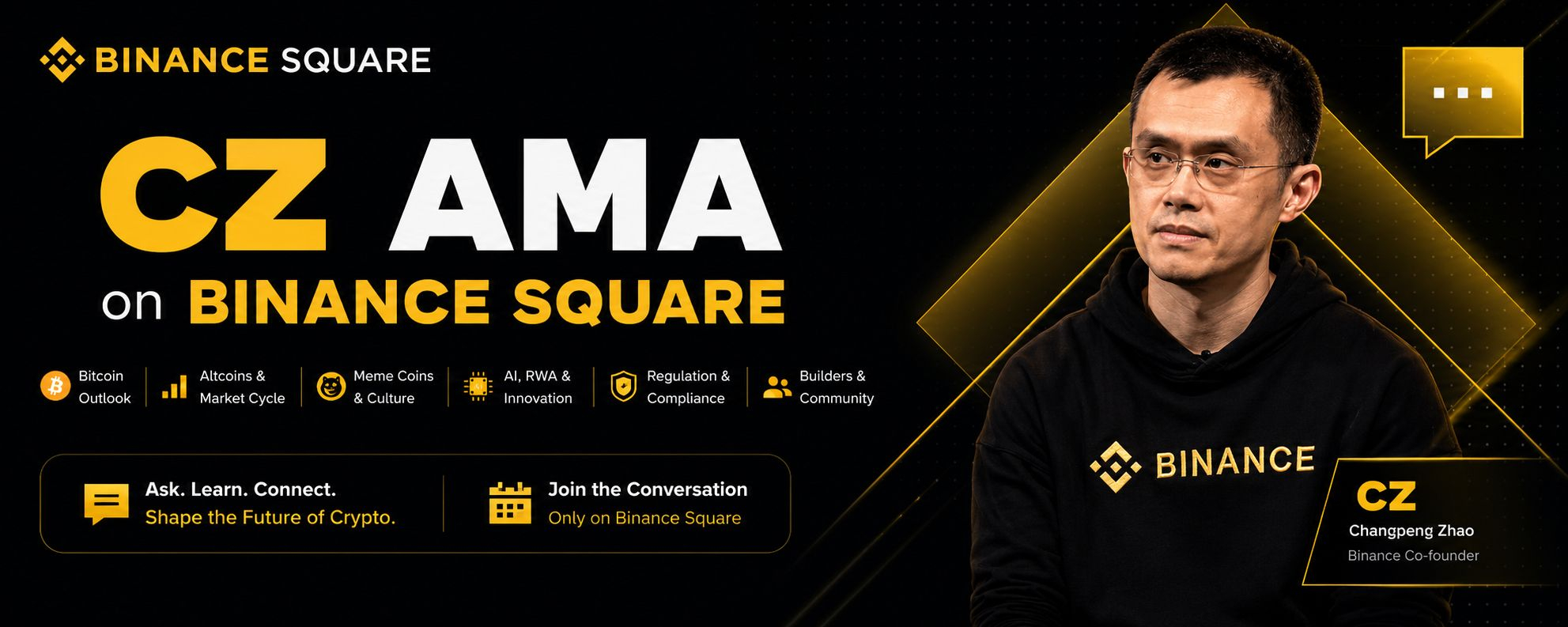
Article
CZ AMA on Binance Square: The Bigger Picture Behind CZ’s Latest Crypto ViewsI went through the Binance Square material around CZ’s recent AMAs, and what caught my attention was that the conversation was not really about one coin or one market cycle. It was about where crypto is heading next, how people should navigate the noise, and what needs to happen for the industry to mature.
Changpeng Zhao, widely known as CZ, continues to attract enormous attention whenever he speaks about crypto. Even after stepping away from Binance’s executive role, his comments still influence discussions across the market. His Binance Square appearances have covered Bitcoin, altcoins, meme coins, regulation, AI, real-world assets, prediction markets, developers, education and even the future direction of Binance Square itself.
One of the biggest talking points surrounding CZ has been Bitcoin. His long-term view remains bullish, with Binance Square coverage highlighting his belief that Bitcoin reaching $200,000 is ultimately possible or inevitable, while the difficult question is when that level could be reached. That distinction matters because a long-term price thesis is very different from a short-term trading call.
Crypto markets constantly encourage people to think in days or hours. CZ’s comments point in the opposite direction. Bitcoin can experience major corrections, periods of low liquidity and extended consolidation without necessarily changing the larger adoption story. Anyone looking at his comments should therefore separate a long-term thesis from an immediate market prediction.
The same thinking applies to altcoins. CZ has indicated that another strong altcoin phase could eventually emerge, but he has also emphasized the difficulty of predicting exactly when it will happen and which projects will benefit. That is a more realistic way to look at market cycles. A broad altcoin rally does not automatically mean every token participates equally.
Liquidity, narratives, product development and user adoption can create very different outcomes between projects. During strong market conditions, hundreds of tokens can appear successful because liquidity is abundant. When conditions change, the difference between speculation and genuine usage becomes much clearer.
Meme coins are another area where CZ’s comments deserve more attention than the headlines usually give them.
Meme culture has become an undeniable part of crypto. Tokens can build communities extremely quickly, and social media can turn a joke into a tradable asset within a remarkably short period. But CZ has repeatedly warned users not to assume that a meme coin mentioned around his social activity is automatically endorsed by him. Binance’s AMA coverage also highlighted his view that most meme coins ultimately fail.
That warning is particularly relevant because crypto markets are heavily influenced by personalities.
When a well-known figure posts something, traders can immediately interpret it as a signal. But attention is not the same thing as endorsement, and a viral post is not the same thing as fundamental value. The distinction becomes especially important with low-liquidity assets, where social attention can produce large price movements in either direction.
CZ’s approach appears to be more interested in why a meme coin can maintain a community than simply how quickly its price rises. Cultural relevance, community identity and staying power can matter more than a short burst of speculation.
For beginners, his message is even more straightforward: learn before taking large risks.
Crypto makes leverage look attractive because a small amount of capital can control a much larger position. The problem is that leverage magnifies losses just as quickly as gains. CZ has advised newer users to start small, understand the market and avoid immediately jumping into complex leveraged products.
That is probably one of the most practical parts of the broader discussion.
The industry often focuses on finding the next big opportunity, but protecting capital is equally important. A trader who survives long enough to learn can participate in future opportunities. A trader who takes excessive leverage early can lose the ability to continue.
Another part of CZ’s outlook concerns developers.
There is a major difference between building a token and building a product. A token can attract attention immediately, but a useful application has to give people a reason to return. Developers therefore have to think beyond price charts and focus on usability, security, infrastructure and real demand.
That becomes increasingly important as the crypto industry becomes more competitive. There are now countless chains, protocols and applications competing for the same users and liquidity. A project cannot rely indefinitely on a launch narrative.
This is also where real-world assets, or RWAs, become interesting.
Tokenization is gradually becoming one of the major areas where traditional finance and blockchain technology intersect. The basic idea is to represent ownership or claims relating to real-world financial assets through blockchain infrastructure. But the real challenge is not simply putting an asset on-chain.
The difficult questions involve legal ownership, compliance, custody, settlement, liquidity and how tokenized assets interact with existing financial systems.
If those problems can be solved effectively, blockchain could become useful far beyond speculative token trading. That would represent a much broader form of adoption because the technology would be serving financial infrastructure rather than simply creating another category of digital assets.
AI is another area where CZ sees significant potential.
The relationship between AI and blockchain becomes particularly interesting when autonomous software agents begin interacting with financial systems. An AI agent can analyze information, make decisions and perform tasks, but eventually it may also need to pay for services or transfer value.
That creates a potential role for programmable digital payments.
The combination of AI agents, blockchain settlement and digital assets could produce new applications that are difficult to build using traditional financial infrastructure. But, just like RWA, this area is still developing. The biggest opportunities may not be obvious today.
Regulation is another unavoidable part of the conversation.
Crypto originally grew partly because it operated outside traditional financial structures. As the industry has expanded, however, regulation has become impossible to ignore. Exchanges, stablecoins, tokenized assets, payment systems and institutional products increasingly interact with traditional finance.
CZ’s comments have generally reflected the idea that regulatory clarity is better than complete uncertainty. Regulations can create restrictions, but they can also provide businesses and users with clearer rules about what is permitted.
For crypto companies, that means compliance is becoming part of the infrastructure rather than simply an administrative function.
The industry has also reached a point where centralized and decentralized platforms can coexist.
Centralized exchanges offer convenience, liquidity, customer support and familiar interfaces. Decentralized exchanges provide permissionless on-chain trading and different approaches to custody. Neither model necessarily has to eliminate the other.
The more likely outcome is a market where users choose between different systems depending on what they need.
CZ’s comments about Binance Square itself may be one of the most interesting parts of the entire AMA discussion.
Rather than viewing Square purely as a place where people post token updates, he has discussed the possibility of making it a broader information environment. The idea is that crypto users do not live inside a crypto-only world. Interest rates, AI developments, international events, regulation, taxation and macroeconomic decisions can all affect digital assets.
A platform that helps users connect those events could become more useful than one focused only on price movements.
This matters because information is becoming one of the most valuable assets in crypto.
There is already an enormous amount of content available. The problem is not finding information. The problem is identifying which information is useful, accurate and worth paying attention to.
That creates an opportunity for creators who can explain complicated developments without simply repeating headlines.
Binance Square is also developing an economic layer around content. Binance’s current Write to Earn program allows eligible creators to receive a share of trading fees when readers interact with eligible content and subsequently trade. Binance says creators start with a 20% commission, while top-ranked creators can reach a total commission of up to 50%.
That model changes the relationship between creator and platform.
A creator is no longer simply publishing for views. Useful content can potentially generate economic value when it leads to meaningful reader activity. At the same time, the system makes quality and trust more important because readers need a reason to interact with the content.
The program also shows how Binance Square is trying to connect social media with the trading environment instead of keeping the two completely separate.
But this creates an important responsibility for creators.
If content is produced only to generate clicks, the platform can quickly become saturated with low-quality predictions, recycled headlines and exaggerated claims. If creators focus on research, context and original observations, the same system can become much more useful.
This is where CZ’s broader message fits surprisingly well.
Build something useful.
Do not confuse attention with adoption.
Do not confuse a social post with an investment recommendation.
Do not confuse a short-term rally with a sustainable project.
And do not allow market noise to replace your own research.
There is another interesting development around Binance Square: the platform has been building tools that allow creators to publish content programmatically. Binance’s official Skills Hub describes a Square posting skill that can be connected to AI agents and used to automate publishing, while also emphasizing the importance of keeping a human review step for quality and compliance.
That development could become increasingly important as AI-generated content expands across crypto.
Automation can make publishing faster, but speed alone does not create value. If thousands of automated accounts produce similar posts, the amount of content increases while the amount of useful information may not.
Human judgment therefore becomes more valuable, not less.
The strongest creators will probably be the ones who use AI and automation as tools while still bringing their own research, interpretation and voice to the content.
That brings the CZ AMA discussion back to the larger question: what does the next stage of crypto actually look like?
It probably will not be defined by one narrative.
Bitcoin can continue developing as a major digital asset while stablecoins expand payments. Tokenized assets can connect blockchain with traditional finance. AI can create new demand for programmable payments. DeFi can continue experimenting with financial products. Centralized exchanges can provide liquidity and accessibility while decentralized protocols develop alternative infrastructure.
At the same time, social platforms such as Binance Square can become an increasingly important layer where users discover information about all of these developments.
The market will still have speculation. It will still have meme coins. It will still have dramatic pumps and painful corrections.
That is not going away.
What may change is the balance between speculation and utility.
As the industry becomes larger, projects will increasingly have to demonstrate why users need them. Creators will have to demonstrate why audiences should trust them. Exchanges will have to demonstrate that they can operate responsibly. And users will have to become better at separating information from promotion.
That is ultimately what makes the CZ AMA discussion interesting.
The most valuable takeaway is not a single Bitcoin price target, an altcoin prediction or a meme-coin opinion. It is the broader philosophy behind the conversation.
Crypto is becoming an ecosystem rather than a single market.
Bitcoin remains important, but it is only one part of the story. The next phase also involves AI, tokenization, payments, regulation, decentralized infrastructure, content and education.
For Binance Square creators, that creates a clear opportunity. Instead of chasing every headline, there is room to build a reputation around useful research and original thinking. Instead of simply asking what coin will pump next, creators can explain why a development matters, what could change and what risks users should understand.
And for readers, the lesson is equally important: do not outsource your judgment to personalities, influencers or viral posts.
CZ can share his perspective, but every market participant still has to make their own decisions.
The future of crypto will ultimately be decided by what people actually use, what developers continue building, what financial institutions adopt and what users are willing to trust.
That is the bigger story behind #CZAMAonBinanceSquare.
Not one prediction.
Not one token.
Not one market cycle.
It is a conversation about where crypto goes when the noise becomes less important than the infrastructure being built underneath it.
And that may be the most useful way to read CZ’s message: think beyond the next candle, look beyond the next trend, and pay attention to what could still matter when today’s narrative has disappeared.
#CZAMAonBinanceSquare
CZ AMA on Binance Square: The Bigger Picture Behind CZ’s Latest Crypto Views
I went through the Binance Square material around CZ’s recent AMAs, and what caught my attention was that the conversation was not really about one coin or one market cycle. It was about where crypto is heading next, how people should navigate the noise, and what needs to happen for the industry to mature.
Changpeng Zhao, widely known as CZ, continues to attract enormous attention whenever he speaks about crypto. Even after stepping away from Binance’s executive role, his comments still influence discussions across the market. His Binance Square appearances have covered Bitcoin, altcoins, meme coins, regulation, AI, real-world assets, prediction markets, developers, education and even the future direction of Binance Square itself.
One of the biggest talking points surrounding CZ has been Bitcoin. His long-term view remains bullish, with Binance Square coverage highlighting his belief that Bitcoin reaching $200,000 is ultimately possible or inevitable, while the difficult question is when that level could be reached. That distinction matters because a long-term price thesis is very different from a short-term trading call.
Crypto markets constantly encourage people to think in days or hours. CZ’s comments point in the opposite direction. Bitcoin can experience major corrections, periods of low liquidity and extended consolidation without necessarily changing the larger adoption story. Anyone looking at his comments should therefore separate a long-term thesis from an immediate market prediction.
The same thinking applies to altcoins. CZ has indicated that another strong altcoin phase could eventually emerge, but he has also emphasized the difficulty of predicting exactly when it will happen and which projects will benefit. That is a more realistic way to look at market cycles. A broad altcoin rally does not automatically mean every token participates equally.
Liquidity, narratives, product development and user adoption can create very different outcomes between projects. During strong market conditions, hundreds of tokens can appear successful because liquidity is abundant. When conditions change, the difference between speculation and genuine usage becomes much clearer.
Meme coins are another area where CZ’s comments deserve more attention than the headlines usually give them.
Meme culture has become an undeniable part of crypto. Tokens can build communities extremely quickly, and social media can turn a joke into a tradable asset within a remarkably short period. But CZ has repeatedly warned users not to assume that a meme coin mentioned around his social activity is automatically endorsed by him. Binance’s AMA coverage also highlighted his view that most meme coins ultimately fail.
That warning is particularly relevant because crypto markets are heavily influenced by personalities.
When a well-known figure posts something, traders can immediately interpret it as a signal. But attention is not the same thing as endorsement, and a viral post is not the same thing as fundamental value. The distinction becomes especially important with low-liquidity assets, where social attention can produce large price movements in either direction.
CZ’s approach appears to be more interested in why a meme coin can maintain a community than simply how quickly its price rises. Cultural relevance, community identity and staying power can matter more than a short burst of speculation.
For beginners, his message is even more straightforward: learn before taking large risks.
Crypto makes leverage look attractive because a small amount of capital can control a much larger position. The problem is that leverage magnifies losses just as quickly as gains. CZ has advised newer users to start small, understand the market and avoid immediately jumping into complex leveraged products.
That is probably one of the most practical parts of the broader discussion.
The industry often focuses on finding the next big opportunity, but protecting capital is equally important. A trader who survives long enough to learn can participate in future opportunities. A trader who takes excessive leverage early can lose the ability to continue.
Another part of CZ’s outlook concerns developers.
There is a major difference between building a token and building a product. A token can attract attention immediately, but a useful application has to give people a reason to return. Developers therefore have to think beyond price charts and focus on usability, security, infrastructure and real demand.
That becomes increasingly important as the crypto industry becomes more competitive. There are now countless chains, protocols and applications competing for the same users and liquidity. A project cannot rely indefinitely on a launch narrative.
This is also where real-world assets, or RWAs, become interesting.
Tokenization is gradually becoming one of the major areas where traditional finance and blockchain technology intersect. The basic idea is to represent ownership or claims relating to real-world financial assets through blockchain infrastructure. But the real challenge is not simply putting an asset on-chain.
The difficult questions involve legal ownership, compliance, custody, settlement, liquidity and how tokenized assets interact with existing financial systems.
If those problems can be solved effectively, blockchain could become useful far beyond speculative token trading. That would represent a much broader form of adoption because the technology would be serving financial infrastructure rather than simply creating another category of digital assets.
AI is another area where CZ sees significant potential.
The relationship between AI and blockchain becomes particularly interesting when autonomous software agents begin interacting with financial systems. An AI agent can analyze information, make decisions and perform tasks, but eventually it may also need to pay for services or transfer value.
That creates a potential role for programmable digital payments.
The combination of AI agents, blockchain settlement and digital assets could produce new applications that are difficult to build using traditional financial infrastructure. But, just like RWA, this area is still developing. The biggest opportunities may not be obvious today.
Regulation is another unavoidable part of the conversation.
Crypto originally grew partly because it operated outside traditional financial structures. As the industry has expanded, however, regulation has become impossible to ignore. Exchanges, stablecoins, tokenized assets, payment systems and institutional products increasingly interact with traditional finance.
CZ’s comments have generally reflected the idea that regulatory clarity is better than complete uncertainty. Regulations can create restrictions, but they can also provide businesses and users with clearer rules about what is permitted.
For crypto companies, that means compliance is becoming part of the infrastructure rather than simply an administrative function.
The industry has also reached a point where centralized and decentralized platforms can coexist.
Centralized exchanges offer convenience, liquidity, customer support and familiar interfaces. Decentralized exchanges provide permissionless on-chain trading and different approaches to custody. Neither model necessarily has to eliminate the other.
The more likely outcome is a market where users choose between different systems depending on what they need.
CZ’s comments about Binance Square itself may be one of the most interesting parts of the entire AMA discussion.
Rather than viewing Square purely as a place where people post token updates, he has discussed the possibility of making it a broader information environment. The idea is that crypto users do not live inside a crypto-only world. Interest rates, AI developments, international events, regulation, taxation and macroeconomic decisions can all affect digital assets.
A platform that helps users connect those events could become more useful than one focused only on price movements.
This matters because information is becoming one of the most valuable assets in crypto.
There is already an enormous amount of content available. The problem is not finding information. The problem is identifying which information is useful, accurate and worth paying attention to.
That creates an opportunity for creators who can explain complicated developments without simply repeating headlines.
Binance Square is also developing an economic layer around content. Binance’s current Write to Earn program allows eligible creators to receive a share of trading fees when readers interact with eligible content and subsequently trade. Binance says creators start with a 20% commission, while top-ranked creators can reach a total commission of up to 50%.
That model changes the relationship between creator and platform.
A creator is no longer simply publishing for views. Useful content can potentially generate economic value when it leads to meaningful reader activity. At the same time, the system makes quality and trust more important because readers need a reason to interact with the content.
The program also shows how Binance Square is trying to connect social media with the trading environment instead of keeping the two completely separate.
But this creates an important responsibility for creators.
If content is produced only to generate clicks, the platform can quickly become saturated with low-quality predictions, recycled headlines and exaggerated claims. If creators focus on research, context and original observations, the same system can become much more useful.
This is where CZ’s broader message fits surprisingly well.
Build something useful.
Do not confuse attention with adoption.
Do not confuse a social post with an investment recommendation.
Do not confuse a short-term rally with a sustainable project.
And do not allow market noise to replace your own research.
There is another interesting development around Binance Square: the platform has been building tools that allow creators to publish content programmatically. Binance’s official Skills Hub describes a Square posting skill that can be connected to AI agents and used to automate publishing, while also emphasizing the importance of keeping a human review step for quality and compliance.
That development could become increasingly important as AI-generated content expands across crypto.
Automation can make publishing faster, but speed alone does not create value. If thousands of automated accounts produce similar posts, the amount of content increases while the amount of useful information may not.
Human judgment therefore becomes more valuable, not less.
The strongest creators will probably be the ones who use AI and automation as tools while still bringing their own research, interpretation and voice to the content.
That brings the CZ AMA discussion back to the larger question: what does the next stage of crypto actually look like?
It probably will not be defined by one narrative.
Bitcoin can continue developing as a major digital asset while stablecoins expand payments. Tokenized assets can connect blockchain with traditional finance. AI can create new demand for programmable payments. DeFi can continue experimenting with financial products. Centralized exchanges can provide liquidity and accessibility while decentralized protocols develop alternative infrastructure.
At the same time, social platforms such as Binance Square can become an increasingly important layer where users discover information about all of these developments.
The market will still have speculation. It will still have meme coins. It will still have dramatic pumps and painful corrections.
That is not going away.
What may change is the balance between speculation and utility.
As the industry becomes larger, projects will increasingly have to demonstrate why users need them. Creators will have to demonstrate why audiences should trust them. Exchanges will have to demonstrate that they can operate responsibly. And users will have to become better at separating information from promotion.
That is ultimately what makes the CZ AMA discussion interesting.
The most valuable takeaway is not a single Bitcoin price target, an altcoin prediction or a meme-coin opinion. It is the broader philosophy behind the conversation.
Crypto is becoming an ecosystem rather than a single market.
Bitcoin remains important, but it is only one part of the story. The next phase also involves AI, tokenization, payments, regulation, decentralized infrastructure, content and education.
For Binance Square creators, that creates a clear opportunity. Instead of chasing every headline, there is room to build a reputation around useful research and original thinking. Instead of simply asking what coin will pump next, creators can explain why a development matters, what could change and what risks users should understand.
And for readers, the lesson is equally important: do not outsource your judgment to personalities, influencers or viral posts.
CZ can share his perspective, but every market participant still has to make their own decisions.
The future of crypto will ultimately be decided by what people actually use, what developers continue building, what financial institutions adopt and what users are willing to trust.
That is the bigger story behind #CZAMAonBinanceSquare.
Not one prediction.
Not one token.
Not one market cycle.
It is a conversation about where crypto goes when the noise becomes less important than the infrastructure being built underneath it.
And that may be the most useful way to read CZ’s message: think beyond the next candle, look beyond the next trend, and pay attention to what could still matter when today’s narrative has disappeared.
#CZAMAonBinanceSquare
Changpeng Zhao, widely known as CZ, continues to attract enormous attention whenever he speaks about crypto. Even after stepping away from Binance’s executive role, his comments still influence discussions across the market. His Binance Square appearances have covered Bitcoin, altcoins, meme coins, regulation, AI, real-world assets, prediction markets, developers, education and even the future direction of Binance Square itself.
One of the biggest talking points surrounding CZ has been Bitcoin. His long-term view remains bullish, with Binance Square coverage highlighting his belief that Bitcoin reaching $200,000 is ultimately possible or inevitable, while the difficult question is when that level could be reached. That distinction matters because a long-term price thesis is very different from a short-term trading call.
Crypto markets constantly encourage people to think in days or hours. CZ’s comments point in the opposite direction. Bitcoin can experience major corrections, periods of low liquidity and extended consolidation without necessarily changing the larger adoption story. Anyone looking at his comments should therefore separate a long-term thesis from an immediate market prediction.
The same thinking applies to altcoins. CZ has indicated that another strong altcoin phase could eventually emerge, but he has also emphasized the difficulty of predicting exactly when it will happen and which projects will benefit. That is a more realistic way to look at market cycles. A broad altcoin rally does not automatically mean every token participates equally.
Liquidity, narratives, product development and user adoption can create very different outcomes between projects. During strong market conditions, hundreds of tokens can appear successful because liquidity is abundant. When conditions change, the difference between speculation and genuine usage becomes much clearer.
Meme coins are another area where CZ’s comments deserve more attention than the headlines usually give them.
Meme culture has become an undeniable part of crypto. Tokens can build communities extremely quickly, and social media can turn a joke into a tradable asset within a remarkably short period. But CZ has repeatedly warned users not to assume that a meme coin mentioned around his social activity is automatically endorsed by him. Binance’s AMA coverage also highlighted his view that most meme coins ultimately fail.
That warning is particularly relevant because crypto markets are heavily influenced by personalities.
When a well-known figure posts something, traders can immediately interpret it as a signal. But attention is not the same thing as endorsement, and a viral post is not the same thing as fundamental value. The distinction becomes especially important with low-liquidity assets, where social attention can produce large price movements in either direction.
CZ’s approach appears to be more interested in why a meme coin can maintain a community than simply how quickly its price rises. Cultural relevance, community identity and staying power can matter more than a short burst of speculation.
For beginners, his message is even more straightforward: learn before taking large risks.
Crypto makes leverage look attractive because a small amount of capital can control a much larger position. The problem is that leverage magnifies losses just as quickly as gains. CZ has advised newer users to start small, understand the market and avoid immediately jumping into complex leveraged products.
That is probably one of the most practical parts of the broader discussion.
The industry often focuses on finding the next big opportunity, but protecting capital is equally important. A trader who survives long enough to learn can participate in future opportunities. A trader who takes excessive leverage early can lose the ability to continue.
Another part of CZ’s outlook concerns developers.
There is a major difference between building a token and building a product. A token can attract attention immediately, but a useful application has to give people a reason to return. Developers therefore have to think beyond price charts and focus on usability, security, infrastructure and real demand.
That becomes increasingly important as the crypto industry becomes more competitive. There are now countless chains, protocols and applications competing for the same users and liquidity. A project cannot rely indefinitely on a launch narrative.
This is also where real-world assets, or RWAs, become interesting.
Tokenization is gradually becoming one of the major areas where traditional finance and blockchain technology intersect. The basic idea is to represent ownership or claims relating to real-world financial assets through blockchain infrastructure. But the real challenge is not simply putting an asset on-chain.
The difficult questions involve legal ownership, compliance, custody, settlement, liquidity and how tokenized assets interact with existing financial systems.
If those problems can be solved effectively, blockchain could become useful far beyond speculative token trading. That would represent a much broader form of adoption because the technology would be serving financial infrastructure rather than simply creating another category of digital assets.
AI is another area where CZ sees significant potential.
The relationship between AI and blockchain becomes particularly interesting when autonomous software agents begin interacting with financial systems. An AI agent can analyze information, make decisions and perform tasks, but eventually it may also need to pay for services or transfer value.
That creates a potential role for programmable digital payments.
The combination of AI agents, blockchain settlement and digital assets could produce new applications that are difficult to build using traditional financial infrastructure. But, just like RWA, this area is still developing. The biggest opportunities may not be obvious today.
Regulation is another unavoidable part of the conversation.
Crypto originally grew partly because it operated outside traditional financial structures. As the industry has expanded, however, regulation has become impossible to ignore. Exchanges, stablecoins, tokenized assets, payment systems and institutional products increasingly interact with traditional finance.
CZ’s comments have generally reflected the idea that regulatory clarity is better than complete uncertainty. Regulations can create restrictions, but they can also provide businesses and users with clearer rules about what is permitted.
For crypto companies, that means compliance is becoming part of the infrastructure rather than simply an administrative function.
The industry has also reached a point where centralized and decentralized platforms can coexist.
Centralized exchanges offer convenience, liquidity, customer support and familiar interfaces. Decentralized exchanges provide permissionless on-chain trading and different approaches to custody. Neither model necessarily has to eliminate the other.
The more likely outcome is a market where users choose between different systems depending on what they need.
CZ’s comments about Binance Square itself may be one of the most interesting parts of the entire AMA discussion.
Rather than viewing Square purely as a place where people post token updates, he has discussed the possibility of making it a broader information environment. The idea is that crypto users do not live inside a crypto-only world. Interest rates, AI developments, international events, regulation, taxation and macroeconomic decisions can all affect digital assets.
A platform that helps users connect those events could become more useful than one focused only on price movements.
This matters because information is becoming one of the most valuable assets in crypto.
There is already an enormous amount of content available. The problem is not finding information. The problem is identifying which information is useful, accurate and worth paying attention to.
That creates an opportunity for creators who can explain complicated developments without simply repeating headlines.
Binance Square is also developing an economic layer around content. Binance’s current Write to Earn program allows eligible creators to receive a share of trading fees when readers interact with eligible content and subsequently trade. Binance says creators start with a 20% commission, while top-ranked creators can reach a total commission of up to 50%.
That model changes the relationship between creator and platform.
A creator is no longer simply publishing for views. Useful content can potentially generate economic value when it leads to meaningful reader activity. At the same time, the system makes quality and trust more important because readers need a reason to interact with the content.
The program also shows how Binance Square is trying to connect social media with the trading environment instead of keeping the two completely separate.
But this creates an important responsibility for creators.
If content is produced only to generate clicks, the platform can quickly become saturated with low-quality predictions, recycled headlines and exaggerated claims. If creators focus on research, context and original observations, the same system can become much more useful.
This is where CZ’s broader message fits surprisingly well.
Build something useful.
Do not confuse attention with adoption.
Do not confuse a social post with an investment recommendation.
Do not confuse a short-term rally with a sustainable project.
And do not allow market noise to replace your own research.
There is another interesting development around Binance Square: the platform has been building tools that allow creators to publish content programmatically. Binance’s official Skills Hub describes a Square posting skill that can be connected to AI agents and used to automate publishing, while also emphasizing the importance of keeping a human review step for quality and compliance.
That development could become increasingly important as AI-generated content expands across crypto.
Automation can make publishing faster, but speed alone does not create value. If thousands of automated accounts produce similar posts, the amount of content increases while the amount of useful information may not.
Human judgment therefore becomes more valuable, not less.
The strongest creators will probably be the ones who use AI and automation as tools while still bringing their own research, interpretation and voice to the content.
That brings the CZ AMA discussion back to the larger question: what does the next stage of crypto actually look like?
It probably will not be defined by one narrative.
Bitcoin can continue developing as a major digital asset while stablecoins expand payments. Tokenized assets can connect blockchain with traditional finance. AI can create new demand for programmable payments. DeFi can continue experimenting with financial products. Centralized exchanges can provide liquidity and accessibility while decentralized protocols develop alternative infrastructure.
At the same time, social platforms such as Binance Square can become an increasingly important layer where users discover information about all of these developments.
The market will still have speculation. It will still have meme coins. It will still have dramatic pumps and painful corrections.
That is not going away.
What may change is the balance between speculation and utility.
As the industry becomes larger, projects will increasingly have to demonstrate why users need them. Creators will have to demonstrate why audiences should trust them. Exchanges will have to demonstrate that they can operate responsibly. And users will have to become better at separating information from promotion.
That is ultimately what makes the CZ AMA discussion interesting.
The most valuable takeaway is not a single Bitcoin price target, an altcoin prediction or a meme-coin opinion. It is the broader philosophy behind the conversation.
Crypto is becoming an ecosystem rather than a single market.
Bitcoin remains important, but it is only one part of the story. The next phase also involves AI, tokenization, payments, regulation, decentralized infrastructure, content and education.
For Binance Square creators, that creates a clear opportunity. Instead of chasing every headline, there is room to build a reputation around useful research and original thinking. Instead of simply asking what coin will pump next, creators can explain why a development matters, what could change and what risks users should understand.
And for readers, the lesson is equally important: do not outsource your judgment to personalities, influencers or viral posts.
CZ can share his perspective, but every market participant still has to make their own decisions.
The future of crypto will ultimately be decided by what people actually use, what developers continue building, what financial institutions adopt and what users are willing to trust.
That is the bigger story behind #CZAMAonBinanceSquare.
Not one prediction.
Not one token.
Not one market cycle.
It is a conversation about where crypto goes when the noise becomes less important than the infrastructure being built underneath it.
And that may be the most useful way to read CZ’s message: think beyond the next candle, look beyond the next trend, and pay attention to what could still matter when today’s narrative has disappeared.
#CZAMAonBinanceSquare
1
164
·
--
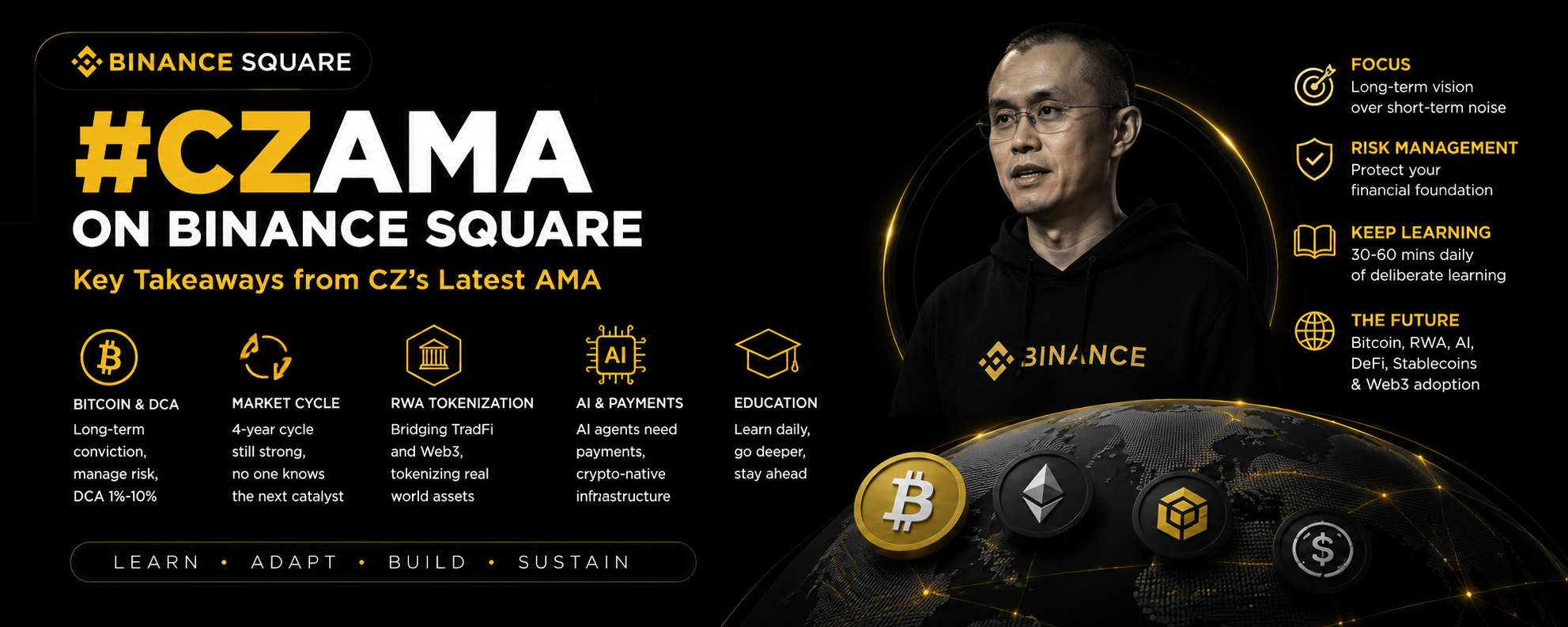
Article
CZAMAonBinanceSquare — What CZ’s Latest AMA Really Says About the Next Crypto CycleI’ve been looking through the latest discussion around Changpeng Zhao’s Bali Clubhouse AMA, and one thing feels very different from the usual crypto conversation: CZ was not trying to sell people a dream of getting rich overnight. His message was much more practical — manage risk, keep learning, and pay attention to where blockchain technology is actually becoming useful.
The AMA was held on August 23, 2026, with Jessica Walker hosting the community Q&A. The discussion covered Bitcoin, investing, market cycles, artificial intelligence, real-world assets, DeFi, payments, education and the future of Web3. Reports based on the Binance podcast source have since highlighted several important points from the conversation.
The biggest headline was probably CZ’s answer about Bitcoin.
Everyone in crypto knows the story from 2014. CZ sold his apartment and used the money to buy Bitcoin at a time when the market was still extremely young. Naturally, someone asked what the equivalent move would be today.
His answer was surprisingly conservative.
CZ said he would not recommend that an ordinary person sell their home and go all-in on Bitcoin, particularly if the property represents most of their wealth. Instead, he discussed dollar-cost averaging, where a person gradually invests a relatively small portion of their income into established crypto assets. Reports of the AMA put the suggested range at roughly 1%, 5% or 10% of monthly income, depending on an individual's circumstances.
That distinction matters.
CZ’s 2014 decision was based on his own financial situation, conviction and risk tolerance. Trying to copy the action without copying the circumstances would be a completely different proposition.
For someone whose home represents their primary source of wealth, selling it to buy a volatile asset could create enormous financial pressure. If the market falls 50%, the investor is not simply watching a portfolio decline — their housing security and financial stability may also be affected.
DCA takes a different approach. Rather than attempting to identify the perfect entry point, an investor makes smaller purchases over time while keeping their normal financial life intact.
This was arguably one of the most mature messages from the AMA.
CZ remains optimistic about Bitcoin and crypto over the long term, but optimism does not mean eliminating risk. He continues to believe Bitcoin can grow, alongside BNB and other major crypto projects, while acknowledging that crypto remains highly volatile.
Another interesting part of the discussion was the question of the famous four-year Bitcoin cycle.
Crypto traders have spent years trying to map the market into predictable stages. Accumulation, breakout, bull market, euphoric top, correction and eventual recovery have become familiar concepts.
CZ said the four-year cycle still appears strong to him, but he also admitted that he does not know what the next major catalyst will be.
That answer is important because the market often creates narratives after the move has already started.
CZ pointed back to DeFi Summer in 2020. Even with all his experience in the industry, he said he could not have confidently predicted six months earlier that decentralized finance would become such a powerful market catalyst.
That means investors should be careful with anyone claiming to know exactly what the next major narrative will be.
The next large crypto trend could come from an area that currently receives less attention.
One sector that has clearly changed CZ’s own thinking is real-world assets.
He acknowledged that he did not take RWA particularly seriously around a year and a half ago. His view has since changed.
The reason is straightforward. Tokenization is not simply about putting a digital label on an asset. If real estate, commodities, government bonds, stocks or other financial instruments can be represented on blockchain infrastructure, they could potentially become easier to transfer, trade and integrate with programmable financial applications.
This also creates a bridge between traditional finance and decentralized infrastructure.
Imagine a financial asset that does not depend entirely on traditional market hours, can interact with smart contracts and can potentially move through blockchain-based settlement infrastructure. The technology does not automatically solve every regulatory or legal problem, but the underlying idea is powerful.
CZ’s comments about Indonesia made this point particularly interesting.
He argued that Indonesia has a strong crypto community but still lacks several pieces of local infrastructure, including a local stablecoin and tokenized domestic assets such as Indonesian stocks, real estate, gold, commodities and government bonds. He also pointed toward regulation as an important part of creating a stronger local Web3 ecosystem.
This is where the RWA conversation becomes bigger than a crypto trading narrative.
If tokenization eventually expands across national financial systems, the competition may not simply be between individual blockchain projects. Countries could potentially compete to build the most efficient digital infrastructure for their own currencies, bonds, commodities and other assets.
Stablecoins could become another important part of that system.
The discussion also moved toward artificial intelligence, and this may ultimately become one of the most interesting areas of CZ’s long-term thinking.
AI agents are increasingly capable of performing tasks independently. But if an AI agent eventually needs to purchase data, pay another service, access computing resources or execute a financial transaction, it needs a payment mechanism.
Traditional payment systems were primarily designed around humans.
A person can enter card information, confirm a transaction, complete a verification step and receive a receipt. An autonomous software agent operates differently.
CZ believes crypto-native payment infrastructure could be particularly useful for AI agents because blockchain networks can provide programmable, global and machine-compatible payments.
This does not mean AI agents are suddenly going to replace human traders or banks. The technology still has significant limitations. But the combination of AI agents and programmable blockchain payments creates a new category of potential economic activity.
The interesting question is not simply whether AI can generate text or write code.
The bigger question is whether autonomous software will eventually participate directly in economic transactions.
If that happens, crypto could provide one possible financial layer for machine-to-machine commerce.
CZ’s own experience with AI also showed a more realistic side of the technology.
He sees AI as extremely useful for research and learning, but he has also encountered situations where AI-generated results were not good enough. One example involved attempting to use AI to create Gmail spam-filtering code. The result did not meet his expectations, reinforcing the point that AI can accelerate work without making human understanding unnecessary.
That idea is especially relevant for developers.
AI may allow one developer to produce significantly more code than before, but productivity gains do not remove the need to understand architecture, security, debugging and system behavior.
The same principle applies to crypto investing.
An AI can summarize a market, generate a chart explanation or organize information. But that does not automatically mean the conclusion is correct.
The human still needs to understand what the data means.
That philosophy appears again in CZ’s comments about Giggle Academy.
The education project has grown significantly, with reports from the latest AMA saying it has reached more than one million children. But CZ explained that pure AI teaching did not work particularly well for young children.
The team discovered that simply generating educational content with AI was not enough. Children respond differently to material that has a human element, and fully automated AI interactions did not produce the engagement the team wanted.
The resulting approach combines human-created direction with AI-generated components.
That is an interesting lesson beyond education.
The future may not be “AI replaces humans.”
It may be “humans become more capable because AI handles certain parts of the work.”
That distinction could shape how many industries develop over the next decade.
CZ also spoke about how his own opinions have changed.
He admitted that he underestimated NFTs before they became a major market narrative. Meme coins are another area he says he still does not fully understand, despite their enormous popularity. RWA is perhaps the clearest example of a sector where his thinking has moved in the opposite direction.
He initially paid less attention to it and later became much more interested.
This may actually be one of the most valuable lessons from the AMA.
Crypto changes too quickly for anyone to be right forever.
A person who refuses to update their view because they once made a prediction can eventually become disconnected from the market.
The better approach is to watch what users are actually doing, investigate why adoption is happening and then update the thesis when the evidence changes.
That is particularly important in a market where narratives can move billions of dollars within days.
Another theme that stood out was education itself.
CZ encouraged people to spend meaningful time learning rather than simply consuming headlines. Reports from the AMA describe his recommendation of roughly 30 to 60 minutes of deliberate learning each day, with the emphasis on going several layers deeper into a question instead of stopping at the first answer.
For crypto traders, this is a useful distinction.
Reading that Bitcoin moved because of “market sentiment” does not explain much.
A deeper investigation could look at liquidity, derivatives, macroeconomic expectations, institutional flows, exchange activity, funding rates and positioning.
The first answer tells you what happened.
The deeper questions help you understand why.
That mindset is also relevant to Binance Square.
Binance has increasingly positioned Square as a social layer for crypto users, where creators can publish market analysis, educational content and trading ideas. Its Write to Earn program also gives eligible creators the ability to earn commissions when readers interact with supported trading elements and subsequently trade. Binance says creators begin at a 20% commission rate, while higher-ranked creators can reach up to 50%, with payments calculated weekly in USDC.
That makes #CZAMAonBinanceSquare particularly relevant.
It is not simply a hashtag around one interview.
It represents the growing connection between crypto communities, trading platforms, education and creator-driven information.
But there is an important responsibility that comes with that.
A platform filled with market commentary can easily become dominated by short-term predictions and emotional reactions. The more valuable content is usually the material that gives people enough context to make their own decisions.
That is why CZ’s latest AMA is worth looking at from a broader perspective.
He did not provide a magic entry point.
He did not reveal the guaranteed next 100x coin.
He did not claim to know the exact date of the next Bitcoin explosion.
Instead, the conversation pointed toward a set of themes that could matter for years: Bitcoin, DCA, RWA, AI, crypto payments, DeFi, stablecoins, education and better financial infrastructure.
The most interesting part is that some of these themes overlap.
AI needs payments.
Tokenized assets need settlement infrastructure.
Stablecoins provide digital liquidity.
DeFi provides programmable financial applications.
Bitcoin provides a scarce digital asset with a global market.
And blockchain infrastructure connects these pieces together.
Nobody knows exactly how these technologies will combine.
That uncertainty is precisely why CZ’s comments about not knowing the next catalyst are worth remembering.
The crypto industry has repeatedly produced major narratives that were difficult to predict beforehand.
DeFi was underestimated.
NFTs surprised many people.
Meme coins developed into a massive cultural and trading phenomenon.
RWA is now attracting significantly more attention.
AI is creating another entirely new layer of experimentation.
The next major development may come from somewhere that currently looks insignificant.
For investors, the message is therefore not to blindly follow CZ.
It is to understand the reasoning behind his comments.
Protect your financial foundation.
Do not confuse conviction with certainty.
Avoid taking extreme risks simply because someone else became wealthy from an earlier bet.
Learn consistently.
Pay attention to technology rather than only price.
And remain willing to change your mind when reality changes.
That may be the real takeaway from #CZAMAonBinanceSquare.
The next crypto cycle will not necessarily be defined by the loudest narrative on social media. It may be defined by the infrastructure that quietly becomes useful enough that millions of people stop asking whether they need it.
Bitcoin has already reached that stage for many investors.
Stablecoins are moving closer to it in payments.
RWA is testing whether traditional assets can genuinely move on-chain.
AI is testing whether software can become an economic participant.
And decentralized finance continues experimenting with financial products that operate outside traditional market structures.
CZ may not know which one becomes the next dominant narrative.
Neither does anyone else.
But the conversation makes one thing clear: the next phase of crypto may be less about chasing every pump and more about understanding which technologies can survive multiple market cycles.
That is the kind of discussion worth having on Binance Square.
#CZAMAonBinanceSquare $BTC $ETH
{future}(BTCUSDT)
CZAMAonBinanceSquare — What CZ’s Latest AMA Really Says About the Next Crypto Cycle
I’ve been looking through the latest discussion around Changpeng Zhao’s Bali Clubhouse AMA, and one thing feels very different from the usual crypto conversation: CZ was not trying to sell people a dream of getting rich overnight. His message was much more practical — manage risk, keep learning, and pay attention to where blockchain technology is actually becoming useful.
The AMA was held on August 23, 2026, with Jessica Walker hosting the community Q&A. The discussion covered Bitcoin, investing, market cycles, artificial intelligence, real-world assets, DeFi, payments, education and the future of Web3. Reports based on the Binance podcast source have since highlighted several important points from the conversation.
The biggest headline was probably CZ’s answer about Bitcoin.
Everyone in crypto knows the story from 2014. CZ sold his apartment and used the money to buy Bitcoin at a time when the market was still extremely young. Naturally, someone asked what the equivalent move would be today.
His answer was surprisingly conservative.
CZ said he would not recommend that an ordinary person sell their home and go all-in on Bitcoin, particularly if the property represents most of their wealth. Instead, he discussed dollar-cost averaging, where a person gradually invests a relatively small portion of their income into established crypto assets. Reports of the AMA put the suggested range at roughly 1%, 5% or 10% of monthly income, depending on an individual's circumstances.
That distinction matters.
CZ’s 2014 decision was based on his own financial situation, conviction and risk tolerance. Trying to copy the action without copying the circumstances would be a completely different proposition.
For someone whose home represents their primary source of wealth, selling it to buy a volatile asset could create enormous financial pressure. If the market falls 50%, the investor is not simply watching a portfolio decline — their housing security and financial stability may also be affected.
DCA takes a different approach. Rather than attempting to identify the perfect entry point, an investor makes smaller purchases over time while keeping their normal financial life intact.
This was arguably one of the most mature messages from the AMA.
CZ remains optimistic about Bitcoin and crypto over the long term, but optimism does not mean eliminating risk. He continues to believe Bitcoin can grow, alongside BNB and other major crypto projects, while acknowledging that crypto remains highly volatile.
Another interesting part of the discussion was the question of the famous four-year Bitcoin cycle.
Crypto traders have spent years trying to map the market into predictable stages. Accumulation, breakout, bull market, euphoric top, correction and eventual recovery have become familiar concepts.
CZ said the four-year cycle still appears strong to him, but he also admitted that he does not know what the next major catalyst will be.
That answer is important because the market often creates narratives after the move has already started.
CZ pointed back to DeFi Summer in 2020. Even with all his experience in the industry, he said he could not have confidently predicted six months earlier that decentralized finance would become such a powerful market catalyst.
That means investors should be careful with anyone claiming to know exactly what the next major narrative will be.
The next large crypto trend could come from an area that currently receives less attention.
One sector that has clearly changed CZ’s own thinking is real-world assets.
He acknowledged that he did not take RWA particularly seriously around a year and a half ago. His view has since changed.
The reason is straightforward. Tokenization is not simply about putting a digital label on an asset. If real estate, commodities, government bonds, stocks or other financial instruments can be represented on blockchain infrastructure, they could potentially become easier to transfer, trade and integrate with programmable financial applications.
This also creates a bridge between traditional finance and decentralized infrastructure.
Imagine a financial asset that does not depend entirely on traditional market hours, can interact with smart contracts and can potentially move through blockchain-based settlement infrastructure. The technology does not automatically solve every regulatory or legal problem, but the underlying idea is powerful.
CZ’s comments about Indonesia made this point particularly interesting.
He argued that Indonesia has a strong crypto community but still lacks several pieces of local infrastructure, including a local stablecoin and tokenized domestic assets such as Indonesian stocks, real estate, gold, commodities and government bonds. He also pointed toward regulation as an important part of creating a stronger local Web3 ecosystem.
This is where the RWA conversation becomes bigger than a crypto trading narrative.
If tokenization eventually expands across national financial systems, the competition may not simply be between individual blockchain projects. Countries could potentially compete to build the most efficient digital infrastructure for their own currencies, bonds, commodities and other assets.
Stablecoins could become another important part of that system.
The discussion also moved toward artificial intelligence, and this may ultimately become one of the most interesting areas of CZ’s long-term thinking.
AI agents are increasingly capable of performing tasks independently. But if an AI agent eventually needs to purchase data, pay another service, access computing resources or execute a financial transaction, it needs a payment mechanism.
Traditional payment systems were primarily designed around humans.
A person can enter card information, confirm a transaction, complete a verification step and receive a receipt. An autonomous software agent operates differently.
CZ believes crypto-native payment infrastructure could be particularly useful for AI agents because blockchain networks can provide programmable, global and machine-compatible payments.
This does not mean AI agents are suddenly going to replace human traders or banks. The technology still has significant limitations. But the combination of AI agents and programmable blockchain payments creates a new category of potential economic activity.
The interesting question is not simply whether AI can generate text or write code.
The bigger question is whether autonomous software will eventually participate directly in economic transactions.
If that happens, crypto could provide one possible financial layer for machine-to-machine commerce.
CZ’s own experience with AI also showed a more realistic side of the technology.
He sees AI as extremely useful for research and learning, but he has also encountered situations where AI-generated results were not good enough. One example involved attempting to use AI to create Gmail spam-filtering code. The result did not meet his expectations, reinforcing the point that AI can accelerate work without making human understanding unnecessary.
That idea is especially relevant for developers.
AI may allow one developer to produce significantly more code than before, but productivity gains do not remove the need to understand architecture, security, debugging and system behavior.
The same principle applies to crypto investing.
An AI can summarize a market, generate a chart explanation or organize information. But that does not automatically mean the conclusion is correct.
The human still needs to understand what the data means.
That philosophy appears again in CZ’s comments about Giggle Academy.
The education project has grown significantly, with reports from the latest AMA saying it has reached more than one million children. But CZ explained that pure AI teaching did not work particularly well for young children.
The team discovered that simply generating educational content with AI was not enough. Children respond differently to material that has a human element, and fully automated AI interactions did not produce the engagement the team wanted.
The resulting approach combines human-created direction with AI-generated components.
That is an interesting lesson beyond education.
The future may not be “AI replaces humans.”
It may be “humans become more capable because AI handles certain parts of the work.”
That distinction could shape how many industries develop over the next decade.
CZ also spoke about how his own opinions have changed.
He admitted that he underestimated NFTs before they became a major market narrative. Meme coins are another area he says he still does not fully understand, despite their enormous popularity. RWA is perhaps the clearest example of a sector where his thinking has moved in the opposite direction.
He initially paid less attention to it and later became much more interested.
This may actually be one of the most valuable lessons from the AMA.
Crypto changes too quickly for anyone to be right forever.
A person who refuses to update their view because they once made a prediction can eventually become disconnected from the market.
The better approach is to watch what users are actually doing, investigate why adoption is happening and then update the thesis when the evidence changes.
That is particularly important in a market where narratives can move billions of dollars within days.
Another theme that stood out was education itself.
CZ encouraged people to spend meaningful time learning rather than simply consuming headlines. Reports from the AMA describe his recommendation of roughly 30 to 60 minutes of deliberate learning each day, with the emphasis on going several layers deeper into a question instead of stopping at the first answer.
For crypto traders, this is a useful distinction.
Reading that Bitcoin moved because of “market sentiment” does not explain much.
A deeper investigation could look at liquidity, derivatives, macroeconomic expectations, institutional flows, exchange activity, funding rates and positioning.
The first answer tells you what happened.
The deeper questions help you understand why.
That mindset is also relevant to Binance Square.
Binance has increasingly positioned Square as a social layer for crypto users, where creators can publish market analysis, educational content and trading ideas. Its Write to Earn program also gives eligible creators the ability to earn commissions when readers interact with supported trading elements and subsequently trade. Binance says creators begin at a 20% commission rate, while higher-ranked creators can reach up to 50%, with payments calculated weekly in USDC.
That makes #CZAMAonBinanceSquare particularly relevant.
It is not simply a hashtag around one interview.
It represents the growing connection between crypto communities, trading platforms, education and creator-driven information.
But there is an important responsibility that comes with that.
A platform filled with market commentary can easily become dominated by short-term predictions and emotional reactions. The more valuable content is usually the material that gives people enough context to make their own decisions.
That is why CZ’s latest AMA is worth looking at from a broader perspective.
He did not provide a magic entry point.
He did not reveal the guaranteed next 100x coin.
He did not claim to know the exact date of the next Bitcoin explosion.
Instead, the conversation pointed toward a set of themes that could matter for years: Bitcoin, DCA, RWA, AI, crypto payments, DeFi, stablecoins, education and better financial infrastructure.
The most interesting part is that some of these themes overlap.
AI needs payments.
Tokenized assets need settlement infrastructure.
Stablecoins provide digital liquidity.
DeFi provides programmable financial applications.
Bitcoin provides a scarce digital asset with a global market.
And blockchain infrastructure connects these pieces together.
Nobody knows exactly how these technologies will combine.
That uncertainty is precisely why CZ’s comments about not knowing the next catalyst are worth remembering.
The crypto industry has repeatedly produced major narratives that were difficult to predict beforehand.
DeFi was underestimated.
NFTs surprised many people.
Meme coins developed into a massive cultural and trading phenomenon.
RWA is now attracting significantly more attention.
AI is creating another entirely new layer of experimentation.
The next major development may come from somewhere that currently looks insignificant.
For investors, the message is therefore not to blindly follow CZ.
It is to understand the reasoning behind his comments.
Protect your financial foundation.
Do not confuse conviction with certainty.
Avoid taking extreme risks simply because someone else became wealthy from an earlier bet.
Learn consistently.
Pay attention to technology rather than only price.
And remain willing to change your mind when reality changes.
That may be the real takeaway from #CZAMAonBinanceSquare.
The next crypto cycle will not necessarily be defined by the loudest narrative on social media. It may be defined by the infrastructure that quietly becomes useful enough that millions of people stop asking whether they need it.
Bitcoin has already reached that stage for many investors.
Stablecoins are moving closer to it in payments.
RWA is testing whether traditional assets can genuinely move on-chain.
AI is testing whether software can become an economic participant.
And decentralized finance continues experimenting with financial products that operate outside traditional market structures.
CZ may not know which one becomes the next dominant narrative.
Neither does anyone else.
But the conversation makes one thing clear: the next phase of crypto may be less about chasing every pump and more about understanding which technologies can survive multiple market cycles.
That is the kind of discussion worth having on Binance Square.
#CZAMAonBinanceSquare $BTC $ETH
The AMA was held on August 23, 2026, with Jessica Walker hosting the community Q&A. The discussion covered Bitcoin, investing, market cycles, artificial intelligence, real-world assets, DeFi, payments, education and the future of Web3. Reports based on the Binance podcast source have since highlighted several important points from the conversation.
The biggest headline was probably CZ’s answer about Bitcoin.
Everyone in crypto knows the story from 2014. CZ sold his apartment and used the money to buy Bitcoin at a time when the market was still extremely young. Naturally, someone asked what the equivalent move would be today.
His answer was surprisingly conservative.
CZ said he would not recommend that an ordinary person sell their home and go all-in on Bitcoin, particularly if the property represents most of their wealth. Instead, he discussed dollar-cost averaging, where a person gradually invests a relatively small portion of their income into established crypto assets. Reports of the AMA put the suggested range at roughly 1%, 5% or 10% of monthly income, depending on an individual's circumstances.
That distinction matters.
CZ’s 2014 decision was based on his own financial situation, conviction and risk tolerance. Trying to copy the action without copying the circumstances would be a completely different proposition.
For someone whose home represents their primary source of wealth, selling it to buy a volatile asset could create enormous financial pressure. If the market falls 50%, the investor is not simply watching a portfolio decline — their housing security and financial stability may also be affected.
DCA takes a different approach. Rather than attempting to identify the perfect entry point, an investor makes smaller purchases over time while keeping their normal financial life intact.
This was arguably one of the most mature messages from the AMA.
CZ remains optimistic about Bitcoin and crypto over the long term, but optimism does not mean eliminating risk. He continues to believe Bitcoin can grow, alongside BNB and other major crypto projects, while acknowledging that crypto remains highly volatile.
Another interesting part of the discussion was the question of the famous four-year Bitcoin cycle.
Crypto traders have spent years trying to map the market into predictable stages. Accumulation, breakout, bull market, euphoric top, correction and eventual recovery have become familiar concepts.
CZ said the four-year cycle still appears strong to him, but he also admitted that he does not know what the next major catalyst will be.
That answer is important because the market often creates narratives after the move has already started.
CZ pointed back to DeFi Summer in 2020. Even with all his experience in the industry, he said he could not have confidently predicted six months earlier that decentralized finance would become such a powerful market catalyst.
That means investors should be careful with anyone claiming to know exactly what the next major narrative will be.
The next large crypto trend could come from an area that currently receives less attention.
One sector that has clearly changed CZ’s own thinking is real-world assets.
He acknowledged that he did not take RWA particularly seriously around a year and a half ago. His view has since changed.
The reason is straightforward. Tokenization is not simply about putting a digital label on an asset. If real estate, commodities, government bonds, stocks or other financial instruments can be represented on blockchain infrastructure, they could potentially become easier to transfer, trade and integrate with programmable financial applications.
This also creates a bridge between traditional finance and decentralized infrastructure.
Imagine a financial asset that does not depend entirely on traditional market hours, can interact with smart contracts and can potentially move through blockchain-based settlement infrastructure. The technology does not automatically solve every regulatory or legal problem, but the underlying idea is powerful.
CZ’s comments about Indonesia made this point particularly interesting.
He argued that Indonesia has a strong crypto community but still lacks several pieces of local infrastructure, including a local stablecoin and tokenized domestic assets such as Indonesian stocks, real estate, gold, commodities and government bonds. He also pointed toward regulation as an important part of creating a stronger local Web3 ecosystem.
This is where the RWA conversation becomes bigger than a crypto trading narrative.
If tokenization eventually expands across national financial systems, the competition may not simply be between individual blockchain projects. Countries could potentially compete to build the most efficient digital infrastructure for their own currencies, bonds, commodities and other assets.
Stablecoins could become another important part of that system.
The discussion also moved toward artificial intelligence, and this may ultimately become one of the most interesting areas of CZ’s long-term thinking.
AI agents are increasingly capable of performing tasks independently. But if an AI agent eventually needs to purchase data, pay another service, access computing resources or execute a financial transaction, it needs a payment mechanism.
Traditional payment systems were primarily designed around humans.
A person can enter card information, confirm a transaction, complete a verification step and receive a receipt. An autonomous software agent operates differently.
CZ believes crypto-native payment infrastructure could be particularly useful for AI agents because blockchain networks can provide programmable, global and machine-compatible payments.
This does not mean AI agents are suddenly going to replace human traders or banks. The technology still has significant limitations. But the combination of AI agents and programmable blockchain payments creates a new category of potential economic activity.
The interesting question is not simply whether AI can generate text or write code.
The bigger question is whether autonomous software will eventually participate directly in economic transactions.
If that happens, crypto could provide one possible financial layer for machine-to-machine commerce.
CZ’s own experience with AI also showed a more realistic side of the technology.
He sees AI as extremely useful for research and learning, but he has also encountered situations where AI-generated results were not good enough. One example involved attempting to use AI to create Gmail spam-filtering code. The result did not meet his expectations, reinforcing the point that AI can accelerate work without making human understanding unnecessary.
That idea is especially relevant for developers.
AI may allow one developer to produce significantly more code than before, but productivity gains do not remove the need to understand architecture, security, debugging and system behavior.
The same principle applies to crypto investing.
An AI can summarize a market, generate a chart explanation or organize information. But that does not automatically mean the conclusion is correct.
The human still needs to understand what the data means.
That philosophy appears again in CZ’s comments about Giggle Academy.
The education project has grown significantly, with reports from the latest AMA saying it has reached more than one million children. But CZ explained that pure AI teaching did not work particularly well for young children.
The team discovered that simply generating educational content with AI was not enough. Children respond differently to material that has a human element, and fully automated AI interactions did not produce the engagement the team wanted.
The resulting approach combines human-created direction with AI-generated components.
That is an interesting lesson beyond education.
The future may not be “AI replaces humans.”
It may be “humans become more capable because AI handles certain parts of the work.”
That distinction could shape how many industries develop over the next decade.
CZ also spoke about how his own opinions have changed.
He admitted that he underestimated NFTs before they became a major market narrative. Meme coins are another area he says he still does not fully understand, despite their enormous popularity. RWA is perhaps the clearest example of a sector where his thinking has moved in the opposite direction.
He initially paid less attention to it and later became much more interested.
This may actually be one of the most valuable lessons from the AMA.
Crypto changes too quickly for anyone to be right forever.
A person who refuses to update their view because they once made a prediction can eventually become disconnected from the market.
The better approach is to watch what users are actually doing, investigate why adoption is happening and then update the thesis when the evidence changes.
That is particularly important in a market where narratives can move billions of dollars within days.
Another theme that stood out was education itself.
CZ encouraged people to spend meaningful time learning rather than simply consuming headlines. Reports from the AMA describe his recommendation of roughly 30 to 60 minutes of deliberate learning each day, with the emphasis on going several layers deeper into a question instead of stopping at the first answer.
For crypto traders, this is a useful distinction.
Reading that Bitcoin moved because of “market sentiment” does not explain much.
A deeper investigation could look at liquidity, derivatives, macroeconomic expectations, institutional flows, exchange activity, funding rates and positioning.
The first answer tells you what happened.
The deeper questions help you understand why.
That mindset is also relevant to Binance Square.
Binance has increasingly positioned Square as a social layer for crypto users, where creators can publish market analysis, educational content and trading ideas. Its Write to Earn program also gives eligible creators the ability to earn commissions when readers interact with supported trading elements and subsequently trade. Binance says creators begin at a 20% commission rate, while higher-ranked creators can reach up to 50%, with payments calculated weekly in USDC.
That makes #CZAMAonBinanceSquare particularly relevant.
It is not simply a hashtag around one interview.
It represents the growing connection between crypto communities, trading platforms, education and creator-driven information.
But there is an important responsibility that comes with that.
A platform filled with market commentary can easily become dominated by short-term predictions and emotional reactions. The more valuable content is usually the material that gives people enough context to make their own decisions.
That is why CZ’s latest AMA is worth looking at from a broader perspective.
He did not provide a magic entry point.
He did not reveal the guaranteed next 100x coin.
He did not claim to know the exact date of the next Bitcoin explosion.
Instead, the conversation pointed toward a set of themes that could matter for years: Bitcoin, DCA, RWA, AI, crypto payments, DeFi, stablecoins, education and better financial infrastructure.
The most interesting part is that some of these themes overlap.
AI needs payments.
Tokenized assets need settlement infrastructure.
Stablecoins provide digital liquidity.
DeFi provides programmable financial applications.
Bitcoin provides a scarce digital asset with a global market.
And blockchain infrastructure connects these pieces together.
Nobody knows exactly how these technologies will combine.
That uncertainty is precisely why CZ’s comments about not knowing the next catalyst are worth remembering.
The crypto industry has repeatedly produced major narratives that were difficult to predict beforehand.
DeFi was underestimated.
NFTs surprised many people.
Meme coins developed into a massive cultural and trading phenomenon.
RWA is now attracting significantly more attention.
AI is creating another entirely new layer of experimentation.
The next major development may come from somewhere that currently looks insignificant.
For investors, the message is therefore not to blindly follow CZ.
It is to understand the reasoning behind his comments.
Protect your financial foundation.
Do not confuse conviction with certainty.
Avoid taking extreme risks simply because someone else became wealthy from an earlier bet.
Learn consistently.
Pay attention to technology rather than only price.
And remain willing to change your mind when reality changes.
That may be the real takeaway from #CZAMAonBinanceSquare.
The next crypto cycle will not necessarily be defined by the loudest narrative on social media. It may be defined by the infrastructure that quietly becomes useful enough that millions of people stop asking whether they need it.
Bitcoin has already reached that stage for many investors.
Stablecoins are moving closer to it in payments.
RWA is testing whether traditional assets can genuinely move on-chain.
AI is testing whether software can become an economic participant.
And decentralized finance continues experimenting with financial products that operate outside traditional market structures.
CZ may not know which one becomes the next dominant narrative.
Neither does anyone else.
But the conversation makes one thing clear: the next phase of crypto may be less about chasing every pump and more about understanding which technologies can survive multiple market cycles.
That is the kind of discussion worth having on Binance Square.
#CZAMAonBinanceSquare $BTC $ETH
1
191
·
--

Article
CZAMAonBinanceSquare Was More Than an AMA — It Gave the Market a Moment to ThinkI kept thinking about one thing after going through the discussion around #CZAMAonBinanceSquare : the most interesting part was not a prediction, a price target, or a headline-grabbing statement. It was how the conversation changed the way the market was looking at its own noise.
Crypto was already dealing with a difficult mix of volatility, uncertainty and competing narratives. Then CZ appeared on Binance Square for an extended community AMA and addressed many of the questions that had been circulating around Binance, the October market crash, FUD, Bitcoin, gold, reserves and the role of Binance Alpha.
What made the conversation different was the absence of a simple answer to everything.
CZ opened with an important clarification: the AMA represented his personal views and he was speaking from the perspective of a shareholder and user rather than as the person managing Binance's operations. That distinction matters because many discussions around Binance automatically treat every statement from CZ as an official operational position.
From there, the conversation moved directly into one of the biggest sources of tension in the community: the October 10–11 market crash.
A narrative had developed that Binance itself had caused or deliberately amplified the sell-off. CZ rejected that interpretation, pointing instead to the macroeconomic backdrop and the tariff announcement that preceded the market decline. He also said Binance does not trade cryptocurrencies for profit in the way a proprietary trading firm would, rejecting the idea that Binance intentionally dumped assets to push prices lower.
That part of the AMA is important because crypto markets often search for a single explanation after a violent move.
When billions disappear from market capitalization in a short period, people naturally want to know who was responsible. But markets rarely behave that neatly. Macro announcements can trigger rapid repricing, leverage can accelerate the move, liquidations can compound selling pressure, and social media can turn uncertainty into panic within minutes.
That is where the discussion about FUD became much more interesting.
CZ described some negative narratives as coordinated or paid activity and warned users about accounts that repeatedly push damaging stories without providing reliable evidence. He also made a point that is easy to overlook: not every criticism is FUD.
There is a difference between asking uncomfortable questions and deliberately spreading misinformation.
That distinction matters for any financial platform.
Healthy criticism can expose genuine weaknesses. Blind defense can hide problems. But misinformation can create a completely different dynamic because people begin trading against a story rather than against verified information.
Once fear becomes the dominant narrative, the original event can almost become secondary.
Someone sees a price drop.
They read a frightening post.
Another account repeats it.
A third account adds a dramatic explanation.
Soon thousands of users are reacting to an interpretation that may never have been properly established.
The market then starts feeding on its own psychology.
CZ's advice was comparatively simple: do not allow noise to dictate every decision. He argued that people spreading deliberate misinformation can often be ignored or blocked, while genuine feedback should still be heard. That is a more nuanced position than simply saying all criticism is bad.
The other important theme was personal responsibility.
Crypto gives users enormous freedom, but freedom also means accepting the consequences of financial decisions. CZ emphasized that exchanges provide access to markets; they cannot guarantee that a user's trade will work.
That point becomes especially relevant during periods of extreme volatility.
When a trader makes money, it is easy to believe the decision was based on skill.
When the same trade loses money, the temptation is to search for an external explanation.
Sometimes that explanation is legitimate. Exchanges can have technical failures. Projects can mislead investors. Market participants can manipulate thin markets. Bad information can absolutely cause damage.
But not every losing trade has a villain behind it.
Sometimes the market simply moved in the opposite direction.
That is an uncomfortable reality, but understanding it is part of becoming a more disciplined participant.
The Bitcoin discussion followed the same philosophy.
Rather than giving the market a clean short-term forecast, CZ's comments reflected more uncertainty around the idea of a predictable Bitcoin supercycle. Earlier optimism around the possibility of a powerful extended cycle had become harder to maintain as geopolitical tensions and macroeconomic uncertainty increased.
That does not mean abandoning long-term confidence in Bitcoin.
It means separating long-term conviction from short-term timing.
Those are two completely different things.
Someone can believe Bitcoin will continue becoming more important over the next decade while having absolutely no reliable way to know where Bitcoin will trade three months from now.
That distinction gets lost constantly on social media.
A long-term thesis becomes a short-term prediction.
A prediction becomes a promise.
A promise becomes an expectation.
And when the market does something different, disappointment turns into blame.
The AMA pushed in the opposite direction: accept that uncertainty exists.
That same idea appeared in the Bitcoin-versus-gold discussion.
Gold has something Bitcoin cannot manufacture overnight: centuries of collective trust.
People do not trust gold because somebody created a viral campaign explaining why it should be valuable. Its reputation has accumulated over generations. Governments, institutions, families and investors have all contributed to that history.
Bitcoin is different.
Its technology is younger, its adoption is still developing, and its place within the global financial system continues to evolve.
CZ's position was not simply that Bitcoin replaces gold tomorrow. The more interesting argument was that Bitcoin can have strong technological advantages while still needing time for global trust and adoption to deepen.
That is a much more realistic way to frame the comparison.
Technology can move quickly.
Trust moves slowly.
Adoption moves somewhere in between.
Bitcoin does not need to become identical to gold to compete with it. It needs to continue proving that a digitally native asset can preserve value, transfer value and operate at global scale.
That process is measured in years, not in individual candles.
The reserves discussion brought the conversation back to something more tangible.
CZ highlighted Binance's proof-of-reserves approach and pointed to the withdrawal pressure experienced during December 2022. According to the AMA recap, Binance processed more than $15 billion in withdrawals over one week, including approximately $7 billion in a single day, without halting operations.
The significance of that example is not that past performance guarantees future safety.
It does not.
The significance is that stress tests reveal information that ordinary market conditions often hide.
An exchange can look perfectly healthy when users are calmly trading.
The real test arrives when thousands or millions of users simultaneously want liquidity.
That is when reserves, infrastructure, custody systems and operational processes are put under pressure.
For an industry that has experienced repeated exchange failures, those questions are not theoretical.
They are central to trust.
The AMA also addressed Binance Alpha and the broader relationship between centralized platforms and decentralized finance.
CZ's explanation emphasized that Alpha should not automatically be interpreted as a conventional listing or an endorsement of every project made accessible through the platform. Access does not equal approval, and users still need to conduct their own research.
That distinction becomes increasingly important as crypto platforms become more integrated with the wider Web3 ecosystem.
Making something easier to discover does not make it safer.
Putting an asset in front of millions of users does not eliminate its underlying risks.
And a platform providing access cannot replace independent research.
This is especially relevant as the industry moves beyond a relatively small number of established cryptocurrencies and toward thousands of tokens, DeFi protocols, AI projects, tokenized assets and experimental applications.
The information problem is becoming almost as important as the technology problem.
There is simply too much information.
That brings the story back to Binance Square itself.
The AMA demonstrated something about the platform that goes beyond the conversation with CZ.
A social platform connected to a major crypto ecosystem can become an important meeting point between users, creators, traders and industry figures. But that creates a responsibility as well.
More content does not automatically mean better information.
More opinions do not automatically mean more clarity.
In fact, the opposite can happen.
A platform can become so full of commentary that finding reliable information becomes harder.
Interestingly, CZ later described a broader vision for Binance Square: a place where users could find higher-quality information not only about crypto but also about global developments, AI and other subjects that influence financial markets. He also acknowledged that the product still had room to improve.
That idea makes sense because crypto no longer exists in isolation.
A tariff announcement can move Bitcoin.
Interest-rate expectations can change liquidity.
Geopolitical events can affect risk appetite.
AI developments can influence technology valuations and investor attention.
Regulation can reshape entire sectors.
The boundary between "crypto news" and "global financial news" has therefore become increasingly difficult to draw.
That is why the best part of the AMA may not have been any individual answer.
It was the broader lesson about information.
Markets do not only move because of data.
They move because people interpret data.
And people do not always interpret information rationally, especially when money is involved.
That makes social platforms incredibly powerful during volatility.
A single misleading post can reach thousands of people before a correction appears.
A genuine piece of analysis can take hours to verify.
An emotional headline needs seconds.
A careful explanation needs attention.
That imbalance is one of the defining challenges of modern crypto markets.
The answer cannot simply be to remove every controversial opinion.
It has to be better information literacy.
Users need to ask where a claim came from.
They need to distinguish confirmed facts from speculation.
They need to look for independent confirmation.
They need to understand incentives.
And they need to remember that confidence in a post does not make the information inside it correct.
That is ultimately why #CZAMAonBinanceSquare felt different from an ordinary AMA.
It was not simply about CZ answering questions.
It became a conversation about how people behave when markets become uncomfortable.
The October crash discussion was about separating market events from accusations.
The FUD discussion was about separating criticism from deliberate misinformation.
The Bitcoin discussion was about separating conviction from prediction.
The gold discussion was about separating technological capability from accumulated trust.
The reserves discussion was about separating promises from evidence gathered during periods of stress.
And the Binance Alpha discussion was about separating access from endorsement.
All of those subjects point toward the same conclusion.
Crypto is becoming more mature, but maturity does not mean the market becomes predictable.
It means participants become better at dealing with uncertainty.
That is a much harder achievement.
Anyone can sound confident when prices are rising.
The real test comes when the chart turns against the crowd.
That is when risk management matters.
That is when information quality matters.
That is when emotional discipline matters.
And that is when the difference between an investor with a thesis and a trader following noise becomes much clearer.
The market did not stop moving because of CZ's AMA.
Bitcoin did not suddenly become predictable.
FUD did not disappear.
The questions surrounding exchanges, regulation, liquidity and market structure did not disappear either.
But the conversation created something that crypto rarely gives people enough of: a reason to slow down.
Instead of immediately asking where the next candle would go, it encouraged a different set of questions.
What actually happened?
What can be verified?
What is still uncertain?
Who benefits from this narrative?
Am I reacting to information, or reacting to other people's reactions?
Those questions will not guarantee profits.
Nothing can.
But they can produce better decisions.
And perhaps that is the real reason #CZAMAonBinanceSquare stayed relevant beyond the livestream itself.
It was not memorable because every answer was definitive.
It was memorable because many of the answers refused to pretend that the market was simple.
In crypto, that kind of honesty can be more valuable than another prediction.
The charts will continue to move.
Narratives will continue to change.
New rumors will replace old ones.
Another crash will eventually create another explanation, another rally will create another wave of certainty, and social media will continue amplifying both.
The useful skill is not learning how to eliminate that noise.
It is learning how to hear it without automatically believing it.
That is the part of the CZAMA conversation worth carrying forward.
Not a price target.
Not a promise.
Not a prediction.
Just a reminder that when the market gets loud, sometimes the smartest response is to pause, check the facts and think for yourself.
#CZAMAonBinanceSquare
CZAMAonBinanceSquare Was More Than an AMA — It Gave the Market a Moment to Think
I kept thinking about one thing after going through the discussion around #CZAMAonBinanceSquare : the most interesting part was not a prediction, a price target, or a headline-grabbing statement. It was how the conversation changed the way the market was looking at its own noise.
Crypto was already dealing with a difficult mix of volatility, uncertainty and competing narratives. Then CZ appeared on Binance Square for an extended community AMA and addressed many of the questions that had been circulating around Binance, the October market crash, FUD, Bitcoin, gold, reserves and the role of Binance Alpha.
What made the conversation different was the absence of a simple answer to everything.
CZ opened with an important clarification: the AMA represented his personal views and he was speaking from the perspective of a shareholder and user rather than as the person managing Binance's operations. That distinction matters because many discussions around Binance automatically treat every statement from CZ as an official operational position.
From there, the conversation moved directly into one of the biggest sources of tension in the community: the October 10–11 market crash.
A narrative had developed that Binance itself had caused or deliberately amplified the sell-off. CZ rejected that interpretation, pointing instead to the macroeconomic backdrop and the tariff announcement that preceded the market decline. He also said Binance does not trade cryptocurrencies for profit in the way a proprietary trading firm would, rejecting the idea that Binance intentionally dumped assets to push prices lower.
That part of the AMA is important because crypto markets often search for a single explanation after a violent move.
When billions disappear from market capitalization in a short period, people naturally want to know who was responsible. But markets rarely behave that neatly. Macro announcements can trigger rapid repricing, leverage can accelerate the move, liquidations can compound selling pressure, and social media can turn uncertainty into panic within minutes.
That is where the discussion about FUD became much more interesting.
CZ described some negative narratives as coordinated or paid activity and warned users about accounts that repeatedly push damaging stories without providing reliable evidence. He also made a point that is easy to overlook: not every criticism is FUD.
There is a difference between asking uncomfortable questions and deliberately spreading misinformation.
That distinction matters for any financial platform.
Healthy criticism can expose genuine weaknesses. Blind defense can hide problems. But misinformation can create a completely different dynamic because people begin trading against a story rather than against verified information.
Once fear becomes the dominant narrative, the original event can almost become secondary.
Someone sees a price drop.
They read a frightening post.
Another account repeats it.
A third account adds a dramatic explanation.
Soon thousands of users are reacting to an interpretation that may never have been properly established.
The market then starts feeding on its own psychology.
CZ's advice was comparatively simple: do not allow noise to dictate every decision. He argued that people spreading deliberate misinformation can often be ignored or blocked, while genuine feedback should still be heard. That is a more nuanced position than simply saying all criticism is bad.
The other important theme was personal responsibility.
Crypto gives users enormous freedom, but freedom also means accepting the consequences of financial decisions. CZ emphasized that exchanges provide access to markets; they cannot guarantee that a user's trade will work.
That point becomes especially relevant during periods of extreme volatility.
When a trader makes money, it is easy to believe the decision was based on skill.
When the same trade loses money, the temptation is to search for an external explanation.
Sometimes that explanation is legitimate. Exchanges can have technical failures. Projects can mislead investors. Market participants can manipulate thin markets. Bad information can absolutely cause damage.
But not every losing trade has a villain behind it.
Sometimes the market simply moved in the opposite direction.
That is an uncomfortable reality, but understanding it is part of becoming a more disciplined participant.
The Bitcoin discussion followed the same philosophy.
Rather than giving the market a clean short-term forecast, CZ's comments reflected more uncertainty around the idea of a predictable Bitcoin supercycle. Earlier optimism around the possibility of a powerful extended cycle had become harder to maintain as geopolitical tensions and macroeconomic uncertainty increased.
That does not mean abandoning long-term confidence in Bitcoin.
It means separating long-term conviction from short-term timing.
Those are two completely different things.
Someone can believe Bitcoin will continue becoming more important over the next decade while having absolutely no reliable way to know where Bitcoin will trade three months from now.
That distinction gets lost constantly on social media.
A long-term thesis becomes a short-term prediction.
A prediction becomes a promise.
A promise becomes an expectation.
And when the market does something different, disappointment turns into blame.
The AMA pushed in the opposite direction: accept that uncertainty exists.
That same idea appeared in the Bitcoin-versus-gold discussion.
Gold has something Bitcoin cannot manufacture overnight: centuries of collective trust.
People do not trust gold because somebody created a viral campaign explaining why it should be valuable. Its reputation has accumulated over generations. Governments, institutions, families and investors have all contributed to that history.
Bitcoin is different.
Its technology is younger, its adoption is still developing, and its place within the global financial system continues to evolve.
CZ's position was not simply that Bitcoin replaces gold tomorrow. The more interesting argument was that Bitcoin can have strong technological advantages while still needing time for global trust and adoption to deepen.
That is a much more realistic way to frame the comparison.
Technology can move quickly.
Trust moves slowly.
Adoption moves somewhere in between.
Bitcoin does not need to become identical to gold to compete with it. It needs to continue proving that a digitally native asset can preserve value, transfer value and operate at global scale.
That process is measured in years, not in individual candles.
The reserves discussion brought the conversation back to something more tangible.
CZ highlighted Binance's proof-of-reserves approach and pointed to the withdrawal pressure experienced during December 2022. According to the AMA recap, Binance processed more than $15 billion in withdrawals over one week, including approximately $7 billion in a single day, without halting operations.
The significance of that example is not that past performance guarantees future safety.
It does not.
The significance is that stress tests reveal information that ordinary market conditions often hide.
An exchange can look perfectly healthy when users are calmly trading.
The real test arrives when thousands or millions of users simultaneously want liquidity.
That is when reserves, infrastructure, custody systems and operational processes are put under pressure.
For an industry that has experienced repeated exchange failures, those questions are not theoretical.
They are central to trust.
The AMA also addressed Binance Alpha and the broader relationship between centralized platforms and decentralized finance.
CZ's explanation emphasized that Alpha should not automatically be interpreted as a conventional listing or an endorsement of every project made accessible through the platform. Access does not equal approval, and users still need to conduct their own research.
That distinction becomes increasingly important as crypto platforms become more integrated with the wider Web3 ecosystem.
Making something easier to discover does not make it safer.
Putting an asset in front of millions of users does not eliminate its underlying risks.
And a platform providing access cannot replace independent research.
This is especially relevant as the industry moves beyond a relatively small number of established cryptocurrencies and toward thousands of tokens, DeFi protocols, AI projects, tokenized assets and experimental applications.
The information problem is becoming almost as important as the technology problem.
There is simply too much information.
That brings the story back to Binance Square itself.
The AMA demonstrated something about the platform that goes beyond the conversation with CZ.
A social platform connected to a major crypto ecosystem can become an important meeting point between users, creators, traders and industry figures. But that creates a responsibility as well.
More content does not automatically mean better information.
More opinions do not automatically mean more clarity.
In fact, the opposite can happen.
A platform can become so full of commentary that finding reliable information becomes harder.
Interestingly, CZ later described a broader vision for Binance Square: a place where users could find higher-quality information not only about crypto but also about global developments, AI and other subjects that influence financial markets. He also acknowledged that the product still had room to improve.
That idea makes sense because crypto no longer exists in isolation.
A tariff announcement can move Bitcoin.
Interest-rate expectations can change liquidity.
Geopolitical events can affect risk appetite.
AI developments can influence technology valuations and investor attention.
Regulation can reshape entire sectors.
The boundary between "crypto news" and "global financial news" has therefore become increasingly difficult to draw.
That is why the best part of the AMA may not have been any individual answer.
It was the broader lesson about information.
Markets do not only move because of data.
They move because people interpret data.
And people do not always interpret information rationally, especially when money is involved.
That makes social platforms incredibly powerful during volatility.
A single misleading post can reach thousands of people before a correction appears.
A genuine piece of analysis can take hours to verify.
An emotional headline needs seconds.
A careful explanation needs attention.
That imbalance is one of the defining challenges of modern crypto markets.
The answer cannot simply be to remove every controversial opinion.
It has to be better information literacy.
Users need to ask where a claim came from.
They need to distinguish confirmed facts from speculation.
They need to look for independent confirmation.
They need to understand incentives.
And they need to remember that confidence in a post does not make the information inside it correct.
That is ultimately why #CZAMAonBinanceSquare felt different from an ordinary AMA.
It was not simply about CZ answering questions.
It became a conversation about how people behave when markets become uncomfortable.
The October crash discussion was about separating market events from accusations.
The FUD discussion was about separating criticism from deliberate misinformation.
The Bitcoin discussion was about separating conviction from prediction.
The gold discussion was about separating technological capability from accumulated trust.
The reserves discussion was about separating promises from evidence gathered during periods of stress.
And the Binance Alpha discussion was about separating access from endorsement.
All of those subjects point toward the same conclusion.
Crypto is becoming more mature, but maturity does not mean the market becomes predictable.
It means participants become better at dealing with uncertainty.
That is a much harder achievement.
Anyone can sound confident when prices are rising.
The real test comes when the chart turns against the crowd.
That is when risk management matters.
That is when information quality matters.
That is when emotional discipline matters.
And that is when the difference between an investor with a thesis and a trader following noise becomes much clearer.
The market did not stop moving because of CZ's AMA.
Bitcoin did not suddenly become predictable.
FUD did not disappear.
The questions surrounding exchanges, regulation, liquidity and market structure did not disappear either.
But the conversation created something that crypto rarely gives people enough of: a reason to slow down.
Instead of immediately asking where the next candle would go, it encouraged a different set of questions.
What actually happened?
What can be verified?
What is still uncertain?
Who benefits from this narrative?
Am I reacting to information, or reacting to other people's reactions?
Those questions will not guarantee profits.
Nothing can.
But they can produce better decisions.
And perhaps that is the real reason #CZAMAonBinanceSquare stayed relevant beyond the livestream itself.
It was not memorable because every answer was definitive.
It was memorable because many of the answers refused to pretend that the market was simple.
In crypto, that kind of honesty can be more valuable than another prediction.
The charts will continue to move.
Narratives will continue to change.
New rumors will replace old ones.
Another crash will eventually create another explanation, another rally will create another wave of certainty, and social media will continue amplifying both.
The useful skill is not learning how to eliminate that noise.
It is learning how to hear it without automatically believing it.
That is the part of the CZAMA conversation worth carrying forward.
Not a price target.
Not a promise.
Not a prediction.
Just a reminder that when the market gets loud, sometimes the smartest response is to pause, check the facts and think for yourself.
#CZAMAonBinanceSquare
Crypto was already dealing with a difficult mix of volatility, uncertainty and competing narratives. Then CZ appeared on Binance Square for an extended community AMA and addressed many of the questions that had been circulating around Binance, the October market crash, FUD, Bitcoin, gold, reserves and the role of Binance Alpha.
What made the conversation different was the absence of a simple answer to everything.
CZ opened with an important clarification: the AMA represented his personal views and he was speaking from the perspective of a shareholder and user rather than as the person managing Binance's operations. That distinction matters because many discussions around Binance automatically treat every statement from CZ as an official operational position.
From there, the conversation moved directly into one of the biggest sources of tension in the community: the October 10–11 market crash.
A narrative had developed that Binance itself had caused or deliberately amplified the sell-off. CZ rejected that interpretation, pointing instead to the macroeconomic backdrop and the tariff announcement that preceded the market decline. He also said Binance does not trade cryptocurrencies for profit in the way a proprietary trading firm would, rejecting the idea that Binance intentionally dumped assets to push prices lower.
That part of the AMA is important because crypto markets often search for a single explanation after a violent move.
When billions disappear from market capitalization in a short period, people naturally want to know who was responsible. But markets rarely behave that neatly. Macro announcements can trigger rapid repricing, leverage can accelerate the move, liquidations can compound selling pressure, and social media can turn uncertainty into panic within minutes.
That is where the discussion about FUD became much more interesting.
CZ described some negative narratives as coordinated or paid activity and warned users about accounts that repeatedly push damaging stories without providing reliable evidence. He also made a point that is easy to overlook: not every criticism is FUD.
There is a difference between asking uncomfortable questions and deliberately spreading misinformation.
That distinction matters for any financial platform.
Healthy criticism can expose genuine weaknesses. Blind defense can hide problems. But misinformation can create a completely different dynamic because people begin trading against a story rather than against verified information.
Once fear becomes the dominant narrative, the original event can almost become secondary.
Someone sees a price drop.
They read a frightening post.
Another account repeats it.
A third account adds a dramatic explanation.
Soon thousands of users are reacting to an interpretation that may never have been properly established.
The market then starts feeding on its own psychology.
CZ's advice was comparatively simple: do not allow noise to dictate every decision. He argued that people spreading deliberate misinformation can often be ignored or blocked, while genuine feedback should still be heard. That is a more nuanced position than simply saying all criticism is bad.
The other important theme was personal responsibility.
Crypto gives users enormous freedom, but freedom also means accepting the consequences of financial decisions. CZ emphasized that exchanges provide access to markets; they cannot guarantee that a user's trade will work.
That point becomes especially relevant during periods of extreme volatility.
When a trader makes money, it is easy to believe the decision was based on skill.
When the same trade loses money, the temptation is to search for an external explanation.
Sometimes that explanation is legitimate. Exchanges can have technical failures. Projects can mislead investors. Market participants can manipulate thin markets. Bad information can absolutely cause damage.
But not every losing trade has a villain behind it.
Sometimes the market simply moved in the opposite direction.
That is an uncomfortable reality, but understanding it is part of becoming a more disciplined participant.
The Bitcoin discussion followed the same philosophy.
Rather than giving the market a clean short-term forecast, CZ's comments reflected more uncertainty around the idea of a predictable Bitcoin supercycle. Earlier optimism around the possibility of a powerful extended cycle had become harder to maintain as geopolitical tensions and macroeconomic uncertainty increased.
That does not mean abandoning long-term confidence in Bitcoin.
It means separating long-term conviction from short-term timing.
Those are two completely different things.
Someone can believe Bitcoin will continue becoming more important over the next decade while having absolutely no reliable way to know where Bitcoin will trade three months from now.
That distinction gets lost constantly on social media.
A long-term thesis becomes a short-term prediction.
A prediction becomes a promise.
A promise becomes an expectation.
And when the market does something different, disappointment turns into blame.
The AMA pushed in the opposite direction: accept that uncertainty exists.
That same idea appeared in the Bitcoin-versus-gold discussion.
Gold has something Bitcoin cannot manufacture overnight: centuries of collective trust.
People do not trust gold because somebody created a viral campaign explaining why it should be valuable. Its reputation has accumulated over generations. Governments, institutions, families and investors have all contributed to that history.
Bitcoin is different.
Its technology is younger, its adoption is still developing, and its place within the global financial system continues to evolve.
CZ's position was not simply that Bitcoin replaces gold tomorrow. The more interesting argument was that Bitcoin can have strong technological advantages while still needing time for global trust and adoption to deepen.
That is a much more realistic way to frame the comparison.
Technology can move quickly.
Trust moves slowly.
Adoption moves somewhere in between.
Bitcoin does not need to become identical to gold to compete with it. It needs to continue proving that a digitally native asset can preserve value, transfer value and operate at global scale.
That process is measured in years, not in individual candles.
The reserves discussion brought the conversation back to something more tangible.
CZ highlighted Binance's proof-of-reserves approach and pointed to the withdrawal pressure experienced during December 2022. According to the AMA recap, Binance processed more than $15 billion in withdrawals over one week, including approximately $7 billion in a single day, without halting operations.
The significance of that example is not that past performance guarantees future safety.
It does not.
The significance is that stress tests reveal information that ordinary market conditions often hide.
An exchange can look perfectly healthy when users are calmly trading.
The real test arrives when thousands or millions of users simultaneously want liquidity.
That is when reserves, infrastructure, custody systems and operational processes are put under pressure.
For an industry that has experienced repeated exchange failures, those questions are not theoretical.
They are central to trust.
The AMA also addressed Binance Alpha and the broader relationship between centralized platforms and decentralized finance.
CZ's explanation emphasized that Alpha should not automatically be interpreted as a conventional listing or an endorsement of every project made accessible through the platform. Access does not equal approval, and users still need to conduct their own research.
That distinction becomes increasingly important as crypto platforms become more integrated with the wider Web3 ecosystem.
Making something easier to discover does not make it safer.
Putting an asset in front of millions of users does not eliminate its underlying risks.
And a platform providing access cannot replace independent research.
This is especially relevant as the industry moves beyond a relatively small number of established cryptocurrencies and toward thousands of tokens, DeFi protocols, AI projects, tokenized assets and experimental applications.
The information problem is becoming almost as important as the technology problem.
There is simply too much information.
That brings the story back to Binance Square itself.
The AMA demonstrated something about the platform that goes beyond the conversation with CZ.
A social platform connected to a major crypto ecosystem can become an important meeting point between users, creators, traders and industry figures. But that creates a responsibility as well.
More content does not automatically mean better information.
More opinions do not automatically mean more clarity.
In fact, the opposite can happen.
A platform can become so full of commentary that finding reliable information becomes harder.
Interestingly, CZ later described a broader vision for Binance Square: a place where users could find higher-quality information not only about crypto but also about global developments, AI and other subjects that influence financial markets. He also acknowledged that the product still had room to improve.
That idea makes sense because crypto no longer exists in isolation.
A tariff announcement can move Bitcoin.
Interest-rate expectations can change liquidity.
Geopolitical events can affect risk appetite.
AI developments can influence technology valuations and investor attention.
Regulation can reshape entire sectors.
The boundary between "crypto news" and "global financial news" has therefore become increasingly difficult to draw.
That is why the best part of the AMA may not have been any individual answer.
It was the broader lesson about information.
Markets do not only move because of data.
They move because people interpret data.
And people do not always interpret information rationally, especially when money is involved.
That makes social platforms incredibly powerful during volatility.
A single misleading post can reach thousands of people before a correction appears.
A genuine piece of analysis can take hours to verify.
An emotional headline needs seconds.
A careful explanation needs attention.
That imbalance is one of the defining challenges of modern crypto markets.
The answer cannot simply be to remove every controversial opinion.
It has to be better information literacy.
Users need to ask where a claim came from.
They need to distinguish confirmed facts from speculation.
They need to look for independent confirmation.
They need to understand incentives.
And they need to remember that confidence in a post does not make the information inside it correct.
That is ultimately why #CZAMAonBinanceSquare felt different from an ordinary AMA.
It was not simply about CZ answering questions.
It became a conversation about how people behave when markets become uncomfortable.
The October crash discussion was about separating market events from accusations.
The FUD discussion was about separating criticism from deliberate misinformation.
The Bitcoin discussion was about separating conviction from prediction.
The gold discussion was about separating technological capability from accumulated trust.
The reserves discussion was about separating promises from evidence gathered during periods of stress.
And the Binance Alpha discussion was about separating access from endorsement.
All of those subjects point toward the same conclusion.
Crypto is becoming more mature, but maturity does not mean the market becomes predictable.
It means participants become better at dealing with uncertainty.
That is a much harder achievement.
Anyone can sound confident when prices are rising.
The real test comes when the chart turns against the crowd.
That is when risk management matters.
That is when information quality matters.
That is when emotional discipline matters.
And that is when the difference between an investor with a thesis and a trader following noise becomes much clearer.
The market did not stop moving because of CZ's AMA.
Bitcoin did not suddenly become predictable.
FUD did not disappear.
The questions surrounding exchanges, regulation, liquidity and market structure did not disappear either.
But the conversation created something that crypto rarely gives people enough of: a reason to slow down.
Instead of immediately asking where the next candle would go, it encouraged a different set of questions.
What actually happened?
What can be verified?
What is still uncertain?
Who benefits from this narrative?
Am I reacting to information, or reacting to other people's reactions?
Those questions will not guarantee profits.
Nothing can.
But they can produce better decisions.
And perhaps that is the real reason #CZAMAonBinanceSquare stayed relevant beyond the livestream itself.
It was not memorable because every answer was definitive.
It was memorable because many of the answers refused to pretend that the market was simple.
In crypto, that kind of honesty can be more valuable than another prediction.
The charts will continue to move.
Narratives will continue to change.
New rumors will replace old ones.
Another crash will eventually create another explanation, another rally will create another wave of certainty, and social media will continue amplifying both.
The useful skill is not learning how to eliminate that noise.
It is learning how to hear it without automatically believing it.
That is the part of the CZAMA conversation worth carrying forward.
Not a price target.
Not a promise.
Not a prediction.
Just a reminder that when the market gets loud, sometimes the smartest response is to pause, check the facts and think for yourself.
#CZAMAonBinanceSquare
2
135

·
--
$BTC otw ke 60K - 55K , Setelah Mencapai Titik Tersebut akan langsung naik ke 90-93K #CPIWatch #CZAMAonBinanceSquare
SR-8D26D688B84B00709CCDB4CE
$BTC otw ke 60K - 55K , Setelah Mencapai Titik Tersebut akan langsung naik ke 90-93K #CPIWatch #CZAMAonBinanceSquare
SR-8D26D688B84B00709CCDB4CE
SR-8D26D688B84B00709CCDB4CE
123

·
--
Baissier
$DOGE has dropped 58% since the October crash and has now formed a lower low, even dipping below the October 10th low.
#CZAMAonBinanceSquare #USPPIJump #BitcoinETFWatch #DOGEUSDT
$DOGE has dropped 58% since the October crash and has now formed a lower low, even dipping below the October 10th low.
#CZAMAonBinanceSquare #USPPIJump #BitcoinETFWatch #DOGEUSDT
#CZAMAonBinanceSquare #USPPIJump #BitcoinETFWatch #DOGEUSDT
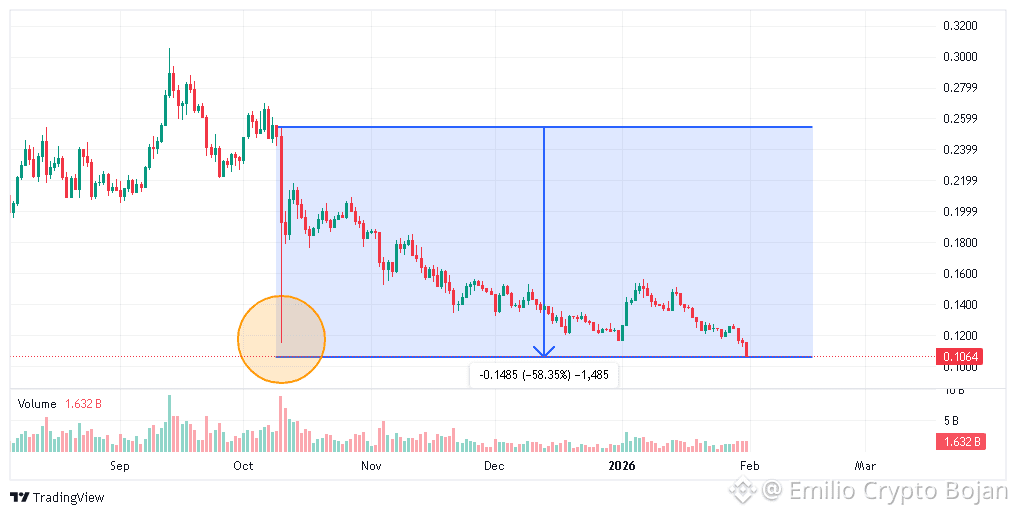
10
6
24
15.9k

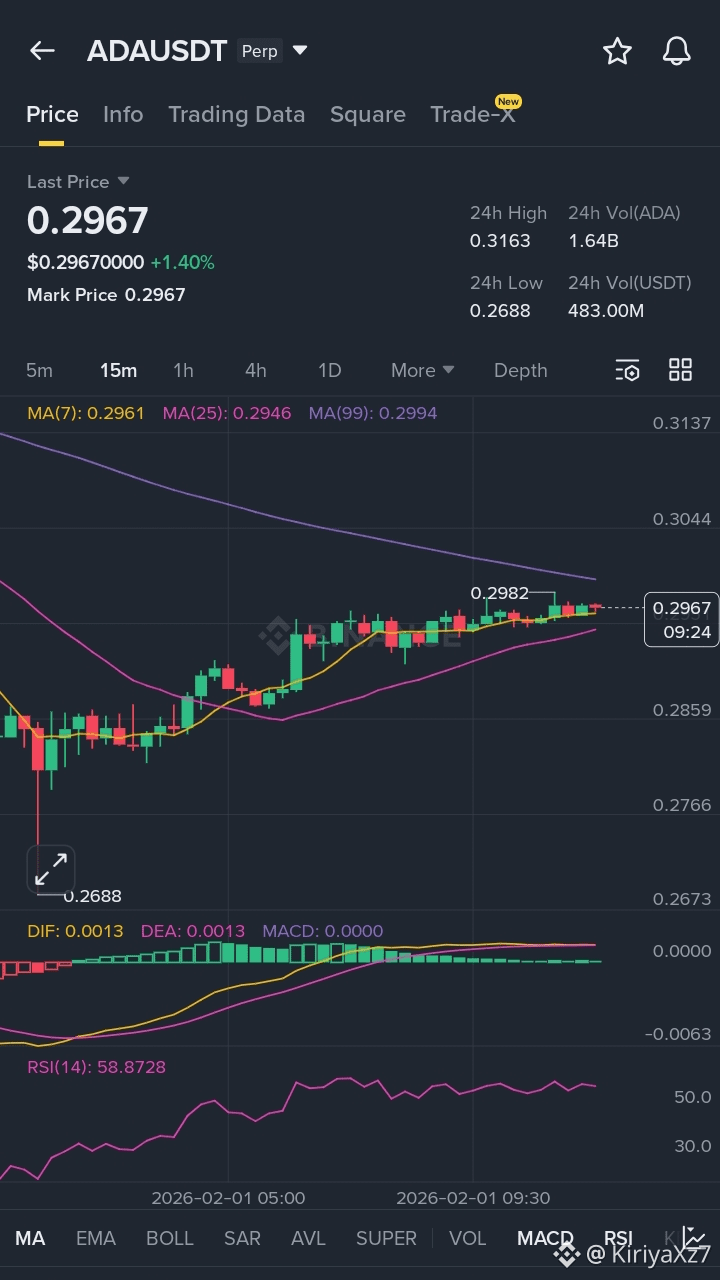

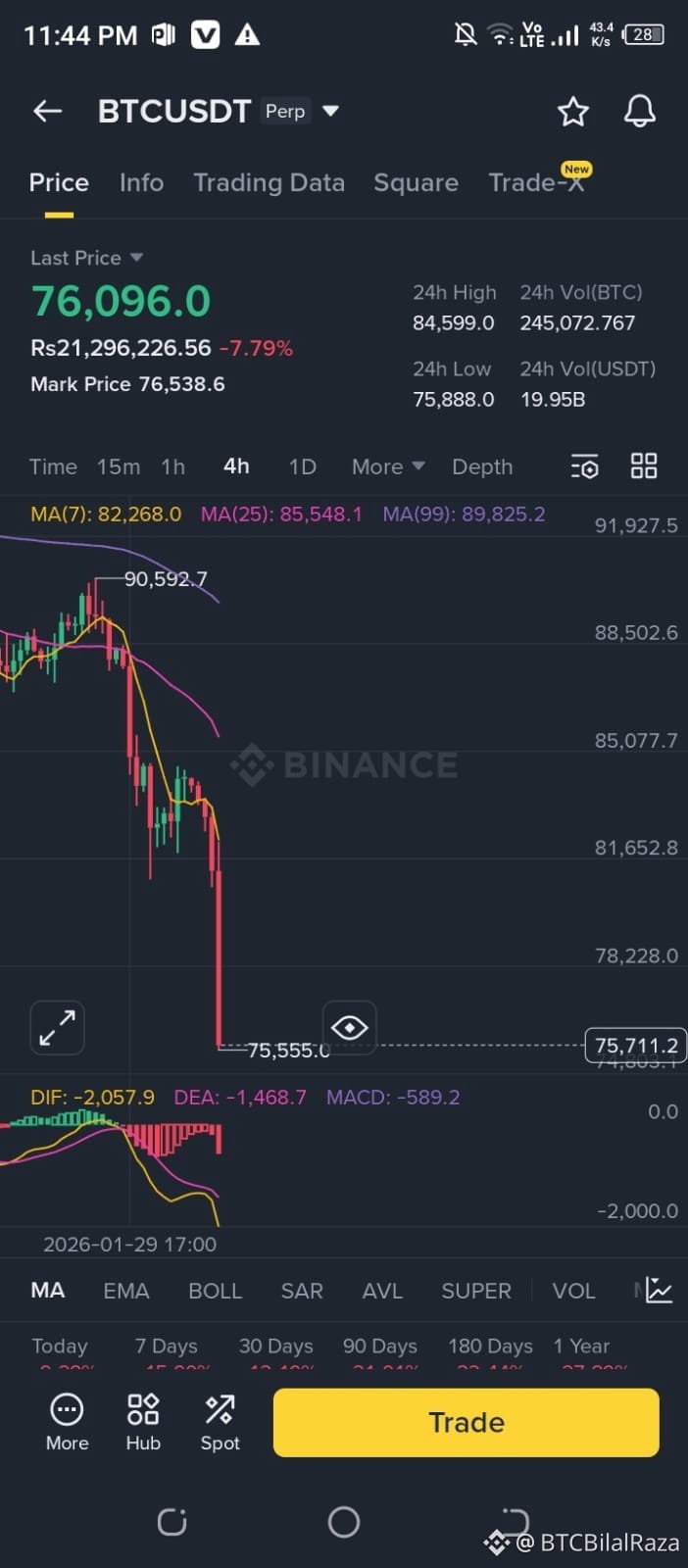

·
--
Haussier
Prediksi harga PAX Gold (PAXG) untuk hari ini, 31 Januari 2026, menunjukkan tren bullish namun disertai peringatan potensi koreksi teknikal karena kondisi jenuh beli (overbought). Karena nilai PAXG terikat 1:1 dengan harga emas fisik, pergerakannya sangat bergantung pada performa emas global yang saat ini sedang dalam reli makro.
Berikut adalah rincian prediksinya:
Estimasi Harga: PAXG diproyeksikan bergerak di kisaran $5.191 hingga $5.613. Beberapa platform memprediksi harga akan mencapai $5.613 pada hari ini sebagai bagian dari kenaikan bertahap.
Analisis Teknikal: memberikan sinyal "Strong Buy" (Beli Kuat) dengan seluruh rata-rata bergerak (MA) berada di posisi positif. Namun, indikator RSI yang berada di level ekstrem (sekitar 85-86) menunjukkan adanya risiko profit-taking atau koreksi harga jangka pendek setelah reli besar.
Sentimen Pasar: Pasar saat ini didorong oleh ketidakpastian geopolitik dan ekspektasi penurunan suku bunga. Selain itu, permintaan institusional terhadap aset emas yang ditokenisasi meningkatkan kapitalisasi pasar PAXG hingga melampaui $2,2 miliar.
Konversi IDR: Harga PAXG hari ini diperkirakan berada di kisaran Rp83.000.000 hingga Rp85.000.000 per koin, tergantung fluktuasi kurs.
#CZAMAonBinanceSquare #WhoIsNextFedChair #MarketCorrection #PAXG $PAXG #Write2Earn
Prediksi harga PAX Gold (PAXG) untuk hari ini, 31 Januari 2026, menunjukkan tren bullish namun disertai peringatan potensi koreksi teknikal karena kondisi jenuh beli (overbought). Karena nilai PAXG terikat 1:1 dengan harga emas fisik, pergerakannya sangat bergantung pada performa emas global yang saat ini sedang dalam reli makro.
Berikut adalah rincian prediksinya:
Estimasi Harga: PAXG diproyeksikan bergerak di kisaran $5.191 hingga $5.613. Beberapa platform memprediksi harga akan mencapai $5.613 pada hari ini sebagai bagian dari kenaikan bertahap.
Analisis Teknikal: memberikan sinyal "Strong Buy" (Beli Kuat) dengan seluruh rata-rata bergerak (MA) berada di posisi positif. Namun, indikator RSI yang berada di level ekstrem (sekitar 85-86) menunjukkan adanya risiko profit-taking atau koreksi harga jangka pendek setelah reli besar.
Sentimen Pasar: Pasar saat ini didorong oleh ketidakpastian geopolitik dan ekspektasi penurunan suku bunga. Selain itu, permintaan institusional terhadap aset emas yang ditokenisasi meningkatkan kapitalisasi pasar PAXG hingga melampaui $2,2 miliar.
Konversi IDR: Harga PAXG hari ini diperkirakan berada di kisaran Rp83.000.000 hingga Rp85.000.000 per koin, tergantung fluktuasi kurs.
#CZAMAonBinanceSquare #WhoIsNextFedChair #MarketCorrection #PAXG $PAXG #Write2Earn
Berikut adalah rincian prediksinya:
Estimasi Harga: PAXG diproyeksikan bergerak di kisaran $5.191 hingga $5.613. Beberapa platform memprediksi harga akan mencapai $5.613 pada hari ini sebagai bagian dari kenaikan bertahap.
Analisis Teknikal: memberikan sinyal "Strong Buy" (Beli Kuat) dengan seluruh rata-rata bergerak (MA) berada di posisi positif. Namun, indikator RSI yang berada di level ekstrem (sekitar 85-86) menunjukkan adanya risiko profit-taking atau koreksi harga jangka pendek setelah reli besar.
Sentimen Pasar: Pasar saat ini didorong oleh ketidakpastian geopolitik dan ekspektasi penurunan suku bunga. Selain itu, permintaan institusional terhadap aset emas yang ditokenisasi meningkatkan kapitalisasi pasar PAXG hingga melampaui $2,2 miliar.
Konversi IDR: Harga PAXG hari ini diperkirakan berada di kisaran Rp83.000.000 hingga Rp85.000.000 per koin, tergantung fluktuasi kurs.
#CZAMAonBinanceSquare #WhoIsNextFedChair #MarketCorrection #PAXG $PAXG #Write2Earn
253

·
--
hello world ✨Es Trader 📊 Daliy Live Trading profit 💵10k India Rupee
my Experience 4Yr BTC Trading 🤑
Im India 🇳🇪 jharkhand 🎯100k Fowllo$BTC
#CZAMAonBinanceSquare #BitcoinETFWatch #MarketCorrection #BitcoinETFWatch #MarketCorrection
hello world ✨Es Trader 📊 Daliy Live Trading profit 💵10k India Rupee
my Experience 4Yr BTC Trading 🤑
Im India 🇳🇪 jharkhand 🎯100k Fowllo$BTC
#CZAMAonBinanceSquare #BitcoinETFWatch #MarketCorrection #BitcoinETFWatch #MarketCorrection
my Experience 4Yr BTC Trading 🤑
Im India 🇳🇪 jharkhand 🎯100k Fowllo$BTC
#CZAMAonBinanceSquare #BitcoinETFWatch #MarketCorrection #BitcoinETFWatch #MarketCorrection

Estrader01
·
--
$BTC Hello Trader
11
46

·
--
Baissier
crypto market can berrish on next week
date 16-2-2026 and then market bullish on 16-2-2026 on 11.00pm but $SOL and $BNB also berrish so don't invest in $SOL or
you can invest in $BTC and another crypto #CZAMAonBinanceSquare #crypto #sol #BTC #bnb
crypto market can berrish on next week
date 16-2-2026 and then market bullish on 16-2-2026 on 11.00pm but $SOL and $BNB also berrish so don't invest in $SOL or
you can invest in $BTC and another crypto #CZAMAonBinanceSquare #crypto #sol #BTC #bnb
date 16-2-2026 and then market bullish on 16-2-2026 on 11.00pm but $SOL and $BNB also berrish so don't invest in $SOL or
you can invest in $BTC and another crypto #CZAMAonBinanceSquare #crypto #sol #BTC #bnb
64

·
--
Gold for Bitcoin? A Shockwave Rumor Out of Washington🔥
BREAKING: The White House has reportedly floated the idea that America’s gold reserves could one day be leveraged to acquire Bitcoin a move that, if even seriously explored, would mark one of the most dramatic shifts in monetary strategy in modern history.
Such a discussion instantly ignited debate across global markets. Gold has long been the backbone of sovereign reserve systems, prized for stability and tradition, while Bitcoin represents a radically new, digital form of monetary insurance. Linking the two signals that policymakers may be at least studying crypto’s growing role in geopolitics, inflation hedging, and long-term reserve diversification.
Analysts note that this doesn’t mean an imminent policy change governments often explore hypothetical tools before acting. Still, the mere acknowledgment of Bitcoin in the same sentence as national gold stockpiles highlights how far crypto has traveled from fringe asset to something major institutions can’t ignore anymore.
If conversations like this gain traction, markets could start pricing in a future where digital assets sit alongside not outside traditional reserve systems. And that’s exactly why traders and macro watchers worldwide are paying very close attention right now. 👀😌🔥
#WhoIsNextFedChair
#CZAMAonBinanceSquare
#PreciousMetalsTurbulence
Gold for Bitcoin? A Shockwave Rumor Out of Washington🔥
BREAKING: The White House has reportedly floated the idea that America’s gold reserves could one day be leveraged to acquire Bitcoin a move that, if even seriously explored, would mark one of the most dramatic shifts in monetary strategy in modern history.
Such a discussion instantly ignited debate across global markets. Gold has long been the backbone of sovereign reserve systems, prized for stability and tradition, while Bitcoin represents a radically new, digital form of monetary insurance. Linking the two signals that policymakers may be at least studying crypto’s growing role in geopolitics, inflation hedging, and long-term reserve diversification.
Analysts note that this doesn’t mean an imminent policy change governments often explore hypothetical tools before acting. Still, the mere acknowledgment of Bitcoin in the same sentence as national gold stockpiles highlights how far crypto has traveled from fringe asset to something major institutions can’t ignore anymore.
If conversations like this gain traction, markets could start pricing in a future where digital assets sit alongside not outside traditional reserve systems. And that’s exactly why traders and macro watchers worldwide are paying very close attention right now. 👀😌🔥
#WhoIsNextFedChair
#CZAMAonBinanceSquare
#PreciousMetalsTurbulence
BREAKING: The White House has reportedly floated the idea that America’s gold reserves could one day be leveraged to acquire Bitcoin a move that, if even seriously explored, would mark one of the most dramatic shifts in monetary strategy in modern history.
Such a discussion instantly ignited debate across global markets. Gold has long been the backbone of sovereign reserve systems, prized for stability and tradition, while Bitcoin represents a radically new, digital form of monetary insurance. Linking the two signals that policymakers may be at least studying crypto’s growing role in geopolitics, inflation hedging, and long-term reserve diversification.
Analysts note that this doesn’t mean an imminent policy change governments often explore hypothetical tools before acting. Still, the mere acknowledgment of Bitcoin in the same sentence as national gold stockpiles highlights how far crypto has traveled from fringe asset to something major institutions can’t ignore anymore.
If conversations like this gain traction, markets could start pricing in a future where digital assets sit alongside not outside traditional reserve systems. And that’s exactly why traders and macro watchers worldwide are paying very close attention right now. 👀😌🔥
#WhoIsNextFedChair
#CZAMAonBinanceSquare
#PreciousMetalsTurbulence
3
2
5
1.1k

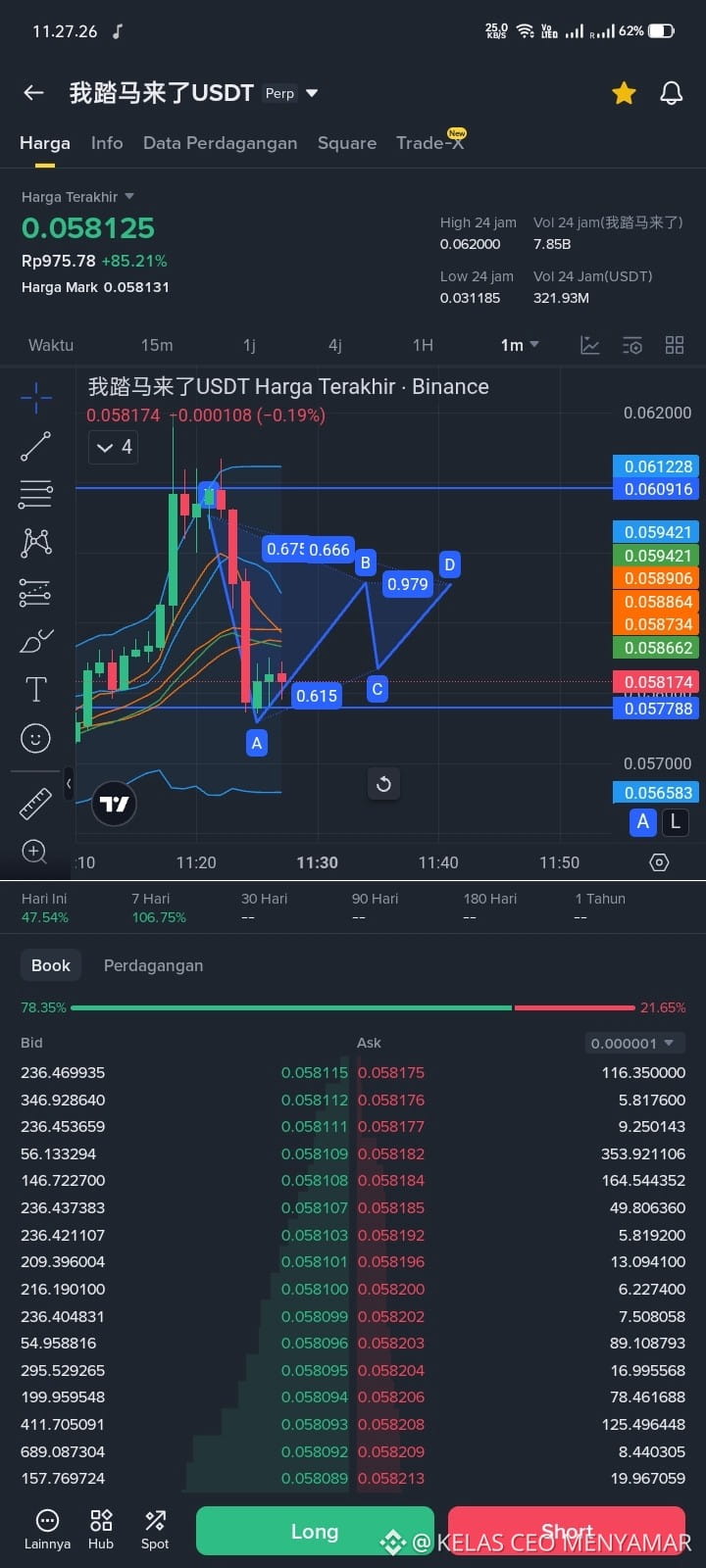

·
--
Haussier
JUST IN: Polymarket traders are pricing in a 92% probability that the Fed leaves interest rates unchanged at the March 18 meeting, with just 8% odds pointing to a 25 bps rate cut.#CZAMAonBinanceSquare
JUST IN: Polymarket traders are pricing in a 92% probability that the Fed leaves interest rates unchanged at the March 18 meeting, with just 8% odds pointing to a 25 bps rate cut.#CZAMAonBinanceSquare
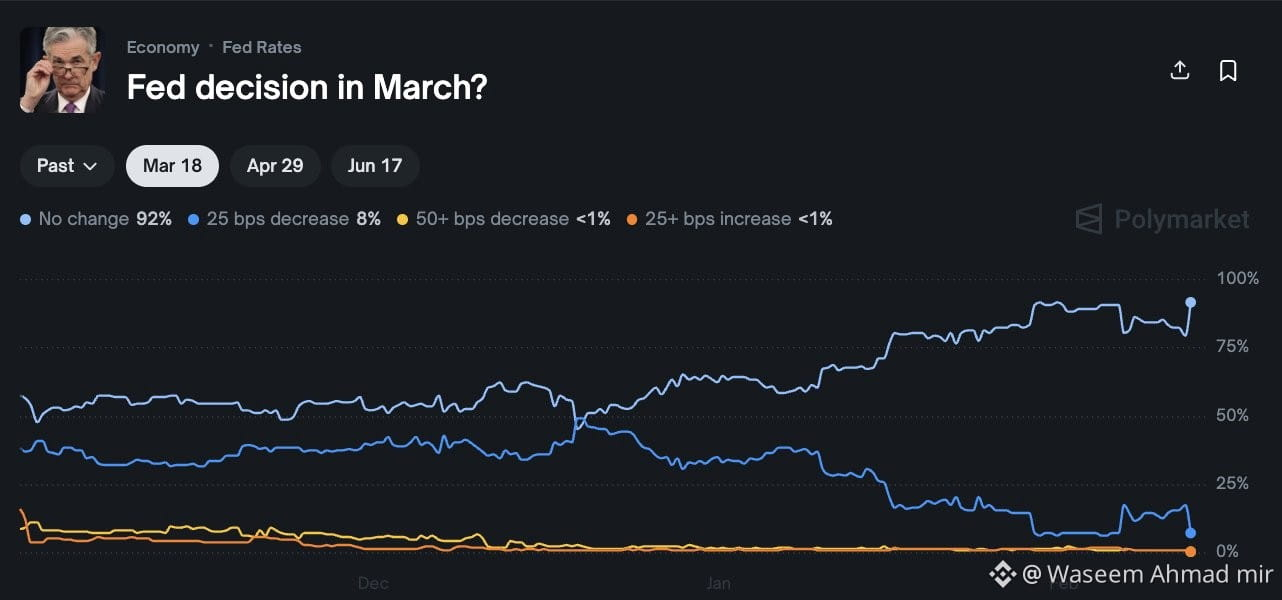
2
700

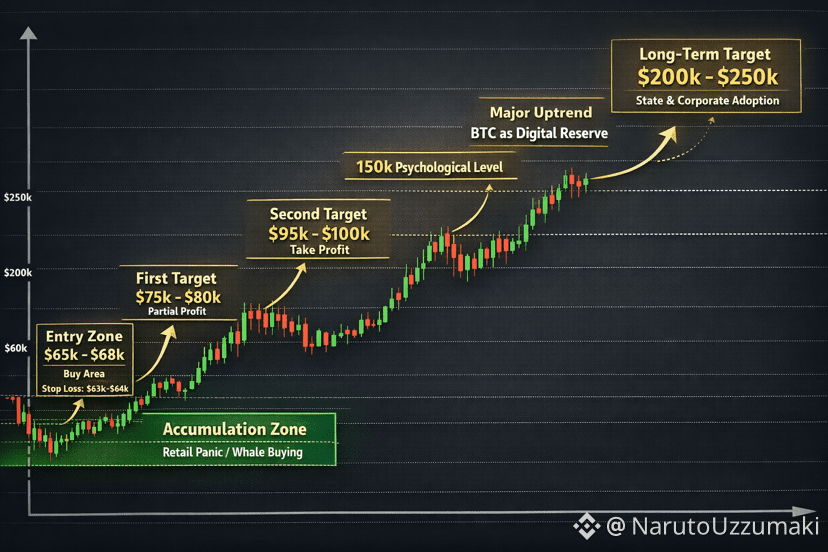

·
--
Haussier
$BTC Where did the price drop?
50% of the weekly candle's lower tail - perfectly acceptable for a pullback.
It's time to build a position.
Risk on down side still valid
57,772.43 - 62% of the entire range from ATL to ATH
57,608.47 - 50% of the 2021 upper tail
#BTC #CZAMAonBinanceSquare
$BTC Where did the price drop?
50% of the weekly candle's lower tail - perfectly acceptable for a pullback.
It's time to build a position.
Risk on down side still valid
57,772.43 - 62% of the entire range from ATL to ATH
57,608.47 - 50% of the 2021 upper tail
#BTC #CZAMAonBinanceSquare
50% of the weekly candle's lower tail - perfectly acceptable for a pullback.
It's time to build a position.
Risk on down side still valid
57,772.43 - 62% of the entire range from ATL to ATH
57,608.47 - 50% of the 2021 upper tail
#BTC #CZAMAonBinanceSquare
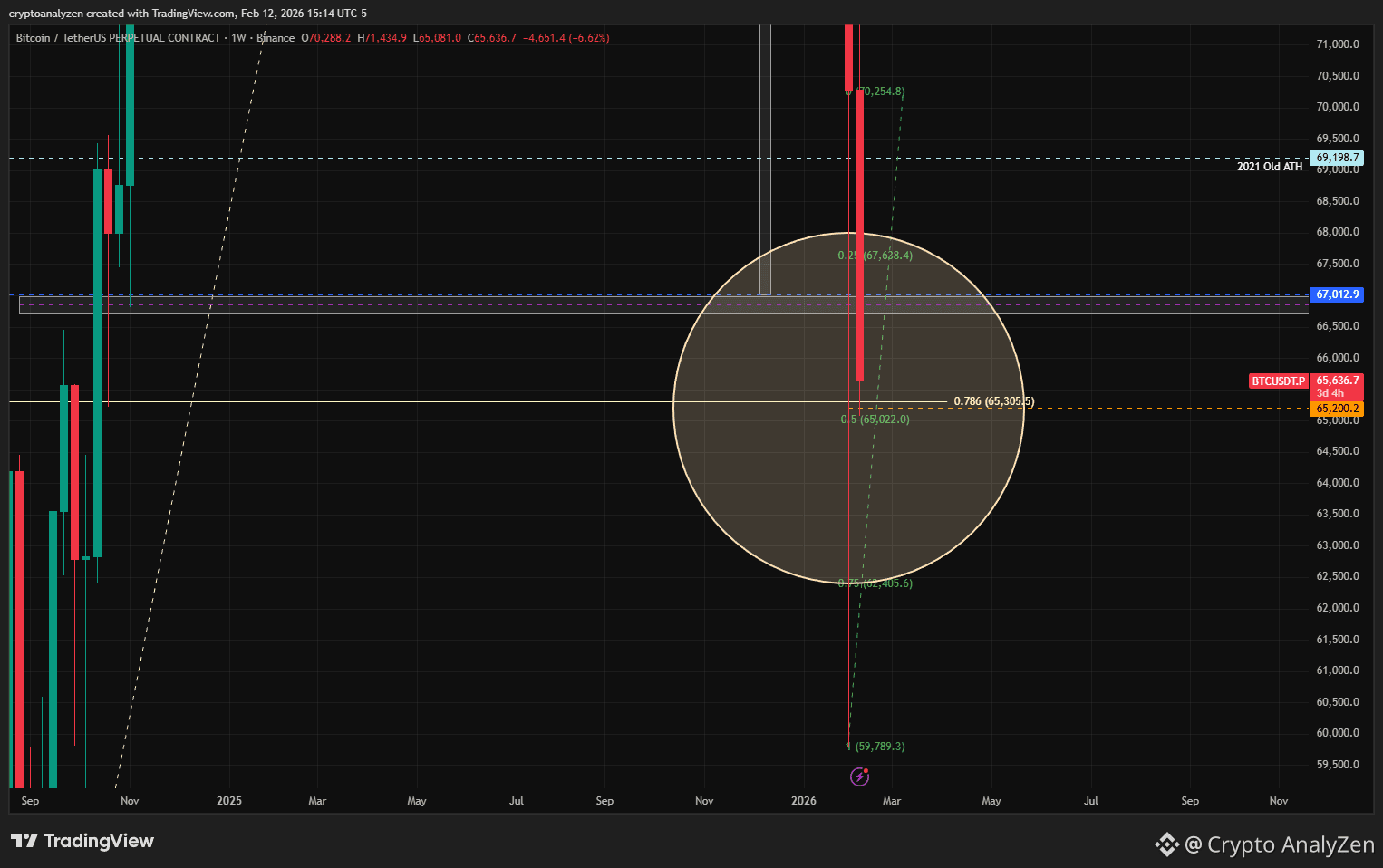
1
135

·
--
#CZAMAonBinanceSquare
This super cycle will be something massive. we've been waiting for so long.
#CZAMAonBinanceSquare
This super cycle will be something massive. we've been waiting for so long.
This super cycle will be something massive. we've been waiting for so long.
24

·
--
Haussier
$BTC USDT — 15m Volatility Trap | Next Move Loading…
BTC dipped, grabbed liquidity near 66,787, then bounced back and is now sitting on the MAs — this is the kind of zone where breakouts explode fast.
Bias: Bullish while above 67,285 (MA99)
EP (Entry Zone): 67,550 – 67,720
TP1: 67,950 – 68,100
TP2: 68,370 (recent swing high zone)
TP3: 68,830 – 68,900 (24h high liquidity)
SL (Stop Loss): 67,240 (below MA99 / invalidation)
Trigger: Clean push + hold above 67,750 = momentum ignition.
Let’s go! (Not financial advice)
{future}(BTCUSDT)
#USRetailSalesMissForecast #CZAMAonBinanceSquare #WhaleDeRiskETH #GoldSilverRally #BitcoinGoogleSearchesSurge
$BTC USDT — 15m Volatility Trap | Next Move Loading…
BTC dipped, grabbed liquidity near 66,787, then bounced back and is now sitting on the MAs — this is the kind of zone where breakouts explode fast.
Bias: Bullish while above 67,285 (MA99)
EP (Entry Zone): 67,550 – 67,720
TP1: 67,950 – 68,100
TP2: 68,370 (recent swing high zone)
TP3: 68,830 – 68,900 (24h high liquidity)
SL (Stop Loss): 67,240 (below MA99 / invalidation)
Trigger: Clean push + hold above 67,750 = momentum ignition.
Let’s go! (Not financial advice)
#USRetailSalesMissForecast #CZAMAonBinanceSquare #WhaleDeRiskETH #GoldSilverRally #BitcoinGoogleSearchesSurge
BTC dipped, grabbed liquidity near 66,787, then bounced back and is now sitting on the MAs — this is the kind of zone where breakouts explode fast.
Bias: Bullish while above 67,285 (MA99)
EP (Entry Zone): 67,550 – 67,720
TP1: 67,950 – 68,100
TP2: 68,370 (recent swing high zone)
TP3: 68,830 – 68,900 (24h high liquidity)
SL (Stop Loss): 67,240 (below MA99 / invalidation)
Trigger: Clean push + hold above 67,750 = momentum ignition.
Let’s go! (Not financial advice)
#USRetailSalesMissForecast #CZAMAonBinanceSquare #WhaleDeRiskETH #GoldSilverRally #BitcoinGoogleSearchesSurge
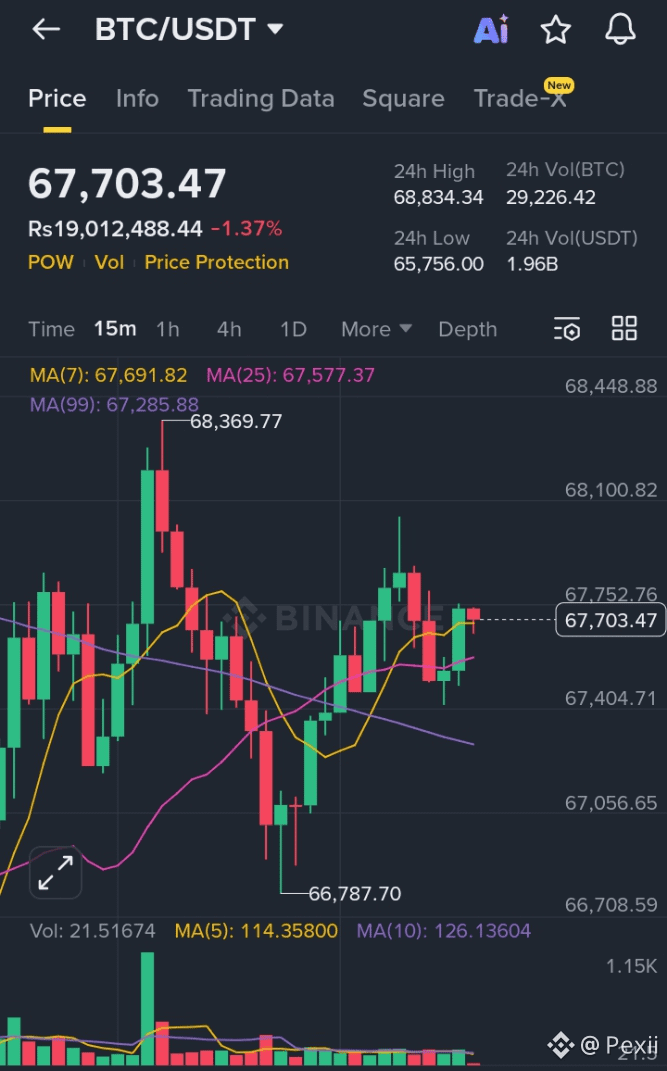
3
149

·
--
#CZAMAonBinanceSquare #USPPIJump #USGovShutdown #WhoIsNextFedChair
As of Sunday, February 1, 2026, the Solana (SOL/USDT) market on Binance is experiencing a significant correction following a period of high volatility. After hitting daily highs earlier today, the price has pulled back toward key support levels.
Market Overview (SOL/USDT)
| Metric | Current Status | Value |
|---|---|---|
| Current Price | 🔴 Trading Low | $104.26 |
| 24h High | Peak early today | $118.54 |
| 24h Low | Bottom tested | $100.65 |
| 24h Change | Net drop | -10.08% |
| 7d Performance | Weekly trend | -17.03% |
Key Market Dynamics
* Volatility Spike: The gap between the daily high ($118.54) and the current price ($104.26) highlights a sharp sell-off. This follows a broader market dip observed across major assets like Bitcoin and Ethereum earlier this weekend.
* Support & Resistance: * Support: Traders are watching the $100.00 psychological floor. A breach below this could lead to a retest of the 52-week low near $95.00.
* Resistance: To regain bullish momentum, SOL needs to break back above the $112.00 – $115.00 range.
* Technical Sentiment: On the 4-hour and daily charts, SOL is currently in oversold territory (RSI below 30). While this often signals a potential "dead cat bounce" or recovery, the short-term trend remains weak as the 200-day moving average is currently sloping downward.
Market Sentiment
The sentiment is currently cautious to bearish. While institutional interest remained high through January, a recent security concern involving a $30M outflow from a Step Finance treasury wallet on January 31st has contributed to the selling pressure across the Solana ecosystem.
> Trading Tip: Keep an eye on the $104.00 level; the price has been hovering here for the last hour, suggesting a temporary consolidation before the next major move.
>
Would you like me to set a price alert for a specific level or check the current funding rates for SOL futures on Binance?
$SOL
#CZAMAonBinanceSquare #USPPIJump #USGovShutdown #WhoIsNextFedChair
As of Sunday, February 1, 2026, the Solana (SOL/USDT) market on Binance is experiencing a significant correction following a period of high volatility. After hitting daily highs earlier today, the price has pulled back toward key support levels.
Market Overview (SOL/USDT)
| Metric | Current Status | Value |
|---|---|---|
| Current Price | 🔴 Trading Low | $104.26 |
| 24h High | Peak early today | $118.54 |
| 24h Low | Bottom tested | $100.65 |
| 24h Change | Net drop | -10.08% |
| 7d Performance | Weekly trend | -17.03% |
Key Market Dynamics
* Volatility Spike: The gap between the daily high ($118.54) and the current price ($104.26) highlights a sharp sell-off. This follows a broader market dip observed across major assets like Bitcoin and Ethereum earlier this weekend.
* Support & Resistance: * Support: Traders are watching the $100.00 psychological floor. A breach below this could lead to a retest of the 52-week low near $95.00.
* Resistance: To regain bullish momentum, SOL needs to break back above the $112.00 – $115.00 range.
* Technical Sentiment: On the 4-hour and daily charts, SOL is currently in oversold territory (RSI below 30). While this often signals a potential "dead cat bounce" or recovery, the short-term trend remains weak as the 200-day moving average is currently sloping downward.
Market Sentiment
The sentiment is currently cautious to bearish. While institutional interest remained high through January, a recent security concern involving a $30M outflow from a Step Finance treasury wallet on January 31st has contributed to the selling pressure across the Solana ecosystem.
> Trading Tip: Keep an eye on the $104.00 level; the price has been hovering here for the last hour, suggesting a temporary consolidation before the next major move.
>
Would you like me to set a price alert for a specific level or check the current funding rates for SOL futures on Binance?
$SOL
As of Sunday, February 1, 2026, the Solana (SOL/USDT) market on Binance is experiencing a significant correction following a period of high volatility. After hitting daily highs earlier today, the price has pulled back toward key support levels.
Market Overview (SOL/USDT)
| Metric | Current Status | Value |
|---|---|---|
| Current Price | 🔴 Trading Low | $104.26 |
| 24h High | Peak early today | $118.54 |
| 24h Low | Bottom tested | $100.65 |
| 24h Change | Net drop | -10.08% |
| 7d Performance | Weekly trend | -17.03% |
Key Market Dynamics
* Volatility Spike: The gap between the daily high ($118.54) and the current price ($104.26) highlights a sharp sell-off. This follows a broader market dip observed across major assets like Bitcoin and Ethereum earlier this weekend.
* Support & Resistance: * Support: Traders are watching the $100.00 psychological floor. A breach below this could lead to a retest of the 52-week low near $95.00.
* Resistance: To regain bullish momentum, SOL needs to break back above the $112.00 – $115.00 range.
* Technical Sentiment: On the 4-hour and daily charts, SOL is currently in oversold territory (RSI below 30). While this often signals a potential "dead cat bounce" or recovery, the short-term trend remains weak as the 200-day moving average is currently sloping downward.
Market Sentiment
The sentiment is currently cautious to bearish. While institutional interest remained high through January, a recent security concern involving a $30M outflow from a Step Finance treasury wallet on January 31st has contributed to the selling pressure across the Solana ecosystem.
> Trading Tip: Keep an eye on the $104.00 level; the price has been hovering here for the last hour, suggesting a temporary consolidation before the next major move.
>
Would you like me to set a price alert for a specific level or check the current funding rates for SOL futures on Binance?
$SOL
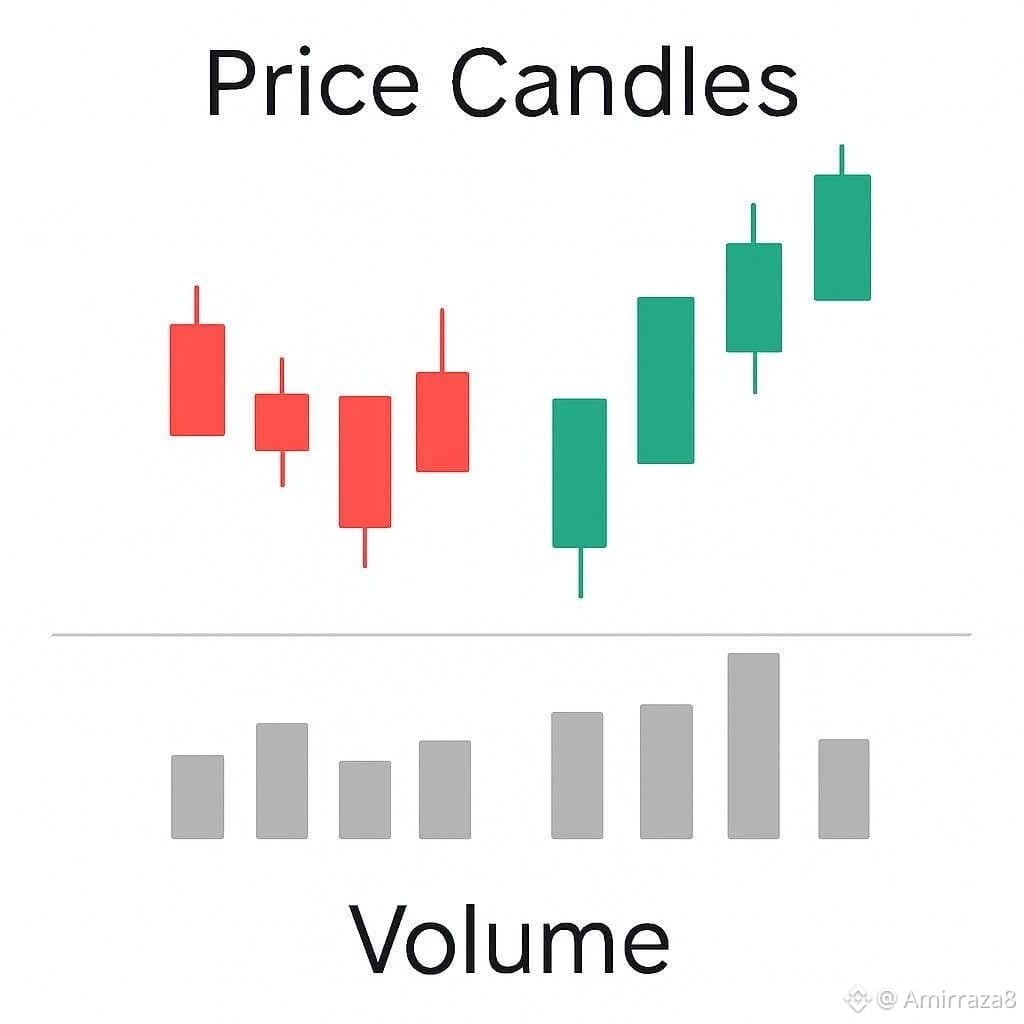
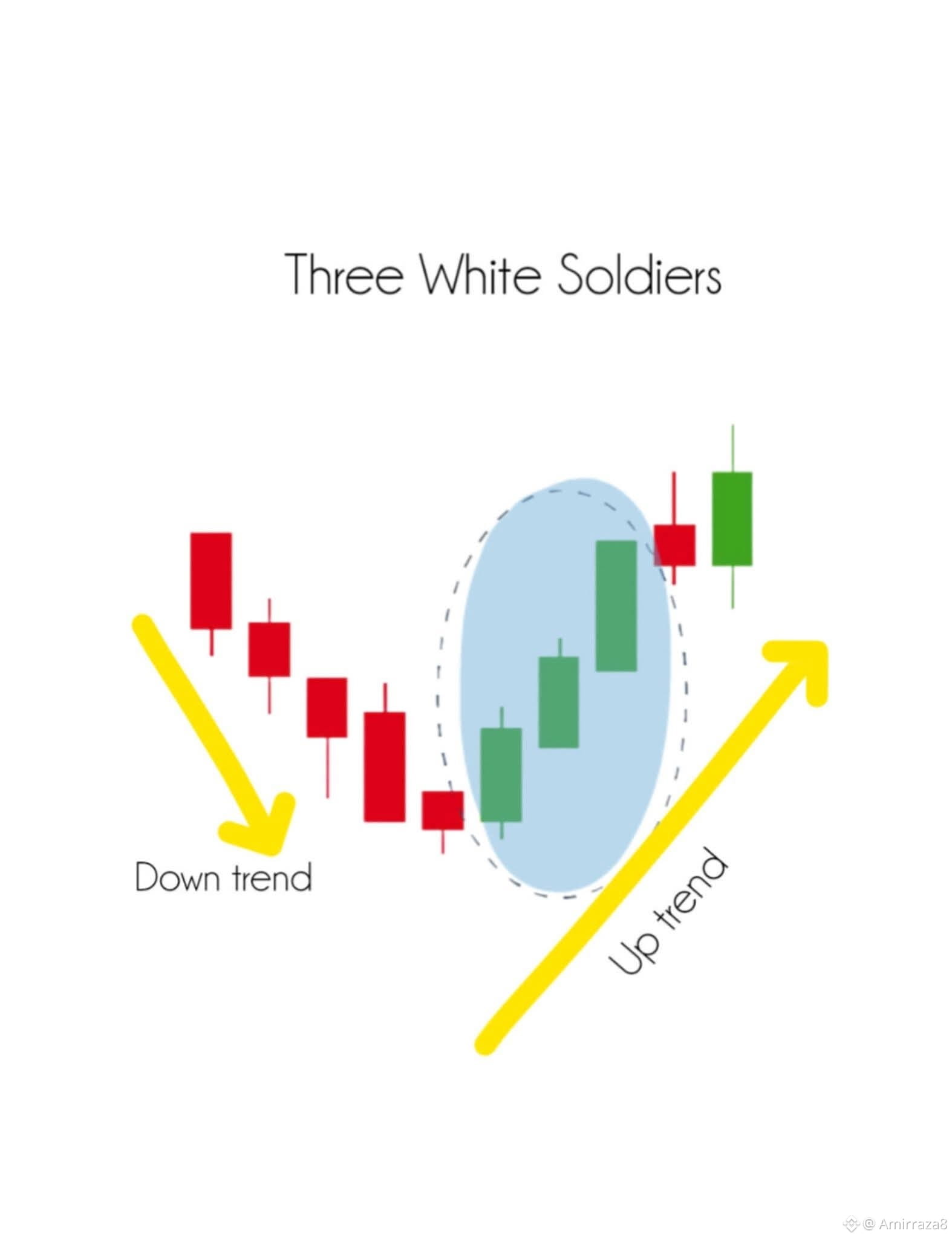
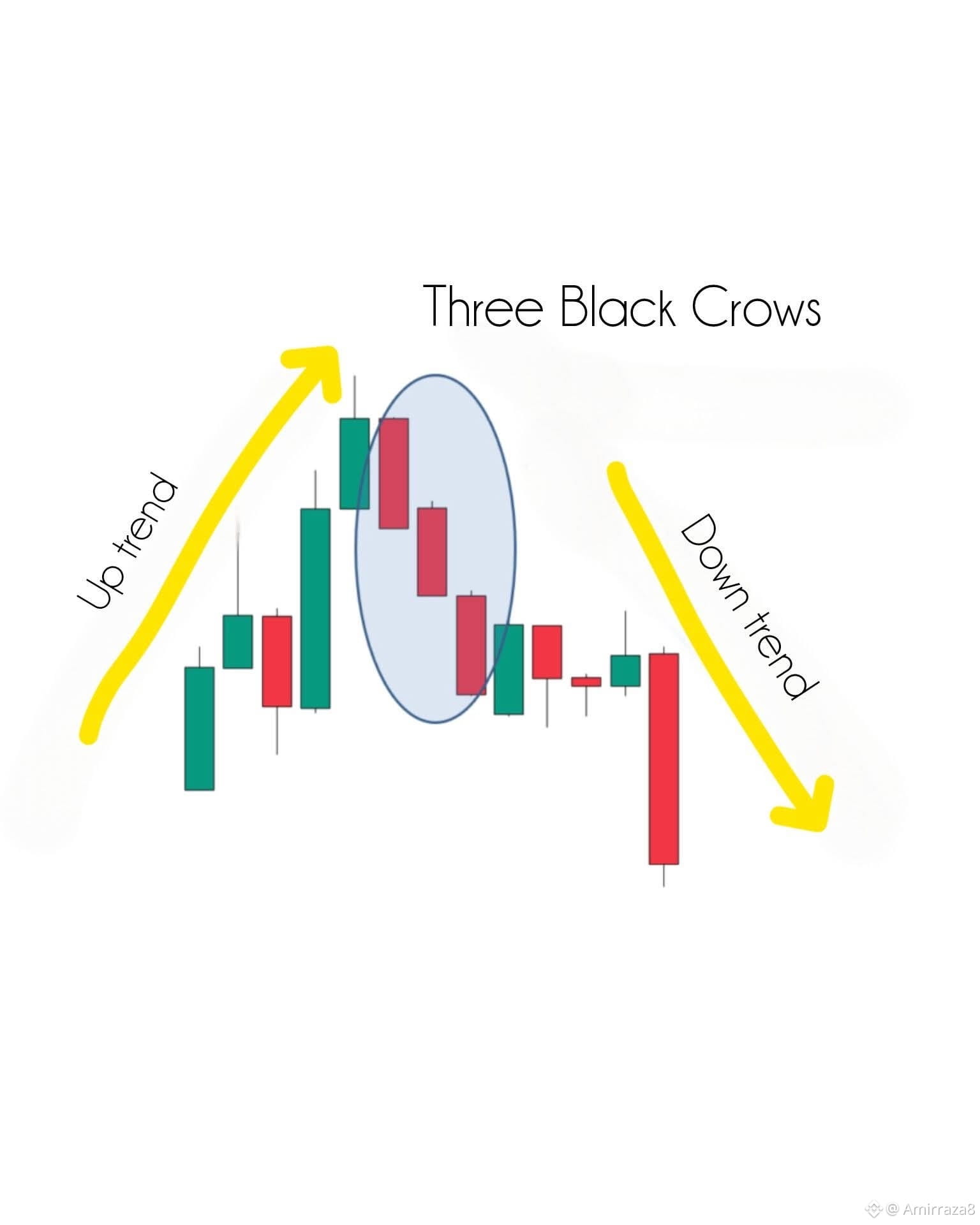
20
Connectez-vous pour découvrir plus de contenu
Rejoignez la communauté mondiale des adeptes de cryptomonnaies sur Binance Square
⚡️ Suviez les dernières informations importantes sur les cryptomonnaies.
💬 Jugé digne de confiance par la plus grande plateforme d’échange de cryptomonnaies au monde.
👍 Découvrez les connaissances que partagent les créateurs vérifiés.
Adresse e-mail/Nº de téléphone
Sujets d’actualité
1
#BinanceLaunchesBinanceIntelligence
3,767 vues
95 mentions
2
#EvernorthXRPTreasuryCompletesSPACMerger
6,820 vues
94 mentions
3
#ADAGains10%Above$0.27
19,485 vues
194 mentions
4
#ETHUp70%InQ3ButLiquidityFalls
195,293 vues
1,184 mentions
5
#EthStakingExitQueueHits2026High
67,786 vues
837 mentions
6
#FedOctoberHoldOdds82.3%
70,433 vues
792 mentions
7
#Nikkei225Jumps2.5%ToThreeMonthHigh
87,909 vues
1,142 mentions
8
#CircleMints$2.75BUSDCOnSolanaIn7Days
2,420 vues
52 mentions
9
#DriftHackVictimsBeginClaims
186,831 vues
1,787 mentions
10
#SolanaTokenizedStockVolumeTops$4.4BInSeptember
14,212 vues
136 mentions