

Fox夕
4.6k Publications

Fox夕
 Compte Square Vérifié+
Signaler
Bloquer l’utilisateur
Focus on the process, not the perfect result. Learning daily, writing as I go, and staying sane with coffee that gets me better than the charts - X : @REV_09
Trade fréquemment
6.7 an(s)
182 Suivis
64.7K+ Abonnés
50.6K+ J’aime
Publications
Tous
Citations
PINNED
·
--
Hello fam 🙏🏿😊🙏🏿
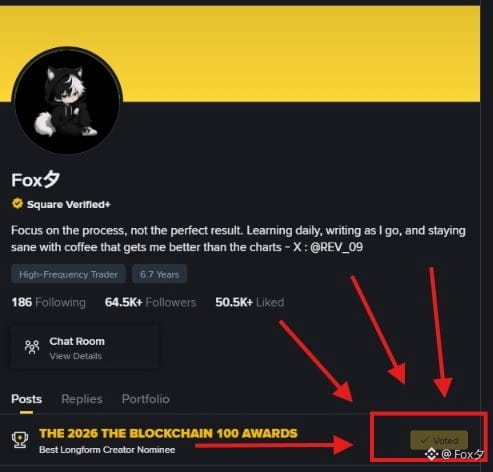
It’s an honor to be nominated as a Best Longform Creator for the Blockchain 100 Awards 2026. Your ongoing support and presence mean the world to me. If you'd like to spare a moment to cast a vote, I would truly appreciate it, but your daily readership is already a reward in itself. [VOTE HERE](https://app.binance.com/uni-qr/cact26user/406?uc=web_square_share_link&us=whatsapp) 👈🏼👈🏼
#FOMCWatch #blockchain100awards $SOL
{future}(SOLUSDT)
Hello fam 🙏🏿😊🙏🏿
It’s an honor to be nominated as a Best Longform Creator for the Blockchain 100 Awards 2026. Your ongoing support and presence mean the world to me. If you'd like to spare a moment to cast a vote, I would truly appreciate it, but your daily readership is already a reward in itself. VOTE HERE 👈🏼👈🏼
#FOMCWatch #blockchain100awards $SOL

833
72
93
833
·
--
Article
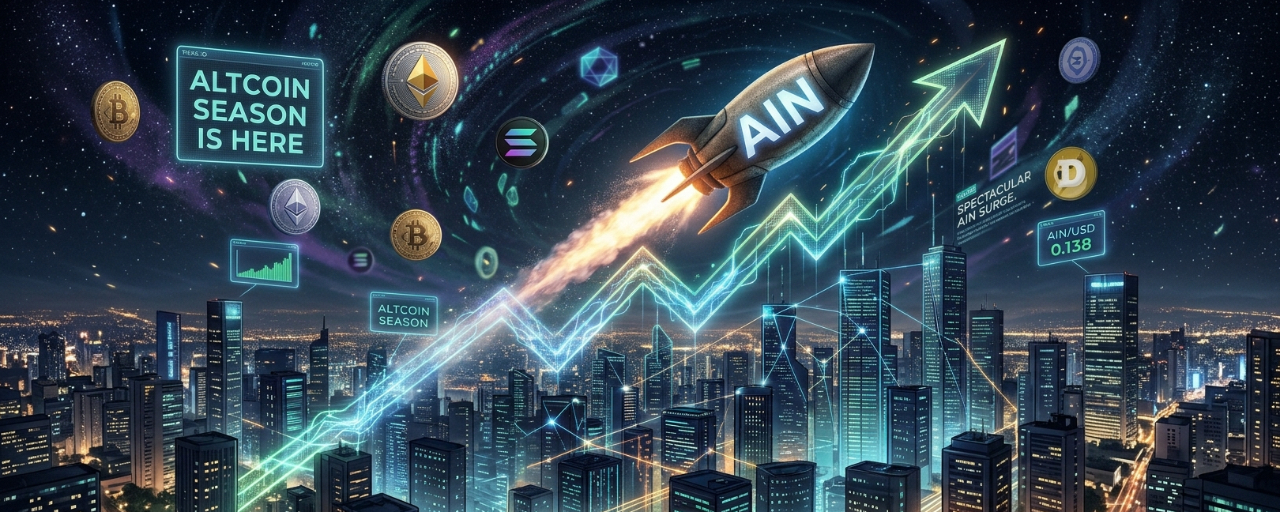
Infinity Ground Soars to More Than Triple Its Value as Altcoin Season Fuels Speculative FrenzyInfinity Ground (AIN) staged a spectacular rally, more than tripling in value within 24 hours to reach $0.138, dramatically outperforming a crypto market that remained largely flat or weakened. The surge appears to have been driven primarily by a broader shift in capital toward high-risk altcoins rather than a confirmed project-specific catalyst. The CoinMarketCap Altcoin Season Index climbed nearly 10% to 58, signaling growing risk appetite and encouraging traders to pursue opportunities in smaller, more volatile assets. $AIN
{future}(AINUSDT)
Speculative activity intensified as AIN’s trading volume exploded to more than 73 times its previous level, reaching approximately $86.6 million. Its turnover ratio of 1.96 indicates exceptionally intense trading relative to its market capitalization, suggesting momentum-driven traders played a major role in the rally. While this surge in trading activity helped propel AIN higher, it also raises the risk of extreme volatility and sudden price reversals.
{alpha}(560x9558a9254890b2a8b057a789f413631b9084f4a3)
In the short term, AIN could advance toward $0.16 if the Altcoin Season Index remains above 50 and buying momentum continues. However, a breakdown below the $0.12 support level could trigger a sharp correction as speculative enthusiasm fades and leveraged positions unwind. The Federal Reserve’s upcoming interest-rate decision on October 28, along with changes in derivatives open interest, could influence market sentiment. Overall, AIN’s momentum remains bullish but highly speculative, with its sustainability depending on continued capital inflows and investors’ appetite for riskier altcoins.
#InfinityGround #altcoinseason #CryptoMarketAlert
Infinity Ground Soars to More Than Triple Its Value as Altcoin Season Fuels Speculative Frenzy
Infinity Ground (AIN) staged a spectacular rally, more than tripling in value within 24 hours to reach $0.138, dramatically outperforming a crypto market that remained largely flat or weakened. The surge appears to have been driven primarily by a broader shift in capital toward high-risk altcoins rather than a confirmed project-specific catalyst. The CoinMarketCap Altcoin Season Index climbed nearly 10% to 58, signaling growing risk appetite and encouraging traders to pursue opportunities in smaller, more volatile assets. $AIN
Speculative activity intensified as AIN’s trading volume exploded to more than 73 times its previous level, reaching approximately $86.6 million. Its turnover ratio of 1.96 indicates exceptionally intense trading relative to its market capitalization, suggesting momentum-driven traders played a major role in the rally. While this surge in trading activity helped propel AIN higher, it also raises the risk of extreme volatility and sudden price reversals.
In the short term, AIN could advance toward $0.16 if the Altcoin Season Index remains above 50 and buying momentum continues. However, a breakdown below the $0.12 support level could trigger a sharp correction as speculative enthusiasm fades and leveraged positions unwind. The Federal Reserve’s upcoming interest-rate decision on October 28, along with changes in derivatives open interest, could influence market sentiment. Overall, AIN’s momentum remains bullish but highly speculative, with its sustainability depending on continued capital inflows and investors’ appetite for riskier altcoins.
#InfinityGround #altcoinseason #CryptoMarketAlert
7
14
1.3k
·
--

Article
Bitcoin Mining Hashrate Returns to 1 Zettahash as Competition IntensifiesBitcoin’s seven-day average mining hashrate has returned to approximately 1 zettahash per second (ZH/s), equivalent to 1,000 exahashes per second, reaching its highest level since March 3, 2026. The recovery from a midyear low of around 726 EH/s highlights the growing computational power dedicated to securing the Bitcoin network and competing for block rewards. $BTC
{future}(BTCUSDT)
This rebound comes despite several major publicly traded mining companies redirecting part of their infrastructure toward artificial intelligence (AI) and high-performance computing. More efficient next-generation mining machines, combined with smaller and private operators bringing existing equipment back into use, have helped restore Bitcoin’s mining capacity. The development suggests that mining incentives remain strong enough to attract computing resources even as some large operators diversify into AI. $SOL
{future}(SOLUSDT)
However, rising hashrate also intensifies competition among miners. Mining difficulty increased by approximately 5.9% in the latest adjustment and could rise by another 5% if current conditions persist. At the same time, declining hashprice and weaker Bitcoin prices are putting pressure on mining revenue, particularly for operators with older equipment or high electricity costs. Although higher hashrate strengthens network security by making attacks more expensive, it also means that only the most efficient miners may remain consistently profitable. The next difficulty adjustment, Bitcoin’s price, electricity costs, and hashprice will be key indicators of whether this growth can continue sustainably. $XRP
{future}(XRPUSDT)
#bitcoin #Bitcoinmining #BlockchainSecurity
Bitcoin Mining Hashrate Returns to 1 Zettahash as Competition Intensifies
Bitcoin’s seven-day average mining hashrate has returned to approximately 1 zettahash per second (ZH/s), equivalent to 1,000 exahashes per second, reaching its highest level since March 3, 2026. The recovery from a midyear low of around 726 EH/s highlights the growing computational power dedicated to securing the Bitcoin network and competing for block rewards. $BTC
This rebound comes despite several major publicly traded mining companies redirecting part of their infrastructure toward artificial intelligence (AI) and high-performance computing. More efficient next-generation mining machines, combined with smaller and private operators bringing existing equipment back into use, have helped restore Bitcoin’s mining capacity. The development suggests that mining incentives remain strong enough to attract computing resources even as some large operators diversify into AI. $SOL
However, rising hashrate also intensifies competition among miners. Mining difficulty increased by approximately 5.9% in the latest adjustment and could rise by another 5% if current conditions persist. At the same time, declining hashprice and weaker Bitcoin prices are putting pressure on mining revenue, particularly for operators with older equipment or high electricity costs. Although higher hashrate strengthens network security by making attacks more expensive, it also means that only the most efficient miners may remain consistently profitable. The next difficulty adjustment, Bitcoin’s price, electricity costs, and hashprice will be key indicators of whether this growth can continue sustainably. $XRP
#bitcoin #Bitcoinmining #BlockchainSecurity
11
1.4k
·
--
Article
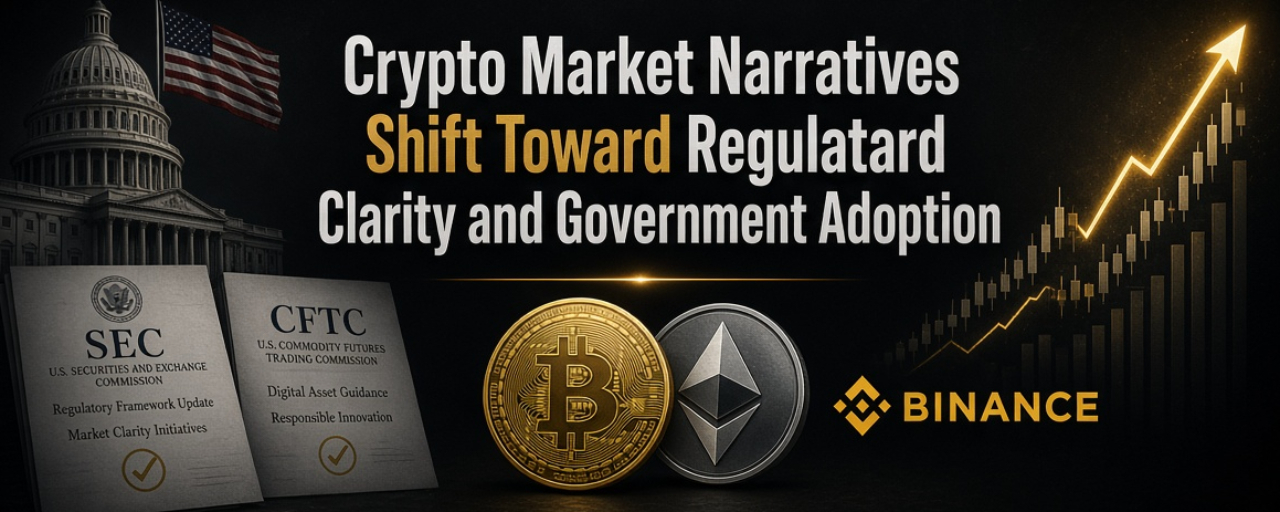
Crypto Market Narratives Shift Toward Regulatory Clarity and Government AdoptionThe crypto market is increasingly shaped by regulatory developments, government involvement, and major industry platforms. According to CoinMarketCap’s narrative tracking, the SEC/CFTC Digital Commodities theme rose 25.93% over 90 days, driven by expectations of clearer rules for major crypto assets such as Bitcoin, Ethereum, Solana, and XRP. A more defined regulatory framework could reduce legal uncertainty and potentially encourage institutional participation, although the long-term impact depends on further legislative developments, including the proposed CLARITY Act. $BTC
{future}(BTCUSDT)
Meanwhile, the US Strategic Crypto Reserve narrative gained 26.17% over 90 days, reflecting market interest in the United States’ plans for a government-held crypto reserve. Supporters view this initiative as a potential signal of long-term institutional acceptance, although its actual market impact will depend on official policies and future reserve decisions. The Binance Ecosystem narrative also advanced 23.57% over the same period, supported by Binance’s extensive user base and deep liquidity. However, weakening trading volumes suggest that continued growth may depend more on overall crypto market conditions than on the ecosystem’s expansion alone. $ETH
{future}(ETHUSDT)
Overall, these trends highlight how regulatory clarity and government involvement are influencing crypto market sentiment, while major trading platforms continue to provide liquidity and market access. The next developments to watch include progress on the CLARITY Act, official announcements concerning the US crypto reserve, and regulatory changes affecting Binance in key markets. Whether these factors can sustain investor interest will depend on how policy expectations translate into concrete implementation and lasting market activity. $SOL
{future}(SOLUSDT)
#CryptoRegulationBattle #bitcoin #CryptoMarket
Crypto Market Narratives Shift Toward Regulatory Clarity and Government Adoption
The crypto market is increasingly shaped by regulatory developments, government involvement, and major industry platforms. According to CoinMarketCap’s narrative tracking, the SEC/CFTC Digital Commodities theme rose 25.93% over 90 days, driven by expectations of clearer rules for major crypto assets such as Bitcoin, Ethereum, Solana, and XRP. A more defined regulatory framework could reduce legal uncertainty and potentially encourage institutional participation, although the long-term impact depends on further legislative developments, including the proposed CLARITY Act. $BTC
Meanwhile, the US Strategic Crypto Reserve narrative gained 26.17% over 90 days, reflecting market interest in the United States’ plans for a government-held crypto reserve. Supporters view this initiative as a potential signal of long-term institutional acceptance, although its actual market impact will depend on official policies and future reserve decisions. The Binance Ecosystem narrative also advanced 23.57% over the same period, supported by Binance’s extensive user base and deep liquidity. However, weakening trading volumes suggest that continued growth may depend more on overall crypto market conditions than on the ecosystem’s expansion alone. $ETH
Overall, these trends highlight how regulatory clarity and government involvement are influencing crypto market sentiment, while major trading platforms continue to provide liquidity and market access. The next developments to watch include progress on the CLARITY Act, official announcements concerning the US crypto reserve, and regulatory changes affecting Binance in key markets. Whether these factors can sustain investor interest will depend on how policy expectations translate into concrete implementation and lasting market activity. $SOL
#CryptoRegulationBattle #bitcoin #CryptoMarket
2
17
5.7k
·
--
Article
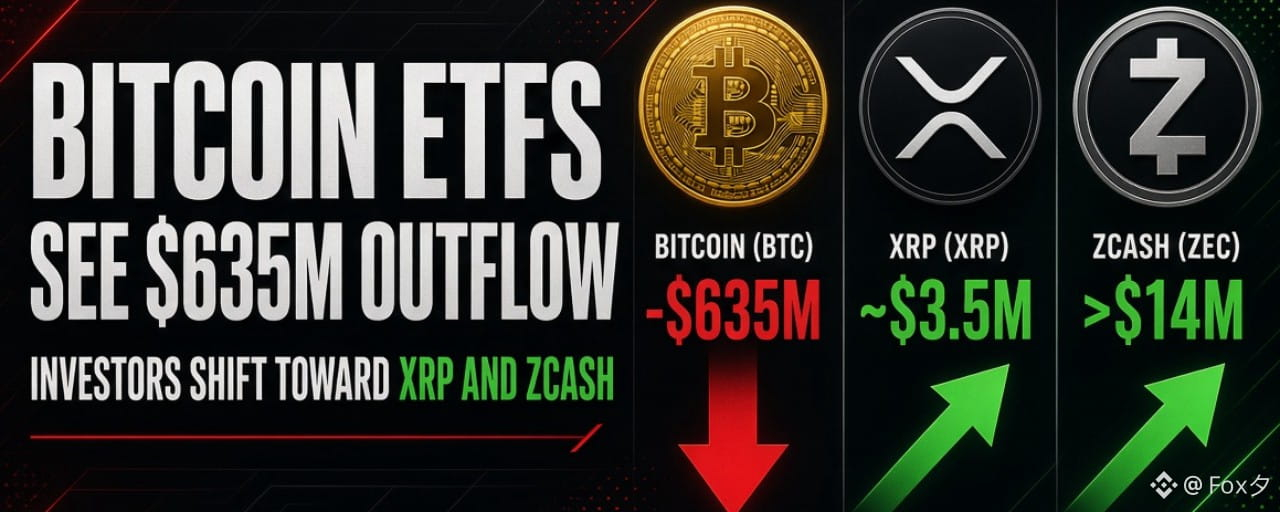
Bitcoin ETFs See $635M Outflow as Investors Shift Toward XRP and ZcashU.S. spot Bitcoin ETFs recorded approximately $635 million in net outflows on October 22, marking their largest single-day withdrawal since June and reversing much of the recent inflow momentum. Major funds, including BlackRock’s IBIT and Fidelity’s FBTC, accounted for more than 70% of the outflows, highlighting how quickly institutional sentiment toward Bitcoin can shift amid rising market uncertainty. Despite the withdrawals, total assets under management across Bitcoin ETFs remained above $100 billion. $XRP
{future}(XRPUSDT)
While Bitcoin and Ethereum ETFs faced significant selling pressure, XRP and Zcash products attracted fresh capital. Spot XRP ETFs reportedly recorded around $3.5 million to $3.6 million in net inflows, while Grayscale’s Zcash product attracted more than $14 million. Meanwhile, Ethereum ETFs lost approximately $110 million, and Solana and other altcoin products also experienced outflows. This selective movement suggests that some institutional investors are reallocating capital toward specific altcoin narratives rather than abandoning crypto assets altogether. $BTC
{future}(BTCUSDT)
Broader macroeconomic concerns, including weakness in AI-related technology stocks, rising oil prices, and economic uncertainty, contributed to the cautious market environment. Bitcoin’s ability to hold the $80,000 – $86,000 range, the direction of daily ETF flows, and whether XRP continues attracting institutional capital will be crucial indicators to watch. Ultimately, the latest figures highlight the fragility of institutional demand for Bitcoin while showing that capital remains willing to pursue selected altcoin opportunities. Whether this represents a temporary market adjustment or a more lasting shift in institutional allocation will depend on the coming weeks of ETF flows and price action. $SOL
{future}(SOLUSDT)
#BitcoinETF #xrp #CryptoMarket
Bitcoin ETFs See $635M Outflow as Investors Shift Toward XRP and Zcash
U.S. spot Bitcoin ETFs recorded approximately $635 million in net outflows on October 22, marking their largest single-day withdrawal since June and reversing much of the recent inflow momentum. Major funds, including BlackRock’s IBIT and Fidelity’s FBTC, accounted for more than 70% of the outflows, highlighting how quickly institutional sentiment toward Bitcoin can shift amid rising market uncertainty. Despite the withdrawals, total assets under management across Bitcoin ETFs remained above $100 billion. $XRP
While Bitcoin and Ethereum ETFs faced significant selling pressure, XRP and Zcash products attracted fresh capital. Spot XRP ETFs reportedly recorded around $3.5 million to $3.6 million in net inflows, while Grayscale’s Zcash product attracted more than $14 million. Meanwhile, Ethereum ETFs lost approximately $110 million, and Solana and other altcoin products also experienced outflows. This selective movement suggests that some institutional investors are reallocating capital toward specific altcoin narratives rather than abandoning crypto assets altogether. $BTC
Broader macroeconomic concerns, including weakness in AI-related technology stocks, rising oil prices, and economic uncertainty, contributed to the cautious market environment. Bitcoin’s ability to hold the $80,000 – $86,000 range, the direction of daily ETF flows, and whether XRP continues attracting institutional capital will be crucial indicators to watch. Ultimately, the latest figures highlight the fragility of institutional demand for Bitcoin while showing that capital remains willing to pursue selected altcoin opportunities. Whether this represents a temporary market adjustment or a more lasting shift in institutional allocation will depend on the coming weeks of ETF flows and price action. $SOL
#BitcoinETF #xrp #CryptoMarket
5
17
7.3k
·
--
Article
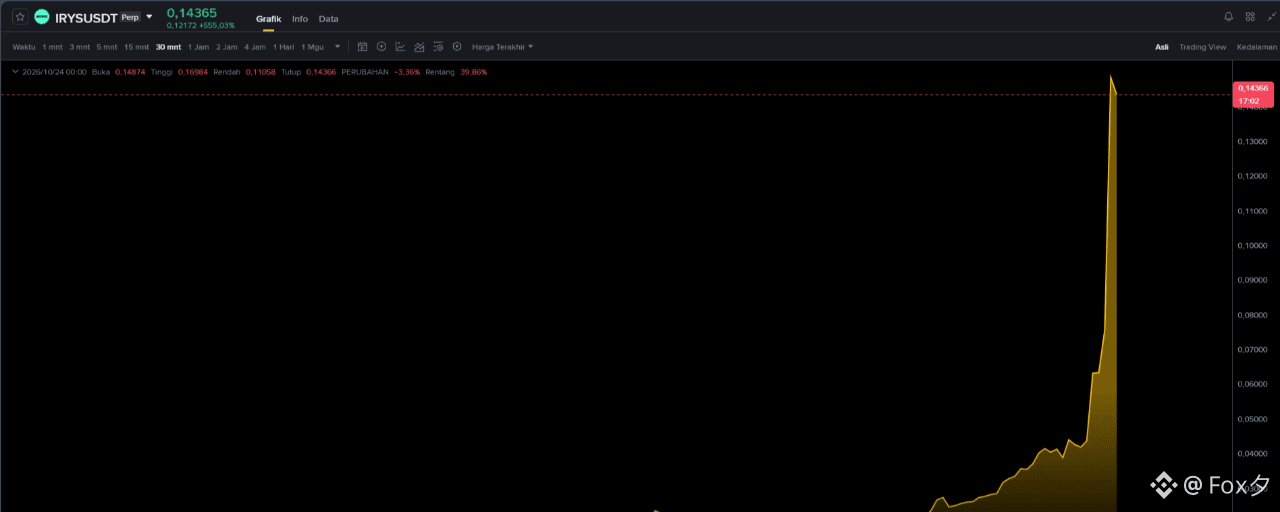
Irys (IRYS) Surges 534% as Speculative Trading Fuels a High-Risk RallyIrys (IRYS) surged 534.24% in 24 hours to $0.137, dramatically outperforming a largely flat crypto market. The rally was primarily driven by a sharp increase in speculative trading activity, with trading volume climbing 421.53% to $745.87 million. A 24-hour turnover ratio of 2.12 suggests exceptionally intense market activity, indicating that the price surge was fueled more by liquidity flows than by clearly identifiable fundamental developments.
No specific news, partnerships, or protocol upgrades have emerged to explain the rally. With Bitcoin rising only 0.54%, IRYS’s performance appears largely disconnected from the broader market and more closely tied to a sudden shift in speculative demand for riskier assets. Although momentum remains strong, the lack of a clear catalyst makes the rally vulnerable to a rapid reversal if buying pressure weakens.
In the short term, maintaining strong trading activity above $0.12 could help IRYS retest the local high near $0.14. However, a decline below $0.10 could trigger a sharper correction as overheated momentum fades and leveraged positions face liquidation. A sustained drop in daily trading volume below $200 million could also signal weakening demand. Ultimately, IRYS’s outlook remains bullish in terms of momentum but highly risky, with the rally’s sustainability depending on whether trading volume can remain elevated above $500 million or quickly retreats toward pre-surge levels.
#Irys $IRYS
{alpha}(560x91152b4ef635403efbae860edd0f8c321d7c035d)
{future}(IRYSUSDT)
Irys (IRYS) Surges 534% as Speculative Trading Fuels a High-Risk Rally
Irys (IRYS) surged 534.24% in 24 hours to $0.137, dramatically outperforming a largely flat crypto market. The rally was primarily driven by a sharp increase in speculative trading activity, with trading volume climbing 421.53% to $745.87 million. A 24-hour turnover ratio of 2.12 suggests exceptionally intense market activity, indicating that the price surge was fueled more by liquidity flows than by clearly identifiable fundamental developments.
No specific news, partnerships, or protocol upgrades have emerged to explain the rally. With Bitcoin rising only 0.54%, IRYS’s performance appears largely disconnected from the broader market and more closely tied to a sudden shift in speculative demand for riskier assets. Although momentum remains strong, the lack of a clear catalyst makes the rally vulnerable to a rapid reversal if buying pressure weakens.
In the short term, maintaining strong trading activity above $0.12 could help IRYS retest the local high near $0.14. However, a decline below $0.10 could trigger a sharper correction as overheated momentum fades and leveraged positions face liquidation. A sustained drop in daily trading volume below $200 million could also signal weakening demand. Ultimately, IRYS’s outlook remains bullish in terms of momentum but highly risky, with the rally’s sustainability depending on whether trading volume can remain elevated above $500 million or quickly retreats toward pre-surge levels.
#Irys $IRYS
9
1.2k
·
--
Vérifié

Article
Dogecoin Expands Its Institutional Reach as New Initiatives Aim to Build a Real DOGE EconomyDogecoin is entering a new phase as institutional investment opportunities expand and fresh initiatives aim to increase the cryptocurrency’s real-world utility. On October 22, 2026, Grayscale extended in-kind subscriptions to Dogecoin across its investment products, allowing eligible accredited investors to exchange DOGE directly for fund shares. Although this creates a more convenient route for institutional capital, the minimum investment for its Dogecoin product is approximately $95,550, limiting access for retail investors and potentially reducing its immediate impact on the broader market.
Meanwhile, the Dogecoin Foundation has supported the launch of Dogecoin Labs, an independent company bringing together the MyDoge wallet, DogeOS, and the Such App merchant payment tool. With MyDoge reportedly serving more than 500,000 users, the initiative aims to expand DOGE into consumer applications, decentralized finance, and merchant payments. However, DogeOS remains in public testnet, and publicly available data on active users and completed payment volumes is still limited, making actual adoption difficult to assess.
Despite these developments, the broader meme coin market remains under pressure. Its total market capitalization has reportedly fallen from $35.1 billion to $29.7 billion since early October, while Dogecoin’s market capitalization stands at around $12.4 billion after a decline of approximately 15% in recent weeks. DOGE continues to lead the sector, but its price remains vulnerable to market sentiment and speculative trading. Ultimately, Grayscale’s institutional access and Dogecoin Labs offer potential long-term catalysts, but sustained growth will depend on whether these initiatives generate measurable adoption and genuine demand beyond Dogecoin’s meme-driven appeal.
#DOGE $DOGE
{future}(DOGEUSDT)
{spot}(DOGEUSDT)
Dogecoin Expands Its Institutional Reach as New Initiatives Aim to Build a Real DOGE Economy
Dogecoin is entering a new phase as institutional investment opportunities expand and fresh initiatives aim to increase the cryptocurrency’s real-world utility. On October 22, 2026, Grayscale extended in-kind subscriptions to Dogecoin across its investment products, allowing eligible accredited investors to exchange DOGE directly for fund shares. Although this creates a more convenient route for institutional capital, the minimum investment for its Dogecoin product is approximately $95,550, limiting access for retail investors and potentially reducing its immediate impact on the broader market.
Meanwhile, the Dogecoin Foundation has supported the launch of Dogecoin Labs, an independent company bringing together the MyDoge wallet, DogeOS, and the Such App merchant payment tool. With MyDoge reportedly serving more than 500,000 users, the initiative aims to expand DOGE into consumer applications, decentralized finance, and merchant payments. However, DogeOS remains in public testnet, and publicly available data on active users and completed payment volumes is still limited, making actual adoption difficult to assess.
Despite these developments, the broader meme coin market remains under pressure. Its total market capitalization has reportedly fallen from $35.1 billion to $29.7 billion since early October, while Dogecoin’s market capitalization stands at around $12.4 billion after a decline of approximately 15% in recent weeks. DOGE continues to lead the sector, but its price remains vulnerable to market sentiment and speculative trading. Ultimately, Grayscale’s institutional access and Dogecoin Labs offer potential long-term catalysts, but sustained growth will depend on whether these initiatives generate measurable adoption and genuine demand beyond Dogecoin’s meme-driven appeal.
#DOGE $DOGE
1
10
9.2k
·
--
Anu ....... Vote for Fox夕 for the Blockchain 100 Awards!
#BlockchainAwards2026 #Anu #EarningsSeason
👇🏿👇🏿👇🏿
[VOTE HERE](https://app.binance.com/uni-qr/cact26user/406?uc=app_square_share_link&us=copylink)
salam anu ✌🏿😁✌🏿 terimakasih ☕
$NVDAB
{spot}(NVDABUSDT)
$BNB
{future}(BNBUSDT)
$ASTER
{future}(ASTERUSDT)
Anu ....... Vote for Fox夕 for the Blockchain 100 Awards!
#BlockchainAwards2026 #Anu #EarningsSeason
👇🏿👇🏿👇🏿
VOTE HERE
salam anu ✌🏿😁✌🏿 terimakasih ☕
$NVDAB
$BNB
$ASTER
#BlockchainAwards2026 #Anu #EarningsSeason
👇🏿👇🏿👇🏿
VOTE HERE
salam anu ✌🏿😁✌🏿 terimakasih ☕
$NVDAB
$BNB
$ASTER


2.2k
41
230
2.3k
·
--
Started creating because I was tired of seeing complicated crypto content that beginners couldn’t follow. I wanted to break things down simply and honestly.
Going forward, I just want to keep improving, stay consistent, and hopefully help more people navigate this space without the noise.
Appreciate the challenge @Xuetang
@eggtartcake_grape let’s see your stories too!
Started creating because I was tired of seeing complicated crypto content that beginners couldn’t follow. I wanted to break things down simply and honestly.
Going forward, I just want to keep improving, stay consistent, and hopefully help more people navigate this space without the noise.
Appreciate the challenge @新手学堂天使自治社区
@Eggtartcake let’s see your stories too!
Going forward, I just want to keep improving, stay consistent, and hopefully help more people navigate this space without the noise.
Appreciate the challenge @新手学堂天使自治社区
@Eggtartcake let’s see your stories too!

新手学堂天使自治社区
·
--
🏆百大宣言|你想成为怎样的创作者?
最近广场好热闹,大家都在为心中的百大创作者加油!学堂也来凑个热闹,希望借这个机会,让更多优秀创作者被看见!💛
📢 欢迎各位创作者来接招!
1️⃣ 关注 @新手学堂天使自治社区
2️⃣ 引用本帖,分享你的创作初心与未来期待!@ 下一位创作者接力!
3️⃣也欢迎大家在评论区 @ 你期待看到回答的创作者!
🎁 学堂福利加码
🏆 创作者福利:抽取 10 位参与分享的创作者,各送币安周边!
💰 互动福利:评论区随机抽取 20 位幸运用户,每人送出 10 USDT!
百大不止于排名,更是热爱与坚持。
👇 这道题,谁先来接招?💪
最近广场好热闹,大家都在为心中的百大创作者加油!学堂也来凑个热闹,希望借这个机会,让更多优秀创作者被看见!💛
📢 欢迎各位创作者来接招!
1️⃣ 关注 @新手学堂天使自治社区
2️⃣ 引用本帖,分享你的创作初心与未来期待!@ 下一位创作者接力!
3️⃣也欢迎大家在评论区 @ 你期待看到回答的创作者!
🎁 学堂福利加码
🏆 创作者福利:抽取 10 位参与分享的创作者,各送币安周边!
💰 互动福利:评论区随机抽取 20 位幸运用户,每人送出 10 USDT!
百大不止于排名,更是热爱与坚持。
👇 这道题,谁先来接招?💪

7
22
8.1k
·
--
Trading sur 30 j de 12.7K USDT en $SOL
W2E upgrade #Write2Earn! $SOL
{future}(SOLUSDT)
W2E upgrade #Write2Earn! $SOL


Binance Square Official
·
--
Binance Square Write to Earn Upgrade: What does this mean to you?
After the Oct 19 upgrade, Write to Earn earnings are no longer just about readers' trading commissions (see what this update is about here). Consistently producing quality content, building a genuine community, and driving genuine engagement can also earn rewards.
Here's how earnings work after the upgrade, and how we suggest you take part.
New Reward Structure:
Total Rewards = (Text Trading Commission + Engagement Bonus) + (Live Stream Basic Commission + Live Stream Bonus Commission) + Chat Basic Commission
Basic Commission: Every eligible creator receives a one-time 20% commission per trade.Engagement Bonus: Eligible text-based content can earn an Engagement Bonus from a weekly reward pool. Your share is determined in Binance’s sole discretion by the quality and volume of engagement your content generates, including comments, likes, and follows. Different types of engagement carry different weight, and engagement from more active users contributes more. The bonus is designed to reward content that drives genuine discussion and is calculated and settled weekly.Bonus Commission (live streams only): The top 100 creators by the end of each week, ranked by basic commission, can receive a bonus commission as per the table below. The bonus commission is calculated and settled weekly.
Tip 1: Don’t just post content, run your community
Each format earns differently now, and running them together helps you earn more fully across the program.
How each format earns:
Text content (short posts, long articles, videos) earns trading commissions and the Engagement Bonus. It's the only format eligible for the Engagement Bonus, and it works well as your main day-to-day format.Live streams are ranked separately. The top 100 creators each week by basic commission get an extra bonus commission, with higher rates for higher rankings. If you can, go live regularly.Chats earn the basic commission and are good for keeping your core readers around and your community active day to day.
Make text your main format, with live streams and chats alongside it. Use our official widgets to share trades across all three channels.
Examples:
Creator A posts text content, hosts live streams, and runs chats, while engaging with followers and replying to comments. If their weekly live stream Basic Commission ranks in the Top 1–30, their earnings by format would be as follows:
Creator A earns Basic Commission and Bonus Commission when users click their content and trade, plus an Engagement Bonus from people who engage with the content without trading through it.
Creator B only posts text on Binance Square and never engages with comments or followers. They can only earn the 20% Basic Commission when users click their content and trade.
Tip 2: Posting in high volume or farming engagement won't earn you anything
One important change: simply posting a lot, or farming engagement, no longer earns rewards. Our system measures whether your content sparks real, high-quality discussion, not how many interactions it racks up. What matters is standout content and the genuine community you build around it.
When readers comment, like, or follow after reading, your content will get more exposure and also a share of the weekly engagement reward pool. You don't need to steer anyone toward trading. Focus on the content itself.
Things that help:
End with an open question and invite readers to share their view in the comments.Say what you actually think instead of just relaying information.Share real trade records and reviews. They lead to better discussion.Reply to comments and keep the interaction natural and consistent.Post on a steady schedule. It builds reader habits and keeps followers around.Keep a steady posting cadence, which helps build reader habit and follower stickiness.
Please note: the Engagement Bonus counts genuine engagement only. Coordinated activity such as mutual likes and follows, and engagement produced through alt accounts, scripts, or similar means, will not be counted and may result in disqualification. Please refer to the Terms for more details.
Tip 3: Check your earnings by channel and learn what your followers want
The top of the page shows your rewards for the week, trading commissions plus the Engagement Bonus combined. You can view the two separately, along with earnings and performance for each channel: text, live streams, and chats. Use it to see which content and which channel your followers respond to, then adjust.
You'll also find last week's settlement data and your USDC distribution history on the Write to Earn page.
Please refer to the full program rules and terms here.

10
428
·
--
Article
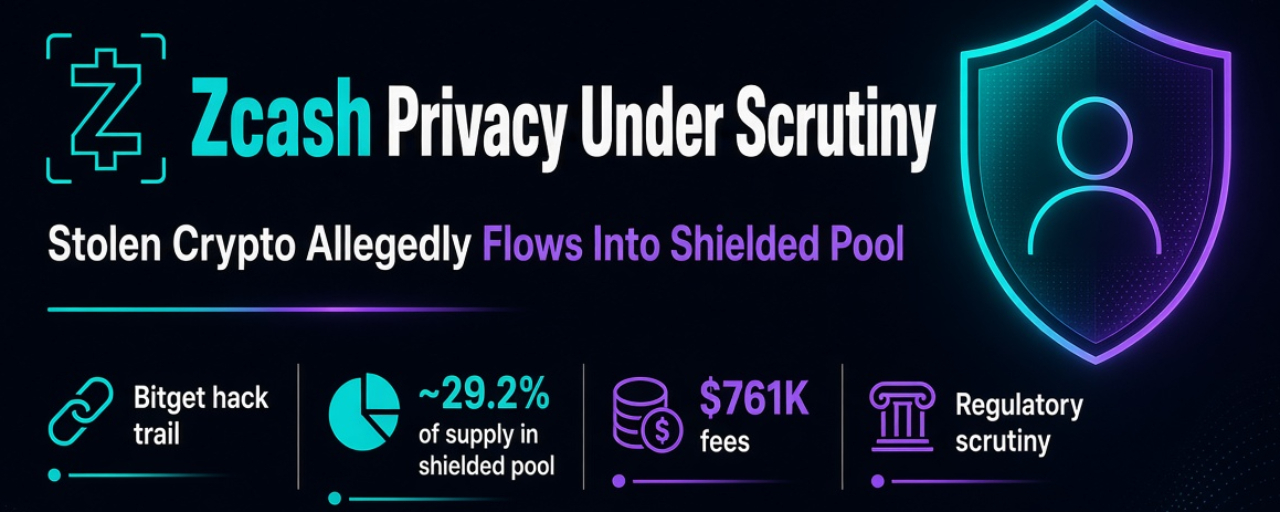
Zcash Privacy Under Scrutiny as Stolen Crypto Allegedly Flows Into Shielded PoolBlockchain investigators have reportedly traced some assets allegedly stolen in the recent Bitget hot-wallet hack to Zcash (ZEC), including transactions that may have ended in its shielded pool. Researchers also estimated that services used to move the stolen funds collected around $761,725 in fees. However, the full transaction trail has not been publicly verified, and the exact amount that entered Zcash’s shielded pool remains unclear.
Zcash’s privacy technology uses zero-knowledge proofs to conceal transaction details, including the sender, recipient, and amount transferred. Approximately 4.96 million ZEC, or 29.2% of the circulating supply, is currently held in the shielded pool. While this feature helps legitimate users protect their financial privacy, it can also make tracing potentially illicit funds significantly more difficult.
The case could increase regulatory scrutiny of privacy-focused cryptocurrencies. Exchanges may introduce stricter deposit screening, monitoring, and trading restrictions if authorities identify recurring patterns of illicit funds moving through shielded transactions. For ZEC holders, the key concern is whether stronger enforcement measures could affect exchange access and compliance requirements. Ultimately, the incident highlights the ongoing tension between financial privacy and crime prevention, making regulatory developments an important factor to watch for Zcash users and investors.
#zec $ZEC
{spot}(ZECUSDT)
{future}(ZECUSDT)
Zcash Privacy Under Scrutiny as Stolen Crypto Allegedly Flows Into Shielded Pool
Blockchain investigators have reportedly traced some assets allegedly stolen in the recent Bitget hot-wallet hack to Zcash (ZEC), including transactions that may have ended in its shielded pool. Researchers also estimated that services used to move the stolen funds collected around $761,725 in fees. However, the full transaction trail has not been publicly verified, and the exact amount that entered Zcash’s shielded pool remains unclear.
Zcash’s privacy technology uses zero-knowledge proofs to conceal transaction details, including the sender, recipient, and amount transferred. Approximately 4.96 million ZEC, or 29.2% of the circulating supply, is currently held in the shielded pool. While this feature helps legitimate users protect their financial privacy, it can also make tracing potentially illicit funds significantly more difficult.
The case could increase regulatory scrutiny of privacy-focused cryptocurrencies. Exchanges may introduce stricter deposit screening, monitoring, and trading restrictions if authorities identify recurring patterns of illicit funds moving through shielded transactions. For ZEC holders, the key concern is whether stronger enforcement measures could affect exchange access and compliance requirements. Ultimately, the incident highlights the ongoing tension between financial privacy and crime prevention, making regulatory developments an important factor to watch for Zcash users and investors.
#zec $ZEC
5
1
12
8.1k
·
--
Vérifié
Article
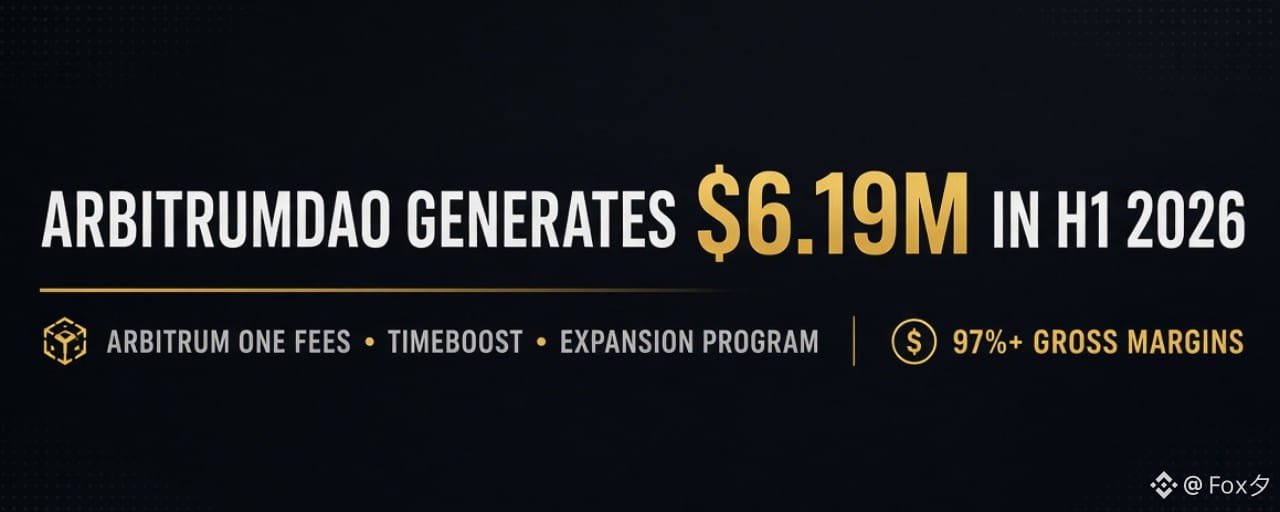
ArbitrumDAO Generates $6.19 Million in H1 2026 as Its Revenue Model Gains TractionArbitrumDAO generated $6.19 million in revenue during the first half of 2026, highlighting Arbitrum’s growing role as blockchain infrastructure capable of producing real, recurring income. Revenue came primarily from transaction fees on Arbitrum One, Timeboost, Expansion Program licensing fees, and returns on the DAO’s treasury. Gross margins on protocol revenue exceeded 97%, reflecting the relatively low incremental costs of operating its infrastructure.
The Arbitrum Expansion Program is becoming an increasingly important contributor to revenue by allowing other networks to use Arbitrum technology under licensing arrangements. In July 2026, licensing fees reached $360,000, accounting for 35% of the DAO’s revenue that month, with Robinhood Chain contributing to the program’s growth. Under the program’s revenue-sharing structure, eligible networks contribute 10% of their net protocol revenue, with 8% allocated to the DAO treasury and 2% to the Arbitrum Developer Guild.
Despite this progress, the growing revenue stream does not automatically translate into direct financial returns for ARB holders. ARB remains primarily a governance token used to vote on DAO proposals rather than a token required to pay network transaction fees. The value it offers to holders therefore depends partly on how the DAO manages its expanding treasury and whether its spending decisions support sustainable ecosystem growth.
Looking ahead, the key factors to watch are whether transaction activity remains strong, whether more networks join the Expansion Program, and how the DAO allocates its growing cash reserves. Overall, Arbitrum’s $6.19 million in first-half revenue demonstrates progress toward a sustainable infrastructure business, but establishing a clearer link between protocol revenue and value for ARB holders remains an important challenge. #ARB $ARB
{future}(ARBUSDT)
{spot}(ARBUSDT)
ArbitrumDAO Generates $6.19 Million in H1 2026 as Its Revenue Model Gains Traction
ArbitrumDAO generated $6.19 million in revenue during the first half of 2026, highlighting Arbitrum’s growing role as blockchain infrastructure capable of producing real, recurring income. Revenue came primarily from transaction fees on Arbitrum One, Timeboost, Expansion Program licensing fees, and returns on the DAO’s treasury. Gross margins on protocol revenue exceeded 97%, reflecting the relatively low incremental costs of operating its infrastructure.
The Arbitrum Expansion Program is becoming an increasingly important contributor to revenue by allowing other networks to use Arbitrum technology under licensing arrangements. In July 2026, licensing fees reached $360,000, accounting for 35% of the DAO’s revenue that month, with Robinhood Chain contributing to the program’s growth. Under the program’s revenue-sharing structure, eligible networks contribute 10% of their net protocol revenue, with 8% allocated to the DAO treasury and 2% to the Arbitrum Developer Guild.
Despite this progress, the growing revenue stream does not automatically translate into direct financial returns for ARB holders. ARB remains primarily a governance token used to vote on DAO proposals rather than a token required to pay network transaction fees. The value it offers to holders therefore depends partly on how the DAO manages its expanding treasury and whether its spending decisions support sustainable ecosystem growth.
Looking ahead, the key factors to watch are whether transaction activity remains strong, whether more networks join the Expansion Program, and how the DAO allocates its growing cash reserves. Overall, Arbitrum’s $6.19 million in first-half revenue demonstrates progress toward a sustainable infrastructure business, but establishing a clearer link between protocol revenue and value for ARB holders remains an important challenge. #ARB $ARB
1
13
3.2k
·
--
Article
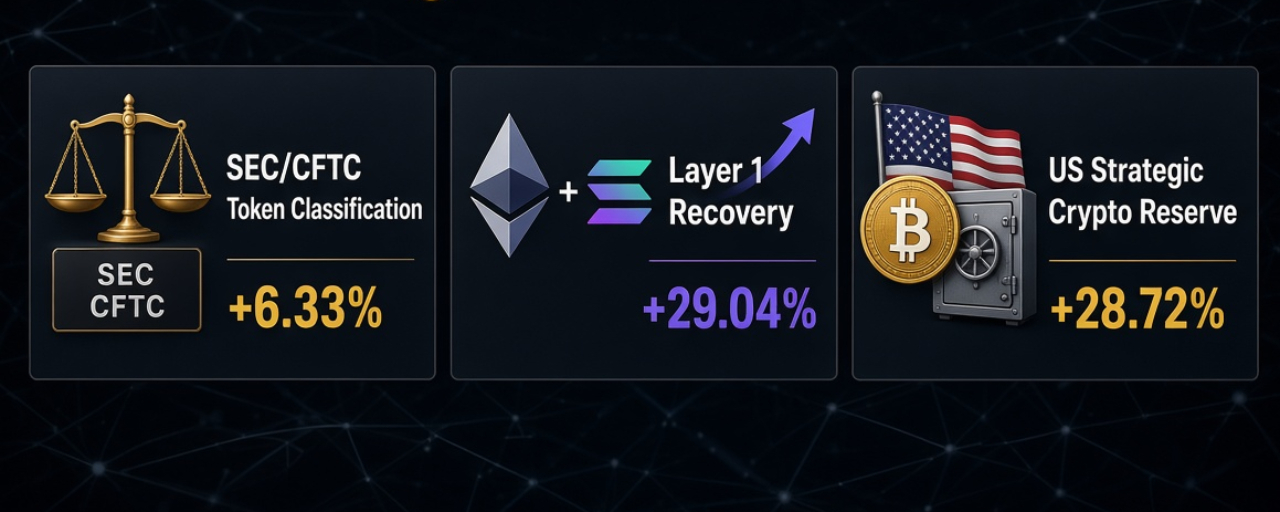
Three Major Crypto Narratives Driving Market Momentum: Regulation, Layer 1 Growth, and US StrategicThe cryptocurrency market is increasingly being shaped by regulatory developments, blockchain innovation, and growing government recognition of digital assets. According to CoinMarketCap’s latest narrative trends, three themes are attracting significant attention: SEC/CFTC token classification, Layer 1 blockchain recovery, and the US Strategic Crypto Reserve. $BNB
{future}(BNBUSDT)
The SEC/CFTC token taxonomy leads the momentum, gaining 6.33% over the past 30 days. The joint regulatory framework classifies 16 major digital assets, including Bitcoin, Ethereum, Solana, and XRP, as digital commodities rather than securities. This development could reduce legal uncertainty, encourage institutional participation, and support the expansion of crypto investment products. The upcoming progress of the CLARITY Act remains an important factor in determining whether this regulatory clarity will become permanent.
Meanwhile, the Layer 1 sector has recorded a stronger recovery, rising 29.04% over 90 days. Networks such as Ethereum and Solana are benefiting from improvements in scalability, increasing transaction activity, and renewed developer interest. Market attention is also shifting toward blockchain projects with real adoption, sustainable revenue, and measurable economic activity rather than purely speculative growth. $SOL
{future}(SOLUSDT)
Another major narrative is the US Strategic Crypto Reserve, which has gained 28.72% over the same 90-day period. The initiative reflects growing government recognition of cryptocurrencies as strategic assets, particularly Bitcoin and other major digital currencies. This development could strengthen institutional confidence and encourage other governments and traditional financial institutions to consider similar crypto allocations. $XRP
{future}(XRPUSDT)
Overall, these trends suggest that the crypto market is gradually shifting from speculation toward stronger fundamentals, regulatory clarity, and institutional adoption. The next major catalyst could be the progress of the CLARITY Act and further developments in the US strategic reserve, which may influence the next wave of institutional capital entering the digital asset market.
#CryptoRegulation #Layer1 #BitcoinReserve
Three Major Crypto Narratives Driving Market Momentum: Regulation, Layer 1 Growth, and US Strategic
The cryptocurrency market is increasingly being shaped by regulatory developments, blockchain innovation, and growing government recognition of digital assets. According to CoinMarketCap’s latest narrative trends, three themes are attracting significant attention: SEC/CFTC token classification, Layer 1 blockchain recovery, and the US Strategic Crypto Reserve. $BNB
The SEC/CFTC token taxonomy leads the momentum, gaining 6.33% over the past 30 days. The joint regulatory framework classifies 16 major digital assets, including Bitcoin, Ethereum, Solana, and XRP, as digital commodities rather than securities. This development could reduce legal uncertainty, encourage institutional participation, and support the expansion of crypto investment products. The upcoming progress of the CLARITY Act remains an important factor in determining whether this regulatory clarity will become permanent.
Meanwhile, the Layer 1 sector has recorded a stronger recovery, rising 29.04% over 90 days. Networks such as Ethereum and Solana are benefiting from improvements in scalability, increasing transaction activity, and renewed developer interest. Market attention is also shifting toward blockchain projects with real adoption, sustainable revenue, and measurable economic activity rather than purely speculative growth. $SOL
Another major narrative is the US Strategic Crypto Reserve, which has gained 28.72% over the same 90-day period. The initiative reflects growing government recognition of cryptocurrencies as strategic assets, particularly Bitcoin and other major digital currencies. This development could strengthen institutional confidence and encourage other governments and traditional financial institutions to consider similar crypto allocations. $XRP
Overall, these trends suggest that the crypto market is gradually shifting from speculation toward stronger fundamentals, regulatory clarity, and institutional adoption. The next major catalyst could be the progress of the CLARITY Act and further developments in the US strategic reserve, which may influence the next wave of institutional capital entering the digital asset market.
#CryptoRegulation #Layer1 #BitcoinReserve
2
15
2.3k
·
--
Vérifié
Onchain markets have always leaked your intent before you even act. Stops, conditional buys, rebalancing triggers - all sitting in the open for bots and hunters to exploit.
Nillion’s Dusk changes the game. Now live on Ethereum mainnet, Covenants let you seal an instruction to a condition (price threshold, time window, etc.), post it onchain encrypted, and have it unlock itself only when that condition is met. No one can read it beforehand - not other traders, not searchers, not the network. No trusted keeper required.
This is Phase 1 of their 7-phase Encrypted Markets roadmap. What I like most about Covenants is that strategy stays private until the exact moment it matters. Front-running and stop-hunting lose their edge when the intent itself is sealed.
Watching this closely while holding $NIL . The next phases (multi-chain, custom conditions, post-quantum) look even more interesting.
#NIL @nillionnetwork
Onchain markets have always leaked your intent before you even act. Stops, conditional buys, rebalancing triggers - all sitting in the open for bots and hunters to exploit.
Nillion’s Dusk changes the game. Now live on Ethereum mainnet, Covenants let you seal an instruction to a condition (price threshold, time window, etc.), post it onchain encrypted, and have it unlock itself only when that condition is met. No one can read it beforehand - not other traders, not searchers, not the network. No trusted keeper required.
This is Phase 1 of their 7-phase Encrypted Markets roadmap. What I like most about Covenants is that strategy stays private until the exact moment it matters. Front-running and stop-hunting lose their edge when the intent itself is sealed.
Watching this closely while holding $NIL . The next phases (multi-chain, custom conditions, post-quantum) look even more interesting.
#NIL @Nillion


4
19
531
·
--
Article
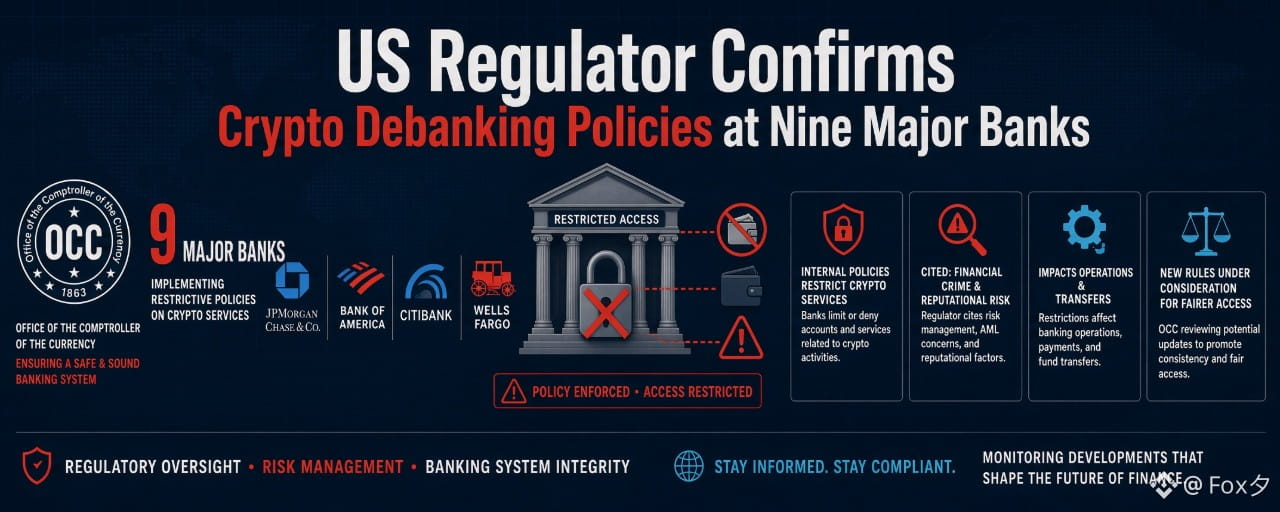
US Regulator Confirms Crypto Debanking Policies at Nine Major BanksThe US Office of the Comptroller of the Currency (OCC) has confirmed that nine major American banks maintain internal policies that restrict banking services for certain cryptocurrency businesses. Its review found that banks, including JPMorgan, Bank of America, Citibank, and Wells Fargo, have limited services for digital asset issuers, exchanges, and administrators, often citing financial crime concerns and broadly defined reputational risks. $DOGE
The findings strengthen long-standing complaints from the crypto industry about “debanking,” a practice in which businesses struggle to obtain or maintain access to essential banking services. Such restrictions can complicate everyday operations, including managing funds, paying employees, and transferring money between traditional currencies and cryptocurrencies. The report also suggests that similar policies affect other politically sensitive industries, indicating that the issue may extend beyond crypto. $ETH
However, the OCC did not disclose detailed figures on how many crypto businesses have been affected, identify specific cases of account closures, or fully assess the overall scale of the problem. As a result, although restrictive banking policies have been officially documented, their actual impact on the digital asset industry remains uncertain.
The regulator is considering new rules aimed at ensuring fairer access to financial services and potentially limiting banks’ reliance on subjective reputational risk assessments. Future developments in regulatory guidance and congressional action could determine whether banks adopt clearer, risk-based customer policies or continue restricting their exposure to the crypto sector. $BTC
Overall, the OCC’s findings represent an important acknowledgment that banking access remains a challenge for crypto businesses in the United States. The key question is whether upcoming regulatory changes will provide more transparent and consistent access to banking services without compromising legitimate financial crime prevention measures.
#CryptoDebanking #OCC #debanking #CryptoNewss #USCrypto
US Regulator Confirms Crypto Debanking Policies at Nine Major Banks
The US Office of the Comptroller of the Currency (OCC) has confirmed that nine major American banks maintain internal policies that restrict banking services for certain cryptocurrency businesses. Its review found that banks, including JPMorgan, Bank of America, Citibank, and Wells Fargo, have limited services for digital asset issuers, exchanges, and administrators, often citing financial crime concerns and broadly defined reputational risks. $DOGE
The findings strengthen long-standing complaints from the crypto industry about “debanking,” a practice in which businesses struggle to obtain or maintain access to essential banking services. Such restrictions can complicate everyday operations, including managing funds, paying employees, and transferring money between traditional currencies and cryptocurrencies. The report also suggests that similar policies affect other politically sensitive industries, indicating that the issue may extend beyond crypto. $ETH
However, the OCC did not disclose detailed figures on how many crypto businesses have been affected, identify specific cases of account closures, or fully assess the overall scale of the problem. As a result, although restrictive banking policies have been officially documented, their actual impact on the digital asset industry remains uncertain.
The regulator is considering new rules aimed at ensuring fairer access to financial services and potentially limiting banks’ reliance on subjective reputational risk assessments. Future developments in regulatory guidance and congressional action could determine whether banks adopt clearer, risk-based customer policies or continue restricting their exposure to the crypto sector. $BTC
Overall, the OCC’s findings represent an important acknowledgment that banking access remains a challenge for crypto businesses in the United States. The key question is whether upcoming regulatory changes will provide more transparent and consistent access to banking services without compromising legitimate financial crime prevention measures.
#CryptoDebanking #OCC #debanking #CryptoNewss #USCrypto
3
1
10
1.1k
·
--
Vérifié
Article
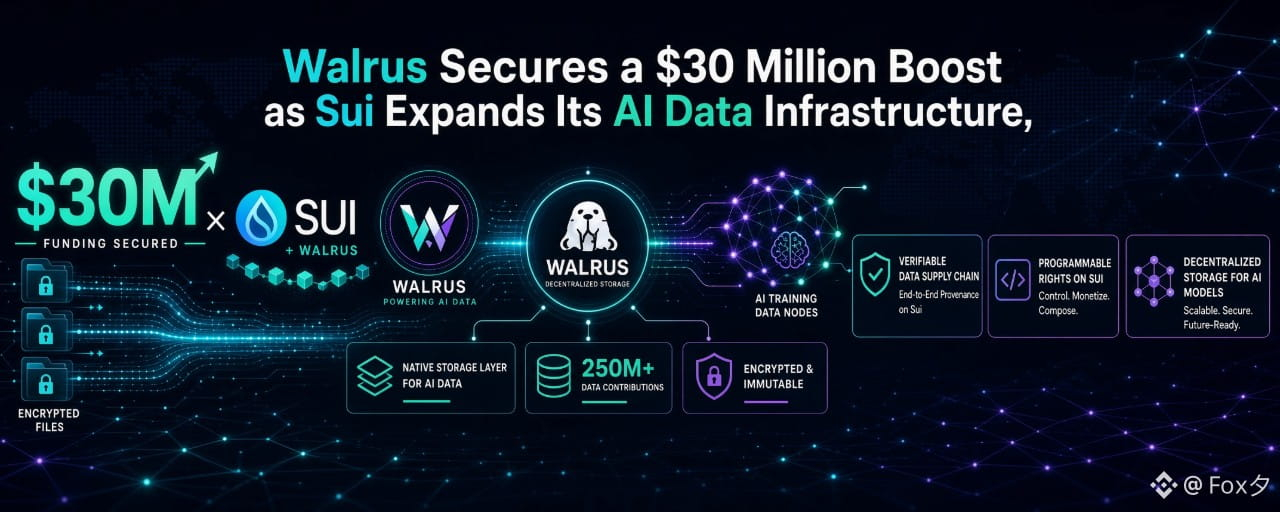
Walrus Secures a $30 Million Boost as Sui Expands Its AI Data InfrastructureWalrus is gaining attention after Sui Foundation announced a planned $30 million investment in DATA Network, positioning Walrus as the network’s native storage layer for AI training data. The partnership aims to build a scalable and verifiable data supply chain that helps establish the origin, ownership, and authorized use of data used to train artificial intelligence models.
As part of the transition announced in October 2026, DATA Network plans to discontinue its independent blockchain and rebuild its protocol on Sui. Its Trace registry has reportedly recorded more than 250 million data contributions, while Walrus will provide decentralized storage for encrypted, immutable copies of source files. Sui will support programmable rights management and payments, helping connect data ownership with its permitted use.
The integration could strengthen WAL’s role in the growing intersection of decentralized storage and AI infrastructure. As DATA Network expands, demand for reliable storage could increase, creating opportunities for sustained network usage. However, the long-term impact on WAL will depend on whether the partnership generates recurring paid storage demand and measurable on-chain activity.
Overall, the investment and migration mark a significant step toward integrating Walrus into AI data infrastructure. The key question is whether this strategic partnership can translate into lasting adoption and sustainable demand for the WAL token. #walrus #sui $WAL
{future}(SUIUSDT)
{future}(WALUSDT)
Walrus Secures a $30 Million Boost as Sui Expands Its AI Data Infrastructure
Walrus is gaining attention after Sui Foundation announced a planned $30 million investment in DATA Network, positioning Walrus as the network’s native storage layer for AI training data. The partnership aims to build a scalable and verifiable data supply chain that helps establish the origin, ownership, and authorized use of data used to train artificial intelligence models.
As part of the transition announced in October 2026, DATA Network plans to discontinue its independent blockchain and rebuild its protocol on Sui. Its Trace registry has reportedly recorded more than 250 million data contributions, while Walrus will provide decentralized storage for encrypted, immutable copies of source files. Sui will support programmable rights management and payments, helping connect data ownership with its permitted use.
The integration could strengthen WAL’s role in the growing intersection of decentralized storage and AI infrastructure. As DATA Network expands, demand for reliable storage could increase, creating opportunities for sustained network usage. However, the long-term impact on WAL will depend on whether the partnership generates recurring paid storage demand and measurable on-chain activity.
Overall, the investment and migration mark a significant step toward integrating Walrus into AI data infrastructure. The key question is whether this strategic partnership can translate into lasting adoption and sustainable demand for the WAL token. #walrus #sui $WAL
1
8
694
·
--
Vérifié
Article
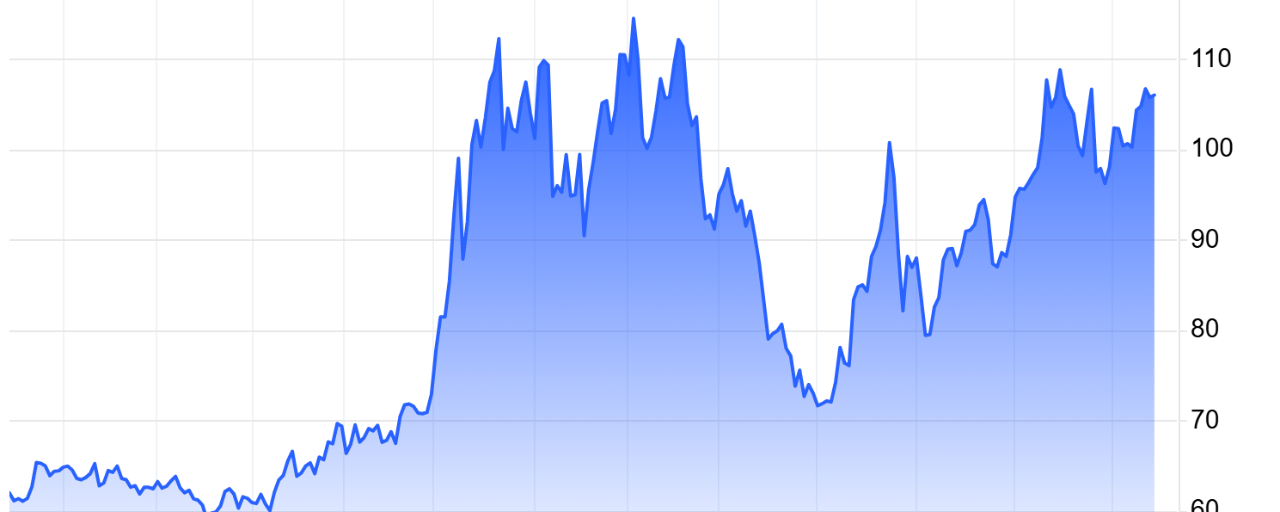
Middle East tensions keep rewriting the inflation scriptBrent crude has been trading around $105 -106 a barrel this week, still elevated after Houthi attacks on Saudi infrastructure and repeated tanker incidents near the Strait of Hormuz. Energy costs have already pushed August CPI to 3.4% YoY, and consensus now looks for September headline CPI to accelerate to around 0.6% MoM / 3.6% YoY when the data drops later today, largely on the back of gasoline prices that jumped roughly 7% last month. $NVDAB
{spot}(NVDABUSDT)
A hotter-than-expected print would reinforce the idea that the Fed’s September hike (to 3.75 - 4.00%) was not a one-off. Markets are already pricing additional tightening, which has kept the 10-year Treasury yield hovering near 5.20%, multi-decade highs. Higher yields mean lower bond prices, so the path for long-duration Treasuries remains under pressure as long as oil stays sticky and the energy component of CPI refuses to cool. $BTC
{future}(BTCUSDT)
My current bias:
Watching BZUSDT for further oil upside if supply disruptions persist.Cautious on long Treasuries (prefer TBT exposure over TMFUSDT if CPI prints hot).Keeping dry powder in RWUSD for the yield while waiting for clearer Fed signals.
Will September CPI come in hotter than expected and keep oil climbing, or will shelter and core finally give the Fed breathing room? Data in a few hours will decide the next leg for both oil and Treasuries. $XRP
{future}(XRPUSDT)
#CPIWatch
Middle East tensions keep rewriting the inflation script
Brent crude has been trading around $105 -106 a barrel this week, still elevated after Houthi attacks on Saudi infrastructure and repeated tanker incidents near the Strait of Hormuz. Energy costs have already pushed August CPI to 3.4% YoY, and consensus now looks for September headline CPI to accelerate to around 0.6% MoM / 3.6% YoY when the data drops later today, largely on the back of gasoline prices that jumped roughly 7% last month. $NVDAB
A hotter-than-expected print would reinforce the idea that the Fed’s September hike (to 3.75 - 4.00%) was not a one-off. Markets are already pricing additional tightening, which has kept the 10-year Treasury yield hovering near 5.20%, multi-decade highs. Higher yields mean lower bond prices, so the path for long-duration Treasuries remains under pressure as long as oil stays sticky and the energy component of CPI refuses to cool. $BTC
My current bias:
Watching BZUSDT for further oil upside if supply disruptions persist.Cautious on long Treasuries (prefer TBT exposure over TMFUSDT if CPI prints hot).Keeping dry powder in RWUSD for the yield while waiting for clearer Fed signals.
Will September CPI come in hotter than expected and keep oil climbing, or will shelter and core finally give the Fed breathing room? Data in a few hours will decide the next leg for both oil and Treasuries. $XRP
#CPIWatch
BZ+1,09%
TBTETF+0,72%
7
4
46
2.1k
·
--
Article
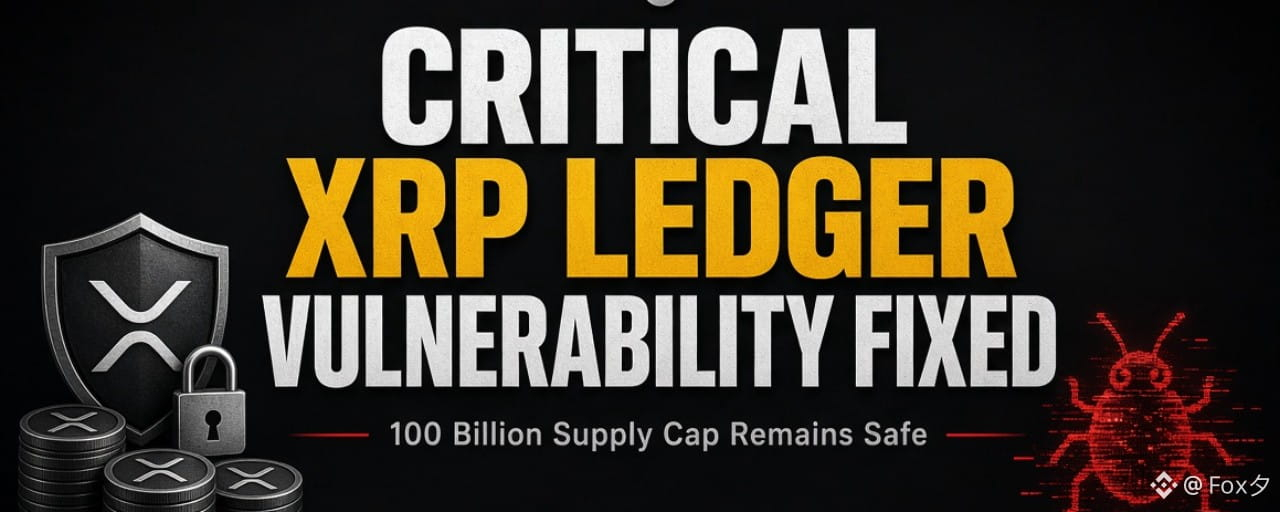
A Critical XRP Ledger Vulnerability Exposed, but the 100 Billion Supply Cap Remains SafeThe XRP Ledger (XRPL) has fixed a critical vulnerability that had potentially existed since around 2015. The flaw, discovered by security researchers Cayden Liao and Veria Labs, could theoretically have allowed an attacker to create approximately 18.45 trillion spendable XRP through a specially crafted transaction, far exceeding the network’s official supply cap of 100 billion tokens. However, investigators found no evidence that the vulnerability had ever been exploited.
The issue involved an integer overflow in XRPL’s payment processing engine, which could cause complex transactions involving multiple order-book offers to calculate payments incorrectly. In a controlled test, the flaw demonstrated the potential to fully compensate sellers while charging buyers almost nothing. More concerningly, the supply protection mechanism relied on the same flawed calculations, potentially allowing unauthorized XRP creation to go undetected.
After receiving the vulnerability report on September 22, RippleX engineers reproduced the issue, classified it as critical, and released an emergency fix through xrpld version 3.4.1 on September 25. More than 80% of validators reportedly adopted the update on the same day. To minimize the risk of exploitation, the developers bypassed XRPL’s usual amendment process, which typically requires sustained validator support over approximately two weeks.
Both RippleX and the XRP Ledger Foundation confirmed that no unauthorized XRP creation had been detected and that the network’s 100 billion supply cap remained intact. The incident nevertheless raised questions about the balance between decentralized governance and the need for rapid security responses.
In response, Ripple plans to strengthen its bug bounty program, expand AI-assisted code analysis, and introduce formal verification for critical ledger components. These measures aim to identify similar vulnerabilities earlier and improve confidence in XRPL’s security.
Ultimately, the incident serves as a reminder that even established blockchain networks can contain long-standing vulnerabilities. Although the flaw was patched before any known exploitation, continued security audits, transparent supply monitoring, and clear emergency governance procedures will remain essential to maintaining trust in the XRP Ledger. #xrp $XRP
{future}(XRPUSDT)
{spot}(XRPUSDT)
A Critical XRP Ledger Vulnerability Exposed, but the 100 Billion Supply Cap Remains Safe
The XRP Ledger (XRPL) has fixed a critical vulnerability that had potentially existed since around 2015. The flaw, discovered by security researchers Cayden Liao and Veria Labs, could theoretically have allowed an attacker to create approximately 18.45 trillion spendable XRP through a specially crafted transaction, far exceeding the network’s official supply cap of 100 billion tokens. However, investigators found no evidence that the vulnerability had ever been exploited.
The issue involved an integer overflow in XRPL’s payment processing engine, which could cause complex transactions involving multiple order-book offers to calculate payments incorrectly. In a controlled test, the flaw demonstrated the potential to fully compensate sellers while charging buyers almost nothing. More concerningly, the supply protection mechanism relied on the same flawed calculations, potentially allowing unauthorized XRP creation to go undetected.
After receiving the vulnerability report on September 22, RippleX engineers reproduced the issue, classified it as critical, and released an emergency fix through xrpld version 3.4.1 on September 25. More than 80% of validators reportedly adopted the update on the same day. To minimize the risk of exploitation, the developers bypassed XRPL’s usual amendment process, which typically requires sustained validator support over approximately two weeks.
Both RippleX and the XRP Ledger Foundation confirmed that no unauthorized XRP creation had been detected and that the network’s 100 billion supply cap remained intact. The incident nevertheless raised questions about the balance between decentralized governance and the need for rapid security responses.
In response, Ripple plans to strengthen its bug bounty program, expand AI-assisted code analysis, and introduce formal verification for critical ledger components. These measures aim to identify similar vulnerabilities earlier and improve confidence in XRPL’s security.
Ultimately, the incident serves as a reminder that even established blockchain networks can contain long-standing vulnerabilities. Although the flaw was patched before any known exploitation, continued security audits, transparent supply monitoring, and clear emergency governance procedures will remain essential to maintaining trust in the XRP Ledger. #xrp $XRP
2
1
15
5.2k
Connectez-vous pour découvrir plus de contenu
Rejoignez la communauté mondiale des adeptes de cryptomonnaies sur Binance Square
⚡️ Suviez les dernières informations importantes sur les cryptomonnaies.
💬 Jugé digne de confiance par la plus grande plateforme d’échange de cryptomonnaies au monde.
👍 Découvrez les connaissances que partagent les créateurs vérifiés.
Adresse e-mail/Nº de téléphone