

Mavis Evan
31.6k Publications

Mavis Evan
 Compte Square Vérifié+
Signaler
Bloquer l’utilisateur
Dream_1M Followers 🧠 Read the market, not the noise💧Liquidity shows intent 📊 Discipline turns analysis into profit X__Mavis054
54 Suivis
52.4K+ Abonnés
68.6K+ J’aime
Publications
Tous
Citations
Vidéos
Direct
·
--
Vérifié
Can One Haedal Vault Optimize Sui Lending Markets?
Haedal just launched its Lending Vault on Sui and the interesting part isn't simply that there’s another lending product.
The idea is pretty simple:
deposit once, and let the vault move your liquidity across multiple lending markets.
Instead of opening different protocols, comparing rates, manually moving funds and repeatedly claiming rewards, the new Haedal Lending Vault is designed to handle that process automatically.
What caught my attention is the dynamic allocation.
Lending conditions can change. Liquidity changes. Incentives change. So rather than leaving capital parked in one venue, the vault can adjust its allocation across supported Sui lending markets.
Haedal says the vault currently connects markets including NAVI, Current, Suilend, Scallop and AlphaFi, with SUI, USDC and haSUI vaults available.
Rewards are also automatically reinvested, so users don't need to keep coming back to manually claim and compound them.
That’s the real idea behind this launch:
one deposit → multiple lending markets → automated allocation → automated compounding.
Haedal is basically turning several lending positions into one simpler experience.
$HAEDAL #Haedal @HaedalProtocol
Not financial advice.
{spot}(HAEDALUSDT)
Can One Haedal Vault Optimize Sui Lending Markets?
Haedal just launched its Lending Vault on Sui and the interesting part isn't simply that there’s another lending product.
The idea is pretty simple:
deposit once, and let the vault move your liquidity across multiple lending markets.
Instead of opening different protocols, comparing rates, manually moving funds and repeatedly claiming rewards, the new Haedal Lending Vault is designed to handle that process automatically.
What caught my attention is the dynamic allocation.
Lending conditions can change. Liquidity changes. Incentives change. So rather than leaving capital parked in one venue, the vault can adjust its allocation across supported Sui lending markets.
Haedal says the vault currently connects markets including NAVI, Current, Suilend, Scallop and AlphaFi, with SUI, USDC and haSUI vaults available.
Rewards are also automatically reinvested, so users don't need to keep coming back to manually claim and compound them.
That’s the real idea behind this launch:
one deposit → multiple lending markets → automated allocation → automated compounding.
Haedal is basically turning several lending positions into one simpler experience.
$HAEDAL #Haedal @Haedal Protocol
Not financial advice.
Haedal just launched its Lending Vault on Sui and the interesting part isn't simply that there’s another lending product.
The idea is pretty simple:
deposit once, and let the vault move your liquidity across multiple lending markets.
Instead of opening different protocols, comparing rates, manually moving funds and repeatedly claiming rewards, the new Haedal Lending Vault is designed to handle that process automatically.
What caught my attention is the dynamic allocation.
Lending conditions can change. Liquidity changes. Incentives change. So rather than leaving capital parked in one venue, the vault can adjust its allocation across supported Sui lending markets.
Haedal says the vault currently connects markets including NAVI, Current, Suilend, Scallop and AlphaFi, with SUI, USDC and haSUI vaults available.
Rewards are also automatically reinvested, so users don't need to keep coming back to manually claim and compound them.
That’s the real idea behind this launch:
one deposit → multiple lending markets → automated allocation → automated compounding.
Haedal is basically turning several lending positions into one simpler experience.
$HAEDAL #Haedal @Haedal Protocol
Not financial advice.

23
26
918
·
--
THE ONE would use the 500 USDT to seed a local crypto-education workshop! Sharing knowledge is the best way to help our community grow, understand Web3, and achieve financial freedom together. Let's build the future! #BTHEONE
THE ONE would use the 500 USDT to seed a local crypto-education workshop! Sharing knowledge is the best way to help our community grow, understand Web3, and achieve financial freedom together. Let's build the future! #BTHEONE


Binance Argentina Official
·
--
🟡 500 USDT. 1 ganador. ¿Vas a ser THE ONE? 👀
¿Cómo participar? 👇
❤️ Dale Like a este post.
💬 ¿Qué haría THE ONE con los 500 USDT? Dejá tu respuesta en los comentarios.
😉 ¡Y listo! Ya estás participando por 500 USDT.⚡
📣 Anunciaremos al ganador el viernes 25 de septiembre
Aplican Términos y Condiciones.
¿Cómo participar? 👇
❤️ Dale Like a este post.
💬 ¿Qué haría THE ONE con los 500 USDT? Dejá tu respuesta en los comentarios.
😉 ¡Y listo! Ya estás participando por 500 USDT.⚡
📣 Anunciaremos al ganador el viernes 25 de septiembre
Aplican Términos y Condiciones.
2
504
·
--
Trading sur 30 j de 2.8K USDT en $BTC
Michael Saylor’s Strategy is buying Bitcoin again.
Strategy has purchased 950 BTC for approximately $75.7 million, at an average price of $79,670 per Bitcoin.
The purchase brings Strategy’s total Bitcoin holdings to 846,000 BTC, acquired for roughly $63.8 billion at an average cost of $75,416 per BTC.
What stands out:
• 950 BTC added
• ~$75.7M spent
• 846,000 BTC now held
• Average cost: ~$75,416/BTC
• Purchase funded with existing USD cash
Saylor is still stacking.
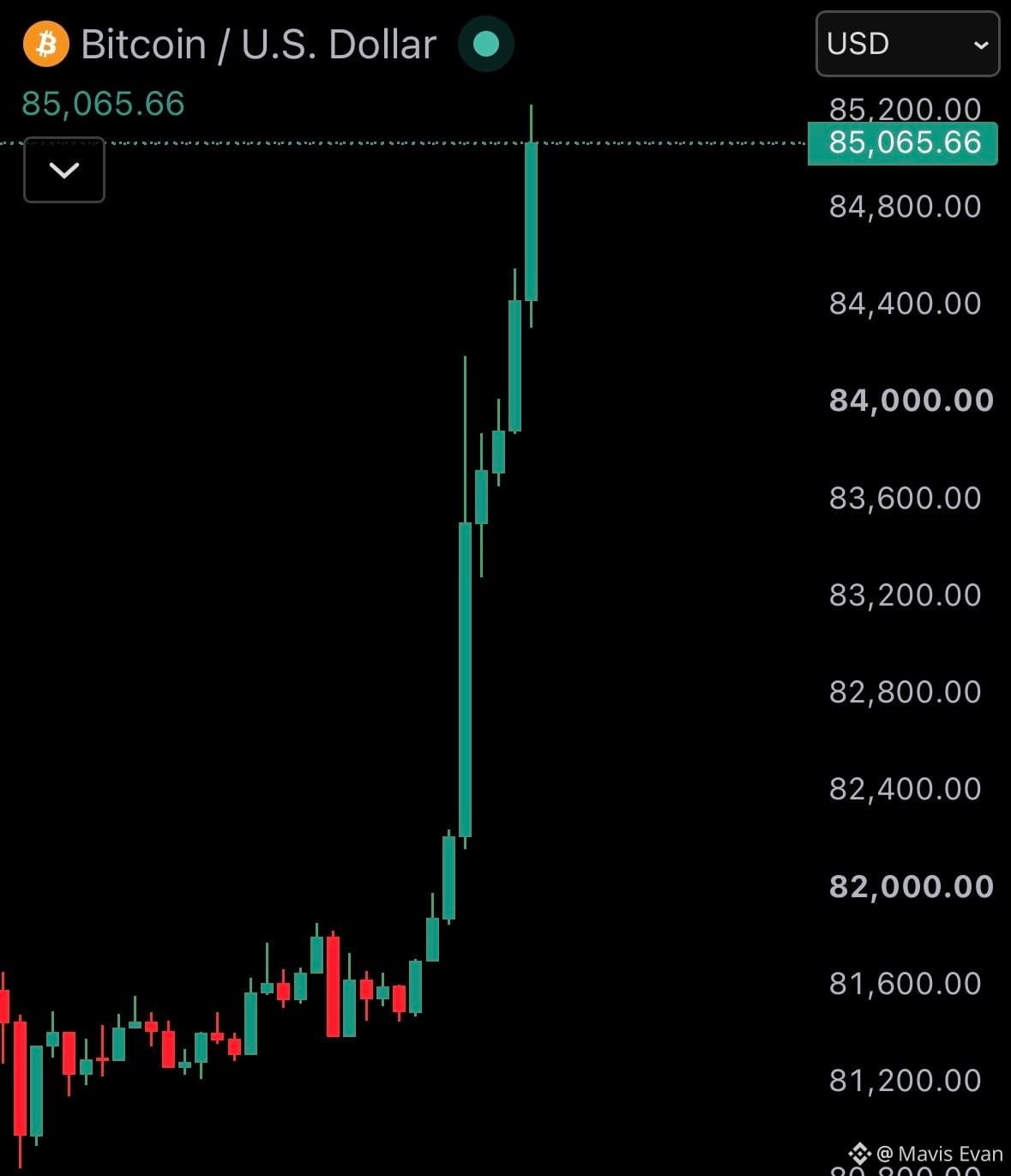
While Bitcoin pushes back above $85K, Strategy is putting more BTC on its balance sheet.
The institutional accumulation story is still very much alive.
$BTC $MSTRB #Bitcoin #Crypto
Michael Saylor’s Strategy is buying Bitcoin again.
Strategy has purchased 950 BTC for approximately $75.7 million, at an average price of $79,670 per Bitcoin.
The purchase brings Strategy’s total Bitcoin holdings to 846,000 BTC, acquired for roughly $63.8 billion at an average cost of $75,416 per BTC.
What stands out:
• 950 BTC added
• ~$75.7M spent
• 846,000 BTC now held
• Average cost: ~$75,416/BTC
• Purchase funded with existing USD cash
Saylor is still stacking.
While Bitcoin pushes back above $85K, Strategy is putting more BTC on its balance sheet.
The institutional accumulation story is still very much alive.
$BTC $MSTRB #Bitcoin #Crypto
Strategy has purchased 950 BTC for approximately $75.7 million, at an average price of $79,670 per Bitcoin.
The purchase brings Strategy’s total Bitcoin holdings to 846,000 BTC, acquired for roughly $63.8 billion at an average cost of $75,416 per BTC.
What stands out:
• 950 BTC added
• ~$75.7M spent
• 846,000 BTC now held
• Average cost: ~$75,416/BTC
• Purchase funded with existing USD cash
Saylor is still stacking.
While Bitcoin pushes back above $85K, Strategy is putting more BTC on its balance sheet.
The institutional accumulation story is still very much alive.
$BTC $MSTRB #Bitcoin #Crypto

1
258
·
--
Haussier
Trading sur 30 j de 2.8K USDT en $BTC
JUST IN: Michael Saylor's 'Strategy' buys 950 Bitcoin worth $80 million.
#NEARRisesNearly80%InAWeek $BTC
JUST IN: Michael Saylor's 'Strategy' buys 950 Bitcoin worth $80 million.
#NEARRisesNearly80%InAWeek $BTC
#NEARRisesNearly80%InAWeek $BTC
136
·
--
Haussier
Trading sur 30 j de 2.8K USDT en $BTC
Bitcoin is up 17.5% this month, despite Congress failing to pass the Crypto Clarity Act.
On September 15, the Senate failed to advance the bill.
Then regulators moved quickly:
September 17: The SEC approved limited on-chain trading of tokenized stocks under a temporary exemption.
September 17: The CFTC allowed developers to build passive derivatives software without registering as brokers, including for crypto markets.
September 18: The CFTC filed new rulemaking for crypto transactions and markets.
$BTC
{future}(BTCUSDT)
Bitcoin is up 17.5% this month, despite Congress failing to pass the Crypto Clarity Act.
On September 15, the Senate failed to advance the bill.
Then regulators moved quickly:
September 17: The SEC approved limited on-chain trading of tokenized stocks under a temporary exemption.
September 17: The CFTC allowed developers to build passive derivatives software without registering as brokers, including for crypto markets.
September 18: The CFTC filed new rulemaking for crypto transactions and markets.
$BTC
On September 15, the Senate failed to advance the bill.
Then regulators moved quickly:
September 17: The SEC approved limited on-chain trading of tokenized stocks under a temporary exemption.
September 17: The CFTC allowed developers to build passive derivatives software without registering as brokers, including for crypto markets.
September 18: The CFTC filed new rulemaking for crypto transactions and markets.
$BTC

191
·
--
Will CPI Trigger a Rate Hike?
This is where things get interesting.
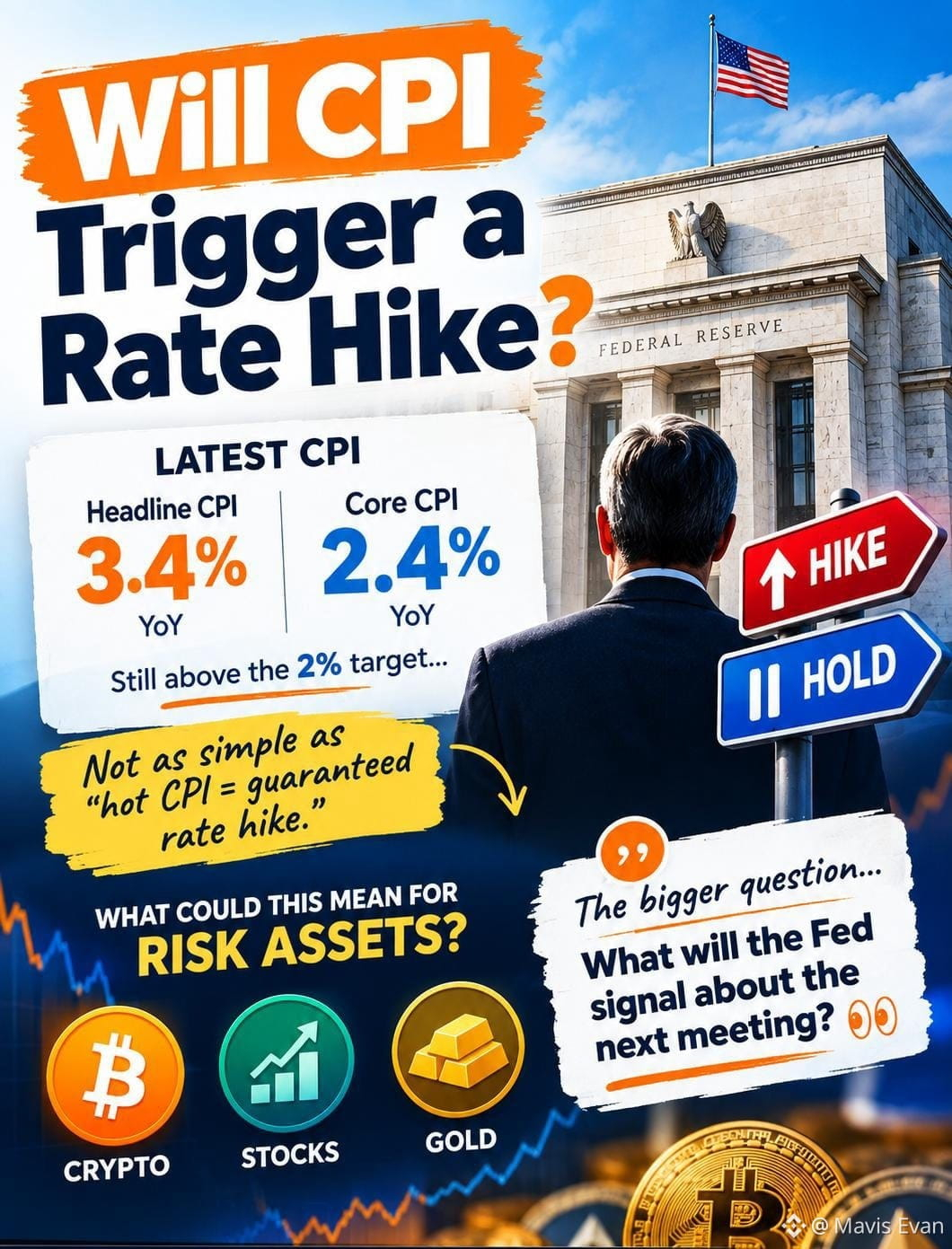
The latest CPI numbers were not exactly what the market wanted to see, but I don’t think the story is as simple as “hot CPI = guaranteed rate hike.”
Headline CPI came in at 3.4% YoY, while core CPI reached 2.4%. Yes, inflation is still above the Fed’s 2% target, but some of the recent pressure is coming from energy prices, while parts of core goods inflation remain relatively soft.
Reuters +1
And this is why I’m watching the Fed’s reaction very closely.
The labor market has shown some resilience, but the Fed also has to consider how higher rates affect consumers, businesses and growth.
My take?
I’m not blindly bearish here.
If the Fed holds, markets could interpret it as a sign that policymakers still believe inflation can cool without another aggressive move.
That could create a strong reaction across risk assets.
Crypto, stocks and gold could all become interesting depending on the Fed’s tone.
For me, the bigger question isn’t simply “hike or hold?”
It’s:
What will the Fed signal about the next meeting?
#CPIWatch #Bitcoin #Crypto #Fed #Inflation
Will CPI Trigger a Rate Hike?
This is where things get interesting.
The latest CPI numbers were not exactly what the market wanted to see, but I don’t think the story is as simple as “hot CPI = guaranteed rate hike.”
Headline CPI came in at 3.4% YoY, while core CPI reached 2.4%. Yes, inflation is still above the Fed’s 2% target, but some of the recent pressure is coming from energy prices, while parts of core goods inflation remain relatively soft.
Reuters +1
And this is why I’m watching the Fed’s reaction very closely.
The labor market has shown some resilience, but the Fed also has to consider how higher rates affect consumers, businesses and growth.
My take?
I’m not blindly bearish here.
If the Fed holds, markets could interpret it as a sign that policymakers still believe inflation can cool without another aggressive move.
That could create a strong reaction across risk assets.
Crypto, stocks and gold could all become interesting depending on the Fed’s tone.
For me, the bigger question isn’t simply “hike or hold?”
It’s:
What will the Fed signal about the next meeting?
#CPIWatch #Bitcoin #Crypto #Fed #Inflation
This is where things get interesting.
The latest CPI numbers were not exactly what the market wanted to see, but I don’t think the story is as simple as “hot CPI = guaranteed rate hike.”
Headline CPI came in at 3.4% YoY, while core CPI reached 2.4%. Yes, inflation is still above the Fed’s 2% target, but some of the recent pressure is coming from energy prices, while parts of core goods inflation remain relatively soft.
Reuters +1
And this is why I’m watching the Fed’s reaction very closely.
The labor market has shown some resilience, but the Fed also has to consider how higher rates affect consumers, businesses and growth.
My take?
I’m not blindly bearish here.
If the Fed holds, markets could interpret it as a sign that policymakers still believe inflation can cool without another aggressive move.
That could create a strong reaction across risk assets.
Crypto, stocks and gold could all become interesting depending on the Fed’s tone.
For me, the bigger question isn’t simply “hike or hold?”
It’s:
What will the Fed signal about the next meeting?
#CPIWatch #Bitcoin #Crypto #Fed #Inflation
1
615
·
--
$ETH , $BTC , $BNB and $ZEC are showing the same price pattern right now.
Sharp move up → liquidity sweep → rejection → pullback.
The interesting part is that all four charts are printing a very similar structure on the 1H timeframe.
This doesn’t automatically mean dump.
It means the market is testing whether those breakout levels can hold after the first aggressive move.
If buyers defend the pullback, another leg up can come quickly.
If support breaks, that whole spike can turn into a liquidity grab.
I’m watching the reaction after the pullback, not chasing the candle.
$BTC
$ETH
$BNB
$ZEC
Same setup. Different coins.
#CPIWatch #BNBTops730USDT
$ETH , $BTC , $BNB and $ZEC are showing the same price pattern right now.
Sharp move up → liquidity sweep → rejection → pullback.
The interesting part is that all four charts are printing a very similar structure on the 1H timeframe.
This doesn’t automatically mean dump.
It means the market is testing whether those breakout levels can hold after the first aggressive move.
If buyers defend the pullback, another leg up can come quickly.
If support breaks, that whole spike can turn into a liquidity grab.
I’m watching the reaction after the pullback, not chasing the candle.
$BTC
$ETH
$BNB
$ZEC
Same setup. Different coins.
#CPIWatch #BNBTops730USDT
Sharp move up → liquidity sweep → rejection → pullback.
The interesting part is that all four charts are printing a very similar structure on the 1H timeframe.
This doesn’t automatically mean dump.
It means the market is testing whether those breakout levels can hold after the first aggressive move.
If buyers defend the pullback, another leg up can come quickly.
If support breaks, that whole spike can turn into a liquidity grab.
I’m watching the reaction after the pullback, not chasing the candle.
$BTC
$ETH
$BNB
$ZEC
Same setup. Different coins.
#CPIWatch #BNBTops730USDT


2
5
1.3k
·
--
Haussier
Trading sur 30 j de 96.7 USDT en $ZEC
$ZEC LONG
ZEC is showing strong momentum after breaking out from the previous consolidation range. Price is now holding around $1,090, so this zone is important.
Entry: $1,090–$1,110
SL: $775
TP1: $1,400
TP2: $1,600
TP3: $2,000
TP4: $2,400+
If ZEC keeps holding above $1,090, the next leg higher could get aggressive.
The setup stays bullish while the key support holds.
Manage risk. Don’t chase green candles. 📈
#zec #zcash #crypto #Trading #Altcoins
$ZEC
{future}(ZECUSDT)
$ZEC LONG
ZEC is showing strong momentum after breaking out from the previous consolidation range. Price is now holding around $1,090, so this zone is important.
Entry: $1,090–$1,110
SL: $775
TP1: $1,400
TP2: $1,600
TP3: $2,000
TP4: $2,400+
If ZEC keeps holding above $1,090, the next leg higher could get aggressive.
The setup stays bullish while the key support holds.
Manage risk. Don’t chase green candles. 📈
#zec #zcash #crypto #Trading #Altcoins
$ZEC
ZEC is showing strong momentum after breaking out from the previous consolidation range. Price is now holding around $1,090, so this zone is important.
Entry: $1,090–$1,110
SL: $775
TP1: $1,400
TP2: $1,600
TP3: $2,000
TP4: $2,400+
If ZEC keeps holding above $1,090, the next leg higher could get aggressive.
The setup stays bullish while the key support holds.
Manage risk. Don’t chase green candles. 📈
#zec #zcash #crypto #Trading #Altcoins
$ZEC

3
559
·
--
Haussier
Long 662.9 USDT en $ETH
$ETH LONG
ETH is holding the $2,460 area after a strong move up. The daily structure still looks bullish as long as the marked support holds.
Entry: $2,460–$2,470
SL: $2,310
TP1: $2,600
TP2: $2,800
TP3: $3,000
TP4: $3,200+
If ETH reclaims $2,600 with strength, I’d expect momentum to accelerate.
Invalidation: Daily breakdown below $2,310.
Trade the setup, manage the risk.
#ETH #Ethereum #ETHUSDT #crypto #Trading
$ETH
$ETH LONG
ETH is holding the $2,460 area after a strong move up. The daily structure still looks bullish as long as the marked support holds.
Entry: $2,460–$2,470
SL: $2,310
TP1: $2,600
TP2: $2,800
TP3: $3,000
TP4: $3,200+
If ETH reclaims $2,600 with strength, I’d expect momentum to accelerate.
Invalidation: Daily breakdown below $2,310.
Trade the setup, manage the risk.
#ETH #Ethereum #ETHUSDT #crypto #Trading
$ETH
ETH is holding the $2,460 area after a strong move up. The daily structure still looks bullish as long as the marked support holds.
Entry: $2,460–$2,470
SL: $2,310
TP1: $2,600
TP2: $2,800
TP3: $3,000
TP4: $3,200+
If ETH reclaims $2,600 with strength, I’d expect momentum to accelerate.
Invalidation: Daily breakdown below $2,310.
Trade the setup, manage the risk.
#ETH #Ethereum #ETHUSDT #crypto #Trading
$ETH

6
1.2k
·
--
Haussier
$BTC LONG
Bitcoin is holding the key support zone around $72.7K–$77K, and the structure is starting to look interesting.
If BTC keeps defending this area and breaks above the recent resistance, the next major move could target:
TP1: $84K
TP2: $92K
TP3: $100K
TP4: $105.6K
Invalidation: below $72.7K
I’m watching this setup closely. One clean breakout could send BTC much higher.
#BTC #Bitcoin #crypto #Trading
{future}(BTCUSDT)
$BTC LONG
Bitcoin is holding the key support zone around $72.7K–$77K, and the structure is starting to look interesting.
If BTC keeps defending this area and breaks above the recent resistance, the next major move could target:
TP1: $84K
TP2: $92K
TP3: $100K
TP4: $105.6K
Invalidation: below $72.7K
I’m watching this setup closely. One clean breakout could send BTC much higher.
#BTC #Bitcoin #crypto #Trading
Bitcoin is holding the key support zone around $72.7K–$77K, and the structure is starting to look interesting.
If BTC keeps defending this area and breaks above the recent resistance, the next major move could target:
TP1: $84K
TP2: $92K
TP3: $100K
TP4: $105.6K
Invalidation: below $72.7K
I’m watching this setup closely. One clean breakout could send BTC much higher.
#BTC #Bitcoin #crypto #Trading

4
913
·
--
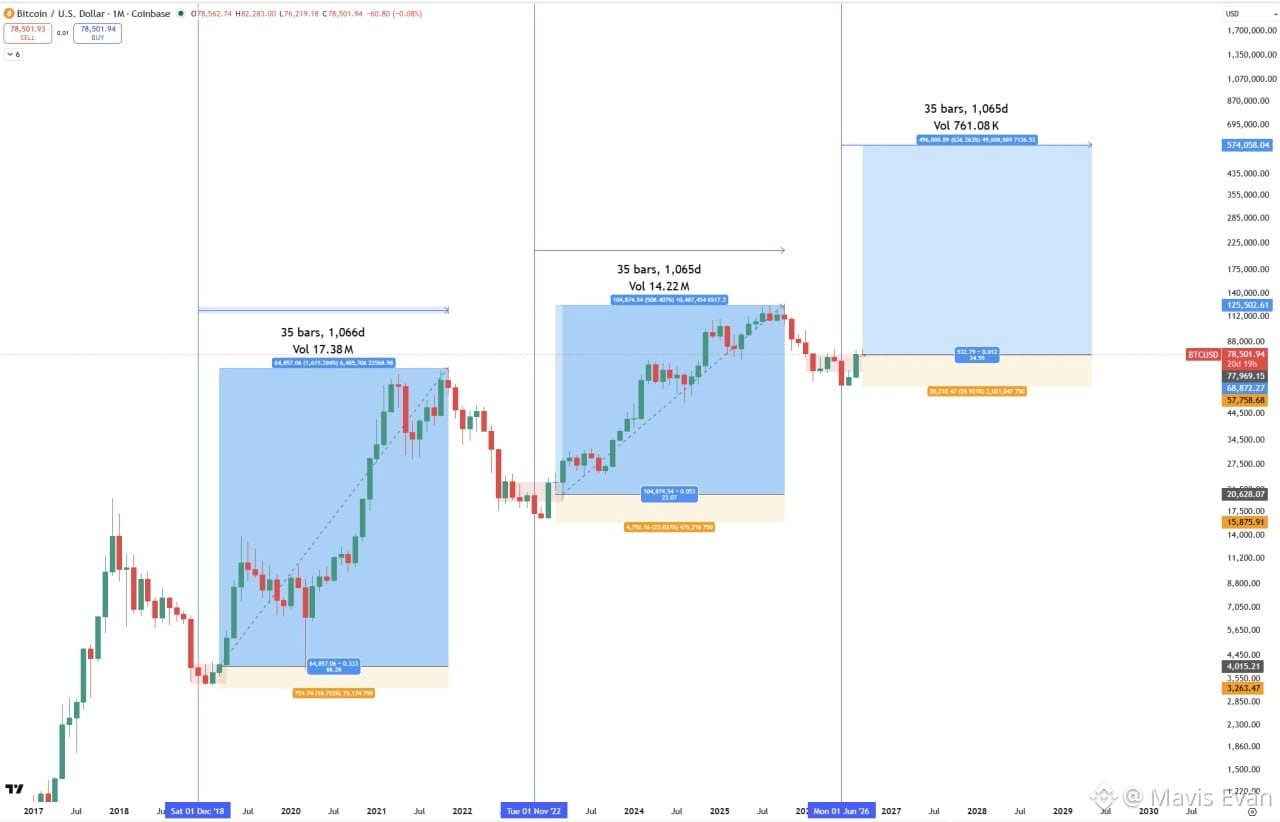
BITCOIN: WE COULD BE ENTERING ANOTHER 1,000-DAY BULL RUN
Look at the structure, not the noise.
This chart is showing something interesting.
Previous Bitcoin major bull-market legs lasted roughly 1,065 days.
🔹 2018 → 2021
🔹 2022 → 2025
🔹 And the current projection is following a similar time structure.
The pattern on the chart is almost saying:
35 monthly bars ≈ 1,065 days.
If history rhymes again, this cycle could have a much longer runway than most people expect.
And the projected upside is aggressive.
🎯 Potential target: ~$574,000 BTC
That doesn't mean Bitcoin is guaranteed to reach $574K.
Markets don't move because a chart says so.
But the interesting part is the time symmetry.
We may not be looking at a short 3–6 month pump.
We could be looking at a multi-year expansion phase where every correction convinces people the bull market is over, only for BTC to continue grinding higher.
The biggest mistake would be assuming:
"$BTC already pumped, so the cycle is finished."
Maybe not.
If this historical timing structure continues, 2026–2029 could become the real test of patience.
$78K today might look very different from $78K three years from now.
1000+ days of bullish structure.
That's the thesis.
Now watch the structure.
Not the emotions.
#Bitcoin #BTC #Crypto #BullMarket #BTCUSD
BITCOIN: WE COULD BE ENTERING ANOTHER 1,000-DAY BULL RUN
Look at the structure, not the noise.
This chart is showing something interesting.
Previous Bitcoin major bull-market legs lasted roughly 1,065 days.
🔹 2018 → 2021
🔹 2022 → 2025
🔹 And the current projection is following a similar time structure.
The pattern on the chart is almost saying:
35 monthly bars ≈ 1,065 days.
If history rhymes again, this cycle could have a much longer runway than most people expect.
And the projected upside is aggressive.
🎯 Potential target: ~$574,000 BTC
That doesn't mean Bitcoin is guaranteed to reach $574K.
Markets don't move because a chart says so.
But the interesting part is the time symmetry.
We may not be looking at a short 3–6 month pump.
We could be looking at a multi-year expansion phase where every correction convinces people the bull market is over, only for BTC to continue grinding higher.
The biggest mistake would be assuming:
"$BTC already pumped, so the cycle is finished."
Maybe not.
If this historical timing structure continues, 2026–2029 could become the real test of patience.
$78K today might look very different from $78K three years from now.
1000+ days of bullish structure.
That's the thesis.
Now watch the structure.
Not the emotions.
#Bitcoin #BTC #Crypto #BullMarket #BTCUSD
Look at the structure, not the noise.
This chart is showing something interesting.
Previous Bitcoin major bull-market legs lasted roughly 1,065 days.
🔹 2018 → 2021
🔹 2022 → 2025
🔹 And the current projection is following a similar time structure.
The pattern on the chart is almost saying:
35 monthly bars ≈ 1,065 days.
If history rhymes again, this cycle could have a much longer runway than most people expect.
And the projected upside is aggressive.
🎯 Potential target: ~$574,000 BTC
That doesn't mean Bitcoin is guaranteed to reach $574K.
Markets don't move because a chart says so.
But the interesting part is the time symmetry.
We may not be looking at a short 3–6 month pump.
We could be looking at a multi-year expansion phase where every correction convinces people the bull market is over, only for BTC to continue grinding higher.
The biggest mistake would be assuming:
"$BTC already pumped, so the cycle is finished."
Maybe not.
If this historical timing structure continues, 2026–2029 could become the real test of patience.
$78K today might look very different from $78K three years from now.
1000+ days of bullish structure.
That's the thesis.
Now watch the structure.
Not the emotions.
#Bitcoin #BTC #Crypto #BullMarket #BTCUSD
2
3
1.2k
·
--
Trading sur 30 j de 96.7 USDT en $ZEC
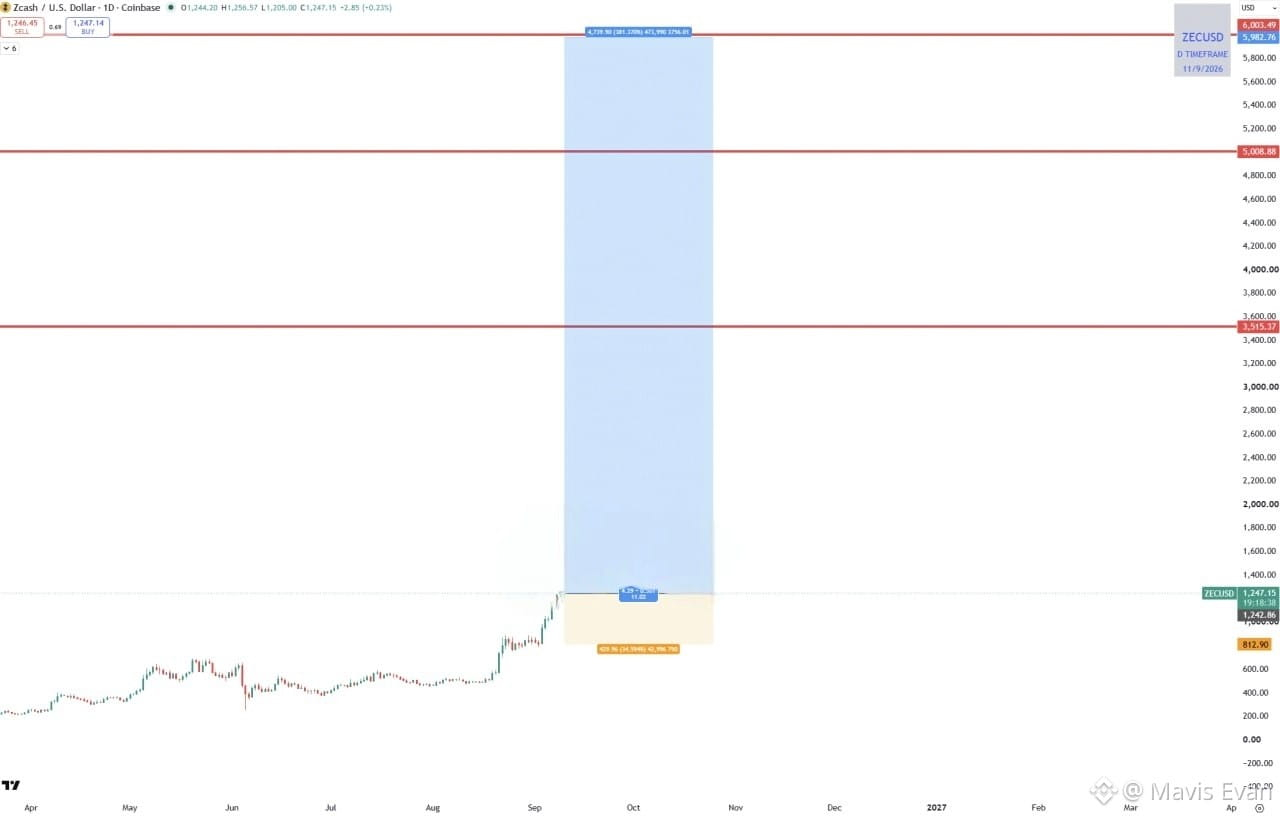
$ZEC ADD MORE LONG
If you’ve been waiting for the move, you might not have much time left.
The chart is showing serious upside potential, with the bigger targets sitting far above current levels.
ZEC Long Bias 🎯 TP1: $3,515 🎯 TP2: $5,008 🚀 Extreme target: $5,982+
This is not a signal to blindly chase candles. Manage your risk, size properly, and let the setup play out.
ZEC is waking up.
DYOR. Not financial advice.
$ZEC
{future}(ZECUSDT)
$ZEC ADD MORE LONG
If you’ve been waiting for the move, you might not have much time left.
The chart is showing serious upside potential, with the bigger targets sitting far above current levels.
ZEC Long Bias 🎯 TP1: $3,515 🎯 TP2: $5,008 🚀 Extreme target: $5,982+
This is not a signal to blindly chase candles. Manage your risk, size properly, and let the setup play out.
ZEC is waking up.
DYOR. Not financial advice.
$ZEC
If you’ve been waiting for the move, you might not have much time left.
The chart is showing serious upside potential, with the bigger targets sitting far above current levels.
ZEC Long Bias 🎯 TP1: $3,515 🎯 TP2: $5,008 🚀 Extreme target: $5,982+
This is not a signal to blindly chase candles. Manage your risk, size properly, and let the setup play out.
ZEC is waking up.
DYOR. Not financial advice.
$ZEC
2
5
1.4k
·
--
Haussier
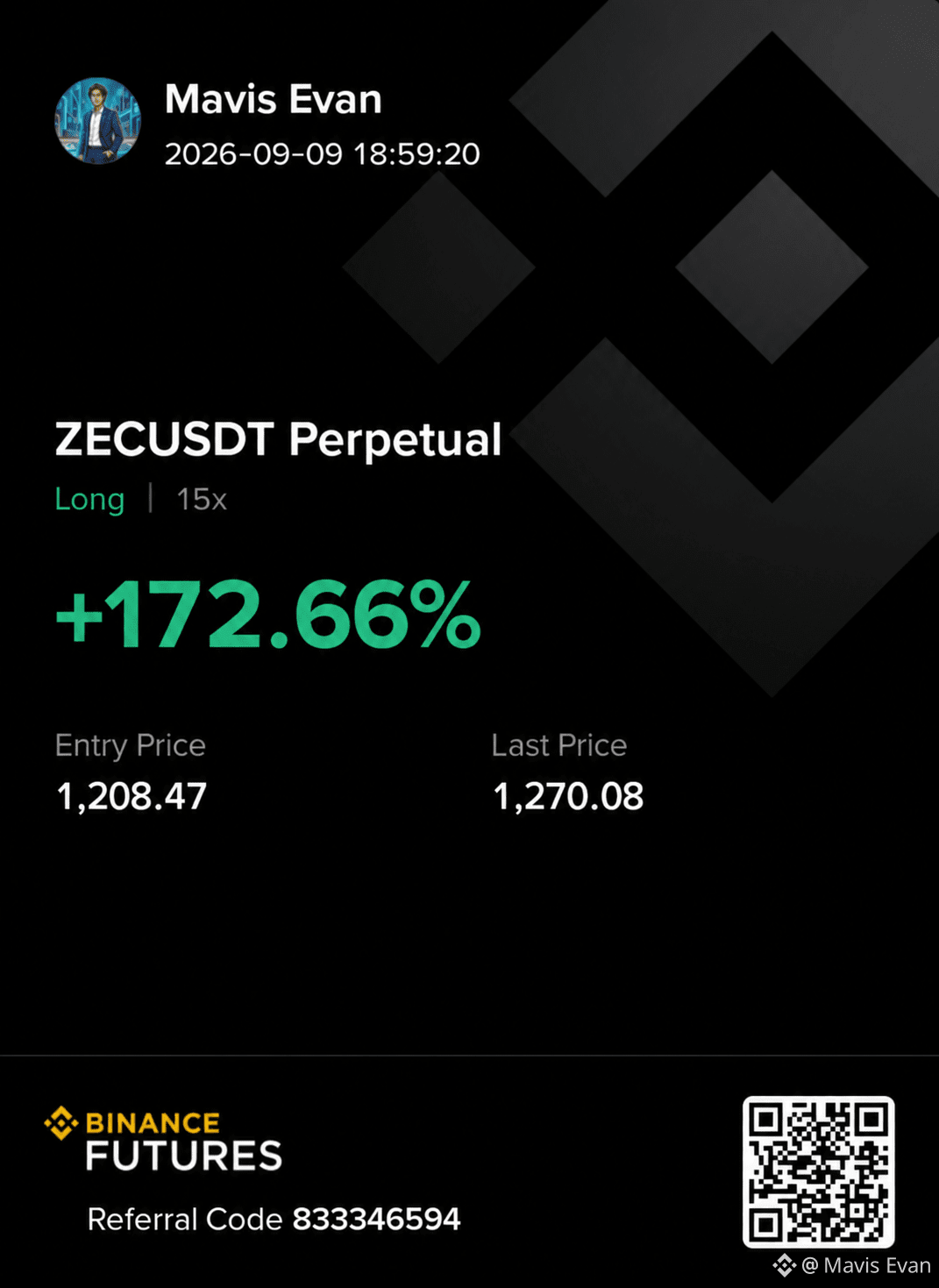
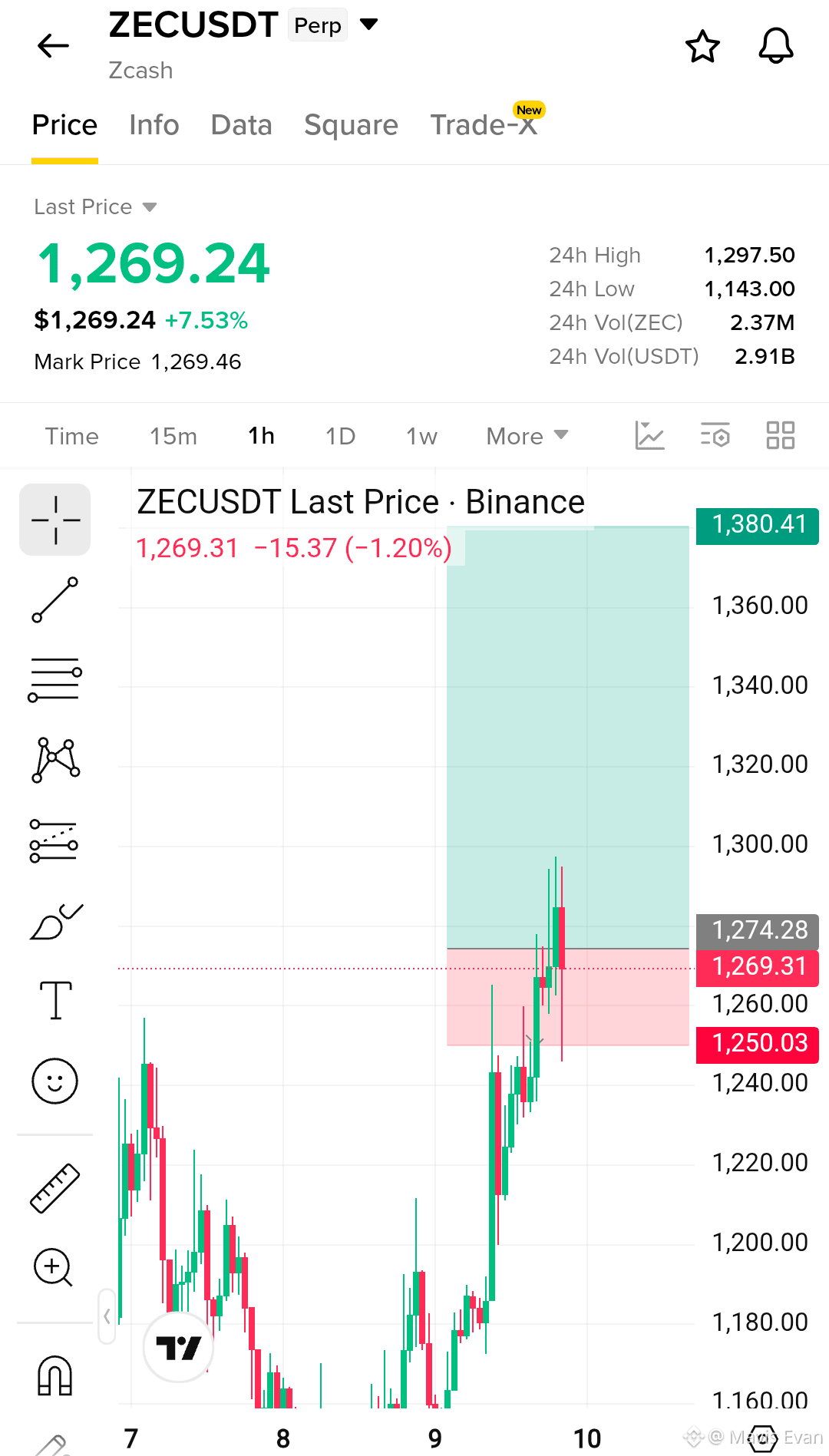
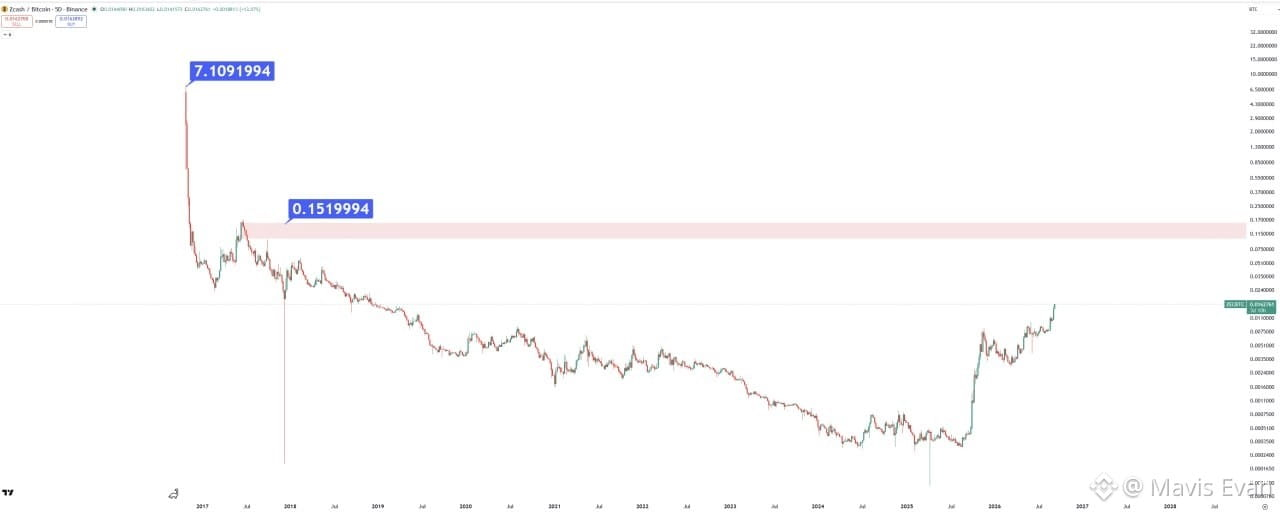
$ZEC | The Long-Term Setup Is Getting Interesting
ZEC has been through a brutal cycle, but the chart shows something worth watching.
The major historical resistance zone sits around 0.1 BTC per ZEC. If ZEC can reclaim and hold that area, the upside narrative gets very interesting.
🎯 TP1: 1 ZEC = 0.1 BTC
🚀 TP2: 1 ZEC = 7 BTC
These aren’t short-term targets. They’re long-term, high-conviction levels based on the BTC-denominated chart.
The move to 7 BTC would be absolutely massive, so treat it as a moonshot scenario, not a guaranteed outcome.
ZEC doesn’t need to move today.
It just needs to keep building. 🛡️📈
#zcash #Crypto #BTC #Altcoins #cryptotrading
$ZEC
$ZEC | The Long-Term Setup Is Getting Interesting
ZEC has been through a brutal cycle, but the chart shows something worth watching.
The major historical resistance zone sits around 0.1 BTC per ZEC. If ZEC can reclaim and hold that area, the upside narrative gets very interesting.
🎯 TP1: 1 ZEC = 0.1 BTC
🚀 TP2: 1 ZEC = 7 BTC
These aren’t short-term targets. They’re long-term, high-conviction levels based on the BTC-denominated chart.
The move to 7 BTC would be absolutely massive, so treat it as a moonshot scenario, not a guaranteed outcome.
ZEC doesn’t need to move today.
It just needs to keep building. 🛡️📈
#zcash #Crypto #BTC #Altcoins #cryptotrading
$ZEC
ZEC has been through a brutal cycle, but the chart shows something worth watching.
The major historical resistance zone sits around 0.1 BTC per ZEC. If ZEC can reclaim and hold that area, the upside narrative gets very interesting.
🎯 TP1: 1 ZEC = 0.1 BTC
🚀 TP2: 1 ZEC = 7 BTC
These aren’t short-term targets. They’re long-term, high-conviction levels based on the BTC-denominated chart.
The move to 7 BTC would be absolutely massive, so treat it as a moonshot scenario, not a guaranteed outcome.
ZEC doesn’t need to move today.
It just needs to keep building. 🛡️📈
#zcash #Crypto #BTC #Altcoins #cryptotrading
$ZEC
2
846
·
--
Haussier
🚀 $USELESS — ADD MORE
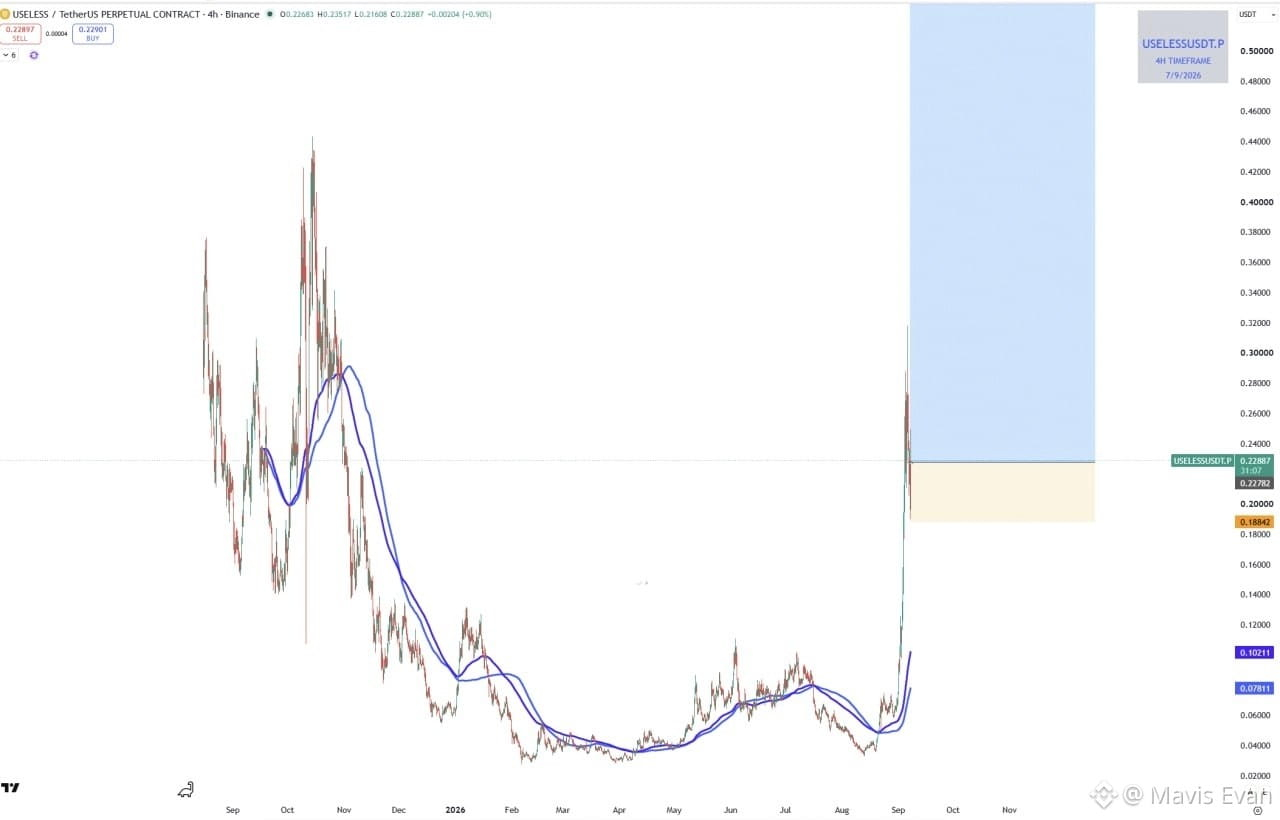
Monday is working for $USELESS only. The chart is showing strong momentum after a massive breakout, with price holding well above the previous range.
Setup: 🟢 Bias: Bullish 💰 Current: ~$0.2288 📌 Add Zone: $0.22 – $0.20 🎯 TP1: $0.25 🎯 TP2: $0.28 🎯 TP3: $0.32+ 🛑 Invalidation: Below $0.188
The move is already strong, so don’t chase green candles. If price gives a clean pullback into the add zone, that’s where I’d look to build more.
Monday belongs to $USELESS. 🔥
$USELESS
{future}(USELESSUSDT)
🚀 $USELESS — ADD MORE
Monday is working for $USELESS only. The chart is showing strong momentum after a massive breakout, with price holding well above the previous range.
Setup: 🟢 Bias: Bullish 💰 Current: ~$0.2288 📌 Add Zone: $0.22 – $0.20 🎯 TP1: $0.25 🎯 TP2: $0.28 🎯 TP3: $0.32+ 🛑 Invalidation: Below $0.188
The move is already strong, so don’t chase green candles. If price gives a clean pullback into the add zone, that’s where I’d look to build more.
Monday belongs to $USELESS . 🔥
$USELESS
Monday is working for $USELESS only. The chart is showing strong momentum after a massive breakout, with price holding well above the previous range.
Setup: 🟢 Bias: Bullish 💰 Current: ~$0.2288 📌 Add Zone: $0.22 – $0.20 🎯 TP1: $0.25 🎯 TP2: $0.28 🎯 TP3: $0.32+ 🛑 Invalidation: Below $0.188
The move is already strong, so don’t chase green candles. If price gives a clean pullback into the add zone, that’s where I’d look to build more.
Monday belongs to $USELESS . 🔥
$USELESS
1
5
612
·
--
Baissier
$JUP /USDT SHORT
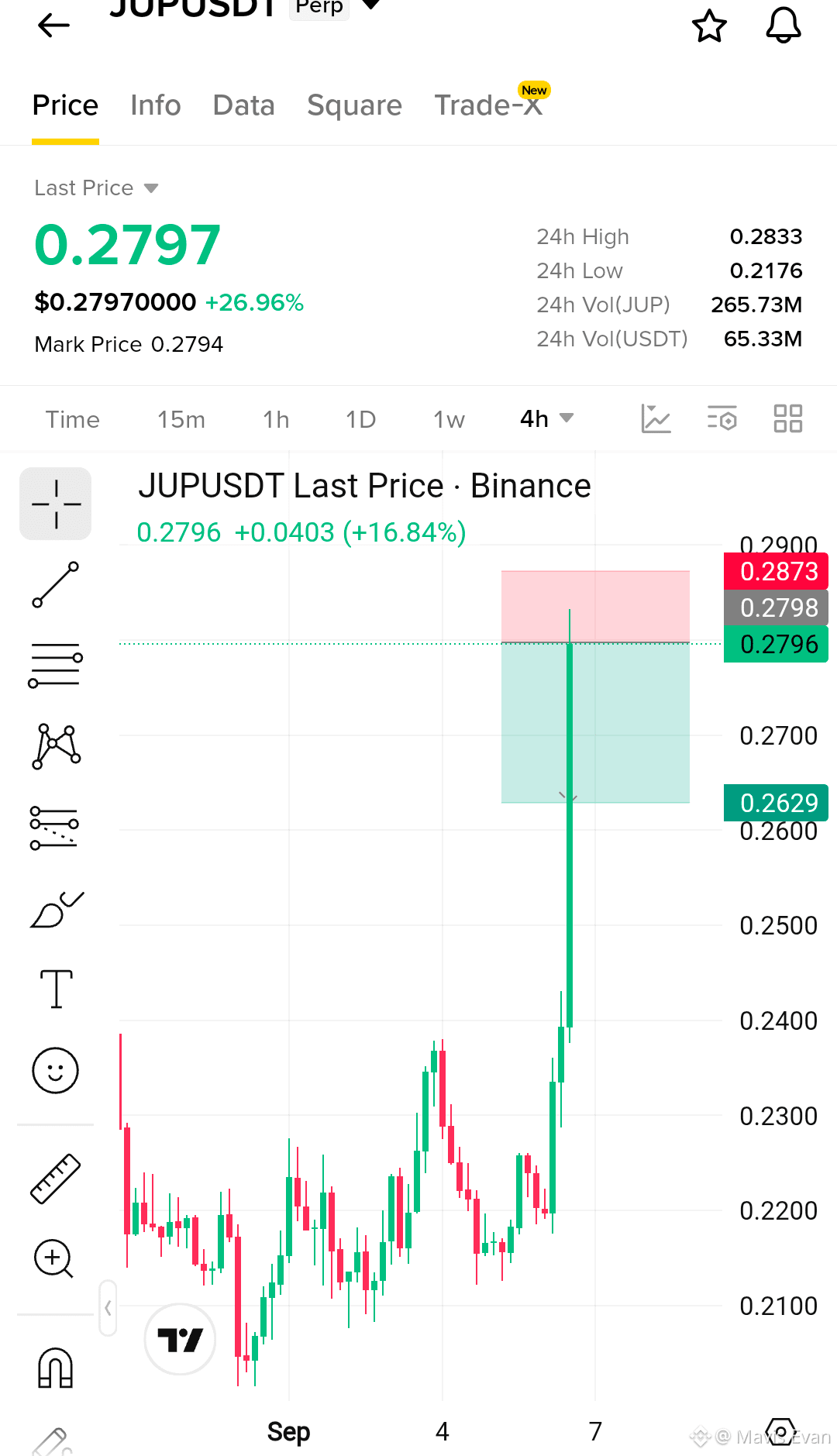
Looking for a short from the current market price.
Entry: Market
Take Profit: 0.27
Leverage: 35x
The setup is simple: bearish momentum with 0.27 as the main downside target.
⚠️ 35x leverage is aggressive, so keep the position small and manage liquidation risk carefully.
DYOR. Trade the setup, not the emotion.
$JUP /USDT SHORT
Looking for a short from the current market price.
Entry: Market
Take Profit: 0.27
Leverage: 35x
The setup is simple: bearish momentum with 0.27 as the main downside target.
⚠️ 35x leverage is aggressive, so keep the position small and manage liquidation risk carefully.
DYOR. Trade the setup, not the emotion.
Looking for a short from the current market price.
Entry: Market
Take Profit: 0.27
Leverage: 35x
The setup is simple: bearish momentum with 0.27 as the main downside target.
⚠️ 35x leverage is aggressive, so keep the position small and manage liquidation risk carefully.
DYOR. Trade the setup, not the emotion.
5
275
·
--
Haussier
$ZAMA BULLISH
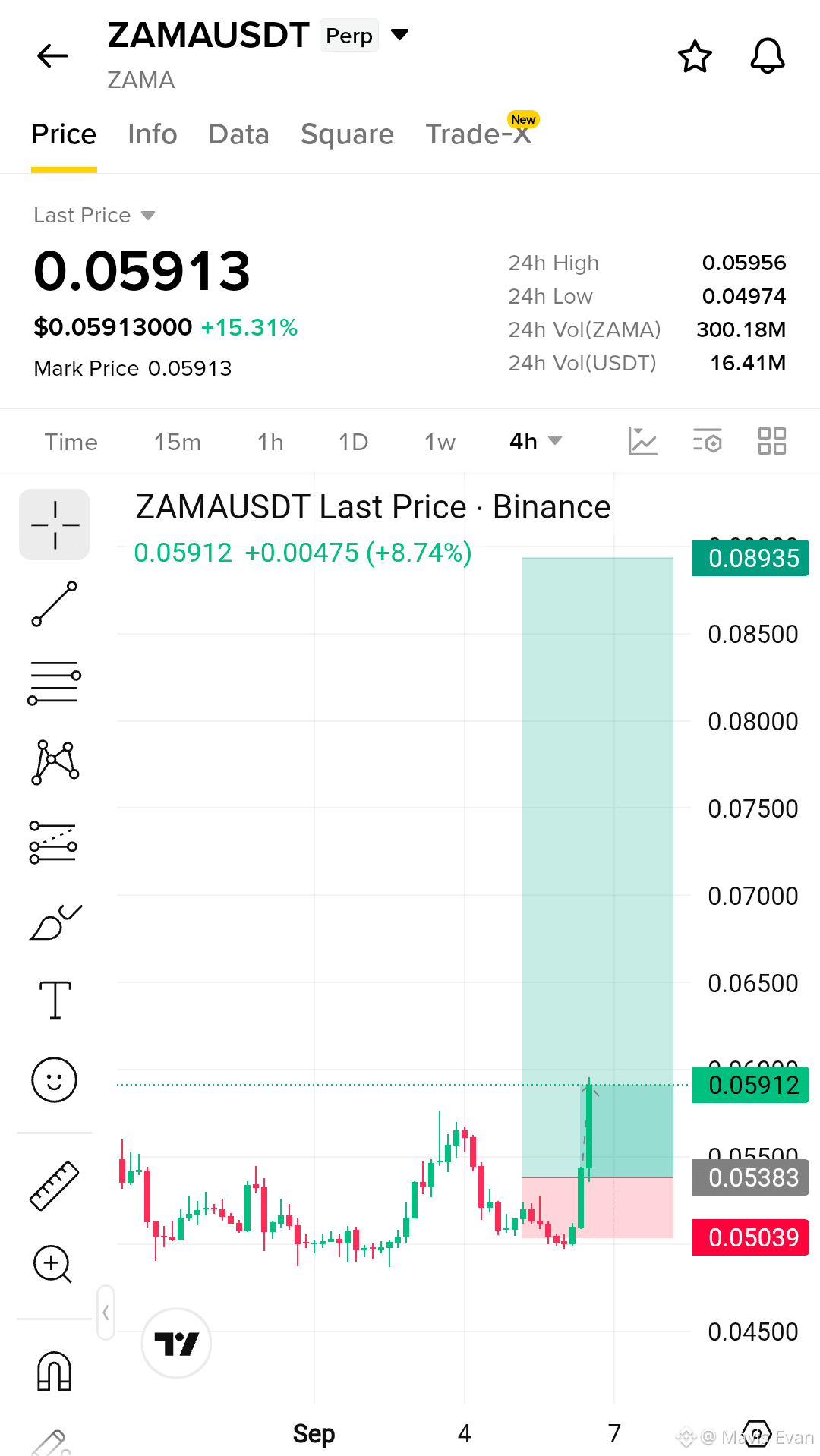
In privacy sector,
If $ZEC is the bitcoin of privacy, so #ZAMA is the ethereum of privacy
$ZAMA BULLISH
In privacy sector,
If $ZEC is the bitcoin of privacy, so #ZAMA is the ethereum of privacy
In privacy sector,
If $ZEC is the bitcoin of privacy, so #ZAMA is the ethereum of privacy
Mavis Evan
·
--
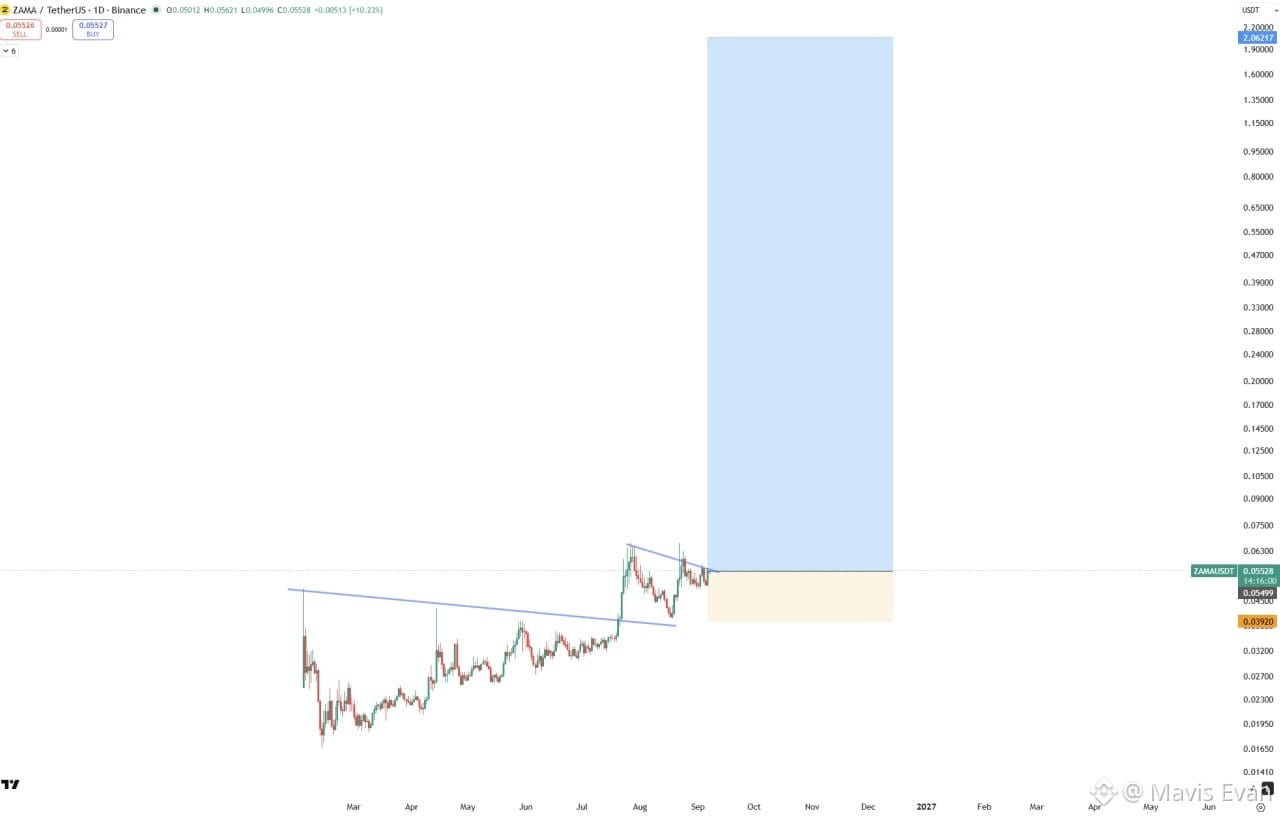
Haussier$ZAMA /USDT — BULLISH SETUP
ZAMA is showing a strong bullish structure on the 1D chart after breaking above the descending trendline. Price is now consolidating around the breakout zone, which could act as support if buyers step in.
Entry: $0.0552
Take Profit: $2.06
Stop Loss: $0.0392
A successful hold above the $0.055 area could open the door for a much larger continuation move. The key is the breakout zone: if price loses the $0.0392 invalidation level, the bullish setup is no longer valid.
ZAMA is showing a strong bullish structure on the 1D chart after breaking above the descending trendline. Price is now consolidating around the breakout zone, which could act as support if buyers step in.
Entry: $0.0552
Take Profit: $2.06
Stop Loss: $0.0392
A successful hold above the $0.055 area could open the door for a much larger continuation move. The key is the breakout zone: if price loses the $0.0392 invalidation level, the bullish setup is no longer valid.
6
673
·
--
Haussier
$UAI /USDT LONG SETUP
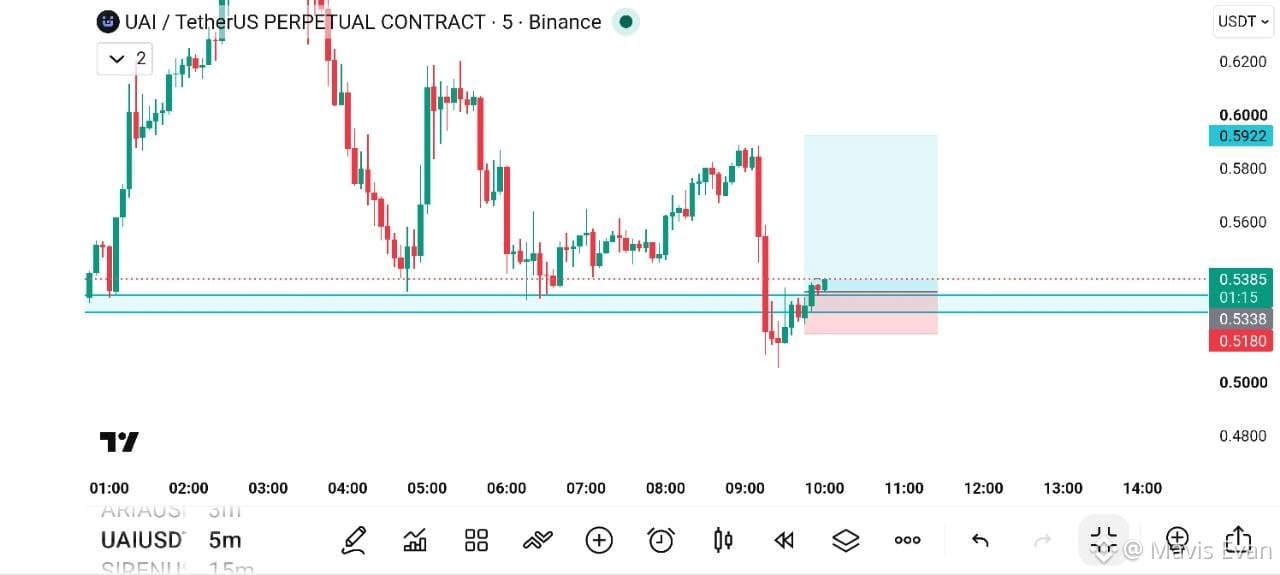
UAI just got a sharp flush into the $0.5180 support zone and is now bouncing back toward the $0.538 area. Buyers are starting to reclaim the breakdown level.
Entry: $0.5338–$0.5385
TP1: $0.5600
TP2: $0.5800
TP3: $0.5922
SL: $0.5180
Setup: Long on the reclaim and hold above $0.5338. If momentum continues, the next resistance sits around $0.56–$0.59.
Keep risk controlled. Invalidation below $0.5180. DYOR.
$UAI
{future}(UAIUSDT)
$UAI /USDT LONG SETUP
UAI just got a sharp flush into the $0.5180 support zone and is now bouncing back toward the $0.538 area. Buyers are starting to reclaim the breakdown level.
Entry: $0.5338–$0.5385
TP1: $0.5600
TP2: $0.5800
TP3: $0.5922
SL: $0.5180
Setup: Long on the reclaim and hold above $0.5338. If momentum continues, the next resistance sits around $0.56–$0.59.
Keep risk controlled. Invalidation below $0.5180. DYOR.
$UAI
UAI just got a sharp flush into the $0.5180 support zone and is now bouncing back toward the $0.538 area. Buyers are starting to reclaim the breakdown level.
Entry: $0.5338–$0.5385
TP1: $0.5600
TP2: $0.5800
TP3: $0.5922
SL: $0.5180
Setup: Long on the reclaim and hold above $0.5338. If momentum continues, the next resistance sits around $0.56–$0.59.
Keep risk controlled. Invalidation below $0.5180. DYOR.
$UAI
6
421
·
--
Haussier
$ZAMA /USDT — BULLISH SETUP
ZAMA is showing a strong bullish structure on the 1D chart after breaking above the descending trendline. Price is now consolidating around the breakout zone, which could act as support if buyers step in.
Entry: $0.0552
Take Profit: $2.06
Stop Loss: $0.0392
A successful hold above the $0.055 area could open the door for a much larger continuation move. The key is the breakout zone: if price loses the $0.0392 invalidation level, the bullish setup is no longer valid.
{future}(ZAMAUSDT)
$ZAMA /USDT — BULLISH SETUP
ZAMA is showing a strong bullish structure on the 1D chart after breaking above the descending trendline. Price is now consolidating around the breakout zone, which could act as support if buyers step in.
Entry: $0.0552
Take Profit: $2.06
Stop Loss: $0.0392
A successful hold above the $0.055 area could open the door for a much larger continuation move. The key is the breakout zone: if price loses the $0.0392 invalidation level, the bullish setup is no longer valid.
ZAMA is showing a strong bullish structure on the 1D chart after breaking above the descending trendline. Price is now consolidating around the breakout zone, which could act as support if buyers step in.
Entry: $0.0552
Take Profit: $2.06
Stop Loss: $0.0392
A successful hold above the $0.055 area could open the door for a much larger continuation move. The key is the breakout zone: if price loses the $0.0392 invalidation level, the bullish setup is no longer valid.
2
5
610
·
--
Baissier
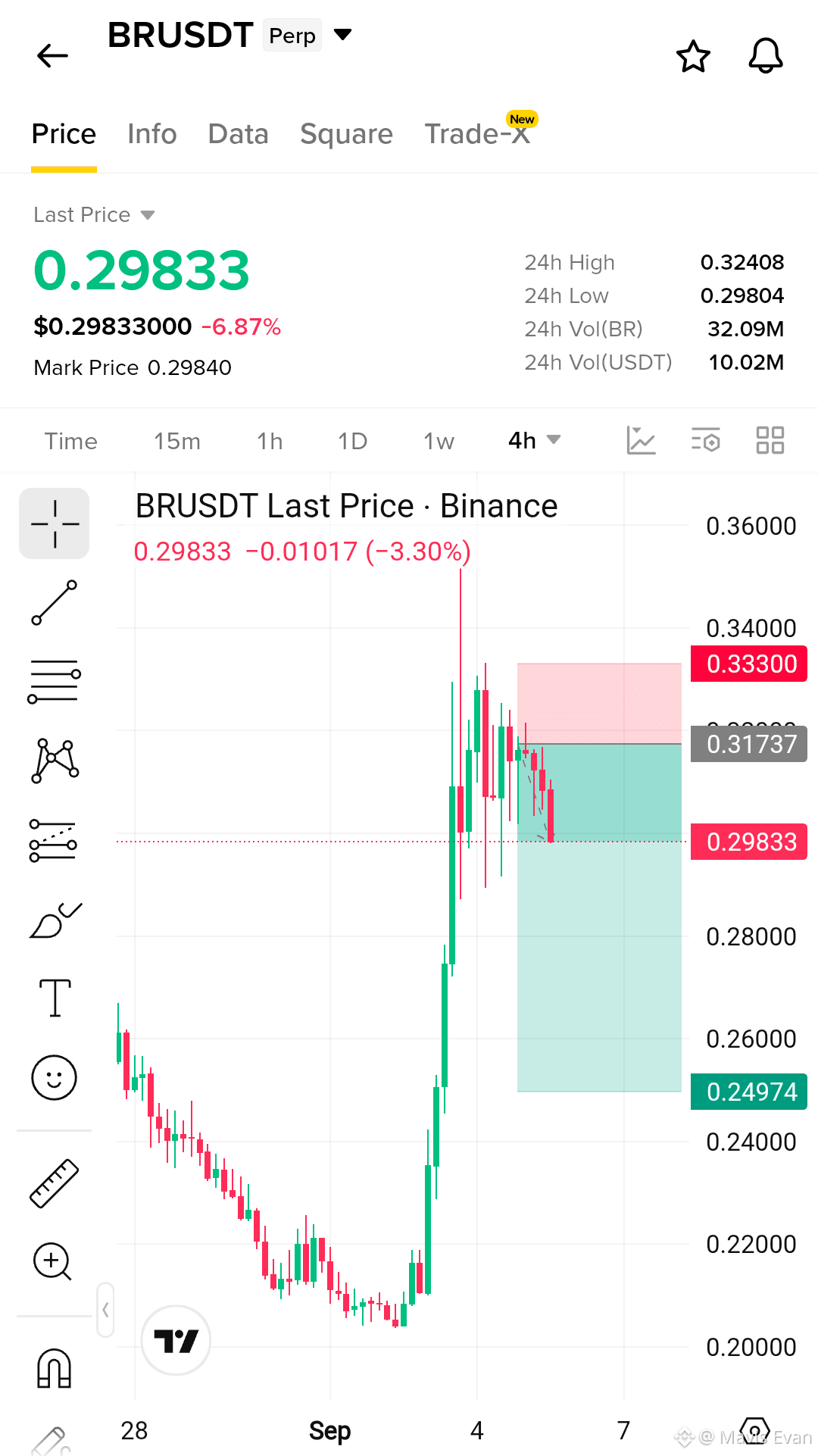
$BR USDT SHORT SETUP
BR is showing weakness after the recent sharp pump, with sellers taking control around the 0.31–0.32 area.
Entry: Current market / 0.298–0.305
Take Profit: 0.245
Stop Loss: 0.321
The idea is simple: if BR stays below the 0.32 resistance zone, downside continuation toward 0.275 remains on the table.
Keep leverage reasonable and manage risk. Don’t chase the move if price starts reclaiming 0.321.
$BR
{future}(BRUSDT)
$BR USDT SHORT SETUP
BR is showing weakness after the recent sharp pump, with sellers taking control around the 0.31–0.32 area.
Entry: Current market / 0.298–0.305
Take Profit: 0.245
Stop Loss: 0.321
The idea is simple: if BR stays below the 0.32 resistance zone, downside continuation toward 0.275 remains on the table.
Keep leverage reasonable and manage risk. Don’t chase the move if price starts reclaiming 0.321.
$BR
BR is showing weakness after the recent sharp pump, with sellers taking control around the 0.31–0.32 area.
Entry: Current market / 0.298–0.305
Take Profit: 0.245
Stop Loss: 0.321
The idea is simple: if BR stays below the 0.32 resistance zone, downside continuation toward 0.275 remains on the table.
Keep leverage reasonable and manage risk. Don’t chase the move if price starts reclaiming 0.321.
$BR
4
232
·
--
Baissier
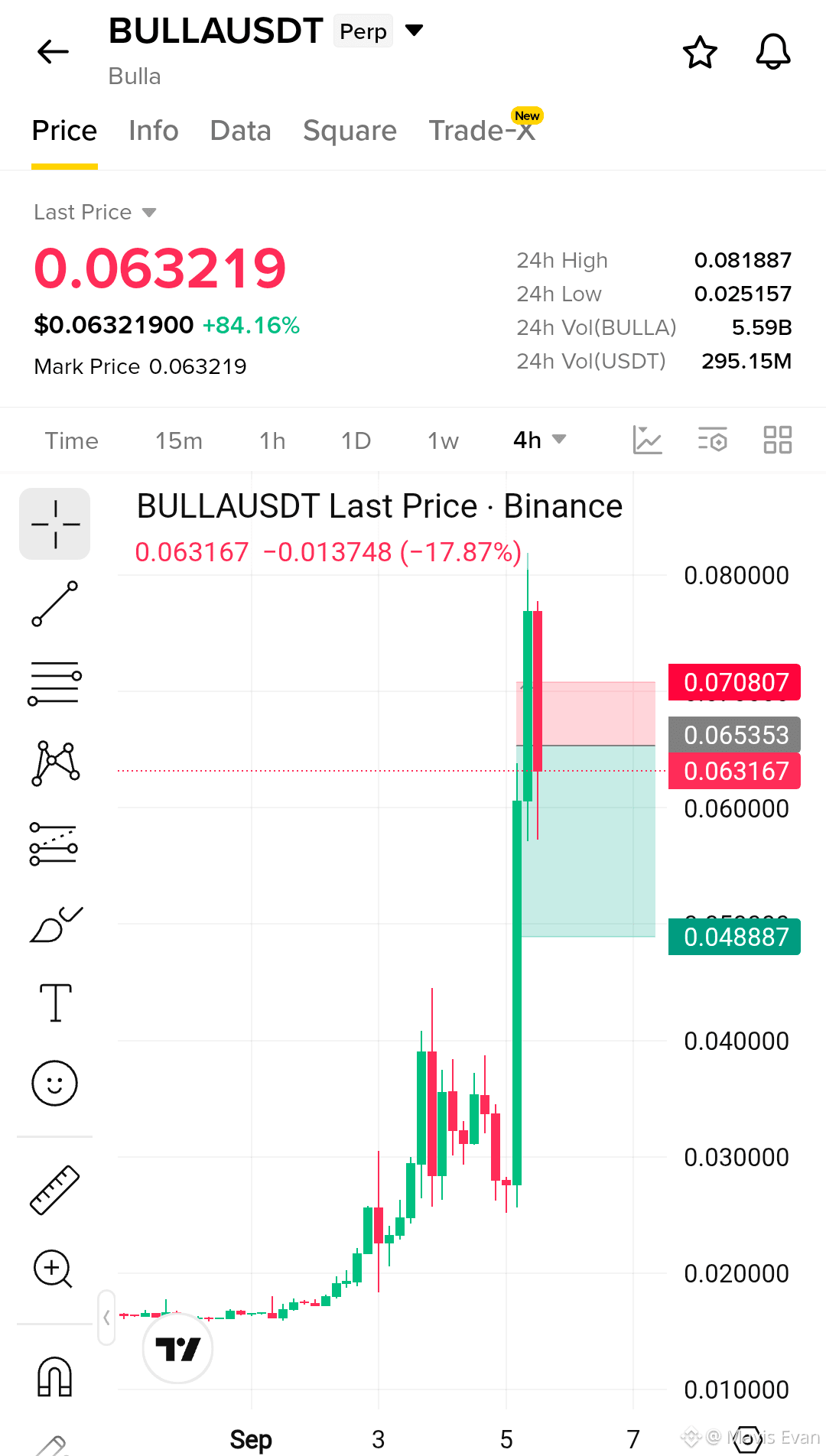
$BULLA /USDT — SHORT Setup
BULLA is showing a potential short opportunity from the 0.06122–0.06200 entry zone.
The idea is to sell into this area and look for a gradual move lower. Keep the stop tight at 0.06443 and avoid chasing the price after the move starts.
Entry: 0.06122–0.06200
Stop Loss: 0.06443
Take Profit:
1. 0.059565
2. 0.058228
3. 0.05565
4. 0.05345
5. 0.04977
Leverage: 10X
Trade the setup, not the noise. Manage your risk and protect your capital. DYOR.
$BULLA
{future}(BULLAUSDT)
$BULLA /USDT — SHORT Setup
BULLA is showing a potential short opportunity from the 0.06122–0.06200 entry zone.
The idea is to sell into this area and look for a gradual move lower. Keep the stop tight at 0.06443 and avoid chasing the price after the move starts.
Entry: 0.06122–0.06200
Stop Loss: 0.06443
Take Profit:
1. 0.059565
2. 0.058228
3. 0.05565
4. 0.05345
5. 0.04977
Leverage: 10X
Trade the setup, not the noise. Manage your risk and protect your capital. DYOR.
$BULLA
BULLA is showing a potential short opportunity from the 0.06122–0.06200 entry zone.
The idea is to sell into this area and look for a gradual move lower. Keep the stop tight at 0.06443 and avoid chasing the price after the move starts.
Entry: 0.06122–0.06200
Stop Loss: 0.06443
Take Profit:
1. 0.059565
2. 0.058228
3. 0.05565
4. 0.05345
5. 0.04977
Leverage: 10X
Trade the setup, not the noise. Manage your risk and protect your capital. DYOR.
$BULLA
3
236
Connectez-vous pour découvrir plus de contenu
Rejoignez la communauté mondiale des adeptes de cryptomonnaies sur Binance Square
⚡️ Suviez les dernières informations importantes sur les cryptomonnaies.
💬 Jugé digne de confiance par la plus grande plateforme d’échange de cryptomonnaies au monde.
👍 Découvrez les connaissances que partagent les créateurs vérifiés.
Adresse e-mail/Nº de téléphone
Sujets d’actualité
ZcashETFPostsFirstWeeklyOutflow$93.6M
50,569 vues
148 mentions
Zcash ETF Records First $93.6M Weekly Outflow: What Does It Mean for ZEC?
Crypto Ninja
·0 mentions J’aime
·166 vues
GreekPoliceBustCryptoScamRingArrest17
140,193 vues
989 mentions
BitcoinRejectedAt$87K
148,712 vues
203 mentions