
Malcolm_Great
13 Publications

Malcolm_Great
Signaler
Bloquer l’utilisateur
Trader, Content creator, X: https://x.com/Malcolm_Great1 BP-CC5B3ACCEA13
Ouvert au trading
Trade occasionnellement
2.3 an(s)
10 Suivis
24 Abonnés
16 J’aime
Publications
Portefeuille
Tous
Citations
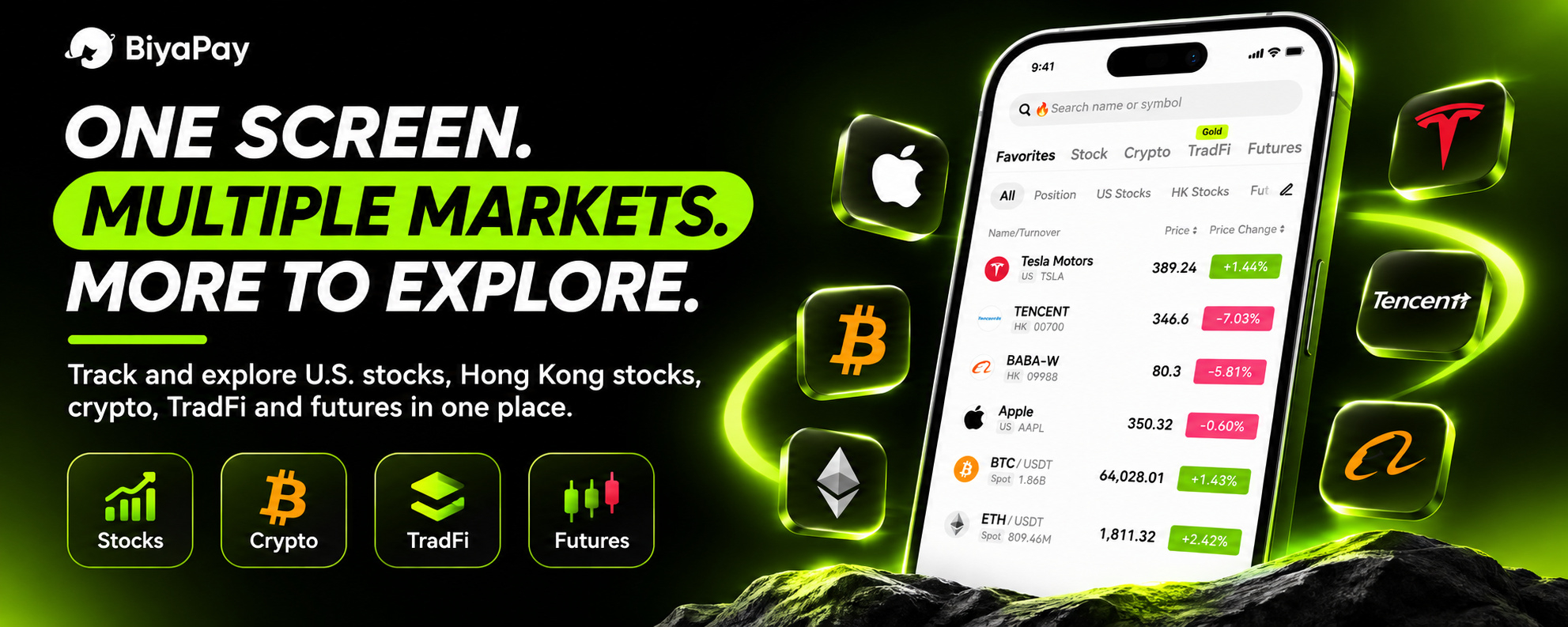
Article
Un seul écran de marché, différentes opportunités : pourquoi il est important de suivre plusieurs classes d’actifs.Une action peut être en hausse tandis que le Bitcoin gagne en dynamisme. Dans le même temps, un autre marché peut connaître une forte baisse.
C’est pourquoi je pense que les investisseurs devraient s’intéresser à plusieurs secteurs des marchés financiers.
Observer un seul actif ne donne qu’une vision partielle de la situation. Parfois, comprendre ce qui se passe ailleurs peut aider à mieux contextualiser les mouvements du marché.
C’est ce que j’ai remarqué en explorant l’interface de marché de BiyaPay.
Au lieu de se concentrer uniquement sur les cryptomonnaies, la plateforme présente différentes catégories de marchés, notamment les actions, les cryptomonnaies, la finance traditionnelle et les contrats à terme.
Un seul écran de marché, différentes opportunités : pourquoi il est important de suivre plusieurs classes d’actifs.
Une action peut être en hausse tandis que le Bitcoin gagne en dynamisme. Dans le même temps, un autre marché peut connaître une forte baisse.
C’est pourquoi je pense que les investisseurs devraient s’intéresser à plusieurs secteurs des marchés financiers.
Observer un seul actif ne donne qu’une vision partielle de la situation. Parfois, comprendre ce qui se passe ailleurs peut aider à mieux contextualiser les mouvements du marché.
C’est ce que j’ai remarqué en explorant l’interface de marché de BiyaPay.
Au lieu de se concentrer uniquement sur les cryptomonnaies, la plateforme présente différentes catégories de marchés, notamment les actions, les cryptomonnaies, la finance traditionnelle et les contrats à terme.
C’est pourquoi je pense que les investisseurs devraient s’intéresser à plusieurs secteurs des marchés financiers.
Observer un seul actif ne donne qu’une vision partielle de la situation. Parfois, comprendre ce qui se passe ailleurs peut aider à mieux contextualiser les mouvements du marché.
C’est ce que j’ai remarqué en explorant l’interface de marché de BiyaPay.
Au lieu de se concentrer uniquement sur les cryptomonnaies, la plateforme présente différentes catégories de marchés, notamment les actions, les cryptomonnaies, la finance traditionnelle et les contrats à terme.
67
Article
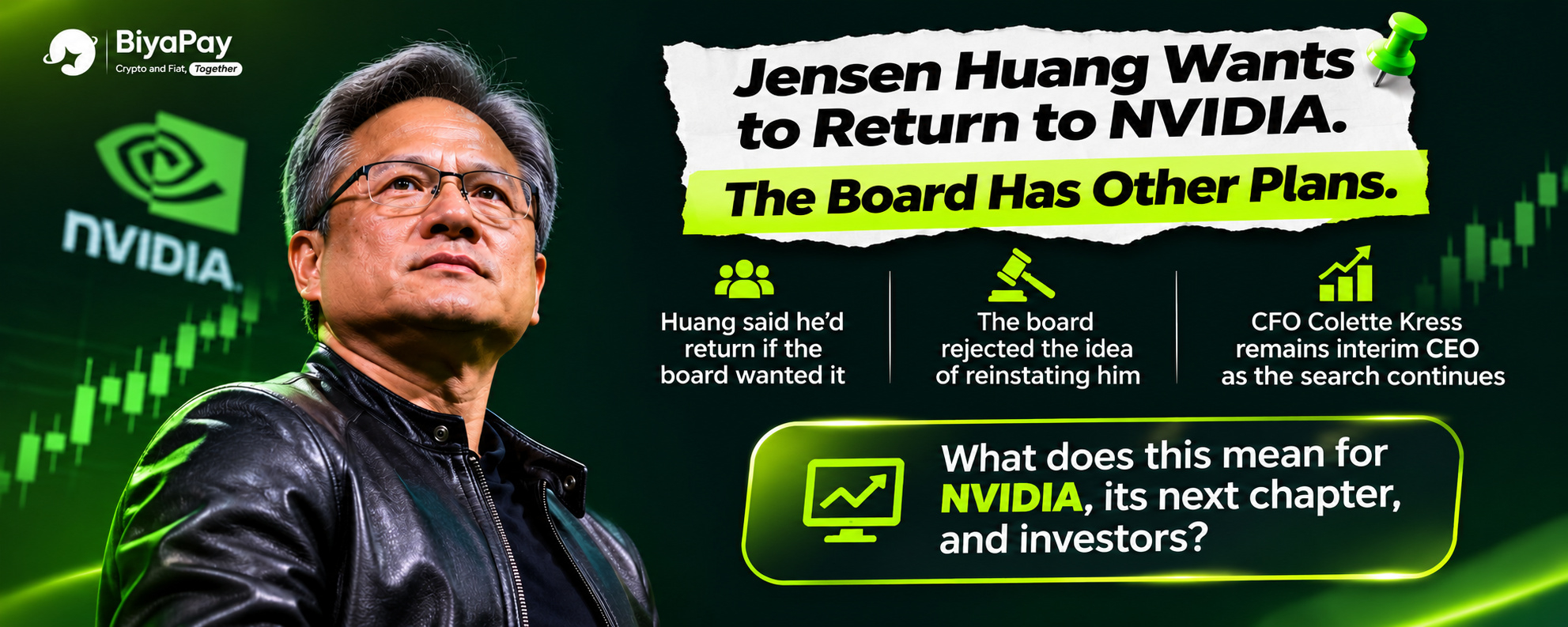
Jensen Huang veut revenir chez NVIDIA. Le conseil d’administration a d’autres projets.NVIDIA traverse une période inhabituelle de son histoire.
Après que Jensen Huang a quitté ses fonctions de PDG, de nombreux investisseurs, employés et personnalités du secteur ont commencé à réclamer son retour. Huang a fini par répondre à ces appels, en déclarant qu’il serait honoré de revenir si le conseil d’administration estimait que c’était dans le meilleur intérêt de l’entreprise.
Cette déclaration a immédiatement soulevé une nouvelle question : NVIDIA pourrait-elle faire revenir le dirigeant qui a contribué à en faire l’une des entreprises les plus influentes du secteur de l’IA ?
Pour l’instant, le conseil d’administration répond non.
Jensen Huang veut revenir chez NVIDIA. Le conseil d’administration a d’autres projets.
NVIDIA traverse une période inhabituelle de son histoire.
Après que Jensen Huang a quitté ses fonctions de PDG, de nombreux investisseurs, employés et personnalités du secteur ont commencé à réclamer son retour. Huang a fini par répondre à ces appels, en déclarant qu’il serait honoré de revenir si le conseil d’administration estimait que c’était dans le meilleur intérêt de l’entreprise.
Cette déclaration a immédiatement soulevé une nouvelle question : NVIDIA pourrait-elle faire revenir le dirigeant qui a contribué à en faire l’une des entreprises les plus influentes du secteur de l’IA ?
Pour l’instant, le conseil d’administration répond non.
Après que Jensen Huang a quitté ses fonctions de PDG, de nombreux investisseurs, employés et personnalités du secteur ont commencé à réclamer son retour. Huang a fini par répondre à ces appels, en déclarant qu’il serait honoré de revenir si le conseil d’administration estimait que c’était dans le meilleur intérêt de l’entreprise.
Cette déclaration a immédiatement soulevé une nouvelle question : NVIDIA pourrait-elle faire revenir le dirigeant qui a contribué à en faire l’une des entreprises les plus influentes du secteur de l’IA ?
Pour l’instant, le conseil d’administration répond non.
89
Article
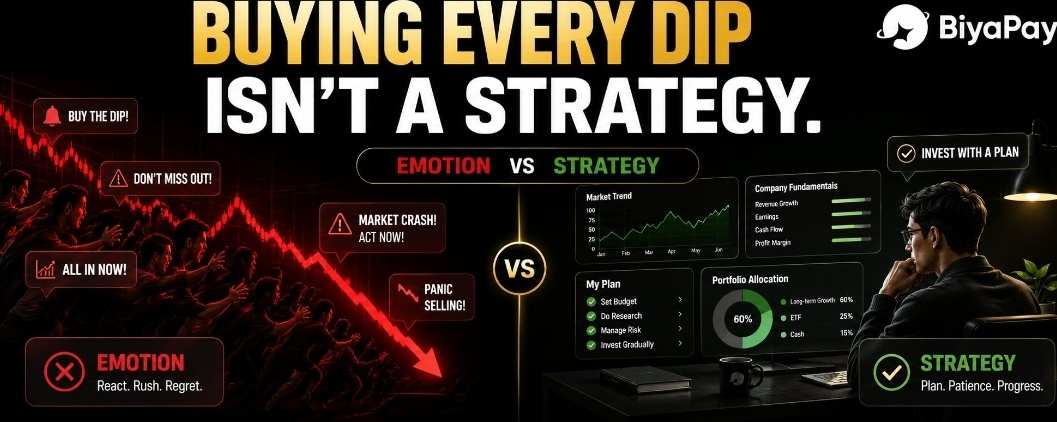
Acheter pendant les baisses : une approche plus avisée des fractions d’actionsChaque fois que le marché boursier connaît un repli important, la même conversation reprend.
Les investisseurs se mettent à chercher des occasions. Les réseaux sociaux se remplissent de prédictions sur les actions qui se redresseront en premier, tandis que d’autres incitent à acheter avant que les cours ne remontent.
Mais il y a une question qui, selon moi, mérite davantage d’attention :
Avez-vous vraiment un plan pour acheter pendant les baisses, ou réagissez-vous simplement à la chute des cours ?
La baisse du cours d’une action peut créer une occasion, mais elle peut aussi révéler des problèmes plus profonds au sein d’une entreprise. Comprendre cette différence est essentiel pour investir.
Acheter pendant les baisses : une approche plus avisée des fractions d’actions
Chaque fois que le marché boursier connaît un repli important, la même conversation reprend.
Les investisseurs se mettent à chercher des occasions. Les réseaux sociaux se remplissent de prédictions sur les actions qui se redresseront en premier, tandis que d’autres incitent à acheter avant que les cours ne remontent.
Mais il y a une question qui, selon moi, mérite davantage d’attention :
Avez-vous vraiment un plan pour acheter pendant les baisses, ou réagissez-vous simplement à la chute des cours ?
La baisse du cours d’une action peut créer une occasion, mais elle peut aussi révéler des problèmes plus profonds au sein d’une entreprise. Comprendre cette différence est essentiel pour investir.
Les investisseurs se mettent à chercher des occasions. Les réseaux sociaux se remplissent de prédictions sur les actions qui se redresseront en premier, tandis que d’autres incitent à acheter avant que les cours ne remontent.
Mais il y a une question qui, selon moi, mérite davantage d’attention :
Avez-vous vraiment un plan pour acheter pendant les baisses, ou réagissez-vous simplement à la chute des cours ?
La baisse du cours d’une action peut créer une occasion, mais elle peut aussi révéler des problèmes plus profonds au sein d’une entreprise. Comprendre cette différence est essentiel pour investir.
272
Article
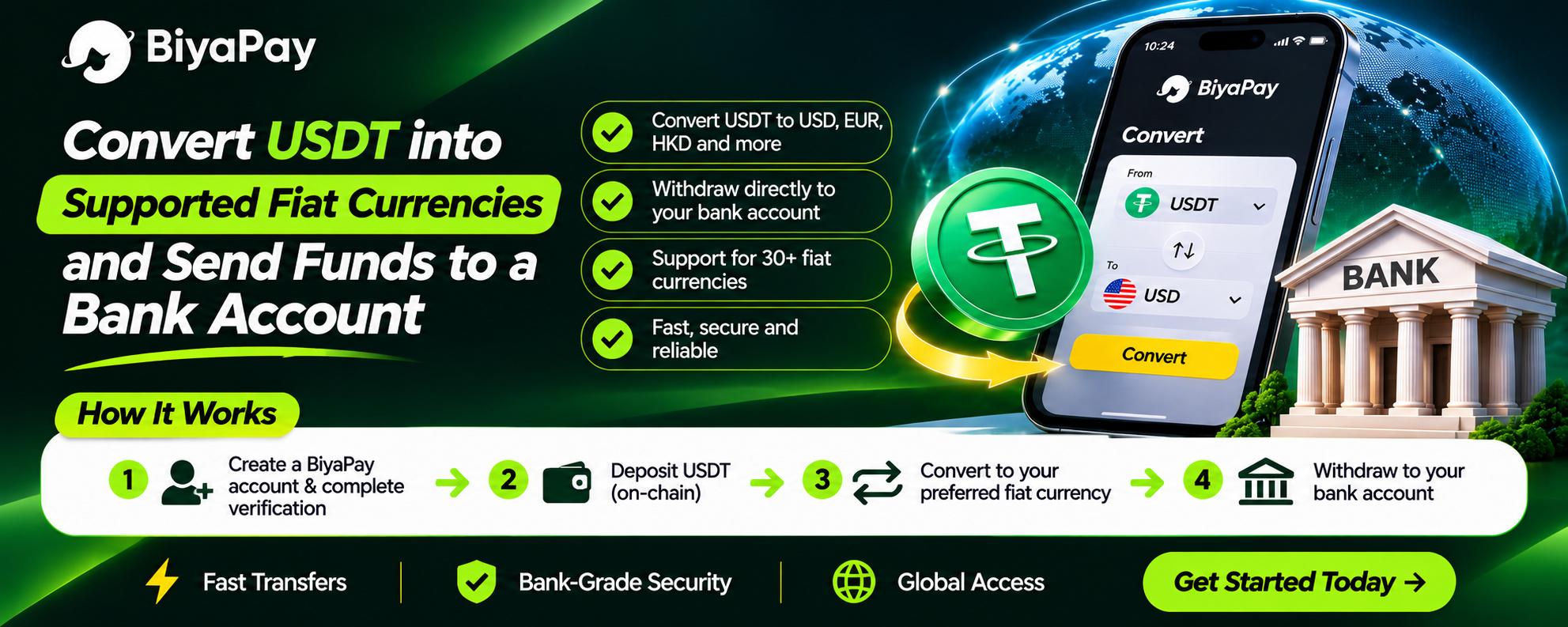
Comment convertir des USDT en monnaie fiduciaire et retirer de l’argent sur votre compte bancaireDétenir des USDT peut être utile lorsque vous utilisez des actifs numériques, mais il arrive que vous ayez besoin d’argent sur un compte bancaire classique.
Vous souhaitez peut-être payer des frais de scolarité, aider votre famille, couvrir vos dépenses quotidiennes ou transférer des fonds pour une transaction personnelle. Dans ces situations, conserver votre argent dans un portefeuille crypto peut ne pas suffire. Vous avez besoin d’un moyen de convertir vos actifs numériques dans une monnaie fiduciaire prise en charge et de virer les fonds sur un compte bancaire.
C’est là que les services de conversion des cryptomonnaies en monnaie fiduciaire et de transfert d’argent à l’international deviennent utiles.
Comment convertir des USDT en monnaie fiduciaire et retirer de l’argent sur votre compte bancaire
Détenir des USDT peut être utile lorsque vous utilisez des actifs numériques, mais il arrive que vous ayez besoin d’argent sur un compte bancaire classique.
Vous souhaitez peut-être payer des frais de scolarité, aider votre famille, couvrir vos dépenses quotidiennes ou transférer des fonds pour une transaction personnelle. Dans ces situations, conserver votre argent dans un portefeuille crypto peut ne pas suffire. Vous avez besoin d’un moyen de convertir vos actifs numériques dans une monnaie fiduciaire prise en charge et de virer les fonds sur un compte bancaire.
C’est là que les services de conversion des cryptomonnaies en monnaie fiduciaire et de transfert d’argent à l’international deviennent utiles.
Vous souhaitez peut-être payer des frais de scolarité, aider votre famille, couvrir vos dépenses quotidiennes ou transférer des fonds pour une transaction personnelle. Dans ces situations, conserver votre argent dans un portefeuille crypto peut ne pas suffire. Vous avez besoin d’un moyen de convertir vos actifs numériques dans une monnaie fiduciaire prise en charge et de virer les fonds sur un compte bancaire.
C’est là que les services de conversion des cryptomonnaies en monnaie fiduciaire et de transfert d’argent à l’international deviennent utiles.
141
Article
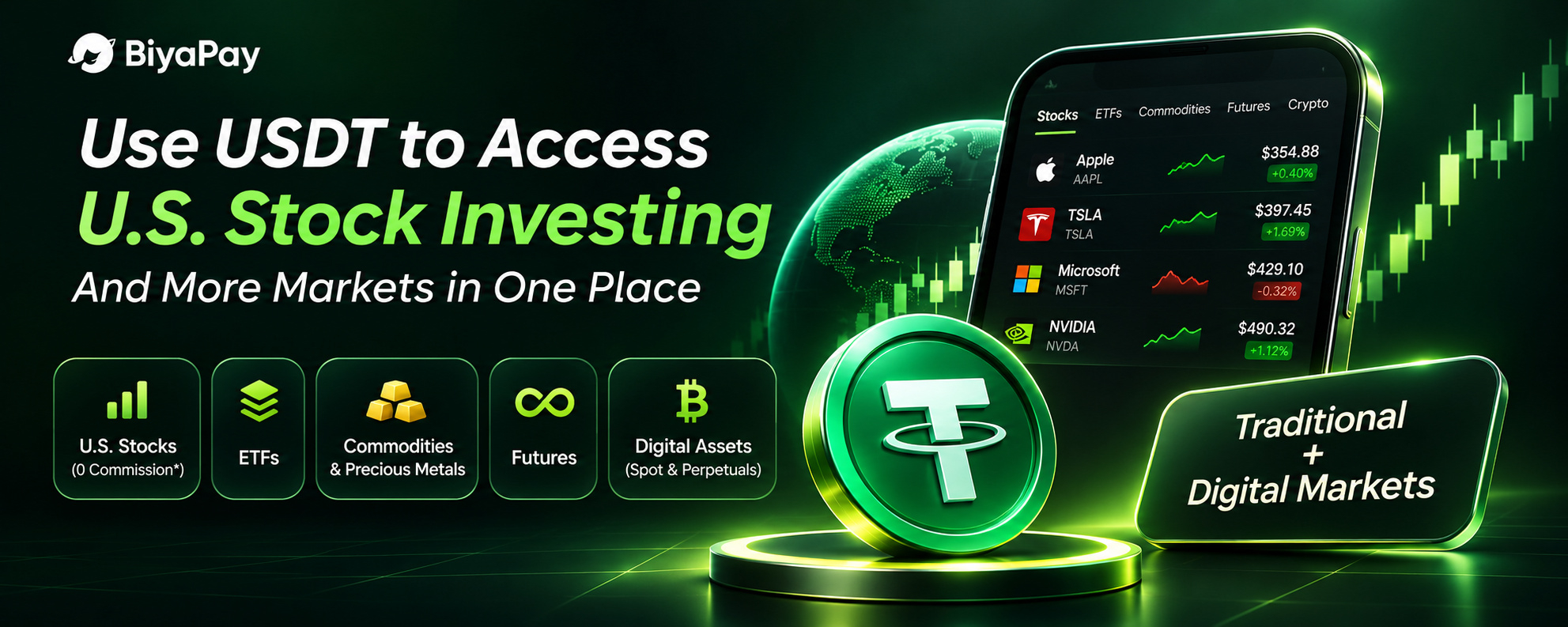
Vous détenez des USDT ? Voici comment une plateforme réunit les actions américaines, les ETF et le trading d’actifs numériques.Une personne qui détient des USDT peut avoir plusieurs objectifs financiers.
Elle peut vouloir investir dans des entreprises américaines bien établies, découvrir les ETF, suivre les marchés des matières premières ou trader des actifs numériques. Le défi consiste à trouver un moyen pratique d’accéder à ces différents marchés sans devoir constamment passer d’une plateforme à une autre ni jongler entre plusieurs systèmes de financement.
Cela soulève une question intéressante : peut-on utiliser son solde USDT existant pour accéder aux marchés financiers traditionnels tout en continuant à trader des cryptomonnaies ?
Vous détenez des USDT ? Voici comment une plateforme réunit les actions américaines, les ETF et le trading d’actifs numériques.
Une personne qui détient des USDT peut avoir plusieurs objectifs financiers.
Elle peut vouloir investir dans des entreprises américaines bien établies, découvrir les ETF, suivre les marchés des matières premières ou trader des actifs numériques. Le défi consiste à trouver un moyen pratique d’accéder à ces différents marchés sans devoir constamment passer d’une plateforme à une autre ni jongler entre plusieurs systèmes de financement.
Cela soulève une question intéressante : peut-on utiliser son solde USDT existant pour accéder aux marchés financiers traditionnels tout en continuant à trader des cryptomonnaies ?
Elle peut vouloir investir dans des entreprises américaines bien établies, découvrir les ETF, suivre les marchés des matières premières ou trader des actifs numériques. Le défi consiste à trouver un moyen pratique d’accéder à ces différents marchés sans devoir constamment passer d’une plateforme à une autre ni jongler entre plusieurs systèmes de financement.
Cela soulève une question intéressante : peut-on utiliser son solde USDT existant pour accéder aux marchés financiers traditionnels tout en continuant à trader des cryptomonnaies ?
202
Article
Voir la traduction
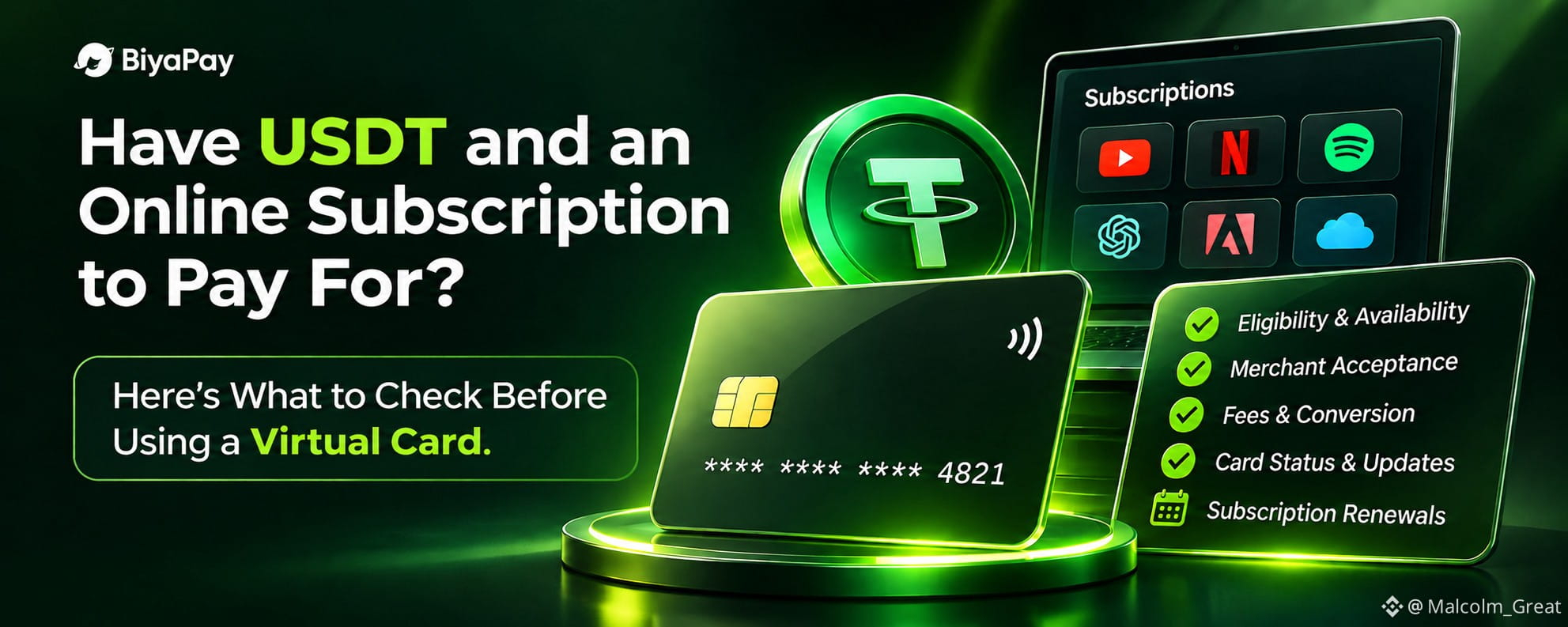
Have USDT and an Online Subscription to Pay For? Here’s What to Check Before Using a Virtual CardPaying for an online subscription can become frustrating when the service requires an international payment card.
Maybe you need a tool for work, an AI subscription for content creation, cloud storage for your files, or a streaming service you use every month. You have USDT available, but the payment page asks for card details.
That leaves you with a practical question: how can you use the digital assets you already hold to pay for an online service?
Virtual payment cards are one option worth understanding. However, before funding one, there are a few things you should check. A card that works for one online purchase may not necessarily work for every subscription.
Start with the actual payment problem
Online subscriptions often require more than having enough money in your account.
The merchant may check the card type, billing country, currency, payment address and other details before approving a transaction. Some services also have restrictions on which cards they accept.
This can create a problem for people who hold USDT but don't have a conventional card that works with the subscription they want.
Using a virtual card funded through a digital asset platform may offer another payment route. But it's important to understand how the card works before relying on it for recurring payments.
Understand how a USDT-funded virtual card works
A virtual payment card provides card details that can be entered on websites and supported online payment platforms. It doesn't require a physical card to make an online payment.
With a USDT-funded card, the general idea is that you use your digital asset balance to fund the card or its associated payment balance. The platform handles the conversion into the currency used for spending, according to its current payment process.
BiyaPay's official EasyCard announcement describes a virtual payment instrument that supports the conversion of digital currencies, including USDT, into fiat currency for payments.
The announcement also identifies subscription services, international shopping and game payments among its intended use cases.
Its Help Center lists examples of services and platforms in areas such as streaming, software, AI tools and online shopping.
That gives users an idea of the intended use cases, but it should not be interpreted as a guarantee that every merchant will accept the card.
What should you check before applying?
This is where I would slow down and pay attention. Before moving any USDT, consider the following.
1. Check whether the card is available to you
Don't assume that a payment card is available in every country simply because the provider describes it as a global payment product.
Check the application page and the current card terms for your country or region. Confirm that you can complete the required identity verification and that the card range currently offered to your account is available for use.
For users in Nigeria, this is particularly important. Check the current eligibility information in your own account and make sure your intended use complies with applicable local requirements.
If the application page does not clearly confirm your eligibility, contact the provider before funding anything.
2. Confirm that your subscription accepts the card
Make a distinction between a platform being listed as a supported use case and your particular subscription payment being approved.
For example, a virtual card may be intended for online software or AI subscriptions, but the merchant can still apply its own payment rules.
Check the payment methods accepted by the subscription provider. Pay attention to its billing-country requirements, currency and any restrictions on prepaid or virtual cards.
If you're unsure, ask the merchant or card provider for clarification before relying on the card for an important subscription.
3. Understand all the fees
The amount you spend on a subscription may not be the only cost involved.
Depending on the provider's current terms, you may need to account for card issuance, funding, currency conversion or transaction charges.
For example, imagine a subscription costs $20 per month. You should check how much USDT is required to fund the card with enough USD to cover that payment, including any applicable charges.
Don't calculate the cost using an assumed one-to-one USDT-to-USD conversion. Review the actual conversion quote and fee information displayed before confirming.
Also check whether a failed payment or refund could involve additional charges.
4. Check the card's current status and terms
Card availability and card number ranges can change when a provider's upstream payment arrangements change.
This is worth checking rather than relying on old tutorials, screenshots or recommendations from other users.
BiyaPay published an announcement on October 23, 2026, stating that EasyCards beginning with 400, 436 and 472 had been discontinued following upstream bank adjustments. The announcement said affected balances and corresponding top-up fees had been refunded to users' Funding Accounts.
This is a useful reminder to check the current card options displayed in your account before applying. An older card tutorial may no longer describe the available options.
5. Plan for automatic subscription renewals
Subscriptions often renew automatically.
If your card balance is insufficient when the next billing date arrives, the payment may fail. Depending on the merchant's policy, your subscription could be interrupted or you may need to update your payment method.
Keep track of renewal dates and maintain enough available balance for the upcoming charge, including any applicable fees.
If you no longer need a subscription, review the merchant's cancellation process. Removing a card from a payment page may not automatically cancel the subscription itself.
6. Protect your card details
A virtual card still contains sensitive payment information.
Avoid sharing your full card number, expiry date, security code or account credentials in public posts, screenshots or private messages with strangers.
Only access the provider through its verified official website or application. Be cautious of people offering to activate cards, process payments or solve account problems in exchange for your login details.
If you notice an unfamiliar transaction, contact the provider through its official support channels.
Where does BiyaPay EasyCard fit into this?
For someone who already holds USDT and needs to pay for eligible online services, BiyaPay's EasyCard is one option to investigate.
BiyaPay describes it as a virtual payment card designed for online payments, with digital assets such as USDT used as part of its funding and conversion process.
Its official materials mention subscription-related use cases, including services in streaming, software and AI tools.
The important part is to check the current application instructions, available card range, fees and merchant compatibility before making a decision.
You can find examples of its stated use cases in the official virtual card Help Center. Those examples explain the intended payment scenarios; they don't guarantee approval by every merchant.
My take
If you already hold USDT and regularly pay for online subscriptions, understanding how a virtual card works could help you assess another way to manage those payments.
But I wouldn't move a large amount of USDT into any card before checking the details.
Start by confirming eligibility, reviewing the full cost, checking whether your intended merchant accepts the card and understanding how recurring payments work. If everything checks out, you can decide whether the option makes sense for your needs.
The goal is to make an informed payment decision and avoid unexpected charges or interrupted subscriptions.
Disclaimer: This article is for educational and informational purposes only. It is not financial, legal or payment advice. Card availability, eligibility, supported merchants, fees and payment conditions may change. A listed merchant or use case does not guarantee successful payment. Always review the provider's current terms, confirm local eligibility and check the subscription merchant's payment requirements before funding a card.
#BiyaPay #EasyCard #USDT #VirtualCard #OnlineSubscriptions #CryptoPayments #DigitalPayments #CryptoEducation
Have USDT and an Online Subscription to Pay For? Here’s What to Check Before Using a Virtual Card
Paying for an online subscription can become frustrating when the service requires an international payment card.
Maybe you need a tool for work, an AI subscription for content creation, cloud storage for your files, or a streaming service you use every month. You have USDT available, but the payment page asks for card details.
That leaves you with a practical question: how can you use the digital assets you already hold to pay for an online service?
Virtual payment cards are one option worth understanding. However, before funding one, there are a few things you should check. A card that works for one online purchase may not necessarily work for every subscription.
Start with the actual payment problem
Online subscriptions often require more than having enough money in your account.
The merchant may check the card type, billing country, currency, payment address and other details before approving a transaction. Some services also have restrictions on which cards they accept.
This can create a problem for people who hold USDT but don't have a conventional card that works with the subscription they want.
Using a virtual card funded through a digital asset platform may offer another payment route. But it's important to understand how the card works before relying on it for recurring payments.
Understand how a USDT-funded virtual card works
A virtual payment card provides card details that can be entered on websites and supported online payment platforms. It doesn't require a physical card to make an online payment.
With a USDT-funded card, the general idea is that you use your digital asset balance to fund the card or its associated payment balance. The platform handles the conversion into the currency used for spending, according to its current payment process.
BiyaPay's official EasyCard announcement describes a virtual payment instrument that supports the conversion of digital currencies, including USDT, into fiat currency for payments.
The announcement also identifies subscription services, international shopping and game payments among its intended use cases.
Its Help Center lists examples of services and platforms in areas such as streaming, software, AI tools and online shopping.
That gives users an idea of the intended use cases, but it should not be interpreted as a guarantee that every merchant will accept the card.
What should you check before applying?
This is where I would slow down and pay attention. Before moving any USDT, consider the following.
1. Check whether the card is available to you
Don't assume that a payment card is available in every country simply because the provider describes it as a global payment product.
Check the application page and the current card terms for your country or region. Confirm that you can complete the required identity verification and that the card range currently offered to your account is available for use.
For users in Nigeria, this is particularly important. Check the current eligibility information in your own account and make sure your intended use complies with applicable local requirements.
If the application page does not clearly confirm your eligibility, contact the provider before funding anything.
2. Confirm that your subscription accepts the card
Make a distinction between a platform being listed as a supported use case and your particular subscription payment being approved.
For example, a virtual card may be intended for online software or AI subscriptions, but the merchant can still apply its own payment rules.
Check the payment methods accepted by the subscription provider. Pay attention to its billing-country requirements, currency and any restrictions on prepaid or virtual cards.
If you're unsure, ask the merchant or card provider for clarification before relying on the card for an important subscription.
3. Understand all the fees
The amount you spend on a subscription may not be the only cost involved.
Depending on the provider's current terms, you may need to account for card issuance, funding, currency conversion or transaction charges.
For example, imagine a subscription costs $20 per month. You should check how much USDT is required to fund the card with enough USD to cover that payment, including any applicable charges.
Don't calculate the cost using an assumed one-to-one USDT-to-USD conversion. Review the actual conversion quote and fee information displayed before confirming.
Also check whether a failed payment or refund could involve additional charges.
4. Check the card's current status and terms
Card availability and card number ranges can change when a provider's upstream payment arrangements change.
This is worth checking rather than relying on old tutorials, screenshots or recommendations from other users.
BiyaPay published an announcement on October 23, 2026, stating that EasyCards beginning with 400, 436 and 472 had been discontinued following upstream bank adjustments. The announcement said affected balances and corresponding top-up fees had been refunded to users' Funding Accounts.
This is a useful reminder to check the current card options displayed in your account before applying. An older card tutorial may no longer describe the available options.
5. Plan for automatic subscription renewals
Subscriptions often renew automatically.
If your card balance is insufficient when the next billing date arrives, the payment may fail. Depending on the merchant's policy, your subscription could be interrupted or you may need to update your payment method.
Keep track of renewal dates and maintain enough available balance for the upcoming charge, including any applicable fees.
If you no longer need a subscription, review the merchant's cancellation process. Removing a card from a payment page may not automatically cancel the subscription itself.
6. Protect your card details
A virtual card still contains sensitive payment information.
Avoid sharing your full card number, expiry date, security code or account credentials in public posts, screenshots or private messages with strangers.
Only access the provider through its verified official website or application. Be cautious of people offering to activate cards, process payments or solve account problems in exchange for your login details.
If you notice an unfamiliar transaction, contact the provider through its official support channels.
Where does BiyaPay EasyCard fit into this?
For someone who already holds USDT and needs to pay for eligible online services, BiyaPay's EasyCard is one option to investigate.
BiyaPay describes it as a virtual payment card designed for online payments, with digital assets such as USDT used as part of its funding and conversion process.
Its official materials mention subscription-related use cases, including services in streaming, software and AI tools.
The important part is to check the current application instructions, available card range, fees and merchant compatibility before making a decision.
You can find examples of its stated use cases in the official virtual card Help Center. Those examples explain the intended payment scenarios; they don't guarantee approval by every merchant.
My take
If you already hold USDT and regularly pay for online subscriptions, understanding how a virtual card works could help you assess another way to manage those payments.
But I wouldn't move a large amount of USDT into any card before checking the details.
Start by confirming eligibility, reviewing the full cost, checking whether your intended merchant accepts the card and understanding how recurring payments work. If everything checks out, you can decide whether the option makes sense for your needs.
The goal is to make an informed payment decision and avoid unexpected charges or interrupted subscriptions.
Disclaimer: This article is for educational and informational purposes only. It is not financial, legal or payment advice. Card availability, eligibility, supported merchants, fees and payment conditions may change. A listed merchant or use case does not guarantee successful payment. Always review the provider's current terms, confirm local eligibility and check the subscription merchant's payment requirements before funding a card.
#BiyaPay #EasyCard #USDT #VirtualCard #OnlineSubscriptions #CryptoPayments #DigitalPayments #CryptoEducation
Maybe you need a tool for work, an AI subscription for content creation, cloud storage for your files, or a streaming service you use every month. You have USDT available, but the payment page asks for card details.
That leaves you with a practical question: how can you use the digital assets you already hold to pay for an online service?
Virtual payment cards are one option worth understanding. However, before funding one, there are a few things you should check. A card that works for one online purchase may not necessarily work for every subscription.
Start with the actual payment problem
Online subscriptions often require more than having enough money in your account.
The merchant may check the card type, billing country, currency, payment address and other details before approving a transaction. Some services also have restrictions on which cards they accept.
This can create a problem for people who hold USDT but don't have a conventional card that works with the subscription they want.
Using a virtual card funded through a digital asset platform may offer another payment route. But it's important to understand how the card works before relying on it for recurring payments.
Understand how a USDT-funded virtual card works
A virtual payment card provides card details that can be entered on websites and supported online payment platforms. It doesn't require a physical card to make an online payment.
With a USDT-funded card, the general idea is that you use your digital asset balance to fund the card or its associated payment balance. The platform handles the conversion into the currency used for spending, according to its current payment process.
BiyaPay's official EasyCard announcement describes a virtual payment instrument that supports the conversion of digital currencies, including USDT, into fiat currency for payments.
The announcement also identifies subscription services, international shopping and game payments among its intended use cases.
Its Help Center lists examples of services and platforms in areas such as streaming, software, AI tools and online shopping.
That gives users an idea of the intended use cases, but it should not be interpreted as a guarantee that every merchant will accept the card.
What should you check before applying?
This is where I would slow down and pay attention. Before moving any USDT, consider the following.
1. Check whether the card is available to you
Don't assume that a payment card is available in every country simply because the provider describes it as a global payment product.
Check the application page and the current card terms for your country or region. Confirm that you can complete the required identity verification and that the card range currently offered to your account is available for use.
For users in Nigeria, this is particularly important. Check the current eligibility information in your own account and make sure your intended use complies with applicable local requirements.
If the application page does not clearly confirm your eligibility, contact the provider before funding anything.
2. Confirm that your subscription accepts the card
Make a distinction between a platform being listed as a supported use case and your particular subscription payment being approved.
For example, a virtual card may be intended for online software or AI subscriptions, but the merchant can still apply its own payment rules.
Check the payment methods accepted by the subscription provider. Pay attention to its billing-country requirements, currency and any restrictions on prepaid or virtual cards.
If you're unsure, ask the merchant or card provider for clarification before relying on the card for an important subscription.
3. Understand all the fees
The amount you spend on a subscription may not be the only cost involved.
Depending on the provider's current terms, you may need to account for card issuance, funding, currency conversion or transaction charges.
For example, imagine a subscription costs $20 per month. You should check how much USDT is required to fund the card with enough USD to cover that payment, including any applicable charges.
Don't calculate the cost using an assumed one-to-one USDT-to-USD conversion. Review the actual conversion quote and fee information displayed before confirming.
Also check whether a failed payment or refund could involve additional charges.
4. Check the card's current status and terms
Card availability and card number ranges can change when a provider's upstream payment arrangements change.
This is worth checking rather than relying on old tutorials, screenshots or recommendations from other users.
BiyaPay published an announcement on October 23, 2026, stating that EasyCards beginning with 400, 436 and 472 had been discontinued following upstream bank adjustments. The announcement said affected balances and corresponding top-up fees had been refunded to users' Funding Accounts.
This is a useful reminder to check the current card options displayed in your account before applying. An older card tutorial may no longer describe the available options.
5. Plan for automatic subscription renewals
Subscriptions often renew automatically.
If your card balance is insufficient when the next billing date arrives, the payment may fail. Depending on the merchant's policy, your subscription could be interrupted or you may need to update your payment method.
Keep track of renewal dates and maintain enough available balance for the upcoming charge, including any applicable fees.
If you no longer need a subscription, review the merchant's cancellation process. Removing a card from a payment page may not automatically cancel the subscription itself.
6. Protect your card details
A virtual card still contains sensitive payment information.
Avoid sharing your full card number, expiry date, security code or account credentials in public posts, screenshots or private messages with strangers.
Only access the provider through its verified official website or application. Be cautious of people offering to activate cards, process payments or solve account problems in exchange for your login details.
If you notice an unfamiliar transaction, contact the provider through its official support channels.
Where does BiyaPay EasyCard fit into this?
For someone who already holds USDT and needs to pay for eligible online services, BiyaPay's EasyCard is one option to investigate.
BiyaPay describes it as a virtual payment card designed for online payments, with digital assets such as USDT used as part of its funding and conversion process.
Its official materials mention subscription-related use cases, including services in streaming, software and AI tools.
The important part is to check the current application instructions, available card range, fees and merchant compatibility before making a decision.
You can find examples of its stated use cases in the official virtual card Help Center. Those examples explain the intended payment scenarios; they don't guarantee approval by every merchant.
My take
If you already hold USDT and regularly pay for online subscriptions, understanding how a virtual card works could help you assess another way to manage those payments.
But I wouldn't move a large amount of USDT into any card before checking the details.
Start by confirming eligibility, reviewing the full cost, checking whether your intended merchant accepts the card and understanding how recurring payments work. If everything checks out, you can decide whether the option makes sense for your needs.
The goal is to make an informed payment decision and avoid unexpected charges or interrupted subscriptions.
Disclaimer: This article is for educational and informational purposes only. It is not financial, legal or payment advice. Card availability, eligibility, supported merchants, fees and payment conditions may change. A listed merchant or use case does not guarantee successful payment. Always review the provider's current terms, confirm local eligibility and check the subscription merchant's payment requirements before funding a card.
#BiyaPay #EasyCard #USDT #VirtualCard #OnlineSubscriptions #CryptoPayments #DigitalPayments #CryptoEducation
85
Article
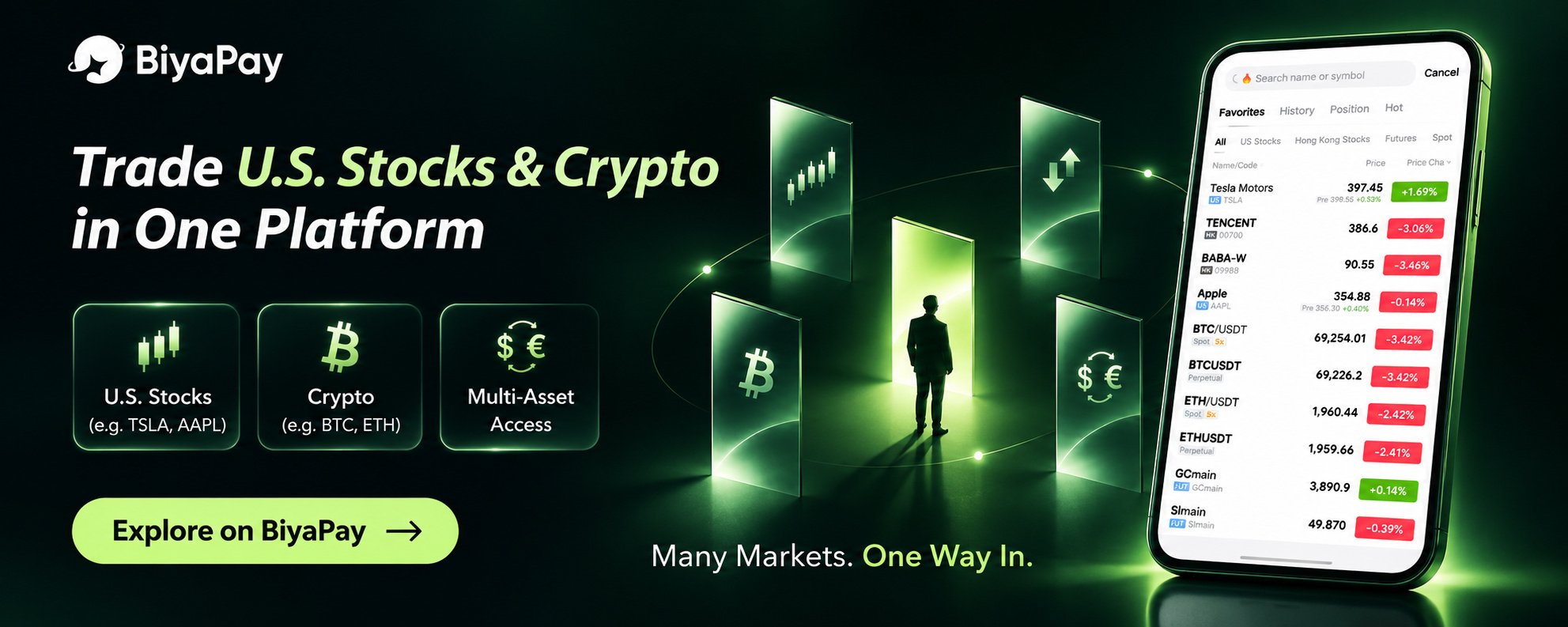
Vous détenez des USDT et vous intéressez aux actions américaines ? Voici à quoi ressemble le processus d’approvisionnement
Si vousSi vous détenez déjà des USDT, vous vous demandez peut-être si vous pouvez les utiliser pour accéder au marché boursier américain.
Vous avez peut-être entendu parler d’entreprises comme Apple, Microsoft, Amazon ou Nvidia et envisagé d’ajouter certaines de leurs actions à votre portefeuille. Mais avant de passer un ordre boursier, il y a une question pratique à laquelle il faut répondre :
Comment transférer les USDT que vous détenez déjà vers des fonds utilisables pour négocier des actions ?
C’est là que comprendre le processus d’approvisionnement devient important.
Avec BiyaPay, le processus implique de passer par différentes étapes de compte. Vos USDT sont d’abord versés sur votre compte de financement. Ils sont ensuite convertis en USD, puis le solde en dollars obtenu est transféré sur votre compte-titres.
Vous détenez des USDT et vous intéressez aux actions américaines ? Voici à quoi ressemble le processus d’approvisionnement Si vous
Si vous détenez déjà des USDT, vous vous demandez peut-être si vous pouvez les utiliser pour accéder au marché boursier américain.
Vous avez peut-être entendu parler d’entreprises comme Apple, Microsoft, Amazon ou Nvidia et envisagé d’ajouter certaines de leurs actions à votre portefeuille. Mais avant de passer un ordre boursier, il y a une question pratique à laquelle il faut répondre :
Comment transférer les USDT que vous détenez déjà vers des fonds utilisables pour négocier des actions ?
C’est là que comprendre le processus d’approvisionnement devient important.
Avec BiyaPay, le processus implique de passer par différentes étapes de compte. Vos USDT sont d’abord versés sur votre compte de financement. Ils sont ensuite convertis en USD, puis le solde en dollars obtenu est transféré sur votre compte-titres.
Vous avez peut-être entendu parler d’entreprises comme Apple, Microsoft, Amazon ou Nvidia et envisagé d’ajouter certaines de leurs actions à votre portefeuille. Mais avant de passer un ordre boursier, il y a une question pratique à laquelle il faut répondre :
Comment transférer les USDT que vous détenez déjà vers des fonds utilisables pour négocier des actions ?
C’est là que comprendre le processus d’approvisionnement devient important.
Avec BiyaPay, le processus implique de passer par différentes étapes de compte. Vos USDT sont d’abord versés sur votre compte de financement. Ils sont ensuite convertis en USD, puis le solde en dollars obtenu est transféré sur votre compte-titres.
148
Article
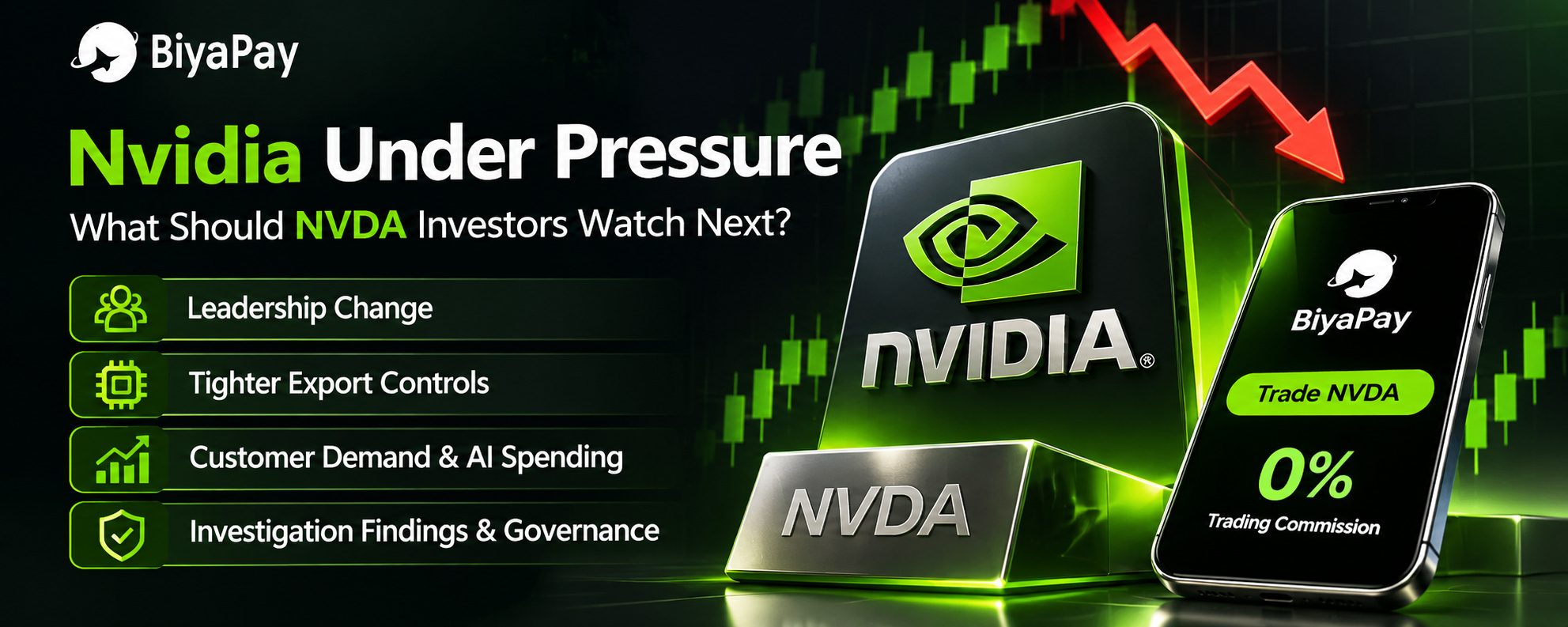
La controverse autour de Jensen Huang met la direction de Nvidia sous pression : que doivent surveiller les investisseurs de NVDA ?Depuis des années, Jensen Huang est l’une des principales raisons pour lesquelles les investisseurs s’intéressent à Nvidia.
Il a cofondé l’entreprise en 1993 et est resté au cœur de sa transformation, d’un fabricant de puces graphiques en l’une des entreprises les plus influentes du secteur de l’intelligence artificielle.
Son leadership, sa vision technique et sa capacité à positionner Nvidia sur le marché de l’IA sont devenus étroitement associés au succès de l’entreprise.
Mais les derniers développements concernant Huang ont introduit une autre forme d’incertitude.
La controverse autour de Jensen Huang met la direction de Nvidia sous pression : que doivent surveiller les investisseurs de NVDA ?
Depuis des années, Jensen Huang est l’une des principales raisons pour lesquelles les investisseurs s’intéressent à Nvidia.
Il a cofondé l’entreprise en 1993 et est resté au cœur de sa transformation, d’un fabricant de puces graphiques en l’une des entreprises les plus influentes du secteur de l’intelligence artificielle.
Son leadership, sa vision technique et sa capacité à positionner Nvidia sur le marché de l’IA sont devenus étroitement associés au succès de l’entreprise.
Mais les derniers développements concernant Huang ont introduit une autre forme d’incertitude.
Il a cofondé l’entreprise en 1993 et est resté au cœur de sa transformation, d’un fabricant de puces graphiques en l’une des entreprises les plus influentes du secteur de l’intelligence artificielle.
Son leadership, sa vision technique et sa capacité à positionner Nvidia sur le marché de l’IA sont devenus étroitement associés au succès de l’entreprise.
Mais les derniers développements concernant Huang ont introduit une autre forme d’incertitude.
269
Article
Voir la traduction
Nvidia's Jensen Huang Controversy: Should Investors Be Worried About NVDA Stock or Focus on Its FundNvidia has become one of the most important companies in the artificial intelligence industry. Its chips power data centres, support AI development and sit at the centre of a global technology race.
But recently, the company found itself facing an unusual challenge.
Its founder and CEO, Jensen Huang, acknowledged having an affair in a message to employees dated November 8, 2026. He apologised to his family and colleagues and accepted responsibility for his actions.
Around the same time, Nvidia's board announced an independent investigation following reports that Huang had been targeted by a foreign intelligence effort. The board said it had no reason to believe that national security or Nvidia's confidential information had been compromised, but confirmed that it would examine the available information.
These developments have put Nvidia under a different kind of spotlight, and investors are asking an important question:
Does this controversy change the investment case for Nvidia, or is the market reacting to uncertainty surrounding its leadership?
What Happened and Why Does It Matter?
There are two separate issues investors need to understand.
First, Huang publicly acknowledged his personal conduct and apologised. This is a confirmed statement from the CEO himself.
Second, reports raised concerns about whether he had been targeted by a foreign intelligence operation. Nvidia's board responded by establishing an independent investigation led by independent directors with assistance from outside legal counsel.
The underlying intelligence allegations remain subject to investigation. They should not be presented as established facts.
Why does this matter to investors?
Nvidia is a company with significant exposure to the global semiconductor industry, where business relationships, technology security and international trade policies carry considerable importance.
Any development that raises questions about leadership, corporate governance or national security can influence how investors assess the company's risks.
However, the existence of an investigation does not automatically mean that Nvidia's business operations have been compromised.
Is Nvidia's Business Actually Changing?
This is where I think investors need to look beyond the headlines.
Nvidia's investment case has largely been built around demand for AI computing infrastructure.
Companies are investing heavily in data centres, advanced processors and the computing resources needed to develop and operate AI systems.
Nvidia has positioned itself as a major supplier in this market through its GPUs, networking technology and software ecosystem.
The important question is whether the recent controversy changes these business fundamentals.
For now, the public information does not establish that Nvidia's AI-chip demand has weakened because of Huang's personal controversy.
Investors should continue monitoring the factors that directly influence the company's financial performance:
AI infrastructure demand: Are cloud providers and other major customers continuing to invest in Nvidia's computing products?
Revenue and earnings: Is Nvidia maintaining its growth trajectory, and are its margins holding up?
Export restrictions: Could additional restrictions affect the company's ability to sell advanced chips into important international markets?
Customer confidence: Are major business partners maintaining their relationships and purchasing commitments?
These factors provide a more useful picture of Nvidia's long-term prospects than headlines alone.
Why NVDA Investors Are Watching Leadership Risk
Although business fundamentals remain important, leadership cannot be ignored.
Jensen Huang has been closely associated with Nvidia's growth and strategic direction. His public presence and leadership have played a major role in shaping the company's identity.
That creates a question about leadership continuity.
If the investigation produces findings that affect Huang's position, investors may have to consider how a leadership transition would influence the company.
There are several possible developments worth watching:
- The findings and recommendations of the independent investigation.
- Whether Huang continues leading the company without changes to his responsibilities.
- Whether Nvidia's board strengthens its governance and oversight arrangements.
- Whether the situation creates additional regulatory or national security scrutiny.
At this stage, there is no confirmed announcement that Huang is stepping down.
Investors should avoid pricing in a leadership departure as though it has already happened.
What Does the Market Reaction Tell Us?
The market's initial response showed that investors were paying attention.
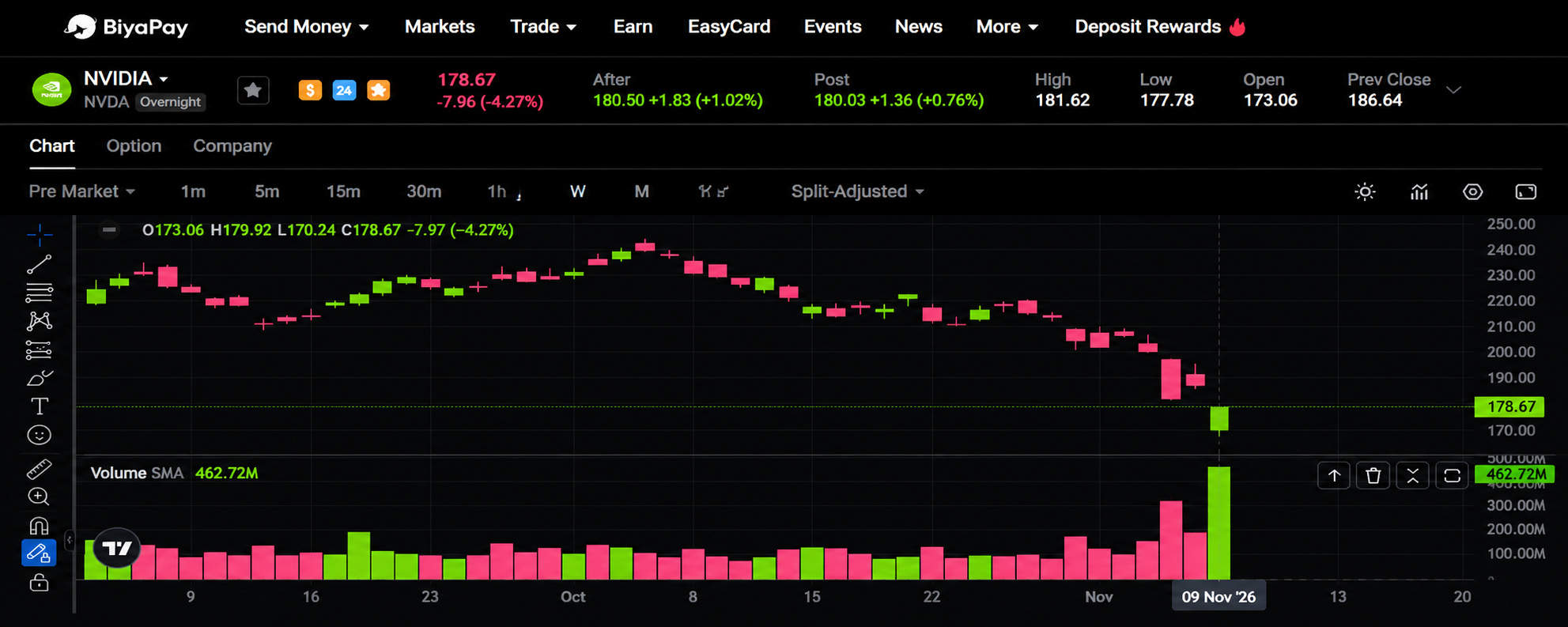
At 5:15 a.m. ET on November 9, 2026, NVDA was reported down 4.4% in premarket trading.
That figure represents a specific premarket observation, not Nvidia's closing performance for the day.
The decline suggests that uncertainty surrounding the CEO and the investigation had become an immediate concern for market participants.
However, a short-term stock decline does not establish that the company's long-term earnings outlook has deteriorated.
There is an important difference between a change in a company's financial prospects and a change in the price investors are willing to pay for those prospects.
For example, if Nvidia continues reporting strong revenue growth but investors become less comfortable with its leadership risk, its valuation could come under pressure even without an immediate deterioration in earnings.
That distinction is worth remembering when evaluating NVDA.
How Can Investors Access Nvidia Exposure Through BiyaPay?
For investors following Nvidia, monitoring its stock performance is only one part of the equation. Having access to different ways of getting market exposure is another consideration.
This is where BiyaPay becomes relevant.
BiyaPay provides access to US and Hong Kong stocks, including Nvidia (NVDA). Its official platform advertises real stock ownership, dividends and zero stock-trading commission.
This gives eligible users another way to access Nvidia shares through its stock-trading service.
BiyaPay also lists NVDAUSDT perpetual futures.
These are different financial products, and investors should understand the distinction before choosing between them.
Buying NVDA shares: This provides exposure to the actual stock, with the associated ownership rights applicable to the shares purchased.
Trading NVDAUSDT perpetuals: This provides derivative exposure to Nvidia's price movements using USDT as the settlement asset. It does not give the trader ownership of Nvidia shares or shareholder voting rights.
BiyaPay's NVDAUSDT product page displays up to 10x leverage and a zero-fee trading offer. Users should check the live contract specifications, funding arrangements, margin requirements and applicable promotional conditions before opening a position.
Zero trading commission also does not mean that every possible trading cost is eliminated.
For someone following Nvidia's developments, these products offer different ways to approach the stock depending on their investment objectives and understanding of the risks.
So, Should You Hold, Reduce or Wait?
I wouldn't make that decision based on the controversy alone.
An existing NVDA shareholder may reasonably choose to hold while monitoring the investigation and the company's financial performance.
Another investor may decide to reduce exposure because the additional governance and geopolitical uncertainty no longer fits their risk tolerance.
Someone considering an initial investment may prefer to wait for more information before committing capital.
All three approaches can be reasonable depending on individual circumstances.
Personally, I would pay closer attention to Nvidia's next earnings results, customer demand, export-related developments and the findings of the independent investigation.
Those developments will provide a clearer basis for evaluating whether the controversy has lasting consequences for the company.
Final Thoughts
Nvidia's current situation is a reminder that investing in a company involves looking beyond its products and market position.
Leadership, corporate governance and geopolitical exposure can all influence how investors value a business.
But separating confirmed information from speculation is equally important.
Jensen Huang has acknowledged his personal conduct. Nvidia's board has confirmed an independent investigation into reported foreign intelligence concerns. What the investigation will ultimately establish remains to be seen.
For now, Nvidia's AI business and financial performance deserve the same attention as the headlines surrounding its CEO.
If you hold NVDA today, would you maintain your position, reduce your exposure or wait until the investigation produces clearer answers?
Disclaimer: 𝗧𝗵𝗶𝘀 𝗮𝗿𝘁𝗶𝗰𝗹𝗲 𝗶𝘀 𝗳𝗼𝗿 𝗶𝗻𝗳𝗼𝗿𝗺𝗮𝘁𝗶𝗼𝗻𝗮𝗹 𝗮𝗻𝗱 𝗲𝗱𝘂𝗰𝗮𝘁𝗶𝗼𝗻𝗮𝗹 𝗽𝘂𝗿𝗽𝗼𝘀𝗲𝘀 𝗼𝗻𝗹𝘆 𝗮𝗻𝗱 𝘀𝗵𝗼𝘂𝗹𝗱 𝗻𝗼𝘁 𝗯𝗲 𝗰𝗼𝗻𝘀𝗶𝗱𝗲𝗿𝗲𝗱 𝗳𝗶𝗻𝗮𝗻𝗰𝗶𝗮𝗹 𝗼𝗿 𝗶𝗻𝘃𝗲𝘀𝘁𝗺𝗲𝗻𝘁 𝗮𝗱𝘃𝗶𝗰𝗲. 𝗦𝘁𝗼𝗰𝗸 𝗽𝗿𝗶𝗰𝗲𝘀 𝗮𝗻𝗱 𝗺𝗮𝗿𝗸𝗲𝘁 𝗰𝗼𝗻𝗱𝗶𝘁𝗶𝗼𝗻𝘀 𝗰𝗮𝗻 𝗰𝗵𝗮𝗻𝗴𝗲 𝗿𝗮𝗽𝗶𝗱𝗹𝘆. 𝗜𝗻𝘃𝗲𝘀𝘁𝗶𝗻𝗴 𝗶𝗻 𝗡𝗩𝗗𝗔 𝗮𝗻𝗱 𝘁𝗿𝗮𝗱𝗶𝗻𝗴 𝗡𝗩𝗗𝗔𝗨𝗦𝗗𝗧 𝗽𝗲𝗿𝗽𝗲𝘁𝘂𝗮𝗹 𝗰𝗼𝗻𝘁𝗿𝗮𝗰𝘁𝘀 𝗶𝗻𝘃𝗼𝗹𝘃𝗲 𝗿𝗶𝘀𝗸𝘀, 𝗶𝗻𝗰𝗹𝘂𝗱𝗶𝗻𝗴 𝗽𝗼𝘁𝗲𝗻𝘁𝗶𝗮𝗹 𝗹𝗼𝘀𝘀 𝗼𝗳 𝗰𝗮𝗽𝗶𝘁𝗮𝗹. 𝗟𝗲𝘃𝗲𝗿𝗮𝗴𝗲𝗱 𝘁𝗿𝗮𝗱𝗶𝗻𝗴 𝗰𝗮𝗿𝗿𝗶𝗲𝘀 𝗮𝗱𝗱𝗶𝘁𝗶𝗼𝗻𝗮𝗹 𝗿𝗶𝘀𝗸𝘀. 𝗔𝗹𝘄𝗮𝘆𝘀 𝗰𝗼𝗻𝗱𝘂𝗰𝘁 𝘆𝗼𝘂𝗿 𝗼𝘄𝗻 𝗿𝗲𝘀𝗲𝗮𝗿𝗰𝗵 𝗮𝗻𝗱 𝗮𝘀𝘀𝗲𝘀𝘀 𝘆𝗼𝘂𝗿 𝗿𝗶𝘀𝗸 𝘁𝗼𝗹𝗲𝗿𝗮𝗻𝗰𝗲 𝗯𝗲𝗳𝗼𝗿𝗲 𝗺𝗮𝗸𝗶𝗻𝗴 𝗳𝗶𝗻𝗮𝗻𝗰𝗶𝗮𝗹 𝗱𝗲𝗰𝗶𝘀𝗶𝗼𝗻𝘀. 𝗩𝗲𝗿𝗶𝗳𝘆 𝗕𝗶𝘆𝗮𝗣𝗮𝘆'𝘀 𝗹𝗮𝘁𝗲𝘀𝘁 𝘁𝗿𝗮𝗱𝗶𝗻𝗴 𝗳𝗲𝗲𝘀, 𝗽𝗿𝗼𝗱𝘂𝗰𝘁 𝗮𝘃𝗮𝗶𝗹𝗮𝗯𝗶𝗹𝗶𝘁𝘆 𝗮𝗻𝗱 𝘁𝗲𝗿𝗺𝘀 𝗯𝗲𝗳𝗼𝗿𝗲 𝘂𝘀𝗶𝗻𝗴 𝗶𝘁𝘀 𝘀𝗲𝗿𝘃𝗶𝗰𝗲𝘀.
#BiyaPay #NVIDIA #NVDA #StockMarket #AIInvesting #USStocks
Nvidia's Jensen Huang Controversy: Should Investors Be Worried About NVDA Stock or Focus on Its Fund
Nvidia has become one of the most important companies in the artificial intelligence industry. Its chips power data centres, support AI development and sit at the centre of a global technology race.
But recently, the company found itself facing an unusual challenge.
Its founder and CEO, Jensen Huang, acknowledged having an affair in a message to employees dated November 8, 2026. He apologised to his family and colleagues and accepted responsibility for his actions.
Around the same time, Nvidia's board announced an independent investigation following reports that Huang had been targeted by a foreign intelligence effort. The board said it had no reason to believe that national security or Nvidia's confidential information had been compromised, but confirmed that it would examine the available information.
These developments have put Nvidia under a different kind of spotlight, and investors are asking an important question:
Does this controversy change the investment case for Nvidia, or is the market reacting to uncertainty surrounding its leadership?
What Happened and Why Does It Matter?
There are two separate issues investors need to understand.
First, Huang publicly acknowledged his personal conduct and apologised. This is a confirmed statement from the CEO himself.
Second, reports raised concerns about whether he had been targeted by a foreign intelligence operation. Nvidia's board responded by establishing an independent investigation led by independent directors with assistance from outside legal counsel.
The underlying intelligence allegations remain subject to investigation. They should not be presented as established facts.
Why does this matter to investors?
Nvidia is a company with significant exposure to the global semiconductor industry, where business relationships, technology security and international trade policies carry considerable importance.
Any development that raises questions about leadership, corporate governance or national security can influence how investors assess the company's risks.
However, the existence of an investigation does not automatically mean that Nvidia's business operations have been compromised.
Is Nvidia's Business Actually Changing?
This is where I think investors need to look beyond the headlines.
Nvidia's investment case has largely been built around demand for AI computing infrastructure.
Companies are investing heavily in data centres, advanced processors and the computing resources needed to develop and operate AI systems.
Nvidia has positioned itself as a major supplier in this market through its GPUs, networking technology and software ecosystem.
The important question is whether the recent controversy changes these business fundamentals.
For now, the public information does not establish that Nvidia's AI-chip demand has weakened because of Huang's personal controversy.
Investors should continue monitoring the factors that directly influence the company's financial performance:
AI infrastructure demand: Are cloud providers and other major customers continuing to invest in Nvidia's computing products?
Revenue and earnings: Is Nvidia maintaining its growth trajectory, and are its margins holding up?
Export restrictions: Could additional restrictions affect the company's ability to sell advanced chips into important international markets?
Customer confidence: Are major business partners maintaining their relationships and purchasing commitments?
These factors provide a more useful picture of Nvidia's long-term prospects than headlines alone.
Why NVDA Investors Are Watching Leadership Risk
Although business fundamentals remain important, leadership cannot be ignored.
Jensen Huang has been closely associated with Nvidia's growth and strategic direction. His public presence and leadership have played a major role in shaping the company's identity.
That creates a question about leadership continuity.
If the investigation produces findings that affect Huang's position, investors may have to consider how a leadership transition would influence the company.
There are several possible developments worth watching:
- The findings and recommendations of the independent investigation.
- Whether Huang continues leading the company without changes to his responsibilities.
- Whether Nvidia's board strengthens its governance and oversight arrangements.
- Whether the situation creates additional regulatory or national security scrutiny.
At this stage, there is no confirmed announcement that Huang is stepping down.
Investors should avoid pricing in a leadership departure as though it has already happened.
What Does the Market Reaction Tell Us?
The market's initial response showed that investors were paying attention.
At 5:15 a.m. ET on November 9, 2026, NVDA was reported down 4.4% in premarket trading.
That figure represents a specific premarket observation, not Nvidia's closing performance for the day.
The decline suggests that uncertainty surrounding the CEO and the investigation had become an immediate concern for market participants.
However, a short-term stock decline does not establish that the company's long-term earnings outlook has deteriorated.
There is an important difference between a change in a company's financial prospects and a change in the price investors are willing to pay for those prospects.
For example, if Nvidia continues reporting strong revenue growth but investors become less comfortable with its leadership risk, its valuation could come under pressure even without an immediate deterioration in earnings.
That distinction is worth remembering when evaluating NVDA.
How Can Investors Access Nvidia Exposure Through BiyaPay?
For investors following Nvidia, monitoring its stock performance is only one part of the equation. Having access to different ways of getting market exposure is another consideration.
This is where BiyaPay becomes relevant.
BiyaPay provides access to US and Hong Kong stocks, including Nvidia (NVDA). Its official platform advertises real stock ownership, dividends and zero stock-trading commission.
This gives eligible users another way to access Nvidia shares through its stock-trading service.
BiyaPay also lists NVDAUSDT perpetual futures.
These are different financial products, and investors should understand the distinction before choosing between them.
Buying NVDA shares: This provides exposure to the actual stock, with the associated ownership rights applicable to the shares purchased.
Trading NVDAUSDT perpetuals: This provides derivative exposure to Nvidia's price movements using USDT as the settlement asset. It does not give the trader ownership of Nvidia shares or shareholder voting rights.
BiyaPay's NVDAUSDT product page displays up to 10x leverage and a zero-fee trading offer. Users should check the live contract specifications, funding arrangements, margin requirements and applicable promotional conditions before opening a position.
Zero trading commission also does not mean that every possible trading cost is eliminated.
For someone following Nvidia's developments, these products offer different ways to approach the stock depending on their investment objectives and understanding of the risks.
So, Should You Hold, Reduce or Wait?
I wouldn't make that decision based on the controversy alone.
An existing NVDA shareholder may reasonably choose to hold while monitoring the investigation and the company's financial performance.
Another investor may decide to reduce exposure because the additional governance and geopolitical uncertainty no longer fits their risk tolerance.
Someone considering an initial investment may prefer to wait for more information before committing capital.
All three approaches can be reasonable depending on individual circumstances.
Personally, I would pay closer attention to Nvidia's next earnings results, customer demand, export-related developments and the findings of the independent investigation.
Those developments will provide a clearer basis for evaluating whether the controversy has lasting consequences for the company.
Final Thoughts
Nvidia's current situation is a reminder that investing in a company involves looking beyond its products and market position.
Leadership, corporate governance and geopolitical exposure can all influence how investors value a business.
But separating confirmed information from speculation is equally important.
Jensen Huang has acknowledged his personal conduct. Nvidia's board has confirmed an independent investigation into reported foreign intelligence concerns. What the investigation will ultimately establish remains to be seen.
For now, Nvidia's AI business and financial performance deserve the same attention as the headlines surrounding its CEO.
If you hold NVDA today, would you maintain your position, reduce your exposure or wait until the investigation produces clearer answers?
Disclaimer: 𝗧𝗵𝗶𝘀 𝗮𝗿𝘁𝗶𝗰𝗹𝗲 𝗶𝘀 𝗳𝗼𝗿 𝗶𝗻𝗳𝗼𝗿𝗺𝗮𝘁𝗶𝗼𝗻𝗮𝗹 𝗮𝗻𝗱 𝗲𝗱𝘂𝗰𝗮𝘁𝗶𝗼𝗻𝗮𝗹 𝗽𝘂𝗿𝗽𝗼𝘀𝗲𝘀 𝗼𝗻𝗹𝘆 𝗮𝗻𝗱 𝘀𝗵𝗼𝘂𝗹𝗱 𝗻𝗼𝘁 𝗯𝗲 𝗰𝗼𝗻𝘀𝗶𝗱𝗲𝗿𝗲𝗱 𝗳𝗶𝗻𝗮𝗻𝗰𝗶𝗮𝗹 𝗼𝗿 𝗶𝗻𝘃𝗲𝘀𝘁𝗺𝗲𝗻𝘁 𝗮𝗱𝘃𝗶𝗰𝗲. 𝗦𝘁𝗼𝗰𝗸 𝗽𝗿𝗶𝗰𝗲𝘀 𝗮𝗻𝗱 𝗺𝗮𝗿𝗸𝗲𝘁 𝗰𝗼𝗻𝗱𝗶𝘁𝗶𝗼𝗻𝘀 𝗰𝗮𝗻 𝗰𝗵𝗮𝗻𝗴𝗲 𝗿𝗮𝗽𝗶𝗱𝗹𝘆. 𝗜𝗻𝘃𝗲𝘀𝘁𝗶𝗻𝗴 𝗶𝗻 𝗡𝗩𝗗𝗔 𝗮𝗻𝗱 𝘁𝗿𝗮𝗱𝗶𝗻𝗴 𝗡𝗩𝗗𝗔𝗨𝗦𝗗𝗧 𝗽𝗲𝗿𝗽𝗲𝘁𝘂𝗮𝗹 𝗰𝗼𝗻𝘁𝗿𝗮𝗰𝘁𝘀 𝗶𝗻𝘃𝗼𝗹𝘃𝗲 𝗿𝗶𝘀𝗸𝘀, 𝗶𝗻𝗰𝗹𝘂𝗱𝗶𝗻𝗴 𝗽𝗼𝘁𝗲𝗻𝘁𝗶𝗮𝗹 𝗹𝗼𝘀𝘀 𝗼𝗳 𝗰𝗮𝗽𝗶𝘁𝗮𝗹. 𝗟𝗲𝘃𝗲𝗿𝗮𝗴𝗲𝗱 𝘁𝗿𝗮𝗱𝗶𝗻𝗴 𝗰𝗮𝗿𝗿𝗶𝗲𝘀 𝗮𝗱𝗱𝗶𝘁𝗶𝗼𝗻𝗮𝗹 𝗿𝗶𝘀𝗸𝘀. 𝗔𝗹𝘄𝗮𝘆𝘀 𝗰𝗼𝗻𝗱𝘂𝗰𝘁 𝘆𝗼𝘂𝗿 𝗼𝘄𝗻 𝗿𝗲𝘀𝗲𝗮𝗿𝗰𝗵 𝗮𝗻𝗱 𝗮𝘀𝘀𝗲𝘀𝘀 𝘆𝗼𝘂𝗿 𝗿𝗶𝘀𝗸 𝘁𝗼𝗹𝗲𝗿𝗮𝗻𝗰𝗲 𝗯𝗲𝗳𝗼𝗿𝗲 𝗺𝗮𝗸𝗶𝗻𝗴 𝗳𝗶𝗻𝗮𝗻𝗰𝗶𝗮𝗹 𝗱𝗲𝗰𝗶𝘀𝗶𝗼𝗻𝘀. 𝗩𝗲𝗿𝗶𝗳𝘆 𝗕𝗶𝘆𝗮𝗣𝗮𝘆'𝘀 𝗹𝗮𝘁𝗲𝘀𝘁 𝘁𝗿𝗮𝗱𝗶𝗻𝗴 𝗳𝗲𝗲𝘀, 𝗽𝗿𝗼𝗱𝘂𝗰𝘁 𝗮𝘃𝗮𝗶𝗹𝗮𝗯𝗶𝗹𝗶𝘁𝘆 𝗮𝗻𝗱 𝘁𝗲𝗿𝗺𝘀 𝗯𝗲𝗳𝗼𝗿𝗲 𝘂𝘀𝗶𝗻𝗴 𝗶𝘁𝘀 𝘀𝗲𝗿𝘃𝗶𝗰𝗲𝘀.
#BiyaPay #NVIDIA #NVDA #StockMarket #AIInvesting #USStocks
But recently, the company found itself facing an unusual challenge.
Its founder and CEO, Jensen Huang, acknowledged having an affair in a message to employees dated November 8, 2026. He apologised to his family and colleagues and accepted responsibility for his actions.
Around the same time, Nvidia's board announced an independent investigation following reports that Huang had been targeted by a foreign intelligence effort. The board said it had no reason to believe that national security or Nvidia's confidential information had been compromised, but confirmed that it would examine the available information.
These developments have put Nvidia under a different kind of spotlight, and investors are asking an important question:
Does this controversy change the investment case for Nvidia, or is the market reacting to uncertainty surrounding its leadership?
What Happened and Why Does It Matter?
There are two separate issues investors need to understand.
First, Huang publicly acknowledged his personal conduct and apologised. This is a confirmed statement from the CEO himself.
Second, reports raised concerns about whether he had been targeted by a foreign intelligence operation. Nvidia's board responded by establishing an independent investigation led by independent directors with assistance from outside legal counsel.
The underlying intelligence allegations remain subject to investigation. They should not be presented as established facts.
Why does this matter to investors?
Nvidia is a company with significant exposure to the global semiconductor industry, where business relationships, technology security and international trade policies carry considerable importance.
Any development that raises questions about leadership, corporate governance or national security can influence how investors assess the company's risks.
However, the existence of an investigation does not automatically mean that Nvidia's business operations have been compromised.
Is Nvidia's Business Actually Changing?
This is where I think investors need to look beyond the headlines.
Nvidia's investment case has largely been built around demand for AI computing infrastructure.
Companies are investing heavily in data centres, advanced processors and the computing resources needed to develop and operate AI systems.
Nvidia has positioned itself as a major supplier in this market through its GPUs, networking technology and software ecosystem.
The important question is whether the recent controversy changes these business fundamentals.
For now, the public information does not establish that Nvidia's AI-chip demand has weakened because of Huang's personal controversy.
Investors should continue monitoring the factors that directly influence the company's financial performance:
AI infrastructure demand: Are cloud providers and other major customers continuing to invest in Nvidia's computing products?
Revenue and earnings: Is Nvidia maintaining its growth trajectory, and are its margins holding up?
Export restrictions: Could additional restrictions affect the company's ability to sell advanced chips into important international markets?
Customer confidence: Are major business partners maintaining their relationships and purchasing commitments?
These factors provide a more useful picture of Nvidia's long-term prospects than headlines alone.
Why NVDA Investors Are Watching Leadership Risk
Although business fundamentals remain important, leadership cannot be ignored.
Jensen Huang has been closely associated with Nvidia's growth and strategic direction. His public presence and leadership have played a major role in shaping the company's identity.
That creates a question about leadership continuity.
If the investigation produces findings that affect Huang's position, investors may have to consider how a leadership transition would influence the company.
There are several possible developments worth watching:
- The findings and recommendations of the independent investigation.
- Whether Huang continues leading the company without changes to his responsibilities.
- Whether Nvidia's board strengthens its governance and oversight arrangements.
- Whether the situation creates additional regulatory or national security scrutiny.
At this stage, there is no confirmed announcement that Huang is stepping down.
Investors should avoid pricing in a leadership departure as though it has already happened.
What Does the Market Reaction Tell Us?
The market's initial response showed that investors were paying attention.
At 5:15 a.m. ET on November 9, 2026, NVDA was reported down 4.4% in premarket trading.
That figure represents a specific premarket observation, not Nvidia's closing performance for the day.
The decline suggests that uncertainty surrounding the CEO and the investigation had become an immediate concern for market participants.
However, a short-term stock decline does not establish that the company's long-term earnings outlook has deteriorated.
There is an important difference between a change in a company's financial prospects and a change in the price investors are willing to pay for those prospects.
For example, if Nvidia continues reporting strong revenue growth but investors become less comfortable with its leadership risk, its valuation could come under pressure even without an immediate deterioration in earnings.
That distinction is worth remembering when evaluating NVDA.
How Can Investors Access Nvidia Exposure Through BiyaPay?
For investors following Nvidia, monitoring its stock performance is only one part of the equation. Having access to different ways of getting market exposure is another consideration.
This is where BiyaPay becomes relevant.
BiyaPay provides access to US and Hong Kong stocks, including Nvidia (NVDA). Its official platform advertises real stock ownership, dividends and zero stock-trading commission.
This gives eligible users another way to access Nvidia shares through its stock-trading service.
BiyaPay also lists NVDAUSDT perpetual futures.
These are different financial products, and investors should understand the distinction before choosing between them.
Buying NVDA shares: This provides exposure to the actual stock, with the associated ownership rights applicable to the shares purchased.
Trading NVDAUSDT perpetuals: This provides derivative exposure to Nvidia's price movements using USDT as the settlement asset. It does not give the trader ownership of Nvidia shares or shareholder voting rights.
BiyaPay's NVDAUSDT product page displays up to 10x leverage and a zero-fee trading offer. Users should check the live contract specifications, funding arrangements, margin requirements and applicable promotional conditions before opening a position.
Zero trading commission also does not mean that every possible trading cost is eliminated.
For someone following Nvidia's developments, these products offer different ways to approach the stock depending on their investment objectives and understanding of the risks.
So, Should You Hold, Reduce or Wait?
I wouldn't make that decision based on the controversy alone.
An existing NVDA shareholder may reasonably choose to hold while monitoring the investigation and the company's financial performance.
Another investor may decide to reduce exposure because the additional governance and geopolitical uncertainty no longer fits their risk tolerance.
Someone considering an initial investment may prefer to wait for more information before committing capital.
All three approaches can be reasonable depending on individual circumstances.
Personally, I would pay closer attention to Nvidia's next earnings results, customer demand, export-related developments and the findings of the independent investigation.
Those developments will provide a clearer basis for evaluating whether the controversy has lasting consequences for the company.
Final Thoughts
Nvidia's current situation is a reminder that investing in a company involves looking beyond its products and market position.
Leadership, corporate governance and geopolitical exposure can all influence how investors value a business.
But separating confirmed information from speculation is equally important.
Jensen Huang has acknowledged his personal conduct. Nvidia's board has confirmed an independent investigation into reported foreign intelligence concerns. What the investigation will ultimately establish remains to be seen.
For now, Nvidia's AI business and financial performance deserve the same attention as the headlines surrounding its CEO.
If you hold NVDA today, would you maintain your position, reduce your exposure or wait until the investigation produces clearer answers?
Disclaimer: 𝗧𝗵𝗶𝘀 𝗮𝗿𝘁𝗶𝗰𝗹𝗲 𝗶𝘀 𝗳𝗼𝗿 𝗶𝗻𝗳𝗼𝗿𝗺𝗮𝘁𝗶𝗼𝗻𝗮𝗹 𝗮𝗻𝗱 𝗲𝗱𝘂𝗰𝗮𝘁𝗶𝗼𝗻𝗮𝗹 𝗽𝘂𝗿𝗽𝗼𝘀𝗲𝘀 𝗼𝗻𝗹𝘆 𝗮𝗻𝗱 𝘀𝗵𝗼𝘂𝗹𝗱 𝗻𝗼𝘁 𝗯𝗲 𝗰𝗼𝗻𝘀𝗶𝗱𝗲𝗿𝗲𝗱 𝗳𝗶𝗻𝗮𝗻𝗰𝗶𝗮𝗹 𝗼𝗿 𝗶𝗻𝘃𝗲𝘀𝘁𝗺𝗲𝗻𝘁 𝗮𝗱𝘃𝗶𝗰𝗲. 𝗦𝘁𝗼𝗰𝗸 𝗽𝗿𝗶𝗰𝗲𝘀 𝗮𝗻𝗱 𝗺𝗮𝗿𝗸𝗲𝘁 𝗰𝗼𝗻𝗱𝗶𝘁𝗶𝗼𝗻𝘀 𝗰𝗮𝗻 𝗰𝗵𝗮𝗻𝗴𝗲 𝗿𝗮𝗽𝗶𝗱𝗹𝘆. 𝗜𝗻𝘃𝗲𝘀𝘁𝗶𝗻𝗴 𝗶𝗻 𝗡𝗩𝗗𝗔 𝗮𝗻𝗱 𝘁𝗿𝗮𝗱𝗶𝗻𝗴 𝗡𝗩𝗗𝗔𝗨𝗦𝗗𝗧 𝗽𝗲𝗿𝗽𝗲𝘁𝘂𝗮𝗹 𝗰𝗼𝗻𝘁𝗿𝗮𝗰𝘁𝘀 𝗶𝗻𝘃𝗼𝗹𝘃𝗲 𝗿𝗶𝘀𝗸𝘀, 𝗶𝗻𝗰𝗹𝘂𝗱𝗶𝗻𝗴 𝗽𝗼𝘁𝗲𝗻𝘁𝗶𝗮𝗹 𝗹𝗼𝘀𝘀 𝗼𝗳 𝗰𝗮𝗽𝗶𝘁𝗮𝗹. 𝗟𝗲𝘃𝗲𝗿𝗮𝗴𝗲𝗱 𝘁𝗿𝗮𝗱𝗶𝗻𝗴 𝗰𝗮𝗿𝗿𝗶𝗲𝘀 𝗮𝗱𝗱𝗶𝘁𝗶𝗼𝗻𝗮𝗹 𝗿𝗶𝘀𝗸𝘀. 𝗔𝗹𝘄𝗮𝘆𝘀 𝗰𝗼𝗻𝗱𝘂𝗰𝘁 𝘆𝗼𝘂𝗿 𝗼𝘄𝗻 𝗿𝗲𝘀𝗲𝗮𝗿𝗰𝗵 𝗮𝗻𝗱 𝗮𝘀𝘀𝗲𝘀𝘀 𝘆𝗼𝘂𝗿 𝗿𝗶𝘀𝗸 𝘁𝗼𝗹𝗲𝗿𝗮𝗻𝗰𝗲 𝗯𝗲𝗳𝗼𝗿𝗲 𝗺𝗮𝗸𝗶𝗻𝗴 𝗳𝗶𝗻𝗮𝗻𝗰𝗶𝗮𝗹 𝗱𝗲𝗰𝗶𝘀𝗶𝗼𝗻𝘀. 𝗩𝗲𝗿𝗶𝗳𝘆 𝗕𝗶𝘆𝗮𝗣𝗮𝘆'𝘀 𝗹𝗮𝘁𝗲𝘀𝘁 𝘁𝗿𝗮𝗱𝗶𝗻𝗴 𝗳𝗲𝗲𝘀, 𝗽𝗿𝗼𝗱𝘂𝗰𝘁 𝗮𝘃𝗮𝗶𝗹𝗮𝗯𝗶𝗹𝗶𝘁𝘆 𝗮𝗻𝗱 𝘁𝗲𝗿𝗺𝘀 𝗯𝗲𝗳𝗼𝗿𝗲 𝘂𝘀𝗶𝗻𝗴 𝗶𝘁𝘀 𝘀𝗲𝗿𝘃𝗶𝗰𝗲𝘀.
#BiyaPay #NVIDIA #NVDA #StockMarket #AIInvesting #USStocks
198
Article
Voir la traduction
Cross-Border Payments: How Crypto Is Changing the Way People Send Money Internationally.Sending money to another country should be a straightforward financial activity. Yet, for many people, international payments can become a frustrating experience.
Imagine you're a freelancer receiving payments from an overseas client, a business owner paying an international supplier, or someone supporting family members living in another country.
You need to move money, but the process can involve several steps before the recipient gets what they're expecting.
There may be bank processing times, currency conversion costs, transfer restrictions and additional verification requirements. Depending on the countries and financial institutions involved, even a simple transaction can take longer than expected.
This raises an important question: Can digital assets make international money transfers more accessible?
Platforms combining cryptocurrency and traditional financial services are exploring ways to address this problem. One example is BiyaPay.
📍Why International Money Transfers Can Be Complicated
Traditional international transfers usually involve multiple financial institutions.
When money moves between countries, the transaction may pass through intermediary banks before reaching the recipient's account. Each institution can have its own processing procedures, requirements and charges.
Currency conversion adds another consideration.
For example, someone sending US dollars to a recipient who needs euros will have to consider the applicable exchange rate and any conversion charges.
Other challenges include:
- Processing delays: Some international bank transfers take several business days, depending on the destination and payment route.
- Transfer fees: Charges can come from the sending bank, intermediary institutions or receiving bank.
- Currency conversion: Exchange rate differences can affect the final amount received.
- Verification requirements: Financial institutions may request additional documents or transaction information.
- Transfer restrictions: Available payment methods and sending limits can differ between countries.
These challenges can be particularly inconvenient for people who regularly deal with international payments.
Where BiyaPay Fits Into the Picture
BiyaPay brings cryptocurrency services and traditional financial transactions together in one platform.
Its services include cryptocurrency deposits, fiat currency conversion, international remittances and other financial products.
One feature worth examining is its support for USDT.
USDT is a stablecoin designed to maintain a value close to the US dollar. People who already hold USDT can use supported BiyaPay services to convert their digital assets into fiat currencies for eligible international transfers.
This creates another way to manage funds across borders without relying entirely on conventional currency deposit methods.
BiyaPay also supports the conversion of more than 30 fiat currencies, with international transfer coverage advertised across more than 100 countries and regions.
However, supported currencies, deposit methods and transfer routes depend on the particular transaction and destination.
𝗛𝗼𝘄 𝘁𝗼 𝗦𝗲𝗻𝗱 𝗠𝗼𝗻𝗲𝘆 𝗨𝘀𝗶𝗻𝗴 𝗨𝗦𝗗𝗧 𝗼𝗻 𝗕𝗶𝘆𝗮𝗣𝗮𝘆
For someone who already holds USDT, the process involves a few important stages.
1. Create an account and complete verification
Start by registering a BiyaPay account.
Complete the required identity verification before accessing the relevant financial services. Depending on the transaction, you may also need to provide additional personal or banking information.
2. Deposit your USDT
Open the deposit section and select the on-chain deposit option.
Choose USDT and the supported blockchain network. Carefully confirm that the network selected matches the network used by your sending wallet.
Sending assets through an unsupported network or to an incorrect address can result in lost funds.
3. Convert your assets
After the deposit is credited, use the conversion feature to exchange your available assets into the required fiat currency.
BiyaPay supports cryptocurrency-to-fiat and fiat-to-fiat conversion, although available currency pairs may vary.
4. Set up the recipient's details
Add the recipient's bank account or select an existing recipient where supported.
Make sure the banking information is correct before proceeding.
5. Review and confirm the transfer
Check the exchange rate, applicable fees, recipient details and estimated arrival time.
If everything is correct, complete the required security verification and submit the transaction.
The transfer can then be processed through the available payment route.
Understanding BiyaPay's Transfer Fees
Fees are an important part of international payments, and this is something users should examine before confirming a transaction.
BiyaPay publishes different remittance fee tiers for certain USD withdrawals.
For example, its published USD remittance schedule includes:
Transaction amount| Published withdrawal fee
$200–below $2,000| $20
$2,000–below $50,000| 1%
$50,000–below $100,000| 0.90%
$100,000–below $500,000| 0.80%
$500,000–below $1 million| 0.70%
$1 million–below $2 million| 0.60%
$2 million and above| 0.50%
These figures come from BiyaPay's published fee information for USD remittances and withdrawals. They should not be treated as a universal fee schedule for every currency or destination.
The platform also indicates that users can check the applicable remittance fee when linking their bank account on the remittance page.
My advice is simple: always compare the final amount the recipient will receive rather than looking at the advertised transfer fee alone.
What Should You Know Before Using It?
While combining crypto and fiat services can offer more flexibility, there are still some things worth considering.
First, identity verification is required. Users should expect to provide the necessary information before accessing relevant services.
Second, USDT deposits are not necessarily available for every sending and receiving route. For example, BiyaPay's published Philippines-to-US transfer information indicates that USDT deposits are not supported for that particular route.
Third, transfer times depend on the destination, payment channel and transaction requirements. Although BiyaPay advertises eligible transfers arriving in as little as five minutes, that should not be interpreted as a guarantee that every transaction will settle within that period.
Finally, users should check the applicable fees, exchange rates, withdrawal requirements and recipient eligibility before sending funds.
Understanding these details can help prevent unnecessary complications.
Is This a Useful Development for Global Payments?
I think the interesting part of this development is the additional flexibility it gives people who already interact with both cryptocurrency and traditional financial systems.
Freelancers can explore alternative ways of managing international earnings. Businesses can examine digital asset conversion for eligible cross-border payments. Individuals can also explore supported routes for sending money to family members abroad.
Of course, the best payment option still depends on the country, amount, fees and the recipient's banking arrangements.
BiyaPay is one platform working in this space by bringing crypto deposits, currency conversion and international remittance services into a single financial application.
The bigger conversation is about making international money movement easier to understand and manage.
As financial services continue to evolve, having more payment options gives people greater flexibility in how they handle their money.
For anyone interested in exploring crypto-supported international transfers, BiyaPay is worth researching. Just make sure you understand the available services and transaction costs before committing your funds.
Disclaimer: This article is for educational and informational purposes only and does not constitute financial or investment advice. Stock investments and perpetual contracts involve risk. Zero trading commission does not mean all transaction costs are eliminated. Always review platform fees, funding charges, leverage and liquidation conditions before trading.
#BiyaPay #CryptoPayments #CrossBorderPayments #USDT #DigitalFinance
Cross-Border Payments: How Crypto Is Changing the Way People Send Money Internationally.
Sending money to another country should be a straightforward financial activity. Yet, for many people, international payments can become a frustrating experience.
Imagine you're a freelancer receiving payments from an overseas client, a business owner paying an international supplier, or someone supporting family members living in another country.
You need to move money, but the process can involve several steps before the recipient gets what they're expecting.
There may be bank processing times, currency conversion costs, transfer restrictions and additional verification requirements. Depending on the countries and financial institutions involved, even a simple transaction can take longer than expected.
This raises an important question: Can digital assets make international money transfers more accessible?
Platforms combining cryptocurrency and traditional financial services are exploring ways to address this problem. One example is BiyaPay.
📍Why International Money Transfers Can Be Complicated
Traditional international transfers usually involve multiple financial institutions.
When money moves between countries, the transaction may pass through intermediary banks before reaching the recipient's account. Each institution can have its own processing procedures, requirements and charges.
Currency conversion adds another consideration.
For example, someone sending US dollars to a recipient who needs euros will have to consider the applicable exchange rate and any conversion charges.
Other challenges include:
- Processing delays: Some international bank transfers take several business days, depending on the destination and payment route.
- Transfer fees: Charges can come from the sending bank, intermediary institutions or receiving bank.
- Currency conversion: Exchange rate differences can affect the final amount received.
- Verification requirements: Financial institutions may request additional documents or transaction information.
- Transfer restrictions: Available payment methods and sending limits can differ between countries.
These challenges can be particularly inconvenient for people who regularly deal with international payments.
Where BiyaPay Fits Into the Picture
BiyaPay brings cryptocurrency services and traditional financial transactions together in one platform.
Its services include cryptocurrency deposits, fiat currency conversion, international remittances and other financial products.
One feature worth examining is its support for USDT.
USDT is a stablecoin designed to maintain a value close to the US dollar. People who already hold USDT can use supported BiyaPay services to convert their digital assets into fiat currencies for eligible international transfers.
This creates another way to manage funds across borders without relying entirely on conventional currency deposit methods.
BiyaPay also supports the conversion of more than 30 fiat currencies, with international transfer coverage advertised across more than 100 countries and regions.
However, supported currencies, deposit methods and transfer routes depend on the particular transaction and destination.
𝗛𝗼𝘄 𝘁𝗼 𝗦𝗲𝗻𝗱 𝗠𝗼𝗻𝗲𝘆 𝗨𝘀𝗶𝗻𝗴 𝗨𝗦𝗗𝗧 𝗼𝗻 𝗕𝗶𝘆𝗮𝗣𝗮𝘆
For someone who already holds USDT, the process involves a few important stages.
1. Create an account and complete verification
Start by registering a BiyaPay account.
Complete the required identity verification before accessing the relevant financial services. Depending on the transaction, you may also need to provide additional personal or banking information.
2. Deposit your USDT
Open the deposit section and select the on-chain deposit option.
Choose USDT and the supported blockchain network. Carefully confirm that the network selected matches the network used by your sending wallet.
Sending assets through an unsupported network or to an incorrect address can result in lost funds.
3. Convert your assets
After the deposit is credited, use the conversion feature to exchange your available assets into the required fiat currency.
BiyaPay supports cryptocurrency-to-fiat and fiat-to-fiat conversion, although available currency pairs may vary.
4. Set up the recipient's details
Add the recipient's bank account or select an existing recipient where supported.
Make sure the banking information is correct before proceeding.
5. Review and confirm the transfer
Check the exchange rate, applicable fees, recipient details and estimated arrival time.
If everything is correct, complete the required security verification and submit the transaction.
The transfer can then be processed through the available payment route.
Understanding BiyaPay's Transfer Fees
Fees are an important part of international payments, and this is something users should examine before confirming a transaction.
BiyaPay publishes different remittance fee tiers for certain USD withdrawals.
For example, its published USD remittance schedule includes:
Transaction amount| Published withdrawal fee
$200–below $2,000| $20
$2,000–below $50,000| 1%
$50,000–below $100,000| 0.90%
$100,000–below $500,000| 0.80%
$500,000–below $1 million| 0.70%
$1 million–below $2 million| 0.60%
$2 million and above| 0.50%
These figures come from BiyaPay's published fee information for USD remittances and withdrawals. They should not be treated as a universal fee schedule for every currency or destination.
The platform also indicates that users can check the applicable remittance fee when linking their bank account on the remittance page.
My advice is simple: always compare the final amount the recipient will receive rather than looking at the advertised transfer fee alone.
What Should You Know Before Using It?
While combining crypto and fiat services can offer more flexibility, there are still some things worth considering.
First, identity verification is required. Users should expect to provide the necessary information before accessing relevant services.
Second, USDT deposits are not necessarily available for every sending and receiving route. For example, BiyaPay's published Philippines-to-US transfer information indicates that USDT deposits are not supported for that particular route.
Third, transfer times depend on the destination, payment channel and transaction requirements. Although BiyaPay advertises eligible transfers arriving in as little as five minutes, that should not be interpreted as a guarantee that every transaction will settle within that period.
Finally, users should check the applicable fees, exchange rates, withdrawal requirements and recipient eligibility before sending funds.
Understanding these details can help prevent unnecessary complications.
Is This a Useful Development for Global Payments?
I think the interesting part of this development is the additional flexibility it gives people who already interact with both cryptocurrency and traditional financial systems.
Freelancers can explore alternative ways of managing international earnings. Businesses can examine digital asset conversion for eligible cross-border payments. Individuals can also explore supported routes for sending money to family members abroad.
Of course, the best payment option still depends on the country, amount, fees and the recipient's banking arrangements.
BiyaPay is one platform working in this space by bringing crypto deposits, currency conversion and international remittance services into a single financial application.
The bigger conversation is about making international money movement easier to understand and manage.
As financial services continue to evolve, having more payment options gives people greater flexibility in how they handle their money.
For anyone interested in exploring crypto-supported international transfers, BiyaPay is worth researching. Just make sure you understand the available services and transaction costs before committing your funds.
Disclaimer: This article is for educational and informational purposes only and does not constitute financial or investment advice. Stock investments and perpetual contracts involve risk. Zero trading commission does not mean all transaction costs are eliminated. Always review platform fees, funding charges, leverage and liquidation conditions before trading.
#BiyaPay #CryptoPayments #CrossBorderPayments #USDT #DigitalFinance
Imagine you're a freelancer receiving payments from an overseas client, a business owner paying an international supplier, or someone supporting family members living in another country.
You need to move money, but the process can involve several steps before the recipient gets what they're expecting.
There may be bank processing times, currency conversion costs, transfer restrictions and additional verification requirements. Depending on the countries and financial institutions involved, even a simple transaction can take longer than expected.
This raises an important question: Can digital assets make international money transfers more accessible?
Platforms combining cryptocurrency and traditional financial services are exploring ways to address this problem. One example is BiyaPay.
📍Why International Money Transfers Can Be Complicated
Traditional international transfers usually involve multiple financial institutions.
When money moves between countries, the transaction may pass through intermediary banks before reaching the recipient's account. Each institution can have its own processing procedures, requirements and charges.
Currency conversion adds another consideration.
For example, someone sending US dollars to a recipient who needs euros will have to consider the applicable exchange rate and any conversion charges.
Other challenges include:
- Processing delays: Some international bank transfers take several business days, depending on the destination and payment route.
- Transfer fees: Charges can come from the sending bank, intermediary institutions or receiving bank.
- Currency conversion: Exchange rate differences can affect the final amount received.
- Verification requirements: Financial institutions may request additional documents or transaction information.
- Transfer restrictions: Available payment methods and sending limits can differ between countries.
These challenges can be particularly inconvenient for people who regularly deal with international payments.
Where BiyaPay Fits Into the Picture
BiyaPay brings cryptocurrency services and traditional financial transactions together in one platform.
Its services include cryptocurrency deposits, fiat currency conversion, international remittances and other financial products.
One feature worth examining is its support for USDT.
USDT is a stablecoin designed to maintain a value close to the US dollar. People who already hold USDT can use supported BiyaPay services to convert their digital assets into fiat currencies for eligible international transfers.
This creates another way to manage funds across borders without relying entirely on conventional currency deposit methods.
BiyaPay also supports the conversion of more than 30 fiat currencies, with international transfer coverage advertised across more than 100 countries and regions.
However, supported currencies, deposit methods and transfer routes depend on the particular transaction and destination.
𝗛𝗼𝘄 𝘁𝗼 𝗦𝗲𝗻𝗱 𝗠𝗼𝗻𝗲𝘆 𝗨𝘀𝗶𝗻𝗴 𝗨𝗦𝗗𝗧 𝗼𝗻 𝗕𝗶𝘆𝗮𝗣𝗮𝘆
For someone who already holds USDT, the process involves a few important stages.
1. Create an account and complete verification
Start by registering a BiyaPay account.
Complete the required identity verification before accessing the relevant financial services. Depending on the transaction, you may also need to provide additional personal or banking information.
2. Deposit your USDT
Open the deposit section and select the on-chain deposit option.
Choose USDT and the supported blockchain network. Carefully confirm that the network selected matches the network used by your sending wallet.
Sending assets through an unsupported network or to an incorrect address can result in lost funds.
3. Convert your assets
After the deposit is credited, use the conversion feature to exchange your available assets into the required fiat currency.
BiyaPay supports cryptocurrency-to-fiat and fiat-to-fiat conversion, although available currency pairs may vary.
4. Set up the recipient's details
Add the recipient's bank account or select an existing recipient where supported.
Make sure the banking information is correct before proceeding.
5. Review and confirm the transfer
Check the exchange rate, applicable fees, recipient details and estimated arrival time.
If everything is correct, complete the required security verification and submit the transaction.
The transfer can then be processed through the available payment route.
Understanding BiyaPay's Transfer Fees
Fees are an important part of international payments, and this is something users should examine before confirming a transaction.
BiyaPay publishes different remittance fee tiers for certain USD withdrawals.
For example, its published USD remittance schedule includes:
Transaction amount| Published withdrawal fee
$200–below $2,000| $20
$2,000–below $50,000| 1%
$50,000–below $100,000| 0.90%
$100,000–below $500,000| 0.80%
$500,000–below $1 million| 0.70%
$1 million–below $2 million| 0.60%
$2 million and above| 0.50%
These figures come from BiyaPay's published fee information for USD remittances and withdrawals. They should not be treated as a universal fee schedule for every currency or destination.
The platform also indicates that users can check the applicable remittance fee when linking their bank account on the remittance page.
My advice is simple: always compare the final amount the recipient will receive rather than looking at the advertised transfer fee alone.
What Should You Know Before Using It?
While combining crypto and fiat services can offer more flexibility, there are still some things worth considering.
First, identity verification is required. Users should expect to provide the necessary information before accessing relevant services.
Second, USDT deposits are not necessarily available for every sending and receiving route. For example, BiyaPay's published Philippines-to-US transfer information indicates that USDT deposits are not supported for that particular route.
Third, transfer times depend on the destination, payment channel and transaction requirements. Although BiyaPay advertises eligible transfers arriving in as little as five minutes, that should not be interpreted as a guarantee that every transaction will settle within that period.
Finally, users should check the applicable fees, exchange rates, withdrawal requirements and recipient eligibility before sending funds.
Understanding these details can help prevent unnecessary complications.
Is This a Useful Development for Global Payments?
I think the interesting part of this development is the additional flexibility it gives people who already interact with both cryptocurrency and traditional financial systems.
Freelancers can explore alternative ways of managing international earnings. Businesses can examine digital asset conversion for eligible cross-border payments. Individuals can also explore supported routes for sending money to family members abroad.
Of course, the best payment option still depends on the country, amount, fees and the recipient's banking arrangements.
BiyaPay is one platform working in this space by bringing crypto deposits, currency conversion and international remittance services into a single financial application.
The bigger conversation is about making international money movement easier to understand and manage.
As financial services continue to evolve, having more payment options gives people greater flexibility in how they handle their money.
For anyone interested in exploring crypto-supported international transfers, BiyaPay is worth researching. Just make sure you understand the available services and transaction costs before committing your funds.
Disclaimer: This article is for educational and informational purposes only and does not constitute financial or investment advice. Stock investments and perpetual contracts involve risk. Zero trading commission does not mean all transaction costs are eliminated. Always review platform fees, funding charges, leverage and liquidation conditions before trading.
#BiyaPay #CryptoPayments #CrossBorderPayments #USDT #DigitalFinance
99
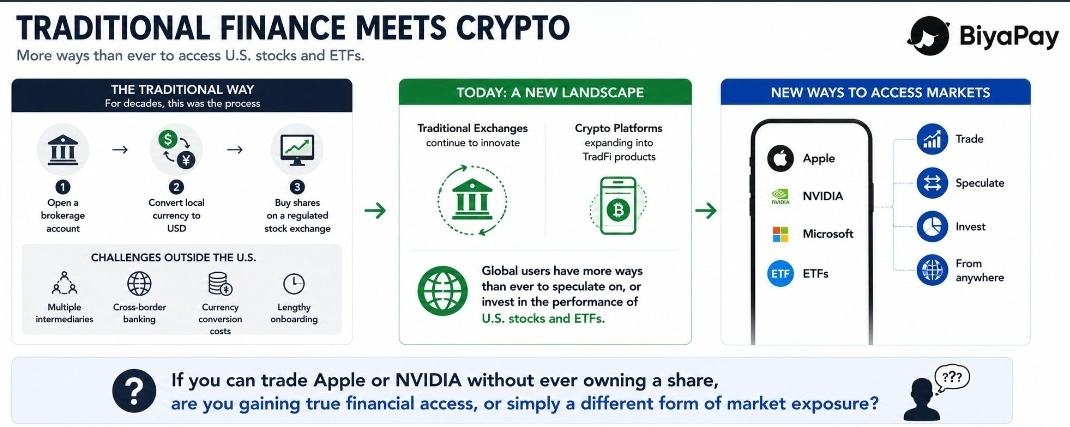
Article
Voir la traduction
The line between traditional finance (TradFi) and crypto is becoming increasingly blurred.For decades, gaining exposure to companies like 𝗔𝗽𝗽𝗹𝗲, 𝗡𝗩𝗜𝗗𝗜𝗔, 𝗠𝗶𝗰𝗿𝗼𝘀𝗼𝗳𝘁, 𝗼𝗿 𝗽𝗼𝗽𝘂𝗹𝗮𝗿 𝗘𝗧𝗙𝘀 usually meant:
☞ Opening a brokerage account
☞ Converting your local currency into U.S. dollars
☞ Purchasing shares through a regulated stock exchange.
For many people outside the United States, that process could involve:
☞ multiple intermediaries
☞ cross-border banking requirements
☞ currency conversion costs
☞ lengthy onboarding.
Today, the landscape looks very different.
Traditional exchanges continue to innovate, while crypto platforms are expanding beyond digital assets into products linked to traditional financial markets. As a result, global users now have more ways than ever to speculate 𝗼𝗻, 𝗼𝗿 𝗶𝗻𝘃𝗲𝘀𝘁 𝗶𝗻 𝘁𝗵𝗲 𝗽𝗲𝗿𝗳𝗼𝗿𝗺𝗮𝗻𝗰𝗲 𝗼𝗳 𝗨.𝗦. 𝘀𝘁𝗼𝗰𝗸𝘀 𝗮𝗻𝗱 𝗲𝘅𝗰𝗵𝗮𝗻𝗴𝗲-𝘁𝗿𝗮𝗱𝗲𝗱 𝗳𝘂𝗻𝗱𝘀.
But this shift raises an important question:
𝗜𝗳 𝘆𝗼𝘂 𝗰𝗮𝗻 𝘁𝗿𝗮𝗱𝗲 𝗔𝗽𝗽𝗹𝗲 𝗼𝗿 𝗡𝗩𝗜𝗗𝗜𝗔 𝘄𝗶𝘁𝗵𝗼𝘂𝘁 𝗲𝘃𝗲𝗿 𝗼𝘄𝗻𝗶𝗻𝗴 𝗮 𝘀𝗵𝗮𝗿𝗲, 𝗮𝗿𝗲 𝘆𝗼𝘂 𝗴𝗮𝗶𝗻𝗶𝗻𝗴 𝘁𝗿𝘂𝗲 𝗳𝗶𝗻𝗮𝗻𝗰𝗶𝗮𝗹 𝗮𝗰𝗰𝗲𝘀𝘀, 𝗼𝗿 𝘀𝗶𝗺𝗽𝗹𝘆 𝗮 𝗱𝗶𝗳𝗳𝗲𝗿𝗲𝗻𝘁 𝗳𝗼𝗿𝗺 𝗼𝗳 𝗺𝗮𝗿𝗸𝗲𝘁 𝗲𝘅𝗽𝗼𝘀𝘂𝗿𝗲?
📍The answer depends entirely on which financial instrument you're using.
Although several products may appear to track the same company, they can represent very different legal rights, risks, and trading experiences.
For example, buying one share of Apple stock is fundamentally different from trading a stock future, a perpetual contract, or another derivative whose value is linked to Apple's price. At first glance, all four may move in a similar direction, but they are not economically or legally equivalent.
Understanding this distinction has become increasingly important as financial markets continue to evolve.
🗣️𝗪𝗵𝘆 𝗧𝗵𝗶𝘀 𝗠𝗮𝘁𝘁𝗲𝗿𝘀 𝗳𝗼𝗿 𝗚𝗹𝗼𝗯𝗮𝗹 𝗜𝗻𝘃𝗲𝘀𝘁𝗼𝗿𝘀
Outside the United States, millions of investors face practical barriers when trying to access U.S. financial markets.
𝗦𝗼𝗺𝗲 𝗲𝗻𝗰𝗼𝘂𝗻𝘁𝗲𝗿:
◽ Limited brokerage availability.
◽Others deal with expensive ◽International bank transfers
◽Foreign exchange fees
◽ Local regulations that make investing abroad more complicated than buying domestic assets.
Meanwhile, many crypto users already hold digital assets such as USDT and are looking for ways to diversify beyond cryptocurrencies without moving funds across multiple platforms.
This convergence has created a growing ecosystem where users can move between digital assets and traditional market exposure more seamlessly than before.
𝗛𝗼𝘄𝗲𝘃𝗲𝗿, 𝗲𝗮𝘀𝗶𝗲𝗿 𝗮𝗰𝗰𝗲𝘀𝘀 𝗮𝗹𝘀𝗼 𝗰𝗿𝗲𝗮𝘁𝗲𝘀 𝗮 𝗻𝗲𝘄 𝗰𝗵𝗮𝗹𝗹𝗲𝗻𝗴𝗲:
Many people mistakenly assume 🤔 that every product tracking a stock offers the same rights and protections.
That assumption can lead to misunderstandings about ownership, leverage, settlement, voting rights, dividends, and risk.
𝗕𝗲𝗳𝗼𝗿𝗲 𝗰𝗵𝗼𝗼𝘀𝗶𝗻𝗴 𝗮𝗻𝘆 𝗽𝗿𝗼𝗱𝘂𝗰𝘁, 𝗶𝗻𝘃𝗲𝘀𝘁𝗼𝗿𝘀 𝘀𝗵𝗼𝘂𝗹𝗱 𝘂𝗻𝗱𝗲𝗿𝘀𝘁𝗮𝗻𝗱 𝗲𝘅𝗮𝗰𝘁𝗹𝘆 𝘄𝗵𝗮𝘁 𝘁𝗵𝗲𝘆 𝗮𝗿𝗲 𝗯𝘂𝘆𝗶𝗻𝗴 𝗼𝗿 𝗻𝗼𝘁 𝗯𝘂𝘆𝗶𝗻𝗴.
🗣️ 𝗢𝘄𝗻𝗲𝗿𝘀𝗵𝗶𝗽 𝘃𝘀. 𝗘𝘅𝗽𝗼𝘀𝘂𝗿𝗲
One of the biggest misconceptions in modern markets is believing that following a stock's price is the same as owning the stock itself.
It isn't.
Think of it this way:
𝗢𝘄𝗻𝗶𝗻𝗴 𝗮 𝗵𝗼𝘂𝘀𝗲 𝗴𝗶𝘃𝗲𝘀 𝘆𝗼𝘂 𝗹𝗲𝗴𝗮𝗹 𝗼𝘄𝗻𝗲𝗿𝘀𝗵𝗶𝗽 𝗼𝗳 𝘁𝗵𝗲 𝗽𝗿𝗼𝗽𝗲𝗿𝘁𝘆.
𝗕𝘂𝘆𝗶𝗻𝗴 𝗶𝗻𝘀𝘂𝗿𝗮𝗻𝗰𝗲 𝗼𝗻 𝘁𝗵𝗮𝘁 𝗵𝗼𝘂𝘀𝗲 𝗴𝗶𝘃𝗲𝘀 𝘆𝗼𝘂 𝗲𝘅𝗽𝗼𝘀𝘂𝗿𝗲 𝘁𝗼 𝗰𝗲𝗿𝘁𝗮𝗶𝗻 𝗳𝗶𝗻𝗮𝗻𝗰𝗶𝗮𝗹 𝗼𝘂𝘁𝗰𝗼𝗺𝗲𝘀, 𝗯𝘂𝘁 𝘆𝗼𝘂 𝘀𝘁𝗶𝗹𝗹 𝗱𝗼𝗻'𝘁 𝗼𝘄𝗻 𝘁𝗵𝗲 𝗵𝗼𝘂𝘀𝗲.
▫️Financial markets operate similarly.
▫️Some products give you ownership.
▫️Others simply provide exposure to price movements.
Recognizing that difference is essential before comparing:
✅ Convenience
✅ Leverage
✅ Costs
✅ Accessibility.
At first glance, many financial products appear to do the same thing, they rise when a stock rises and fall when it falls. But beneath the surface, they are built on very different structures.
Some products make you an investor. Others make you a trader. Some give you ownership, while others only mirror price movements.
Knowing the difference can help you choose an instrument that aligns with your objective rather than simply following what's most popular.
𝟭. 𝗥𝗲𝗮𝗹 𝗦𝘁𝗼𝗰𝗸𝘀: 𝗔𝗰𝘁𝘂𝗮𝗹 𝗢𝘄𝗻𝗲𝗿𝘀𝗵𝗶𝗽
Buying a real stock means purchasing an ownership interest in a publicly listed company.
If you buy shares of 𝗔𝗽𝗽𝗹𝗲 𝗼𝗿 𝗡𝗩𝗜𝗗𝗜𝗔 through a supported brokerage, you become a shareholder. Depending on the company's policies and the number of shares you hold, you may be entitled to benefits such as dividends, voting rights, and participation in certain corporate actions.
The value of your investment will still fluctuate with the market, but your position represents actual ownership rather than a contract tied to price movement.
For investors building long-term wealth, real stocks are often viewed as the foundation of a diversified portfolio because they provide direct exposure to a company's long-term performance.
That doesn't eliminate risk. Share prices can decline, companies can underperform, and investors can lose money. However, the investment is tied to an underlying asset rather than a leveraged trading contract.
𝟮. 𝗘𝗧𝗙𝘀: 𝗗𝗶𝘃𝗲𝗿𝘀𝗶𝗳𝗶𝗰𝗮𝘁𝗶𝗼𝗻 𝗶𝗻 𝗮 𝗦𝗶𝗻𝗴𝗹𝗲 𝗜𝗻𝘃𝗲𝘀𝘁𝗺𝗲𝗻𝘁
Exchange-Traded Funds (𝗘𝗧𝗙𝘀) bundle multiple assets into one investment.
Instead of purchasing shares in a single company, an 𝗘𝗧𝗙 may track an index, sector, industry, or investment theme.
For example, one 𝗘𝗧𝗙 might track the S&P 500, while another focuses on semiconductor companies or technology firms.
This allows investors to spread risk across many holdings instead of relying on the performance of a single stock.
Like individual stocks, 𝗘𝗧𝗙𝘀 are traded on exchanges during market hours, and investors own shares of the ETF itself.
𝟯. 𝗦𝘁𝗼𝗰𝗸 𝗙𝘂𝘁𝘂𝗿𝗲𝘀: 𝗧𝗿𝗮𝗱𝗶𝗻𝗴 𝗮 𝗙𝘂𝘁𝘂𝗿𝗲 𝗣𝗿𝗶𝗰𝗲
Stock futures are derivative contracts.
Rather than purchasing the underlying stock, traders agree to exchange the value of a stock at a specified future date according to the contract's terms.
The key distinction is that the contract, not the company share, is being traded.
These products are commonly used for hedging, institutional portfolio management, and short-term speculation.
Because futures often involve leverage, relatively small price movements can produce larger gains or losses compared to investing directly in stocks.
𝟰. 𝗣𝗲𝗿𝗽𝗲𝘁𝘂𝗮𝗹 𝗖𝗼𝗻𝘁𝗿𝗮𝗰𝘁𝘀: 𝗣𝗿𝗶𝗰𝗲 𝗘𝘅𝗽𝗼𝘀𝘂𝗿𝗲 𝗪𝗶𝘁𝗵𝗼𝘂𝘁 𝗘𝘅𝗽𝗶𝗿𝗮𝘁𝗶𝗼𝗻
Perpetual contracts, commonly called perpetuals, have become one of crypto's most popular trading instruments.
Unlike traditional futures, perpetual contracts generally do not have a fixed expiration date. Instead, they use mechanisms such as funding payments to help keep contract prices close to the underlying market.
When trading a USDT-margined perpetual linked to a stock or ETF, you're not purchasing shares in that company.
You're entering a derivative contract designed to reflect its price movement.
This means you may benefit if the price moves in your favor, or incur losses if it moves against you.
Because perpetuals frequently allow leverage, they are generally considered higher-risk instruments than buying stocks outright.
𝟱. 𝗧𝗼𝗸𝗲𝗻𝗶𝘇𝗲𝗱 𝗦𝘁𝗼𝗰𝗸𝘀
Tokenized stocks are digital tokens designed to represent exposure to a stock or, depending on the issuer's structure, an interest linked to underlying shares.
However, not every tokenized stock operates the same way.
☞ Some are backed by real shares held by a custodian.
☞ Others use entirely different legal or financial structures.
The rights attached to these products, including redemption, dividends, voting rights, or ownership claims, depend on how each issuer has designed the token.
For that reason, investors should always read the issuer's documentation rather than assuming all tokenized stocks function identically.
🗣️ 𝗪𝗵𝘆 𝘁𝗵𝗲 𝗗𝗶𝘀𝘁𝗶𝗻𝗰𝘁𝗶𝗼𝗻 𝗠𝗮𝘁𝘁𝗲𝗿𝘀
A common mistake is comparing these products solely by how closely they follow a stock's price.
Price movement tells only part of the story.
Before choosing any instrument, it's worth asking a few questions:
◽𝗔𝗺 𝗜 𝘁𝗿𝘆𝗶𝗻𝗴 𝘁𝗼 𝗼𝘄𝗻 𝗮𝗻 𝗮𝘀𝘀𝗲𝘁 𝗼𝗿 𝘀𝗶𝗺𝗽𝗹𝘆 𝘁𝗿𝗮𝗱𝗲 𝗶𝘁𝘀 𝗽𝗿𝗶𝗰𝗲?
◽ 𝗔𝗺 𝗜 𝗶𝗻𝘃𝗲𝘀𝘁𝗶𝗻𝗴 𝗳𝗼𝗿 𝘆𝗲𝗮𝗿𝘀 𝗼𝗿 𝘁𝗿𝗮𝗱𝗶𝗻𝗴 𝗼𝘃𝗲𝗿 𝗵𝗼𝘂𝗿𝘀 𝗼𝗿 𝗱𝗮𝘆𝘀?
◽𝗗𝗼 𝗜 𝗻𝗲𝗲𝗱 𝗹𝗲𝘃𝗲𝗿𝗮𝗴𝗲, 𝗼𝗿 𝗮𝗺 𝗜 𝗰𝗼𝗺𝗳𝗼𝗿𝘁𝗮𝗯𝗹𝗲 𝗶𝗻𝘃𝗲𝘀𝘁𝗶𝗻𝗴 𝘄𝗶𝘁𝗵𝗼𝘂𝘁 𝗶𝘁?
◽ 𝗗𝗼 𝗜 𝘂𝗻𝗱𝗲𝗿𝘀𝘁𝗮𝗻𝗱 𝘁𝗵𝗲 𝗿𝗶𝘀𝗸𝘀 𝗮𝘀𝘀𝗼𝗰𝗶𝗮𝘁𝗲𝗱 𝘄𝗶𝘁𝗵 𝗱𝗲𝗿𝗶𝘃𝗮𝘁𝗶𝘃𝗲𝘀, 𝗶𝗻𝗰𝗹𝘂𝗱𝗶𝗻𝗴 𝗹𝗶𝗾𝘂𝗶𝗱𝗮𝘁𝗶𝗼𝗻 𝗮𝗻𝗱 𝗳𝘂𝗻𝗱𝗶𝗻𝗴 𝗰𝗼𝘀𝘁𝘀?
◽𝗜𝗳 𝗜'𝗺 𝗯𝘂𝘆𝗶𝗻𝗴 𝗮 𝘁𝗼𝗸𝗲𝗻𝗶𝘇𝗲𝗱 𝗽𝗿𝗼𝗱𝘂𝗰𝘁, 𝘄𝗵𝗮𝘁 𝗹𝗲𝗴𝗮𝗹 𝗿𝗶𝗴𝗵𝘁𝘀 𝗱𝗼𝗲𝘀 𝘁𝗵𝗮𝘁 𝘁𝗼𝗸𝗲𝗻 𝗮𝗰𝘁𝘂𝗮𝗹𝗹𝘆 𝗽𝗿𝗼𝘃𝗶𝗱𝗲?
The answers will vary from one investor to another.
There is no universally "best" instrument. Each serves a different purpose, and understanding those differences is far more valuable than assuming they are interchangeable.
That distinction becomes especially relevant as some platforms now allow users to access multiple types of financial instruments from a single ecosystem. Instead of forcing users to choose between crypto and traditional finance, these platforms bring both worlds together, while still requiring users to understand which product they are actually trading.
𝗔 𝗖𝗮𝘀𝗲 𝗦𝘁𝘂𝗱𝘆 𝗶𝗻 𝗖𝗿𝘆𝗽𝘁𝗼–𝗧𝗿𝗮𝗱𝗙𝗶 𝗖𝗼𝗻𝘃𝗲𝗿𝗴𝗲𝗻𝗰𝗲: 𝗨𝗻𝗱𝗲𝗿𝘀𝘁𝗮𝗻𝗱𝗶𝗻𝗴 𝗕𝗶𝘆𝗮𝗣𝗮𝘆'𝘀 𝗠𝘂𝗹𝘁𝗶-𝗔𝘀𝘀𝗲𝘁 𝗔𝗽𝗽𝗿𝗼𝗮𝗰𝗵
The convergence of crypto and traditional finance is no longer just a concept, it's increasingly reflected in how financial platforms are designed.
Rather than limiting users to either cryptocurrencies or traditional investments, some platforms now provide access to multiple asset classes within a single ecosystem. This approach aims to simplify the user experience, particularly for individuals who already hold digital assets but also want exposure to traditional financial markets.
🗣️ @BiyaPay is one example of this evolving model.
Instead of treating crypto and traditional finance as separate worlds, the platform allows eligible users to begin with digital assets such as USDT and then choose different paths depending on their financial objective.
That distinction is important because starting with the same funding asset does not mean every investment product works the same way.
🤔 Imagine a user already holds USDT and wants exposure to U.S. markets.
Within the same ecosystem, there are two fundamentally different routes.
𝗥𝗼𝘂𝘁𝗲 𝟭: 𝗨𝗦𝗗𝗧 → 𝗨𝗦𝗗 → 𝗥𝗲𝗮𝗹 𝗨.𝗦. 𝗦𝘁𝗼𝗰𝗸𝘀 𝗼𝗿 𝗘𝗧𝗙𝘀
One option is to convert supported digital assets into U.S. dollars and purchase supported U.S. stocks or ETFs through the platform's stock trading account.
In this scenario, the objective is investment rather than leveraged speculation.
Depending on the specific security purchased, the investor gains exposure through actual listed securities rather than a derivative contract.
According to @BiyaPay's published product information, the platform supports trading in U.S. stocks and ETFs, offers fractional shares on eligible securities, and routes orders to traditional market liquidity. It also advertises zero commission on U.S. stock trades, although investors should review the latest fee schedule for any applicable platform, regulatory, or third-party charges before trading.
For someone building a long-term portfolio, this route may align more closely with the goal of participating in the performance of listed companies over time.
𝗥𝗼𝘂𝘁𝗲 𝟮: 𝗨𝗦𝗗𝗧 → 𝗧𝗿𝗮𝗱𝗙𝗶 𝗣𝗲𝗿𝗽𝗲𝘁𝘂𝗮𝗹 𝗖𝗼𝗻𝘁𝗿𝗮𝗰𝘁𝘀
The second route is entirely different.
Instead of purchasing shares, users can trade selected USDT-margined TradFi perpetual contracts whose prices are linked to traditional financial assets.
Here, the objective shifts from ownership to trading price movements.
Perpetual contracts are derivative instruments. They are designed for market exposure rather than acquiring ownership of the underlying asset.
Depending on market conditions and platform features, traders may use leverage, open both long and short positions, and respond to short-term price movements.
However, leverage increases both potential gains and potential losses.
Unlike buying shares for a long-term portfolio, perpetual contracts often require more active risk management and a clear understanding of concepts such as liquidation, margin requirements, and funding payments.
The key takeaway is simple:
𝗧𝗵𝗲 𝗳𝘂𝗻𝗱𝗶𝗻𝗴 𝗮𝘀𝘀𝗲𝘁 𝗺𝗮𝘆 𝗯𝗲 𝗨𝗦𝗗𝗧 𝗶𝗻 𝗯𝗼𝘁𝗵 𝗰𝗮𝘀𝗲𝘀, 𝗯𝘂𝘁 𝘁𝗵𝗲 𝗳𝗶𝗻𝗮𝗻𝗰𝗶𝗮𝗹 𝗶𝗻𝘀𝘁𝗿𝘂𝗺𝗲𝗻𝘁, 𝗮𝗻𝗱 𝘁𝗵𝗲 𝗿𝗶𝘀𝗸𝘀 𝗶𝗻𝘃𝗼𝗹𝘃𝗲𝗱, 𝗮𝗿𝗲 𝗰𝗼𝗺𝗽𝗹𝗲𝘁𝗲𝗹𝘆 𝗱𝗶𝗳𝗳𝗲𝗿𝗲𝗻𝘁.
As financial ecosystems become more integrated, it's easy to assume that everything offered on one platform serves the same purpose.
That's rarely the case.
Using @BiyaPay as an example illustrates an important principle:
A single platform can provide access to multiple asset classes while each product retains its own characteristics, risks, and intended use.
🔺𝗥𝗲𝗮𝗹 𝘀𝘁𝗼𝗰𝗸𝘀 𝗿𝗲𝗺𝗮𝗶𝗻 𝗼𝘄𝗻𝗲𝗿𝘀𝗵𝗶𝗽 𝗶𝗻𝘀𝘁𝗿𝘂𝗺𝗲𝗻𝘁𝘀.
🔺𝗘𝗧𝗙𝘀 𝗽𝗿𝗼𝘃𝗶𝗱𝗲 𝗱𝗶𝘃𝗲𝗿𝘀𝗶𝗳𝗶𝗲𝗱 𝗶𝗻𝘃𝗲𝘀𝘁𝗺𝗲𝗻𝘁 𝗲𝘅𝗽𝗼𝘀𝘂𝗿𝗲.
🔺𝗣𝗲𝗿𝗽𝗲𝘁𝘂𝗮𝗹 𝗰𝗼𝗻𝘁𝗿𝗮𝗰𝘁𝘀 𝗮𝗿𝗲 𝗱𝗲𝗿𝗶𝘃𝗮𝘁𝗶𝘃𝗲 𝗽𝗿𝗼𝗱𝘂𝗰𝘁𝘀 𝗱𝗲𝘀𝗶𝗴𝗻𝗲𝗱 𝗽𝗿𝗶𝗺𝗮𝗿𝗶𝗹𝘆 𝗳𝗼𝗿 𝘁𝗿𝗮𝗱𝗶𝗻𝗴.
Understanding these distinctions is more valuable than simply focusing on convenience.
@BiyaPay combines several features within a single ecosystem, including:
▫️Support for eligible U.S. stocks and ETFs alongside other listed products.
▫️Funding through supported fiat currencies and digital assets.
▫️Fractional share investing on eligible securities.
▫️Order routing to traditional market liquidity.
▫️Zero commission on U.S. stock trading, subject to the platform's current fee schedule and applicable charges.
▫️Extended-hours trading settings where available.
▫️Multi-asset access from one account ecosystem.
▫️USDT-margined TradFi perpetual contracts for eligible markets.
Taken together, these features demonstrate how crypto infrastructure is increasingly being used as a gateway to broader financial markets.
However, convenience should never replace understanding.
𝗪𝗵𝗲𝘁𝗵𝗲𝗿 𝘀𝗼𝗺𝗲𝗼𝗻𝗲 𝗰𝗵𝗼𝗼𝘀𝗲𝘀 𝘁𝗼 𝗼𝘄𝗻 𝘀𝗵𝗮𝗿𝗲𝘀, 𝗶𝗻𝘃𝗲𝘀𝘁 𝗶𝗻 𝗘𝗧𝗙𝘀, 𝗼𝗿 𝘁𝗿𝗮𝗱𝗲 𝗱𝗲𝗿𝗶𝘃𝗮𝘁𝗶𝘃𝗲 𝗰𝗼𝗻𝘁𝗿𝗮𝗰𝘁𝘀, 𝘁𝗵𝗲 𝗱𝗲𝗰𝗶𝘀𝗶𝗼𝗻 𝘀𝗵𝗼𝘂𝗹𝗱 𝗯𝗲 𝗯𝗮𝘀𝗲𝗱 𝗼𝗻 𝗵𝗼𝘄 𝗲𝗮𝗰𝗵 𝗶𝗻𝘀𝘁𝗿𝘂𝗺𝗲𝗻𝘁 𝘄𝗼𝗿𝗸𝘀, 𝗻𝗼𝘁 𝘀𝗶𝗺𝗽𝗹𝘆 𝗼𝗻 𝘁𝗵𝗲 𝗳𝗮𝗰𝘁 𝘁𝗵𝗮𝘁 𝘁𝗵𝗲𝘆 𝗮𝗿𝗲 𝗮𝗰𝗰𝗲𝘀𝘀𝗶𝗯𝗹𝗲 𝘁𝗵𝗿𝗼𝘂𝗴𝗵 𝘁𝗵𝗲 𝘀𝗮𝗺𝗲 𝗽𝗹𝗮𝘁𝗳𝗼𝗿𝗺.
As access to global markets continues to improve, financial literacy becomes just as important as financial technology.
🗣️ 𝗨𝗻𝗱𝗲𝗿𝘀𝘁𝗮𝗻𝗱𝗶𝗻𝗴 𝘁𝗵𝗲 𝗥𝗶𝘀𝗸𝘀 𝗕𝗲𝗳𝗼𝗿𝗲 𝗖𝗵𝗼𝗼𝘀𝗶𝗻𝗴 𝗔𝗻𝘆 𝗜𝗻𝘀𝘁𝗿𝘂𝗺𝗲𝗻𝘁
Greater access to financial markets is a positive development for many investors. However, easier access should not be mistaken for lower risk.
Whether you're buying a real stock, investing in an ETF, trading a futures contract, or opening a perpetual position, every financial instrument comes with its own set of trade-offs. Understanding those differences is one of the most important steps before committing capital.
🗣️ 𝗠𝗮𝗿𝗸𝗲𝘁 𝗥𝗶𝘀𝗸
Every instrument discussed in this article is exposed to market risk.
A company's earnings, changes in interest rates, geopolitical events, economic data, or shifts in investor sentiment can all influence prices. Even high-quality companies can experience significant price declines during periods of market volatility.
No financial product is immune to market fluctuations.
🗣️ 𝗟𝗲𝘃𝗲𝗿𝗮𝗴𝗲 𝗥𝗶𝘀𝗸
Leverage is one of the defining features of many derivative products, including perpetual contracts and certain futures.
While leverage can amplify gains, it can also magnify losses. A relatively small market movement may have a much larger impact on a leveraged position than it would on an investment in the underlying stock.
For traders, effective risk management—including appropriate position sizing and an understanding of margin requirements, is essential.
🗣️ 𝗟𝗶𝗾𝘂𝗶𝗱𝗶𝘁𝘆 𝗥𝗶𝘀𝗸
Not all markets have the same level of liquidity.
During periods of heightened volatility or reduced trading activity, it may become more difficult to enter or exit positions at expected prices. Wider bid-ask spreads and increased slippage can affect trading outcomes, particularly for less liquid products.
🗣️ 𝗣𝗿𝗶𝗰𝗲 𝗗𝗲𝘃𝗶𝗮𝘁𝗶𝗼𝗻
Derivative products are designed to track an underlying asset, but they may not always match its price perfectly.
Factors such as funding mechanisms, market demand, and trading activity can cause temporary differences between a derivative's price and the price of the underlying asset.
Understanding how a specific product tracks its reference market can help set realistic expectations.
🗣️ 𝗜𝗻𝘁𝗲𝗿𝗺𝗲𝗱𝗶𝗮𝗿𝘆 𝗮𝗻𝗱 𝗢𝗽𝗲𝗿𝗮𝘁𝗶𝗼𝗻𝗮𝗹 𝗥𝗶𝘀𝗸
Different products rely on different intermediaries, custodians, exchanges, and settlement mechanisms.
For example, holding a real stock, trading a derivative contract, or using a tokenized representation of an asset may involve different operational processes and legal structures.
Before using any platform, investors should review the applicable terms, fee schedules, supported jurisdictions, and product documentation to understand how each service operates.
🗣️ 𝗙𝗶𝗻𝗮𝗹 𝗧𝗵𝗼𝘂𝗴𝗵𝘁𝘀
The question isn't whether one financial product is universally better than another.
The better question is:
📍𝗪𝗵𝗮𝘁 𝗮𝗿𝗲 𝘆𝗼𝘂 𝘁𝗿𝘆𝗶𝗻𝗴 𝘁𝗼 𝗮𝗰𝗵𝗶𝗲𝘃𝗲?
If your goal is long-term investment and ownership, real stocks or ETFs may align with that objective.
If your goal is short-term price exposure, derivatives such as futures or perpetual contracts may offer different tools, but they also introduce additional risks that should be fully understood before trading.
Platforms such as @BiyaPay illustrate how these different worlds are increasingly being brought together. By allowing eligible users to fund accounts with supported digital assets while offering access to both traditional securities and selected TradFi-linked perpetual contracts, the platform serves as an example of how crypto and traditional finance continue to converge.
However, the platform itself does not eliminate the differences between these instruments.
The responsibility remains with each investor or trader to understand exactly what they are buying, how it works, and whether it matches their financial objectives and risk tolerance.
As global financial markets continue to evolve, one principle remains unchanged:
U𝗻𝗱𝗲𝗿𝘀𝘁𝗮𝗻𝗱𝗶𝗻𝗴 𝘁𝗵𝗲 𝗶𝗻𝘀𝘁𝗿𝘂𝗺𝗲𝗻𝘁 𝗶𝘀 𝗷𝘂𝘀𝘁 𝗮𝘀 𝗶𝗺𝗽𝗼𝗿𝘁𝗮𝗻𝘁 𝗮𝘀 𝗮𝗰𝗰𝗲𝘀𝘀𝗶𝗻𝗴 𝘁𝗵𝗲 𝗺𝗮𝗿𝗸𝗲𝘁.
📍𝗟𝗲𝗮𝗿𝗻 𝗠𝗼𝗿𝗲
If you'd like to explore how platforms are combining digital assets with access to traditional financial markets, review the available products, fee schedules, supported jurisdiction.
Disclaimer: This article is for educational and informational purposes only and does not constitute financial or investment advice. Stock investments and perpetual contracts involve risk. Zero trading commission does not mean all transaction costs are eliminated. Always review platform fees, funding charges, leverage and liquidation conditions before trading.
#BiyaPay #Crypto #TradFi #DeFi #StockMarket #ETFs #TokenizedStocks #PerpetualTrading #FinancialMarkets #CryptoTrading
The line between traditional finance (TradFi) and crypto is becoming increasingly blurred.
For decades, gaining exposure to companies like 𝗔𝗽𝗽𝗹𝗲, 𝗡𝗩𝗜𝗗𝗜𝗔, 𝗠𝗶𝗰𝗿𝗼𝘀𝗼𝗳𝘁, 𝗼𝗿 𝗽𝗼𝗽𝘂𝗹𝗮𝗿 𝗘𝗧𝗙𝘀 usually meant:
☞ Opening a brokerage account
☞ Converting your local currency into U.S. dollars
☞ Purchasing shares through a regulated stock exchange.
For many people outside the United States, that process could involve:
☞ multiple intermediaries
☞ cross-border banking requirements
☞ currency conversion costs
☞ lengthy onboarding.
Today, the landscape looks very different.
Traditional exchanges continue to innovate, while crypto platforms are expanding beyond digital assets into products linked to traditional financial markets. As a result, global users now have more ways than ever to speculate 𝗼𝗻, 𝗼𝗿 𝗶𝗻𝘃𝗲𝘀𝘁 𝗶𝗻 𝘁𝗵𝗲 𝗽𝗲𝗿𝗳𝗼𝗿𝗺𝗮𝗻𝗰𝗲 𝗼𝗳 𝗨.𝗦. 𝘀𝘁𝗼𝗰𝗸𝘀 𝗮𝗻𝗱 𝗲𝘅𝗰𝗵𝗮𝗻𝗴𝗲-𝘁𝗿𝗮𝗱𝗲𝗱 𝗳𝘂𝗻𝗱𝘀.
But this shift raises an important question:
𝗜𝗳 𝘆𝗼𝘂 𝗰𝗮𝗻 𝘁𝗿𝗮𝗱𝗲 𝗔𝗽𝗽𝗹𝗲 𝗼𝗿 𝗡𝗩𝗜𝗗𝗜𝗔 𝘄𝗶𝘁𝗵𝗼𝘂𝘁 𝗲𝘃𝗲𝗿 𝗼𝘄𝗻𝗶𝗻𝗴 𝗮 𝘀𝗵𝗮𝗿𝗲, 𝗮𝗿𝗲 𝘆𝗼𝘂 𝗴𝗮𝗶𝗻𝗶𝗻𝗴 𝘁𝗿𝘂𝗲 𝗳𝗶𝗻𝗮𝗻𝗰𝗶𝗮𝗹 𝗮𝗰𝗰𝗲𝘀𝘀, 𝗼𝗿 𝘀𝗶𝗺𝗽𝗹𝘆 𝗮 𝗱𝗶𝗳𝗳𝗲𝗿𝗲𝗻𝘁 𝗳𝗼𝗿𝗺 𝗼𝗳 𝗺𝗮𝗿𝗸𝗲𝘁 𝗲𝘅𝗽𝗼𝘀𝘂𝗿𝗲?
📍The answer depends entirely on which financial instrument you're using.
Although several products may appear to track the same company, they can represent very different legal rights, risks, and trading experiences.
For example, buying one share of Apple stock is fundamentally different from trading a stock future, a perpetual contract, or another derivative whose value is linked to Apple's price. At first glance, all four may move in a similar direction, but they are not economically or legally equivalent.
Understanding this distinction has become increasingly important as financial markets continue to evolve.
🗣️𝗪𝗵𝘆 𝗧𝗵𝗶𝘀 𝗠𝗮𝘁𝘁𝗲𝗿𝘀 𝗳𝗼𝗿 𝗚𝗹𝗼𝗯𝗮𝗹 𝗜𝗻𝘃𝗲𝘀𝘁𝗼𝗿𝘀
Outside the United States, millions of investors face practical barriers when trying to access U.S. financial markets.
𝗦𝗼𝗺𝗲 𝗲𝗻𝗰𝗼𝘂𝗻𝘁𝗲𝗿:
◽ Limited brokerage availability.
◽Others deal with expensive ◽International bank transfers
◽Foreign exchange fees
◽ Local regulations that make investing abroad more complicated than buying domestic assets.
Meanwhile, many crypto users already hold digital assets such as USDT and are looking for ways to diversify beyond cryptocurrencies without moving funds across multiple platforms.
This convergence has created a growing ecosystem where users can move between digital assets and traditional market exposure more seamlessly than before.
𝗛𝗼𝘄𝗲𝘃𝗲𝗿, 𝗲𝗮𝘀𝗶𝗲𝗿 𝗮𝗰𝗰𝗲𝘀𝘀 𝗮𝗹𝘀𝗼 𝗰𝗿𝗲𝗮𝘁𝗲𝘀 𝗮 𝗻𝗲𝘄 𝗰𝗵𝗮𝗹𝗹𝗲𝗻𝗴𝗲:
Many people mistakenly assume 🤔 that every product tracking a stock offers the same rights and protections.
That assumption can lead to misunderstandings about ownership, leverage, settlement, voting rights, dividends, and risk.
𝗕𝗲𝗳𝗼𝗿𝗲 𝗰𝗵𝗼𝗼𝘀𝗶𝗻𝗴 𝗮𝗻𝘆 𝗽𝗿𝗼𝗱𝘂𝗰𝘁, 𝗶𝗻𝘃𝗲𝘀𝘁𝗼𝗿𝘀 𝘀𝗵𝗼𝘂𝗹𝗱 𝘂𝗻𝗱𝗲𝗿𝘀𝘁𝗮𝗻𝗱 𝗲𝘅𝗮𝗰𝘁𝗹𝘆 𝘄𝗵𝗮𝘁 𝘁𝗵𝗲𝘆 𝗮𝗿𝗲 𝗯𝘂𝘆𝗶𝗻𝗴 𝗼𝗿 𝗻𝗼𝘁 𝗯𝘂𝘆𝗶𝗻𝗴.
🗣️ 𝗢𝘄𝗻𝗲𝗿𝘀𝗵𝗶𝗽 𝘃𝘀. 𝗘𝘅𝗽𝗼𝘀𝘂𝗿𝗲
One of the biggest misconceptions in modern markets is believing that following a stock's price is the same as owning the stock itself.
It isn't.
Think of it this way:
𝗢𝘄𝗻𝗶𝗻𝗴 𝗮 𝗵𝗼𝘂𝘀𝗲 𝗴𝗶𝘃𝗲𝘀 𝘆𝗼𝘂 𝗹𝗲𝗴𝗮𝗹 𝗼𝘄𝗻𝗲𝗿𝘀𝗵𝗶𝗽 𝗼𝗳 𝘁𝗵𝗲 𝗽𝗿𝗼𝗽𝗲𝗿𝘁𝘆.
𝗕𝘂𝘆𝗶𝗻𝗴 𝗶𝗻𝘀𝘂𝗿𝗮𝗻𝗰𝗲 𝗼𝗻 𝘁𝗵𝗮𝘁 𝗵𝗼𝘂𝘀𝗲 𝗴𝗶𝘃𝗲𝘀 𝘆𝗼𝘂 𝗲𝘅𝗽𝗼𝘀𝘂𝗿𝗲 𝘁𝗼 𝗰𝗲𝗿𝘁𝗮𝗶𝗻 𝗳𝗶𝗻𝗮𝗻𝗰𝗶𝗮𝗹 𝗼𝘂𝘁𝗰𝗼𝗺𝗲𝘀, 𝗯𝘂𝘁 𝘆𝗼𝘂 𝘀𝘁𝗶𝗹𝗹 𝗱𝗼𝗻'𝘁 𝗼𝘄𝗻 𝘁𝗵𝗲 𝗵𝗼𝘂𝘀𝗲.
▫️Financial markets operate similarly.
▫️Some products give you ownership.
▫️Others simply provide exposure to price movements.
Recognizing that difference is essential before comparing:
✅ Convenience
✅ Leverage
✅ Costs
✅ Accessibility.
At first glance, many financial products appear to do the same thing, they rise when a stock rises and fall when it falls. But beneath the surface, they are built on very different structures.
Some products make you an investor. Others make you a trader. Some give you ownership, while others only mirror price movements.
Knowing the difference can help you choose an instrument that aligns with your objective rather than simply following what's most popular.
𝟭. 𝗥𝗲𝗮𝗹 𝗦𝘁𝗼𝗰𝗸𝘀: 𝗔𝗰𝘁𝘂𝗮𝗹 𝗢𝘄𝗻𝗲𝗿𝘀𝗵𝗶𝗽
Buying a real stock means purchasing an ownership interest in a publicly listed company.
If you buy shares of 𝗔𝗽𝗽𝗹𝗲 𝗼𝗿 𝗡𝗩𝗜𝗗𝗜𝗔 through a supported brokerage, you become a shareholder. Depending on the company's policies and the number of shares you hold, you may be entitled to benefits such as dividends, voting rights, and participation in certain corporate actions.
The value of your investment will still fluctuate with the market, but your position represents actual ownership rather than a contract tied to price movement.
For investors building long-term wealth, real stocks are often viewed as the foundation of a diversified portfolio because they provide direct exposure to a company's long-term performance.
That doesn't eliminate risk. Share prices can decline, companies can underperform, and investors can lose money. However, the investment is tied to an underlying asset rather than a leveraged trading contract.
𝟮. 𝗘𝗧𝗙𝘀: 𝗗𝗶𝘃𝗲𝗿𝘀𝗶𝗳𝗶𝗰𝗮𝘁𝗶𝗼𝗻 𝗶𝗻 𝗮 𝗦𝗶𝗻𝗴𝗹𝗲 𝗜𝗻𝘃𝗲𝘀𝘁𝗺𝗲𝗻𝘁
Exchange-Traded Funds (𝗘𝗧𝗙𝘀) bundle multiple assets into one investment.
Instead of purchasing shares in a single company, an 𝗘𝗧𝗙 may track an index, sector, industry, or investment theme.
For example, one 𝗘𝗧𝗙 might track the S&P 500, while another focuses on semiconductor companies or technology firms.
This allows investors to spread risk across many holdings instead of relying on the performance of a single stock.
Like individual stocks, 𝗘𝗧𝗙𝘀 are traded on exchanges during market hours, and investors own shares of the ETF itself.
𝟯. 𝗦𝘁𝗼𝗰𝗸 𝗙𝘂𝘁𝘂𝗿𝗲𝘀: 𝗧𝗿𝗮𝗱𝗶𝗻𝗴 𝗮 𝗙𝘂𝘁𝘂𝗿𝗲 𝗣𝗿𝗶𝗰𝗲
Stock futures are derivative contracts.
Rather than purchasing the underlying stock, traders agree to exchange the value of a stock at a specified future date according to the contract's terms.
The key distinction is that the contract, not the company share, is being traded.
These products are commonly used for hedging, institutional portfolio management, and short-term speculation.
Because futures often involve leverage, relatively small price movements can produce larger gains or losses compared to investing directly in stocks.
𝟰. 𝗣𝗲𝗿𝗽𝗲𝘁𝘂𝗮𝗹 𝗖𝗼𝗻𝘁𝗿𝗮𝗰𝘁𝘀: 𝗣𝗿𝗶𝗰𝗲 𝗘𝘅𝗽𝗼𝘀𝘂𝗿𝗲 𝗪𝗶𝘁𝗵𝗼𝘂𝘁 𝗘𝘅𝗽𝗶𝗿𝗮𝘁𝗶𝗼𝗻
Perpetual contracts, commonly called perpetuals, have become one of crypto's most popular trading instruments.
Unlike traditional futures, perpetual contracts generally do not have a fixed expiration date. Instead, they use mechanisms such as funding payments to help keep contract prices close to the underlying market.
When trading a USDT-margined perpetual linked to a stock or ETF, you're not purchasing shares in that company.
You're entering a derivative contract designed to reflect its price movement.
This means you may benefit if the price moves in your favor, or incur losses if it moves against you.
Because perpetuals frequently allow leverage, they are generally considered higher-risk instruments than buying stocks outright.
𝟱. 𝗧𝗼𝗸𝗲𝗻𝗶𝘇𝗲𝗱 𝗦𝘁𝗼𝗰𝗸𝘀
Tokenized stocks are digital tokens designed to represent exposure to a stock or, depending on the issuer's structure, an interest linked to underlying shares.
However, not every tokenized stock operates the same way.
☞ Some are backed by real shares held by a custodian.
☞ Others use entirely different legal or financial structures.
The rights attached to these products, including redemption, dividends, voting rights, or ownership claims, depend on how each issuer has designed the token.
For that reason, investors should always read the issuer's documentation rather than assuming all tokenized stocks function identically.
🗣️ 𝗪𝗵𝘆 𝘁𝗵𝗲 𝗗𝗶𝘀𝘁𝗶𝗻𝗰𝘁𝗶𝗼𝗻 𝗠𝗮𝘁𝘁𝗲𝗿𝘀
A common mistake is comparing these products solely by how closely they follow a stock's price.
Price movement tells only part of the story.
Before choosing any instrument, it's worth asking a few questions:
◽𝗔𝗺 𝗜 𝘁𝗿𝘆𝗶𝗻𝗴 𝘁𝗼 𝗼𝘄𝗻 𝗮𝗻 𝗮𝘀𝘀𝗲𝘁 𝗼𝗿 𝘀𝗶𝗺𝗽𝗹𝘆 𝘁𝗿𝗮𝗱𝗲 𝗶𝘁𝘀 𝗽𝗿𝗶𝗰𝗲?
◽ 𝗔𝗺 𝗜 𝗶𝗻𝘃𝗲𝘀𝘁𝗶𝗻𝗴 𝗳𝗼𝗿 𝘆𝗲𝗮𝗿𝘀 𝗼𝗿 𝘁𝗿𝗮𝗱𝗶𝗻𝗴 𝗼𝘃𝗲𝗿 𝗵𝗼𝘂𝗿𝘀 𝗼𝗿 𝗱𝗮𝘆𝘀?
◽𝗗𝗼 𝗜 𝗻𝗲𝗲𝗱 𝗹𝗲𝘃𝗲𝗿𝗮𝗴𝗲, 𝗼𝗿 𝗮𝗺 𝗜 𝗰𝗼𝗺𝗳𝗼𝗿𝘁𝗮𝗯𝗹𝗲 𝗶𝗻𝘃𝗲𝘀𝘁𝗶𝗻𝗴 𝘄𝗶𝘁𝗵𝗼𝘂𝘁 𝗶𝘁?
◽ 𝗗𝗼 𝗜 𝘂𝗻𝗱𝗲𝗿𝘀𝘁𝗮𝗻𝗱 𝘁𝗵𝗲 𝗿𝗶𝘀𝗸𝘀 𝗮𝘀𝘀𝗼𝗰𝗶𝗮𝘁𝗲𝗱 𝘄𝗶𝘁𝗵 𝗱𝗲𝗿𝗶𝘃𝗮𝘁𝗶𝘃𝗲𝘀, 𝗶𝗻𝗰𝗹𝘂𝗱𝗶𝗻𝗴 𝗹𝗶𝗾𝘂𝗶𝗱𝗮𝘁𝗶𝗼𝗻 𝗮𝗻𝗱 𝗳𝘂𝗻𝗱𝗶𝗻𝗴 𝗰𝗼𝘀𝘁𝘀?
◽𝗜𝗳 𝗜'𝗺 𝗯𝘂𝘆𝗶𝗻𝗴 𝗮 𝘁𝗼𝗸𝗲𝗻𝗶𝘇𝗲𝗱 𝗽𝗿𝗼𝗱𝘂𝗰𝘁, 𝘄𝗵𝗮𝘁 𝗹𝗲𝗴𝗮𝗹 𝗿𝗶𝗴𝗵𝘁𝘀 𝗱𝗼𝗲𝘀 𝘁𝗵𝗮𝘁 𝘁𝗼𝗸𝗲𝗻 𝗮𝗰𝘁𝘂𝗮𝗹𝗹𝘆 𝗽𝗿𝗼𝘃𝗶𝗱𝗲?
The answers will vary from one investor to another.
There is no universally "best" instrument. Each serves a different purpose, and understanding those differences is far more valuable than assuming they are interchangeable.
That distinction becomes especially relevant as some platforms now allow users to access multiple types of financial instruments from a single ecosystem. Instead of forcing users to choose between crypto and traditional finance, these platforms bring both worlds together, while still requiring users to understand which product they are actually trading.
𝗔 𝗖𝗮𝘀𝗲 𝗦𝘁𝘂𝗱𝘆 𝗶𝗻 𝗖𝗿𝘆𝗽𝘁𝗼–𝗧𝗿𝗮𝗱𝗙𝗶 𝗖𝗼𝗻𝘃𝗲𝗿𝗴𝗲𝗻𝗰𝗲: 𝗨𝗻𝗱𝗲𝗿𝘀𝘁𝗮𝗻𝗱𝗶𝗻𝗴 𝗕𝗶𝘆𝗮𝗣𝗮𝘆'𝘀 𝗠𝘂𝗹𝘁𝗶-𝗔𝘀𝘀𝗲𝘁 𝗔𝗽𝗽𝗿𝗼𝗮𝗰𝗵
The convergence of crypto and traditional finance is no longer just a concept, it's increasingly reflected in how financial platforms are designed.
Rather than limiting users to either cryptocurrencies or traditional investments, some platforms now provide access to multiple asset classes within a single ecosystem. This approach aims to simplify the user experience, particularly for individuals who already hold digital assets but also want exposure to traditional financial markets.
🗣️ @BiyaPay is one example of this evolving model.
Instead of treating crypto and traditional finance as separate worlds, the platform allows eligible users to begin with digital assets such as USDT and then choose different paths depending on their financial objective.
That distinction is important because starting with the same funding asset does not mean every investment product works the same way.
🤔 Imagine a user already holds USDT and wants exposure to U.S. markets.
Within the same ecosystem, there are two fundamentally different routes.
𝗥𝗼𝘂𝘁𝗲 𝟭: 𝗨𝗦𝗗𝗧 → 𝗨𝗦𝗗 → 𝗥𝗲𝗮𝗹 𝗨.𝗦. 𝗦𝘁𝗼𝗰𝗸𝘀 𝗼𝗿 𝗘𝗧𝗙𝘀
One option is to convert supported digital assets into U.S. dollars and purchase supported U.S. stocks or ETFs through the platform's stock trading account.
In this scenario, the objective is investment rather than leveraged speculation.
Depending on the specific security purchased, the investor gains exposure through actual listed securities rather than a derivative contract.
According to @BiyaPay's published product information, the platform supports trading in U.S. stocks and ETFs, offers fractional shares on eligible securities, and routes orders to traditional market liquidity. It also advertises zero commission on U.S. stock trades, although investors should review the latest fee schedule for any applicable platform, regulatory, or third-party charges before trading.
For someone building a long-term portfolio, this route may align more closely with the goal of participating in the performance of listed companies over time.
𝗥𝗼𝘂𝘁𝗲 𝟮: 𝗨𝗦𝗗𝗧 → 𝗧𝗿𝗮𝗱𝗙𝗶 𝗣𝗲𝗿𝗽𝗲𝘁𝘂𝗮𝗹 𝗖𝗼𝗻𝘁𝗿𝗮𝗰𝘁𝘀
The second route is entirely different.
Instead of purchasing shares, users can trade selected USDT-margined TradFi perpetual contracts whose prices are linked to traditional financial assets.
Here, the objective shifts from ownership to trading price movements.
Perpetual contracts are derivative instruments. They are designed for market exposure rather than acquiring ownership of the underlying asset.
Depending on market conditions and platform features, traders may use leverage, open both long and short positions, and respond to short-term price movements.
However, leverage increases both potential gains and potential losses.
Unlike buying shares for a long-term portfolio, perpetual contracts often require more active risk management and a clear understanding of concepts such as liquidation, margin requirements, and funding payments.
The key takeaway is simple:
𝗧𝗵𝗲 𝗳𝘂𝗻𝗱𝗶𝗻𝗴 𝗮𝘀𝘀𝗲𝘁 𝗺𝗮𝘆 𝗯𝗲 𝗨𝗦𝗗𝗧 𝗶𝗻 𝗯𝗼𝘁𝗵 𝗰𝗮𝘀𝗲𝘀, 𝗯𝘂𝘁 𝘁𝗵𝗲 𝗳𝗶𝗻𝗮𝗻𝗰𝗶𝗮𝗹 𝗶𝗻𝘀𝘁𝗿𝘂𝗺𝗲𝗻𝘁, 𝗮𝗻𝗱 𝘁𝗵𝗲 𝗿𝗶𝘀𝗸𝘀 𝗶𝗻𝘃𝗼𝗹𝘃𝗲𝗱, 𝗮𝗿𝗲 𝗰𝗼𝗺𝗽𝗹𝗲𝘁𝗲𝗹𝘆 𝗱𝗶𝗳𝗳𝗲𝗿𝗲𝗻𝘁.
As financial ecosystems become more integrated, it's easy to assume that everything offered on one platform serves the same purpose.
That's rarely the case.
Using @BiyaPay as an example illustrates an important principle:
A single platform can provide access to multiple asset classes while each product retains its own characteristics, risks, and intended use.
🔺𝗥𝗲𝗮𝗹 𝘀𝘁𝗼𝗰𝗸𝘀 𝗿𝗲𝗺𝗮𝗶𝗻 𝗼𝘄𝗻𝗲𝗿𝘀𝗵𝗶𝗽 𝗶𝗻𝘀𝘁𝗿𝘂𝗺𝗲𝗻𝘁𝘀.
🔺𝗘𝗧𝗙𝘀 𝗽𝗿𝗼𝘃𝗶𝗱𝗲 𝗱𝗶𝘃𝗲𝗿𝘀𝗶𝗳𝗶𝗲𝗱 𝗶𝗻𝘃𝗲𝘀𝘁𝗺𝗲𝗻𝘁 𝗲𝘅𝗽𝗼𝘀𝘂𝗿𝗲.
🔺𝗣𝗲𝗿𝗽𝗲𝘁𝘂𝗮𝗹 𝗰𝗼𝗻𝘁𝗿𝗮𝗰𝘁𝘀 𝗮𝗿𝗲 𝗱𝗲𝗿𝗶𝘃𝗮𝘁𝗶𝘃𝗲 𝗽𝗿𝗼𝗱𝘂𝗰𝘁𝘀 𝗱𝗲𝘀𝗶𝗴𝗻𝗲𝗱 𝗽𝗿𝗶𝗺𝗮𝗿𝗶𝗹𝘆 𝗳𝗼𝗿 𝘁𝗿𝗮𝗱𝗶𝗻𝗴.
Understanding these distinctions is more valuable than simply focusing on convenience.
@BiyaPay combines several features within a single ecosystem, including:
▫️Support for eligible U.S. stocks and ETFs alongside other listed products.
▫️Funding through supported fiat currencies and digital assets.
▫️Fractional share investing on eligible securities.
▫️Order routing to traditional market liquidity.
▫️Zero commission on U.S. stock trading, subject to the platform's current fee schedule and applicable charges.
▫️Extended-hours trading settings where available.
▫️Multi-asset access from one account ecosystem.
▫️USDT-margined TradFi perpetual contracts for eligible markets.
Taken together, these features demonstrate how crypto infrastructure is increasingly being used as a gateway to broader financial markets.
However, convenience should never replace understanding.
𝗪𝗵𝗲𝘁𝗵𝗲𝗿 𝘀𝗼𝗺𝗲𝗼𝗻𝗲 𝗰𝗵𝗼𝗼𝘀𝗲𝘀 𝘁𝗼 𝗼𝘄𝗻 𝘀𝗵𝗮𝗿𝗲𝘀, 𝗶𝗻𝘃𝗲𝘀𝘁 𝗶𝗻 𝗘𝗧𝗙𝘀, 𝗼𝗿 𝘁𝗿𝗮𝗱𝗲 𝗱𝗲𝗿𝗶𝘃𝗮𝘁𝗶𝘃𝗲 𝗰𝗼𝗻𝘁𝗿𝗮𝗰𝘁𝘀, 𝘁𝗵𝗲 𝗱𝗲𝗰𝗶𝘀𝗶𝗼𝗻 𝘀𝗵𝗼𝘂𝗹𝗱 𝗯𝗲 𝗯𝗮𝘀𝗲𝗱 𝗼𝗻 𝗵𝗼𝘄 𝗲𝗮𝗰𝗵 𝗶𝗻𝘀𝘁𝗿𝘂𝗺𝗲𝗻𝘁 𝘄𝗼𝗿𝗸𝘀, 𝗻𝗼𝘁 𝘀𝗶𝗺𝗽𝗹𝘆 𝗼𝗻 𝘁𝗵𝗲 𝗳𝗮𝗰𝘁 𝘁𝗵𝗮𝘁 𝘁𝗵𝗲𝘆 𝗮𝗿𝗲 𝗮𝗰𝗰𝗲𝘀𝘀𝗶𝗯𝗹𝗲 𝘁𝗵𝗿𝗼𝘂𝗴𝗵 𝘁𝗵𝗲 𝘀𝗮𝗺𝗲 𝗽𝗹𝗮𝘁𝗳𝗼𝗿𝗺.
As access to global markets continues to improve, financial literacy becomes just as important as financial technology.
🗣️ 𝗨𝗻𝗱𝗲𝗿𝘀𝘁𝗮𝗻𝗱𝗶𝗻𝗴 𝘁𝗵𝗲 𝗥𝗶𝘀𝗸𝘀 𝗕𝗲𝗳𝗼𝗿𝗲 𝗖𝗵𝗼𝗼𝘀𝗶𝗻𝗴 𝗔𝗻𝘆 𝗜𝗻𝘀𝘁𝗿𝘂𝗺𝗲𝗻𝘁
Greater access to financial markets is a positive development for many investors. However, easier access should not be mistaken for lower risk.
Whether you're buying a real stock, investing in an ETF, trading a futures contract, or opening a perpetual position, every financial instrument comes with its own set of trade-offs. Understanding those differences is one of the most important steps before committing capital.
🗣️ 𝗠𝗮𝗿𝗸𝗲𝘁 𝗥𝗶𝘀𝗸
Every instrument discussed in this article is exposed to market risk.
A company's earnings, changes in interest rates, geopolitical events, economic data, or shifts in investor sentiment can all influence prices. Even high-quality companies can experience significant price declines during periods of market volatility.
No financial product is immune to market fluctuations.
🗣️ 𝗟𝗲𝘃𝗲𝗿𝗮𝗴𝗲 𝗥𝗶𝘀𝗸
Leverage is one of the defining features of many derivative products, including perpetual contracts and certain futures.
While leverage can amplify gains, it can also magnify losses. A relatively small market movement may have a much larger impact on a leveraged position than it would on an investment in the underlying stock.
For traders, effective risk management—including appropriate position sizing and an understanding of margin requirements, is essential.
🗣️ 𝗟𝗶𝗾𝘂𝗶𝗱𝗶𝘁𝘆 𝗥𝗶𝘀𝗸
Not all markets have the same level of liquidity.
During periods of heightened volatility or reduced trading activity, it may become more difficult to enter or exit positions at expected prices. Wider bid-ask spreads and increased slippage can affect trading outcomes, particularly for less liquid products.
🗣️ 𝗣𝗿𝗶𝗰𝗲 𝗗𝗲𝘃𝗶𝗮𝘁𝗶𝗼𝗻
Derivative products are designed to track an underlying asset, but they may not always match its price perfectly.
Factors such as funding mechanisms, market demand, and trading activity can cause temporary differences between a derivative's price and the price of the underlying asset.
Understanding how a specific product tracks its reference market can help set realistic expectations.
🗣️ 𝗜𝗻𝘁𝗲𝗿𝗺𝗲𝗱𝗶𝗮𝗿𝘆 𝗮𝗻𝗱 𝗢𝗽𝗲𝗿𝗮𝘁𝗶𝗼𝗻𝗮𝗹 𝗥𝗶𝘀𝗸
Different products rely on different intermediaries, custodians, exchanges, and settlement mechanisms.
For example, holding a real stock, trading a derivative contract, or using a tokenized representation of an asset may involve different operational processes and legal structures.
Before using any platform, investors should review the applicable terms, fee schedules, supported jurisdictions, and product documentation to understand how each service operates.
🗣️ 𝗙𝗶𝗻𝗮𝗹 𝗧𝗵𝗼𝘂𝗴𝗵𝘁𝘀
The question isn't whether one financial product is universally better than another.
The better question is:
📍𝗪𝗵𝗮𝘁 𝗮𝗿𝗲 𝘆𝗼𝘂 𝘁𝗿𝘆𝗶𝗻𝗴 𝘁𝗼 𝗮𝗰𝗵𝗶𝗲𝘃𝗲?
If your goal is long-term investment and ownership, real stocks or ETFs may align with that objective.
If your goal is short-term price exposure, derivatives such as futures or perpetual contracts may offer different tools, but they also introduce additional risks that should be fully understood before trading.
Platforms such as @BiyaPay illustrate how these different worlds are increasingly being brought together. By allowing eligible users to fund accounts with supported digital assets while offering access to both traditional securities and selected TradFi-linked perpetual contracts, the platform serves as an example of how crypto and traditional finance continue to converge.
However, the platform itself does not eliminate the differences between these instruments.
The responsibility remains with each investor or trader to understand exactly what they are buying, how it works, and whether it matches their financial objectives and risk tolerance.
As global financial markets continue to evolve, one principle remains unchanged:
U𝗻𝗱𝗲𝗿𝘀𝘁𝗮𝗻𝗱𝗶𝗻𝗴 𝘁𝗵𝗲 𝗶𝗻𝘀𝘁𝗿𝘂𝗺𝗲𝗻𝘁 𝗶𝘀 𝗷𝘂𝘀𝘁 𝗮𝘀 𝗶𝗺𝗽𝗼𝗿𝘁𝗮𝗻𝘁 𝗮𝘀 𝗮𝗰𝗰𝗲𝘀𝘀𝗶𝗻𝗴 𝘁𝗵𝗲 𝗺𝗮𝗿𝗸𝗲𝘁.
📍𝗟𝗲𝗮𝗿𝗻 𝗠𝗼𝗿𝗲
If you'd like to explore how platforms are combining digital assets with access to traditional financial markets, review the available products, fee schedules, supported jurisdiction.
Disclaimer: This article is for educational and informational purposes only and does not constitute financial or investment advice. Stock investments and perpetual contracts involve risk. Zero trading commission does not mean all transaction costs are eliminated. Always review platform fees, funding charges, leverage and liquidation conditions before trading.
#BiyaPay #Crypto #TradFi #DeFi #StockMarket #ETFs #TokenizedStocks #PerpetualTrading #FinancialMarkets #CryptoTrading
☞ Opening a brokerage account
☞ Converting your local currency into U.S. dollars
☞ Purchasing shares through a regulated stock exchange.
For many people outside the United States, that process could involve:
☞ multiple intermediaries
☞ cross-border banking requirements
☞ currency conversion costs
☞ lengthy onboarding.
Today, the landscape looks very different.
Traditional exchanges continue to innovate, while crypto platforms are expanding beyond digital assets into products linked to traditional financial markets. As a result, global users now have more ways than ever to speculate 𝗼𝗻, 𝗼𝗿 𝗶𝗻𝘃𝗲𝘀𝘁 𝗶𝗻 𝘁𝗵𝗲 𝗽𝗲𝗿𝗳𝗼𝗿𝗺𝗮𝗻𝗰𝗲 𝗼𝗳 𝗨.𝗦. 𝘀𝘁𝗼𝗰𝗸𝘀 𝗮𝗻𝗱 𝗲𝘅𝗰𝗵𝗮𝗻𝗴𝗲-𝘁𝗿𝗮𝗱𝗲𝗱 𝗳𝘂𝗻𝗱𝘀.
But this shift raises an important question:
𝗜𝗳 𝘆𝗼𝘂 𝗰𝗮𝗻 𝘁𝗿𝗮𝗱𝗲 𝗔𝗽𝗽𝗹𝗲 𝗼𝗿 𝗡𝗩𝗜𝗗𝗜𝗔 𝘄𝗶𝘁𝗵𝗼𝘂𝘁 𝗲𝘃𝗲𝗿 𝗼𝘄𝗻𝗶𝗻𝗴 𝗮 𝘀𝗵𝗮𝗿𝗲, 𝗮𝗿𝗲 𝘆𝗼𝘂 𝗴𝗮𝗶𝗻𝗶𝗻𝗴 𝘁𝗿𝘂𝗲 𝗳𝗶𝗻𝗮𝗻𝗰𝗶𝗮𝗹 𝗮𝗰𝗰𝗲𝘀𝘀, 𝗼𝗿 𝘀𝗶𝗺𝗽𝗹𝘆 𝗮 𝗱𝗶𝗳𝗳𝗲𝗿𝗲𝗻𝘁 𝗳𝗼𝗿𝗺 𝗼𝗳 𝗺𝗮𝗿𝗸𝗲𝘁 𝗲𝘅𝗽𝗼𝘀𝘂𝗿𝗲?
📍The answer depends entirely on which financial instrument you're using.
Although several products may appear to track the same company, they can represent very different legal rights, risks, and trading experiences.
For example, buying one share of Apple stock is fundamentally different from trading a stock future, a perpetual contract, or another derivative whose value is linked to Apple's price. At first glance, all four may move in a similar direction, but they are not economically or legally equivalent.
Understanding this distinction has become increasingly important as financial markets continue to evolve.
🗣️𝗪𝗵𝘆 𝗧𝗵𝗶𝘀 𝗠𝗮𝘁𝘁𝗲𝗿𝘀 𝗳𝗼𝗿 𝗚𝗹𝗼𝗯𝗮𝗹 𝗜𝗻𝘃𝗲𝘀𝘁𝗼𝗿𝘀
Outside the United States, millions of investors face practical barriers when trying to access U.S. financial markets.
𝗦𝗼𝗺𝗲 𝗲𝗻𝗰𝗼𝘂𝗻𝘁𝗲𝗿:
◽ Limited brokerage availability.
◽Others deal with expensive ◽International bank transfers
◽Foreign exchange fees
◽ Local regulations that make investing abroad more complicated than buying domestic assets.
Meanwhile, many crypto users already hold digital assets such as USDT and are looking for ways to diversify beyond cryptocurrencies without moving funds across multiple platforms.
This convergence has created a growing ecosystem where users can move between digital assets and traditional market exposure more seamlessly than before.
𝗛𝗼𝘄𝗲𝘃𝗲𝗿, 𝗲𝗮𝘀𝗶𝗲𝗿 𝗮𝗰𝗰𝗲𝘀𝘀 𝗮𝗹𝘀𝗼 𝗰𝗿𝗲𝗮𝘁𝗲𝘀 𝗮 𝗻𝗲𝘄 𝗰𝗵𝗮𝗹𝗹𝗲𝗻𝗴𝗲:
Many people mistakenly assume 🤔 that every product tracking a stock offers the same rights and protections.
That assumption can lead to misunderstandings about ownership, leverage, settlement, voting rights, dividends, and risk.
𝗕𝗲𝗳𝗼𝗿𝗲 𝗰𝗵𝗼𝗼𝘀𝗶𝗻𝗴 𝗮𝗻𝘆 𝗽𝗿𝗼𝗱𝘂𝗰𝘁, 𝗶𝗻𝘃𝗲𝘀𝘁𝗼𝗿𝘀 𝘀𝗵𝗼𝘂𝗹𝗱 𝘂𝗻𝗱𝗲𝗿𝘀𝘁𝗮𝗻𝗱 𝗲𝘅𝗮𝗰𝘁𝗹𝘆 𝘄𝗵𝗮𝘁 𝘁𝗵𝗲𝘆 𝗮𝗿𝗲 𝗯𝘂𝘆𝗶𝗻𝗴 𝗼𝗿 𝗻𝗼𝘁 𝗯𝘂𝘆𝗶𝗻𝗴.
🗣️ 𝗢𝘄𝗻𝗲𝗿𝘀𝗵𝗶𝗽 𝘃𝘀. 𝗘𝘅𝗽𝗼𝘀𝘂𝗿𝗲
One of the biggest misconceptions in modern markets is believing that following a stock's price is the same as owning the stock itself.
It isn't.
Think of it this way:
𝗢𝘄𝗻𝗶𝗻𝗴 𝗮 𝗵𝗼𝘂𝘀𝗲 𝗴𝗶𝘃𝗲𝘀 𝘆𝗼𝘂 𝗹𝗲𝗴𝗮𝗹 𝗼𝘄𝗻𝗲𝗿𝘀𝗵𝗶𝗽 𝗼𝗳 𝘁𝗵𝗲 𝗽𝗿𝗼𝗽𝗲𝗿𝘁𝘆.
𝗕𝘂𝘆𝗶𝗻𝗴 𝗶𝗻𝘀𝘂𝗿𝗮𝗻𝗰𝗲 𝗼𝗻 𝘁𝗵𝗮𝘁 𝗵𝗼𝘂𝘀𝗲 𝗴𝗶𝘃𝗲𝘀 𝘆𝗼𝘂 𝗲𝘅𝗽𝗼𝘀𝘂𝗿𝗲 𝘁𝗼 𝗰𝗲𝗿𝘁𝗮𝗶𝗻 𝗳𝗶𝗻𝗮𝗻𝗰𝗶𝗮𝗹 𝗼𝘂𝘁𝗰𝗼𝗺𝗲𝘀, 𝗯𝘂𝘁 𝘆𝗼𝘂 𝘀𝘁𝗶𝗹𝗹 𝗱𝗼𝗻'𝘁 𝗼𝘄𝗻 𝘁𝗵𝗲 𝗵𝗼𝘂𝘀𝗲.
▫️Financial markets operate similarly.
▫️Some products give you ownership.
▫️Others simply provide exposure to price movements.
Recognizing that difference is essential before comparing:
✅ Convenience
✅ Leverage
✅ Costs
✅ Accessibility.
At first glance, many financial products appear to do the same thing, they rise when a stock rises and fall when it falls. But beneath the surface, they are built on very different structures.
Some products make you an investor. Others make you a trader. Some give you ownership, while others only mirror price movements.
Knowing the difference can help you choose an instrument that aligns with your objective rather than simply following what's most popular.
𝟭. 𝗥𝗲𝗮𝗹 𝗦𝘁𝗼𝗰𝗸𝘀: 𝗔𝗰𝘁𝘂𝗮𝗹 𝗢𝘄𝗻𝗲𝗿𝘀𝗵𝗶𝗽
Buying a real stock means purchasing an ownership interest in a publicly listed company.
If you buy shares of 𝗔𝗽𝗽𝗹𝗲 𝗼𝗿 𝗡𝗩𝗜𝗗𝗜𝗔 through a supported brokerage, you become a shareholder. Depending on the company's policies and the number of shares you hold, you may be entitled to benefits such as dividends, voting rights, and participation in certain corporate actions.
The value of your investment will still fluctuate with the market, but your position represents actual ownership rather than a contract tied to price movement.
For investors building long-term wealth, real stocks are often viewed as the foundation of a diversified portfolio because they provide direct exposure to a company's long-term performance.
That doesn't eliminate risk. Share prices can decline, companies can underperform, and investors can lose money. However, the investment is tied to an underlying asset rather than a leveraged trading contract.
𝟮. 𝗘𝗧𝗙𝘀: 𝗗𝗶𝘃𝗲𝗿𝘀𝗶𝗳𝗶𝗰𝗮𝘁𝗶𝗼𝗻 𝗶𝗻 𝗮 𝗦𝗶𝗻𝗴𝗹𝗲 𝗜𝗻𝘃𝗲𝘀𝘁𝗺𝗲𝗻𝘁
Exchange-Traded Funds (𝗘𝗧𝗙𝘀) bundle multiple assets into one investment.
Instead of purchasing shares in a single company, an 𝗘𝗧𝗙 may track an index, sector, industry, or investment theme.
For example, one 𝗘𝗧𝗙 might track the S&P 500, while another focuses on semiconductor companies or technology firms.
This allows investors to spread risk across many holdings instead of relying on the performance of a single stock.
Like individual stocks, 𝗘𝗧𝗙𝘀 are traded on exchanges during market hours, and investors own shares of the ETF itself.
𝟯. 𝗦𝘁𝗼𝗰𝗸 𝗙𝘂𝘁𝘂𝗿𝗲𝘀: 𝗧𝗿𝗮𝗱𝗶𝗻𝗴 𝗮 𝗙𝘂𝘁𝘂𝗿𝗲 𝗣𝗿𝗶𝗰𝗲
Stock futures are derivative contracts.
Rather than purchasing the underlying stock, traders agree to exchange the value of a stock at a specified future date according to the contract's terms.
The key distinction is that the contract, not the company share, is being traded.
These products are commonly used for hedging, institutional portfolio management, and short-term speculation.
Because futures often involve leverage, relatively small price movements can produce larger gains or losses compared to investing directly in stocks.
𝟰. 𝗣𝗲𝗿𝗽𝗲𝘁𝘂𝗮𝗹 𝗖𝗼𝗻𝘁𝗿𝗮𝗰𝘁𝘀: 𝗣𝗿𝗶𝗰𝗲 𝗘𝘅𝗽𝗼𝘀𝘂𝗿𝗲 𝗪𝗶𝘁𝗵𝗼𝘂𝘁 𝗘𝘅𝗽𝗶𝗿𝗮𝘁𝗶𝗼𝗻
Perpetual contracts, commonly called perpetuals, have become one of crypto's most popular trading instruments.
Unlike traditional futures, perpetual contracts generally do not have a fixed expiration date. Instead, they use mechanisms such as funding payments to help keep contract prices close to the underlying market.
When trading a USDT-margined perpetual linked to a stock or ETF, you're not purchasing shares in that company.
You're entering a derivative contract designed to reflect its price movement.
This means you may benefit if the price moves in your favor, or incur losses if it moves against you.
Because perpetuals frequently allow leverage, they are generally considered higher-risk instruments than buying stocks outright.
𝟱. 𝗧𝗼𝗸𝗲𝗻𝗶𝘇𝗲𝗱 𝗦𝘁𝗼𝗰𝗸𝘀
Tokenized stocks are digital tokens designed to represent exposure to a stock or, depending on the issuer's structure, an interest linked to underlying shares.
However, not every tokenized stock operates the same way.
☞ Some are backed by real shares held by a custodian.
☞ Others use entirely different legal or financial structures.
The rights attached to these products, including redemption, dividends, voting rights, or ownership claims, depend on how each issuer has designed the token.
For that reason, investors should always read the issuer's documentation rather than assuming all tokenized stocks function identically.
🗣️ 𝗪𝗵𝘆 𝘁𝗵𝗲 𝗗𝗶𝘀𝘁𝗶𝗻𝗰𝘁𝗶𝗼𝗻 𝗠𝗮𝘁𝘁𝗲𝗿𝘀
A common mistake is comparing these products solely by how closely they follow a stock's price.
Price movement tells only part of the story.
Before choosing any instrument, it's worth asking a few questions:
◽𝗔𝗺 𝗜 𝘁𝗿𝘆𝗶𝗻𝗴 𝘁𝗼 𝗼𝘄𝗻 𝗮𝗻 𝗮𝘀𝘀𝗲𝘁 𝗼𝗿 𝘀𝗶𝗺𝗽𝗹𝘆 𝘁𝗿𝗮𝗱𝗲 𝗶𝘁𝘀 𝗽𝗿𝗶𝗰𝗲?
◽ 𝗔𝗺 𝗜 𝗶𝗻𝘃𝗲𝘀𝘁𝗶𝗻𝗴 𝗳𝗼𝗿 𝘆𝗲𝗮𝗿𝘀 𝗼𝗿 𝘁𝗿𝗮𝗱𝗶𝗻𝗴 𝗼𝘃𝗲𝗿 𝗵𝗼𝘂𝗿𝘀 𝗼𝗿 𝗱𝗮𝘆𝘀?
◽𝗗𝗼 𝗜 𝗻𝗲𝗲𝗱 𝗹𝗲𝘃𝗲𝗿𝗮𝗴𝗲, 𝗼𝗿 𝗮𝗺 𝗜 𝗰𝗼𝗺𝗳𝗼𝗿𝘁𝗮𝗯𝗹𝗲 𝗶𝗻𝘃𝗲𝘀𝘁𝗶𝗻𝗴 𝘄𝗶𝘁𝗵𝗼𝘂𝘁 𝗶𝘁?
◽ 𝗗𝗼 𝗜 𝘂𝗻𝗱𝗲𝗿𝘀𝘁𝗮𝗻𝗱 𝘁𝗵𝗲 𝗿𝗶𝘀𝗸𝘀 𝗮𝘀𝘀𝗼𝗰𝗶𝗮𝘁𝗲𝗱 𝘄𝗶𝘁𝗵 𝗱𝗲𝗿𝗶𝘃𝗮𝘁𝗶𝘃𝗲𝘀, 𝗶𝗻𝗰𝗹𝘂𝗱𝗶𝗻𝗴 𝗹𝗶𝗾𝘂𝗶𝗱𝗮𝘁𝗶𝗼𝗻 𝗮𝗻𝗱 𝗳𝘂𝗻𝗱𝗶𝗻𝗴 𝗰𝗼𝘀𝘁𝘀?
◽𝗜𝗳 𝗜'𝗺 𝗯𝘂𝘆𝗶𝗻𝗴 𝗮 𝘁𝗼𝗸𝗲𝗻𝗶𝘇𝗲𝗱 𝗽𝗿𝗼𝗱𝘂𝗰𝘁, 𝘄𝗵𝗮𝘁 𝗹𝗲𝗴𝗮𝗹 𝗿𝗶𝗴𝗵𝘁𝘀 𝗱𝗼𝗲𝘀 𝘁𝗵𝗮𝘁 𝘁𝗼𝗸𝗲𝗻 𝗮𝗰𝘁𝘂𝗮𝗹𝗹𝘆 𝗽𝗿𝗼𝘃𝗶𝗱𝗲?
The answers will vary from one investor to another.
There is no universally "best" instrument. Each serves a different purpose, and understanding those differences is far more valuable than assuming they are interchangeable.
That distinction becomes especially relevant as some platforms now allow users to access multiple types of financial instruments from a single ecosystem. Instead of forcing users to choose between crypto and traditional finance, these platforms bring both worlds together, while still requiring users to understand which product they are actually trading.
𝗔 𝗖𝗮𝘀𝗲 𝗦𝘁𝘂𝗱𝘆 𝗶𝗻 𝗖𝗿𝘆𝗽𝘁𝗼–𝗧𝗿𝗮𝗱𝗙𝗶 𝗖𝗼𝗻𝘃𝗲𝗿𝗴𝗲𝗻𝗰𝗲: 𝗨𝗻𝗱𝗲𝗿𝘀𝘁𝗮𝗻𝗱𝗶𝗻𝗴 𝗕𝗶𝘆𝗮𝗣𝗮𝘆'𝘀 𝗠𝘂𝗹𝘁𝗶-𝗔𝘀𝘀𝗲𝘁 𝗔𝗽𝗽𝗿𝗼𝗮𝗰𝗵
The convergence of crypto and traditional finance is no longer just a concept, it's increasingly reflected in how financial platforms are designed.
Rather than limiting users to either cryptocurrencies or traditional investments, some platforms now provide access to multiple asset classes within a single ecosystem. This approach aims to simplify the user experience, particularly for individuals who already hold digital assets but also want exposure to traditional financial markets.
🗣️ @BiyaPay is one example of this evolving model.
Instead of treating crypto and traditional finance as separate worlds, the platform allows eligible users to begin with digital assets such as USDT and then choose different paths depending on their financial objective.
That distinction is important because starting with the same funding asset does not mean every investment product works the same way.
🤔 Imagine a user already holds USDT and wants exposure to U.S. markets.
Within the same ecosystem, there are two fundamentally different routes.
𝗥𝗼𝘂𝘁𝗲 𝟭: 𝗨𝗦𝗗𝗧 → 𝗨𝗦𝗗 → 𝗥𝗲𝗮𝗹 𝗨.𝗦. 𝗦𝘁𝗼𝗰𝗸𝘀 𝗼𝗿 𝗘𝗧𝗙𝘀
One option is to convert supported digital assets into U.S. dollars and purchase supported U.S. stocks or ETFs through the platform's stock trading account.
In this scenario, the objective is investment rather than leveraged speculation.
Depending on the specific security purchased, the investor gains exposure through actual listed securities rather than a derivative contract.
According to @BiyaPay's published product information, the platform supports trading in U.S. stocks and ETFs, offers fractional shares on eligible securities, and routes orders to traditional market liquidity. It also advertises zero commission on U.S. stock trades, although investors should review the latest fee schedule for any applicable platform, regulatory, or third-party charges before trading.
For someone building a long-term portfolio, this route may align more closely with the goal of participating in the performance of listed companies over time.
𝗥𝗼𝘂𝘁𝗲 𝟮: 𝗨𝗦𝗗𝗧 → 𝗧𝗿𝗮𝗱𝗙𝗶 𝗣𝗲𝗿𝗽𝗲𝘁𝘂𝗮𝗹 𝗖𝗼𝗻𝘁𝗿𝗮𝗰𝘁𝘀
The second route is entirely different.
Instead of purchasing shares, users can trade selected USDT-margined TradFi perpetual contracts whose prices are linked to traditional financial assets.
Here, the objective shifts from ownership to trading price movements.
Perpetual contracts are derivative instruments. They are designed for market exposure rather than acquiring ownership of the underlying asset.
Depending on market conditions and platform features, traders may use leverage, open both long and short positions, and respond to short-term price movements.
However, leverage increases both potential gains and potential losses.
Unlike buying shares for a long-term portfolio, perpetual contracts often require more active risk management and a clear understanding of concepts such as liquidation, margin requirements, and funding payments.
The key takeaway is simple:
𝗧𝗵𝗲 𝗳𝘂𝗻𝗱𝗶𝗻𝗴 𝗮𝘀𝘀𝗲𝘁 𝗺𝗮𝘆 𝗯𝗲 𝗨𝗦𝗗𝗧 𝗶𝗻 𝗯𝗼𝘁𝗵 𝗰𝗮𝘀𝗲𝘀, 𝗯𝘂𝘁 𝘁𝗵𝗲 𝗳𝗶𝗻𝗮𝗻𝗰𝗶𝗮𝗹 𝗶𝗻𝘀𝘁𝗿𝘂𝗺𝗲𝗻𝘁, 𝗮𝗻𝗱 𝘁𝗵𝗲 𝗿𝗶𝘀𝗸𝘀 𝗶𝗻𝘃𝗼𝗹𝘃𝗲𝗱, 𝗮𝗿𝗲 𝗰𝗼𝗺𝗽𝗹𝗲𝘁𝗲𝗹𝘆 𝗱𝗶𝗳𝗳𝗲𝗿𝗲𝗻𝘁.
As financial ecosystems become more integrated, it's easy to assume that everything offered on one platform serves the same purpose.
That's rarely the case.
Using @BiyaPay as an example illustrates an important principle:
A single platform can provide access to multiple asset classes while each product retains its own characteristics, risks, and intended use.
🔺𝗥𝗲𝗮𝗹 𝘀𝘁𝗼𝗰𝗸𝘀 𝗿𝗲𝗺𝗮𝗶𝗻 𝗼𝘄𝗻𝗲𝗿𝘀𝗵𝗶𝗽 𝗶𝗻𝘀𝘁𝗿𝘂𝗺𝗲𝗻𝘁𝘀.
🔺𝗘𝗧𝗙𝘀 𝗽𝗿𝗼𝘃𝗶𝗱𝗲 𝗱𝗶𝘃𝗲𝗿𝘀𝗶𝗳𝗶𝗲𝗱 𝗶𝗻𝘃𝗲𝘀𝘁𝗺𝗲𝗻𝘁 𝗲𝘅𝗽𝗼𝘀𝘂𝗿𝗲.
🔺𝗣𝗲𝗿𝗽𝗲𝘁𝘂𝗮𝗹 𝗰𝗼𝗻𝘁𝗿𝗮𝗰𝘁𝘀 𝗮𝗿𝗲 𝗱𝗲𝗿𝗶𝘃𝗮𝘁𝗶𝘃𝗲 𝗽𝗿𝗼𝗱𝘂𝗰𝘁𝘀 𝗱𝗲𝘀𝗶𝗴𝗻𝗲𝗱 𝗽𝗿𝗶𝗺𝗮𝗿𝗶𝗹𝘆 𝗳𝗼𝗿 𝘁𝗿𝗮𝗱𝗶𝗻𝗴.
Understanding these distinctions is more valuable than simply focusing on convenience.
@BiyaPay combines several features within a single ecosystem, including:
▫️Support for eligible U.S. stocks and ETFs alongside other listed products.
▫️Funding through supported fiat currencies and digital assets.
▫️Fractional share investing on eligible securities.
▫️Order routing to traditional market liquidity.
▫️Zero commission on U.S. stock trading, subject to the platform's current fee schedule and applicable charges.
▫️Extended-hours trading settings where available.
▫️Multi-asset access from one account ecosystem.
▫️USDT-margined TradFi perpetual contracts for eligible markets.
Taken together, these features demonstrate how crypto infrastructure is increasingly being used as a gateway to broader financial markets.
However, convenience should never replace understanding.
𝗪𝗵𝗲𝘁𝗵𝗲𝗿 𝘀𝗼𝗺𝗲𝗼𝗻𝗲 𝗰𝗵𝗼𝗼𝘀𝗲𝘀 𝘁𝗼 𝗼𝘄𝗻 𝘀𝗵𝗮𝗿𝗲𝘀, 𝗶𝗻𝘃𝗲𝘀𝘁 𝗶𝗻 𝗘𝗧𝗙𝘀, 𝗼𝗿 𝘁𝗿𝗮𝗱𝗲 𝗱𝗲𝗿𝗶𝘃𝗮𝘁𝗶𝘃𝗲 𝗰𝗼𝗻𝘁𝗿𝗮𝗰𝘁𝘀, 𝘁𝗵𝗲 𝗱𝗲𝗰𝗶𝘀𝗶𝗼𝗻 𝘀𝗵𝗼𝘂𝗹𝗱 𝗯𝗲 𝗯𝗮𝘀𝗲𝗱 𝗼𝗻 𝗵𝗼𝘄 𝗲𝗮𝗰𝗵 𝗶𝗻𝘀𝘁𝗿𝘂𝗺𝗲𝗻𝘁 𝘄𝗼𝗿𝗸𝘀, 𝗻𝗼𝘁 𝘀𝗶𝗺𝗽𝗹𝘆 𝗼𝗻 𝘁𝗵𝗲 𝗳𝗮𝗰𝘁 𝘁𝗵𝗮𝘁 𝘁𝗵𝗲𝘆 𝗮𝗿𝗲 𝗮𝗰𝗰𝗲𝘀𝘀𝗶𝗯𝗹𝗲 𝘁𝗵𝗿𝗼𝘂𝗴𝗵 𝘁𝗵𝗲 𝘀𝗮𝗺𝗲 𝗽𝗹𝗮𝘁𝗳𝗼𝗿𝗺.
As access to global markets continues to improve, financial literacy becomes just as important as financial technology.
🗣️ 𝗨𝗻𝗱𝗲𝗿𝘀𝘁𝗮𝗻𝗱𝗶𝗻𝗴 𝘁𝗵𝗲 𝗥𝗶𝘀𝗸𝘀 𝗕𝗲𝗳𝗼𝗿𝗲 𝗖𝗵𝗼𝗼𝘀𝗶𝗻𝗴 𝗔𝗻𝘆 𝗜𝗻𝘀𝘁𝗿𝘂𝗺𝗲𝗻𝘁
Greater access to financial markets is a positive development for many investors. However, easier access should not be mistaken for lower risk.
Whether you're buying a real stock, investing in an ETF, trading a futures contract, or opening a perpetual position, every financial instrument comes with its own set of trade-offs. Understanding those differences is one of the most important steps before committing capital.
🗣️ 𝗠𝗮𝗿𝗸𝗲𝘁 𝗥𝗶𝘀𝗸
Every instrument discussed in this article is exposed to market risk.
A company's earnings, changes in interest rates, geopolitical events, economic data, or shifts in investor sentiment can all influence prices. Even high-quality companies can experience significant price declines during periods of market volatility.
No financial product is immune to market fluctuations.
🗣️ 𝗟𝗲𝘃𝗲𝗿𝗮𝗴𝗲 𝗥𝗶𝘀𝗸
Leverage is one of the defining features of many derivative products, including perpetual contracts and certain futures.
While leverage can amplify gains, it can also magnify losses. A relatively small market movement may have a much larger impact on a leveraged position than it would on an investment in the underlying stock.
For traders, effective risk management—including appropriate position sizing and an understanding of margin requirements, is essential.
🗣️ 𝗟𝗶𝗾𝘂𝗶𝗱𝗶𝘁𝘆 𝗥𝗶𝘀𝗸
Not all markets have the same level of liquidity.
During periods of heightened volatility or reduced trading activity, it may become more difficult to enter or exit positions at expected prices. Wider bid-ask spreads and increased slippage can affect trading outcomes, particularly for less liquid products.
🗣️ 𝗣𝗿𝗶𝗰𝗲 𝗗𝗲𝘃𝗶𝗮𝘁𝗶𝗼𝗻
Derivative products are designed to track an underlying asset, but they may not always match its price perfectly.
Factors such as funding mechanisms, market demand, and trading activity can cause temporary differences between a derivative's price and the price of the underlying asset.
Understanding how a specific product tracks its reference market can help set realistic expectations.
🗣️ 𝗜𝗻𝘁𝗲𝗿𝗺𝗲𝗱𝗶𝗮𝗿𝘆 𝗮𝗻𝗱 𝗢𝗽𝗲𝗿𝗮𝘁𝗶𝗼𝗻𝗮𝗹 𝗥𝗶𝘀𝗸
Different products rely on different intermediaries, custodians, exchanges, and settlement mechanisms.
For example, holding a real stock, trading a derivative contract, or using a tokenized representation of an asset may involve different operational processes and legal structures.
Before using any platform, investors should review the applicable terms, fee schedules, supported jurisdictions, and product documentation to understand how each service operates.
🗣️ 𝗙𝗶𝗻𝗮𝗹 𝗧𝗵𝗼𝘂𝗴𝗵𝘁𝘀
The question isn't whether one financial product is universally better than another.
The better question is:
📍𝗪𝗵𝗮𝘁 𝗮𝗿𝗲 𝘆𝗼𝘂 𝘁𝗿𝘆𝗶𝗻𝗴 𝘁𝗼 𝗮𝗰𝗵𝗶𝗲𝘃𝗲?
If your goal is long-term investment and ownership, real stocks or ETFs may align with that objective.
If your goal is short-term price exposure, derivatives such as futures or perpetual contracts may offer different tools, but they also introduce additional risks that should be fully understood before trading.
Platforms such as @BiyaPay illustrate how these different worlds are increasingly being brought together. By allowing eligible users to fund accounts with supported digital assets while offering access to both traditional securities and selected TradFi-linked perpetual contracts, the platform serves as an example of how crypto and traditional finance continue to converge.
However, the platform itself does not eliminate the differences between these instruments.
The responsibility remains with each investor or trader to understand exactly what they are buying, how it works, and whether it matches their financial objectives and risk tolerance.
As global financial markets continue to evolve, one principle remains unchanged:
U𝗻𝗱𝗲𝗿𝘀𝘁𝗮𝗻𝗱𝗶𝗻𝗴 𝘁𝗵𝗲 𝗶𝗻𝘀𝘁𝗿𝘂𝗺𝗲𝗻𝘁 𝗶𝘀 𝗷𝘂𝘀𝘁 𝗮𝘀 𝗶𝗺𝗽𝗼𝗿𝘁𝗮𝗻𝘁 𝗮𝘀 𝗮𝗰𝗰𝗲𝘀𝘀𝗶𝗻𝗴 𝘁𝗵𝗲 𝗺𝗮𝗿𝗸𝗲𝘁.
📍𝗟𝗲𝗮𝗿𝗻 𝗠𝗼𝗿𝗲
If you'd like to explore how platforms are combining digital assets with access to traditional financial markets, review the available products, fee schedules, supported jurisdiction.
Disclaimer: This article is for educational and informational purposes only and does not constitute financial or investment advice. Stock investments and perpetual contracts involve risk. Zero trading commission does not mean all transaction costs are eliminated. Always review platform fees, funding charges, leverage and liquidation conditions before trading.
#BiyaPay #Crypto #TradFi #DeFi #StockMarket #ETFs #TokenizedStocks #PerpetualTrading #FinancialMarkets #CryptoTrading
135
Voir la traduction
While other tokens are fighting to pop up on Dexscreener to be noticed, take the advantage of Orbitt BNB Volume Bot.
orbitt is very easy to use on BNB. Use it straight through Telegram without the need for spreadsheets or complex setup.
1. Open https: https://t.me/OrbittMM_1_bot?start=CGRKC9
2. Tap Volume Booster.
3. Select Boost Volume.
4. Pick your strategy, Quick Boost or Custom Setup.
5. Pay
6. Enter your contract address.
7. Sit back and watch your chart come alive.
The Orbitt BNB Volume Bot is designed for quick, effortless operation.
#BNB_Market_Update #SOLANA $BNB
While other tokens are fighting to pop up on Dexscreener to be noticed, take the advantage of Orbitt BNB Volume Bot.
orbitt is very easy to use on BNB. Use it straight through Telegram without the need for spreadsheets or complex setup.
1. Open https: https://t.me/OrbittMM_1_bot?start=CGRKC9
2. Tap Volume Booster.
3. Select Boost Volume.
4. Pick your strategy, Quick Boost or Custom Setup.
5. Pay
6. Enter your contract address.
7. Sit back and watch your chart come alive.
The Orbitt BNB Volume Bot is designed for quick, effortless operation.
#BNB_Market_Update #SOLANA $BNB
orbitt is very easy to use on BNB. Use it straight through Telegram without the need for spreadsheets or complex setup.
1. Open https: https://t.me/OrbittMM_1_bot?start=CGRKC9
2. Tap Volume Booster.
3. Select Boost Volume.
4. Pick your strategy, Quick Boost or Custom Setup.
5. Pay
6. Enter your contract address.
7. Sit back and watch your chart come alive.
The Orbitt BNB Volume Bot is designed for quick, effortless operation.
#BNB_Market_Update #SOLANA $BNB
12
12
Voir la traduction
Orbitt is flipping the script.
Orbitt is flipping the script.

Laurel Dan
·
--
HaussierAlors que d'autres simulent le volume, Orbitt existe pour le rendre naturel, même les bots méritent le mode furtif.” 😎
Puis a finalement changé pour des Spaces bimensuels comme, “Ouais, nous sommes trop rapides pour le mensuel maintenant.”
Le BNB est en feu, le staking est sur le point de redémarrer, et je suis juste ici à rafraîchir les graphiques comme un parent fier.
Je me prépare en fait pour l'espace Orbitt le 21 octobre, peut-être qu'une autre grande nouvelle est sur le point d'arriver.
Nous devons gagner cette saison BNB!
Puis a finalement changé pour des Spaces bimensuels comme, “Ouais, nous sommes trop rapides pour le mensuel maintenant.”
Le BNB est en feu, le staking est sur le point de redémarrer, et je suis juste ici à rafraîchir les graphiques comme un parent fier.
Je me prépare en fait pour l'espace Orbitt le 21 octobre, peut-être qu'une autre grande nouvelle est sur le point d'arriver.
Nous devons gagner cette saison BNB!
4
4
Connectez-vous pour découvrir plus de contenu
Rejoignez la communauté mondiale des adeptes de cryptomonnaies sur Binance Square
⚡️ Suviez les dernières informations importantes sur les cryptomonnaies.
💬 Jugé digne de confiance par la plus grande plateforme d’échange de cryptomonnaies au monde.
👍 Découvrez les connaissances que partagent les créateurs vérifiés.
Adresse e-mail/Nº de téléphone
Sujets d’actualité
AnthropicToDebutAfter$83IPOPricing
15,333 vues
200 mentions
Les contrats à terme sur actions restent presque stables, Anthropic fixe le prix de son introduction en Bourse à 83 dollars avant ses débuts
Binance News
·8 mentions J’aime
·8k vues
BTCRemainsUnderPressureAfterHawkishFOMCMinutes
57,463 vues
1,549 mentions
NvidiaBoardReportedlySplitOverHuang’sReturn
19,065 vues
787 mentions