

AFx_Crypto
7.2k Publications

AFx_Crypto
 Compte Square Vérifié+
Signaler
Bloquer l’utilisateur
Top Crypto Degen || Web3 Ambassador || Binance Creator || Hype Master || X..@AFx_Crypto
2.1K+ Suivis
38.1K+ Abonnés
22.9K+ J’aime
Publications
Tous
Citations
Direct
·
--
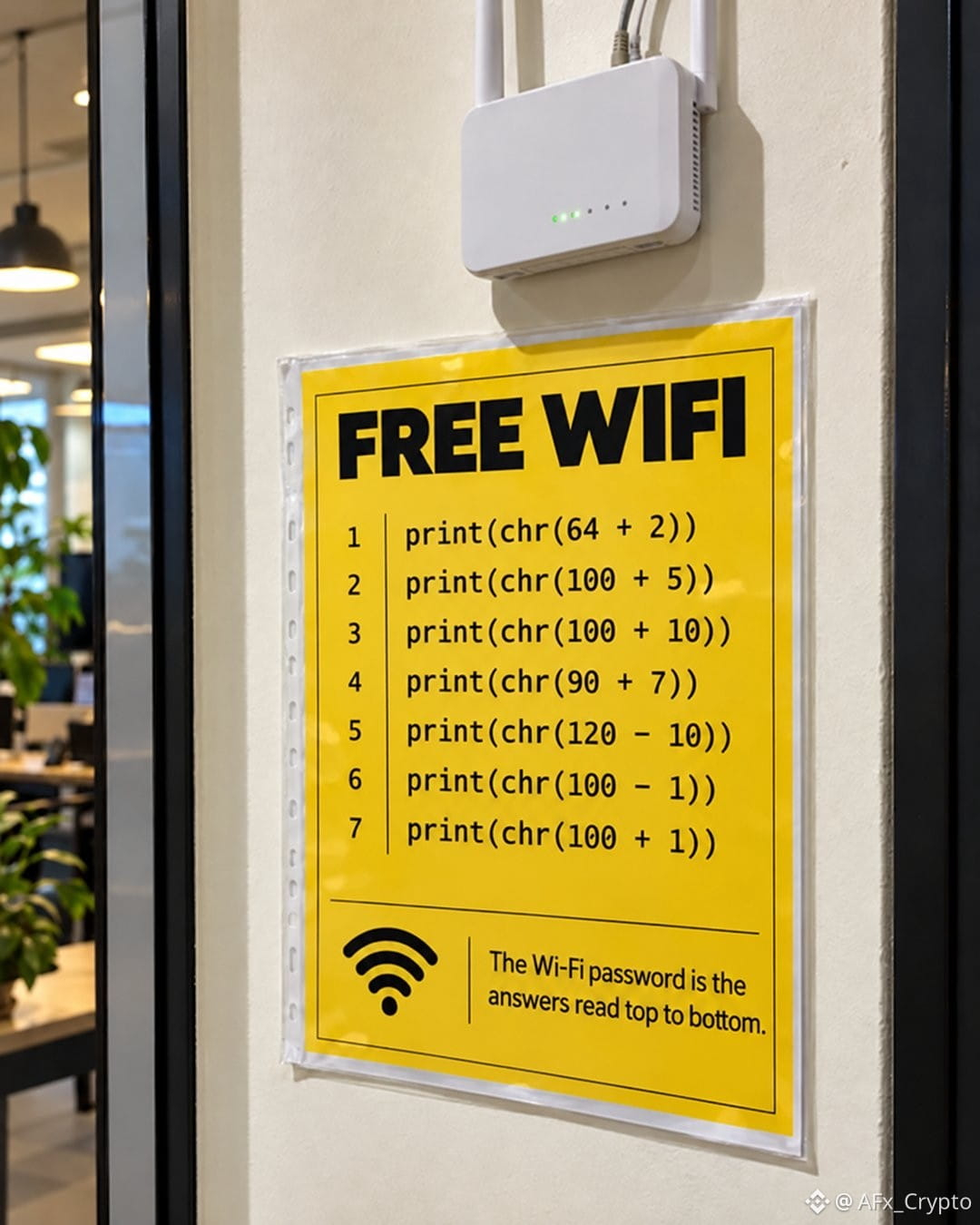
If you can solve this, you get the internet to chart. 👀
No indicators.
No complicated setup.
Just pure price action.
What do you see here?
If you can solve this, you get the internet to chart. 👀
No indicators.
No complicated setup.
Just pure price action.
What do you see here?
No indicators.
No complicated setup.
Just pure price action.
What do you see here?
1
1
745
·
--
Zcash NU7 Goes Live on Public Testnet 25-Second Blocks Are Now Being Tested
#Zcash has moved another step closer to its next major network upgrade.
The NU7 upgrade activated on Zcash’s public testnet at block 4,465,026 on October 4, bringing a major change to the network’s block timing: the target interval is being reduced from 75 seconds to 25 seconds.
In simple terms, blocks are expected to arrive around 3× more frequently. That could reduce the time users wait for confirmations, particularly for payments, exchange deposits and other applications that depend on block confirmations.
But NU7 is not only about faster blocks.
The upgrade also introduces a Network Sustainability Mechanism (NSM). Under the current design, 40% of transaction fees go to miners while 60% is directed into a reserve for future mining rewards. Per-block rewards are adjusted so the faster block schedule does not simply create ZEC at 3× the previous rate.
Another important change is the disabling of version 4 transactions. Because legacy Sprout transfers rely on this transaction version, ZEC remaining in the Sprout pool would become unspendable after NU7 activates on mainnet unless moved beforehand.
The next major checkpoint is October 20, when developers are expected to review the testnet results and make the final mainnet activation decision.
The current target for mainnet activation is November 5, 2026, but this should be viewed as a target rather than a guaranteed date.
For now, the important part is that NU7 has moved from development into live public-testnet testing.
If the testnet performs as expected, Zcash could soon have significantly faster block confirmation times while keeping its broader issuance schedule intact.
$ZEC
DYOR. This is a network upgrade update, not financial advice.
Zcash NU7 Goes Live on Public Testnet 25-Second Blocks Are Now Being Tested
#Zcash has moved another step closer to its next major network upgrade.
The NU7 upgrade activated on Zcash’s public testnet at block 4,465,026 on October 4, bringing a major change to the network’s block timing: the target interval is being reduced from 75 seconds to 25 seconds.
In simple terms, blocks are expected to arrive around 3× more frequently. That could reduce the time users wait for confirmations, particularly for payments, exchange deposits and other applications that depend on block confirmations.
But NU7 is not only about faster blocks.
The upgrade also introduces a Network Sustainability Mechanism (NSM). Under the current design, 40% of transaction fees go to miners while 60% is directed into a reserve for future mining rewards. Per-block rewards are adjusted so the faster block schedule does not simply create ZEC at 3× the previous rate.
Another important change is the disabling of version 4 transactions. Because legacy Sprout transfers rely on this transaction version, ZEC remaining in the Sprout pool would become unspendable after NU7 activates on mainnet unless moved beforehand.
The next major checkpoint is October 20, when developers are expected to review the testnet results and make the final mainnet activation decision.
The current target for mainnet activation is November 5, 2026, but this should be viewed as a target rather than a guaranteed date.
For now, the important part is that NU7 has moved from development into live public-testnet testing.
If the testnet performs as expected, Zcash could soon have significantly faster block confirmation times while keeping its broader issuance schedule intact.
$ZEC
DYOR. This is a network upgrade update, not financial advice.
#Zcash has moved another step closer to its next major network upgrade.
The NU7 upgrade activated on Zcash’s public testnet at block 4,465,026 on October 4, bringing a major change to the network’s block timing: the target interval is being reduced from 75 seconds to 25 seconds.
In simple terms, blocks are expected to arrive around 3× more frequently. That could reduce the time users wait for confirmations, particularly for payments, exchange deposits and other applications that depend on block confirmations.
But NU7 is not only about faster blocks.
The upgrade also introduces a Network Sustainability Mechanism (NSM). Under the current design, 40% of transaction fees go to miners while 60% is directed into a reserve for future mining rewards. Per-block rewards are adjusted so the faster block schedule does not simply create ZEC at 3× the previous rate.
Another important change is the disabling of version 4 transactions. Because legacy Sprout transfers rely on this transaction version, ZEC remaining in the Sprout pool would become unspendable after NU7 activates on mainnet unless moved beforehand.
The next major checkpoint is October 20, when developers are expected to review the testnet results and make the final mainnet activation decision.
The current target for mainnet activation is November 5, 2026, but this should be viewed as a target rather than a guaranteed date.
For now, the important part is that NU7 has moved from development into live public-testnet testing.
If the testnet performs as expected, Zcash could soon have significantly faster block confirmation times while keeping its broader issuance schedule intact.
$ZEC
DYOR. This is a network upgrade update, not financial advice.

331
·
--
Strive has added another 2,000 BTC to its Bitcoin treasury for roughly $169 million.
The purchase was made at an average price of around $84,422 per BTC, bringing Strive’s total Bitcoin holdings to 29,462 BTC.
Another large corporate treasury adding exposure to Bitcoin a sign that institutional demand for BTC continues to grow.
As always, DYOR.
$BTC
{spot}(BTCUSDT)
Strive has added another 2,000 BTC to its Bitcoin treasury for roughly $169 million.
The purchase was made at an average price of around $84,422 per BTC, bringing Strive’s total Bitcoin holdings to 29,462 BTC.
Another large corporate treasury adding exposure to Bitcoin a sign that institutional demand for BTC continues to grow.
As always, DYOR.
$BTC
The purchase was made at an average price of around $84,422 per BTC, bringing Strive’s total Bitcoin holdings to 29,462 BTC.
Another large corporate treasury adding exposure to Bitcoin a sign that institutional demand for BTC continues to grow.
As always, DYOR.
$BTC
1
1
246
·
--
Partiellement vrai
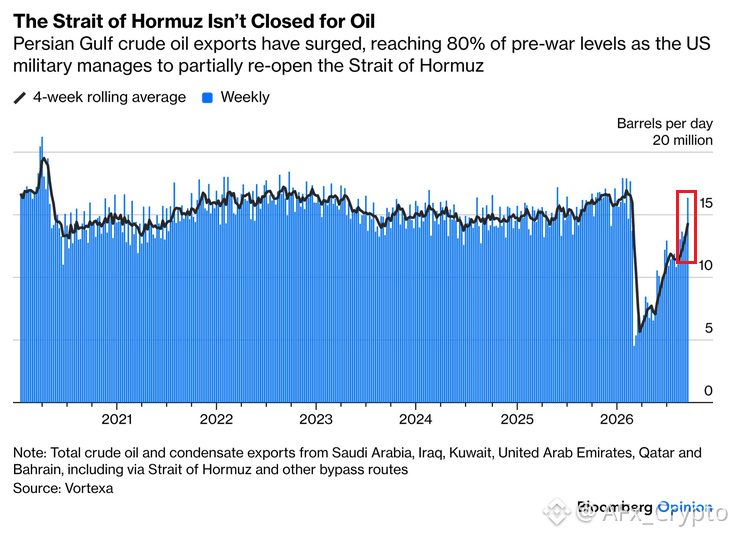
Persian Gulf crude exports have rebounded sharply, reaching around 14M barrels per day in recent data.
That puts flows at roughly 80% of pre-war levels, highlighting a significant recovery in regional oil shipments.
The pace of the recovery will remain important for global oil supply and energy markets as geopolitical risks continue to evolve.
Persian Gulf crude exports have rebounded sharply, reaching around 14M barrels per day in recent data.
That puts flows at roughly 80% of pre-war levels, highlighting a significant recovery in regional oil shipments.
The pace of the recovery will remain important for global oil supply and energy markets as geopolitical risks continue to evolve.
That puts flows at roughly 80% of pre-war levels, highlighting a significant recovery in regional oil shipments.
The pace of the recovery will remain important for global oil supply and energy markets as geopolitical risks continue to evolve.
1
568
·
--


Binance Square Official
·
--
Introducing a new layer of intelligence for everything finance.
Join the Binance Intelligence launch livestream for an early look at what we've been building.
🗓 Oct 5 | 12:00 UTC
📍 Binance Square Official
Repost this post and tag @Binance Square Official to share your vision for Binance Intelligence for a chance to be one of 5 winners selected for a 20 USDC reward.
Join the Binance Intelligence launch livestream for an early look at what we've been building.
🗓 Oct 5 | 12:00 UTC
📍 Binance Square Official
Repost this post and tag @Binance Square Official to share your vision for Binance Intelligence for a chance to be one of 5 winners selected for a 20 USDC reward.
105
·
--
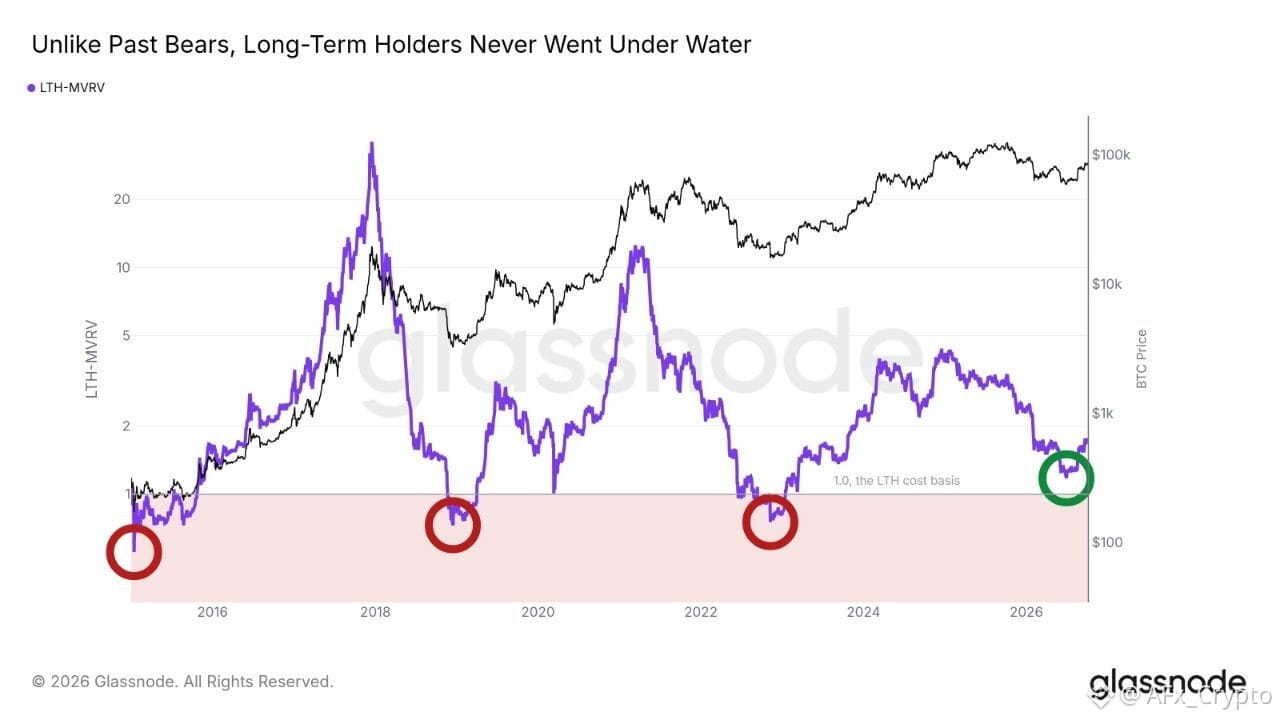
Bitcoin’s long-term holders are still sitting on overall unrealized profits, according to Glassnode.
Despite the recent market volatility, longer-term BTC investors have not broadly moved into a loss position.
That’s an interesting sign of market resilience, especially as traders continue watching whether long-term holders keep their conviction.
Market data can change quickly. DYOR.
$BTC
{spot}(BTCUSDT)
Bitcoin’s long-term holders are still sitting on overall unrealized profits, according to Glassnode.
Despite the recent market volatility, longer-term BTC investors have not broadly moved into a loss position.
That’s an interesting sign of market resilience, especially as traders continue watching whether long-term holders keep their conviction.
Market data can change quickly. DYOR.
$BTC
Despite the recent market volatility, longer-term BTC investors have not broadly moved into a loss position.
That’s an interesting sign of market resilience, especially as traders continue watching whether long-term holders keep their conviction.
Market data can change quickly. DYOR.
$BTC
2
2
354
·
--
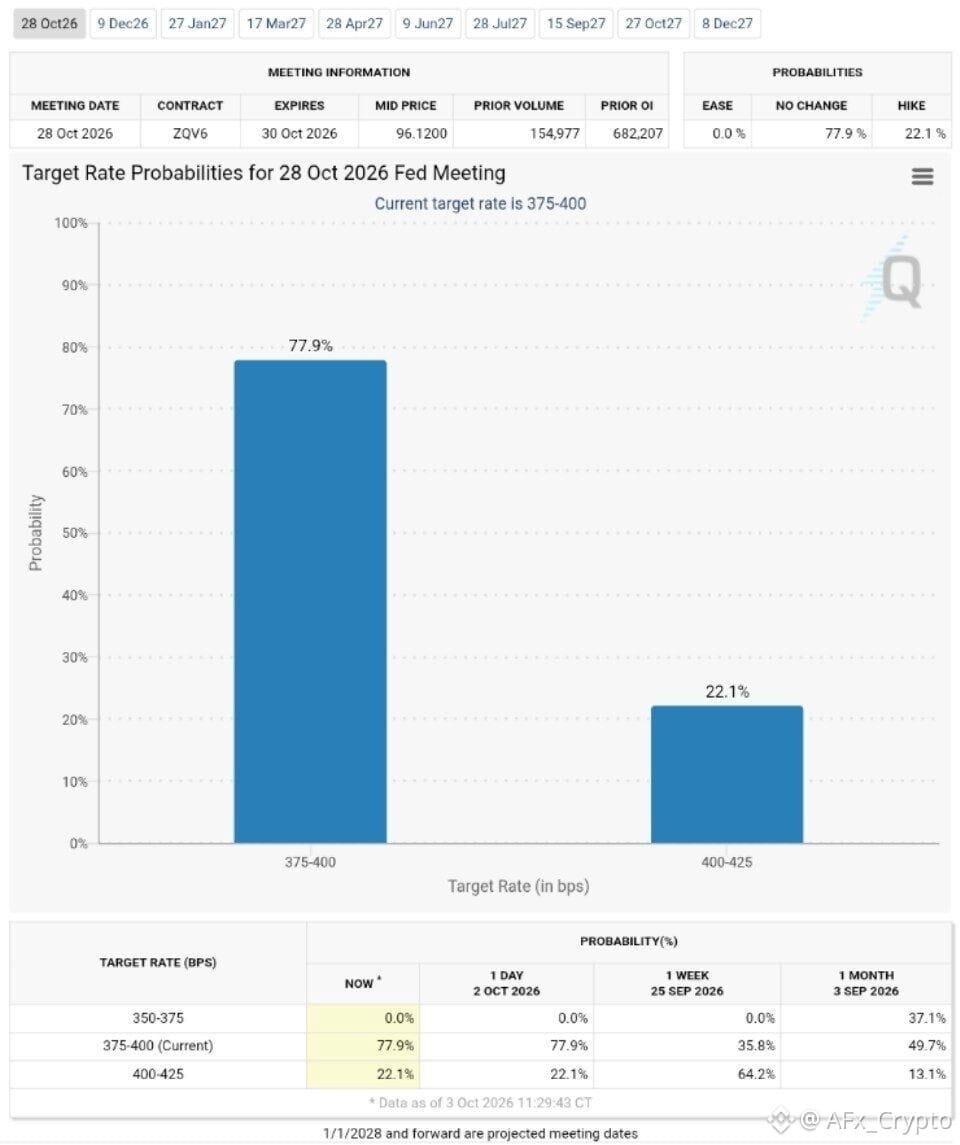
The odds of another Fed rate hike this month remain relatively low.
According to CME FedWatch, markets are pricing a 77.9% probability of rates remaining unchanged at the October meeting, while the chance of a 25 bps hike stands at 22.1%.
For crypto markets, a pause could keep attention focused on liquidity, inflation data and the Fed’s next signals.
Market expectations can change quickly, so DYOR.
The odds of another Fed rate hike this month remain relatively low.
According to CME FedWatch, markets are pricing a 77.9% probability of rates remaining unchanged at the October meeting, while the chance of a 25 bps hike stands at 22.1%.
For crypto markets, a pause could keep attention focused on liquidity, inflation data and the Fed’s next signals.
Market expectations can change quickly, so DYOR.
According to CME FedWatch, markets are pricing a 77.9% probability of rates remaining unchanged at the October meeting, while the chance of a 25 bps hike stands at 22.1%.
For crypto markets, a pause could keep attention focused on liquidity, inflation data and the Fed’s next signals.
Market expectations can change quickly, so DYOR.
483
·
--
What if you had bought Bitcoin instead of a new iPhone every year since 2016?
Around $7.6K spent on iPhones could have grown to roughly $137K in Bitcoin today, depending on the exact purchase dates and BTC prices used.
It’s a simple reminder of how powerful long-term opportunity cost can be in crypto.
Past performance doesn’t guarantee future results. DYOR.
#SECHaltsCryptoETFReviewsAmidFundingLapse $BTC
{spot}(BTCUSDT)
What if you had bought Bitcoin instead of a new iPhone every year since 2016?
Around $7.6K spent on iPhones could have grown to roughly $137K in Bitcoin today, depending on the exact purchase dates and BTC prices used.
It’s a simple reminder of how powerful long-term opportunity cost can be in crypto.
Past performance doesn’t guarantee future results. DYOR.
#SECHaltsCryptoETFReviewsAmidFundingLapse $BTC
Around $7.6K spent on iPhones could have grown to roughly $137K in Bitcoin today, depending on the exact purchase dates and BTC prices used.
It’s a simple reminder of how powerful long-term opportunity cost can be in crypto.
Past performance doesn’t guarantee future results. DYOR.
#SECHaltsCryptoETFReviewsAmidFundingLapse $BTC
244
·
--
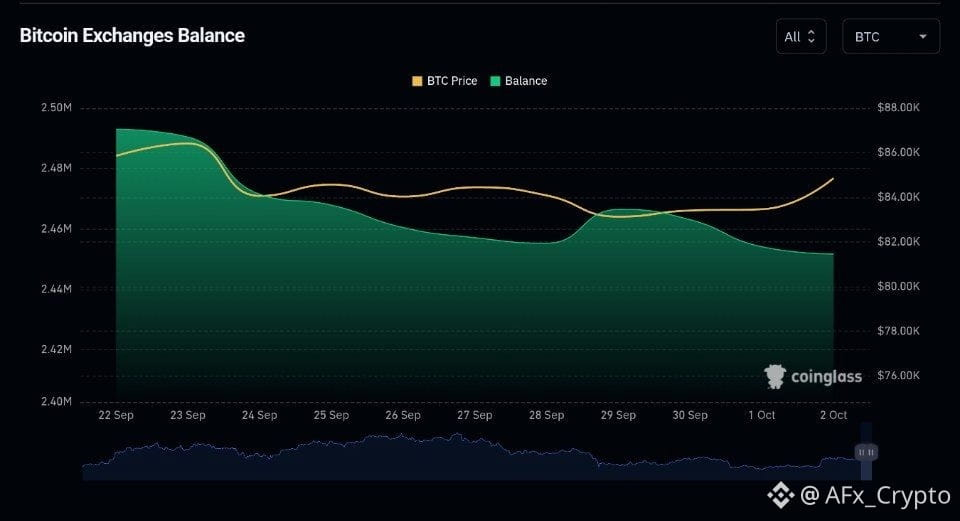
#Bitcoin is seeing a notable wave of exchange outflows.
Data around September 22–24 showed billions of dollars worth of BTC leaving major centralized exchanges, with Binance recording more than 13,800 BTC in net outflows on September 22 alone.
So where is the Bitcoin going?
Possible destinations include: • Self-custody wallets • Institutional custody • OTC settlements • Internal exchange wallet movements
The important part: coins leaving exchanges reduce the amount of BTC immediately available on trading venues, but an outflow alone does not prove accumulation or guarantee a price move.
The next thing worth watching is whether exchange balances continue declining or start reversing.
$BTC
{spot}(BTCUSDT)
#Bitcoin is seeing a notable wave of exchange outflows.
Data around September 22–24 showed billions of dollars worth of BTC leaving major centralized exchanges, with Binance recording more than 13,800 BTC in net outflows on September 22 alone.
So where is the Bitcoin going?
Possible destinations include: • Self-custody wallets • Institutional custody • OTC settlements • Internal exchange wallet movements
The important part: coins leaving exchanges reduce the amount of BTC immediately available on trading venues, but an outflow alone does not prove accumulation or guarantee a price move.
The next thing worth watching is whether exchange balances continue declining or start reversing.
$BTC
Data around September 22–24 showed billions of dollars worth of BTC leaving major centralized exchanges, with Binance recording more than 13,800 BTC in net outflows on September 22 alone.
So where is the Bitcoin going?
Possible destinations include: • Self-custody wallets • Institutional custody • OTC settlements • Internal exchange wallet movements
The important part: coins leaving exchanges reduce the amount of BTC immediately available on trading venues, but an outflow alone does not prove accumulation or guarantee a price move.
The next thing worth watching is whether exchange balances continue declining or start reversing.
$BTC
1
502
·
--
Interesting Bitcoin comparison.
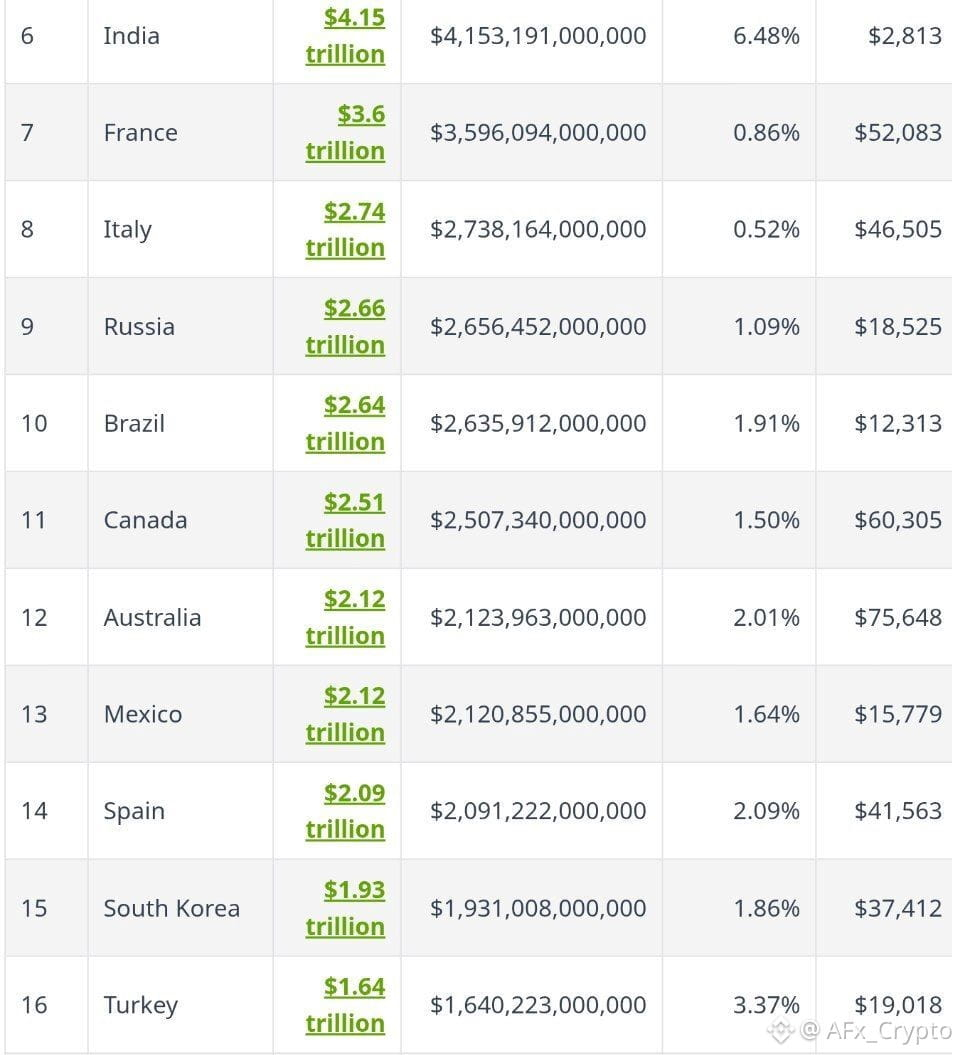
BTC’s market cap is now larger than the annual GDP of all but roughly 15 countries worldwide.
That puts Bitcoin’s market value above the yearly economic output of most nations.
Of course, market cap and GDP measure completely different things, so this isn’t a direct apples-to-apples comparison. But it does show just how large Bitcoin has become on the global financial scale.
Bitcoin is no longer a small corner of the financial market.
$BTC
{spot}(BTCUSDT)
#BinanceSquare
Interesting Bitcoin comparison.
BTC’s market cap is now larger than the annual GDP of all but roughly 15 countries worldwide.
That puts Bitcoin’s market value above the yearly economic output of most nations.
Of course, market cap and GDP measure completely different things, so this isn’t a direct apples-to-apples comparison. But it does show just how large Bitcoin has become on the global financial scale.
Bitcoin is no longer a small corner of the financial market.
$BTC
#BinanceSquare
BTC’s market cap is now larger than the annual GDP of all but roughly 15 countries worldwide.
That puts Bitcoin’s market value above the yearly economic output of most nations.
Of course, market cap and GDP measure completely different things, so this isn’t a direct apples-to-apples comparison. But it does show just how large Bitcoin has become on the global financial scale.
Bitcoin is no longer a small corner of the financial market.
$BTC
#BinanceSquare
2
130
·
--
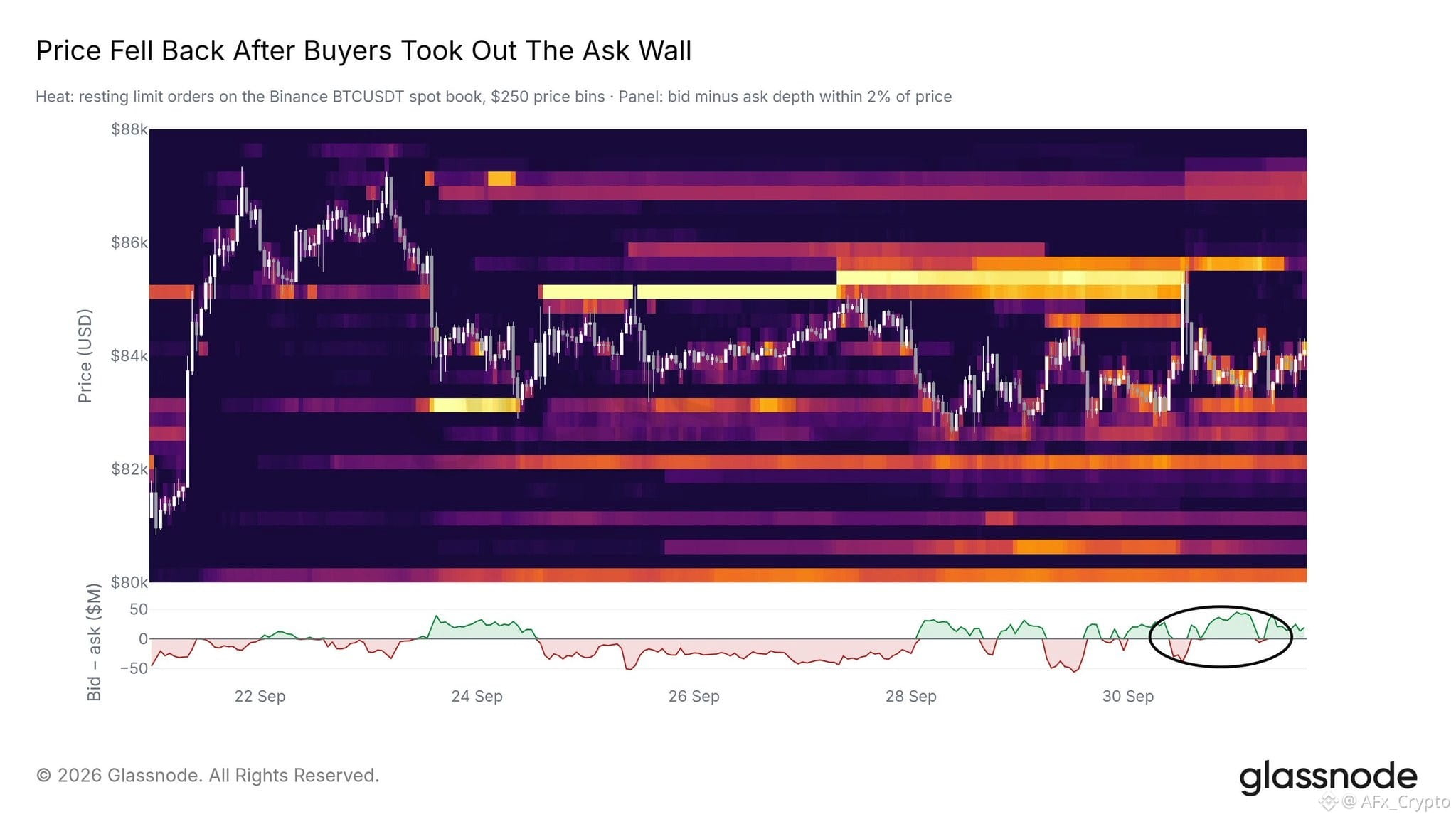
$BTC has finally pushed through the heavy $85K sell wall after several days of repeated attempts.
Glassnode had been tracking significant sell-side liquidity around the $85K–$85.5K area, which acted as an important short-term hurdle for Bitcoin.
With that liquidity now largely absorbed, the order book above $85K appears thinner. That could give price more room to move if fresh buying demand continues to come in.
The key question now is whether BTC can hold above $85K and turn the former resistance area into support.
For me, this is an important market-structure development to watch rather than a guarantee of further upside.
DYOR. NFA.
$BTC has finally pushed through the heavy $85K sell wall after several days of repeated attempts.
Glassnode had been tracking significant sell-side liquidity around the $85K–$85.5K area, which acted as an important short-term hurdle for Bitcoin.
With that liquidity now largely absorbed, the order book above $85K appears thinner. That could give price more room to move if fresh buying demand continues to come in.
The key question now is whether BTC can hold above $85K and turn the former resistance area into support.
For me, this is an important market-structure development to watch rather than a guarantee of further upside.
DYOR. NFA.
Glassnode had been tracking significant sell-side liquidity around the $85K–$85.5K area, which acted as an important short-term hurdle for Bitcoin.
With that liquidity now largely absorbed, the order book above $85K appears thinner. That could give price more room to move if fresh buying demand continues to come in.
The key question now is whether BTC can hold above $85K and turn the former resistance area into support.
For me, this is an important market-structure development to watch rather than a guarantee of further upside.
DYOR. NFA.
1
207
·
--
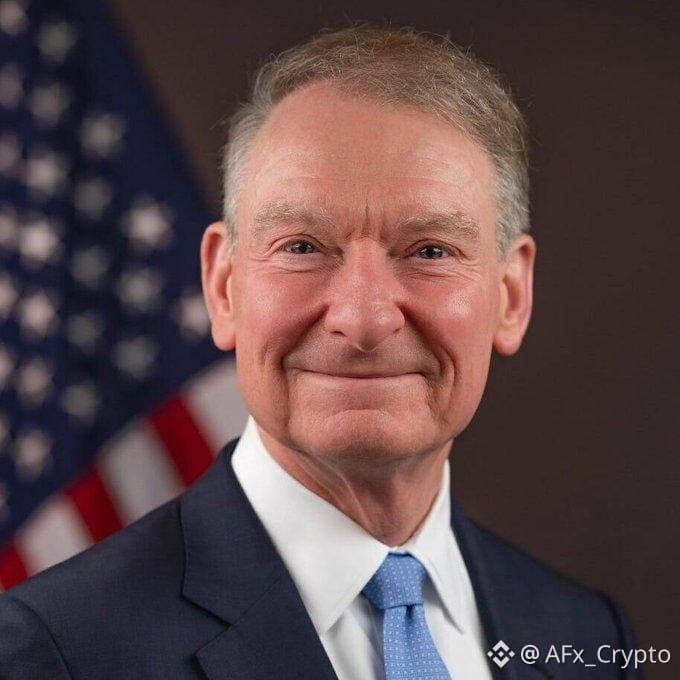
🇺🇸 SEC Chairman Paul Atkins highlighted how dramatically the crypto market has evolved since Bitcoin emerged in 2008.
He described crypto as having grown from a niche curiosity into a multi-trillion-dollar asset class, with investors now actively seeking exposure to digital assets.
That shift is significant. Crypto is no longer limited to early adopters and specialized communities. It has increasingly become part of the broader investment conversation.
The next phase will likely focus heavily on clearer regulation, custody standards and how traditional financial institutions interact with digital assets.
The market has changed enormously in less than two decades and the regulatory framework around it is evolving alongside it.
DYOR. NFA.
$BTC
{spot}(BTCUSDT)
🇺🇸 SEC Chairman Paul Atkins highlighted how dramatically the crypto market has evolved since Bitcoin emerged in 2008.
He described crypto as having grown from a niche curiosity into a multi-trillion-dollar asset class, with investors now actively seeking exposure to digital assets.
That shift is significant. Crypto is no longer limited to early adopters and specialized communities. It has increasingly become part of the broader investment conversation.
The next phase will likely focus heavily on clearer regulation, custody standards and how traditional financial institutions interact with digital assets.
The market has changed enormously in less than two decades and the regulatory framework around it is evolving alongside it.
DYOR. NFA.
$BTC
He described crypto as having grown from a niche curiosity into a multi-trillion-dollar asset class, with investors now actively seeking exposure to digital assets.
That shift is significant. Crypto is no longer limited to early adopters and specialized communities. It has increasingly become part of the broader investment conversation.
The next phase will likely focus heavily on clearer regulation, custody standards and how traditional financial institutions interact with digital assets.
The market has changed enormously in less than two decades and the regulatory framework around it is evolving alongside it.
DYOR. NFA.
$BTC
1
601
·
--
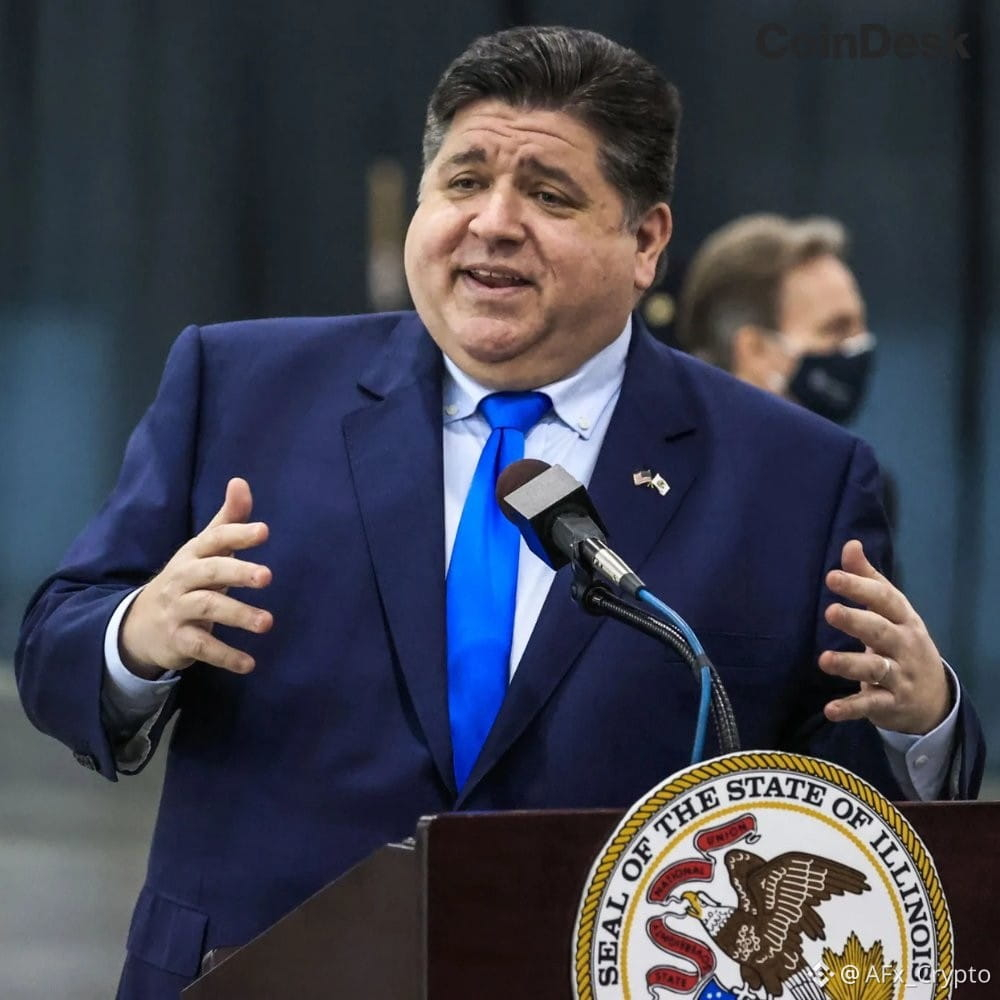
Illinois is moving to delay its controversial 0.2% crypto tax by six months.
The tax was scheduled to take effect on January 1, 2027. Under the latest agreement, the implementation could be pushed to July 1, 2027, while the legal challenges continue in court.
The Digital Chamber and Illinois Blockchain Association are involved in negotiations around the delay.
One important point: this is not yet a permanent cancellation of the tax. The delay still depends on the ongoing legal process and court approval.
For the crypto industry, the case is worth watching because the outcome could influence how other U.S. states approach digital-asset taxation.
What do you think about Illinois’ approach to crypto taxation?
DYOR.
#USWeeklyJoblessClaimsFallTo197000
Illinois is moving to delay its controversial 0.2% crypto tax by six months.
The tax was scheduled to take effect on January 1, 2027. Under the latest agreement, the implementation could be pushed to July 1, 2027, while the legal challenges continue in court.
The Digital Chamber and Illinois Blockchain Association are involved in negotiations around the delay.
One important point: this is not yet a permanent cancellation of the tax. The delay still depends on the ongoing legal process and court approval.
For the crypto industry, the case is worth watching because the outcome could influence how other U.S. states approach digital-asset taxation.
What do you think about Illinois’ approach to crypto taxation?
DYOR.
#USWeeklyJoblessClaimsFallTo197000
The tax was scheduled to take effect on January 1, 2027. Under the latest agreement, the implementation could be pushed to July 1, 2027, while the legal challenges continue in court.
The Digital Chamber and Illinois Blockchain Association are involved in negotiations around the delay.
One important point: this is not yet a permanent cancellation of the tax. The delay still depends on the ongoing legal process and court approval.
For the crypto industry, the case is worth watching because the outcome could influence how other U.S. states approach digital-asset taxation.
What do you think about Illinois’ approach to crypto taxation?
DYOR.
#USWeeklyJoblessClaimsFallTo197000
316
·
--
Citi has raised its 12-month price targets for #Bitcoin and #Ethereum .
The bank now sees:
• Bitcoin at $113,000, up from $82,000
• Ethereum at $3,028, up from $2,240
Citi also expects around $5 billion in crypto inflows over the next 12 months, pointing to stronger crypto activity, a more supportive macro environment and renewed ETF demand.
What stands out is that Citi expects institutional flows to recover gradually rather than through one sudden wave.
These are Citi’s forecasts, not guarantees. Crypto markets can still move sharply in either direction, so the actual outcome will depend on liquidity, ETF flows, macro conditions and investor demand.
For me, the bigger takeaway is that traditional financial institutions are continuing to increase their long-term focus on digital assets.
$BTC
{spot}(BTCUSDT)
$ETH
{spot}(ETHUSDT)
DYOR. NFA.
Citi has raised its 12-month price targets for #Bitcoin and #Ethereum .
The bank now sees:
• Bitcoin at $113,000, up from $82,000
• Ethereum at $3,028, up from $2,240
Citi also expects around $5 billion in crypto inflows over the next 12 months, pointing to stronger crypto activity, a more supportive macro environment and renewed ETF demand.
What stands out is that Citi expects institutional flows to recover gradually rather than through one sudden wave.
These are Citi’s forecasts, not guarantees. Crypto markets can still move sharply in either direction, so the actual outcome will depend on liquidity, ETF flows, macro conditions and investor demand.
For me, the bigger takeaway is that traditional financial institutions are continuing to increase their long-term focus on digital assets.
$BTC
$ETH
DYOR. NFA.
The bank now sees:
• Bitcoin at $113,000, up from $82,000
• Ethereum at $3,028, up from $2,240
Citi also expects around $5 billion in crypto inflows over the next 12 months, pointing to stronger crypto activity, a more supportive macro environment and renewed ETF demand.
What stands out is that Citi expects institutional flows to recover gradually rather than through one sudden wave.
These are Citi’s forecasts, not guarantees. Crypto markets can still move sharply in either direction, so the actual outcome will depend on liquidity, ETF flows, macro conditions and investor demand.
For me, the bigger takeaway is that traditional financial institutions are continuing to increase their long-term focus on digital assets.
$BTC
$ETH
DYOR. NFA.
1
279
·
--
Vérifié
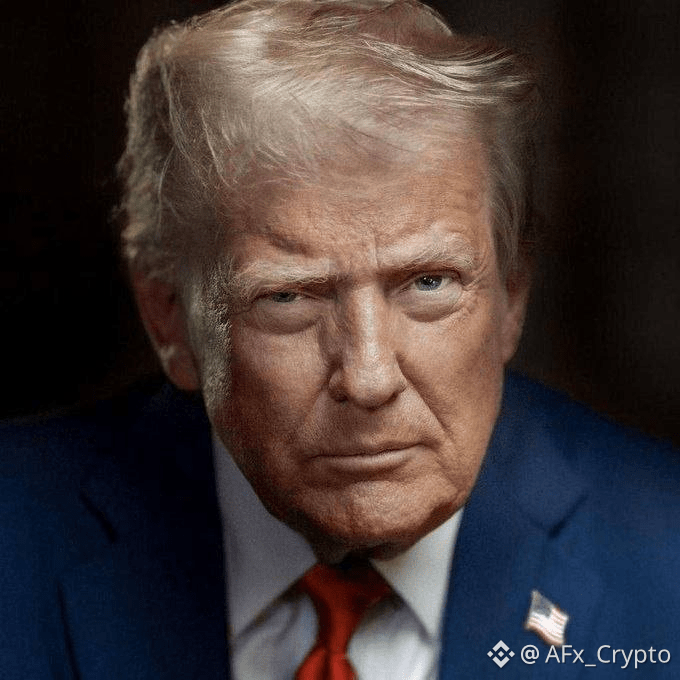
$TRUMP is looking beyond the meme coin itself.
At Korea Blockchain Week 2026, Bill Zanker discussed what could come next for the TRUMP ecosystem, including plans for a Trump-themed mobile game, a Shark Tank-style TV concept where winners could receive coins, and even the possibility of a Trump-themed amusement park.
The mobile game is the most concrete part of the story. A Trump-themed crypto game called Trump Billionaires Club had already been announced, with plans for mobile and web access and rewards tied to $TRUMP.
The broader idea appears to be expanding $TRUMP into entertainment, gaming and consumer experiences rather than keeping it limited to a meme-coin narrative.
The TV show and amusement-park ideas are still best viewed as plans discussed by Zanker, not confirmed launches.
For $TRUMP holders, the interesting question is whether these ideas can translate into sustained ecosystem activity over time.
As always, DYOR and separate announced plans from confirmed products.
$TRUMP is looking beyond the meme coin itself.
At Korea Blockchain Week 2026, Bill Zanker discussed what could come next for the TRUMP ecosystem, including plans for a Trump-themed mobile game, a Shark Tank-style TV concept where winners could receive coins, and even the possibility of a Trump-themed amusement park.
The mobile game is the most concrete part of the story. A Trump-themed crypto game called Trump Billionaires Club had already been announced, with plans for mobile and web access and rewards tied to $TRUMP .
The broader idea appears to be expanding $TRUMP into entertainment, gaming and consumer experiences rather than keeping it limited to a meme-coin narrative.
The TV show and amusement-park ideas are still best viewed as plans discussed by Zanker, not confirmed launches.
For $TRUMP holders, the interesting question is whether these ideas can translate into sustained ecosystem activity over time.
As always, DYOR and separate announced plans from confirmed products.
At Korea Blockchain Week 2026, Bill Zanker discussed what could come next for the TRUMP ecosystem, including plans for a Trump-themed mobile game, a Shark Tank-style TV concept where winners could receive coins, and even the possibility of a Trump-themed amusement park.
The mobile game is the most concrete part of the story. A Trump-themed crypto game called Trump Billionaires Club had already been announced, with plans for mobile and web access and rewards tied to $TRUMP .
The broader idea appears to be expanding $TRUMP into entertainment, gaming and consumer experiences rather than keeping it limited to a meme-coin narrative.
The TV show and amusement-park ideas are still best viewed as plans discussed by Zanker, not confirmed launches.
For $TRUMP holders, the interesting question is whether these ideas can translate into sustained ecosystem activity over time.
As always, DYOR and separate announced plans from confirmed products.

978
·
--
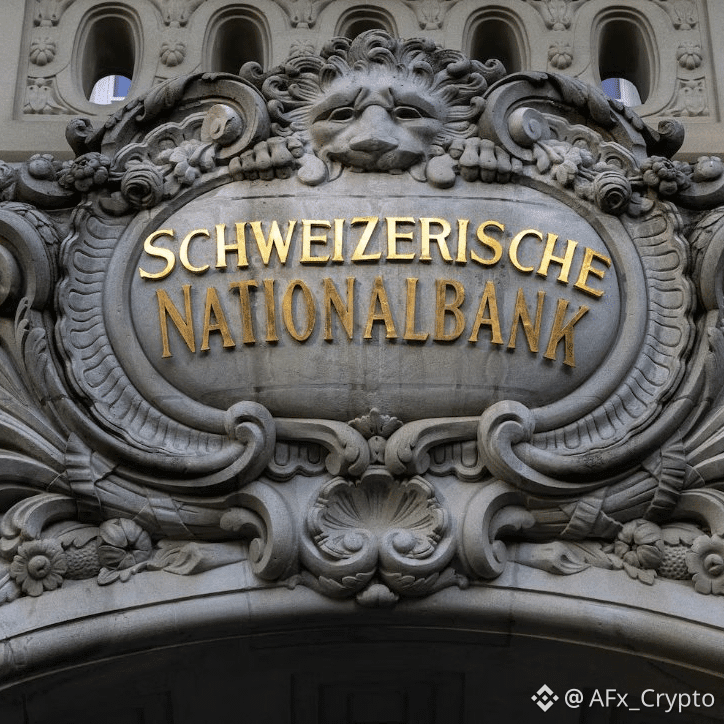
🇨🇭 Swiss National Bank raises a new concern about stablecoins
The Swiss National Bank (SNB) is warning that widespread stablecoin adoption could make monetary policy harder for central banks to manage.
The concern is mainly about what happens if people start moving significant amounts of money from traditional bank deposits into stablecoins.
That could reduce the deposit base available to commercial banks, potentially affecting lending and the way central-bank interest-rate decisions flow through the economy.
SNB Governing Board member Petra Tschudin also highlighted the need to carefully assess the regulatory implications as digital money continues to evolve.
Stablecoins are becoming a bigger part of the financial system, and this debate shows that their impact goes beyond crypto markets.
The key question now is how regulators can support innovation while maintaining effective monetary-policy transmission.
#Stablecoins #SwissNationalBank
🇨🇭 Swiss National Bank raises a new concern about stablecoins
The Swiss National Bank (SNB) is warning that widespread stablecoin adoption could make monetary policy harder for central banks to manage.
The concern is mainly about what happens if people start moving significant amounts of money from traditional bank deposits into stablecoins.
That could reduce the deposit base available to commercial banks, potentially affecting lending and the way central-bank interest-rate decisions flow through the economy.
SNB Governing Board member Petra Tschudin also highlighted the need to carefully assess the regulatory implications as digital money continues to evolve.
Stablecoins are becoming a bigger part of the financial system, and this debate shows that their impact goes beyond crypto markets.
The key question now is how regulators can support innovation while maintaining effective monetary-policy transmission.
#Stablecoins #SwissNationalBank
The Swiss National Bank (SNB) is warning that widespread stablecoin adoption could make monetary policy harder for central banks to manage.
The concern is mainly about what happens if people start moving significant amounts of money from traditional bank deposits into stablecoins.
That could reduce the deposit base available to commercial banks, potentially affecting lending and the way central-bank interest-rate decisions flow through the economy.
SNB Governing Board member Petra Tschudin also highlighted the need to carefully assess the regulatory implications as digital money continues to evolve.
Stablecoins are becoming a bigger part of the financial system, and this debate shows that their impact goes beyond crypto markets.
The key question now is how regulators can support innovation while maintaining effective monetary-policy transmission.
#Stablecoins #SwissNationalBank
2
267
·
--
Vérifié
Brazil is taking another step toward bringing traditional financial infrastructure onchain.
CSD BR has partnered with Ripple to mirror ownership records of selected BTG Pactual investment fund shares on the XRP Ledger.
The interesting part is that this isn’t simply about putting securities on a blockchain and replacing the existing system.
CSD BR will continue to maintain the official records for registration, custody and settlement, while XRPL acts as an additional layer for transparent verification and auditing.
The first phase uses XRPL’s Multi-Purpose Token standard, with access limited to authorized participants under KYC and AML requirements.
If the model proves successful, the partnership plans to explore broader blockchain-based issuance and trading of regulated assets.
For me, the bigger story here is the infrastructure: blockchain is moving from experiments and pilots into real regulated financial-market workflows.
#Xrp🔥🔥 $XRP
{spot}(XRPUSDT)
Brazil is taking another step toward bringing traditional financial infrastructure onchain.
CSD BR has partnered with Ripple to mirror ownership records of selected BTG Pactual investment fund shares on the XRP Ledger.
The interesting part is that this isn’t simply about putting securities on a blockchain and replacing the existing system.
CSD BR will continue to maintain the official records for registration, custody and settlement, while XRPL acts as an additional layer for transparent verification and auditing.
The first phase uses XRPL’s Multi-Purpose Token standard, with access limited to authorized participants under KYC and AML requirements.
If the model proves successful, the partnership plans to explore broader blockchain-based issuance and trading of regulated assets.
For me, the bigger story here is the infrastructure: blockchain is moving from experiments and pilots into real regulated financial-market workflows.
#Xrp🔥🔥 $XRP
CSD BR has partnered with Ripple to mirror ownership records of selected BTG Pactual investment fund shares on the XRP Ledger.
The interesting part is that this isn’t simply about putting securities on a blockchain and replacing the existing system.
CSD BR will continue to maintain the official records for registration, custody and settlement, while XRPL acts as an additional layer for transparent verification and auditing.
The first phase uses XRPL’s Multi-Purpose Token standard, with access limited to authorized participants under KYC and AML requirements.
If the model proves successful, the partnership plans to explore broader blockchain-based issuance and trading of regulated assets.
For me, the bigger story here is the infrastructure: blockchain is moving from experiments and pilots into real regulated financial-market workflows.
#Xrp🔥🔥 $XRP


2
1k
·
--
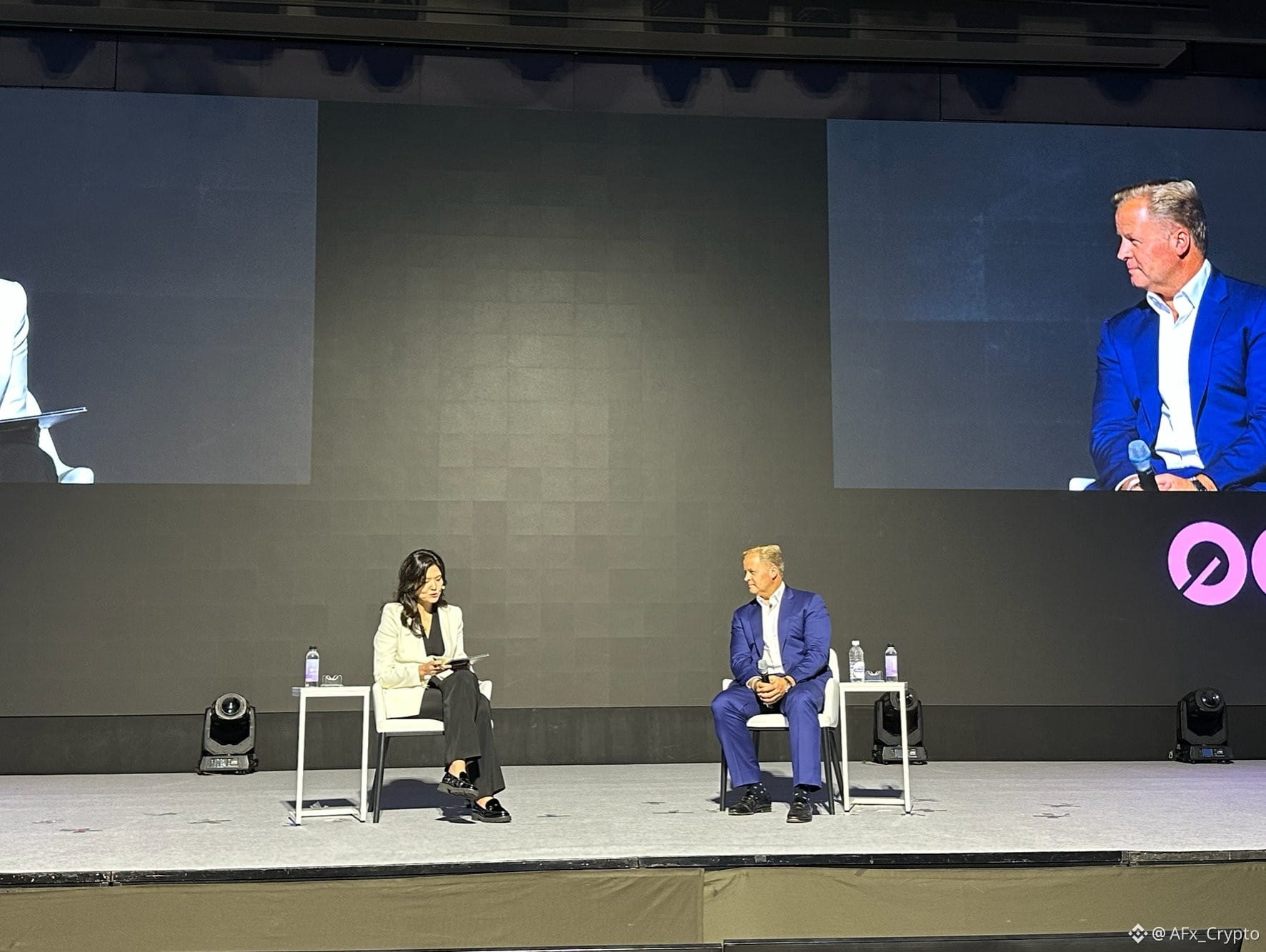
Former CFTC Commissioner Brian Quintenz highlighted how much the crypto landscape could change over the next year during Korea Blockchain Week 2026.
One major shift is the growing connection between traditional finance and tokenization, as more financial assets and services move toward blockchain-based infrastructure.
But the story is no longer limited to finance.
Crypto and blockchain are also expanding into areas such as entertainment, music and social networks, creating new ways to represent ownership, distribute value and interact with digital content.
The bigger takeaway is that blockchain adoption is gradually moving from a niche financial use case toward broader digital infrastructure.
The next phase may be less about simply trading crypto and more about where blockchain technology becomes useful in everyday digital experiences.
#TrumpRejectsAIRulesForVoluntaryAudits
Former CFTC Commissioner Brian Quintenz highlighted how much the crypto landscape could change over the next year during Korea Blockchain Week 2026.
One major shift is the growing connection between traditional finance and tokenization, as more financial assets and services move toward blockchain-based infrastructure.
But the story is no longer limited to finance.
Crypto and blockchain are also expanding into areas such as entertainment, music and social networks, creating new ways to represent ownership, distribute value and interact with digital content.
The bigger takeaway is that blockchain adoption is gradually moving from a niche financial use case toward broader digital infrastructure.
The next phase may be less about simply trading crypto and more about where blockchain technology becomes useful in everyday digital experiences.
#TrumpRejectsAIRulesForVoluntaryAudits
One major shift is the growing connection between traditional finance and tokenization, as more financial assets and services move toward blockchain-based infrastructure.
But the story is no longer limited to finance.
Crypto and blockchain are also expanding into areas such as entertainment, music and social networks, creating new ways to represent ownership, distribute value and interact with digital content.
The bigger takeaway is that blockchain adoption is gradually moving from a niche financial use case toward broader digital infrastructure.
The next phase may be less about simply trading crypto and more about where blockchain technology becomes useful in everyday digital experiences.
#TrumpRejectsAIRulesForVoluntaryAudits
2
406
·
--
Vérifié
The U.S. is preparing to release up to 40 million barrels of crude oil from its Strategic Petroleum Reserve as fuel prices remain elevated.
The move comes ahead of the 2026 midterm elections, with the administration facing pressure to ease energy costs.
One important detail: this is not simply a permanent sale of the oil. The barrels are being made available through exchange and loan arrangements, with participating companies expected to return the crude later, along with additional barrels.
The bigger picture is clear: Washington is using the SPR to add short-term supply to the market and help reduce pressure on fuel prices.
For crypto and global markets, cheaper or more stable energy costs could also influence inflation expectations, liquidity and risk sentiment.
Oil supply → energy prices → inflation → markets.
Worth watching how the market reacts as these barrels enter circulation.
#TrumpRejectsAIRulesForVoluntaryAudits
The U.S. is preparing to release up to 40 million barrels of crude oil from its Strategic Petroleum Reserve as fuel prices remain elevated.
The move comes ahead of the 2026 midterm elections, with the administration facing pressure to ease energy costs.
One important detail: this is not simply a permanent sale of the oil. The barrels are being made available through exchange and loan arrangements, with participating companies expected to return the crude later, along with additional barrels.
The bigger picture is clear: Washington is using the SPR to add short-term supply to the market and help reduce pressure on fuel prices.
For crypto and global markets, cheaper or more stable energy costs could also influence inflation expectations, liquidity and risk sentiment.
Oil supply → energy prices → inflation → markets.
Worth watching how the market reacts as these barrels enter circulation.
#TrumpRejectsAIRulesForVoluntaryAudits
The move comes ahead of the 2026 midterm elections, with the administration facing pressure to ease energy costs.
One important detail: this is not simply a permanent sale of the oil. The barrels are being made available through exchange and loan arrangements, with participating companies expected to return the crude later, along with additional barrels.
The bigger picture is clear: Washington is using the SPR to add short-term supply to the market and help reduce pressure on fuel prices.
For crypto and global markets, cheaper or more stable energy costs could also influence inflation expectations, liquidity and risk sentiment.
Oil supply → energy prices → inflation → markets.
Worth watching how the market reacts as these barrels enter circulation.
#TrumpRejectsAIRulesForVoluntaryAudits

2
6
6.7k
·
--
🇯🇵 Binance Pay expands crypto payments across Japan.
#Binance Pay users from overseas can now use crypto at participating PayPay merchants across Japan, giving travelers a simpler way to spend digital assets in everyday life.
The integration reportedly covers more than 10 million PayPay merchant locations, bringing crypto closer to real-world payments from shopping to dining and other daily purchases.
What stands out to me is the practical side of this update. Crypto adoption is not only about holding or trading assets; it is also about making them usable in the real economy.
For travelers visiting Japan, this could make spending crypto much more convenient.
As always, availability and eligibility can vary, so users should check the latest Binance Pay requirements before using the service.
#BinancePay #CryptoPayments
🇯🇵 Binance Pay expands crypto payments across Japan.
#Binance Pay users from overseas can now use crypto at participating PayPay merchants across Japan, giving travelers a simpler way to spend digital assets in everyday life.
The integration reportedly covers more than 10 million PayPay merchant locations, bringing crypto closer to real-world payments from shopping to dining and other daily purchases.
What stands out to me is the practical side of this update. Crypto adoption is not only about holding or trading assets; it is also about making them usable in the real economy.
For travelers visiting Japan, this could make spending crypto much more convenient.
As always, availability and eligibility can vary, so users should check the latest Binance Pay requirements before using the service.
#BinancePay #CryptoPayments
#Binance Pay users from overseas can now use crypto at participating PayPay merchants across Japan, giving travelers a simpler way to spend digital assets in everyday life.
The integration reportedly covers more than 10 million PayPay merchant locations, bringing crypto closer to real-world payments from shopping to dining and other daily purchases.
What stands out to me is the practical side of this update. Crypto adoption is not only about holding or trading assets; it is also about making them usable in the real economy.
For travelers visiting Japan, this could make spending crypto much more convenient.
As always, availability and eligibility can vary, so users should check the latest Binance Pay requirements before using the service.
#BinancePay #CryptoPayments
463
Connectez-vous pour découvrir plus de contenu
Rejoignez la communauté mondiale des adeptes de cryptomonnaies sur Binance Square
⚡️ Suviez les dernières informations importantes sur les cryptomonnaies.
💬 Jugé digne de confiance par la plus grande plateforme d’échange de cryptomonnaies au monde.
👍 Découvrez les connaissances que partagent les créateurs vérifiés.
Adresse e-mail/Nº de téléphone
Sujets d’actualité
BinanceLaunchesBinanceIntelligence
565,735 vues
3,579 mentions
Picture this: you are juggling five different analytics tabs, watching order books flicker, and trying to decipher whether a sudden price spike is genuine volume or just another liquidity trap.
Most traders end up losing money not because they lack passion, but because they are constantly drowning in noisy data and entering positions five minutes too late. When information is fragmented across dozens of complex dashboards, retail investors usually end up holding the bag while faster players front-run the actionable insights.
The rollout of Binance Intelligence feels very similar to the early days when on-chain analytics first went mainstream. Back in previous cycles, tracking wallet movements or sentiment shifts required specialized technical setups. Having deep market analytics and pattern recognition integrated directly into the core trading interface changes the dynamic, much like when real-time order flow data became accessible to everyday holders of $BNB and $BTC.
When retail gets access to structured intelligence directly at the point of execution, the edge shifts from who has the fastest raw data feeds to who can actually interpret market context better. We saw a similar maturation curve with $ETH analytics years ago, where better data transparency gradually reduced blind FOMO and forced traders to develop disciplined risk management.
Do you think integrated intelligence tools will actually level the playing field for retail traders, or will sophisticated algorithms always stay one step ahead?
#BinanceLaunchesBinanceIntelligence #BitcoinTargets2026OpenAt #ETHUp70
Evonne Dashiell
·1 mentions J’aime
·234 vues
WinklevossFilesSpotZcashETFApplication
1 vues
5 mentions
SouthKoreaAITradeLiftsWorldcoinTo$7.41B
6 vues
2 mentions