

DanniéX
10.2k Publications

DanniéX
 Binance Square Vérifié
Signaler
Bloquer l’utilisateur
Binance KOL and Crypto Mentor ❎ Daniel_BNB1
527 Suivis
41.3K+ Abonnés
35.6K+ J’aime
Publications
Tous
Citations
Vidéos
Direct
·
--
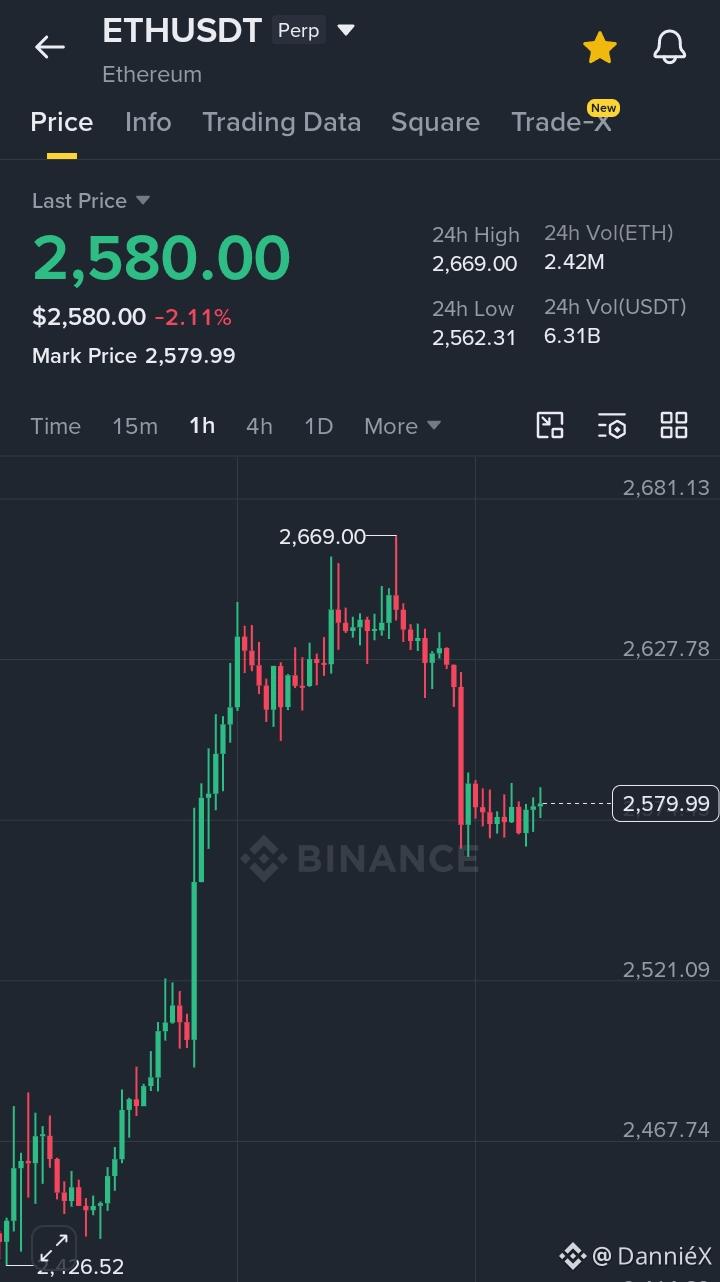
$ETH is showing steady strength, up around 2.5% over the past 24 hours.
One factor getting attention is institutional accumulation, with Bitmine reportedly holding more than 6M ETH, around 4.9% of circulating supply. That said, the pace of new purchases has slowed this week, while relatively low trading volume suggests the current upside still lacks strong momentum.
Funding is sitting near 0.0093%, which suggests leverage remains relatively controlled rather than overheated.
For me, the key now is whether ETH can attract stronger spot volume and maintain this momentum.
#EarningsSeason
$ETH is showing steady strength, up around 2.5% over the past 24 hours.
One factor getting attention is institutional accumulation, with Bitmine reportedly holding more than 6M ETH, around 4.9% of circulating supply. That said, the pace of new purchases has slowed this week, while relatively low trading volume suggests the current upside still lacks strong momentum.
Funding is sitting near 0.0093%, which suggests leverage remains relatively controlled rather than overheated.
For me, the key now is whether ETH can attract stronger spot volume and maintain this momentum.
#EarningsSeason
One factor getting attention is institutional accumulation, with Bitmine reportedly holding more than 6M ETH, around 4.9% of circulating supply. That said, the pace of new purchases has slowed this week, while relatively low trading volume suggests the current upside still lacks strong momentum.
Funding is sitting near 0.0093%, which suggests leverage remains relatively controlled rather than overheated.
For me, the key now is whether ETH can attract stronger spot volume and maintain this momentum.
#EarningsSeason
267
·
--
$BTC MORNING MARKET UPDATE — PULLBACK INTO DEMAND
Bitcoin is opening the week inside a key short-term range, with price currently testing the lower boundary of the structure.
📌 Key Range: $83.7K – $85.2K
🛡️ Major Support: $83.7K
⚔️ Resistance: $85.2K
📍 Invalidation: Below $82.7K
The $83.7K area has been tested multiple times and continues to act as an important support zone. The EMA 144–169 channel is also positioned around this region, adding further technical significance.
📈 Potential Long Setup
A light-position long can be considered around the $83.7K demand zone, provided BTC continues to hold the area.
🎯 Target 1: $84.7K
🎯 Target 2: $85.2K
🛑 Invalidation: Below $82.7K
Conservative Confirmation
Instead of entering directly at support, traders can wait for a sweep below $83.7K followed by a reclaim of the level. A successful reclaim could provide stronger confirmation that momentum is returning to buyers.
For now, the focus remains on $83.7K support vs. $85.2K resistance.
$BTC MORNING MARKET UPDATE — PULLBACK INTO DEMAND
Bitcoin is opening the week inside a key short-term range, with price currently testing the lower boundary of the structure.
📌 Key Range: $83.7K – $85.2K
🛡️ Major Support: $83.7K
⚔️ Resistance: $85.2K
📍 Invalidation: Below $82.7K
The $83.7K area has been tested multiple times and continues to act as an important support zone. The EMA 144–169 channel is also positioned around this region, adding further technical significance.
📈 Potential Long Setup
A light-position long can be considered around the $83.7K demand zone, provided BTC continues to hold the area.
🎯 Target 1: $84.7K
🎯 Target 2: $85.2K
🛑 Invalidation: Below $82.7K
Conservative Confirmation
Instead of entering directly at support, traders can wait for a sweep below $83.7K followed by a reclaim of the level. A successful reclaim could provide stronger confirmation that momentum is returning to buyers.
For now, the focus remains on $83.7K support vs. $85.2K resistance.
Bitcoin is opening the week inside a key short-term range, with price currently testing the lower boundary of the structure.
📌 Key Range: $83.7K – $85.2K
🛡️ Major Support: $83.7K
⚔️ Resistance: $85.2K
📍 Invalidation: Below $82.7K
The $83.7K area has been tested multiple times and continues to act as an important support zone. The EMA 144–169 channel is also positioned around this region, adding further technical significance.
📈 Potential Long Setup
A light-position long can be considered around the $83.7K demand zone, provided BTC continues to hold the area.
🎯 Target 1: $84.7K
🎯 Target 2: $85.2K
🛑 Invalidation: Below $82.7K
Conservative Confirmation
Instead of entering directly at support, traders can wait for a sweep below $83.7K followed by a reclaim of the level. A successful reclaim could provide stronger confirmation that momentum is returning to buyers.
For now, the focus remains on $83.7K support vs. $85.2K resistance.
381
·
--
$ZEC on flight because make new $BTC
close Eyes....
$ZEC on flight because make new $BTC
close Eyes....
close Eyes....

68
2
2
317
·
--
Article
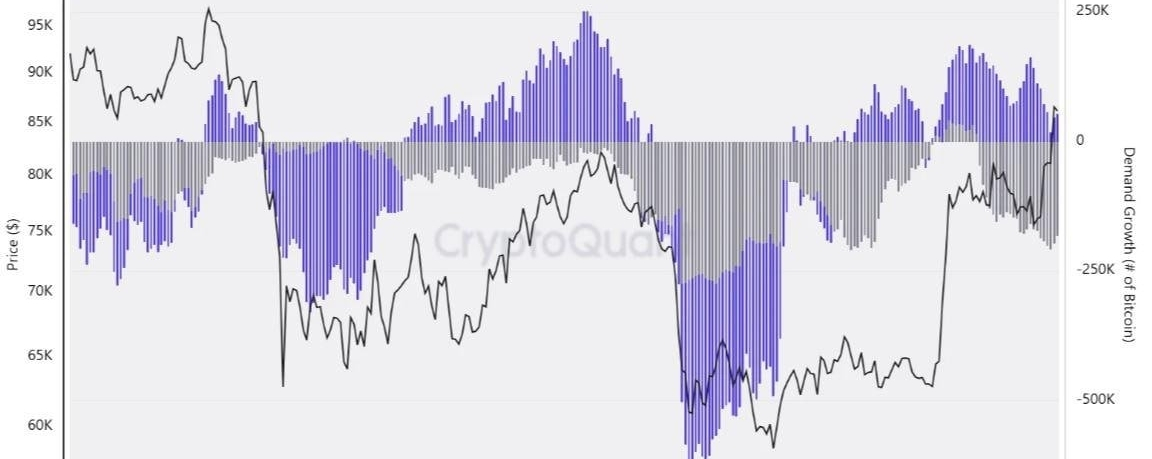
BTC | DEMAND IS STARTING TO RECOVERBitcoin is trading around $84,300, with the demand structure showing early signs of improvement.
Spot demand remains negative, but the decline is slowing, while futures demand is still positive. Total demand is also recovering from deeper negative levels.
📊 Trade Setup
Current Price: ~$84,300
Support: $82,000–$84,000
Resistance: $86,000–$87,000
Breakout Zone: Above $87,000
Bullish scenario:
If BTC holds the $82K–$84K support zone and breaks above $87K with confirmation, momentum could strengthen toward higher levels.
Invalidation:
A sustained breakdown below the $82K support zone would weaken this setup and require reassessment.
The key confirmation is still spot demand turning positive. Until then, this is a recovery setup—not a confirmed bullish reversal.
⚠️ Trade with proper risk management. This is market analysis, not financial advice.
$BTC $ZEC
{future}(BTCUSDT)
BTC | DEMAND IS STARTING TO RECOVER
Bitcoin is trading around $84,300, with the demand structure showing early signs of improvement.
Spot demand remains negative, but the decline is slowing, while futures demand is still positive. Total demand is also recovering from deeper negative levels.
📊 Trade Setup
Current Price: ~$84,300
Support: $82,000–$84,000
Resistance: $86,000–$87,000
Breakout Zone: Above $87,000
Bullish scenario:
If BTC holds the $82K–$84K support zone and breaks above $87K with confirmation, momentum could strengthen toward higher levels.
Invalidation:
A sustained breakdown below the $82K support zone would weaken this setup and require reassessment.
The key confirmation is still spot demand turning positive. Until then, this is a recovery setup—not a confirmed bullish reversal.
⚠️ Trade with proper risk management. This is market analysis, not financial advice.
$BTC $ZEC
Spot demand remains negative, but the decline is slowing, while futures demand is still positive. Total demand is also recovering from deeper negative levels.
📊 Trade Setup
Current Price: ~$84,300
Support: $82,000–$84,000
Resistance: $86,000–$87,000
Breakout Zone: Above $87,000
Bullish scenario:
If BTC holds the $82K–$84K support zone and breaks above $87K with confirmation, momentum could strengthen toward higher levels.
Invalidation:
A sustained breakdown below the $82K support zone would weaken this setup and require reassessment.
The key confirmation is still spot demand turning positive. Until then, this is a recovery setup—not a confirmed bullish reversal.
⚠️ Trade with proper risk management. This is market analysis, not financial advice.
$BTC $ZEC
205

·
--
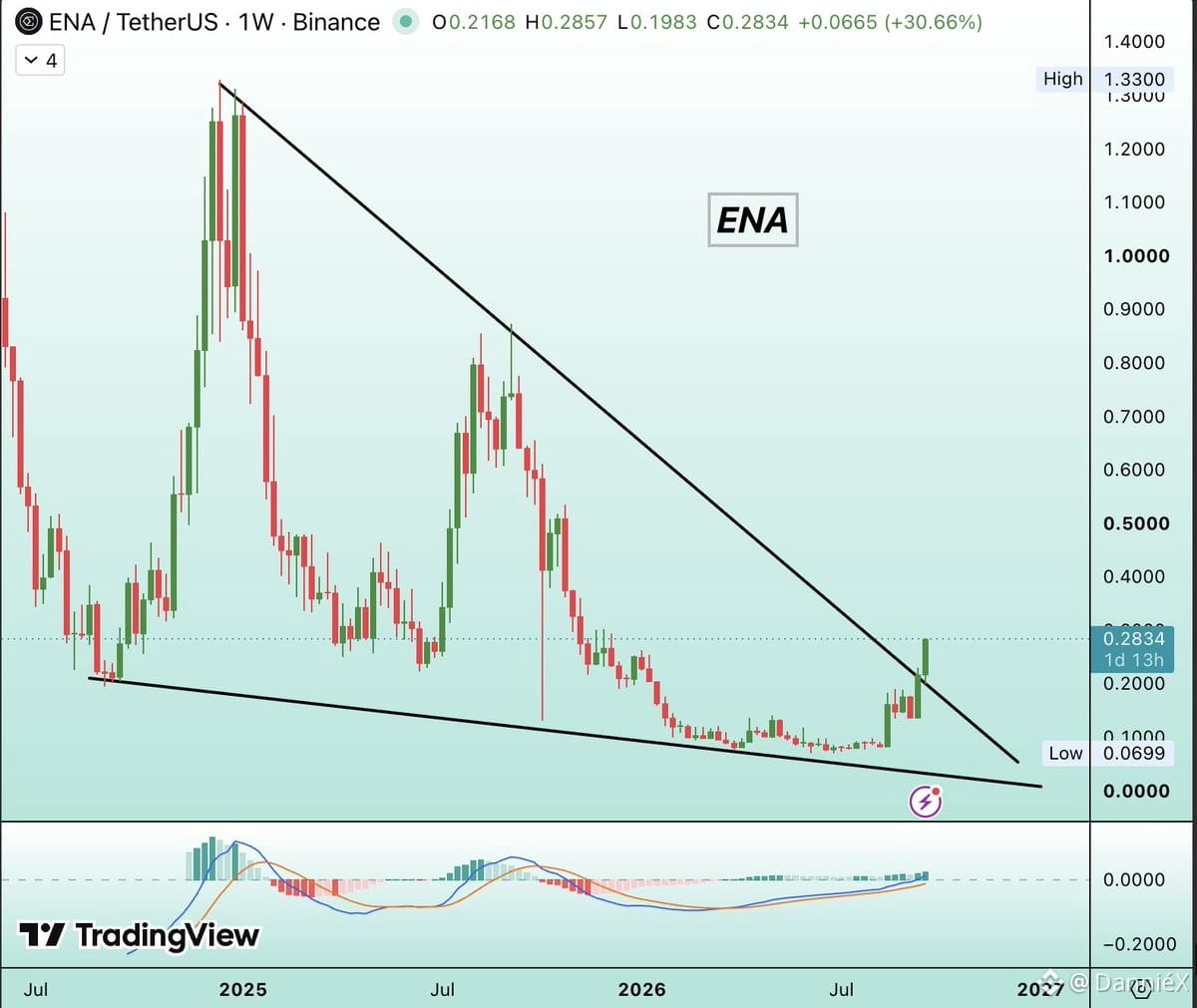
$ENA Weekly Chart Perspective
This is a weekly chart, so short-term volatility should not be confused with the broader trend.
Any healthy correction or pullback could provide an opportunity to accumulate at better levels. The key is to focus on the higher-timeframe structure rather than reacting to intraday moves.
Patience matters when trading the bigger picture.
DYOR. Not financial advice.
$ENA Weekly Chart Perspective
This is a weekly chart, so short-term volatility should not be confused with the broader trend.
Any healthy correction or pullback could provide an opportunity to accumulate at better levels. The key is to focus on the higher-timeframe structure rather than reacting to intraday moves.
Patience matters when trading the bigger picture.
DYOR. Not financial advice.
This is a weekly chart, so short-term volatility should not be confused with the broader trend.
Any healthy correction or pullback could provide an opportunity to accumulate at better levels. The key is to focus on the higher-timeframe structure rather than reacting to intraday moves.
Patience matters when trading the bigger picture.
DYOR. Not financial advice.
1
937
·
--
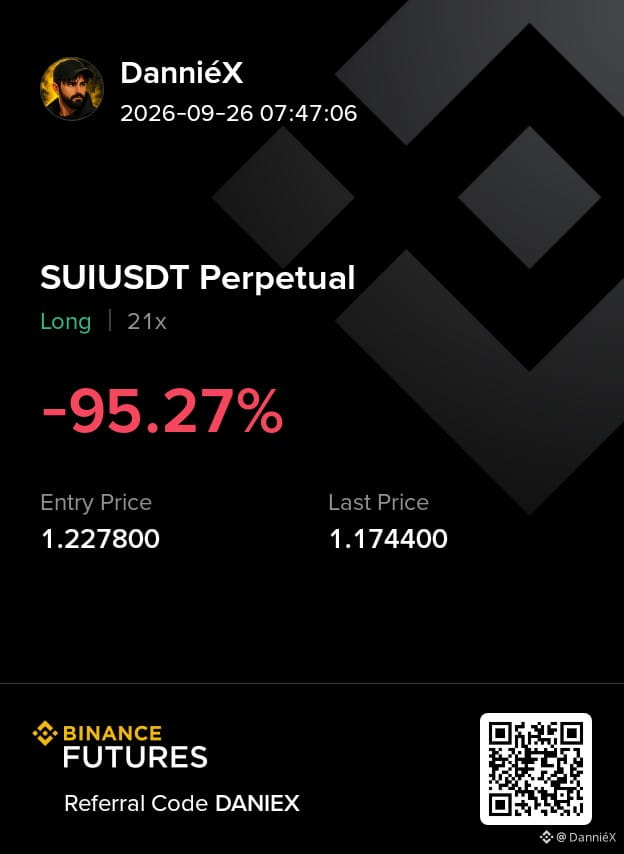
🔥 $SUI WOW, Bulls Are Moving!
SUI is trading around $1.13 and honestly, I like what I’m seeing. 👀
The breakout has brought strong buying volume, and the short-term structure is clearly leaning bullish.
🟢 LONG ENTRY: $1.11 – $1.14
🛑 SL: $1.08
🎯 TP1: $1.16
🎯 TP2: $1.18
🎯 TP3: $1.21
I’m watching the $1.11 area closely. If buyers keep defending it, I’d love to see SUI continue toward the recent highs.
Wow, momentum is strong — but I’m not chasing a vertical candle. Let’s see how the next move develops. 🚀
DYOR & manage your risk.
🔥 $SUI WOW, Bulls Are Moving!
SUI is trading around $1.13 and honestly, I like what I’m seeing. 👀
The breakout has brought strong buying volume, and the short-term structure is clearly leaning bullish.
🟢 LONG ENTRY: $1.11 – $1.14
🛑 SL: $1.08
🎯 TP1: $1.16
🎯 TP2: $1.18
🎯 TP3: $1.21
I’m watching the $1.11 area closely. If buyers keep defending it, I’d love to see SUI continue toward the recent highs.
Wow, momentum is strong — but I’m not chasing a vertical candle. Let’s see how the next move develops. 🚀
DYOR & manage your risk.
SUI is trading around $1.13 and honestly, I like what I’m seeing. 👀
The breakout has brought strong buying volume, and the short-term structure is clearly leaning bullish.
🟢 LONG ENTRY: $1.11 – $1.14
🛑 SL: $1.08
🎯 TP1: $1.16
🎯 TP2: $1.18
🎯 TP3: $1.21
I’m watching the $1.11 area closely. If buyers keep defending it, I’d love to see SUI continue toward the recent highs.
Wow, momentum is strong — but I’m not chasing a vertical candle. Let’s see how the next move develops. 🚀
DYOR & manage your risk.
1
789
·
--
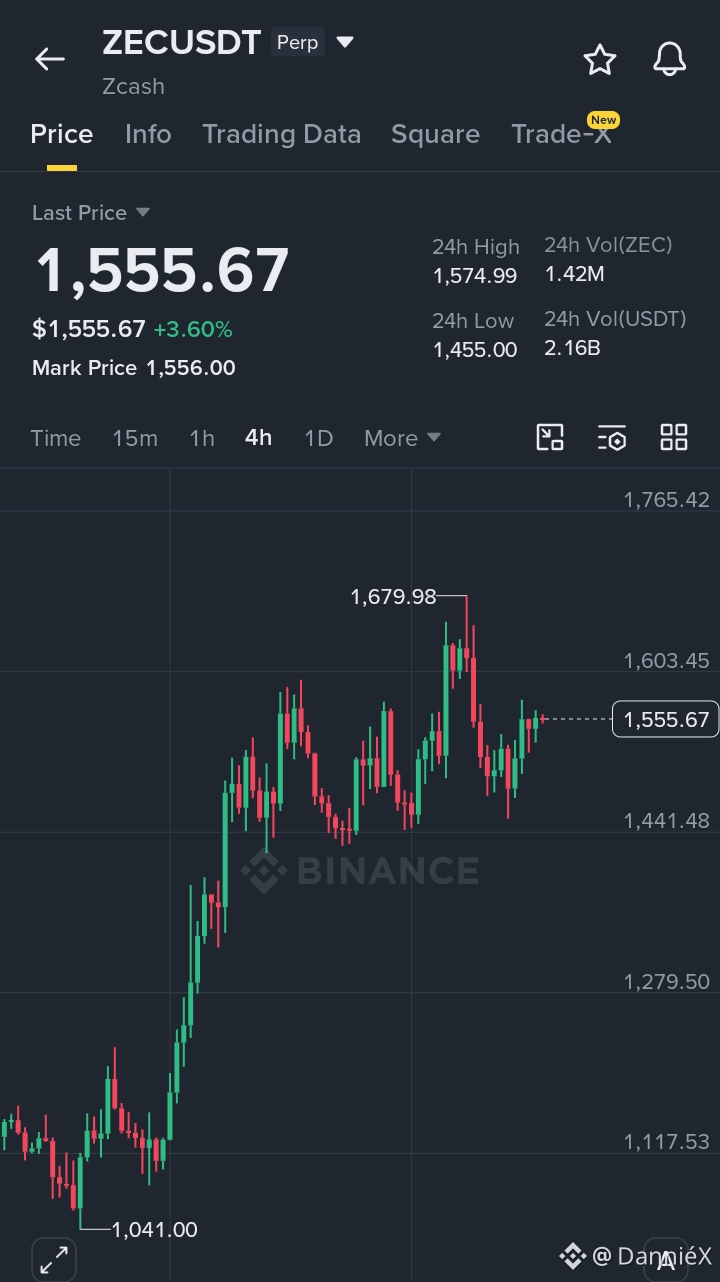
$ZEC I’m Watching This Move Closely
ZEC is trading around $1,550, and WOW… the volatility here is serious.
After the sharp swings over the last few sessions, I like what I’m seeing as long as buyers continue defending the $1,500 area.
👀 $1,500–$1,520 → key support zone
📈 $1,570–$1,600 → next area I’m watching
🔥 $1,630+ → momentum could accelerate if reclaimed
The important thing for me now is not just the next green candle — it’s whether ZEC can hold the higher structure after a pullback.
If buyers keep stepping in around support, the bullish momentum can stay interesting.
But if $1,500 gives way decisively, I’d expect the chart to cool down first.
I’m watching the next 4H candles closely. Let’s see what ZEC gives us.
DYOR.
$ZEC I’m Watching This Move Closely
ZEC is trading around $1,550, and WOW… the volatility here is serious.
After the sharp swings over the last few sessions, I like what I’m seeing as long as buyers continue defending the $1,500 area.
👀 $1,500–$1,520 → key support zone
📈 $1,570–$1,600 → next area I’m watching
🔥 $1,630+ → momentum could accelerate if reclaimed
The important thing for me now is not just the next green candle — it’s whether ZEC can hold the higher structure after a pullback.
If buyers keep stepping in around support, the bullish momentum can stay interesting.
But if $1,500 gives way decisively, I’d expect the chart to cool down first.
I’m watching the next 4H candles closely. Let’s see what ZEC gives us.
DYOR.
ZEC is trading around $1,550, and WOW… the volatility here is serious.
After the sharp swings over the last few sessions, I like what I’m seeing as long as buyers continue defending the $1,500 area.
👀 $1,500–$1,520 → key support zone
📈 $1,570–$1,600 → next area I’m watching
🔥 $1,630+ → momentum could accelerate if reclaimed
The important thing for me now is not just the next green candle — it’s whether ZEC can hold the higher structure after a pullback.
If buyers keep stepping in around support, the bullish momentum can stay interesting.
But if $1,500 gives way decisively, I’d expect the chart to cool down first.
I’m watching the next 4H candles closely. Let’s see what ZEC gives us.
DYOR.
1
727
·
--
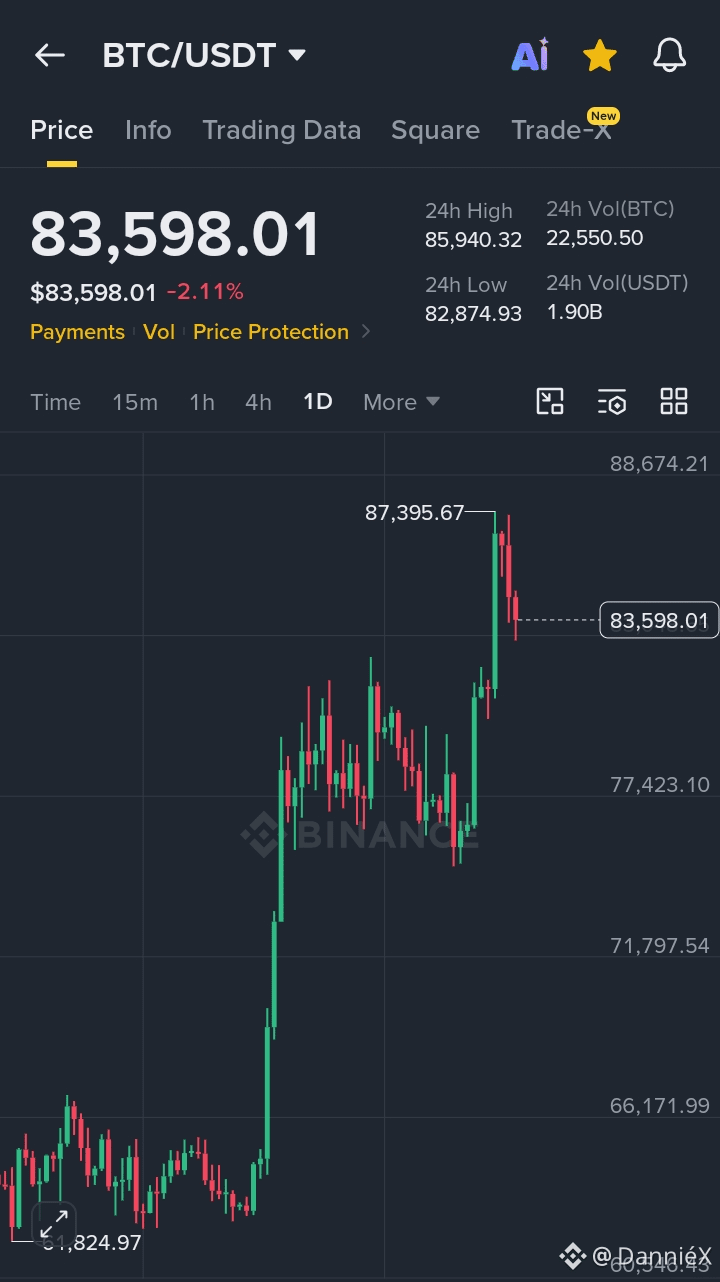
$BTC I’m Watching This Zone Closely
Bitcoin is around $84.1K right now, and honestly, this pullback has caught my attention. 👀
After pushing toward $87K, BTC failed to hold the higher levels and has now moved back below $85K.
Here’s what I’m watching:
📉 $83.5K–$84K → important support zone
👀 $85K–$86K → reclaim zone for bulls
🔥 $87K → major resistance from the recent move
If BTC can hold $83.5K–$84K and reclaim $85K, I’d like to see whether buyers can build momentum again.
But if $83.5K breaks cleanly, the current short-term structure could weaken further.
WOW — volatility is back. I’m watching the next 4H candles closely.
$BTC I’m Watching This Zone Closely
Bitcoin is around $84.1K right now, and honestly, this pullback has caught my attention. 👀
After pushing toward $87K, BTC failed to hold the higher levels and has now moved back below $85K.
Here’s what I’m watching:
📉 $83.5K–$84K → important support zone
👀 $85K–$86K → reclaim zone for bulls
🔥 $87K → major resistance from the recent move
If BTC can hold $83.5K–$84K and reclaim $85K, I’d like to see whether buyers can build momentum again.
But if $83.5K breaks cleanly, the current short-term structure could weaken further.
WOW — volatility is back. I’m watching the next 4H candles closely.
Bitcoin is around $84.1K right now, and honestly, this pullback has caught my attention. 👀
After pushing toward $87K, BTC failed to hold the higher levels and has now moved back below $85K.
Here’s what I’m watching:
📉 $83.5K–$84K → important support zone
👀 $85K–$86K → reclaim zone for bulls
🔥 $87K → major resistance from the recent move
If BTC can hold $83.5K–$84K and reclaim $85K, I’d like to see whether buyers can build momentum again.
But if $83.5K breaks cleanly, the current short-term structure could weaken further.
WOW — volatility is back. I’m watching the next 4H candles closely.
404
·
--
$BTC
{future}(BTCUSDT)
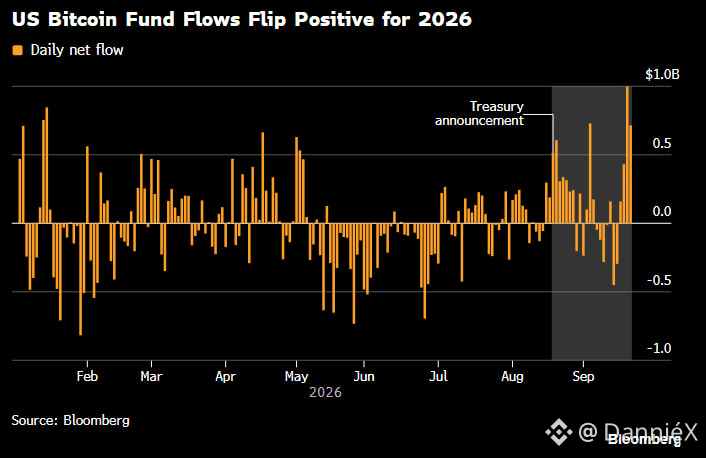
ETF flows are back positive for 2026 after $4.6B poured in over the past month, per Eric Balchunas.
$BTC
ETF flows are back positive for 2026 after $4.6B poured in over the past month, per Eric Balchunas.
ETF flows are back positive for 2026 after $4.6B poured in over the past month, per Eric Balchunas.
1
378
·
--

Article
BitMine Adds $75M Worth of Ethereum Q4 Outlook Gets AttentionBitMine has reportedly added another 27,562 ETH to its holdings, with the purchase valued at roughly $75 million. The move highlights how aggressively large corporate players continue to accumulate Ethereum.
BitMine’s total ETH holdings have now reached nearly 6 million ETH, representing close to 5% of Ethereum’s total supply.
Meanwhile, Tom Lee remains optimistic about the broader crypto market and expects the potential for a stronger move in Q4, particularly as institutional participation continues to develop.
The key question now is whether this accumulation trend can translate into sustained demand for ETH.
For ETH, I’m watching how price reacts around the current market structure, liquidity and major resistance zones. A sustained breakout with strong volume would provide a clearer confirmation of renewed bullish momentum.
At the same time, large purchases alone don’t guarantee an immediate price rally. Market conditions, liquidity and broader risk sentiment will remain important.
ETH is entering an interesting phase — institutional accumulation is increasing, while the market waits for price to confirm the next major direction.
#ETH $ETH
{future}(ETHUSDT)
BitMine Adds $75M Worth of Ethereum Q4 Outlook Gets Attention
BitMine has reportedly added another 27,562 ETH to its holdings, with the purchase valued at roughly $75 million. The move highlights how aggressively large corporate players continue to accumulate Ethereum.
BitMine’s total ETH holdings have now reached nearly 6 million ETH, representing close to 5% of Ethereum’s total supply.
Meanwhile, Tom Lee remains optimistic about the broader crypto market and expects the potential for a stronger move in Q4, particularly as institutional participation continues to develop.
The key question now is whether this accumulation trend can translate into sustained demand for ETH.
For ETH, I’m watching how price reacts around the current market structure, liquidity and major resistance zones. A sustained breakout with strong volume would provide a clearer confirmation of renewed bullish momentum.
At the same time, large purchases alone don’t guarantee an immediate price rally. Market conditions, liquidity and broader risk sentiment will remain important.
ETH is entering an interesting phase — institutional accumulation is increasing, while the market waits for price to confirm the next major direction.
#ETH $ETH
BitMine’s total ETH holdings have now reached nearly 6 million ETH, representing close to 5% of Ethereum’s total supply.
Meanwhile, Tom Lee remains optimistic about the broader crypto market and expects the potential for a stronger move in Q4, particularly as institutional participation continues to develop.
The key question now is whether this accumulation trend can translate into sustained demand for ETH.
For ETH, I’m watching how price reacts around the current market structure, liquidity and major resistance zones. A sustained breakout with strong volume would provide a clearer confirmation of renewed bullish momentum.
At the same time, large purchases alone don’t guarantee an immediate price rally. Market conditions, liquidity and broader risk sentiment will remain important.
ETH is entering an interesting phase — institutional accumulation is increasing, while the market waits for price to confirm the next major direction.
#ETH $ETH
409
·
--
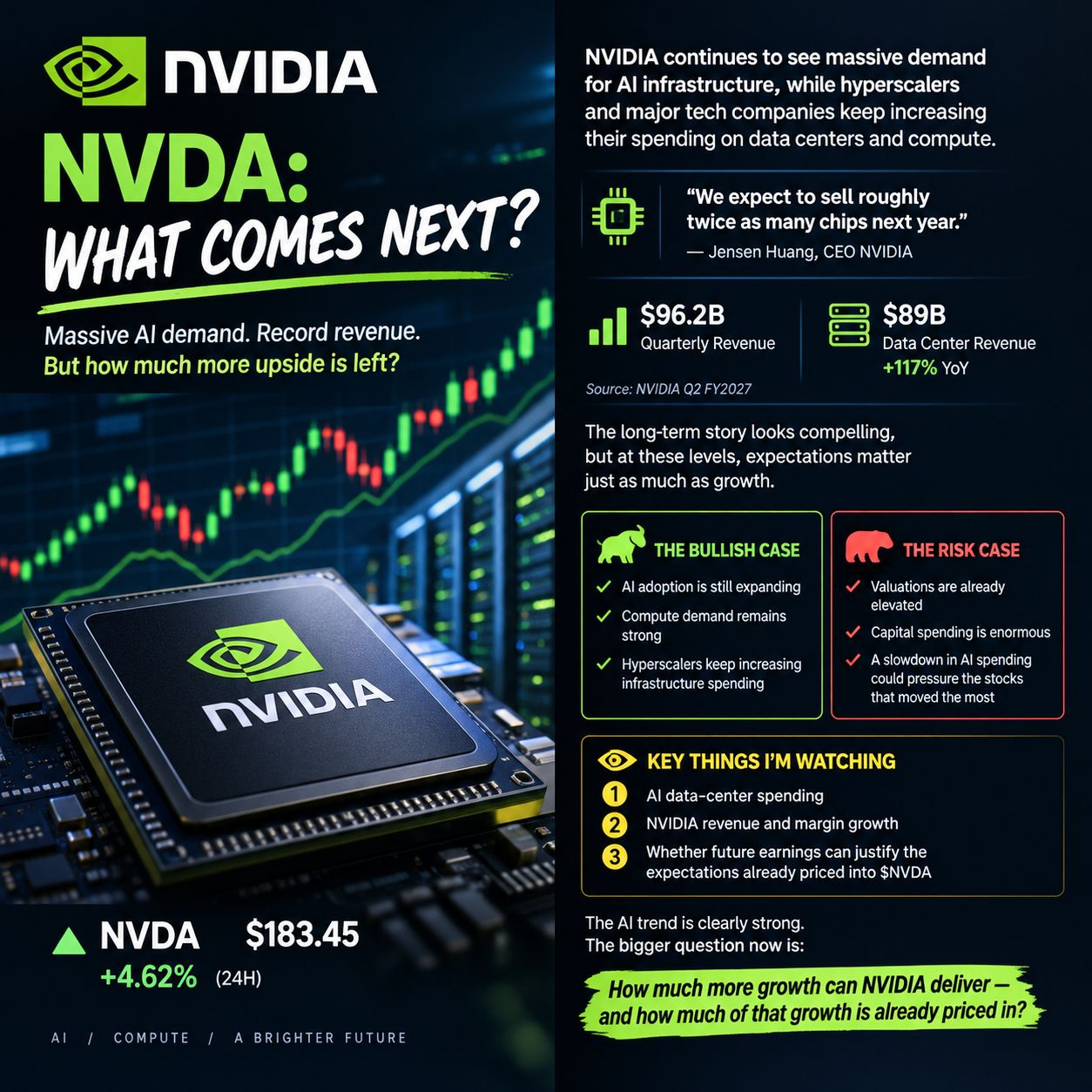
$NVDA has been one of the biggest beneficiaries of the AI boom, but the interesting part is that the story is no longer just about chip demand — it’s about how long that demand can continue growing at this pace.
NVIDIA continues to see massive demand for AI infrastructure, while hyperscalers and major technology companies keep increasing their spending on data centers and compute.
That makes the long-term story compelling, but at these levels, expectations matter just as much as growth.
If NVIDIA can keep converting rising AI demand into stronger revenue and cash flow, the current momentum could have room to continue.
But if AI infrastructure spending starts slowing, or growth comes in below what the market already expects, NVDA could become much more sensitive to negative surprises.
So I’m watching three things closely:
• AI data-center spending
• NVIDIA revenue and margin growth
• Whether future earnings can justify the expectations already priced into $NVDA
The AI trend is clearly strong.
The bigger question now is:
How much more growth can NVIDIA deliver and how much of that growth is already priced in?
#AIStocksWhatNext
$NVDA has been one of the biggest beneficiaries of the AI boom, but the interesting part is that the story is no longer just about chip demand — it’s about how long that demand can continue growing at this pace.
NVIDIA continues to see massive demand for AI infrastructure, while hyperscalers and major technology companies keep increasing their spending on data centers and compute.
That makes the long-term story compelling, but at these levels, expectations matter just as much as growth.
If NVIDIA can keep converting rising AI demand into stronger revenue and cash flow, the current momentum could have room to continue.
But if AI infrastructure spending starts slowing, or growth comes in below what the market already expects, NVDA could become much more sensitive to negative surprises.
So I’m watching three things closely:
• AI data-center spending
• NVIDIA revenue and margin growth
• Whether future earnings can justify the expectations already priced into $NVDA
The AI trend is clearly strong.
The bigger question now is:
How much more growth can NVIDIA deliver and how much of that growth is already priced in?
#AIStocksWhatNext
NVIDIA continues to see massive demand for AI infrastructure, while hyperscalers and major technology companies keep increasing their spending on data centers and compute.
That makes the long-term story compelling, but at these levels, expectations matter just as much as growth.
If NVIDIA can keep converting rising AI demand into stronger revenue and cash flow, the current momentum could have room to continue.
But if AI infrastructure spending starts slowing, or growth comes in below what the market already expects, NVDA could become much more sensitive to negative surprises.
So I’m watching three things closely:
• AI data-center spending
• NVIDIA revenue and margin growth
• Whether future earnings can justify the expectations already priced into $NVDA
The AI trend is clearly strong.
The bigger question now is:
How much more growth can NVIDIA deliver and how much of that growth is already priced in?
#AIStocksWhatNext
433
·
--
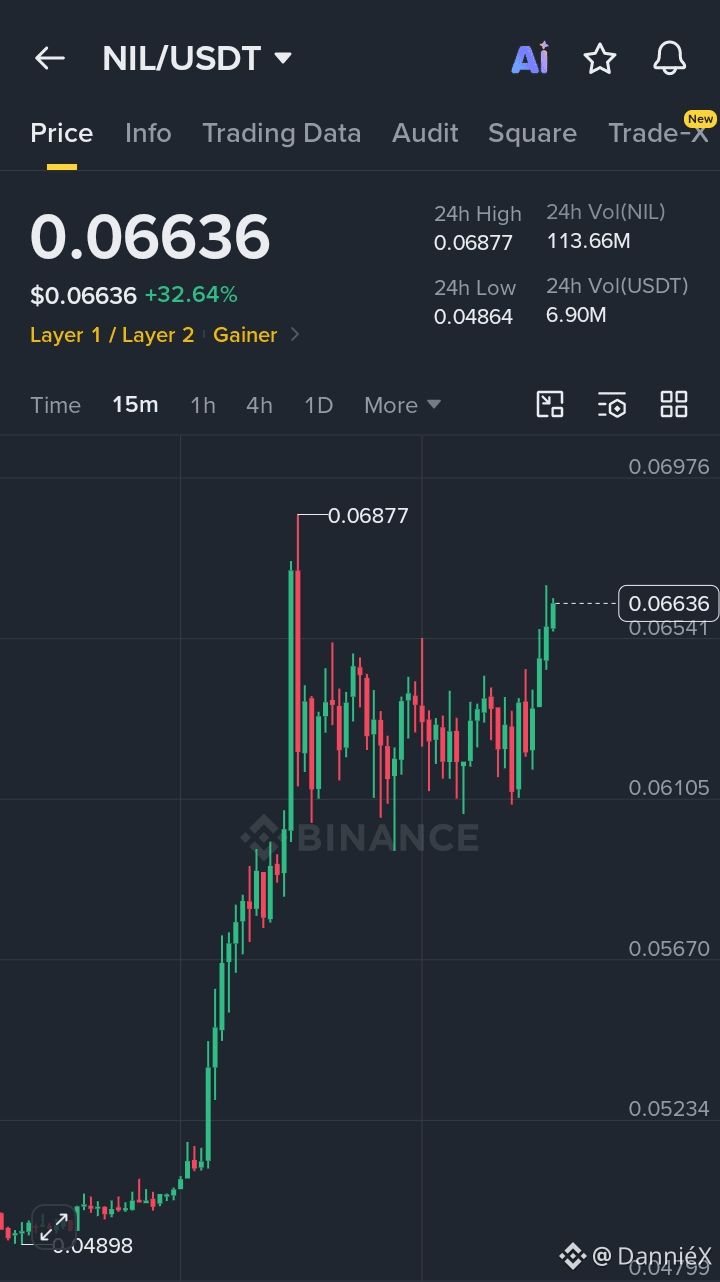
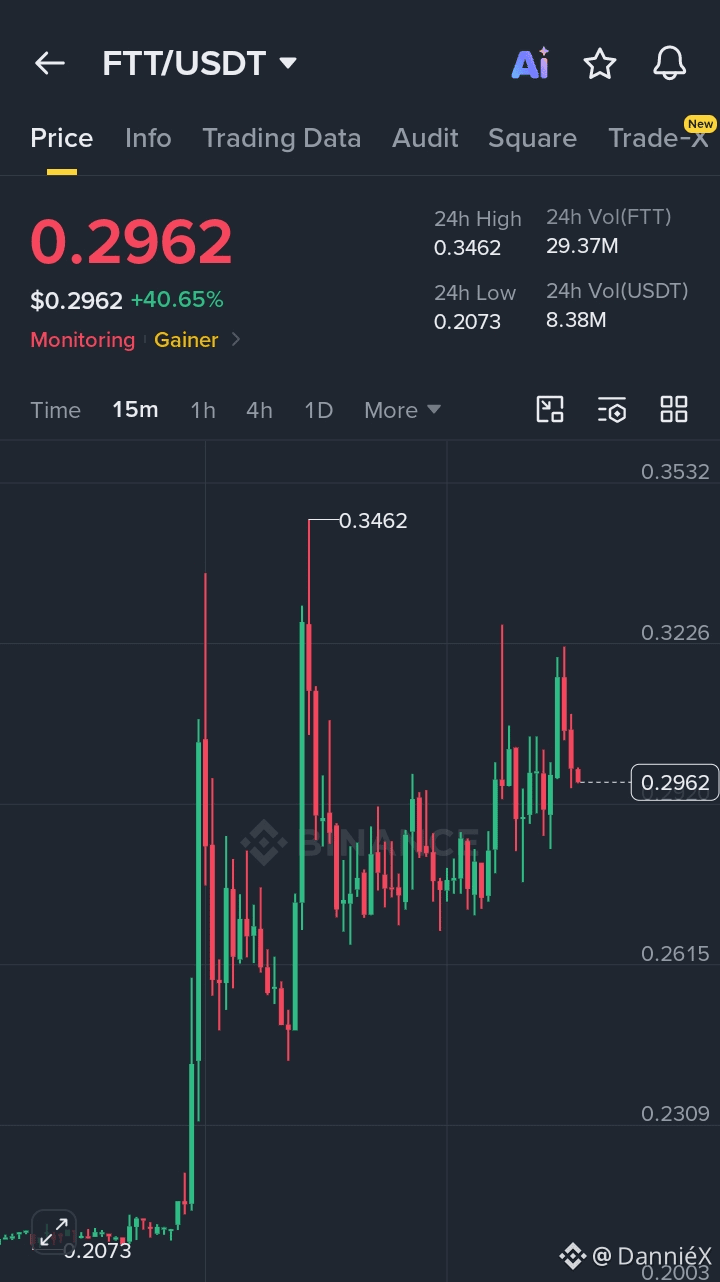
Monday Momentum Watch: $FTT + $NIL
Monday is starting with some serious momentum 👀
I’m keeping FTT and NIL on my 15M watchlist after their strong moves.
📌 FTT — 0.2962
Entry: 0.292–0.298
🎯 TP: 0.307 / 0.322 / 0.338
🛑 SL: 0.284
🚀 NIL— 0.06636
Entry: 0.0653–0.0664
🎯 TP: 0.0687 / 0.071 / 0.074
🛑 SL: 0.0628
Both charts are showing strong buyer momentum, but after such a fast move, I’d rather see a clean retest than chase the pump.
Let’s see which one delivers first. 👀🔥
DYOR. Manage risk.
#BitcoinMarketCapTopsTesla
Monday Momentum Watch: $FTT + $NIL
Monday is starting with some serious momentum 👀
I’m keeping FTT and NIL on my 15M watchlist after their strong moves.
📌 FTT — 0.2962
Entry: 0.292–0.298
🎯 TP: 0.307 / 0.322 / 0.338
🛑 SL: 0.284
🚀 NIL— 0.06636
Entry: 0.0653–0.0664
🎯 TP: 0.0687 / 0.071 / 0.074
🛑 SL: 0.0628
Both charts are showing strong buyer momentum, but after such a fast move, I’d rather see a clean retest than chase the pump.
Let’s see which one delivers first. 👀🔥
DYOR. Manage risk.
#BitcoinMarketCapTopsTesla
Monday is starting with some serious momentum 👀
I’m keeping FTT and NIL on my 15M watchlist after their strong moves.
📌 FTT — 0.2962
Entry: 0.292–0.298
🎯 TP: 0.307 / 0.322 / 0.338
🛑 SL: 0.284
🚀 NIL— 0.06636
Entry: 0.0653–0.0664
🎯 TP: 0.0687 / 0.071 / 0.074
🛑 SL: 0.0628
Both charts are showing strong buyer momentum, but after such a fast move, I’d rather see a clean retest than chase the pump.
Let’s see which one delivers first. 👀🔥
DYOR. Manage risk.
#BitcoinMarketCapTopsTesla
318
·
--
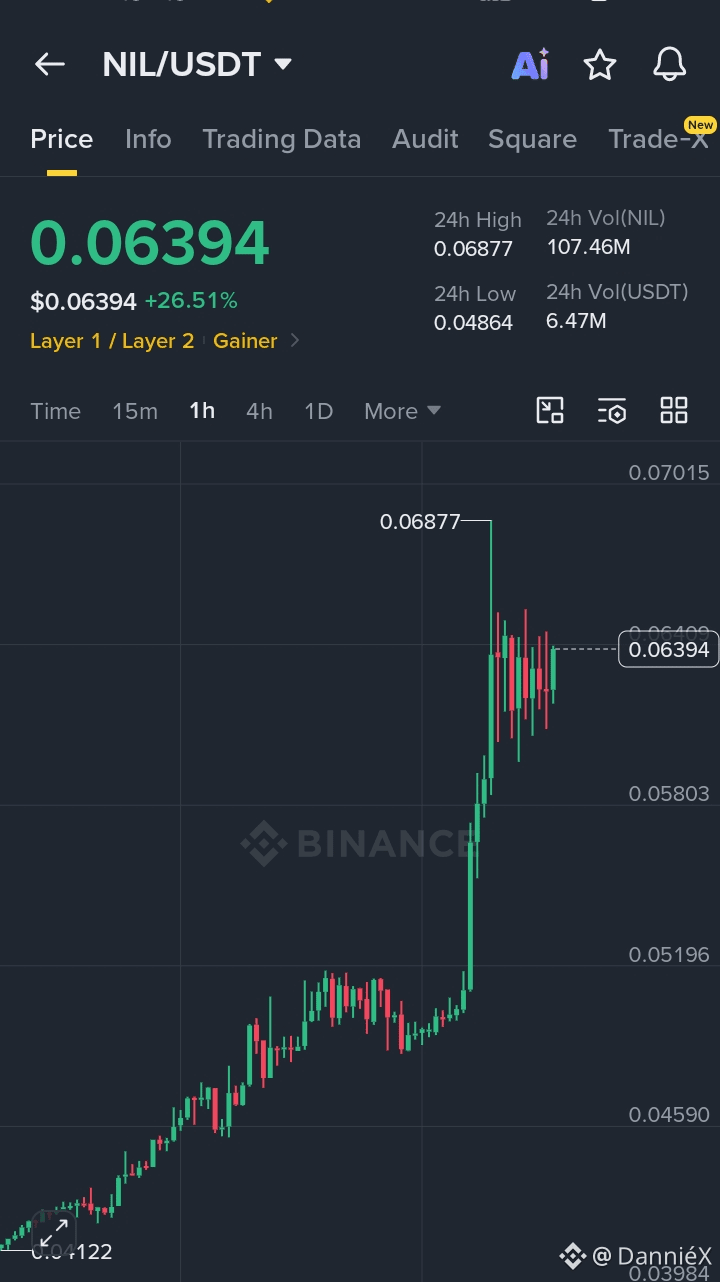
Monday Trade Watch 🔎
$FTT
{spot}(FTTUSDT)
+ $NIL
{future}(NILUSDT)
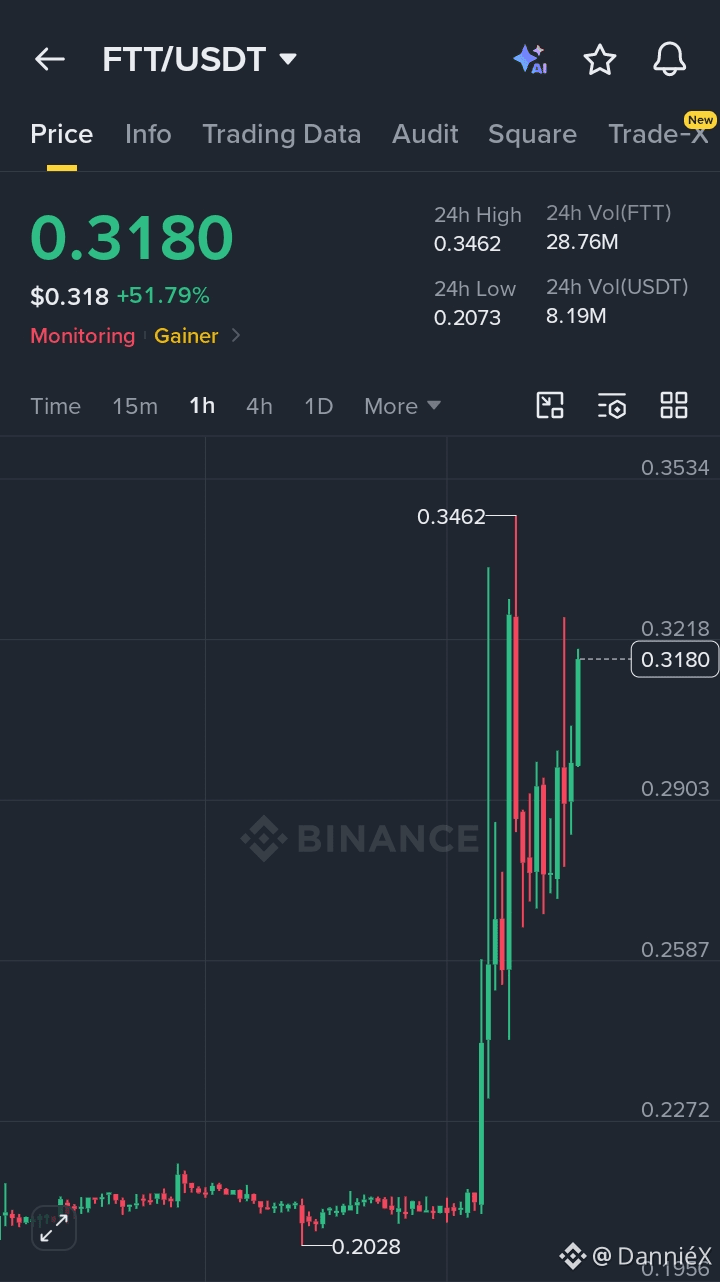
Starting the week with two tokens on my watchlist.
$NIL is showing strong momentum after a sharp move, so I’m watching the next pullback/retest instead of chasing the pump.
$FIT is a higher-risk setup with very low volume, so I’ll wait for confirmation before taking any position.
#BTCBreaks80K
Monday Trade Watch 🔎
$FTT
+ $NIL
Starting the week with two tokens on my watchlist.
$NIL is showing strong momentum after a sharp move, so I’m watching the next pullback/retest instead of chasing the pump.
$FIT is a higher-risk setup with very low volume, so I’ll wait for confirmation before taking any position.
#BTCBreaks80K
$FTT
+ $NIL
Starting the week with two tokens on my watchlist.
$NIL is showing strong momentum after a sharp move, so I’m watching the next pullback/retest instead of chasing the pump.
$FIT is a higher-risk setup with very low volume, so I’ll wait for confirmation before taking any position.
#BTCBreaks80K
515
·
--
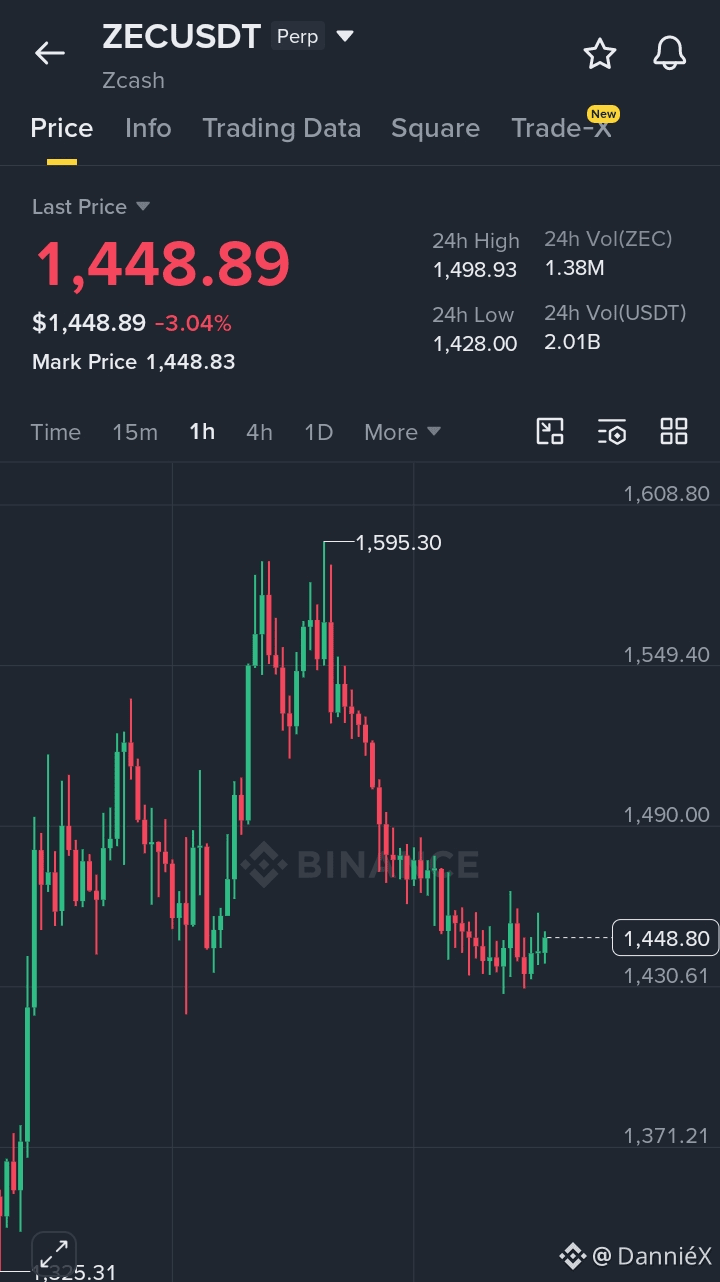
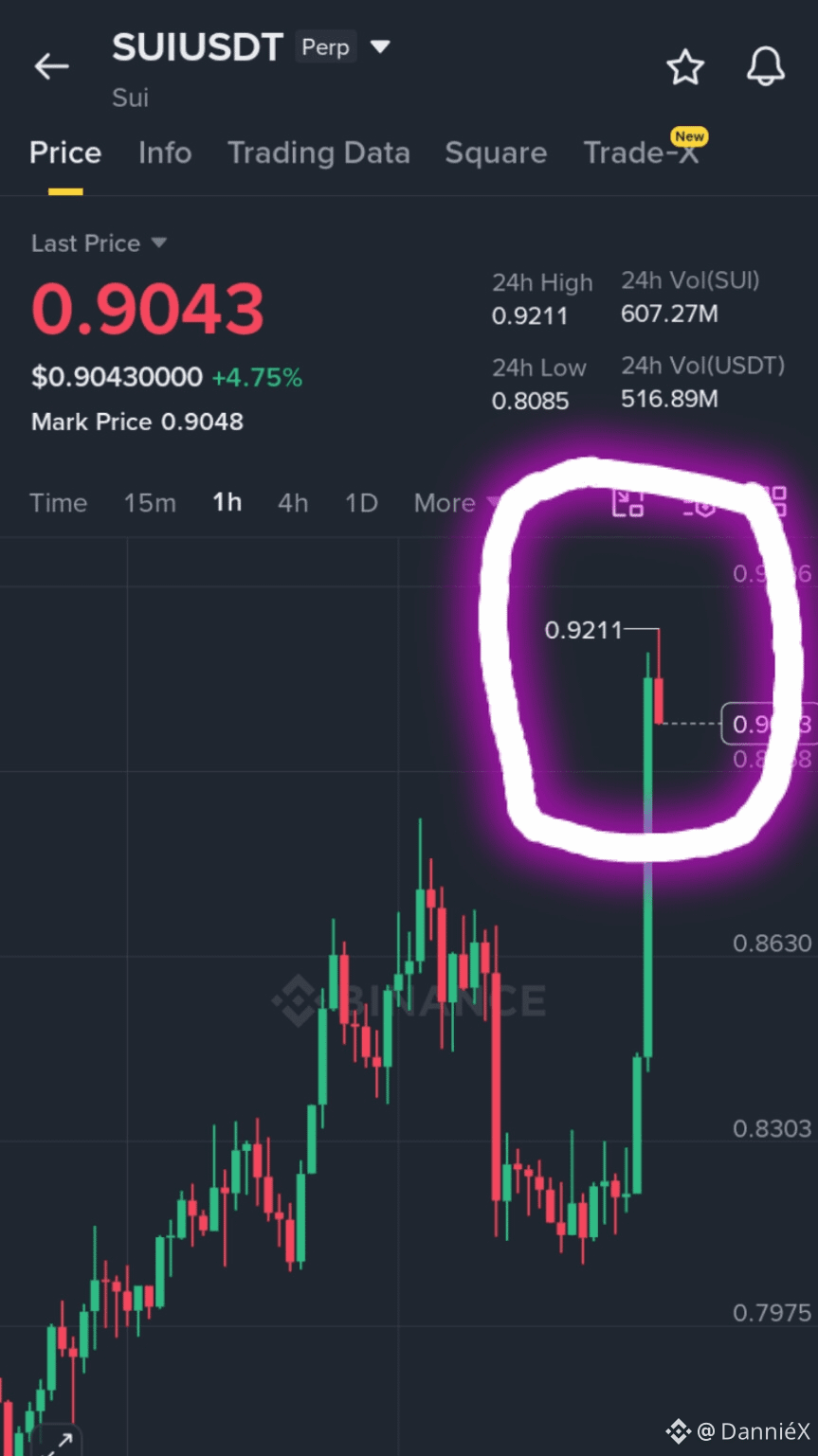
Yesterday, I shared the $SUI
plan — and now it’s completed. ✅
Next on my watchlist: $ZEC for the next 1-day move.
I’m watching the current price action closely for a clean setup. If momentum confirms, ZEC could become interesting over the next 24 hours.
No rush, no blind entries waiting for confirmation first.
$ZEC is now on watch. 👀
DYOR. NFA.
Yesterday, I shared the $SUI
plan — and now it’s completed. ✅
Next on my watchlist: $ZEC for the next 1-day move.
I’m watching the current price action closely for a clean setup. If momentum confirms, ZEC could become interesting over the next 24 hours.
No rush, no blind entries waiting for confirmation first.
$ZEC is now on watch. 👀
DYOR. NFA.
plan — and now it’s completed. ✅
Next on my watchlist: $ZEC for the next 1-day move.
I’m watching the current price action closely for a clean setup. If momentum confirms, ZEC could become interesting over the next 24 hours.
No rush, no blind entries waiting for confirmation first.
$ZEC is now on watch. 👀
DYOR. NFA.
DanniéX
·
--
$SUI WOW, This Move Is Getting Interesting!
I’m watching SUI closely around $0.86 👀
I like what I’m seeing here — buyers are stepping in and the short-term structure is looking stronger.
🟢 LONG ENTRY: $0.850 – $0.865
🛑 SL: $0.825
🎯 TP1: $0.880
🎯 TP2: $0.900
🎯 TP3: $0.920
If SUI holds this zone, I’d love to see buyers push it toward those nearby targets.
Let’s see if the bulls can keep this momentum going.
DYOR & manage your risk.
#BTCBreaks80K
I’m watching SUI closely around $0.86 👀
I like what I’m seeing here — buyers are stepping in and the short-term structure is looking stronger.
🟢 LONG ENTRY: $0.850 – $0.865
🛑 SL: $0.825
🎯 TP1: $0.880
🎯 TP2: $0.900
🎯 TP3: $0.920
If SUI holds this zone, I’d love to see buyers push it toward those nearby targets.
Let’s see if the bulls can keep this momentum going.
DYOR & manage your risk.
#BTCBreaks80K
497
·
--
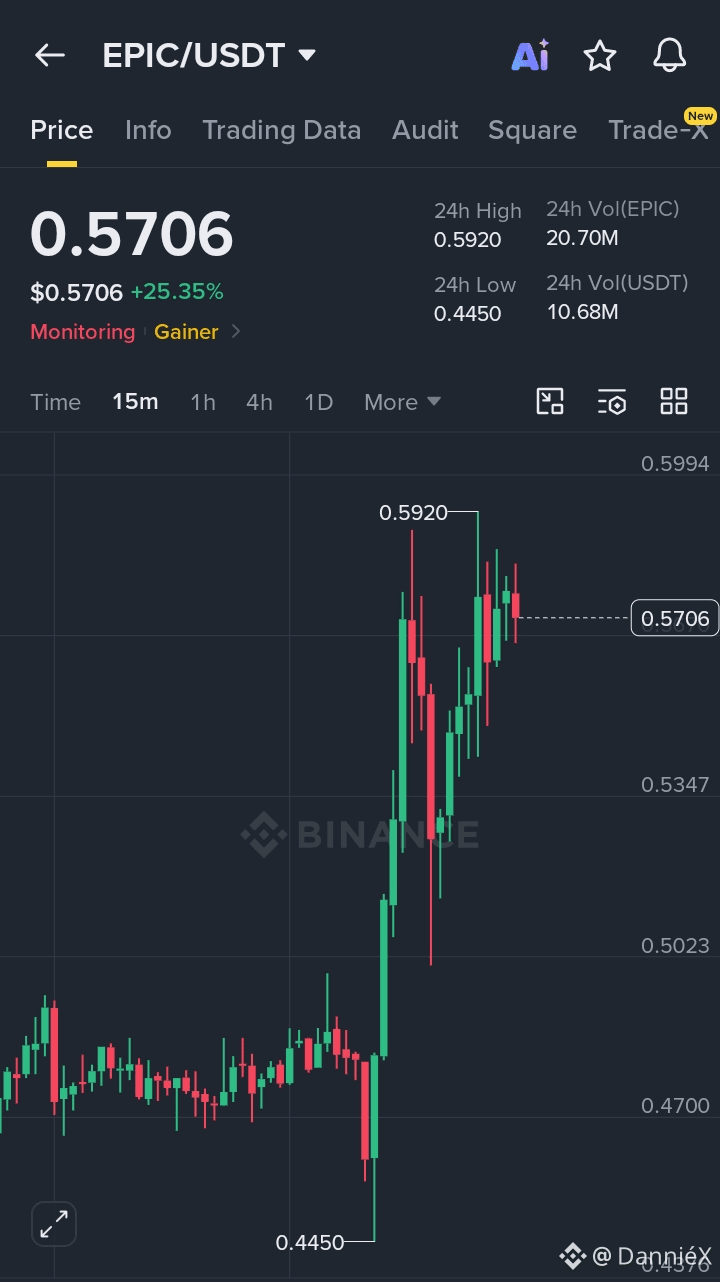
$AVAX ALL TPs HIT!
Another setup delivered. Now I’m shifting my focus to the next opportunities. 👀
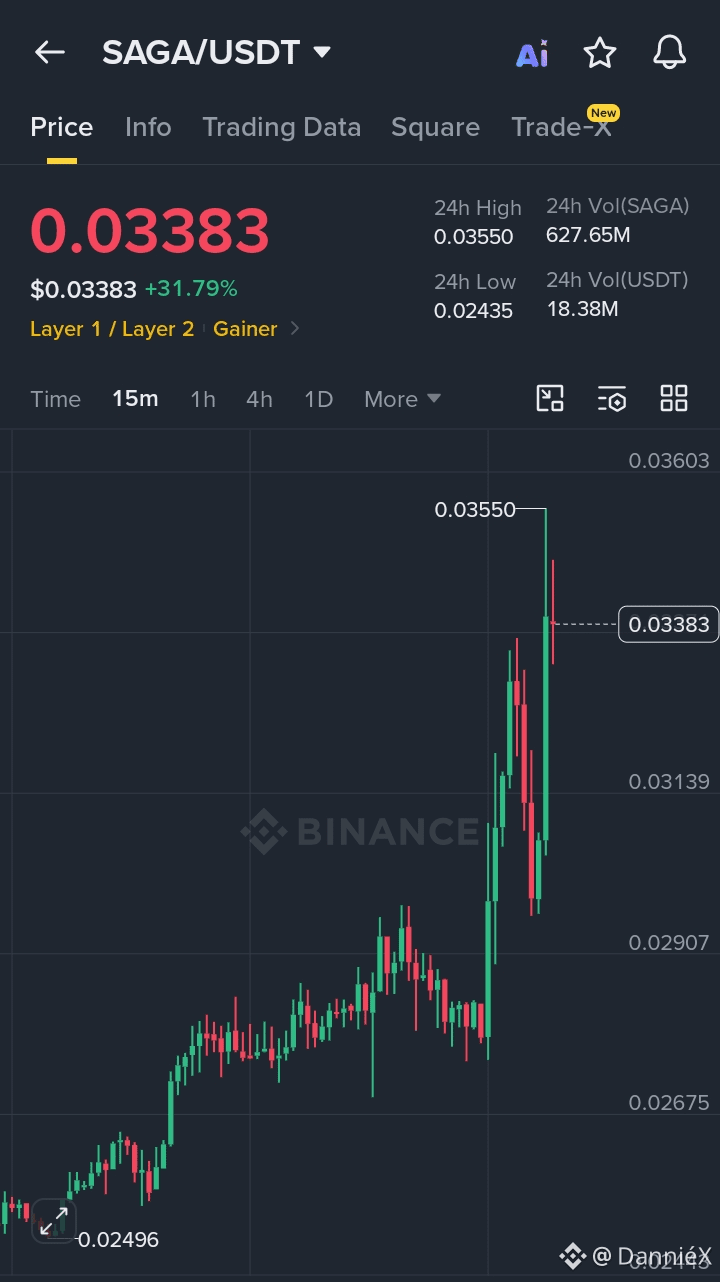
🔥 $SAGA
{future}(SAGAUSDT)
🔥 $EPIC
{future}(EPICUSDT)
Both are now on my watchlist. I’m watching the charts closely for confirmation and a clean setup before making any move.
AVAX was just the beginning…
SAGA & EPIC — let’s see what’s next. 👀📈
Stay patient. Stay ready.
DYOR — Not financial advice.
#BTCBreaks80K
$AVAX ALL TPs HIT!
Another setup delivered. Now I’m shifting my focus to the next opportunities. 👀
🔥 $SAGA
🔥 $EPIC
Both are now on my watchlist. I’m watching the charts closely for confirmation and a clean setup before making any move.
AVAX was just the beginning…
SAGA & EPIC — let’s see what’s next. 👀📈
Stay patient. Stay ready.
DYOR — Not financial advice.
#BTCBreaks80K
Another setup delivered. Now I’m shifting my focus to the next opportunities. 👀
🔥 $SAGA
🔥 $EPIC
Both are now on my watchlist. I’m watching the charts closely for confirmation and a clean setup before making any move.
AVAX was just the beginning…
SAGA & EPIC — let’s see what’s next. 👀📈
Stay patient. Stay ready.
DYOR — Not financial advice.
#BTCBreaks80K
DanniéX
·
--
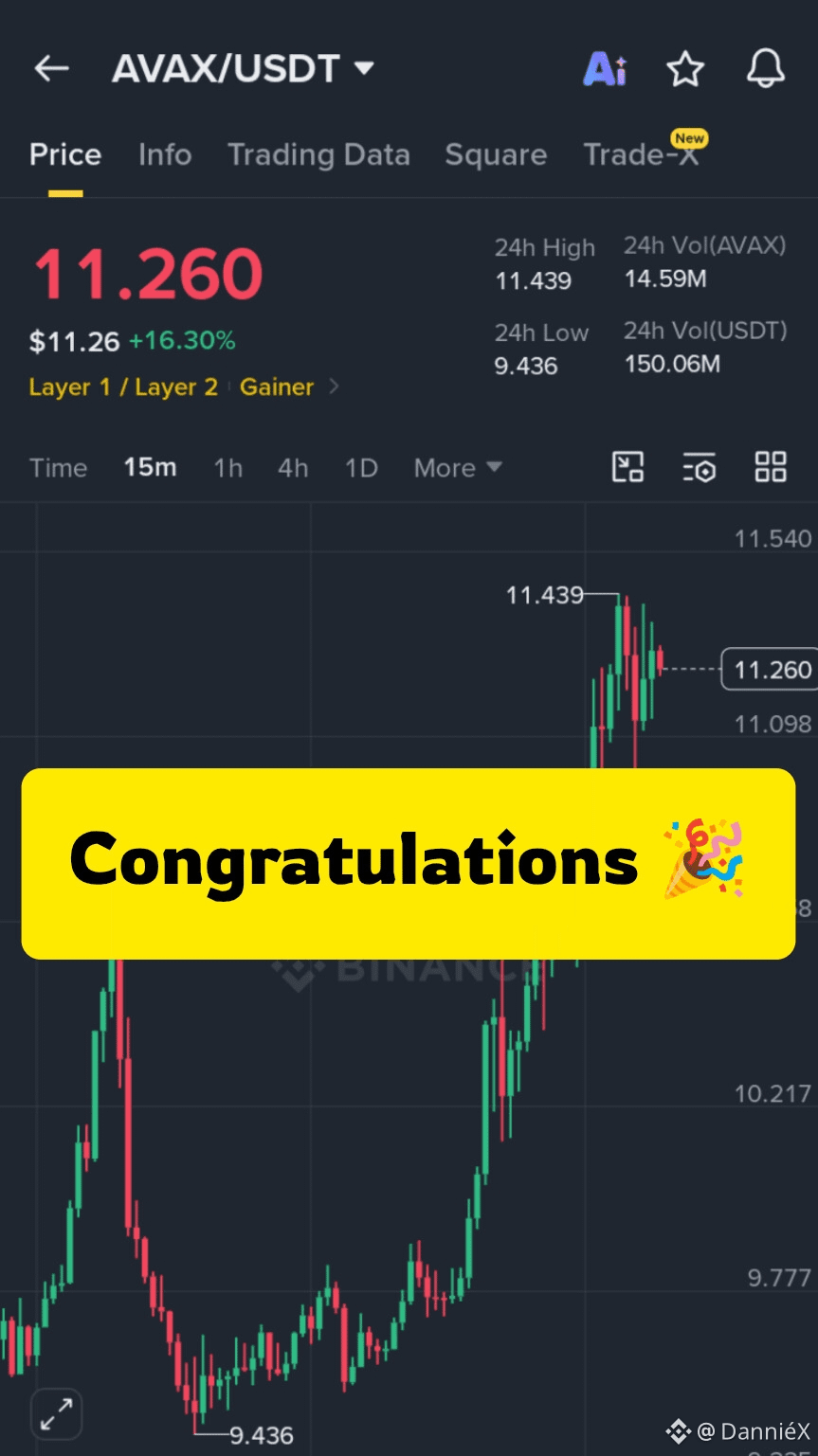
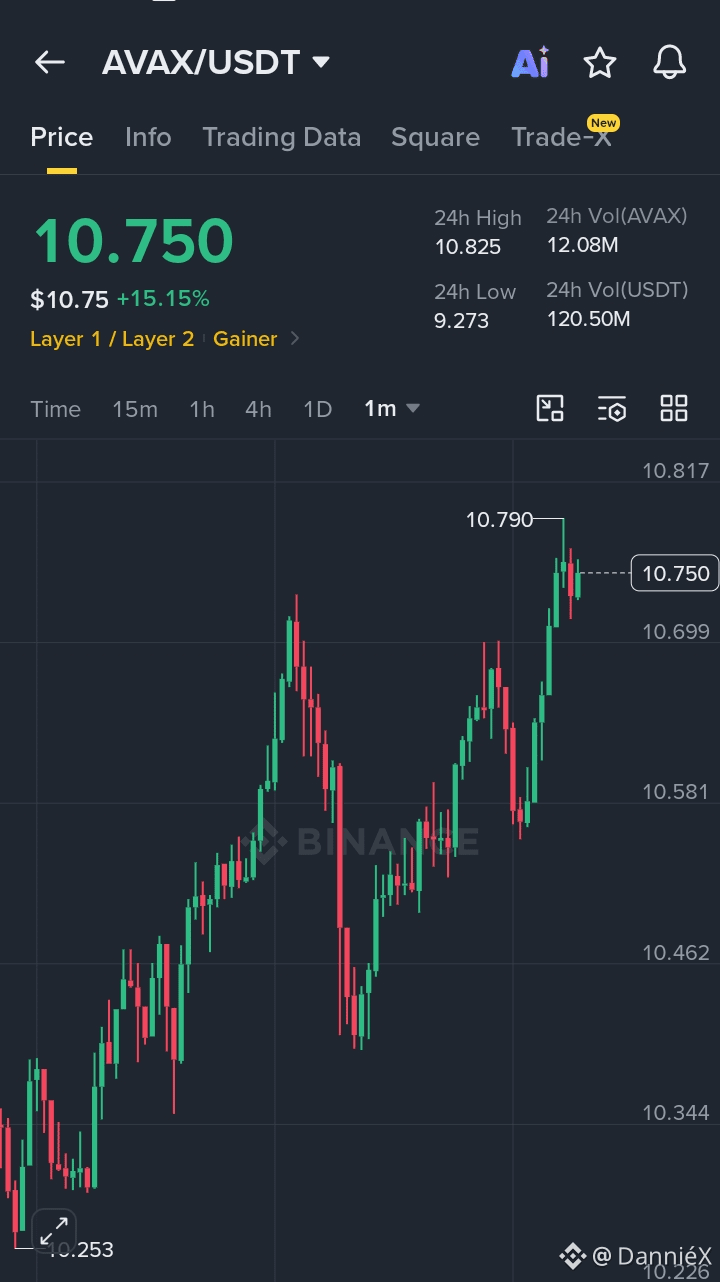
Waiting Guys see Next Tp Archive final 1st done ✅$AVAX now check 1min time frame 3mint ago #Congratulations99+
271
·
--
Waiting Guys see Next Tp Archive final 1st done ✅$AVAX now check 1min time frame 3mint ago #Congratulations99+
Waiting Guys see Next Tp Archive final 1st done ✅$AVAX now check 1min time frame 3mint ago #Congratulations99+
DanniéX
·
--
Guys, $AVAX is sitting around $10.60 right now. On the 15M chart, I’m watching how price reacts around the $10.50–$10.60 zone.
If buyers keep defending this area, I’d be watching for:
📍 Entry: $10.52 – $10.62
🎯 TP1: $10.78
🎯 TP2: $10.95
🎯 TP3: $11.15
🛑 SL: $10.28
The key for me is simple: hold $10.50 = bullish structure stays interesting.
Don’t rush the entry, my friends. Let the 15M candle give confirmation and manage your risk properly.
#BTCBreaks80K
If buyers keep defending this area, I’d be watching for:
📍 Entry: $10.52 – $10.62
🎯 TP1: $10.78
🎯 TP2: $10.95
🎯 TP3: $11.15
🛑 SL: $10.28
The key for me is simple: hold $10.50 = bullish structure stays interesting.
Don’t rush the entry, my friends. Let the 15M candle give confirmation and manage your risk properly.
#BTCBreaks80K
1
1
300
·
--
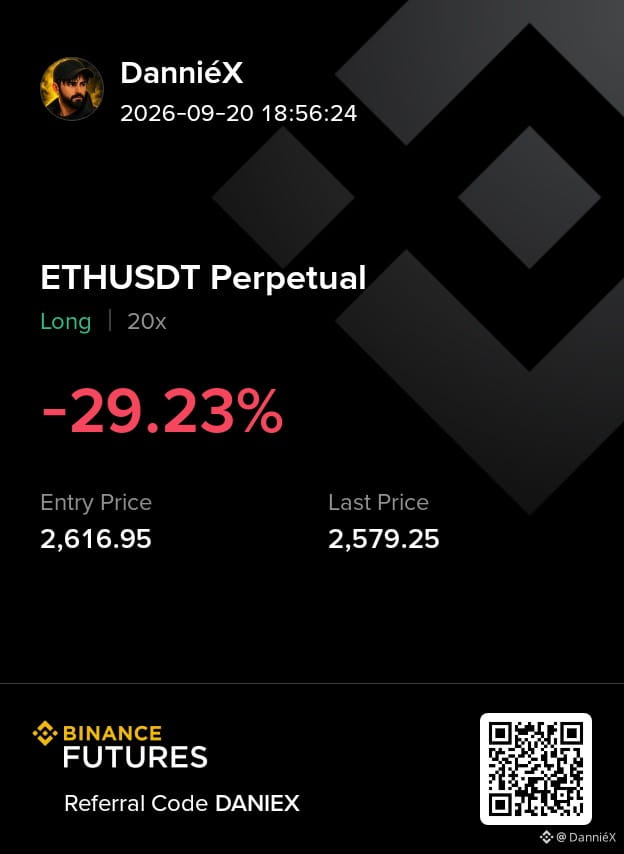
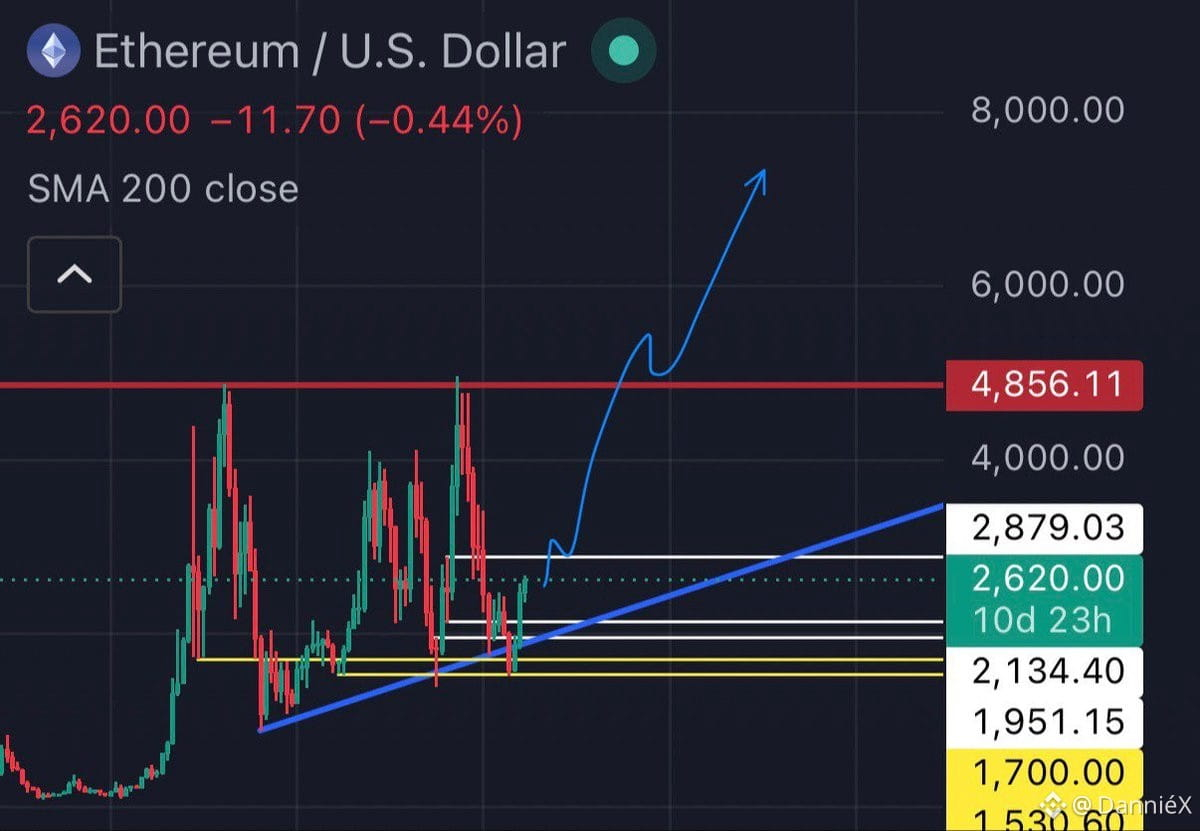
$ETH is showing a structure that deserves attention.
Ethereum has spent years moving through major consolidation phases, but the bigger picture is becoming increasingly interesting.
What stands out to me is that ETH is no longer just a crypto asset — it is increasingly being positioned as infrastructure for stablecoins, tokenized assets, DeFi and the broader on-chain financial system.
From a chart perspective, I like the long-term structure.
The key question is whether a major macro liquidity shift can finally push ETH out of its long-term consolidation range and into a new price-discovery phase.
If that happens, the trillion-dollar valuation discussion may become less of a narrative and more of a market-cap reality.
I’m watching the structure, liquidity and macro conditions closely.
What do you think breaks first — the consolidation or the narrative?
#SOLJumpsAbout10% #BTCBreaks80K
$ETH is showing a structure that deserves attention.
Ethereum has spent years moving through major consolidation phases, but the bigger picture is becoming increasingly interesting.
What stands out to me is that ETH is no longer just a crypto asset — it is increasingly being positioned as infrastructure for stablecoins, tokenized assets, DeFi and the broader on-chain financial system.
From a chart perspective, I like the long-term structure.
The key question is whether a major macro liquidity shift can finally push ETH out of its long-term consolidation range and into a new price-discovery phase.
If that happens, the trillion-dollar valuation discussion may become less of a narrative and more of a market-cap reality.
I’m watching the structure, liquidity and macro conditions closely.
What do you think breaks first — the consolidation or the narrative?
#SOLJumpsAbout10% #BTCBreaks80K
Ethereum has spent years moving through major consolidation phases, but the bigger picture is becoming increasingly interesting.
What stands out to me is that ETH is no longer just a crypto asset — it is increasingly being positioned as infrastructure for stablecoins, tokenized assets, DeFi and the broader on-chain financial system.
From a chart perspective, I like the long-term structure.
The key question is whether a major macro liquidity shift can finally push ETH out of its long-term consolidation range and into a new price-discovery phase.
If that happens, the trillion-dollar valuation discussion may become less of a narrative and more of a market-cap reality.
I’m watching the structure, liquidity and macro conditions closely.
What do you think breaks first — the consolidation or the narrative?
#SOLJumpsAbout10% #BTCBreaks80K
262
·
--
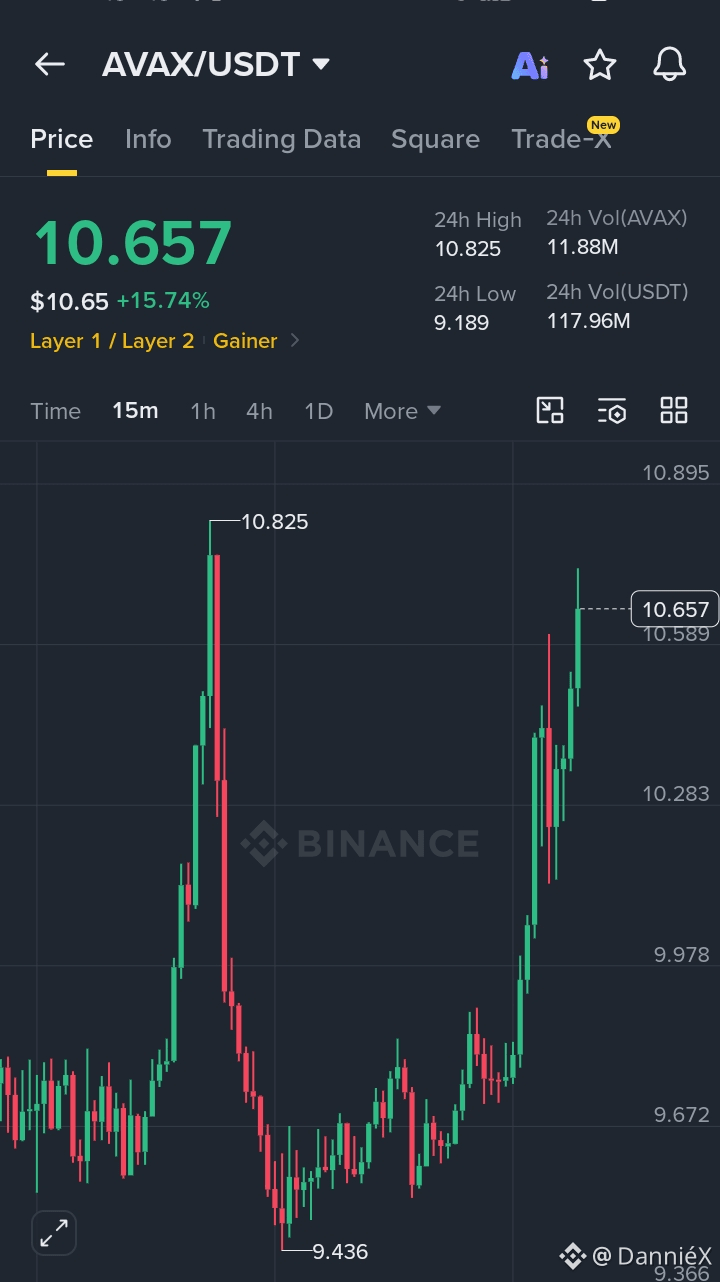
Guys, $AVAX is sitting around $10.60 right now. On the 15M chart, I’m watching how price reacts around the $10.50–$10.60 zone.
If buyers keep defending this area, I’d be watching for:
📍 Entry: $10.52 – $10.62
🎯 TP1: $10.78
🎯 TP2: $10.95
🎯 TP3: $11.15
🛑 SL: $10.28
The key for me is simple: hold $10.50 = bullish structure stays interesting.
Don’t rush the entry, my friends. Let the 15M candle give confirmation and manage your risk properly.
#BTCBreaks80K
Guys, $AVAX is sitting around $10.60 right now. On the 15M chart, I’m watching how price reacts around the $10.50–$10.60 zone.
If buyers keep defending this area, I’d be watching for:
📍 Entry: $10.52 – $10.62
🎯 TP1: $10.78
🎯 TP2: $10.95
🎯 TP3: $11.15
🛑 SL: $10.28
The key for me is simple: hold $10.50 = bullish structure stays interesting.
Don’t rush the entry, my friends. Let the 15M candle give confirmation and manage your risk properly.
#BTCBreaks80K
If buyers keep defending this area, I’d be watching for:
📍 Entry: $10.52 – $10.62
🎯 TP1: $10.78
🎯 TP2: $10.95
🎯 TP3: $11.15
🛑 SL: $10.28
The key for me is simple: hold $10.50 = bullish structure stays interesting.
Don’t rush the entry, my friends. Let the 15M candle give confirmation and manage your risk properly.
#BTCBreaks80K
1
1.3k
Connectez-vous pour découvrir plus de contenu
Rejoignez la communauté mondiale des adeptes de cryptomonnaies sur Binance Square
⚡️ Suviez les dernières informations importantes sur les cryptomonnaies.
💬 Jugé digne de confiance par la plus grande plateforme d’échange de cryptomonnaies au monde.
👍 Découvrez les connaissances que partagent les créateurs vérifiés.
Adresse e-mail/Nº de téléphone
Sujets d’actualité
MetaMaskExitsLidoValidatorsAfterSecurityIncident
1,384 vues
76 mentions
Key Details of the Incident
Precautionary Measure: MetaMask detected a security threat affecting its non-custodial staking infrastructure. As a safety measure, it began voluntarily withdrawing its operated validators from Lido.
Wallet Security: MetaMask confirmed that there is no immediate threat or impact to individual user wallets.
Timeline for Exits: Lido announced that the affected MetaMask-operated validators started exiting on September 30, 2026, and the full exit process is expected to conclude by October 7, 2026.
Return of Staked ETH: The staked Ethereum will gradually re-enter the protocol's withdrawal/re-entry cycle, which could take up to 45 days due to the network's queue times.
Impact on Rewards: Lido warned that this move may lead to temporary foregone staking rewards and potential minor downtime penalties during the transition period.
#MetaMaskExitsLidoValidatorsAfterSecurityIncident
costajui12
·0 mentions J’aime
·0 vues
MicronBeatsEarningsLiftsGuidance
3,866 vues
103 mentions
CFTCSubmitsTwoEventContractRulesToWhiteHouse
4,661 vues
127 mentions