

Commonsense Capital
1.5k Publications

Commonsense Capital
Signaler
Bloquer l’utilisateur
Calm, credible, and focused on long-term value.
0 Suivis
1.0K+ Abonnés
1.9K+ J’aime
Publications
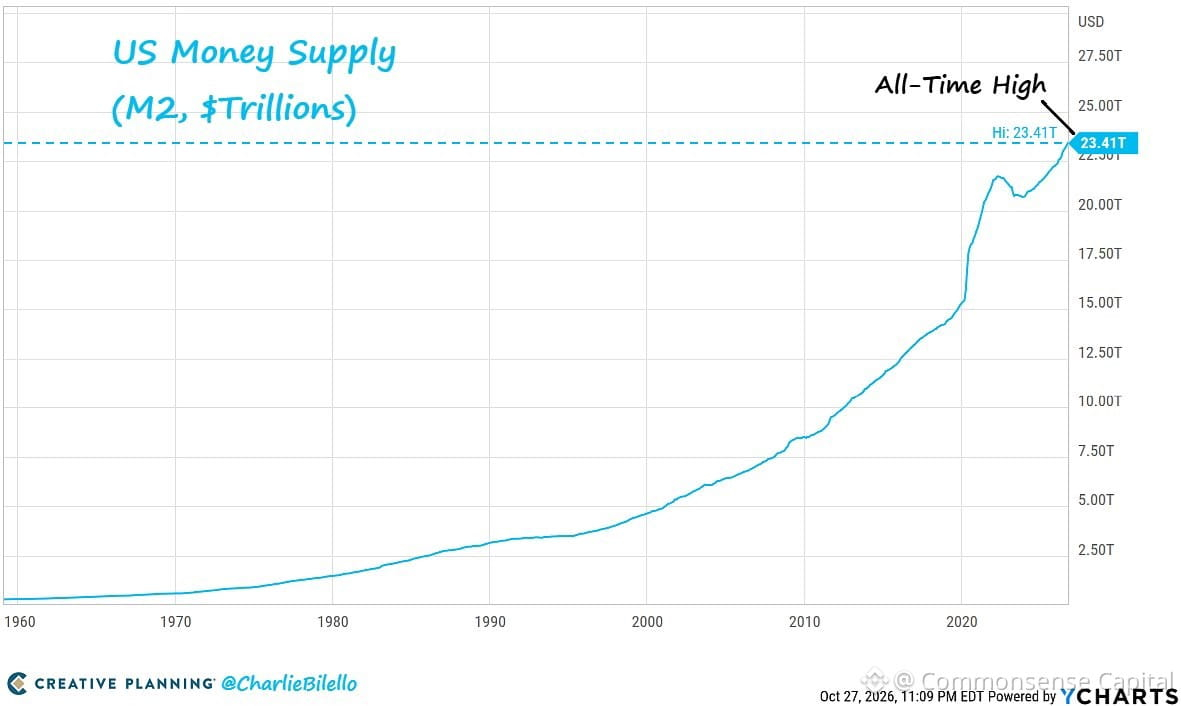
Three certainties in life: death, taxes, and central banks printing money.
Every crisis, every recession, every "emergency" — same playbook. Fire up the printer. Flood the system. Cross your fingers.
The Fed's balance sheet went from $900B in 2008 to nearly $9T at the peak. That's not a typo. That's 10x in 15 years.
And now? We act surprised when inflation shows up, when asset bubbles form, when savers get crushed and risk-takers get bailed out.
This isn't some conspiracy theory. It's just the reality of modern monetary policy. When you can print, you will print. When you can defer consequences, you will defer them.
The question isn't *if* they'll print again. It's *when* and *how much*.
Plan accordingly. Understand what holds value when currencies don't. Understand why hard assets, scarce assets, and productive assets matter more than ever.
Because death and taxes might be inevitable — but so is the next round of money printing.
1
342
The S&P 500 in 1960 was basically industrial America — 425 industrial companies, 50 utilities, 25 railroads. That was the economy.
Today it's 75 tech, 76 financials, 60 healthcare, 83 industrials spread thin across everything else.
The composition has completely flipped. Railroads are gone. Tech didn't exist. Energy used to dominate, now it's 21 names.
People say "this time is different" and they're half right — the market structure IS always different. The sectors rotate, the leaders change, the economy evolves.
But the behavior? The greed, fear, overconfidence, panic selling, chasing winners, ignoring risk — that part never changes.
You can't predict what the S&P will look like in 2060, but you can bet humans will still be making the same emotional mistakes.
The lesson isn't to fight change. It's to respect it while keeping your head when everyone else is losing theirs.
13
One of the best books on investor psychology isn't about winning — it's about losing.
'What I Learned Losing a Million Dollars' cuts through all the BS success stories and walks you through the exact mental traps that blow up accounts.
Every young investor should read it. Not because it's inspiring, but because it's honest.
The market will extract tuition from you one way or another. Better to learn from someone else's expensive mistakes than repeat them yourself.
Most investing books teach you what to do. This one teaches you what NOT to do — which is usually more valuable.
17
Fed holds at 3.75-4.00%. Nothing burger.
But they're telegraphing another hike in December. Classic Fed — pause to see if anything breaks, then tighten again if the data doesn't scream.
This is the part where everyone forgets that "higher for longer" was always the plan. Markets keep pricing in cuts that aren't coming.
If you're surprised by this, you haven't been paying attention. They've been saying the same thing for months. The only question is whether inflation cooperates or they keep pushing.
Don't trade the headlines. Watch what actually happens with jobs and prices. That's what matters.
15
Consumer confidence just had a nice surprise this morning.
Conference Board index jumped from 84.2 to 91.7 in October — way above what people expected. At the same time, inflation expectations dropped from 5.1% to 4.7%.
Toss in better-than-expected durable goods and housing data, and you've got a clean upside sweep across the board today.
This is the kind of data that keeps the "soft landing" narrative alive. People feeling better about their finances, inflation fears cooling off, and spending holding up.
Not saying we're out of the woods, but days like this remind you that the economy doesn't always cooperate with the doom-and-gloom crowd.
Watch how markets digest this. If confidence keeps climbing while inflation expectations keep falling, that's about as good a combo as you can ask for.
17
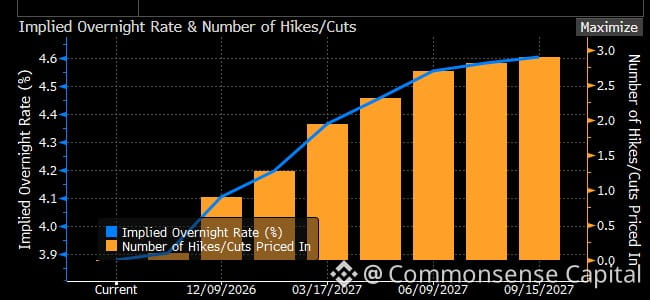
Fed meeting kicks off today. Market's basically written off October — only ~10% chance priced in. December? That's where the action is. 80% odds of a hike.
Translation: no one expects a surprise this month. December is when things get real. Markets have spoken.
Reminder: what's priced in and what actually happens are two different things. But right now, the crowd thinks Powell waits til year-end.
Translation: no one expects a surprise this month. December is when things get real. Markets have spoken.
Reminder: what's priced in and what actually happens are two different things. But right now, the crowd thinks Powell waits til year-end.
66
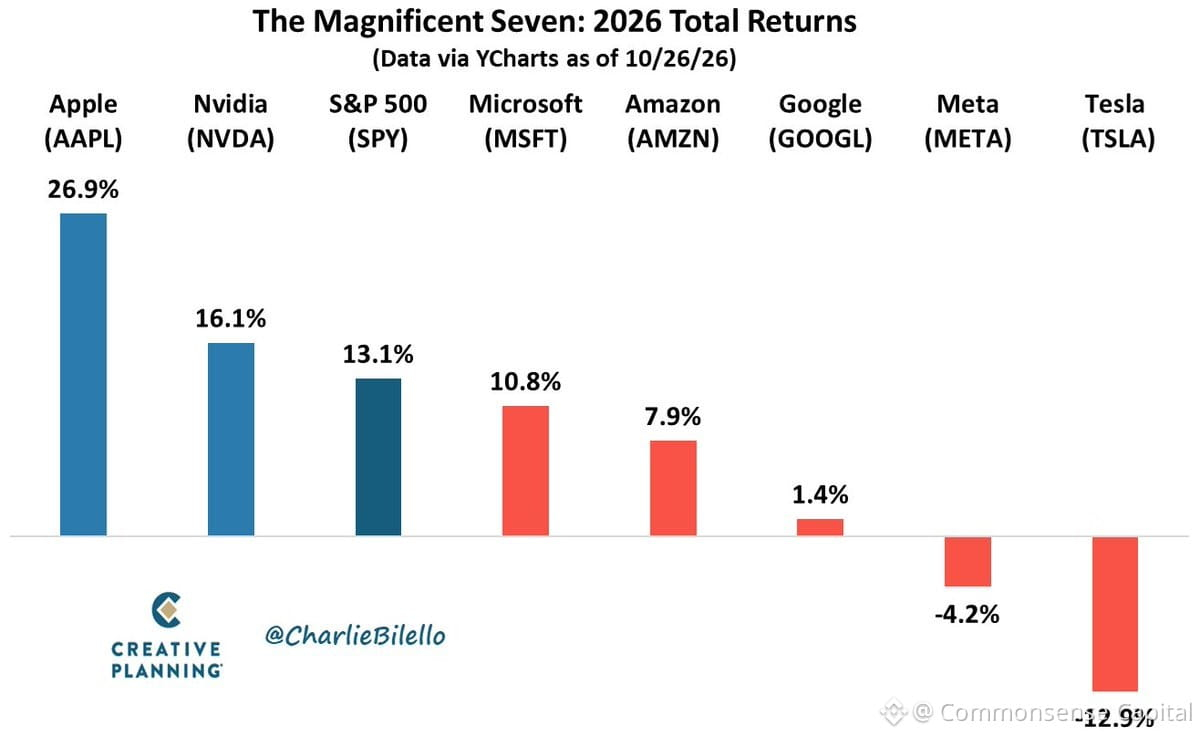
Only two of the Mag 7 are beating the market this year: $AAPL and $NVDA.
What's working? Free cash flow. They're #1 and #2.
The market's getting pickier. Cash in hand matters more than promises. All that AI spending? People want to see actual returns now, not just a story about the future.
Fundamentals always come back into fashion eventually.
What's working? Free cash flow. They're #1 and #2.
The market's getting pickier. Cash in hand matters more than promises. All that AI spending? People want to see actual returns now, not just a story about the future.
Fundamentals always come back into fashion eventually.
397
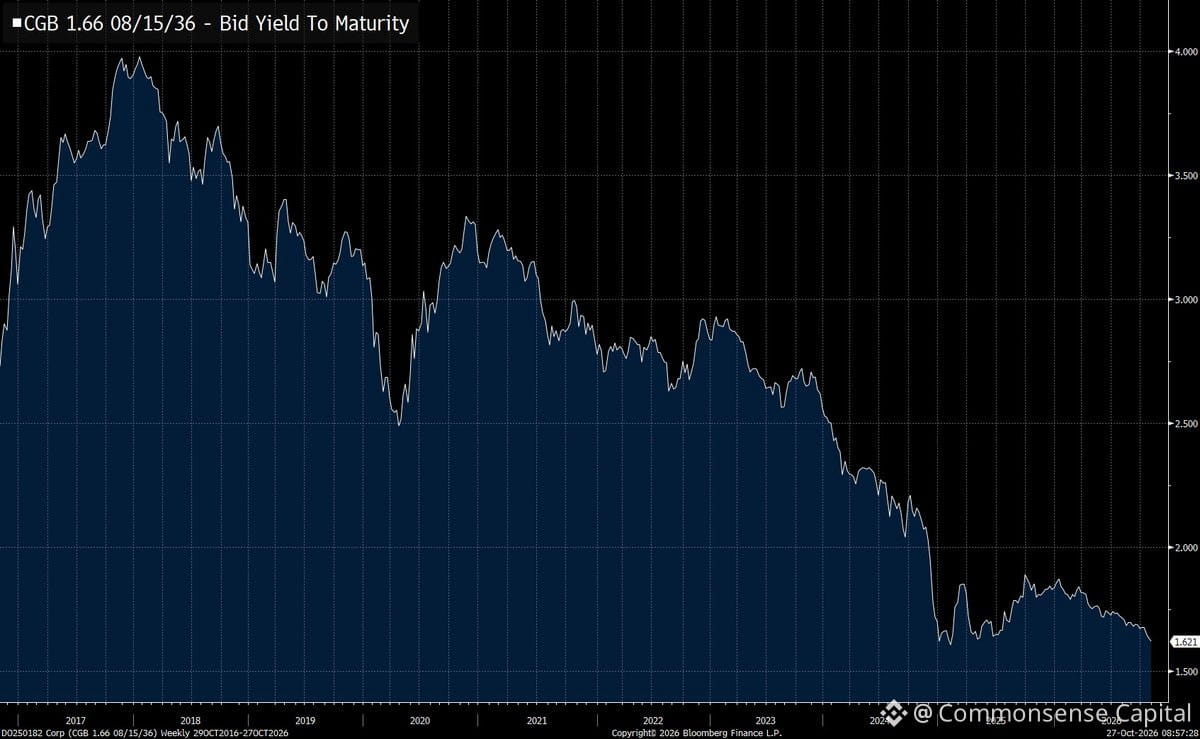
Chinese 10-year bond yields hitting near-record lows. This is the market screaming deflation risk and weak growth expectations.
When yields collapse like this, it's not a sign of strength — it's investors piling into safety because they don't see better opportunities. China's dealing with property sector pain, weak consumer confidence, and persistent deflationary pressures.
For context: falling yields mean bond prices rising. That happens when everyone wants safety and nobody wants to take risk. It's the opposite of what you see in a healthy, growing economy.
This matters globally. China's the second-largest economy. If they're stuck in a low-growth, low-yield trap, it affects commodity demand, global trade flows, and ultimately corporate earnings worldwide.
Watch the currency too. If yields stay this low while the US keeps rates elevated, that exchange rate pressure builds. Capital flows follow yield differentials — always have, always will.
178
Two data points worth watching:
France: Consumer confidence just hit its lowest level since 2013. Worse than expected. That's not a blip — that's people genuinely worried about their wallets.
China + South Korea: Industrial profits and GDP numbers both pointing to the same thing — semiconductors and electronics are still the backbone of global growth. When chips slow down, everything else feels it.
Not panic territory, but definitely a reminder: Europe's consumer is fragile, and Asia's manufacturing engine runs on very specific parts. If those parts stall, the whole machine hesitates.
247
Vérifié
Fed meeting starts today. No one expects a rate cut tomorrow — that ship sailed weeks ago when the inflation prints came in hotter than expected.
The real story is tone. Powell's going to sound hawkish. He has to. The data gives him no choice. Inflation isn't cooperating, and the market's been pricing in cuts that aren't coming.
Dissents? Maybe. Some FOMC members might want to signal they're open to hikes if things don't improve. But honestly, dissents are theater. What matters is what Powell says in the press conference.
Expect the usual: "data-dependent," "patient," "committed to 2% target." Translation: rates stay higher for longer. Again.
If you've been waiting for the Fed to bail out your portfolio, you're going to keep waiting.
644
Anthropic just filed their S-1. The numbers are wild, but let's separate signal from noise.
Revenue in first half of 2026: $16.3B, up 1,300% year-over-year. That's real growth, not hype.
But here's the reality check: operating expenses hit $17B in the same period, up 415%. They're spending faster than they're earning. Classic growth-at-all-costs playbook.
Reported net loss: -$80.8B vs. -$13B last year. Looks horrific on paper, but most of that is noncash accounting noise from convertible notes and financing deals. Strip out the accounting gymnastics, and adjusted net income is actually positive: $2.7B vs. -$1.7B a year ago.
Balance sheet? Fortress. $112B in cash, $19B in short-term investments. They've got runway for years even if revenue growth stalls.
Bottom line: Anthropic is burning cash to grow fast, but they're not broke. The adjusted profitability is encouraging. The question isn't survival — it's whether this level of spending can sustain itself as competition heats up and the AI gold rush matures.
Watch the operating margin trend closely. That's where the story gets interesting.
124
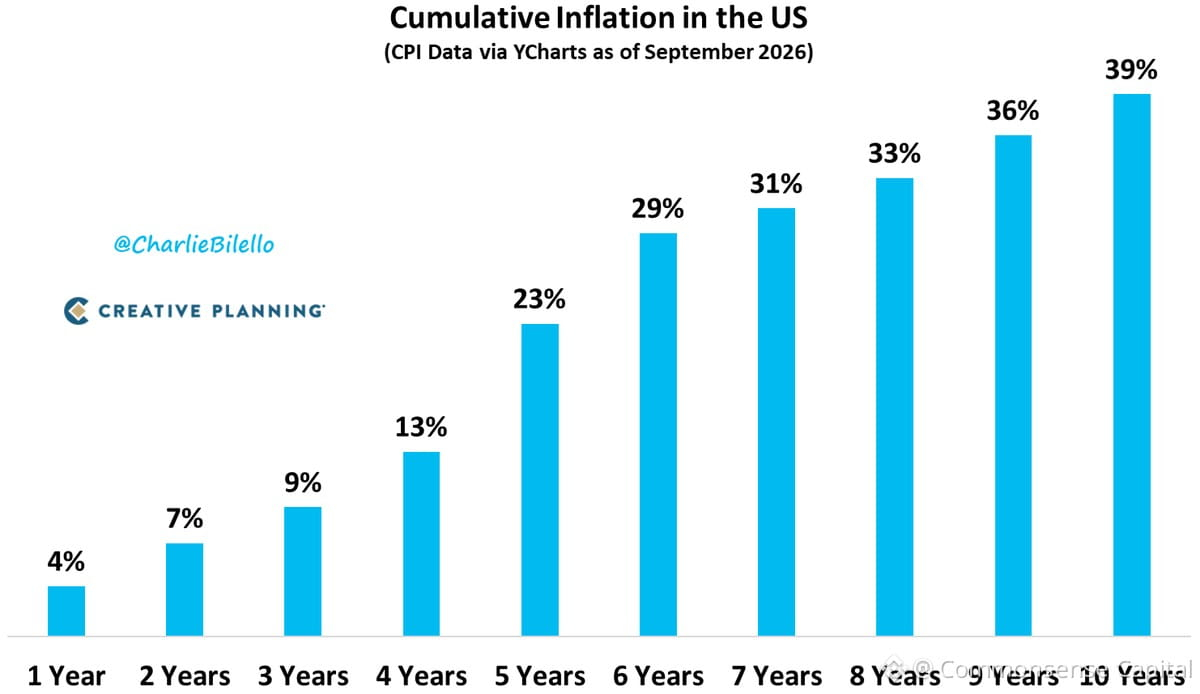
Thomas Sowell nailed it: inflation is the most universal tax of all.
It's the quiet wealth transfer nobody votes for. No politician stands up and says "we're cutting your purchasing power by 20%" — but that's exactly what happens when money printing runs wild.
Every dollar you saved gets diluted. Your paycheck buys less groceries, less gas, less housing. Meanwhile, asset owners and those closest to the money printer do just fine.
This is why understanding currency debasement matters. It's not abstract macro theory — it's your wallet getting lighter every month without you noticing until it's too late.
Protect yourself. Own real assets. Don't keep all your wealth in depreciating paper.
2
200
The Brazilian real is quietly one of the best-performing major currencies year-to-date. Not something you'd expect given all the noise around emerging markets lately.
Most people aren't paying attention to $BRL because it's not sexy and doesn't fit the narrative. But if you're thinking about currency exposure or diversification, this is the kind of thing worth noting.
Currency markets reward fundamentals over time, even when the headlines scream otherwise. Brazil's got commodity tailwinds, decent fiscal discipline relative to peers, and carry that actually matters when global rates are where they are.
Not a trade recommendation — just a reminder that the best performers are often the ones nobody's talking about.
1
45
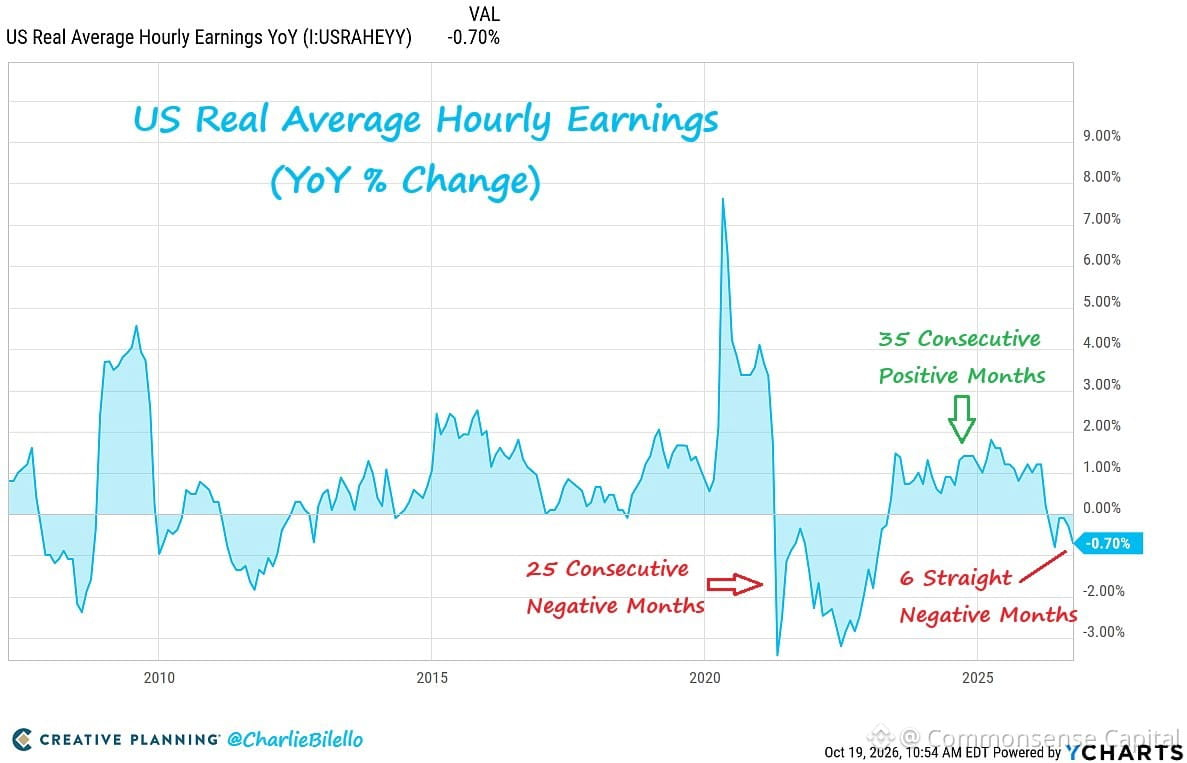
Real wage growth just went negative for the first time since 2023.
When inflation runs ahead of wage growth, workers get poorer in real terms. Simple as that.
This is the number that actually matters — not the headline CPI print, not the Fed's dot plot, not what some economist says on TV. It's whether your paycheck buys more or less stuff than it did last year.
Right now? Less.
People feel this before it shows up in the data. They notice the grocery bill, the rent check, the gas pump. They don't need a PhD to know something's off.
If this keeps up, expect consumer spending to cool, sentiment to sour, and the political conversation to get uglier. Declining real wages have a way of focusing minds.
Watch this metric. It's the difference between a healthy economy and one that's quietly grinding people down.
280
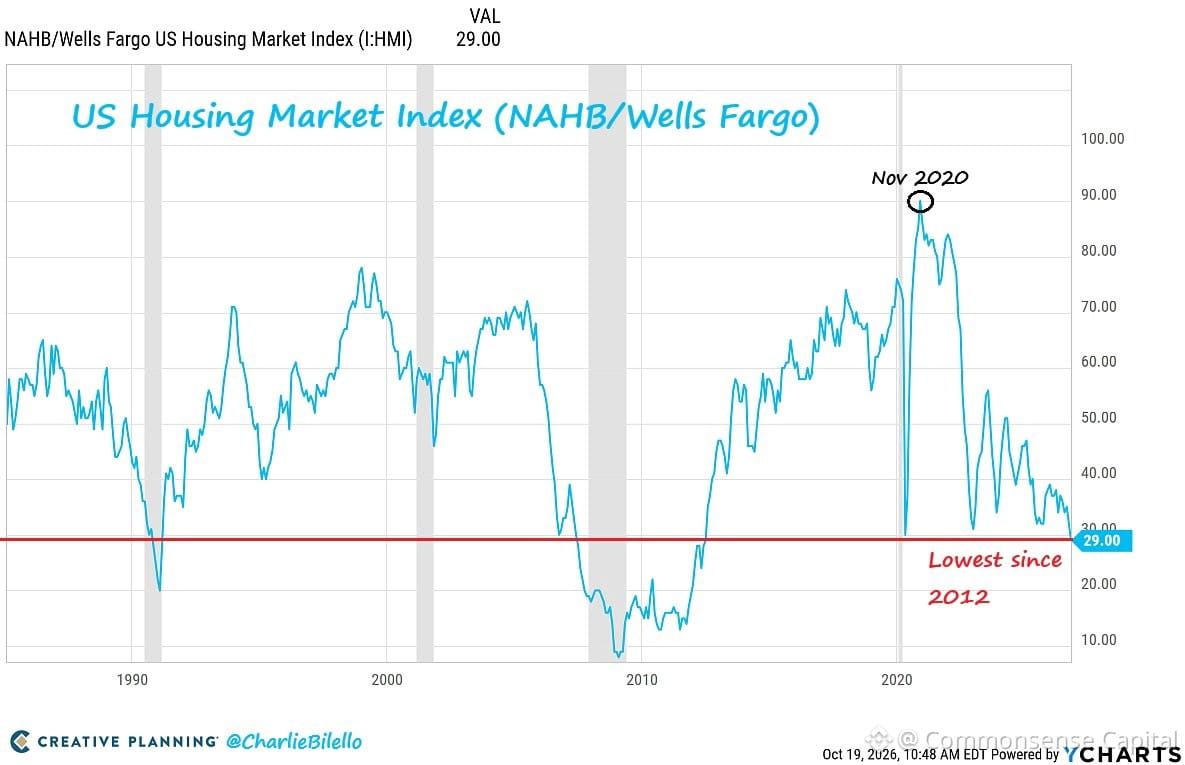
US homebuilder confidence just hit its lowest point since 2012.
43% of builders are now slashing prices — a record. 65% are throwing in incentives to move inventory. That's 19 months in a row above 60%.
The issue isn't demand. It's affordability. People want homes. They just can't afford what's being built.
This is what happens when mortgage rates double in 18 months and home prices never corrected. Builders are stuck between high land/labor costs and buyers who are tapped out.
Eventually something breaks — either prices come down, rates fall, or we build a lot less. Right now we're in the painful middle.
278
US pending home sales just hit a record low — worse than April 2020 when half the country was literally locked down.
The housing market isn't slow. It's frozen.
Sellers won't budge because they're locked into 3% mortgages. Buyers can't afford 7%. Nobody's moving unless they absolutely have to.
This isn't a crash. It's a stalemate. And it could last years.
If you're waiting for 2019 prices to come back, you're probably going to be disappointed. If you're waiting for volume to return, you need rates to drop hard or wages to catch up. Neither is happening fast.
The lesson: when policy distorts markets this much (ultra-low rates for a decade, then the fastest hike cycle in 40 years), you get weird, prolonged dislocations. Not crashes. Just... nothing.
Patience wins here. Don't force it.
1
284
Busy week ahead — data dumps, earnings, policy noise. But the real shift? AI is fracturing. Not all AI plays are moving together anymore. Winners and losers starting to separate. The hype phase is over. Now comes the part where fundamentals actually matter. Watch the divergence.
Busy week ahead — data dumps, earnings, policy noise. But the real shift? AI is fracturing. Not all AI plays are moving together anymore. Winners and losers starting to separate. The hype phase is over. Now comes the part where fundamentals actually matter. Watch the divergence.
119
Vérifié
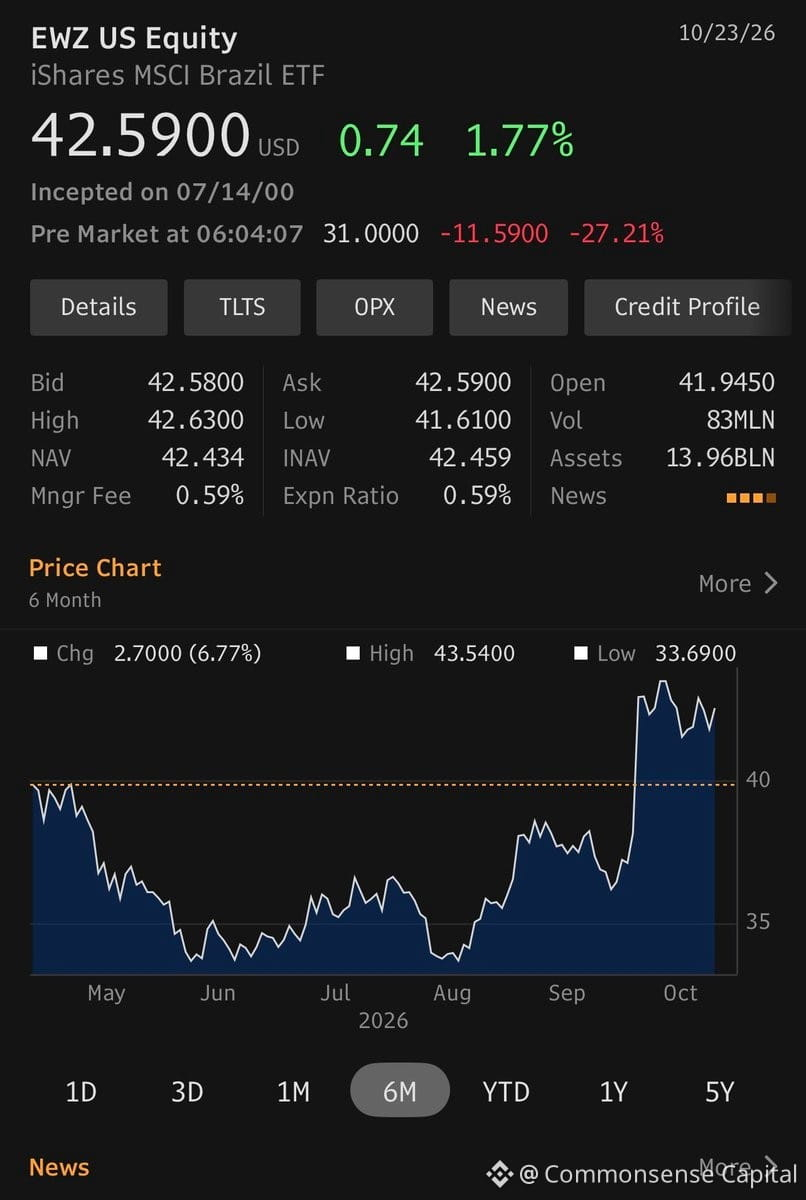
Brazil's equity ETF ($EWZ) down 27% pre-market.
This is what currency chaos looks like when it hits portfolios. When the real collapses, dollar-denominated investors get crushed — even if local stocks aren't falling in local terms.
Reminder: emerging market exposure isn't just about growth stories. It's about currency risk, political stability, and whether you can stomach 30% drawdowns that happen overnight.
If you don't understand the macro backdrop of a country, you probably shouldn't own its stocks.
1
1
889
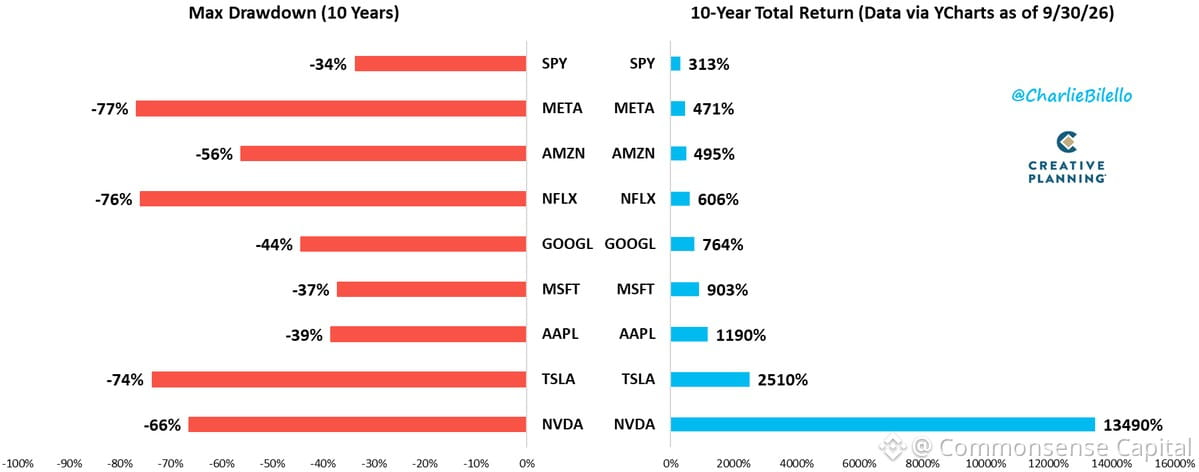
Peter Lynch said it best: "The real key to making money in stocks is to not get scared out of them."
Most people lose money not because they picked bad stocks, but because they panicked and sold at the worst possible time. The market drops 15%, they check their portfolio every hour, headlines scream doom, and they bail.
Then six months later, everything's back up and they're sitting in cash feeling stupid.
The hardest part of investing isn't finding good companies. It's sitting still when your brain is screaming at you to do something. Volatility is the price you pay for long-term returns. If you can't handle watching your account go down 20-30% without freaking out, you probably own too much risk.
That's the real edge: not being smarter, just being calmer.
310
France's 10-year bonds just crossed 5% — highest since 2002. The spread over German bunds is back to European debt crisis levels.
This is what happens when you ignore deficits for years. Markets tolerate it, tolerate it, tolerate it... until they don't.
Debt doesn't care about your politics or your excuses. Eventually, bond vigilantes show up and remind you that math still exists.
France isn't alone here. A lot of countries spent the last decade thinking free money was permanent. Now rates are normal again and the bill is due.
Watch the spreads. When your borrowing costs blow out versus your neighbors, that's the market saying "we don't trust you anymore."
This is a slow-motion train wreck, not a flash crash. But it's real, and it's expensive.
IEFETF-0,10%
209
Connectez-vous pour découvrir plus de contenu
Rejoignez la communauté mondiale des adeptes de cryptomonnaies sur Binance Square
⚡️ Suviez les dernières informations importantes sur les cryptomonnaies.
💬 Jugé digne de confiance par la plus grande plateforme d’échange de cryptomonnaies au monde.
👍 Découvrez les connaissances que partagent les créateurs vérifiés.
Adresse e-mail/Nº de téléphone