

Cryptodonia
364 Publications

Cryptodonia
Signaler
Bloquer l’utilisateur
Building in Web3 | DeFi Enthusiast | Believer in decentralization & digital freedom
0 Suivis
10 Abonnés
48 J’aime
Publications
·
--
$SHIB is back in the spotlight after a strong rebound, with the $0.000006 resistance zone now in focus. 🔥 The burn rate reportedly surged by over 31,000%, adding to market attention. But can SHIB break above resistance and sustain the momentum? I am watching the $0.0000056 support and how price reacts around $0.000006 before making any move. Is SHIB ready for another leg up, or will sellers take control?
$SHIB is back in the spotlight after a strong rebound, with the $0.000006 resistance zone now in focus. 🔥 The burn rate reportedly surged by over 31,000%, adding to market attention. But can SHIB break above resistance and sustain the momentum? I am watching the $0.0000056 support and how price reacts around $0.000006 before making any move. Is SHIB ready for another leg up, or will sellers take control?

·
--
$XRP is getting people talking about what holding 1,000 XRP could mean in 2026. 👀 A crypto enthusiast believes holding 1,000 XRP could become significant enough to attract closer financial scrutiny if the asset's value rises substantially. The bigger picture? Holding $XRP doesn't guarantee wealth. Its future value depends on market demand, adoption, and broader market conditions. $XRP holders are watching closely. 📈
$XRP is getting people talking about what holding 1,000 XRP could mean in 2026. 👀 A crypto enthusiast believes holding 1,000 XRP could become significant enough to attract closer financial scrutiny if the asset's value rises substantially. The bigger picture? Holding $XRP doesn't guarantee wealth. Its future value depends on market demand, adoption, and broader market conditions. $XRP holders are watching closely. 📈

36
·
--
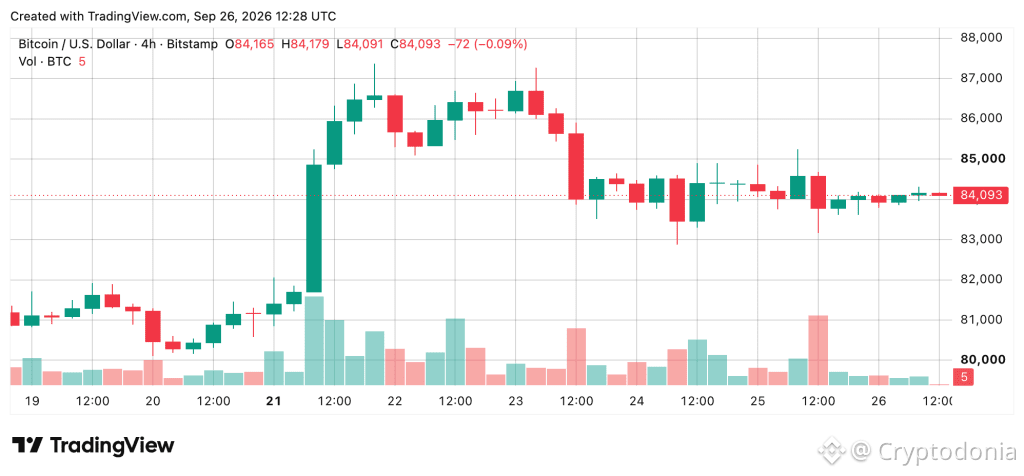
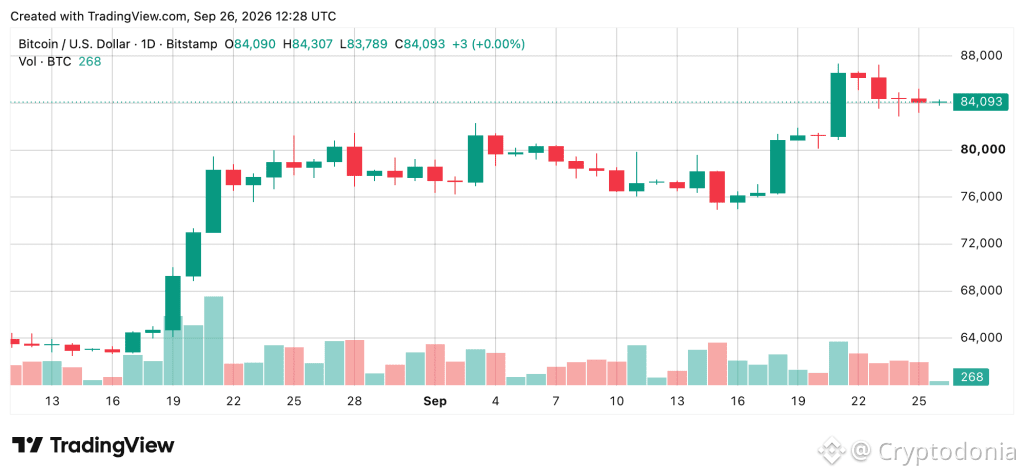
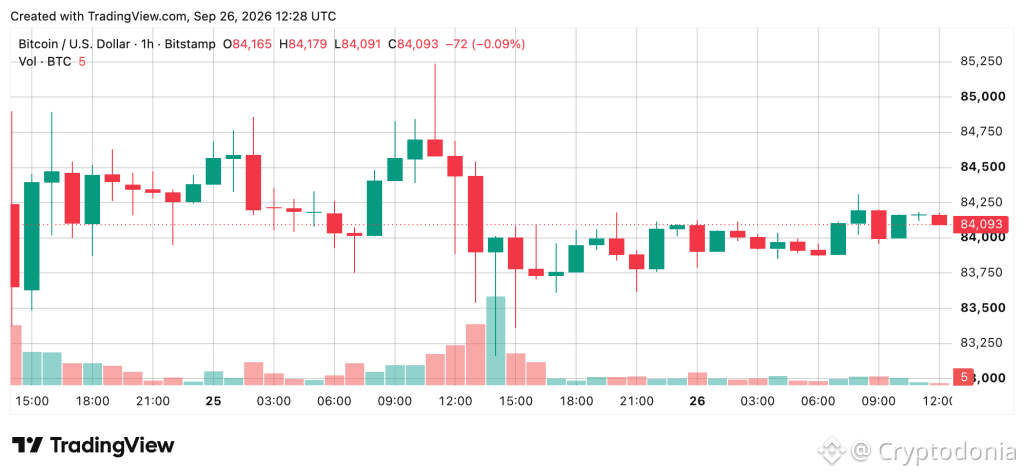
$BTC is still trading around 33% below its all-time high, but the bulls are not giving up yet. Bitcoin’s recent recovery is bringing fresh attention to the market, with traders watching to see if the momentum can continue. The bigger picture? A strong rebound doesn't automatically mean a new bull run. $BTC still has ground to cover before reclaiming its previous peak. Bitcoin’s comeback is worth watching. 👀
$BTC is still trading around 33% below its all-time high, but the bulls are not giving up yet. Bitcoin’s recent recovery is bringing fresh attention to the market, with traders watching to see if the momentum can continue. The bigger picture? A strong rebound doesn't automatically mean a new bull run. $BTC still has ground to cover before reclaiming its previous peak. Bitcoin’s comeback is worth watching. 👀
54
·
--
What if privacy isn't only about who can read your messages, but who can decide whether you're allowed to send them? That question changed how I look at messaging. Most of us think about privacy as encryption, passwords and who can access our conversations. But there's another layer we rarely discuss: control. When your communication depends entirely on centralized infrastructure, someone operates that infrastructure. They set the rules, enforce policies, handle legal requests and ultimately have the ability to restrict access. Some of that control is necessary. Scams, abuse and illegal activity need to be addressed. But should meaningful communication always depend on one organization? That's where decentralized messaging becomes interesting. #Liberdus is exploring a different architecture where communication isn't built around a single organization controlling the entire network. And I think that's the bigger conversation. Not “centralized is bad.” Not “decentralized solves everything.” But: Who should control the infrastructure we increasingly depend on to communicate? Decentralization doesn't eliminate responsibility. It challenges the idea that control and communication must always live in the same hands. Maybe the future of private communication isn't just about hiding your messages. Maybe it's also about having more control over the network that carries them. That's the part of #Liberdus I find worth paying attention to. #Security $XRP #Privacy $SOL
What if privacy isn't only about who can read your messages, but who can decide whether you're allowed to send them? That question changed how I look at messaging. Most of us think about privacy as encryption, passwords and who can access our conversations. But there's another layer we rarely discuss: control. When your communication depends entirely on centralized infrastructure, someone operates that infrastructure. They set the rules, enforce policies, handle legal requests and ultimately have the ability to restrict access. Some of that control is necessary. Scams, abuse and illegal activity need to be addressed. But should meaningful communication always depend on one organization? That's where decentralized messaging becomes interesting. #Liberdus is exploring a different architecture where communication isn't built around a single organization controlling the entire network. And I think that's the bigger conversation. Not “centralized is bad.” Not “decentralized solves everything.” But: Who should control the infrastructure we increasingly depend on to communicate? Decentralization doesn't eliminate responsibility. It challenges the idea that control and communication must always live in the same hands. Maybe the future of private communication isn't just about hiding your messages. Maybe it's also about having more control over the network that carries them. That's the part of #Liberdus I find worth paying attention to. #Security $XRP #Privacy $SOL

77
·
--
$LINK is finally showing the move I have been watching. 👀 Open interest has jumped sharply while $LINK trades around $13.4, showing fresh positioning entering the market. But I’m not chasing the candle here. For me, the key level is the $12.50–$13.00 area. If LINK holds above this zone after the breakout, the next area I’m watching is around $14.50–$15. If price loses the breakout zone, I would rather step aside than force a long. The setup is getting interesting , now I want confirmation, not FOMO. Watching $LINK closely.
$LINK is finally showing the move I have been watching. 👀 Open interest has jumped sharply while $LINK trades around $13.4, showing fresh positioning entering the market. But I’m not chasing the candle here. For me, the key level is the $12.50–$13.00 area. If LINK holds above this zone after the breakout, the next area I’m watching is around $14.50–$15. If price loses the breakout zone, I would rather step aside than force a long. The setup is getting interesting , now I want confirmation, not FOMO. Watching $LINK closely.
44
·
--
$BTC is giving traders a reason to slow down. Price is pushing back toward the $82K–$84K area, but the bigger question is whether buyers can actually reclaim resistance or are simply creating another rejection. I am watching two things: → Hold above $84K and build strength = bullish continuation becomes interesting. → Lose $82K with confirmation = downside opens up again. I am not chasing the move here. I’d rather wait for price action to confirm the direction, then take the setup with clear invalidation. In markets like this, patience is part of the trade.
$BTC is giving traders a reason to slow down. Price is pushing back toward the $82K–$84K area, but the bigger question is whether buyers can actually reclaim resistance or are simply creating another rejection. I am watching two things: → Hold above $84K and build strength = bullish continuation becomes interesting. → Lose $82K with confirmation = downside opens up again. I am not chasing the move here. I’d rather wait for price action to confirm the direction, then take the setup with clear invalidation. In markets like this, patience is part of the trade.
49
·
--
The $XRP Ledger is showing another sign that stablecoin liquidity is becoming a bigger part of its ecosystem. According to DefiLlama data reported today, XRPL’s stablecoin market cap grew by $67.12M in just one week, reaching about $1.159B. $RLUSD accounts for roughly 92.1% of that total. What catches my attention isn’t just the number. Stablecoins bring liquidity that can actually move through payments, trading, DeFi and tokenized assets. And XRPL has already been seeing growth in these areas. But I wouldn’t automatically translate rising stablecoin liquidity into a bullish $XRP price signal. Network growth and token price are two different things. For me, the bigger question is: Can XRPL turn this growing stablecoin liquidity into sustained real-world usage? That’s the metric I will be watching next.
The $XRP Ledger is showing another sign that stablecoin liquidity is becoming a bigger part of its ecosystem. According to DefiLlama data reported today, XRPL’s stablecoin market cap grew by $67.12M in just one week, reaching about $1.159B. $RLUSD accounts for roughly 92.1% of that total. What catches my attention isn’t just the number. Stablecoins bring liquidity that can actually move through payments, trading, DeFi and tokenized assets. And XRPL has already been seeing growth in these areas. But I wouldn’t automatically translate rising stablecoin liquidity into a bullish $XRP price signal. Network growth and token price are two different things. For me, the bigger question is: Can XRPL turn this growing stablecoin liquidity into sustained real-world usage? That’s the metric I will be watching next.
1
362
·
--
$XRP just gave back part of the rally and is back around $1.50. I’m watching this area closely. $1.48–$1.50 is the immediate support zone. If buyers defend it and reclaim $1.54–$1.56, I’d look for a move back toward $1.60, then $1.64–$1.65. But if $1.48 fails, I wouldn’t force a long. The next important area is around $1.39–$1.41. The rally is still up roughly 16% on the week, so this pullback needs confirmation before chasing. Trade the reaction, not the headline.
$XRP just gave back part of the rally and is back around $1.50. I’m watching this area closely. $1.48–$1.50 is the immediate support zone. If buyers defend it and reclaim $1.54–$1.56, I’d look for a move back toward $1.60, then $1.64–$1.65. But if $1.48 fails, I wouldn’t force a long. The next important area is around $1.39–$1.41. The rally is still up roughly 16% on the week, so this pullback needs confirmation before chasing. Trade the reaction, not the headline.
1
43
·
--
$XRP is showing why I don’t trade the headline — I trade the reaction. ETF money is still flowing in, but XRP just lost the $1.50 area after getting rejected around $1.66. That tells me sellers are still active here. For me, $1.43 is the level I’m watching next. If $XRP holds that area and buyers reclaim $1.50 with a strong close, I’d start looking for a move back toward $1.60–$1.66. But if $1.43 breaks cleanly, I’m not forcing a long. I would rather wait for the chart to show where buyers actually want to defend. ETF inflows are interesting. Price confirmation matters more to my trade.
$XRP is showing why I don’t trade the headline — I trade the reaction. ETF money is still flowing in, but XRP just lost the $1.50 area after getting rejected around $1.66. That tells me sellers are still active here. For me, $1.43 is the level I’m watching next. If $XRP holds that area and buyers reclaim $1.50 with a strong close, I’d start looking for a move back toward $1.60–$1.66. But if $1.43 breaks cleanly, I’m not forcing a long. I would rather wait for the chart to show where buyers actually want to defend. ETF inflows are interesting. Price confirmation matters more to my trade.
70
·
--
Cardano turns 9, but $ADA is still facing a serious price test. After the recent pullback, the $0.235–$0.25 zone is important. It acted as support earlier and is now being tested as resistance. For me, the chart matters more than the anniversary: • Reclaim and hold $0.25 → momentum can strengthen • Lose the $0.235 area → downside risk increases • $0.315 is the next upside level some analysts are watching if the recovery holds. 9 years in, $ADA still has something to prove on the chart.
Cardano turns 9, but $ADA is still facing a serious price test. After the recent pullback, the $0.235–$0.25 zone is important. It acted as support earlier and is now being tested as resistance. For me, the chart matters more than the anniversary: • Reclaim and hold $0.25 → momentum can strengthen • Lose the $0.235 area → downside risk increases • $0.315 is the next upside level some analysts are watching if the recovery holds. 9 years in, $ADA still has something to prove on the chart.
63
·
--
You don’t have to be the target to become the victim. If one centralized system holds a huge amount of information, one successful breach can turn into everyone’s problem. That’s why I find Liberdus interesting. Its architecture isn’t built around one central server. Liberdus runs across distributed validator nodes using Shardus, with nodes organized into shards and rotated between active and standby roles. The point isn’t: “ #Liberdus can never be hacked.” That would be a ridiculous security claim. The more interesting question is: If one part of the network is compromised, does that automatically compromise everything? That’s the security model I find worth exploring. Decentralization doesn’t remove risk. It changes where the risk sits, how failures propagate, and how much one compromised component can affect the whole system. There are still trade-offs. Nodes need protection. Code needs testing. Users still have responsibility for their devices. But that’s exactly why I am paying attention to @Liberdus . Not because it promises perfect security. Because it is trying to design around the idea that one failure shouldn’t become everyone’s failure. #Security $BTC #Privacy $ETH
You don’t have to be the target to become the victim. If one centralized system holds a huge amount of information, one successful breach can turn into everyone’s problem. That’s why I find Liberdus interesting. Its architecture isn’t built around one central server. Liberdus runs across distributed validator nodes using Shardus, with nodes organized into shards and rotated between active and standby roles. The point isn’t: “ #Liberdus can never be hacked.” That would be a ridiculous security claim. The more interesting question is: If one part of the network is compromised, does that automatically compromise everything? That’s the security model I find worth exploring. Decentralization doesn’t remove risk. It changes where the risk sits, how failures propagate, and how much one compromised component can affect the whole system. There are still trade-offs. Nodes need protection. Code needs testing. Users still have responsibility for their devices. But that’s exactly why I am paying attention to @Liberdus . Not because it promises perfect security. Because it is trying to design around the idea that one failure shouldn’t become everyone’s failure. #Security $BTC #Privacy $ETH

34
·
--
You don’t have to be the target to become the victim. If one centralized system holds a huge amount of information, one successful breach can turn into everyone’s problem. That’s why I find Liberdus interesting. Its architecture isn’t built around one central server. Liberdus runs across distributed validator nodes using Shardus, with nodes organized into shards and rotated between active and standby roles. The point isn’t: “ @Liberdus can never be hacked.” That would be a ridiculous security claim. The more interesting question is: If one part of the network is compromised, does that automatically compromise everything? That’s the security model I find worth exploring. Decentralization doesn’t remove risk. It changes where the risk sits, how failures propagate, and how much one compromised component can affect the whole system. There are still trade-offs. Nodes need protection. Code needs testing. Users still have responsibility for their devices. But that’s exactly why I am paying attention to #Liberdus . Not because it promises perfect security. Because it is trying to design around the idea that one failure shouldn’t become everyone’s failure.
You don’t have to be the target to become the victim. If one centralized system holds a huge amount of information, one successful breach can turn into everyone’s problem. That’s why I find Liberdus interesting. Its architecture isn’t built around one central server. Liberdus runs across distributed validator nodes using Shardus, with nodes organized into shards and rotated between active and standby roles. The point isn’t: “ @Liberdus can never be hacked.” That would be a ridiculous security claim. The more interesting question is: If one part of the network is compromised, does that automatically compromise everything? That’s the security model I find worth exploring. Decentralization doesn’t remove risk. It changes where the risk sits, how failures propagate, and how much one compromised component can affect the whole system. There are still trade-offs. Nodes need protection. Code needs testing. Users still have responsibility for their devices. But that’s exactly why I am paying attention to #Liberdus . Not because it promises perfect security. Because it is trying to design around the idea that one failure shouldn’t become everyone’s failure.

72
·
--
$SOL is getting interesting again. The recent breakout pushed $SOL to the $117 technical target, and now that level becomes important. If $SOL can hold above $117 and build support there, the next levels traders are watching are around $141 and $176. But if $117 fails, I would rather see how price reacts before chasing anything. For me, the confirmation is more important than the target.
$SOL is getting interesting again. The recent breakout pushed $SOL to the $117 technical target, and now that level becomes important. If $SOL can hold above $117 and build support there, the next levels traders are watching are around $141 and $176. But if $117 fails, I would rather see how price reacts before chasing anything. For me, the confirmation is more important than the target.
76
·
--
$ETH is starting to look interesting again. After a six-day rally toward $2,650, the $3,000 level is back on the radar. The key for me is whether ETH can hold the momentum and break the $2,600–$2,650 resistance area with strength. If buyers keep showing up, $3K becomes a realistic level to watch. But I’d rather see confirmation than chase the move.
$ETH is starting to look interesting again. After a six-day rally toward $2,650, the $3,000 level is back on the radar. The key for me is whether ETH can hold the momentum and break the $2,600–$2,650 resistance area with strength. If buyers keep showing up, $3K becomes a realistic level to watch. But I’d rather see confirmation than chase the move.
51
·
--
$3,300 $XRP ? That headline will definitely get attention. But the interesting part isn’t really the number. A July 2026 SEC petition proposed a model where $XRP could function as a bridge between sovereign assets, currencies, stablecoins and tokenized deposits. The $3,300 figure was described as an illustrative scenario, not a price forecast. For me, the bigger question is whether $XRP can actually become part of institutional settlement and liquidity infrastructure. The price target is speculation. The infrastructure discussion is what’s worth watching.
$3,300 $XRP ? That headline will definitely get attention. But the interesting part isn’t really the number. A July 2026 SEC petition proposed a model where $XRP could function as a bridge between sovereign assets, currencies, stablecoins and tokenized deposits. The $3,300 figure was described as an illustrative scenario, not a price forecast. For me, the bigger question is whether $XRP can actually become part of institutional settlement and liquidity infrastructure. The price target is speculation. The infrastructure discussion is what’s worth watching.
65
·
--
$400K Bitcoin by 2030 sounds crazy… until you look at the bigger picture. Coinbase CEO Brian Armstrong still considers $400,000 a reasonable long-term target for $BTC . His thesis is mainly built around Bitcoin’s cycle, the next halving, growing adoption and clearer regulation. But I wouldn’t treat $400K as a prediction to trade today. For me, the more interesting question is whether Bitcoin can keep attracting capital and adoption over the next few years. If that continues, $400K stops looking like just a headline and becomes a scenario worth watching. $BTC is still a long game.
$400K Bitcoin by 2030 sounds crazy… until you look at the bigger picture. Coinbase CEO Brian Armstrong still considers $400,000 a reasonable long-term target for $BTC . His thesis is mainly built around Bitcoin’s cycle, the next halving, growing adoption and clearer regulation. But I wouldn’t treat $400K as a prediction to trade today. For me, the more interesting question is whether Bitcoin can keep attracting capital and adoption over the next few years. If that continues, $400K stops looking like just a headline and becomes a scenario worth watching. $BTC is still a long game.
74
·
--
$XRP looks like it’s at an interesting spot right now. Egrag sees two possible paths over the next 1–2 weeks: a relief bounce from here, or another move lower toward $1.18 and the accumulation zone. For me, the key is simple: watch the levels and let price confirm the move. No need to force a prediction.
$XRP looks like it’s at an interesting spot right now. Egrag sees two possible paths over the next 1–2 weeks: a relief bounce from here, or another move lower toward $1.18 and the accumulation zone. For me, the key is simple: watch the levels and let price confirm the move. No need to force a prediction.
46
·
--
$XRP to $2 isn’t as simple as “bulls are back.” The level I’m watching is $1.55. XRP is forming an inverse head-and-shoulders setup, and a confirmed daily close above $1.55 could open the door toward the $2 area, roughly a 35% move from the breakout level. But I wouldn’t chase the candle. For me, the interesting part is whether XRP can break $1.55 and actually hold it. If it fails, the $1.32–$1.33 area becomes important support. Breakout confirmation > prediction.
$XRP to $2 isn’t as simple as “bulls are back.” The level I’m watching is $1.55. XRP is forming an inverse head-and-shoulders setup, and a confirmed daily close above $1.55 could open the door toward the $2 area, roughly a 35% move from the breakout level. But I wouldn’t chase the candle. For me, the interesting part is whether XRP can break $1.55 and actually hold it. If it fails, the $1.32–$1.33 area becomes important support. Breakout confirmation > prediction.
53
·
--
A 3-for-1 split sounds bigger than it actually is. Grayscale’s Zcash ETF ( $ZEC ) will split 3-for-1, with split-adjusted trading starting September 30. Holders will get two additional shares for every one they own. The important part: this doesn’t create extra value. The number of shares goes up while the value per share falls proportionally. What catches my attention is the demand behind it. $ZEC has already attracted more than $233M in net inflows since launching in August, while ZEC has been making a serious move. For me, the split is less interesting than what the ETF demand says about growing institutional access to Zcash.
A 3-for-1 split sounds bigger than it actually is. Grayscale’s Zcash ETF ( $ZEC ) will split 3-for-1, with split-adjusted trading starting September 30. Holders will get two additional shares for every one they own. The important part: this doesn’t create extra value. The number of shares goes up while the value per share falls proportionally. What catches my attention is the demand behind it. $ZEC has already attracted more than $233M in net inflows since launching in August, while ZEC has been making a serious move. For me, the split is less interesting than what the ETF demand says about growing institutional access to Zcash.
3
·
--
#Bitcoin just showed why reacting to headlines alone can be dangerous. Despite the Fed rate hike, regulatory uncertainty and broader security concerns, $BTC pushed back above $81K. The move was also helped by heavy short liquidations, showing how quickly positioning can fuel a rebound. For me, the key takeaway isn’t $BTC is going up. It’s that the market absorbed a lot of negative news and still found buyers. Now I’m watching whether Bitcoin can hold the rebound rather than chasing the move.
#Bitcoin just showed why reacting to headlines alone can be dangerous. Despite the Fed rate hike, regulatory uncertainty and broader security concerns, $BTC pushed back above $81K. The move was also helped by heavy short liquidations, showing how quickly positioning can fuel a rebound. For me, the key takeaway isn’t $BTC is going up. It’s that the market absorbed a lot of negative news and still found buyers. Now I’m watching whether Bitcoin can hold the rebound rather than chasing the move.

41
Connectez-vous pour découvrir plus de contenu
Rejoignez la communauté mondiale des adeptes de cryptomonnaies sur Binance Square
⚡️ Suviez les dernières informations importantes sur les cryptomonnaies.
💬 Jugé digne de confiance par la plus grande plateforme d’échange de cryptomonnaies au monde.
👍 Découvrez les connaissances que partagent les créateurs vérifiés.
Adresse e-mail/Nº de téléphone
Sujets d’actualité
CircleMints500MUSDCOnSolana
47,558 vues
1,213 mentions
💵 Solana just received another $500M of USDC. But don't make the mistake everyone else is making...
#circlemints500musdconsolana
Circle's USDC Treasury recorded two 250M USDC mints on Solana, creating $500M of fresh supply through its authorized infrastructure.
Circle now reports $75.2B USDC in circulation globally.
But:
A mint is not the same as $500M of fresh market demand.
It tells us Circle created the inventory.
It does not tell us that $500M has already entered Solana DeFi, exchanges, payments or trading.
That's where the interesting signal begins.
Solana's stablecoin economy is already operating at enormous scale, with recent reporting putting network stablecoin volume above $5T in 2026.
So this isn't really a “USDC mint = SOL bullish” story.
It's an inventory → deployment story.
Watch the wallets.
Where does that $500M move next?
If it gets deployed into exchanges, lending, payments or liquidity pools, the market has something much more meaningful than a treasury print.
The mint confirms creation of USDC, not the eventual destination or economic use of the funds.
$SOL $RARE $USDC
#CircleMints500MUSDCOnSolana #solana #BlackRockBuildsTokenizedPortfoliosForOndo #defi
Stink meaner
·6 mentions J’aime
·4.9k vues
PolymarketBankFailureBetsDrawFDICConcern
61,114 vues
1,294 mentions
BlackRockBuildsTokenizedPortfoliosForOndo
48,163 vues
896 mentions