


ASMA_加密143
专注加密、空投与交易机会 🚀
Trade régulièrement
2.1 an(s)
2.3K+ Suivis
4.7K+ Abonnés
4.6K+ J’aime
Publications
Tous
Citations
Direct


KIM_加密 143
·
--
[Terminé] 🎙️ welcome everyone/ let's party on the floor 😁😁
835 auditeurs



Cas Abbé
·
--
BITCOIN TO $160K-$180K? HERE’S WHAT THE CHART IS TELLING ME
I’ve seen plenty of bullish Bitcoin charts, but the thing that caught my attention in this setup isn’t the $160K-$180K target. It’s the monthly MACD.
Looking at the chart shared by Crypto Rover, the momentum indicator appears to be curling upward after an extended period below the zero line. If that developing move turns into a confirmed bullish crossover, it could signal that Bitcoin’s longer-term momentum is shifting again.
But there’s a difference between spotting an early signal and assuming the next massive rally is guaranteed.
THE MACD SETUP IS WORTH WATCHING
What stands out to me is how compressed the momentum looks compared with previous bullish phases.
Historically, Bitcoin’s strongest rallies have often followed periods when bearish momentum faded and buyers gradually regained control. The monthly timeframe matters here because it filters out much of the noise that makes lower-timeframe signals unreliable.
However, the screenshot alone doesn’t confirm a completed bullish crossover. I’d want to see the MACD line cross above its signal line, the histogram turn convincingly positive, and subsequent monthly candles confirm that momentum is building.
My take: If the crossover confirms while price structure improves, I’d pay much closer attention to the possibility of another major expansion phase.
CAN BTC REALLY REACH $160K-$180K?
I wouldn’t dismiss that range, but I’d treat it as a bullish scenario rather than a guaranteed destination.
Bitcoin previously reached an all-time high above $126,000 in October 2025 before suffering a substantial correction. By October 2026, it had recovered toward the $80,000-$85,000 region, but the market was still dealing with macroeconomic pressure and questions about the strength of institutional demand.
For me, the next move depends on three things.
1. Reclaiming major resistance
BTC needs to establish a stronger market structure, reclaim important resistance levels, and hold those levels on pullbacks. A quick wick above resistance isn’t enough. I want to see buyers defend the breakout.
2. Real spot demand returning
ETF inflows can provide meaningful support, but the trend needs consistency. Recent market reporting has highlighted how institutional demand can weaken even when Bitcoin’s price appears resilient. I’d rather see sustained buying than assume every dip will be bought.
3. Liquidity conditions improving
This is the part traders sometimes overlook. Bitcoin can produce a bullish technical setup and still struggle when financial conditions tighten. Interest rates, Treasury yields, the dollar, and broader risk appetite can all influence how far a rally travels.
MY BTC ROADMAP
Here’s how I’d approach the setup rather than blindly buying because someone posted a six-figure target.
Bullish scenario: Monthly momentum confirms, BTC breaks through resistance, and spot demand strengthens. In that case, the $100K region becomes an important milestone, with $120K-$130K as a subsequent area to watch. If price clears its previous high and establishes acceptance above it, the $160K-$180K region becomes a possible extension target.
Neutral scenario: MACD starts turning up, but Bitcoin remains trapped below resistance. Momentum could improve without producing an immediate breakout. I’d wait for price confirmation rather than front-run the move.
Bearish scenario: The developing MACD setup fails, resistance holds, and BTC loses established support. That would weaken the bullish thesis and leave room for another substantial correction.
These are conditional scenarios, not confirmed price targets. The screenshot doesn’t provide enough information to establish precise entry, stop-loss, or invalidation levels.
THE BIGGEST MISTAKE WOULD BE BUYING THE PREDICTION INSTEAD OF THE SETUP
Personally, I find the monthly MACD more interesting than the headline target.
A potential momentum reversal after a prolonged correction is worth monitoring, especially if price action begins confirming it.
But an indicator doesn’t tell us exactly when the move will happen, and it certainly doesn’t guarantee where Bitcoin will top.
I’m watching for confirmation, stronger spot demand, and a clean reclaim of resistance. If those pieces align, the bullish case becomes more convincing. Until then, $160K-$180K remains a scenario to prepare for, not a promise to trade on.
The real question isn’t whether Bitcoin can reach $180K. It’s whether the market builds the structure and demand needed to justify that move.
Not financial advice. These are conditional market scenarios, not guarantees. Always manage risk.
#BTC
Looking at the chart shared by Crypto Rover, the momentum indicator appears to be curling upward after an extended period below the zero line. If that developing move turns into a confirmed bullish crossover, it could signal that Bitcoin’s longer-term momentum is shifting again.
But there’s a difference between spotting an early signal and assuming the next massive rally is guaranteed.
THE MACD SETUP IS WORTH WATCHING
What stands out to me is how compressed the momentum looks compared with previous bullish phases.
Historically, Bitcoin’s strongest rallies have often followed periods when bearish momentum faded and buyers gradually regained control. The monthly timeframe matters here because it filters out much of the noise that makes lower-timeframe signals unreliable.
However, the screenshot alone doesn’t confirm a completed bullish crossover. I’d want to see the MACD line cross above its signal line, the histogram turn convincingly positive, and subsequent monthly candles confirm that momentum is building.
My take: If the crossover confirms while price structure improves, I’d pay much closer attention to the possibility of another major expansion phase.
CAN BTC REALLY REACH $160K-$180K?
I wouldn’t dismiss that range, but I’d treat it as a bullish scenario rather than a guaranteed destination.
Bitcoin previously reached an all-time high above $126,000 in October 2025 before suffering a substantial correction. By October 2026, it had recovered toward the $80,000-$85,000 region, but the market was still dealing with macroeconomic pressure and questions about the strength of institutional demand.
For me, the next move depends on three things.
1. Reclaiming major resistance
BTC needs to establish a stronger market structure, reclaim important resistance levels, and hold those levels on pullbacks. A quick wick above resistance isn’t enough. I want to see buyers defend the breakout.
2. Real spot demand returning
ETF inflows can provide meaningful support, but the trend needs consistency. Recent market reporting has highlighted how institutional demand can weaken even when Bitcoin’s price appears resilient. I’d rather see sustained buying than assume every dip will be bought.
3. Liquidity conditions improving
This is the part traders sometimes overlook. Bitcoin can produce a bullish technical setup and still struggle when financial conditions tighten. Interest rates, Treasury yields, the dollar, and broader risk appetite can all influence how far a rally travels.
MY BTC ROADMAP
Here’s how I’d approach the setup rather than blindly buying because someone posted a six-figure target.
Bullish scenario: Monthly momentum confirms, BTC breaks through resistance, and spot demand strengthens. In that case, the $100K region becomes an important milestone, with $120K-$130K as a subsequent area to watch. If price clears its previous high and establishes acceptance above it, the $160K-$180K region becomes a possible extension target.
Neutral scenario: MACD starts turning up, but Bitcoin remains trapped below resistance. Momentum could improve without producing an immediate breakout. I’d wait for price confirmation rather than front-run the move.
Bearish scenario: The developing MACD setup fails, resistance holds, and BTC loses established support. That would weaken the bullish thesis and leave room for another substantial correction.
These are conditional scenarios, not confirmed price targets. The screenshot doesn’t provide enough information to establish precise entry, stop-loss, or invalidation levels.
THE BIGGEST MISTAKE WOULD BE BUYING THE PREDICTION INSTEAD OF THE SETUP
Personally, I find the monthly MACD more interesting than the headline target.
A potential momentum reversal after a prolonged correction is worth monitoring, especially if price action begins confirming it.
But an indicator doesn’t tell us exactly when the move will happen, and it certainly doesn’t guarantee where Bitcoin will top.
I’m watching for confirmation, stronger spot demand, and a clean reclaim of resistance. If those pieces align, the bullish case becomes more convincing. Until then, $160K-$180K remains a scenario to prepare for, not a promise to trade on.
The real question isn’t whether Bitcoin can reach $180K. It’s whether the market builds the structure and demand needed to justify that move.
Not financial advice. These are conditional market scenarios, not guarantees. Always manage risk.
#BTC



SANA_
·
--
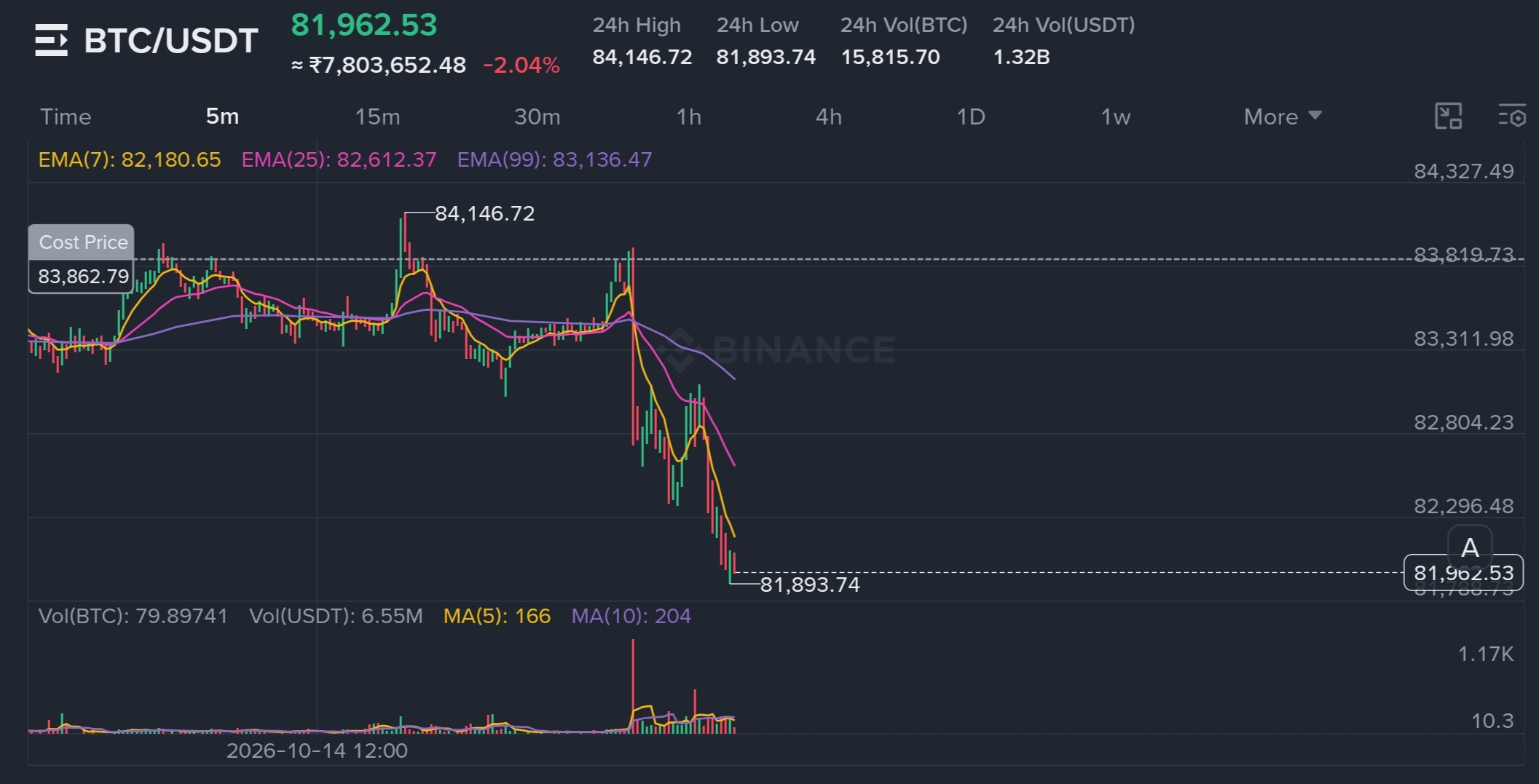
Baissier$BTC Bitcoin has been falling so smoothly tonight, and I think there are five reasons:
1. Bitcoin had already built up bearish momentum from a technical perspective. The highs keep getting lower, and at least on a smaller timeframe, it hasn't been able to break above 84,000 at any point over the past two days.
2. Tonight's bearish CPI data. Bitcoin has been unable to fall further or rise lately, mainly because the market has been waiting for the CPI release. Once the data came out, it triggered a chain reaction.
3. Looking at ETF flows, Bitcoin ETF funding has been wavering lately, with net outflows overall in recent days.
4. I mentioned this in an earlier post, too. We've recently seen several KOLs say that the market is sluggish and there are no opportunities, which also suggests that a major move may be near. The CPI release was just the fuse that set all the market's liquidity in motion.
5. BTC always moves in tandem with gold. Just look at gold's current momentum—it feels like 4,066 could be just around the corners.
#CPIWatch 🚨 $XAU #ShortSignal
1. Bitcoin had already built up bearish momentum from a technical perspective. The highs keep getting lower, and at least on a smaller timeframe, it hasn't been able to break above 84,000 at any point over the past two days.
2. Tonight's bearish CPI data. Bitcoin has been unable to fall further or rise lately, mainly because the market has been waiting for the CPI release. Once the data came out, it triggered a chain reaction.
3. Looking at ETF flows, Bitcoin ETF funding has been wavering lately, with net outflows overall in recent days.
4. I mentioned this in an earlier post, too. We've recently seen several KOLs say that the market is sluggish and there are no opportunities, which also suggests that a major move may be near. The CPI release was just the fuse that set all the market's liquidity in motion.
5. BTC always moves in tandem with gold. Just look at gold's current momentum—it feels like 4,066 could be just around the corners.
#CPIWatch 🚨 $XAU #ShortSignal


Signals247
·
--
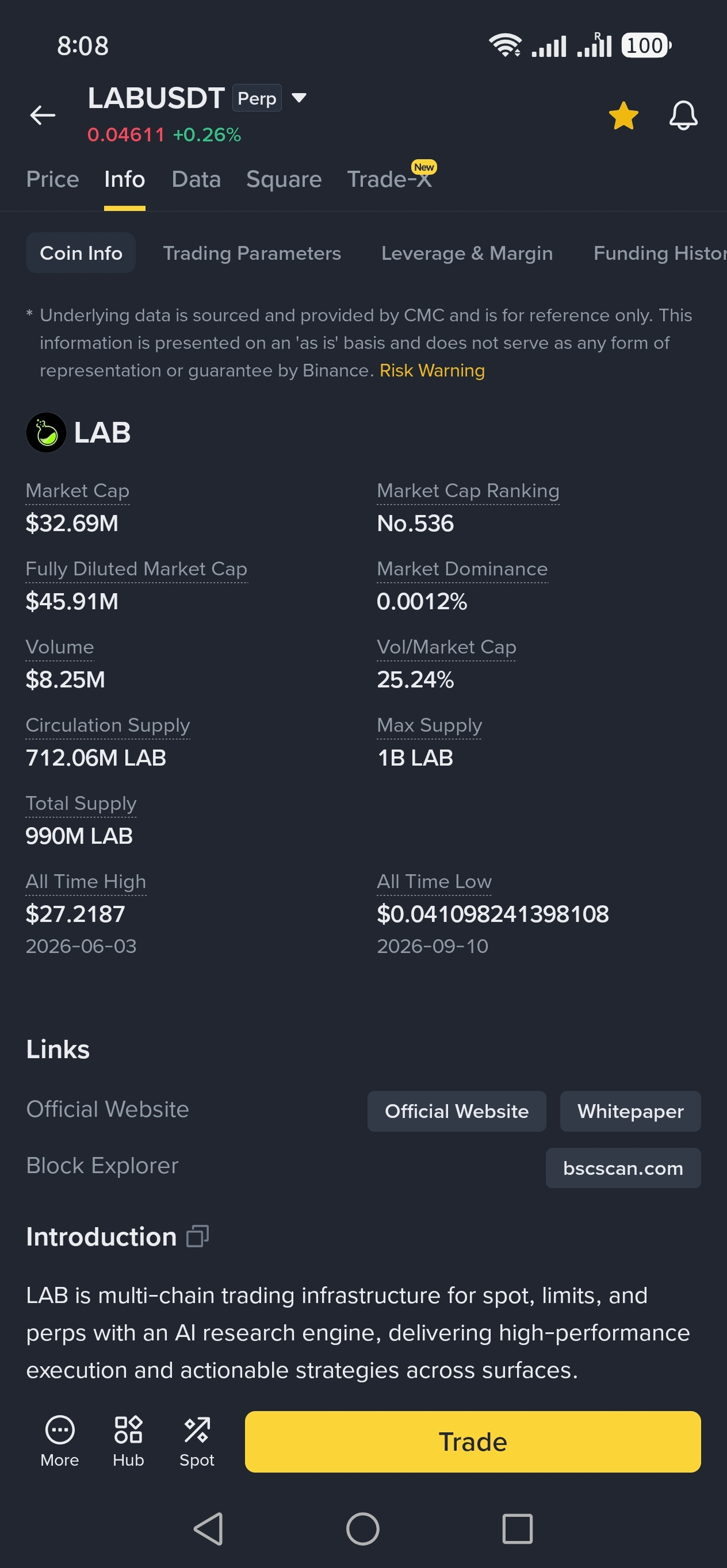
$LAB i told you at . 060 a new low is coming as the team sold all they printed Sadikov is here to make money from thin air so he wont pump it back , check his history , Don't be fool like binance reviewers that allow this scam to be listed , join me short and get your fund doubled in no time , he sold 300 million token last couple of days
#BinanceSquareTalks
#btc70k
#BinanceSquareTalks
#btc70k

Crypto_lens_
·
--
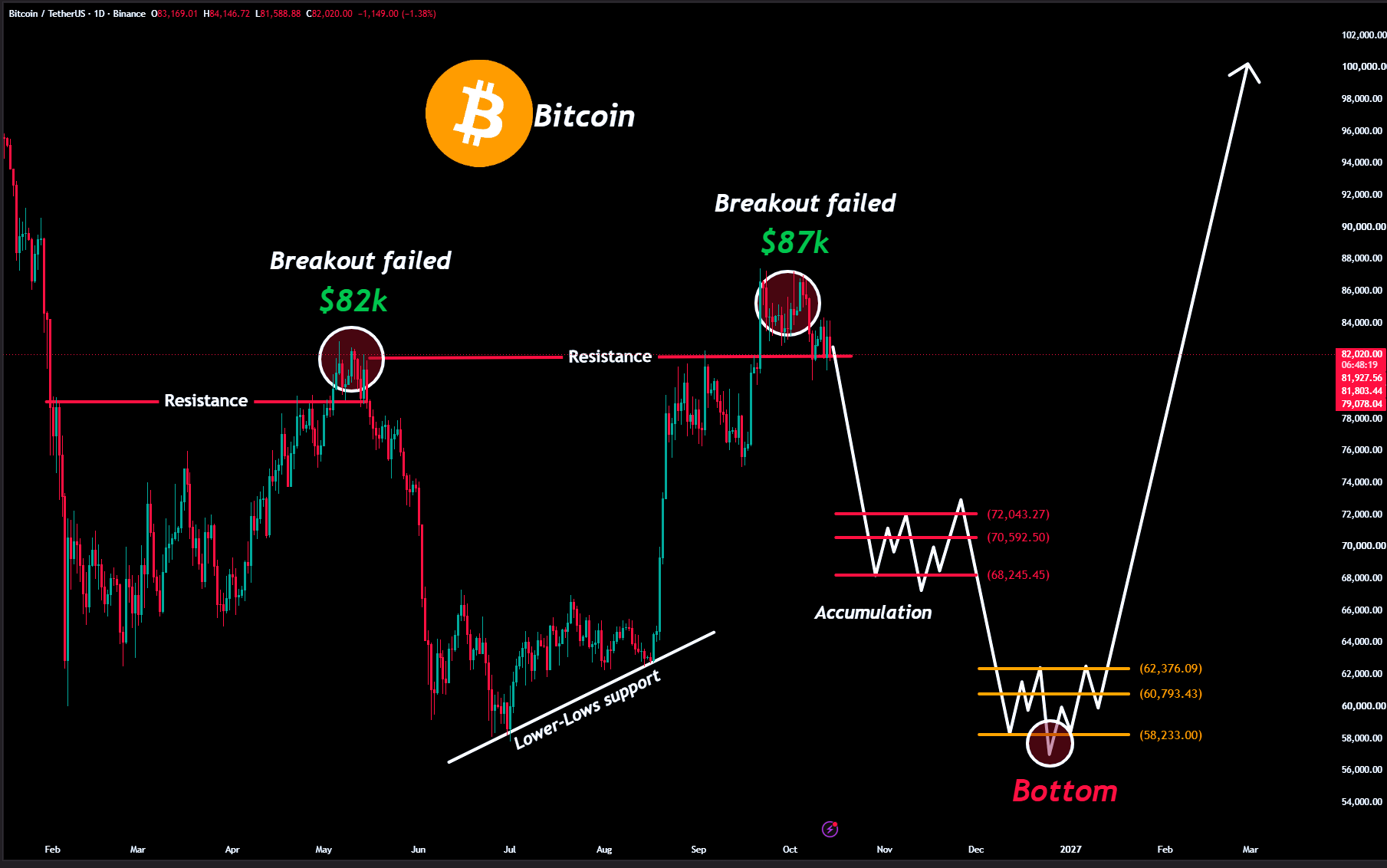
Baissier🚨 SOMETHING TERRIBLE IS HAPPENING RIGHT NOW
Last week, I warned you the $87K breakout would fail and $BTC would dump back toward $81K.
The final bull trap is over. $BTC is now entering the liquidation phase.
Everything is playing out exactly as I predicted.
We’ve seen this failed-breakout pattern before.
$82K → $72K → $70K → $68K → $58K
Don’t get caught buying this failed breakout.
Turn on notifications. Follow before you’re late.
I’ll post every major update here first.
Last week, I warned you the $87K breakout would fail and $BTC would dump back toward $81K.
The final bull trap is over. $BTC is now entering the liquidation phase.
Everything is playing out exactly as I predicted.
We’ve seen this failed-breakout pattern before.
$82K → $72K → $70K → $68K → $58K
Don’t get caught buying this failed breakout.
Turn on notifications. Follow before you’re late.
I’ll post every major update here first.

KIM_加密 143
·
--
[Terminé] 🎙️ welcome Everybody Join Kim_crypto143 Live/Discuss on Crypto &Trading.
2.3k auditeurs
KIM_加密 143
·
--
HaussierIf you’re asking whether BTC could fall into the $50K–$60K zone, that is a possible bearish scenario, but it would require a much deeper correction from the current area around $77K–$78K. Recent analysis has identified roughly $70K and then $62K–$65K as important downside support zones; a move toward $50K–$60K would therefore likely require those supports to fail.
Here’s a natural Binance Square-style giveaway post:
---
🎁 BTC NEXT MOVE — $50K TO $60K?
I want to know what YOU think. 👀
Bitcoin is currently around the $77K–$78K area, but the big question is: What comes next?
My personal view is that if BTC loses the important support zones, we could see a much deeper correction. I’m watching $60K first, and in a more extreme bearish scenario, $50K–$55K could become a possible target.
But here’s the other side…
If BTC holds the major supports and breaks back above the $80K–$82K resistance area, the bearish setup could completely change. Some market analysis currently sees $81.7K as an important level for confirming stronger bullish momentum.
So I want to hear from the community:
👇 What is your BTC prediction?
🔴 $50K–$60K — Deep correction
🟡 $60K–$70K — Healthy pullback
🟢 $80K–$90K+ — Bullish breakout 🚀
🎁 GIVEAWAY
Drop your BTC target + reason in the comments.
❤️ Like
💬 Comment your prediction
🔁 Share/Repost
👥 Follow for more BTC market discussions
I’ll pick some interesting predictions for a surprise crypto reward 🎁
No one knows the next candle. Let’s see who gets it right. 👀🔥
DYOR. Not financial advice.
#BTC #Bitcoin #Crypto143family #BitcoinPrediction #kim_crypto143 $BTC
$ETH
$BNB
Freedom of financial self-defense
Here’s a natural Binance Square-style giveaway post:
---
🎁 BTC NEXT MOVE — $50K TO $60K?
I want to know what YOU think. 👀
Bitcoin is currently around the $77K–$78K area, but the big question is: What comes next?
My personal view is that if BTC loses the important support zones, we could see a much deeper correction. I’m watching $60K first, and in a more extreme bearish scenario, $50K–$55K could become a possible target.
But here’s the other side…
If BTC holds the major supports and breaks back above the $80K–$82K resistance area, the bearish setup could completely change. Some market analysis currently sees $81.7K as an important level for confirming stronger bullish momentum.
So I want to hear from the community:
👇 What is your BTC prediction?
🔴 $50K–$60K — Deep correction
🟡 $60K–$70K — Healthy pullback
🟢 $80K–$90K+ — Bullish breakout 🚀
🎁 GIVEAWAY
Drop your BTC target + reason in the comments.
❤️ Like
💬 Comment your prediction
🔁 Share/Repost
👥 Follow for more BTC market discussions
I’ll pick some interesting predictions for a surprise crypto reward 🎁
No one knows the next candle. Let’s see who gets it right. 👀🔥
DYOR. Not financial advice.
#BTC #Bitcoin #Crypto143family #BitcoinPrediction #kim_crypto143 $BTC
$ETH
$BNB
Freedom of financial self-defense

KIM_加密 143
·
--
[Terminé] 🎙️ Hello Friend Join Kim Crypto family clubs Discuss on Crypto related
2.7k auditeurs
KIM_加密 143
·
--
[Revoir] 🎙️ Let's Discuss Market Situation today & what comes tomorrow's Market.
04 h 49 min 44 sec · 1.5k auditeurs

Night King Official
·
--
🚨 GIVEAWAY LIVE! 🎁
3,000 Red Packets are up for grabs! 🔥
✅ Follow
🔁 Repost
💬 Comment "666"
🎁 Claim Reward
Who’s ready? 👀
3,000 Red Packets are up for grabs! 🔥
✅ Follow
🔁 Repost
💬 Comment "666"
🎁 Claim Reward
Who’s ready? 👀

A. Cryptography
50%
B. Economic incentives
0%
C. Both equally
50%
D. Depends on the design
0%
2 Votes • Vote fermé
Privacy + compliance
50%
RWA adoption
25%
Developer activity
25%
Liquidity + users
0%
4 Votes • Vote fermé
Connectez-vous pour découvrir plus de contenu