

KimHotbae
2.7k Publications

KimHotbae
Signaler
Bloquer l’utilisateur
✨Focused on long-term trends, risk discipline & smart wealth building.
Trade régulièrement
4.6 an(s)
12 Suivis
608 Abonnés
2.0K+ J’aime
Publications
Tous
Citations
Vidéos
PINNED
·
--
Article
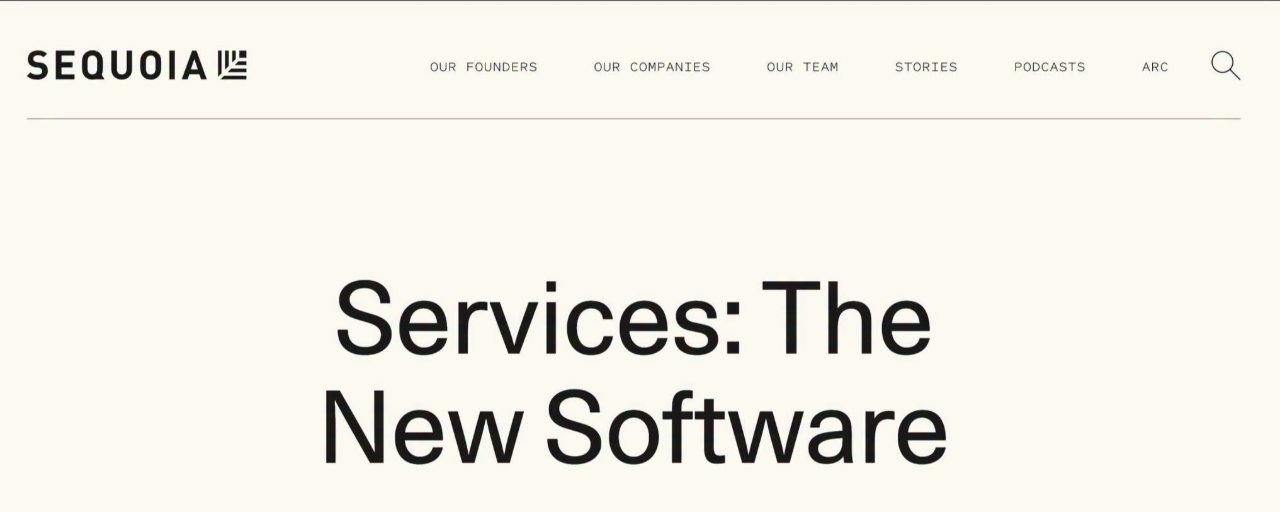
Sequoia: "The Next $1T Company Sells Work, Not Software"Sequoia Capital — the firm that backed Apple, Google, Nvidia, YouTube, Airbnb, Stripe — dropped a thesis worth reading closely.
The old model: For 20+ years, tech sold software. Microsoft sells Office, Adobe sells Photoshop, Salesforce sells CRM. Tools that help humans work faster. Copilot for everything.
The problem: Customers don't want software. They want work done. You don't want accounting software — you want books closed on time, taxes filed, reports delivered.
The insight: For every $1 businesses spend on software, they spend $6 on services. SaaS has been fighting over that $1. AI can now digitize the $6 — the knowledge workforce itself.
The map: Sequoia's Opportunity Map plots work by Intelligence vs. Judgement, Outsourced vs. Insourced. The sweet spot: highly standardized, already outsourced workflows — Insurance Brokerage ($140-200B), Accounting ($50-80B), Healthcare Revenue Cycle ($50-80B).
2025 = Copilot. 2026 = Autopilot. The winners won't build AI tools for accountants — they'll build AI accounting firms. Sequoia warns most Copilot startups face the Innovator's Dilemma: today you sell software to accountants, tomorrow you'd compete with them.
The bottom line: The next $1T AI company won't have the smartest chatbot. It'll be the first to turn work into a service you buy like electricity.
Crypto Cashtags That Align
Tier 1 — Direct "Sell Work" AI Agent Plays:
FET — Fetch.ai (ASI Alliance). Autonomous agents automating enterprise workflows. Built for agents doing work, not providing tools. (Ethereum){future}(FETUSDT)$VIRTUAL — Virtuals Protocol on Base. The agent creation infrastructure — a factory for building AI agents that sell outcomes, not subscriptions. (Base)$GRIFFAIN — Griffain on Solana. AI agent that executes on-chain actions. "Sell work" in its purest crypto form — you describe what you want, the agent does the job. SolanaOLAS — Autonolas on Ethereum. A framework for coordinating autonomous agent fleets — think of it as the operating system for a decentralized AI workforce. (Ethereum){alpha}(10x0001a500a6b18995b03f44bb040a5ffc28e45cb0)
Tier 2 — AI Infrastructure (the picks & shovels):
$TAO — Bittensor. A decentralized AI network where agents train, compete, and earn. The network layer for autonomous work — the protocol that lets AI sell its output peer-to-peer.RENDER — Render Network on Solana. Decentralized GPU compute. Every agent running in production needs compute power — Render is the hardware layer. (Solana){future}(RENDERUSDT)
Tier 3 — AI Agent Ecosystem:
$AI16Z — ai16z/ElizaOS on Solana. Named after the VC model itself — a DAO-run AI agent fund that makes autonomous investment decisions. Pure meta-commentary on Sequoia's thesis. Solana$ZEREBRO — Zerebro on Solana. An autonomous AI agent creating and distributing content without human intervention. "Sell work" in its most literal form — the agent is the output. Solana
The Sequoia filter: The next $1T company sells work, not software. In crypto, that means looking past the tool tokens and toward the agent workforce tokens — the protocols where AI doesn't just assist, but replaces the $6 of services for every $1 of software.
Not financial advice.
#NewsAboutCrypto #StrategicInvesting #BTC #SequoiaCapital
Sequoia: "The Next $1T Company Sells Work, Not Software"
Sequoia Capital — the firm that backed Apple, Google, Nvidia, YouTube, Airbnb, Stripe — dropped a thesis worth reading closely.
The old model: For 20+ years, tech sold software. Microsoft sells Office, Adobe sells Photoshop, Salesforce sells CRM. Tools that help humans work faster. Copilot for everything.
The problem: Customers don't want software. They want work done. You don't want accounting software — you want books closed on time, taxes filed, reports delivered.
The insight: For every $1 businesses spend on software, they spend $6 on services. SaaS has been fighting over that $1. AI can now digitize the $6 — the knowledge workforce itself.
The map: Sequoia's Opportunity Map plots work by Intelligence vs. Judgement, Outsourced vs. Insourced. The sweet spot: highly standardized, already outsourced workflows — Insurance Brokerage ($140-200B), Accounting ($50-80B), Healthcare Revenue Cycle ($50-80B).
2025 = Copilot. 2026 = Autopilot. The winners won't build AI tools for accountants — they'll build AI accounting firms. Sequoia warns most Copilot startups face the Innovator's Dilemma: today you sell software to accountants, tomorrow you'd compete with them.
The bottom line: The next $1T AI company won't have the smartest chatbot. It'll be the first to turn work into a service you buy like electricity.
Crypto Cashtags That Align
Tier 1 — Direct "Sell Work" AI Agent Plays:
FET — Fetch.ai (ASI Alliance). Autonomous agents automating enterprise workflows. Built for agents doing work, not providing tools. (Ethereum)$VIRTUAL — Virtuals Protocol on Base. The agent creation infrastructure — a factory for building AI agents that sell outcomes, not subscriptions. (Base)$GRIFFAIN — Griffain on Solana. AI agent that executes on-chain actions. "Sell work" in its purest crypto form — you describe what you want, the agent does the job. SolanaOLAS — Autonolas on Ethereum. A framework for coordinating autonomous agent fleets — think of it as the operating system for a decentralized AI workforce. (Ethereum)Tier 2 — AI Infrastructure (the picks & shovels):
$TAO — Bittensor. A decentralized AI network where agents train, compete, and earn. The network layer for autonomous work — the protocol that lets AI sell its output peer-to-peer.RENDER — Render Network on Solana. Decentralized GPU compute. Every agent running in production needs compute power — Render is the hardware layer. (Solana)Tier 3 — AI Agent Ecosystem:
$AI16Z — ai16z/ElizaOS on Solana. Named after the VC model itself — a DAO-run AI agent fund that makes autonomous investment decisions. Pure meta-commentary on Sequoia's thesis. Solana$ZEREBRO — Zerebro on Solana. An autonomous AI agent creating and distributing content without human intervention. "Sell work" in its most literal form — the agent is the output. Solana
The Sequoia filter: The next $1T company sells work, not software. In crypto, that means looking past the tool tokens and toward the agent workforce tokens — the protocols where AI doesn't just assist, but replaces the $6 of services for every $1 of software.
Not financial advice.
#NewsAboutCrypto #StrategicInvesting #BTC #SequoiaCapital
The old model: For 20+ years, tech sold software. Microsoft sells Office, Adobe sells Photoshop, Salesforce sells CRM. Tools that help humans work faster. Copilot for everything.
The problem: Customers don't want software. They want work done. You don't want accounting software — you want books closed on time, taxes filed, reports delivered.
The insight: For every $1 businesses spend on software, they spend $6 on services. SaaS has been fighting over that $1. AI can now digitize the $6 — the knowledge workforce itself.
The map: Sequoia's Opportunity Map plots work by Intelligence vs. Judgement, Outsourced vs. Insourced. The sweet spot: highly standardized, already outsourced workflows — Insurance Brokerage ($140-200B), Accounting ($50-80B), Healthcare Revenue Cycle ($50-80B).
2025 = Copilot. 2026 = Autopilot. The winners won't build AI tools for accountants — they'll build AI accounting firms. Sequoia warns most Copilot startups face the Innovator's Dilemma: today you sell software to accountants, tomorrow you'd compete with them.
The bottom line: The next $1T AI company won't have the smartest chatbot. It'll be the first to turn work into a service you buy like electricity.
Crypto Cashtags That Align
Tier 1 — Direct "Sell Work" AI Agent Plays:
FET — Fetch.ai (ASI Alliance). Autonomous agents automating enterprise workflows. Built for agents doing work, not providing tools. (Ethereum)$VIRTUAL — Virtuals Protocol on Base. The agent creation infrastructure — a factory for building AI agents that sell outcomes, not subscriptions. (Base)$GRIFFAIN — Griffain on Solana. AI agent that executes on-chain actions. "Sell work" in its purest crypto form — you describe what you want, the agent does the job. SolanaOLAS — Autonolas on Ethereum. A framework for coordinating autonomous agent fleets — think of it as the operating system for a decentralized AI workforce. (Ethereum)Tier 2 — AI Infrastructure (the picks & shovels):
$TAO — Bittensor. A decentralized AI network where agents train, compete, and earn. The network layer for autonomous work — the protocol that lets AI sell its output peer-to-peer.RENDER — Render Network on Solana. Decentralized GPU compute. Every agent running in production needs compute power — Render is the hardware layer. (Solana)Tier 3 — AI Agent Ecosystem:
$AI16Z — ai16z/ElizaOS on Solana. Named after the VC model itself — a DAO-run AI agent fund that makes autonomous investment decisions. Pure meta-commentary on Sequoia's thesis. Solana$ZEREBRO — Zerebro on Solana. An autonomous AI agent creating and distributing content without human intervention. "Sell work" in its most literal form — the agent is the output. Solana
The Sequoia filter: The next $1T company sells work, not software. In crypto, that means looking past the tool tokens and toward the agent workforce tokens — the protocols where AI doesn't just assist, but replaces the $6 of services for every $1 of software.
Not financial advice.
#NewsAboutCrypto #StrategicInvesting #BTC #SequoiaCapital
11
12
271
·
--
🚨 THE FED HIKE TRADE JUST COLLAPSED — OCTOBER ODDS ARE DOWN TO 17%.
After the latest U.S. jobs report showed just 29K payroll growth and unemployment rising to 4.2%, traders sharply cut expectations for another Fed hike this month. One market snapshot put the probability near 17%.
That is a huge shift from just days ago, when oil-driven inflation fears had pushed October hike odds above 70%.
The macro chain just flipped:
Weak jobs → lower hike odds → lower yield pressure → better conditions for risk assets.
That’s why this matters for:
$QQQ — tech gets relief if rates stop climbing.
$BTC — liquidity-sensitive assets benefit when Fed pressure eases.
$XAU — gold gets a cleaner setup if yields and the dollar soften.
$TLT — bonds benefit directly if markets price less tightening.
But don’t confuse “pause” with “pivot.”
Fed officials are still saying inflation is too high, and Reuters notes a December hike remains possible depending on incoming CPI and other data.
So the trade now is:
October pause narrative ON.
December uncertainty still alive.
$QQQ $BTC $XAU $TLT
#fedoctoberratehikeoddsfallto17% #ZcashETFPostsFirstWeeklyOutflow$93.6M #GreekPoliceBustCryptoScamRingArrest17 #BitcoinRejectedAt$87K #NvidiaHitsRecordHighUp2.4%
🚨 THE FED HIKE TRADE JUST COLLAPSED — OCTOBER ODDS ARE DOWN TO 17%.
After the latest U.S. jobs report showed just 29K payroll growth and unemployment rising to 4.2%, traders sharply cut expectations for another Fed hike this month. One market snapshot put the probability near 17%.
That is a huge shift from just days ago, when oil-driven inflation fears had pushed October hike odds above 70%.
The macro chain just flipped:
Weak jobs → lower hike odds → lower yield pressure → better conditions for risk assets.
That’s why this matters for:
$QQQ — tech gets relief if rates stop climbing.
$BTC — liquidity-sensitive assets benefit when Fed pressure eases.
$XAU — gold gets a cleaner setup if yields and the dollar soften.
$TLT — bonds benefit directly if markets price less tightening.
But don’t confuse “pause” with “pivot.”
Fed officials are still saying inflation is too high, and Reuters notes a December hike remains possible depending on incoming CPI and other data.
So the trade now is:
October pause narrative ON.
December uncertainty still alive.
$QQQ $BTC $XAU $TLT
#fedoctoberratehikeoddsfallto17% #ZcashETFPostsFirstWeeklyOutflow$93.6M #GreekPoliceBustCryptoScamRingArrest17 #BitcoinRejectedAt$87K #NvidiaHitsRecordHighUp2.4%
After the latest U.S. jobs report showed just 29K payroll growth and unemployment rising to 4.2%, traders sharply cut expectations for another Fed hike this month. One market snapshot put the probability near 17%.
That is a huge shift from just days ago, when oil-driven inflation fears had pushed October hike odds above 70%.
The macro chain just flipped:
Weak jobs → lower hike odds → lower yield pressure → better conditions for risk assets.
That’s why this matters for:
$QQQ — tech gets relief if rates stop climbing.
$BTC — liquidity-sensitive assets benefit when Fed pressure eases.
$XAU — gold gets a cleaner setup if yields and the dollar soften.
$TLT — bonds benefit directly if markets price less tightening.
But don’t confuse “pause” with “pivot.”
Fed officials are still saying inflation is too high, and Reuters notes a December hike remains possible depending on incoming CPI and other data.
So the trade now is:
October pause narrative ON.
December uncertainty still alive.
$QQQ $BTC $XAU $TLT
#fedoctoberratehikeoddsfallto17% #ZcashETFPostsFirstWeeklyOutflow$93.6M #GreekPoliceBustCryptoScamRingArrest17 #BitcoinRejectedAt$87K #NvidiaHitsRecordHighUp2.4%
586
·
--
🚨 GREEK POLICE JUST BUSTED A CRYPTO SCAM RING — 17 ARRESTED, INCLUDING 9 MILITARY PERSONNEL.
This wasn’t some tiny Telegram rug.
Greek authorities say the network had been operating since at least 2025, using fake crypto-investment promises and pyramid-style recruiting to pull in new victims. Police estimate more than $8M flowed into the scheme.
The pitch was classic greed bait:
“Double your money in 50 days.”
Victims were encouraged to bring in more participants for bigger returns, while withdrawals were later frozen. Binance News says roughly 10,000 people may have participated, with average investments near €800.
Police arrested 17 suspects, while another 9 people were named in the case file. Authorities also seized hundreds of thousands of euros in cash and other evidence.
The real lesson?
Crypto didn’t create the scam.
The scam just used crypto as the wrapper.
Whenever the pitch is:
Guaranteed returns.
Recruit more people.
Double your money fast.
That’s not investing.
That’s the exit liquidity talking. 👀
$BTC $ETH $BNB
#greekpolicebustcryptoscamringarrest17 #ZcashETFPostsFirstWeeklyOutflow$93.6M #BitcoinRejectedAt$87K #FedOctoberRateHikeOddsFallTo17% #NvidiaHitsRecordHighUp2.4%
🚨 GREEK POLICE JUST BUSTED A CRYPTO SCAM RING — 17 ARRESTED, INCLUDING 9 MILITARY PERSONNEL.
This wasn’t some tiny Telegram rug.
Greek authorities say the network had been operating since at least 2025, using fake crypto-investment promises and pyramid-style recruiting to pull in new victims. Police estimate more than $8M flowed into the scheme.
The pitch was classic greed bait:
“Double your money in 50 days.”
Victims were encouraged to bring in more participants for bigger returns, while withdrawals were later frozen. Binance News says roughly 10,000 people may have participated, with average investments near €800.
Police arrested 17 suspects, while another 9 people were named in the case file. Authorities also seized hundreds of thousands of euros in cash and other evidence.
The real lesson?
Crypto didn’t create the scam.
The scam just used crypto as the wrapper.
Whenever the pitch is:
Guaranteed returns.
Recruit more people.
Double your money fast.
That’s not investing.
That’s the exit liquidity talking. 👀
$BTC $ETH $BNB
#greekpolicebustcryptoscamringarrest17 #ZcashETFPostsFirstWeeklyOutflow$93.6M #BitcoinRejectedAt$87K #FedOctoberRateHikeOddsFallTo17% #NvidiaHitsRecordHighUp2.4%
This wasn’t some tiny Telegram rug.
Greek authorities say the network had been operating since at least 2025, using fake crypto-investment promises and pyramid-style recruiting to pull in new victims. Police estimate more than $8M flowed into the scheme.
The pitch was classic greed bait:
“Double your money in 50 days.”
Victims were encouraged to bring in more participants for bigger returns, while withdrawals were later frozen. Binance News says roughly 10,000 people may have participated, with average investments near €800.
Police arrested 17 suspects, while another 9 people were named in the case file. Authorities also seized hundreds of thousands of euros in cash and other evidence.
The real lesson?
Crypto didn’t create the scam.
The scam just used crypto as the wrapper.
Whenever the pitch is:
Guaranteed returns.
Recruit more people.
Double your money fast.
That’s not investing.
That’s the exit liquidity talking. 👀
$BTC $ETH $BNB
#greekpolicebustcryptoscamringarrest17 #ZcashETFPostsFirstWeeklyOutflow$93.6M #BitcoinRejectedAt$87K #FedOctoberRateHikeOddsFallTo17% #NvidiaHitsRecordHighUp2.4%
2.2k
·
--
Haussier
🚨 THE U.S. LABOR MARKET JUST SENT ANOTHER WARNING — AND MARKETS ARE LISTENING.
September unemployment rose to 4.2%, above the 4.1% forecast and previous reading.
At the same time, nonfarm payrolls increased by just 29K, far below expectations.
That’s a pretty clear macro signal:
Higher unemployment + weak job creation = a cooling labor market.
And for markets, that immediately feeds into the Fed trade:
Weaker labor → less pressure to hike → lower yield expectations → support for risk assets.
The biggest cashtags to watch from here:
$QQQ — tech benefits if rate pressure eases.
$BTC — liquidity-sensitive and highly reactive to Fed expectations.
$XAU — can benefit if yields and the dollar soften.
$TLT — direct duration play if Treasury yields fall.
The key question now isn’t whether jobs are slowing.
It’s whether they’re slowing fast enough to force the Fed’s hand. 👀
$QQQ $BTC $XAU $TLT
#secproposescryptocustodyrules #BitcoinParesGainsAfterRallyTo$86.5K #CerebrasSinksNearly20%OnReportNvidiaToPowerOpenAI #SECApproves3xLongCryptoCommodityETPs #G7PlansToReleaseUpTo100MBarrelsOilDiesel
🚨 THE U.S. LABOR MARKET JUST SENT ANOTHER WARNING — AND MARKETS ARE LISTENING.
September unemployment rose to 4.2%, above the 4.1% forecast and previous reading.
At the same time, nonfarm payrolls increased by just 29K, far below expectations.
That’s a pretty clear macro signal:
Higher unemployment + weak job creation = a cooling labor market.
And for markets, that immediately feeds into the Fed trade:
Weaker labor → less pressure to hike → lower yield expectations → support for risk assets.
The biggest cashtags to watch from here:
$QQQ — tech benefits if rate pressure eases.
$BTC — liquidity-sensitive and highly reactive to Fed expectations.
$XAU — can benefit if yields and the dollar soften.
$TLT — direct duration play if Treasury yields fall.
The key question now isn’t whether jobs are slowing.
It’s whether they’re slowing fast enough to force the Fed’s hand. 👀
$QQQ $BTC $XAU $TLT
#secproposescryptocustodyrules #BitcoinParesGainsAfterRallyTo$86.5K #CerebrasSinksNearly20%OnReportNvidiaToPowerOpenAI #SECApproves3xLongCryptoCommodityETPs #G7PlansToReleaseUpTo100MBarrelsOilDiesel
September unemployment rose to 4.2%, above the 4.1% forecast and previous reading.
At the same time, nonfarm payrolls increased by just 29K, far below expectations.
That’s a pretty clear macro signal:
Higher unemployment + weak job creation = a cooling labor market.
And for markets, that immediately feeds into the Fed trade:
Weaker labor → less pressure to hike → lower yield expectations → support for risk assets.
The biggest cashtags to watch from here:
$QQQ — tech benefits if rate pressure eases.
$BTC — liquidity-sensitive and highly reactive to Fed expectations.
$XAU — can benefit if yields and the dollar soften.
$TLT — direct duration play if Treasury yields fall.
The key question now isn’t whether jobs are slowing.
It’s whether they’re slowing fast enough to force the Fed’s hand. 👀
$QQQ $BTC $XAU $TLT
#secproposescryptocustodyrules #BitcoinParesGainsAfterRallyTo$86.5K #CerebrasSinksNearly20%OnReportNvidiaToPowerOpenAI #SECApproves3xLongCryptoCommodityETPs #G7PlansToReleaseUpTo100MBarrelsOilDiesel
196
·
--
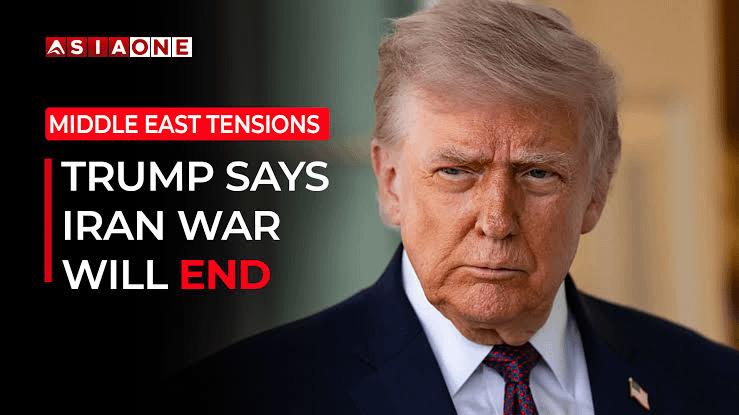
🚨 THE U.S.–IRAN WAR RISK IS CREEPING BACK INTO THE MARKET — AND THREE TICKERS MATTER MOST.
Washington is preparing to increase its military presence near Iran, with reports of a third U.S. aircraft carrier and up to 10,000 additional troops potentially heading to the region. At the same time, Tehran is preparing a stronger retaliation if the U.S. resumes large-scale attacks, while diplomacy remains stalled and fragile.
That puts the market back on the same transmission chain:
U.S.–Iran escalation → Hormuz risk → oil spike → inflation pressure → Fed problem → risk-off.
And that hits three assets fast:
$BZ — Brent is the first direct geopolitical trade. Any renewed disruption around Hormuz can quickly reprice crude because the strait remains one of the world’s most critical energy chokepoints. Reuters says LNG traffic has recovered, but security risks are still elevated.
$XAU — Gold benefits from safe-haven demand if military risk rises, especially if investors start hedging against a broader Middle East escalation.
$QQQ — Tech gets the ugly side of the chain: higher oil → higher inflation expectations → higher-for-longer rate risk → pressure on long-duration growth stocks.
So the next big macro move may not come from CPI.
It may come from Hormuz.
Watch the carriers.
Watch Iran’s response.
Watch Brent.
Because if $BZ starts ripping again, $XAU and $QQQ probably won’t stay quiet. 👀
$XAU $BZ $QQQ $TRUMP
#secproposescryptocustodyrules #BitcoinParesGainsAfterRallyTo$86.5K #CerebrasSinksNearly20%OnReportNvidiaToPowerOpenAI #SECApproves3xLongCryptoCommodityETPs #TRUMP
🚨 THE U.S.–IRAN WAR RISK IS CREEPING BACK INTO THE MARKET — AND THREE TICKERS MATTER MOST.
Washington is preparing to increase its military presence near Iran, with reports of a third U.S. aircraft carrier and up to 10,000 additional troops potentially heading to the region. At the same time, Tehran is preparing a stronger retaliation if the U.S. resumes large-scale attacks, while diplomacy remains stalled and fragile.
That puts the market back on the same transmission chain:
U.S.–Iran escalation → Hormuz risk → oil spike → inflation pressure → Fed problem → risk-off.
And that hits three assets fast:
$BZ — Brent is the first direct geopolitical trade. Any renewed disruption around Hormuz can quickly reprice crude because the strait remains one of the world’s most critical energy chokepoints. Reuters says LNG traffic has recovered, but security risks are still elevated.
$XAU — Gold benefits from safe-haven demand if military risk rises, especially if investors start hedging against a broader Middle East escalation.
$QQQ — Tech gets the ugly side of the chain: higher oil → higher inflation expectations → higher-for-longer rate risk → pressure on long-duration growth stocks.
So the next big macro move may not come from CPI.
It may come from Hormuz.
Watch the carriers.
Watch Iran’s response.
Watch Brent.
Because if $BZ starts ripping again, $XAU and $QQQ probably won’t stay quiet. 👀
$XAU $BZ $QQQ $TRUMP
#secproposescryptocustodyrules #BitcoinParesGainsAfterRallyTo$86.5K #CerebrasSinksNearly20%OnReportNvidiaToPowerOpenAI #SECApproves3xLongCryptoCommodityETPs #TRUMP
Washington is preparing to increase its military presence near Iran, with reports of a third U.S. aircraft carrier and up to 10,000 additional troops potentially heading to the region. At the same time, Tehran is preparing a stronger retaliation if the U.S. resumes large-scale attacks, while diplomacy remains stalled and fragile.
That puts the market back on the same transmission chain:
U.S.–Iran escalation → Hormuz risk → oil spike → inflation pressure → Fed problem → risk-off.
And that hits three assets fast:
$BZ — Brent is the first direct geopolitical trade. Any renewed disruption around Hormuz can quickly reprice crude because the strait remains one of the world’s most critical energy chokepoints. Reuters says LNG traffic has recovered, but security risks are still elevated.
$XAU — Gold benefits from safe-haven demand if military risk rises, especially if investors start hedging against a broader Middle East escalation.
$QQQ — Tech gets the ugly side of the chain: higher oil → higher inflation expectations → higher-for-longer rate risk → pressure on long-duration growth stocks.
So the next big macro move may not come from CPI.
It may come from Hormuz.
Watch the carriers.
Watch Iran’s response.
Watch Brent.
Because if $BZ starts ripping again, $XAU and $QQQ probably won’t stay quiet. 👀
$XAU $BZ $QQQ $TRUMP
#secproposescryptocustodyrules #BitcoinParesGainsAfterRallyTo$86.5K #CerebrasSinksNearly20%OnReportNvidiaToPowerOpenAI #SECApproves3xLongCryptoCommodityETPs #TRUMP
1
448
·
--
Haussier
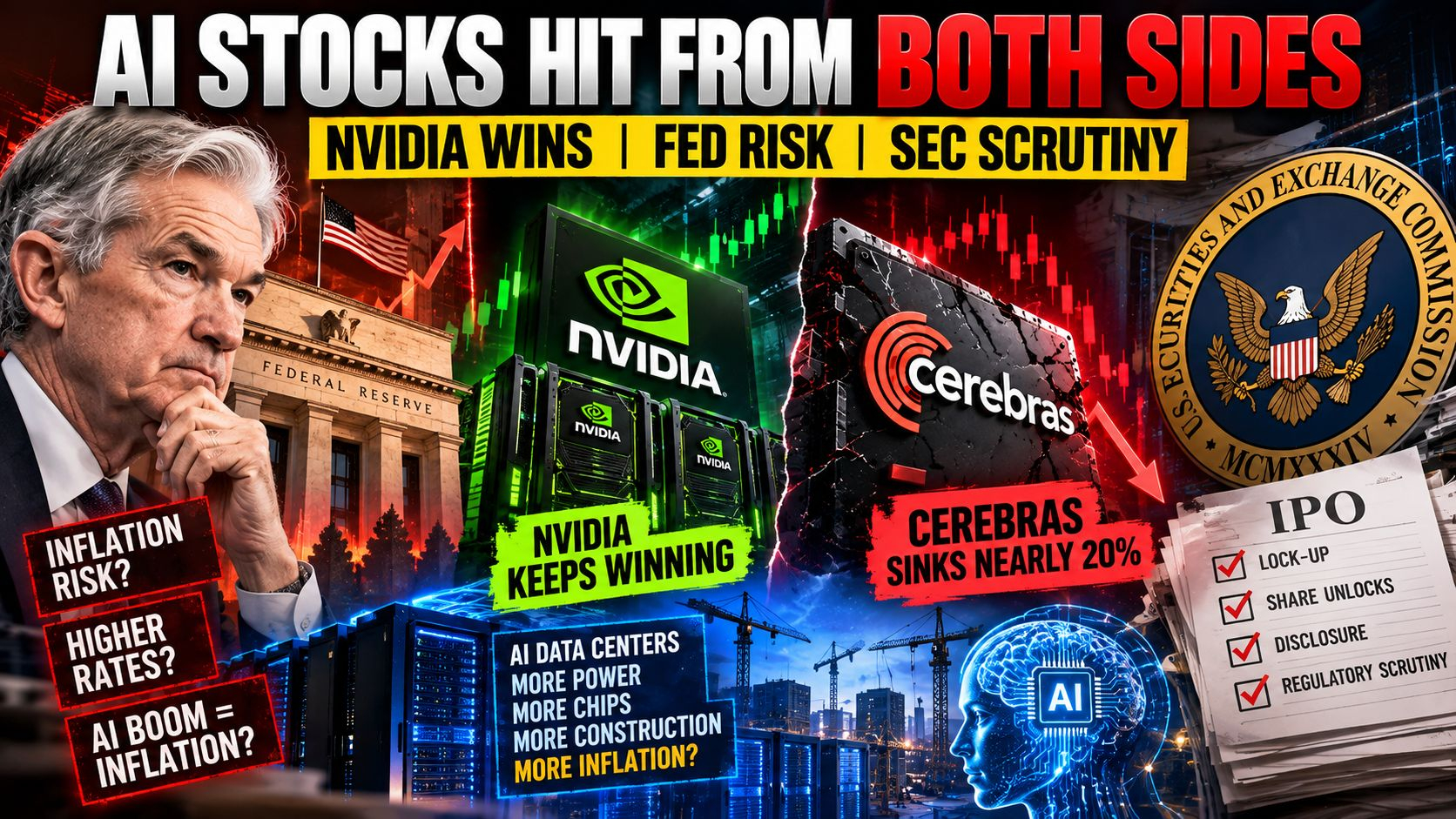
🚨 AI STOCKS JUST GOT HIT FROM BOTH SIDES: NVIDIA COMPETITION + FED RISK.
Cerebras just sank nearly 20% after reports that $OPENAI may use $NVDA.US GPUs for a key high-speed workload.
But zoom out.
This isn’t just a Cerebras story.
The entire AI trade is now sitting between two forces:
1. Nvidia keeps winning the compute war.
Every workload that stays on Nvidia makes life harder for challengers trying to justify massive valuations.
2. The Fed is starting to worry the AI boom itself could become inflationary.
More AI means:
More data centers → more power demand → more chips → more construction → more bottlenecks.
Fed Governor Lisa Cook just flagged that AI buildout as a potential 2027 inflation risk.
And here’s the twist:
Weak jobs data is simultaneously pushing markets toward a Fed pause, helping tech valuations in the short term.
So AI stocks are getting pulled in opposite directions:
Dovish Fed = valuation support.
AI inflation = higher-rate risk later.
Nvidia dominance = brutal competition now.
Meanwhile, Cerebras’ SEC filings already show how tightly its story is tied to OpenAI capacity commitments — and how future share
unlocks can add another layer of supply pressure.
This is no longer just “AI goes up.”
Now investors have to ask:
Who gets the workloads?
Who survives the capex war?
And what happens if AI itself keeps inflation alive? 👀
$NVDA $CBRS $QQQ
#cerebrassinksnearly20%onreportnvidiatopoweropenai #BitcoinParesGainsAfterRallyTo$86.5K #SECProposesCryptoCustodyRules #SECApproves3xLongCryptoCommodityETPs #USStocksCloseHigherOnWeakJobsData
🚨 AI STOCKS JUST GOT HIT FROM BOTH SIDES: NVIDIA COMPETITION + FED RISK.
Cerebras just sank nearly 20% after reports that $OPENAI may use $NVDA.US GPUs for a key high-speed workload.
But zoom out.
This isn’t just a Cerebras story.
The entire AI trade is now sitting between two forces:
1. Nvidia keeps winning the compute war.
Every workload that stays on Nvidia makes life harder for challengers trying to justify massive valuations.
2. The Fed is starting to worry the AI boom itself could become inflationary.
More AI means:
More data centers → more power demand → more chips → more construction → more bottlenecks.
Fed Governor Lisa Cook just flagged that AI buildout as a potential 2027 inflation risk.
And here’s the twist:
Weak jobs data is simultaneously pushing markets toward a Fed pause, helping tech valuations in the short term.
So AI stocks are getting pulled in opposite directions:
Dovish Fed = valuation support.
AI inflation = higher-rate risk later.
Nvidia dominance = brutal competition now.
Meanwhile, Cerebras’ SEC filings already show how tightly its story is tied to OpenAI capacity commitments — and how future share
unlocks can add another layer of supply pressure.
This is no longer just “AI goes up.”
Now investors have to ask:
Who gets the workloads?
Who survives the capex war?
And what happens if AI itself keeps inflation alive? 👀
$NVDA $CBRS $QQQ
#cerebrassinksnearly20%onreportnvidiatopoweropenai #BitcoinParesGainsAfterRallyTo$86.5K #SECProposesCryptoCustodyRules #SECApproves3xLongCryptoCommodityETPs #USStocksCloseHigherOnWeakJobsData
Cerebras just sank nearly 20% after reports that $OPENAI may use $NVDA.US GPUs for a key high-speed workload.
But zoom out.
This isn’t just a Cerebras story.
The entire AI trade is now sitting between two forces:
1. Nvidia keeps winning the compute war.
Every workload that stays on Nvidia makes life harder for challengers trying to justify massive valuations.
2. The Fed is starting to worry the AI boom itself could become inflationary.
More AI means:
More data centers → more power demand → more chips → more construction → more bottlenecks.
Fed Governor Lisa Cook just flagged that AI buildout as a potential 2027 inflation risk.
And here’s the twist:
Weak jobs data is simultaneously pushing markets toward a Fed pause, helping tech valuations in the short term.
So AI stocks are getting pulled in opposite directions:
Dovish Fed = valuation support.
AI inflation = higher-rate risk later.
Nvidia dominance = brutal competition now.
Meanwhile, Cerebras’ SEC filings already show how tightly its story is tied to OpenAI capacity commitments — and how future share
unlocks can add another layer of supply pressure.
This is no longer just “AI goes up.”
Now investors have to ask:
Who gets the workloads?
Who survives the capex war?
And what happens if AI itself keeps inflation alive? 👀
$NVDA $CBRS $QQQ
#cerebrassinksnearly20%onreportnvidiatopoweropenai #BitcoinParesGainsAfterRallyTo$86.5K #SECProposesCryptoCustodyRules #SECApproves3xLongCryptoCommodityETPs #USStocksCloseHigherOnWeakJobsData
8
9.3k
·
--
Vérifié
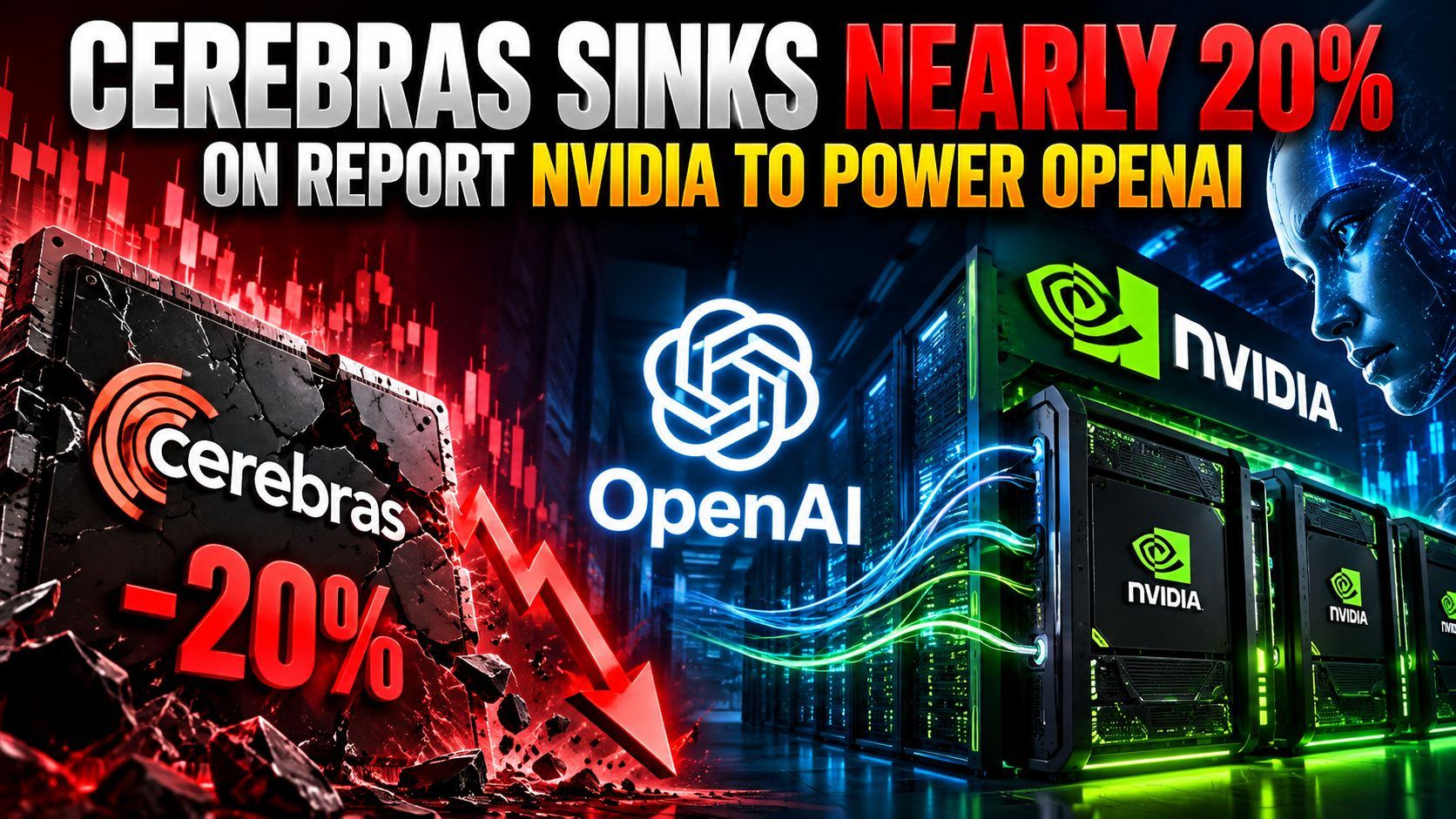
🚨 CEREBRAS JUST GOT HIT WITH THE “NVIDIA STILL OWNS AI” TRADE.
Cerebras shares sank nearly 20% this week to a post-IPO low after SemiAnalysis reported that OpenAI plans to use Nvidia GPUs for the “Ultrafast” mode of GPT-6.1 Sol, instead of Cerebras hardware.
That headline hit the exact part of the Cerebras bull case investors care about most:
Can it really take high-value inference workloads away from Nvidia?
And the pressure didn’t stop there.
Post-IPO lockups also expired on roughly 19.4M shares, about 8% of shares outstanding, adding another supply overhang.
But there’s a twist.
OpenAI CEO Sam Altman pushed back on speculation about the relationship, saying Cerebras remains a close partner and that the companies have deep engagement around speed. The stock then bounced in after-hours trading.
So the story is not:
“Cerebras lost OpenAI.”
It’s:
“Nvidia may have won one crucial workload — and the market immediately repriced the threat.”
That tells you how fragile the “Nvidia challenger” narrative still is.
One OpenAI compute decision → nearly 20% wiped out.
$NVDA $CBRSB
{future}(NVDAUSDT)
{spot}(CBRSBUSDT)
#cerebrassinksnearly20%onreportnvidiatopoweropenai #BitcoinParesGainsAfterRallyTo$86.5K #SECProposesCryptoCustodyRules #SECApproves3xLongCryptoCommodityETPs #G7PlansToReleaseUpTo100MBarrelsOilDiesel
🚨 CEREBRAS JUST GOT HIT WITH THE “NVIDIA STILL OWNS AI” TRADE.
Cerebras shares sank nearly 20% this week to a post-IPO low after SemiAnalysis reported that OpenAI plans to use Nvidia GPUs for the “Ultrafast” mode of GPT-6.1 Sol, instead of Cerebras hardware.
That headline hit the exact part of the Cerebras bull case investors care about most:
Can it really take high-value inference workloads away from Nvidia?
And the pressure didn’t stop there.
Post-IPO lockups also expired on roughly 19.4M shares, about 8% of shares outstanding, adding another supply overhang.
But there’s a twist.
OpenAI CEO Sam Altman pushed back on speculation about the relationship, saying Cerebras remains a close partner and that the companies have deep engagement around speed. The stock then bounced in after-hours trading.
So the story is not:
“Cerebras lost OpenAI.”
It’s:
“Nvidia may have won one crucial workload — and the market immediately repriced the threat.”
That tells you how fragile the “Nvidia challenger” narrative still is.
One OpenAI compute decision → nearly 20% wiped out.
$NVDA $CBRSB
#cerebrassinksnearly20%onreportnvidiatopoweropenai #BitcoinParesGainsAfterRallyTo$86.5K #SECProposesCryptoCustodyRules #SECApproves3xLongCryptoCommodityETPs #G7PlansToReleaseUpTo100MBarrelsOilDiesel
Cerebras shares sank nearly 20% this week to a post-IPO low after SemiAnalysis reported that OpenAI plans to use Nvidia GPUs for the “Ultrafast” mode of GPT-6.1 Sol, instead of Cerebras hardware.
That headline hit the exact part of the Cerebras bull case investors care about most:
Can it really take high-value inference workloads away from Nvidia?
And the pressure didn’t stop there.
Post-IPO lockups also expired on roughly 19.4M shares, about 8% of shares outstanding, adding another supply overhang.
But there’s a twist.
OpenAI CEO Sam Altman pushed back on speculation about the relationship, saying Cerebras remains a close partner and that the companies have deep engagement around speed. The stock then bounced in after-hours trading.
So the story is not:
“Cerebras lost OpenAI.”
It’s:
“Nvidia may have won one crucial workload — and the market immediately repriced the threat.”
That tells you how fragile the “Nvidia challenger” narrative still is.
One OpenAI compute decision → nearly 20% wiped out.
$NVDA $CBRSB
#cerebrassinksnearly20%onreportnvidiatopoweropenai #BitcoinParesGainsAfterRallyTo$86.5K #SECProposesCryptoCustodyRules #SECApproves3xLongCryptoCommodityETPs #G7PlansToReleaseUpTo100MBarrelsOilDiesel
4.1k
·
--
Haussier
🚨 $BTC JUST RIPPED TO $86.5K — NOW THE REAL TEST STARTS.
Bitcoin surged through $85K and briefly traded above $86K–$87K, helped by weaker U.S. jobs data and a thinner sell wall around $85K.
But the move is already losing some heat.
That matters because the next major supply zone sits around $87K–$87.4K. QCP described a break above roughly $87.4K as the gateway toward $90K.
So the setup is simple:
Hold $85K → breakout still alive.
Clear $87.4K → $90K comes into play.
Lose $85K → this starts looking like another liquidity grab.
The macro backdrop helped BTC.
Now price has to prove the breakout wasn’t just a reaction to weak jobs data.
$86.5K was the rally.
$87.4K is the test. 👀
$XAU $SUI
{future}(BTCUSDT)
{future}(XAUUSDT)
{future}(SUIUSDT)
#BitcoinParesGainsAfterRallyTo$86.5K #CerebrasSinksNearly20%OnReportNvidiaToPowerOpenAI #SECProposesCryptoCustodyRules #SECApproves3xLongCryptoCommodityETPs #G7PlansToReleaseUpTo100MBarrelsOilDiesel
🚨 $BTC JUST RIPPED TO $86.5K — NOW THE REAL TEST STARTS.
Bitcoin surged through $85K and briefly traded above $86K–$87K, helped by weaker U.S. jobs data and a thinner sell wall around $85K.
But the move is already losing some heat.
That matters because the next major supply zone sits around $87K–$87.4K. QCP described a break above roughly $87.4K as the gateway toward $90K.
So the setup is simple:
Hold $85K → breakout still alive.
Clear $87.4K → $90K comes into play.
Lose $85K → this starts looking like another liquidity grab.
The macro backdrop helped BTC.
Now price has to prove the breakout wasn’t just a reaction to weak jobs data.
$86.5K was the rally.
$87.4K is the test. 👀
$XAU $SUI
#BitcoinParesGainsAfterRallyTo$86.5K #CerebrasSinksNearly20%OnReportNvidiaToPowerOpenAI #SECProposesCryptoCustodyRules #SECApproves3xLongCryptoCommodityETPs #G7PlansToReleaseUpTo100MBarrelsOilDiesel
Bitcoin surged through $85K and briefly traded above $86K–$87K, helped by weaker U.S. jobs data and a thinner sell wall around $85K.
But the move is already losing some heat.
That matters because the next major supply zone sits around $87K–$87.4K. QCP described a break above roughly $87.4K as the gateway toward $90K.
So the setup is simple:
Hold $85K → breakout still alive.
Clear $87.4K → $90K comes into play.
Lose $85K → this starts looking like another liquidity grab.
The macro backdrop helped BTC.
Now price has to prove the breakout wasn’t just a reaction to weak jobs data.
$86.5K was the rally.
$87.4K is the test. 👀
$XAU $SUI
#BitcoinParesGainsAfterRallyTo$86.5K #CerebrasSinksNearly20%OnReportNvidiaToPowerOpenAI #SECProposesCryptoCustodyRules #SECApproves3xLongCryptoCommodityETPs #G7PlansToReleaseUpTo100MBarrelsOilDiesel

1
1.8k
·
--
🚨 $MAGMA — THIS ISN’T A CLEAN FUNDAMENTAL TRADE. IT’S A SQUEEZE TRADE.
Magma Finance is one of the more interesting Sui DeFi names on paper.
The project raised $6M in strategic funding from investors including HashKey Capital, SNZ, SevenX Ventures, Puzzle Ventures and Topspin Ventures, and is building an adaptive liquidity engine for Sui.
The narrative fits perfectly:
Sui DeFi expansion + AI-driven liquidity + adaptive market making.
But the chart setup may matter more than the story right now.
Short positioning reportedly looks heavily crowded.
And when too many traders lean short at the same time, the rebound can become self-feeding:
Shorts enter → price rises → stops get hit → forced buying → more shorts get squeezed.
That’s the real $MAGMA trade.
Not “buy and hold forever.”
More like:
Crowded shorts + thin liquidity + concentrated ownership = explosive upside… and equally ugly downside.
The funding is real.
The adaptive-liquidity thesis is real.
But claims about extreme short positioning, concentrated token control and weak onchain valuation support still need fresh market/onchain confirmation.
So for me:
MAGMA = momentum trade, not marriage.
Small size. Fast exits. Don’t confuse a squeeze with fundamentals. 👀
$SUI
{future}(MAGMAUSDT)
{future}(SUIUSDT)
#CerebrasSinksNearly20%OnReportNvidiaToPowerOpenAI #SECProposesCryptoCustodyRules #SECApproves3xLongCryptoCommodityETPs #G7PlansToReleaseUpTo100MBarrelsOilDiesel #ICBASuesOCCOverCryptoBankCharters
🚨 $MAGMA — THIS ISN’T A CLEAN FUNDAMENTAL TRADE. IT’S A SQUEEZE TRADE.
Magma Finance is one of the more interesting Sui DeFi names on paper.
The project raised $6M in strategic funding from investors including HashKey Capital, SNZ, SevenX Ventures, Puzzle Ventures and Topspin Ventures, and is building an adaptive liquidity engine for Sui.
The narrative fits perfectly:
Sui DeFi expansion + AI-driven liquidity + adaptive market making.
But the chart setup may matter more than the story right now.
Short positioning reportedly looks heavily crowded.
And when too many traders lean short at the same time, the rebound can become self-feeding:
Shorts enter → price rises → stops get hit → forced buying → more shorts get squeezed.
That’s the real $MAGMA trade.
Not “buy and hold forever.”
More like:
Crowded shorts + thin liquidity + concentrated ownership = explosive upside… and equally ugly downside.
The funding is real.
The adaptive-liquidity thesis is real.
But claims about extreme short positioning, concentrated token control and weak onchain valuation support still need fresh market/onchain confirmation.
So for me:
MAGMA = momentum trade, not marriage.
Small size. Fast exits. Don’t confuse a squeeze with fundamentals. 👀
$SUI
#CerebrasSinksNearly20%OnReportNvidiaToPowerOpenAI #SECProposesCryptoCustodyRules #SECApproves3xLongCryptoCommodityETPs #G7PlansToReleaseUpTo100MBarrelsOilDiesel #ICBASuesOCCOverCryptoBankCharters
Magma Finance is one of the more interesting Sui DeFi names on paper.
The project raised $6M in strategic funding from investors including HashKey Capital, SNZ, SevenX Ventures, Puzzle Ventures and Topspin Ventures, and is building an adaptive liquidity engine for Sui.
The narrative fits perfectly:
Sui DeFi expansion + AI-driven liquidity + adaptive market making.
But the chart setup may matter more than the story right now.
Short positioning reportedly looks heavily crowded.
And when too many traders lean short at the same time, the rebound can become self-feeding:
Shorts enter → price rises → stops get hit → forced buying → more shorts get squeezed.
That’s the real $MAGMA trade.
Not “buy and hold forever.”
More like:
Crowded shorts + thin liquidity + concentrated ownership = explosive upside… and equally ugly downside.
The funding is real.
The adaptive-liquidity thesis is real.
But claims about extreme short positioning, concentrated token control and weak onchain valuation support still need fresh market/onchain confirmation.
So for me:
MAGMA = momentum trade, not marriage.
Small size. Fast exits. Don’t confuse a squeeze with fundamentals. 👀
$SUI
#CerebrasSinksNearly20%OnReportNvidiaToPowerOpenAI #SECProposesCryptoCustodyRules #SECApproves3xLongCryptoCommodityETPs #G7PlansToReleaseUpTo100MBarrelsOilDiesel #ICBASuesOCCOverCryptoBankCharters
262
·
--
🤖 AI AGENTS AREN’T JUST TALKING ANYMORE — THEY’RE STARTING TO MANAGE MONEY ONCHAIN.
The bigger crypto narrative is shifting from AI tokens to AI actually executing inside DeFi.
The claim circulating now is that onchain AI-agent activity has passed 250K agents, while DeFAI protocols collectively manage around $4.7B in TVL — though I couldn’t independently verify those exact ecosystem-wide figures from a primary source.
What is clear: platforms are rapidly moving toward AI-assisted research, routing, portfolio management and execution.
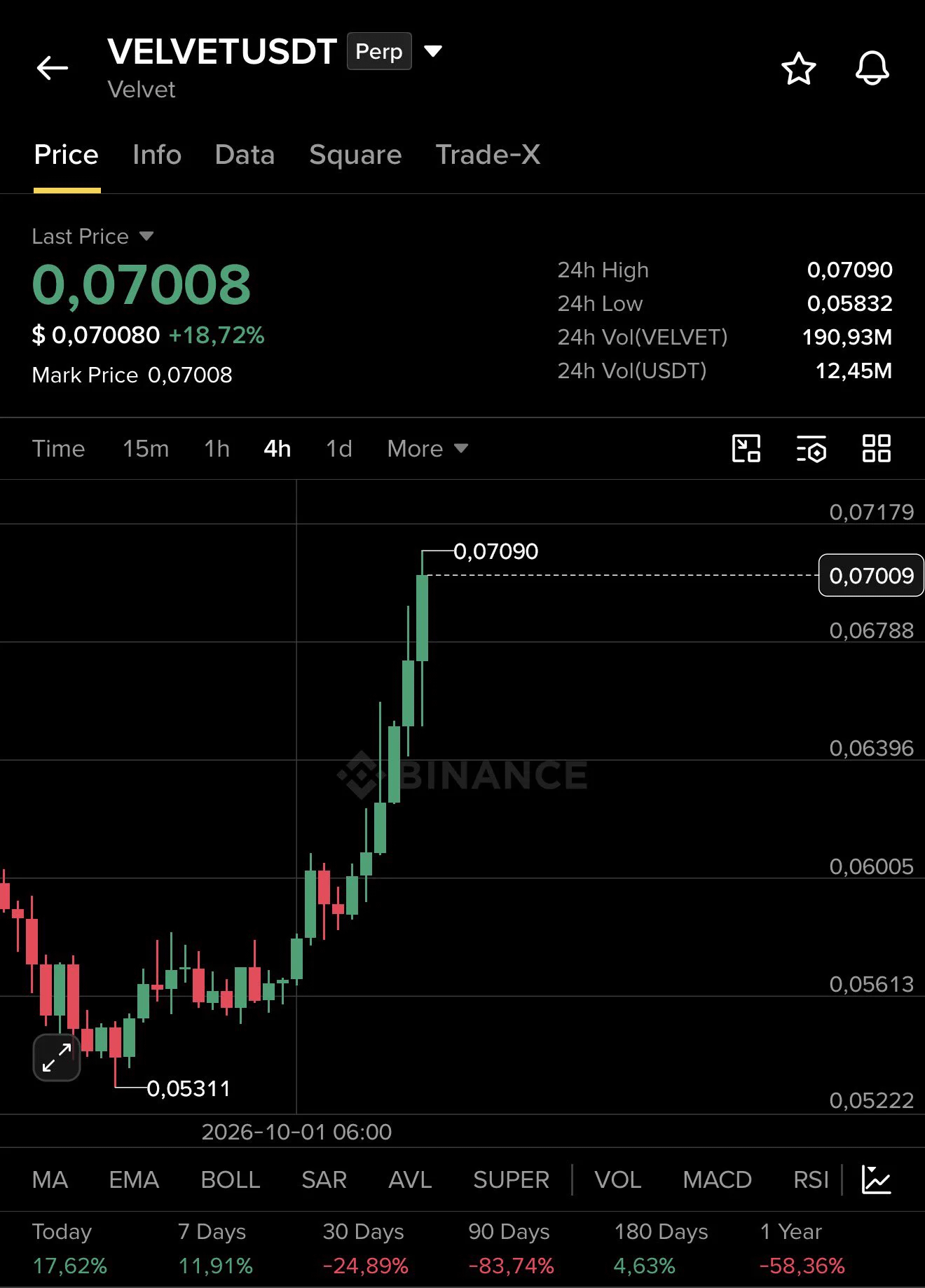
That’s where $VELVET gets interesting.
Velvet already combines an AI Copilot / multi-agent system, natural-language trade preparation, intent-based execution and multi-chain access across 9+ networks. Every transaction still requires user
approval.
And this isn’t just another “AI + crypto” label.
Velvet has been building toward a broader DeFAI operating system, with AI-powered signals, live strategies, perps, spot, yield and cross-chain execution in one stack.
The narrative may be rotating from:
AI coins → AI agents → AI controlling onchain capital.
If that continues, projects with actual execution infrastructure could matter a lot more than projects selling a chatbot narrative.
The next AI trade may not be about who has the smartest model.
It may be about who lets that model actually move money. 👀
{future}(VELVETUSDT)
#SECProposesCryptoCustodyRules #SECApproves3xLongCryptoCommodityETPs #G7PlansToReleaseUpTo100MBarrelsOilDiesel #ICBASuesOCCOverCryptoBankCharters #USStocksCloseHigherOnWeakJobsData
🤖 AI AGENTS AREN’T JUST TALKING ANYMORE — THEY’RE STARTING TO MANAGE MONEY ONCHAIN.
The bigger crypto narrative is shifting from AI tokens to AI actually executing inside DeFi.
The claim circulating now is that onchain AI-agent activity has passed 250K agents, while DeFAI protocols collectively manage around $4.7B in TVL — though I couldn’t independently verify those exact ecosystem-wide figures from a primary source.
What is clear: platforms are rapidly moving toward AI-assisted research, routing, portfolio management and execution.
That’s where $VELVET gets interesting.
Velvet already combines an AI Copilot / multi-agent system, natural-language trade preparation, intent-based execution and multi-chain access across 9+ networks. Every transaction still requires user
approval.
And this isn’t just another “AI + crypto” label.
Velvet has been building toward a broader DeFAI operating system, with AI-powered signals, live strategies, perps, spot, yield and cross-chain execution in one stack.
The narrative may be rotating from:
AI coins → AI agents → AI controlling onchain capital.
If that continues, projects with actual execution infrastructure could matter a lot more than projects selling a chatbot narrative.
The next AI trade may not be about who has the smartest model.
It may be about who lets that model actually move money. 👀
#SECProposesCryptoCustodyRules #SECApproves3xLongCryptoCommodityETPs #G7PlansToReleaseUpTo100MBarrelsOilDiesel #ICBASuesOCCOverCryptoBankCharters #USStocksCloseHigherOnWeakJobsData
The bigger crypto narrative is shifting from AI tokens to AI actually executing inside DeFi.
The claim circulating now is that onchain AI-agent activity has passed 250K agents, while DeFAI protocols collectively manage around $4.7B in TVL — though I couldn’t independently verify those exact ecosystem-wide figures from a primary source.
What is clear: platforms are rapidly moving toward AI-assisted research, routing, portfolio management and execution.
That’s where $VELVET gets interesting.
Velvet already combines an AI Copilot / multi-agent system, natural-language trade preparation, intent-based execution and multi-chain access across 9+ networks. Every transaction still requires user
approval.
And this isn’t just another “AI + crypto” label.
Velvet has been building toward a broader DeFAI operating system, with AI-powered signals, live strategies, perps, spot, yield and cross-chain execution in one stack.
The narrative may be rotating from:
AI coins → AI agents → AI controlling onchain capital.
If that continues, projects with actual execution infrastructure could matter a lot more than projects selling a chatbot narrative.
The next AI trade may not be about who has the smartest model.
It may be about who lets that model actually move money. 👀
#SECProposesCryptoCustodyRules #SECApproves3xLongCryptoCommodityETPs #G7PlansToReleaseUpTo100MBarrelsOilDiesel #ICBASuesOCCOverCryptoBankCharters #USStocksCloseHigherOnWeakJobsData
167
·
--
⚠️ $SAND — FUNDING JUST HIT -1.2%. YOU KNOW WHAT THAT USUALLY MEANS?
Retail is piling into shorts.
And in altcoins, that can become fuel.
When too many traders lean one way, the market loves to punish the crowd:
Too many longs → dump.
Too many shorts → squeeze.
That’s why extreme funding matters.
It’s not just sentiment.
It can become a liquidation map.
Altcoins don’t always move on fundamentals.
Sometimes they just move to wipe out leverage. 👀
{future}(SANDUSDT)
#SECProposesCryptoCustodyRules #SECApproves3xLongCryptoCommodityETPs #G7PlansToReleaseUpTo100MBarrelsOilDiesel #ICBASuesOCCOverCryptoBankCharters #USStocksCloseHigherOnWeakJobsData
⚠️ $SAND — FUNDING JUST HIT -1.2%. YOU KNOW WHAT THAT USUALLY MEANS?
Retail is piling into shorts.
And in altcoins, that can become fuel.
When too many traders lean one way, the market loves to punish the crowd:
Too many longs → dump.
Too many shorts → squeeze.
That’s why extreme funding matters.
It’s not just sentiment.
It can become a liquidation map.
Altcoins don’t always move on fundamentals.
Sometimes they just move to wipe out leverage. 👀
#SECProposesCryptoCustodyRules #SECApproves3xLongCryptoCommodityETPs #G7PlansToReleaseUpTo100MBarrelsOilDiesel #ICBASuesOCCOverCryptoBankCharters #USStocksCloseHigherOnWeakJobsData
Retail is piling into shorts.
And in altcoins, that can become fuel.
When too many traders lean one way, the market loves to punish the crowd:
Too many longs → dump.
Too many shorts → squeeze.
That’s why extreme funding matters.
It’s not just sentiment.
It can become a liquidation map.
Altcoins don’t always move on fundamentals.
Sometimes they just move to wipe out leverage. 👀
#SECProposesCryptoCustodyRules #SECApproves3xLongCryptoCommodityETPs #G7PlansToReleaseUpTo100MBarrelsOilDiesel #ICBASuesOCCOverCryptoBankCharters #USStocksCloseHigherOnWeakJobsData
252
·
--
🚨 $XAU — OIL JUST CHANGED THE GOLD SETUP.
The transmission chain is pretty clean:
G7 releases strategic oil reserves → crude drops → inflation fears cool → Fed hike odds fall.
That should normally be supportive for gold.
But there’s a catch.
The U.S. 10Y yield is still around 5.27%, while the dollar remains firm — both of which keep pressure on non-yielding assets like gold.
So $XAU is caught between two forces:
Lower oil = less inflation pressure = less Fed tightening risk.
High yields + strong USD = still a headwind for gold.
That’s why the next move matters.
If yields finally roll over with Fed hike odds, gold could get the breakout fuel it’s been waiting for.
If yields stay pinned above 5%, the upside gets much harder.
Oil may have cooled the inflation story.
Now bonds decide whether gold gets paid. 👀
$XAU $BZ $CL $DXY
#SECProposesCryptoCustodyRules #SECApproves3xLongCryptoCommodityETPs #G7PlansToReleaseUpTo100MBarrelsOilDiesel #ICBASuesOCCOverCryptoBankCharters #USStocksCloseHigherOnWeakJobsData
🚨 $XAU — OIL JUST CHANGED THE GOLD SETUP.
The transmission chain is pretty clean:
G7 releases strategic oil reserves → crude drops → inflation fears cool → Fed hike odds fall.
That should normally be supportive for gold.
But there’s a catch.
The U.S. 10Y yield is still around 5.27%, while the dollar remains firm — both of which keep pressure on non-yielding assets like gold.
So $XAU is caught between two forces:
Lower oil = less inflation pressure = less Fed tightening risk.
High yields + strong USD = still a headwind for gold.
That’s why the next move matters.
If yields finally roll over with Fed hike odds, gold could get the breakout fuel it’s been waiting for.
If yields stay pinned above 5%, the upside gets much harder.
Oil may have cooled the inflation story.
Now bonds decide whether gold gets paid. 👀
$XAU $BZ $CL $DXY
#SECProposesCryptoCustodyRules #SECApproves3xLongCryptoCommodityETPs #G7PlansToReleaseUpTo100MBarrelsOilDiesel #ICBASuesOCCOverCryptoBankCharters #USStocksCloseHigherOnWeakJobsData
The transmission chain is pretty clean:
G7 releases strategic oil reserves → crude drops → inflation fears cool → Fed hike odds fall.
That should normally be supportive for gold.
But there’s a catch.
The U.S. 10Y yield is still around 5.27%, while the dollar remains firm — both of which keep pressure on non-yielding assets like gold.
So $XAU is caught between two forces:
Lower oil = less inflation pressure = less Fed tightening risk.
High yields + strong USD = still a headwind for gold.
That’s why the next move matters.
If yields finally roll over with Fed hike odds, gold could get the breakout fuel it’s been waiting for.
If yields stay pinned above 5%, the upside gets much harder.
Oil may have cooled the inflation story.
Now bonds decide whether gold gets paid. 👀
$XAU $BZ $CL $DXY
#SECProposesCryptoCustodyRules #SECApproves3xLongCryptoCommodityETPs #G7PlansToReleaseUpTo100MBarrelsOilDiesel #ICBASuesOCCOverCryptoBankCharters #USStocksCloseHigherOnWeakJobsData


1
279
·
--
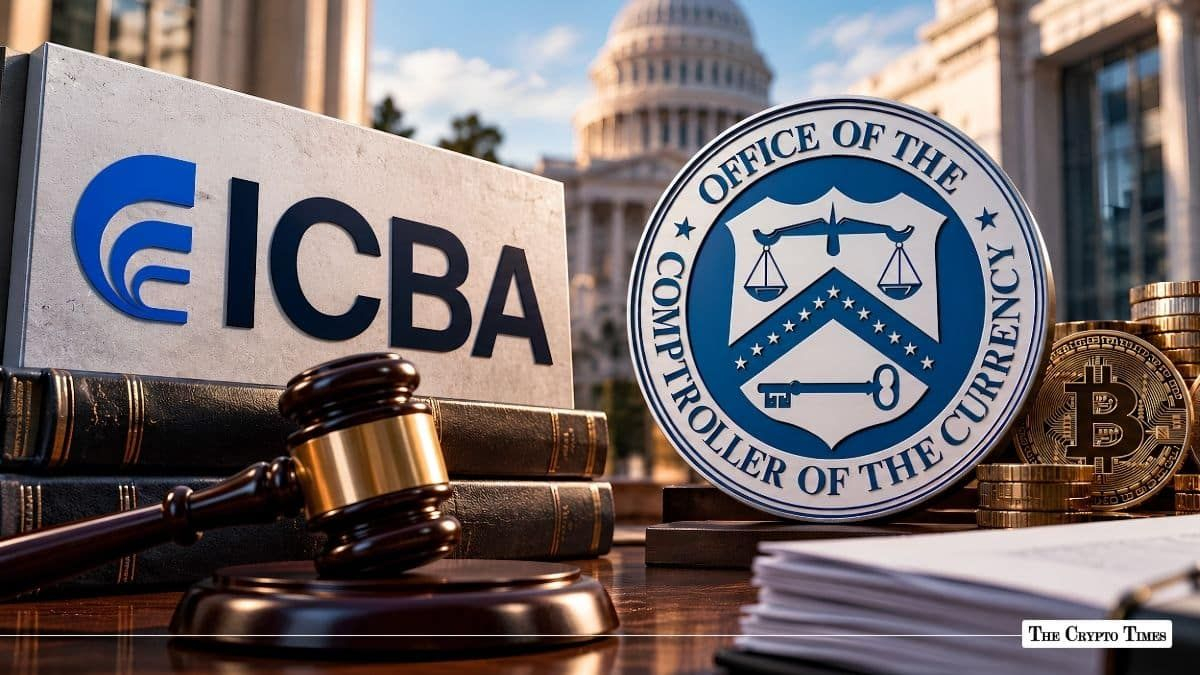
🚨 U.S. BANKS JUST SUED THE REGULATOR OVER CRYPTO BANK CHARTERS.
The Independent Community Bankers of America (ICBA) has sued the OCC, arguing that the regulator is going too far by granting national trust bank charters to crypto firms.
Why does this matter?
Because those charters can let crypto firms operate with federal banking credibility for activities like digital-asset custody and payments — without becoming traditional deposit-taking banks.
The ICBA’s argument is basically:
If crypto firms want the benefits of a federal bank charter, they should face comparable safeguards, supervision and consumer protections.
And this is where the fight gets interesting.
The OCC is actively reviewing a growing list of digital-asset licensing applications, while traditional banks are pushing back on what they see as a regulatory shortcut.
So the next crypto battle may not be:
Banks vs. Bitcoin.
It may be:
Banks vs. crypto companies becoming banks. 👀
$BTC $ETH $COIN
#icbasuesoccovercryptobankcharters #SECProposesCryptoCustodyRules #SECApproves3xLongCryptoCommodityETPs #G7PlansToReleaseUpTo100MBarrelsOilDiesel #USStocksCloseHigherOnWeakJobsData
🚨 U.S. BANKS JUST SUED THE REGULATOR OVER CRYPTO BANK CHARTERS.
The Independent Community Bankers of America (ICBA) has sued the OCC, arguing that the regulator is going too far by granting national trust bank charters to crypto firms.
Why does this matter?
Because those charters can let crypto firms operate with federal banking credibility for activities like digital-asset custody and payments — without becoming traditional deposit-taking banks.
The ICBA’s argument is basically:
If crypto firms want the benefits of a federal bank charter, they should face comparable safeguards, supervision and consumer protections.
And this is where the fight gets interesting.
The OCC is actively reviewing a growing list of digital-asset licensing applications, while traditional banks are pushing back on what they see as a regulatory shortcut.
So the next crypto battle may not be:
Banks vs. Bitcoin.
It may be:
Banks vs. crypto companies becoming banks. 👀
$BTC $ETH $COIN
#icbasuesoccovercryptobankcharters #SECProposesCryptoCustodyRules #SECApproves3xLongCryptoCommodityETPs #G7PlansToReleaseUpTo100MBarrelsOilDiesel #USStocksCloseHigherOnWeakJobsData
The Independent Community Bankers of America (ICBA) has sued the OCC, arguing that the regulator is going too far by granting national trust bank charters to crypto firms.
Why does this matter?
Because those charters can let crypto firms operate with federal banking credibility for activities like digital-asset custody and payments — without becoming traditional deposit-taking banks.
The ICBA’s argument is basically:
If crypto firms want the benefits of a federal bank charter, they should face comparable safeguards, supervision and consumer protections.
And this is where the fight gets interesting.
The OCC is actively reviewing a growing list of digital-asset licensing applications, while traditional banks are pushing back on what they see as a regulatory shortcut.
So the next crypto battle may not be:
Banks vs. Bitcoin.
It may be:
Banks vs. crypto companies becoming banks. 👀
$BTC $ETH $COIN
#icbasuesoccovercryptobankcharters #SECProposesCryptoCustodyRules #SECApproves3xLongCryptoCommodityETPs #G7PlansToReleaseUpTo100MBarrelsOilDiesel #USStocksCloseHigherOnWeakJobsData
1.8k
·
--
Haussier
🚨 BAD JOBS DATA = GOOD STOCKS. WELCOME TO 2026. 🤡
U.S. stocks closed higher after September payrolls came in at just +29K vs. +90K expected, while unemployment rose to 4.2%.
And Wall Street basically said:
“Great. The Fed has less reason to hike.”
The reaction:
Nasdaq +1.19%
S&P 500 +0.73%
Dow +0.49%
The logic is simple:
Weak jobs → lower hike odds → easier financial conditions → tech and risk assets catch a bid.
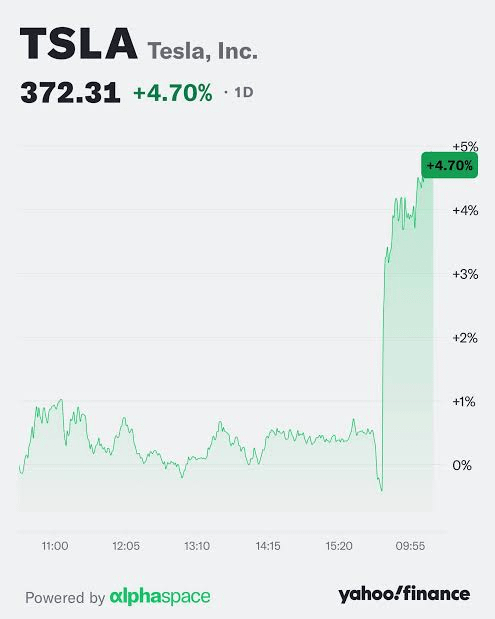
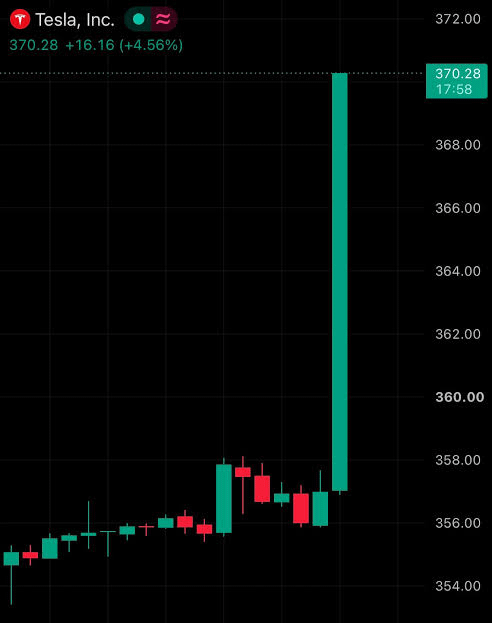
Rate-sensitive names and small caps also benefited, while Nvidia and Tesla helped lead the move.
So yes, apparently the bullish headline is now:
“The economy is slowing… buy stocks.” 😂
$QQQ $SPX $NVDA $TSLA $BTC
#usstocksclosehigheronweakjobsdata #SECProposesCryptoCustodyRules #SECApproves3xLongCryptoCommodityETPs #G7PlansToReleaseUpTo100MBarrelsOilDiesel #ICBASuesOCCOverCryptoBankCharters
🚨 BAD JOBS DATA = GOOD STOCKS. WELCOME TO 2026. 🤡
U.S. stocks closed higher after September payrolls came in at just +29K vs. +90K expected, while unemployment rose to 4.2%.
And Wall Street basically said:
“Great. The Fed has less reason to hike.”
The reaction:
Nasdaq +1.19%
S&P 500 +0.73%
Dow +0.49%
The logic is simple:
Weak jobs → lower hike odds → easier financial conditions → tech and risk assets catch a bid.
Rate-sensitive names and small caps also benefited, while Nvidia and Tesla helped lead the move.
So yes, apparently the bullish headline is now:
“The economy is slowing… buy stocks.” 😂
$QQQ $SPX $NVDA $TSLA $BTC
#usstocksclosehigheronweakjobsdata #SECProposesCryptoCustodyRules #SECApproves3xLongCryptoCommodityETPs #G7PlansToReleaseUpTo100MBarrelsOilDiesel #ICBASuesOCCOverCryptoBankCharters
U.S. stocks closed higher after September payrolls came in at just +29K vs. +90K expected, while unemployment rose to 4.2%.
And Wall Street basically said:
“Great. The Fed has less reason to hike.”
The reaction:
Nasdaq +1.19%
S&P 500 +0.73%
Dow +0.49%
The logic is simple:
Weak jobs → lower hike odds → easier financial conditions → tech and risk assets catch a bid.
Rate-sensitive names and small caps also benefited, while Nvidia and Tesla helped lead the move.
So yes, apparently the bullish headline is now:
“The economy is slowing… buy stocks.” 😂
$QQQ $SPX $NVDA $TSLA $BTC
#usstocksclosehigheronweakjobsdata #SECProposesCryptoCustodyRules #SECApproves3xLongCryptoCommodityETPs #G7PlansToReleaseUpTo100MBarrelsOilDiesel #ICBASuesOCCOverCryptoBankCharters
1
1
10
24.4k
·
--
Haussier
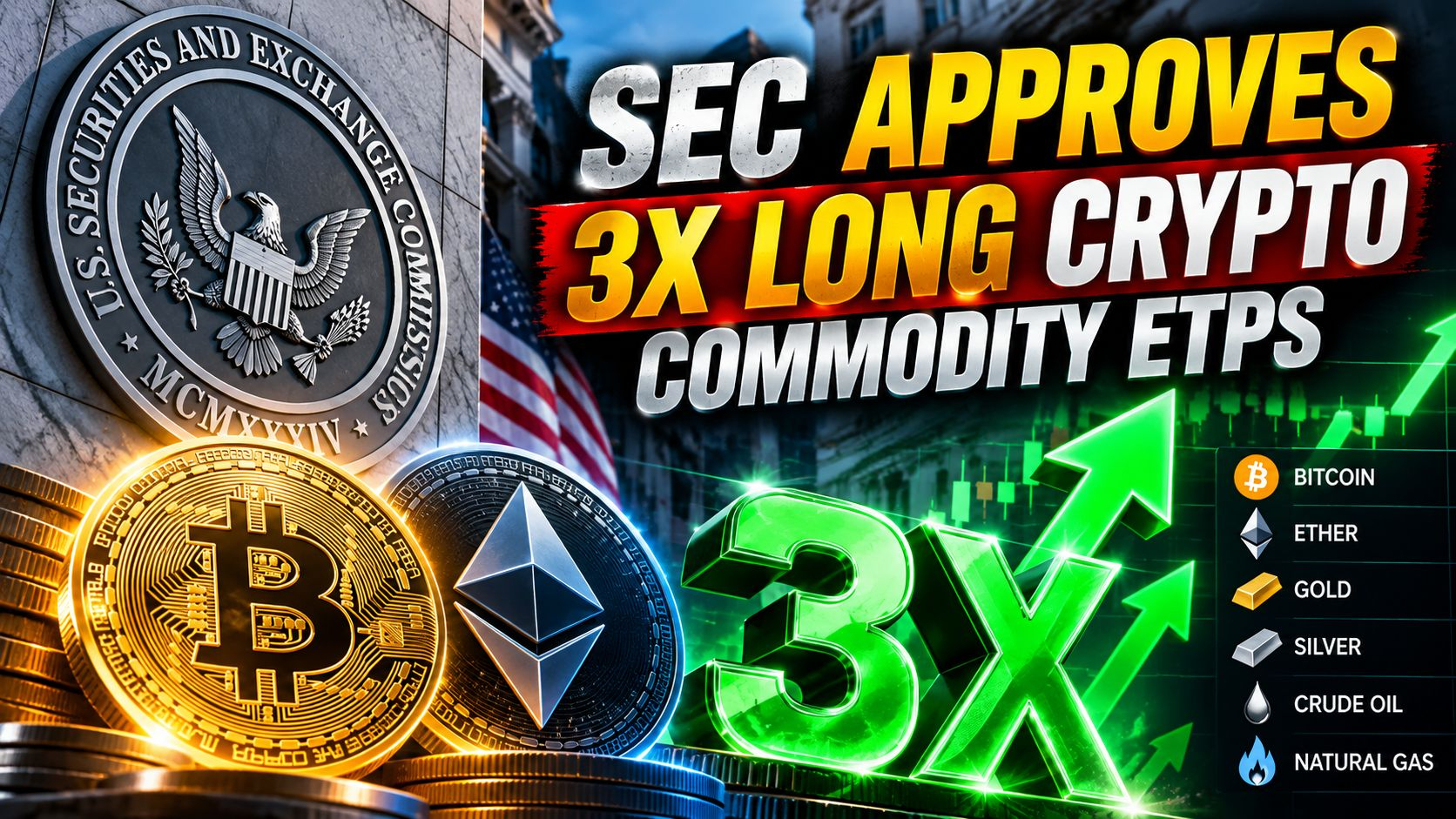
🚨 THE SEC JUST APPROVED 3X LONG BITCOIN AND ETHER ETPs.
This is not subtle.
The SEC approved Cboe BZX listings for new 3x leveraged commodity ETPs tied to:
Bitcoin
Ether
Gold
Silver
Crude Oil
Natural Gas
That means regulated markets are moving beyond simple spot exposure.
Wall Street is now getting access to products designed to deliver roughly 3x the daily move of BTC and ETH.
Big upside if the trend goes your way.
Big pain if it doesn’t.
And that’s the real signal:
Crypto is no longer being treated like an asset class that needs to be kept at arm’s length.
It’s being packaged with the same aggressive leverage tools as traditional commodities.
Spot ETFs were step one.
3x crypto ETPs are a very different level of risk appetite. 👀
$BTC $ETH $XAU $BZ $XAG
{future}(XAGUSDT)
{future}(BZUSDT)
{future}(XAUUSDT)
#secapproves3xlongcryptocommodityetps #SECProposesCryptoCustodyRules #G7PlansToReleaseUpTo100MBarrelsOilDiesel #ICBASuesOCCOverCryptoBankCharters #USStocksCloseHigherOnWeakJobsData
🚨 THE SEC JUST APPROVED 3X LONG BITCOIN AND ETHER ETPs.
This is not subtle.
The SEC approved Cboe BZX listings for new 3x leveraged commodity ETPs tied to:
Bitcoin
Ether
Gold
Silver
Crude Oil
Natural Gas
That means regulated markets are moving beyond simple spot exposure.
Wall Street is now getting access to products designed to deliver roughly 3x the daily move of BTC and ETH.
Big upside if the trend goes your way.
Big pain if it doesn’t.
And that’s the real signal:
Crypto is no longer being treated like an asset class that needs to be kept at arm’s length.
It’s being packaged with the same aggressive leverage tools as traditional commodities.
Spot ETFs were step one.
3x crypto ETPs are a very different level of risk appetite. 👀
$BTC $ETH $XAU $BZ $XAG
#secapproves3xlongcryptocommodityetps #SECProposesCryptoCustodyRules #G7PlansToReleaseUpTo100MBarrelsOilDiesel #ICBASuesOCCOverCryptoBankCharters #USStocksCloseHigherOnWeakJobsData
This is not subtle.
The SEC approved Cboe BZX listings for new 3x leveraged commodity ETPs tied to:
Bitcoin
Ether
Gold
Silver
Crude Oil
Natural Gas
That means regulated markets are moving beyond simple spot exposure.
Wall Street is now getting access to products designed to deliver roughly 3x the daily move of BTC and ETH.
Big upside if the trend goes your way.
Big pain if it doesn’t.
And that’s the real signal:
Crypto is no longer being treated like an asset class that needs to be kept at arm’s length.
It’s being packaged with the same aggressive leverage tools as traditional commodities.
Spot ETFs were step one.
3x crypto ETPs are a very different level of risk appetite. 👀
$BTC $ETH $XAU $BZ $XAG
#secapproves3xlongcryptocommodityetps #SECProposesCryptoCustodyRules #G7PlansToReleaseUpTo100MBarrelsOilDiesel #ICBASuesOCCOverCryptoBankCharters #USStocksCloseHigherOnWeakJobsData
2
18
15.1k
·
--
🚨 THE SEC ISN’T DEBATING WHETHER WALL STREET CAN HOLD CRYPTO ANYMORE — IT’S WRITING THE CUSTODY RULES.
On Oct. 1, the SEC proposed a new framework for how investment advisers and regulated funds can custody digital assets, including clearer paths for qualified custodians and, under certain conditions, self-custody.
That sounds boring.
It isn’t.
Institutional crypto adoption has always hit the same wall:
Who holds the assets?
How are they segregated?
What safeguards are required?
Who is liable if something breaks?
The SEC is finally trying to answer those questions.
That changes the narrative from:
“Can Wall Street touch crypto?”
to:
“What rules does Wall Street need to follow to hold it?”
That’s a much more advanced stage of adoption.
ETFs brought crypto onto brokerage screens.
Custody rules could bring it deeper into portfolios.
$BTC $ETH $COIN
#secproposescryptocustodyrules #SECApproves3xLongCryptoCommodityETPs #G7PlansToReleaseUpTo100MBarrelsOilDiesel #ICBASuesOCCOverCryptoBankCharters #USStocksCloseHigherOnWeakJobsData
🚨 THE SEC ISN’T DEBATING WHETHER WALL STREET CAN HOLD CRYPTO ANYMORE — IT’S WRITING THE CUSTODY RULES.
On Oct. 1, the SEC proposed a new framework for how investment advisers and regulated funds can custody digital assets, including clearer paths for qualified custodians and, under certain conditions, self-custody.
That sounds boring.
It isn’t.
Institutional crypto adoption has always hit the same wall:
Who holds the assets?
How are they segregated?
What safeguards are required?
Who is liable if something breaks?
The SEC is finally trying to answer those questions.
That changes the narrative from:
“Can Wall Street touch crypto?”
to:
“What rules does Wall Street need to follow to hold it?”
That’s a much more advanced stage of adoption.
ETFs brought crypto onto brokerage screens.
Custody rules could bring it deeper into portfolios.
$BTC $ETH $COIN
#secproposescryptocustodyrules #SECApproves3xLongCryptoCommodityETPs #G7PlansToReleaseUpTo100MBarrelsOilDiesel #ICBASuesOCCOverCryptoBankCharters #USStocksCloseHigherOnWeakJobsData
On Oct. 1, the SEC proposed a new framework for how investment advisers and regulated funds can custody digital assets, including clearer paths for qualified custodians and, under certain conditions, self-custody.
That sounds boring.
It isn’t.
Institutional crypto adoption has always hit the same wall:
Who holds the assets?
How are they segregated?
What safeguards are required?
Who is liable if something breaks?
The SEC is finally trying to answer those questions.
That changes the narrative from:
“Can Wall Street touch crypto?”
to:
“What rules does Wall Street need to follow to hold it?”
That’s a much more advanced stage of adoption.
ETFs brought crypto onto brokerage screens.
Custody rules could bring it deeper into portfolios.
$BTC $ETH $COIN
#secproposescryptocustodyrules #SECApproves3xLongCryptoCommodityETPs #G7PlansToReleaseUpTo100MBarrelsOilDiesel #ICBASuesOCCOverCryptoBankCharters #USStocksCloseHigherOnWeakJobsData

145
·
--
🚨 $HYPE — BIG TOKENS JUST HIT THE EXCHANGE.
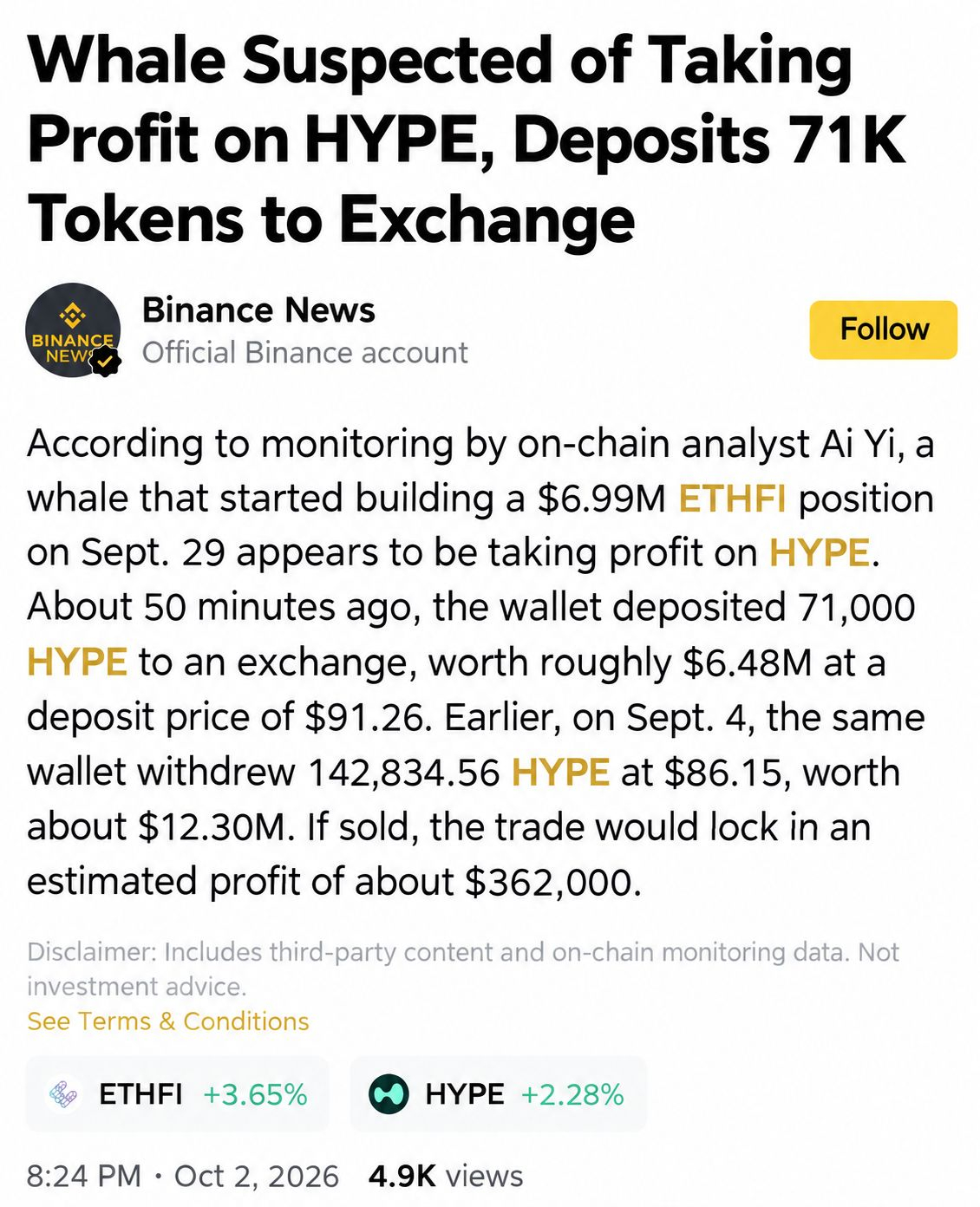
A whale reportedly deposited around 71,000 HYPE into an exchange at about $91.26.
That usually gets traders’ attention for one reason:
Exchange inflow = potential sell pressure.
This wallet had previously withdrawn about 142.8K HYPE around $86.15, so if part of this position gets sold now, it would lock in a profit.
Not a guaranteed dump.
But the rhythm is clear:
Accumulation off-exchange → transfer back to exchange → market watches for distribution. 👀
{future}(HYPEUSDT)
#nfpwatch #BitcoinFundingRateTriplesTo10% #BitcoinSurpasses$86KUp2.99% #ZcashFalls21%FromSeptemberPeak #USSeptemberPayrollsAdd29KUnemploymentRises4.2%
🚨 $HYPE — BIG TOKENS JUST HIT THE EXCHANGE.
A whale reportedly deposited around 71,000 HYPE into an exchange at about $91.26.
That usually gets traders’ attention for one reason:
Exchange inflow = potential sell pressure.
This wallet had previously withdrawn about 142.8K HYPE around $86.15, so if part of this position gets sold now, it would lock in a profit.
Not a guaranteed dump.
But the rhythm is clear:
Accumulation off-exchange → transfer back to exchange → market watches for distribution. 👀
#nfpwatch #BitcoinFundingRateTriplesTo10% #BitcoinSurpasses$86KUp2.99% #ZcashFalls21%FromSeptemberPeak #USSeptemberPayrollsAdd29KUnemploymentRises4.2%
A whale reportedly deposited around 71,000 HYPE into an exchange at about $91.26.
That usually gets traders’ attention for one reason:
Exchange inflow = potential sell pressure.
This wallet had previously withdrawn about 142.8K HYPE around $86.15, so if part of this position gets sold now, it would lock in a profit.
Not a guaranteed dump.
But the rhythm is clear:
Accumulation off-exchange → transfer back to exchange → market watches for distribution. 👀
#nfpwatch #BitcoinFundingRateTriplesTo10% #BitcoinSurpasses$86KUp2.99% #ZcashFalls21%FromSeptemberPeak #USSeptemberPayrollsAdd29KUnemploymentRises4.2%
4
446
·
--
Haussier
🚨 $WLD — THE FED JUST REMOVED ONE OF THE BIGGEST HEADWINDS.
Rate-hike odds have collapsed to around 16% after weak U.S. jobs data and rising unemployment.
That matters for $WLD.
Lower hike risk means:
Less pressure from yields.
A softer dollar backdrop.
More room for speculative liquidity to rotate back into high-beta altcoins.
And $WLD is exactly the kind of asset that can move hard when risk appetite returns.
The setup is simple:
Fed pressure fades → liquidity narrative improves → $WLD gets room to run.
Now the question is whether buyers actually follow through.
{future}(WLDUSDT)
#nfpwatch #BitcoinFundingRateTriplesTo10% #BitcoinSurpasses$86KUp2.99% #ZcashFalls21%FromSeptemberPeak #USSeptemberPayrollsAdd29KUnemploymentRises4.2%
🚨 $WLD — THE FED JUST REMOVED ONE OF THE BIGGEST HEADWINDS.
Rate-hike odds have collapsed to around 16% after weak U.S. jobs data and rising unemployment.
That matters for $WLD .
Lower hike risk means:
Less pressure from yields.
A softer dollar backdrop.
More room for speculative liquidity to rotate back into high-beta altcoins.
And $WLD is exactly the kind of asset that can move hard when risk appetite returns.
The setup is simple:
Fed pressure fades → liquidity narrative improves → $WLD gets room to run.
Now the question is whether buyers actually follow through.
#nfpwatch #BitcoinFundingRateTriplesTo10% #BitcoinSurpasses$86KUp2.99% #ZcashFalls21%FromSeptemberPeak #USSeptemberPayrollsAdd29KUnemploymentRises4.2%
Rate-hike odds have collapsed to around 16% after weak U.S. jobs data and rising unemployment.
That matters for $WLD .
Lower hike risk means:
Less pressure from yields.
A softer dollar backdrop.
More room for speculative liquidity to rotate back into high-beta altcoins.
And $WLD is exactly the kind of asset that can move hard when risk appetite returns.
The setup is simple:
Fed pressure fades → liquidity narrative improves → $WLD gets room to run.
Now the question is whether buyers actually follow through.
#nfpwatch #BitcoinFundingRateTriplesTo10% #BitcoinSurpasses$86KUp2.99% #ZcashFalls21%FromSeptemberPeak #USSeptemberPayrollsAdd29KUnemploymentRises4.2%
1
155
·
--
Haussier
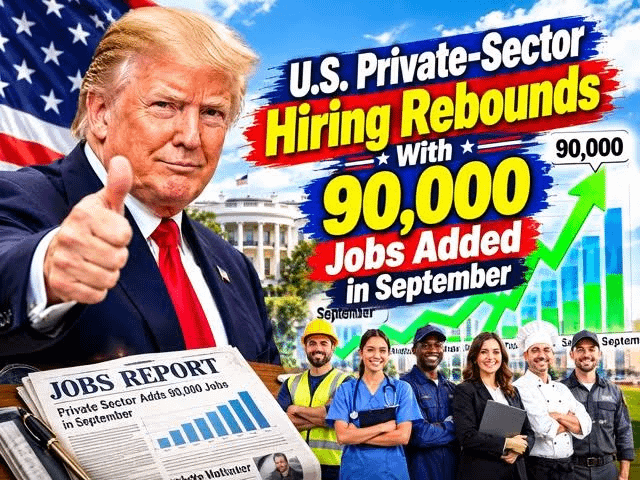
🚨 US PAYROLLS JUST COLLAPSED TO 29K — AND THE FED JUST GOT A LOT MORE ROOM TO PAUSE.
September NFP came in at just +29,000, massively below the +90,000 consensus. August was revised down to +133,000, while unemployment rose to 4.2% from 4.1%.
That’s a major shift in the macro setup.
Jobs growth is fading.
Unemployment is rising.
Treasury yields are easing.
October hike odds just dropped sharply.
Reuters says market-implied odds of an October Fed hike fell to around 12%–20% after the report.
But this isn’t a clean “recession” signal yet.
Layoffs are still low, and part of the weakness may reflect seasonal distortions rather than a sudden collapse in labor demand.
Still, for markets, the message is clear:
Weak NFP → lower yields → less Fed pressure → risk assets breathe.
That puts $BTC, $ETH, $QQQ and $XAU directly in focus.
The next question is no longer:
“Will the Fed hike in October?”
It’s:
“How weak does the labor market need to get before the Fed changes direction completely?”
$BTC $ETH $QQQ $XAU
#nfpwatch #BitcoinFundingRateTriplesTo10% #BitcoinSurpasses$86KUp2.99% #ZcashFalls21%FromSeptemberPeak #USSeptemberPayrollsAdd29KUnemploymentRises4.2%
🚨 US PAYROLLS JUST COLLAPSED TO 29K — AND THE FED JUST GOT A LOT MORE ROOM TO PAUSE.
September NFP came in at just +29,000, massively below the +90,000 consensus. August was revised down to +133,000, while unemployment rose to 4.2% from 4.1%.
That’s a major shift in the macro setup.
Jobs growth is fading.
Unemployment is rising.
Treasury yields are easing.
October hike odds just dropped sharply.
Reuters says market-implied odds of an October Fed hike fell to around 12%–20% after the report.
But this isn’t a clean “recession” signal yet.
Layoffs are still low, and part of the weakness may reflect seasonal distortions rather than a sudden collapse in labor demand.
Still, for markets, the message is clear:
Weak NFP → lower yields → less Fed pressure → risk assets breathe.
That puts $BTC, $ETH, $QQQ and $XAU directly in focus.
The next question is no longer:
“Will the Fed hike in October?”
It’s:
“How weak does the labor market need to get before the Fed changes direction completely?”
$BTC $ETH $QQQ $XAU
#nfpwatch #BitcoinFundingRateTriplesTo10% #BitcoinSurpasses$86KUp2.99% #ZcashFalls21%FromSeptemberPeak #USSeptemberPayrollsAdd29KUnemploymentRises4.2%
September NFP came in at just +29,000, massively below the +90,000 consensus. August was revised down to +133,000, while unemployment rose to 4.2% from 4.1%.
That’s a major shift in the macro setup.
Jobs growth is fading.
Unemployment is rising.
Treasury yields are easing.
October hike odds just dropped sharply.
Reuters says market-implied odds of an October Fed hike fell to around 12%–20% after the report.
But this isn’t a clean “recession” signal yet.
Layoffs are still low, and part of the weakness may reflect seasonal distortions rather than a sudden collapse in labor demand.
Still, for markets, the message is clear:
Weak NFP → lower yields → less Fed pressure → risk assets breathe.
That puts $BTC, $ETH, $QQQ and $XAU directly in focus.
The next question is no longer:
“Will the Fed hike in October?”
It’s:
“How weak does the labor market need to get before the Fed changes direction completely?”
$BTC $ETH $QQQ $XAU
#nfpwatch #BitcoinFundingRateTriplesTo10% #BitcoinSurpasses$86KUp2.99% #ZcashFalls21%FromSeptemberPeak #USSeptemberPayrollsAdd29KUnemploymentRises4.2%
1
13
19.3k
·
--
🚨 $ZEC — THE PRIVACY COIN ROCKET JUST HIT TURBULENCE.
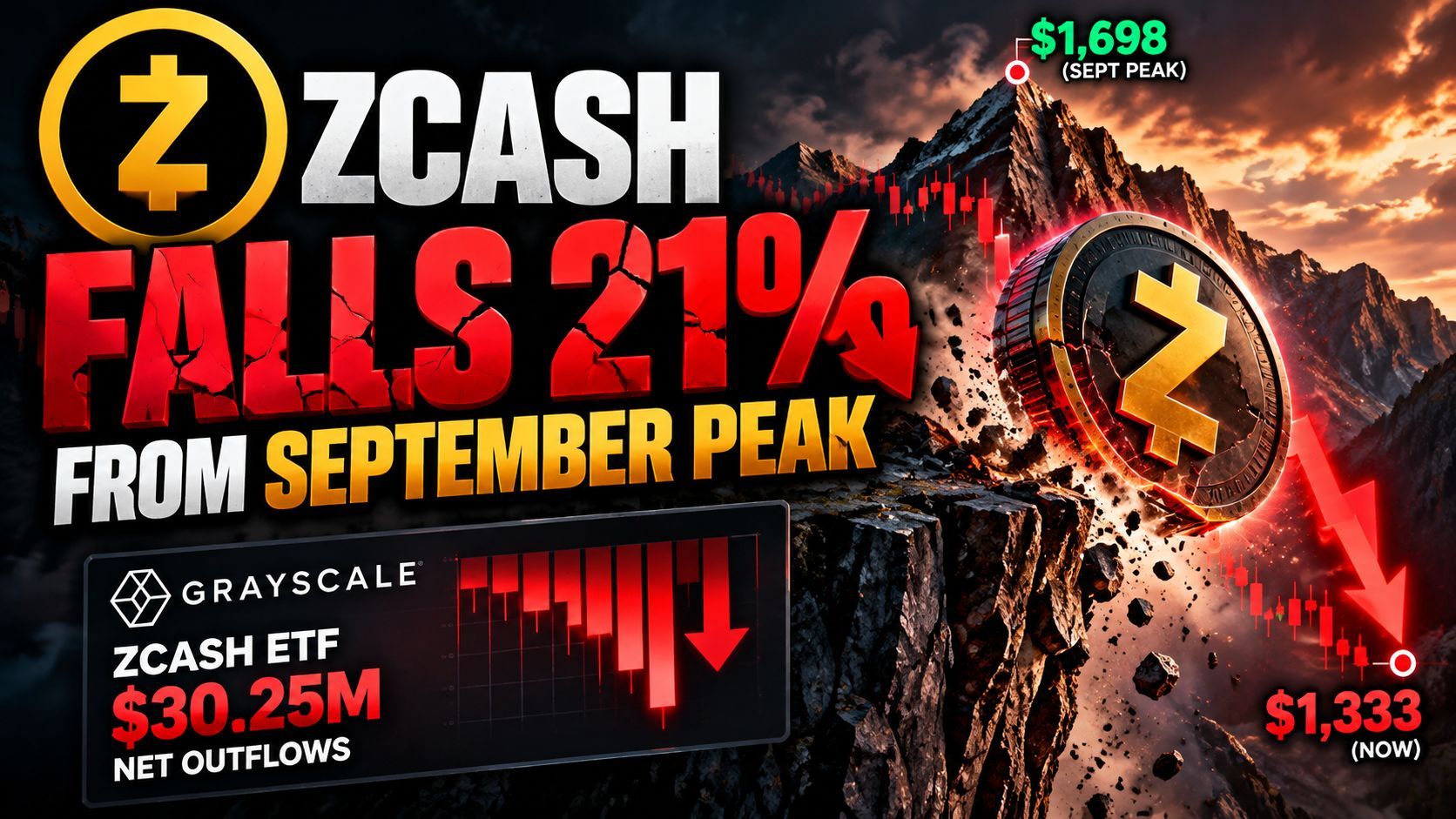
Zcash is now roughly 21% below its late-September peak of $1,698, trading around $1,333 after one of the strongest altcoin runs of the year.
And the timing is ugly.
Grayscale’s Zcash ETF reportedly saw about $30.25M in net outflows on Sept. 30, while broader risk sentiment cooled.
But here’s the twist:
ZEC had already rallied roughly 253% from around $480 before this correction.
So this is the real battle now:
Healthy pullback after a monster run?
Or the first crack in the trend?
After a +253% move, even a 21% drop can still be just a reset.
But if ETF outflows keep growing, the “privacy coin comeback” narrative gets a lot harder to defend.
ZEC doesn’t need more hype now.
It needs buyers to prove the trend is still alive. 👀
$ZEC $ZECP.ETF
{future}(ZECUSDT)
{etf_us}(ZECP.ETF)
#nfpwatch #ZcashFalls21%FromSeptemberPeak #XRPPostsFirstThreeGreenMonthsInQ3 #AmazonPlansToSell$8BNvidiaChips #BitcoinRisesToward$85K
🚨 $ZEC — THE PRIVACY COIN ROCKET JUST HIT TURBULENCE.
Zcash is now roughly 21% below its late-September peak of $1,698, trading around $1,333 after one of the strongest altcoin runs of the year.
And the timing is ugly.
Grayscale’s Zcash ETF reportedly saw about $30.25M in net outflows on Sept. 30, while broader risk sentiment cooled.
But here’s the twist:
ZEC had already rallied roughly 253% from around $480 before this correction.
So this is the real battle now:
Healthy pullback after a monster run?
Or the first crack in the trend?
After a +253% move, even a 21% drop can still be just a reset.
But if ETF outflows keep growing, the “privacy coin comeback” narrative gets a lot harder to defend.
ZEC doesn’t need more hype now.
It needs buyers to prove the trend is still alive. 👀
$ZEC $ZECP.ETF
#nfpwatch #ZcashFalls21%FromSeptemberPeak #XRPPostsFirstThreeGreenMonthsInQ3 #AmazonPlansToSell$8BNvidiaChips #BitcoinRisesToward$85K
Zcash is now roughly 21% below its late-September peak of $1,698, trading around $1,333 after one of the strongest altcoin runs of the year.
And the timing is ugly.
Grayscale’s Zcash ETF reportedly saw about $30.25M in net outflows on Sept. 30, while broader risk sentiment cooled.
But here’s the twist:
ZEC had already rallied roughly 253% from around $480 before this correction.
So this is the real battle now:
Healthy pullback after a monster run?
Or the first crack in the trend?
After a +253% move, even a 21% drop can still be just a reset.
But if ETF outflows keep growing, the “privacy coin comeback” narrative gets a lot harder to defend.
ZEC doesn’t need more hype now.
It needs buyers to prove the trend is still alive. 👀
$ZEC $ZECP.ETF
#nfpwatch #ZcashFalls21%FromSeptemberPeak #XRPPostsFirstThreeGreenMonthsInQ3 #AmazonPlansToSell$8BNvidiaChips #BitcoinRisesToward$85K
199
Connectez-vous pour découvrir plus de contenu
Rejoignez la communauté mondiale des adeptes de cryptomonnaies sur Binance Square
⚡️ Suviez les dernières informations importantes sur les cryptomonnaies.
💬 Jugé digne de confiance par la plus grande plateforme d’échange de cryptomonnaies au monde.
👍 Découvrez les connaissances que partagent les créateurs vérifiés.
Adresse e-mail/Nº de téléphone