
#kospipostsworstquartersince2020
KOSPI Posts Its Worst Quarter Since Early 2020
South Korea’s benchmark stock index ended the third quarter under heavy pressure, reversing a powerful first-half rally and exposing the risks behind crowded AI and semiconductor trades.
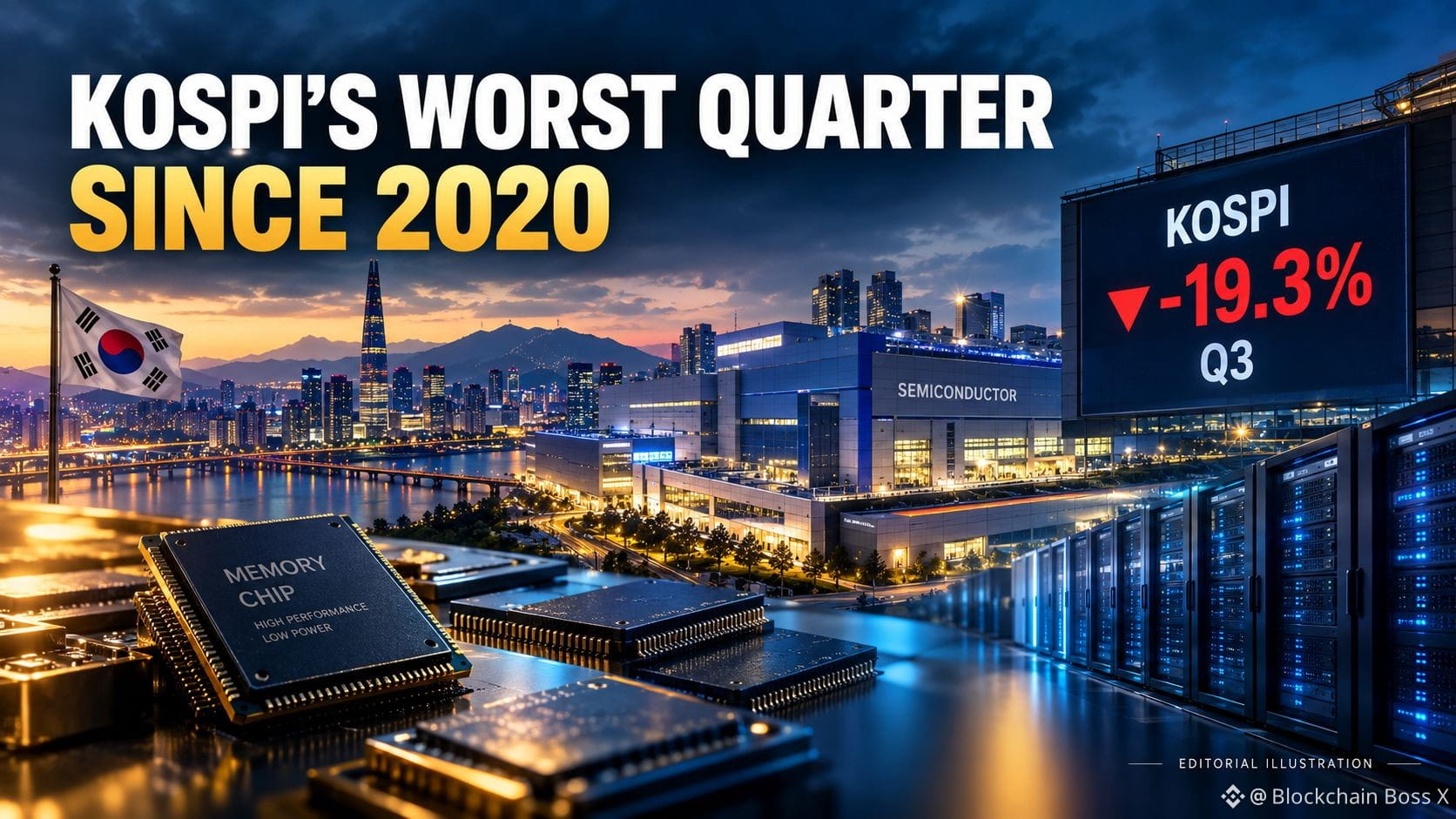
The KOSPI fell 19.3% in Q3, its steepest quarterly decline since the first quarter of 2020. On September 30, the index closed at 6,838.04, down 0.48% for the day. Despite the sharp correction, it remained roughly twice as high as a year earlier.
The sell-off was concentrated in major chipmakers after investors questioned whether AI-related valuations and spending could remain justified. Higher global bond yields, elevated oil prices, concerns over delayed monetary easing and continued foreign selling added pressure. Samsung Electronics and SK hynix were among the key stocks affected.
The decline also shows how quickly market leadership can reverse when expectations become stretched. South Korea remains highly exposed to global technology demand, so the KOSPI can act as a useful barometer for sentiment toward AI infrastructure and memory semiconductors.
My take: This is not automatically evidence that the AI cycle has ended. It is a warning that strong earnings expectations may already be priced in, while higher yields make expensive growth assets more vulnerable. Crypto traders should watch whether this weakness spreads into broader technology and risk markets.
Is the KOSPI correction a healthy reset—or an early warning for AI-linked assets?
#KOSPI #Aİ #GlobalMarkets
$AGT $MOVR $NOM
KOSPI Posts Its Worst Quarter Since Early 2020
South Korea’s benchmark stock index ended the third quarter under heavy pressure, reversing a powerful first-half rally and exposing the risks behind crowded AI and semiconductor trades.
The KOSPI fell 19.3% in Q3, its steepest quarterly decline since the first quarter of 2020. On September 30, the index closed at 6,838.04, down 0.48% for the day. Despite the sharp correction, it remained roughly twice as high as a year earlier.
The sell-off was concentrated in major chipmakers after investors questioned whether AI-related valuations and spending could remain justified. Higher global bond yields, elevated oil prices, concerns over delayed monetary easing and continued foreign selling added pressure. Samsung Electronics and SK hynix were among the key stocks affected.
The decline also shows how quickly market leadership can reverse when expectations become stretched. South Korea remains highly exposed to global technology demand, so the KOSPI can act as a useful barometer for sentiment toward AI infrastructure and memory semiconductors.
My take: This is not automatically evidence that the AI cycle has ended. It is a warning that strong earnings expectations may already be priced in, while higher yields make expensive growth assets more vulnerable. Crypto traders should watch whether this weakness spreads into broader technology and risk markets.
Is the KOSPI correction a healthy reset—or an early warning for AI-linked assets?
#KOSPI #Aİ #GlobalMarkets
$AGT $MOVR $NOM