
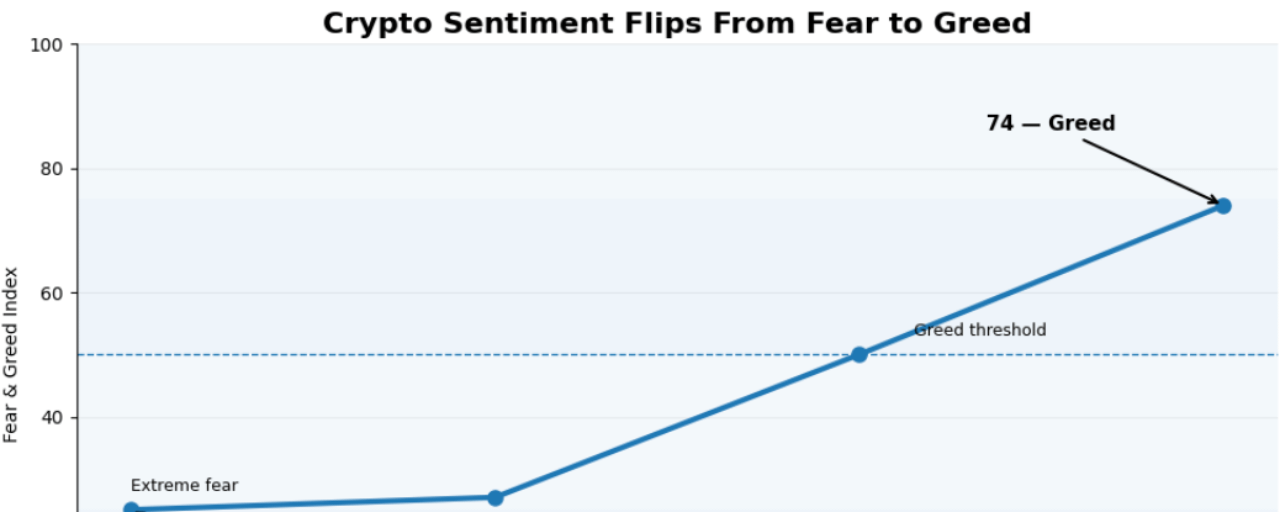


Crypto market sentiment has shifted sharply from fear to greed in less than two weeks, raising concerns that traders may be chasing the latest rally too aggressively.
Key Takeaways
The Crypto Fear & Greed Index climbed to 74 on Tuesday, its highest level since October 2025.
The index stood at just 27 on Aug. 12 and reached 25 on Aug. 6, showing a rapid reversal in sentiment.
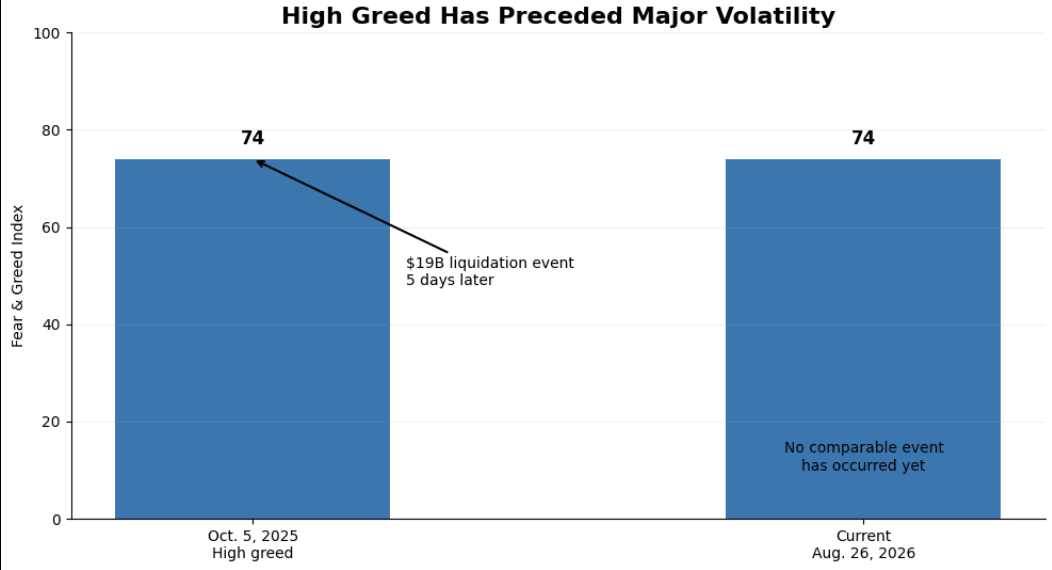
The last time the gauge reached similar levels was Oct. 5, 2025, just days before a crash triggered roughly $19 billion in liquidations.
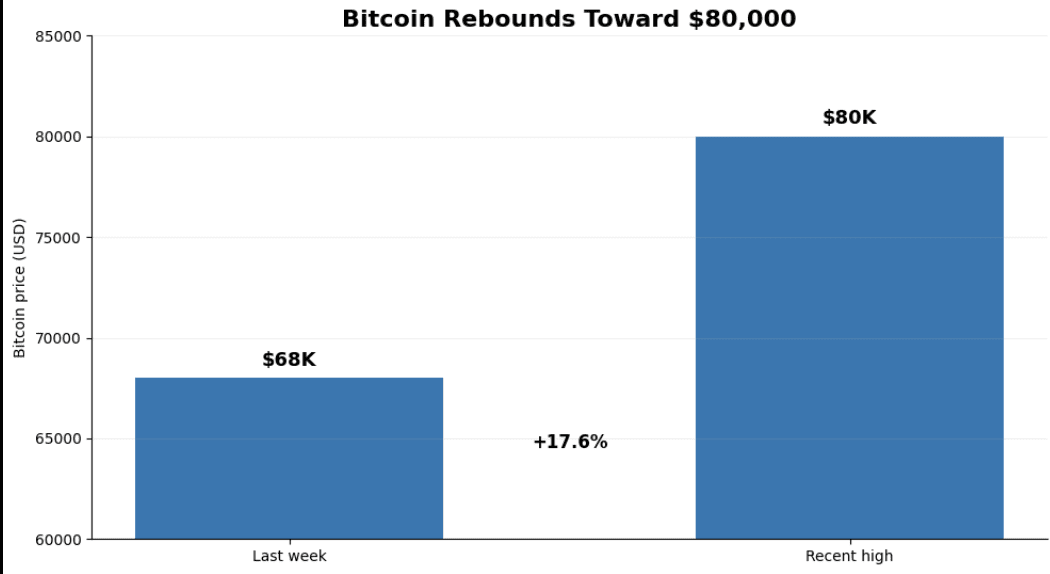
Bitcoin rallied from below $68,000 to nearly $80,000, while several major and memecoins posted much larger gains.
Traders now face a key test on Friday, when Federal Reserve Chair Kevin Warsh delivers his first Jackson Hole speech.
Crypto traders have gone from fear to aggressive risk-taking in less than two weeks, with the Crypto Fear & Greed Index reaching levels last seen shortly before one of the largest liquidation events in the market's history.
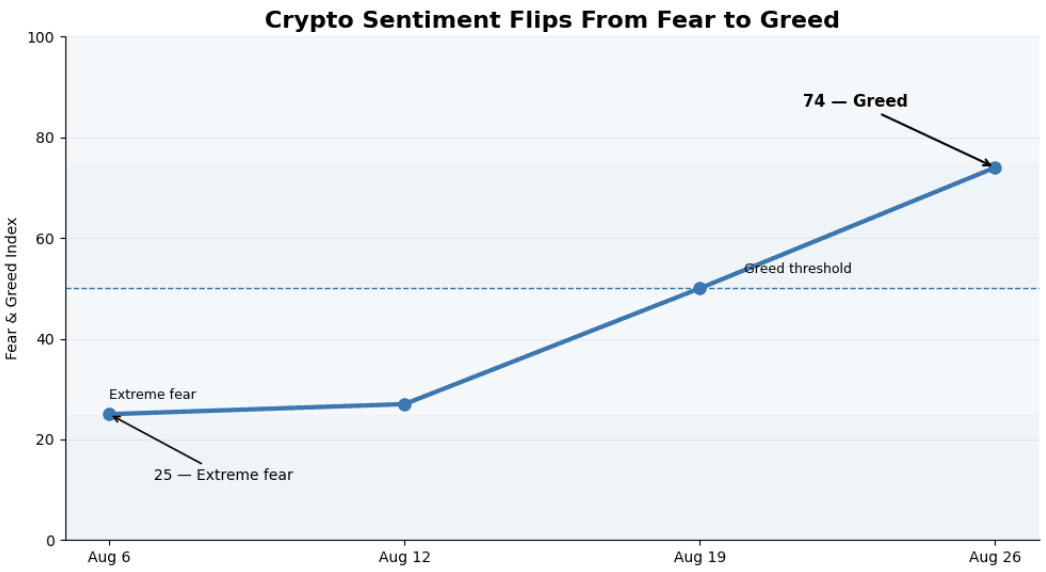
The index, which is calculated by Alternative.me, climbed to 74 on Tuesday, firmly into greed territory, before easing to 65 on Wednesday. The move represents a dramatic turnaround from Aug. 12, when the gauge stood at 27.
The index had remained in fear territory from late July through Aug. 19, falling as low as 25 on Aug. 6, a level classified as extreme fear.
The rapid reversal highlights how quickly investor positioning can change when crypto prices begin moving sharply higher.
Crypto sentiment flips from fear to greed
The Fear & Greed Index ranges from zero to 100 and combines several measures of market behavior, including Bitcoin's volatility, price momentum, social media activity, Bitcoin's market share and Google search interest.
Readings above 50 indicate greed, while readings below 50 indicate fear.
The indicator is primarily a measure of current market sentiment rather than a forward-looking price signal. A high reading therefore does not necessarily mean that Bitcoin is about to fall, but it does show that traders are becoming increasingly willing to take risk.
The latest reading is particularly notable because the index last reached similar levels on Oct. 5, 2025.
Just five days later, the crypto market suffered a massive liquidation event that wiped out roughly $19 billion in leveraged positions in a single session, making it the largest such event on record.
That historical parallel does not mean another crash is imminent, but it highlights how quickly elevated leverage and aggressive positioning can become a source of downside risk.
Bitcoin rally drives renewed risk appetite
The improvement in sentiment has accompanied a sharp recovery across the crypto market.
Bitcoin climbed from below $68,000 last week to nearly $80,000, while several major tokens posted significantly larger gains as traders returned to the so-called debasement trade.
The rotation comes after months in which speculative capital was concentrated more heavily in AI, semiconductor and memory-chip stocks.
As those trades lose momentum, crypto has once again become a target for investors seeking higher-risk opportunities.
The strongest evidence of the shift can be seen further down the market.
Dogecoin has gained roughly 24% over the past week, while smaller memecoins have posted substantially larger moves. Thinking Cat rose about 131%, Cash Cat gained 113%, and Dog (Bitcoin) nearly doubled over the same period.
Such moves can be a sign that risk appetite is spreading beyond Bitcoin and large-cap cryptocurrencies into thinner and more speculative assets.
Rising greed raises correction risk
The return of speculative capital is bullish for market liquidity in the short term, but it can also make the rally more vulnerable to a reversal.
When traders begin chasing smaller tokens after a rapid Bitcoin rally, positioning can become increasingly crowded. A sudden decline in Bitcoin or a change in macroeconomic expectations could then trigger profit-taking across the market.
This is particularly important when sentiment moves from extreme fear to greed so quickly.
The current setup therefore presents a familiar late-stage rally dynamic: strong momentum, expanding risk appetite and increasingly aggressive speculation.
A high Fear & Greed reading should not be interpreted as an automatic sell signal, but it does suggest that traders should expect larger price swings if momentum starts to weaken.
Fed decision becomes the next major catalyst
The next major test for crypto markets comes Friday, when Federal Reserve Chair Kevin Warsh is scheduled to deliver his first keynote speech at the Jackson Hole economic symposium.
Markets will be watching closely for signals on interest rates, inflation and the Fed's approach to monetary policy, particularly after weeks of volatility in long-term Treasury yields.
The recent decline in long-term yields helped support Bitcoin's move from below $68,000 toward $80,000. A continuation of that trend could provide additional support for risk assets.
Conversely, a renewed rise in yields or a more hawkish-than-expected message from the Fed could challenge the latest crypto rally.
For now, the message from the Fear & Greed Index is clear: crypto investors have rapidly moved from protecting capital to chasing upside. The question is whether that renewed appetite can develop into sustained demand or whether the market is becoming overheated after its sharp recovery.