
#quantumcomputers
quantumcomputers
150,862 vues
333 mentions
Populaire
Récents


·
--
Vérifié
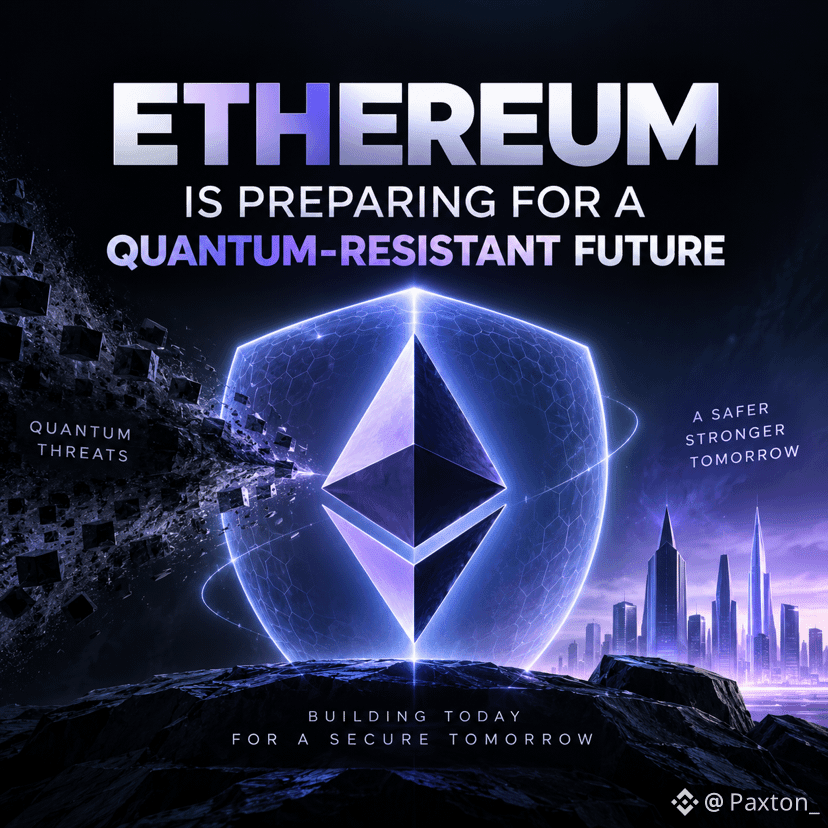
@Ethereum_official Is se prépare à l’ère quantique
L’informatique quantique ne représente pas une menace immédiate pour Ethereum, mais le réseau se prépare déjà à un futur où la cryptographie d’aujourd’hui pourrait ne plus être assez solide.
La Fondation Ethereum a fixé décembre 2029 comme objectif pour rendre Ethereum L1 résistant aux attaques quantiques, à travers ses couches d’exécution, de consensus et de données.
Voici ce que cela signifie, simplement :
❥ Comptes : Ethereum travaille à rendre plus facile le transfert des comptes vers des systèmes de signatures plus robustes.
❥ Validateurs : la cryptographie qui sécurise les validateurs devra elle aussi être mise à niveau.
❥ Données : Ethereum développe également une protection plus solide pour la couche de données.
❥ Systèmes ZK : le réseau prépare son infrastructure de preuves pour un environnement post-quantique.
Il ne s’agit pas de réparer une attaque qui se produit aujourd’hui.
Il s’agit de donner à Ethereum assez de temps pour rechercher, tester et déployer ces changements avant que l’informatique quantique ne devienne une préoccupation sérieuse en matière de sécurité.
La menace pourrait encore être dans plusieurs années. La préparation a déjà commencé.
$ETH
#Ethereum #ETH #quantumcomputers
@Ethereum Is se prépare à l’ère quantique
L’informatique quantique ne représente pas une menace immédiate pour Ethereum, mais le réseau se prépare déjà à un futur où la cryptographie d’aujourd’hui pourrait ne plus être assez solide.
La Fondation Ethereum a fixé décembre 2029 comme objectif pour rendre Ethereum L1 résistant aux attaques quantiques, à travers ses couches d’exécution, de consensus et de données.
Voici ce que cela signifie, simplement :
❥ Comptes : Ethereum travaille à rendre plus facile le transfert des comptes vers des systèmes de signatures plus robustes.
❥ Validateurs : la cryptographie qui sécurise les validateurs devra elle aussi être mise à niveau.
❥ Données : Ethereum développe également une protection plus solide pour la couche de données.
❥ Systèmes ZK : le réseau prépare son infrastructure de preuves pour un environnement post-quantique.
Il ne s’agit pas de réparer une attaque qui se produit aujourd’hui.
Il s’agit de donner à Ethereum assez de temps pour rechercher, tester et déployer ces changements avant que l’informatique quantique ne devienne une préoccupation sérieuse en matière de sécurité.
La menace pourrait encore être dans plusieurs années. La préparation a déjà commencé.
$ETH
#Ethereum #ETH #quantumcomputers
L’informatique quantique ne représente pas une menace immédiate pour Ethereum, mais le réseau se prépare déjà à un futur où la cryptographie d’aujourd’hui pourrait ne plus être assez solide.
La Fondation Ethereum a fixé décembre 2029 comme objectif pour rendre Ethereum L1 résistant aux attaques quantiques, à travers ses couches d’exécution, de consensus et de données.
Voici ce que cela signifie, simplement :
❥ Comptes : Ethereum travaille à rendre plus facile le transfert des comptes vers des systèmes de signatures plus robustes.
❥ Validateurs : la cryptographie qui sécurise les validateurs devra elle aussi être mise à niveau.
❥ Données : Ethereum développe également une protection plus solide pour la couche de données.
❥ Systèmes ZK : le réseau prépare son infrastructure de preuves pour un environnement post-quantique.
Il ne s’agit pas de réparer une attaque qui se produit aujourd’hui.
Il s’agit de donner à Ethereum assez de temps pour rechercher, tester et déployer ces changements avant que l’informatique quantique ne devienne une préoccupation sérieuse en matière de sécurité.
La menace pourrait encore être dans plusieurs années. La préparation a déjà commencé.
$ETH
#Ethereum #ETH #quantumcomputers
User-67dbb62c:
Fact Check: This news is 100% TRUE! The Ethereum Foundation officially published this target for December 2029 to align with major tech standards like Google and Microsoft. Proactive security upgrades like the upcoming Hegotá fork show long-term vision. $ETH $BTC
1
4
927

·
--
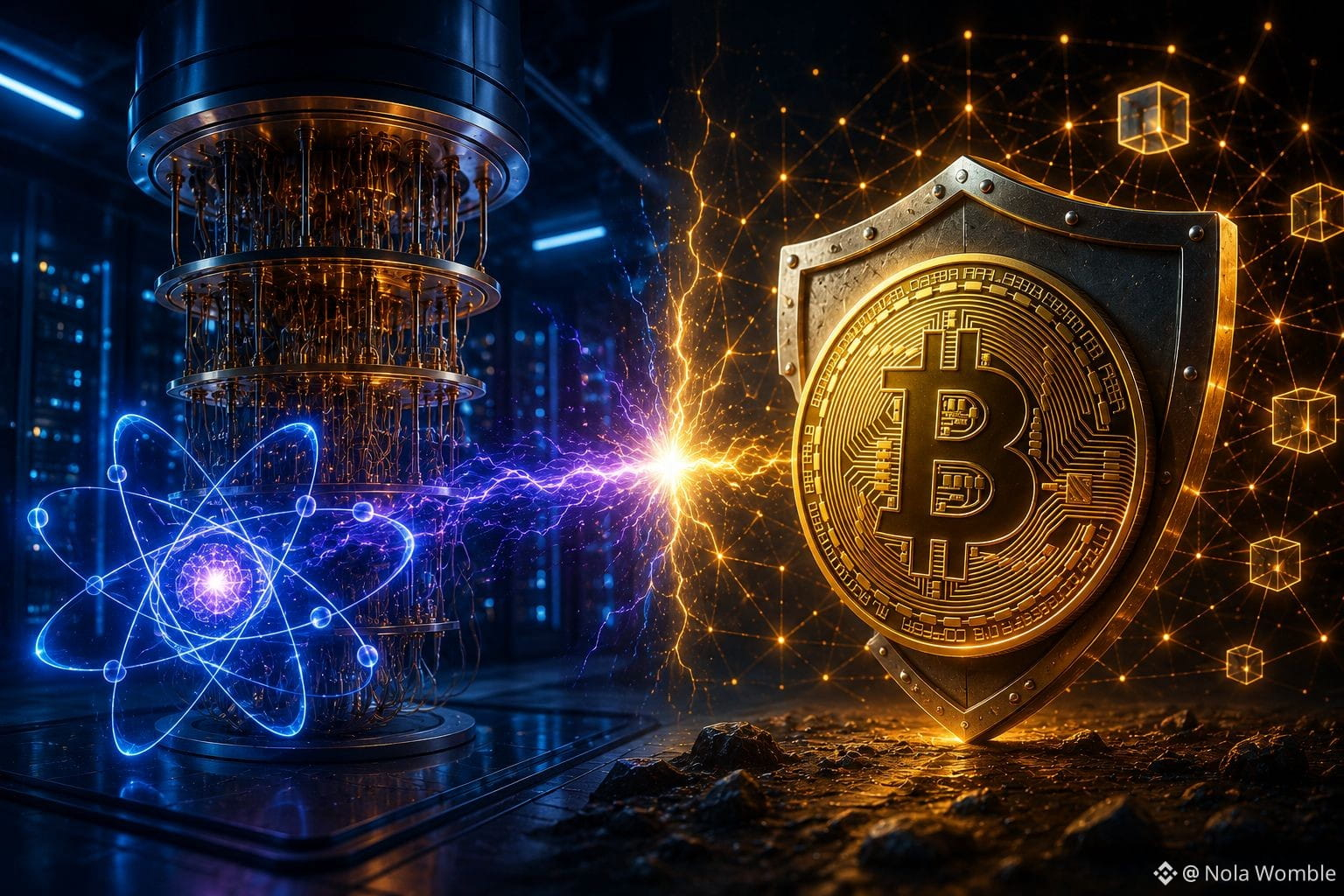
Un ordinateur quantique va-t-il casser Bitcoin ?
Un ordinateur quantique pourrait-il casser $BTC un jour ? En théorie, oui : si des systèmes quantiques suffisamment puissants voient le jour, capables d’attaquer la cryptographie moderne. Cependant, les ordinateurs quantiques actuels sont bien trop limités pour accomplir cette tâche.
C’est pourquoi l’industrie de la crypto se prépare déjà aux menaces futures et explore des algorithmes résistants aux attaques quantiques. Peut-être que la principale question n’est pas de savoir si Bitcoin sera cassé, mais si le réseau s’adaptera à temps.
#quantumcomputers #BTC
Un ordinateur quantique va-t-il casser Bitcoin ?
Un ordinateur quantique pourrait-il casser $BTC un jour ? En théorie, oui : si des systèmes quantiques suffisamment puissants voient le jour, capables d’attaquer la cryptographie moderne. Cependant, les ordinateurs quantiques actuels sont bien trop limités pour accomplir cette tâche.
C’est pourquoi l’industrie de la crypto se prépare déjà aux menaces futures et explore des algorithmes résistants aux attaques quantiques. Peut-être que la principale question n’est pas de savoir si Bitcoin sera cassé, mais si le réseau s’adaptera à temps.
#quantumcomputers #BTC
Un ordinateur quantique pourrait-il casser $BTC un jour ? En théorie, oui : si des systèmes quantiques suffisamment puissants voient le jour, capables d’attaquer la cryptographie moderne. Cependant, les ordinateurs quantiques actuels sont bien trop limités pour accomplir cette tâche.
C’est pourquoi l’industrie de la crypto se prépare déjà aux menaces futures et explore des algorithmes résistants aux attaques quantiques. Peut-être que la principale question n’est pas de savoir si Bitcoin sera cassé, mais si le réseau s’adaptera à temps.
#quantumcomputers #BTC
98

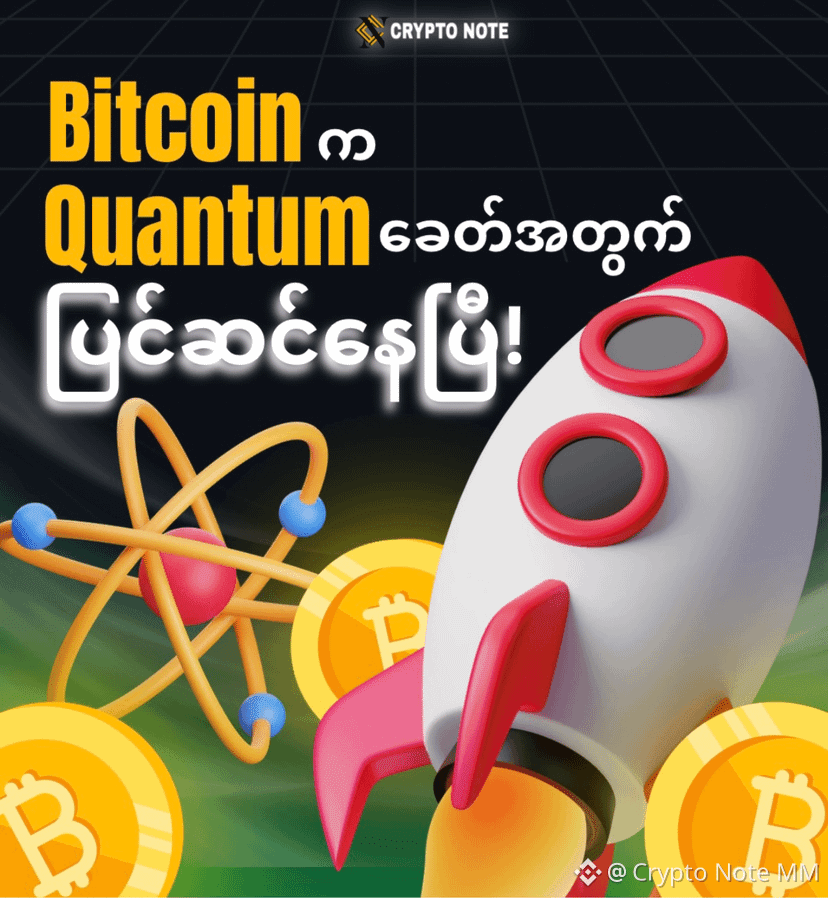
🔥 StarkWare prépare ₿ Bitcoin pour l’ère quantique
On rapporte que StarkWare a pu exécuter avec succès, pour la première fois au monde, une transaction Quantum-Safe sur le réseau Bitcoin Mainnet, comme une étape essentielle pour la sécurité future de ₿ Bitcoin.
À mesure que la technologie des ordinateurs quantiques progresse, les mesures de sécurité cryptographique actuellement utilisées pourraient devenir vulnérables à l’avenir. La capacité d’utiliser une cryptographie résistante aux attaques quantiques pourrait devenir une technologie importante pour la sécurité à long terme de Bitcoin.
On peut dire que cette initiative de StarkWare constitue une étape importante, démontrant concrètement la question de savoir si Bitcoin peut être préparé dès maintenant pour l’ère du calcul quantique à venir. 🚀
$BTC #quantumcomputers
{future}(BTCUSDT)
🔥 StarkWare prépare ₿ Bitcoin pour l’ère quantique
On rapporte que StarkWare a pu exécuter avec succès, pour la première fois au monde, une transaction Quantum-Safe sur le réseau Bitcoin Mainnet, comme une étape essentielle pour la sécurité future de ₿ Bitcoin.
À mesure que la technologie des ordinateurs quantiques progresse, les mesures de sécurité cryptographique actuellement utilisées pourraient devenir vulnérables à l’avenir. La capacité d’utiliser une cryptographie résistante aux attaques quantiques pourrait devenir une technologie importante pour la sécurité à long terme de Bitcoin.
On peut dire que cette initiative de StarkWare constitue une étape importante, démontrant concrètement la question de savoir si Bitcoin peut être préparé dès maintenant pour l’ère du calcul quantique à venir. 🚀
$BTC #quantumcomputers
On rapporte que StarkWare a pu exécuter avec succès, pour la première fois au monde, une transaction Quantum-Safe sur le réseau Bitcoin Mainnet, comme une étape essentielle pour la sécurité future de ₿ Bitcoin.
À mesure que la technologie des ordinateurs quantiques progresse, les mesures de sécurité cryptographique actuellement utilisées pourraient devenir vulnérables à l’avenir. La capacité d’utiliser une cryptographie résistante aux attaques quantiques pourrait devenir une technologie importante pour la sécurité à long terme de Bitcoin.
On peut dire que cette initiative de StarkWare constitue une étape importante, démontrant concrètement la question de savoir si Bitcoin peut être préparé dès maintenant pour l’ère du calcul quantique à venir. 🚀
$BTC #quantumcomputers
107

·
--
Article
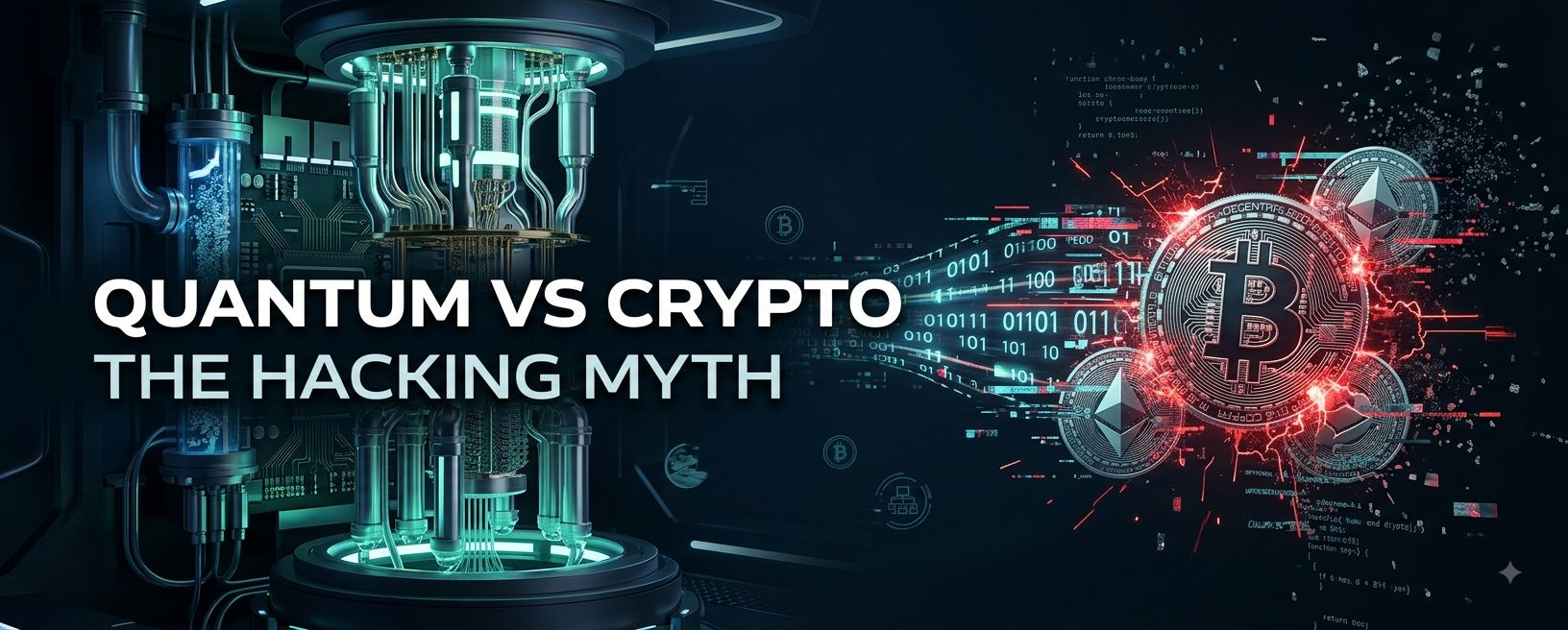
FUD de l’Apocalypse Crypto : est-ce que l’ordinateur quantique va pirater le portefeuille et voler nos actifs ?Ces derniers temps, beaucoup de récits circulent, suffisamment inquiétants, dans diverses communautés. On dit que les nouveaux ordinateurs quantiques vont bientôt percer le chiffrement des réseaux blockchain et vider complètement le Bitcoin ainsi que vos autres cryptos. Il est tout à fait normal que cette rumeur déclenche la panique chez les détenteurs d’actifs. La question est : devez-vous paniquer et retirer dès maintenant tous vos fonds ?
La réponse : NON.
Vos actifs crypto ne sont pas en danger aujourd’hui. Décomposons les faits de manière rationnelle et corrigeons les malentendus qui existent.
FUD de l’Apocalypse Crypto : est-ce que l’ordinateur quantique va pirater le portefeuille et voler nos actifs ?
Ces derniers temps, beaucoup de récits circulent, suffisamment inquiétants, dans diverses communautés. On dit que les nouveaux ordinateurs quantiques vont bientôt percer le chiffrement des réseaux blockchain et vider complètement le Bitcoin ainsi que vos autres cryptos. Il est tout à fait normal que cette rumeur déclenche la panique chez les détenteurs d’actifs. La question est : devez-vous paniquer et retirer dès maintenant tous vos fonds ?
La réponse : NON.
Vos actifs crypto ne sont pas en danger aujourd’hui. Décomposons les faits de manière rationnelle et corrigeons les malentendus qui existent.
La réponse : NON.
Vos actifs crypto ne sont pas en danger aujourd’hui. Décomposons les faits de manière rationnelle et corrigeons les malentendus qui existent.
2
3
3.7k

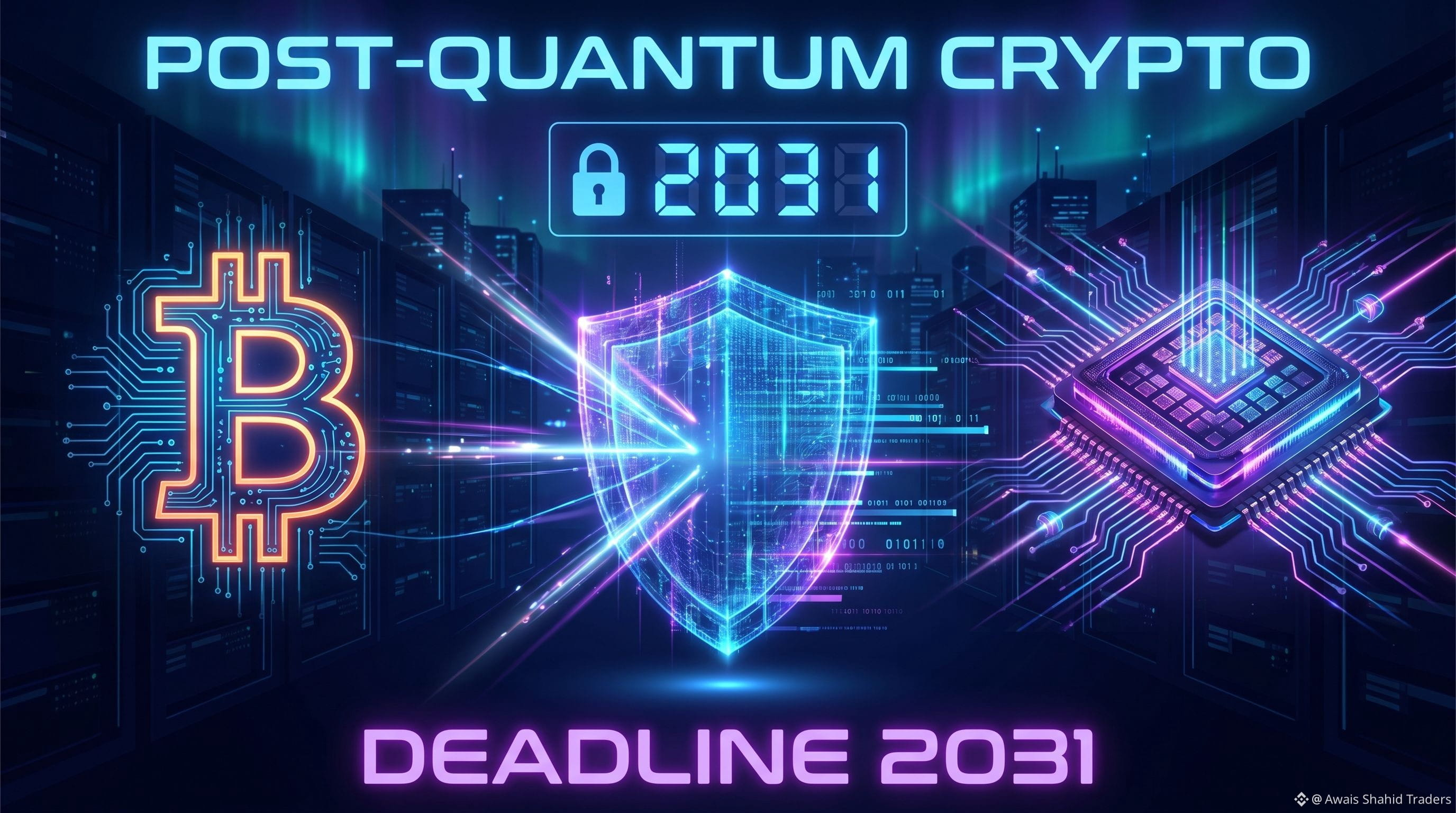
🚨 Les États-Unis fixent une date limite de 2031 pour la migration crypto post-quantique
Grosse nouvelle pour la crypto ! Le gouvernement américain vient de signer des ordres exécutifs pour se protéger contre les attaques des ordinateurs quantiques. Voici ce que vous devez savoir en termes simples 👇
---
🔐 Que se passe-t-il ?
Les ordinateurs quantiques deviennent suffisamment puissants pour briser le cryptage actuel - y compris les maths qui sécurisent $BTC , $ETH
$NVDAB , et tous les portefeuilles crypto.
{spot}(BTCUSDT)
{spot}(ETHUSDT)
Les nouveaux ordres américains donnent aux agences fédérales des délais stricts :
· D'ici le 31 décembre 2030 - Mettre à jour les systèmes importants avec un cryptage résistant aux quantiques
· D'ici le 31 décembre 2031 - Tous les systèmes à haute sécurité doivent être complètement mis à jour
Pourquoi cela compte pour la crypto : Les hackers pourraient utiliser des ordinateurs quantiques puissants pour déduire des clés privées à partir d'adresses publiques, potentiellement voler des fonds. Environ 6 % de tous les Bitcoin (d'une valeur de milliards) se trouve dans d'anciennes adresses qui pourraient être vulnérables.
---
📊 Ce que cela signifie pour la crypto
Détails de l'impact
Court terme Pas de menace immédiate - les ordinateurs quantiques ont besoin de plus de 10 ans pour se développer
Moyen terme Les blockchains majeures devront adopter de nouvelles signatures "post-quantique"
Long terme Les réseaux qui se mettent à jour rapidement survivront ; ceux qui ne le font pas risquent de disparaître
---
💡 Conclusion
Le gouvernement américain prend les menaces quantiques au sérieux. Bien que la date limite de 2031 soit pour les systèmes fédéraux, cela signale que les réseaux crypto doivent commencer à planifier leurs mises à jour dès maintenant.
Ethereum devrait se mettre à jour avant Bitcoin en raison de sa culture de développement plus flexible.
Êtes-vous inquiet que les ordinateurs quantiques affectent votre crypto ? Laissez vos pensées ci-dessous ! 👇
#CryptoNewss #BitcoinDunyamiz #quantumcomputers #PostQuantumCryptography #USPostQuantumCryptographyDeadline2031
NFA, DYOR.
🚨 Les États-Unis fixent une date limite de 2031 pour la migration crypto post-quantique
Grosse nouvelle pour la crypto ! Le gouvernement américain vient de signer des ordres exécutifs pour se protéger contre les attaques des ordinateurs quantiques. Voici ce que vous devez savoir en termes simples 👇
---
🔐 Que se passe-t-il ?
Les ordinateurs quantiques deviennent suffisamment puissants pour briser le cryptage actuel - y compris les maths qui sécurisent $BTC , $ETH
$NVDAB , et tous les portefeuilles crypto.
Les nouveaux ordres américains donnent aux agences fédérales des délais stricts :
· D'ici le 31 décembre 2030 - Mettre à jour les systèmes importants avec un cryptage résistant aux quantiques
· D'ici le 31 décembre 2031 - Tous les systèmes à haute sécurité doivent être complètement mis à jour
Pourquoi cela compte pour la crypto : Les hackers pourraient utiliser des ordinateurs quantiques puissants pour déduire des clés privées à partir d'adresses publiques, potentiellement voler des fonds. Environ 6 % de tous les Bitcoin (d'une valeur de milliards) se trouve dans d'anciennes adresses qui pourraient être vulnérables.
---
📊 Ce que cela signifie pour la crypto
Détails de l'impact
Court terme Pas de menace immédiate - les ordinateurs quantiques ont besoin de plus de 10 ans pour se développer
Moyen terme Les blockchains majeures devront adopter de nouvelles signatures "post-quantique"
Long terme Les réseaux qui se mettent à jour rapidement survivront ; ceux qui ne le font pas risquent de disparaître
---
💡 Conclusion
Le gouvernement américain prend les menaces quantiques au sérieux. Bien que la date limite de 2031 soit pour les systèmes fédéraux, cela signale que les réseaux crypto doivent commencer à planifier leurs mises à jour dès maintenant.
Ethereum devrait se mettre à jour avant Bitcoin en raison de sa culture de développement plus flexible.
Êtes-vous inquiet que les ordinateurs quantiques affectent votre crypto ? Laissez vos pensées ci-dessous ! 👇
#CryptoNewss #BitcoinDunyamiz #quantumcomputers #PostQuantumCryptography #USPostQuantumCryptographyDeadline2031
NFA, DYOR.
Grosse nouvelle pour la crypto ! Le gouvernement américain vient de signer des ordres exécutifs pour se protéger contre les attaques des ordinateurs quantiques. Voici ce que vous devez savoir en termes simples 👇
---
🔐 Que se passe-t-il ?
Les ordinateurs quantiques deviennent suffisamment puissants pour briser le cryptage actuel - y compris les maths qui sécurisent $BTC , $ETH
$NVDAB , et tous les portefeuilles crypto.
Les nouveaux ordres américains donnent aux agences fédérales des délais stricts :
· D'ici le 31 décembre 2030 - Mettre à jour les systèmes importants avec un cryptage résistant aux quantiques
· D'ici le 31 décembre 2031 - Tous les systèmes à haute sécurité doivent être complètement mis à jour
Pourquoi cela compte pour la crypto : Les hackers pourraient utiliser des ordinateurs quantiques puissants pour déduire des clés privées à partir d'adresses publiques, potentiellement voler des fonds. Environ 6 % de tous les Bitcoin (d'une valeur de milliards) se trouve dans d'anciennes adresses qui pourraient être vulnérables.
---
📊 Ce que cela signifie pour la crypto
Détails de l'impact
Court terme Pas de menace immédiate - les ordinateurs quantiques ont besoin de plus de 10 ans pour se développer
Moyen terme Les blockchains majeures devront adopter de nouvelles signatures "post-quantique"
Long terme Les réseaux qui se mettent à jour rapidement survivront ; ceux qui ne le font pas risquent de disparaître
---
💡 Conclusion
Le gouvernement américain prend les menaces quantiques au sérieux. Bien que la date limite de 2031 soit pour les systèmes fédéraux, cela signale que les réseaux crypto doivent commencer à planifier leurs mises à jour dès maintenant.
Ethereum devrait se mettre à jour avant Bitcoin en raison de sa culture de développement plus flexible.
Êtes-vous inquiet que les ordinateurs quantiques affectent votre crypto ? Laissez vos pensées ci-dessous ! 👇
#CryptoNewss #BitcoinDunyamiz #quantumcomputers #PostQuantumCryptography #USPostQuantumCryptographyDeadline2031
NFA, DYOR.
112

·
--
Mon ami m’a demandé aujourd’hui :
« Frérot, est-ce que #Binance sera impacté par l’informatique quantique ? »
Ma réponse se trouve dans la description. 👇
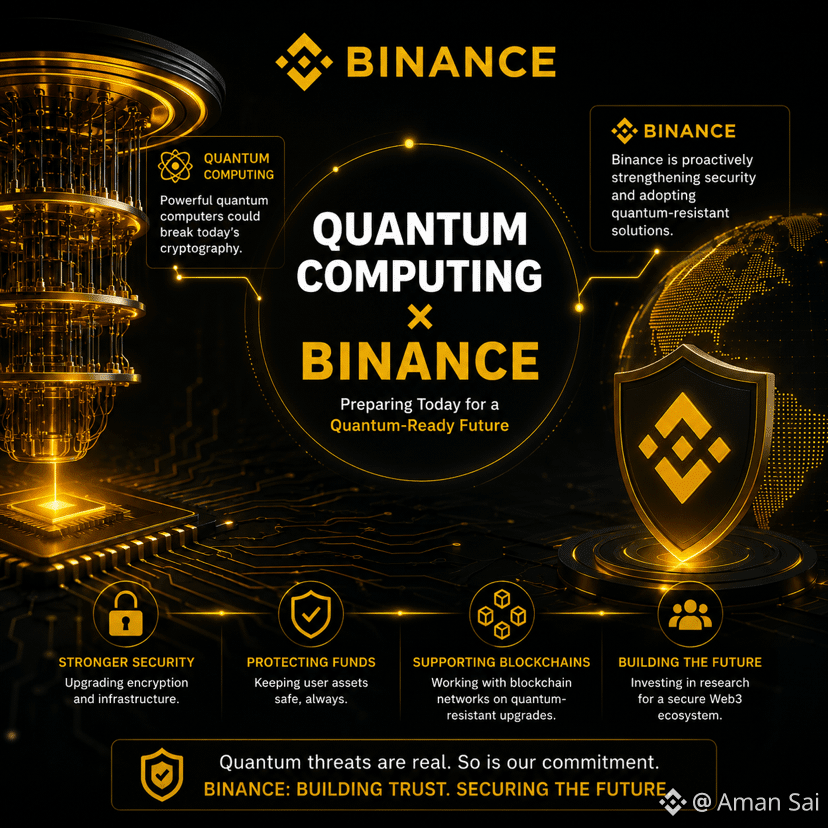
Oui, l’informatique quantique pourrait affecter Binance, mais pas de la manière dont beaucoup de gens l’imaginent. Le risque concerne principalement la cryptographie utilisée sur Internet et au sein des blockchains, et non Binance en tant qu’entreprise.
Voici comment cela pourrait impacter Binance :
Portefeuilles utilisateurs et clés privées
Si un ordinateur quantique suffisamment puissant pouvait briser la cryptographie à clé publique actuelle (comme l’ECDSA), des attaquants pourraient être en mesure de dériver des clés privées à partir de clés publiques exposées.
Cela pourrait mettre certains portefeuilles blockchain en danger s’ils n’ont pas migré vers une cryptographie résistante au quantique.
@Binance infrastructure
Binance s’appuie sur le chiffrement (TLS, certificats numériques, systèmes d’authentification) comme les banques et les autres services en ligne.
Si les standards de chiffrement actuels deviennent vulnérables,
Binance devra mettre à niveau ses systèmes vers un chiffrement « quantum safe ». L’ensemble de l’Internet devra effectuer la même transition.
Réseaux blockchain
Binance dépend de réseaux comme Bitcoin, Ethereum et BNB Chain.
Si ces blockchains adoptent à temps des schémas de signatures résistants au quantique, Binance prendra en charge ces mises à niveau.
La plateforme d’échange elle-même ne peut pas résoudre le problème à elle seule si la blockchain sous-jacente n’évolue pas.
Conservation et sécurité
Binance conserve des actifs dans des cold wallets avec plusieurs couches de sécurité.
Il sera probablement parmi les premiers grands échanges à mettre en œuvre des mesures de sécurité « quantum safe » à mesure que les standards mûrissent.
Cela n’affectera rien instantanément dans les prochains jours.
Les experts pensent généralement que nous n’avons pas encore d’ordinateur quantique capable de casser la cryptographie qui sécurise Bitcoin, Ethereum, BNB Chain ou Binance.
L’industrie se prépare activement en développant et en standardisant une cryptographie résistante au quantique avant que ces machines deviennent réellement utilisables.
#quantumcomputers #binance #bitcoin $BTC
Mon ami m’a demandé aujourd’hui :
« Frérot, est-ce que #Binance sera impacté par l’informatique quantique ? »
Ma réponse se trouve dans la description. 👇
Oui, l’informatique quantique pourrait affecter Binance, mais pas de la manière dont beaucoup de gens l’imaginent. Le risque concerne principalement la cryptographie utilisée sur Internet et au sein des blockchains, et non Binance en tant qu’entreprise.
Voici comment cela pourrait impacter Binance :
Portefeuilles utilisateurs et clés privées
Si un ordinateur quantique suffisamment puissant pouvait briser la cryptographie à clé publique actuelle (comme l’ECDSA), des attaquants pourraient être en mesure de dériver des clés privées à partir de clés publiques exposées.
Cela pourrait mettre certains portefeuilles blockchain en danger s’ils n’ont pas migré vers une cryptographie résistante au quantique.
@Binance infrastructure
Binance s’appuie sur le chiffrement (TLS, certificats numériques, systèmes d’authentification) comme les banques et les autres services en ligne.
Si les standards de chiffrement actuels deviennent vulnérables,
Binance devra mettre à niveau ses systèmes vers un chiffrement « quantum safe ». L’ensemble de l’Internet devra effectuer la même transition.
Réseaux blockchain
Binance dépend de réseaux comme Bitcoin, Ethereum et BNB Chain.
Si ces blockchains adoptent à temps des schémas de signatures résistants au quantique, Binance prendra en charge ces mises à niveau.
La plateforme d’échange elle-même ne peut pas résoudre le problème à elle seule si la blockchain sous-jacente n’évolue pas.
Conservation et sécurité
Binance conserve des actifs dans des cold wallets avec plusieurs couches de sécurité.
Il sera probablement parmi les premiers grands échanges à mettre en œuvre des mesures de sécurité « quantum safe » à mesure que les standards mûrissent.
Cela n’affectera rien instantanément dans les prochains jours.
Les experts pensent généralement que nous n’avons pas encore d’ordinateur quantique capable de casser la cryptographie qui sécurise Bitcoin, Ethereum, BNB Chain ou Binance.
L’industrie se prépare activement en développant et en standardisant une cryptographie résistante au quantique avant que ces machines deviennent réellement utilisables.
#quantumcomputers #binance #bitcoin $BTC
« Frérot, est-ce que #Binance sera impacté par l’informatique quantique ? »
Ma réponse se trouve dans la description. 👇
Oui, l’informatique quantique pourrait affecter Binance, mais pas de la manière dont beaucoup de gens l’imaginent. Le risque concerne principalement la cryptographie utilisée sur Internet et au sein des blockchains, et non Binance en tant qu’entreprise.
Voici comment cela pourrait impacter Binance :
Portefeuilles utilisateurs et clés privées
Si un ordinateur quantique suffisamment puissant pouvait briser la cryptographie à clé publique actuelle (comme l’ECDSA), des attaquants pourraient être en mesure de dériver des clés privées à partir de clés publiques exposées.
Cela pourrait mettre certains portefeuilles blockchain en danger s’ils n’ont pas migré vers une cryptographie résistante au quantique.
@Binance infrastructure
Binance s’appuie sur le chiffrement (TLS, certificats numériques, systèmes d’authentification) comme les banques et les autres services en ligne.
Si les standards de chiffrement actuels deviennent vulnérables,
Binance devra mettre à niveau ses systèmes vers un chiffrement « quantum safe ». L’ensemble de l’Internet devra effectuer la même transition.
Réseaux blockchain
Binance dépend de réseaux comme Bitcoin, Ethereum et BNB Chain.
Si ces blockchains adoptent à temps des schémas de signatures résistants au quantique, Binance prendra en charge ces mises à niveau.
La plateforme d’échange elle-même ne peut pas résoudre le problème à elle seule si la blockchain sous-jacente n’évolue pas.
Conservation et sécurité
Binance conserve des actifs dans des cold wallets avec plusieurs couches de sécurité.
Il sera probablement parmi les premiers grands échanges à mettre en œuvre des mesures de sécurité « quantum safe » à mesure que les standards mûrissent.
Cela n’affectera rien instantanément dans les prochains jours.
Les experts pensent généralement que nous n’avons pas encore d’ordinateur quantique capable de casser la cryptographie qui sécurise Bitcoin, Ethereum, BNB Chain ou Binance.
L’industrie se prépare activement en développant et en standardisant une cryptographie résistante au quantique avant que ces machines deviennent réellement utilisables.
#quantumcomputers #binance #bitcoin $BTC
265

·
--
Tout le monde parle d’ordinateurs quantiques qui voleraient des cryptomonnaies. Mais sont-ils réellement capables de le faire aujourd’hui ? Non, et cette nuance compte.
Le directeur de la sécurité de Binance, Jimmy Su, explique que les ordinateurs quantiques actuels sont loin d’avoir la puissance nécessaire pour casser la cryptographie qui protège les actifs numériques.
#quantumcomputers
Tout le monde parle d’ordinateurs quantiques qui voleraient des cryptomonnaies. Mais sont-ils réellement capables de le faire aujourd’hui ? Non, et cette nuance compte.
Le directeur de la sécurité de Binance, Jimmy Su, explique que les ordinateurs quantiques actuels sont loin d’avoir la puissance nécessaire pour casser la cryptographie qui protège les actifs numériques.
#quantumcomputers
Le directeur de la sécurité de Binance, Jimmy Su, explique que les ordinateurs quantiques actuels sont loin d’avoir la puissance nécessaire pour casser la cryptographie qui protège les actifs numériques.
#quantumcomputers
217

·
--
Article
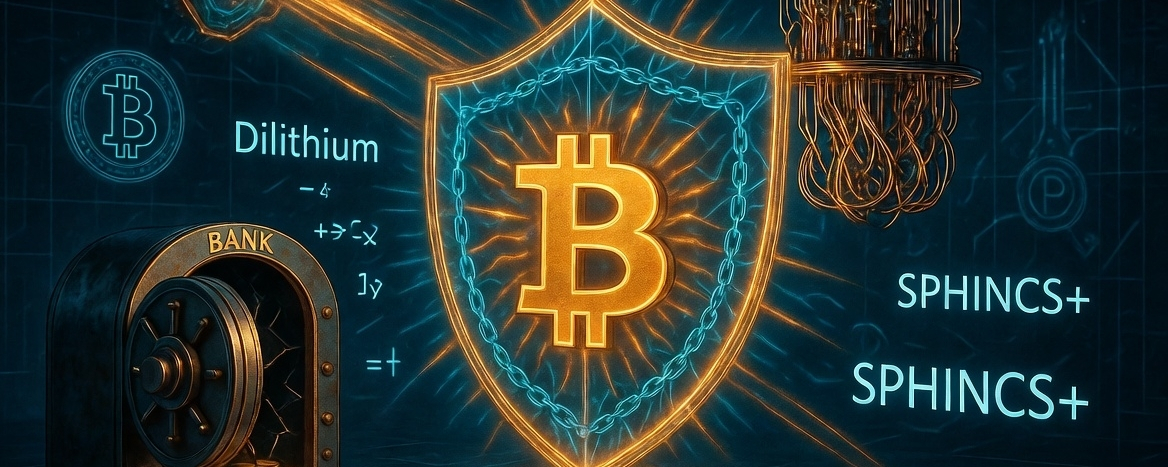
Comment la cryptographie post-quantique protège-t-elle Bitcoin ?La cryptographie post-quantique (PQC) fait référence à des algorithmes cryptographiques conçus pour résister aux attaques des ordinateurs quantiques classiques et futurs à grande échelle (souvent appelés Ordinateurs Quantiques Cryptographiquement Pertinents ou CRQCs). Actuellement, Bitcoin repose sur l'ECDSA (Algorithme de Signature Numérique par Courbe Élliptique) utilisant la courbe secp256k1 pour les signatures de transaction et le contrôle de propriété. Cela est vulnérable à l'algorithme de Shor, qui pourrait résoudre efficacement le problème du logarithme discret sous-jacent à la cryptographie par courbe élliptique sur un ordinateur quantique suffisamment puissant.
Comment la cryptographie post-quantique protège-t-elle Bitcoin ?
La cryptographie post-quantique (PQC) fait référence à des algorithmes cryptographiques conçus pour résister aux attaques des ordinateurs quantiques classiques et futurs à grande échelle (souvent appelés Ordinateurs Quantiques Cryptographiquement Pertinents ou CRQCs). Actuellement, Bitcoin repose sur l'ECDSA (Algorithme de Signature Numérique par Courbe Élliptique) utilisant la courbe secp256k1 pour les signatures de transaction et le contrôle de propriété. Cela est vulnérable à l'algorithme de Shor, qui pourrait résoudre efficacement le problème du logarithme discret sous-jacent à la cryptographie par courbe élliptique sur un ordinateur quantique suffisamment puissant.
1
157

·
--
Article
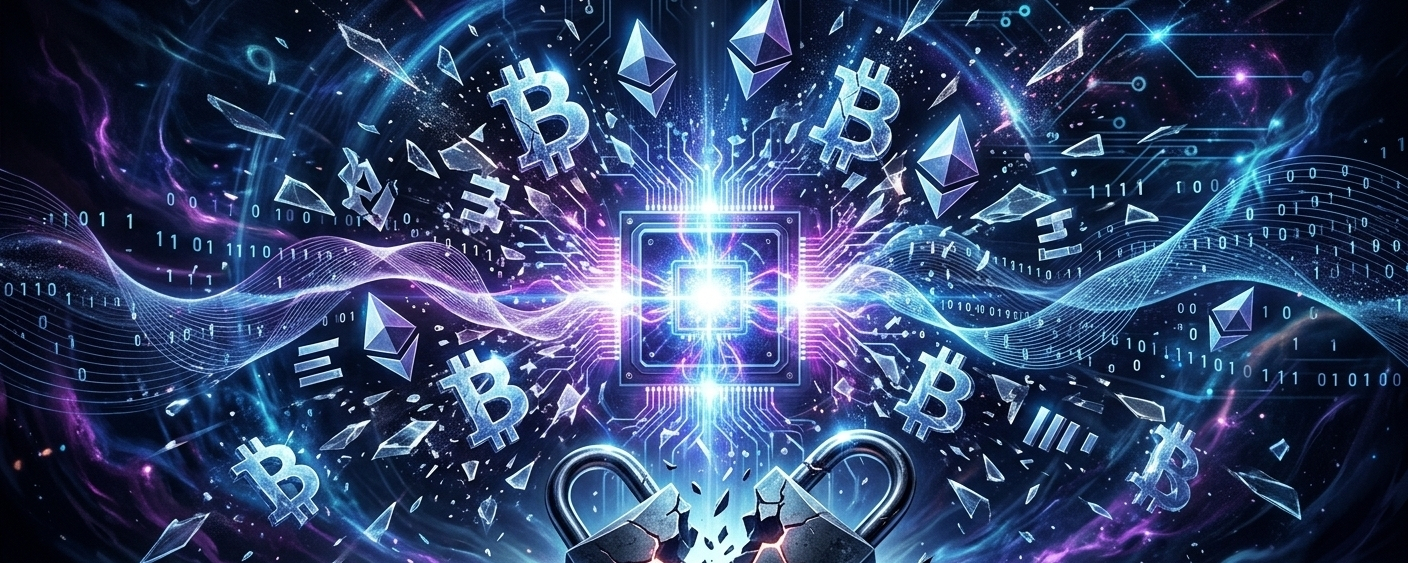
Trump signe deux décrets exécutifs sur l'informatique quantique. Et Bitcoin a un problème.Aujourd'hui, le 22 juin 2026, le président Donald Trump a signé deux décrets exécutifs axés sur la technologie quantique. L'un concerne le développement et la recherche dans le secteur. L'autre porte sur la cryptographie post-quantique. Les deux ont des implications directes pour la crypto que la plupart des médias ne relient pas.
Que disent les ordres ?
Le premier charge le FBI et la communauté du renseignement de protéger la recherche quantique américaine contre l'espionnage étranger, et ordonne aux départements de l'Énergie et de la Défense de construire et d'héberger un ordinateur quantique pour un usage scientifique. Le département du Commerce devra élaborer des plans pour accroître l'investissement fédéral dans des entreprises du secteur.
Trump signe deux décrets exécutifs sur l'informatique quantique. Et Bitcoin a un problème.
Aujourd'hui, le 22 juin 2026, le président Donald Trump a signé deux décrets exécutifs axés sur la technologie quantique. L'un concerne le développement et la recherche dans le secteur. L'autre porte sur la cryptographie post-quantique. Les deux ont des implications directes pour la crypto que la plupart des médias ne relient pas.
Que disent les ordres ?
Le premier charge le FBI et la communauté du renseignement de protéger la recherche quantique américaine contre l'espionnage étranger, et ordonne aux départements de l'Énergie et de la Défense de construire et d'héberger un ordinateur quantique pour un usage scientifique. Le département du Commerce devra élaborer des plans pour accroître l'investissement fédéral dans des entreprises du secteur.
Que disent les ordres ?
Le premier charge le FBI et la communauté du renseignement de protéger la recherche quantique américaine contre l'espionnage étranger, et ordonne aux départements de l'Énergie et de la Défense de construire et d'héberger un ordinateur quantique pour un usage scientifique. Le département du Commerce devra élaborer des plans pour accroître l'investissement fédéral dans des entreprises du secteur.
1
166

·
--
Haussier
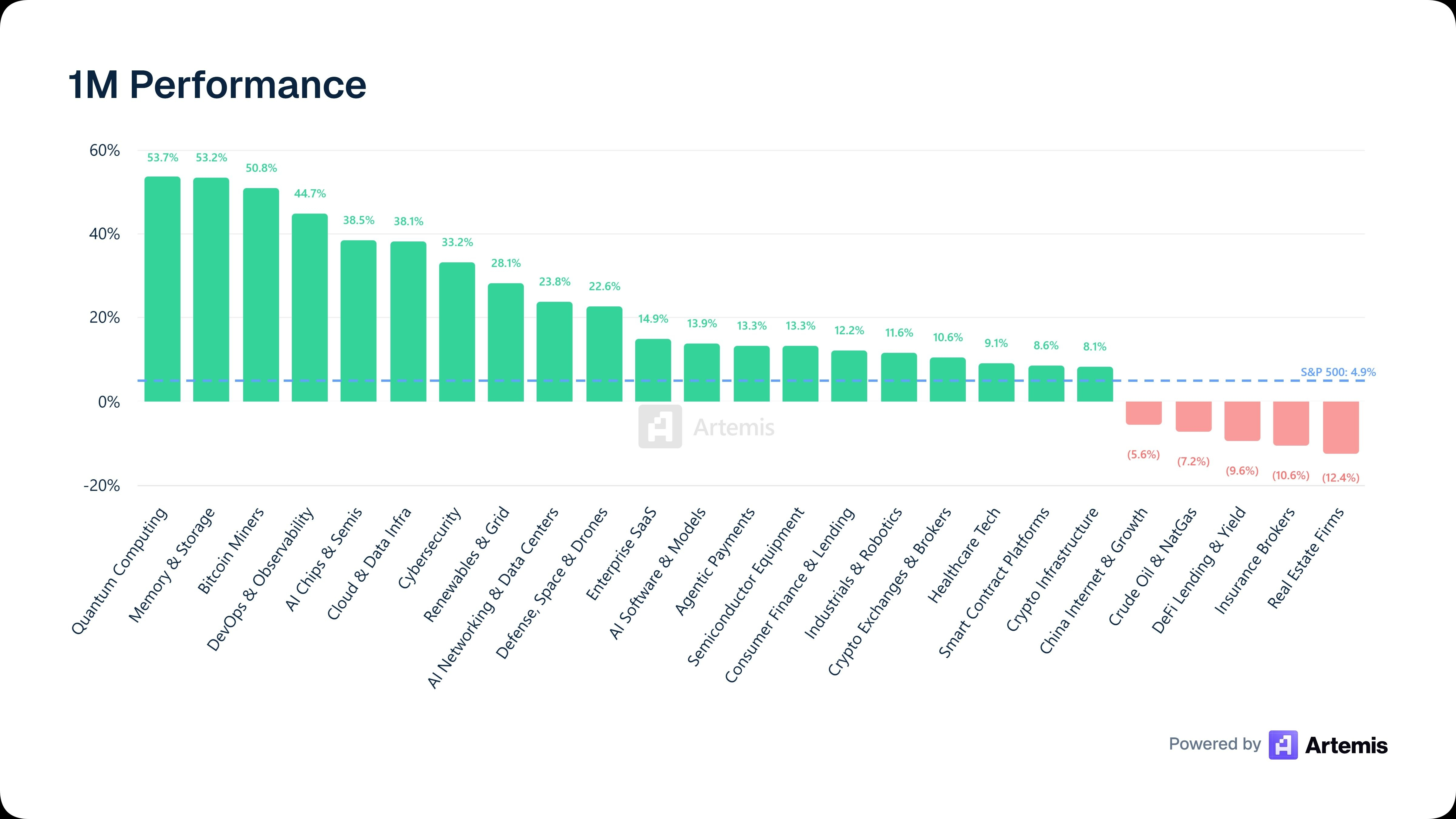
Si tu es un investisseur sur le marché boursier... ces entreprises sont le futur des liquidités ! 📈 Le trader suit le mouvement des bougies journalières, tandis que l'investisseur avisé surveille où l'argent chaud construit sa base pour les années à venir. Les statistiques mensuelles des flux de liquidités révèlent que le secteur de l'informatique quantique (Quantum Computing) n'est plus seulement une technologie futuriste, mais est devenu une réalité d'investissement qui engloutit les fonds des grandes institutions.
Si tu cherches des positions d'investissement solides soutenues par un véritable élan financier, ces entreprises sont en tête de liste :
🎯 Options de positionnement d'investissement ciblées :
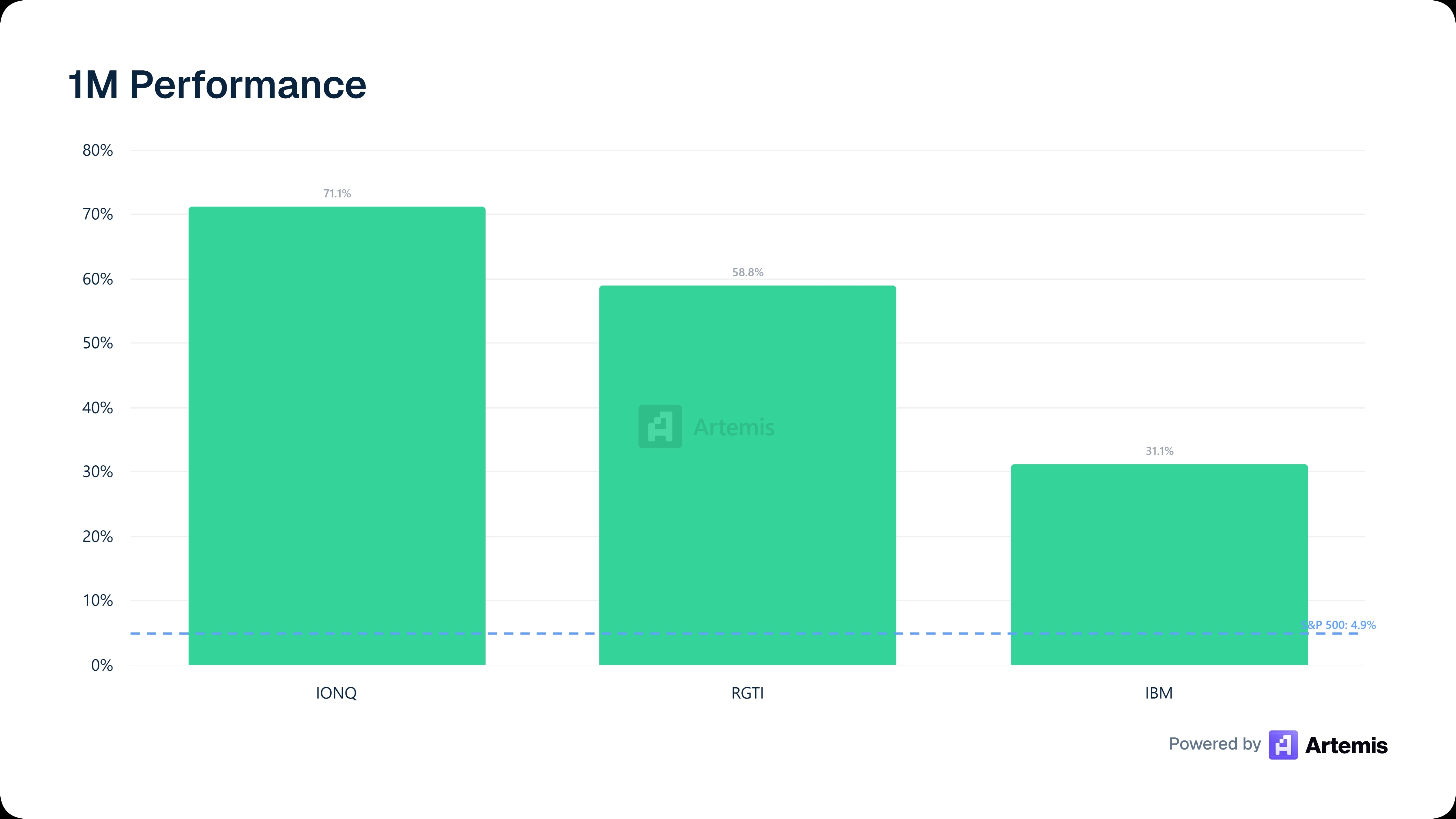
IONQ : l'entreprise domine complètement le secteur avec une croissance mensuelle effrayante de 71,1 %, montrant la confiance des baleines du marché dans sa structure technologique en tant que leader de la prochaine phase.
RGTI (Rigetti Computing) : la deuxième option d'investissement avec une dynamique haussière atteignant 58,8 %, confirmant que le flux financier englobe le secteur comme un écosystème et non juste une seule entreprise.
IBM : le géant historique qui avance avec prudence et une croissance d'investissement de 31,1 %, c'est l'option idéale pour l'investisseur qui cherche la sécurité tout en bénéficiant d'une excellente dynamique haussière surpassant de loin l'indice S&P 500 (4,9 %).
#quantumcomputers #AI #ibm
Si tu es un investisseur sur le marché boursier... ces entreprises sont le futur des liquidités ! 📈 Le trader suit le mouvement des bougies journalières, tandis que l'investisseur avisé surveille où l'argent chaud construit sa base pour les années à venir. Les statistiques mensuelles des flux de liquidités révèlent que le secteur de l'informatique quantique (Quantum Computing) n'est plus seulement une technologie futuriste, mais est devenu une réalité d'investissement qui engloutit les fonds des grandes institutions.
Si tu cherches des positions d'investissement solides soutenues par un véritable élan financier, ces entreprises sont en tête de liste :
🎯 Options de positionnement d'investissement ciblées :
IONQ : l'entreprise domine complètement le secteur avec une croissance mensuelle effrayante de 71,1 %, montrant la confiance des baleines du marché dans sa structure technologique en tant que leader de la prochaine phase.
RGTI (Rigetti Computing) : la deuxième option d'investissement avec une dynamique haussière atteignant 58,8 %, confirmant que le flux financier englobe le secteur comme un écosystème et non juste une seule entreprise.
IBM : le géant historique qui avance avec prudence et une croissance d'investissement de 31,1 %, c'est l'option idéale pour l'investisseur qui cherche la sécurité tout en bénéficiant d'une excellente dynamique haussière surpassant de loin l'indice S&P 500 (4,9 %).
#quantumcomputers #AI #ibm
Si tu cherches des positions d'investissement solides soutenues par un véritable élan financier, ces entreprises sont en tête de liste :
🎯 Options de positionnement d'investissement ciblées :
IONQ : l'entreprise domine complètement le secteur avec une croissance mensuelle effrayante de 71,1 %, montrant la confiance des baleines du marché dans sa structure technologique en tant que leader de la prochaine phase.
RGTI (Rigetti Computing) : la deuxième option d'investissement avec une dynamique haussière atteignant 58,8 %, confirmant que le flux financier englobe le secteur comme un écosystème et non juste une seule entreprise.
IBM : le géant historique qui avance avec prudence et une croissance d'investissement de 31,1 %, c'est l'option idéale pour l'investisseur qui cherche la sécurité tout en bénéficiant d'une excellente dynamique haussière surpassant de loin l'indice S&P 500 (4,9 %).
#quantumcomputers #AI #ibm
2
708

#quantumcomputers
🔥 IBM annonce une « suprématie quantique fiable » : que signifie cela pour $BTC ?
Des chercheurs d’IBM, en collaboration avec l’Université de Chicago, ont annoncé une nouvelle avancée dans le domaine de l’informatique quantique. En utilisant 70 qubits logiques et une nouvelle méthode de correction d’erreurs, l’entreprise a réalisé un calcul en seulement 15 minutes — une tâche qui demanderait un temps irréaliste pour des supercalculateurs classiques modernes.
📌 Points clés de l’expérience :
Paramètres techniques : 2 415 opérations logiques à deux qubits et 468 portes T ont été effectuées.
Exactitude : le niveau d’erreurs logiques a été réduit à 1/10 du niveau d’erreurs physiques du système.
Vérification : une méthode de vérification structurée a été mise au point, permettant de détecter les erreurs directement pendant les calculs, en résolvant le problème de longue date consistant à confirmer les résultats.
⚠️ Y a-t-il une menace pour Bitcoin ?
Non, rien ne change pour la sécurité du réseau dans un avenir prévisible.
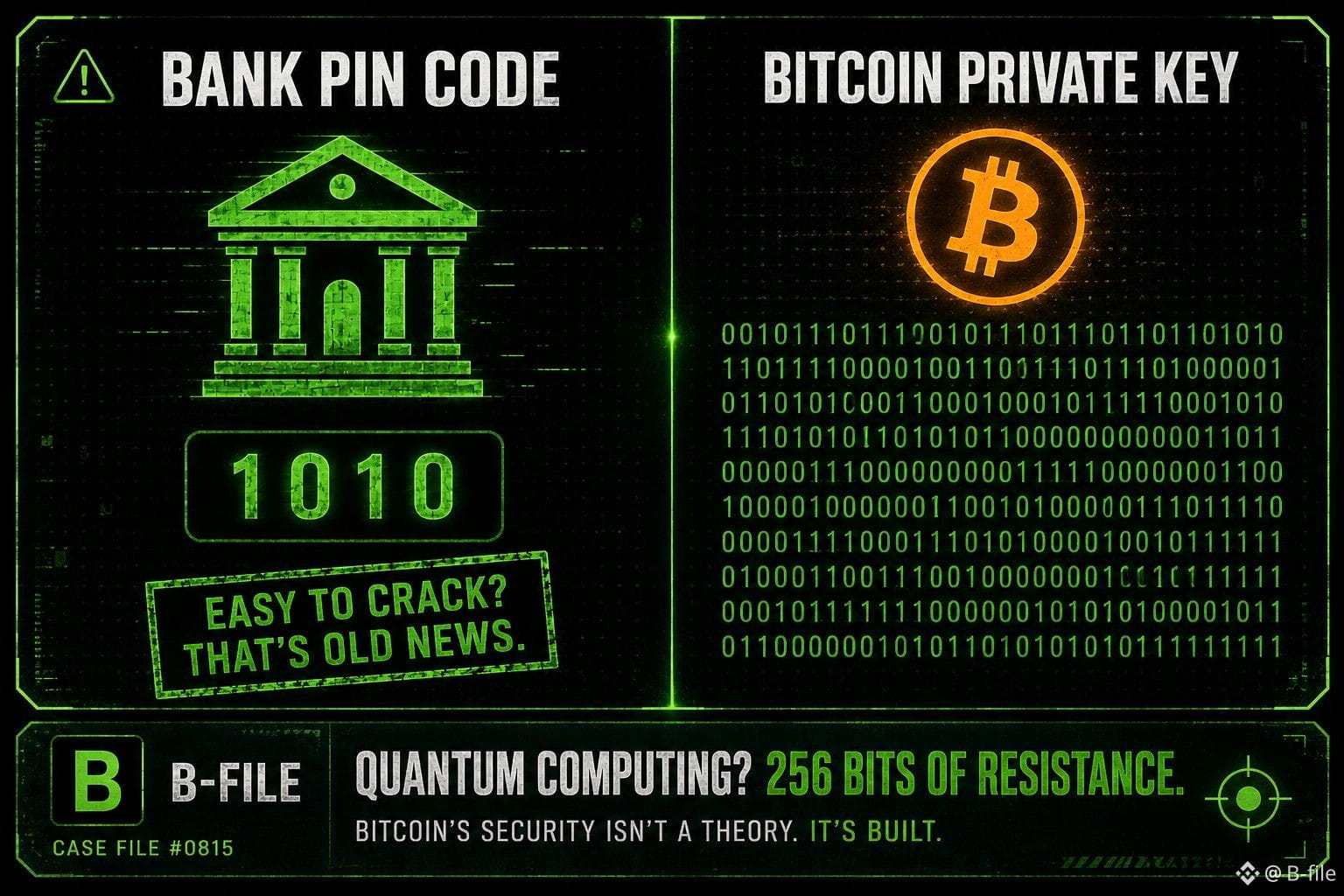
Bitcoin s’appuie sur la cryptographie à courbes elliptiques. Les chercheurs estiment qu’il faudrait un ordinateur quantique tolérant aux fautes disposant de milliers de qubits logiques pour briser cette protection.
La réussite d’IBM est une étape importante de sa feuille de route Starling (qui prévoit des systèmes à grande échelle tolérants aux fautes d’ici 2029), mais l’ingénierie quantique a encore un long chemin à parcourir avant un véritable « Q-Day ».
{future}(BTCUSDT)
#quantumcomputers
🔥 IBM annonce une « suprématie quantique fiable » : que signifie cela pour $BTC ?
Des chercheurs d’IBM, en collaboration avec l’Université de Chicago, ont annoncé une nouvelle avancée dans le domaine de l’informatique quantique. En utilisant 70 qubits logiques et une nouvelle méthode de correction d’erreurs, l’entreprise a réalisé un calcul en seulement 15 minutes — une tâche qui demanderait un temps irréaliste pour des supercalculateurs classiques modernes.
📌 Points clés de l’expérience :
Paramètres techniques : 2 415 opérations logiques à deux qubits et 468 portes T ont été effectuées.
Exactitude : le niveau d’erreurs logiques a été réduit à 1/10 du niveau d’erreurs physiques du système.
Vérification : une méthode de vérification structurée a été mise au point, permettant de détecter les erreurs directement pendant les calculs, en résolvant le problème de longue date consistant à confirmer les résultats.
⚠️ Y a-t-il une menace pour Bitcoin ?
Non, rien ne change pour la sécurité du réseau dans un avenir prévisible.
Bitcoin s’appuie sur la cryptographie à courbes elliptiques. Les chercheurs estiment qu’il faudrait un ordinateur quantique tolérant aux fautes disposant de milliers de qubits logiques pour briser cette protection.
La réussite d’IBM est une étape importante de sa feuille de route Starling (qui prévoit des systèmes à grande échelle tolérants aux fautes d’ici 2029), mais l’ingénierie quantique a encore un long chemin à parcourir avant un véritable « Q-Day ».
🔥 IBM annonce une « suprématie quantique fiable » : que signifie cela pour $BTC ?
Des chercheurs d’IBM, en collaboration avec l’Université de Chicago, ont annoncé une nouvelle avancée dans le domaine de l’informatique quantique. En utilisant 70 qubits logiques et une nouvelle méthode de correction d’erreurs, l’entreprise a réalisé un calcul en seulement 15 minutes — une tâche qui demanderait un temps irréaliste pour des supercalculateurs classiques modernes.
📌 Points clés de l’expérience :
Paramètres techniques : 2 415 opérations logiques à deux qubits et 468 portes T ont été effectuées.
Exactitude : le niveau d’erreurs logiques a été réduit à 1/10 du niveau d’erreurs physiques du système.
Vérification : une méthode de vérification structurée a été mise au point, permettant de détecter les erreurs directement pendant les calculs, en résolvant le problème de longue date consistant à confirmer les résultats.
⚠️ Y a-t-il une menace pour Bitcoin ?
Non, rien ne change pour la sécurité du réseau dans un avenir prévisible.
Bitcoin s’appuie sur la cryptographie à courbes elliptiques. Les chercheurs estiment qu’il faudrait un ordinateur quantique tolérant aux fautes disposant de milliers de qubits logiques pour briser cette protection.
La réussite d’IBM est une étape importante de sa feuille de route Starling (qui prévoit des systèmes à grande échelle tolérants aux fautes d’ici 2029), mais l’ingénierie quantique a encore un long chemin à parcourir avant un véritable « Q-Day ».

48


·
--
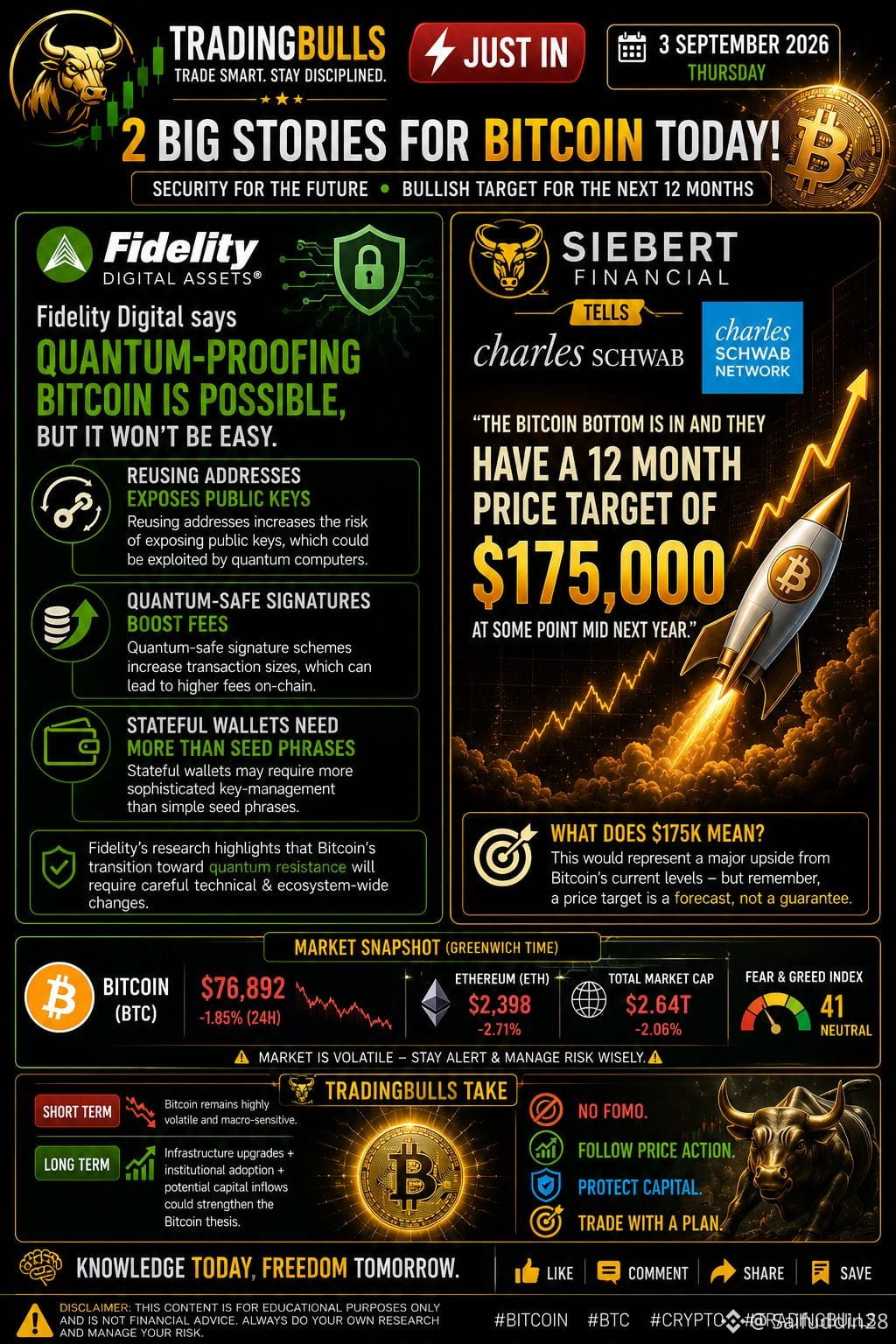
🐂 TRADINGBULLS | BITCOIN — 2 GRANDES HISTOIRES AUJOURD’HUI 🚨
Le Bitcoin attire l’attention des deux côtés de l’histoire à long terme :
🔐 Résistance quantique pour la sécurité future du Bitcoin
🚀 Un objectif de prix haussier à 175K $ pour les 12 prochains mois
🔐 1. Fidelity Digital Assets : Bitcoin peut devenir résistant aux attaques quantiques
Fidelity Digital Assets affirme qu’il est techniquement possible de rendre le Bitcoin résistant au quantique — mais ce ne sera pas facile.
Les principaux défis incluent :
🔸 La réutilisation d’adresse peut exposer les clés publiques
🔸 Des signatures sûres face au quantique pourraient augmenter la taille des transactions et les frais
🔸 Les portefeuilles avec état pourraient nécessiter une gestion des clés plus sophistiquée que le simple recours aux phrases de récupération
La dernière recherche de Fidelity souligne que la transition du Bitcoin vers une résistance quantique exigerait des changements techniques minutieux et à l’échelle de tout l’écosystème.
Source : https://x.com/BitcoinArchive/status/2095158819105931695
🚀 2. Siebert Financial voit le Bitcoin à 175 000 $
Un nouvel appel de marché fait des vagues :
Siebert Financial penserait que le point bas du Bitcoin est déjà passé et voit un objectif de prix à 12 mois autour de 175 000 $.
Cela représenterait une hausse majeure par rapport aux niveaux actuels du Bitcoin — mais souvenez-vous, un objectif de prix est une prévision, pas une garantie.
🧠 POINT DE VUE TRADINGBULLS
L’image d’ensemble est intéressante :
Court terme : 📉 Le Bitcoin reste très volatil et sensible au contexte macroéconomique.
Long terme : 🔐 Les mises à niveau de l’infrastructure + l’adoption institutionnelle + des flux de capitaux potentiels pourraient renforcer la thèse du Bitcoin.
Mais ne tradez pas un titre aveuglément.
🐂 Pas de FOMO.
📊 Suivez l’action des prix.
🛡️ Protégez le capital.
🎯 Tradez avec un plan.
⚠️ Contenu éducatif uniquement. Pas un conseil financier. Faites toujours vos propres recherches et gérez le risque.
$BTC ❤️
#BitcoinNewAllTimeHigh #Fidelity #quantumcomputers #bitcointradin g #CryptoNews
{spot}(BTCUSDT)
🐂 TRADINGBULLS | BITCOIN — 2 GRANDES HISTOIRES AUJOURD’HUI 🚨
Le Bitcoin attire l’attention des deux côtés de l’histoire à long terme :
🔐 Résistance quantique pour la sécurité future du Bitcoin
🚀 Un objectif de prix haussier à 175K $ pour les 12 prochains mois
🔐 1. Fidelity Digital Assets : Bitcoin peut devenir résistant aux attaques quantiques
Fidelity Digital Assets affirme qu’il est techniquement possible de rendre le Bitcoin résistant au quantique — mais ce ne sera pas facile.
Les principaux défis incluent :
🔸 La réutilisation d’adresse peut exposer les clés publiques
🔸 Des signatures sûres face au quantique pourraient augmenter la taille des transactions et les frais
🔸 Les portefeuilles avec état pourraient nécessiter une gestion des clés plus sophistiquée que le simple recours aux phrases de récupération
La dernière recherche de Fidelity souligne que la transition du Bitcoin vers une résistance quantique exigerait des changements techniques minutieux et à l’échelle de tout l’écosystème.
Source : https://x.com/BitcoinArchive/status/2095158819105931695
🚀 2. Siebert Financial voit le Bitcoin à 175 000 $
Un nouvel appel de marché fait des vagues :
Siebert Financial penserait que le point bas du Bitcoin est déjà passé et voit un objectif de prix à 12 mois autour de 175 000 $.
Cela représenterait une hausse majeure par rapport aux niveaux actuels du Bitcoin — mais souvenez-vous, un objectif de prix est une prévision, pas une garantie.
🧠 POINT DE VUE TRADINGBULLS
L’image d’ensemble est intéressante :
Court terme : 📉 Le Bitcoin reste très volatil et sensible au contexte macroéconomique.
Long terme : 🔐 Les mises à niveau de l’infrastructure + l’adoption institutionnelle + des flux de capitaux potentiels pourraient renforcer la thèse du Bitcoin.
Mais ne tradez pas un titre aveuglément.
🐂 Pas de FOMO.
📊 Suivez l’action des prix.
🛡️ Protégez le capital.
🎯 Tradez avec un plan.
⚠️ Contenu éducatif uniquement. Pas un conseil financier. Faites toujours vos propres recherches et gérez le risque.
$BTC ❤️
#BitcoinNewAllTimeHigh #Fidelity #quantumcomputers #bitcointradin g #CryptoNews
Le Bitcoin attire l’attention des deux côtés de l’histoire à long terme :
🔐 Résistance quantique pour la sécurité future du Bitcoin
🚀 Un objectif de prix haussier à 175K $ pour les 12 prochains mois
🔐 1. Fidelity Digital Assets : Bitcoin peut devenir résistant aux attaques quantiques
Fidelity Digital Assets affirme qu’il est techniquement possible de rendre le Bitcoin résistant au quantique — mais ce ne sera pas facile.
Les principaux défis incluent :
🔸 La réutilisation d’adresse peut exposer les clés publiques
🔸 Des signatures sûres face au quantique pourraient augmenter la taille des transactions et les frais
🔸 Les portefeuilles avec état pourraient nécessiter une gestion des clés plus sophistiquée que le simple recours aux phrases de récupération
La dernière recherche de Fidelity souligne que la transition du Bitcoin vers une résistance quantique exigerait des changements techniques minutieux et à l’échelle de tout l’écosystème.
Source : https://x.com/BitcoinArchive/status/2095158819105931695
🚀 2. Siebert Financial voit le Bitcoin à 175 000 $
Un nouvel appel de marché fait des vagues :
Siebert Financial penserait que le point bas du Bitcoin est déjà passé et voit un objectif de prix à 12 mois autour de 175 000 $.
Cela représenterait une hausse majeure par rapport aux niveaux actuels du Bitcoin — mais souvenez-vous, un objectif de prix est une prévision, pas une garantie.
🧠 POINT DE VUE TRADINGBULLS
L’image d’ensemble est intéressante :
Court terme : 📉 Le Bitcoin reste très volatil et sensible au contexte macroéconomique.
Long terme : 🔐 Les mises à niveau de l’infrastructure + l’adoption institutionnelle + des flux de capitaux potentiels pourraient renforcer la thèse du Bitcoin.
Mais ne tradez pas un titre aveuglément.
🐂 Pas de FOMO.
📊 Suivez l’action des prix.
🛡️ Protégez le capital.
🎯 Tradez avec un plan.
⚠️ Contenu éducatif uniquement. Pas un conseil financier. Faites toujours vos propres recherches et gérez le risque.
$BTC ❤️
#BitcoinNewAllTimeHigh #Fidelity #quantumcomputers #bitcointradin g #CryptoNews
61

·
--

Article
💔 De 243 USDT à 77 USDT — Peut-être que la Chance compte vraimentJ’y pense depuis tôt ce matin. Le moment où j’ai ouvert l’application et vu que le TAC avait chuté d’environ 88 %, mon cœur s’est serré. La valeur de mon actif était passée d’environ 243 USDT à seulement 77 USDT. Ce n’était pas qu’un simple chiffre à l’écran : j’avais l’impression de voir des semaines d’espoir et d’attentes disparaître en quelques secondes.
Parfois, je me demande : Pourquoi n’arrive-je pas à réaliser des profits ? Pourquoi est-ce que presque chaque transaction semble se retourner contre moi ? Peut-être que la réponse tient en partie à la stratégie, en partie au timing, et honnêtement, peut-être aussi que la chance joue un rôle. Et j’ai l’impression d’avoir eu une chance terrible avec mes transactions.
💔 De 243 USDT à 77 USDT — Peut-être que la Chance compte vraiment
J’y pense depuis tôt ce matin. Le moment où j’ai ouvert l’application et vu que le TAC avait chuté d’environ 88 %, mon cœur s’est serré. La valeur de mon actif était passée d’environ 243 USDT à seulement 77 USDT. Ce n’était pas qu’un simple chiffre à l’écran : j’avais l’impression de voir des semaines d’espoir et d’attentes disparaître en quelques secondes.
Parfois, je me demande : Pourquoi n’arrive-je pas à réaliser des profits ? Pourquoi est-ce que presque chaque transaction semble se retourner contre moi ? Peut-être que la réponse tient en partie à la stratégie, en partie au timing, et honnêtement, peut-être aussi que la chance joue un rôle. Et j’ai l’impression d’avoir eu une chance terrible avec mes transactions.
Parfois, je me demande : Pourquoi n’arrive-je pas à réaliser des profits ? Pourquoi est-ce que presque chaque transaction semble se retourner contre moi ? Peut-être que la réponse tient en partie à la stratégie, en partie au timing, et honnêtement, peut-être aussi que la chance joue un rôle. Et j’ai l’impression d’avoir eu une chance terrible avec mes transactions.
37
5
567

·
--
$Q Au milieu d’août 2026, la pièce Q, le symbole original du réseau Q Protocol (également connu sous le nom de symbole de gouvernance QGOV), continue de renforcer sa position parmi les solutions innovantes conçues pour relever le défi de la gouvernance et de la sécurité des contrats intelligents au sein de l’écosystème de la finance décentralisée (DeFi) et des organisations autonomes décentralisées (DAO).
Quel est le projet Q Protocol ?
Le protocole Q a été conçu pour agir comme une « couche de gouvernance supérieure » et une chaîne de blocs indépendante compatible avec l’EVM, fonctionnant en parallèle avec les grands réseaux :
La Constitution chiffrée de Q (Q Constitution) : un cadre juridique-numérique qui définit les droits et les obligations des participants, empêchant que de gros investisseurs ne s’emparent des décisions du protocole (Governance Attacks).
Le système de nœuds de tutelle (Root Nodes) : un réseau de protection indépendant et délégué chargé d’appliquer les règles constitutionnelles et de résoudre les litiges logiciels.
Utilité du token Q : le token sert de carburant pour payer les frais de gaz sur le réseau, sécuriser le système via le staking (mise en jeu), et permet également l’exercice des droits de vote constitutionnel ainsi que la gouvernance partagée.
Performance du marché et indicateurs de trading aujourd’hui
La pièce connaît aujourd’hui des mouvements de prix calmes, reflétant une stabilité au sein d’une phase de consolidation à long terme :
Fourchette de prix : le token Q se négocie aujourd’hui dans des niveaux très faibles, proches de 0,00034 $ à 0,00045 $.
$Q #q #QueencryptoNews #Qubic #quantumcomputers #quickfarm
{future}(QUSDT)
$Q Au milieu d’août 2026, la pièce Q, le symbole original du réseau Q Protocol (également connu sous le nom de symbole de gouvernance QGOV), continue de renforcer sa position parmi les solutions innovantes conçues pour relever le défi de la gouvernance et de la sécurité des contrats intelligents au sein de l’écosystème de la finance décentralisée (DeFi) et des organisations autonomes décentralisées (DAO).
Quel est le projet Q Protocol ?
Le protocole Q a été conçu pour agir comme une « couche de gouvernance supérieure » et une chaîne de blocs indépendante compatible avec l’EVM, fonctionnant en parallèle avec les grands réseaux :
La Constitution chiffrée de Q (Q Constitution) : un cadre juridique-numérique qui définit les droits et les obligations des participants, empêchant que de gros investisseurs ne s’emparent des décisions du protocole (Governance Attacks).
Le système de nœuds de tutelle (Root Nodes) : un réseau de protection indépendant et délégué chargé d’appliquer les règles constitutionnelles et de résoudre les litiges logiciels.
Utilité du token Q : le token sert de carburant pour payer les frais de gaz sur le réseau, sécuriser le système via le staking (mise en jeu), et permet également l’exercice des droits de vote constitutionnel ainsi que la gouvernance partagée.
Performance du marché et indicateurs de trading aujourd’hui
La pièce connaît aujourd’hui des mouvements de prix calmes, reflétant une stabilité au sein d’une phase de consolidation à long terme :
Fourchette de prix : le token Q se négocie aujourd’hui dans des niveaux très faibles, proches de 0,00034 $ à 0,00045 $.
$Q #q #QueencryptoNews #Qubic #quantumcomputers #quickfarm
Quel est le projet Q Protocol ?
Le protocole Q a été conçu pour agir comme une « couche de gouvernance supérieure » et une chaîne de blocs indépendante compatible avec l’EVM, fonctionnant en parallèle avec les grands réseaux :
La Constitution chiffrée de Q (Q Constitution) : un cadre juridique-numérique qui définit les droits et les obligations des participants, empêchant que de gros investisseurs ne s’emparent des décisions du protocole (Governance Attacks).
Le système de nœuds de tutelle (Root Nodes) : un réseau de protection indépendant et délégué chargé d’appliquer les règles constitutionnelles et de résoudre les litiges logiciels.
Utilité du token Q : le token sert de carburant pour payer les frais de gaz sur le réseau, sécuriser le système via le staking (mise en jeu), et permet également l’exercice des droits de vote constitutionnel ainsi que la gouvernance partagée.
Performance du marché et indicateurs de trading aujourd’hui
La pièce connaît aujourd’hui des mouvements de prix calmes, reflétant une stabilité au sein d’une phase de consolidation à long terme :
Fourchette de prix : le token Q se négocie aujourd’hui dans des niveaux très faibles, proches de 0,00034 $ à 0,00045 $.
$Q #q #QueencryptoNews #Qubic #quantumcomputers #quickfarm

77

·
--
Baissier
Atteindre l’objectif de vente $AKE
Entrée 0.0078928
Clôture 0.0072719
$SNXX $BR
b
#nft #Binance #solana #TrendingTopic #quantumcomputers
Atteindre l’objectif de vente $AKE
Entrée 0.0078928
Clôture 0.0072719
$SNXX $BR
b
#nft #Binance #solana #TrendingTopic #quantumcomputers
Entrée 0.0078928
Clôture 0.0072719
$SNXX $BR
b
#nft #Binance #solana #TrendingTopic #quantumcomputers
105

🛑 Sécurité de Bitcoin et Ordinateur Quantique : Le Danger Est-Il Proche ? ⚛️💻
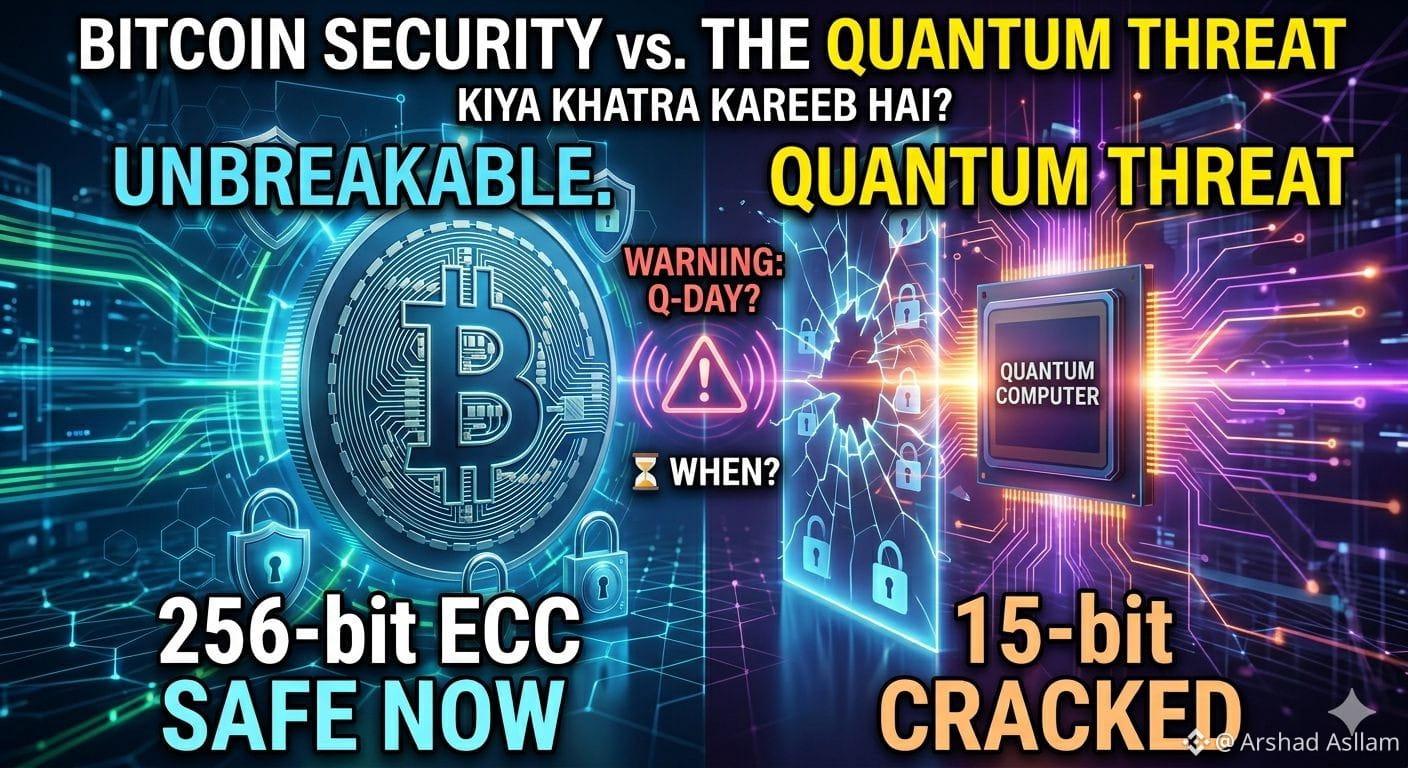
Aujourd'hui, une grande nouvelle fait des vagues dans le monde de la crypto ! Un chercheur, Giancarlo Lelli, a réussi à craquer une clé ECC Bitcoin de 15 bits grâce à un ordinateur quantique et a remporté 1 BTC en récompense.
✨ Quelle Est la Réalité ?
Confrontation Équitable : L'année dernière, seul un test de 6 bits avait réussi, mais maintenant, ce bond a atteint 15 bits.
Algorithme de Shor : C'est la formule qui pourrait être utilisée à l'avenir pour extraire la "Clé Privée" à partir de la "Clé Publique" de Bitcoin.
Portefeuilles Hérités : Le plus grand danger vient des vieux portefeuilles qui n'ont pas été utilisés depuis des années, car leur sécurité est obsolète.
🛡️ Bitcoin Est-Il En Danger ?
Pas de panique pour l'instant ! La sécurité réelle de Bitcoin est de 256 bits, ce qui est des millions de fois plus robuste que ces 15 bits. Cependant, cela prouve que l'"Âge Quantique" n'est pas si loin.
💡 Leçon :
Le monde de la crypto devra se diriger vers des algorithmes "Résistants aux Quantique" à l'avenir pour que notre or numérique reste toujours en sécurité.
Qu'en pensez-vous ? Dans 5 à 10 ans, les ordinateurs quantiques vont-ils vraiment mettre Bitcoin à genoux ? 👇
$BTC
{spot}(BTCUSDT)
#bitcoin #CryptoNewss #quantumcomputers #Technology #FutureOfFinance #BTC
🛑 Sécurité de Bitcoin et Ordinateur Quantique : Le Danger Est-Il Proche ? ⚛️💻
Aujourd'hui, une grande nouvelle fait des vagues dans le monde de la crypto ! Un chercheur, Giancarlo Lelli, a réussi à craquer une clé ECC Bitcoin de 15 bits grâce à un ordinateur quantique et a remporté 1 BTC en récompense.
✨ Quelle Est la Réalité ?
Confrontation Équitable : L'année dernière, seul un test de 6 bits avait réussi, mais maintenant, ce bond a atteint 15 bits.
Algorithme de Shor : C'est la formule qui pourrait être utilisée à l'avenir pour extraire la "Clé Privée" à partir de la "Clé Publique" de Bitcoin.
Portefeuilles Hérités : Le plus grand danger vient des vieux portefeuilles qui n'ont pas été utilisés depuis des années, car leur sécurité est obsolète.
🛡️ Bitcoin Est-Il En Danger ?
Pas de panique pour l'instant ! La sécurité réelle de Bitcoin est de 256 bits, ce qui est des millions de fois plus robuste que ces 15 bits. Cependant, cela prouve que l'"Âge Quantique" n'est pas si loin.
💡 Leçon :
Le monde de la crypto devra se diriger vers des algorithmes "Résistants aux Quantique" à l'avenir pour que notre or numérique reste toujours en sécurité.
Qu'en pensez-vous ? Dans 5 à 10 ans, les ordinateurs quantiques vont-ils vraiment mettre Bitcoin à genoux ? 👇
$BTC
#bitcoin #CryptoNewss #quantumcomputers #Technology #FutureOfFinance #BTC
Aujourd'hui, une grande nouvelle fait des vagues dans le monde de la crypto ! Un chercheur, Giancarlo Lelli, a réussi à craquer une clé ECC Bitcoin de 15 bits grâce à un ordinateur quantique et a remporté 1 BTC en récompense.
✨ Quelle Est la Réalité ?
Confrontation Équitable : L'année dernière, seul un test de 6 bits avait réussi, mais maintenant, ce bond a atteint 15 bits.
Algorithme de Shor : C'est la formule qui pourrait être utilisée à l'avenir pour extraire la "Clé Privée" à partir de la "Clé Publique" de Bitcoin.
Portefeuilles Hérités : Le plus grand danger vient des vieux portefeuilles qui n'ont pas été utilisés depuis des années, car leur sécurité est obsolète.
🛡️ Bitcoin Est-Il En Danger ?
Pas de panique pour l'instant ! La sécurité réelle de Bitcoin est de 256 bits, ce qui est des millions de fois plus robuste que ces 15 bits. Cependant, cela prouve que l'"Âge Quantique" n'est pas si loin.
💡 Leçon :
Le monde de la crypto devra se diriger vers des algorithmes "Résistants aux Quantique" à l'avenir pour que notre or numérique reste toujours en sécurité.
Qu'en pensez-vous ? Dans 5 à 10 ans, les ordinateurs quantiques vont-ils vraiment mettre Bitcoin à genoux ? 👇
$BTC
#bitcoin #CryptoNewss #quantumcomputers #Technology #FutureOfFinance #BTC
88

Article
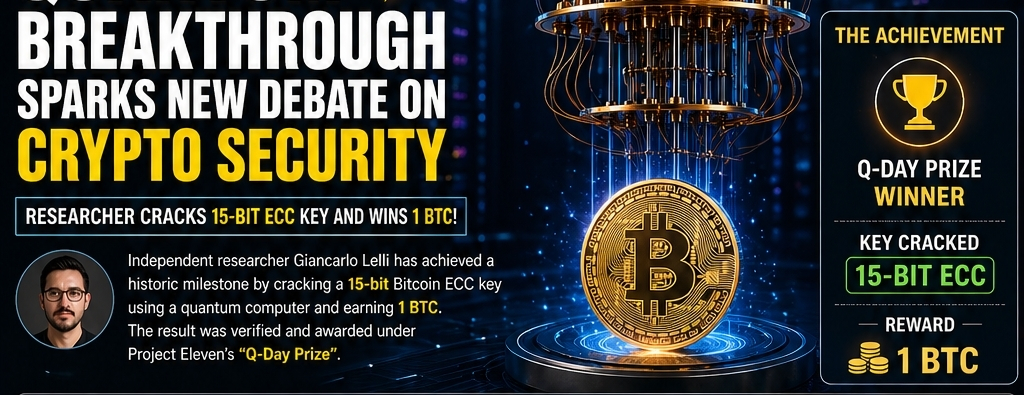
DERNIÈRE MINUTE : Une percée quantique déclenche un nouveau débat sur la sécurité crypto ⚡₿
Une étape majeure dans l'informatique#BTC DERNIÈRE MINUTE : Une percée quantique déclenche un nouveau débat sur la sécurité crypto ⚡₿
Une étape majeure dans l'informatique quantique vient d'être atteinte, soulevant de sérieuses questions sur l'avenir de la sécurité numérique. Le chercheur indépendant Giancarlo Lelli a réussi à casser une clé cryptographique de style Bitcoin à petite échelle—gagnant une récompense de 1 BTC dans le processus.
🏆 L'accomplissement a été officiellement reconnu sous le Prix Q-Day, marquant l'une des démonstrations publiques les plus avancées de cryptanalyse quantique à ce jour.
DERNIÈRE MINUTE : Une percée quantique déclenche un nouveau débat sur la sécurité crypto ⚡₿ Une étape majeure dans l'informatique
#BTC DERNIÈRE MINUTE : Une percée quantique déclenche un nouveau débat sur la sécurité crypto ⚡₿
Une étape majeure dans l'informatique quantique vient d'être atteinte, soulevant de sérieuses questions sur l'avenir de la sécurité numérique. Le chercheur indépendant Giancarlo Lelli a réussi à casser une clé cryptographique de style Bitcoin à petite échelle—gagnant une récompense de 1 BTC dans le processus.
🏆 L'accomplissement a été officiellement reconnu sous le Prix Q-Day, marquant l'une des démonstrations publiques les plus avancées de cryptanalyse quantique à ce jour.
Une étape majeure dans l'informatique quantique vient d'être atteinte, soulevant de sérieuses questions sur l'avenir de la sécurité numérique. Le chercheur indépendant Giancarlo Lelli a réussi à casser une clé cryptographique de style Bitcoin à petite échelle—gagnant une récompense de 1 BTC dans le processus.
🏆 L'accomplissement a été officiellement reconnu sous le Prix Q-Day, marquant l'une des démonstrations publiques les plus avancées de cryptanalyse quantique à ce jour.
26

Quels blockchains sont prêts pour l'ère quantique, et lesquels ne le sont pas ?Le problème de la menace quantique pour la crypto ne semble plus être une préoccupation d'un futur lointain. Après les décisions de NIST, les avertissements de Coinbase et les mises à jour de Google, les projets doivent se positionner : derrière les mots « quantum-ready », y a-t-il un véritable plan ou s'agit-il simplement de marketing ?
En août 2024, NIST a validé les trois premiers standards de cryptographie post-quantique et a clairement recommandé de commencer la transition dès maintenant. La date limite est fixée de manière stricte : d'ici 2035, les algorithmes vulnérables à clé publique doivent être retirés de l'utilisation.
Quels blockchains sont prêts pour l'ère quantique, et lesquels ne le sont pas ?
Le problème de la menace quantique pour la crypto ne semble plus être une préoccupation d'un futur lointain. Après les décisions de NIST, les avertissements de Coinbase et les mises à jour de Google, les projets doivent se positionner : derrière les mots « quantum-ready », y a-t-il un véritable plan ou s'agit-il simplement de marketing ?
En août 2024, NIST a validé les trois premiers standards de cryptographie post-quantique et a clairement recommandé de commencer la transition dès maintenant. La date limite est fixée de manière stricte : d'ici 2035, les algorithmes vulnérables à clé publique doivent être retirés de l'utilisation.
En août 2024, NIST a validé les trois premiers standards de cryptographie post-quantique et a clairement recommandé de commencer la transition dès maintenant. La date limite est fixée de manière stricte : d'ici 2035, les algorithmes vulnérables à clé publique doivent être retirés de l'utilisation.
2
139

·
--
Haussier
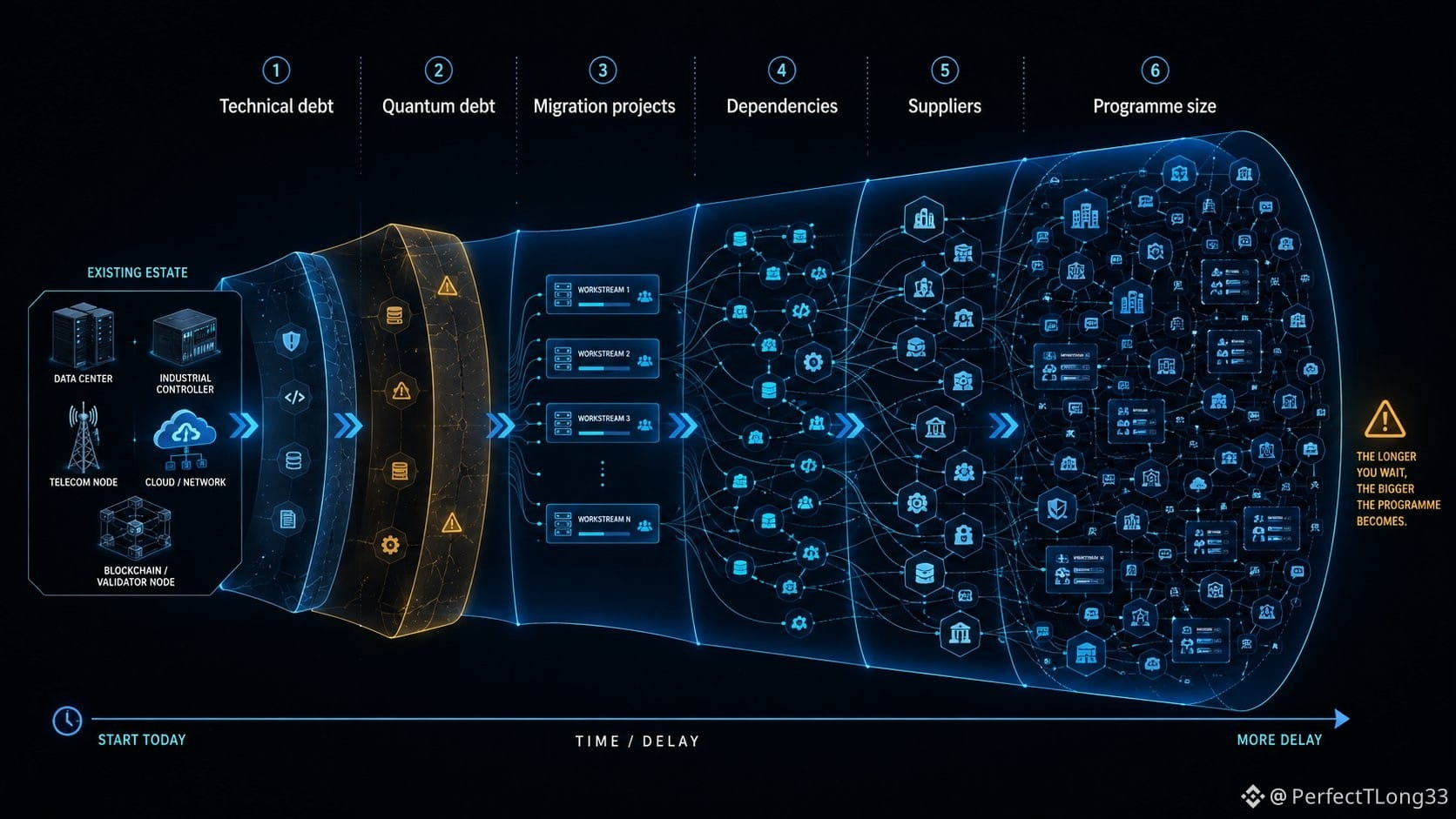
Les entreprises supportent déjà une dette technique.
La plupart accumulent désormais une dette quantique.
Chaque système laissé non préparé devient un projet de migration supplémentaire.
Chaque dépendance devient une intégration de plus.
Chaque fournisseur devient une conversation de plus.
Le report ne laisse pas le problème inchangé.
Il l’amplifie.
Plus l’infrastructure attend, plus le programme devient important.
Qustream.com QST/SOL
"coming soon layer 1
ca:AUuCEHQ7sm2i5GmaHrpE961voWcTY8U6mgrkhcV7pump
$BTC $SOL $ETH #BTC #solana #ETH
#quantum #quantumcomputers
Les entreprises supportent déjà une dette technique.
La plupart accumulent désormais une dette quantique.
Chaque système laissé non préparé devient un projet de migration supplémentaire.
Chaque dépendance devient une intégration de plus.
Chaque fournisseur devient une conversation de plus.
Le report ne laisse pas le problème inchangé.
Il l’amplifie.
Plus l’infrastructure attend, plus le programme devient important.
Qustream.com QST/SOL
"coming soon layer 1
ca:AUuCEHQ7sm2i5GmaHrpE961voWcTY8U6mgrkhcV7pump
$BTC $SOL $ETH #BTC #solana #ETH
#quantum #quantumcomputers
La plupart accumulent désormais une dette quantique.
Chaque système laissé non préparé devient un projet de migration supplémentaire.
Chaque dépendance devient une intégration de plus.
Chaque fournisseur devient une conversation de plus.
Le report ne laisse pas le problème inchangé.
Il l’amplifie.
Plus l’infrastructure attend, plus le programme devient important.
Qustream.com QST/SOL
"coming soon layer 1
ca:AUuCEHQ7sm2i5GmaHrpE961voWcTY8U6mgrkhcV7pump
$BTC $SOL $ETH #BTC #solana #ETH
#quantum #quantumcomputers
127
Connectez-vous pour découvrir plus de contenu
Rejoignez la communauté mondiale des adeptes de cryptomonnaies sur Binance Square
⚡️ Suviez les dernières informations importantes sur les cryptomonnaies.
💬 Jugé digne de confiance par la plus grande plateforme d’échange de cryptomonnaies au monde.
👍 Découvrez les connaissances que partagent les créateurs vérifiés.
Adresse e-mail/Nº de téléphone
Sujets d’actualité
1
#BitcoinReboundsTo$79K
18,237 vues
152 mentions
2
#SouthKoreaCryptoTaxDelayPetitionTops50000
4,877 vues
148 mentions
3
#SolanaTransactionV1GoesLiveOnMainnet
2,348 vues
93 mentions
4
#RussianCentralBankFlagsCryptoAsFinancialRisk
3,702 vues
145 mentions
5
#GrayscalePutsXRPAt26.11%InAdvisorPortfolio
12,044 vues
236 mentions
6
#PhiladelphiaSemiconductorIndexFalls5.9%
4,176 vues
152 mentions
7
#SECChairUrgesCongressToAdvanceClarityAct
12,964 vues
154 mentions
8
#FedHikeOddsRiseTo89%
99,641 vues
1,163 mentions
9
#RLUSDSupplyHitsRecord$2.442B
7,410 vues
69 mentions
10
#AvalancheIntegratesIntoUAEPassDigitalVault
85,744 vues
1,067 mentions