

#microsoftai
microsoftai
7,846 vues
12 mentions
Populaire
Récents

·
--
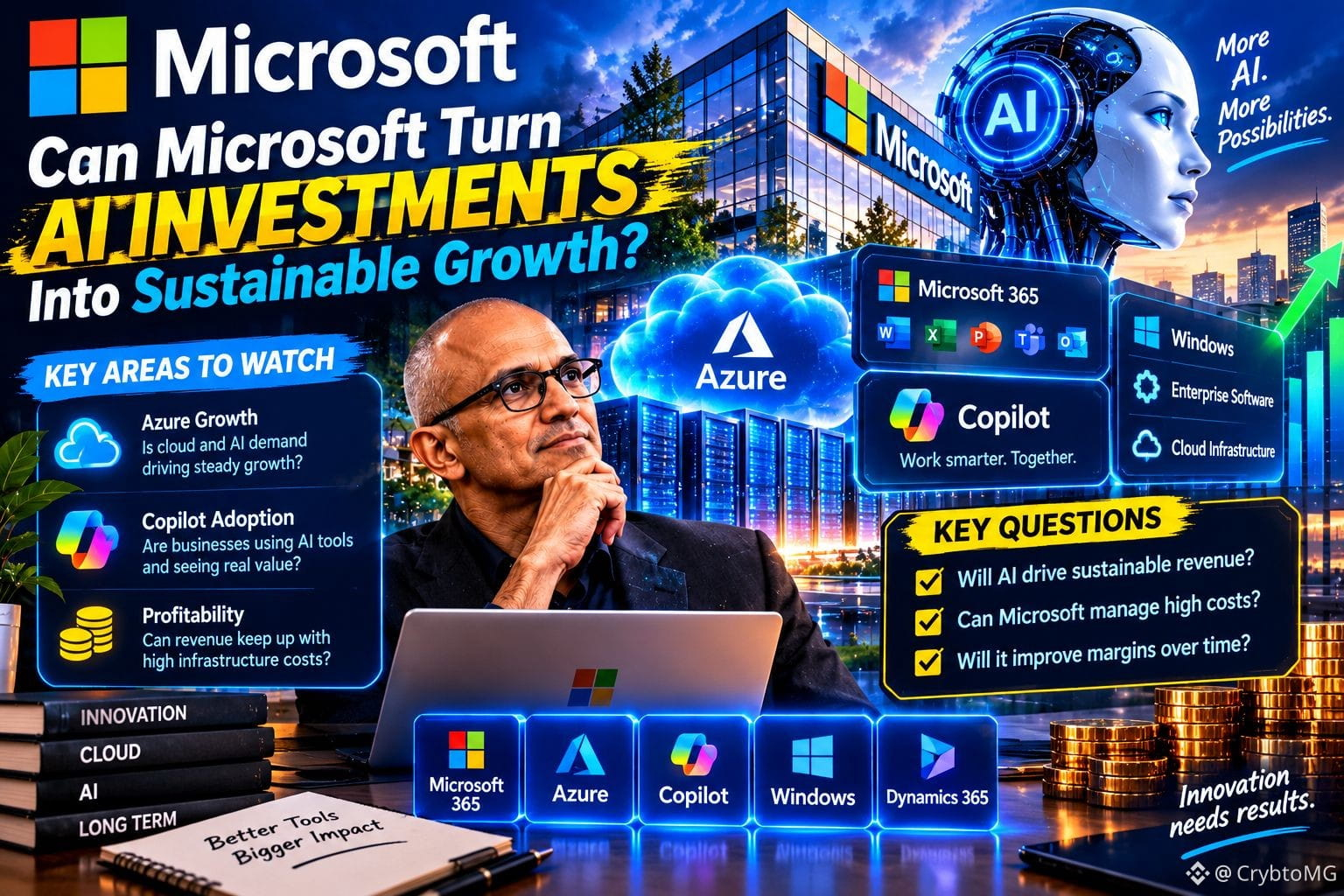
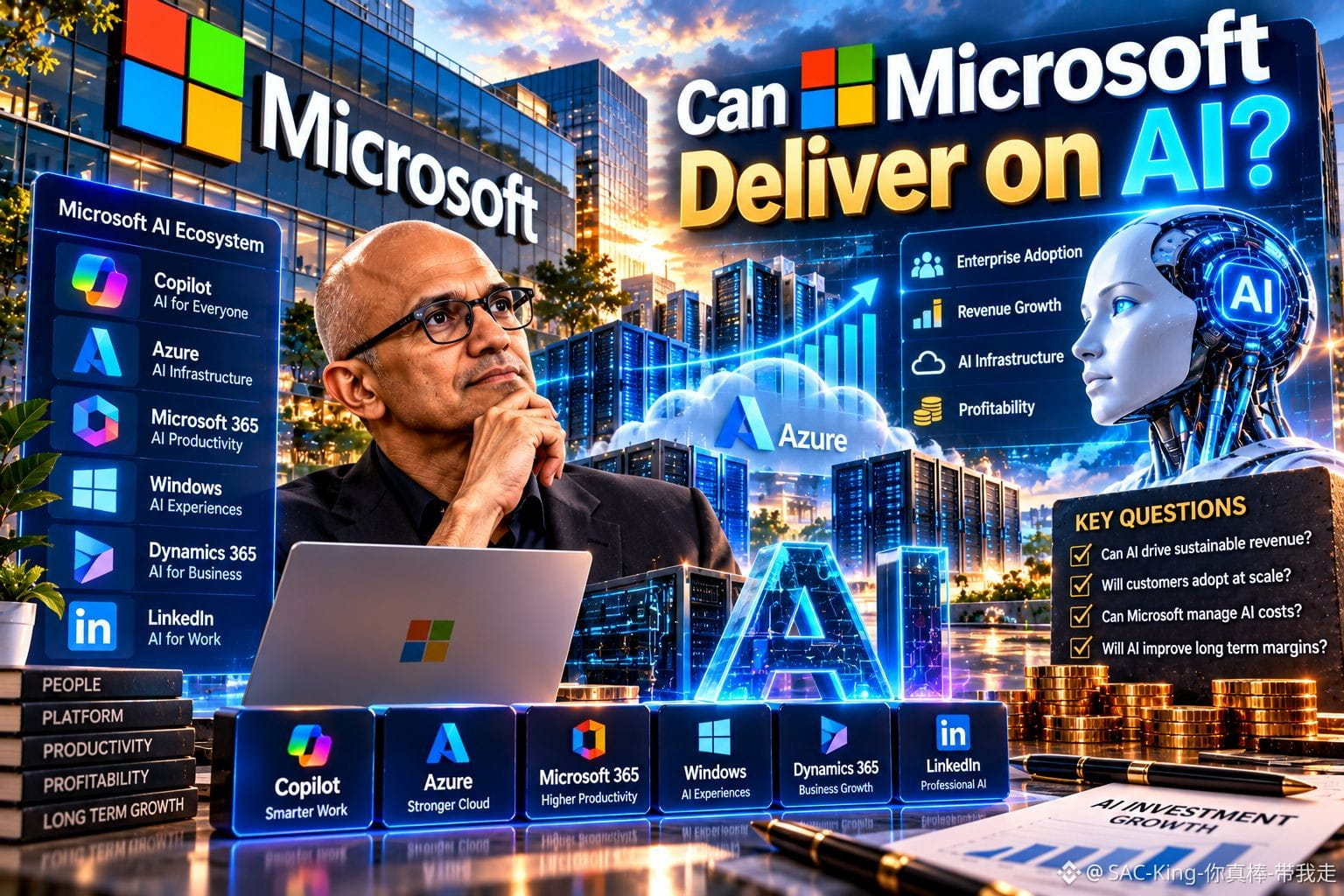
Microsoft AI: Can Heavy Investment Create Sustainable Growth?
Building AI infrastructure is expensive. Turning it into a profitable business is the real challenge.
Microsoft has an advantage: it already serves businesses through Microsoft 365, Azure, Windows, and enterprise software. This gives the company several ways to bring AI tools to existing customers.
But distribution alone isn’t enough.
For its AI strategy to deliver lasting value, three things matter:
☁️ Azure growth: Is demand for AI computing translating into sustained cloud revenue?
🤖 Copilot adoption: Are businesses using AI tools regularly and seeing measurable productivity gains?
📊 Profitability: Can AI-related revenue grow enough to justify spending on data centers, chips, energy, and model development?
The key distinction is between getting businesses interested in AI and building products they are willing to pay for over the long term.
Microsoft doesn’t need to win every AI competition. It needs to make its AI products useful, widely adopted, and economically sustainable.
What will matter most in the long run: Microsoft’s existing customer base or its ability to control AI infrastructure costs?
#Microsoft #MicrosoftAI #Aİ #Azure
1
2


·
--
Haussier
#BinancePick
Microsoft’s AI Boom Meets a Tough Question: Where Is the Next Wave of Growth Coming From?
Every technological revolution reaches a moment when investors stop asking how big it can become and start asking how much it can earn. 🤖
Microsoft is approaching that test.
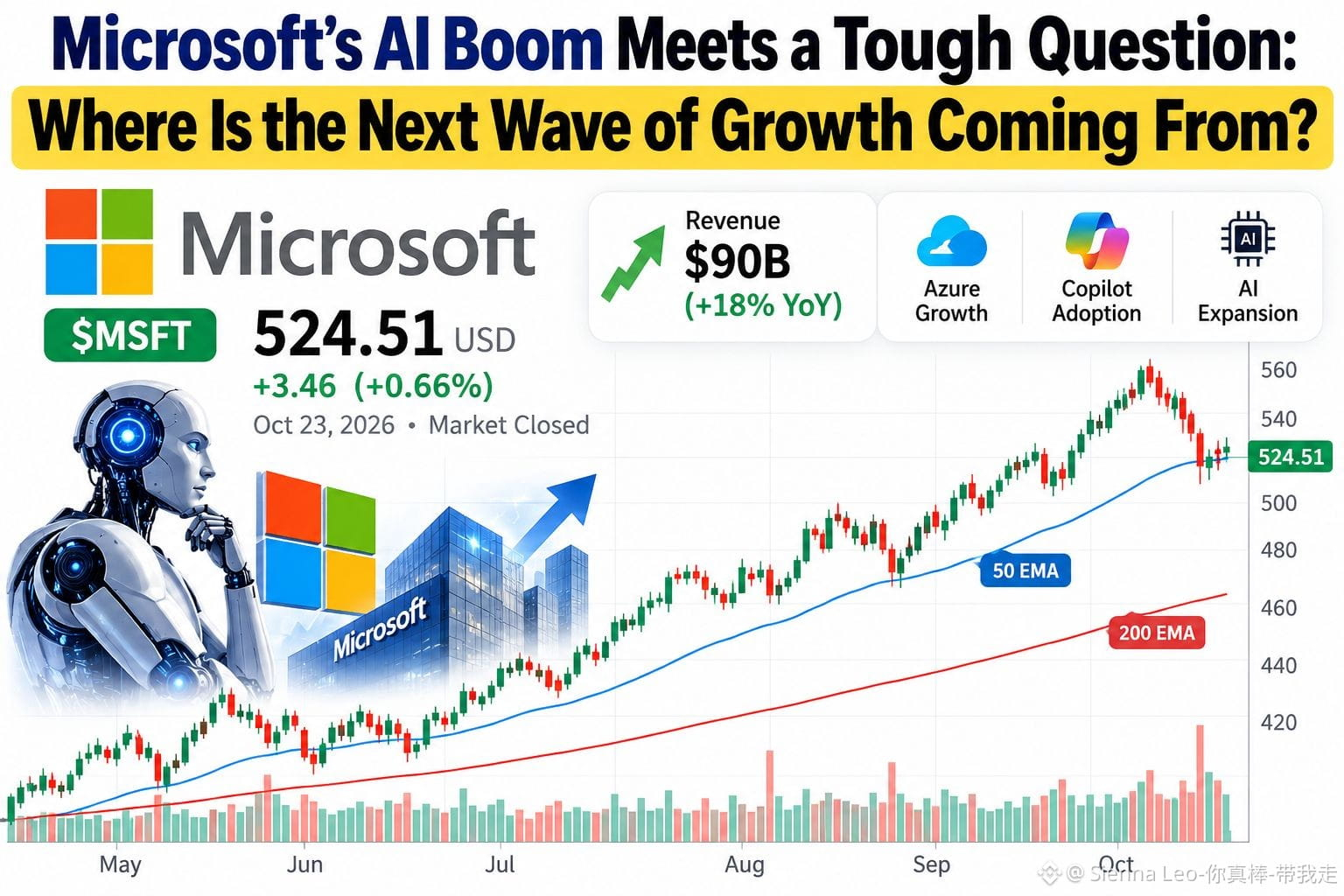
In its latest reported quarter, revenue reached $90 billion, up 18% year over year, while its fiscal 2026 annual revenue climbed to $331.8 billion. AI and cloud are powerful growth engines, but the next challenge is turning massive infrastructure investments into sustainable returns.
Azure expansion, AI-powered Copilot tools, and enterprise adoption could fuel the next chapter. Yet rising computing costs, capacity constraints, and competition mean demand alone is not enough. Profitability matters too.
$MSFT price: $524.51 at the October 23, 2026 market close, up 0.66% that session.
The real catalyst is October 28, when Microsoft is expected to report its next quarterly results. Wall Street will be watching Azure growth, Copilot adoption, and whether AI spending can generate enough returns.
Prediction | Next 24 to 48 hours: My bias is neutral to cautiously bullish, but confidence is limited. A recovery could gain traction if buyers defend recent lows and technology sentiment improves. Continued weakness could pressure the stock further. Earnings uncertainty and heavy AI spending remain key risks.
Traders may find opportunities in a confirmed rebound, while late buyers risk losses if momentum fades. Avoid treating either scenario as certain.
The next AI winner may not be the company spending the most, but the one proving that every dollar invested can create lasting value.
What matters more for Microsoft’s next move: faster Azure growth or stronger returns on AI spending?
For educational purposes only. Not financial advice.
#MicrosoftAI #Azure #GrowWithSAC #EarningsSeason
$MSFT
269

#CanMicrosoftDeliverOnAI
🔥 CAN MICROSOFT TURN ITS MASSIVE AI INVESTMENT INTO REAL SUCCESS? 🤖💰
Microsoft is pushing deeper into AI with smarter Copilot tools, AI-powered PCs, and major cloud investments. But the big question is: can it turn this spending into long-term growth? 📊
📰 WHAT’S HAPPENING?
🔹 Microsoft is expanding Copilot with new AI agents and coding tools.
🔹 Azure cloud revenue surpassed $100 billion for fiscal year 2026, showing the scale of its cloud business.
🔹 Heavy AI spending is raising an important question: will the returns justify the cost? ⚡
💡 WHAT THIS MEANS FOR THE MARKET:
AI adoption could create opportunities across cloud computing, chips, and AI-related crypto projects. However, competition and high costs remain key risks.
🪙 2 AI COINS TO WATCH:
🔸 $FET (Artificial Superintelligence Alliance): An AI-focused crypto project worth watching as interest in AI technology grows.
🔸 $RNDR (Render): Focuses on decentralized GPU rendering and computing, an area connected to growing demand for computing power.
⚖️ MY TAKE:
Microsoft has the resources and technology to compete, but real-world adoption and profitable growth will matter more than AI hype alone. These crypto projects are not direct Microsoft investments.
💬 Can Microsoft deliver on AI, or are expectations getting too high? 🤔
Below comment: Share your thoughts below 👇✨
#MicrosoftAI #ArtificialIntelligence #FET #RNDR #Crypto
4
460
Vérifié
#canmicrosoftdeliveronai
🤖💼 Can Microsoft Deliver on AI? 💼🤖
Imagine paying billions to build the future, only to discover that turning groundbreaking AI into a profitable business is harder than building the technology itself. That is the challenge facing Microsoft.
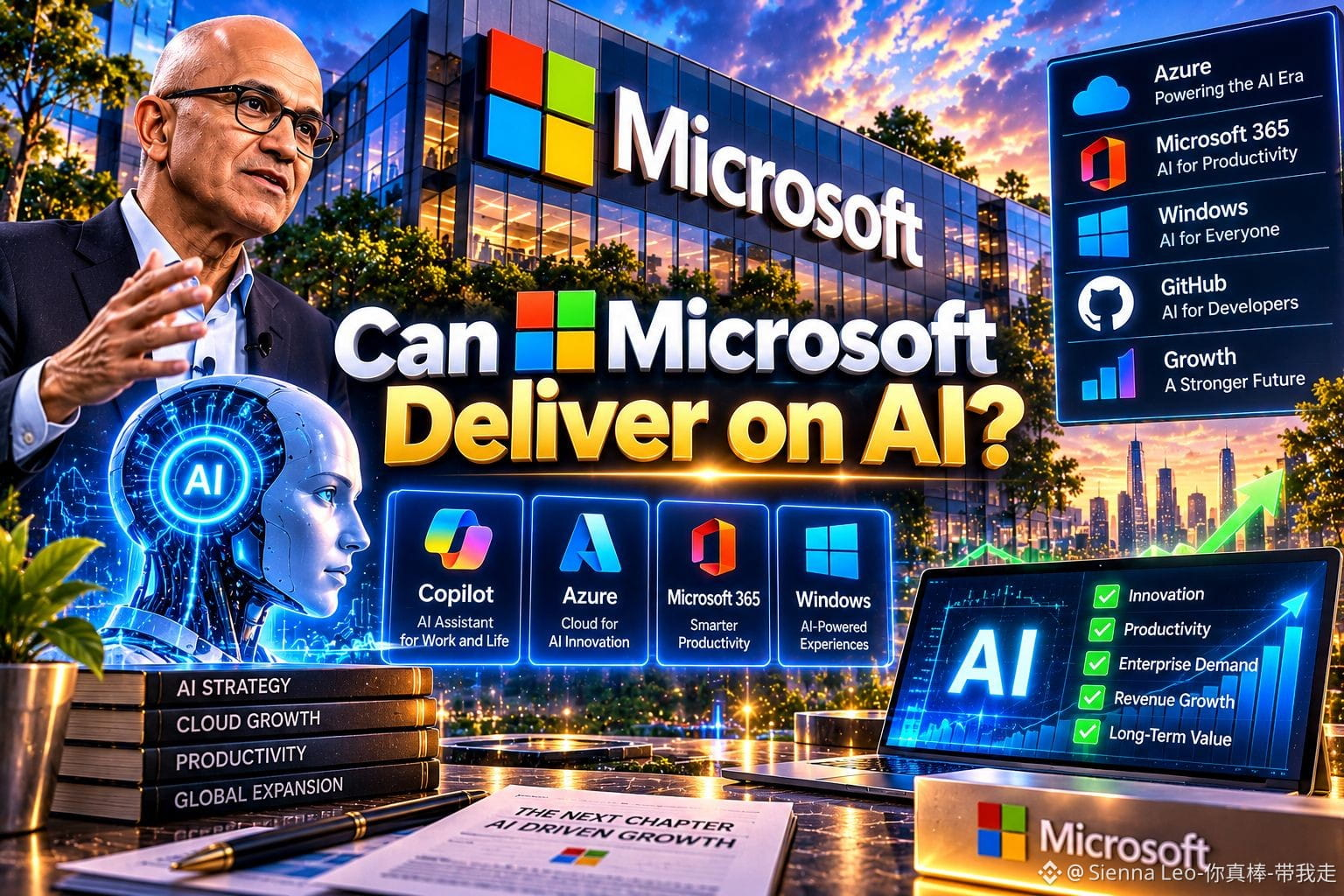
Microsoft has placed AI at the center of its strategy, integrating Copilot into products such as Windows, Microsoft 365, and its developer tools. Through Azure, it also provides cloud infrastructure that businesses need to build and run AI applications.
But the real test is monetization. AI features may attract users, yet lasting financial success depends on whether customers are willing to pay enough to justify the cost of computing power, infrastructure, research, and product development.
Azure growth, enterprise adoption, Copilot subscriptions, and AI-related capital spending are key signals to watch. Strong demand matters, but investors also need evidence that AI investments can generate sustainable returns rather than simply increasing expenses.
My take: Microsoft has a major advantage because it can bring AI into software that businesses already use. That distribution can turn experimentation into everyday adoption. However, competition is intense, and not every AI feature will become a profitable product.
The bigger question is whether Microsoft can convert its AI leadership into durable earnings growth. The technology is impressive, but execution will determine the financial outcome.
In the AI race, building powerful tools is only half the victory. Making them valuable enough to pay for is the real test.
Will Microsoft turn its AI investments into lasting profits, or could the costs outpace the returns?
Disclaimer: For educational purposes only. Not financial advice.
#MicrosoftAI #ArtificialIntelligence #GrowWithSAC $MSFT $MSFT.US $MSFTB
#CanMicrosoftDeliverOnAI
MSFTUS-0,25%
2
15
11.4k

#canmicrosoftdeliveronai
🤖 🚀 Can Microsoft Turn Its AI Spending Into a Lasting Growth Engine? 🚀 🤖
Building the future is expensive. Proving it can pay for itself is even harder.
Microsoft has positioned AI at the center of its growth strategy, integrating Copilot across its software ecosystem while expanding Azure’s AI infrastructure to serve businesses adopting generative AI.
The opportunity is enormous, but the real test goes beyond launching impressive models. Enterprises must be willing to pay for AI tools, use them regularly, and see measurable productivity gains.
My Take: Microsoft’s strongest advantage is distribution. It already serves businesses through Microsoft 365, Azure, Windows, and enterprise software, giving it multiple channels to turn AI capabilities into commercial products.
If customers upgrade subscriptions, consume more Azure computing, and build AI-powered workflows, Microsoft can potentially generate recurring revenue from several parts of the same ecosystem.
Yet the costs cannot be ignored. Data centers, advanced chips, electricity, and model development require substantial investment. If AI revenue grows more slowly than infrastructure spending, profitability could face pressure.
Investors should watch Azure growth, Copilot adoption, capital expenditure, and evidence that AI improves margins rather than simply increasing costs.
The key distinction is between AI excitement and AI economics. Strong adoption matters, but sustainable returns will determine whether today's investment becomes tomorrow's competitive advantage.
Microsoft does not need to win every AI battle. It needs to make AI indispensable and profitable for its customers.
Will Microsoft's enterprise ecosystem give it a lasting AI advantage, or will rising costs limit the payoff?
Disclaimer: This content is for educational purposes only and is not financial advice.
#MicrosoftAI #ArtificialIntelligence #GrowWithSAC $HUMA $SYN $MSFTB
#CanMicrosoftDeliverOnAI
Hamza musadi:
Spot on analysis! 💯 Microsoft’s biggest edge over standalone AI startups is its enterprise distribution footprint. Having millions of businesses already locked into M365 and Azure lowers their acquisition cost significantly. The real KPI to watch in upcoming earnings will be Azure AI consumption growth vs. CapEx spend ROI—if enterprises see real productivity gains, recurring revenue will follow naturally. 🚀📈
1
2
8.8k

O grande dilema da Microsoft: a corrida da IA está a pagar a conta?
A empresa investiu pesado para colocar o Copilot no centro do seu ecossistema (Windows, Office) e na infraestrutura do Azure. A tecnologia está lá, mas o mercado mudou o foco para a rentabilidade. O sucesso financeiro exige que os clientes paguem um prémio que justifique o custo massivo de poder computacional e R&D.
O que os investidores estão a monitorizar:
Crescimento do Azure.
Assinaturas pagas do Copilot.
Adoção real pelas empresas.
Evolução do capex.
A minha visão é que a distribuição é a arma secreta da Microsoft. Como o software já está no dia a dia das empresas, transformar a experimentação em adoção paga é mais fácil para eles do que para os concorrentes. No entanto, o risco de os custos superarem os retornos existe e é real.
Na corrida da IA, criar ferramentas poderosas é metade da vitória. A outra metade é fazer com que as pessoas queiram pagar por elas. Se a Microsoft falhar na execução da monetização, o mercado vai penalizar.
Aviso: Apenas para fins educacionais. Não é aconselhamento financeiro.
$JCT $MSFT.US $MSFTB
#canmicrosoftdeliveronai #MicrosoftAI #ArtificialIntelligence #GrowWithSAC #CanMicrosoftDeliverOnAI
{future}(JCTUSDT)
{stock_us}(MSFT.US)
{spot}(MSFTBUSDT)
O grande dilema da Microsoft: a corrida da IA está a pagar a conta?
A empresa investiu pesado para colocar o Copilot no centro do seu ecossistema (Windows, Office) e na infraestrutura do Azure. A tecnologia está lá, mas o mercado mudou o foco para a rentabilidade. O sucesso financeiro exige que os clientes paguem um prémio que justifique o custo massivo de poder computacional e R&D.
O que os investidores estão a monitorizar:
Crescimento do Azure.
Assinaturas pagas do Copilot.
Adoção real pelas empresas.
Evolução do capex.
A minha visão é que a distribuição é a arma secreta da Microsoft. Como o software já está no dia a dia das empresas, transformar a experimentação em adoção paga é mais fácil para eles do que para os concorrentes. No entanto, o risco de os custos superarem os retornos existe e é real.
Na corrida da IA, criar ferramentas poderosas é metade da vitória. A outra metade é fazer com que as pessoas queiram pagar por elas. Se a Microsoft falhar na execução da monetização, o mercado vai penalizar.
Aviso: Apenas para fins educacionais. Não é aconselhamento financeiro.
$JCT $MSFT.US $MSFTB
#canmicrosoftdeliveronai #MicrosoftAI #ArtificialIntelligence #GrowWithSAC #CanMicrosoftDeliverOnAI

1
149

Connectez-vous pour découvrir plus de contenu
Rejoignez la communauté mondiale des adeptes de cryptomonnaies sur Binance Square
⚡️ Suviez les dernières informations importantes sur les cryptomonnaies.
💬 Jugé digne de confiance par la plus grande plateforme d’échange de cryptomonnaies au monde.
👍 Découvrez les connaissances que partagent les créateurs vérifiés.
Adresse e-mail/Nº de téléphone
Sujets d’actualité
1
#CanMicrosoftDeliverOnAI
190,815 vues
1,530 mentions
2
#CanGoogleDefindItsCore
97,869 vues
1,108 mentions
3
#FOMCWatch
9.2M vues
28,789 mentions
4
#HKPlacesTokenizedFundSecondaryTradingUnderETFLikeFramework
74 vues
7 mentions
5
#USGovSellsFTXLinkedAnthropicSharesFor$627M
331 vues
19 mentions
6
#MoodysAssignsRLUSDA2LongTermDepositRating
418 vues
61 mentions
7
#SKHynixUnveils$45BShareholderReturns
772 vues
22 mentions
8
#OSMOPlansToBurn100MTokensFromCommunityPool
9,120 vues
278 mentions
9
#EthereumDropsBelow$2300
13,063 vues
175 mentions
10
#BitcoinSlipsBelow$80KAgain
37,509 vues
141 mentions