
#canmicrosoftdeliveronai
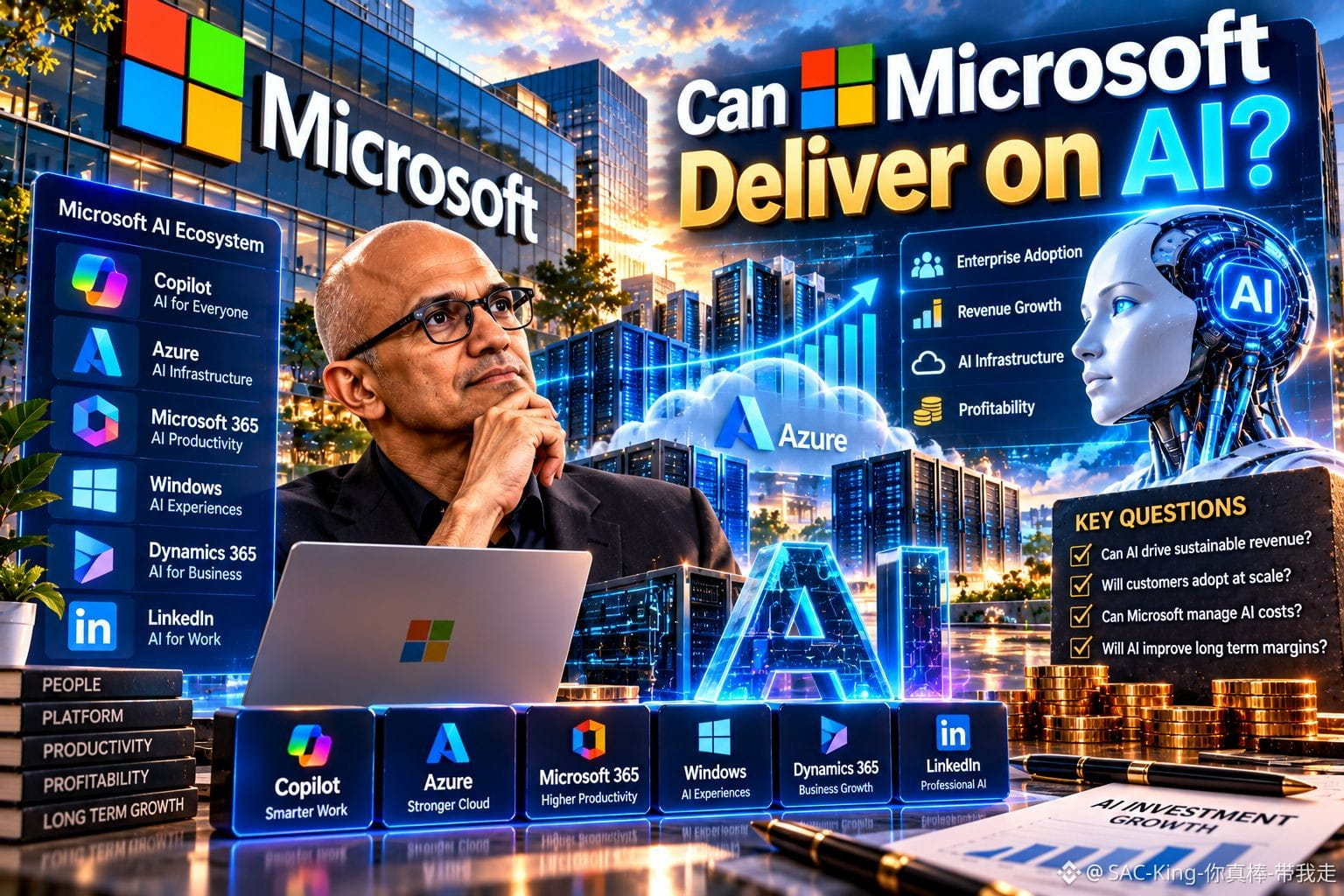
🤖 🚀 Can Microsoft Turn Its AI Spending Into a Lasting Growth Engine? 🚀 🤖
Building the future is expensive. Proving it can pay for itself is even harder.
Microsoft has positioned AI at the center of its growth strategy, integrating Copilot across its software ecosystem while expanding Azure’s AI infrastructure to serve businesses adopting generative AI.
The opportunity is enormous, but the real test goes beyond launching impressive models. Enterprises must be willing to pay for AI tools, use them regularly, and see measurable productivity gains.
My Take: Microsoft’s strongest advantage is distribution. It already serves businesses through Microsoft 365, Azure, Windows, and enterprise software, giving it multiple channels to turn AI capabilities into commercial products.
If customers upgrade subscriptions, consume more Azure computing, and build AI-powered workflows, Microsoft can potentially generate recurring revenue from several parts of the same ecosystem.
Yet the costs cannot be ignored. Data centers, advanced chips, electricity, and model development require substantial investment. If AI revenue grows more slowly than infrastructure spending, profitability could face pressure.
Investors should watch Azure growth, Copilot adoption, capital expenditure, and evidence that AI improves margins rather than simply increasing costs.
The key distinction is between AI excitement and AI economics. Strong adoption matters, but sustainable returns will determine whether today's investment becomes tomorrow's competitive advantage.
Microsoft does not need to win every AI battle. It needs to make AI indispensable and profitable for its customers.
Will Microsoft's enterprise ecosystem give it a lasting AI advantage, or will rising costs limit the payoff?
Disclaimer: This content is for educational purposes only and is not financial advice.
#MicrosoftAI #ArtificialIntelligence #GrowWithSAC $HUMA $SYN $MSFTB
#CanMicrosoftDeliverOnAI