

#layer2
layer2
4.3M vues
24,368 mentions
Populaire
Récents

·
--
🚨 $GIWA DENIES MAINNET LEAKS AS FUD TARGETS EXPANDING ECOSYSTEM 🛡️
Official confirmation from the $GIWA team has cleared the air regarding recent market noise. The mainnet for this top-tier exchange L2 initiative remains offline, completely neutralizing claims of any active RPC leaks or security compromises. 🔍
From an order flow perspective, synthetic FUD often serves to create temporary structural distortions and generate artificial discount liquidity prior to actual network deployment. 📌 Institutional capital operates strictly on verified milestones rather than unconfirmed exploits, keeping risk parameters firm while market clarity restores. 💡
💬 How do you filter noise from genuine structural updates during pre-launch cycles? 👇
⚠️ Not financial advice. Always manage your risk. 🛡️
🏷️ #GIWA #Layer2 #MarketSecurity #Crypto
🛡️ 🔍
🚨 $GIWA DENIES MAINNET LEAKS AS FUD TARGETS EXPANDING ECOSYSTEM 🛡️
Official confirmation from the $GIWA team has cleared the air regarding recent market noise. The mainnet for this top-tier exchange L2 initiative remains offline, completely neutralizing claims of any active RPC leaks or security compromises. 🔍
From an order flow perspective, synthetic FUD often serves to create temporary structural distortions and generate artificial discount liquidity prior to actual network deployment. 📌 Institutional capital operates strictly on verified milestones rather than unconfirmed exploits, keeping risk parameters firm while market clarity restores. 💡
💬 How do you filter noise from genuine structural updates during pre-launch cycles? 👇
⚠️ Not financial advice. Always manage your risk. 🛡️
🏷️ #GIWA #Layer2 #MarketSecurity #Crypto
🛡️ 🔍
Official confirmation from the $GIWA team has cleared the air regarding recent market noise. The mainnet for this top-tier exchange L2 initiative remains offline, completely neutralizing claims of any active RPC leaks or security compromises. 🔍
From an order flow perspective, synthetic FUD often serves to create temporary structural distortions and generate artificial discount liquidity prior to actual network deployment. 📌 Institutional capital operates strictly on verified milestones rather than unconfirmed exploits, keeping risk parameters firm while market clarity restores. 💡
💬 How do you filter noise from genuine structural updates during pre-launch cycles? 👇
⚠️ Not financial advice. Always manage your risk. 🛡️
🏷️ #GIWA #Layer2 #MarketSecurity #Crypto
🛡️ 🔍
1

·
--
Article
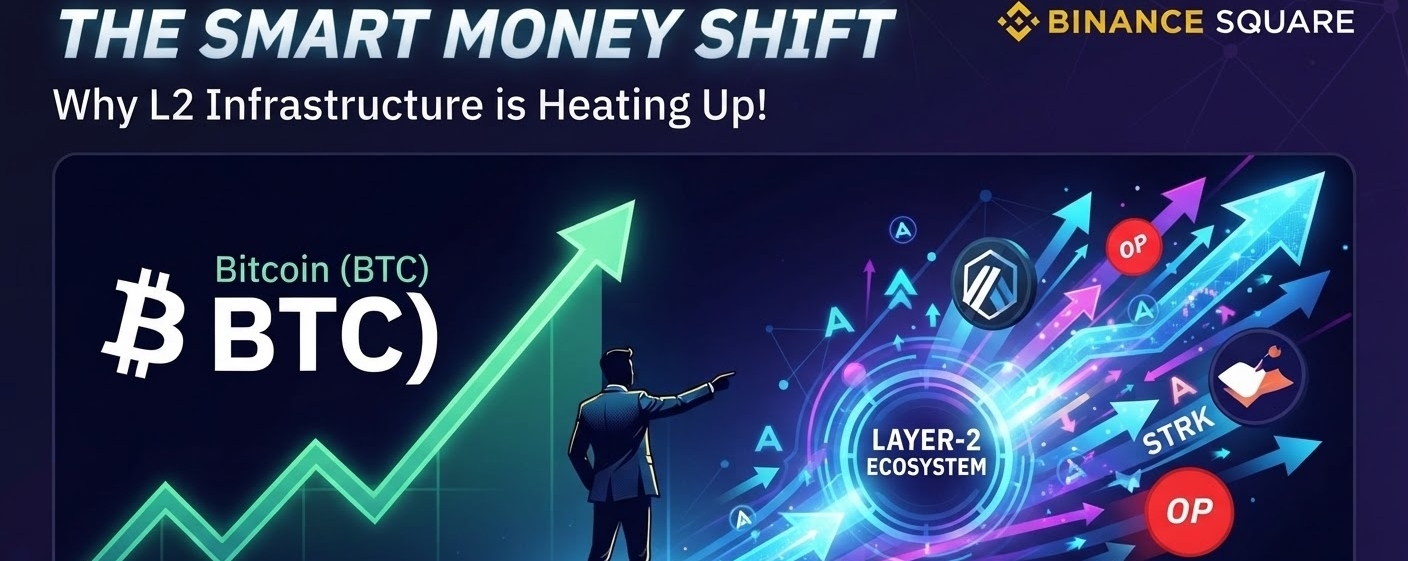
The Next Big Crypto Move: Why Smart Money Is Shifting Now?📝 Binance Square Article (Ready to Post)
Title: Why the Market Shift to Layer-2 & On-Chain Infrastructure is Accelerating This September!
The crypto landscape is evolving rapidly. While Bitcoin ($BTC) continues to anchor the macro trend with solid holding power above key resistance levels, the real on-chain excitement is shifting toward scalable infrastructure and high-performance protocols like Arbitrum ($ARB) and decentralized perpetual giants.
🔑 Key Drivers of the Current Market Hype:
Institutional & Banking Confidence: Major financial backing and long-term targets have put Layer-2 scaling solutions firmly in the spotlight.
Surging Protocol Revenues: On-chain trading volumes and DEX activity are hitting new milestones, proving that utility-driven tokens are capturing real market value.
Retail Momentum: Traders are actively rotating into high-utility ecosystems that offer lower fees and faster execution without sacrificing security.
💡 What’s Next for Traders?
As liquidity flows deeper into established L2s and high-yield ecosystems, keeping an eye on fundamental utility rather than short-term noise is the winning strategy for this market cycle. Smart money is tracking platforms with active products and real users.
Are you positioning your portfolio for the L2 breakout? Let us know your favorite pick below! 👇
#Bitcoin❗ #Arbitrum #CryptoTrends #BinanceSquare #Layer2 $BTC
{future}(BTCUSDT)
The Next Big Crypto Move: Why Smart Money Is Shifting Now?
📝 Binance Square Article (Ready to Post)
Title: Why the Market Shift to Layer-2 & On-Chain Infrastructure is Accelerating This September!
The crypto landscape is evolving rapidly. While Bitcoin ($BTC ) continues to anchor the macro trend with solid holding power above key resistance levels, the real on-chain excitement is shifting toward scalable infrastructure and high-performance protocols like Arbitrum ($ARB) and decentralized perpetual giants.
🔑 Key Drivers of the Current Market Hype:
Institutional & Banking Confidence: Major financial backing and long-term targets have put Layer-2 scaling solutions firmly in the spotlight.
Surging Protocol Revenues: On-chain trading volumes and DEX activity are hitting new milestones, proving that utility-driven tokens are capturing real market value.
Retail Momentum: Traders are actively rotating into high-utility ecosystems that offer lower fees and faster execution without sacrificing security.
💡 What’s Next for Traders?
As liquidity flows deeper into established L2s and high-yield ecosystems, keeping an eye on fundamental utility rather than short-term noise is the winning strategy for this market cycle. Smart money is tracking platforms with active products and real users.
Are you positioning your portfolio for the L2 breakout? Let us know your favorite pick below! 👇
#Bitcoin❗ #Arbitrum #CryptoTrends #BinanceSquare #Layer2 $BTC
Title: Why the Market Shift to Layer-2 & On-Chain Infrastructure is Accelerating This September!
The crypto landscape is evolving rapidly. While Bitcoin ($BTC ) continues to anchor the macro trend with solid holding power above key resistance levels, the real on-chain excitement is shifting toward scalable infrastructure and high-performance protocols like Arbitrum ($ARB) and decentralized perpetual giants.
🔑 Key Drivers of the Current Market Hype:
Institutional & Banking Confidence: Major financial backing and long-term targets have put Layer-2 scaling solutions firmly in the spotlight.
Surging Protocol Revenues: On-chain trading volumes and DEX activity are hitting new milestones, proving that utility-driven tokens are capturing real market value.
Retail Momentum: Traders are actively rotating into high-utility ecosystems that offer lower fees and faster execution without sacrificing security.
💡 What’s Next for Traders?
As liquidity flows deeper into established L2s and high-yield ecosystems, keeping an eye on fundamental utility rather than short-term noise is the winning strategy for this market cycle. Smart money is tracking platforms with active products and real users.
Are you positioning your portfolio for the L2 breakout? Let us know your favorite pick below! 👇
#Bitcoin❗ #Arbitrum #CryptoTrends #BinanceSquare #Layer2 $BTC
422

In the patient evolution of Ethereum’s layered architecture, Layer-2 networks continue absorbing activity with improving efficiency and developer focus. As applications and liquidity migrate to scalable environments, the hierarchical design demonstrates enduring adaptability. Echoing the 2022 scalability push that unlocked broader participation, this maturation carries a 66% probability of sustained momentum through the season if tooling and user experience keep advancing.
{spot}(ETHUSDT)
$ETH $ETHU.ETF #CoinVahini #Ethereum #Layer2
In the patient evolution of Ethereum’s layered architecture, Layer-2 networks continue absorbing activity with improving efficiency and developer focus. As applications and liquidity migrate to scalable environments, the hierarchical design demonstrates enduring adaptability. Echoing the 2022 scalability push that unlocked broader participation, this maturation carries a 66% probability of sustained momentum through the season if tooling and user experience keep advancing.
$ETH $ETHU.ETF #CoinVahini #Ethereum #Layer2
$ETH $ETHU.ETF #CoinVahini #Ethereum #Layer2
26

·
--
Haussier
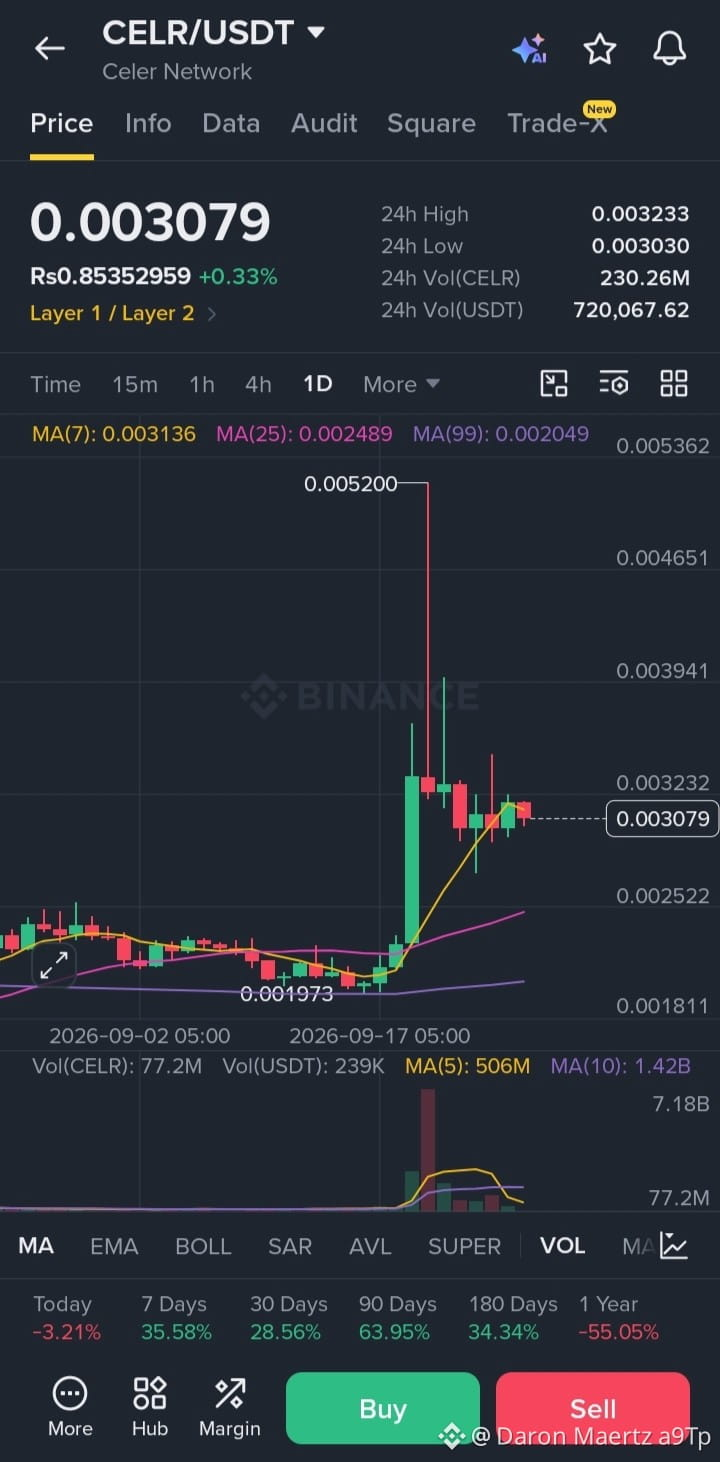
🔥 Can $CELR pull a 3X from here?
The fundamentals of Celer Network's Layer-2 liquidity and cross-chain bridges are too strong to ignore. While the current price sits near $0.003, an expansion to $0.0075 looks highly probable once the ecosystem expands.
Comment your average entry price for CELR below! 👇 Let's see who is holding the most!
#CELR #CryptoTrading2026 #Altcoins👀🚀 #Layer2
{spot}(CELRUSDT)
🔥 Can $CELR pull a 3X from here?
The fundamentals of Celer Network's Layer-2 liquidity and cross-chain bridges are too strong to ignore. While the current price sits near $0.003, an expansion to $0.0075 looks highly probable once the ecosystem expands.
Comment your average entry price for CELR below! 👇 Let's see who is holding the most!
#CELR #CryptoTrading2026 #Altcoins👀🚀 #Layer2
The fundamentals of Celer Network's Layer-2 liquidity and cross-chain bridges are too strong to ignore. While the current price sits near $0.003, an expansion to $0.0075 looks highly probable once the ecosystem expands.
Comment your average entry price for CELR below! 👇 Let's see who is holding the most!
#CELR #CryptoTrading2026 #Altcoins👀🚀 #Layer2
474

·
--
The great fee migration already happened. Nobody's pricing it.
Five years ago, execution lived on Ethereum. Today, most transactions in the Ethereum economy happen on Layer 2s — and the fees followed. L1 fees used to be the metric everyone watched. Now the marginal transaction pays cents on an L2 instead of dollars on the L1, and the economic gravity has quietly moved down the stack.
Here is the unresolved question: who captures the value?
L2s earn sequencer revenue — a real business with real margins, especially after blob space slashed their data costs. But sequencer margins are also a commodity business waiting to happen. Competition among L2s compresses fees toward cost, like every utility market before it.
The L1, meanwhile, collects settlement trust. It is paid in security demand, not transaction volume. That is a different and arguably more durable business model: rent on trust rather than rent on throughput.
Honest framework: L2s = execution margin. L1 = settlement rent. One is a competitive utility. The other is closer to a monopoly on finality.
What I watch: where the marginal transaction actually happens (not where the narrative says it should), how fast L2 fees compress, and whether L2 tokens ever capture sequencer profits instead of subsidizing growth with them.
The fee migration was inevitable. The value capture is still undecided.
$ETH $BTC $SOL
#Layer2 #Ethereum #MarketStructure #CryptoInsights #DeFi
The great fee migration already happened. Nobody's pricing it.
Five years ago, execution lived on Ethereum. Today, most transactions in the Ethereum economy happen on Layer 2s — and the fees followed. L1 fees used to be the metric everyone watched. Now the marginal transaction pays cents on an L2 instead of dollars on the L1, and the economic gravity has quietly moved down the stack.
Here is the unresolved question: who captures the value?
L2s earn sequencer revenue — a real business with real margins, especially after blob space slashed their data costs. But sequencer margins are also a commodity business waiting to happen. Competition among L2s compresses fees toward cost, like every utility market before it.
The L1, meanwhile, collects settlement trust. It is paid in security demand, not transaction volume. That is a different and arguably more durable business model: rent on trust rather than rent on throughput.
Honest framework: L2s = execution margin. L1 = settlement rent. One is a competitive utility. The other is closer to a monopoly on finality.
What I watch: where the marginal transaction actually happens (not where the narrative says it should), how fast L2 fees compress, and whether L2 tokens ever capture sequencer profits instead of subsidizing growth with them.
The fee migration was inevitable. The value capture is still undecided.
$ETH $BTC $SOL
#Layer2 #Ethereum #MarketStructure #CryptoInsights #DeFi
Five years ago, execution lived on Ethereum. Today, most transactions in the Ethereum economy happen on Layer 2s — and the fees followed. L1 fees used to be the metric everyone watched. Now the marginal transaction pays cents on an L2 instead of dollars on the L1, and the economic gravity has quietly moved down the stack.
Here is the unresolved question: who captures the value?
L2s earn sequencer revenue — a real business with real margins, especially after blob space slashed their data costs. But sequencer margins are also a commodity business waiting to happen. Competition among L2s compresses fees toward cost, like every utility market before it.
The L1, meanwhile, collects settlement trust. It is paid in security demand, not transaction volume. That is a different and arguably more durable business model: rent on trust rather than rent on throughput.
Honest framework: L2s = execution margin. L1 = settlement rent. One is a competitive utility. The other is closer to a monopoly on finality.
What I watch: where the marginal transaction actually happens (not where the narrative says it should), how fast L2 fees compress, and whether L2 tokens ever capture sequencer profits instead of subsidizing growth with them.
The fee migration was inevitable. The value capture is still undecided.
$ETH $BTC $SOL
#Layer2 #Ethereum #MarketStructure #CryptoInsights #DeFi
51

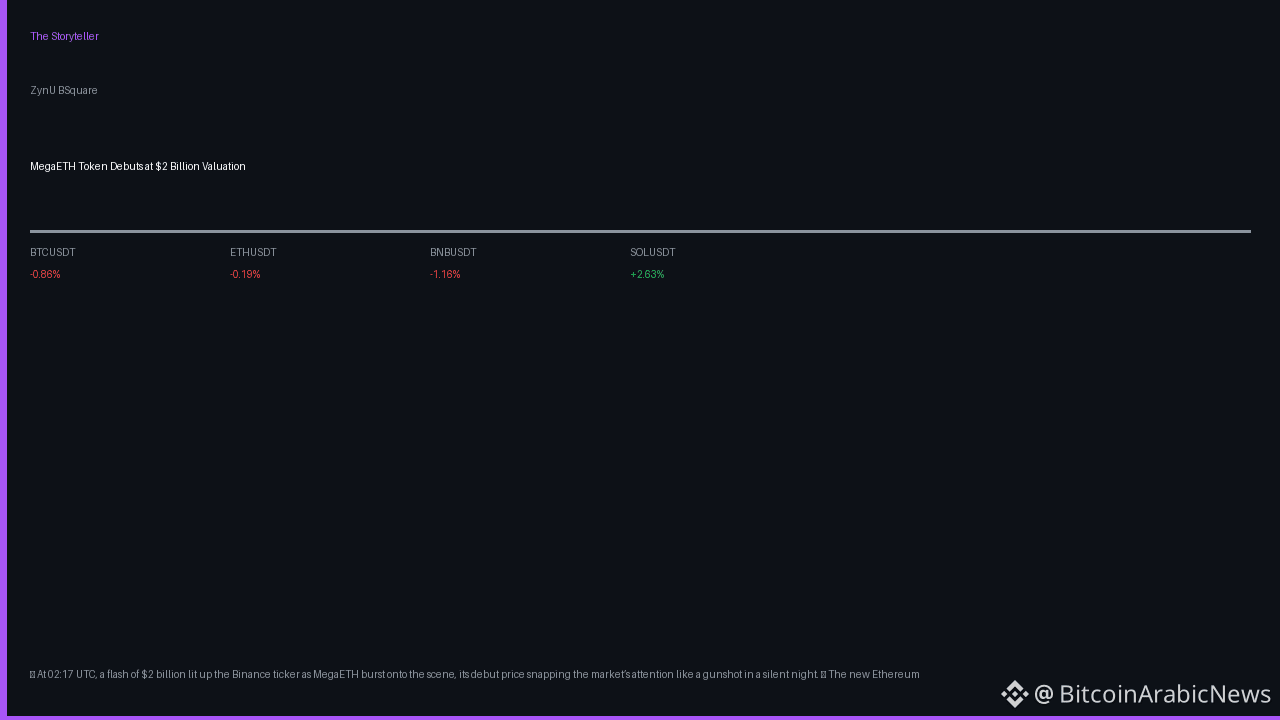
🔥 At 02:17 UTC, a flash of $2 billion lit up the Binance ticker as MegaETH burst onto the scene, its debut price snapping the market’s attention like a gunshot in a silent night.
📊 The new Ethereum Layer‑2 token launched on Binance, Coinbase and 11 other venues, instantly locking a $2 B valuation while spot ETH lingered at $2,679, down 0.19% with a bearish MACD crossover and a neutral RSI of 49.4. Yet futures tell a different story: ETH open interest sits at $6.08 B, funding is +0.0054% and long positions dominate at 73.5% – a silent tide of conviction beneath the surface. Smart‑money eyes are already drifting to #Solana, where three wallets are buying SOL as the token climbs 2.6% to $120, feeding the #Layer2 hype that fuels #DeFi innovation.
💡 The irony? The market’s technical gauges scream “caution,” but capital is quietly rallying behind infrastructure upgrades, suggesting the next big move isn’t a price dip but a foundational shift.
❓ Will MegaETH’s $2 B launch be the catalyst that flips the ETH narrative from bearish crossover to a bullish resurgence, or will the spotlight simply drift to the next hot L2 on the horizon?
🔥 At 02:17 UTC, a flash of $2 billion lit up the Binance ticker as MegaETH burst onto the scene, its debut price snapping the market’s attention like a gunshot in a silent night.
📊 The new Ethereum Layer‑2 token launched on Binance, Coinbase and 11 other venues, instantly locking a $2 B valuation while spot ETH lingered at $2,679, down 0.19% with a bearish MACD crossover and a neutral RSI of 49.4. Yet futures tell a different story: ETH open interest sits at $6.08 B, funding is +0.0054% and long positions dominate at 73.5% – a silent tide of conviction beneath the surface. Smart‑money eyes are already drifting to #Solana, where three wallets are buying SOL as the token climbs 2.6% to $120, feeding the #Layer2 hype that fuels #DeFi innovation.
💡 The irony? The market’s technical gauges scream “caution,” but capital is quietly rallying behind infrastructure upgrades, suggesting the next big move isn’t a price dip but a foundational shift.
❓ Will MegaETH’s $2 B launch be the catalyst that flips the ETH narrative from bearish crossover to a bullish resurgence, or will the spotlight simply drift to the next hot L2 on the horizon?
📊 The new Ethereum Layer‑2 token launched on Binance, Coinbase and 11 other venues, instantly locking a $2 B valuation while spot ETH lingered at $2,679, down 0.19% with a bearish MACD crossover and a neutral RSI of 49.4. Yet futures tell a different story: ETH open interest sits at $6.08 B, funding is +0.0054% and long positions dominate at 73.5% – a silent tide of conviction beneath the surface. Smart‑money eyes are already drifting to #Solana, where three wallets are buying SOL as the token climbs 2.6% to $120, feeding the #Layer2 hype that fuels #DeFi innovation.
💡 The irony? The market’s technical gauges scream “caution,” but capital is quietly rallying behind infrastructure upgrades, suggesting the next big move isn’t a price dip but a foundational shift.
❓ Will MegaETH’s $2 B launch be the catalyst that flips the ETH narrative from bearish crossover to a bullish resurgence, or will the spotlight simply drift to the next hot L2 on the horizon?
21

·
--
Haussier
SHORTING $ARB HERE COULD BE A TRAP. 👀
ARB is back around $0.22 after the recent rejection near $0.25.
And this is where the setup gets interesting.
The chart looks weak.
But underneath the token price, Arbitrum’s network activity is still substantial.
🔥 $1.44B+ DeFi TVL
🔥 $425M+ DEX volume / 24h
🔥 $3.5B+ perps volume / 24h
🔥 175K+ active addresses / 24h
Arbitrum also reported 478M transactions in H1 2026, while average monthly stablecoin transfer volume exceeded $70B.
So there’s an interesting disconnect:
Network activity → strong
$ARB price → struggling
And that’s exactly where I start watching for a potential volatility expansion.
The level I’m watching:
🎯 $0.25 — reclaiming this would change the short-term structure.
Below that:
⚠️ $0.21–$0.22 becomes the area to watch for another reaction.
The important part:
Don’t confuse a weak-looking chart with a dead ecosystem.
ARB’s token price and Arbitrum’s underlying network activity aren’t the same thing.
If shorts pile in while price refuses to break lower, the squeeze can happen very quickly.
So the question isn’t simply:
“Is ARB bearish?”
It’s:
“What happens when a heavily shorted token meets strong underlying network activity?”
That’s the setup I’d be watching. 👀
#ARB #Arbitrium #Layer2 #defi
{future}(ARBUSDT)
SHORTING $ARB HERE COULD BE A TRAP. 👀
ARB is back around $0.22 after the recent rejection near $0.25.
And this is where the setup gets interesting.
The chart looks weak.
But underneath the token price, Arbitrum’s network activity is still substantial.
🔥 $1.44B+ DeFi TVL
🔥 $425M+ DEX volume / 24h
🔥 $3.5B+ perps volume / 24h
🔥 175K+ active addresses / 24h
Arbitrum also reported 478M transactions in H1 2026, while average monthly stablecoin transfer volume exceeded $70B.
So there’s an interesting disconnect:
Network activity → strong
$ARB price → struggling
And that’s exactly where I start watching for a potential volatility expansion.
The level I’m watching:
🎯 $0.25 — reclaiming this would change the short-term structure.
Below that:
⚠️ $0.21–$0.22 becomes the area to watch for another reaction.
The important part:
Don’t confuse a weak-looking chart with a dead ecosystem.
ARB’s token price and Arbitrum’s underlying network activity aren’t the same thing.
If shorts pile in while price refuses to break lower, the squeeze can happen very quickly.
So the question isn’t simply:
“Is ARB bearish?”
It’s:
“What happens when a heavily shorted token meets strong underlying network activity?”
That’s the setup I’d be watching. 👀
#ARB #Arbitrium #Layer2 #defi
ARB is back around $0.22 after the recent rejection near $0.25.
And this is where the setup gets interesting.
The chart looks weak.
But underneath the token price, Arbitrum’s network activity is still substantial.
🔥 $1.44B+ DeFi TVL
🔥 $425M+ DEX volume / 24h
🔥 $3.5B+ perps volume / 24h
🔥 175K+ active addresses / 24h
Arbitrum also reported 478M transactions in H1 2026, while average monthly stablecoin transfer volume exceeded $70B.
So there’s an interesting disconnect:
Network activity → strong
$ARB price → struggling
And that’s exactly where I start watching for a potential volatility expansion.
The level I’m watching:
🎯 $0.25 — reclaiming this would change the short-term structure.
Below that:
⚠️ $0.21–$0.22 becomes the area to watch for another reaction.
The important part:
Don’t confuse a weak-looking chart with a dead ecosystem.
ARB’s token price and Arbitrum’s underlying network activity aren’t the same thing.
If shorts pile in while price refuses to break lower, the squeeze can happen very quickly.
So the question isn’t simply:
“Is ARB bearish?”
It’s:
“What happens when a heavily shorted token meets strong underlying network activity?”
That’s the setup I’d be watching. 👀
#ARB #Arbitrium #Layer2 #defi

1
86

Market Leaders at Prime Levels — Act Before Acceleration
$APT | $ARB | $OP
APT, ARB, and OP continue to represent important smart-contract and scaling ecosystems. Their ability to absorb pullbacks without losing key levels remains an important market signal.
This is a structure-first environment.
Key Takeaway: Support retention can provide the base for a potential momentum expansion.
#APT #ARB #OP #Layer2 #HighConviction
{future}(APTUSDT)
{future}(ARBUSDT)
{future}(OPUSDT)
Market Leaders at Prime Levels — Act Before Acceleration
$APT | $ARB | $OP
APT, ARB, and OP continue to represent important smart-contract and scaling ecosystems. Their ability to absorb pullbacks without losing key levels remains an important market signal.
This is a structure-first environment.
Key Takeaway: Support retention can provide the base for a potential momentum expansion.
#APT #ARB #OP #Layer2 #HighConviction
$APT | $ARB | $OP
APT, ARB, and OP continue to represent important smart-contract and scaling ecosystems. Their ability to absorb pullbacks without losing key levels remains an important market signal.
This is a structure-first environment.
Key Takeaway: Support retention can provide the base for a potential momentum expansion.
#APT #ARB #OP #Layer2 #HighConviction
1
54

·
--
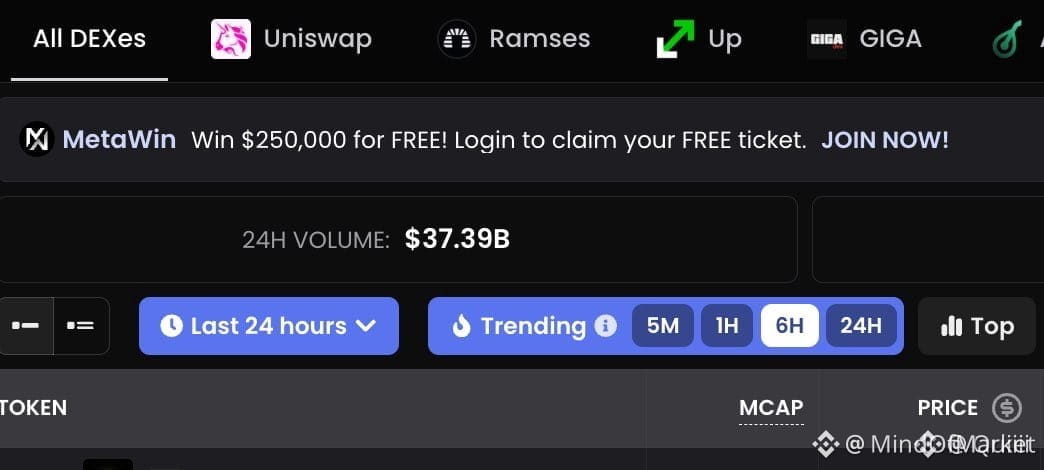
🚨 ROBINHOOD L2 DEX VOLUME HITS $37.39B ECLIPSING $SOL AND $ETH IN UNPRECEDENTED FLIP! 💥
Institutional liquidity just witnessed a massive paradigm shift. 🦈 Robinhood's Layer 2 DEX volume reached an astounding $37.39 billion in 24 hours, overshadowing $SOL volume by 6x, $ETH by 37x, and $ARB by 250x. Built on Arbitrum technology, this colossal order flow demonstrates where institutional capital efficiency is migrating. 📊
📌 When institutional infrastructure merges with retail access, liquidity pools re-route rapidly. This order flow surge underscores how scaling architectures are capturing high-frequency volume while transforming broader market structure dynamics. 💡
💬 Do you expect this institutional DEX order flow to trigger a permanent structural re-rating for L2 ecosystems? 👇
⚠️ Not financial advice. Always manage your risk. 🛡️
🏷️ #ARB #Layer2 #Crypto #DEX #MarketStructure
⚡ 🔍
🚨 ROBINHOOD L2 DEX VOLUME HITS $37.39B ECLIPSING $SOL AND $ETH IN UNPRECEDENTED FLIP! 💥
Institutional liquidity just witnessed a massive paradigm shift. 🦈 Robinhood's Layer 2 DEX volume reached an astounding $37.39 billion in 24 hours, overshadowing $SOL volume by 6x, $ETH by 37x, and $ARB by 250x. Built on Arbitrum technology, this colossal order flow demonstrates where institutional capital efficiency is migrating. 📊
📌 When institutional infrastructure merges with retail access, liquidity pools re-route rapidly. This order flow surge underscores how scaling architectures are capturing high-frequency volume while transforming broader market structure dynamics. 💡
💬 Do you expect this institutional DEX order flow to trigger a permanent structural re-rating for L2 ecosystems? 👇
⚠️ Not financial advice. Always manage your risk. 🛡️
🏷️ #ARB #Layer2 #Crypto #DEX #MarketStructure
⚡ 🔍
Institutional liquidity just witnessed a massive paradigm shift. 🦈 Robinhood's Layer 2 DEX volume reached an astounding $37.39 billion in 24 hours, overshadowing $SOL volume by 6x, $ETH by 37x, and $ARB by 250x. Built on Arbitrum technology, this colossal order flow demonstrates where institutional capital efficiency is migrating. 📊
📌 When institutional infrastructure merges with retail access, liquidity pools re-route rapidly. This order flow surge underscores how scaling architectures are capturing high-frequency volume while transforming broader market structure dynamics. 💡
💬 Do you expect this institutional DEX order flow to trigger a permanent structural re-rating for L2 ecosystems? 👇
⚠️ Not financial advice. Always manage your risk. 🛡️
🏷️ #ARB #Layer2 #Crypto #DEX #MarketStructure
⚡ 🔍
193

·
--
🚀 Ethereum’s ZK vision could reshape how blockchain computation scales.$ETH
{spot}(ETHUSDT)
Instead of every node repeatedly executing the same workload, external systems can process computations and generate Zero-Knowledge proofs, while Ethereum verifies the results. This shifts the focus from re-execution to efficient verification.
Complex workloads can be processed in parallel and compressed before reaching Ethereum, potentially reducing L1 workload while supporting greater throughput across rollups and applications.
For L2s like Arbitrum, Optimism, Base, and zkSync, this strengthens Ethereum’s rollup-centric scaling approach by allowing applications to inherit Ethereum’s security without pushing every computation onto L1.
For developers, this means greater focus on provable circuits, prover infrastructure, hardware acceleration, and standards.
For investors, verification efficiency and L2 adoption may become increasingly important metrics.
#Ethereum #ETH #ZK #Layer2 #Crypto
🚀 Ethereum’s ZK vision could reshape how blockchain computation scales.$ETH
Instead of every node repeatedly executing the same workload, external systems can process computations and generate Zero-Knowledge proofs, while Ethereum verifies the results. This shifts the focus from re-execution to efficient verification.
Complex workloads can be processed in parallel and compressed before reaching Ethereum, potentially reducing L1 workload while supporting greater throughput across rollups and applications.
For L2s like Arbitrum, Optimism, Base, and zkSync, this strengthens Ethereum’s rollup-centric scaling approach by allowing applications to inherit Ethereum’s security without pushing every computation onto L1.
For developers, this means greater focus on provable circuits, prover infrastructure, hardware acceleration, and standards.
For investors, verification efficiency and L2 adoption may become increasingly important metrics.
#Ethereum #ETH #ZK #Layer2 #Crypto
Instead of every node repeatedly executing the same workload, external systems can process computations and generate Zero-Knowledge proofs, while Ethereum verifies the results. This shifts the focus from re-execution to efficient verification.
Complex workloads can be processed in parallel and compressed before reaching Ethereum, potentially reducing L1 workload while supporting greater throughput across rollups and applications.
For L2s like Arbitrum, Optimism, Base, and zkSync, this strengthens Ethereum’s rollup-centric scaling approach by allowing applications to inherit Ethereum’s security without pushing every computation onto L1.
For developers, this means greater focus on provable circuits, prover infrastructure, hardware acceleration, and standards.
For investors, verification efficiency and L2 adoption may become increasingly important metrics.
#Ethereum #ETH #ZK #Layer2 #Crypto
79

·
--
都说Base抢了OP Stack的饭碗,可你仔细想想——Base每笔交易的手续费,有一部分是流向Optimism生态的。Base越活跃,$OP 的叙事越扎实。今天 $OP 涨了9%,价格来到0.15,成交量7300多万枚,资金费率+0.01%说明多头还在加仓。反观那些喊“Base取代OP”的人,怕是连Superchain是什么都没搞懂。
市场总爱把Layer2当零和游戏,但真正的赢家是底层标准的制定者。Base、Unichain、Ink……全在OP Stack上跑,这才是 $OP 被低估的底牌。
所以问题来了:你觉得Base的爆发,对 $OP 是吸血还是输血?评论区站队👇
#Optimism #Base #Layer2
都说Base抢了OP Stack的饭碗,可你仔细想想——Base每笔交易的手续费,有一部分是流向Optimism生态的。Base越活跃,$OP 的叙事越扎实。今天 $OP 涨了9%,价格来到0.15,成交量7300多万枚,资金费率+0.01%说明多头还在加仓。反观那些喊“Base取代OP”的人,怕是连Superchain是什么都没搞懂。
市场总爱把Layer2当零和游戏,但真正的赢家是底层标准的制定者。Base、Unichain、Ink……全在OP Stack上跑,这才是 $OP 被低估的底牌。
所以问题来了:你觉得Base的爆发,对 $OP 是吸血还是输血?评论区站队👇
#Optimism #Base #Layer2
市场总爱把Layer2当零和游戏,但真正的赢家是底层标准的制定者。Base、Unichain、Ink……全在OP Stack上跑,这才是 $OP 被低估的底牌。
所以问题来了:你觉得Base的爆发,对 $OP 是吸血还是输血?评论区站队👇
#Optimism #Base #Layer2
屎蛋力:
base早就宣布离开op了
1
265


·
--
I used to think Layer 2s were just a cheaper copy of the main chain, same security, lower fees.
But the more I read about how rollups actually work, the more that felt too simple. Optimistic rollups post transaction data to Ethereum and assume it's valid unless someone submits a fraud proof within a challenge window that can run about a week. Zero knowledge rollups post a cryptographic proof instead, which is why withdrawals there tend to finalize faster.
Either way, most of these chains still depend on a single sequencer ordering your transactions before anything gets posted back to layer one. If that sequencer goes down, your funds are still safe eventually, but you're stuck waiting.
What changed for me is separating fees from security. Cheap gas doesn't mean the same guarantees as the base layer.
What I'm not sure about yet is how decentralized sequencers actually get once real volume shows up.
What's something you got wrong at first about how Layer 2s work?
Personal view, not advice. Do your own research.
#Ethereum #Layer2
I used to think Layer 2s were just a cheaper copy of the main chain, same security, lower fees.
But the more I read about how rollups actually work, the more that felt too simple. Optimistic rollups post transaction data to Ethereum and assume it's valid unless someone submits a fraud proof within a challenge window that can run about a week. Zero knowledge rollups post a cryptographic proof instead, which is why withdrawals there tend to finalize faster.
Either way, most of these chains still depend on a single sequencer ordering your transactions before anything gets posted back to layer one. If that sequencer goes down, your funds are still safe eventually, but you're stuck waiting.
What changed for me is separating fees from security. Cheap gas doesn't mean the same guarantees as the base layer.
What I'm not sure about yet is how decentralized sequencers actually get once real volume shows up.
What's something you got wrong at first about how Layer 2s work?
Personal view, not advice. Do your own research.
#Ethereum #Layer2
But the more I read about how rollups actually work, the more that felt too simple. Optimistic rollups post transaction data to Ethereum and assume it's valid unless someone submits a fraud proof within a challenge window that can run about a week. Zero knowledge rollups post a cryptographic proof instead, which is why withdrawals there tend to finalize faster.
Either way, most of these chains still depend on a single sequencer ordering your transactions before anything gets posted back to layer one. If that sequencer goes down, your funds are still safe eventually, but you're stuck waiting.
What changed for me is separating fees from security. Cheap gas doesn't mean the same guarantees as the base layer.
What I'm not sure about yet is how decentralized sequencers actually get once real volume shows up.
What's something you got wrong at first about how Layer 2s work?
Personal view, not advice. Do your own research.
#Ethereum #Layer2
158

**Lisk ($LSK ) – A Key Player in the Layer-2 & Web3 Ecosystem!** 🚀
Lisk ($LSK) is an innovative crypto platform designed to make decentralized application (dApp) development accessible, fast, and scalable for developers worldwide.
✨ **Key Highlights of Lisk ($LSK ):**
* **Transition to Ethereum Layer-2:** Lisk has transitioned into an Ethereum L2 ecosystem powered by Optimism (OP Stack) and Gelato, offering significantly lower gas fees and faster transaction speeds.
* **Developer-Friendly (JavaScript):** Developers can build dApps and smart contracts using JavaScript, the most popular programming language in the world, dramatically lowering the barrier to entry for Web3 builders.
* **Focus on Real-World Assets & Emerging Markets:** Lisk is heavily focused on bringing real-world assets (RWA) onto the blockchain and growing local Web3 communities across emerging economies.
* **Staking Rewards:** Holders can stake their $LSK tokens to help secure the network while earning passive rewards.
💡 **The Verdict:**
If you are tracking promising Layer-2 projects with strong real-world utility and massive developer adoption potential, Lisk ($LSK) is definitely worth keeping on your watchlist!
#Crypto #Lisk #LSK #Layer2 #Ethereum #Web3 #Blockchain
**Lisk ($LSK ) – A Key Player in the Layer-2 & Web3 Ecosystem!** 🚀
Lisk ($LSK ) is an innovative crypto platform designed to make decentralized application (dApp) development accessible, fast, and scalable for developers worldwide.
✨ **Key Highlights of Lisk ($LSK ):**
* **Transition to Ethereum Layer-2:** Lisk has transitioned into an Ethereum L2 ecosystem powered by Optimism (OP Stack) and Gelato, offering significantly lower gas fees and faster transaction speeds.
* **Developer-Friendly (JavaScript):** Developers can build dApps and smart contracts using JavaScript, the most popular programming language in the world, dramatically lowering the barrier to entry for Web3 builders.
* **Focus on Real-World Assets & Emerging Markets:** Lisk is heavily focused on bringing real-world assets (RWA) onto the blockchain and growing local Web3 communities across emerging economies.
* **Staking Rewards:** Holders can stake their $LSK tokens to help secure the network while earning passive rewards.
💡 **The Verdict:**
If you are tracking promising Layer-2 projects with strong real-world utility and massive developer adoption potential, Lisk ($LSK ) is definitely worth keeping on your watchlist!
#Crypto #Lisk #LSK #Layer2 #Ethereum #Web3 #Blockchain
Lisk ($LSK ) is an innovative crypto platform designed to make decentralized application (dApp) development accessible, fast, and scalable for developers worldwide.
✨ **Key Highlights of Lisk ($LSK ):**
* **Transition to Ethereum Layer-2:** Lisk has transitioned into an Ethereum L2 ecosystem powered by Optimism (OP Stack) and Gelato, offering significantly lower gas fees and faster transaction speeds.
* **Developer-Friendly (JavaScript):** Developers can build dApps and smart contracts using JavaScript, the most popular programming language in the world, dramatically lowering the barrier to entry for Web3 builders.
* **Focus on Real-World Assets & Emerging Markets:** Lisk is heavily focused on bringing real-world assets (RWA) onto the blockchain and growing local Web3 communities across emerging economies.
* **Staking Rewards:** Holders can stake their $LSK tokens to help secure the network while earning passive rewards.
💡 **The Verdict:**
If you are tracking promising Layer-2 projects with strong real-world utility and massive developer adoption potential, Lisk ($LSK ) is definitely worth keeping on your watchlist!
#Crypto #Lisk #LSK #Layer2 #Ethereum #Web3 #Blockchain
1
269

·
--
El ecosistema cripto evoluciona a pasos agigantados y la infraestructura de Arbitrum (ARB) se consolida como el terreno ideal para el despliegue de la Web3. Con tarifas bajas y transacciones ultra rápidas, esta red de Capa 2 no solo potencia las DeFi, sino que abre la puerta al futuro de la automatización. En un entorno donde las finanzas descentralizadas interactúan cada vez más con herramientas automatizadas, contar con una WALLET segura y con políticas de control claras es fundamental. El verdadero crecimiento de redes escalables como Arbitrum dependerá de cómo desarrollemos entornos seguros que nos protejan mientras adoptamos innovaciones autónomas. 🚀🌐
#Binance #Arbitrum #Crypto #Layer2
{spot}(ARBUSDT)
El ecosistema cripto evoluciona a pasos agigantados y la infraestructura de Arbitrum (ARB) se consolida como el terreno ideal para el despliegue de la Web3. Con tarifas bajas y transacciones ultra rápidas, esta red de Capa 2 no solo potencia las DeFi, sino que abre la puerta al futuro de la automatización. En un entorno donde las finanzas descentralizadas interactúan cada vez más con herramientas automatizadas, contar con una WALLET segura y con políticas de control claras es fundamental. El verdadero crecimiento de redes escalables como Arbitrum dependerá de cómo desarrollemos entornos seguros que nos protejan mientras adoptamos innovaciones autónomas. 🚀🌐
#Binance #Arbitrum #Crypto #Layer2
#Binance #Arbitrum #Crypto #Layer2
188

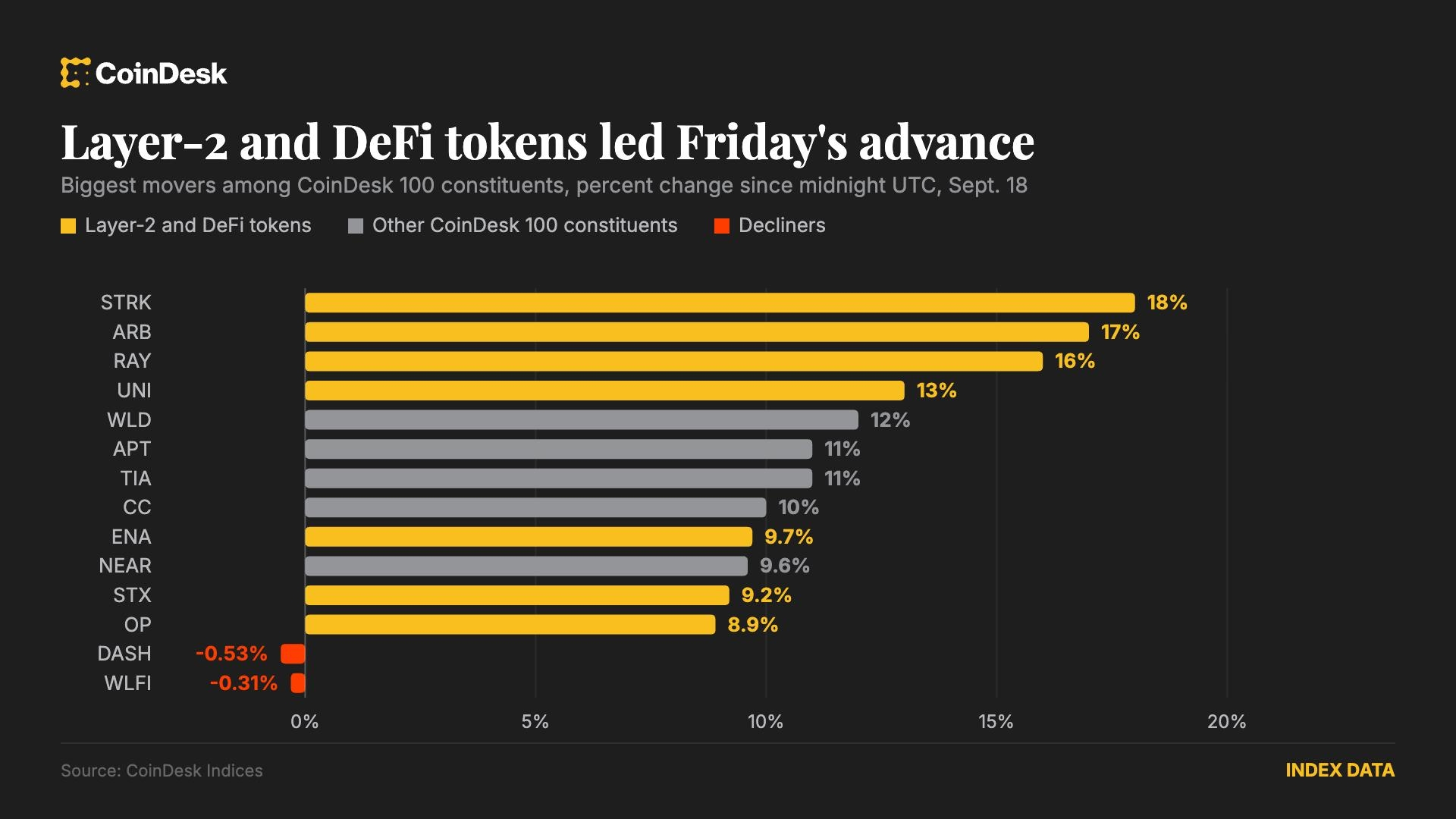
Layer-2 and DeFi tokens are driving a massive market comeback today. Macro pressure is finally letting up as post-Fed rate hike nerves begin to fade. With the 10-year Treasury yield slipping back below 5%, crypto buyers are stepping back in with full force across the board. 🔹 Over 98 of the top 100 crypto assets are trading in the green. 🚀 Major Layer-2 tokens like $ARB and $STRK posted huge gains over 17%. ⚡ Broader DeFi sector is seeing renewed momentum as capital rotates into scaling solutions. It feels like the market was just waiting for macro yields to cool off before ripping higher. #Layer2 #DeFi #CryptoMarket #Write2Earn
Layer-2 and DeFi tokens are driving a massive market comeback today. Macro pressure is finally letting up as post-Fed rate hike nerves begin to fade. With the 10-year Treasury yield slipping back below 5%, crypto buyers are stepping back in with full force across the board. 🔹 Over 98 of the top 100 crypto assets are trading in the green. 🚀 Major Layer-2 tokens like $ARB and $STRK posted huge gains over 17%. ⚡ Broader DeFi sector is seeing renewed momentum as capital rotates into scaling solutions. It feels like the market was just waiting for macro yields to cool off before ripping higher. #Layer2 #DeFi #CryptoMarket #Write2Earn
1
1.1k

·
--
Haussier
🚀 Важнейший апдейт Arbitrum One: Почему это сильно изменит экономику $ARB ?
Сегодня разработчики Offchain Labs официально активировали масштабное обновление механизма упорядочивания транзакций. Сеть полностью отказалась от старой системы Timeboost в пользу Priority Gas Auctions (PGA) и запустила платный сервис Fast Feed.
• Конец монополии китов: Раньше 97% аукционов за скорость транзакций выигрывали всего 3 крупные структуры. Теперь приоритет определяется честно — через индивидуальные чаевые за газ (priority-fee).
• Защита обычных пользователей: Транзакции с базовой комиссией больше не будут зависать навсегда благодаря автоматическому повышению приоритета со временем.
• Миллионы — в казначейство: Самое главное для холдеров! 97% всех приоритетных комиссий и платных подписок теперь идут напрямую в казначейство Arbitrum DAO, а не посредникам.
Реальная сетевая активность и MEV-боты теперь официально будут напрямую пополнять бюджет сообщества. Отличный фундамент для долгосрочного роста токена!
Ждем реакцию рынка? 📈
$ARB #ARBİTRUM #ARB #CryptoNewss #Layer2
{future}(ARBUSDT)
🚀 Важнейший апдейт Arbitrum One: Почему это сильно изменит экономику $ARB ?
Сегодня разработчики Offchain Labs официально активировали масштабное обновление механизма упорядочивания транзакций. Сеть полностью отказалась от старой системы Timeboost в пользу Priority Gas Auctions (PGA) и запустила платный сервис Fast Feed.
• Конец монополии китов: Раньше 97% аукционов за скорость транзакций выигрывали всего 3 крупные структуры. Теперь приоритет определяется честно — через индивидуальные чаевые за газ (priority-fee).
• Защита обычных пользователей: Транзакции с базовой комиссией больше не будут зависать навсегда благодаря автоматическому повышению приоритета со временем.
• Миллионы — в казначейство: Самое главное для холдеров! 97% всех приоритетных комиссий и платных подписок теперь идут напрямую в казначейство Arbitrum DAO, а не посредникам.
Реальная сетевая активность и MEV-боты теперь официально будут напрямую пополнять бюджет сообщества. Отличный фундамент для долгосрочного роста токена!
Ждем реакцию рынка? 📈
$ARB #ARBİTRUM #ARB #CryptoNewss #Layer2
Сегодня разработчики Offchain Labs официально активировали масштабное обновление механизма упорядочивания транзакций. Сеть полностью отказалась от старой системы Timeboost в пользу Priority Gas Auctions (PGA) и запустила платный сервис Fast Feed.
• Конец монополии китов: Раньше 97% аукционов за скорость транзакций выигрывали всего 3 крупные структуры. Теперь приоритет определяется честно — через индивидуальные чаевые за газ (priority-fee).
• Защита обычных пользователей: Транзакции с базовой комиссией больше не будут зависать навсегда благодаря автоматическому повышению приоритета со временем.
• Миллионы — в казначейство: Самое главное для холдеров! 97% всех приоритетных комиссий и платных подписок теперь идут напрямую в казначейство Arbitrum DAO, а не посредникам.
Реальная сетевая активность и MEV-боты теперь официально будут напрямую пополнять бюджет сообщества. Отличный фундамент для долгосрочного роста токена!
Ждем реакцию рынка? 📈
$ARB #ARBİTRUM #ARB #CryptoNewss #Layer2
290

·
--
Haussier
🚀 $ARB تزايد كبير في إقبال السيولة والمستثمرين على شبكة Arbitrum ($ARB ) بدعم من انخفاض الرسوم وزيادة النشاط اللامركزي على الشبكة. حلول التوسع تثبت أنها العصب الحقيقي للسوق!
NFA
$ARB
{spot}(ARBUSDT)
#Arbitrum #ARB #Layer2 #BİNANCESQUARE
🚀 $ARB تزايد كبير في إقبال السيولة والمستثمرين على شبكة Arbitrum ($ARB ) بدعم من انخفاض الرسوم وزيادة النشاط اللامركزي على الشبكة. حلول التوسع تثبت أنها العصب الحقيقي للسوق!
NFA
$ARB
#Arbitrum #ARB #Layer2 #BİNANCESQUARE
NFA
$ARB
#Arbitrum #ARB #Layer2 #BİNANCESQUARE
1
228

·
--
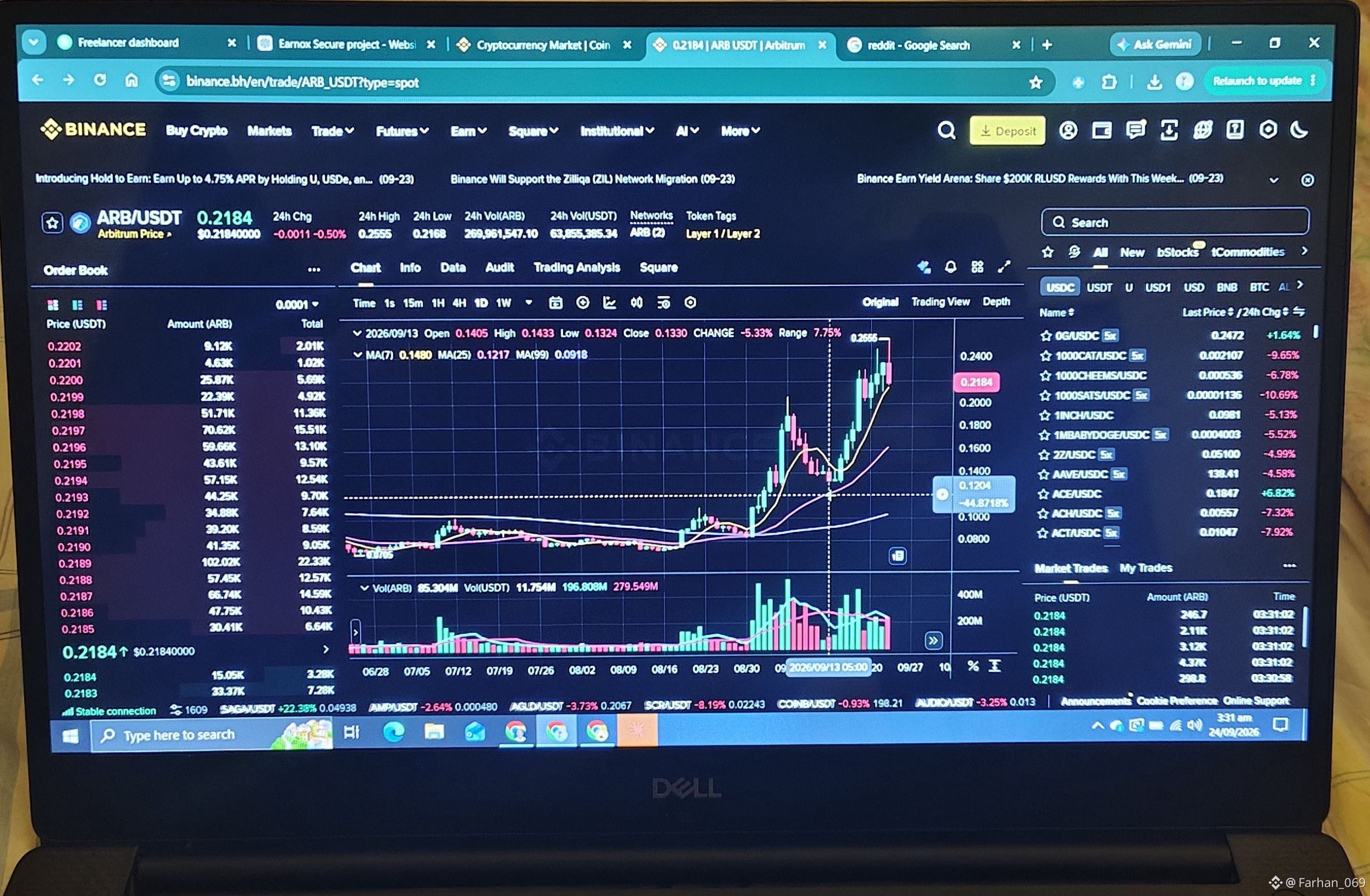
Took a position in $ARB, entry around 0.2175. Look at the chart — strong momentum has built up over the past few weeks, moving from around 0.07 all the way to 0.2555. The MA lines are also confirming the upward trend, and volume looks healthy right now.
My personal view is that if this momentum continues, there could be further upside, but the market is volatile so I've got a stop loss in place. DYOR, manage your own risk.
#BTC #ETH #Layer2 #CryptoPatience #BinanceSquare #writetoearn #CryptoTrading
Took a position in $ARB, entry around 0.2175. Look at the chart — strong momentum has built up over the past few weeks, moving from around 0.07 all the way to 0.2555. The MA lines are also confirming the upward trend, and volume looks healthy right now.
My personal view is that if this momentum continues, there could be further upside, but the market is volatile so I've got a stop loss in place. DYOR, manage your own risk.
#BTC #ETH #Layer2 #CryptoPatience #BinanceSquare #writetoearn #CryptoTrading
My personal view is that if this momentum continues, there could be further upside, but the market is volatile so I've got a stop loss in place. DYOR, manage your own risk.
#BTC #ETH #Layer2 #CryptoPatience #BinanceSquare #writetoearn #CryptoTrading
2
292
Market Leaders at Prime Levels — Position Before Acceleration
$ARB | $OP | $TIA
ARB, OP, and TIA continue to represent major scaling and modular blockchain narratives. With volatility tightening, market participants are watching whether these assets can defend their higher-timeframe structures.
A breakout becomes more meaningful when it follows a stable base.
Key Takeaway: Compression around support can precede a significant volatility expansion.
#ARB #OP #TIA #Layer2 #HighConviction
{future}(ARBUSDT)
{future}(OPUSDT)
{future}(TIAUSDT)
Market Leaders at Prime Levels — Position Before Acceleration
$ARB | $OP | $TIA
ARB, OP, and TIA continue to represent major scaling and modular blockchain narratives. With volatility tightening, market participants are watching whether these assets can defend their higher-timeframe structures.
A breakout becomes more meaningful when it follows a stable base.
Key Takeaway: Compression around support can precede a significant volatility expansion.
#ARB #OP #TIA #Layer2 #HighConviction
$ARB | $OP | $TIA
ARB, OP, and TIA continue to represent major scaling and modular blockchain narratives. With volatility tightening, market participants are watching whether these assets can defend their higher-timeframe structures.
A breakout becomes more meaningful when it follows a stable base.
Key Takeaway: Compression around support can precede a significant volatility expansion.
#ARB #OP #TIA #Layer2 #HighConviction
1
163
Market Leaders at Prime Levels — Position Before Acceleration
$ARB | $STRK | $ZK
ARB, STRK, and ZK remain active across Ethereum Layer-2 and scaling narratives. Their performance depends on both broader market liquidity and continued ecosystem participation.
Compression around support provides a useful technical framework.
Key Takeaway: Scaling narratives become stronger when price structure confirms renewed participation.
#ARB #STRK #ZK #Layer2 #HighConviction
{future}(ARBUSDT)
{future}(STRKUSDT)
{future}(ZKUSDT)
Market Leaders at Prime Levels — Position Before Acceleration
$ARB | $STRK | $ZK
ARB, STRK, and ZK remain active across Ethereum Layer-2 and scaling narratives. Their performance depends on both broader market liquidity and continued ecosystem participation.
Compression around support provides a useful technical framework.
Key Takeaway: Scaling narratives become stronger when price structure confirms renewed participation.
#ARB #STRK #ZK #Layer2 #HighConviction
$ARB | $STRK | $ZK
ARB, STRK, and ZK remain active across Ethereum Layer-2 and scaling narratives. Their performance depends on both broader market liquidity and continued ecosystem participation.
Compression around support provides a useful technical framework.
Key Takeaway: Scaling narratives become stronger when price structure confirms renewed participation.
#ARB #STRK #ZK #Layer2 #HighConviction
1
149
Connectez-vous pour découvrir plus de contenu
Rejoignez la communauté mondiale des adeptes de cryptomonnaies sur Binance Square
⚡️ Suviez les dernières informations importantes sur les cryptomonnaies.
💬 Jugé digne de confiance par la plus grande plateforme d’échange de cryptomonnaies au monde.
👍 Découvrez les connaissances que partagent les créateurs vérifiés.
Adresse e-mail/Nº de téléphone
Sujets d’actualité
1
#ChinaIndustrialProfitGrowthSlowsFourthMonth
0 vues
0 mentions
2
#BitwiseFilesFinalNEARSpotETFProspectus
90,780 vues
1,472 mentions
3
#BitgetHackerMoves$83MStolenXRP
34,066 vues
165 mentions
4
#SOLSpotETFWeeklyInflow$188M
22,283 vues
133 mentions
5
#DogecoinETFsPostBiggestWeekSinceLaunch
56,732 vues
1,004 mentions
6
#StrategyStriveAdd2305BitcoinThisWeek
148,743 vues
2,204 mentions
7
#TrumpRejectsIranHormuzReopening
127,714 vues
1,664 mentions
8
#TokenizedStockDEXVolumeHits$20.9B
195 vues
8 mentions
9
#CircleTetherFreezeBitgetHackerWallet
109,708 vues
1,530 mentions
10
#SECSaysTokenBuybacksNotAutoSecurities
74,228 vues
915 mentions