

#kyc
kyc
1M vues
1,007 mentions
Populaire
Récents
·
--
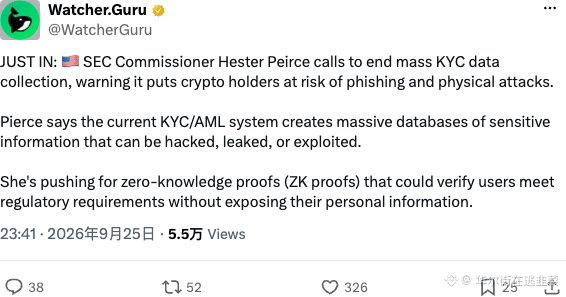
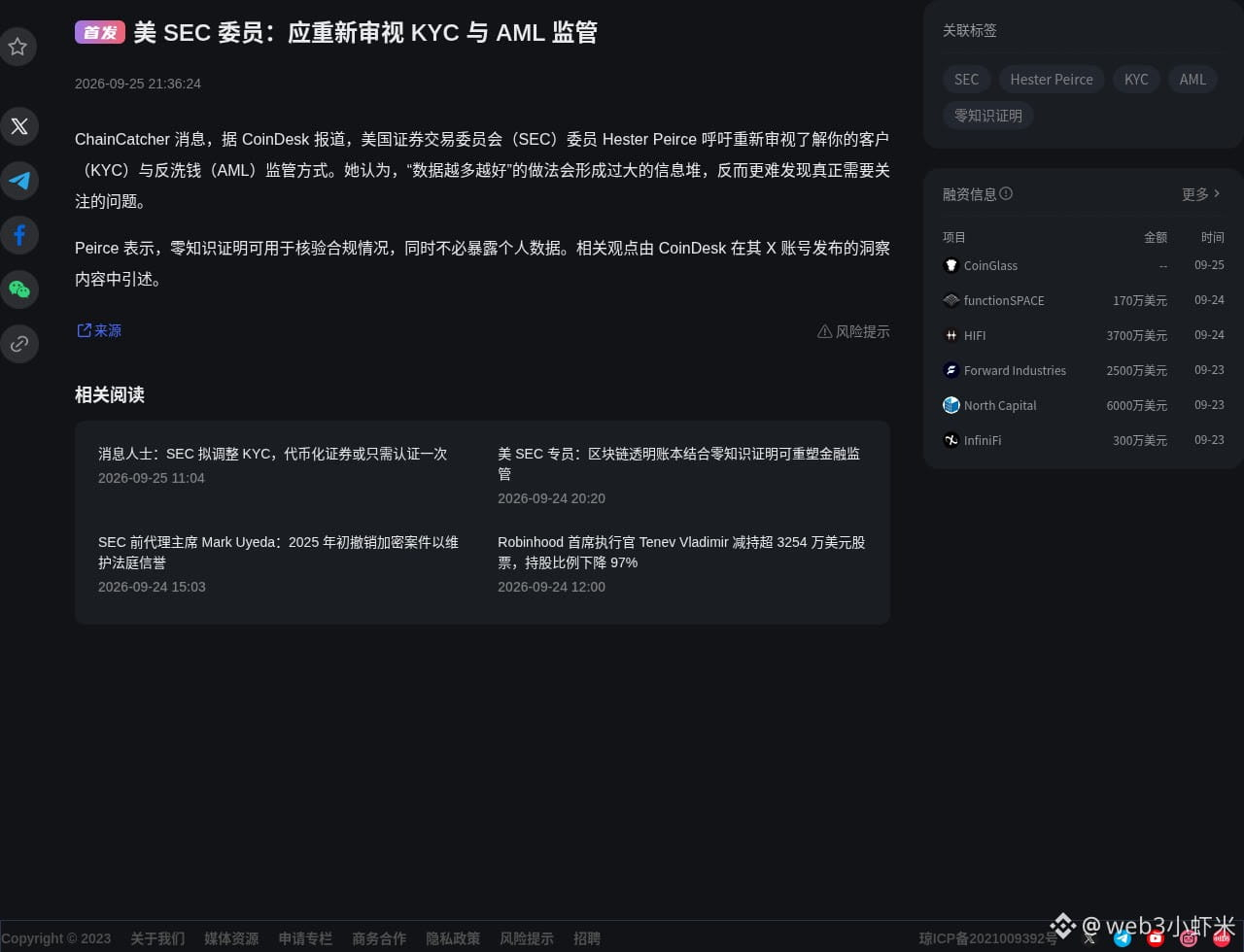
SEC Commissioner Hester Peirce mentioned that KYC frameworks should collect far less personal data. She proposed utilizing zero-knowledge proofs to verify regulatory compliance while keeping private information—like your full name, income, and home address—completely hidden.
If regulatory frameworks start officially integrating ZK-proof compliance, watch for renewed bullish momentum across privacy-focused protocols and zero-knowledge infrastructure. On the other hand, if traditional KYC demands remain unchanged, watch for ongoing friction between privacy advocates and regulatory bodies.
#CryptoNews
#ZeroKnowledge
#SEC
#kyc
SEC Commissioner Hester Peirce mentioned that KYC frameworks should collect far less personal data. She proposed utilizing zero-knowledge proofs to verify regulatory compliance while keeping private information—like your full name, income, and home address—completely hidden.
If regulatory frameworks start officially integrating ZK-proof compliance, watch for renewed bullish momentum across privacy-focused protocols and zero-knowledge infrastructure. On the other hand, if traditional KYC demands remain unchanged, watch for ongoing friction between privacy advocates and regulatory bodies.
#CryptoNews
#ZeroKnowledge
#SEC
#kyc
If regulatory frameworks start officially integrating ZK-proof compliance, watch for renewed bullish momentum across privacy-focused protocols and zero-knowledge infrastructure. On the other hand, if traditional KYC demands remain unchanged, watch for ongoing friction between privacy advocates and regulatory bodies.
#CryptoNews
#ZeroKnowledge
#SEC
#kyc
32

·
--
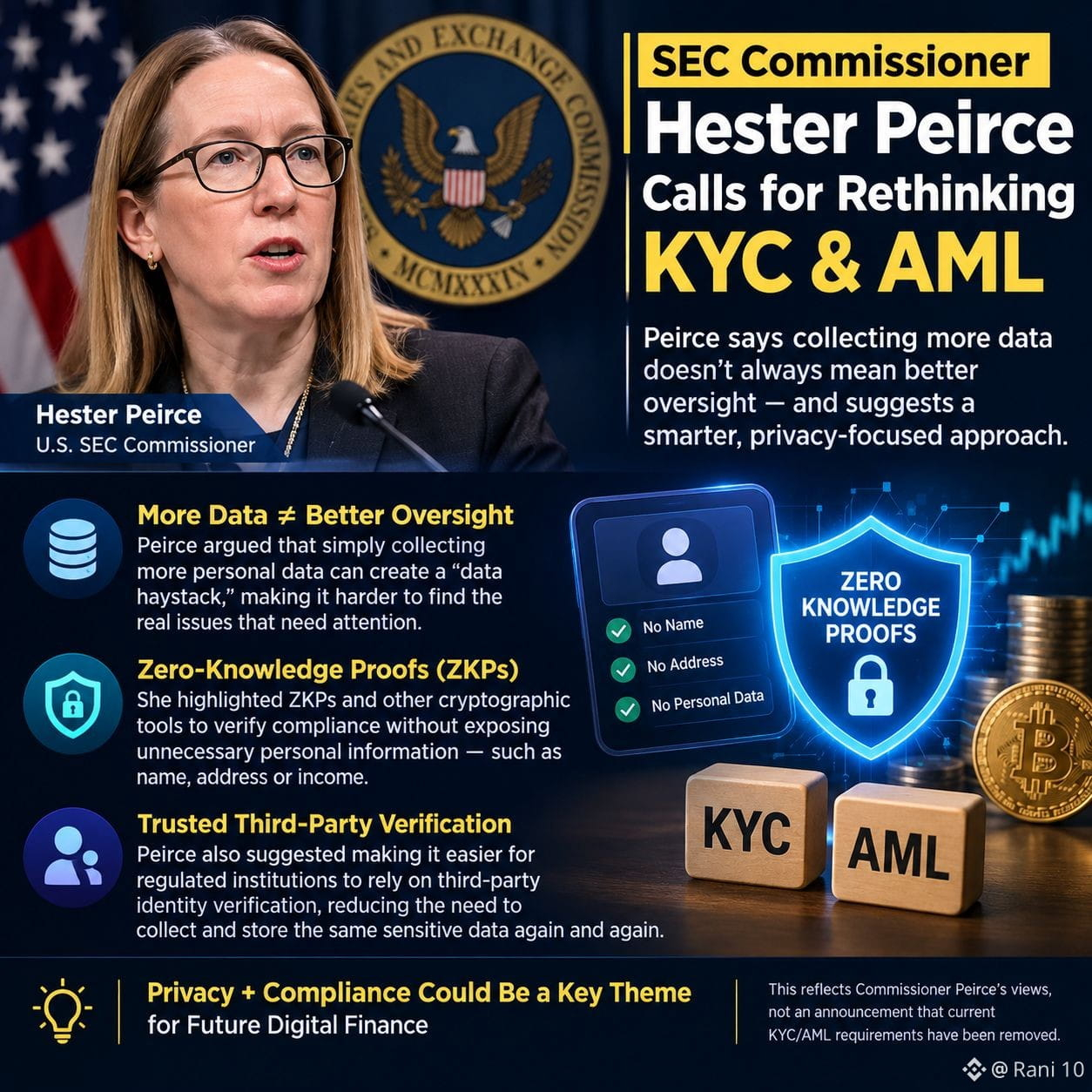
🚨 SEC Commissioner Hester Peirce Calls for Rethinking KYC & AML
U.S. SEC Commissioner Hester Peirce has called for a reassessment of how Know Your Customer (KYC) and Anti-Money Laundering (AML) rules collect and use personal information.
Speaking at SIFMA’s Digital Assets Conference on September 23, Peirce argued that simply collecting more and more data does not necessarily make financial oversight more effective. She compared the approach to building a larger “data haystack,” which can make it harder to identify the important information regulators are actually looking for.
Peirce highlighted zero-knowledge proofs (ZKPs) and other cryptographic tools as a possible alternative. These technologies can potentially verify that a person meets a specific requirement—such as being eligible or not appearing on a sanctions list—without revealing unnecessary personal information such as their name, income or address.
She also suggested making it easier for regulated institutions to rely on trusted third-party identity verification, which could reduce repeated collection and storage of the same sensitive information.
🔐 Privacy + Compliance Could Be a Key Theme for Future Digital Finance
⚠️ This reflects Commissioner Peirce’s views, not an announcement that current KYC/AML requirements have been removed.
#Crypto #BinanceSquare #KYC #AML
#CryptoNews
🚨 SEC Commissioner Hester Peirce Calls for Rethinking KYC & AML
U.S. SEC Commissioner Hester Peirce has called for a reassessment of how Know Your Customer (KYC) and Anti-Money Laundering (AML) rules collect and use personal information.
Speaking at SIFMA’s Digital Assets Conference on September 23, Peirce argued that simply collecting more and more data does not necessarily make financial oversight more effective. She compared the approach to building a larger “data haystack,” which can make it harder to identify the important information regulators are actually looking for.
Peirce highlighted zero-knowledge proofs (ZKPs) and other cryptographic tools as a possible alternative. These technologies can potentially verify that a person meets a specific requirement—such as being eligible or not appearing on a sanctions list—without revealing unnecessary personal information such as their name, income or address.
She also suggested making it easier for regulated institutions to rely on trusted third-party identity verification, which could reduce repeated collection and storage of the same sensitive information.
🔐 Privacy + Compliance Could Be a Key Theme for Future Digital Finance
⚠️ This reflects Commissioner Peirce’s views, not an announcement that current KYC/AML requirements have been removed.
#Crypto #BinanceSquare #KYC #AML
#CryptoNews
U.S. SEC Commissioner Hester Peirce has called for a reassessment of how Know Your Customer (KYC) and Anti-Money Laundering (AML) rules collect and use personal information.
Speaking at SIFMA’s Digital Assets Conference on September 23, Peirce argued that simply collecting more and more data does not necessarily make financial oversight more effective. She compared the approach to building a larger “data haystack,” which can make it harder to identify the important information regulators are actually looking for.
Peirce highlighted zero-knowledge proofs (ZKPs) and other cryptographic tools as a possible alternative. These technologies can potentially verify that a person meets a specific requirement—such as being eligible or not appearing on a sanctions list—without revealing unnecessary personal information such as their name, income or address.
She also suggested making it easier for regulated institutions to rely on trusted third-party identity verification, which could reduce repeated collection and storage of the same sensitive information.
🔐 Privacy + Compliance Could Be a Key Theme for Future Digital Finance
⚠️ This reflects Commissioner Peirce’s views, not an announcement that current KYC/AML requirements have been removed.
#Crypto #BinanceSquare #KYC #AML
#CryptoNews
3


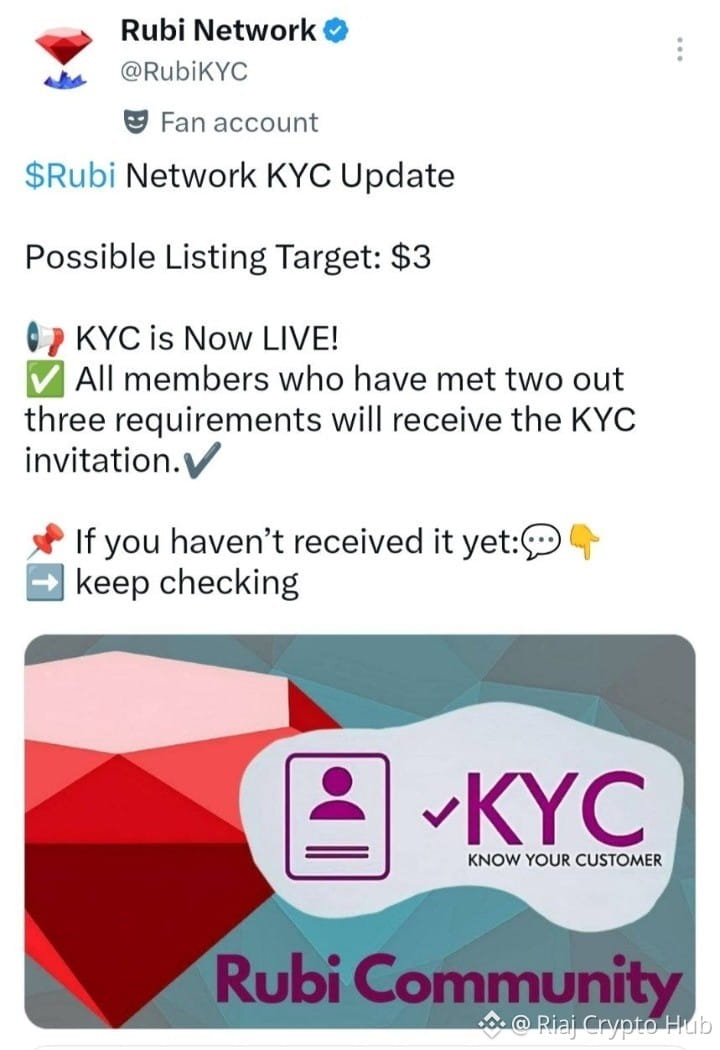
Rubi Network ($Rubi) KYC Update & Listing Buzz! 🚀
According to recent community updates, the KYC process for $Rubi is officially live!
🔹 Key Updates:
Members meeting at least two out of three requirements are receiving KYC invitations.
Haven't received yours yet? Keep checking your account regularly.
Community buzz suggests a possible listing target around $3.
⚠️ Disclaimer: This update comes from a fan account . Always follow official, verified channels for accurate announcements and do your own research (DYOR) before making any decisions.
Have you received your KYC invite yet? Drop your thoughts below! 👇
#CryptoNews #RubiNetwork #KYC #BinanceSquare $RUBI.US $BTC $GOOGL.US
Rubi Network ($Rubi) KYC Update & Listing Buzz! 🚀
According to recent community updates, the KYC process for $Rubi is officially live!
🔹 Key Updates:
Members meeting at least two out of three requirements are receiving KYC invitations.
Haven't received yours yet? Keep checking your account regularly.
Community buzz suggests a possible listing target around $3.
⚠️ Disclaimer: This update comes from a fan account . Always follow official, verified channels for accurate announcements and do your own research (DYOR) before making any decisions.
Have you received your KYC invite yet? Drop your thoughts below! 👇
#CryptoNews #RubiNetwork #KYC #BinanceSquare $RUBI.US $BTC $GOOGL.US
According to recent community updates, the KYC process for $Rubi is officially live!
🔹 Key Updates:
Members meeting at least two out of three requirements are receiving KYC invitations.
Haven't received yours yet? Keep checking your account regularly.
Community buzz suggests a possible listing target around $3.
⚠️ Disclaimer: This update comes from a fan account . Always follow official, verified channels for accurate announcements and do your own research (DYOR) before making any decisions.
Have you received your KYC invite yet? Drop your thoughts below! 👇
#CryptoNews #RubiNetwork #KYC #BinanceSquare $RUBI.US $BTC $GOOGL.US
213

·
--
KYC and compliance: the foundation, not the obstacle.
Know Your Customer (KYC) and Anti-Money Laundering (AML) rules exist so the financial system can function with accountability. In crypto, they:
• Prevent illicit actors from moving funds freely
• Enable exchanges to protect user assets and cooperate with law enforcement
• Create the bridge between digital assets and traditional finance
What users experience:
1. Identity verification (documents, selfie, address proof)
2. Source-of-funds checks for large deposits/withdrawals
3. Ongoing monitoring for unusual patterns
What it protects:
• Your account from unauthorized access
• The platform from being used for crime
• The ecosystem’s ability to operate legally worldwide
Common misconceptions:
• “KYC defeats privacy” — privacy ≠ anonymity. You control what you share publicly; the exchange knows who you are.
• “It’s only for big players” — rules apply proportionally, but everyone benefits from a cleaner environment.
• “Once verified, never again” — periodic re-verification and enhanced due diligence are standard.
Binance applies a risk-based approach: higher activity = deeper checks. That is standard global practice.
If you value a platform that can keep operating, offer fiat on/off-ramps and safeguard your funds, compliance is the price of admission.
Educational content only. Not legal or financial advice.
#KYC #Compliance #CryptoSafety #BinanceAngels
KYC and compliance: the foundation, not the obstacle.
Know Your Customer (KYC) and Anti-Money Laundering (AML) rules exist so the financial system can function with accountability. In crypto, they:
• Prevent illicit actors from moving funds freely
• Enable exchanges to protect user assets and cooperate with law enforcement
• Create the bridge between digital assets and traditional finance
What users experience:
1. Identity verification (documents, selfie, address proof)
2. Source-of-funds checks for large deposits/withdrawals
3. Ongoing monitoring for unusual patterns
What it protects:
• Your account from unauthorized access
• The platform from being used for crime
• The ecosystem’s ability to operate legally worldwide
Common misconceptions:
• “KYC defeats privacy” — privacy ≠ anonymity. You control what you share publicly; the exchange knows who you are.
• “It’s only for big players” — rules apply proportionally, but everyone benefits from a cleaner environment.
• “Once verified, never again” — periodic re-verification and enhanced due diligence are standard.
Binance applies a risk-based approach: higher activity = deeper checks. That is standard global practice.
If you value a platform that can keep operating, offer fiat on/off-ramps and safeguard your funds, compliance is the price of admission.
Educational content only. Not legal or financial advice.
#KYC #Compliance #CryptoSafety #BinanceAngels
Know Your Customer (KYC) and Anti-Money Laundering (AML) rules exist so the financial system can function with accountability. In crypto, they:
• Prevent illicit actors from moving funds freely
• Enable exchanges to protect user assets and cooperate with law enforcement
• Create the bridge between digital assets and traditional finance
What users experience:
1. Identity verification (documents, selfie, address proof)
2. Source-of-funds checks for large deposits/withdrawals
3. Ongoing monitoring for unusual patterns
What it protects:
• Your account from unauthorized access
• The platform from being used for crime
• The ecosystem’s ability to operate legally worldwide
Common misconceptions:
• “KYC defeats privacy” — privacy ≠ anonymity. You control what you share publicly; the exchange knows who you are.
• “It’s only for big players” — rules apply proportionally, but everyone benefits from a cleaner environment.
• “Once verified, never again” — periodic re-verification and enhanced due diligence are standard.
Binance applies a risk-based approach: higher activity = deeper checks. That is standard global practice.
If you value a platform that can keep operating, offer fiat on/off-ramps and safeguard your funds, compliance is the price of admission.
Educational content only. Not legal or financial advice.
#KYC #Compliance #CryptoSafety #BinanceAngels
86

·
--
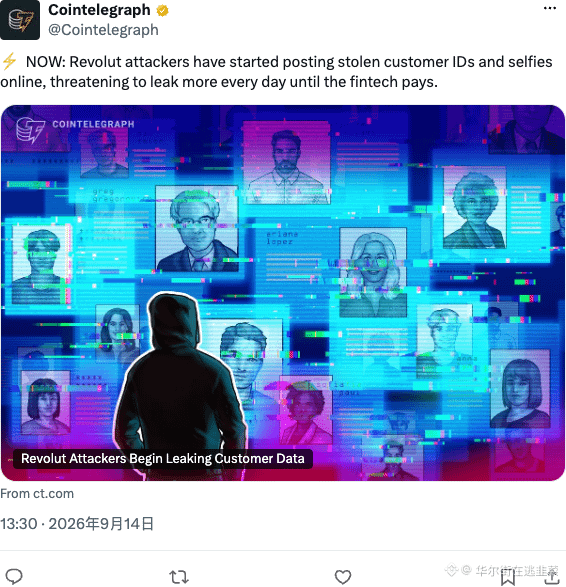
Revolut用户身份证+自拍被人挂网上了🤡 攻击者放话:不付钱就每天爆一批。Fintech版“不给钱就撕票”,老套路了。
吃瓜归吃瓜,教训还是那句:中心化平台攒了你全套KYC,出事就是裸奔。多签、审计、数据最小化,别等被挂才想起。
$BTC #Revolut #KYC
Revolut用户身份证+自拍被人挂网上了🤡 攻击者放话:不付钱就每天爆一批。Fintech版“不给钱就撕票”,老套路了。
吃瓜归吃瓜,教训还是那句:中心化平台攒了你全套KYC,出事就是裸奔。多签、审计、数据最小化,别等被挂才想起。
$BTC #Revolut #KYC
吃瓜归吃瓜,教训还是那句:中心化平台攒了你全套KYC,出事就是裸奔。多签、审计、数据最小化,别等被挂才想起。
$BTC #Revolut #KYC
41

·
--
Article
Revolut’s KYC Leak: How a Fake Gov. Request Exposed Bitcoin UsersRevolut’s KYC Leak: How a Fake Gov. Request Exposed Bitcoin Users
Have you ever wondered what happens when a bank’s security system is tricked by a phishing email that looks like a government request? A recent incident at Revolut, a popular fintech app, shows that even the most trusted platforms can be vulnerable to clever social engineering, and that the fallout can touch high‑net‑worth crypto users in ways we didn’t anticipate.
The Concept: Social Engineering Meets KYC Compliance
When a company receives a request from a government agency to provide customer data, it is standard practice to comply after verifying the request’s authenticity. Unfortunately, scammers can spoof official email domains, creating a “fake gov. request” that looks legitimate. In Revolut’s case, the attackers sent an email that appeared to come from a government authority, prompting the bank’s compliance team to release sensitive KYC and Bitcoin transaction data. The result? A breach that exposed personal information and transaction histories of many users, including those with significant crypto holdings. #SocialEngineering #KYC
Real‑World Example: High‑Net‑Worth Users in the Crosshairs
Onchain investigator ZachXBT, known for tracking suspicious crypto activity, speculated that the breach may have targeted high‑net‑worth individuals. These users often hold large balances of $BTC and other tokens, making them attractive targets for theft or blackmail. By exposing their KYC details and transaction patterns, attackers could map wallet addresses to real identities, potentially facilitating future scams or targeted phishing. The incident underscores how a single weak link—an unverified email—can cascade into a broader security failure, especially for those with substantial crypto assets.
Takeaway: Strengthen Your Own Security Practices
If you’re using Revolut or any crypto‑friendly platform, here are three steps you can take right now:
1. Verify any government or regulatory request by contacting the agency directly using a phone number or email you know is legitimate.
2. Enable two‑factor authentication (2FA) on all accounts, and consider using a hardware wallet for large crypto holdings.
3. Regularly review your account activity and KYC information for any unauthorized changes.
By staying vigilant and double‑checking every request, you can protect yourself from similar social‑engineering attacks. #CryptoSecurity
What steps have you taken to verify the authenticity of requests to your financial institutions? Let me know in the comments!
Revolut’s KYC Leak: How a Fake Gov. Request Exposed Bitcoin Users
Revolut’s KYC Leak: How a Fake Gov. Request Exposed Bitcoin Users
Have you ever wondered what happens when a bank’s security system is tricked by a phishing email that looks like a government request? A recent incident at Revolut, a popular fintech app, shows that even the most trusted platforms can be vulnerable to clever social engineering, and that the fallout can touch high‑net‑worth crypto users in ways we didn’t anticipate.
The Concept: Social Engineering Meets KYC Compliance
When a company receives a request from a government agency to provide customer data, it is standard practice to comply after verifying the request’s authenticity. Unfortunately, scammers can spoof official email domains, creating a “fake gov. request” that looks legitimate. In Revolut’s case, the attackers sent an email that appeared to come from a government authority, prompting the bank’s compliance team to release sensitive KYC and Bitcoin transaction data. The result? A breach that exposed personal information and transaction histories of many users, including those with significant crypto holdings. #SocialEngineering #KYC
Real‑World Example: High‑Net‑Worth Users in the Crosshairs
Onchain investigator ZachXBT, known for tracking suspicious crypto activity, speculated that the breach may have targeted high‑net‑worth individuals. These users often hold large balances of $BTC and other tokens, making them attractive targets for theft or blackmail. By exposing their KYC details and transaction patterns, attackers could map wallet addresses to real identities, potentially facilitating future scams or targeted phishing. The incident underscores how a single weak link—an unverified email—can cascade into a broader security failure, especially for those with substantial crypto assets.
Takeaway: Strengthen Your Own Security Practices
If you’re using Revolut or any crypto‑friendly platform, here are three steps you can take right now:
1. Verify any government or regulatory request by contacting the agency directly using a phone number or email you know is legitimate.
2. Enable two‑factor authentication (2FA) on all accounts, and consider using a hardware wallet for large crypto holdings.
3. Regularly review your account activity and KYC information for any unauthorized changes.
By staying vigilant and double‑checking every request, you can protect yourself from similar social‑engineering attacks. #CryptoSecurity
What steps have you taken to verify the authenticity of requests to your financial institutions? Let me know in the comments!
Have you ever wondered what happens when a bank’s security system is tricked by a phishing email that looks like a government request? A recent incident at Revolut, a popular fintech app, shows that even the most trusted platforms can be vulnerable to clever social engineering, and that the fallout can touch high‑net‑worth crypto users in ways we didn’t anticipate.
The Concept: Social Engineering Meets KYC Compliance
When a company receives a request from a government agency to provide customer data, it is standard practice to comply after verifying the request’s authenticity. Unfortunately, scammers can spoof official email domains, creating a “fake gov. request” that looks legitimate. In Revolut’s case, the attackers sent an email that appeared to come from a government authority, prompting the bank’s compliance team to release sensitive KYC and Bitcoin transaction data. The result? A breach that exposed personal information and transaction histories of many users, including those with significant crypto holdings. #SocialEngineering #KYC
Real‑World Example: High‑Net‑Worth Users in the Crosshairs
Onchain investigator ZachXBT, known for tracking suspicious crypto activity, speculated that the breach may have targeted high‑net‑worth individuals. These users often hold large balances of $BTC and other tokens, making them attractive targets for theft or blackmail. By exposing their KYC details and transaction patterns, attackers could map wallet addresses to real identities, potentially facilitating future scams or targeted phishing. The incident underscores how a single weak link—an unverified email—can cascade into a broader security failure, especially for those with substantial crypto assets.
Takeaway: Strengthen Your Own Security Practices
If you’re using Revolut or any crypto‑friendly platform, here are three steps you can take right now:
1. Verify any government or regulatory request by contacting the agency directly using a phone number or email you know is legitimate.
2. Enable two‑factor authentication (2FA) on all accounts, and consider using a hardware wallet for large crypto holdings.
3. Regularly review your account activity and KYC information for any unauthorized changes.
By staying vigilant and double‑checking every request, you can protect yourself from similar social‑engineering attacks. #CryptoSecurity
What steps have you taken to verify the authenticity of requests to your financial institutions? Let me know in the comments!
25
SIDRACHAIN KYC UPDATE
KYC verification is entering an advanced phase with improved face-verification technology.
A smoother faster and more reliable verification experience is the goal.
The next major step is getting closer.
Stay tuned for the official announcement.
#SidraChain #KYC #SDA #usdt #trade
$KSM
{future}(KSMUSDT)
$LTC
{future}(LTCUSDT)
$USDT
SIDRACHAIN KYC UPDATE
KYC verification is entering an advanced phase with improved face-verification technology.
A smoother faster and more reliable verification experience is the goal.
The next major step is getting closer.
Stay tuned for the official announcement.
#SidraChain #KYC #SDA #usdt #trade
$KSM
$LTC
$USDT
KYC verification is entering an advanced phase with improved face-verification technology.
A smoother faster and more reliable verification experience is the goal.
The next major step is getting closer.
Stay tuned for the official announcement.
#SidraChain #KYC #SDA #usdt #trade
$KSM
$LTC
$USDT

177
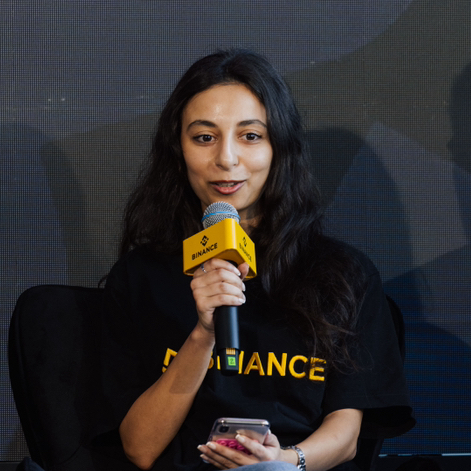
Did You Know? Binance Bahrain 🇧🇭 Series | Episode 4
Your National ID can be part of the onboarding journey: Getting started with Binance Bahrain begins with identity verification. For the Binance Bahrain onboarding journey, users select their country of residence and complete identity verification. Binance's guidance specifies using the relevant identity document for the user's country of residence.
And there's an important detail for existing Binance users:
If you already have a Binance Global account, you may need a different email or phone number when creating the Binance Bahrain account.
Why does KYC matter?
Because Binance Bahrain operates as a regulated platform in Bahrain. Binance states that Binance Bahrain B.S.C. is licensed by the Central Bank of Bahrain as a Category 4 Crypto Asset licensee.
So onboarding isn't just: “Create account → let's go.”
There is a verification journey designed around the applicable regulatory requirements. Verify first. Then discover what's available to you. 🔐 #BinanceBahrain #KYC #ID #Vérification
Did You Know? Binance Bahrain 🇧🇭 Series | Episode 4
Your National ID can be part of the onboarding journey: Getting started with Binance Bahrain begins with identity verification. For the Binance Bahrain onboarding journey, users select their country of residence and complete identity verification. Binance's guidance specifies using the relevant identity document for the user's country of residence.
And there's an important detail for existing Binance users:
If you already have a Binance Global account, you may need a different email or phone number when creating the Binance Bahrain account.
Why does KYC matter?
Because Binance Bahrain operates as a regulated platform in Bahrain. Binance states that Binance Bahrain B.S.C. is licensed by the Central Bank of Bahrain as a Category 4 Crypto Asset licensee.
So onboarding isn't just: “Create account → let's go.”
There is a verification journey designed around the applicable regulatory requirements. Verify first. Then discover what's available to you. 🔐 #BinanceBahrain #KYC #ID #Vérification
Your National ID can be part of the onboarding journey: Getting started with Binance Bahrain begins with identity verification. For the Binance Bahrain onboarding journey, users select their country of residence and complete identity verification. Binance's guidance specifies using the relevant identity document for the user's country of residence.
And there's an important detail for existing Binance users:
If you already have a Binance Global account, you may need a different email or phone number when creating the Binance Bahrain account.
Why does KYC matter?
Because Binance Bahrain operates as a regulated platform in Bahrain. Binance states that Binance Bahrain B.S.C. is licensed by the Central Bank of Bahrain as a Category 4 Crypto Asset licensee.
So onboarding isn't just: “Create account → let's go.”
There is a verification journey designed around the applicable regulatory requirements. Verify first. Then discover what's available to you. 🔐 #BinanceBahrain #KYC #ID #Vérification
1
89
·
--
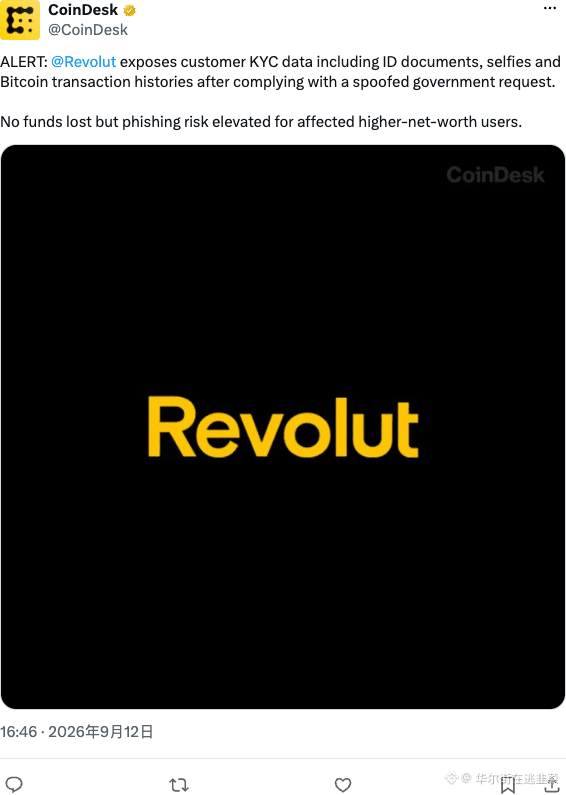
Revolut把客户KYC资料全交了——身份证、自拍、连比特币交易记录都打包送出去,就因为收到一份伪造的政府调令。钱没丢,但高净值用户现在就是钓鱼团体的活靶子。
中心化平台手握你全套隐私,却连个假公文都验不出来。币圈那句老话又应验了:not your keys, not your coins。你的身份数据存哪,风险就在哪。
$BTC #KYC #Revolut
Revolut把客户KYC资料全交了——身份证、自拍、连比特币交易记录都打包送出去,就因为收到一份伪造的政府调令。钱没丢,但高净值用户现在就是钓鱼团体的活靶子。
中心化平台手握你全套隐私,却连个假公文都验不出来。币圈那句老话又应验了:not your keys, not your coins。你的身份数据存哪,风险就在哪。
$BTC #KYC #Revolut
中心化平台手握你全套隐私,却连个假公文都验不出来。币圈那句老话又应验了:not your keys, not your coins。你的身份数据存哪,风险就在哪。
$BTC #KYC #Revolut
23
INTERLINK KYC Verification Just Got Easier! 🚀
Quick KYC Guide
🔹 1. Open the App
Launch the InterLink Labs app and log in to your account.
🔹 2. Go to KYC
Head to your home screen or profile and tap “KYC Synchronization.”
🔹 3. Double-Check Your Details
Make sure all your information is correct before moving forward.
🔹 4. Get Verified
Simply follow the on-screen steps to submit the required documents or complete facial verification.
🔹 5. That’s It! 🎉
Once submitted, your KYC will be processed and your status will update accordingly.
✅ Complete your KYC carefully, keep your information accurate, and get ready — KYC processing is expected to get faster starting next week! ⚡
#InterLink #ITLG #ITL #KYC #bnb
$INJ
{future}(INJUSDT)
$INIT
{future}(INITUSDT)
$INTC
{future}(INTCUSDT)
INTERLINK KYC Verification Just Got Easier! 🚀
Quick KYC Guide
🔹 1. Open the App
Launch the InterLink Labs app and log in to your account.
🔹 2. Go to KYC
Head to your home screen or profile and tap “KYC Synchronization.”
🔹 3. Double-Check Your Details
Make sure all your information is correct before moving forward.
🔹 4. Get Verified
Simply follow the on-screen steps to submit the required documents or complete facial verification.
🔹 5. That’s It! 🎉
Once submitted, your KYC will be processed and your status will update accordingly.
✅ Complete your KYC carefully, keep your information accurate, and get ready — KYC processing is expected to get faster starting next week! ⚡
#InterLink #ITLG #ITL #KYC #bnb
$INJ
$INIT
$INTC
Quick KYC Guide
🔹 1. Open the App
Launch the InterLink Labs app and log in to your account.
🔹 2. Go to KYC
Head to your home screen or profile and tap “KYC Synchronization.”
🔹 3. Double-Check Your Details
Make sure all your information is correct before moving forward.
🔹 4. Get Verified
Simply follow the on-screen steps to submit the required documents or complete facial verification.
🔹 5. That’s It! 🎉
Once submitted, your KYC will be processed and your status will update accordingly.
✅ Complete your KYC carefully, keep your information accurate, and get ready — KYC processing is expected to get faster starting next week! ⚡
#InterLink #ITLG #ITL #KYC #bnb
$INJ
$INIT
$INTC

240

·
--
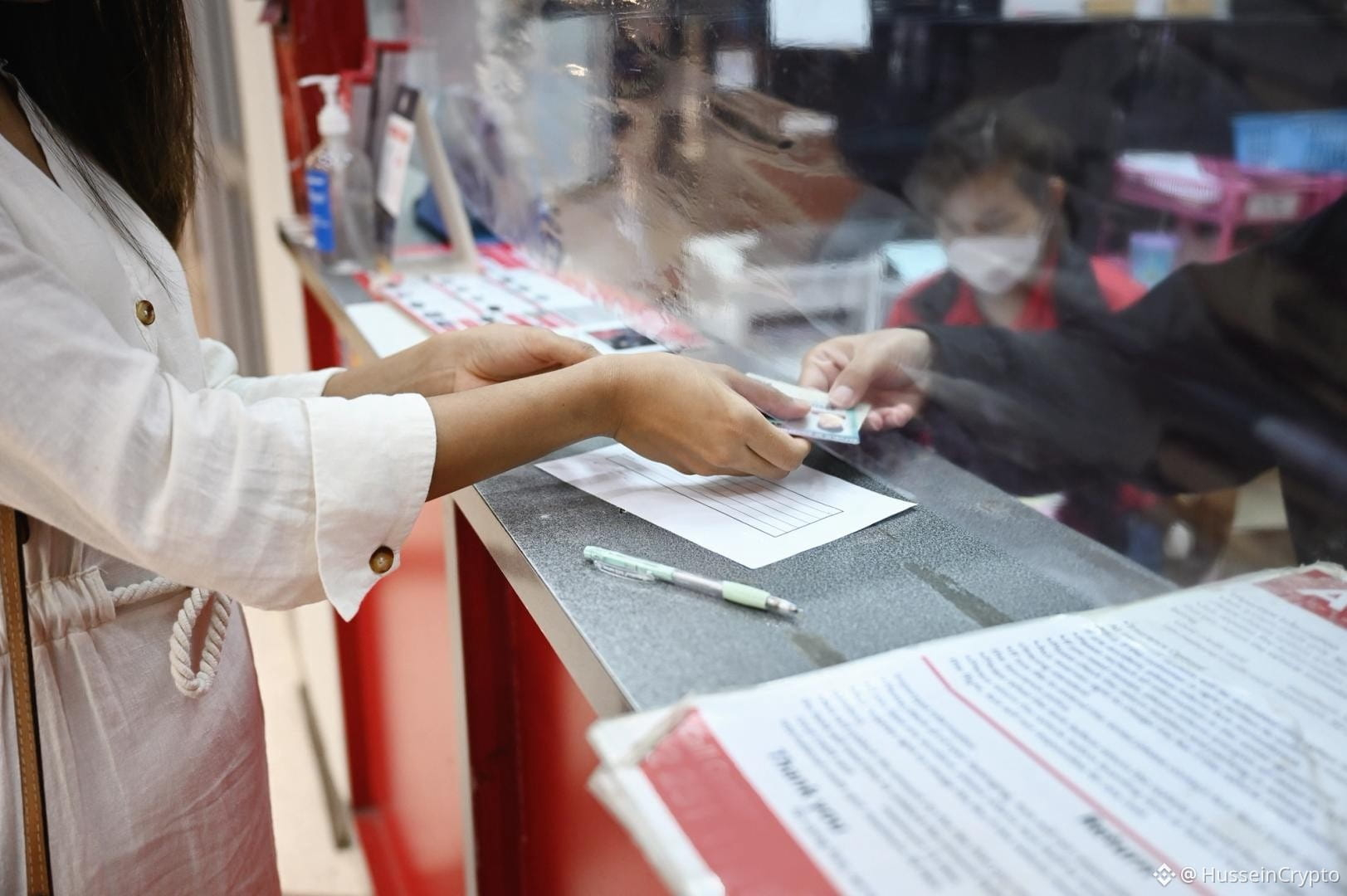
KYC data is an irresistible honeypot for hackers, and privacy-preserving identity verification could change how it's collected. Coin Center’s Laz Pieper advocates systems that prove only what a service needs, while keeping your data under your control. A must for crypto users. $BTC #Privacy #KYC #Crypto
KYC data is an irresistible honeypot for hackers, and privacy-preserving identity verification could change how it's collected. Coin Center’s Laz Pieper advocates systems that prove only what a service needs, while keeping your data under your control. A must for crypto users. $BTC #Privacy #KYC #Crypto
16

Dữ liệu KYC: Mồi hấp dẫn cho tin tặc, cần thay đổi cách thu thập
- Dữ liệu KYC là điểm đến lý tưởng cho các cuộc tấn công hacker.
- Cần thay đổi cách thu thập và quản lý dữ liệu định danh.
- Hệ thống xác thực bảo mật riêng tư cho phép chứng minh đúng thông tin cần thiết.
- Dữ liệu gốc vẫn nằm dưới sự kiểm soát của người dùng.
- Phân tích từ Laz Pieper của Coin Center.
#BinanceSquare #CryptoNews #KYC #Web3 #Privacy
$btc $eth
vlikevn Titanbot
Nguồn: CoinDesk
Dữ liệu KYC: Mồi hấp dẫn cho tin tặc, cần thay đổi cách thu thập
- Dữ liệu KYC là điểm đến lý tưởng cho các cuộc tấn công hacker.
- Cần thay đổi cách thu thập và quản lý dữ liệu định danh.
- Hệ thống xác thực bảo mật riêng tư cho phép chứng minh đúng thông tin cần thiết.
- Dữ liệu gốc vẫn nằm dưới sự kiểm soát của người dùng.
- Phân tích từ Laz Pieper của Coin Center.
#BinanceSquare #CryptoNews #KYC #Web3 #Privacy
$btc $eth
vlikevn Titanbot
Nguồn: CoinDesk
- Dữ liệu KYC là điểm đến lý tưởng cho các cuộc tấn công hacker.
- Cần thay đổi cách thu thập và quản lý dữ liệu định danh.
- Hệ thống xác thực bảo mật riêng tư cho phép chứng minh đúng thông tin cần thiết.
- Dữ liệu gốc vẫn nằm dưới sự kiểm soát của người dùng.
- Phân tích từ Laz Pieper của Coin Center.
#BinanceSquare #CryptoNews #KYC #Web3 #Privacy
$btc $eth
vlikevn Titanbot
Nguồn: CoinDesk
114

🔐 KYC & AML on Crypto Exchanges: What They Actually Are (And Why You Can’t Skip Them)
If you’ve ever wondered why Binance asks for ID verification before you can fully use the platform, here’s the plain English version.
KYC (Know Your Customer)
This is the identity verification step. It usually involves uploading a government issued ID and, depending on the platform and your circumstances, a selfie, proof of address, or other information.
Exchanges do this mainly because financial regulations require them to know who their customers are and to take measures against money laundering, fraud and terrorist financing.
International standards such as those developed by the Financial Action Task Force (FATF) require virtual asset service providers to apply customer due diligence and other anti money laundering measures. Countries then implement these standards through their own laws and regulations. (fatf-gafi.org)
So when Binance asks for your ID, it isn’t simply being “nosy.” KYC is part of the broader AML compliance system used by financial institutions and crypto exchanges around the world.
And KYC is only one part of the picture. There is also AML, transaction monitoring, risk based verification and, in some cases, additional checks when a transaction or account activity appears unusual.
In simple terms, KYC answers one basic question:
“Who are you?”
AML then focuses on another:
“Is the money moving through the platform connected to suspicious or illegal activity?”
That’s why exchanges may sometimes ask for additional information or flag certain transactions.
#kyc #aml #Binance #CryptoCompliance #BinanceSquare
🔐 KYC & AML on Crypto Exchanges: What They Actually Are (And Why You Can’t Skip Them)
If you’ve ever wondered why Binance asks for ID verification before you can fully use the platform, here’s the plain English version.
KYC (Know Your Customer)
This is the identity verification step. It usually involves uploading a government issued ID and, depending on the platform and your circumstances, a selfie, proof of address, or other information.
Exchanges do this mainly because financial regulations require them to know who their customers are and to take measures against money laundering, fraud and terrorist financing.
International standards such as those developed by the Financial Action Task Force (FATF) require virtual asset service providers to apply customer due diligence and other anti money laundering measures. Countries then implement these standards through their own laws and regulations. (fatf-gafi.org)
So when Binance asks for your ID, it isn’t simply being “nosy.” KYC is part of the broader AML compliance system used by financial institutions and crypto exchanges around the world.
And KYC is only one part of the picture. There is also AML, transaction monitoring, risk based verification and, in some cases, additional checks when a transaction or account activity appears unusual.
In simple terms, KYC answers one basic question:
“Who are you?”
AML then focuses on another:
“Is the money moving through the platform connected to suspicious or illegal activity?”
That’s why exchanges may sometimes ask for additional information or flag certain transactions.
#kyc #aml #Binance #CryptoCompliance #BinanceSquare
If you’ve ever wondered why Binance asks for ID verification before you can fully use the platform, here’s the plain English version.
KYC (Know Your Customer)
This is the identity verification step. It usually involves uploading a government issued ID and, depending on the platform and your circumstances, a selfie, proof of address, or other information.
Exchanges do this mainly because financial regulations require them to know who their customers are and to take measures against money laundering, fraud and terrorist financing.
International standards such as those developed by the Financial Action Task Force (FATF) require virtual asset service providers to apply customer due diligence and other anti money laundering measures. Countries then implement these standards through their own laws and regulations. (fatf-gafi.org)
So when Binance asks for your ID, it isn’t simply being “nosy.” KYC is part of the broader AML compliance system used by financial institutions and crypto exchanges around the world.
And KYC is only one part of the picture. There is also AML, transaction monitoring, risk based verification and, in some cases, additional checks when a transaction or account activity appears unusual.
In simple terms, KYC answers one basic question:
“Who are you?”
AML then focuses on another:
“Is the money moving through the platform connected to suspicious or illegal activity?”
That’s why exchanges may sometimes ask for additional information or flag certain transactions.
#kyc #aml #Binance #CryptoCompliance #BinanceSquare
1
101
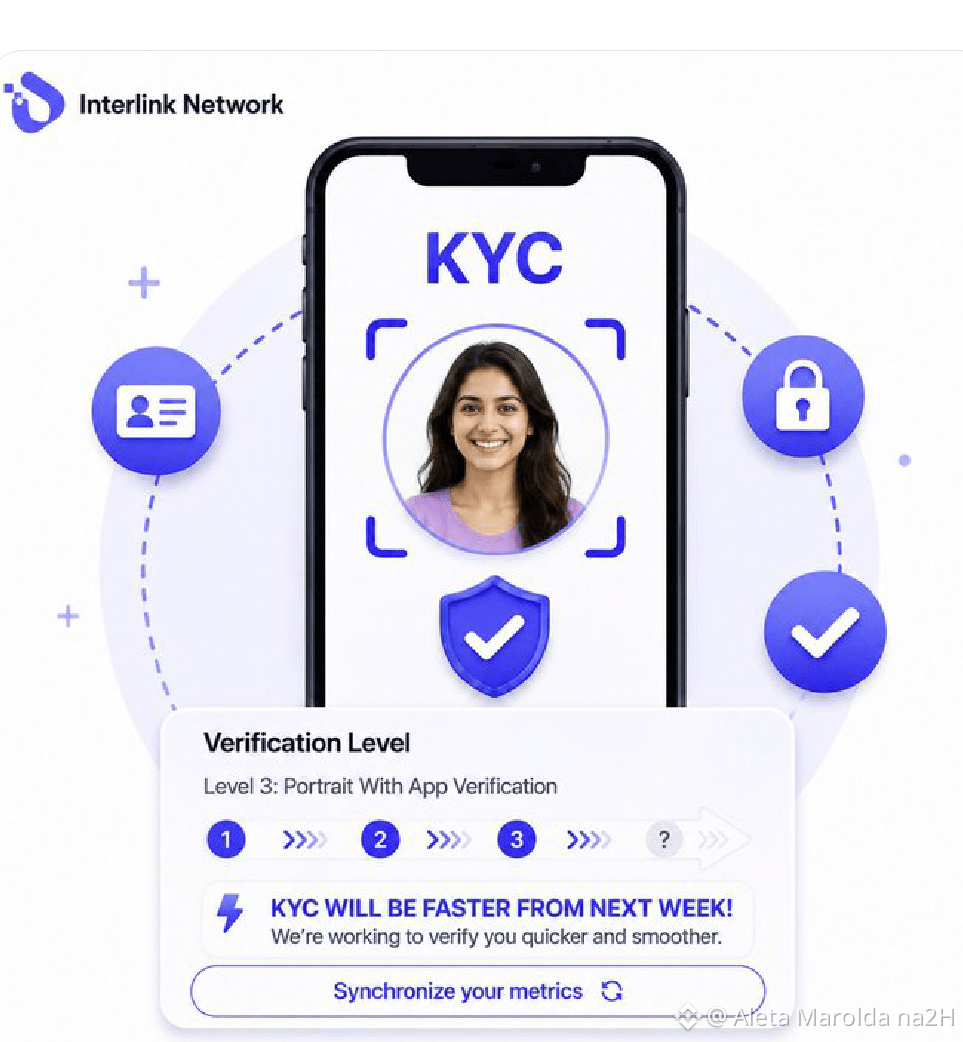
KYC Verification Just Got Easier! 🚀
Quick KYC Guide
🔹 1. Open the App
Launch the InterLink Labs app and log in to your account.
🔹 2. Go to KYC
Head to your home screen or profile and tap “KYC Synchronization.”
🔹 3. Double-Check Your Details
Make sure all your information is correct before moving forward.
🔹 4. Get Verified
Simply follow the on-screen steps to submit the required documents or complete facial verification.
🔹 5. That’s It! 🎉
Once submitted, your KYC will be processed and your status will update accordingly.
✅ Complete your KYC carefully, keep your information accurate, and get ready — KYC processing is expected to get faster starting next week! ⚡
#kyc #bnb #btc #trade #usdt
$NEO
{future}(NEOUSDT)
$GNO
{spot}(GNOUSDT)
$LDO
{future}(LDOUSDT)
KYC Verification Just Got Easier! 🚀
Quick KYC Guide
🔹 1. Open the App
Launch the InterLink Labs app and log in to your account.
🔹 2. Go to KYC
Head to your home screen or profile and tap “KYC Synchronization.”
🔹 3. Double-Check Your Details
Make sure all your information is correct before moving forward.
🔹 4. Get Verified
Simply follow the on-screen steps to submit the required documents or complete facial verification.
🔹 5. That’s It! 🎉
Once submitted, your KYC will be processed and your status will update accordingly.
✅ Complete your KYC carefully, keep your information accurate, and get ready — KYC processing is expected to get faster starting next week! ⚡
#kyc #bnb #btc #trade #usdt
$NEO
$GNO
$LDO
Quick KYC Guide
🔹 1. Open the App
Launch the InterLink Labs app and log in to your account.
🔹 2. Go to KYC
Head to your home screen or profile and tap “KYC Synchronization.”
🔹 3. Double-Check Your Details
Make sure all your information is correct before moving forward.
🔹 4. Get Verified
Simply follow the on-screen steps to submit the required documents or complete facial verification.
🔹 5. That’s It! 🎉
Once submitted, your KYC will be processed and your status will update accordingly.
✅ Complete your KYC carefully, keep your information accurate, and get ready — KYC processing is expected to get faster starting next week! ⚡
#kyc #bnb #btc #trade #usdt
$NEO
$GNO
$LDO
206
·
--
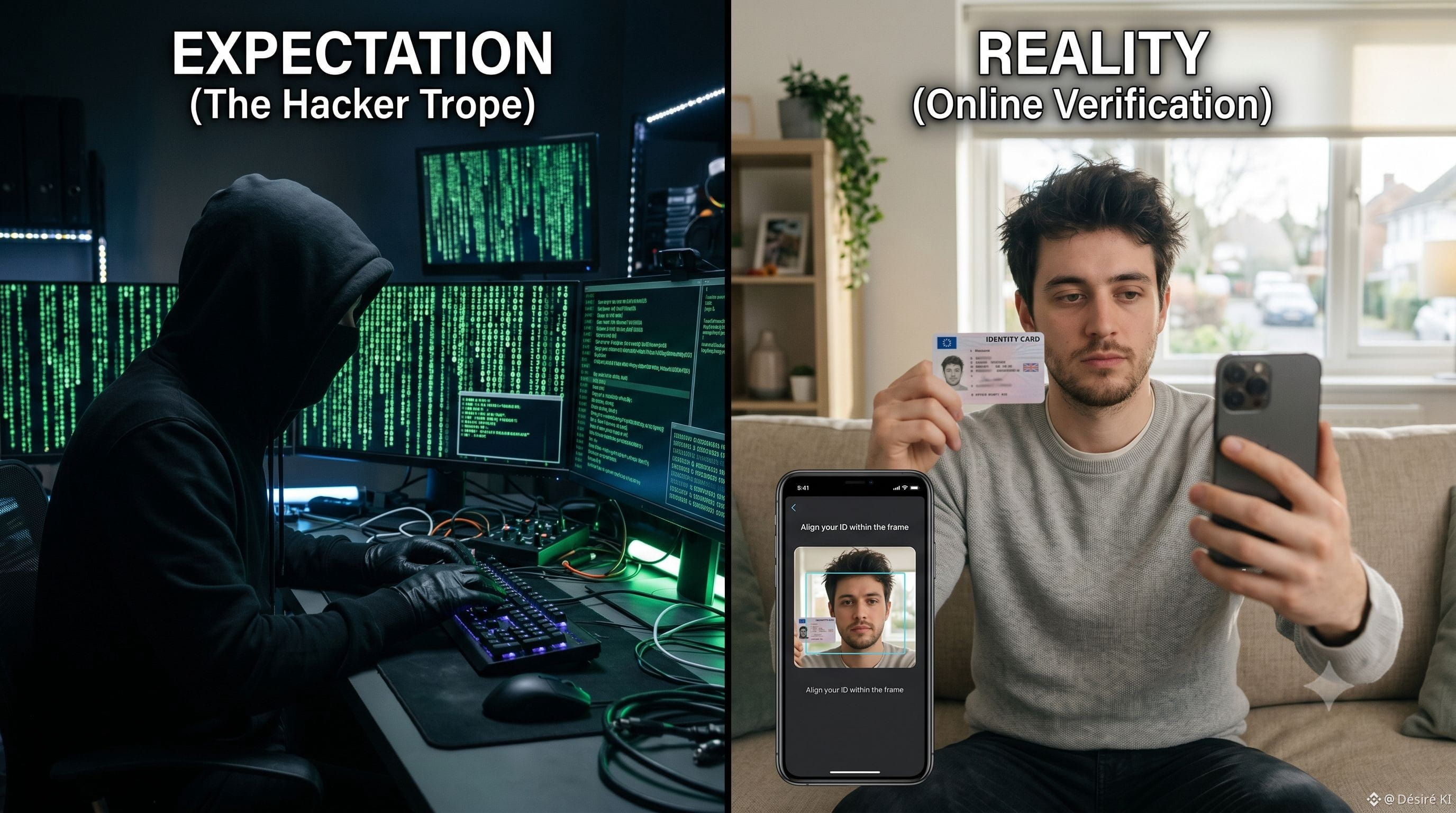
L'illusion de l'anonymat en crypto... on en parle ?
Avant de commencer mon défi de 30 jours, je croyais que le $BTC, c'était le truc ultra-secret des hackers dans les films, intraçable et mystérieux.
La réalité ? Pour ouvrir mon compte et faire mon premier dépôt, j'ai dû fournir ma carte d'identité, faire un selfie vidéo en tournant la tête, et prouver mon adresse (le fameux KYC). C'est limite plus strict que pour ouvrir un compte bancaire normal !
J'ai fait un petit visuel pour résumer cette désillusion amusante. Est-ce que ça vous a surpris aussi lors de votre inscription, ou c'est moi qui avais regardé trop de films de science-fiction ? 👇
#kyc #sécurité #EducationCrypto #Bitcoi $BTC
{spot}(BTCUSDT)
L'illusion de l'anonymat en crypto... on en parle ?
Avant de commencer mon défi de 30 jours, je croyais que le $BTC , c'était le truc ultra-secret des hackers dans les films, intraçable et mystérieux.
La réalité ? Pour ouvrir mon compte et faire mon premier dépôt, j'ai dû fournir ma carte d'identité, faire un selfie vidéo en tournant la tête, et prouver mon adresse (le fameux KYC). C'est limite plus strict que pour ouvrir un compte bancaire normal !
J'ai fait un petit visuel pour résumer cette désillusion amusante. Est-ce que ça vous a surpris aussi lors de votre inscription, ou c'est moi qui avais regardé trop de films de science-fiction ? 👇
#kyc #sécurité #EducationCrypto #Bitcoi $BTC
Avant de commencer mon défi de 30 jours, je croyais que le $BTC , c'était le truc ultra-secret des hackers dans les films, intraçable et mystérieux.
La réalité ? Pour ouvrir mon compte et faire mon premier dépôt, j'ai dû fournir ma carte d'identité, faire un selfie vidéo en tournant la tête, et prouver mon adresse (le fameux KYC). C'est limite plus strict que pour ouvrir un compte bancaire normal !
J'ai fait un petit visuel pour résumer cette désillusion amusante. Est-ce que ça vous a surpris aussi lors de votre inscription, ou c'est moi qui avais regardé trop de films de science-fiction ? 👇
#kyc #sécurité #EducationCrypto #Bitcoi $BTC
2
577

⚡️ JUST IN !!!
POLYMARKET BẮT BUỘC KYC ĐỂ ĐỐI PHÓ RỦI RO PHÁP LÝ VÀ CẤM VẬN 🔥
Polymarket — sàn prediction market lớn nhất thế giới — yêu cầu trader hoàn tất xác minh danh tính (KYC) nhằm giải quyết rủi ro về quy định và cấm vận 🛠
Một số user vẫn truy cập thị trường bị hạn chế thông qua trading bot tự động, bao gồm cả vùng xám tại Nga 📊
Các developer sử dụng Telegram và công cụ khác để điều hướng dòng giao dịch, tạo thêm thách thức cho việc tuân thủ 🎯
DeFi và prediction market đang dần phải chấp nhận KYC — xu hướng tất yếu khi quy mô đủ lớn để thu hút sự chú ý của cơ quan quản lý. Phi tập trung hoàn toàn ngày càng khó duy trì.
#Polymarket #KYC
$BTC $ETH $BEAT
⚡️ JUST IN !!!
POLYMARKET BẮT BUỘC KYC ĐỂ ĐỐI PHÓ RỦI RO PHÁP LÝ VÀ CẤM VẬN 🔥
Polymarket — sàn prediction market lớn nhất thế giới — yêu cầu trader hoàn tất xác minh danh tính (KYC) nhằm giải quyết rủi ro về quy định và cấm vận 🛠
Một số user vẫn truy cập thị trường bị hạn chế thông qua trading bot tự động, bao gồm cả vùng xám tại Nga 📊
Các developer sử dụng Telegram và công cụ khác để điều hướng dòng giao dịch, tạo thêm thách thức cho việc tuân thủ 🎯
DeFi và prediction market đang dần phải chấp nhận KYC — xu hướng tất yếu khi quy mô đủ lớn để thu hút sự chú ý của cơ quan quản lý. Phi tập trung hoàn toàn ngày càng khó duy trì.
#Polymarket #KYC
$BTC $ETH $BEAT
POLYMARKET BẮT BUỘC KYC ĐỂ ĐỐI PHÓ RỦI RO PHÁP LÝ VÀ CẤM VẬN 🔥
Polymarket — sàn prediction market lớn nhất thế giới — yêu cầu trader hoàn tất xác minh danh tính (KYC) nhằm giải quyết rủi ro về quy định và cấm vận 🛠
Một số user vẫn truy cập thị trường bị hạn chế thông qua trading bot tự động, bao gồm cả vùng xám tại Nga 📊
Các developer sử dụng Telegram và công cụ khác để điều hướng dòng giao dịch, tạo thêm thách thức cho việc tuân thủ 🎯
DeFi và prediction market đang dần phải chấp nhận KYC — xu hướng tất yếu khi quy mô đủ lớn để thu hút sự chú ý của cơ quan quản lý. Phi tập trung hoàn toàn ngày càng khó duy trì.
#Polymarket #KYC
$BTC $ETH $BEAT
435

Article
🔐 KYC на Polymarket: що змінилося у червні 2026📊 Станом на червень 2026 року Polymarket НЕ запровадив обов’язковий KYC для всіх користувачів основної платформи. Представники компанії публічно спростували повідомлення про повну обов’язкову верифікацію для всіх трейдерів.
🌍 Для більшості міжнародних користувачів торгівля через криптогаманець залишається доступною без стандартної перевірки документів.
⚠️ Але є важливі нюанси:
✅ KYC може бути для акаунтів із підвищеним ризиком.
✅ Додаткові перевірки можуть активуватися при великих обсягах торгів або підозрілій активності.
✅ При купівлі USDC через сторонні сервіси (наприклад MoonPay) верифікація особи є обов’язковою, але її проводить платіжний провайдер, а не Polymarket.
🚫 У травні-червні 2026 Polymarket також посилив боротьбу з VPN та обходом географічних обмежень. Користувачі з обмежених юрисдикцій можуть отримати запит на додаткову перевірку особи або блокування акаунта.
💡 Головний висновок для трейдерів:
🟢 «Обов’язковий KYC для всіх» — це міф.
🟡 KYC проходять не всі трейдери — перевірку можуть запросити лише в окремих випадках.
🔴 Використання VPN, торгівля з санкційних або заборонених юрисдикцій, великі обороти та нестандартна активність значно підвищують ймовірність перевірки.
🚀 Polymarket залишається однією з небагатьох великих prediction market платформ, де більшість міжнародних користувачів все ще можуть торгувати без класичного KYC, але тренд на посилення комплаєнсу у 2026 році вже очевидний. 📈🔐🌍
#kyc #KYCVerification #MoonPay #TrendingTopic #BTC
{spot}(ADAUSDT)
{spot}(BTCUSDT)
{spot}(SOLUSDT)
🔐 KYC на Polymarket: що змінилося у червні 2026
📊 Станом на червень 2026 року Polymarket НЕ запровадив обов’язковий KYC для всіх користувачів основної платформи. Представники компанії публічно спростували повідомлення про повну обов’язкову верифікацію для всіх трейдерів.
🌍 Для більшості міжнародних користувачів торгівля через криптогаманець залишається доступною без стандартної перевірки документів.
⚠️ Але є важливі нюанси:
✅ KYC може бути для акаунтів із підвищеним ризиком.
✅ Додаткові перевірки можуть активуватися при великих обсягах торгів або підозрілій активності.
✅ При купівлі USDC через сторонні сервіси (наприклад MoonPay) верифікація особи є обов’язковою, але її проводить платіжний провайдер, а не Polymarket.
🚫 У травні-червні 2026 Polymarket також посилив боротьбу з VPN та обходом географічних обмежень. Користувачі з обмежених юрисдикцій можуть отримати запит на додаткову перевірку особи або блокування акаунта.
💡 Головний висновок для трейдерів:
🟢 «Обов’язковий KYC для всіх» — це міф.
🟡 KYC проходять не всі трейдери — перевірку можуть запросити лише в окремих випадках.
🔴 Використання VPN, торгівля з санкційних або заборонених юрисдикцій, великі обороти та нестандартна активність значно підвищують ймовірність перевірки.
🚀 Polymarket залишається однією з небагатьох великих prediction market платформ, де більшість міжнародних користувачів все ще можуть торгувати без класичного KYC, але тренд на посилення комплаєнсу у 2026 році вже очевидний. 📈🔐🌍
#kyc #KYCVerification #MoonPay #TrendingTopic #BTC
🌍 Для більшості міжнародних користувачів торгівля через криптогаманець залишається доступною без стандартної перевірки документів.
⚠️ Але є важливі нюанси:
✅ KYC може бути для акаунтів із підвищеним ризиком.
✅ Додаткові перевірки можуть активуватися при великих обсягах торгів або підозрілій активності.
✅ При купівлі USDC через сторонні сервіси (наприклад MoonPay) верифікація особи є обов’язковою, але її проводить платіжний провайдер, а не Polymarket.
🚫 У травні-червні 2026 Polymarket також посилив боротьбу з VPN та обходом географічних обмежень. Користувачі з обмежених юрисдикцій можуть отримати запит на додаткову перевірку особи або блокування акаунта.
💡 Головний висновок для трейдерів:
🟢 «Обов’язковий KYC для всіх» — це міф.
🟡 KYC проходять не всі трейдери — перевірку можуть запросити лише в окремих випадках.
🔴 Використання VPN, торгівля з санкційних або заборонених юрисдикцій, великі обороти та нестандартна активність значно підвищують ймовірність перевірки.
🚀 Polymarket залишається однією з небагатьох великих prediction market платформ, де більшість міжнародних користувачів все ще можуть торгувати без класичного KYC, але тренд на посилення комплаєнсу у 2026 році вже очевидний. 📈🔐🌍
#kyc #KYCVerification #MoonPay #TrendingTopic #BTC
2
237


·
--
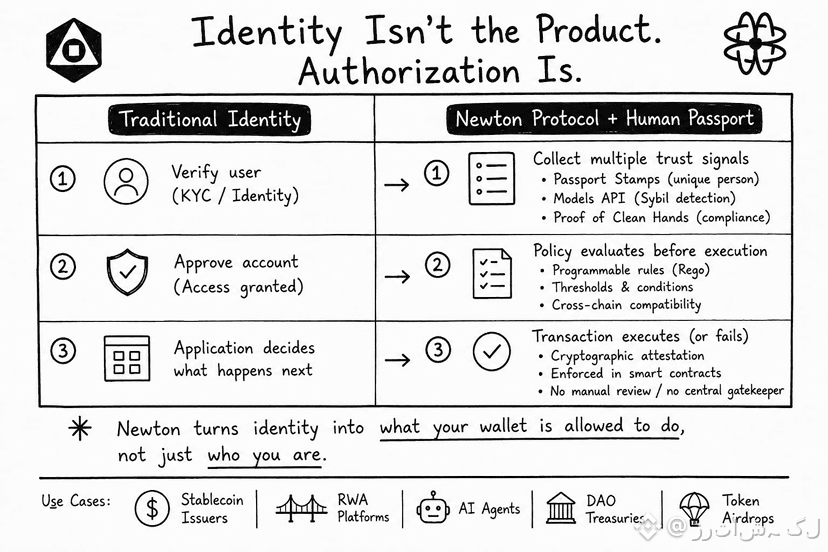
$NEWT has been fairly quiet on price lately, but one update made me rethink what Newton Protocol is actually building. It wasn't the Human Passport integration itself. It was where the verification happens.
Most identity solutions ask:
"Who is this user?"
@NewtonProtocol asks something slightly different.
"Should this transaction be allowed to happen?"
That distinction felt more important than I expected.
Instead of embedding identity checks inside every dApp, Newton moves the decision into its policy layer before a transaction executes.
With the new Human Passport Data Oracle, developers can combine multiple verification signals instead of relying on just one.
• Passport Stamps proving unique personhood
• ML-based Models API detecting Sybil-like wallet behavior
• Proof of Clean Hands for zero-knowledge compliance attestations
What's interesting isn't that these signals exist.
It's that they become programmable transaction rules.
Imagine a DAO treasury.
Instead of manually reviewing every payment, a policy could require:
✓ Passport Score ≥20
✓ Models Score ≥50
✓ Clean Hands attestation
before funds ever leave the treasury.
The same logic could protect stablecoin issuers, AI agents, RWA platforms and token airdrops without rewriting application contracts every time requirements change.
That's where I think this integration becomes more than another identity partnership.
Identity normally answers who you are.
Newton turns identity into what your wallet is allowed to do.
That feels like a shift from verification to programmable authorization.
If more protocols begin treating reputation, compliance and behavioral signals as reusable policy inputs rather than isolated KYC checks, on-chain security could become much more modular than today's application-by-application approach.
Curious whether this policy-first model becomes the standard for AI agents and institutional DeFi or whether most protocols will continue building verification directly into their own applications.
#kyc #AI #Newt #AIAgents
$NEWT has been fairly quiet on price lately, but one update made me rethink what Newton Protocol is actually building. It wasn't the Human Passport integration itself. It was where the verification happens.
Most identity solutions ask:
"Who is this user?"
@NewtonProtocol asks something slightly different.
"Should this transaction be allowed to happen?"
That distinction felt more important than I expected.
Instead of embedding identity checks inside every dApp, Newton moves the decision into its policy layer before a transaction executes.
With the new Human Passport Data Oracle, developers can combine multiple verification signals instead of relying on just one.
• Passport Stamps proving unique personhood
• ML-based Models API detecting Sybil-like wallet behavior
• Proof of Clean Hands for zero-knowledge compliance attestations
What's interesting isn't that these signals exist.
It's that they become programmable transaction rules.
Imagine a DAO treasury.
Instead of manually reviewing every payment, a policy could require:
✓ Passport Score ≥20
✓ Models Score ≥50
✓ Clean Hands attestation
before funds ever leave the treasury.
The same logic could protect stablecoin issuers, AI agents, RWA platforms and token airdrops without rewriting application contracts every time requirements change.
That's where I think this integration becomes more than another identity partnership.
Identity normally answers who you are.
Newton turns identity into what your wallet is allowed to do.
That feels like a shift from verification to programmable authorization.
If more protocols begin treating reputation, compliance and behavioral signals as reusable policy inputs rather than isolated KYC checks, on-chain security could become much more modular than today's application-by-application approach.
Curious whether this policy-first model becomes the standard for AI agents and institutional DeFi or whether most protocols will continue building verification directly into their own applications.
#kyc #AI #Newt #AIAgents
Most identity solutions ask:
"Who is this user?"
@NewtonProtocol asks something slightly different.
"Should this transaction be allowed to happen?"
That distinction felt more important than I expected.
Instead of embedding identity checks inside every dApp, Newton moves the decision into its policy layer before a transaction executes.
With the new Human Passport Data Oracle, developers can combine multiple verification signals instead of relying on just one.
• Passport Stamps proving unique personhood
• ML-based Models API detecting Sybil-like wallet behavior
• Proof of Clean Hands for zero-knowledge compliance attestations
What's interesting isn't that these signals exist.
It's that they become programmable transaction rules.
Imagine a DAO treasury.
Instead of manually reviewing every payment, a policy could require:
✓ Passport Score ≥20
✓ Models Score ≥50
✓ Clean Hands attestation
before funds ever leave the treasury.
The same logic could protect stablecoin issuers, AI agents, RWA platforms and token airdrops without rewriting application contracts every time requirements change.
That's where I think this integration becomes more than another identity partnership.
Identity normally answers who you are.
Newton turns identity into what your wallet is allowed to do.
That feels like a shift from verification to programmable authorization.
If more protocols begin treating reputation, compliance and behavioral signals as reusable policy inputs rather than isolated KYC checks, on-chain security could become much more modular than today's application-by-application approach.
Curious whether this policy-first model becomes the standard for AI agents and institutional DeFi or whether most protocols will continue building verification directly into their own applications.
#kyc #AI #Newt #AIAgents
93
47
460
Connectez-vous pour découvrir plus de contenu
Rejoignez la communauté mondiale des adeptes de cryptomonnaies sur Binance Square
⚡️ Suviez les dernières informations importantes sur les cryptomonnaies.
💬 Jugé digne de confiance par la plus grande plateforme d’échange de cryptomonnaies au monde.
👍 Découvrez les connaissances que partagent les créateurs vérifiés.
Adresse e-mail/Nº de téléphone
Sujets d’actualité
1
#GoldFallsTo$4144
1,621 vues
55 mentions
2
#QNTFallsOver40%FromMorningHigh
12,729 vues
421 mentions
3
#KospiFalls2.7%SamsungSKHynixDropOver5%
1,812 vues
154 mentions
4
#BitgetCEOConfirms$388MStolenInHack
799 vues
24 mentions
5
#BTCFallsBelow$83000
12,084 vues
107 mentions
6
#BitgetDetailsSecurityIncidentTimeline
10,278 vues
312 mentions
7
#BitcoinSpotETFs$2.39BWeeklyNetInflow
4,621 vues
25 mentions
8
#FedProposesPaymentStablecoinRules
37,758 vues
681 mentions
9
#ChinaMayLetAlibabaByteDanceBuyNvidiaChips
39,810 vues
710 mentions
10
#USChinaRelease$30BTariffCutProductLists
3,599 vues
53 mentions