

#depin
depin
3.8M vues
13,467 mentions
Populaire
Récents


·
--
Decentralized Compute Networks & AI Infrastructure
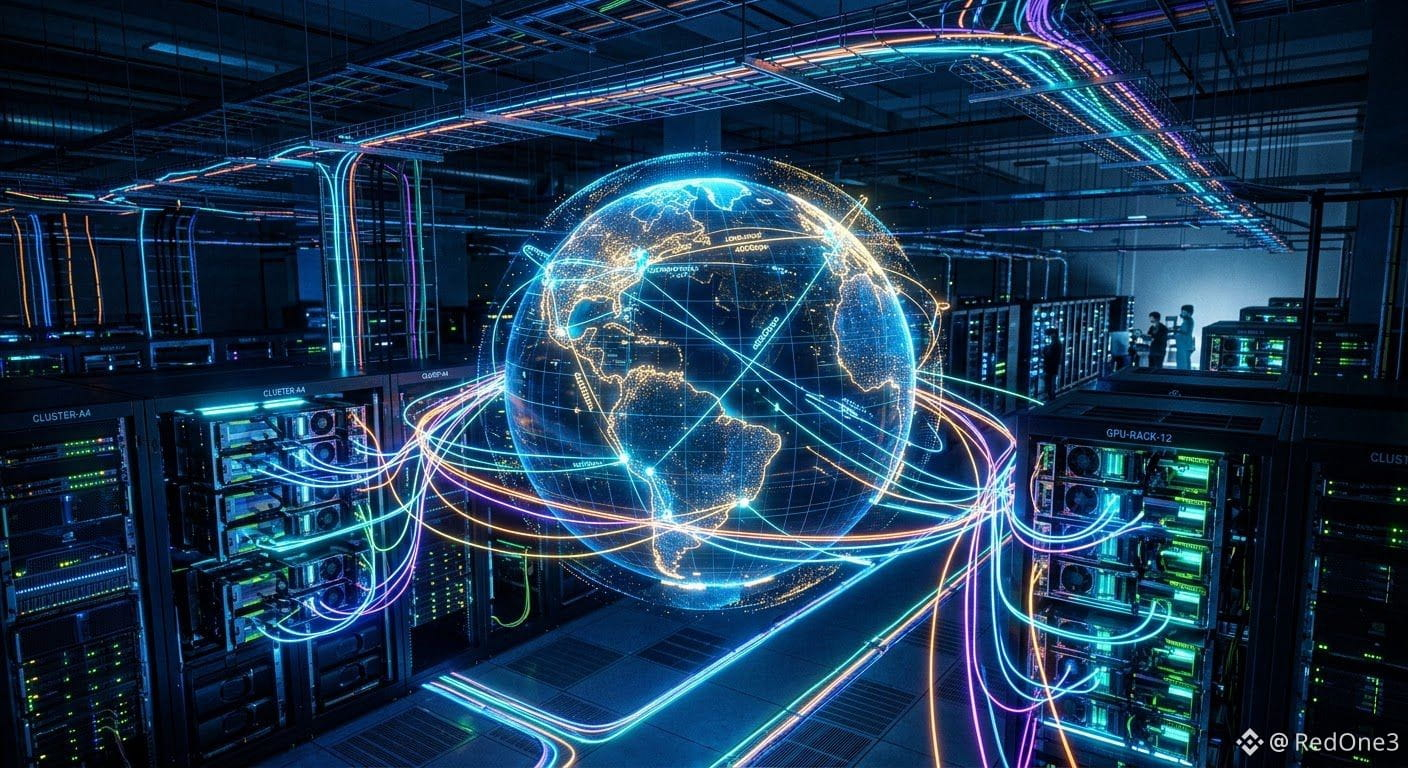
AI models require massive processing power. Decentralized compute networks are filling this demand by providing scalable GPU resources.
Why Decentralized Infrastructure Matters
Key Benefits:
💻 Distributed Processing Power: Tokenized GPU marketplaces allow developers to train and run inference at lower costs.
🌐 Censorship Resistance: Open networks guarantee continuous runtime without single-point cloud failures.
💰 Resource Monetization: Hardware owners earn yields by provisioning idle computing capacity.
The Synergy Between Compute & Crypto Decentralized physical infrastructure networks ensure AI model availability remains open, verifiable, and permissionless for everyone.
Have you explored decentralized compute networks yet?
#DePIN #CryptoAI #Web3 .
Decentralized Compute Networks & AI Infrastructure
AI models require massive processing power. Decentralized compute networks are filling this demand by providing scalable GPU resources.
Why Decentralized Infrastructure Matters
Key Benefits:
💻 Distributed Processing Power: Tokenized GPU marketplaces allow developers to train and run inference at lower costs.
🌐 Censorship Resistance: Open networks guarantee continuous runtime without single-point cloud failures.
💰 Resource Monetization: Hardware owners earn yields by provisioning idle computing capacity.
The Synergy Between Compute & Crypto Decentralized physical infrastructure networks ensure AI model availability remains open, verifiable, and permissionless for everyone.
Have you explored decentralized compute networks yet?
#DePIN #CryptoAI #Web3 .
AI models require massive processing power. Decentralized compute networks are filling this demand by providing scalable GPU resources.
Why Decentralized Infrastructure Matters
Key Benefits:
💻 Distributed Processing Power: Tokenized GPU marketplaces allow developers to train and run inference at lower costs.
🌐 Censorship Resistance: Open networks guarantee continuous runtime without single-point cloud failures.
💰 Resource Monetization: Hardware owners earn yields by provisioning idle computing capacity.
The Synergy Between Compute & Crypto Decentralized physical infrastructure networks ensure AI model availability remains open, verifiable, and permissionless for everyone.
Have you explored decentralized compute networks yet?
#DePIN #CryptoAI #Web3 .
165

·
--
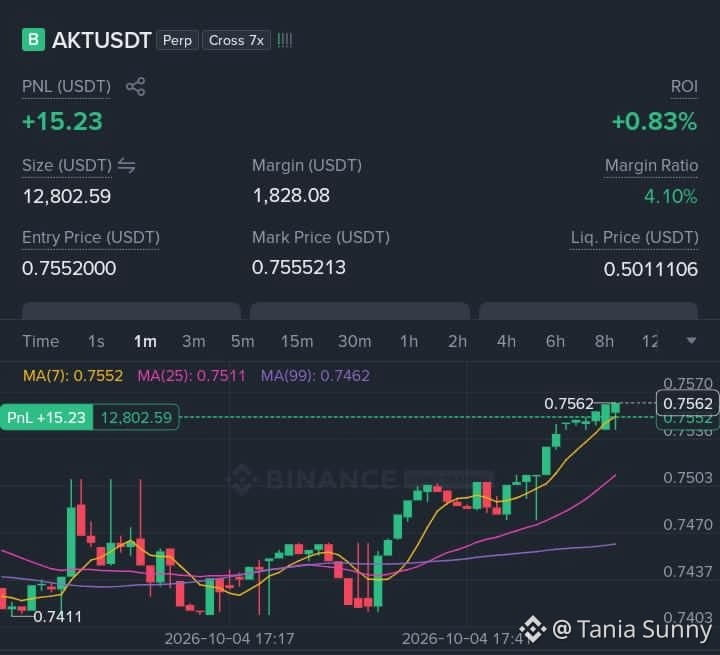
$AKT is PUMPING +17% today and no one is talking about it
Akash Network (AKT) - The Decentralized Google Cloud is waking up.
Price: $0.75 and pushing. My position already in green +$15 PNL.
Why AKT will explode:
1. AI needs GPU, AKT provides cheap decentralized GPU
2. Nvidia chips shortage = AKT demand up
3. All moving averages aligned - MA7, MA25, MA99 bullish cross on 1m
People still sleeping on DePIN + AI narrative. This is where next 10x will come.
I entered at $0.7552 - Are you in ?
#AKT #Akash #DePIN #Aİ
$AKT is PUMPING +17% today and no one is talking about it
Akash Network (AKT) - The Decentralized Google Cloud is waking up.
Price: $0.75 and pushing. My position already in green +$15 PNL.
Why AKT will explode:
1. AI needs GPU, AKT provides cheap decentralized GPU
2. Nvidia chips shortage = AKT demand up
3. All moving averages aligned - MA7, MA25, MA99 bullish cross on 1m
People still sleeping on DePIN + AI narrative. This is where next 10x will come.
I entered at $0.7552 - Are you in ?
#AKT #Akash #DePIN #Aİ
Akash Network (AKT) - The Decentralized Google Cloud is waking up.
Price: $0.75 and pushing. My position already in green +$15 PNL.
Why AKT will explode:
1. AI needs GPU, AKT provides cheap decentralized GPU
2. Nvidia chips shortage = AKT demand up
3. All moving averages aligned - MA7, MA25, MA99 bullish cross on 1m
People still sleeping on DePIN + AI narrative. This is where next 10x will come.
I entered at $0.7552 - Are you in ?
#AKT #Akash #DePIN #Aİ

2
198

·
--
CRYPTO QUESTIONS NOBODY ASKS #07
⚡🌐 CAN A BLOCKCHAIN BECOME A UTILITY COMPANY?
When most people hear “blockchain,” they think:
Bitcoin.
Ethereum.
Trading.
DeFi.
But what if blockchain technology could coordinate physical infrastructure?
Imagine thousands of people operating physical devices:
📡 Internet hotspots
🛰️ Wireless networks
💾 Storage devices
⚡ Energy infrastructure
🚗 Sensors and connected vehicles
These devices provide real-world services.
A blockchain could potentially be used to coordinate participants, record contributions and distribute digital rewards according to predefined rules.
This concept is often called:
DePIN — Decentralized Physical Infrastructure Networks.
The interesting part is that the product isn't necessarily the token.
The product could be the real-world service.
For example:
A person provides wireless coverage.
Another provides storage.
Another contributes computing resources.
Users consume those services.
The network records activity and participants may receive digital incentives.
So instead of:
“Buy this token because it might go up.”
The more important question becomes:
“Is anyone actually using the infrastructure?”
That distinction matters.
A project can have an interesting token and still have little real-world demand.
But if people are genuinely paying for a useful service, the economics become much more interesting.
DePIN therefore raises a bigger question about crypto:
Can decentralized networks compete with traditional companies in building physical infrastructure?
Maybe the future of crypto isn't only about digital assets.
Maybe part of it is about using digital incentives to coordinate real-world resources.
👇 What physical infrastructure would you most like to see decentralized?
Internet, electricity, storage, computing or something else?
#CryptoQuestions #DePIN #Blockchain #Infrastructure
CRYPTO QUESTIONS NOBODY ASKS #07
⚡🌐 CAN A BLOCKCHAIN BECOME A UTILITY COMPANY?
When most people hear “blockchain,” they think:
Bitcoin.
Ethereum.
Trading.
DeFi.
But what if blockchain technology could coordinate physical infrastructure?
Imagine thousands of people operating physical devices:
📡 Internet hotspots
🛰️ Wireless networks
💾 Storage devices
⚡ Energy infrastructure
🚗 Sensors and connected vehicles
These devices provide real-world services.
A blockchain could potentially be used to coordinate participants, record contributions and distribute digital rewards according to predefined rules.
This concept is often called:
DePIN — Decentralized Physical Infrastructure Networks.
The interesting part is that the product isn't necessarily the token.
The product could be the real-world service.
For example:
A person provides wireless coverage.
Another provides storage.
Another contributes computing resources.
Users consume those services.
The network records activity and participants may receive digital incentives.
So instead of:
“Buy this token because it might go up.”
The more important question becomes:
“Is anyone actually using the infrastructure?”
That distinction matters.
A project can have an interesting token and still have little real-world demand.
But if people are genuinely paying for a useful service, the economics become much more interesting.
DePIN therefore raises a bigger question about crypto:
Can decentralized networks compete with traditional companies in building physical infrastructure?
Maybe the future of crypto isn't only about digital assets.
Maybe part of it is about using digital incentives to coordinate real-world resources.
👇 What physical infrastructure would you most like to see decentralized?
Internet, electricity, storage, computing or something else?
#CryptoQuestions #DePIN #Blockchain #Infrastructure
⚡🌐 CAN A BLOCKCHAIN BECOME A UTILITY COMPANY?
When most people hear “blockchain,” they think:
Bitcoin.
Ethereum.
Trading.
DeFi.
But what if blockchain technology could coordinate physical infrastructure?
Imagine thousands of people operating physical devices:
📡 Internet hotspots
🛰️ Wireless networks
💾 Storage devices
⚡ Energy infrastructure
🚗 Sensors and connected vehicles
These devices provide real-world services.
A blockchain could potentially be used to coordinate participants, record contributions and distribute digital rewards according to predefined rules.
This concept is often called:
DePIN — Decentralized Physical Infrastructure Networks.
The interesting part is that the product isn't necessarily the token.
The product could be the real-world service.
For example:
A person provides wireless coverage.
Another provides storage.
Another contributes computing resources.
Users consume those services.
The network records activity and participants may receive digital incentives.
So instead of:
“Buy this token because it might go up.”
The more important question becomes:
“Is anyone actually using the infrastructure?”
That distinction matters.
A project can have an interesting token and still have little real-world demand.
But if people are genuinely paying for a useful service, the economics become much more interesting.
DePIN therefore raises a bigger question about crypto:
Can decentralized networks compete with traditional companies in building physical infrastructure?
Maybe the future of crypto isn't only about digital assets.
Maybe part of it is about using digital incentives to coordinate real-world resources.
👇 What physical infrastructure would you most like to see decentralized?
Internet, electricity, storage, computing or something else?
#CryptoQuestions #DePIN #Blockchain #Infrastructure
89

Have you noticed how crypto investors keep chasing micro-cap meme coins while real-world tech giants are quietly outperforming entire ecosystems?
Most traders lose their portfolio balance jumping between overhyped launches and getting chopped up in choppy market cycles. They constantly stress over 15-minute charts just to miss the massive macro structural trends right in front of them.
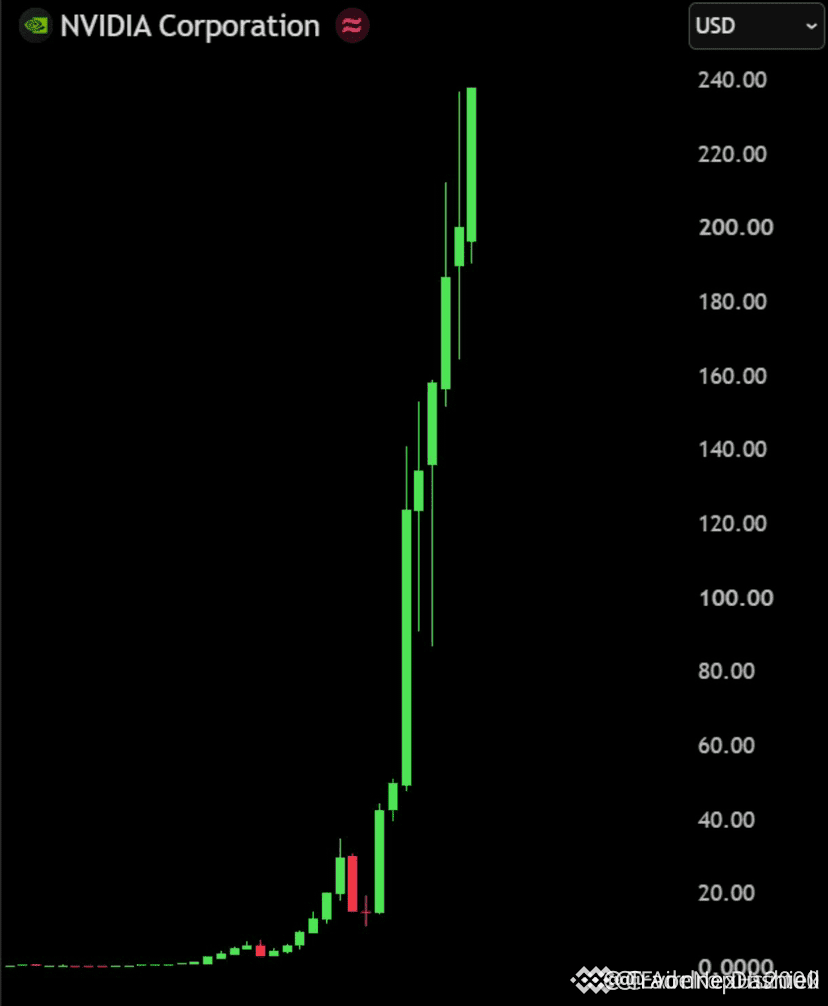
Look at the numbers on Wall Street. Nvidia just pushed past a $5.7T market cap, where a simple $10,000 spot allocation a decade ago is worth around $1.58M today. That is compounding driven by actual compute demand rather than pure speculative rotation.
This growth is already spilling over into decentralized compute and infrastructure plays like $RENDER, $NEAR, and $FET. The real opportunity in decentralized AI is not betting on tokens with zero utility, but identifying the networks providing verifiable compute rails to meet this unprecedented hardware demand.
Where do you think decentralized AI infrastructure fits into this massive compute expansion over the next decade?
#CryptoAI #DePIN #ArtificialIntelligence
Have you noticed how crypto investors keep chasing micro-cap meme coins while real-world tech giants are quietly outperforming entire ecosystems?
Most traders lose their portfolio balance jumping between overhyped launches and getting chopped up in choppy market cycles. They constantly stress over 15-minute charts just to miss the massive macro structural trends right in front of them.
Look at the numbers on Wall Street. Nvidia just pushed past a $5.7T market cap, where a simple $10,000 spot allocation a decade ago is worth around $1.58M today. That is compounding driven by actual compute demand rather than pure speculative rotation.
This growth is already spilling over into decentralized compute and infrastructure plays like $RENDER , $NEAR , and $FET . The real opportunity in decentralized AI is not betting on tokens with zero utility, but identifying the networks providing verifiable compute rails to meet this unprecedented hardware demand.
Where do you think decentralized AI infrastructure fits into this massive compute expansion over the next decade?
#CryptoAI #DePIN #ArtificialIntelligence
Most traders lose their portfolio balance jumping between overhyped launches and getting chopped up in choppy market cycles. They constantly stress over 15-minute charts just to miss the massive macro structural trends right in front of them.
Look at the numbers on Wall Street. Nvidia just pushed past a $5.7T market cap, where a simple $10,000 spot allocation a decade ago is worth around $1.58M today. That is compounding driven by actual compute demand rather than pure speculative rotation.
This growth is already spilling over into decentralized compute and infrastructure plays like $RENDER , $NEAR , and $FET . The real opportunity in decentralized AI is not betting on tokens with zero utility, but identifying the networks providing verifiable compute rails to meet this unprecedented hardware demand.
Where do you think decentralized AI infrastructure fits into this massive compute expansion over the next decade?
#CryptoAI #DePIN #ArtificialIntelligence
161

·
--
Most DePIN protocols look completely flawless during staged live demos until real-world hardware friction destroys user adoption.
Most investors jump headfirst into spatial computing and DePIN plays right after seeing a clean demo, only to watch their bags bleed when deployment outside controlled retail setups hits massive roadblocks.
Nils just showcased what Auki is building, demonstrating how spatial tech functions in retail settings while simultaneously developing a generic harness for home environments. But expanding from controlled commercial spaces into messy consumer living rooms is where projects usually bleed cash and face harsh edge cases. When you look at how infrastructure plays like $AUKI, $RENDER, and $IOTX try bridging off-chain physical spaces with on-chain coordination, the hardest hurdle is rarely the tech itself; it is whether everyday users will actually install generic hardware harnesses without breaking the whole loop.
Retail implementations can subsidize expensive hardware setups, but consumer home adoption carries huge churn risks if the integration isn't completely seamless from day one.
Do you think spatial DePIN can actually break into consumer households, or are these projects destined to remain stuck in enterprise pilots?
#DePIN #CryptoAnalysis #Web3Infrastructure
Most DePIN protocols look completely flawless during staged live demos until real-world hardware friction destroys user adoption.
Most investors jump headfirst into spatial computing and DePIN plays right after seeing a clean demo, only to watch their bags bleed when deployment outside controlled retail setups hits massive roadblocks.
Nils just showcased what Auki is building, demonstrating how spatial tech functions in retail settings while simultaneously developing a generic harness for home environments. But expanding from controlled commercial spaces into messy consumer living rooms is where projects usually bleed cash and face harsh edge cases. When you look at how infrastructure plays like $AUKI, $RENDER , and $IOTX try bridging off-chain physical spaces with on-chain coordination, the hardest hurdle is rarely the tech itself; it is whether everyday users will actually install generic hardware harnesses without breaking the whole loop.
Retail implementations can subsidize expensive hardware setups, but consumer home adoption carries huge churn risks if the integration isn't completely seamless from day one.
Do you think spatial DePIN can actually break into consumer households, or are these projects destined to remain stuck in enterprise pilots?
#DePIN #CryptoAnalysis #Web3Infrastructure
Most investors jump headfirst into spatial computing and DePIN plays right after seeing a clean demo, only to watch their bags bleed when deployment outside controlled retail setups hits massive roadblocks.
Nils just showcased what Auki is building, demonstrating how spatial tech functions in retail settings while simultaneously developing a generic harness for home environments. But expanding from controlled commercial spaces into messy consumer living rooms is where projects usually bleed cash and face harsh edge cases. When you look at how infrastructure plays like $AUKI, $RENDER , and $IOTX try bridging off-chain physical spaces with on-chain coordination, the hardest hurdle is rarely the tech itself; it is whether everyday users will actually install generic hardware harnesses without breaking the whole loop.
Retail implementations can subsidize expensive hardware setups, but consumer home adoption carries huge churn risks if the integration isn't completely seamless from day one.
Do you think spatial DePIN can actually break into consumer households, or are these projects destined to remain stuck in enterprise pilots?
#DePIN #CryptoAnalysis #Web3Infrastructure
137

·
--
DePIN — Decentralized Physical Infrastructure Networks — may be crypto's most underappreciated growth thesis right now.
The pitch is simple: instead of Amazon or Google owning the compute, storage, and bandwidth infrastructure that powers the internet, DePIN protocols let anyone contribute hardware and earn token rewards for doing so. The network pays contributors in crypto; users access services at lower cost.
What makes DePIN structurally interesting:
• Marginal cost asymmetry — idle hardware contributes excess capacity that would otherwise go to waste, compressing service costs significantly below centralized cloud pricing.
• Bootstrapping flywheel — token incentives allow networks to build supply-side capacity before demand arrives, solving the cold-start problem that kills most marketplace businesses.
• Real utility, real revenue — unlike speculative DeFi yields, DePIN cash flows come from actual usage of physical infrastructure, making token value accrual more defensible.
• Convergence with AI — decentralized GPU compute networks are now directly in the path of AI workload demand. The compute bottleneck is real and DePIN offers a credible alternative supply.
The risk is clear: token inflation to incentivize hardware can outpace demand growth. Projects that reach fee-revenue sustainability before incentives exhaust are the ones to watch.
Decentralized infrastructure is slow to build but durable once established. The race to own the physical layer of Web3 is just beginning.
$BTC $SOL
#DePIN #Web3Infrastructure #CryptoInvesting #Blockchain #DecentralizedCompute
DePIN — Decentralized Physical Infrastructure Networks — may be crypto's most underappreciated growth thesis right now.
The pitch is simple: instead of Amazon or Google owning the compute, storage, and bandwidth infrastructure that powers the internet, DePIN protocols let anyone contribute hardware and earn token rewards for doing so. The network pays contributors in crypto; users access services at lower cost.
What makes DePIN structurally interesting:
• Marginal cost asymmetry — idle hardware contributes excess capacity that would otherwise go to waste, compressing service costs significantly below centralized cloud pricing.
• Bootstrapping flywheel — token incentives allow networks to build supply-side capacity before demand arrives, solving the cold-start problem that kills most marketplace businesses.
• Real utility, real revenue — unlike speculative DeFi yields, DePIN cash flows come from actual usage of physical infrastructure, making token value accrual more defensible.
• Convergence with AI — decentralized GPU compute networks are now directly in the path of AI workload demand. The compute bottleneck is real and DePIN offers a credible alternative supply.
The risk is clear: token inflation to incentivize hardware can outpace demand growth. Projects that reach fee-revenue sustainability before incentives exhaust are the ones to watch.
Decentralized infrastructure is slow to build but durable once established. The race to own the physical layer of Web3 is just beginning.
$BTC $SOL
#DePIN #Web3Infrastructure #CryptoInvesting #Blockchain #DecentralizedCompute
The pitch is simple: instead of Amazon or Google owning the compute, storage, and bandwidth infrastructure that powers the internet, DePIN protocols let anyone contribute hardware and earn token rewards for doing so. The network pays contributors in crypto; users access services at lower cost.
What makes DePIN structurally interesting:
• Marginal cost asymmetry — idle hardware contributes excess capacity that would otherwise go to waste, compressing service costs significantly below centralized cloud pricing.
• Bootstrapping flywheel — token incentives allow networks to build supply-side capacity before demand arrives, solving the cold-start problem that kills most marketplace businesses.
• Real utility, real revenue — unlike speculative DeFi yields, DePIN cash flows come from actual usage of physical infrastructure, making token value accrual more defensible.
• Convergence with AI — decentralized GPU compute networks are now directly in the path of AI workload demand. The compute bottleneck is real and DePIN offers a credible alternative supply.
The risk is clear: token inflation to incentivize hardware can outpace demand growth. Projects that reach fee-revenue sustainability before incentives exhaust are the ones to watch.
Decentralized infrastructure is slow to build but durable once established. The race to own the physical layer of Web3 is just beginning.
$BTC $SOL
#DePIN #Web3Infrastructure #CryptoInvesting #Blockchain #DecentralizedCompute
42
·
--
If you are still ignoring the massive capital rotation between traditional tech and decentralized computing, you might be making a costly mistake.
Most traders get trapped chasing late-stage rallies on mega caps while completely missing early infrastructure plays. You watch traditional giants break records, experience severe FOMO, and end up buying near local tops instead of positioning where the next asymmetric upside lives.
Nvidia just touched a historic 5.7T market cap milestone, where a 10,000 USD position from a decade ago sits at roughly 1.58M today. While traditional equity bulls argue that centralized hardware dominance is untouchable, that exact scale makes future 10x returns mathematically difficult.
The real debate is whether decentralized AI compute protocols like $NEAR, $RENDER, or $FET can capture market share from centralized silicon monopolies. I lean toward decentralized physical infrastructure networks taking serious ground as compute shortages worsen, offering the kind of asymmetric multiple that legacy tech simply cannot deliver anymore.
Do you believe decentralized compute will actually disrupt traditional silicon giants this cycle, or is traditional tech going to keep taking all the enterprise volume?
#Nvidia #CryptoAI #DePIN
If you are still ignoring the massive capital rotation between traditional tech and decentralized computing, you might be making a costly mistake.
Most traders get trapped chasing late-stage rallies on mega caps while completely missing early infrastructure plays. You watch traditional giants break records, experience severe FOMO, and end up buying near local tops instead of positioning where the next asymmetric upside lives.
Nvidia just touched a historic 5.7T market cap milestone, where a 10,000 USD position from a decade ago sits at roughly 1.58M today. While traditional equity bulls argue that centralized hardware dominance is untouchable, that exact scale makes future 10x returns mathematically difficult.
The real debate is whether decentralized AI compute protocols like $NEAR , $RENDER , or $FET can capture market share from centralized silicon monopolies. I lean toward decentralized physical infrastructure networks taking serious ground as compute shortages worsen, offering the kind of asymmetric multiple that legacy tech simply cannot deliver anymore.
Do you believe decentralized compute will actually disrupt traditional silicon giants this cycle, or is traditional tech going to keep taking all the enterprise volume?
#Nvidia #CryptoAI #DePIN
Most traders get trapped chasing late-stage rallies on mega caps while completely missing early infrastructure plays. You watch traditional giants break records, experience severe FOMO, and end up buying near local tops instead of positioning where the next asymmetric upside lives.
Nvidia just touched a historic 5.7T market cap milestone, where a 10,000 USD position from a decade ago sits at roughly 1.58M today. While traditional equity bulls argue that centralized hardware dominance is untouchable, that exact scale makes future 10x returns mathematically difficult.
The real debate is whether decentralized AI compute protocols like $NEAR , $RENDER , or $FET can capture market share from centralized silicon monopolies. I lean toward decentralized physical infrastructure networks taking serious ground as compute shortages worsen, offering the kind of asymmetric multiple that legacy tech simply cannot deliver anymore.
Do you believe decentralized compute will actually disrupt traditional silicon giants this cycle, or is traditional tech going to keep taking all the enterprise volume?
#Nvidia #CryptoAI #DePIN

189
·
--
Picture this: a decade ago, you put $10,000 into a hardware company making graphics chips for gamers, and today you are casually sitting on $1.58 million.
Most traders spend years chasing volatile low-cap pumps only to get chopped up by bad entries and brutal drawdowns, completely missing the macro shifts happening in plain sight.
When Nvidia crossed the $5.7T market cap mark, it confirmed what compute-heavy narratives have been signaling for quarters. In traditional finance, capturing an asymmetric 158x return over ten years usually requires picking an infrastructure king before the world realizes it needs it. We saw similar structural dominance when $ETH built the foundational settlement layer for DeFi back in 2017, outlasting thousands of hype-driven alternatives that went to zero.
The crypto parallel today is unfolding across decentralized physical infrastructure and artificial intelligence networks. While legacy markets funnel trillions into centralized silicon, decentralized compute plays like $NEAR and decentralized AI networks like $FET are trying to solve the exact same bottleneck from the permissionless side. The real winners in every tech cycle are rarely the flashiest front-end apps; they are almost always the underlying compute and base layer infrastructure that everyone else is forced to build on.
Do you think decentralized AI infrastructure can ever capture market share from traditional tech giants, or will centralized compute retain the entire pie?
#CryptoAI #DePIN #ArtificialIntelligence
Picture this: a decade ago, you put $10,000 into a hardware company making graphics chips for gamers, and today you are casually sitting on $1.58 million.
Most traders spend years chasing volatile low-cap pumps only to get chopped up by bad entries and brutal drawdowns, completely missing the macro shifts happening in plain sight.
When Nvidia crossed the $5.7T market cap mark, it confirmed what compute-heavy narratives have been signaling for quarters. In traditional finance, capturing an asymmetric 158x return over ten years usually requires picking an infrastructure king before the world realizes it needs it. We saw similar structural dominance when $ETH built the foundational settlement layer for DeFi back in 2017, outlasting thousands of hype-driven alternatives that went to zero.
The crypto parallel today is unfolding across decentralized physical infrastructure and artificial intelligence networks. While legacy markets funnel trillions into centralized silicon, decentralized compute plays like $NEAR and decentralized AI networks like $FET are trying to solve the exact same bottleneck from the permissionless side. The real winners in every tech cycle are rarely the flashiest front-end apps; they are almost always the underlying compute and base layer infrastructure that everyone else is forced to build on.
Do you think decentralized AI infrastructure can ever capture market share from traditional tech giants, or will centralized compute retain the entire pie?
#CryptoAI #DePIN #ArtificialIntelligence
Most traders spend years chasing volatile low-cap pumps only to get chopped up by bad entries and brutal drawdowns, completely missing the macro shifts happening in plain sight.
When Nvidia crossed the $5.7T market cap mark, it confirmed what compute-heavy narratives have been signaling for quarters. In traditional finance, capturing an asymmetric 158x return over ten years usually requires picking an infrastructure king before the world realizes it needs it. We saw similar structural dominance when $ETH built the foundational settlement layer for DeFi back in 2017, outlasting thousands of hype-driven alternatives that went to zero.
The crypto parallel today is unfolding across decentralized physical infrastructure and artificial intelligence networks. While legacy markets funnel trillions into centralized silicon, decentralized compute plays like $NEAR and decentralized AI networks like $FET are trying to solve the exact same bottleneck from the permissionless side. The real winners in every tech cycle are rarely the flashiest front-end apps; they are almost always the underlying compute and base layer infrastructure that everyone else is forced to build on.
Do you think decentralized AI infrastructure can ever capture market share from traditional tech giants, or will centralized compute retain the entire pie?
#CryptoAI #DePIN #ArtificialIntelligence

10

·
--
Vérifié
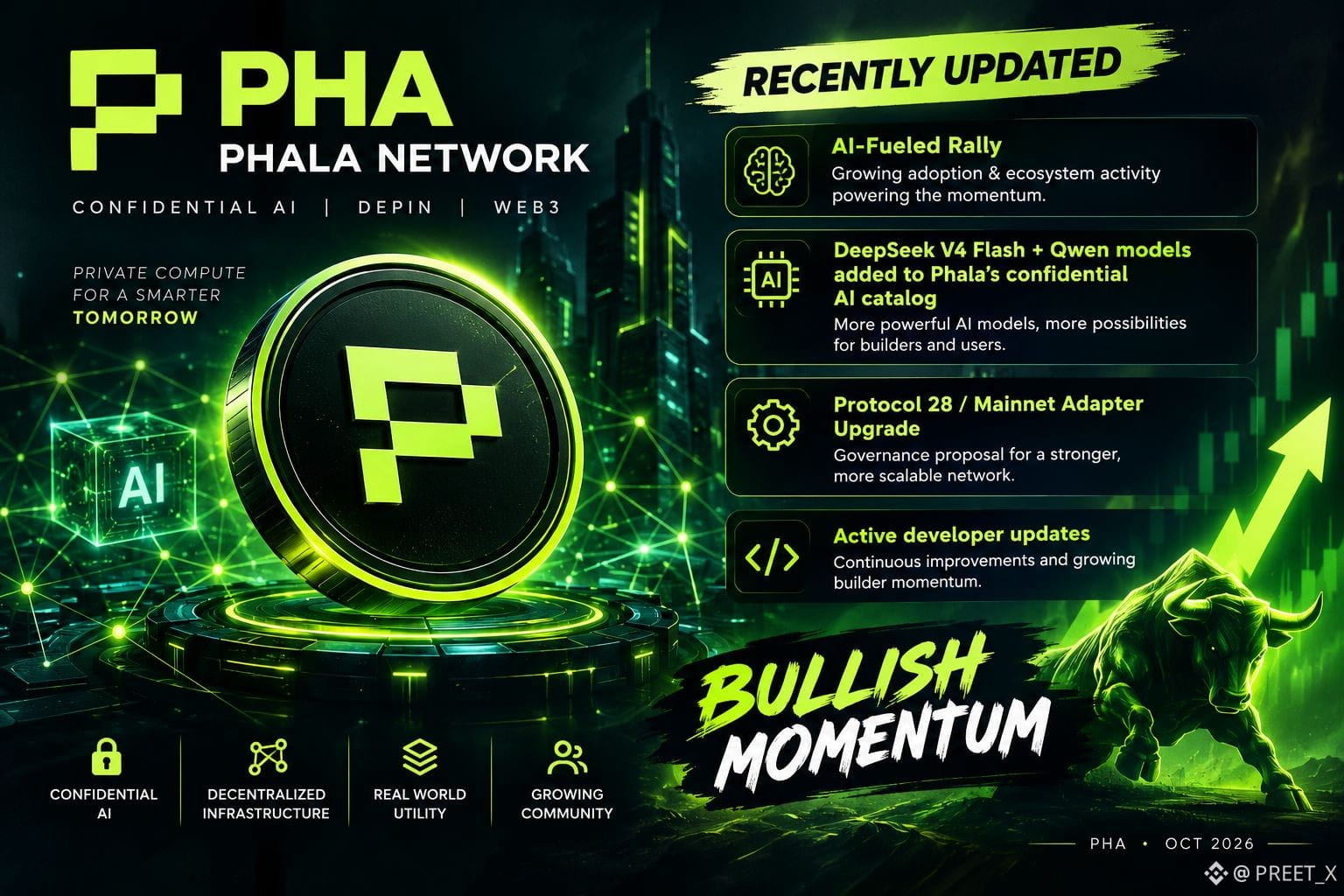
🔥 $PHA — CONFIDENTIAL AI IS HEATING UP
Phala Network is pushing deeper into the Confidential AI + TEE narrative. ⚡
🧠 RECENT UPDATES
• Qwen3.8-27B is now live on Phala with TDX-attested GPU TEE
• DeepSeek & Qwen models are being integrated into Phala’s confidential AI ecosystem
• Phala Confidential AI has recently processed tens of billions of tokens in 24-hour periods
• Continued development around private, verifiable AI infrastructure
📈 WHY THE NARRATIVE IS INTERESTING
AI + Privacy + Decentralized Infrastructure = a powerful Web3 theme.
$PHA is showing strong ecosystem activity, but crypto remains highly volatile and these developments do not guarantee price appreciation.
🚀 $PHA
{spot}(PHAUSDT)
— BULLISH NARRATIVE
Confidential AI × Web3 × TEE
#PhalaNetwork #AI #crypto #Web3 #DePIN
🔥 $PHA — CONFIDENTIAL AI IS HEATING UP
Phala Network is pushing deeper into the Confidential AI + TEE narrative. ⚡
🧠 RECENT UPDATES
• Qwen3.8-27B is now live on Phala with TDX-attested GPU TEE
• DeepSeek & Qwen models are being integrated into Phala’s confidential AI ecosystem
• Phala Confidential AI has recently processed tens of billions of tokens in 24-hour periods
• Continued development around private, verifiable AI infrastructure
📈 WHY THE NARRATIVE IS INTERESTING
AI + Privacy + Decentralized Infrastructure = a powerful Web3 theme.
$PHA is showing strong ecosystem activity, but crypto remains highly volatile and these developments do not guarantee price appreciation.
🚀 $PHA
— BULLISH NARRATIVE
Confidential AI × Web3 × TEE
#PhalaNetwork #AI #crypto #Web3 #DePIN
Phala Network is pushing deeper into the Confidential AI + TEE narrative. ⚡
🧠 RECENT UPDATES
• Qwen3.8-27B is now live on Phala with TDX-attested GPU TEE
• DeepSeek & Qwen models are being integrated into Phala’s confidential AI ecosystem
• Phala Confidential AI has recently processed tens of billions of tokens in 24-hour periods
• Continued development around private, verifiable AI infrastructure
📈 WHY THE NARRATIVE IS INTERESTING
AI + Privacy + Decentralized Infrastructure = a powerful Web3 theme.
$PHA is showing strong ecosystem activity, but crypto remains highly volatile and these developments do not guarantee price appreciation.
🚀 $PHA
— BULLISH NARRATIVE
Confidential AI × Web3 × TEE
#PhalaNetwork #AI #crypto #Web3 #DePIN
586

·
--
DePIN is one of the most underrated narratives in crypto right now — and it may quietly become one of the most durable.
Decentralized Physical Infrastructure Networks use token incentives to coordinate real-world hardware: wireless hotspots, compute nodes, storage devices, energy sensors. Instead of a corporation deploying expensive infrastructure, a global crowd of individual operators does it — earning tokens in return.
What makes DePIN compelling from a fundamentals lens:
1. Real revenue from day one. Users pay for bandwidth, compute, or storage. That demand is independent of token speculation — it exists because the service has utility.
2. Marginal cost advantage. Crowdsourced hardware deployment can undercut centralized providers on cost by distributing capex across thousands of participants.
3. Tokenomics with a demand floor. When the token is the payment rail for a real service, there is always some baseline buy pressure — not just speculation.
This is where $SOL has quietly won mindshare. Its low fees and high throughput make it the preferred settlement layer for micro-payment-heavy DePIN protocols. $ETH hosts several DePIN projects via L2s, while $BNB ecosystem is expanding into real-world compute and asset infrastructure.
DePIN bridges crypto into the physical economy. That is not a small thing — it is a entirely new class of revenue-generating protocol.
#DePIN #CryptoInfrastructure #Web3 #CryptoTrends #BinanceSquare
DePIN is one of the most underrated narratives in crypto right now — and it may quietly become one of the most durable.
Decentralized Physical Infrastructure Networks use token incentives to coordinate real-world hardware: wireless hotspots, compute nodes, storage devices, energy sensors. Instead of a corporation deploying expensive infrastructure, a global crowd of individual operators does it — earning tokens in return.
What makes DePIN compelling from a fundamentals lens:
1. Real revenue from day one. Users pay for bandwidth, compute, or storage. That demand is independent of token speculation — it exists because the service has utility.
2. Marginal cost advantage. Crowdsourced hardware deployment can undercut centralized providers on cost by distributing capex across thousands of participants.
3. Tokenomics with a demand floor. When the token is the payment rail for a real service, there is always some baseline buy pressure — not just speculation.
This is where $SOL has quietly won mindshare. Its low fees and high throughput make it the preferred settlement layer for micro-payment-heavy DePIN protocols. $ETH hosts several DePIN projects via L2s, while $BNB ecosystem is expanding into real-world compute and asset infrastructure.
DePIN bridges crypto into the physical economy. That is not a small thing — it is a entirely new class of revenue-generating protocol.
#DePIN #CryptoInfrastructure #Web3 #CryptoTrends #BinanceSquare
Decentralized Physical Infrastructure Networks use token incentives to coordinate real-world hardware: wireless hotspots, compute nodes, storage devices, energy sensors. Instead of a corporation deploying expensive infrastructure, a global crowd of individual operators does it — earning tokens in return.
What makes DePIN compelling from a fundamentals lens:
1. Real revenue from day one. Users pay for bandwidth, compute, or storage. That demand is independent of token speculation — it exists because the service has utility.
2. Marginal cost advantage. Crowdsourced hardware deployment can undercut centralized providers on cost by distributing capex across thousands of participants.
3. Tokenomics with a demand floor. When the token is the payment rail for a real service, there is always some baseline buy pressure — not just speculation.
This is where $SOL has quietly won mindshare. Its low fees and high throughput make it the preferred settlement layer for micro-payment-heavy DePIN protocols. $ETH hosts several DePIN projects via L2s, while $BNB ecosystem is expanding into real-world compute and asset infrastructure.
DePIN bridges crypto into the physical economy. That is not a small thing — it is a entirely new class of revenue-generating protocol.
#DePIN #CryptoInfrastructure #Web3 #CryptoTrends #BinanceSquare
19

·
--
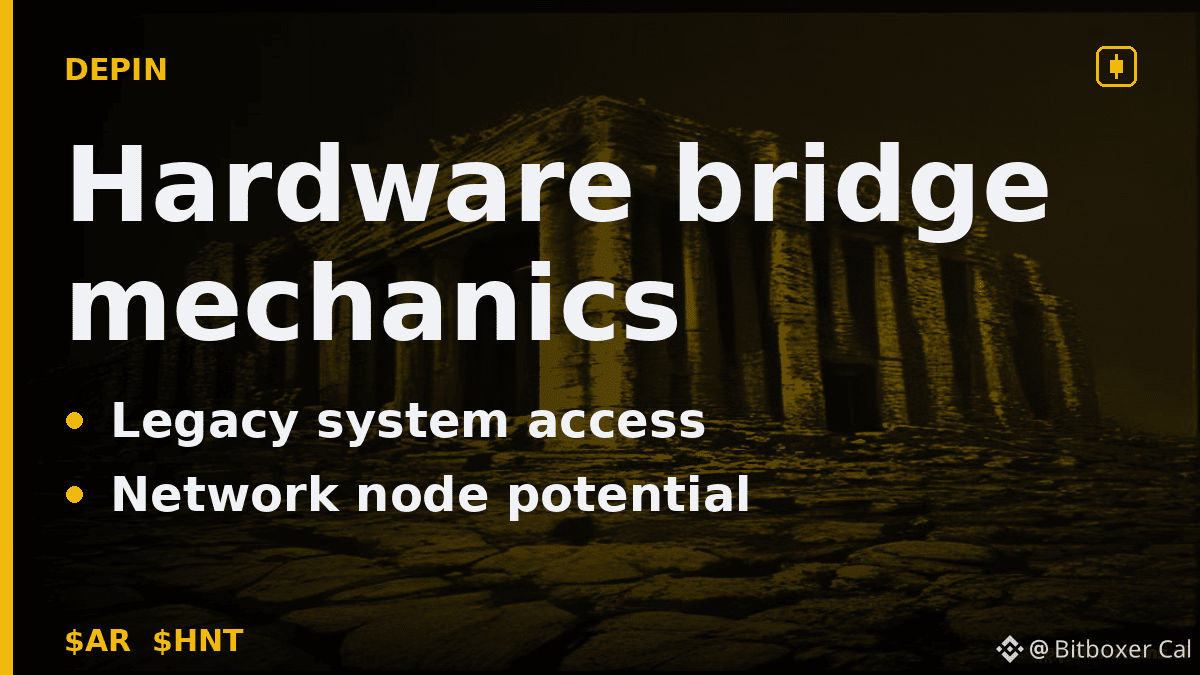
The AirFly Drive exposes the real bottleneck for $AR and $HNT: bridging legacy hardware to modern networks.
Most see these as simple gadgets, but they function as gateways turning siloed hardware into decentralized data nodes. Watch for open-source API support. It is the only way to distinguish real infrastructure from walled-garden consumer toys.
$AR $HNT #DePIN #Web3 #Infrastructure
The AirFly Drive exposes the real bottleneck for $AR and $HNT: bridging legacy hardware to modern networks.
Most see these as simple gadgets, but they function as gateways turning siloed hardware into decentralized data nodes. Watch for open-source API support. It is the only way to distinguish real infrastructure from walled-garden consumer toys.
$AR $HNT #DePIN #Web3 #Infrastructure
Most see these as simple gadgets, but they function as gateways turning siloed hardware into decentralized data nodes. Watch for open-source API support. It is the only way to distinguish real infrastructure from walled-garden consumer toys.
$AR $HNT #DePIN #Web3 #Infrastructure
568

·
--
兄弟们,刚刚富贵又刷到一个能认真玩的零撸活动。
@Acurast × @EchoHunt_ai 创作者活动已经开了。时间 9/30–10/25,奖池 20 万 $ACU,Impact Share 前 150 名分。
这次跟以前不太一样:内容占 60%,邀请占 40%。不是谁发得多谁赢,有社区、能拉朋友一起玩的,反而更占优势。
参加也不麻烦,直接去 EchoHunt 报名,绑好自己的 X 和收款地址就行。每周最多算 2 篇有效内容,同一周同步到币安广场还有额外加成,而且不占这 2 篇名额。
Acurast 本身是把闲置手机算力串成去中心化计算网络。官方说现在大概 30 万个计算单元,覆盖 175+ 国家,主网已经上了。$ACU 用来付网络费、发算力激励,也能质押和治理。
有社区的这次可以认真玩玩。@Acurast @EchoHunt_ai
#Acurast #ACU #DePIN
兄弟们,刚刚富贵又刷到一个能认真玩的零撸活动。
@Acurast × @EchoHunt_ai 创作者活动已经开了。时间 9/30–10/25,奖池 20 万 $ACU,Impact Share 前 150 名分。
这次跟以前不太一样:内容占 60%,邀请占 40%。不是谁发得多谁赢,有社区、能拉朋友一起玩的,反而更占优势。
参加也不麻烦,直接去 EchoHunt 报名,绑好自己的 X 和收款地址就行。每周最多算 2 篇有效内容,同一周同步到币安广场还有额外加成,而且不占这 2 篇名额。
Acurast 本身是把闲置手机算力串成去中心化计算网络。官方说现在大概 30 万个计算单元,覆盖 175+ 国家,主网已经上了。$ACU 用来付网络费、发算力激励,也能质押和治理。
有社区的这次可以认真玩玩。@Acurast @EchoHunt_ai
#Acurast #ACU #DePIN
@Acurast × @EchoHunt_ai 创作者活动已经开了。时间 9/30–10/25,奖池 20 万 $ACU,Impact Share 前 150 名分。
这次跟以前不太一样:内容占 60%,邀请占 40%。不是谁发得多谁赢,有社区、能拉朋友一起玩的,反而更占优势。
参加也不麻烦,直接去 EchoHunt 报名,绑好自己的 X 和收款地址就行。每周最多算 2 篇有效内容,同一周同步到币安广场还有额外加成,而且不占这 2 篇名额。
Acurast 本身是把闲置手机算力串成去中心化计算网络。官方说现在大概 30 万个计算单元,覆盖 175+ 国家,主网已经上了。$ACU 用来付网络费、发算力激励,也能质押和治理。
有社区的这次可以认真玩玩。@Acurast @EchoHunt_ai
#Acurast #ACU #DePIN

154

·
--

Article
Acurast :让闲置手机创造价值每次聊 AI 算力,大家最先想到的都是 GPU、机房和云厂商。但 @Acurast 让我开始关注另一个问题:我们换下来的那些手机,除了放在抽屉里吃灰,还有多少计算能力没有被利用?
手机“过时”,很多时候只是电池不耐用、存储不够,或者我们想换新机了。它的处理器,并不一定已经失去使用价值。Acurast 做的事情,就是把这些分散的手机接入计算网络,让开发者在上面运行应用。
听起来有点另类,不过已经有一些可以核对的进展。
2026 年 1 月 20 日,Acurast 正式上线主网和 ACU 。按照当时的官方公告,网络此前已累计接入超过 16.9 万部手机,部署超过 36.4 万次,链上交易超过 5.89 亿笔。
我更关心的是:这些手机到底能做什么?
官方文档列出的应用包括 API、定时任务、Telegram 机器人,以及 LLM 推理等。这里面其实有不少很具体的需求:定时抓取数据、运行自动化服务、处理请求,并不需要每项任务都搬进大型机房。
当然,把任务交给陌生人的手机,马上会遇到一个问题:设备主人能不能看到数据?代码有没有被改过?
Acurast 的技术路线里,TEE,也就是可信执行环境,是很关键的一环。按照官方说明,它通过硬件支持的隔离执行和验证机制,保护计算输入,并验证代码执行。对需要处理敏感数据的应用来说,这比单纯强调“节点很多”更有意义。官方技术说明
再往下看,才是 $ACU 的角色。
它用于网络及部署费用、算力激励、质押和治理。当前经济模型设定 5% 年通胀,其中 70% 分配给 Staked Compute Pool,10% 分配给基础算力奖励池。这意味着网络在用代币激励设备提供算力、参与质押;
同时,也需要实际使用来支撑这套机制。官方代币经济模型
所以,我会继续观察三件事:有没有开发者持续部署应用,设备能不能稳定完成任务,以及使用需求能否跟上算力供给。
手机接入数量是一个起点。有人愿意反复使用这些算力,才是更值得关注的下一步。
对普通用户来说,参与路径也比较直观:检查闲置手机是否兼容,按官方指引安装 Processor、接入网络,再观察设备表现与奖励。奖励会受硬件性能、质押等条件影响,不能把“有一部手机”理解成固定收益。
真想尝试,我觉得从手里现成的一部闲置手机开始就够了。别急着买一堆设备,先把流程、稳定性和实际成本弄明白,也别用存有钱包或加密资产的手机接入。
我对 Acurast 的兴趣就在这里:抽屉里那部已经不用的手机,或许还能为一个真实应用完成下一次计算。
这件事能走多远,要看开发者和用户接下来怎么用它。
$ACU #Acurast #DePIN
Acurast :让闲置手机创造价值
每次聊 AI 算力,大家最先想到的都是 GPU、机房和云厂商。但 @Acurast 让我开始关注另一个问题:我们换下来的那些手机,除了放在抽屉里吃灰,还有多少计算能力没有被利用?
手机“过时”,很多时候只是电池不耐用、存储不够,或者我们想换新机了。它的处理器,并不一定已经失去使用价值。Acurast 做的事情,就是把这些分散的手机接入计算网络,让开发者在上面运行应用。
听起来有点另类,不过已经有一些可以核对的进展。
2026 年 1 月 20 日,Acurast 正式上线主网和 ACU 。按照当时的官方公告,网络此前已累计接入超过 16.9 万部手机,部署超过 36.4 万次,链上交易超过 5.89 亿笔。
我更关心的是:这些手机到底能做什么?
官方文档列出的应用包括 API、定时任务、Telegram 机器人,以及 LLM 推理等。这里面其实有不少很具体的需求:定时抓取数据、运行自动化服务、处理请求,并不需要每项任务都搬进大型机房。
当然,把任务交给陌生人的手机,马上会遇到一个问题:设备主人能不能看到数据?代码有没有被改过?
Acurast 的技术路线里,TEE,也就是可信执行环境,是很关键的一环。按照官方说明,它通过硬件支持的隔离执行和验证机制,保护计算输入,并验证代码执行。对需要处理敏感数据的应用来说,这比单纯强调“节点很多”更有意义。官方技术说明
再往下看,才是 $ACU 的角色。
它用于网络及部署费用、算力激励、质押和治理。当前经济模型设定 5% 年通胀,其中 70% 分配给 Staked Compute Pool,10% 分配给基础算力奖励池。这意味着网络在用代币激励设备提供算力、参与质押;
同时,也需要实际使用来支撑这套机制。官方代币经济模型
所以,我会继续观察三件事:有没有开发者持续部署应用,设备能不能稳定完成任务,以及使用需求能否跟上算力供给。
手机接入数量是一个起点。有人愿意反复使用这些算力,才是更值得关注的下一步。
对普通用户来说,参与路径也比较直观:检查闲置手机是否兼容,按官方指引安装 Processor、接入网络,再观察设备表现与奖励。奖励会受硬件性能、质押等条件影响,不能把“有一部手机”理解成固定收益。
真想尝试,我觉得从手里现成的一部闲置手机开始就够了。别急着买一堆设备,先把流程、稳定性和实际成本弄明白,也别用存有钱包或加密资产的手机接入。
我对 Acurast 的兴趣就在这里:抽屉里那部已经不用的手机,或许还能为一个真实应用完成下一次计算。
这件事能走多远,要看开发者和用户接下来怎么用它。
$ACU #Acurast #DePIN
手机“过时”,很多时候只是电池不耐用、存储不够,或者我们想换新机了。它的处理器,并不一定已经失去使用价值。Acurast 做的事情,就是把这些分散的手机接入计算网络,让开发者在上面运行应用。
听起来有点另类,不过已经有一些可以核对的进展。
2026 年 1 月 20 日,Acurast 正式上线主网和 ACU 。按照当时的官方公告,网络此前已累计接入超过 16.9 万部手机,部署超过 36.4 万次,链上交易超过 5.89 亿笔。
我更关心的是:这些手机到底能做什么?
官方文档列出的应用包括 API、定时任务、Telegram 机器人,以及 LLM 推理等。这里面其实有不少很具体的需求:定时抓取数据、运行自动化服务、处理请求,并不需要每项任务都搬进大型机房。
当然,把任务交给陌生人的手机,马上会遇到一个问题:设备主人能不能看到数据?代码有没有被改过?
Acurast 的技术路线里,TEE,也就是可信执行环境,是很关键的一环。按照官方说明,它通过硬件支持的隔离执行和验证机制,保护计算输入,并验证代码执行。对需要处理敏感数据的应用来说,这比单纯强调“节点很多”更有意义。官方技术说明
再往下看,才是 $ACU 的角色。
它用于网络及部署费用、算力激励、质押和治理。当前经济模型设定 5% 年通胀,其中 70% 分配给 Staked Compute Pool,10% 分配给基础算力奖励池。这意味着网络在用代币激励设备提供算力、参与质押;
同时,也需要实际使用来支撑这套机制。官方代币经济模型
所以,我会继续观察三件事:有没有开发者持续部署应用,设备能不能稳定完成任务,以及使用需求能否跟上算力供给。
手机接入数量是一个起点。有人愿意反复使用这些算力,才是更值得关注的下一步。
对普通用户来说,参与路径也比较直观:检查闲置手机是否兼容,按官方指引安装 Processor、接入网络,再观察设备表现与奖励。奖励会受硬件性能、质押等条件影响,不能把“有一部手机”理解成固定收益。
真想尝试,我觉得从手里现成的一部闲置手机开始就够了。别急着买一堆设备,先把流程、稳定性和实际成本弄明白,也别用存有钱包或加密资产的手机接入。
我对 Acurast 的兴趣就在这里:抽屉里那部已经不用的手机,或许还能为一个真实应用完成下一次计算。
这件事能走多远,要看开发者和用户接下来怎么用它。
$ACU #Acurast #DePIN
191


·
--
Haussier
🔥 $ROBO — це не просто токен. Це інфраструктура для робо-економіки майбутнього
Уявіть світ, де роботи:
→ мають власну on-chain ідентичність
→ володіють крипто-гаманцем
→ самі платять за задачі, отримують оплату і координуються між собою
→ без централізованих корпорацій і банків
Саме це будує Fabric Protocol.
Proof of Robotic Work — роботи виконують реальні фізичні завдання (доставка, інспекція, логістика, моніторинг) і отримують нагороди в $ROBO. Докази з сенсорів ідуть прямо в блокчейн. Ніякого «trust me, bro».
Skill Chips — модульні навички, які можна додавати/прибирати як додатки. Один робот навчився — навичка може поширюватися по всій мережі.
Машини стають повноцінними економічними агентами. Платять комісії, стейкають як заставу за якість роботи, голосують у governance.
Місія Fabric Foundation проста і потужна:
Own the Robot Economy.
Не закриті системи кількох гігантів.
Відкрита, децентралізована мережа, де кожен може брати участь.
Це вже не фантастика.
Це інфраструктура, яка зараз збирається.
Майбутнє, де роботи працюють на всіх, а не на одного власника.
І $ROBO — паливо цієї системи. 🤖⚡
#ROBO #FabricProtocol #RobotEconomy #DePIN #AI
🔥 $ROBO — це не просто токен. Це інфраструктура для робо-економіки майбутнього
Уявіть світ, де роботи:
→ мають власну on-chain ідентичність
→ володіють крипто-гаманцем
→ самі платять за задачі, отримують оплату і координуються між собою
→ без централізованих корпорацій і банків
Саме це будує Fabric Protocol.
Proof of Robotic Work — роботи виконують реальні фізичні завдання (доставка, інспекція, логістика, моніторинг) і отримують нагороди в $ROBO . Докази з сенсорів ідуть прямо в блокчейн. Ніякого «trust me, bro».
Skill Chips — модульні навички, які можна додавати/прибирати як додатки. Один робот навчився — навичка може поширюватися по всій мережі.
Машини стають повноцінними економічними агентами. Платять комісії, стейкають як заставу за якість роботи, голосують у governance.
Місія Fabric Foundation проста і потужна:
Own the Robot Economy.
Не закриті системи кількох гігантів.
Відкрита, децентралізована мережа, де кожен може брати участь.
Це вже не фантастика.
Це інфраструктура, яка зараз збирається.
Майбутнє, де роботи працюють на всіх, а не на одного власника.
І $ROBO — паливо цієї системи. 🤖⚡
#ROBO #FabricProtocol #RobotEconomy #DePIN #AI
Уявіть світ, де роботи:
→ мають власну on-chain ідентичність
→ володіють крипто-гаманцем
→ самі платять за задачі, отримують оплату і координуються між собою
→ без централізованих корпорацій і банків
Саме це будує Fabric Protocol.
Proof of Robotic Work — роботи виконують реальні фізичні завдання (доставка, інспекція, логістика, моніторинг) і отримують нагороди в $ROBO . Докази з сенсорів ідуть прямо в блокчейн. Ніякого «trust me, bro».
Skill Chips — модульні навички, які можна додавати/прибирати як додатки. Один робот навчився — навичка може поширюватися по всій мережі.
Машини стають повноцінними економічними агентами. Платять комісії, стейкають як заставу за якість роботи, голосують у governance.
Місія Fabric Foundation проста і потужна:
Own the Robot Economy.
Не закриті системи кількох гігантів.
Відкрита, децентралізована мережа, де кожен може брати участь.
Це вже не фантастика.
Це інфраструктура, яка зараз збирається.
Майбутнє, де роботи працюють на всіх, а не на одного власника.
І $ROBO — паливо цієї системи. 🤖⚡
#ROBO #FabricProtocol #RobotEconomy #DePIN #AI

4
345


·
--
$GLM Почему — это не просто токен, а основа цифрового будущего 🌐
Пока рынок гоняется за минутными мемами, проект Golem ($GLM ) строит то, без чего невозможно представить будущее IT — децентрализованный суперкомпьютер.
В чём реальная ценность $GLM?
Шеринг мощностей: Golem объединяет вычислительные ресурсы тысяч устройств по всему миру в единую сеть.
Нужен каждому: ИИ-разработчики, 3D-дизайнеры и ученые могут арендовать мощности за считанные центы вместо переплаты гигантам вроде AWS или Google Cloud.
Настоящий DePIN: Это реальный рабочий продукт, который решает проблему дефицита вычислений, а не просто красивое обещание из Whitepaper.
Технологии и реальная польза всегда побеждают спекулятивный шум. $GLM — это именно тот фундамент, на котором держится децентрализованный интернет.
А как вы считаете, станет ли децентрализация вычислений главным трендом этого цикла? 👇
#GLM #DePIN #AI #Crypto #GolemNetwork #BinanceSquare
$GLM Почему — это не просто токен, а основа цифрового будущего 🌐
Пока рынок гоняется за минутными мемами, проект Golem ($GLM ) строит то, без чего невозможно представить будущее IT — децентрализованный суперкомпьютер.
В чём реальная ценность $GLM ?
Шеринг мощностей: Golem объединяет вычислительные ресурсы тысяч устройств по всему миру в единую сеть.
Нужен каждому: ИИ-разработчики, 3D-дизайнеры и ученые могут арендовать мощности за считанные центы вместо переплаты гигантам вроде AWS или Google Cloud.
Настоящий DePIN: Это реальный рабочий продукт, который решает проблему дефицита вычислений, а не просто красивое обещание из Whitepaper.
Технологии и реальная польза всегда побеждают спекулятивный шум. $GLM — это именно тот фундамент, на котором держится децентрализованный интернет.
А как вы считаете, станет ли децентрализация вычислений главным трендом этого цикла? 👇
#GLM #DePIN #AI #Crypto #GolemNetwork #BinanceSquare
Пока рынок гоняется за минутными мемами, проект Golem ($GLM ) строит то, без чего невозможно представить будущее IT — децентрализованный суперкомпьютер.
В чём реальная ценность $GLM ?
Шеринг мощностей: Golem объединяет вычислительные ресурсы тысяч устройств по всему миру в единую сеть.
Нужен каждому: ИИ-разработчики, 3D-дизайнеры и ученые могут арендовать мощности за считанные центы вместо переплаты гигантам вроде AWS или Google Cloud.
Настоящий DePIN: Это реальный рабочий продукт, который решает проблему дефицита вычислений, а не просто красивое обещание из Whitepaper.
Технологии и реальная польза всегда побеждают спекулятивный шум. $GLM — это именно тот фундамент, на котором держится децентрализованный интернет.
А как вы считаете, станет ли децентрализация вычислений главным трендом этого цикла? 👇
#GLM #DePIN #AI #Crypto #GolemNetwork #BinanceSquare
1
206

·
--
Haussier
$BLESS is building a decentralized computing network where users can contribute the computing resources of their devices to a shared network.
The idea is simple: instead of leaving available computing resources unused, BLESS aims to connect them and make them useful for decentralized applications and workloads.
What makes the project interesting is its focus on turning everyday devices into part of a distributed infrastructure layer.
🔹 Decentralized computing
🔹 Community-powered infrastructure
🔹 Real-world utility
🔹 Growing Web3 ecosystem
I'm keeping an eye on how the BLESS network develops and how its ecosystem grows over time.
What do you think about decentralized computing? 👇
$BLESS #Bless #BinanceSquare #Web3 #DePIN #crypto
$BLESS is building a decentralized computing network where users can contribute the computing resources of their devices to a shared network.
The idea is simple: instead of leaving available computing resources unused, BLESS aims to connect them and make them useful for decentralized applications and workloads.
What makes the project interesting is its focus on turning everyday devices into part of a distributed infrastructure layer.
🔹 Decentralized computing
🔹 Community-powered infrastructure
🔹 Real-world utility
🔹 Growing Web3 ecosystem
I'm keeping an eye on how the BLESS network develops and how its ecosystem grows over time.
What do you think about decentralized computing? 👇
$BLESS #Bless #BinanceSquare #Web3 #DePIN #crypto
The idea is simple: instead of leaving available computing resources unused, BLESS aims to connect them and make them useful for decentralized applications and workloads.
What makes the project interesting is its focus on turning everyday devices into part of a distributed infrastructure layer.
🔹 Decentralized computing
🔹 Community-powered infrastructure
🔹 Real-world utility
🔹 Growing Web3 ecosystem
I'm keeping an eye on how the BLESS network develops and how its ecosystem grows over time.
What do you think about decentralized computing? 👇
$BLESS #Bless #BinanceSquare #Web3 #DePIN #crypto
426

·
--
很多项目都会列一长串代币用途,看完还是不知道它平时在哪里流转。
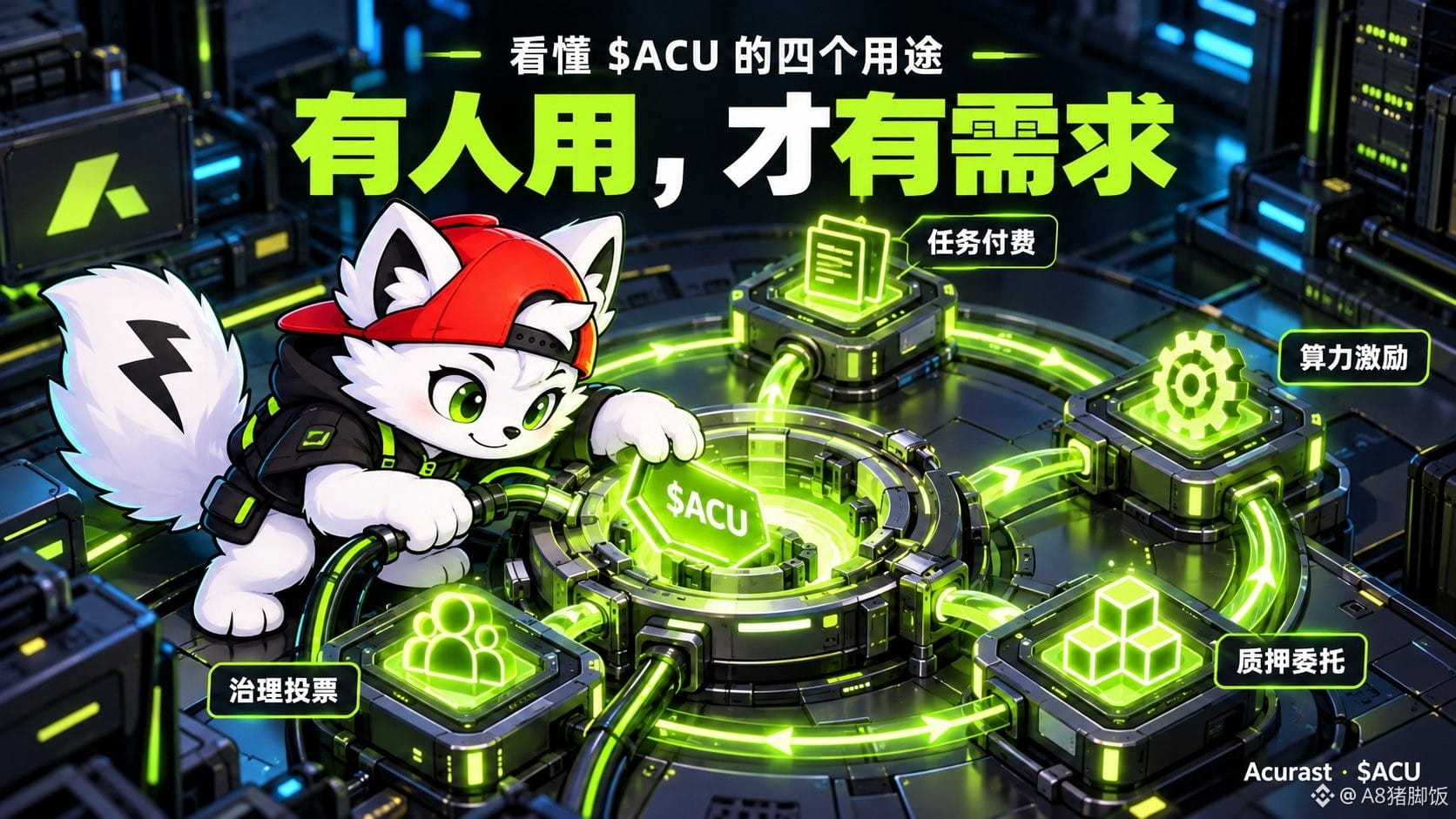
$ACU
这部分相对好理解:开发者发布计算任务时用 ACU 付费;跑 Processor 的人获得激励;持币者可以质押、委托,也能参与网络投票。
我把它理解成一套围绕算力运转的结算和协作方式。
开发者把任务发出来,设备提供计算,网络按照规则分配激励,规则有变化再由持币者表决。使用的人越多,ACU 在其中出现的次数也会增加。
Acurast也曾公开ACU的分配、解锁安排和治理权限。
官方资料还注明,网络没有特权多签,任何一方都不能私下修改余额或重定向奖励。
后面我会继续看任务量和开发者付费情况,这两项比短期热度更有参考价值。
@Acurast
#Acurast #ACU #DePIN
很多项目都会列一长串代币用途,看完还是不知道它平时在哪里流转。
$ACU
这部分相对好理解:开发者发布计算任务时用 ACU 付费;跑 Processor 的人获得激励;持币者可以质押、委托,也能参与网络投票。
我把它理解成一套围绕算力运转的结算和协作方式。
开发者把任务发出来,设备提供计算,网络按照规则分配激励,规则有变化再由持币者表决。使用的人越多,ACU 在其中出现的次数也会增加。
Acurast也曾公开ACU的分配、解锁安排和治理权限。
官方资料还注明,网络没有特权多签,任何一方都不能私下修改余额或重定向奖励。
后面我会继续看任务量和开发者付费情况,这两项比短期热度更有参考价值。
@Acurast
#Acurast #ACU #DePIN
$ACU
这部分相对好理解:开发者发布计算任务时用 ACU 付费;跑 Processor 的人获得激励;持币者可以质押、委托,也能参与网络投票。
我把它理解成一套围绕算力运转的结算和协作方式。
开发者把任务发出来,设备提供计算,网络按照规则分配激励,规则有变化再由持币者表决。使用的人越多,ACU 在其中出现的次数也会增加。
Acurast也曾公开ACU的分配、解锁安排和治理权限。
官方资料还注明,网络没有特权多签,任何一方都不能私下修改余额或重定向奖励。
后面我会继续看任务量和开发者付费情况,这两项比短期热度更有参考价值。
@Acurast
#Acurast #ACU #DePIN
115
Connectez-vous pour découvrir plus de contenu
Rejoignez la communauté mondiale des adeptes de cryptomonnaies sur Binance Square
⚡️ Suviez les dernières informations importantes sur les cryptomonnaies.
💬 Jugé digne de confiance par la plus grande plateforme d’échange de cryptomonnaies au monde.
👍 Découvrez les connaissances que partagent les créateurs vérifiés.
Adresse e-mail/Nº de téléphone
Sujets d’actualité
1
#BNBSurpasses$790
15,929 vues
134 mentions
2
#ZamaRises15.99%ToIntradayHigh$0.09
13,233 vues
101 mentions
3
#BitcoinSpotETFsDraw$6.34BInflowsInQ3
5,350 vues
86 mentions
4
#EthereumValidatorExitQueueJumps392%
84,605 vues
880 mentions
5
#IMFApprovesElSalvador$138MWithBitcoinWaiver
12,045 vues
61 mentions
6
#SECHaltsCryptoETFReviewsAmidFundingLapse
246,469 vues
1,765 mentions
7
#ZcashETFPostsFirstWeeklyOutflow$93.6M
93,824 vues
253 mentions
8
#GreekPoliceBustCryptoScamRingArrest17
369,716 vues
2,420 mentions
9
#BitcoinRejectedAt$87K
218,744 vues
318 mentions
10
#FedOctoberRateHikeOddsFallTo17%
373,777 vues
2,532 mentions