
Burt Hacke li8I
4 Publicaciones

Burt Hacke li8I
Denunciar
Bloquear usuario
0 Siguiendo
1 Seguidores
0 Me gusta
Publicaciones
Artículo
Ver traducción
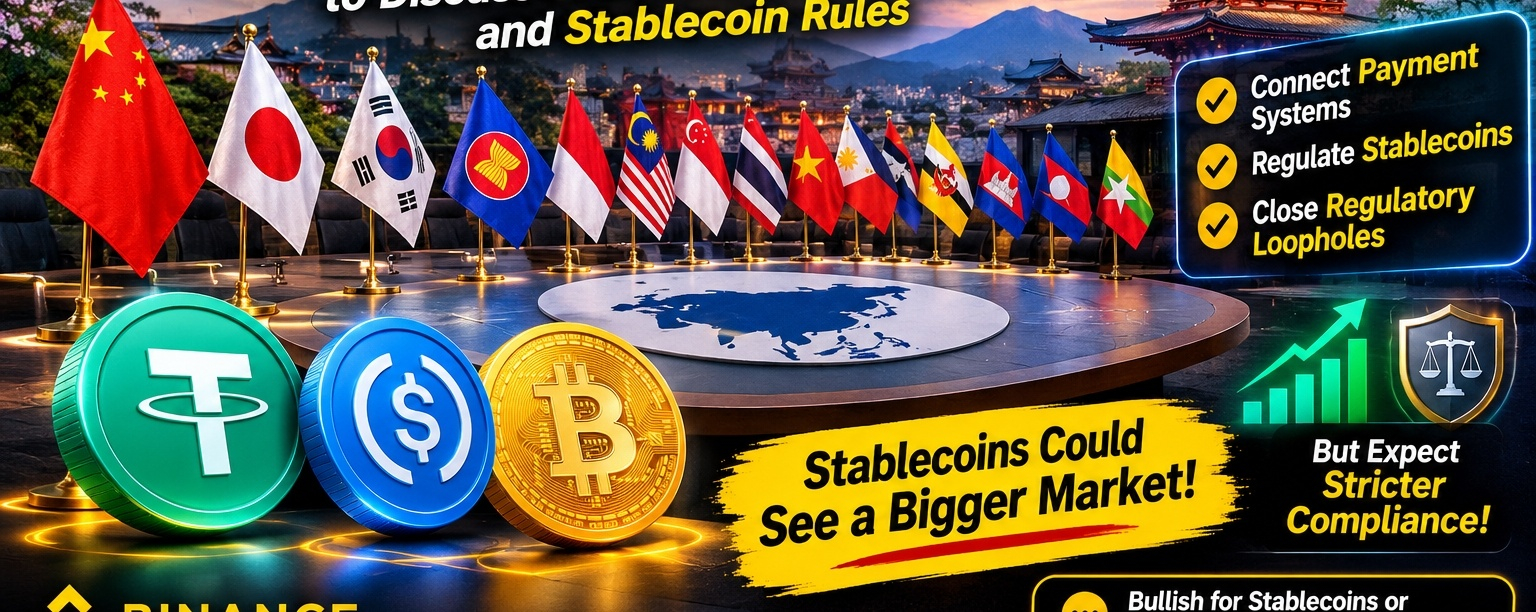
🌏 Asia Could Be Moving Toward a More Connected Crypto Regulatory Framework!A major discussion involving China, Japan, South Korea, and ASEAN nations is drawing attention to the future of digital finance in Asia.
Reports suggest that regional discussions in Kyoto focused on cross-border digital payments and better coordination around digital asset regulations.
The goal? Explore ways to make international payment systems more compatible, while addressing regulatory challenges surrounding stablecoins and cross-border crypto transactions.
Stablecoins like USDT and USDC could be among the biggest beneficiaries if regional payment infrastructure becomes more interconnected. Faster settlements, international transfers, and trade payments may create new opportunities for digital currencies.
But greater cooperation could also mean tighter compliance standards, stronger monitoring, and less room for regulatory loopholes.
Does this mean crypto is being banned? Not at all. Discussions about coordination don't automatically translate into a ban or a unified crypto law. The details will matter as these countries move forward.
Asia's approach to digital assets could become an important development for the global crypto market. 🌐
What’s your take — bullish for stablecoins or a step toward tighter crypto control?
#Crypto #Bitcoin #Ethereum #Stablecoins #USDT #USDC #Binance #CryptoNews #Blockchain #Asia#besttimeofinvestment $BTC $ETH
🌏 Asia Could Be Moving Toward a More Connected Crypto Regulatory Framework!
A major discussion involving China, Japan, South Korea, and ASEAN nations is drawing attention to the future of digital finance in Asia.
Reports suggest that regional discussions in Kyoto focused on cross-border digital payments and better coordination around digital asset regulations.
The goal? Explore ways to make international payment systems more compatible, while addressing regulatory challenges surrounding stablecoins and cross-border crypto transactions.
Stablecoins like USDT and USDC could be among the biggest beneficiaries if regional payment infrastructure becomes more interconnected. Faster settlements, international transfers, and trade payments may create new opportunities for digital currencies.
But greater cooperation could also mean tighter compliance standards, stronger monitoring, and less room for regulatory loopholes.
Does this mean crypto is being banned? Not at all. Discussions about coordination don't automatically translate into a ban or a unified crypto law. The details will matter as these countries move forward.
Asia's approach to digital assets could become an important development for the global crypto market. 🌐
What’s your take — bullish for stablecoins or a step toward tighter crypto control?
#Crypto #Bitcoin #Ethereum #Stablecoins #USDT #USDC #Binance #CryptoNews #Blockchain #Asia#besttimeofinvestment $BTC $ETH
41
Ver traducción
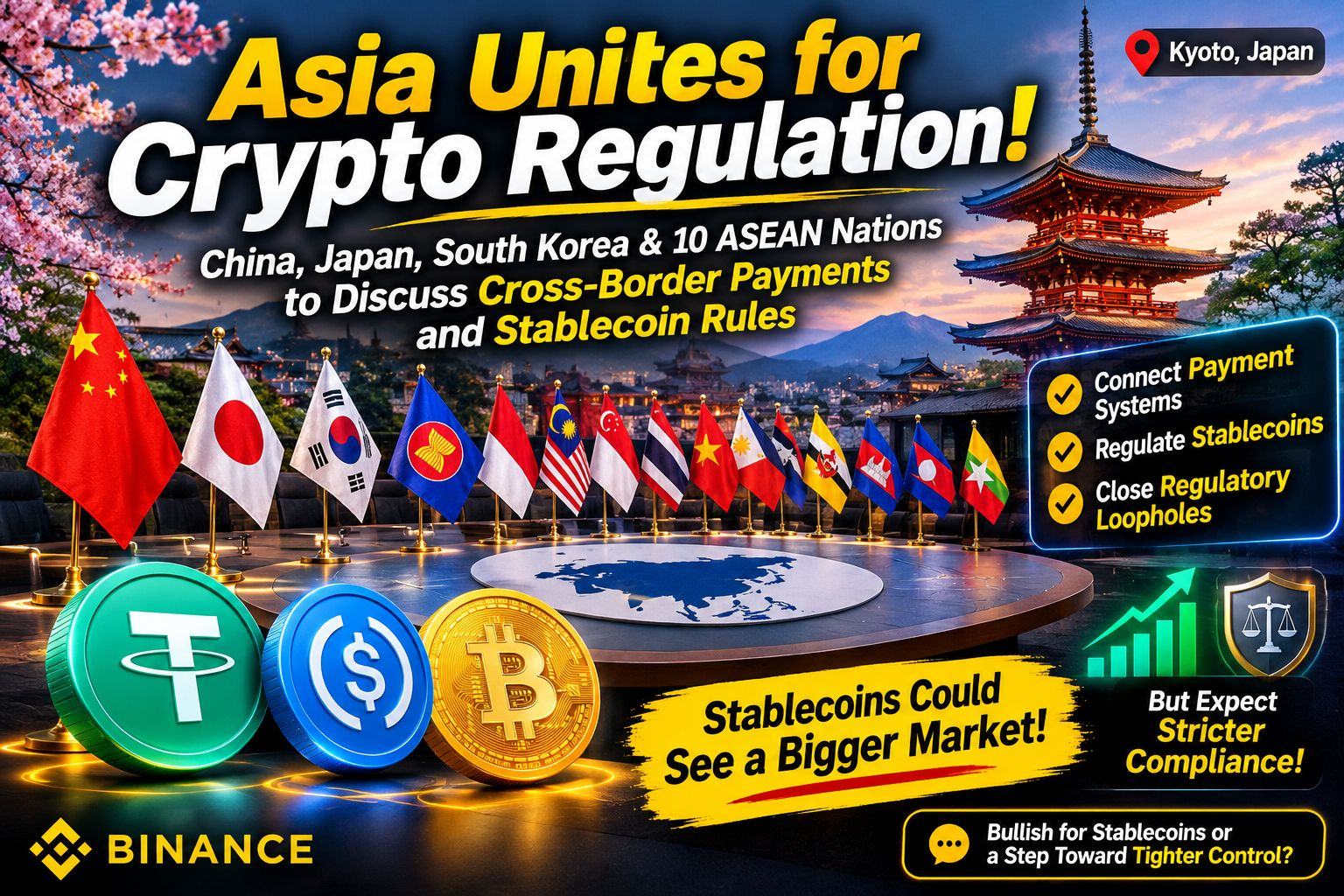
🌏 Asia Could Be Moving Toward a More Connected Crypto Regulatory Framework!
A major discussion involving China, Japan, South Korea, and ASEAN nations is drawing attention to the future of digital finance in Asia.
Reports suggest that regional discussions in Kyoto focused on cross-border digital payments and better coordination around digital asset regulations.
The goal? Explore ways to make international payment systems more compatible, while addressing regulatory challenges surrounding stablecoins and cross-border crypto transactions.
Stablecoins like USDT and USDC could be among the biggest beneficiaries if regional payment infrastructure becomes more interconnected. Faster settlements, international transfers, and trade payments may create new opportunities for digital currencies.
But greater cooperation could also mean tighter compliance standards, stronger monitoring, and less room for regulatory loopholes.
<bold>Does this mean crypto is being banned? Not at all.</bold> Discussions about coordination don't automatically translate into a ban or a unified crypto law. The details will matter as these countries move forward.
Asia's approach to digital assets could become an important development for the global crypto market. 🌐
What’s your take — bullish for stablecoins or a step toward tighter crypto control?
#Crypto #Bitcoin #Ethereum #Stablecoins #USDT #USDC #Binance #CryptoNews #Blockchain #AsianMarketWatch
50
Asia🌏 podría avanzar hacia un marco regulatorio de las criptomonedas más conectado.
Un importante debate en el que participan China, Japón, Corea del Sur y los países de la ASEAN está atrayendo la atención hacia el futuro de las finanzas digitales en Asia.
Según informes, las conversaciones regionales en Kioto se centraron en los pagos digitales transfronterizos y en una mejor coordinación de las regulaciones sobre activos digitales.
¿El objetivo? Explorar formas de hacer más compatibles los sistemas de pago internacionales y, al mismo tiempo, abordar los desafíos regulatorios relacionados con las stablecoins y las transacciones transfronterizas de criptomonedas.
Las stablecoins como USDT y USDC podrían ser de las mayores beneficiadas si la infraestructura de pagos regional se vuelve más interconectada. Las liquidaciones más rápidas, las transferencias internacionales y los pagos comerciales podrían generar nuevas oportunidades para las monedas digitales.
Asia🌏 podría avanzar hacia un marco regulatorio de las criptomonedas más conectado.
Un importante debate en el que participan China, Japón, Corea del Sur y los países de la ASEAN está atrayendo la atención hacia el futuro de las finanzas digitales en Asia.
Según informes, las conversaciones regionales en Kioto se centraron en los pagos digitales transfronterizos y en una mejor coordinación de las regulaciones sobre activos digitales.
¿El objetivo? Explorar formas de hacer más compatibles los sistemas de pago internacionales y, al mismo tiempo, abordar los desafíos regulatorios relacionados con las stablecoins y las transacciones transfronterizas de criptomonedas.
Las stablecoins como USDT y USDC podrían ser de las mayores beneficiadas si la infraestructura de pagos regional se vuelve más interconectada. Las liquidaciones más rápidas, las transferencias internacionales y los pagos comerciales podrían generar nuevas oportunidades para las monedas digitales.
101
·
--
Alcista
Soy nuevo aquí y no sé de trading. Haré lo mejor que pueda. #WhoWillSucceedJensenHuangatNvidia? #WhatWillDriveCryptoandStocks’NextRebound?
Soy nuevo aquí y no sé de trading. Haré lo mejor que pueda. #WhoWillSucceedJensenHuangatNvidia? #WhatWillDriveCryptoandStocks’NextRebound?
267
Inicia sesión para explorar más contenidos
Únete a usuarios de criptomonedas de todo el mundo en Binance Square
⚡️ Obtén la información más reciente y útil sobre criptomonedas.
💬 Confía en el mayor exchange de criptomonedas del mundo.
👍 Descubre opiniones reales de creadores verificados.
Correo electrónico/número de teléfono
Temas en tendencia
EvolveAtBinanceBlockchainWeek
2.3M visualizaciones
19,998 participa(n) en el debate
¡Binance Blockchain Week ya está oficialmente en marcha! 🌍
El 28 y 29 de noviembre, tanto si estás en Bangkok como si te unes desde lejos, sigue las transmisiones en directo y participa en la conversación en Binance Square.
Esto es lo que te espera 👇
📺 Mira el main stage live
Conéctate durante los dos días para escuchar las perspectivas de los ponentes del sector sobre el tema de este año, «Evolucionar». Desde la innovación tecnológica hasta las aplicaciones en el mundo real, descubre qué le depara el futuro al mundo cripto.
⚔️ Sigue dos competiciones de trading
Tanto el Aster Open Qualifier como el Binance Trading Master Tournament se transmitirán en directo. Conéctate para ver a los traders en acción.
🏆 Mira el Blockchain 100 Awards Ceremony
La comunidad seleccionó la lista Blockchain 100. ¡Acompáñanos a celebrar a sus creadores y las ideas que comparten!
💬 Participa en la conversación de la comunidad
Usa #EvolveAtBinanceBlockchainWeek en una publicación con una foto para compartir qué esperas con ilusión, tu opinión sobre el sector o tus momentos favoritos del evento.
¡El event page ya está en directo! Suscríbete a todas las transmisiones en directo con un solo clic para no perderte nada 👏
Binance Blockchain Week
·595 «Me gusta»
·913k visualizaciones
WorldLibertyActsToCutLiquidationRisk
16,263 visualizaciones
191 participa(n) en el debate
LiquidHackerMoves598BTC
14,565 visualizaciones
134 participa(n) en el debate