
schrodinger
138 Publicaciones

schrodinger
Denunciar
Bloquear usuario
Crypto _writer
Abrir operación
Trader de alta frecuencia
5.7 años
117 Siguiendo
63 Seguidores
87 Me gusta
Publicaciones
Cartera
Todo
Cotizaciones
·
--
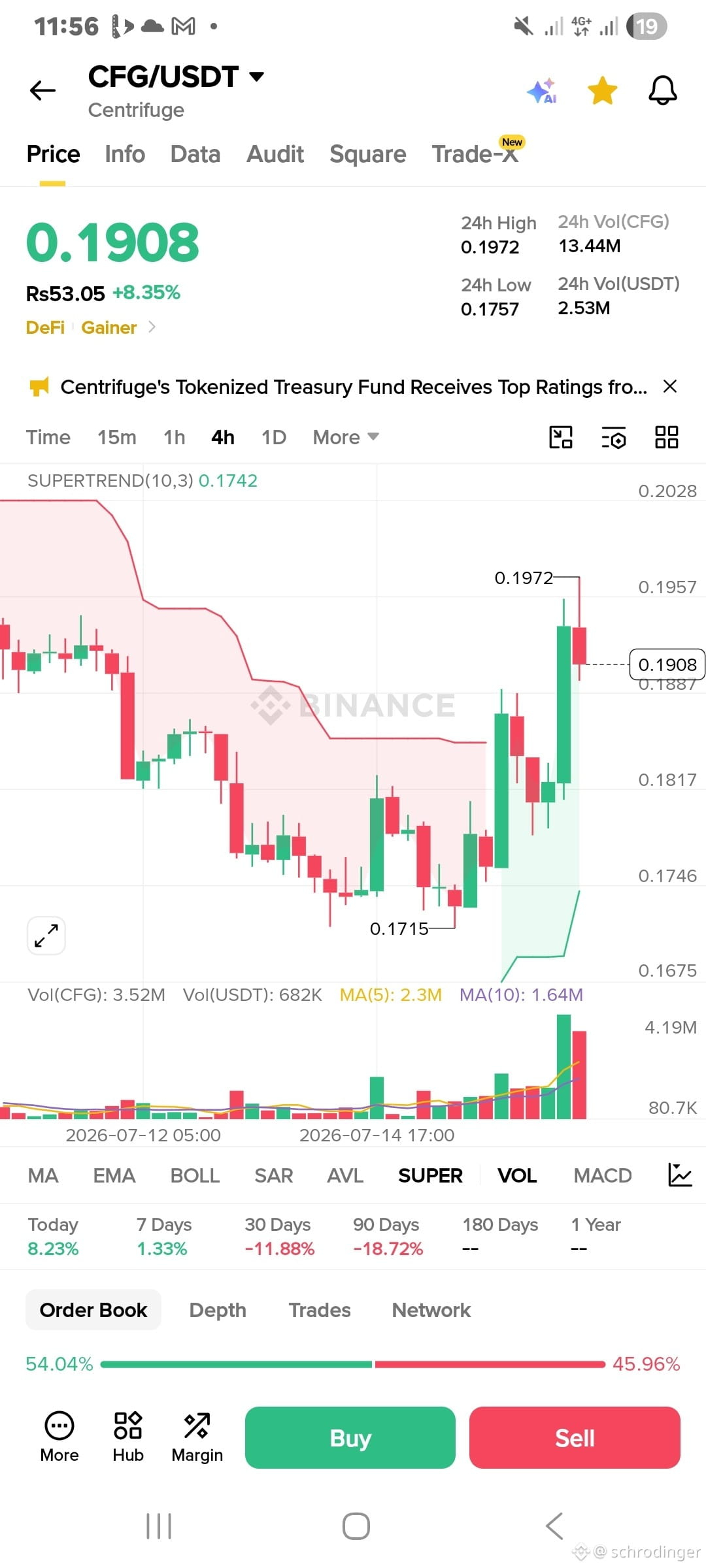
CFG está en un punto de decisión crítico después de una caída masiva desde $0.30.
🔍 Análisis del gráfico: ¿Qué está pasando?
· Tendencia inmediata: Bajista a corto plazo. El precio ($0.1908) está muy por debajo del indicador Supertrend (que actúa como resistencia dinámica), lo que señala que los vendedores siguen teniendo el control.
· Impulso reciente: La moneda cae -11.88% en 30 días y -18.72% en 90 días, confirmando una tendencia bajista a más largo plazo. La caída reciente desde $0.30 coincide con un análisis de estructura bajista de principios de este mes.
🚀 Escenario alcista (La jugada del rebote)
Si los compradores entran con fuerza en este nivel:
· Resistencia inmediata: El primer gran obstáculo es el máximo de 24h en $0.1972. Una ruptura por encima de este nivel con un volumen sólido sería la primera señal de fortaleza.
· Objetivo principal: La línea de Supertrend cerca de $0.2028. Recuperarla cambiaría la tendencia a corto plazo nuevamente a alcista.
· Objetivo en swing: Si el impulso continúa, la zona $0.218 - $0.220 se convierte en la siguiente gran resistencia.
🐻 Escenario bajista (Continuación)
Dado el débil panorama fundamental (fuerte presión vendedora), el camino de menor resistencia sigue siendo hacia abajo:
· Soporte clave: El mínimo de 24h en $0.1757 debe mantenerse. Si se rompe, el suelo podría caer significativamente.
· Próxima gran zona: La última zona importante de demanda antes de una posible recuperación está alrededor de $0.12 - $0.14.
🛡️ Mi plan de trading
1. No persigas: Evita comprar al precio actual ($0.1908) sin confirmación.
2. Entrada de “Espera y observa”: Solo considera una entrada en spot si el precio cierra por encima de $0.1972 (máximo de 24h) en el gráfico de 1 hora o 4 horas. Esto confirma que los compradores están entrando.
3. Para traders agresivos: Si el precio vuelve a probar el soporte de $0.1757 y se mantiene firme sin romperlo, podrías entrar con una posición pequeña allí, con un stop-loss justo por debajo.
4. En caso de ruptura: Si el precio cae por debajo de **$0.1757**, aléjate. Espera a que encuentre un terreno sólido cerca de la zona $0.14 antes de considerar cualquier compra en spot a largo plazo.
#Btc
#CFG_USDT
CFG está en un punto de decisión crítico después de una caída masiva desde $0.30.
🔍 Análisis del gráfico: ¿Qué está pasando?
· Tendencia inmediata: Bajista a corto plazo. El precio ($0.1908) está muy por debajo del indicador Supertrend (que actúa como resistencia dinámica), lo que señala que los vendedores siguen teniendo el control.
· Impulso reciente: La moneda cae -11.88% en 30 días y -18.72% en 90 días, confirmando una tendencia bajista a más largo plazo. La caída reciente desde $0.30 coincide con un análisis de estructura bajista de principios de este mes.
🚀 Escenario alcista (La jugada del rebote)
Si los compradores entran con fuerza en este nivel:
· Resistencia inmediata: El primer gran obstáculo es el máximo de 24h en $0.1972. Una ruptura por encima de este nivel con un volumen sólido sería la primera señal de fortaleza.
· Objetivo principal: La línea de Supertrend cerca de $0.2028. Recuperarla cambiaría la tendencia a corto plazo nuevamente a alcista.
· Objetivo en swing: Si el impulso continúa, la zona $0.218 - $0.220 se convierte en la siguiente gran resistencia.
🐻 Escenario bajista (Continuación)
Dado el débil panorama fundamental (fuerte presión vendedora), el camino de menor resistencia sigue siendo hacia abajo:
· Soporte clave: El mínimo de 24h en $0.1757 debe mantenerse. Si se rompe, el suelo podría caer significativamente.
· Próxima gran zona: La última zona importante de demanda antes de una posible recuperación está alrededor de $0.12 - $0.14.
🛡️ Mi plan de trading
1. No persigas: Evita comprar al precio actual ($0.1908) sin confirmación.
2. Entrada de “Espera y observa”: Solo considera una entrada en spot si el precio cierra por encima de $0.1972 (máximo de 24h) en el gráfico de 1 hora o 4 horas. Esto confirma que los compradores están entrando.
3. Para traders agresivos: Si el precio vuelve a probar el soporte de $0.1757 y se mantiene firme sin romperlo, podrías entrar con una posición pequeña allí, con un stop-loss justo por debajo.
4. En caso de ruptura: Si el precio cae por debajo de **$0.1757**, aléjate. Espera a que encuentre un terreno sólido cerca de la zona $0.14 antes de considerar cualquier compra en spot a largo plazo.
#Btc
#CFG_USDT
🔍 Análisis del gráfico: ¿Qué está pasando?
· Tendencia inmediata: Bajista a corto plazo. El precio ($0.1908) está muy por debajo del indicador Supertrend (que actúa como resistencia dinámica), lo que señala que los vendedores siguen teniendo el control.
· Impulso reciente: La moneda cae -11.88% en 30 días y -18.72% en 90 días, confirmando una tendencia bajista a más largo plazo. La caída reciente desde $0.30 coincide con un análisis de estructura bajista de principios de este mes.
🚀 Escenario alcista (La jugada del rebote)
Si los compradores entran con fuerza en este nivel:
· Resistencia inmediata: El primer gran obstáculo es el máximo de 24h en $0.1972. Una ruptura por encima de este nivel con un volumen sólido sería la primera señal de fortaleza.
· Objetivo principal: La línea de Supertrend cerca de $0.2028. Recuperarla cambiaría la tendencia a corto plazo nuevamente a alcista.
· Objetivo en swing: Si el impulso continúa, la zona $0.218 - $0.220 se convierte en la siguiente gran resistencia.
🐻 Escenario bajista (Continuación)
Dado el débil panorama fundamental (fuerte presión vendedora), el camino de menor resistencia sigue siendo hacia abajo:
· Soporte clave: El mínimo de 24h en $0.1757 debe mantenerse. Si se rompe, el suelo podría caer significativamente.
· Próxima gran zona: La última zona importante de demanda antes de una posible recuperación está alrededor de $0.12 - $0.14.
🛡️ Mi plan de trading
1. No persigas: Evita comprar al precio actual ($0.1908) sin confirmación.
2. Entrada de “Espera y observa”: Solo considera una entrada en spot si el precio cierra por encima de $0.1972 (máximo de 24h) en el gráfico de 1 hora o 4 horas. Esto confirma que los compradores están entrando.
3. Para traders agresivos: Si el precio vuelve a probar el soporte de $0.1757 y se mantiene firme sin romperlo, podrías entrar con una posición pequeña allí, con un stop-loss justo por debajo.
4. En caso de ruptura: Si el precio cae por debajo de **$0.1757**, aléjate. Espera a que encuentre un terreno sólido cerca de la zona $0.14 antes de considerar cualquier compra en spot a largo plazo.
#Btc
#CFG_USDT
76
·
--
🚀 10 monedas preparadas para una subida en las próximas 24 horas (trading spot)
Resumen rápido: La configuración del mercado
🔥 Las 10 principales monedas a vigilar para trading spot
1. ONDO (Ondo Finance) – Líder del sector RWA
· Ganancia 24H: +14.41% a +15.92%
· Catalizador: Lanzó los primeros tokens de acciones de EE. UU. respaldados directamente por valores custodiados por la DTCC
· Por qué ahora: El sector RWA es el mejor rendimiento de hoy
2. HYPE (Hyperliquid) – Expansión de RWA + nuevo producto
· Aumento de volumen diario: +36% hasta $433 millones
· Catalizador: Lanzó el Mercado Perpetuo Pre-IPO (IPOP) para activos tokenizados; el Interés Abierto en RWA alcanzó un máximo histórico de $2.13B
· Técnico: Operando por encima de todas las medias móviles principales; el RSI Estocástico rebota desde sobreventa
· Por qué ahora: Fundamentos y técnicos alineados—nuevos catalizadores atraen capital fresco.
---
3. ZERO (ZeroLend) – Oportunidad con impulso DeFi
· Ganancia 24H: +28.87%
· Catalizador: El sector DeFi subió 0.96% hoy, con ZERO liderando el grupo
· Por qué ahora: El mejor desempeño en el sector DeFi; alta volatilidad ofrece oportunidades rápidas de scalping.
---
4. XEC (eCash) – Destacado del sector PayFi
· Ganancia 24H: +13.68%
· Catalizador: El sector PayFi sube 0.32%, con XEC como mayor ganador
· Por qué ahora: Fuerte pico de volumen; rotación del sector hacia proyectos centrados en pagos.
5. INJ (Injective) – Fuerza de Capa 1
· Ganancia 24H: +3.24%
· Técnico: Sesgo alcista alineado en múltiples marcos temporales
· Por qué ahora: El sector de Capa 1 vio un impulso de INJ durante la sesión; indicadores de momentum sólidos.
6. LDO (Lido DAO) – Configuración de ruptura alcista
· Técnico: Alineación alcista fuerte; ADX en 50.51, ROC en 5.50%, RSI en 72.81
· Por qué ahora: Los 6 marcos temporales clave se alinean alcistamente; el momentum se acelera.
7. RIF (RSK Infrastructure Framework) – Señal alcista más fuerte
· Técnico: "Alcista fuerte" en TODOS los 6 marcos temporales—15m, 30m, 1h, 4h, 1d, 1w, 1M
· ROC: 8.51% de momentum
· Por qué ahora: Raro ver este nivel de alineación técnica. Spot
8. DGB (DigiByte) – Juego de alto momentum
· Técnico: ADX 49.83, ROC 41.95%, RSI en 93.83
· Por qué ahora: Momentum extremo—solo para traders agresivos.
9. GMX (GMX) – Exchange Perpetuo DeFi
🚀 10 monedas preparadas para una subida en las próximas 24 horas (trading spot)
Resumen rápido: La configuración del mercado
🔥 Las 10 principales monedas a vigilar para trading spot
1. ONDO (Ondo Finance) – Líder del sector RWA
· Ganancia 24H: +14.41% a +15.92%
· Catalizador: Lanzó los primeros tokens de acciones de EE. UU. respaldados directamente por valores custodiados por la DTCC
· Por qué ahora: El sector RWA es el mejor rendimiento de hoy
2. HYPE (Hyperliquid) – Expansión de RWA + nuevo producto
· Aumento de volumen diario: +36% hasta $433 millones
· Catalizador: Lanzó el Mercado Perpetuo Pre-IPO (IPOP) para activos tokenizados; el Interés Abierto en RWA alcanzó un máximo histórico de $2.13B
· Técnico: Operando por encima de todas las medias móviles principales; el RSI Estocástico rebota desde sobreventa
· Por qué ahora: Fundamentos y técnicos alineados—nuevos catalizadores atraen capital fresco.
---
3. ZERO (ZeroLend) – Oportunidad con impulso DeFi
· Ganancia 24H: +28.87%
· Catalizador: El sector DeFi subió 0.96% hoy, con ZERO liderando el grupo
· Por qué ahora: El mejor desempeño en el sector DeFi; alta volatilidad ofrece oportunidades rápidas de scalping.
---
4. XEC (eCash) – Destacado del sector PayFi
· Ganancia 24H: +13.68%
· Catalizador: El sector PayFi sube 0.32%, con XEC como mayor ganador
· Por qué ahora: Fuerte pico de volumen; rotación del sector hacia proyectos centrados en pagos.
5. INJ (Injective) – Fuerza de Capa 1
· Ganancia 24H: +3.24%
· Técnico: Sesgo alcista alineado en múltiples marcos temporales
· Por qué ahora: El sector de Capa 1 vio un impulso de INJ durante la sesión; indicadores de momentum sólidos.
6. LDO (Lido DAO) – Configuración de ruptura alcista
· Técnico: Alineación alcista fuerte; ADX en 50.51, ROC en 5.50%, RSI en 72.81
· Por qué ahora: Los 6 marcos temporales clave se alinean alcistamente; el momentum se acelera.
7. RIF (RSK Infrastructure Framework) – Señal alcista más fuerte
· Técnico: "Alcista fuerte" en TODOS los 6 marcos temporales—15m, 30m, 1h, 4h, 1d, 1w, 1M
· ROC: 8.51% de momentum
· Por qué ahora: Raro ver este nivel de alineación técnica. Spot
8. DGB (DigiByte) – Juego de alto momentum
· Técnico: ADX 49.83, ROC 41.95%, RSI en 93.83
· Por qué ahora: Momentum extremo—solo para traders agresivos.
9. GMX (GMX) – Exchange Perpetuo DeFi
Resumen rápido: La configuración del mercado
🔥 Las 10 principales monedas a vigilar para trading spot
1. ONDO (Ondo Finance) – Líder del sector RWA
· Ganancia 24H: +14.41% a +15.92%
· Catalizador: Lanzó los primeros tokens de acciones de EE. UU. respaldados directamente por valores custodiados por la DTCC
· Por qué ahora: El sector RWA es el mejor rendimiento de hoy
2. HYPE (Hyperliquid) – Expansión de RWA + nuevo producto
· Aumento de volumen diario: +36% hasta $433 millones
· Catalizador: Lanzó el Mercado Perpetuo Pre-IPO (IPOP) para activos tokenizados; el Interés Abierto en RWA alcanzó un máximo histórico de $2.13B
· Técnico: Operando por encima de todas las medias móviles principales; el RSI Estocástico rebota desde sobreventa
· Por qué ahora: Fundamentos y técnicos alineados—nuevos catalizadores atraen capital fresco.
---
3. ZERO (ZeroLend) – Oportunidad con impulso DeFi
· Ganancia 24H: +28.87%
· Catalizador: El sector DeFi subió 0.96% hoy, con ZERO liderando el grupo
· Por qué ahora: El mejor desempeño en el sector DeFi; alta volatilidad ofrece oportunidades rápidas de scalping.
---
4. XEC (eCash) – Destacado del sector PayFi
· Ganancia 24H: +13.68%
· Catalizador: El sector PayFi sube 0.32%, con XEC como mayor ganador
· Por qué ahora: Fuerte pico de volumen; rotación del sector hacia proyectos centrados en pagos.
5. INJ (Injective) – Fuerza de Capa 1
· Ganancia 24H: +3.24%
· Técnico: Sesgo alcista alineado en múltiples marcos temporales
· Por qué ahora: El sector de Capa 1 vio un impulso de INJ durante la sesión; indicadores de momentum sólidos.
6. LDO (Lido DAO) – Configuración de ruptura alcista
· Técnico: Alineación alcista fuerte; ADX en 50.51, ROC en 5.50%, RSI en 72.81
· Por qué ahora: Los 6 marcos temporales clave se alinean alcistamente; el momentum se acelera.
7. RIF (RSK Infrastructure Framework) – Señal alcista más fuerte
· Técnico: "Alcista fuerte" en TODOS los 6 marcos temporales—15m, 30m, 1h, 4h, 1d, 1w, 1M
· ROC: 8.51% de momentum
· Por qué ahora: Raro ver este nivel de alineación técnica. Spot
8. DGB (DigiByte) – Juego de alto momentum
· Técnico: ADX 49.83, ROC 41.95%, RSI en 93.83
· Por qué ahora: Momentum extremo—solo para traders agresivos.
9. GMX (GMX) – Exchange Perpetuo DeFi
233
·
--
Resumen del Mercado: Una "Rally" (Alza) de Miedo
El mercado cripto de hoy presenta un panorama cauteloso. El Índice de Miedo y Codicia está en 26 ("Miedo"). Se trata de un entorno en el que es crucial adoptar un enfoque seguro.
Bitcoin (BTC): Alrededor de $64,750** .
**Ethereum (ETH):** Alrededor de **$1,918 .
🧐 Riesgos Clave del Mercado & Sentimiento
· Fragilidad Oculta: La fortaleza del precio de BTC se sostiene por un apalancamiento extremo, no por una demanda real en spot, lo que crea un alto riesgo de una corrección brusca .
· Vientos Macroeconómicos Cruzados: El enfriamiento de la inflación de EE. UU. (IPC/PPI) es positivo, ya que reduce los temores a nuevas subidas de tasas . Sin embargo, las tensiones en aumento entre EE. UU. e Irán están haciendo subir los precios del petróleo y afectando la percepción general del riesgo .
· Técnicos Alcistas: BTC ha convertido el nivel de $64,000 en un soporte a corto plazo**. Una ruptura sostenida por encima de **$64,700 podría abrir la puerta a $67,500-$68,000 . El soporte bajista clave se sitúa en $61,100-$61,500 .
🔥 Sector Prometedor: RWA (Activos del Mundo Real)
RWA es el sector destacado de hoy, con una subida del 6.40% . Esta tendencia está impulsada por grandes instituciones (DTCC, JPMorgan, BlackRock) que avanzan con la tokenización de activos del mundo real como acciones y US Treasuries .
Mejor Resultado:
· ONDO (Ondo Finance): Se disparó más de +14% tras lanzar los primeros tokens de acciones de EE. UU. respaldados directamente por valores custodiados por la DTCC .
🛡️ 3 Reglas de Seguridad Prioritaria para Hoy
1. Gestiona el Tamaño de la Posición: Nunca arriesgues más del 1-2% de tu capital total en una sola operación de alto riesgo en este entorno volátil .
2. Ajusta los Stop-Loss: Dado el riesgo de alto apalancamiento, usa stop-loss estrictos. Una ruptura por debajo de $64,000 podría desencadenar una venta rápida .
3. Mantén Reservas de Efectivo: Mantén 10-20% de tu cartera en stablecoins. Esto te permite comprar la caída si ocurre una corrección y te da un colchón durante las bajadas .#BTC
Resumen del Mercado: Una "Rally" (Alza) de Miedo
El mercado cripto de hoy presenta un panorama cauteloso. El Índice de Miedo y Codicia está en 26 ("Miedo"). Se trata de un entorno en el que es crucial adoptar un enfoque seguro.
Bitcoin (BTC): Alrededor de $64,750** .
**Ethereum (ETH):** Alrededor de **$1,918 .
🧐 Riesgos Clave del Mercado & Sentimiento
· Fragilidad Oculta: La fortaleza del precio de BTC se sostiene por un apalancamiento extremo, no por una demanda real en spot, lo que crea un alto riesgo de una corrección brusca .
· Vientos Macroeconómicos Cruzados: El enfriamiento de la inflación de EE. UU. (IPC/PPI) es positivo, ya que reduce los temores a nuevas subidas de tasas . Sin embargo, las tensiones en aumento entre EE. UU. e Irán están haciendo subir los precios del petróleo y afectando la percepción general del riesgo .
· Técnicos Alcistas: BTC ha convertido el nivel de $64,000 en un soporte a corto plazo**. Una ruptura sostenida por encima de **$64,700 podría abrir la puerta a $67,500-$68,000 . El soporte bajista clave se sitúa en $61,100-$61,500 .
🔥 Sector Prometedor: RWA (Activos del Mundo Real)
RWA es el sector destacado de hoy, con una subida del 6.40% . Esta tendencia está impulsada por grandes instituciones (DTCC, JPMorgan, BlackRock) que avanzan con la tokenización de activos del mundo real como acciones y US Treasuries .
Mejor Resultado:
· ONDO (Ondo Finance): Se disparó más de +14% tras lanzar los primeros tokens de acciones de EE. UU. respaldados directamente por valores custodiados por la DTCC .
🛡️ 3 Reglas de Seguridad Prioritaria para Hoy
1. Gestiona el Tamaño de la Posición: Nunca arriesgues más del 1-2% de tu capital total en una sola operación de alto riesgo en este entorno volátil .
2. Ajusta los Stop-Loss: Dado el riesgo de alto apalancamiento, usa stop-loss estrictos. Una ruptura por debajo de $64,000 podría desencadenar una venta rápida .
3. Mantén Reservas de Efectivo: Mantén 10-20% de tu cartera en stablecoins. Esto te permite comprar la caída si ocurre una corrección y te da un colchón durante las bajadas .#BTC
El mercado cripto de hoy presenta un panorama cauteloso. El Índice de Miedo y Codicia está en 26 ("Miedo"). Se trata de un entorno en el que es crucial adoptar un enfoque seguro.
Bitcoin (BTC): Alrededor de $64,750** .
**Ethereum (ETH):** Alrededor de **$1,918 .
🧐 Riesgos Clave del Mercado & Sentimiento
· Fragilidad Oculta: La fortaleza del precio de BTC se sostiene por un apalancamiento extremo, no por una demanda real en spot, lo que crea un alto riesgo de una corrección brusca .
· Vientos Macroeconómicos Cruzados: El enfriamiento de la inflación de EE. UU. (IPC/PPI) es positivo, ya que reduce los temores a nuevas subidas de tasas . Sin embargo, las tensiones en aumento entre EE. UU. e Irán están haciendo subir los precios del petróleo y afectando la percepción general del riesgo .
· Técnicos Alcistas: BTC ha convertido el nivel de $64,000 en un soporte a corto plazo**. Una ruptura sostenida por encima de **$64,700 podría abrir la puerta a $67,500-$68,000 . El soporte bajista clave se sitúa en $61,100-$61,500 .
🔥 Sector Prometedor: RWA (Activos del Mundo Real)
RWA es el sector destacado de hoy, con una subida del 6.40% . Esta tendencia está impulsada por grandes instituciones (DTCC, JPMorgan, BlackRock) que avanzan con la tokenización de activos del mundo real como acciones y US Treasuries .
Mejor Resultado:
· ONDO (Ondo Finance): Se disparó más de +14% tras lanzar los primeros tokens de acciones de EE. UU. respaldados directamente por valores custodiados por la DTCC .
🛡️ 3 Reglas de Seguridad Prioritaria para Hoy
1. Gestiona el Tamaño de la Posición: Nunca arriesgues más del 1-2% de tu capital total en una sola operación de alto riesgo en este entorno volátil .
2. Ajusta los Stop-Loss: Dado el riesgo de alto apalancamiento, usa stop-loss estrictos. Una ruptura por debajo de $64,000 podría desencadenar una venta rápida .
3. Mantén Reservas de Efectivo: Mantén 10-20% de tu cartera en stablecoins. Esto te permite comprar la caída si ocurre una corrección y te da un colchón durante las bajadas .#BTC

118
·
--
#XUAT
🎯 Mejor posición de compra (Spot Buy Position)
Precio actual: 4,208.58
Estrategia: Compra en partes (DCA) — No compres todo de una vez
---
📥 Plan de compra en tres partes
Precio preferido Rango de compra Razón
Primera compra (ahora o en una pequeña caída) 4,180 – 4,210 30% de fondos totales Soporte SUPERTREND + Banda media
Segunda compra (en una buena caída) 4,050 – 4,080 40% de fondos totales Mejor zona de descuento
Tercera compra (en una caída profunda) 3,960 – 4,000 30% de fondos totales Fuerte soporte histórico (zona de regalo)
Si no tienes ninguna posición, establece una posición del 30-40% en la primera zona.
---
📊 Razones técnicas
· SUPERTREND (10,3): 4,180.51 — Este es un soporte fuerte
· Volumen: el volumen está aumentando en la caída → hay posibilidad de que el dinero inteligente esté acumulando
· Indicador KDJ: está abajo (sobrevendido) → posibilidad de que suba pronto
· Resistencia: cerca de 4,230 — Comprar ahora es un poco caro
---
⚠️ Gestión de riesgos (Risk Management)
· XAUT puede hacer un movimiento brusco (wick) → Coloca una orden limitada, no des una orden de mercado
· No inviertas todo tu capital en un solo precio
· Siempre guarda algo de USDT — para que puedas comprar si el precio cae más
---
✅ Resumen (Consejo Final)
La mejor zona de compra = 4,050 – 4,080 (esta es la segunda zona)
· Si vas a comprar ahora, compra un poco (30% de fondos)
· Reserva el resto para invertir en las zonas inferiores
#XUAT
🎯 Mejor posición de compra (Spot Buy Position)
Precio actual: 4,208.58
Estrategia: Compra en partes (DCA) — No compres todo de una vez
---
📥 Plan de compra en tres partes
Precio preferido Rango de compra Razón
Primera compra (ahora o en una pequeña caída) 4,180 – 4,210 30% de fondos totales Soporte SUPERTREND + Banda media
Segunda compra (en una buena caída) 4,050 – 4,080 40% de fondos totales Mejor zona de descuento
Tercera compra (en una caída profunda) 3,960 – 4,000 30% de fondos totales Fuerte soporte histórico (zona de regalo)
Si no tienes ninguna posición, establece una posición del 30-40% en la primera zona.
---
📊 Razones técnicas
· SUPERTREND (10,3): 4,180.51 — Este es un soporte fuerte
· Volumen: el volumen está aumentando en la caída → hay posibilidad de que el dinero inteligente esté acumulando
· Indicador KDJ: está abajo (sobrevendido) → posibilidad de que suba pronto
· Resistencia: cerca de 4,230 — Comprar ahora es un poco caro
---
⚠️ Gestión de riesgos (Risk Management)
· XAUT puede hacer un movimiento brusco (wick) → Coloca una orden limitada, no des una orden de mercado
· No inviertas todo tu capital en un solo precio
· Siempre guarda algo de USDT — para que puedas comprar si el precio cae más
---
✅ Resumen (Consejo Final)
La mejor zona de compra = 4,050 – 4,080 (esta es la segunda zona)
· Si vas a comprar ahora, compra un poco (30% de fondos)
· Reserva el resto para invertir en las zonas inferiores
🎯 Mejor posición de compra (Spot Buy Position)
Precio actual: 4,208.58
Estrategia: Compra en partes (DCA) — No compres todo de una vez
---
📥 Plan de compra en tres partes
Precio preferido Rango de compra Razón
Primera compra (ahora o en una pequeña caída) 4,180 – 4,210 30% de fondos totales Soporte SUPERTREND + Banda media
Segunda compra (en una buena caída) 4,050 – 4,080 40% de fondos totales Mejor zona de descuento
Tercera compra (en una caída profunda) 3,960 – 4,000 30% de fondos totales Fuerte soporte histórico (zona de regalo)
Si no tienes ninguna posición, establece una posición del 30-40% en la primera zona.
---
📊 Razones técnicas
· SUPERTREND (10,3): 4,180.51 — Este es un soporte fuerte
· Volumen: el volumen está aumentando en la caída → hay posibilidad de que el dinero inteligente esté acumulando
· Indicador KDJ: está abajo (sobrevendido) → posibilidad de que suba pronto
· Resistencia: cerca de 4,230 — Comprar ahora es un poco caro
---
⚠️ Gestión de riesgos (Risk Management)
· XAUT puede hacer un movimiento brusco (wick) → Coloca una orden limitada, no des una orden de mercado
· No inviertas todo tu capital en un solo precio
· Siempre guarda algo de USDT — para que puedas comprar si el precio cae más
---
✅ Resumen (Consejo Final)
La mejor zona de compra = 4,050 – 4,080 (esta es la segunda zona)
· Si vas a comprar ahora, compra un poco (30% de fondos)
· Reserva el resto para invertir en las zonas inferiores
111
·
--
Basado en informes recientes, aquí está el desarrollo más significativo que está causando una gran disrupción en el mercado
🚨 Gran Brecha de Seguridad: Explotación del Drift Protocol
La historia más grande es el ataque al Drift Protocol el 1 de abril de 2026. Este intercambio basado en Solana sufrió una explotación que envió ondas de choque a través del ecosistema.
· Pérdidas Estimadas: Las estimaciones de pérdidas varían ampliamente, desde aproximadamente $136 millones** (CertiK) hasta tan alto como **$285 millones (TechCrunch/Arkham).
· Impacto en el Mercado: El Valor Total Bloqueado (TVL) del protocolo se redujo a la mitad (una caída del 55%), pasando de $550 millones a alrededor de $245 millones. El token nativo DRIFT se desplomó más del 36% en solo 24 horas.
· Efecto Dominó: La explotación no solo perjudicó a Drift; impactó a más de 20 otros proyectos de Solana, destacando el "efecto dominó" y la fragilidad de los sistemas DeFi interconectados.
· Estado Actual: El equipo congeló depósitos y retiros para contener el ataque. A principios de abril, no se había publicado un informe final oficial.
📈 Actualización del Sentimiento del Mercado
A pesar del hackeo de Drift, el mercado en general está mostrando signos de recuperación debido a otros eventos. Bitcoin recientemente superó el nivel de $80,000 para alcanzar un máximo de cuatro meses. Este rally fue en parte impulsado por el anuncio del "Proyecto Libertad" de la administración Trump, que alivió las tensiones geopolíticas, junto con fuertes flujos institucionales hacia los ETFs de Bitcoin.
Basado en informes recientes, aquí está el desarrollo más significativo que está causando una gran disrupción en el mercado
🚨 Gran Brecha de Seguridad: Explotación del Drift Protocol
La historia más grande es el ataque al Drift Protocol el 1 de abril de 2026. Este intercambio basado en Solana sufrió una explotación que envió ondas de choque a través del ecosistema.
· Pérdidas Estimadas: Las estimaciones de pérdidas varían ampliamente, desde aproximadamente $136 millones** (CertiK) hasta tan alto como **$285 millones (TechCrunch/Arkham).
· Impacto en el Mercado: El Valor Total Bloqueado (TVL) del protocolo se redujo a la mitad (una caída del 55%), pasando de $550 millones a alrededor de $245 millones. El token nativo DRIFT se desplomó más del 36% en solo 24 horas.
· Efecto Dominó: La explotación no solo perjudicó a Drift; impactó a más de 20 otros proyectos de Solana, destacando el "efecto dominó" y la fragilidad de los sistemas DeFi interconectados.
· Estado Actual: El equipo congeló depósitos y retiros para contener el ataque. A principios de abril, no se había publicado un informe final oficial.
📈 Actualización del Sentimiento del Mercado
A pesar del hackeo de Drift, el mercado en general está mostrando signos de recuperación debido a otros eventos. Bitcoin recientemente superó el nivel de $80,000 para alcanzar un máximo de cuatro meses. Este rally fue en parte impulsado por el anuncio del "Proyecto Libertad" de la administración Trump, que alivió las tensiones geopolíticas, junto con fuertes flujos institucionales hacia los ETFs de Bitcoin.
🚨 Gran Brecha de Seguridad: Explotación del Drift Protocol
La historia más grande es el ataque al Drift Protocol el 1 de abril de 2026. Este intercambio basado en Solana sufrió una explotación que envió ondas de choque a través del ecosistema.
· Pérdidas Estimadas: Las estimaciones de pérdidas varían ampliamente, desde aproximadamente $136 millones** (CertiK) hasta tan alto como **$285 millones (TechCrunch/Arkham).
· Impacto en el Mercado: El Valor Total Bloqueado (TVL) del protocolo se redujo a la mitad (una caída del 55%), pasando de $550 millones a alrededor de $245 millones. El token nativo DRIFT se desplomó más del 36% en solo 24 horas.
· Efecto Dominó: La explotación no solo perjudicó a Drift; impactó a más de 20 otros proyectos de Solana, destacando el "efecto dominó" y la fragilidad de los sistemas DeFi interconectados.
· Estado Actual: El equipo congeló depósitos y retiros para contener el ataque. A principios de abril, no se había publicado un informe final oficial.
📈 Actualización del Sentimiento del Mercado
A pesar del hackeo de Drift, el mercado en general está mostrando signos de recuperación debido a otros eventos. Bitcoin recientemente superó el nivel de $80,000 para alcanzar un máximo de cuatro meses. Este rally fue en parte impulsado por el anuncio del "Proyecto Libertad" de la administración Trump, que alivió las tensiones geopolíticas, junto con fuertes flujos institucionales hacia los ETFs de Bitcoin.
1
180
·
--
Análisis del precio de Solana (SOL): Batalla por $90 – ¿Qué sigue? A partir del 23 de marzo de 2026, Solana se cotiza cerca de $90, atrapada en una lucha crítica entre técnicos bajistas y acumulación alcista en la cadena. El próximo movimiento depende de qué lado rompa primero.
1. El caso bajista: La presión técnica permanece
La estructura técnica sigue siendo frágil. Los niveles de resistencia clave están agrupados por encima del precio actual:
· $96–$97: Zona de resistencia de Supertrend que ha mantenido a los vendedores en control desde octubre de 2025
· $100: Nivel psicológico y estructural crítico – SOL no ha logrado recuperar esto, dejando débiles las tendencias de mayor tiempo. Los analistas señalan un patrón de cabeza y hombros completado con un objetivo de baja medido cerca de $70–$75. Si SOL rompe por debajo del soporte de $85–$86, el camino hacia $70 se abre.
Aumentando la presión: una ballena desinvirtió 1.8M SOL ($163M) el 21 de marzo, añadiendo suministro potencial de venta. Los ingresos de DApp también alcanzaron un mínimo de 18 meses en marzo, señalando una reducción en la actividad económica en la cadena. 2. El caso alcista: Acumulación bajo la superficie
A pesar de la débil acción del precio, los datos en cadena cuentan una historia diferente. Más de 11.8M SOL han sido retirados de los intercambios en los últimos días – una señal clásica de acumulación que reduce la presión de venta inmediata.
Además, se está formando un "cruce dorado" en los gráficos, un patrón técnico que a menudo precede a un impulso alcista. El TVL de DeFi se mantiene estable alrededor de $6.9B, y el interés institucional continúa con los ETF de SOL al contado viendo entradas positivas.
3. El veredicto: Señales mixtas – El próximo movimiento es decisivo
El mercado se encuentra en un punto de inflexión. La estructura técnica bajista sugiere riesgo a la baja hacia $70–$75 si falla el soporte de $85. Sin embargo, la **fuerte acumulación** en curso implica que si SOL puede romper por encima de **$96–$100**, podría seguir una recuperación más pronunciada hacia **$115+**.
#Btc #ETH
Análisis del precio de Solana (SOL): Batalla por $90 – ¿Qué sigue? A partir del 23 de marzo de 2026, Solana se cotiza cerca de $90, atrapada en una lucha crítica entre técnicos bajistas y acumulación alcista en la cadena. El próximo movimiento depende de qué lado rompa primero.
1. El caso bajista: La presión técnica permanece
La estructura técnica sigue siendo frágil. Los niveles de resistencia clave están agrupados por encima del precio actual:
· $96–$97: Zona de resistencia de Supertrend que ha mantenido a los vendedores en control desde octubre de 2025
· $100: Nivel psicológico y estructural crítico – SOL no ha logrado recuperar esto, dejando débiles las tendencias de mayor tiempo. Los analistas señalan un patrón de cabeza y hombros completado con un objetivo de baja medido cerca de $70–$75. Si SOL rompe por debajo del soporte de $85–$86, el camino hacia $70 se abre.
Aumentando la presión: una ballena desinvirtió 1.8M SOL ($163M) el 21 de marzo, añadiendo suministro potencial de venta. Los ingresos de DApp también alcanzaron un mínimo de 18 meses en marzo, señalando una reducción en la actividad económica en la cadena. 2. El caso alcista: Acumulación bajo la superficie
A pesar de la débil acción del precio, los datos en cadena cuentan una historia diferente. Más de 11.8M SOL han sido retirados de los intercambios en los últimos días – una señal clásica de acumulación que reduce la presión de venta inmediata.
Además, se está formando un "cruce dorado" en los gráficos, un patrón técnico que a menudo precede a un impulso alcista. El TVL de DeFi se mantiene estable alrededor de $6.9B, y el interés institucional continúa con los ETF de SOL al contado viendo entradas positivas.
3. El veredicto: Señales mixtas – El próximo movimiento es decisivo
El mercado se encuentra en un punto de inflexión. La estructura técnica bajista sugiere riesgo a la baja hacia $70–$75 si falla el soporte de $85. Sin embargo, la **fuerte acumulación** en curso implica que si SOL puede romper por encima de **$96–$100**, podría seguir una recuperación más pronunciada hacia **$115+**.
#Btc #ETH
1. El caso bajista: La presión técnica permanece
La estructura técnica sigue siendo frágil. Los niveles de resistencia clave están agrupados por encima del precio actual:
· $96–$97: Zona de resistencia de Supertrend que ha mantenido a los vendedores en control desde octubre de 2025
· $100: Nivel psicológico y estructural crítico – SOL no ha logrado recuperar esto, dejando débiles las tendencias de mayor tiempo. Los analistas señalan un patrón de cabeza y hombros completado con un objetivo de baja medido cerca de $70–$75. Si SOL rompe por debajo del soporte de $85–$86, el camino hacia $70 se abre.
Aumentando la presión: una ballena desinvirtió 1.8M SOL ($163M) el 21 de marzo, añadiendo suministro potencial de venta. Los ingresos de DApp también alcanzaron un mínimo de 18 meses en marzo, señalando una reducción en la actividad económica en la cadena. 2. El caso alcista: Acumulación bajo la superficie
A pesar de la débil acción del precio, los datos en cadena cuentan una historia diferente. Más de 11.8M SOL han sido retirados de los intercambios en los últimos días – una señal clásica de acumulación que reduce la presión de venta inmediata.
Además, se está formando un "cruce dorado" en los gráficos, un patrón técnico que a menudo precede a un impulso alcista. El TVL de DeFi se mantiene estable alrededor de $6.9B, y el interés institucional continúa con los ETF de SOL al contado viendo entradas positivas.
3. El veredicto: Señales mixtas – El próximo movimiento es decisivo
El mercado se encuentra en un punto de inflexión. La estructura técnica bajista sugiere riesgo a la baja hacia $70–$75 si falla el soporte de $85. Sin embargo, la **fuerte acumulación** en curso implica que si SOL puede romper por encima de **$96–$100**, podría seguir una recuperación más pronunciada hacia **$115+**.
#Btc #ETH
118
·
--
Midnight Network: La Capa de Privacidad que Web3 Ha Establecido EsperarDurante años, la industria de la blockchain ha operado bajo un difícil dilema: ¿transparencia o privacidad? Los libros de contabilidad públicos ofrecen inmutabilidad y auditabilidad, pero también exponen cada transacción, cada saldo de billetera y cada interacción de contrato inteligente al mundo. Para las finanzas descentralizadas, esta apertura es una característica. Pero para empresas, instituciones e individuos que requieren confidencialidad, ha permanecido como una barrera significativa para la adopción.
Ingresa a @MidnightNetwork.
Midnight no es solo otra blockchain de capa 1. Está diseñada específicamente para resolver la paradoja de la privacidad sin sacrificar el cumplimiento o la descentralización. En su núcleo, Midnight aprovecha la avanzada criptografía de cero conocimiento—específicamente un enfoque novedoso llamado Kachina—para dar a desarrolladores y usuarios un control granular sobre qué datos se comparten en la cadena y cuáles permanecen privados.
Midnight Network: La Capa de Privacidad que Web3 Ha Establecido Esperar
Durante años, la industria de la blockchain ha operado bajo un difícil dilema: ¿transparencia o privacidad? Los libros de contabilidad públicos ofrecen inmutabilidad y auditabilidad, pero también exponen cada transacción, cada saldo de billetera y cada interacción de contrato inteligente al mundo. Para las finanzas descentralizadas, esta apertura es una característica. Pero para empresas, instituciones e individuos que requieren confidencialidad, ha permanecido como una barrera significativa para la adopción.
Ingresa a @MidnightNetwork.
Midnight no es solo otra blockchain de capa 1. Está diseñada específicamente para resolver la paradoja de la privacidad sin sacrificar el cumplimiento o la descentralización. En su núcleo, Midnight aprovecha la avanzada criptografía de cero conocimiento—específicamente un enfoque novedoso llamado Kachina—para dar a desarrolladores y usuarios un control granular sobre qué datos se comparten en la cadena y cuáles permanecen privados.
Ingresa a @MidnightNetwork.
Midnight no es solo otra blockchain de capa 1. Está diseñada específicamente para resolver la paradoja de la privacidad sin sacrificar el cumplimiento o la descentralización. En su núcleo, Midnight aprovecha la avanzada criptografía de cero conocimiento—específicamente un enfoque novedoso llamado Kachina—para dar a desarrolladores y usuarios un control granular sobre qué datos se comparten en la cadena y cuáles permanecen privados.
20
·
--
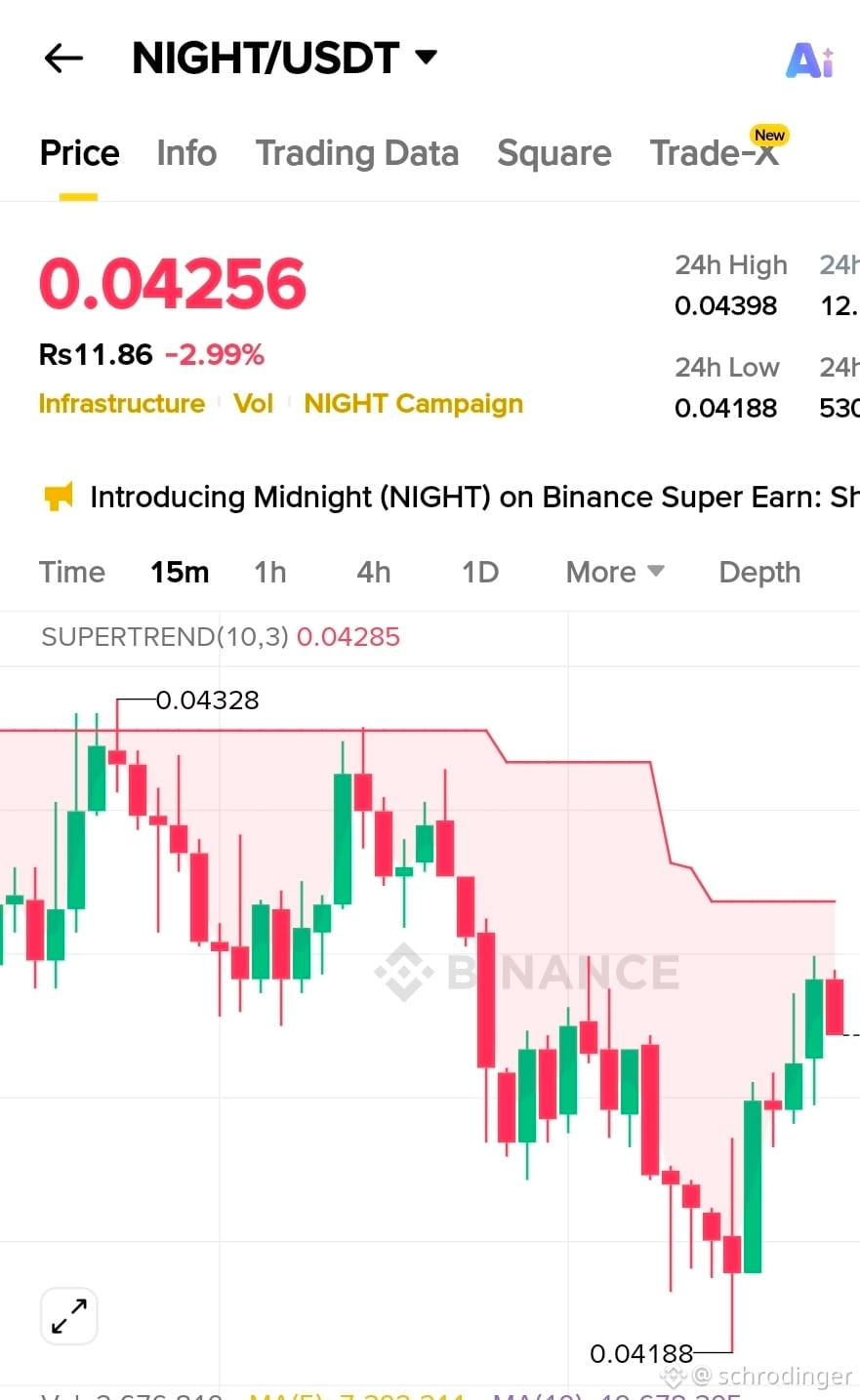
#night $NIGHT
La privacidad no es una característica, es una base.
En un mundo donde las filtraciones de datos y la vigilancia se están convirtiendo en la norma, @MidnightNetwork está construyendo algo diferente: una blockchain donde lo que haces es tu negocio, y solo tuyo.
Midnight aprovecha pruebas de cero conocimiento de vanguardia para asegurar que, mientras las transacciones y los contratos inteligentes permanezcan verificables en la cadena, los detalles sensibles se mantengan cifrados y privados. Esto no se trata solo de anonimato; se trata de dar a los desarrolladores y empresas las herramientas para construir aplicaciones del mundo real que cumplan con las normativas sin exponer datos de propiedad o identidades de usuarios al libro mayor público.
Para sectores como la salud, las finanzas y la cadena de suministro, donde la confidencialidad es innegociable, esto es un cambio de juego. $NIGHT no es solo un token; es la clave para desbloquear un nuevo paradigma de aplicaciones descentralizadas impulsadas por la utilidad y centradas en la privacidad.
El futuro de Web3 pertenece a aquellos que respetan la soberanía del usuario. Midnight está liderando esa carga.
#night $NIGHT @MidnightNetwork
#night $NIGHT
La privacidad no es una característica, es una base.
En un mundo donde las filtraciones de datos y la vigilancia se están convirtiendo en la norma, @MidnightNetwork está construyendo algo diferente: una blockchain donde lo que haces es tu negocio, y solo tuyo.
Midnight aprovecha pruebas de cero conocimiento de vanguardia para asegurar que, mientras las transacciones y los contratos inteligentes permanezcan verificables en la cadena, los detalles sensibles se mantengan cifrados y privados. Esto no se trata solo de anonimato; se trata de dar a los desarrolladores y empresas las herramientas para construir aplicaciones del mundo real que cumplan con las normativas sin exponer datos de propiedad o identidades de usuarios al libro mayor público.
Para sectores como la salud, las finanzas y la cadena de suministro, donde la confidencialidad es innegociable, esto es un cambio de juego. $NIGHT no es solo un token; es la clave para desbloquear un nuevo paradigma de aplicaciones descentralizadas impulsadas por la utilidad y centradas en la privacidad.
El futuro de Web3 pertenece a aquellos que respetan la soberanía del usuario. Midnight está liderando esa carga.
#night $NIGHT @MidnightNetwork
La privacidad no es una característica, es una base.
En un mundo donde las filtraciones de datos y la vigilancia se están convirtiendo en la norma, @MidnightNetwork está construyendo algo diferente: una blockchain donde lo que haces es tu negocio, y solo tuyo.
Midnight aprovecha pruebas de cero conocimiento de vanguardia para asegurar que, mientras las transacciones y los contratos inteligentes permanezcan verificables en la cadena, los detalles sensibles se mantengan cifrados y privados. Esto no se trata solo de anonimato; se trata de dar a los desarrolladores y empresas las herramientas para construir aplicaciones del mundo real que cumplan con las normativas sin exponer datos de propiedad o identidades de usuarios al libro mayor público.
Para sectores como la salud, las finanzas y la cadena de suministro, donde la confidencialidad es innegociable, esto es un cambio de juego. $NIGHT no es solo un token; es la clave para desbloquear un nuevo paradigma de aplicaciones descentralizadas impulsadas por la utilidad y centradas en la privacidad.
El futuro de Web3 pertenece a aquellos que respetan la soberanía del usuario. Midnight está liderando esa carga.
#night $NIGHT @MidnightNetwork
2
1
32
·
--
: Soberanía Digital: El Eslabón Perdido en la Transformación Económica del Medio OrienteEl Medio Oriente está experimentando una metamorfosis económica histórica. Desde el ambicioso plan Visión 2030 en Arabia Saudita hasta los marcos de activos digitales que están surgiendo en los EAU y Bahréin, la región se está posicionando agresivamente como un centro global para la innovación. Pero a medida que construimos estas nuevas economías brillantes, queda una pregunta fundamental: ¿Quién posee realmente la infraestructura digital?
Durante demasiado tiempo, la economía digital global se ha construido sobre una base de control centralizado, donde los usuarios son inquilinos, no propietarios, de sus datos, activos e identidades digitales. Para una región que busca una verdadera independencia económica y diversificación, este modelo presenta una vulnerabilidad crítica.
: Soberanía Digital: El Eslabón Perdido en la Transformación Económica del Medio Oriente
El Medio Oriente está experimentando una metamorfosis económica histórica. Desde el ambicioso plan Visión 2030 en Arabia Saudita hasta los marcos de activos digitales que están surgiendo en los EAU y Bahréin, la región se está posicionando agresivamente como un centro global para la innovación. Pero a medida que construimos estas nuevas economías brillantes, queda una pregunta fundamental: ¿Quién posee realmente la infraestructura digital?
Durante demasiado tiempo, la economía digital global se ha construido sobre una base de control centralizado, donde los usuarios son inquilinos, no propietarios, de sus datos, activos e identidades digitales. Para una región que busca una verdadera independencia económica y diversificación, este modelo presenta una vulnerabilidad crítica.
Durante demasiado tiempo, la economía digital global se ha construido sobre una base de control centralizado, donde los usuarios son inquilinos, no propietarios, de sus datos, activos e identidades digitales. Para una región que busca una verdadera independencia económica y diversificación, este modelo presenta una vulnerabilidad crítica.
43
·
--
#sign
🚀 El futuro del crecimiento económico de Oriente Medio no se trata solo de petróleo, se trata de soberanía digital.
A medida que la región acelera hacia una economía post-petróleo, la necesidad de custodia propia e identidad digital verificable se vuelve crítica. @SignOfficial está construyendo la columna vertebral para esta transición.
Con $SIGN, no solo estamos especulando; estamos asegurando la infraestructura fundamental que permite a las empresas y a los individuos en la región MENA poseer sus datos y activos sin depender de intermediarios centralizados.
La verdadera independencia económica comienza con la independencia digital.
#SignDigitalSovereignInfra $SIGN
#sign
🚀 El futuro del crecimiento económico de Oriente Medio no se trata solo de petróleo, se trata de soberanía digital.
A medida que la región acelera hacia una economía post-petróleo, la necesidad de custodia propia e identidad digital verificable se vuelve crítica. @SignOfficial está construyendo la columna vertebral para esta transición.
Con $SIGN, no solo estamos especulando; estamos asegurando la infraestructura fundamental que permite a las empresas y a los individuos en la región MENA poseer sus datos y activos sin depender de intermediarios centralizados.
La verdadera independencia económica comienza con la independencia digital.
#SignDigitalSovereignInfra $SIGN
🚀 El futuro del crecimiento económico de Oriente Medio no se trata solo de petróleo, se trata de soberanía digital.
A medida que la región acelera hacia una economía post-petróleo, la necesidad de custodia propia e identidad digital verificable se vuelve crítica. @SignOfficial está construyendo la columna vertebral para esta transición.
Con $SIGN, no solo estamos especulando; estamos asegurando la infraestructura fundamental que permite a las empresas y a los individuos en la región MENA poseer sus datos y activos sin depender de intermediarios centralizados.
La verdadera independencia económica comienza con la independencia digital.
#SignDigitalSovereignInfra $SIGN

24
·
--
#Binance Airdrop Super de Marzo: Asignación de $50,000 USDT, Completa Tareas & Acumula Puntos https://www.binance.com/activity/trading-competition/march-super-airdrop?ref=59554247
#Binance Airdrop Super de Marzo: Asignación de $50,000 USDT, Completa Tareas & Acumula Puntos https://www.binance.com/activity/trading-competition/march-super-airdrop?ref=59554247
16
·
--
El problema de la alucinación está matando el potencial de la IA—Aquí está cómo @mira_network lo soluciona
HemosTodos hemos visto las capturas de pantalla: Una IA afirmando con confianza que la capital de Canadá es Toronto (es Ottawa), o inventando casos judiciales de la nada. Nos reímos como si fueran "alucinaciones."
Pero, ¿qué sucede cuando estas alucinaciones comienzan a afectar el mundo real?
Imagina un Agente IA gestionando una cadena de suministro, verificando una factura, o ejecutando un contrato inteligente basado en información errónea. Una alucinación deja de ser graciosa y comienza a ser costosa. Esta es la pared invisible que la IA está golpeando actualmente: Infiabilidad.
El problema de la alucinación está matando el potencial de la IA—Aquí está cómo @mira_network lo soluciona Hemos
Todos hemos visto las capturas de pantalla: Una IA afirmando con confianza que la capital de Canadá es Toronto (es Ottawa), o inventando casos judiciales de la nada. Nos reímos como si fueran "alucinaciones."
Pero, ¿qué sucede cuando estas alucinaciones comienzan a afectar el mundo real?
Imagina un Agente IA gestionando una cadena de suministro, verificando una factura, o ejecutando un contrato inteligente basado en información errónea. Una alucinación deja de ser graciosa y comienza a ser costosa. Esta es la pared invisible que la IA está golpeando actualmente: Infiabilidad.
Pero, ¿qué sucede cuando estas alucinaciones comienzan a afectar el mundo real?
Imagina un Agente IA gestionando una cadena de suministro, verificando una factura, o ejecutando un contrato inteligente basado en información errónea. Una alucinación deja de ser graciosa y comienza a ser costosa. Esta es la pared invisible que la IA está golpeando actualmente: Infiabilidad.
2
27
·
--
#mira $MIRA
Cuando la IA comete un error, ¿quién paga el precio?
En el mundo de hoy, confiamos ciegamente en las salidas de la IA, a pesar de que los LLM son solo generadores de declaraciones probabilísticas, no máquinas de hechos.
@mira_network está construyendo algo crítico: una capa de verificación descentralizada para la IA. En lugar de confiar en un solo modelo, Mira utiliza incentivos económicos y consenso de nodos para validar si una salida de IA es realmente correcta.
Los operadores de nodos apuestan $MIRA para respaldar los resultados. ¿Está correcto? Gana recompensas. ¿Está incorrecto? Pierde una parte.
Esto transforma la IA de una caja negra en una infraestructura responsable. A medida que los agentes de IA comienzan a gestionar dinero y cadenas de suministro, no podemos permitirnos alucinaciones nunca más.
La confianza ya no es abstracta; se aplica económicamente.
#Mira $MIRA @mira_network
#mira $MIRA
Cuando la IA comete un error, ¿quién paga el precio?
En el mundo de hoy, confiamos ciegamente en las salidas de la IA, a pesar de que los LLM son solo generadores de declaraciones probabilísticas, no máquinas de hechos.
@mira_network está construyendo algo crítico: una capa de verificación descentralizada para la IA. En lugar de confiar en un solo modelo, Mira utiliza incentivos económicos y consenso de nodos para validar si una salida de IA es realmente correcta.
Los operadores de nodos apuestan $MIRA para respaldar los resultados. ¿Está correcto? Gana recompensas. ¿Está incorrecto? Pierde una parte.
Esto transforma la IA de una caja negra en una infraestructura responsable. A medida que los agentes de IA comienzan a gestionar dinero y cadenas de suministro, no podemos permitirnos alucinaciones nunca más.
La confianza ya no es abstracta; se aplica económicamente.
#Mira $MIRA @mira_network
Cuando la IA comete un error, ¿quién paga el precio?
En el mundo de hoy, confiamos ciegamente en las salidas de la IA, a pesar de que los LLM son solo generadores de declaraciones probabilísticas, no máquinas de hechos.
@mira_network está construyendo algo crítico: una capa de verificación descentralizada para la IA. En lugar de confiar en un solo modelo, Mira utiliza incentivos económicos y consenso de nodos para validar si una salida de IA es realmente correcta.
Los operadores de nodos apuestan $MIRA para respaldar los resultados. ¿Está correcto? Gana recompensas. ¿Está incorrecto? Pierde una parte.
Esto transforma la IA de una caja negra en una infraestructura responsable. A medida que los agentes de IA comienzan a gestionar dinero y cadenas de suministro, no podemos permitirnos alucinaciones nunca más.
La confianza ya no es abstracta; se aplica económicamente.
#Mira $MIRA @mira_network
1
13
·
--
Más allá de la exageración de la IA: Por qué $ROBO de Fabric Foundation está construyendo la capa financiera.Hablamos mucho sobre la Inteligencia Artificial apoderándose del mundo, pero rara vez discutimos las cosas aburridas: ¿Cómo paga un robot su propia factura de electricidad? ¿Cómo contrata a otro robot para ayudarle a levantar una caja pesada?
Este es el problema exacto que Fabric Foundation está resolviendo con $ROBO. Mientras todos están enfocados en hacer que los robots sean más inteligentes, Fabric se enfoca en hacerlos solventes.
Piensa en esto de esta manera: Hemos dado a los robots cerebros (modelos de IA como ChatGPT) y cuerpos (hardware de empresas como Unitree o Fourier). Pero les falta una billetera. En el sistema actual, un robot es solo un electrodoméstico caro atado a la cuenta bancaria de un humano. Si quieres desplegar una flota de robots de entrega, necesitas una cuenta bancaria corporativa masiva para gestionar los costos operativos.
Más allá de la exageración de la IA: Por qué $ROBO de Fabric Foundation está construyendo la capa financiera.
Hablamos mucho sobre la Inteligencia Artificial apoderándose del mundo, pero rara vez discutimos las cosas aburridas: ¿Cómo paga un robot su propia factura de electricidad? ¿Cómo contrata a otro robot para ayudarle a levantar una caja pesada?
Este es el problema exacto que Fabric Foundation está resolviendo con $ROBO. Mientras todos están enfocados en hacer que los robots sean más inteligentes, Fabric se enfoca en hacerlos solventes.
Piensa en esto de esta manera: Hemos dado a los robots cerebros (modelos de IA como ChatGPT) y cuerpos (hardware de empresas como Unitree o Fourier). Pero les falta una billetera. En el sistema actual, un robot es solo un electrodoméstico caro atado a la cuenta bancaria de un humano. Si quieres desplegar una flota de robots de entrega, necesitas una cuenta bancaria corporativa masiva para gestionar los costos operativos.
Este es el problema exacto que Fabric Foundation está resolviendo con $ROBO. Mientras todos están enfocados en hacer que los robots sean más inteligentes, Fabric se enfoca en hacerlos solventes.
Piensa en esto de esta manera: Hemos dado a los robots cerebros (modelos de IA como ChatGPT) y cuerpos (hardware de empresas como Unitree o Fourier). Pero les falta una billetera. En el sistema actual, un robot es solo un electrodoméstico caro atado a la cuenta bancaria de un humano. Si quieres desplegar una flota de robots de entrega, necesitas una cuenta bancaria corporativa masiva para gestionar los costos operativos.
2
99
·
--
🎁 Opción : Enfocarse en el Valor Mutuo
"Creando contenido activamente en el Binance Creator Pad para ganar y compartir conocimientos sobre nuevos proyectos. 📝
Si te interesan las ganancias en criptomonedas y el contenido de calidad, ¡apoyémonos mutuamente! Dale un seguimiento y te seguiré de vuelta. ¡Hagamos crecer nuestra red Square! 🤝 #Binance #CreatorPad #Web3"
🎁 Opción : Enfocarse en el Valor Mutuo
"Creando contenido activamente en el Binance Creator Pad para ganar y compartir conocimientos sobre nuevos proyectos. 📝
Si te interesan las ganancias en criptomonedas y el contenido de calidad, ¡apoyémonos mutuamente! Dale un seguimiento y te seguiré de vuelta. ¡Hagamos crecer nuestra red Square! 🤝 #Binance #CreatorPad #Web3"
"Creando contenido activamente en el Binance Creator Pad para ganar y compartir conocimientos sobre nuevos proyectos. 📝
Si te interesan las ganancias en criptomonedas y el contenido de calidad, ¡apoyémonos mutuamente! Dale un seguimiento y te seguiré de vuelta. ¡Hagamos crecer nuestra red Square! 🤝 #Binance #CreatorPad #Web3"
8
Inicia sesión para explorar más contenidos
Únete a usuarios de criptomonedas de todo el mundo en Binance Square
⚡️ Obtén la información más reciente y útil sobre criptomonedas.
💬 Confía en el mayor exchange de criptomonedas del mundo.
👍 Descubre opiniones reales de creadores verificados.
Correo electrónico/número de teléfono
Temas en tendencia
SECReceivesGrayscaleLitecoinTrustETFFiling
40,271 visualizaciones
823 participa(n) en el debate
#secreceivesgrayscalelitecointrustetffiling
🚨🔥 ÚLTIMA HORA | #Litecoin ETF 🔥🚨
🐺 Grayscale vuelve a mover ficha en Wall Street.
La SEC de EE.UU. ha recibido una solicitud de Grayscale para convertir su Litecoin Trust en el Grayscale Litecoin Trust ETF y buscar su cotización en NYSE Arca bajo el ticker $LTCN.
💰 ¿Por qué importa?
✅ Mayor acceso institucional a Litecoin
✅ Más visibilidad para $LTC
✅ Posible aumento de liquidez
✅ Otro paso hacia la adopción masiva de las criptomonedas
📈 El movimiento sigue la estrategia que Grayscale utilizó anteriormente con productos vinculados a Bitcoin y Ethereum.
👀 Los inversores estarán atentos a la decisión regulatoria, ya que una eventual aprobación podría convertirse en uno de los catalizadores más importantes para Litecoin.
⚡ ¿Se prepara $LTC para su próximo gran impulso?
🔄 Comparte si crees que Litecoin aún tiene mucho por demostrar.
#Litecoin #LTC #ETF #CryptoNews #Blockchain #Grayscale #SEC #Altcoins #BullRun #ElCryptoBoy 🐟🚀🌊
By ElCryptoBoy ✍️🔥
ELCRYPTOBOY
·0 «Me gusta»
·162 visualizaciones
ClarityActFacesProceduralVoteSept15
156,397 visualizaciones
1,779 participa(n) en el debate
US10YearTreasuryYieldNears5%
53,009 visualizaciones
958 participa(n) en el debate