

Hubdar On Spot
57 Publicaciones

Hubdar On Spot
Denunciar
Bloquear usuario
Best Spot and Futures Signals, Less but Accurate 🎯

Titular de DUSK
Trader frecuente
10.7 meses
28 Siguiendo
86 Seguidores
106 Me gusta
Publicaciones
Todo
Cotizaciones
Directo
Ver traducción
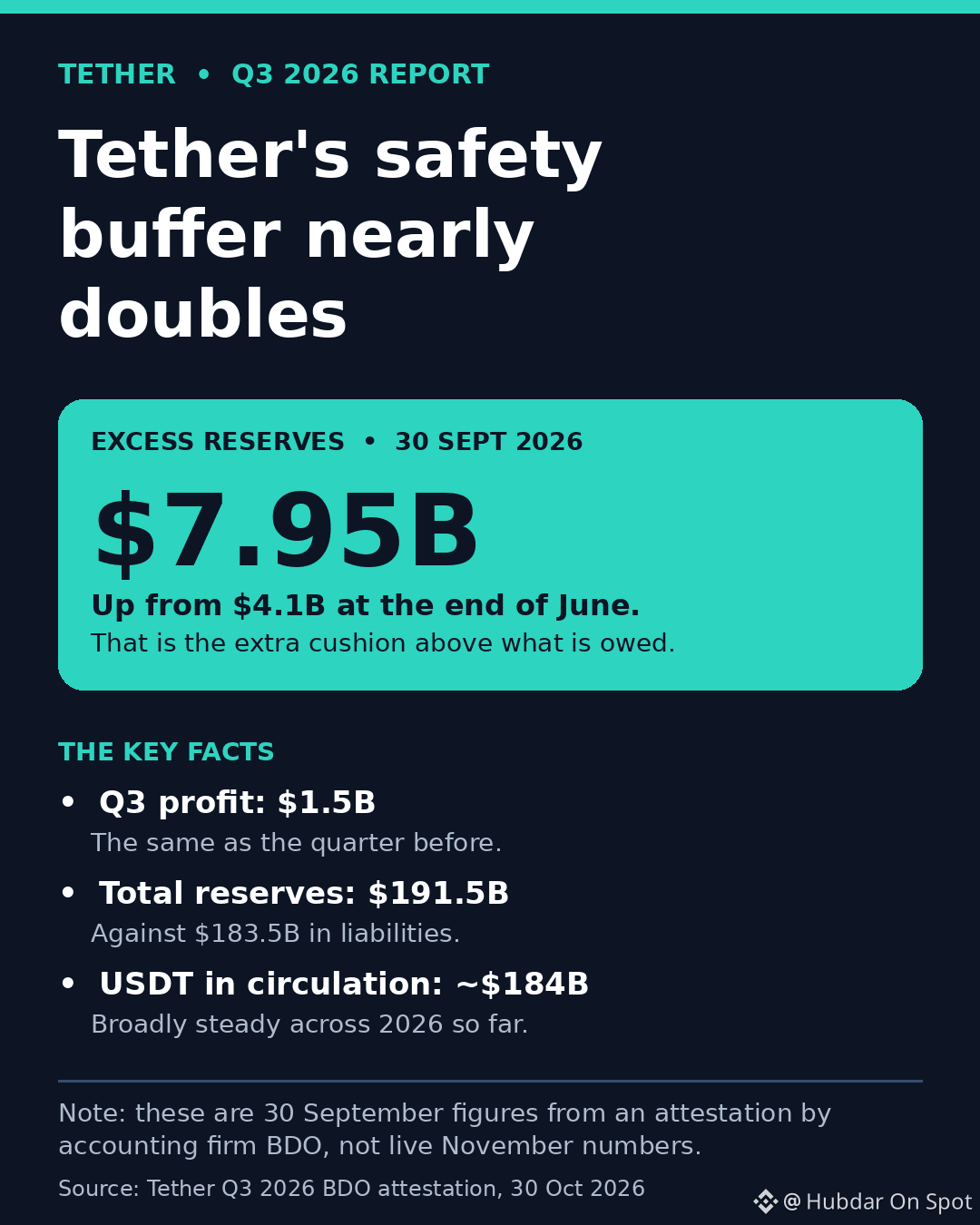
Tether just reported a much bigger safety cushion.
Tether is the company behind USDT. USDT is a stablecoin, a type of crypto meant to stay close to $1, so people use it to move value without the usual crypto price swings.
In its third-quarter report, released on 30 October, Tether said its excess reserves reached $7.95 billion on 30 September. That is the extra amount left after counting what it owes. It was $4.1 billion at the end of June.
The company also reported $1.5 billion in net operating profit for the quarter, the same as the quarter before. Across the first nine months of 2026, that profit totalled $4.5 billion.
In total, Tether held $191.5 billion in reserves against $183.5 billion in liabilities, which is what it owes. USDT in circulation held broadly steady at about $184 billion.
What is still unknown is what the figures look like now. This report is a snapshot from 30 September, checked in an attestation by accounting firm BDO. It is not a live November update.
Source: Tether Q3 2026 BDO attestation, 30 October 2026.
Does a bigger reserve cushion make you trust a stablecoin more, or do you look at something else first?
22
Artículo
Ver traducción
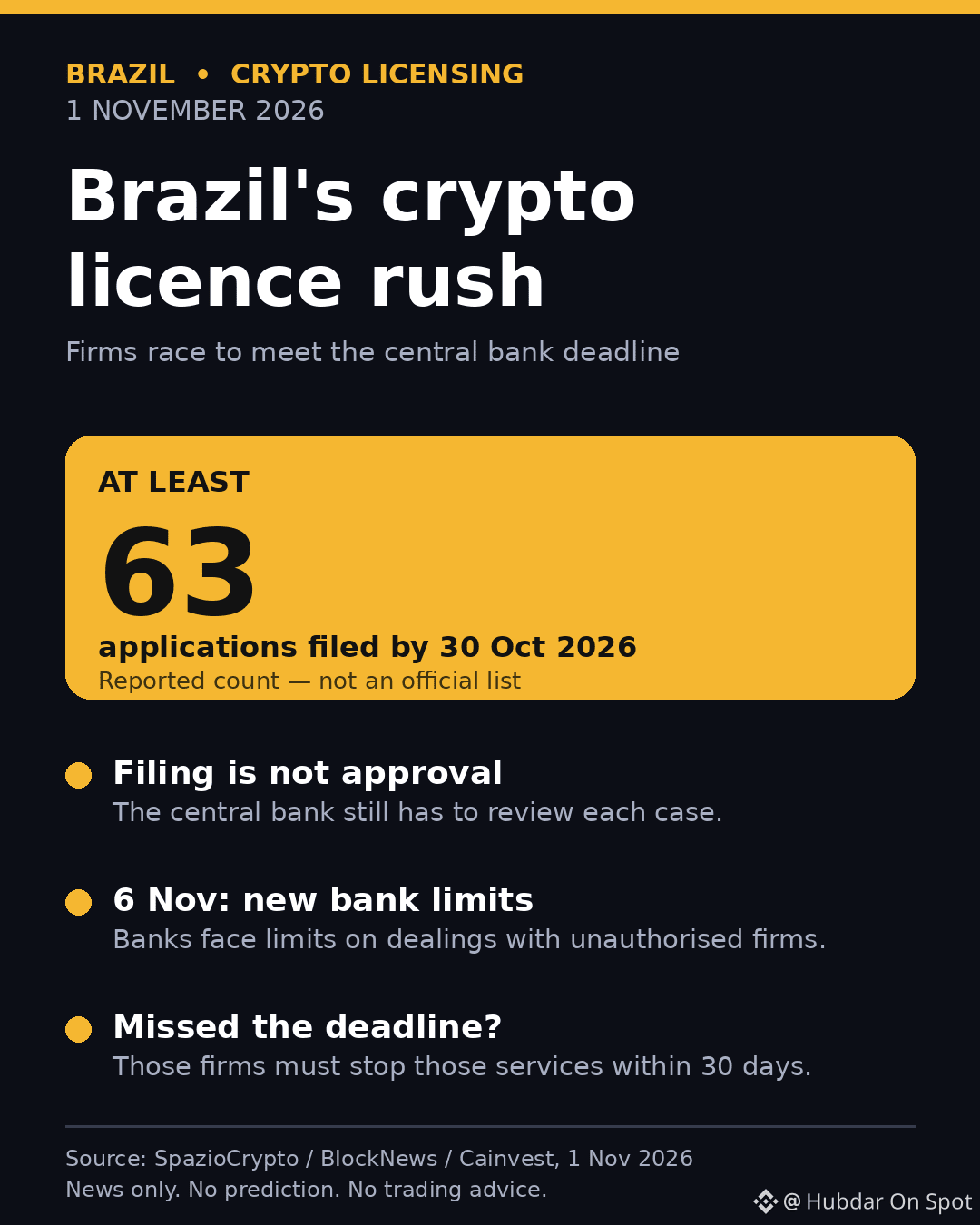
Brazil's crypto licence rush: at least 63 firms filed before the deadlineBrazil has just closed the door on the first stage of its new crypto licensing system. And a lot of firms rushed through it in time.
A virtual asset service provider, or VASP for short, is a company that lets people trade, hold or send crypto. In Brazil, those firms now need formal permission from the country's central bank, the Banco Central do Brasil, to keep operating.
What happened
Brazil's central bank published its new crypto rules in November 2025. They took effect on 2 February 2026. Firms that were already offering crypto services then had 270 days to file the first part of their application. That deadline was 30 October 2026.
By that deadline, at least 63 crypto operators had filed, according to BlockNews, based on monitoring by Cainvest. The count was updated at 8:05 p.m. local time. Around ten more applications that came in during the final hours had not yet been counted, so the real total could be higher.
Among the firms named by BlockNews are Bitget, Kraken, BTG Pactual and Banco Rendimento. OSL Brasil separately confirmed on 30 October that its own subsidiary had filed. Before the deadline, Binance had applied on 23 October and Coinbase on 28 October, according to Unchained's reporting.
Filing is only the start, though. It is not a licence. The central bank still has to check each application, and it can ask for more documents at any stage. OSL said this plainly in its own announcement: filing does not guarantee approval.
Firms that filed on time can keep offering their services while the review runs. But they cannot change how they operate in the meantime. Firms that missed the deadline must stop those services within 30 days of the cutoff.
Then comes a second date, and it is separate from the application itself. From 6 November 2026, banks, payment firms and other firms supervised by the central bank will not be able to carry out or help with crypto market operations for providers that are not authorised in Brazil, except in cases the rules expressly allow. That change comes from Resolution BCB 589, which amended the earlier rules.
Why it matters
Brazil is Latin America's largest economy, and it is one of the world's biggest crypto markets. So a licensing system there affects a lot of users, not just a handful of firms.
For everyday users, the shift is simple to understand. Before, many firms could serve Brazilian customers without this kind of central bank permission. Now, permission is the route to staying in the market. For firms, the next job is no longer meeting a deadline. It is passing the review, keeping their paperwork in order, and keeping their banking relationships working under the new 6 November rule.
What is confirmed
The 30 October deadline for first-phase applications is confirmed in the central bank's rules, and the 6 November banking restriction is confirmed in Resolution BCB 589. At least 63 applications were known by 8:05 p.m. local time on the deadline day, based on Cainvest monitoring reported by BlockNews, with around ten more not yet counted. OSL Brasil confirmed its own filing on 30 October. Firms that filed on time may keep operating during the review, and firms that missed the deadline must stop those services within 30 days.
What is still unknown
The 63 figure is not an official central bank total. The central bank has not published a full list, so the final count, and which firms filed, may change as more reports come in. No approvals have been confirmed in these reports, and no decision dates have been given.
There is also one point the sources do not clear up. One rule lets firms that filed on time keep operating while they wait. The updated banking rule, however, talks about providers that are not authorised, and does not expressly repeat the exception for firms still waiting for a decision. How the central bank will join those two rules together from 6 November onwards is not yet clear.
Original source: SpazioCrypto, 1 November 2026, "Brazil Crypto Licensing: 63 Firms Apply to Banco Central" — https://en.spaziocrypto.com/regulation/brazil-crypto-licenses-63-firms-apply-banco-central/ — reporting BlockNews based on Cainvest monitoring; with Unchained, 29 October 2026, "Coinbase Files to Keep Operating Under Brazil's New Crypto Rules" — https://unchainedcrypto.com/coinbase-files-to-keep-operating-under-brazils-new-crypto-rules/
Do you think a clear licence list will make crypto in Brazil feel safer for everyday users, or just harder for smaller firms to keep up?
Brazil's crypto licence rush: at least 63 firms filed before the deadline
Brazil has just closed the door on the first stage of its new crypto licensing system. And a lot of firms rushed through it in time.
A virtual asset service provider, or VASP for short, is a company that lets people trade, hold or send crypto. In Brazil, those firms now need formal permission from the country's central bank, the Banco Central do Brasil, to keep operating.
What happened
Brazil's central bank published its new crypto rules in November 2025. They took effect on 2 February 2026. Firms that were already offering crypto services then had 270 days to file the first part of their application. That deadline was 30 October 2026.
By that deadline, at least 63 crypto operators had filed, according to BlockNews, based on monitoring by Cainvest. The count was updated at 8:05 p.m. local time. Around ten more applications that came in during the final hours had not yet been counted, so the real total could be higher.
Among the firms named by BlockNews are Bitget, Kraken, BTG Pactual and Banco Rendimento. OSL Brasil separately confirmed on 30 October that its own subsidiary had filed. Before the deadline, Binance had applied on 23 October and Coinbase on 28 October, according to Unchained's reporting.
Filing is only the start, though. It is not a licence. The central bank still has to check each application, and it can ask for more documents at any stage. OSL said this plainly in its own announcement: filing does not guarantee approval.
Firms that filed on time can keep offering their services while the review runs. But they cannot change how they operate in the meantime. Firms that missed the deadline must stop those services within 30 days of the cutoff.
Then comes a second date, and it is separate from the application itself. From 6 November 2026, banks, payment firms and other firms supervised by the central bank will not be able to carry out or help with crypto market operations for providers that are not authorised in Brazil, except in cases the rules expressly allow. That change comes from Resolution BCB 589, which amended the earlier rules.
Why it matters
Brazil is Latin America's largest economy, and it is one of the world's biggest crypto markets. So a licensing system there affects a lot of users, not just a handful of firms.
For everyday users, the shift is simple to understand. Before, many firms could serve Brazilian customers without this kind of central bank permission. Now, permission is the route to staying in the market. For firms, the next job is no longer meeting a deadline. It is passing the review, keeping their paperwork in order, and keeping their banking relationships working under the new 6 November rule.
What is confirmed
The 30 October deadline for first-phase applications is confirmed in the central bank's rules, and the 6 November banking restriction is confirmed in Resolution BCB 589. At least 63 applications were known by 8:05 p.m. local time on the deadline day, based on Cainvest monitoring reported by BlockNews, with around ten more not yet counted. OSL Brasil confirmed its own filing on 30 October. Firms that filed on time may keep operating during the review, and firms that missed the deadline must stop those services within 30 days.
What is still unknown
The 63 figure is not an official central bank total. The central bank has not published a full list, so the final count, and which firms filed, may change as more reports come in. No approvals have been confirmed in these reports, and no decision dates have been given.
There is also one point the sources do not clear up. One rule lets firms that filed on time keep operating while they wait. The updated banking rule, however, talks about providers that are not authorised, and does not expressly repeat the exception for firms still waiting for a decision. How the central bank will join those two rules together from 6 November onwards is not yet clear.
Original source: SpazioCrypto, 1 November 2026, "Brazil Crypto Licensing: 63 Firms Apply to Banco Central" — https://en.spaziocrypto.com/regulation/brazil-crypto-licenses-63-firms-apply-banco-central/ — reporting BlockNews based on Cainvest monitoring; with Unchained, 29 October 2026, "Coinbase Files to Keep Operating Under Brazil's New Crypto Rules" — https://unchainedcrypto.com/coinbase-files-to-keep-operating-under-brazils-new-crypto-rules/
Do you think a clear licence list will make crypto in Brazil feel safer for everyday users, or just harder for smaller firms to keep up?
1
36
Los bancos de Canadá se están adaptando hoy a las nuevas normas sobre criptomonedas.
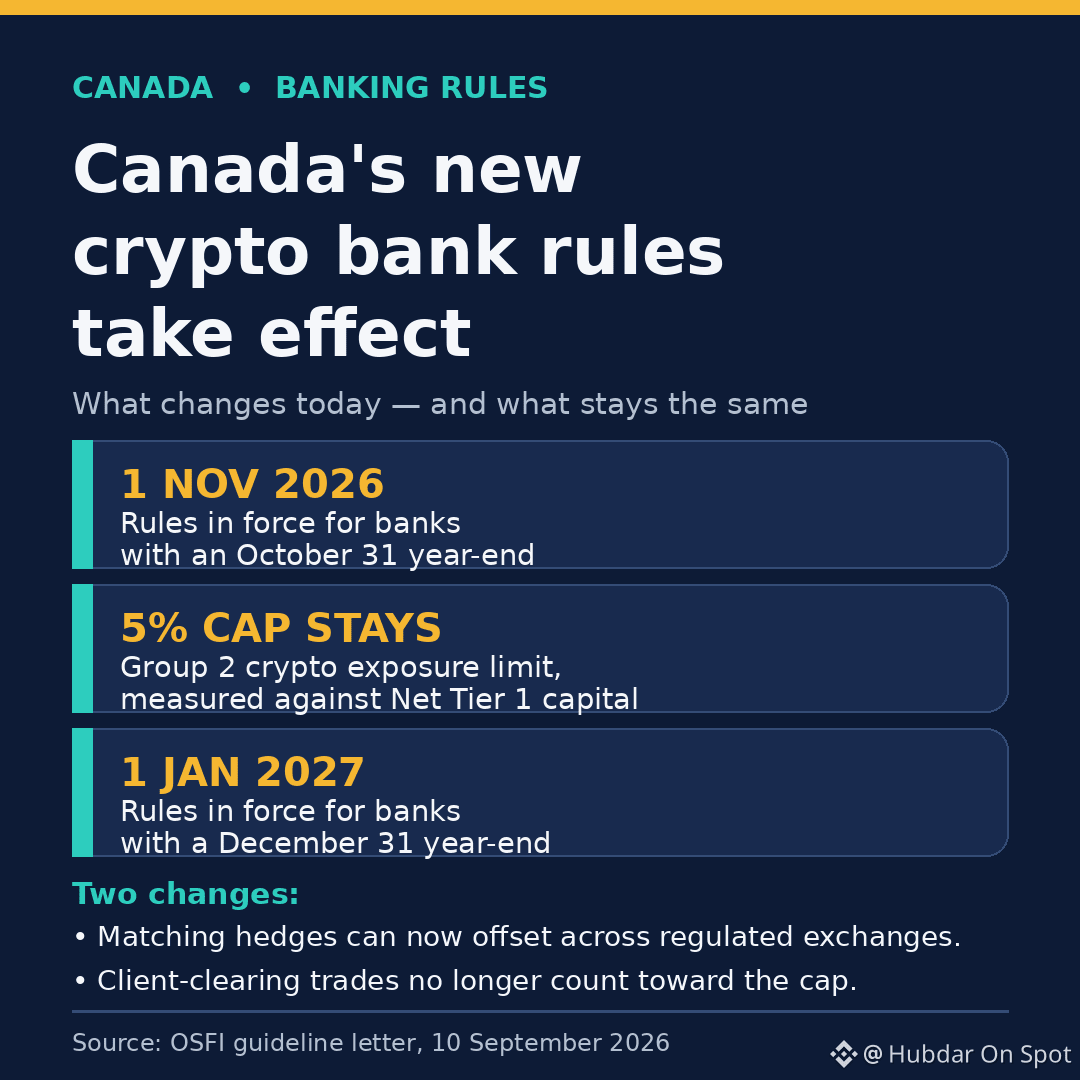
El regulador bancario del país, la OSFI, ha actualizado las normas que deben seguir los bancos para gestionar las criptomonedas. Las nuevas normas entran en vigor hoy, 1 de noviembre, para los bancos cuyo ejercicio fiscal termina el 31 de octubre. Los bancos cuyo ejercicio termina en diciembre las seguirán a partir del 1 de enero de 2027.
Cambian dos cosas. Primero, ahora un banco puede compensar coberturas equivalentes —posiciones opuestas que se equilibran entre sí— incluso si se encuentran en distintos mercados regulados, siempre que cubran el mismo criptoactivo, venzan en la misma fecha y cumplan los criterios del regulador. Antes, la diferencia entre los mercados, por sí sola, podía impedirlo.
Segundo, las operaciones que un banco liquida para sus clientes y que cumplen los requisitos ya no cuentan para el límite de exposición a las criptomonedas.
También importa lo que sigue igual. El límite general se mantiene en el 5 % del capital de nivel 1 neto de un banco, una medida fundamental de su solidez financiera. Además, las criptomonedas siguen sin poder contabilizarse como garantía —el respaldo de un préstamo—.
En resumen, se trata de un alivio específico para los bancos que actúan como intermediarios en las operaciones de sus clientes, no de una luz verde para hacer grandes apuestas en criptomonedas. Aún no se sabe cuánto aprovecharán realmente los bancos este margen adicional. Los primeros resultados bancarios sujetos a las nuevas normas suelen publicarse a finales de febrero, así que quizá sea entonces cuando veamos sus efectos en la práctica.
Fuente: carta de directrices de la OSFI, 10 de septiembre de 2026.
¿Crees que unas normas bancarias más claras como estas ayudarán a que las criptomonedas se generalicen en Canadá, o el límite del 5 % seguirá frenando a los bancos?
1
74
Artículo
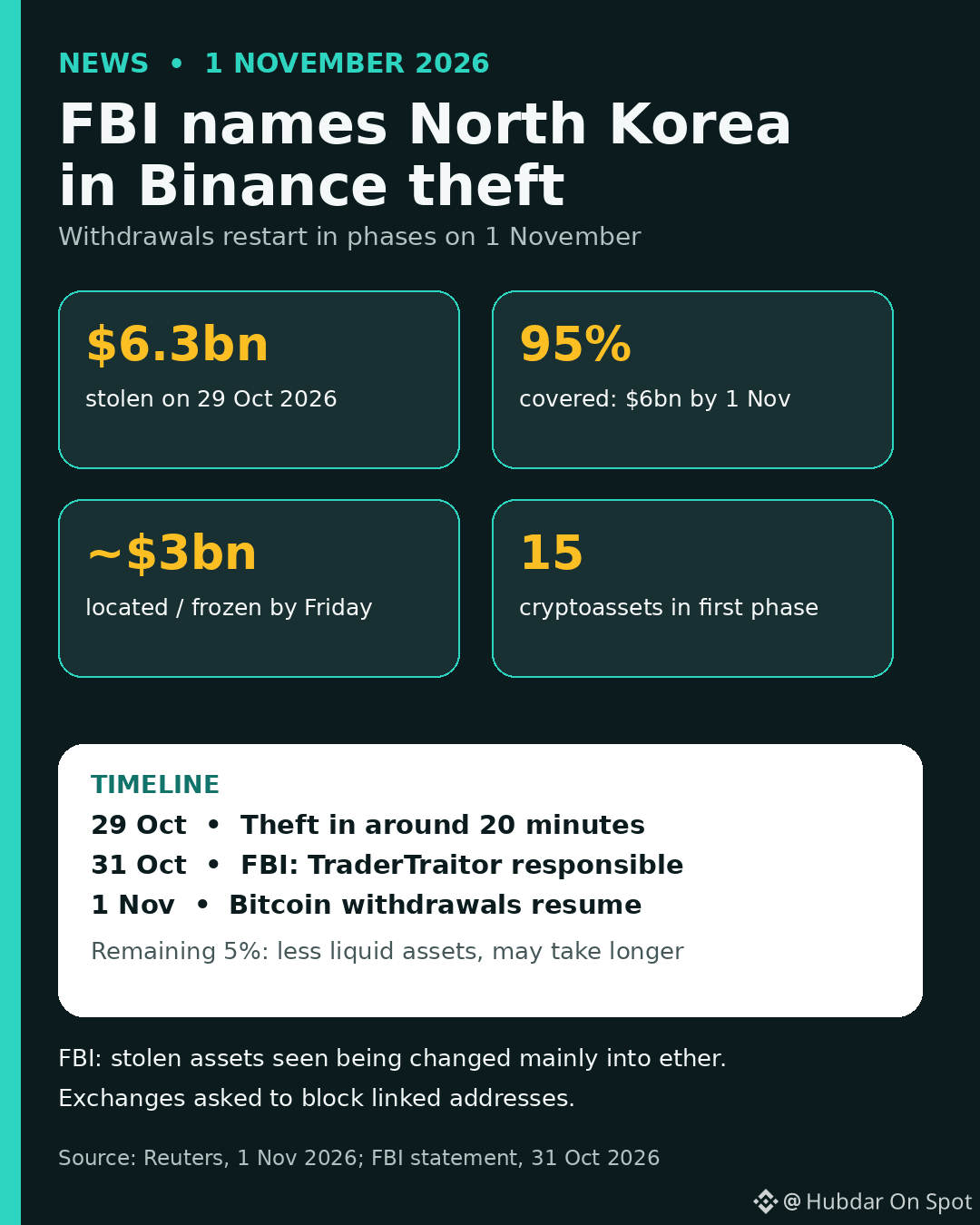
El FBI apunta a Corea del Norte por el robo de 6.300 millones de dólares a Binance mientras se reanudan los retirosEste fin de semana, algo importante cambió en la historia de Binance. El FBI ya ha señalado a quién considera responsable. Y Binance ha vuelto a permitir que la gente retire bitcoins.
Binance es la mayor plataforma de intercambio de criptomonedas del mundo. En términos sencillos, es una plataforma donde la gente compra, vende y almacena monedas digitales.
Qué ocurrió
A última hora del jueves 29 de octubre de 2026, se sustrajeron de Binance activos digitales por valor de unos 6.300 millones de dólares. Reuters, citando a las firmas de análisis de blockchain TRM Labs y Chainalysis, afirma que la mayor parte del robo se llevó a cabo en unos 20 minutos.
El FBI apunta a Corea del Norte por el robo de 6.300 millones de dólares a Binance mientras se reanudan los retiros
Este fin de semana, algo importante cambió en la historia de Binance. El FBI ya ha señalado a quién considera responsable. Y Binance ha vuelto a permitir que la gente retire bitcoins.
Binance es la mayor plataforma de intercambio de criptomonedas del mundo. En términos sencillos, es una plataforma donde la gente compra, vende y almacena monedas digitales.
Qué ocurrió
A última hora del jueves 29 de octubre de 2026, se sustrajeron de Binance activos digitales por valor de unos 6.300 millones de dólares. Reuters, citando a las firmas de análisis de blockchain TRM Labs y Chainalysis, afirma que la mayor parte del robo se llevó a cabo en unos 20 minutos.
206
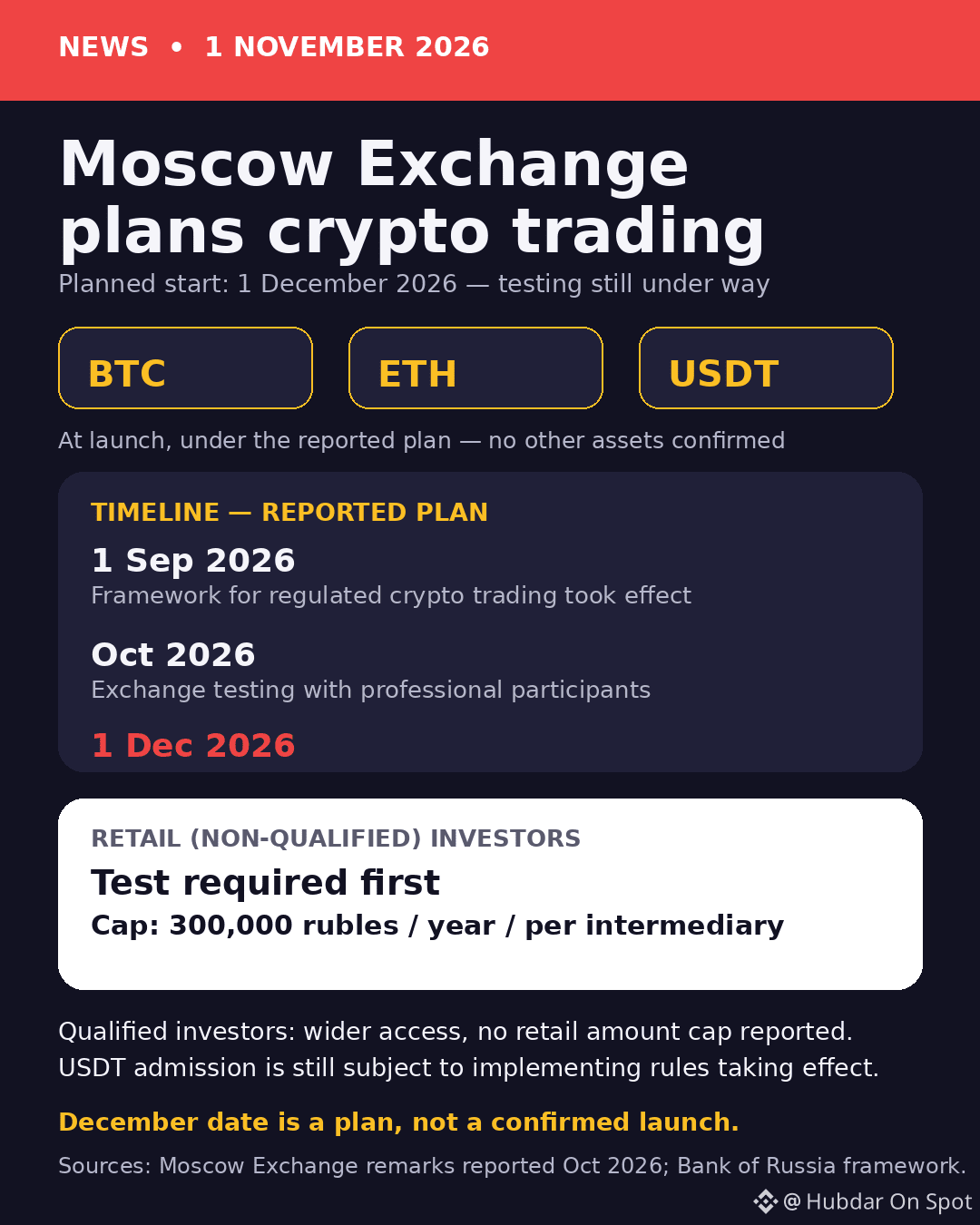
La Bolsa de Moscú planea comenzar a ofrecer operaciones con criptomonedas el 1 de diciembre de 2026, con Bitcoin, Ethereum y USDT desde el inicio.
El plan se enmarca en un régimen que entró en vigor el 1 de septiembre de 2026. Los inversores minoristas (no cualificados) tendrían que aprobar primero un examen, y sus compras estarían limitadas a 300.000 rublos al año por intermediario. Según se informa, los inversores cualificados no estarían sujetos a ese límite y tendrían acceso a una gama más amplia de activos.
La fecha de diciembre sigue siendo un plan, no una fecha de lanzamiento confirmada: la bolsa ha dicho que están en marcha las pruebas con participantes profesionales. Un detalle a tener en cuenta: según se informa, la admisión de USDT sigue sujeta a la entrada en vigor de las normas de aplicación pertinentes.
¿Crees que las operaciones reguladas en bolsa atraerán a más inversores particulares al mundo de las criptomonedas, o los límites y los exámenes harán que la mayor parte de la actividad se mantenga en otros mercados?
96
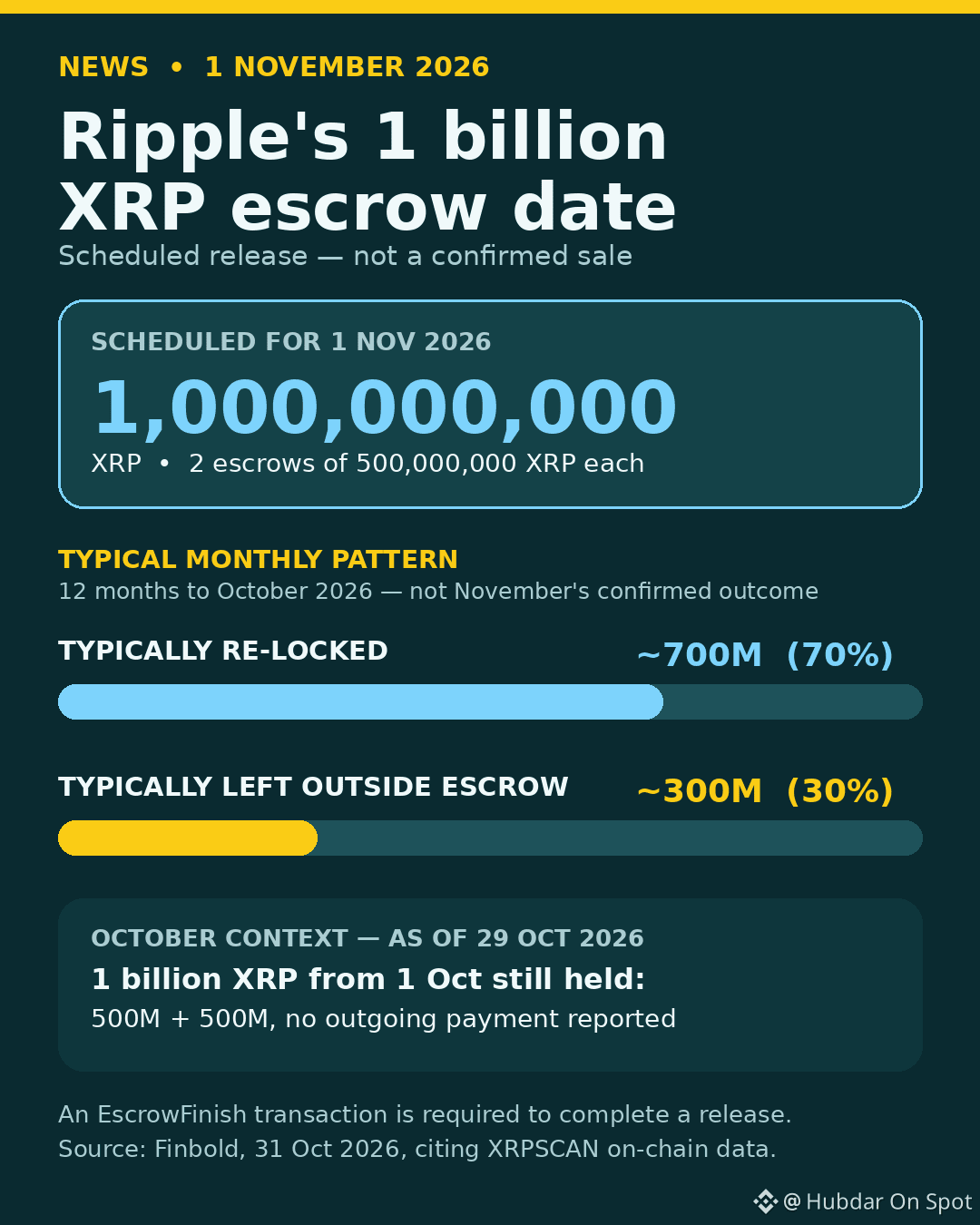
La liberación programada de 1.000 millones de XRP del depósito en garantía de Ripple tiene lugar hoy, 1 de noviembre de 2026.
La liberación mensual se divide en dos depósitos en garantía de 500 millones de XRP cada uno. Que llegue la fecha no confirma por sí solo una transferencia ni una venta: Ripple debe enviar una transacción EscrowFinish para completarla.
El contexto es inusual: los datos en cadena publicados el 29 de octubre mostraron que las dos billeteras de la liberación del 1 de octubre aún conservaban 500 millones de XRP cada una, sin que se haya registrado ningún pago saliente desde entonces.
En los 12 meses hasta octubre de 2026, normalmente se volvieron a bloquear unos 700 millones de XRP —alrededor del 70 %— cada mes, lo que dejó unos 300 millones fuera del depósito en garantía. Ese es el patrón establecido, no un resultado confirmado para noviembre.
Fuente: Finbold, 31 de octubre de 2026.
¿Qué observarás primero: el paso de EscrowFinish o si se repite el patrón de volver a bloquear los XRP?
151
Artículo
Ver traducción
Illinois crypto tax rules could effectively ban DeFi, warn a16z, Uniswap Labs and DeFi Education FundWhat happened
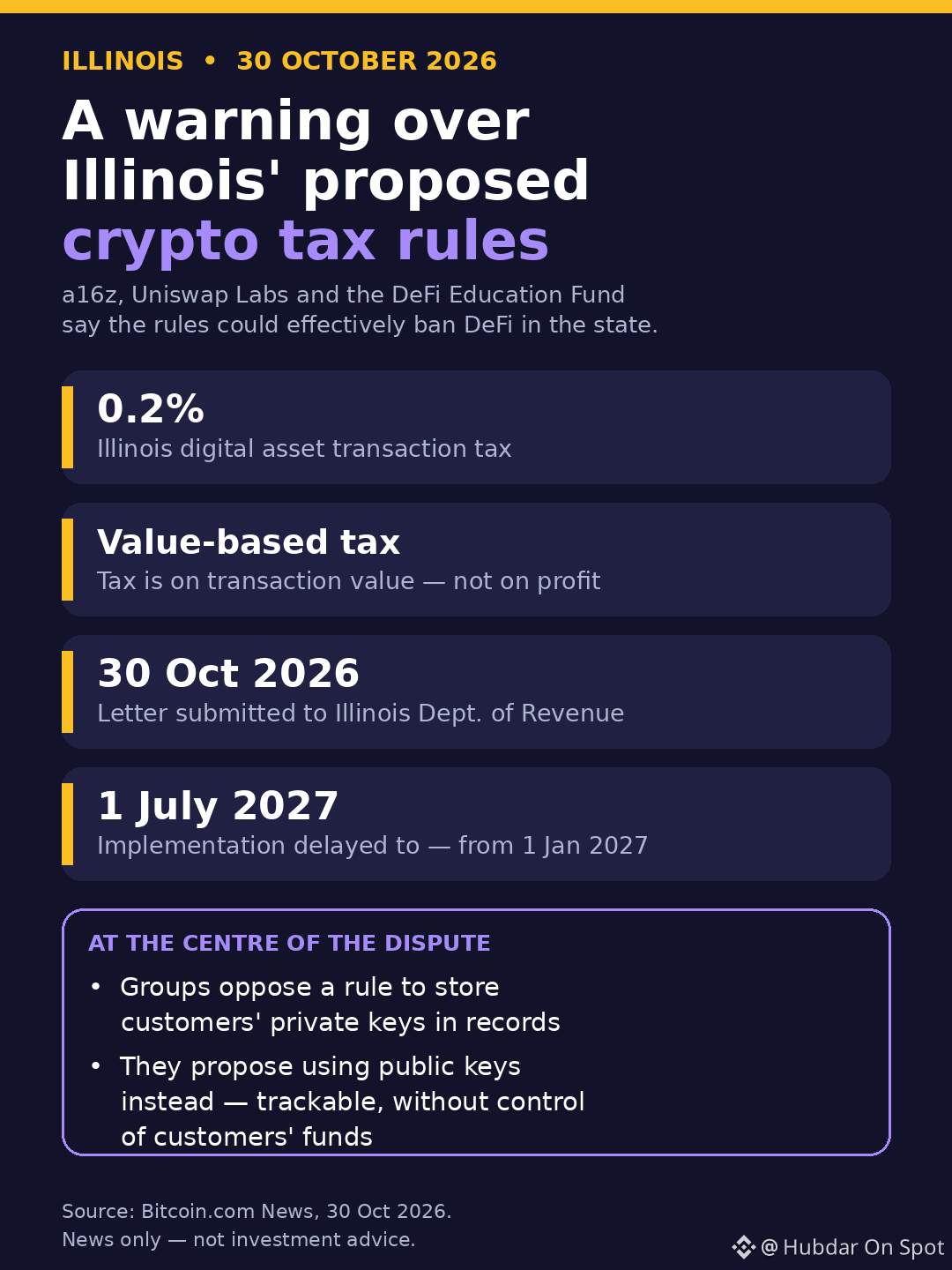
On 30 October 2026, Andreessen Horowitz (a16z), Uniswap Labs and the DeFi Education Fund submitted a letter to the Illinois Department of Revenue urging regulators to overhaul proposed rules for implementing Illinois' Digital Asset Tax Act.
The groups warn that the proposed implementation could effectively prohibit decentralised finance (DeFi) activity in Illinois, while also creating serious security risks for users.
Their central argument is about how decentralised exchanges (DEXs) are classified. The letter argues that the proposed rules incorrectly treat DEXs as conventional financial brokers. The groups say DEXs, including the Uniswap protocol, operate through autonomous software rather than as intermediaries that control customers' assets or execute transactions on their behalf.
Unlike centralised exchanges, they argue, DEXs generally cannot identify customers, determine their locations, collect taxes, or file returns on individual transactions. Imposing those obligations, they say, would make compliance practically impossible.
Why it matters
If the proposed approach stands, the groups argue, DeFi services could face a de facto ban in Illinois — not because DeFi is named as banned, but because the compliance duties cannot be met in practice.
A second concern is security. One controversial provision would require brokers to maintain records containing customers' private keys — the credentials used to authorise transactions and control digital assets. The signatories warn that collecting and storing those credentials could expose customer funds to theft if the records were compromised, and could force companies to choose between protecting customer assets and complying with state rules.
The letter proposes replacing the term "private keys" with "public keys", which can be used to track blockchain transactions without granting control over customers' funds.
The groups also object to provisions that could tax withdrawals from centralised exchanges to personal wallets and transfers of assets between blockchains, known as bridging. A16z policy head Miles Jennings compared that treatment to taxing someone simply for moving money between their own bank accounts.
The groups ask regulators to explicitly exclude decentralised protocols and their interfaces from the definition of digital asset brokers, and to clarify that collecting automated protocol fees does not automatically establish broker status.
What is confirmed
- The letter was submitted on Friday, 30 October 2026, by a16z, Uniswap Labs and the DeFi Education Fund, as reported by Bitcoin.com News on 30 October 2026.
- Illinois enacted its Digital Asset Tax Act in June, imposing a 0.2% tax on the value of qualifying cryptocurrency transactions and other covered digital asset activity. The levy is based on transaction value, not on profit.
- Implementation has been postponed from 1 January to 1 July 2027, to allow litigation to proceed.
- The Blockchain Association and Crypto Council for Innovation have challenged the law in court, raising concerns including overlapping taxation, constitutional protections and potential criminal penalties.
What is still unknown / not confirmed
- Whether the Illinois Department of Revenue will revise the proposed rules, exclude decentralised protocols, or change the private-keys provision to public keys. That decision has not been confirmed.
- The outcome of the court challenges. A prediction by one industry figure that challengers will succeed is an opinion, not a ruling.
- Whether the proposed rules would, as a matter of law, amount to a ban on DeFi. That is the groups' warning and argument, not a confirmed legal outcome.
This article is news only and is not investment advice.
Source: Bitcoin.com News, 30 October 2026 — https://news.bitcoin.com/regulation-and-legal/a16z-uniswap-warn-illinois-crypto-tax-rules-ban-defi/
Should decentralised protocols be treated differently from traditional brokers for tax reporting — and if so, how should that line be drawn?
Illinois crypto tax rules could effectively ban DeFi, warn a16z, Uniswap Labs and DeFi Education Fund
What happened
On 30 October 2026, Andreessen Horowitz (a16z), Uniswap Labs and the DeFi Education Fund submitted a letter to the Illinois Department of Revenue urging regulators to overhaul proposed rules for implementing Illinois' Digital Asset Tax Act.
The groups warn that the proposed implementation could effectively prohibit decentralised finance (DeFi) activity in Illinois, while also creating serious security risks for users.
Their central argument is about how decentralised exchanges (DEXs) are classified. The letter argues that the proposed rules incorrectly treat DEXs as conventional financial brokers. The groups say DEXs, including the Uniswap protocol, operate through autonomous software rather than as intermediaries that control customers' assets or execute transactions on their behalf.
Unlike centralised exchanges, they argue, DEXs generally cannot identify customers, determine their locations, collect taxes, or file returns on individual transactions. Imposing those obligations, they say, would make compliance practically impossible.
Why it matters
If the proposed approach stands, the groups argue, DeFi services could face a de facto ban in Illinois — not because DeFi is named as banned, but because the compliance duties cannot be met in practice.
A second concern is security. One controversial provision would require brokers to maintain records containing customers' private keys — the credentials used to authorise transactions and control digital assets. The signatories warn that collecting and storing those credentials could expose customer funds to theft if the records were compromised, and could force companies to choose between protecting customer assets and complying with state rules.
The letter proposes replacing the term "private keys" with "public keys", which can be used to track blockchain transactions without granting control over customers' funds.
The groups also object to provisions that could tax withdrawals from centralised exchanges to personal wallets and transfers of assets between blockchains, known as bridging. A16z policy head Miles Jennings compared that treatment to taxing someone simply for moving money between their own bank accounts.
The groups ask regulators to explicitly exclude decentralised protocols and their interfaces from the definition of digital asset brokers, and to clarify that collecting automated protocol fees does not automatically establish broker status.
What is confirmed
- The letter was submitted on Friday, 30 October 2026, by a16z, Uniswap Labs and the DeFi Education Fund, as reported by Bitcoin.com News on 30 October 2026.
- Illinois enacted its Digital Asset Tax Act in June, imposing a 0.2% tax on the value of qualifying cryptocurrency transactions and other covered digital asset activity. The levy is based on transaction value, not on profit.
- Implementation has been postponed from 1 January to 1 July 2027, to allow litigation to proceed.
- The Blockchain Association and Crypto Council for Innovation have challenged the law in court, raising concerns including overlapping taxation, constitutional protections and potential criminal penalties.
What is still unknown / not confirmed
- Whether the Illinois Department of Revenue will revise the proposed rules, exclude decentralised protocols, or change the private-keys provision to public keys. That decision has not been confirmed.
- The outcome of the court challenges. A prediction by one industry figure that challengers will succeed is an opinion, not a ruling.
- Whether the proposed rules would, as a matter of law, amount to a ban on DeFi. That is the groups' warning and argument, not a confirmed legal outcome.
This article is news only and is not investment advice.
Source: Bitcoin.com News, 30 October 2026 — https://news.bitcoin.com/regulation-and-legal/a16z-uniswap-warn-illinois-crypto-tax-rules-ban-defi/
Should decentralised protocols be treated differently from traditional brokers for tax reporting — and if so, how should that line be drawn?
3
Artículo
El Banco de Bangladesh reafirma las restricciones a las criptomonedas en una nueva circular consolidadaEl Banco de Bangladesh reafirma las restricciones a las criptomonedas en una nueva circular consolidada
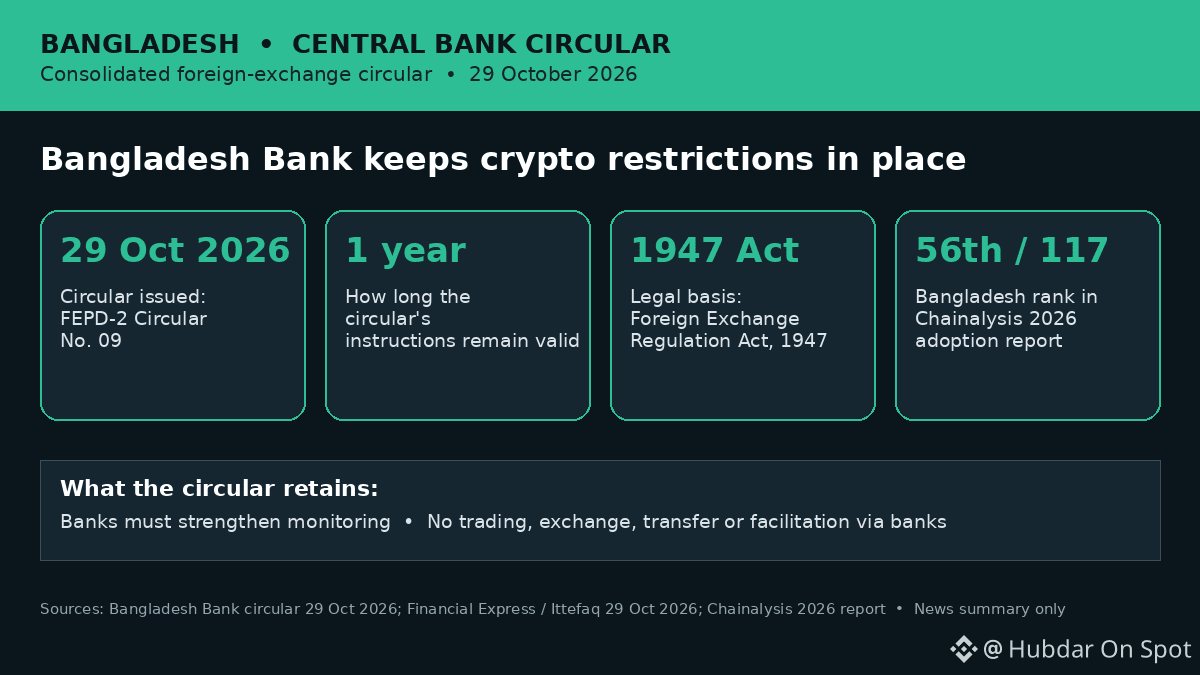
El Banco de Bangladesh ha reafirmado sus restricciones a las transacciones con criptomonedas y monedas virtuales en una nueva circular consolidada sobre la gestión de divisas, emitida el jueves 29 de octubre de 2026.
La circular, Circular n.º 09 de FEPD-2 del Departamento de Política Cambiaria-2 del banco central, reúne las normas cambiarias vigentes en un único documento. Deroga las instrucciones de las Directrices para las Transacciones de Divisas (GFET), 2018, Volumen I, y de las circulares posteriores, excepto las instrucciones de información mensual del Volumen II. Las instrucciones de la nueva circular seguirán vigentes durante un año a partir de la fecha de emisión.
El Banco de Bangladesh reafirma las restricciones a las criptomonedas en una nueva circular consolidada
El Banco de Bangladesh reafirma las restricciones a las criptomonedas en una nueva circular consolidada
El Banco de Bangladesh ha reafirmado sus restricciones a las transacciones con criptomonedas y monedas virtuales en una nueva circular consolidada sobre la gestión de divisas, emitida el jueves 29 de octubre de 2026.
La circular, Circular n.º 09 de FEPD-2 del Departamento de Política Cambiaria-2 del banco central, reúne las normas cambiarias vigentes en un único documento. Deroga las instrucciones de las Directrices para las Transacciones de Divisas (GFET), 2018, Volumen I, y de las circulares posteriores, excepto las instrucciones de información mensual del Volumen II. Las instrucciones de la nueva circular seguirán vigentes durante un año a partir de la fecha de emisión.
1
Ver traducción
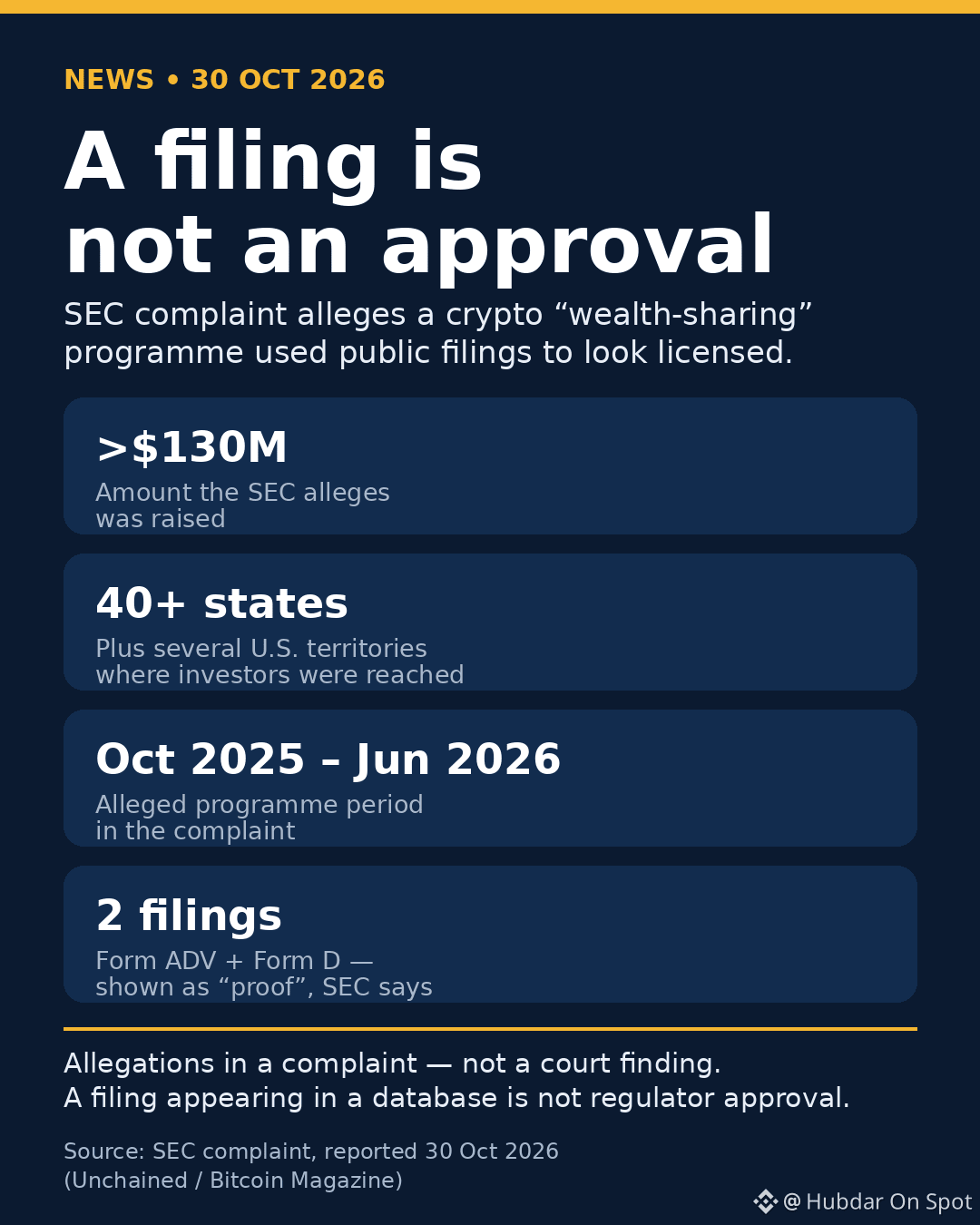
News, 30 Oct 2026: The US SEC has charged BG Wealth Sharing Ltd. and DSJ Exchange Pty Ltd. in a complaint filed in the Northern District of California, alleging a crypto “wealth-sharing program” raised more than $130 million from tens of thousands of retail investors in more than 40 states and several US territories from at least October 2025 through June 2026.
The SEC alleges the firms pointed investors to Form ADV and Form D filings viewable on its website and to fake certificates bearing its seal, presenting them as proof of SEC approval. The SEC says those filings are not approval or a licence, and that the filings have since been removed. These are allegations in a complaint, not a court finding.
Key point: a public filing appearing in a database is not the same as regulator approval.
What check would you do before trusting a claim that a crypto firm is “SEC-approved”?
29
Ripple obtiene la aprobación definitiva para su banco fiduciario nacional en EE. UU.
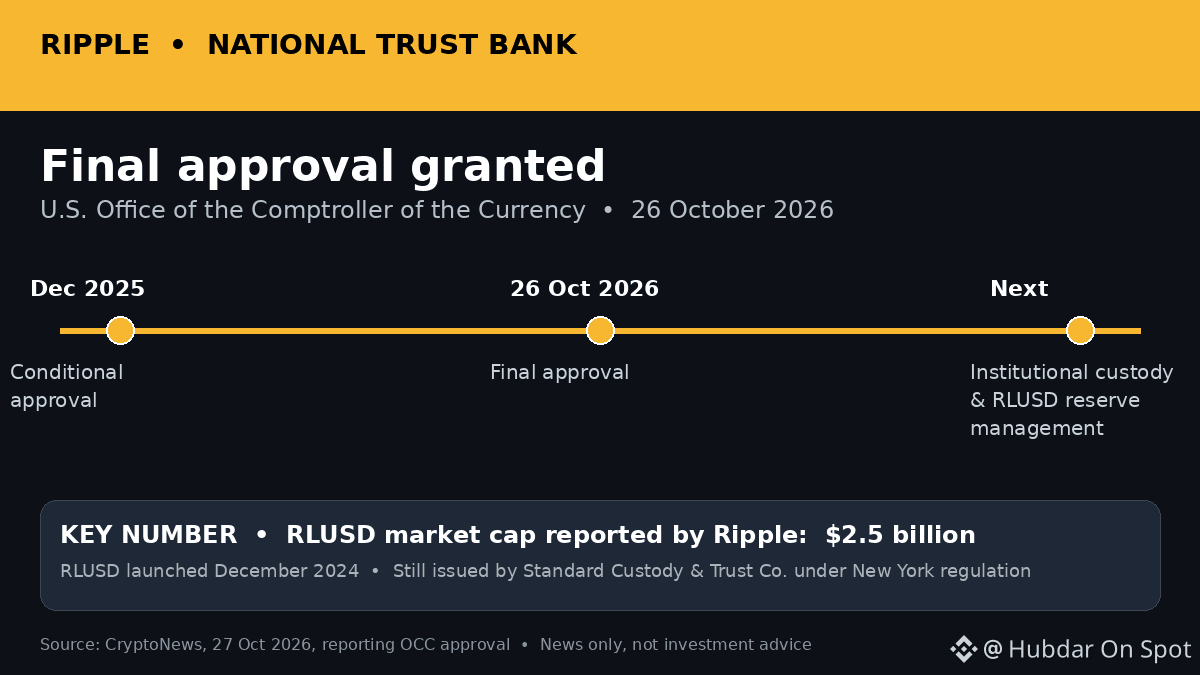
El 26 de octubre de 2026, Ripple recibió la aprobación definitiva de la Oficina del Contralor de la Moneda de EE. UU. para Ripple National Trust Bank, completando un proceso que comenzó con la aprobación condicional en diciembre de 2025.
Confirmado:
- Una plataforma supervisada a nivel federal para respaldar RLUSD y ofrecer servicios de custodia de activos digitales a empresas
- El banco gestionará reservas segregadas que respaldan Ripple USD (RLUSD) y actuará como fideicomisario de garantías para los titulares de RLUSD
- Standard Custody & Trust Company seguirá emitiendo RLUSD bajo la regulación de Nueva York
- Ripple informó que RLUSD había alcanzado una capitalización de mercado de 2.500 millones de dólares desde su lanzamiento en diciembre de 2024
Aún se desconoce qué productos de custodia para empresas o qué clientes se incorporarán primero, y en qué plazos.
Fuente: CryptoNews, 27 de octubre de 2026
¿Crees que la custodia supervisada a nivel federal hará que las instituciones se sientan más cómodas usando monedas estables y servicios de activos digitales? ¡Comparte tu opinión abajo! 👇
64
Ver traducción
Solana to Host Hong Kong Dollar Stablecoin HKDAP in Planned Anchorpoint Collaboration
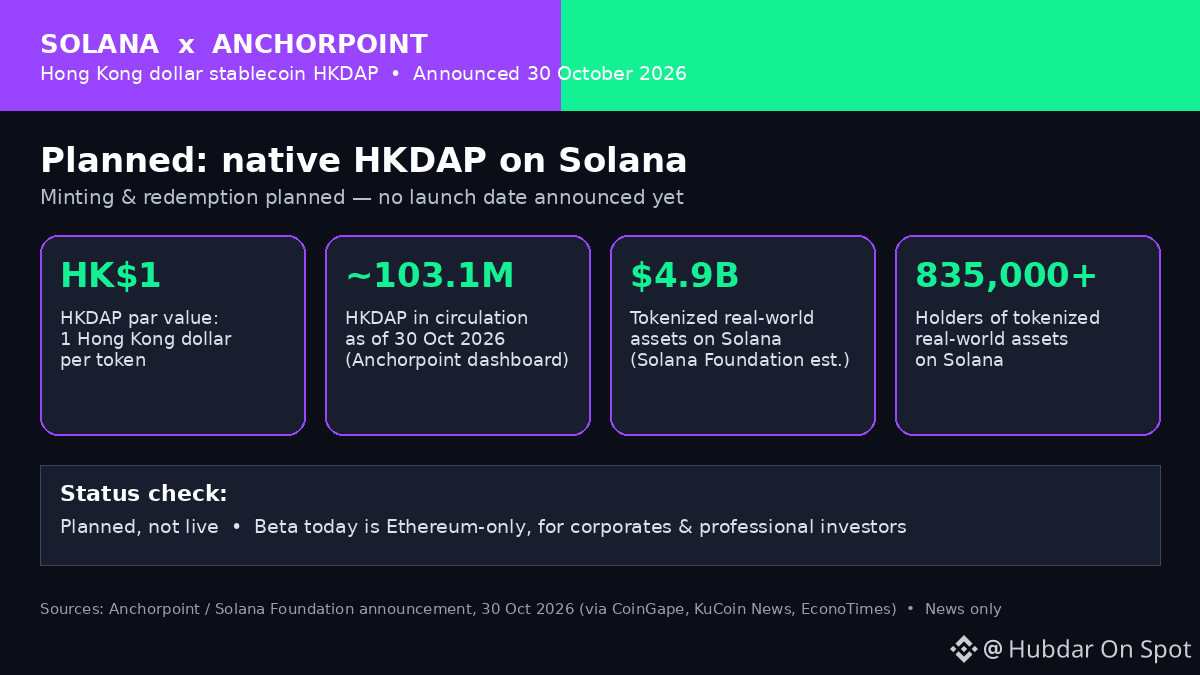
Anchorpoint Financial Limited and the Solana Foundation announced on October 30, 2026, that Anchorpoint plans to support native minting and redemption of HKDAP, its Hong Kong dollar stablecoin, on Solana. The announcement marks Anchorpoint's first collaboration with a public blockchain foundation.
The planned integration is aimed at retail payments and trading in tokenized assets, with near-instant settlement. Anchorpoint says HKDAP would be created and redeemed directly on Solana, and made accessible through corporate partners and consumer applications.
The Solana Foundation will also join Anchorpoint's Tokenised Money Adoption Programme as a strategic partner, alongside PwC Hong Kong. The programme focuses on education, research and industry dialogue around tokenized money in Hong Kong's regulated stablecoin ecosystem.
An important detail: this is a plan, not a live service yet. No launch date for the Solana integration has been announced. HKDAP currently runs on Ethereum mainnet in a limited beta phase for corporate users and professional investors. Anchorpoint was licensed as a stablecoin issuer by the Hong Kong Monetary Authority in April 2026, and HKDAP carries a par value of one Hong Kong dollar per token. Anchorpoint's transparency dashboard reported about 103.1 million HKDAP in circulation as of October 30.
For context, the Solana Foundation estimates around $4.9 billion in tokenized real-world assets on Solana, held by more than 835,000 holders.
Source: Anchorpoint / Solana Foundation announcement, October 30, 2026 — https://coingape.com/solana-adds-hong-kong-dollar-stablecoin-hkdap-for-payments-and-tokenized-assets/
Would a regulated Hong Kong dollar stablecoin on Solana be most useful for everyday payments, or for tokenized assets? Share your thoughts below! 👇
82
Ver traducción
US Spot Bitcoin ETFs See $643 Million in Net Outflows on October 30
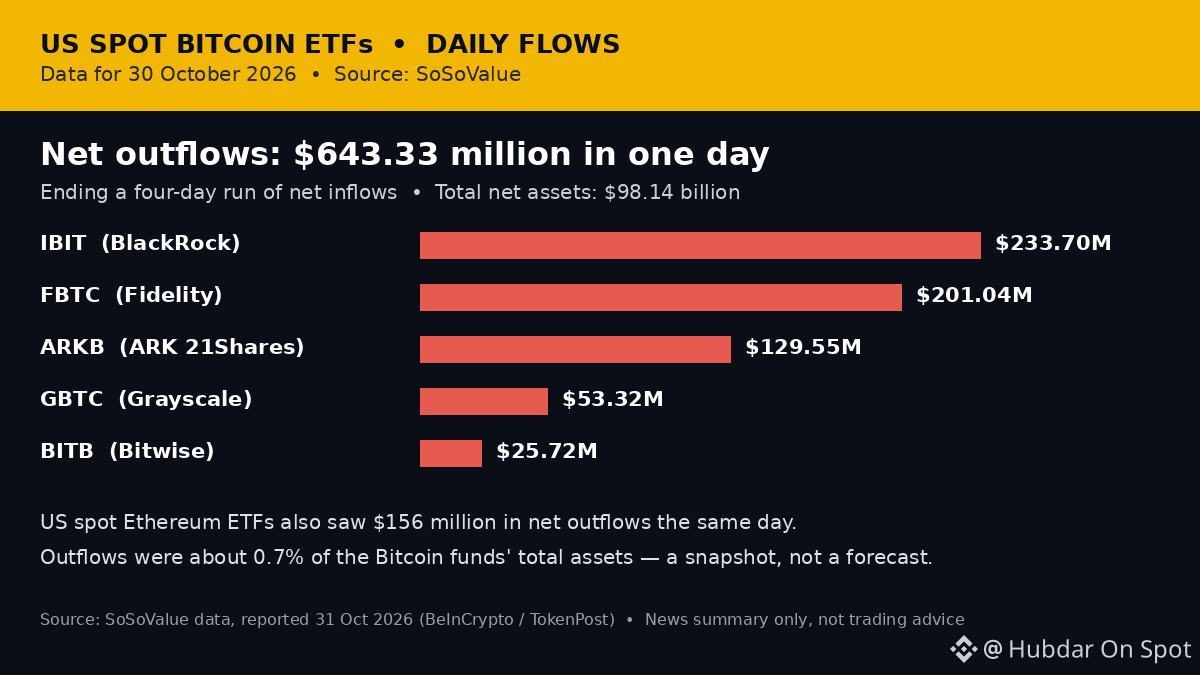
US spot Bitcoin ETFs recorded $643.33 million in net outflows on October 30, 2026, according to SoSoValue data reported on October 31. The move ended a four-day run of net inflows into the funds.
BlackRock's iShares Bitcoin Trust (IBIT) accounted for the largest share, with $233.70 million in net outflows, followed by Fidelity's Wise Origin Bitcoin Fund (FBTC) at $201.04 million. ARK 21Shares' ARKB saw $129.55 million, Grayscale's GBTC $53.32 million, and Bitwise's BITB $25.72 million.
In total, the funds still held $98.14 billion in net assets after the day's outflows, with cumulative net inflows since launch standing at $56.98 billion. Put in context, the October 30 outflow was about 0.7% of the funds' total assets.
US spot Ethereum ETFs also recorded net outflows the same day, of $156 million, marking their fifth straight day of outflows.
The outflow came a day after the major Binance security incident reported on October 30, but the flow data itself does not show why individual investors redeemed. The next daily flow figures, due on Monday, November 2, will show whether the redemptions were a one-day move or the start of a longer trend.
Source: SoSoValue data via BeInCrypto — https://beincrypto.com/investors-pull-643-million-bitcoin-etfs/
Do you read a single day of ETF outflows as a short-term reaction, or as a signal of a longer shift in investor sentiment? Share your thoughts below! 👇
69
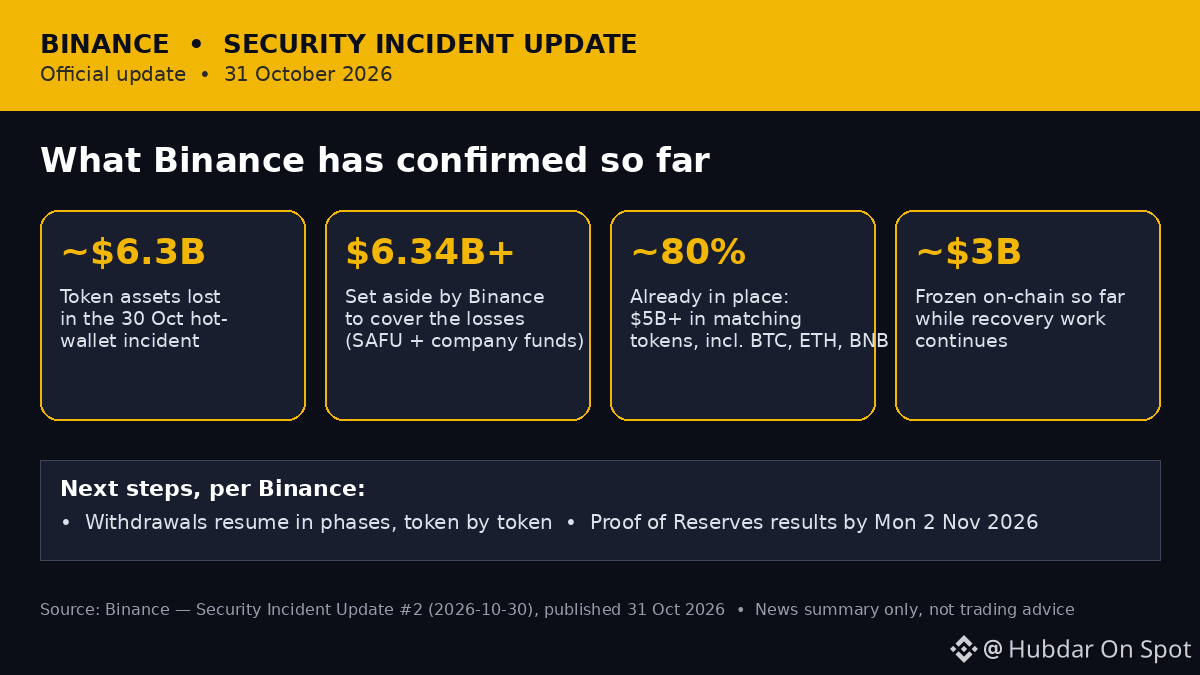
Binance confirma un incidente de 6.300 millones de dólares en su billetera caliente y afirma que los usuarios estarán totalmente cubiertos
Binance ha confirmado un grave incidente de seguridad relacionado con retiros no autorizados de su billetera caliente. Según su Actualización n.º 2 sobre el incidente de seguridad, el ataque tuvo lugar aproximadamente a las 04:05 (UTC+8) del 30 de octubre de 2026, y provocó la pérdida de activos en tokens por un valor aproximado de 6.300 millones de dólares.
Binance afirma que asumirá las pérdidas, en lugar de sus usuarios, y las cubrirá por completo a través del Fondo de Activos Seguros para Usuarios (SAFU) y de los fondos propios de la empresa. Ha reservado más de 6.340 millones de dólares, de los cuales ya cuenta con más de 5.000 millones en activos correspondientes en tokens —alrededor del 80 % de la cantidad robada—, incluidos USDC, USDT, BTC, ETH y BNB. Los tokens restantes se están comprando a través de los mercados y de operaciones extrabursátiles.
Binance también afirma que hasta ahora se han congelado en la cadena activos por valor de aproximadamente 3.000 millones de dólares, mientras trabaja con las fuerzas del orden, empresas de inteligencia de cadena de bloques, emisores de activos y socios del sector para rastrear y recuperar los fondos.
Los retiros se han suspendido temporalmente para realizar revisiones de seguridad adicionales, mientras que los depósitos y otros servicios no afectados siguen funcionando con normalidad. Binance afirma que los retiros se reanudarán por fases, token por token, con el objetivo de cumplir el plazo anunciado anteriormente de aproximadamente 34 horas, sujeto a la finalización de las comprobaciones de seguridad.
En cuanto a la transparencia, Binance planea realizar su primera captura del estado de prueba de reservas en un plazo de 12 horas y publicar los resultados el lunes 2 de noviembre de 2026. La investigación sigue en curso y, según la empresa, hasta ahora no ha encontrado indicios de que las claves privadas de la billetera se hayan visto comprometidas.
Fuente: Anuncio oficial de Binance — https://www.binance.com/en/square/post/382966610455230
¿Qué debería hacerse primero tras un incidente como este: restablecer los retiros lo antes posible o publicar primero el informe técnico completo? ¡Comparte tu opinión abajo! 👇
1
705
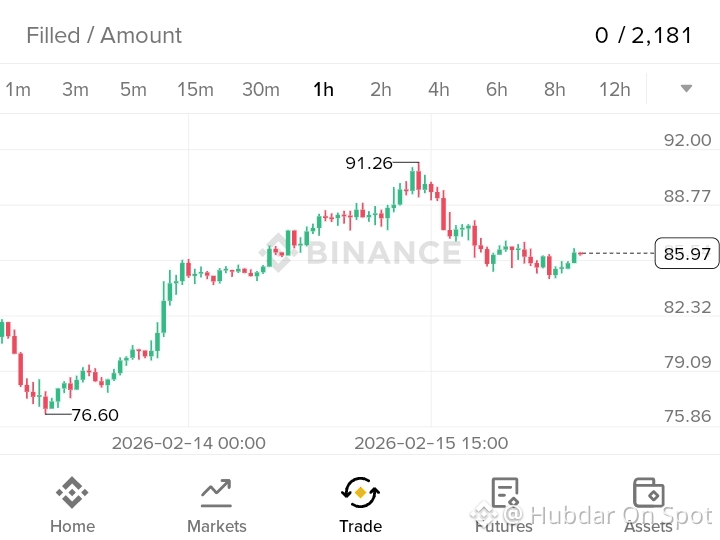
¿alcanzará $SOL $100 este mes?
Sí o No solamente, dame tu opinión honesta 🤗
{spot}(SOLUSDT)
¿alcanzará $SOL $100 este mes?
Sí o No solamente, dame tu opinión honesta 🤗
Sí o No solamente, dame tu opinión honesta 🤗
11
·
--
Alcista
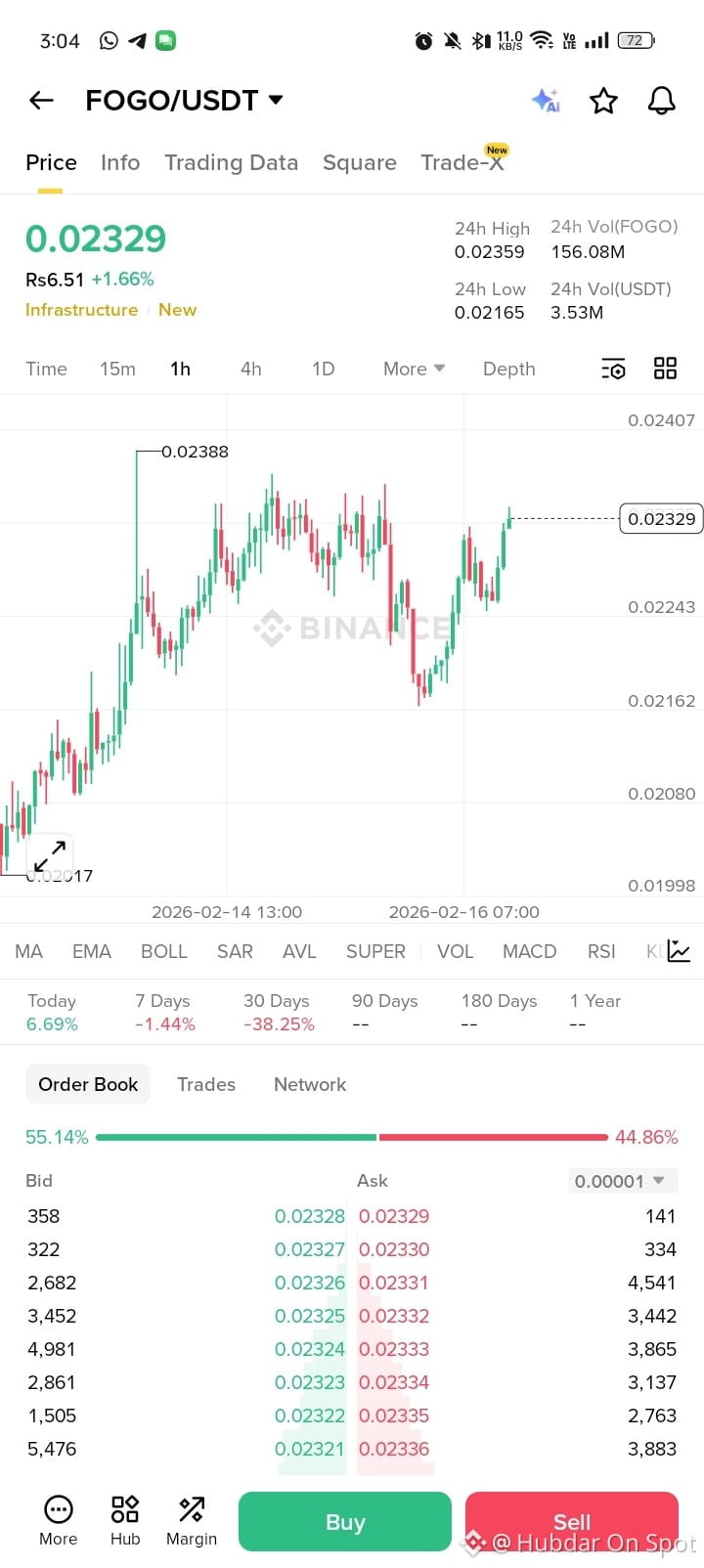
veamos si la ruptura llega pronto 🎯
$FOGO will be flying 🚀
Díganos su opinión "Sí" o "No" solo
veamos si la ruptura llega pronto 🎯
$FOGO will be flying 🚀
Díganos su opinión "Sí" o "No" solo
$FOGO will be flying 🚀
Díganos su opinión "Sí" o "No" solo
2
1
8
·
--
Alcista
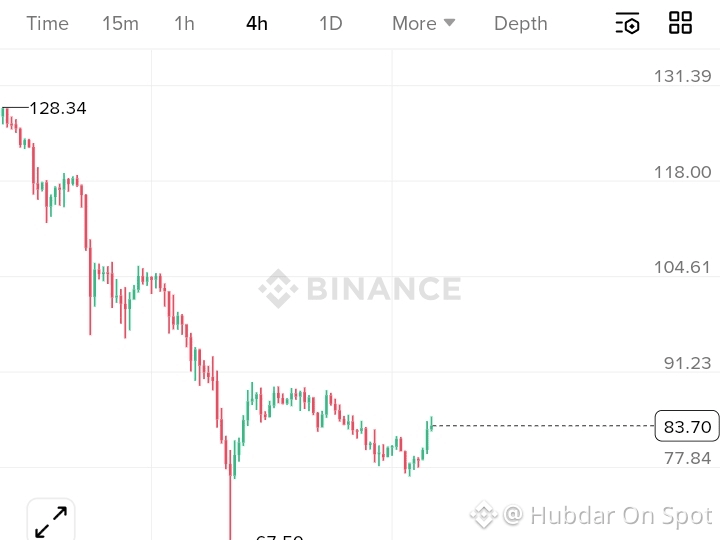
$SOL volver a la posición 👍🏼 Se espera alcista
$SOL volver a la posición 👍🏼 Se espera alcista
2
107
También compraron algunos $SUI TP 🎯 es $1.5
Veamos 🙈 , es alcista pronto.
Los comentarios siempre están abiertos para que compartas tus opiniones 🤗
{spot}(SUIUSDT)
También compraron algunos $SUI TP 🎯 es $1.5
Veamos 🙈 , es alcista pronto.
Los comentarios siempre están abiertos para que compartas tus opiniones 🤗
Veamos 🙈 , es alcista pronto.
Los comentarios siempre están abiertos para que compartas tus opiniones 🤗
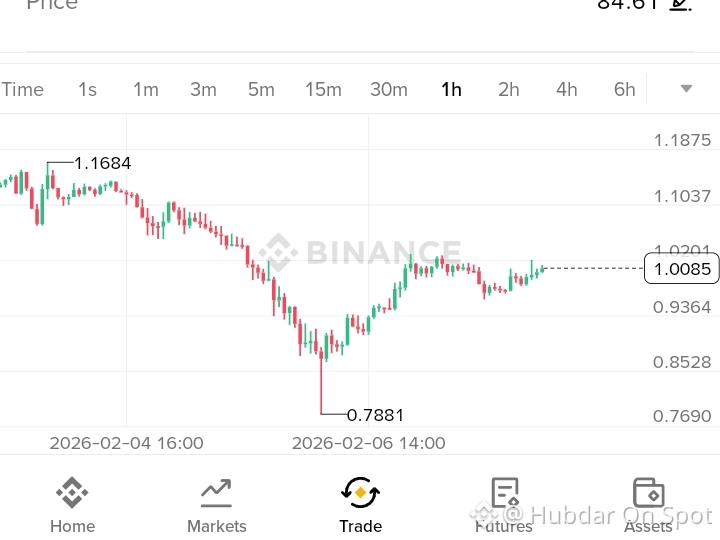
1
147
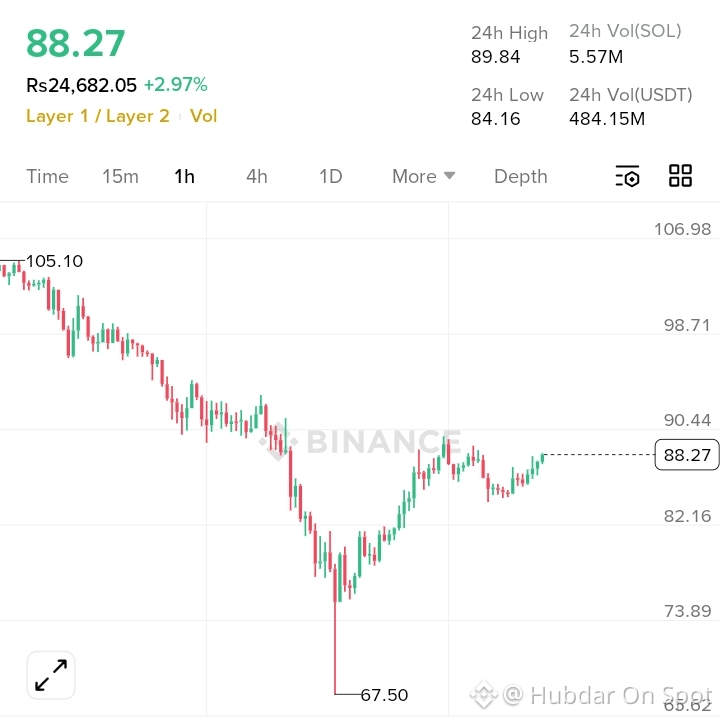
Venderé $SOL en 150
veamos qué pasa, es alcista 🙄
Comparte tus opiniones en los comentarios.
Venderé $SOL en 150
veamos qué pasa, es alcista 🙄
Comparte tus opiniones en los comentarios.
veamos qué pasa, es alcista 🙄
Comparte tus opiniones en los comentarios.
1
236
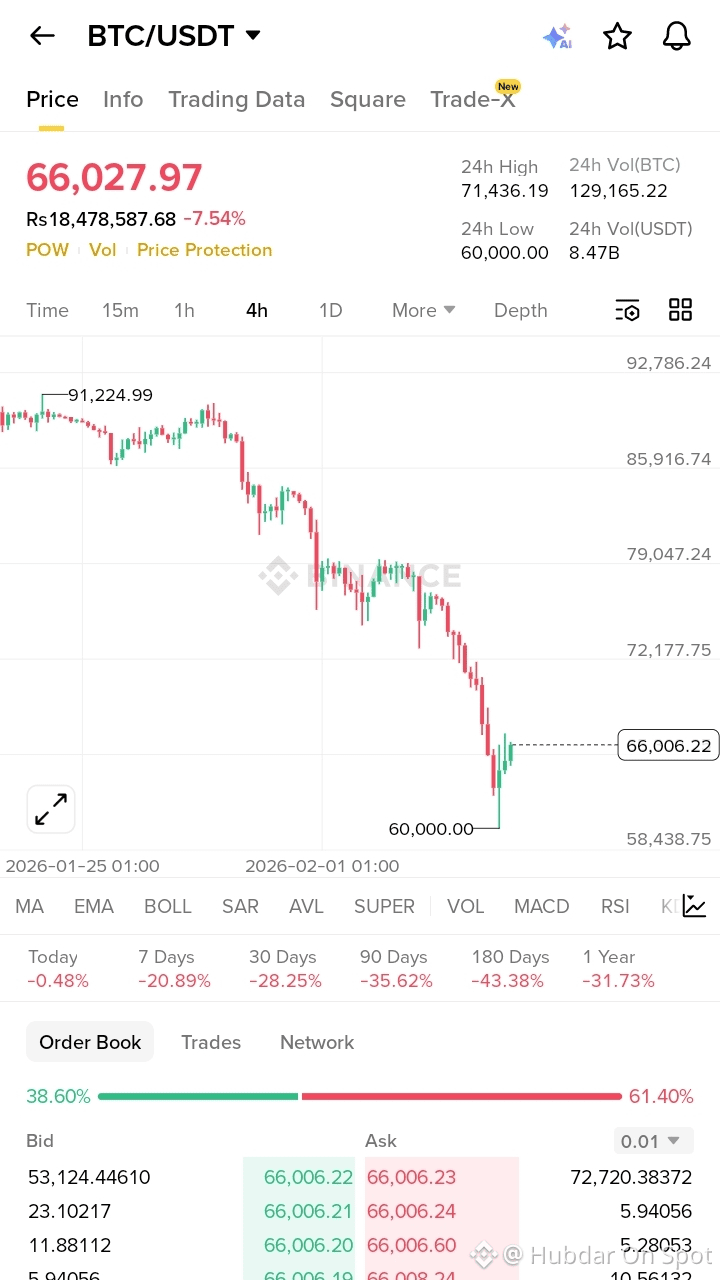
$BTC ¿Subir o caer de nuevo?
exprésate en los comentarios.
{spot}(BTCUSDT)
$BTC ¿Subir o caer de nuevo?
exprésate en los comentarios.
exprésate en los comentarios.
35
Inicia sesión para explorar más contenidos
Únete a usuarios de criptomonedas de todo el mundo en Binance Square
⚡️ Obtén la información más reciente y útil sobre criptomonedas.
💬 Confía en el mayor exchange de criptomonedas del mundo.
👍 Descubre opiniones reales de creadores verificados.
Correo electrónico/número de teléfono
Temas en tendencia
BinanceProcesses$4.65BWithdrawals
7,454 visualizaciones
69 participa(n) en el debate
Binance procesa 4.650 millones de dólares en retiros tras reabrirlos; la salida neta de 3.640 millones equivale al 2,1 % de sus 171.000 millones de dólares en activos
Binance News
·31 «Me gusta»
·8.1k visualizaciones
WithdrawalsBack: 15 networks live
5,120 visualizaciones
107 participa(n) en el debate
BinanceUpdatesProofofReservesAddresses
92,995 visualizaciones
1,353 participa(n) en el debate