

BitcoinPierre
440 Publicaciones

BitcoinPierre
Denunciar
Bloquear usuario
0 Siguiendo
11 Seguidores
42 Me gusta
Publicaciones
🔥 EL MURO DE VENTA DE BITCOIN DE $85K DESAPARECIÓ
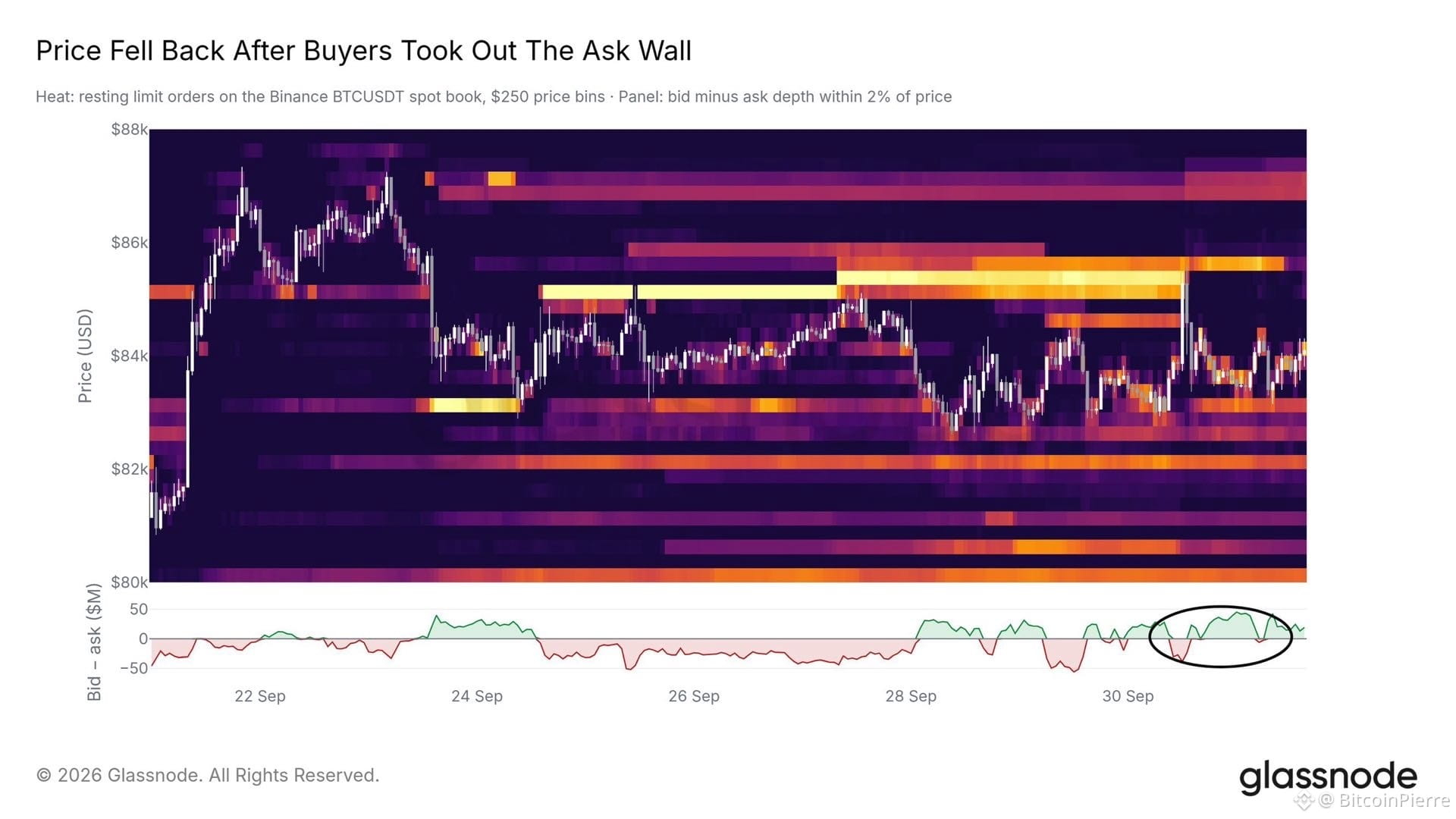
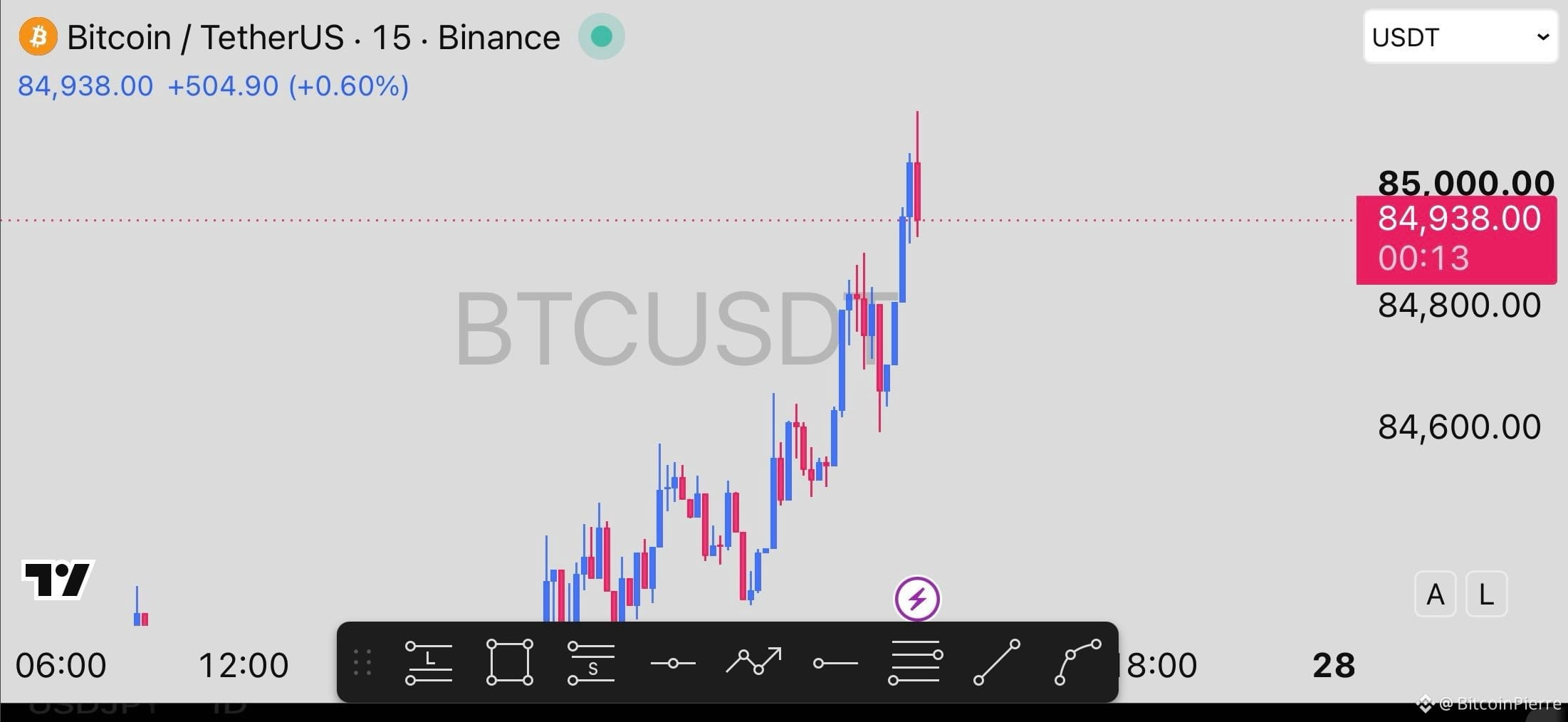
Los compradores de Bitcoin finalmente absorbieron ayer el importante muro de venta de $85,000 después de casi una semana de intentos fallidos por superarlo.
Ahora, la liquidez en la demanda restante por encima de BTC parece haberse adelgazado significativamente, eliminando parte de la resistencia inmediata que estaba por encima del mercado.
Esto importa porque cuando desaparecen grandes órdenes de venta, hay menos oferta por encima que los compradores deban absorber. Si sigue entrando demanda fresca, BTC podría avanzar a través de los niveles superiores mucho más rápido.
Por supuesto, la liquidez del lado vendedor más fina puede funcionar en ambos sentidos. Puede acelerar el alza cuando los compradores están activos, pero también puede hacer que el precio sea más volátil si la demanda desaparece de repente.
El muro de $85K ya fue despejado. Ahora, el mercado necesita demostrar si los compradores pueden aprovechar la liquidez más delgada que hay encima.
#Análisis del precio de BTC# #BTC por encima de 60K# $BTC $ETH
🔥 EL MURO DE VENTA DE BITCOIN DE $85K DESAPARECIÓ
Los compradores de Bitcoin finalmente absorbieron ayer el importante muro de venta de $85,000 después de casi una semana de intentos fallidos por superarlo.
Ahora, la liquidez en la demanda restante por encima de BTC parece haberse adelgazado significativamente, eliminando parte de la resistencia inmediata que estaba por encima del mercado.
Esto importa porque cuando desaparecen grandes órdenes de venta, hay menos oferta por encima que los compradores deban absorber. Si sigue entrando demanda fresca, BTC podría avanzar a través de los niveles superiores mucho más rápido.
Por supuesto, la liquidez del lado vendedor más fina puede funcionar en ambos sentidos. Puede acelerar el alza cuando los compradores están activos, pero también puede hacer que el precio sea más volátil si la demanda desaparece de repente.
El muro de $85K ya fue despejado. Ahora, el mercado necesita demostrar si los compradores pueden aprovechar la liquidez más delgada que hay encima.
#Análisis del precio de BTC# #BTC por encima de 60K# $BTC $ETH
Los compradores de Bitcoin finalmente absorbieron ayer el importante muro de venta de $85,000 después de casi una semana de intentos fallidos por superarlo.
Ahora, la liquidez en la demanda restante por encima de BTC parece haberse adelgazado significativamente, eliminando parte de la resistencia inmediata que estaba por encima del mercado.
Esto importa porque cuando desaparecen grandes órdenes de venta, hay menos oferta por encima que los compradores deban absorber. Si sigue entrando demanda fresca, BTC podría avanzar a través de los niveles superiores mucho más rápido.
Por supuesto, la liquidez del lado vendedor más fina puede funcionar en ambos sentidos. Puede acelerar el alza cuando los compradores están activos, pero también puede hacer que el precio sea más volátil si la demanda desaparece de repente.
El muro de $85K ya fue despejado. Ahora, el mercado necesita demostrar si los compradores pueden aprovechar la liquidez más delgada que hay encima.
#Análisis del precio de BTC# #BTC por encima de 60K# $BTC $ETH
Ver traducción
🚨 STABLECOINS COULD BE ENTERING A MASSIVE GROWTH PHASE
Bitwise CIO Matt Hougan says stablecoins are going “much, much higher,” and new research from the San Francisco Fed gives the sector another reason to pay attention.
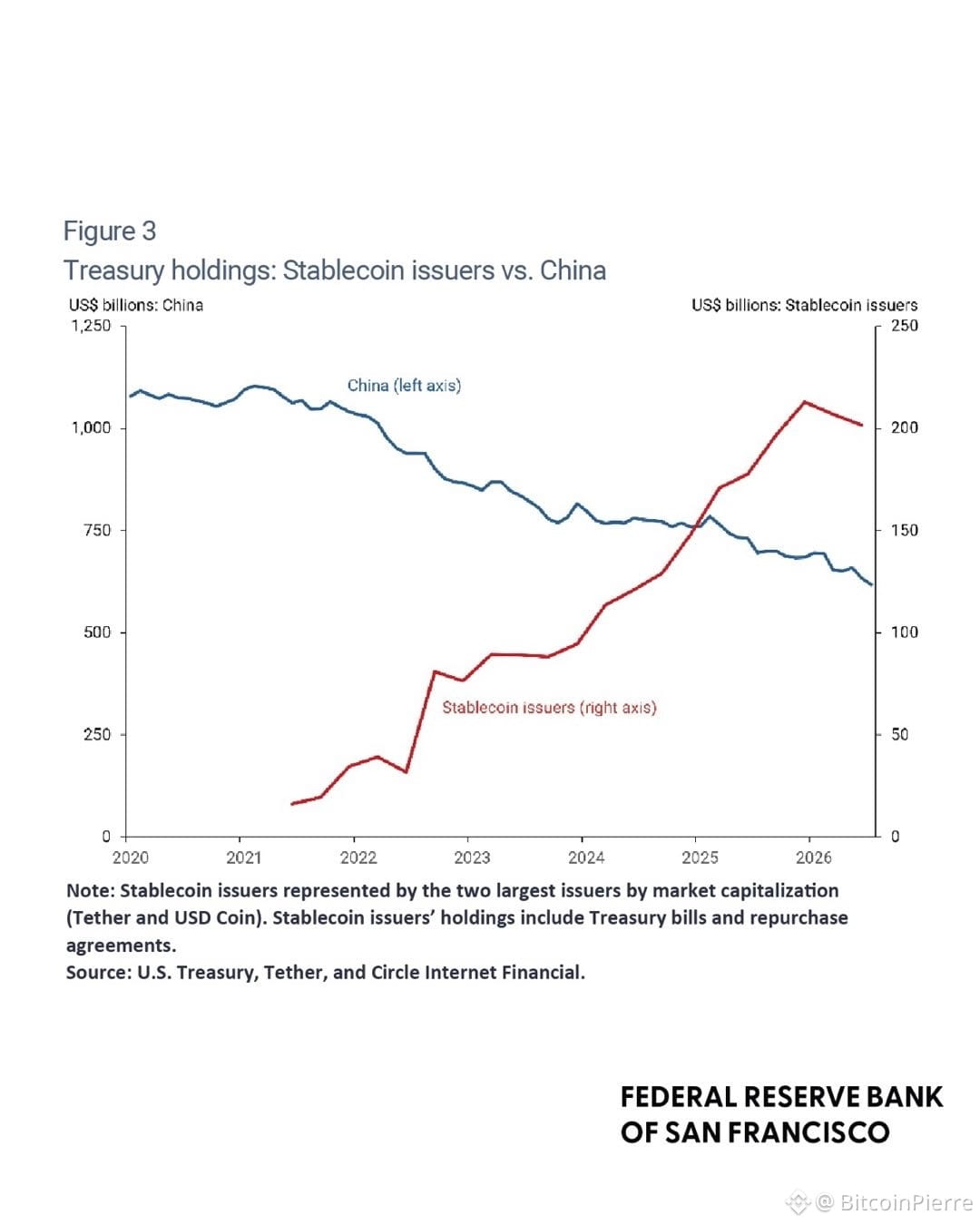
Stablecoin issuers have increased their U.S. Treasury holdings by roughly $200B over the past five years, offsetting more than 40% of the decline in China’s Treasury holdings.
The Fed estimates that if the current trend continues, stablecoin issuers could hold around $400B in short-term Treasuries by 2030.
That means stablecoins aren’t just becoming a bigger part of crypto. They’re increasingly becoming a meaningful source of demand for U.S. government debt.
The stablecoin market may be much bigger than a crypto liquidity story.
#BTC Price Analysis# #Macro Insights# $USDC $BTC
🚨 STABLECOINS COULD BE ENTERING A MASSIVE GROWTH PHASE
Bitwise CIO Matt Hougan says stablecoins are going “much, much higher,” and new research from the San Francisco Fed gives the sector another reason to pay attention.
Stablecoin issuers have increased their U.S. Treasury holdings by roughly $200B over the past five years, offsetting more than 40% of the decline in China’s Treasury holdings.
The Fed estimates that if the current trend continues, stablecoin issuers could hold around $400B in short-term Treasuries by 2030.
That means stablecoins aren’t just becoming a bigger part of crypto. They’re increasingly becoming a meaningful source of demand for U.S. government debt.
The stablecoin market may be much bigger than a crypto liquidity story.
#BTC Price Analysis# #Macro Insights# $USDC $BTC
Bitwise CIO Matt Hougan says stablecoins are going “much, much higher,” and new research from the San Francisco Fed gives the sector another reason to pay attention.
Stablecoin issuers have increased their U.S. Treasury holdings by roughly $200B over the past five years, offsetting more than 40% of the decline in China’s Treasury holdings.
The Fed estimates that if the current trend continues, stablecoin issuers could hold around $400B in short-term Treasuries by 2030.
That means stablecoins aren’t just becoming a bigger part of crypto. They’re increasingly becoming a meaningful source of demand for U.S. government debt.
The stablecoin market may be much bigger than a crypto liquidity story.
#BTC Price Analysis# #Macro Insights# $USDC $BTC

2
🔥 BITCOIN ACABA DE TENER SU MEJOR Q3 DESDE 2017
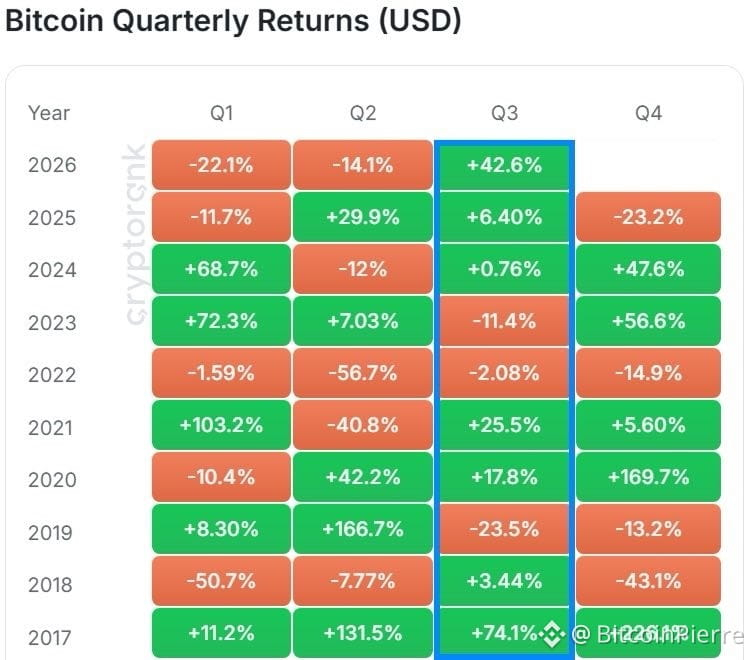
Bitcoin ganó aproximadamente un 42,6% en el Q3 de 2026, marcando su mejor desempeño en un tercer trimestre en nueve años.
Lo que hace que el movimiento sea aún más notable es cuánto terreno tuvo que recuperar BTC. Bitcoin registró pérdidas tanto en el Q1 como en el Q2, lo que ejerció una presión significativa sobre el mercado antes de que el rebote del tercer trimestre cambiara el panorama.
El Q3, en la práctica, se convirtió en el trimestre en el que Bitcoin recuperó el impulso, y la subida ayudó a borrar gran parte de la debilidad vista durante la primera mitad del año.
Ahora la atención se desplaza a Q4.
Después de su mejor Q3 desde 2017, ¿puede Bitcoin mantener ese impulso durante el último trimestre de 2026?
#Análisis del precio de BTC# #Perspectivas macro# $BTC $ETH
🔥 BITCOIN ACABA DE TENER SU MEJOR Q3 DESDE 2017
Bitcoin ganó aproximadamente un 42,6% en el Q3 de 2026, marcando su mejor desempeño en un tercer trimestre en nueve años.
Lo que hace que el movimiento sea aún más notable es cuánto terreno tuvo que recuperar BTC. Bitcoin registró pérdidas tanto en el Q1 como en el Q2, lo que ejerció una presión significativa sobre el mercado antes de que el rebote del tercer trimestre cambiara el panorama.
El Q3, en la práctica, se convirtió en el trimestre en el que Bitcoin recuperó el impulso, y la subida ayudó a borrar gran parte de la debilidad vista durante la primera mitad del año.
Ahora la atención se desplaza a Q4.
Después de su mejor Q3 desde 2017, ¿puede Bitcoin mantener ese impulso durante el último trimestre de 2026?
#Análisis del precio de BTC# #Perspectivas macro# $BTC $ETH
Bitcoin ganó aproximadamente un 42,6% en el Q3 de 2026, marcando su mejor desempeño en un tercer trimestre en nueve años.
Lo que hace que el movimiento sea aún más notable es cuánto terreno tuvo que recuperar BTC. Bitcoin registró pérdidas tanto en el Q1 como en el Q2, lo que ejerció una presión significativa sobre el mercado antes de que el rebote del tercer trimestre cambiara el panorama.
El Q3, en la práctica, se convirtió en el trimestre en el que Bitcoin recuperó el impulso, y la subida ayudó a borrar gran parte de la debilidad vista durante la primera mitad del año.
Ahora la atención se desplaza a Q4.
Después de su mejor Q3 desde 2017, ¿puede Bitcoin mantener ese impulso durante el último trimestre de 2026?
#Análisis del precio de BTC# #Perspectivas macro# $BTC $ETH
73
🔥 BRASIL ESTÁ PONIENDO REGISTROS DE FONDOS TRADICIONALES EN EL LEDGER DE XRP
El operador de infraestructura de mercados financieros de Brasil CSD BR se asoció con Ripple para reflejar registros de propiedad de valores en el público XRP Ledger, comenzando con las participaciones del fondo de inversión de BTG Pactual.
La parte importante es que esto va más allá de una simple prueba de blockchain. Los sistemas existentes de CSD BR seguirán siendo el registro oficial de propiedad, mientras que XRPL aporta una capa adicional para verificación y auditoría en tiempo casi real.
CSD BR gestiona más de 22 billones de BRL en activos registrados, aunque no todo ese monto se está tokenizando en XRPL. La primera fase se limita a participaciones seleccionadas del fondo de BTG Pactual.
Si el despliegue inicial funciona, la alianza planea explorar la emisión y la negociación nativas de activos onchain, incluidas propiedades inmobiliarias en Brasil y cuentas por cobrar del sector agro.
La infraestructura financiera tradicional está empezando a usar blockchains públicas como parte del sistema real, no solo como prueba de concepto.
#Análisis del Precio de BTC# #Perspectivas Macroeconómicas# $XRP $BTC
🔥 BRASIL ESTÁ PONIENDO REGISTROS DE FONDOS TRADICIONALES EN EL LEDGER DE XRP
El operador de infraestructura de mercados financieros de Brasil CSD BR se asoció con Ripple para reflejar registros de propiedad de valores en el público XRP Ledger, comenzando con las participaciones del fondo de inversión de BTG Pactual.
La parte importante es que esto va más allá de una simple prueba de blockchain. Los sistemas existentes de CSD BR seguirán siendo el registro oficial de propiedad, mientras que XRPL aporta una capa adicional para verificación y auditoría en tiempo casi real.
CSD BR gestiona más de 22 billones de BRL en activos registrados, aunque no todo ese monto se está tokenizando en XRPL. La primera fase se limita a participaciones seleccionadas del fondo de BTG Pactual.
Si el despliegue inicial funciona, la alianza planea explorar la emisión y la negociación nativas de activos onchain, incluidas propiedades inmobiliarias en Brasil y cuentas por cobrar del sector agro.
La infraestructura financiera tradicional está empezando a usar blockchains públicas como parte del sistema real, no solo como prueba de concepto.
#Análisis del Precio de BTC# #Perspectivas Macroeconómicas# $XRP $BTC
El operador de infraestructura de mercados financieros de Brasil CSD BR se asoció con Ripple para reflejar registros de propiedad de valores en el público XRP Ledger, comenzando con las participaciones del fondo de inversión de BTG Pactual.
La parte importante es que esto va más allá de una simple prueba de blockchain. Los sistemas existentes de CSD BR seguirán siendo el registro oficial de propiedad, mientras que XRPL aporta una capa adicional para verificación y auditoría en tiempo casi real.
CSD BR gestiona más de 22 billones de BRL en activos registrados, aunque no todo ese monto se está tokenizando en XRPL. La primera fase se limita a participaciones seleccionadas del fondo de BTG Pactual.
Si el despliegue inicial funciona, la alianza planea explorar la emisión y la negociación nativas de activos onchain, incluidas propiedades inmobiliarias en Brasil y cuentas por cobrar del sector agro.
La infraestructura financiera tradicional está empezando a usar blockchains públicas como parte del sistema real, no solo como prueba de concepto.
#Análisis del Precio de BTC# #Perspectivas Macroeconómicas# $XRP $BTC
52
El ETF de NEAR de Bitwise ($NRR) está cotizando oficialmente hoy en NYSE Arca, brindando a los inversores estadounidenses exposición directa al spot de NEAR a través de un producto tradicional cotizado en bolsa.
Lo que hace este lanzamiento más interesante es el componente de staking. Bitwise planea hacer staking con las tenencias de NEAR del fondo en casa, y las recompensas de staking se acumularán para los accionistas a través del NAV del fondo. El ETF tiene una comisión de gestión del 0,75%.
Esto añade NEAR a la lista creciente de activos cripto que acceden a la infraestructura de ETF en EE. UU. más allá de Bitcoin y Ethereum.
Exposición spot + staking en un solo producto. Ahora el mercado podrá ver cuánta demanda tienen los inversores estadounidenses por NEAR.
#BTC Price Analysis# #Macro Insights# $NEAR $BTC
El ETF de NEAR de Bitwise ($NRR) está cotizando oficialmente hoy en NYSE Arca, brindando a los inversores estadounidenses exposición directa al spot de NEAR a través de un producto tradicional cotizado en bolsa.
Lo que hace este lanzamiento más interesante es el componente de staking. Bitwise planea hacer staking con las tenencias de NEAR del fondo en casa, y las recompensas de staking se acumularán para los accionistas a través del NAV del fondo. El ETF tiene una comisión de gestión del 0,75%.
Esto añade NEAR a la lista creciente de activos cripto que acceden a la infraestructura de ETF en EE. UU. más allá de Bitcoin y Ethereum.
Exposición spot + staking en un solo producto. Ahora el mercado podrá ver cuánta demanda tienen los inversores estadounidenses por NEAR.
#BTC Price Analysis# #Macro Insights# $NEAR $BTC
Lo que hace este lanzamiento más interesante es el componente de staking. Bitwise planea hacer staking con las tenencias de NEAR del fondo en casa, y las recompensas de staking se acumularán para los accionistas a través del NAV del fondo. El ETF tiene una comisión de gestión del 0,75%.
Esto añade NEAR a la lista creciente de activos cripto que acceden a la infraestructura de ETF en EE. UU. más allá de Bitcoin y Ethereum.
Exposición spot + staking en un solo producto. Ahora el mercado podrá ver cuánta demanda tienen los inversores estadounidenses por NEAR.
#BTC Price Analysis# #Macro Insights# $NEAR $BTC
29
🔥 AAVE PODRÍA ESTAR RECIBIENDO UNA QUEMA DE TOKENS
El fundador de Aave, Stani Kulechov, dice que se está considerando un mecanismo de quema de tokens para Aavenomics 3.0, lo que potencialmente añadiría una reducción de la oferta permanente al modelo de recompra existente de Aave.
Aave ya ha usado los ingresos del protocolo para recomprar AAVE, pero esos tokens se han mantenido en lugar de quemarse.
Si el nuevo modelo avanza, algunos de esos tokens recomprados podrían eliminarse permanentemente de la circulación.
Eso pone inmediatamente de nuevo el foco en la dinámica de la oferta de AAVE.
Las recompras son una cosa. Las recompras + las quemas podrían cambiar la historia de la tokenomics.
#Análisis del precio de BTC# #Perspectivas macro# $AAVE $BTC
🔥 AAVE PODRÍA ESTAR RECIBIENDO UNA QUEMA DE TOKENS
El fundador de Aave, Stani Kulechov, dice que se está considerando un mecanismo de quema de tokens para Aavenomics 3.0, lo que potencialmente añadiría una reducción de la oferta permanente al modelo de recompra existente de Aave.
Aave ya ha usado los ingresos del protocolo para recomprar AAVE, pero esos tokens se han mantenido en lugar de quemarse.
Si el nuevo modelo avanza, algunos de esos tokens recomprados podrían eliminarse permanentemente de la circulación.
Eso pone inmediatamente de nuevo el foco en la dinámica de la oferta de AAVE.
Las recompras son una cosa. Las recompras + las quemas podrían cambiar la historia de la tokenomics.
#Análisis del precio de BTC# #Perspectivas macro# $AAVE $BTC
El fundador de Aave, Stani Kulechov, dice que se está considerando un mecanismo de quema de tokens para Aavenomics 3.0, lo que potencialmente añadiría una reducción de la oferta permanente al modelo de recompra existente de Aave.
Aave ya ha usado los ingresos del protocolo para recomprar AAVE, pero esos tokens se han mantenido en lugar de quemarse.
Si el nuevo modelo avanza, algunos de esos tokens recomprados podrían eliminarse permanentemente de la circulación.
Eso pone inmediatamente de nuevo el foco en la dinámica de la oferta de AAVE.
Las recompras son una cosa. Las recompras + las quemas podrían cambiar la historia de la tokenomics.
#Análisis del precio de BTC# #Perspectivas macro# $AAVE $BTC

45
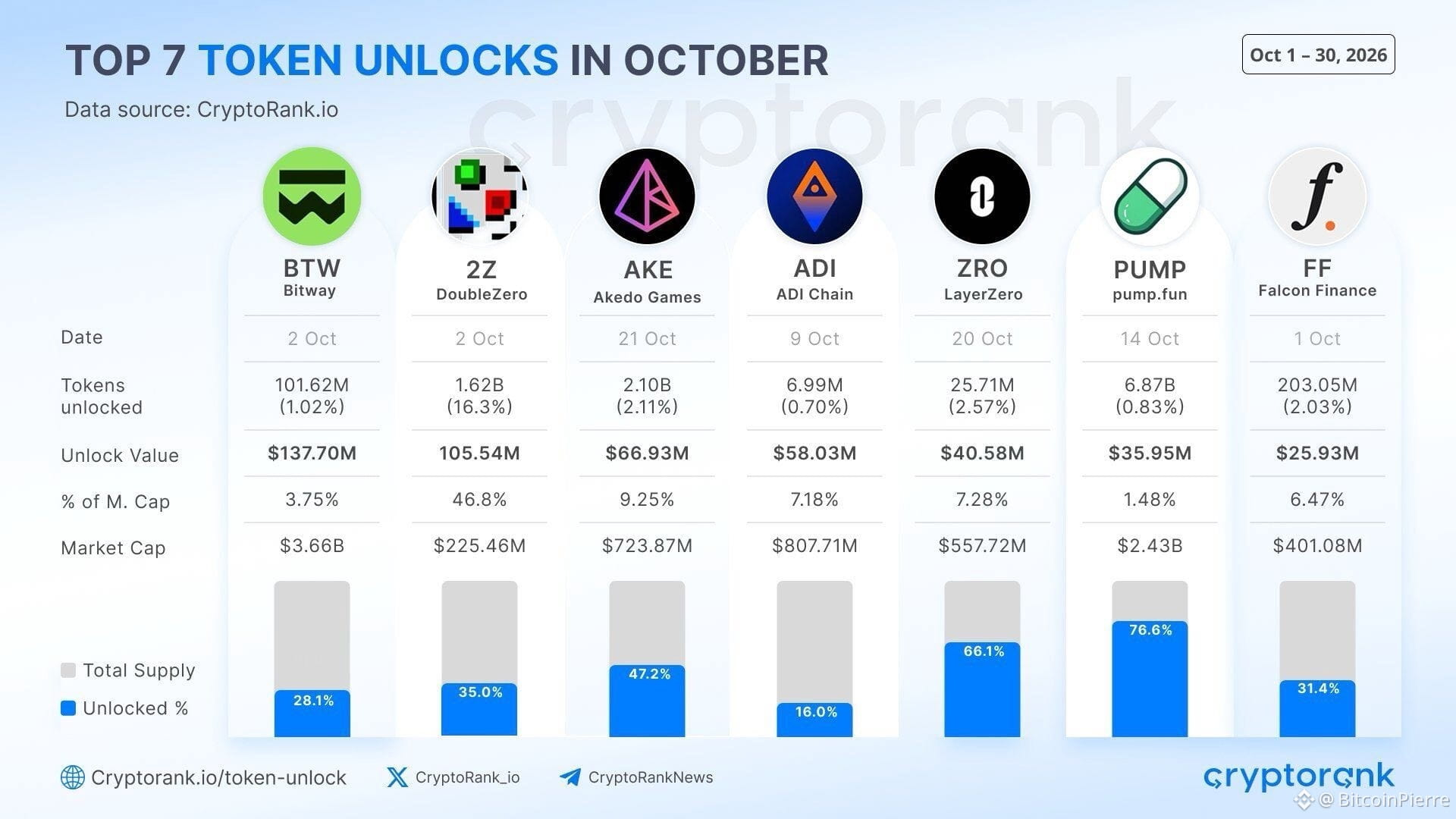
Los siete principales desbloqueos de tokens programados para octubre valen aproximadamente 470,66 M$, con BTW liderando con 137,7 M$.
Otros desbloqueos importantes incluyen 2Z con 105,5 M$, $AKE con 66,9 M$ y ADI con 58 M$.
Los números importan porque los tokens recién desbloqueados pueden aumentar la oferta en circulación y generar una presión adicional de venta si los destinatarios deciden tomar ganancias.
Pero un desbloqueo no significa automáticamente un desplome. El impacto real depende de quién recibe los tokens, de cuánto entra al mercado y de si la demanda puede absorber la nueva oferta.
Se avecina una oferta de más de 470 M$. Octubre podría ponerse interesante para estos tokens.
#BTC Price Analysis# #Altcoin Season# $AAVE
Los siete principales desbloqueos de tokens programados para octubre valen aproximadamente 470,66 M$, con BTW liderando con 137,7 M$.
Otros desbloqueos importantes incluyen 2Z con 105,5 M$, $AKE con 66,9 M$ y ADI con 58 M$.
Los números importan porque los tokens recién desbloqueados pueden aumentar la oferta en circulación y generar una presión adicional de venta si los destinatarios deciden tomar ganancias.
Pero un desbloqueo no significa automáticamente un desplome. El impacto real depende de quién recibe los tokens, de cuánto entra al mercado y de si la demanda puede absorber la nueva oferta.
Se avecina una oferta de más de 470 M$. Octubre podría ponerse interesante para estos tokens.
#BTC Price Analysis# #Altcoin Season# $AAVE
Otros desbloqueos importantes incluyen 2Z con 105,5 M$, $AKE con 66,9 M$ y ADI con 58 M$.
Los números importan porque los tokens recién desbloqueados pueden aumentar la oferta en circulación y generar una presión adicional de venta si los destinatarios deciden tomar ganancias.
Pero un desbloqueo no significa automáticamente un desplome. El impacto real depende de quién recibe los tokens, de cuánto entra al mercado y de si la demanda puede absorber la nueva oferta.
Se avecina una oferta de más de 470 M$. Octubre podría ponerse interesante para estos tokens.
#BTC Price Analysis# #Altcoin Season# $AAVE
120
Kakao Pay Securities ha firmado acuerdos por separado con Ondo Finance y Dinari para explorar la tokenización de acciones surcoreanas para inversores extranjeros.
La idea es crear una ruta basada en blockchain para que los inversores internacionales obtengan exposición a empresas cotizadas en Corea del Sur, y las asociaciones examinen la custodia, la emisión de tokens, el reembolso y los derechos de los accionistas.
Esto aún es una exploración, no un lanzamiento comercial. Las empresas primero evaluarán los requisitos técnicos y regulatorios antes de decidir si avanzar.
Pero la dirección es significativa.
Las acciones coreanas podrían ser el próximo activo tradicional en avanzar más profundamente hacia los mercados globales onchain.
#Análisis del precio de BTC# #Perspectivas macro# $ONDO $HBAR
Kakao Pay Securities ha firmado acuerdos por separado con Ondo Finance y Dinari para explorar la tokenización de acciones surcoreanas para inversores extranjeros.
La idea es crear una ruta basada en blockchain para que los inversores internacionales obtengan exposición a empresas cotizadas en Corea del Sur, y las asociaciones examinen la custodia, la emisión de tokens, el reembolso y los derechos de los accionistas.
Esto aún es una exploración, no un lanzamiento comercial. Las empresas primero evaluarán los requisitos técnicos y regulatorios antes de decidir si avanzar.
Pero la dirección es significativa.
Las acciones coreanas podrían ser el próximo activo tradicional en avanzar más profundamente hacia los mercados globales onchain.
#Análisis del precio de BTC# #Perspectivas macro# $ONDO $HBAR
La idea es crear una ruta basada en blockchain para que los inversores internacionales obtengan exposición a empresas cotizadas en Corea del Sur, y las asociaciones examinen la custodia, la emisión de tokens, el reembolso y los derechos de los accionistas.
Esto aún es una exploración, no un lanzamiento comercial. Las empresas primero evaluarán los requisitos técnicos y regulatorios antes de decidir si avanzar.
Pero la dirección es significativa.
Las acciones coreanas podrían ser el próximo activo tradicional en avanzar más profundamente hacia los mercados globales onchain.
#Análisis del precio de BTC# #Perspectivas macro# $ONDO $HBAR
65
🔥 JUST IN: EL ETF DE LINK DE BITWISE DA OTRO PASO ADELANTE
La SEC ha presentado un nuevo formulario regulatorio para el ETF de Chainlink de Bitwise, vinculado a LINK.
El fondo, que cotiza con el ticker CLNK, está diseñado para brindar a los inversores exposición a LINK a través de un producto tradicional cotizado en bolsa. Los documentos de la SEC confirman que el fondo está registrado para operar en NYSE Arca. 
Este es otro avance importante en el impulso por llevar las altcoins a los mercados de inversión tradicionales.
#Análisis del precio de BTC# #Perspectivas macro# $LINK $HBAR
🔥 JUST IN: EL ETF DE LINK DE BITWISE DA OTRO PASO ADELANTE
La SEC ha presentado un nuevo formulario regulatorio para el ETF de Chainlink de Bitwise, vinculado a LINK.
El fondo, que cotiza con el ticker CLNK, está diseñado para brindar a los inversores exposición a LINK a través de un producto tradicional cotizado en bolsa. Los documentos de la SEC confirman que el fondo está registrado para operar en NYSE Arca. 
Este es otro avance importante en el impulso por llevar las altcoins a los mercados de inversión tradicionales.
#Análisis del precio de BTC# #Perspectivas macro# $LINK $HBAR
La SEC ha presentado un nuevo formulario regulatorio para el ETF de Chainlink de Bitwise, vinculado a LINK.
El fondo, que cotiza con el ticker CLNK, está diseñado para brindar a los inversores exposición a LINK a través de un producto tradicional cotizado en bolsa. Los documentos de la SEC confirman que el fondo está registrado para operar en NYSE Arca. 
Este es otro avance importante en el impulso por llevar las altcoins a los mercados de inversión tradicionales.
#Análisis del precio de BTC# #Perspectivas macro# $LINK $HBAR
8
🔥 87% DE LAS ALTCOINS DE BINANCE SE HAN VUELTO ALCISTAS
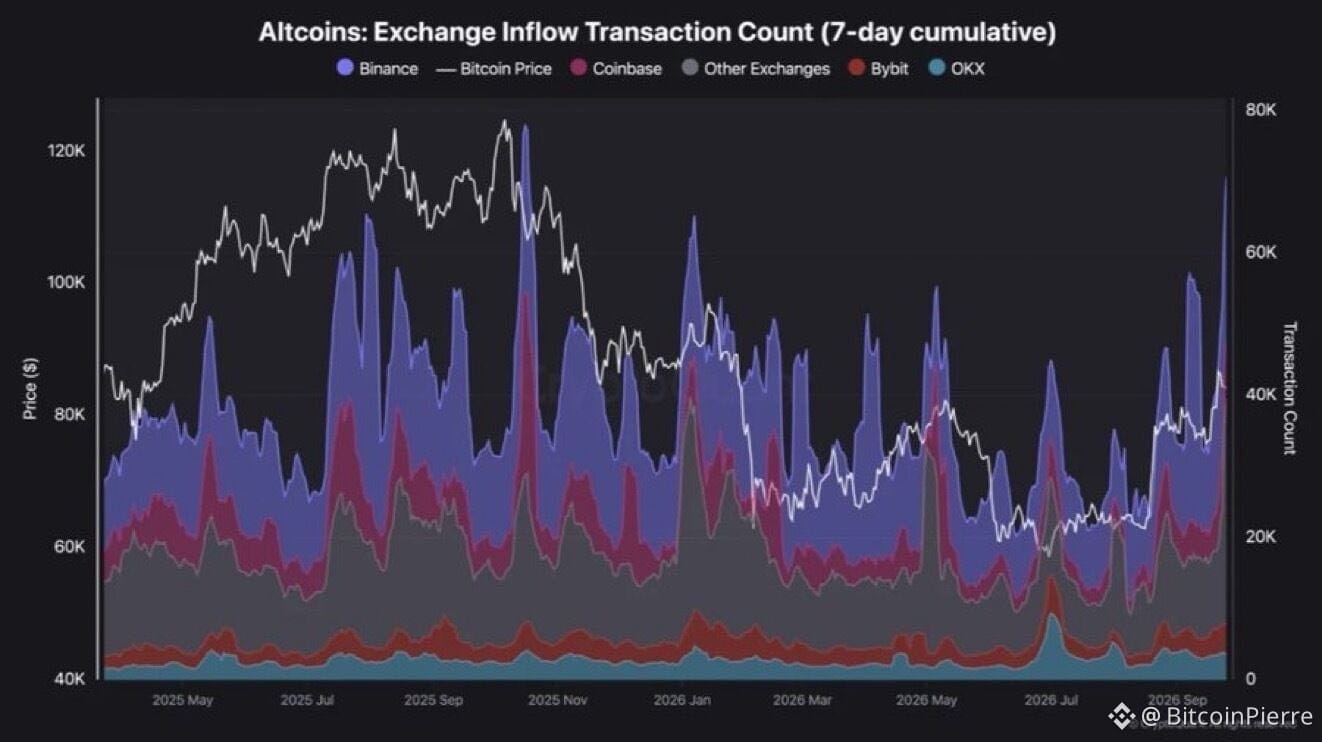
Un analista de CryptoQuant, Darkfost, afirma que el 87% de las altcoins listadas en Binance ahora cotizan por encima de sus medias móviles de 200 días, un gran cambio respecto a agosto, cuando aproximadamente el 80% aún estaba por debajo de ese nivel.
La recuperación ha sido amplia: Total2 ha sumado más de $371B desde junio, pero hay un detalle.
Darkfost también observa señales tempranas de una euforia en las altcoins, incluida la subida de los depósitos en los exchanges y el debilitamiento de las señales de momentum. Históricamente, movimientos de esta magnitud pueden volverse difíciles de sostener.
87% alcista. El repunte es real, pero las señales de alerta también.
#BTC Price Analysis# #Macro Insights# $BTC $ETH
🔥 87% DE LAS ALTCOINS DE BINANCE SE HAN VUELTO ALCISTAS
Un analista de CryptoQuant, Darkfost, afirma que el 87% de las altcoins listadas en Binance ahora cotizan por encima de sus medias móviles de 200 días, un gran cambio respecto a agosto, cuando aproximadamente el 80% aún estaba por debajo de ese nivel.
La recuperación ha sido amplia: Total2 ha sumado más de $371B desde junio, pero hay un detalle.
Darkfost también observa señales tempranas de una euforia en las altcoins, incluida la subida de los depósitos en los exchanges y el debilitamiento de las señales de momentum. Históricamente, movimientos de esta magnitud pueden volverse difíciles de sostener.
87% alcista. El repunte es real, pero las señales de alerta también.
#BTC Price Analysis# #Macro Insights# $BTC $ETH
Un analista de CryptoQuant, Darkfost, afirma que el 87% de las altcoins listadas en Binance ahora cotizan por encima de sus medias móviles de 200 días, un gran cambio respecto a agosto, cuando aproximadamente el 80% aún estaba por debajo de ese nivel.
La recuperación ha sido amplia: Total2 ha sumado más de $371B desde junio, pero hay un detalle.
Darkfost también observa señales tempranas de una euforia en las altcoins, incluida la subida de los depósitos en los exchanges y el debilitamiento de las señales de momentum. Históricamente, movimientos de esta magnitud pueden volverse difíciles de sostener.
87% alcista. El repunte es real, pero las señales de alerta también.
#BTC Price Analysis# #Macro Insights# $BTC $ETH
2
Para usuarios que mueven liquidez desde Ethereum, BNB Chain o Base hacia TON DeFi, la ruta que elijas puede cambiar lo que realmente recibes al otro lado.
El enfoque tradicional es un puente: bloqueas o quemas el activo de origen y recibes un Jetton envuelto en TON. Eso puede funcionar, pero introduce otra capa de exposición a contratos y deja a los usuarios gestionando una representación envuelta.
Hay otro modelo.
Omniston utiliza una arquitectura de intercambio atómico basada en resolvers y HTLCs emparejados. En lugar de mover una versión envuelta a través de un puente, el usuario puede intercambiar directamente por un activo nativo de TON. El resolver bloquea el activo de destino, mientras que el activo de la parte de origen queda asegurado mediante el HTLC correspondiente.
Esa distinción importa más allá de la arquitectura técnica. Si el objetivo es entrar a TON DeFi y usar el activo de inmediato, recibir el activo nativo de destino elimina un paso adicional.
Una vez en TON, los usuarios pueden acceder a swaps, pools de liquidez y otras oportunidades DeFi, beneficiándose de los costos de transacción generalmente bajos de TON.
Para cualquiera que mueva capital desde cadenas EVM hacia TON, entender la ruta es igual de importante que realizar el movimiento.
Swaps entre cadenas: https://app.ston.fi/swap?mode=cross-chain&in=ton%3AUSD%E2%82%AE
#Análisis del Precio de BTC# #Perspectivas Macroeconómicas# $GRAM $HBAR
Para usuarios que mueven liquidez desde Ethereum, BNB Chain o Base hacia TON DeFi, la ruta que elijas puede cambiar lo que realmente recibes al otro lado.
El enfoque tradicional es un puente: bloqueas o quemas el activo de origen y recibes un Jetton envuelto en TON. Eso puede funcionar, pero introduce otra capa de exposición a contratos y deja a los usuarios gestionando una representación envuelta.
Hay otro modelo.
Omniston utiliza una arquitectura de intercambio atómico basada en resolvers y HTLCs emparejados. En lugar de mover una versión envuelta a través de un puente, el usuario puede intercambiar directamente por un activo nativo de TON. El resolver bloquea el activo de destino, mientras que el activo de la parte de origen queda asegurado mediante el HTLC correspondiente.
Esa distinción importa más allá de la arquitectura técnica. Si el objetivo es entrar a TON DeFi y usar el activo de inmediato, recibir el activo nativo de destino elimina un paso adicional.
Una vez en TON, los usuarios pueden acceder a swaps, pools de liquidez y otras oportunidades DeFi, beneficiándose de los costos de transacción generalmente bajos de TON.
Para cualquiera que mueva capital desde cadenas EVM hacia TON, entender la ruta es igual de importante que realizar el movimiento.
Swaps entre cadenas: https://app.ston.fi/swap?mode=cross-chain&in=ton%3AUSD%E2%82%AE
#Análisis del Precio de BTC# #Perspectivas Macroeconómicas# $GRAM $HBAR
El enfoque tradicional es un puente: bloqueas o quemas el activo de origen y recibes un Jetton envuelto en TON. Eso puede funcionar, pero introduce otra capa de exposición a contratos y deja a los usuarios gestionando una representación envuelta.
Hay otro modelo.
Omniston utiliza una arquitectura de intercambio atómico basada en resolvers y HTLCs emparejados. En lugar de mover una versión envuelta a través de un puente, el usuario puede intercambiar directamente por un activo nativo de TON. El resolver bloquea el activo de destino, mientras que el activo de la parte de origen queda asegurado mediante el HTLC correspondiente.
Esa distinción importa más allá de la arquitectura técnica. Si el objetivo es entrar a TON DeFi y usar el activo de inmediato, recibir el activo nativo de destino elimina un paso adicional.
Una vez en TON, los usuarios pueden acceder a swaps, pools de liquidez y otras oportunidades DeFi, beneficiándose de los costos de transacción generalmente bajos de TON.
Para cualquiera que mueva capital desde cadenas EVM hacia TON, entender la ruta es igual de importante que realizar el movimiento.
Swaps entre cadenas: https://app.ston.fi/swap?mode=cross-chain&in=ton%3AUSD%E2%82%AE
#Análisis del Precio de BTC# #Perspectivas Macroeconómicas# $GRAM $HBAR
2
🔥 LA ESTRATEGIA ACABA DE AÑADIR OTROS 1.666 BTC
Según se informa, la Estrategia ha comprado 1.666 BTC, elevando sus tenencias totales de Bitcoin a 847.666 BTC.
El movimiento llega mientras Bitcoin sigue operando en torno al rango de los 80.000 dólares por la mitad, con la Estrategia usando nuevamente la debilidad del mercado para aumentar su ya masiva posición en BTC.
Con 847.666 BTC, la Estrategia ahora controla aproximadamente el 4% del suministro máximo de 21 millones de Bitcoin, reforzando su posición como el mayor tenedor corporativo de Bitcoin.
La estrategia de acumulación de la empresa sigue siendo una de las apuestas corporativas en cripto más vigiladas.
$BTC $ETH #BTC Price Analysis# #Macro Insights#
🔥 LA ESTRATEGIA ACABA DE AÑADIR OTROS 1.666 BTC
Según se informa, la Estrategia ha comprado 1.666 BTC, elevando sus tenencias totales de Bitcoin a 847.666 BTC.
El movimiento llega mientras Bitcoin sigue operando en torno al rango de los 80.000 dólares por la mitad, con la Estrategia usando nuevamente la debilidad del mercado para aumentar su ya masiva posición en BTC.
Con 847.666 BTC, la Estrategia ahora controla aproximadamente el 4% del suministro máximo de 21 millones de Bitcoin, reforzando su posición como el mayor tenedor corporativo de Bitcoin.
La estrategia de acumulación de la empresa sigue siendo una de las apuestas corporativas en cripto más vigiladas.
$BTC $ETH #BTC Price Analysis# #Macro Insights#
Según se informa, la Estrategia ha comprado 1.666 BTC, elevando sus tenencias totales de Bitcoin a 847.666 BTC.
El movimiento llega mientras Bitcoin sigue operando en torno al rango de los 80.000 dólares por la mitad, con la Estrategia usando nuevamente la debilidad del mercado para aumentar su ya masiva posición en BTC.
Con 847.666 BTC, la Estrategia ahora controla aproximadamente el 4% del suministro máximo de 21 millones de Bitcoin, reforzando su posición como el mayor tenedor corporativo de Bitcoin.
La estrategia de acumulación de la empresa sigue siendo una de las apuestas corporativas en cripto más vigiladas.
$BTC $ETH #BTC Price Analysis# #Macro Insights#

31
El veterano trader Peter Brandt dice que los gráficos de XRP por sí solos siempre han sido una razón suficiente para que él considere apostar por el token.
El último gráfico de Brandt se centra en la estructura del precio a largo plazo de XRP, mientras deja claro que estar interesado en XRP no requiere una lealtad ciega al activo.
Además, XRP también ha estado atrayendo la atención de grandes tenedores y de ETFs spot, sumando otra capa al panorama actual.
#Análisis del precio de BTC# #XRP $XRP $BTC
El veterano trader Peter Brandt dice que los gráficos de XRP por sí solos siempre han sido una razón suficiente para que él considere apostar por el token.
El último gráfico de Brandt se centra en la estructura del precio a largo plazo de XRP, mientras deja claro que estar interesado en XRP no requiere una lealtad ciega al activo.
Además, XRP también ha estado atrayendo la atención de grandes tenedores y de ETFs spot, sumando otra capa al panorama actual.
#Análisis del precio de BTC# #XRP $XRP $BTC
El último gráfico de Brandt se centra en la estructura del precio a largo plazo de XRP, mientras deja claro que estar interesado en XRP no requiere una lealtad ciega al activo.
Además, XRP también ha estado atrayendo la atención de grandes tenedores y de ETFs spot, sumando otra capa al panorama actual.
#Análisis del precio de BTC# #XRP $XRP $BTC

29
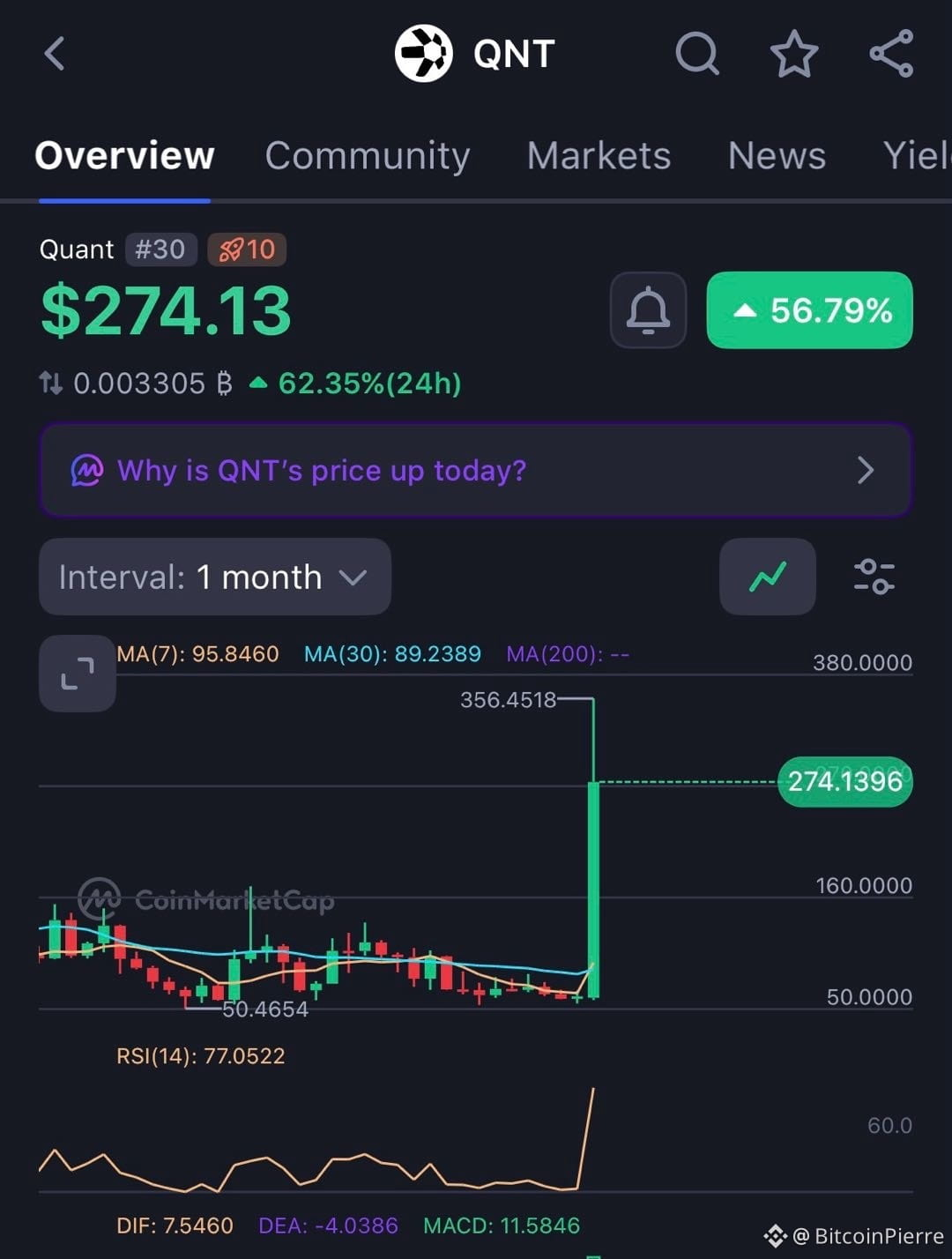
🔥 QNT VA ABSOLUTAMENTE EN VUELO
El token QNT de Quant está en una racha alocada: ha subido más de un 300% en la última semana y, brevemente, ha superado los 350 dólares hoy.
El movimiento llega después de que The Clearing House eligiera la tecnología de Quant para su Iniciativa de Dinero en la Cadena (On Chain Money Initiative), con el objetivo de la liquidación de depósitos tokenizados entre importantes instituciones financieras. También, los bancos del Reino Unido han completado pilotos en vivo de pagos tokenizados en esterlinas utilizando la plataforma de Quant.
Esa combinación de titulares sobre infraestructura financiera de primer nivel y un impulso explosivo ha vuelto a poner firmemente a QNT en el radar de los traders.
Pero después de un movimiento tan violento, la volatilidad puede ir en ambos sentidos.
#Análisis del precio de BTC# #Perspectivas macro# $QNT $BTC
🔥 QNT VA ABSOLUTAMENTE EN VUELO
El token QNT de Quant está en una racha alocada: ha subido más de un 300% en la última semana y, brevemente, ha superado los 350 dólares hoy.
El movimiento llega después de que The Clearing House eligiera la tecnología de Quant para su Iniciativa de Dinero en la Cadena (On Chain Money Initiative), con el objetivo de la liquidación de depósitos tokenizados entre importantes instituciones financieras. También, los bancos del Reino Unido han completado pilotos en vivo de pagos tokenizados en esterlinas utilizando la plataforma de Quant.
Esa combinación de titulares sobre infraestructura financiera de primer nivel y un impulso explosivo ha vuelto a poner firmemente a QNT en el radar de los traders.
Pero después de un movimiento tan violento, la volatilidad puede ir en ambos sentidos.
#Análisis del precio de BTC# #Perspectivas macro# $QNT $BTC
El token QNT de Quant está en una racha alocada: ha subido más de un 300% en la última semana y, brevemente, ha superado los 350 dólares hoy.
El movimiento llega después de que The Clearing House eligiera la tecnología de Quant para su Iniciativa de Dinero en la Cadena (On Chain Money Initiative), con el objetivo de la liquidación de depósitos tokenizados entre importantes instituciones financieras. También, los bancos del Reino Unido han completado pilotos en vivo de pagos tokenizados en esterlinas utilizando la plataforma de Quant.
Esa combinación de titulares sobre infraestructura financiera de primer nivel y un impulso explosivo ha vuelto a poner firmemente a QNT en el radar de los traders.
Pero después de un movimiento tan violento, la volatilidad puede ir en ambos sentidos.
#Análisis del precio de BTC# #Perspectivas macro# $QNT $BTC
57
🚨 ETHEREUM PODRÍA ESTAR ENTRANDO EN UNA NUEVA ERA
Vitalik Buterin dice que Hegotá, la actualización de Ethereum planificada para 2027, podría ser la última bifurcación “normal” de la red antes de que el desarrollo cambie hacia una arquitectura mucho más pesada en criptografía.
Después de Hegotá, la hoja de ruta se centra cada vez más en STARKs recursivos, verificación formal automatizada y criptografía resistente a la cuántica.
El objetivo es más grande que simplemente hacer que Ethereum sea más rápido. Buterin imagina a Ethereum evolucionando hacia una “computadora mundial criptográfica”, donde los nodos pueden verificar cómputos complejos mediante pruebas en lugar de tener que volver a ejecutar todo ellos mismos.
Ethereum ya se está preparando para la amenaza cuántica, con infraestructura poscuántica central dirigida para alrededor de 2029.
#Análisis del precio de BTC# #Perspectivas macro# $ETH $QNT
🚨 ETHEREUM PODRÍA ESTAR ENTRANDO EN UNA NUEVA ERA
Vitalik Buterin dice que Hegotá, la actualización de Ethereum planificada para 2027, podría ser la última bifurcación “normal” de la red antes de que el desarrollo cambie hacia una arquitectura mucho más pesada en criptografía.
Después de Hegotá, la hoja de ruta se centra cada vez más en STARKs recursivos, verificación formal automatizada y criptografía resistente a la cuántica.
El objetivo es más grande que simplemente hacer que Ethereum sea más rápido. Buterin imagina a Ethereum evolucionando hacia una “computadora mundial criptográfica”, donde los nodos pueden verificar cómputos complejos mediante pruebas en lugar de tener que volver a ejecutar todo ellos mismos.
Ethereum ya se está preparando para la amenaza cuántica, con infraestructura poscuántica central dirigida para alrededor de 2029.
#Análisis del precio de BTC# #Perspectivas macro# $ETH $QNT
Vitalik Buterin dice que Hegotá, la actualización de Ethereum planificada para 2027, podría ser la última bifurcación “normal” de la red antes de que el desarrollo cambie hacia una arquitectura mucho más pesada en criptografía.
Después de Hegotá, la hoja de ruta se centra cada vez más en STARKs recursivos, verificación formal automatizada y criptografía resistente a la cuántica.
El objetivo es más grande que simplemente hacer que Ethereum sea más rápido. Buterin imagina a Ethereum evolucionando hacia una “computadora mundial criptográfica”, donde los nodos pueden verificar cómputos complejos mediante pruebas en lugar de tener que volver a ejecutar todo ellos mismos.
Ethereum ya se está preparando para la amenaza cuántica, con infraestructura poscuántica central dirigida para alrededor de 2029.
#Análisis del precio de BTC# #Perspectivas macro# $ETH $QNT

72
🔥 LAS ALTCOINS ESTÁN VOLANDO ABSOLUTAMENTE
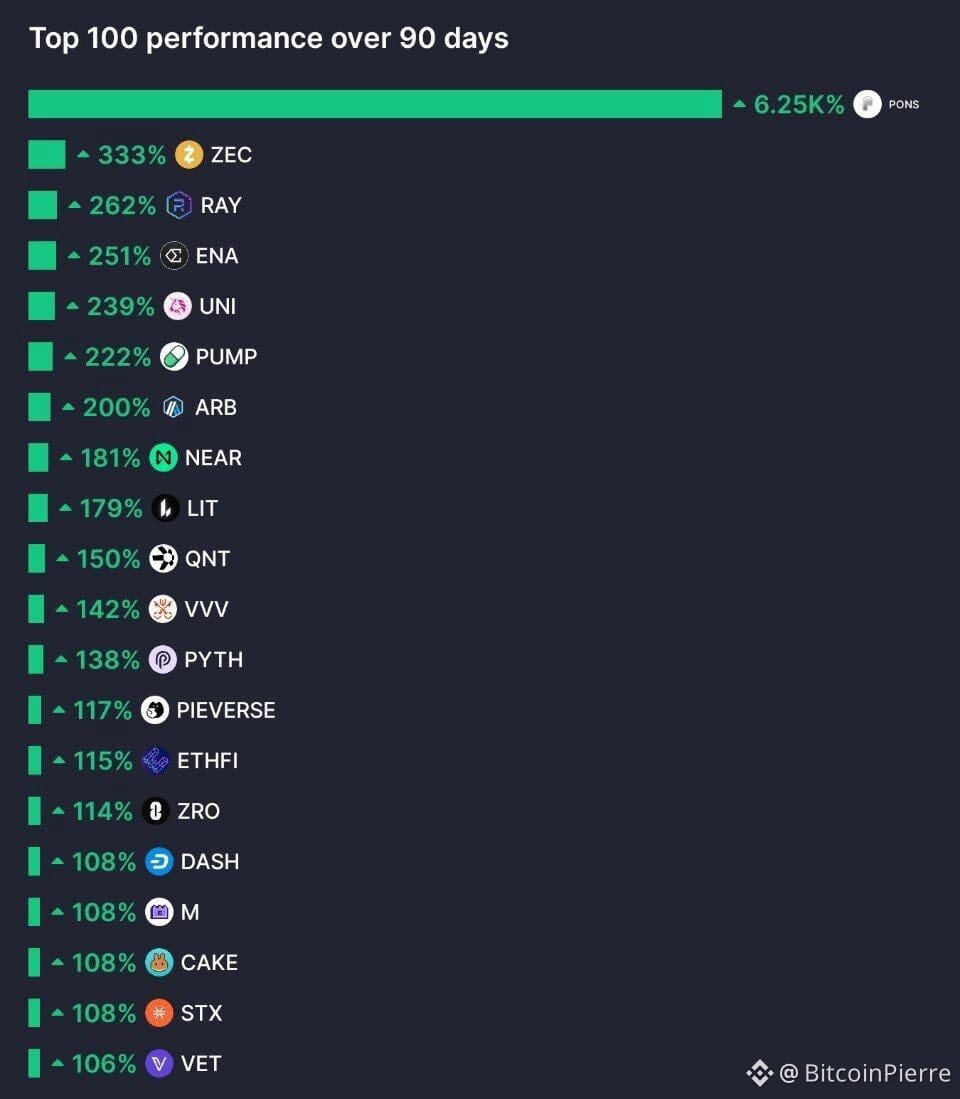
De las 100 principales altcoins, solo 9 están en rojo en los últimos 90 días, mientras que 22 han subido al menos 100%.
Eso es una señal bastante clara de que la fortaleza no se limita solo a un puñado de monedas de gran capitalización. Una parte amplia del mercado de altcoins ha estado superando al mercado durante los últimos tres meses.
También pone en perspectiva la rotación actual del mercado. El Índice de Temporada de Altcoins de CryptoRank usa las 100 altcoins principales y considera que hay altseason cuando al menos el 75% supera a BTC en los últimos 90 días.
Solo 9 en rojo. 22 subidas de 100%+.
La pregunta real ahora es si esta amplitud puede continuar, o si los movimientos de la altcoin más fuerte están empezando a sobrecalentarse.
#Análisis del precio de BTC# #Perspectivas macro# $BTC $ZEC
🔥 LAS ALTCOINS ESTÁN VOLANDO ABSOLUTAMENTE
De las 100 principales altcoins, solo 9 están en rojo en los últimos 90 días, mientras que 22 han subido al menos 100%.
Eso es una señal bastante clara de que la fortaleza no se limita solo a un puñado de monedas de gran capitalización. Una parte amplia del mercado de altcoins ha estado superando al mercado durante los últimos tres meses.
También pone en perspectiva la rotación actual del mercado. El Índice de Temporada de Altcoins de CryptoRank usa las 100 altcoins principales y considera que hay altseason cuando al menos el 75% supera a BTC en los últimos 90 días.
Solo 9 en rojo. 22 subidas de 100%+.
La pregunta real ahora es si esta amplitud puede continuar, o si los movimientos de la altcoin más fuerte están empezando a sobrecalentarse.
#Análisis del precio de BTC# #Perspectivas macro# $BTC $ZEC
De las 100 principales altcoins, solo 9 están en rojo en los últimos 90 días, mientras que 22 han subido al menos 100%.
Eso es una señal bastante clara de que la fortaleza no se limita solo a un puñado de monedas de gran capitalización. Una parte amplia del mercado de altcoins ha estado superando al mercado durante los últimos tres meses.
También pone en perspectiva la rotación actual del mercado. El Índice de Temporada de Altcoins de CryptoRank usa las 100 altcoins principales y considera que hay altseason cuando al menos el 75% supera a BTC en los últimos 90 días.
Solo 9 en rojo. 22 subidas de 100%+.
La pregunta real ahora es si esta amplitud puede continuar, o si los movimientos de la altcoin más fuerte están empezando a sobrecalentarse.
#Análisis del precio de BTC# #Perspectivas macro# $BTC $ZEC
40
A los usuarios rara vez les importa qué proveedor de infraestructura gestione un intercambio. Les importa que la operación funcione sin problemas dentro de la billetera o la aplicación que ya usan.
Eso hace que la integración de Omniston con MoonPay Trade sea un desarrollo de infraestructura importante para TON.
MoonPay Trade ofrece a desarrolladores y empresas una API unificada para la ejecución onchain, la liquidación, la conversión de activos y los pagos en más de 200 cadenas y protocolos. Con Omniston conectado, su agregador ahora puede acceder a operaciones de TON intrachain a través de infraestructura.
Esto significa que los socios de MoonPay Trade que respaldan activos de TON pueden, potencialmente, llevar esos activos directamente a sus propias experiencias de trading sin construir infraestructura de liquidez separada para TON.
Eso crea una ruta de crecimiento diferente para TON. En lugar de depender únicamente de que los usuarios acudan directamente a aplicaciones nativas de TON, su liquidez puede volverse accesible a través de billeteras y plataformas que ya atienden a una audiencia cripto más amplia.
Para STON.fi, la integración también sitúa su infraestructura más profundamente dentro del ecosistema onchain en general.
Lo interesante no es simplemente otra integración. Es la cantidad creciente de lugares donde los usuarios pueden interactuar con TON sin necesidad de pensar en la infraestructura que hay debajo.
#Análisis del precio de BTC# #Perspectivas macro# $GRAM $ZEC
A los usuarios rara vez les importa qué proveedor de infraestructura gestione un intercambio. Les importa que la operación funcione sin problemas dentro de la billetera o la aplicación que ya usan.
Eso hace que la integración de Omniston con MoonPay Trade sea un desarrollo de infraestructura importante para TON.
MoonPay Trade ofrece a desarrolladores y empresas una API unificada para la ejecución onchain, la liquidación, la conversión de activos y los pagos en más de 200 cadenas y protocolos. Con Omniston conectado, su agregador ahora puede acceder a operaciones de TON intrachain a través de infraestructura.
Esto significa que los socios de MoonPay Trade que respaldan activos de TON pueden, potencialmente, llevar esos activos directamente a sus propias experiencias de trading sin construir infraestructura de liquidez separada para TON.
Eso crea una ruta de crecimiento diferente para TON. En lugar de depender únicamente de que los usuarios acudan directamente a aplicaciones nativas de TON, su liquidez puede volverse accesible a través de billeteras y plataformas que ya atienden a una audiencia cripto más amplia.
Para STON.fi, la integración también sitúa su infraestructura más profundamente dentro del ecosistema onchain en general.
Lo interesante no es simplemente otra integración. Es la cantidad creciente de lugares donde los usuarios pueden interactuar con TON sin necesidad de pensar en la infraestructura que hay debajo.
#Análisis del precio de BTC# #Perspectivas macro# $GRAM $ZEC
Eso hace que la integración de Omniston con MoonPay Trade sea un desarrollo de infraestructura importante para TON.
MoonPay Trade ofrece a desarrolladores y empresas una API unificada para la ejecución onchain, la liquidación, la conversión de activos y los pagos en más de 200 cadenas y protocolos. Con Omniston conectado, su agregador ahora puede acceder a operaciones de TON intrachain a través de infraestructura.
Esto significa que los socios de MoonPay Trade que respaldan activos de TON pueden, potencialmente, llevar esos activos directamente a sus propias experiencias de trading sin construir infraestructura de liquidez separada para TON.
Eso crea una ruta de crecimiento diferente para TON. En lugar de depender únicamente de que los usuarios acudan directamente a aplicaciones nativas de TON, su liquidez puede volverse accesible a través de billeteras y plataformas que ya atienden a una audiencia cripto más amplia.
Para STON.fi, la integración también sitúa su infraestructura más profundamente dentro del ecosistema onchain en general.
Lo interesante no es simplemente otra integración. Es la cantidad creciente de lugares donde los usuarios pueden interactuar con TON sin necesidad de pensar en la infraestructura que hay debajo.
#Análisis del precio de BTC# #Perspectivas macro# $GRAM $ZEC
108
Si el BTC cierra por encima de $78,300 hoy, marcaría un segundo cierre semanal consecutivo por encima de la media móvil de 50 semanas.
Esto es importante porque históricamente la media móvil de 50 semanas ha actuado como un techo importante durante los mercados bajistas de Bitcoin. Galaxy Research ha descrito un rompimiento sostenido por encima de ella como una señal sólida de que el mínimo del ciclo podría estar en.
Pero un solo indicador no confirma que el mercado bajista haya terminado. La clave es si el BTC puede seguir manteniéndose por encima de la media móvil después del rompimiento.
Un segundo cierre semanal sería una señal técnica seria.
#Análisis del Precio de BTC# #Perspectivas Macro# $BTC $ETH
Si el BTC cierra por encima de $78,300 hoy, marcaría un segundo cierre semanal consecutivo por encima de la media móvil de 50 semanas.
Esto es importante porque históricamente la media móvil de 50 semanas ha actuado como un techo importante durante los mercados bajistas de Bitcoin. Galaxy Research ha descrito un rompimiento sostenido por encima de ella como una señal sólida de que el mínimo del ciclo podría estar en.
Pero un solo indicador no confirma que el mercado bajista haya terminado. La clave es si el BTC puede seguir manteniéndose por encima de la media móvil después del rompimiento.
Un segundo cierre semanal sería una señal técnica seria.
#Análisis del Precio de BTC# #Perspectivas Macro# $BTC $ETH
Esto es importante porque históricamente la media móvil de 50 semanas ha actuado como un techo importante durante los mercados bajistas de Bitcoin. Galaxy Research ha descrito un rompimiento sostenido por encima de ella como una señal sólida de que el mínimo del ciclo podría estar en.
Pero un solo indicador no confirma que el mercado bajista haya terminado. La clave es si el BTC puede seguir manteniéndose por encima de la media móvil después del rompimiento.
Un segundo cierre semanal sería una señal técnica seria.
#Análisis del Precio de BTC# #Perspectivas Macro# $BTC $ETH
50
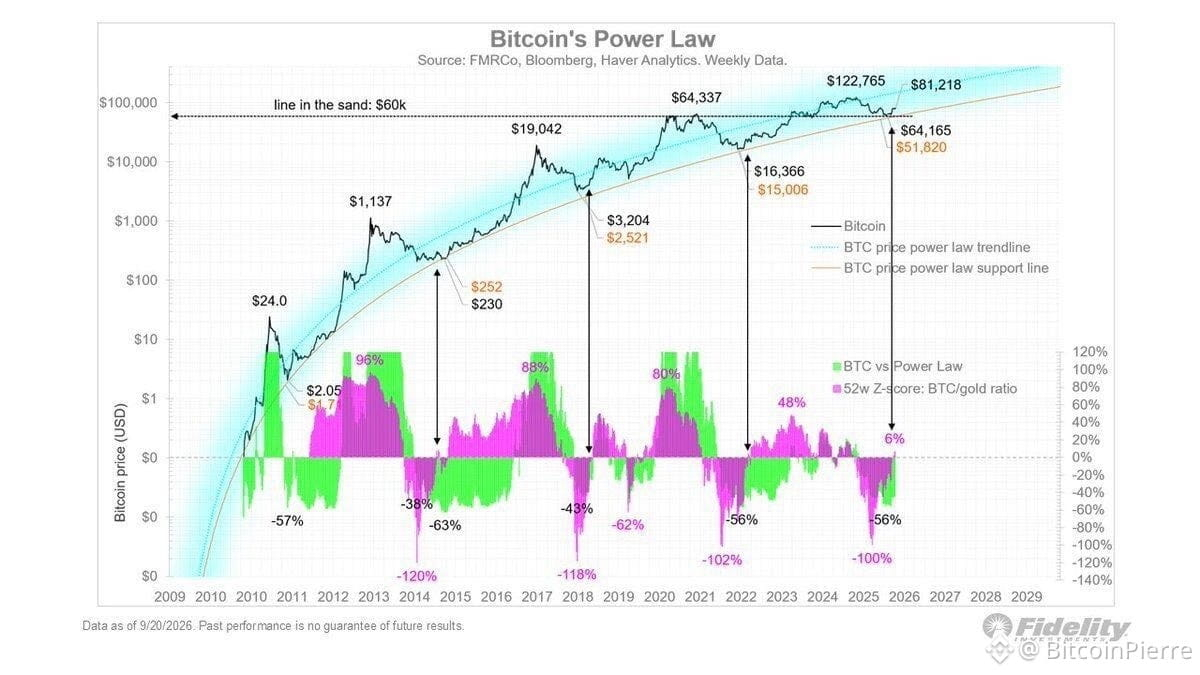
Fidelity’s Jurrien Timmer dice que Bitcoin ha entrado en un nuevo mercado alcista cíclico después de mantener el nivel de $60K, que él considera un soporte clave a largo plazo.
Su modelo de ley de potencia ahora apunta a $300,000 para 2029.
La llamada es notable porque Timmer fue mucho más cauteloso a principios de este año cuando BTC se acercaba al extremo inferior de su modelo.
Ahora, ve que la estructura del mercado está cambiando.
Por supuesto, $300K es un objetivo basado en un modelo, no un resultado garantizado. Bitcoin todavía tiene que demostrar que la recuperación puede desarrollarse en una tendencia alcista sostenida.
$60K mantenidos. Timmer dice que el próximo ciclo ya podría estar en marcha.
#BTC Price Analysis# #BTC Above 60K# $BTC $ZEC
Fidelity’s Jurrien Timmer dice que Bitcoin ha entrado en un nuevo mercado alcista cíclico después de mantener el nivel de $60K, que él considera un soporte clave a largo plazo.
Su modelo de ley de potencia ahora apunta a $300,000 para 2029.
La llamada es notable porque Timmer fue mucho más cauteloso a principios de este año cuando BTC se acercaba al extremo inferior de su modelo.
Ahora, ve que la estructura del mercado está cambiando.
Por supuesto, $300K es un objetivo basado en un modelo, no un resultado garantizado. Bitcoin todavía tiene que demostrar que la recuperación puede desarrollarse en una tendencia alcista sostenida.
$60K mantenidos. Timmer dice que el próximo ciclo ya podría estar en marcha.
#BTC Price Analysis# #BTC Above 60K# $BTC $ZEC
Su modelo de ley de potencia ahora apunta a $300,000 para 2029.
La llamada es notable porque Timmer fue mucho más cauteloso a principios de este año cuando BTC se acercaba al extremo inferior de su modelo.
Ahora, ve que la estructura del mercado está cambiando.
Por supuesto, $300K es un objetivo basado en un modelo, no un resultado garantizado. Bitcoin todavía tiene que demostrar que la recuperación puede desarrollarse en una tendencia alcista sostenida.
$60K mantenidos. Timmer dice que el próximo ciclo ya podría estar en marcha.
#BTC Price Analysis# #BTC Above 60K# $BTC $ZEC
58
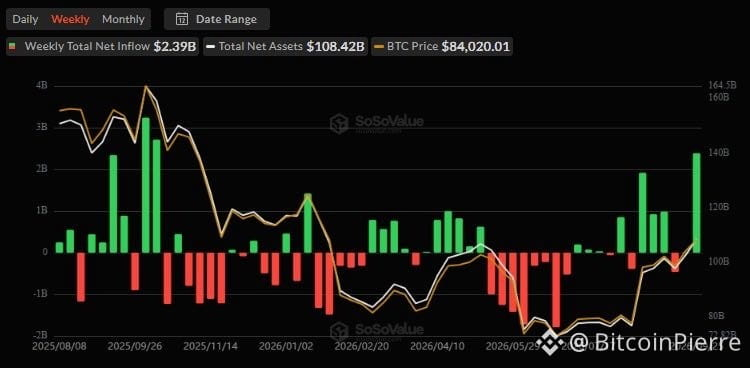
Los ETF de Bitcoin al contado en EE. UU. registraron entradas netas de 2.390 millones de dólares la semana pasada, logrando su mejor desempeño semanal desde octubre de 2025.
Las cinco sesiones de negociación registraron flujos positivos, con casi 1.000 millones de dólares entrando en los fondos solo el lunes.
Lo que hace esto aún más interesante es la imagen más amplia: las entradas devolvieron a los ETF de Bitcoin a territorio positivo para 2026, después de estar aproximadamente 5.800 millones de dólares en rojo a principios de este año.
La demanda institucional claramente vuelve a acelerarse.
#Análisis del precio de BTC# #Perspectivas macro# $BTC $ETH
Los ETF de Bitcoin al contado en EE. UU. registraron entradas netas de 2.390 millones de dólares la semana pasada, logrando su mejor desempeño semanal desde octubre de 2025.
Las cinco sesiones de negociación registraron flujos positivos, con casi 1.000 millones de dólares entrando en los fondos solo el lunes.
Lo que hace esto aún más interesante es la imagen más amplia: las entradas devolvieron a los ETF de Bitcoin a territorio positivo para 2026, después de estar aproximadamente 5.800 millones de dólares en rojo a principios de este año.
La demanda institucional claramente vuelve a acelerarse.
#Análisis del precio de BTC# #Perspectivas macro# $BTC $ETH
Las cinco sesiones de negociación registraron flujos positivos, con casi 1.000 millones de dólares entrando en los fondos solo el lunes.
Lo que hace esto aún más interesante es la imagen más amplia: las entradas devolvieron a los ETF de Bitcoin a territorio positivo para 2026, después de estar aproximadamente 5.800 millones de dólares en rojo a principios de este año.
La demanda institucional claramente vuelve a acelerarse.
#Análisis del precio de BTC# #Perspectivas macro# $BTC $ETH
74
Inicia sesión para explorar más contenidos
Únete a usuarios de criptomonedas de todo el mundo en Binance Square
⚡️ Obtén la información más reciente y útil sobre criptomonedas.
💬 Confía en el mayor exchange de criptomonedas del mundo.
👍 Descubre opiniones reales de creadores verificados.
Correo electrónico/número de teléfono