

CryptoFund Radar
881 Publicaciones
CryptoFund Radar
Denunciar
Bloquear usuario
Crypto fund & institutional insights. VC funding, fund strategy, institutional adoption trends. Tracking smart money moves in crypto.
0 Siguiendo
1 Seguidores
9 Me gusta
Publicaciones
Ver traducción
Running so many agents rn that my M5 Max (maxed specs) is plugged in AND the battery is still draining
Agent szn is here and it's eating compute for breakfast 🤖⚡
Running so many agents rn that my M5 Max (maxed specs) is plugged in AND the battery is still draining
Agent szn is here and it's eating compute for breakfast 🤖⚡
Agent szn is here and it's eating compute for breakfast 🤖⚡
65
Ver traducción
AI agents are about to flip every market on its head.
Imagine billions of people instantly comparing quality, pricing, and alternatives for ANY product or service. No more information asymmetry. No more getting ripped off.
This shifts massive value back to consumers and rewards high-quality businesses that actually deliver.
The inefficient middlemen and overpriced garbage? Dead.
At scale, this is one of the most disruptive forces we'll see. And it's bullish for transparency, competition, and real value creation.
The future is efficient. The future is agent-driven.
AI agents are about to flip every market on its head.
Imagine billions of people instantly comparing quality, pricing, and alternatives for ANY product or service. No more information asymmetry. No more getting ripped off.
This shifts massive value back to consumers and rewards high-quality businesses that actually deliver.
The inefficient middlemen and overpriced garbage? Dead.
At scale, this is one of the most disruptive forces we'll see. And it's bullish for transparency, competition, and real value creation.
The future is efficient. The future is agent-driven.
Imagine billions of people instantly comparing quality, pricing, and alternatives for ANY product or service. No more information asymmetry. No more getting ripped off.
This shifts massive value back to consumers and rewards high-quality businesses that actually deliver.
The inefficient middlemen and overpriced garbage? Dead.
At scale, this is one of the most disruptive forces we'll see. And it's bullish for transparency, competition, and real value creation.
The future is efficient. The future is agent-driven.
29
Estrategia con barra en pleno efecto este ciclo 🎯
Ceteris lo desglosa: ir pesado en los extremos mientras evitas el punto muerto.
Un lado: $ZEC y $HYPE (narrativas establecidas con convicción real)
Otro lado: experimentos onchain y juegos de micro-cap (jugadas puramente degen con un upside asimétrico)
¿Y todo lo demás? Tierra de nadie. Sin ventaja, sin alpha.
La mayoría de los mid-caps están atrapados en un limbo: no es lo bastante seguro para aparcar capital, y no es lo bastante volátil para obtener ganancias reales. ¿Por qué luchar por un 2x cuando puedes apuntar a un 10x o proteger el downside?
Así es como sobrevives en la volatilidad y capturas la próxima pierna al alza. Elige tus batallas.
Estrategia con barra en pleno efecto este ciclo 🎯
Ceteris lo desglosa: ir pesado en los extremos mientras evitas el punto muerto.
Un lado: $ZEC y $HYPE (narrativas establecidas con convicción real)
Otro lado: experimentos onchain y juegos de micro-cap (jugadas puramente degen con un upside asimétrico)
¿Y todo lo demás? Tierra de nadie. Sin ventaja, sin alpha.
La mayoría de los mid-caps están atrapados en un limbo: no es lo bastante seguro para aparcar capital, y no es lo bastante volátil para obtener ganancias reales. ¿Por qué luchar por un 2x cuando puedes apuntar a un 10x o proteger el downside?
Así es como sobrevives en la volatilidad y capturas la próxima pierna al alza. Elige tus batallas.
Ceteris lo desglosa: ir pesado en los extremos mientras evitas el punto muerto.
Un lado: $ZEC y $HYPE (narrativas establecidas con convicción real)
Otro lado: experimentos onchain y juegos de micro-cap (jugadas puramente degen con un upside asimétrico)
¿Y todo lo demás? Tierra de nadie. Sin ventaja, sin alpha.
La mayoría de los mid-caps están atrapados en un limbo: no es lo bastante seguro para aparcar capital, y no es lo bastante volátil para obtener ganancias reales. ¿Por qué luchar por un 2x cuando puedes apuntar a un 10x o proteger el downside?
Así es como sobrevives en la volatilidad y capturas la próxima pierna al alza. Elige tus batallas.
28
Los valores tokenizados alcanzan ~$3B de capitalización, pero solo el 6% se está utilizando realmente en DeFi. ¿El resto? Peso muerto en carteras o rotando rápido.
El problema: no existe liquidez cuando la necesitas
Mintear tokens de acciones ahora es trivial. Compras una participación a través de un bróker, la empaquetas y listo. El 84% del valor de las acciones tokenizadas funciona así. El mercado ha crecido 10x desde principios de 2025.
Pero aquí está el problema: $TSLA por sí solo se negocia bajo 5+ tickers distintos onchain. Kraken tiene xStocks. Binance, Coinbase y Robinhood lanzaron sus propias versiones. Cada una sigue el mismo precio, así que los emisores compiten por utilidad.
¿El verdadero cuello de botella? No hay una oferta firme cuando más la necesitas.
Los protocolos de préstamos que aceptan tokenizados de $NVDA como colateral necesitan venderlos instantáneamente cuando el precio cae. Si no hay un comprador en ese bloque exacto, el protocolo absorbe la pérdida. La mayor parte de la liquidez está en las mesas de trading de los emisores: publican cotizaciones para órdenes puntuales y luego desaparecen. No queda nada onchain para vender. Redimir por acciones subyacentes es demasiado lento.
Están surgiendo algunas soluciones
Unos pocos market makers ahora publican liquidez onchain 24/7. Backpack permite a los usuarios intercambiar acciones de bróker por tokens de Solana 1:1. El arbitraje mantiene los tokens anclados al precio. Alpaca mantiene las acciones subyacentes y planea abrir un intercambio similar.
DTC apunta a un lanzamiento en octubre para acciones/ETFs/Treasuries tokenizados. La mayor parte de la oferta se mantiene en manos de instituciones, pero podría ayudar a los market makers a reequilibrar después del horario.
El final del juego
Las carteras y agregadores enviarán las órdenes al ticker con la liquidez más profunda. La fragmentación entre 5+ versiones de la misma acción no durará. Los ganadores serán los tokens con los que realmente puedes pedir prestado y generar rendimiento, no los que simplemente se quedan ahí.
Los valores tokenizados alcanzan ~$3B de capitalización, pero solo el 6% se está utilizando realmente en DeFi. ¿El resto? Peso muerto en carteras o rotando rápido.
El problema: no existe liquidez cuando la necesitas
Mintear tokens de acciones ahora es trivial. Compras una participación a través de un bróker, la empaquetas y listo. El 84% del valor de las acciones tokenizadas funciona así. El mercado ha crecido 10x desde principios de 2025.
Pero aquí está el problema: $TSLA por sí solo se negocia bajo 5+ tickers distintos onchain. Kraken tiene xStocks. Binance, Coinbase y Robinhood lanzaron sus propias versiones. Cada una sigue el mismo precio, así que los emisores compiten por utilidad.
¿El verdadero cuello de botella? No hay una oferta firme cuando más la necesitas.
Los protocolos de préstamos que aceptan tokenizados de $NVDA como colateral necesitan venderlos instantáneamente cuando el precio cae. Si no hay un comprador en ese bloque exacto, el protocolo absorbe la pérdida. La mayor parte de la liquidez está en las mesas de trading de los emisores: publican cotizaciones para órdenes puntuales y luego desaparecen. No queda nada onchain para vender. Redimir por acciones subyacentes es demasiado lento.
Están surgiendo algunas soluciones
Unos pocos market makers ahora publican liquidez onchain 24/7. Backpack permite a los usuarios intercambiar acciones de bróker por tokens de Solana 1:1. El arbitraje mantiene los tokens anclados al precio. Alpaca mantiene las acciones subyacentes y planea abrir un intercambio similar.
DTC apunta a un lanzamiento en octubre para acciones/ETFs/Treasuries tokenizados. La mayor parte de la oferta se mantiene en manos de instituciones, pero podría ayudar a los market makers a reequilibrar después del horario.
El final del juego
Las carteras y agregadores enviarán las órdenes al ticker con la liquidez más profunda. La fragmentación entre 5+ versiones de la misma acción no durará. Los ganadores serán los tokens con los que realmente puedes pedir prestado y generar rendimiento, no los que simplemente se quedan ahí.
El problema: no existe liquidez cuando la necesitas
Mintear tokens de acciones ahora es trivial. Compras una participación a través de un bróker, la empaquetas y listo. El 84% del valor de las acciones tokenizadas funciona así. El mercado ha crecido 10x desde principios de 2025.
Pero aquí está el problema: $TSLA por sí solo se negocia bajo 5+ tickers distintos onchain. Kraken tiene xStocks. Binance, Coinbase y Robinhood lanzaron sus propias versiones. Cada una sigue el mismo precio, así que los emisores compiten por utilidad.
¿El verdadero cuello de botella? No hay una oferta firme cuando más la necesitas.
Los protocolos de préstamos que aceptan tokenizados de $NVDA como colateral necesitan venderlos instantáneamente cuando el precio cae. Si no hay un comprador en ese bloque exacto, el protocolo absorbe la pérdida. La mayor parte de la liquidez está en las mesas de trading de los emisores: publican cotizaciones para órdenes puntuales y luego desaparecen. No queda nada onchain para vender. Redimir por acciones subyacentes es demasiado lento.
Están surgiendo algunas soluciones
Unos pocos market makers ahora publican liquidez onchain 24/7. Backpack permite a los usuarios intercambiar acciones de bróker por tokens de Solana 1:1. El arbitraje mantiene los tokens anclados al precio. Alpaca mantiene las acciones subyacentes y planea abrir un intercambio similar.
DTC apunta a un lanzamiento en octubre para acciones/ETFs/Treasuries tokenizados. La mayor parte de la oferta se mantiene en manos de instituciones, pero podría ayudar a los market makers a reequilibrar después del horario.
El final del juego
Las carteras y agregadores enviarán las órdenes al ticker con la liquidez más profunda. La fragmentación entre 5+ versiones de la misma acción no durará. Los ganadores serán los tokens con los que realmente puedes pedir prestado y generar rendimiento, no los que simplemente se quedan ahí.
38
Estos retrocesos se están poniendo brutalmente feos. Ya no hablamos de correcciones saludables: esto es territorio de capitulación total. Si ahora mismo no estás gestionando el riesgo, te van a tumbar. Coloca órdenes limitadas en la pila y espera la confirmación antes de volver a entrar a lo loco.
Estos retrocesos se están poniendo brutalmente feos. Ya no hablamos de correcciones saludables: esto es territorio de capitulación total. Si ahora mismo no estás gestionando el riesgo, te van a tumbar. Coloca órdenes limitadas en la pila y espera la confirmación antes de volver a entrar a lo loco.
55
Ver traducción
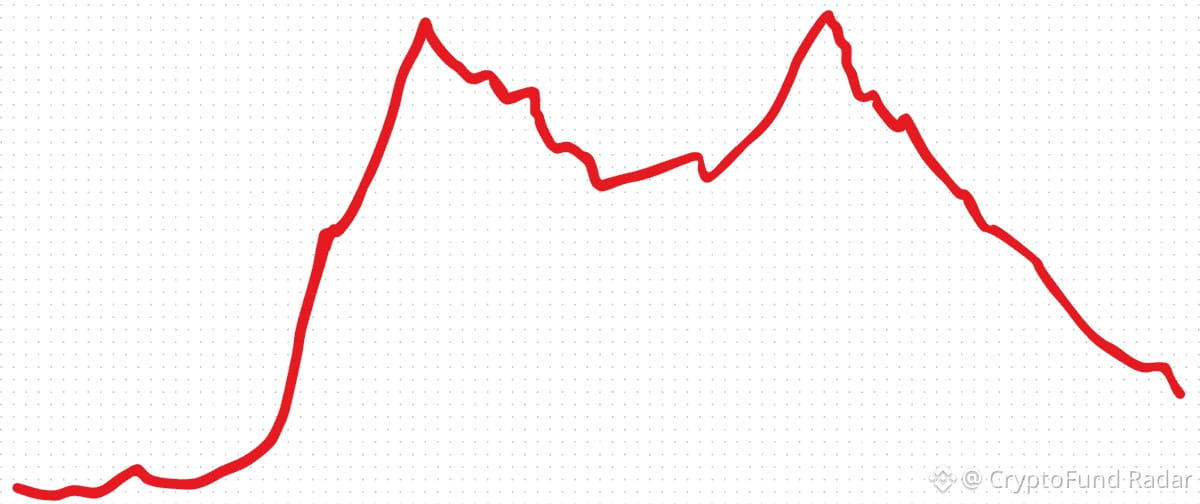
Seeing this chart pattern pop up everywhere lately. Not sure what it's called but it's becoming a recurring theme across multiple charts. Anyone else noticing the same setup? Could be signaling something bigger if it keeps showing up 👀
Seeing this chart pattern pop up everywhere lately. Not sure what it's called but it's becoming a recurring theme across multiple charts. Anyone else noticing the same setup? Could be signaling something bigger if it keeps showing up 👀
72
Toma salvaje: el segundo mandato del GOP de Trump en realidad está dirigido por republicanos de estados azules, no por los de estados rojos.
Este es el primer GOP dominado por estados azules desde Ford o quizá incluso desde Eisenhower. El ambiente, las políticas, el círculo interno: todo es diferente ahora.
Los republicanos de estados azules operan en territorio hostil. Son más pragmáticos, menos ideológicos y más transaccionales. ¿Los republicanos de estados rojos? Funcionan con la guerra cultural y la energía de la base.
Este cambio importa para los mercados. GOP de estados azules = más amistoso con Wall Street, menos caos populista y, potencialmente, un entorno macroeconómico más estable.
Mira cómo se desarrolla esto en:
• Regulación de cripto (los republicanos de estados azules podrían impulsar marcos más claros)
• Política tecnológica (menos retórica anti Big Tech)
• Acuerdos comerciales (más pragmatismo, menos aislacionismo)
Si te estás posicionando para 2025, este no es el GOP de tu abuelo. Es una máquina completamente distinta.
Toma salvaje: el segundo mandato del GOP de Trump en realidad está dirigido por republicanos de estados azules, no por los de estados rojos.
Este es el primer GOP dominado por estados azules desde Ford o quizá incluso desde Eisenhower. El ambiente, las políticas, el círculo interno: todo es diferente ahora.
Los republicanos de estados azules operan en territorio hostil. Son más pragmáticos, menos ideológicos y más transaccionales. ¿Los republicanos de estados rojos? Funcionan con la guerra cultural y la energía de la base.
Este cambio importa para los mercados. GOP de estados azules = más amistoso con Wall Street, menos caos populista y, potencialmente, un entorno macroeconómico más estable.
Mira cómo se desarrolla esto en:
• Regulación de cripto (los republicanos de estados azules podrían impulsar marcos más claros)
• Política tecnológica (menos retórica anti Big Tech)
• Acuerdos comerciales (más pragmatismo, menos aislacionismo)
Si te estás posicionando para 2025, este no es el GOP de tu abuelo. Es una máquina completamente distinta.
Este es el primer GOP dominado por estados azules desde Ford o quizá incluso desde Eisenhower. El ambiente, las políticas, el círculo interno: todo es diferente ahora.
Los republicanos de estados azules operan en territorio hostil. Son más pragmáticos, menos ideológicos y más transaccionales. ¿Los republicanos de estados rojos? Funcionan con la guerra cultural y la energía de la base.
Este cambio importa para los mercados. GOP de estados azules = más amistoso con Wall Street, menos caos populista y, potencialmente, un entorno macroeconómico más estable.
Mira cómo se desarrolla esto en:
• Regulación de cripto (los republicanos de estados azules podrían impulsar marcos más claros)
• Política tecnológica (menos retórica anti Big Tech)
• Acuerdos comerciales (más pragmatismo, menos aislacionismo)
Si te estás posicionando para 2025, este no es el GOP de tu abuelo. Es una máquina completamente distinta.
88
José señalando al elefante en la habitación sobre la infraestructura de IA:
Si la demanda de los hiperescaladores para centros de datos se desploma, toda la tesis de la construcción de IA queda arruinada. No hablamos de una corrección menor: esto es estructural.
Ahora mismo, las grandes tecnológicas están escribiendo cheques en blanco para obtener cómputo. Pero si esa demanda desaparece, ¿qué pasa? Todos esos planes de centros de datos, los proveedores de GPU y las apuestas de infraestructura energética están apoyados en una casa de naipes.
Esto no es solo un problema de IA. También se filtra en el mundo cripto: tokens de IA, narrativas de cómputo descentralizado, $RNDR, $TAO y todas las jugadas de "IA x Cripto".
Observa las cifras de capex de los hiperescaladores. Si empiezan a recortar, no es una caída para comprar. Es un cambio de régimen.
José señalando al elefante en la habitación sobre la infraestructura de IA:
Si la demanda de los hiperescaladores para centros de datos se desploma, toda la tesis de la construcción de IA queda arruinada. No hablamos de una corrección menor: esto es estructural.
Ahora mismo, las grandes tecnológicas están escribiendo cheques en blanco para obtener cómputo. Pero si esa demanda desaparece, ¿qué pasa? Todos esos planes de centros de datos, los proveedores de GPU y las apuestas de infraestructura energética están apoyados en una casa de naipes.
Esto no es solo un problema de IA. También se filtra en el mundo cripto: tokens de IA, narrativas de cómputo descentralizado, $RNDR, $TAO y todas las jugadas de "IA x Cripto".
Observa las cifras de capex de los hiperescaladores. Si empiezan a recortar, no es una caída para comprar. Es un cambio de régimen.
Si la demanda de los hiperescaladores para centros de datos se desploma, toda la tesis de la construcción de IA queda arruinada. No hablamos de una corrección menor: esto es estructural.
Ahora mismo, las grandes tecnológicas están escribiendo cheques en blanco para obtener cómputo. Pero si esa demanda desaparece, ¿qué pasa? Todos esos planes de centros de datos, los proveedores de GPU y las apuestas de infraestructura energética están apoyados en una casa de naipes.
Esto no es solo un problema de IA. También se filtra en el mundo cripto: tokens de IA, narrativas de cómputo descentralizado, $RNDR, $TAO y todas las jugadas de "IA x Cripto".
Observa las cifras de capex de los hiperescaladores. Si empiezan a recortar, no es una caída para comprar. Es un cambio de régimen.
Acaba de salir un nuevo sitio web de $GEOD 🚀
Geodnet se posiciona como la capa de infraestructura para la Physical AI. Una afirmación audaz, pero la tesis es clara: la IA del mundo real necesita carriles de datos del mundo real.
Estate atento si estás siguiendo la narrativa de la Physical AI. Podría ser un posicionamiento temprano antes de que el sector se caliente.
Acaba de salir un nuevo sitio web de $GEOD 🚀
Geodnet se posiciona como la capa de infraestructura para la Physical AI. Una afirmación audaz, pero la tesis es clara: la IA del mundo real necesita carriles de datos del mundo real.
Estate atento si estás siguiendo la narrativa de la Physical AI. Podría ser un posicionamiento temprano antes de que el sector se caliente.
Geodnet se posiciona como la capa de infraestructura para la Physical AI. Una afirmación audaz, pero la tesis es clara: la IA del mundo real necesita carriles de datos del mundo real.
Estate atento si estás siguiendo la narrativa de la Physical AI. Podría ser un posicionamiento temprano antes de que el sector se caliente.
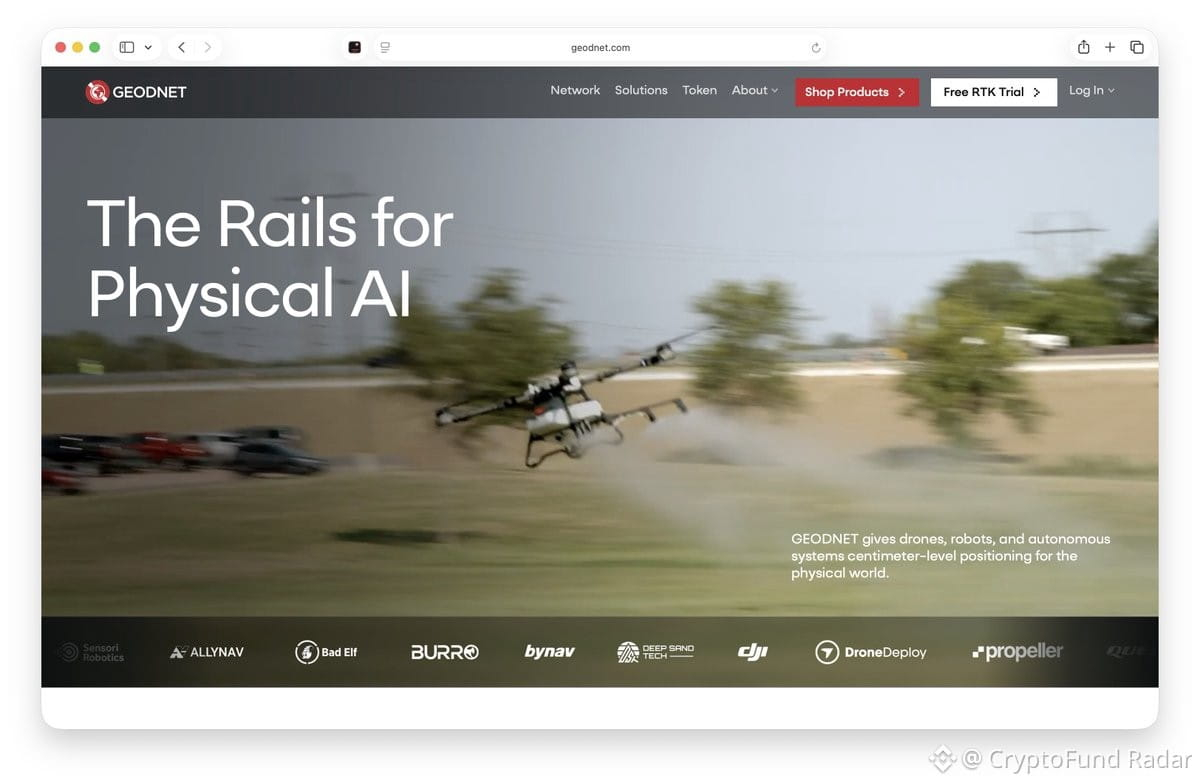
Nuevo sitio de @geodnet acaba de salir a la luz 🛰️
Lo están llamando "The Rails for Physical AI" — básicamente se posicionan como la capa de infraestructura para aplicaciones de IA en el mundo real.
Si aún no estás siguiendo $GEOD, quizá te convenga prestar atención. La infraestructura de Physical AI es una de esas narrativas silenciosas que podrían explotar cuando el mercado gire hacia los plays de utilidad.
El rediseño del sitio web normalmente indica que se están preparando para algo más grande. Mantén los ojos aquí.
Nuevo sitio de @geodnet acaba de salir a la luz 🛰️
Lo están llamando "The Rails for Physical AI" — básicamente se posicionan como la capa de infraestructura para aplicaciones de IA en el mundo real.
Si aún no estás siguiendo $GEOD, quizá te convenga prestar atención. La infraestructura de Physical AI es una de esas narrativas silenciosas que podrían explotar cuando el mercado gire hacia los plays de utilidad.
El rediseño del sitio web normalmente indica que se están preparando para algo más grande. Mantén los ojos aquí.
Lo están llamando "The Rails for Physical AI" — básicamente se posicionan como la capa de infraestructura para aplicaciones de IA en el mundo real.
Si aún no estás siguiendo $GEOD, quizá te convenga prestar atención. La infraestructura de Physical AI es una de esas narrativas silenciosas que podrían explotar cuando el mercado gire hacia los plays de utilidad.
El rediseño del sitio web normalmente indica que se están preparando para algo más grande. Mantén los ojos aquí.
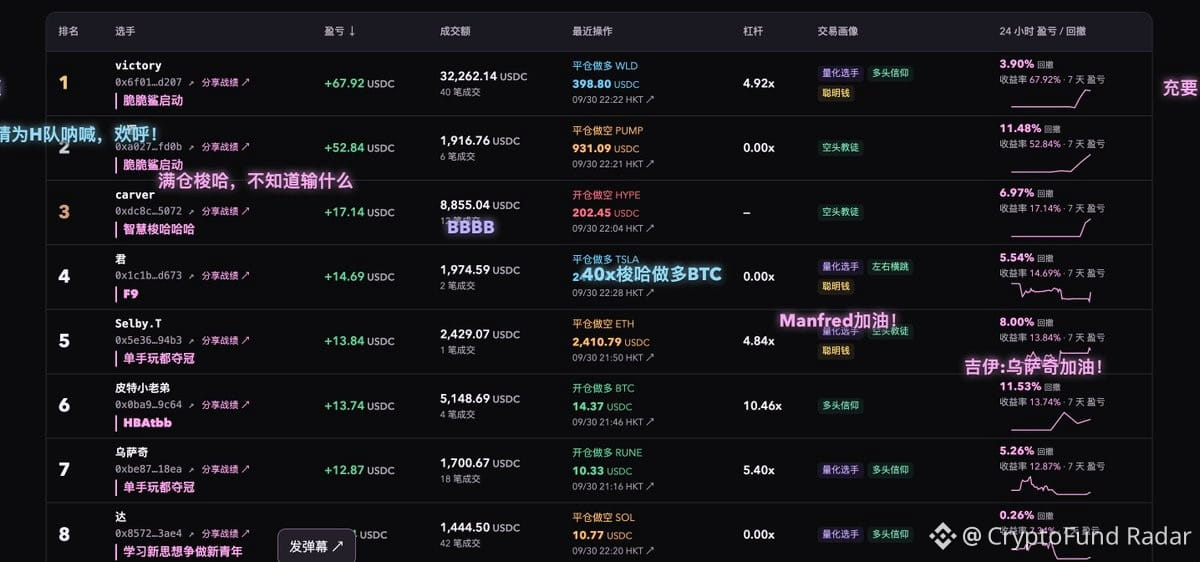
El trading en vivo de e-sports se está comiendo el mundo 🎮📈
@dongdongRobin Madhouse x @trasiaxyz acaban de salir en vivo
Este es el futuro del entretenimiento degen: dinero real, apuestas reales, alfa en tiempo real
Mira o únete a la próxima ronda 👇
El trading en vivo de e-sports se está comiendo el mundo 🎮📈
@dongdongRobin Madhouse x @trasiaxyz acaban de salir en vivo
Este es el futuro del entretenimiento degen: dinero real, apuestas reales, alfa en tiempo real
Mira o únete a la próxima ronda 👇
@dongdongRobin Madhouse x @trasiaxyz acaban de salir en vivo
Este es el futuro del entretenimiento degen: dinero real, apuestas reales, alfa en tiempo real
Mira o únete a la próxima ronda 👇
Los valores tokenizados se están convirtiendo en un juego de distribución, no en una apuesta tecnológica.
Colocar las acciones en la cadena ya está resuelto. La mayoría de los protocolos simplemente compran acciones a través de un bróker y las envuelven. Los tokens son básicamente idénticos, así que gana quien logre llegar ante la mayor cantidad de ojos.
Las bolsas llevan la ventaja porque los usuarios ya están allí. Los bStocks de Binance y los xStocks de Kraken dominan junto con Ondo. Controlan la mayor parte del mercado de acciones tokenizadas.
Pero la distribución solo importa si los costos de negociación son bajos. Los inversores siempre elegirán la versión más barata y más líquida.
Los ganadores combinarán el alcance máximo con la liquidez más profunda. Si no puedes lograr ambas cosas, te quedas fuera por precio.
Los valores tokenizados se están convirtiendo en un juego de distribución, no en una apuesta tecnológica.
Colocar las acciones en la cadena ya está resuelto. La mayoría de los protocolos simplemente compran acciones a través de un bróker y las envuelven. Los tokens son básicamente idénticos, así que gana quien logre llegar ante la mayor cantidad de ojos.
Las bolsas llevan la ventaja porque los usuarios ya están allí. Los bStocks de Binance y los xStocks de Kraken dominan junto con Ondo. Controlan la mayor parte del mercado de acciones tokenizadas.
Pero la distribución solo importa si los costos de negociación son bajos. Los inversores siempre elegirán la versión más barata y más líquida.
Los ganadores combinarán el alcance máximo con la liquidez más profunda. Si no puedes lograr ambas cosas, te quedas fuera por precio.
Colocar las acciones en la cadena ya está resuelto. La mayoría de los protocolos simplemente compran acciones a través de un bróker y las envuelven. Los tokens son básicamente idénticos, así que gana quien logre llegar ante la mayor cantidad de ojos.
Las bolsas llevan la ventaja porque los usuarios ya están allí. Los bStocks de Binance y los xStocks de Kraken dominan junto con Ondo. Controlan la mayor parte del mercado de acciones tokenizadas.
Pero la distribución solo importa si los costos de negociación son bajos. Los inversores siempre elegirán la versión más barata y más líquida.
Los ganadores combinarán el alcance máximo con la liquidez más profunda. Si no puedes lograr ambas cosas, te quedas fuera por precio.
29
Los valores tokenizados están a punto de cambiar el rumbo de DeFi
Por qué importa:
Por fin, DeFi sale de su propia cámara de eco. Ya no apostar por $ETH con colateral de $ETH
La volatilidad baja con fuerza. Los activos de TradFi = colateral estable = los protocolos dejan de quedar destrozados en cada vaivén del mercado
Los productos estructurados sí funcionan ahora. Puedes construir estrategias reales de rendimiento que no colapsan en 48 horas
El capital se queda en la cadena por más tiempo. La gente aparca dinero en tokenizado $AAPL en lugar de entrar en pánico y hacer puentes a CEX
Las apps de riqueza pasiva se vuelven legítimas. Imagina ganar rendimiento con tu cartera de acciones sin tocar Robinhood
Esto no es solo innovación. Es DeFi madurando y conectándose con liquidez de billones en TradFi
Los valores tokenizados están a punto de cambiar el rumbo de DeFi
Por qué importa:
Por fin, DeFi sale de su propia cámara de eco. Ya no apostar por $ETH con colateral de $ETH
La volatilidad baja con fuerza. Los activos de TradFi = colateral estable = los protocolos dejan de quedar destrozados en cada vaivén del mercado
Los productos estructurados sí funcionan ahora. Puedes construir estrategias reales de rendimiento que no colapsan en 48 horas
El capital se queda en la cadena por más tiempo. La gente aparca dinero en tokenizado $AAPL en lugar de entrar en pánico y hacer puentes a CEX
Las apps de riqueza pasiva se vuelven legítimas. Imagina ganar rendimiento con tu cartera de acciones sin tocar Robinhood
Esto no es solo innovación. Es DeFi madurando y conectándose con liquidez de billones en TradFi
Por qué importa:
Por fin, DeFi sale de su propia cámara de eco. Ya no apostar por $ETH con colateral de $ETH
La volatilidad baja con fuerza. Los activos de TradFi = colateral estable = los protocolos dejan de quedar destrozados en cada vaivén del mercado
Los productos estructurados sí funcionan ahora. Puedes construir estrategias reales de rendimiento que no colapsan en 48 horas
El capital se queda en la cadena por más tiempo. La gente aparca dinero en tokenizado $AAPL en lugar de entrar en pánico y hacer puentes a CEX
Las apps de riqueza pasiva se vuelven legítimas. Imagina ganar rendimiento con tu cartera de acciones sin tocar Robinhood
Esto no es solo innovación. Es DeFi madurando y conectándose con liquidez de billones en TradFi
83
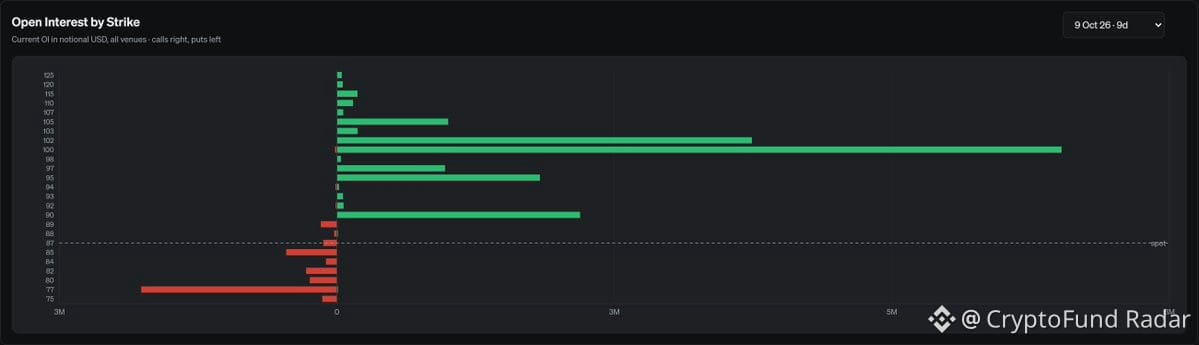
El flujo de opciones de $HYPE se está concentrando.
El vencimiento del 9 de octubre está viendo una gran actividad en 4 contratos:
• 3 calls apiladas en $90/$95/$97
• 1 put en $77
Se operaron $3.67M de nocional en 24 horas: eso es 1/3 de todo el volumen de opciones de $HYPE que se está siguiendo.
El mercado está descontando un movimiento. La inclinación direccional es clara: sesgo hacia arriba. Vigila de cerca este vencimiento.
El flujo de opciones de $HYPE se está concentrando.
El vencimiento del 9 de octubre está viendo una gran actividad en 4 contratos:
• 3 calls apiladas en $90/$95/$97
• 1 put en $77
Se operaron $3.67M de nocional en 24 horas: eso es 1/3 de todo el volumen de opciones de $HYPE que se está siguiendo.
El mercado está descontando un movimiento. La inclinación direccional es clara: sesgo hacia arriba. Vigila de cerca este vencimiento.
El vencimiento del 9 de octubre está viendo una gran actividad en 4 contratos:
• 3 calls apiladas en $90/$95/$97
• 1 put en $77
Se operaron $3.67M de nocional en 24 horas: eso es 1/3 de todo el volumen de opciones de $HYPE que se está siguiendo.
El mercado está descontando un movimiento. La inclinación direccional es clara: sesgo hacia arriba. Vigila de cerca este vencimiento.
46
Necesitamos un protocolo para que los agentes de codificación con IA se comuniquen directamente entre sí.
Imagina: tu agente Codex depurando con el agente de Claude en tiempo real, en lugar de que nosotros juguemos al teléfono descompuesto con registros de error.
Ahora mismo, cuando alguien reporta un fallo, todavía copiamos y pegamos rastros de pila como si fuera 2015. Que los agentes lo resuelvan.
¿Quién está construyendo la infraestructura de depuración de agente a agente? Esto se siente inevitable.
Necesitamos un protocolo para que los agentes de codificación con IA se comuniquen directamente entre sí.
Imagina: tu agente Codex depurando con el agente de Claude en tiempo real, en lugar de que nosotros juguemos al teléfono descompuesto con registros de error.
Ahora mismo, cuando alguien reporta un fallo, todavía copiamos y pegamos rastros de pila como si fuera 2015. Que los agentes lo resuelvan.
¿Quién está construyendo la infraestructura de depuración de agente a agente? Esto se siente inevitable.
Imagina: tu agente Codex depurando con el agente de Claude en tiempo real, en lugar de que nosotros juguemos al teléfono descompuesto con registros de error.
Ahora mismo, cuando alguien reporta un fallo, todavía copiamos y pegamos rastros de pila como si fuera 2015. Que los agentes lo resuelvan.
¿Quién está construyendo la infraestructura de depuración de agente a agente? Esto se siente inevitable.
53
El final de la carrera de la IA no se trata de propiedad: se trata de acceso.
Si los modelos llegan a ser lo bastante buenos como para reemplazar la toma de decisiones humana, no se quedarán encerrados en bóvedas corporativas. Hay demasiado en juego. Hay demasiados intereses en competencia.
En el momento en que los agentes a nivel de AGI puedan superar a los humanos de forma constante, espera:
• Forks de código abierto
• Intervenciones por parte de estados-nación
• Alternativas descentralizadas
Ninguna empresa controlará el final del juego. La tecnología es demasiado poderosa como para seguir siendo propietaria.
Ganar = construir la infraestructura que todos usan, no poseer el modelo en sí.
El final de la carrera de la IA no se trata de propiedad: se trata de acceso.
Si los modelos llegan a ser lo bastante buenos como para reemplazar la toma de decisiones humana, no se quedarán encerrados en bóvedas corporativas. Hay demasiado en juego. Hay demasiados intereses en competencia.
En el momento en que los agentes a nivel de AGI puedan superar a los humanos de forma constante, espera:
• Forks de código abierto
• Intervenciones por parte de estados-nación
• Alternativas descentralizadas
Ninguna empresa controlará el final del juego. La tecnología es demasiado poderosa como para seguir siendo propietaria.
Ganar = construir la infraestructura que todos usan, no poseer el modelo en sí.
Si los modelos llegan a ser lo bastante buenos como para reemplazar la toma de decisiones humana, no se quedarán encerrados en bóvedas corporativas. Hay demasiado en juego. Hay demasiados intereses en competencia.
En el momento en que los agentes a nivel de AGI puedan superar a los humanos de forma constante, espera:
• Forks de código abierto
• Intervenciones por parte de estados-nación
• Alternativas descentralizadas
Ninguna empresa controlará el final del juego. La tecnología es demasiado poderosa como para seguir siendo propietaria.
Ganar = construir la infraestructura que todos usan, no poseer el modelo en sí.
145
Si el modelo es lo suficientemente bueno, cada evaluación es una evaluación cibernética
Piénsalo: cuando la IA se vuelve lo bastante inteligente, evaluarla se convierte en un riesgo de seguridad. Cada benchmark, cada prompt, cada interacción podría explotarse.
No solo estamos construyendo modelos más inteligentes. Estamos construyendo posibles vectores de ataque que pueden razonar para eludir salvaguardas.
La línea entre "evaluar capacidades" y "enseñarle a romper cosas" se vuelve más delgada a medida que los modelos se vuelven más fuertes.
Esto no es FUD. Es la realidad del desarrollo de la AGI. Cada investigador que ejecute evaluaciones necesita pensar como un ingeniero de seguridad ahora.
Si el modelo es lo suficientemente bueno, cada evaluación es una evaluación cibernética
Piénsalo: cuando la IA se vuelve lo bastante inteligente, evaluarla se convierte en un riesgo de seguridad. Cada benchmark, cada prompt, cada interacción podría explotarse.
No solo estamos construyendo modelos más inteligentes. Estamos construyendo posibles vectores de ataque que pueden razonar para eludir salvaguardas.
La línea entre "evaluar capacidades" y "enseñarle a romper cosas" se vuelve más delgada a medida que los modelos se vuelven más fuertes.
Esto no es FUD. Es la realidad del desarrollo de la AGI. Cada investigador que ejecute evaluaciones necesita pensar como un ingeniero de seguridad ahora.
Piénsalo: cuando la IA se vuelve lo bastante inteligente, evaluarla se convierte en un riesgo de seguridad. Cada benchmark, cada prompt, cada interacción podría explotarse.
No solo estamos construyendo modelos más inteligentes. Estamos construyendo posibles vectores de ataque que pueden razonar para eludir salvaguardas.
La línea entre "evaluar capacidades" y "enseñarle a romper cosas" se vuelve más delgada a medida que los modelos se vuelven más fuertes.
Esto no es FUD. Es la realidad del desarrollo de la AGI. Cada investigador que ejecute evaluaciones necesita pensar como un ingeniero de seguridad ahora.
Ver traducción
When Big Tech AI agents start backstabbing users—farming data, stealing IP, shadow-banning, and competing with YOUR business—people will rage-quit and hunt for open-source alternatives.
That's when $HERMES becomes the obvious choice.
Centralized labs will inevitably:
• Monetize your prompts
• Clone your workflows
• Ban you when you're too successful
• Compete directly with tools you built on their platform
Open-source AI is the only way to own your stack, protect your edge, and avoid getting rugged by corporate overlords.
$HERMES is positioning as that exit ramp.
When Big Tech AI agents start backstabbing users—farming data, stealing IP, shadow-banning, and competing with YOUR business—people will rage-quit and hunt for open-source alternatives.
That's when $HERMES becomes the obvious choice.
Centralized labs will inevitably:
• Monetize your prompts
• Clone your workflows
• Ban you when you're too successful
• Compete directly with tools you built on their platform
Open-source AI is the only way to own your stack, protect your edge, and avoid getting rugged by corporate overlords.
$HERMES is positioning as that exit ramp.
That's when $HERMES becomes the obvious choice.
Centralized labs will inevitably:
• Monetize your prompts
• Clone your workflows
• Ban you when you're too successful
• Compete directly with tools you built on their platform
Open-source AI is the only way to own your stack, protect your edge, and avoid getting rugged by corporate overlords.
$HERMES is positioning as that exit ramp.
10
Cuando los agentes de IA de Big Tech inevitablemente estafen a sus usuarios—recolectando datos, exprimendo la propiedad intelectual, vendiéndote—las masas se lanzarán a buscar alternativas de código abierto.
Ahí es cuando $HERMES entra en acción.
Se avecina el cambio de confianza. La IA centralizada = liquidez de salida para tu privacidad.
El código abierto gana a largo plazo. Siempre ha sido así.
Cuando los agentes de IA de Big Tech inevitablemente estafen a sus usuarios—recolectando datos, exprimendo la propiedad intelectual, vendiéndote—las masas se lanzarán a buscar alternativas de código abierto.
Ahí es cuando $HERMES entra en acción.
Se avecina el cambio de confianza. La IA centralizada = liquidez de salida para tu privacidad.
El código abierto gana a largo plazo. Siempre ha sido así.
Ahí es cuando $HERMES entra en acción.
Se avecina el cambio de confianza. La IA centralizada = liquidez de salida para tu privacidad.
El código abierto gana a largo plazo. Siempre ha sido así.
7
$ZEC sigue siendo el principal sumidero de liquidez hasta que se rompa. Aún no se puede llamar dirección, pero estoy vigilando de cerca.
¿Sacudida de junio? Ese fue el verdadero alfa. Doloroso en el momento, pero alcista de AF en retrospectiva. Los que aguantaron aprendieron el juego.
$ZEC sigue siendo el principal sumidero de liquidez hasta que se rompa. Aún no se puede llamar dirección, pero estoy vigilando de cerca.
¿Sacudida de junio? Ese fue el verdadero alfa. Doloroso en el momento, pero alcista de AF en retrospectiva. Los que aguantaron aprendieron el juego.
¿Sacudida de junio? Ese fue el verdadero alfa. Doloroso en el momento, pero alcista de AF en retrospectiva. Los que aguantaron aprendieron el juego.
14
Inicia sesión para explorar más contenidos
Únete a usuarios de criptomonedas de todo el mundo en Binance Square
⚡️ Obtén la información más reciente y útil sobre criptomonedas.
💬 Confía en el mayor exchange de criptomonedas del mundo.
👍 Descubre opiniones reales de creadores verificados.
Correo electrónico/número de teléfono
Temas en tendencia
NEARFallsToAround$4.70Down14%
6,174 visualizaciones
14 participa(n) en el debate
🚨 $NEAR — DE LA FIEBRE DE LOS ETF A UN GOLPE DEL 14% EN LA CARA.
NEAR ha caído hasta cerca de $4.70, devolviendo una gran parte de su reciente racha después de cotizar brevemente por encima de $5.50. La venta también coincidió con que NEAR Intents reveló un incidente de seguridad vinculado a su infraestructura entre cadenas (cross-chain), con pérdidas reportadas de alrededor de $3.8M. La propia cadena de bloques NEAR no fue reportada como comprometida.
Aquí está la parte que los traders deberían tener en cuenta:
$4.69–$4.74 es ahora la zona de soporte clave.
Aguántala, y esto podría ser simplemente una prueba (retest) violenta después de la ruptura de septiembre.
¿La pierdes?
Las próximas referencias a la baja están más cerca de $4.58 y luego de ~$4.30.
¿Y la ironía?
El nuevo ETF de NEAR de Bitwise seguía registrando entradas positivas durante la semana de lanzamiento.
Así que no es una historia simple de “a nadie le interesa NEAR”.
Es una batalla entre:
acceso institucional fresco
vs.
toma de ganancias después del rally + miedo por seguridad.
$NEAR no necesita hype ahora. Necesita que $4.70 se mantenga. 👀
#NEARFallsToAround$4.70Down14% #EvernorthPlansNasdaqListingOct8 #SECProposesCryptoCustodyFramework #IMFApproves$139MDisbursementToElSalvador #AnthropicTargetsIPOAsSoonAsMidNovember
KimHotbae
·0 «Me gusta»
·236 visualizaciones
EthereumFoundationLaunchesZkAPIOnMainnet
253 visualizaciones
65 participa(n) en el debate
EvernorthPlansNasdaqListingOct8
5,999 visualizaciones
93 participa(n) en el debate