

Today, a small DeFi project on BNB Chain lost about $5.71 million in USDT. An attacker minted 1 billion IBS tokens and dumped them into the liquidity pool, draining it in two rounds. The IBS token fell to almost zero. The amount is small next to big hacks, but the lesson is important for anyone using DeFi.
Quick Facts
Reported 29 November 2026 by PeckShieldAlert.
About $5.71M in USDT drained from the IBS/USDT pool.
The attacker minted 1 billion IBS tokens and sold them in two rounds.
The stolen funds remained in an identified wallet at the time of reporting.
01 What Pots Money IBS Is
Pots Money describes IBS as an algorithmic, collateral-backed activity token with a $1 floor. Users provided liquidity in an IBS/USDT pool on BNB Chain. A price floor sounds safe, but it depends entirely on the code and the collateral behind it.
02 What Happened
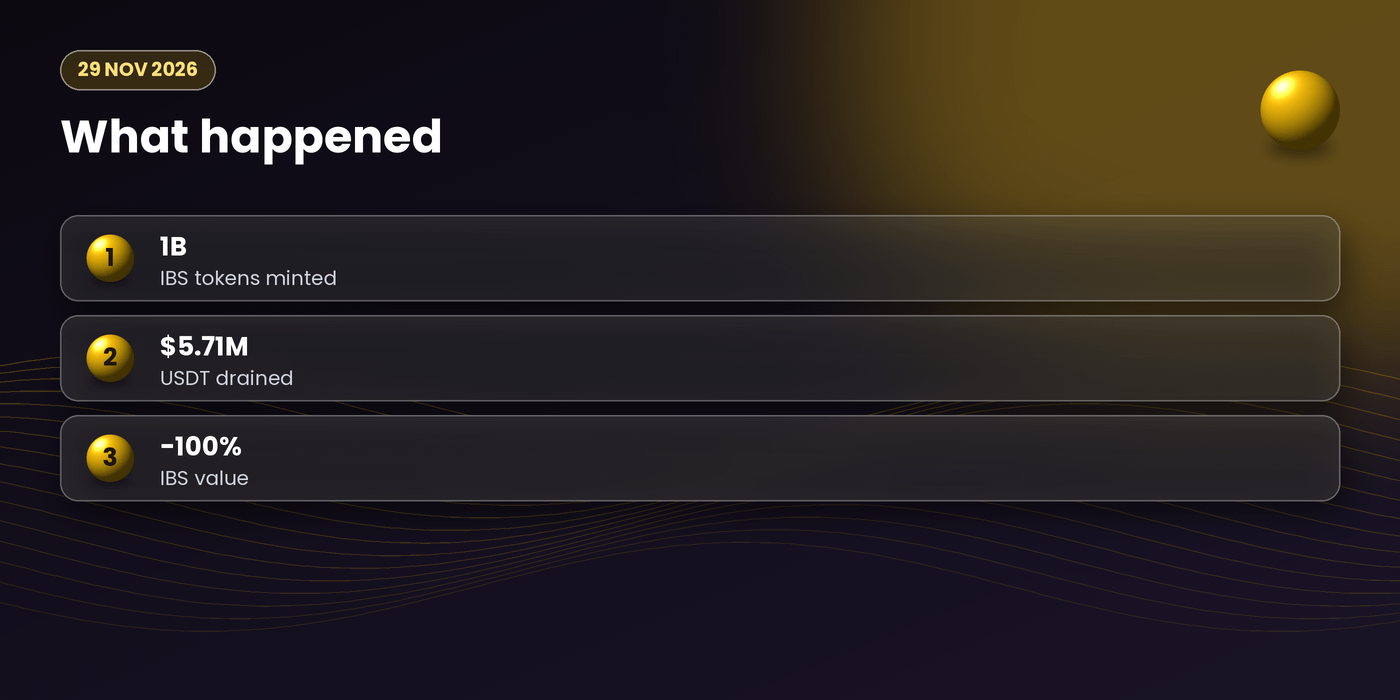
According to PeckShieldAlert and TokenPost:
The attacker minted 1 billion new IBS tokens.
They swapped them for USDT in the liquidity pool.
Two rounds of minting and selling drained about $5.71M.
The IBS token lost almost all of its value.
03 How a Mint Exploit Works
If an attacker can create new tokens for free, they can sell them into a pool and take the real assets on the other side, in this case USDT. Liquidity providers are left holding a worthless token. The weak point is usually a mint function with poor access control or a logic bug.
Liquidity providers on the USDT side usually suffer the most, because their stablecoins are what the attacker takes.
04 Warning Signs
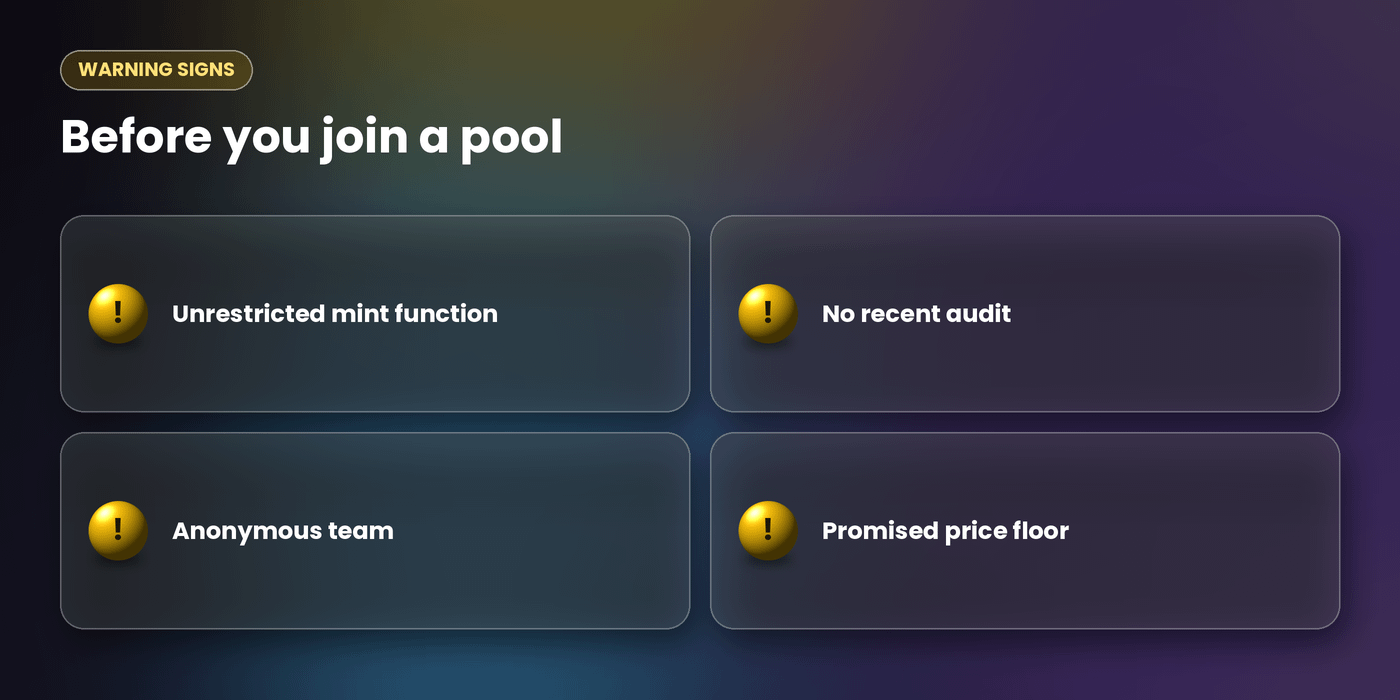
Before adding liquidity to a small project, check for:
A mint function that is not locked or properly restricted.
No independent audit, or an audit that does not cover the latest code.
An anonymous team with no track record.
Promises of a fixed price floor or guaranteed yield.
05 Not a BNB Chain Bug
The problem was in the project's own token logic, not in BNB Chain itself. Any blockchain can host a badly written contract. That is why the specific project you trust matters more than the chain it runs on.
Large audited protocols can fail too, but small new projects with unusual token designs carry much higher risk.
06 What Users Can Do
Keep DeFi experiments small, use tools that scan contracts for risky permissions, and revoke old token approvals regularly. Binance Wallet's security features can warn about risky transactions before you sign. If something promises a floor price, ask what happens if the code fails.
Bottom Line
The IBS exploit shows how one weak mint function can drain a pool in minutes. Small projects need extra caution, especially when they promise stability.
This article is for information only and is not financial advice.