
Hurain_BTC
752 Publicaciones

Hurain_BTC
Denunciar
Bloquear usuario
crypto lover Hurain_BTC
76 Siguiendo
103 Seguidores
390 Me gusta
Publicaciones
Todo
Cotizaciones
Vídeos
·
--
Artículo
Ver traducción
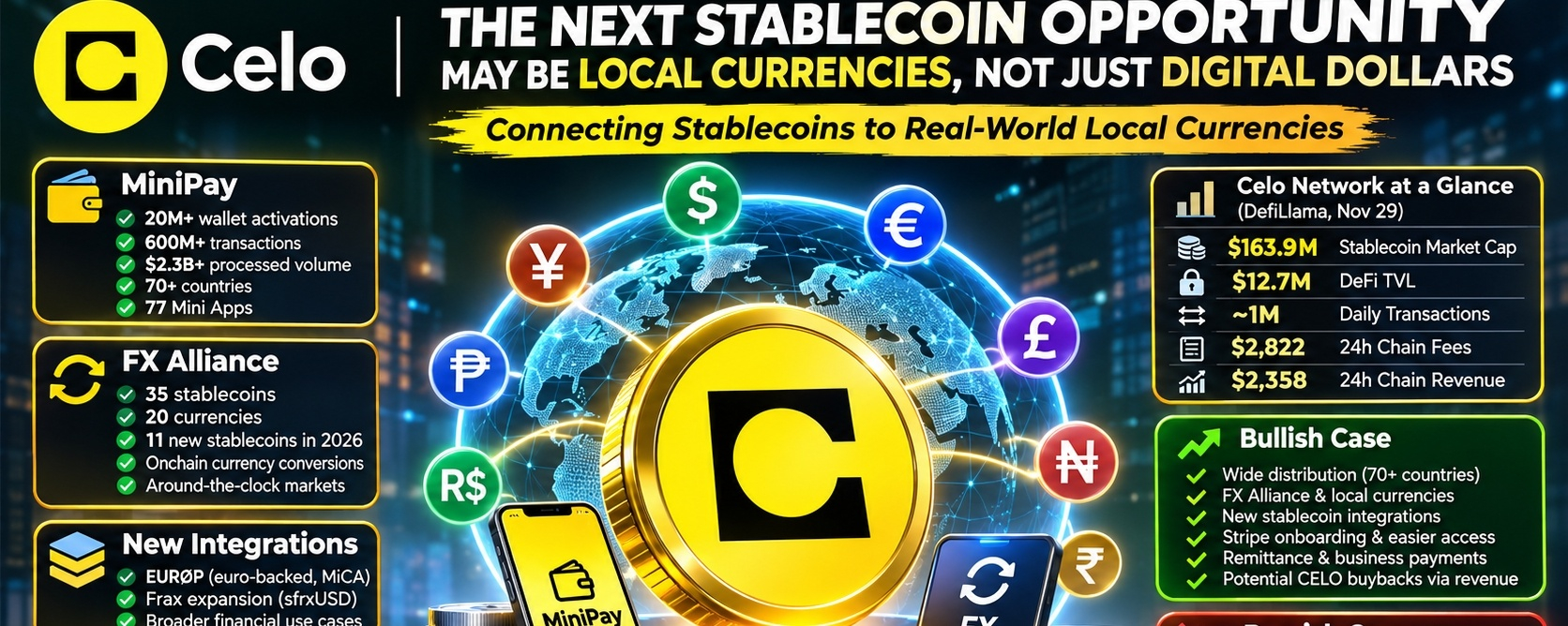
CELO: THE NEXT STABLECOIN OPPORTUNITY MAY BE LOCAL CURRENCIES, NOT JUST DIGITAL DOLLARSThe real test of stablecoins is not how many wallets exist, but how people actually use them.
Celo's recent developments have caught my attention because the network is pursuing a different direction from the traditional stablecoin competition. Instead of focusing only on dollar liquidity, cheaper transfers and transaction speed, Celo is working to connect digital dollars with local currencies, payment applications and onchain foreign-exchange markets.
This approach could give the network a more practical role in everyday financial activity. However, the key question remains: Can this growing infrastructure generate sustainable economic value, or will it simply increase the number of assets available onchain?
MiniPay: Adoption Beyond Wallet Creation
One of Celo's strongest distribution channels is MiniPay, Opera's self-custodial wallet.
Its Q3 2026 update reported more than 20 million wallet activations, over 600 million transactions processed and approximately $2.3 billion in cumulative transaction volume across more than 70 countries. The ecosystem also reported 77 active Mini Apps.
These numbers indicate that Celo has developed meaningful distribution for stablecoin applications. However, wallet activations should not be confused with active users.
The more important indicators are recurring payments, user retention, transaction frequency and the share of activity coming from genuine transfers rather than automated or internal operations.
The FX Alliance: Connecting Local Currency Markets
The November 28 announcement is arguably one of Celo's most interesting recent developments.
The network introduced its FX Alliance, bringing together stablecoin issuers, payment providers, wallets and liquidity participants. The initial ecosystem includes 35 stablecoins representing 20 currencies, with 11 new stablecoins added during 2026.
Consider a business receiving payments internationally. It might receive a stablecoin in one currency but need another currency to pay employees or suppliers. Traditional conversion can involve several intermediaries, banking-hour restrictions and additional costs.
Celo aims to enable direct conversions between local-currency stablecoins through onchain markets, potentially operating around the clock.
Founding participants include Opera, Frax, Schuman Financial, VNX Global, Ripio, IDRX, cNGN, Minteo and Textile FX.
The real opportunity is not simply the number of participants. It is whether they provide enough liquidity to make these markets competitive and useful for real-world payments.
New Stablecoin Integrations Expand the Ecosystem
The FX Alliance is not the only development expanding Celo's stablecoin infrastructure.
On November 28, Schuman Financial announced plans to deploy EURØP, its euro-backed stablecoin, on Celo. It is described as the 36th stablecoin launching on the network and is issued under Europe's MiCA regulatory framework by an authorised electronic money institution.
Frax also announced the expansion of its stablecoin and asset suite onto Celo on November 24, including sfrxUSD.
These integrations could support a wider range of financial activity. Dollar stablecoins, euro-denominated liquidity and regional currencies address different payment needs.
However, adding more stablecoins does not automatically create deep liquidity. Adoption will depend on market depth, redemption access, distribution and whether applications actually use these assets.
Making Stablecoins Easier to Access
MiniPay's integration with Link by Stripe is another development worth monitoring.
Announced on November 12, it allows eligible MiniPay users in Europe and the United States to purchase stablecoins using familiar payment methods such as cards, Apple Pay and Google Pay.
On November 19, MiniPay also announced an upgrade to Stripe-owned Privy wallet infrastructure, designed to simplify account access while preserving self-custodial functionality.
These developments address a major barrier to stablecoin adoption: onboarding.
People need a simple way to enter the ecosystem and access applications they understand. But easier access alone is not enough. Continued holding, transferring and spending will determine whether these integrations create lasting value.
Does Network Activity Translate Into Economic Value?
This is where I would remain cautious.
According to DefiLlama's November 29 data, Celo had approximately $163.9 million in stablecoin market capitalization, $12.7 million in DeFi TVL and close to 1 million daily transactions.
The dashboard also reported approximately $2,822 in 24-hour chain fees and $2,358 in chain revenue.
This highlights an important distinction: a network can facilitate substantial stablecoin activity without generating equally substantial revenue.
Celo's revenue mechanism directs net sequencer revenue to the Community Fund, with the stated mechanism supporting CELO buybacks. But gross fees alone do not reveal the amount available after Ethereum posting costs and the OP Stack revenue share.
More stablecoin transfers are encouraging. Sustainable economics, however, require recurring activity that produces meaningful net revenue.
Bullish and Bearish Considerations 🟢🔴
Bullish considerations 🟢
- MiniPay provides an established distribution channel across more than 70 countries.
- The FX Alliance connects local-currency stablecoins with a broader payment opportunity.
- New stablecoin integrations expand the network's financial infrastructure.
- Stripe integrations could simplify onboarding and stablecoin funding.
- Direct currency conversions may support remittances and international business payments.
- Network revenue creates a potential connection between usage and CELO buybacks.
Bearish considerations 🔴
- Wallet activations do not prove long-term user retention.
- More supported stablecoins do not guarantee sufficient market liquidity.
- FX markets require competitive spreads and reliable redemption infrastructure.
- Stablecoin adoption does not automatically create demand for CELO.
- Current network revenue remains relatively small compared with the broader payment narrative.
- Competition from established payment networks and other stablecoin ecosystems remains significant.
My View
I believe Celo's most compelling opportunity is becoming infrastructure for moving money between local currencies, rather than competing only on cheaper stablecoin transfers.
MiniPay has already established meaningful distribution, while the FX Alliance introduces a more ambitious vision: connecting local currencies through accessible, around-the-clock markets.
Still, infrastructure development should not be mistaken for proven economic success.
The next evidence I want to see is actual currency-pair volume, deeper liquidity, recurring payment activity and improving net network revenue.
If these indicators grow together, Celo could establish a more differentiated position in the global stablecoin economy.
For now, the direction is promising. The real question is whether individuals and businesses will use these markets consistently enough to make the infrastructure economically sustainable.
That's what I will be watching. 👀
Key Figures
20M+ — MiniPay wallet activations
600M+ — MiniPay transactions processed
$2.3B+ — MiniPay cumulative processed volume
70+ — Countries reached by MiniPay
77 — Mini Apps reported in the Q3 update
35 — Stablecoins initially included in the FX Alliance
20 — Currencies represented in the FX Alliance
11 — Stablecoins added during 2026, as of November 28
36th — EURØP's planned position among Celo stablecoin deployments
$163.9M — Celo stablecoin market capitalization
$12.7M — DeFi total value locked
~1M — Daily transactions
$2,822 — 24-hour chain fees
$2,358 — 24-hour chain revenue
Q1 2027 — Target for the FX Alliance public dashboard
@celo
$CELO #CELO #Binance #CeloEcosystem #BNB #Blockchain
CELO: THE NEXT STABLECOIN OPPORTUNITY MAY BE LOCAL CURRENCIES, NOT JUST DIGITAL DOLLARS
The real test of stablecoins is not how many wallets exist, but how people actually use them.
Celo's recent developments have caught my attention because the network is pursuing a different direction from the traditional stablecoin competition. Instead of focusing only on dollar liquidity, cheaper transfers and transaction speed, Celo is working to connect digital dollars with local currencies, payment applications and onchain foreign-exchange markets.
This approach could give the network a more practical role in everyday financial activity. However, the key question remains: Can this growing infrastructure generate sustainable economic value, or will it simply increase the number of assets available onchain?
MiniPay: Adoption Beyond Wallet Creation
One of Celo's strongest distribution channels is MiniPay, Opera's self-custodial wallet.
Its Q3 2026 update reported more than 20 million wallet activations, over 600 million transactions processed and approximately $2.3 billion in cumulative transaction volume across more than 70 countries. The ecosystem also reported 77 active Mini Apps.
These numbers indicate that Celo has developed meaningful distribution for stablecoin applications. However, wallet activations should not be confused with active users.
The more important indicators are recurring payments, user retention, transaction frequency and the share of activity coming from genuine transfers rather than automated or internal operations.
The FX Alliance: Connecting Local Currency Markets
The November 28 announcement is arguably one of Celo's most interesting recent developments.
The network introduced its FX Alliance, bringing together stablecoin issuers, payment providers, wallets and liquidity participants. The initial ecosystem includes 35 stablecoins representing 20 currencies, with 11 new stablecoins added during 2026.
Consider a business receiving payments internationally. It might receive a stablecoin in one currency but need another currency to pay employees or suppliers. Traditional conversion can involve several intermediaries, banking-hour restrictions and additional costs.
Celo aims to enable direct conversions between local-currency stablecoins through onchain markets, potentially operating around the clock.
Founding participants include Opera, Frax, Schuman Financial, VNX Global, Ripio, IDRX, cNGN, Minteo and Textile FX.
The real opportunity is not simply the number of participants. It is whether they provide enough liquidity to make these markets competitive and useful for real-world payments.
New Stablecoin Integrations Expand the Ecosystem
The FX Alliance is not the only development expanding Celo's stablecoin infrastructure.
On November 28, Schuman Financial announced plans to deploy EURØP, its euro-backed stablecoin, on Celo. It is described as the 36th stablecoin launching on the network and is issued under Europe's MiCA regulatory framework by an authorised electronic money institution.
Frax also announced the expansion of its stablecoin and asset suite onto Celo on November 24, including sfrxUSD.
These integrations could support a wider range of financial activity. Dollar stablecoins, euro-denominated liquidity and regional currencies address different payment needs.
However, adding more stablecoins does not automatically create deep liquidity. Adoption will depend on market depth, redemption access, distribution and whether applications actually use these assets.
Making Stablecoins Easier to Access
MiniPay's integration with Link by Stripe is another development worth monitoring.
Announced on November 12, it allows eligible MiniPay users in Europe and the United States to purchase stablecoins using familiar payment methods such as cards, Apple Pay and Google Pay.
On November 19, MiniPay also announced an upgrade to Stripe-owned Privy wallet infrastructure, designed to simplify account access while preserving self-custodial functionality.
These developments address a major barrier to stablecoin adoption: onboarding.
People need a simple way to enter the ecosystem and access applications they understand. But easier access alone is not enough. Continued holding, transferring and spending will determine whether these integrations create lasting value.
Does Network Activity Translate Into Economic Value?
This is where I would remain cautious.
According to DefiLlama's November 29 data, Celo had approximately $163.9 million in stablecoin market capitalization, $12.7 million in DeFi TVL and close to 1 million daily transactions.
The dashboard also reported approximately $2,822 in 24-hour chain fees and $2,358 in chain revenue.
This highlights an important distinction: a network can facilitate substantial stablecoin activity without generating equally substantial revenue.
Celo's revenue mechanism directs net sequencer revenue to the Community Fund, with the stated mechanism supporting CELO buybacks. But gross fees alone do not reveal the amount available after Ethereum posting costs and the OP Stack revenue share.
More stablecoin transfers are encouraging. Sustainable economics, however, require recurring activity that produces meaningful net revenue.
Bullish and Bearish Considerations 🟢🔴
Bullish considerations 🟢
- MiniPay provides an established distribution channel across more than 70 countries.
- The FX Alliance connects local-currency stablecoins with a broader payment opportunity.
- New stablecoin integrations expand the network's financial infrastructure.
- Stripe integrations could simplify onboarding and stablecoin funding.
- Direct currency conversions may support remittances and international business payments.
- Network revenue creates a potential connection between usage and CELO buybacks.
Bearish considerations 🔴
- Wallet activations do not prove long-term user retention.
- More supported stablecoins do not guarantee sufficient market liquidity.
- FX markets require competitive spreads and reliable redemption infrastructure.
- Stablecoin adoption does not automatically create demand for CELO.
- Current network revenue remains relatively small compared with the broader payment narrative.
- Competition from established payment networks and other stablecoin ecosystems remains significant.
My View
I believe Celo's most compelling opportunity is becoming infrastructure for moving money between local currencies, rather than competing only on cheaper stablecoin transfers.
MiniPay has already established meaningful distribution, while the FX Alliance introduces a more ambitious vision: connecting local currencies through accessible, around-the-clock markets.
Still, infrastructure development should not be mistaken for proven economic success.
The next evidence I want to see is actual currency-pair volume, deeper liquidity, recurring payment activity and improving net network revenue.
If these indicators grow together, Celo could establish a more differentiated position in the global stablecoin economy.
For now, the direction is promising. The real question is whether individuals and businesses will use these markets consistently enough to make the infrastructure economically sustainable.
That's what I will be watching. 👀
Key Figures
20M+ — MiniPay wallet activations
600M+ — MiniPay transactions processed
$2.3B+ — MiniPay cumulative processed volume
70+ — Countries reached by MiniPay
77 — Mini Apps reported in the Q3 update
35 — Stablecoins initially included in the FX Alliance
20 — Currencies represented in the FX Alliance
11 — Stablecoins added during 2026, as of November 28
36th — EURØP's planned position among Celo stablecoin deployments
$163.9M — Celo stablecoin market capitalization
$12.7M — DeFi total value locked
~1M — Daily transactions
$2,822 — 24-hour chain fees
$2,358 — 24-hour chain revenue
Q1 2027 — Target for the FX Alliance public dashboard
@celo
$CELO #CELO #Binance #CeloEcosystem #BNB #Blockchain
1
10
·
--
Chicos, voy a abrir una GRAN POSICIÓN CORTA en $PORTAL . Esta subida podría estar preparando el terreno para una corrección brusca 🚨
TP: $0.02550 SL: $0.05485 👇🏻
Ayer compartí mi visión bajista sobre $PORTAL , pero estaba esperando la oportunidad adecuada para abrir mi posición corta. Esta enorme subida por fin ha creado la configuración que estaba buscando.
Miren con qué fuerza se disparó el precio antes de ser rechazado en niveles más altos. Después de un movimiento tan fuerte, quiero ver si los compradores pueden mantener este impulso o si los vendedores empiezan a tomar el control.
Vale la pena vigilar este rechazo. Los compradores que entraron tarde podrían quedar atrapados si el precio sigue perdiendo fuerza, mientras que la liquidez por debajo del precio actual podría convertirse en el próximo objetivo.
Si la presión vendedora continúa y el precio no logra recuperar la zona de rechazo, espero una corrección más profunda. En ese escenario, el mercado podría acercarse a mi TP sin necesidad de una consolidación prolongada.
Por eso estoy abriendo esta posición corta. La configuración se basa en el rechazo y en la posibilidad de que el impulso cambie tras una subida extrema.
Estaré atento a cómo reacciona el precio en torno a los niveles clave. Si la estructura bajista falla, respetaré mi stop loss en lugar de forzar la operación.
Gestionen el riesgo con cuidado. Una gran subida puede crear una excelente oportunidad, pero también puede traer una volatilidad considerable.
1
1
589
·
--
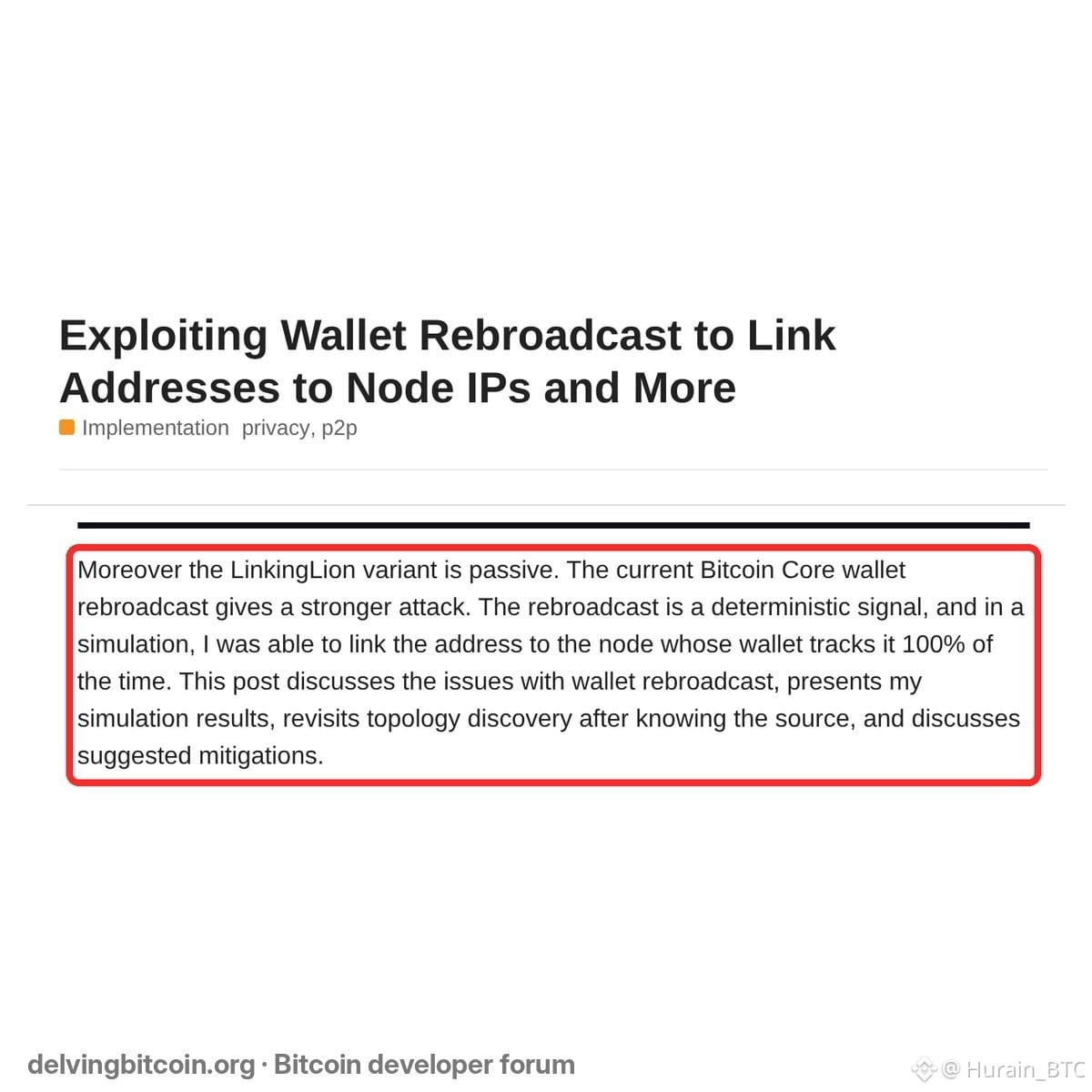
🚨 ADVERTENCIA: UN PAGO DE MENOS DE 35 CÉNTIMOS PUEDE REVELAR LA DIRECCIÓN DE INTERNET DETRÁS DE TU CARTERA #BITCOIN WALLET. Y NO ESTÁ SOLUCIONADO.
Un colaborador de Bitcoin Core lo demostró esta semana.
→ EL ATACANTE ENVÍA UN PAGO PEQUEÑO Y CON UNA COMISIÓN BAJA A UNA DIRECCIÓN QUE YA HAS USADO
→ SE QUEDA ATASCADO, ASÍ QUE ENTRE 12 Y 36 HORAS DESPUÉS TU CARTERA LO VUELVE A DIFUNDIR
→ EL ATACANTE OBSERVA QUÉ ORDENADOR LO HACE
→ EN SUS PRUEBAS, IDENTIFICÓ EL ORDENADOR CORRECTO 30 DE 30 VECES
→ UNA DIRECCIÓN IP PUEDE INDICAR TU PROVEEDOR DE INTERNET, TU CIUDAD Y, A VECES, TU CASA
QUIÉNES ESTÁN EXPUESTOS:
→ CARTERAS DE BITCOIN CORE
→ SPARROW EN MODO CORE, SPECTER, LIANA, JOINMARKET, ELECTRUM PERSONAL SERVER
→ NODOS EN TOR QUE TAMBIÉN MANTIENEN CONEXIONES NORMALES A INTERNET
LA SOLUCIÓN SIGUE DEBATIÉNDOSE. OTRO COLABORADOR DE CORE DICE QUE UN CAMBIO PROPUESTO «SOLO AUMENTA LIGERAMENTE EL COSTE DEL ATAQUE ACTIVO».
LA SOLUCIÓN PROVISIONAL: DESACTIVA LA DIFUSIÓN AUTOMÁTICA DE LA CARTERA Y ENVÍA CADA TRANSACCIÓN MANUALMENTE.
SE PROBÓ EN UNA RED DE PRUEBA. TODAVÍA NADIE LO HA MEDIDO EN LA RED REAL.
ENTONCES, ¿CUÁNTAS PERSONAS YA SABEN DÓNDE ESTÁN TUS BITCOINS? 👀
146
·
--
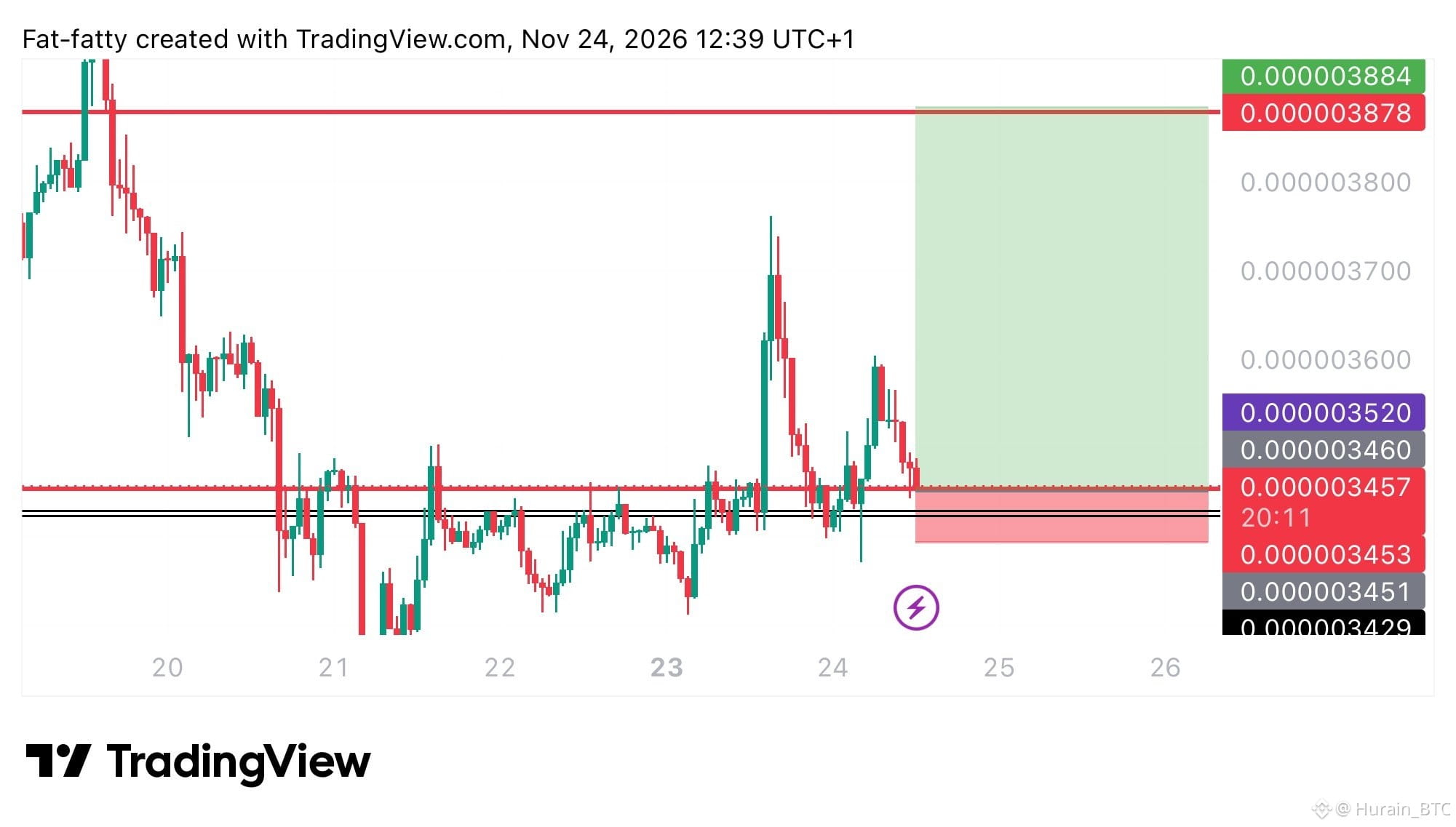
$PEPE OPERACIÓN EN LARGO
ENTRADA: 0.345
OBJETIVO: 0.3875
LÍMITE DE PÉRDIDAS: 0.3385
$PEPE OPERACIÓN EN LARGO
ENTRADA: 0.345
OBJETIVO: 0.3875
LÍMITE DE PÉRDIDAS: 0.3385
ENTRADA: 0.345
OBJETIVO: 0.3875
LÍMITE DE PÉRDIDAS: 0.3385
74
·
--
⚡ $HYPE : HYPERLIQUID MOVIÓ $1.09B EN 24H
HYPE registró un volumen de $1.09 mil millones en 24 h.
Eso representa el 7.5 % de su capitalización de mercado de $14.5 mil millones.
Es la moneda #10 y una de las altcoins más negociadas fuera de las principales.
El volumen se mantiene incluso en momentos de miedo extremo.
¿Qué mantiene a HYPE tan activa?

229
·
--
🧠 $TAO : LA MONEDA DE IA CON UNA OFERTA COMO LA DE BITCOIN
Bittensor tiene una oferta máxima de 21 millones, al igual que Bitcoin.
Hay 11,7 millones de TAO en circulación, aproximadamente el 56 %.
Cotiza a 185,33 $, un 75,5 % por debajo de su máximo histórico de 757,60 $.
Su capitalización de mercado es de 2.170 millones de dólares.
¿Podría TAO ser el Bitcoin de la IA descentralizada?
1
304
·
--
$ONDO muestra una posible formación de triple suelo. 🟣
El precio cotiza alrededor de $0.2621 tras una fuerte caída diaria del 7 %.
📉 Resistencia: $0.40–$0.45
🟢 Soporte: $0.25–$0.26
🚀 Objetivo de ruptura alcista: $1.40
⚠️ Nivel clave de invalidación: caída por debajo de $0.25.
ONDO se acerca a su tercera prueba importante del soporte. Una reversión exitosa seguida de una ruptura por encima de la línea clavicular, cerca de $0.78, podría abrir la puerta a una recuperación significativa.
Espera una confirmación antes de abrir una posición. 👀
399
·
--
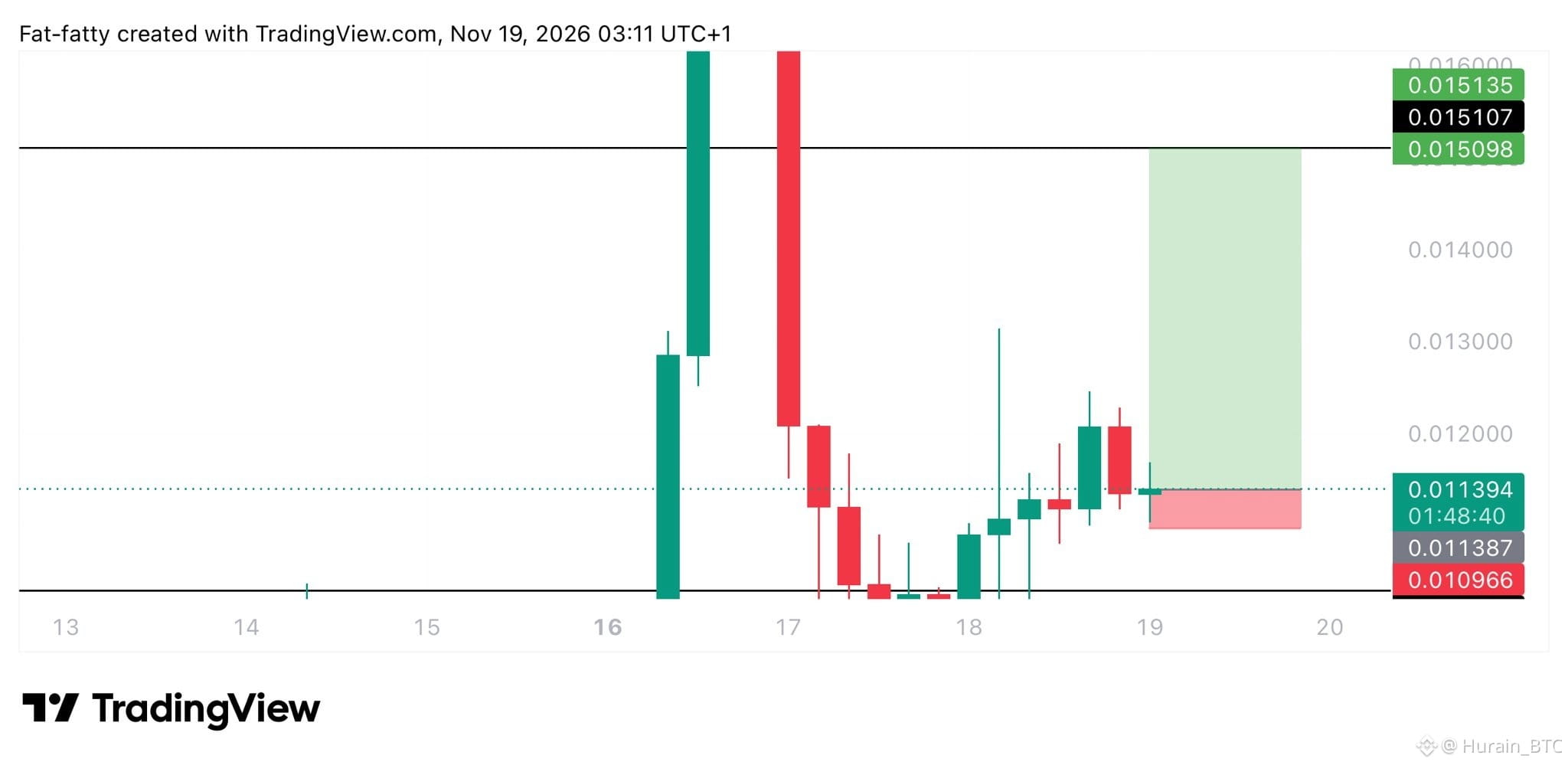
$BLESS OPERACIÓN LARGA
ENTRADA: 0.0114
OBJETIVO: 0.0151
STOP LOSS: 0.010935
$BLESS OPERACIÓN LARGA
ENTRADA: 0.0114
OBJETIVO: 0.0151
STOP LOSS: 0.010935
ENTRADA: 0.0114
OBJETIVO: 0.0151
STOP LOSS: 0.010935
1
165
·
--
📊 UNI MOVIÓ 255 M$ EN 24 H, MÁS QUE LINK, ADA Y XLM
LINK movió 177 M$, ADA 198 M$ y XLM 82 M$.
Además, UNI cerró el período con una subida del 3,09 %.
Que una moneda DeFi supere en volumen a nombres más grandes es señal de una rotación hacia el trading on-chain.
Observa si el volumen se mantiene por encima de estos niveles en las próximas sesiones.
¿En qué moneda DeFi confías más? 👇

209
·
--
Con verificación
🇸🇬 $ONDO : ONDO FINANCE SE UNE A LA INICIATIVA MAS GUARDIAN DE SINGAPUR
Guardian reúne a reguladores, grupos del sector e instituciones financieras globales para crear mercados tokenizados.
Según RWA.xyz, Ondo es ahora la mayor plataforma de tokenización del mundo.
Los activos emitidos por Ondo superaron los 4.000 millones de dólares en TVL combinado este año.
Ondo Stocks pasó de unos 300 millones de dólares un mes después de su lanzamiento a 1.340 millones a finales de octubre.
Ondo Intelligent Portfolios superó los 75 millones de dólares en TVL en unos 2 meses.
La unidad tecnológica de Fidelity es ahora un verificador obligatorio en Ondo Bridge.
Y, sin embargo, $ONDO ha caído más del 15 % en 7 días.
¿Quién tiene razón sobre $ONDO: los reguladores o los operadores? 👇
🇸🇬 $ONDO : ONDO FINANCE SE UNE A LA INICIATIVA MAS GUARDIAN DE SINGAPUR
Guardian reúne a reguladores, grupos del sector e instituciones financieras globales para crear mercados tokenizados.
Según RWA.xyz, Ondo es ahora la mayor plataforma de tokenización del mundo.
Los activos emitidos por Ondo superaron los 4.000 millones de dólares en TVL combinado este año.
Ondo Stocks pasó de unos 300 millones de dólares un mes después de su lanzamiento a 1.340 millones a finales de octubre.
Ondo Intelligent Portfolios superó los 75 millones de dólares en TVL en unos 2 meses.
La unidad tecnológica de Fidelity es ahora un verificador obligatorio en Ondo Bridge.
Y, sin embargo, $ONDO ha caído más del 15 % en 7 días.
¿Quién tiene razón sobre $ONDO : los reguladores o los operadores? 👇
298
·
--
Con verificación
📉 EL NASDAQ CAE UN 1,5% MIENTRAS SE PROFUNDIZA LA OLA DE VENTAS DE NVIDIA
Durante la jornada del lunes, el S&P 500 bajó cerca de un 0,9%, el Nasdaq cayó un 1,5% y el Dow retrocedió aproximadamente un 0,1%.
$NVDA cayó cerca de un 2,4%, algo que el artículo atribuye a la salida del director ejecutivo Jensen Huang la semana pasada.
Broadcom y AMD también bajaron, aunque Broadcom había subido más de un 18% la semana anterior.
El rendimiento de los bonos del Tesoro a 10 años se situó cerca del 5,13%, tras alcanzar el 5,15% el 13 de noviembre.
Nvidia presenta sus resultados el 17 de noviembre, después de prever unos ingresos de alrededor de 108.000 millones de dólares, frente al récord de 96.200 millones del trimestre pasado.
$BTC rondaba los 64.000 dólares tras caer hasta cerca de los 62.000.
¿Los resultados darán estabilidad al sector tecnológico o profundizarán la caída? 👇

222
·
--
⚔️ $LINK contra $UNI
ENLACE: capitalización de mercado de 6.87B, volumen de 24 h de 430.03M.
UNI: capitalización de mercado de 3.21B, volumen de 24 h de 668.36M.
LINK es 2.1 veces más grande, pero UNI tuvo 1.6 veces más actividad de trading.
¿Mayor capitalización o más actividad?
¿Cuál gana?
⚔️ $LINK contra $UNI
ENLACE: capitalización de mercado de 6.87B, volumen de 24 h de 430.03M.
UNI: capitalización de mercado de 3.21B, volumen de 24 h de 668.36M.
LINK es 2.1 veces más grande, pero UNI tuvo 1.6 veces más actividad de trading.
¿Mayor capitalización o más actividad?
¿Cuál gana?
ENLACE: capitalización de mercado de 6.87B, volumen de 24 h de 430.03M.
UNI: capitalización de mercado de 3.21B, volumen de 24 h de 668.36M.
LINK es 2.1 veces más grande, pero UNI tuvo 1.6 veces más actividad de trading.
¿Mayor capitalización o más actividad?
¿Cuál gana?
398
·
--
Con verificación
🔥 $XRP La actividad del Ledger acaba de alcanzar nuevos máximos de noviembre
El uso de lotes llegó a 1.962M el 3 de noviembre, menos de un mes después de su puesta en marcha el 9 de octubre.
El uso de tickets llegó a 1.553M el 7 de noviembre, también un récord para noviembre.
En 24 horas, las transacciones aumentaron un 75.9% hasta los 4.3M y las cuentas activas se dispararon un 128%.
El volumen de pagos subió un 137% hasta los $1B, y la quema de XRP por comisiones aumentó un 136%.
La capitalización de mercado de RLUSD ha subido un 96% este año, hasta los $2.7B, frente a los $1.4B de enero.
Los ETF de XRP al contado de EE. UU. ya han acumulado más de 1.16B XRP.
¿Se está convirtiendo XRPL silenciosamente en una capa de liquidación de primer nivel? 👇
135
·
--
😱 $INJ fue la peor de las 14 altcoins de hoy
Cayó un 12,6%, hasta los 7,01 $.
El volumen de las últimas 24 h fue de 196,3 M$.
Con una capitalización de mercado de 701 M$, eso equivale al 28 % de toda la capitalización negociada en un día.
$INJ está ahora aproximadamente un 87 % por debajo de su máximo histórico de 52,94 $.
Es un volumen de negociación propio del pánico para una moneda de este tamaño.
El volumen de pánico suele acabar en un fuerte rebote o en un nuevo mínimo.
¿Aún tienes $INJ o ya te has rendido?

1
547
·
--
Con verificación
🔐 $FLR apuesta por lo único en lo que las instituciones no están dispuestas a ceder: la privacidad
Las instituciones se están acercando al mundo cripto, y la privacidad les importa.
Hugo Philion, cofundador de Flare, conversó con Thinking Crypto para explicar qué papel puede desempeñar Flare.
Todo empieza con Flare Confidential Compute.
A partir de ahí, se amplía a casos de uso de datos más diversos.
Las grandes instituciones no pondrán datos confidenciales en una cadena donde todo el mundo pueda verlo todo.
Las cadenas que resuelvan primero el problema de la privacidad podrían ser las que elijan las instituciones.
¿Es la privacidad la próxima gran narrativa de $FLR?

47
·
--
🏔️ $AVAX cayó casi un 10% con un volumen muy superior al normal
$AVAX movió 423,6 M$ en volumen durante 24 h.
Eso equivale a cerca del 13% de su capitalización de mercado de 3,22 mil M$.
El precio es de 7,22 $, un 9,8% menos en 24 h.
El RSI diario ronda los 30, justo en el umbral de sobreventa.
Un gran volumen en niveles de sobreventa puede indicar una capitulación o el inicio de una caída más profunda.
La zona de los 7 $ decidirá cuál de las dos opciones se cumple.
¿En qué dirección romperá $AVAX : hacia los 9 $ o los 6 $?
736
·
--
Parcialmente cierto
🔓 $FIL acaba de perder su mayor fuente de nueva oferta… y casi nadie se dio cuenta 👇
El período de liberación gradual de los tokens del bloque génesis de Filecoin, de seis años, terminó oficialmente el 14 de octubre.
En los tres meses anteriores, se liberaron 17,1 millones de FIL.
Las recompensas por bloque liberaron solo 5,4 millones de FIL durante el mismo período.
Eso significa que la liberación gradual representó más del 75 % de todos los FIL nuevos que llegaron al mercado.
Ahora ese flujo se ha detenido definitivamente.
Menos presión de oferta, la misma red.
¿Es esta la calma antes de la oportunidad que los tenedores de $FIL llevaban esperando?

1
2
1.4k
·
--
Con verificación
🏛️ La SEC acaba de tratar a $CC Canton Coin como un producto digital
El personal de la SEC emitió una carta de no acción el 3 de noviembre.
Canton generó más de 155 millones de dólares en comisiones en el tercer trimestre.
Todas y cada una de las comisiones queman CC.
A partir de 2027, todas las aplicaciones de producción quemarán CC según el uso que hagan de la red.
CNTN, que cotiza en Nasdaq, comenzó a liquidar operaciones en Canton el 2 de noviembre.
Sin embargo, CC cotiza cerca de los 0,095 dólares, más de un 50 % por debajo de su máximo de febrero.
Con claridad regulatoria y un mecanismo de quema a mitad de precio respecto a sus máximos... ¿un gigante dormido o una trampa de valor?
CC-1,43 %
CNTNUS+4,01 %
72
·
--
Con verificación
⛏️ $LTC El minero Luxxfolio está acumulando Litecoin discretamente
Luxxfolio afirma que ahora tiene unos 26.838 LTC en reserva.
Eso equivale a unos 1,3 millones de dólares.
Este minero centrado en Litecoin empezó a minar apenas en el primer trimestre de este año.
Hasta ahora ha minado 3.599 LTC.
Solo durante el último mes recibió unos 1.514 LTC.
El ritmo está aumentando.
¿Empezarán más mineros a crear reservas de Litecoin?
380
·
--
Con verificación
🦄 $UNI acaba de conectar liquidez externa directamente a Uniswap
Uniswap lanzó Aggregator Hooks el 22 de octubre.
Ahora hay siete fuentes de liquidez externa conectadas.
Abarcan Ethereum, Base y Robinhood Chain.
La liquidez externa aparece como pools de v4.
Eso significa que el router puede liquidar toda la ruta del intercambio en una sola transacción.
Un intercambio. Una transacción. Muchísima más liquidez.
¿Se está convirtiendo Uniswap v4 en el centro de liquidez de DeFi?
117
Inicia sesión para explorar más contenidos
Únete a usuarios de criptomonedas de todo el mundo en Binance Square
⚡️ Obtén la información más reciente y útil sobre criptomonedas.
💬 Confía en el mayor exchange de criptomonedas del mundo.
👍 Descubre opiniones reales de creadores verificados.
Correo electrónico/número de teléfono
Temas en tendencia
EvolveAtBinanceBlockchainWeek
2.7M visualizaciones
21,644 participa(n) en el debate
¡Binance Blockchain Week ya está oficialmente en marcha! 🌍
El 28 y 29 de noviembre, tanto si estás en Bangkok como si te unes desde lejos, sigue las transmisiones en directo y participa en la conversación en Binance Square.
Esto es lo que te espera 👇
📺 Mira el main stage live
Conéctate durante los dos días para escuchar las perspectivas de los ponentes del sector sobre el tema de este año, «Evolucionar». Desde la innovación tecnológica hasta las aplicaciones en el mundo real, descubre qué le depara el futuro al mundo cripto.
⚔️ Sigue dos competiciones de trading
Tanto el Aster Open Qualifier como el Binance Trading Master Tournament se transmitirán en directo. Conéctate para ver a los traders en acción.
🏆 Mira el Blockchain 100 Awards Ceremony
La comunidad seleccionó la lista Blockchain 100. ¡Acompáñanos a celebrar a sus creadores y las ideas que comparten!
💬 Participa en la conversación de la comunidad
Usa #EvolveAtBinanceBlockchainWeek en una publicación con una foto para compartir qué esperas con ilusión, tu opinión sobre el sector o tus momentos favoritos del evento.
¡El event page ya está en directo! Suscríbete a todas las transmisiones en directo con un solo clic para no perderte nada 👏
Binance Blockchain Week
·641 «Me gusta»
·1M visualizaciones
IBSGovAccountMints1BTokensDrains5.71M
28,539 visualizaciones
326 participa(n) en el debate
OPECReportedlyKeepsOilQuotasUnchangedForQ1
3,824 visualizaciones
99 participa(n) en el debate