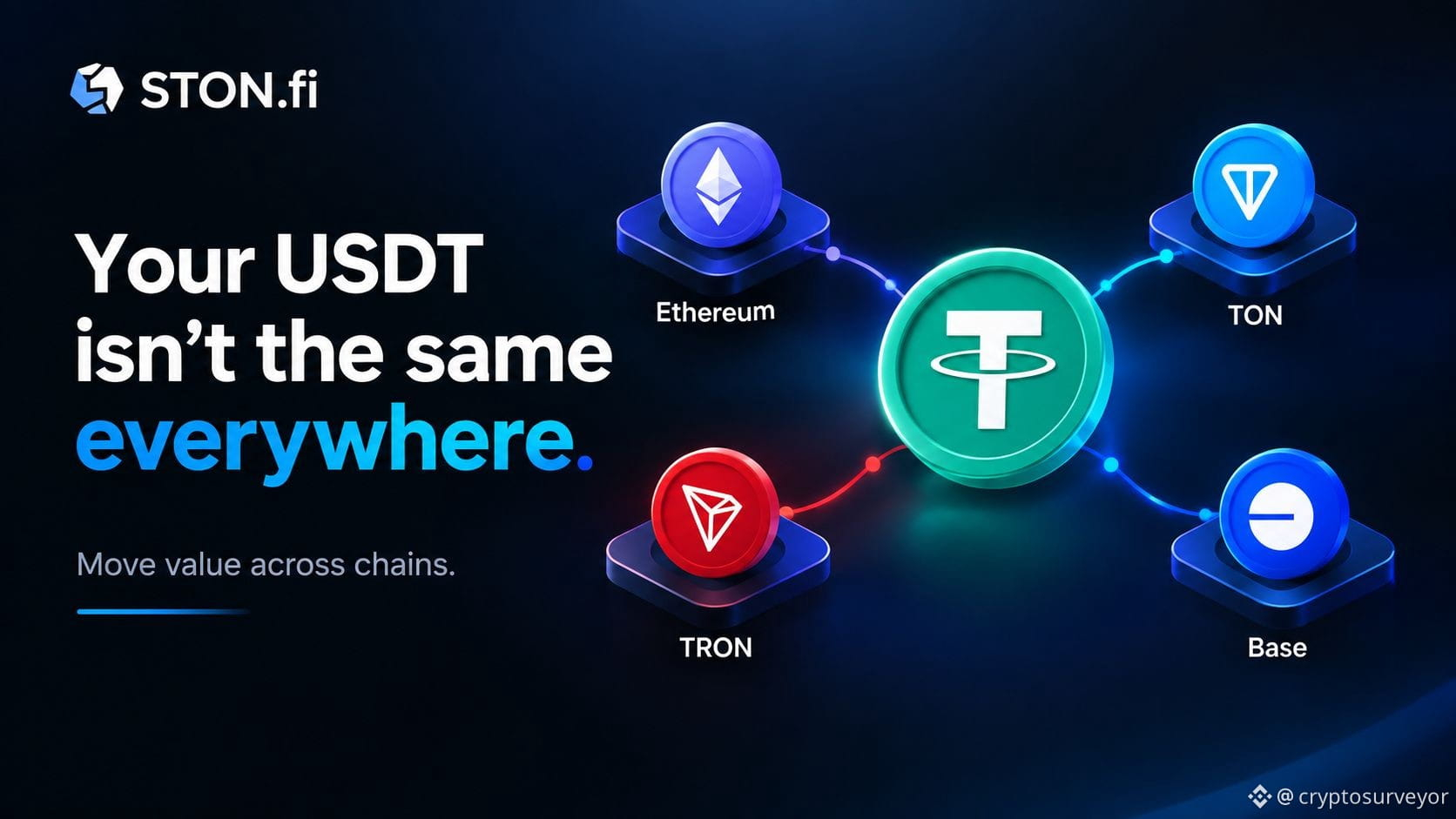
𝗬𝗼𝘂𝗿 𝗨𝗦𝗗𝗧 𝗶𝘀𝗻'𝘁 𝗿𝗲𝗮𝗹𝗹𝘆 𝘁𝗵𝗲 𝘀𝗮𝗺𝗲 𝗲𝘃𝗲𝗿𝘆𝘄𝗵𝗲𝗿𝗲.
This is one of those things that sounds obvious after you understand it, but it's easy to overlook when you're new to multichain crypto.
USDT on Ethereum, TON, TRON, Base and other networks may share the same name and dollar peg, but technically they're different assets living on different blockchains.
Each network has its own addresses, token contracts, transaction rules and settlement environment.
So if you have USDT on Ethereum and want to use a DeFi app on TON, you can't simply send that USDT directly to a TON address.
A normal token transfer happens within one blockchain.
To move value between different networks, you need a mechanism specifically designed for cross-chain transactions.
That's where things like centralized exchanges, bridges and cross-chain swaps come into the picture.
A centralized exchange can handle the conversion for you, but your assets are temporarily held by the exchange.
Bridges can connect different networks, but they introduce another layer of infrastructure and security considerations.
𝗖𝗿𝗼𝘀𝘀-𝗰𝗵𝗮𝗶𝗻 𝘀𝘄𝗮𝗽𝘀 𝘁𝗮𝗸𝗲 𝗮 𝗱𝗶𝗳𝗳𝗲𝗿𝗲𝗻𝘁 𝗮𝗽𝗽𝗿𝗼𝗮𝗰𝗵.
Instead of manually moving assets through several steps, you can exchange an asset on one blockchain for an asset on another.
For example:
𝗨𝗦𝗗𝗧 𝗼𝗻 𝗧𝗢𝗡 → 𝗨𝗦𝗗𝗖 𝗼𝗻 𝗕𝗮𝘀𝗲
With STON.fi, cross-chain swaps are powered by Omniston, which coordinates liquidity and execution across supported networks.
From the user's perspective, the process is much simpler:
𝗖𝗵𝗼𝗼𝘀𝗲 the asset you have.
𝗖𝗵𝗼𝗼𝘀𝗲 the network where you want to receive the asset.
𝗥𝗲𝘃𝗶𝗲𝘄 the quote.
𝗖𝗼𝗻𝗳𝗶𝗿𝗺 the transaction.
The complicated cross-chain coordination happens behind the scenes.
That's what I find interesting about this approach.
This is one of those things that sounds obvious after you understand it, but it's easy to overlook when you're new to multichain crypto.
USDT on Ethereum, TON, TRON, Base and other networks may share the same name and dollar peg, but technically they're different assets living on different blockchains.
Each network has its own addresses, token contracts, transaction rules and settlement environment.
So if you have USDT on Ethereum and want to use a DeFi app on TON, you can't simply send that USDT directly to a TON address.
A normal token transfer happens within one blockchain.
To move value between different networks, you need a mechanism specifically designed for cross-chain transactions.
That's where things like centralized exchanges, bridges and cross-chain swaps come into the picture.
A centralized exchange can handle the conversion for you, but your assets are temporarily held by the exchange.
Bridges can connect different networks, but they introduce another layer of infrastructure and security considerations.
𝗖𝗿𝗼𝘀𝘀-𝗰𝗵𝗮𝗶𝗻 𝘀𝘄𝗮𝗽𝘀 𝘁𝗮𝗸𝗲 𝗮 𝗱𝗶𝗳𝗳𝗲𝗿𝗲𝗻𝘁 𝗮𝗽𝗽𝗿𝗼𝗮𝗰𝗵.
Instead of manually moving assets through several steps, you can exchange an asset on one blockchain for an asset on another.
For example:
𝗨𝗦𝗗𝗧 𝗼𝗻 𝗧𝗢𝗡 → 𝗨𝗦𝗗𝗖 𝗼𝗻 𝗕𝗮𝘀𝗲
With STON.fi, cross-chain swaps are powered by Omniston, which coordinates liquidity and execution across supported networks.
From the user's perspective, the process is much simpler:
𝗖𝗵𝗼𝗼𝘀𝗲 the asset you have.
𝗖𝗵𝗼𝗼𝘀𝗲 the network where you want to receive the asset.
𝗥𝗲𝘃𝗶𝗲𝘄 the quote.
𝗖𝗼𝗻𝗳𝗶𝗿𝗺 the transaction.
The complicated cross-chain coordination happens behind the scenes.
That's what I find interesting about this approach.