



Los intercambios entre cadenas están dejando de tratarse tanto de gestionar billeteras y pasando a centrarse en simplemente obtener los activos donde los necesitas.
La opción de dirección personalizada de STON.fi es un buen ejemplo de ese avance.
Antes, al mover activos entre cadenas, podía significar tener que conectar tanto la billetera de envío como la de recepción, cambiar de red y seguir varios pasos antes de que la transacción se completara.
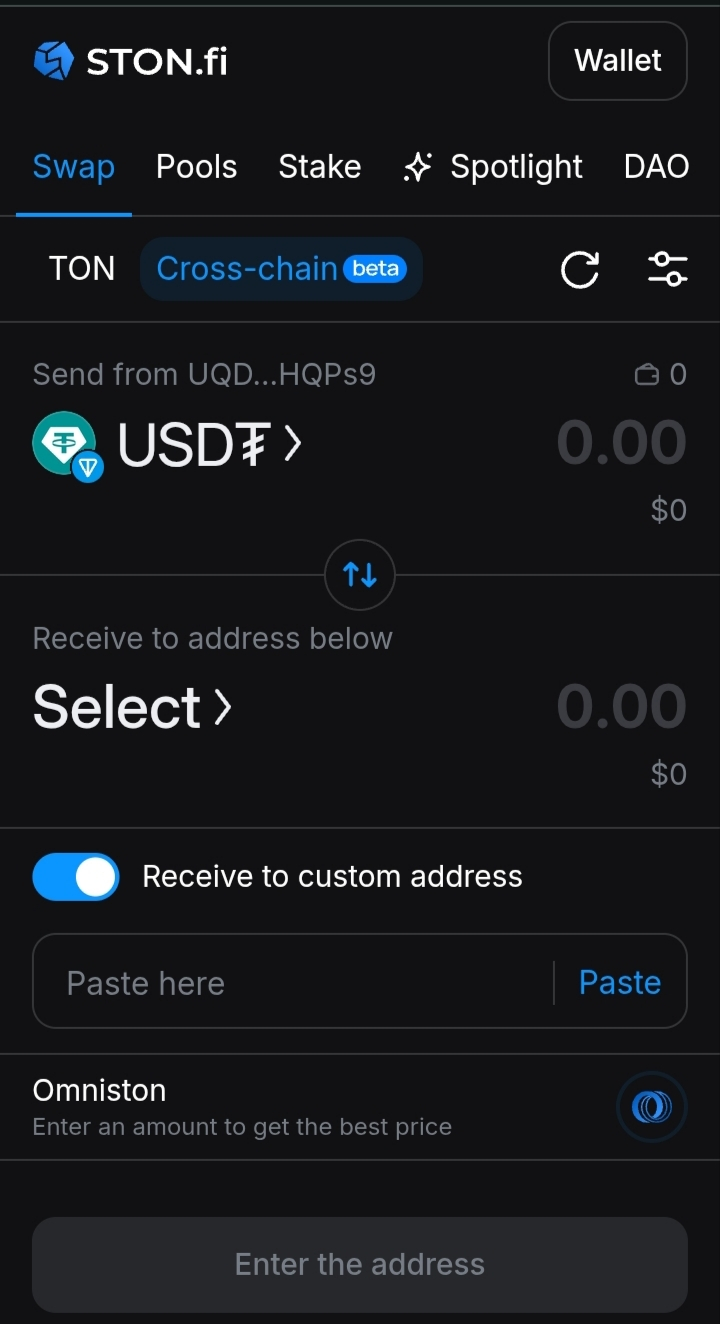
Ahora, puedes conectar solo la billetera desde la que estás haciendo el intercambio.
Para el destino, simplemente pega la dirección de la billetera. Esto resuelve un problema mucho mayor en DeFi: la fricción innecesaria al usar la billetera.
Como usuario, no necesariamente quiero conectar cada billetera que tengo solo para recibir fondos.
Podría estar enviando activos a una billetera hardware, a otra billetera personal, a una dirección del tesoro o a la billetera de otra persona. La dirección de recepción no debería siempre necesitar convertirse en un participante activo en el intercambio.
Aquí es donde el modelo de dirección personalizada se vuelve importante. $GRAM
El cambio real está en la experiencia de usuario
El antiguo modelo mental era:
Conecta la billetera → elige la red → conecta otra billetera → intercambia → recibe
El modelo más simple es:
Conecta la billetera de origen → elige lo que quieres → ingresa el destino → recibe
Eso se parece más a cómo los usuarios piensan realmente sobre los pagos.
No piensas:
"¿Qué sesión de billetera debo establecer?"
Piensas:
"¿Qué activo tengo, qué activo necesito y a dónde debería ir?"
Esa distinción podría volverse cada vez más importante a medida que el DeFi entre cadenas se expanda.
Las stablecoins hacen que esto sea aún más relevante
Las rutas compatibles actuales incluyen activos como USDT y USDC en redes como TON, TRON, Ethereum, BNB Chain, Base, Avalanche, Arbitrum y Polygon, junto con USDG en Robinhood Chain.
Para mí, esto destaca dónde la infraestructura entre cadenas tiene el valor más práctico.
A los usuarios a menudo no les importa la cadena en sí.
Les importa tener liquidez utilizable en la cadena donde la necesitan.
Pero la simplicidad no elimina el riesgo
Hay un intercambio (trade-off) importante.
Cuando pegas una dirección de destino, te haces responsable de verificarla.
Antes de confirmar un intercambio, siempre revisaría:
• Dirección de destino
• Cadena de destino
• Token de destino
• Monto que se envía
• Tarifas esperadas y salida final
Una interfaz más fluida debería reducir la fricción, no reducir la atención.
$BTC $ETH #CrossChainSolutions #TrendingTopic #DeFi #STONfi #GRAM