
#web3education
web3education
57,448 visualizaciones
853 participa(n) en el debate
Populares
Novedades
·
--

Artículo
El diario web3 de un ojol - Parte 11: ¿Cómo un campamento base de un Ojol explica las regalías del dominio de Web3?Prólogo: El Café, El Pangkalan (Campamento Base), y La Franquicia de la Identidad
Todos los días, antes de que comience la hora punta de la mañana en el Regency de Kendal, yo y mis compañeros conductores nos reunimos en nuestro refugio habitual junto a la carretera—que normalmente llamábamos pangkalan (campamento base) en el idioma local (como se puede ver en mi foto de la carretera más abajo). Nos sentamos en bancos de madera, bebemos café negro barato, revisamos las pantallas de nuestros teléfonos y esperamos a que el algoritmo de la app nos deje pedidos.
En el mundo físico, un Pangkalan (campamento base) es nuestro territorio, nuestra identidad y nuestro punto de partida. · Pero, ¿sabías que en la naturaleza digital de Web3, en realidad puedes construir, poseer y monetizar tu propio pangkalan virtual (campamento base)?
El diario web3 de un ojol - Parte 11: ¿Cómo un campamento base de un Ojol explica las regalías del dominio de Web3?
Prólogo: El Café, El Pangkalan (Campamento Base), y La Franquicia de la Identidad
Todos los días, antes de que comience la hora punta de la mañana en el Regency de Kendal, yo y mis compañeros conductores nos reunimos en nuestro refugio habitual junto a la carretera—que normalmente llamábamos pangkalan (campamento base) en el idioma local (como se puede ver en mi foto de la carretera más abajo). Nos sentamos en bancos de madera, bebemos café negro barato, revisamos las pantallas de nuestros teléfonos y esperamos a que el algoritmo de la app nos deje pedidos.
En el mundo físico, un Pangkalan (campamento base) es nuestro territorio, nuestra identidad y nuestro punto de partida. · Pero, ¿sabías que en la naturaleza digital de Web3, en realidad puedes construir, poseer y monetizar tu propio pangkalan virtual (campamento base)?
Todos los días, antes de que comience la hora punta de la mañana en el Regency de Kendal, yo y mis compañeros conductores nos reunimos en nuestro refugio habitual junto a la carretera—que normalmente llamábamos pangkalan (campamento base) en el idioma local (como se puede ver en mi foto de la carretera más abajo). Nos sentamos en bancos de madera, bebemos café negro barato, revisamos las pantallas de nuestros teléfonos y esperamos a que el algoritmo de la app nos deje pedidos.
En el mundo físico, un Pangkalan (campamento base) es nuestro territorio, nuestra identidad y nuestro punto de partida. · Pero, ¿sabías que en la naturaleza digital de Web3, en realidad puedes construir, poseer y monetizar tu propio pangkalan virtual (campamento base)?
118


·
--
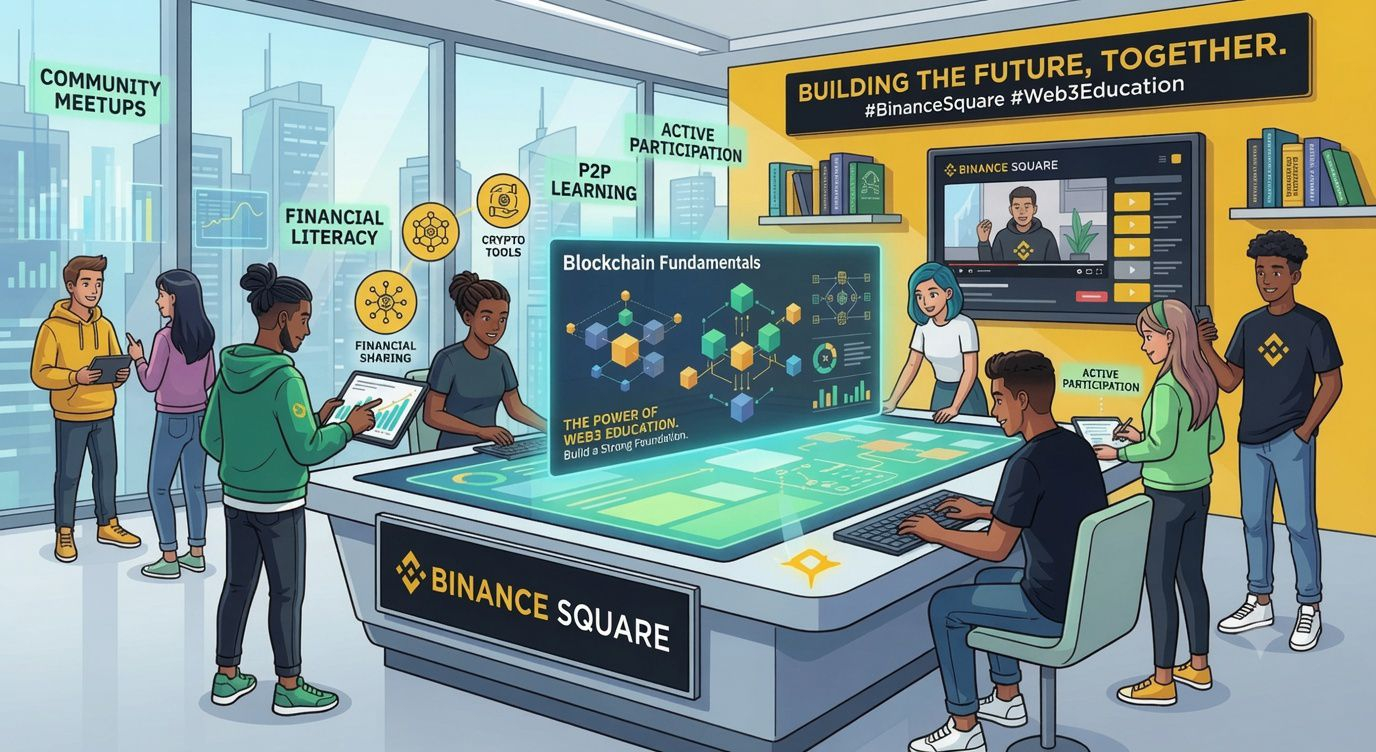
¡Por qué la educación en Web3 es el cambio definitivo! 📚🚀
Escuchando el panel de la comunidad de Binance de hoy, y el tema no podría ser más vital: ¿Por qué aprender antes de invertir es más importante hoy que nunca?
En un mercado que se mueve a la velocidad del rayo, perseguir la euforia sin una base sólida es un riesgo enorme. El verdadero éxito en el mundo Web3 no consiste en perseguir la próxima vela verde; se trata de comprender la tecnología y gestionar los riesgos correctamente.
Mi mejor consejo para cualquiera que esté construyendo su base:
1️⃣ Tecnología por encima del precio: Enfócate en aprender cómo funcionan el blockchain y las redes descentralizadas, no solo en mirar las gráficas de precios 📊
2️⃣ Aprovecha recursos gratuitos: Plataformas como #BinanceAcademy ofrecen materiales educativos increíbles y gratuitos; úsalos 💡🔥
3️⃣ Gestión de riesgos primero: Invierte solo lo que puedas permitirte perder mientras sigues en tu fase de aprendizaje; incluso los profesionales cumplen esa regla ⚠️👀
¡Pasemos del trading simple a una participación activa y educada en la economía digital global! 🌐✨
¿Cuál es el mejor consejo que has recibido en cripto? 🤔😁 Para mí, el mejor es no hacer revenge trade después de una pérdida 😁
#DYOR
#BinanceTGCommunity #TGTalks
#Web3Education @BinanceTG
¡Por qué la educación en Web3 es el cambio definitivo! 📚🚀
Escuchando el panel de la comunidad de Binance de hoy, y el tema no podría ser más vital: ¿Por qué aprender antes de invertir es más importante hoy que nunca?
En un mercado que se mueve a la velocidad del rayo, perseguir la euforia sin una base sólida es un riesgo enorme. El verdadero éxito en el mundo Web3 no consiste en perseguir la próxima vela verde; se trata de comprender la tecnología y gestionar los riesgos correctamente.
Mi mejor consejo para cualquiera que esté construyendo su base:
1️⃣ Tecnología por encima del precio: Enfócate en aprender cómo funcionan el blockchain y las redes descentralizadas, no solo en mirar las gráficas de precios 📊
2️⃣ Aprovecha recursos gratuitos: Plataformas como #BinanceAcademy ofrecen materiales educativos increíbles y gratuitos; úsalos 💡🔥
3️⃣ Gestión de riesgos primero: Invierte solo lo que puedas permitirte perder mientras sigues en tu fase de aprendizaje; incluso los profesionales cumplen esa regla ⚠️👀
¡Pasemos del trading simple a una participación activa y educada en la economía digital global! 🌐✨
¿Cuál es el mejor consejo que has recibido en cripto? 🤔😁 Para mí, el mejor es no hacer revenge trade después de una pérdida 😁
#DYOR
#BinanceTGCommunity #TGTalks
#Web3Education @Binance TG Community
Escuchando el panel de la comunidad de Binance de hoy, y el tema no podría ser más vital: ¿Por qué aprender antes de invertir es más importante hoy que nunca?
En un mercado que se mueve a la velocidad del rayo, perseguir la euforia sin una base sólida es un riesgo enorme. El verdadero éxito en el mundo Web3 no consiste en perseguir la próxima vela verde; se trata de comprender la tecnología y gestionar los riesgos correctamente.
Mi mejor consejo para cualquiera que esté construyendo su base:
1️⃣ Tecnología por encima del precio: Enfócate en aprender cómo funcionan el blockchain y las redes descentralizadas, no solo en mirar las gráficas de precios 📊
2️⃣ Aprovecha recursos gratuitos: Plataformas como #BinanceAcademy ofrecen materiales educativos increíbles y gratuitos; úsalos 💡🔥
3️⃣ Gestión de riesgos primero: Invierte solo lo que puedas permitirte perder mientras sigues en tu fase de aprendizaje; incluso los profesionales cumplen esa regla ⚠️👀
¡Pasemos del trading simple a una participación activa y educada en la economía digital global! 🌐✨
¿Cuál es el mejor consejo que has recibido en cripto? 🤔😁 Para mí, el mejor es no hacer revenge trade después de una pérdida 😁
#DYOR
#BinanceTGCommunity #TGTalks
#Web3Education @Binance TG Community

280

·
--
El conocimiento es una de las formas de capital más infravaloradas en Web3.
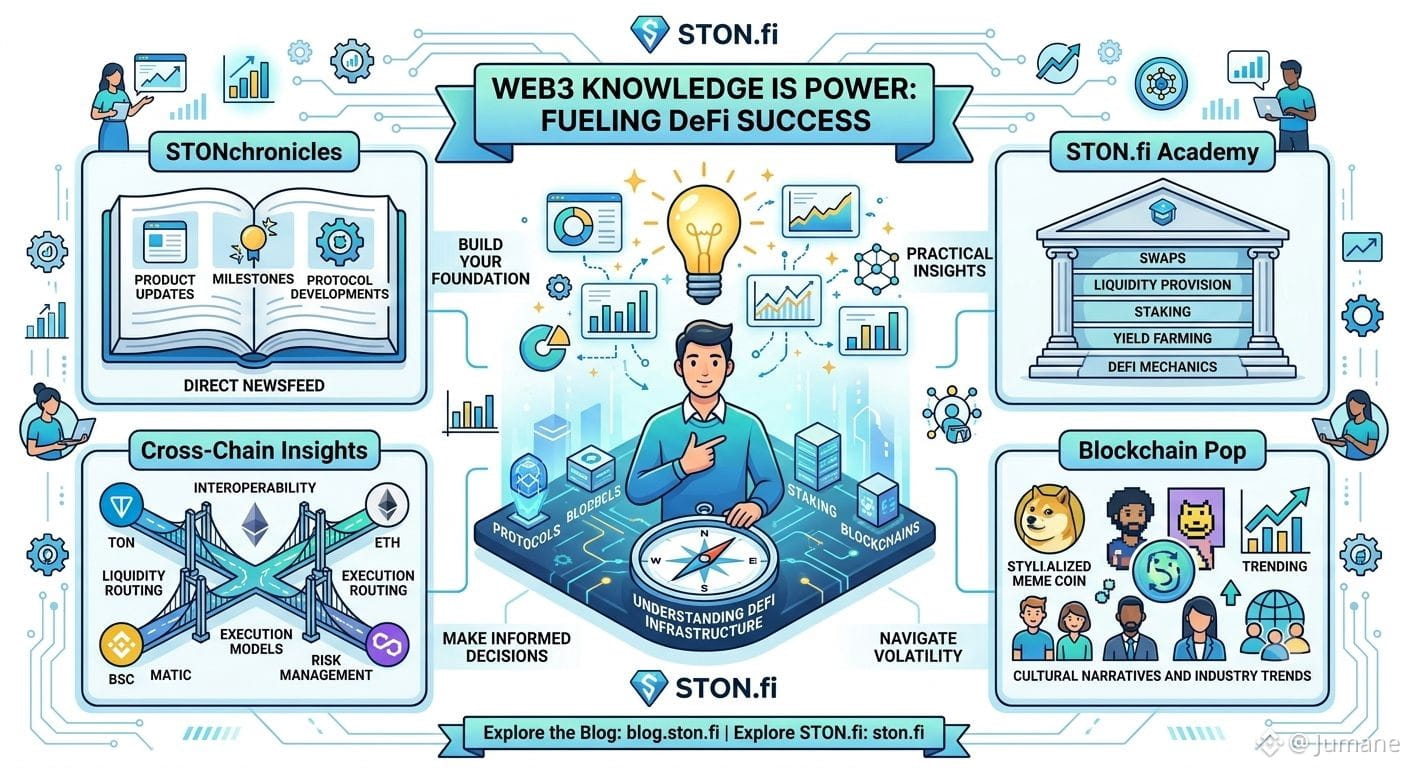
A medida que las finanzas descentralizadas siguen evolucionando, navegar el ecosistema requiere más que acceso a protocolos: exige una comprensión sólida de la infraestructura, la dinámica del mercado y los mecanismos que impulsan las finanzas on-chain.@ston_fi
El blog de STON.fi sirve como un centro educativo diseñado para ayudar a los usuarios a construir esa base mediante información práctica, explicaciones técnicas y análisis del ecosistema.
📖 Explora el Blog: blog.ston.fi
Contenido clave incluye:
🔹 STONchronicles — Actualizaciones oficiales de producto, hitos del ecosistema y desarrollos de protocolos directamente desde el equipo de STON.fi.
🔹 STON.fi Academy — Contenido educativo estructurado que cubre swaps, provisión de liquidez, staking, yield farming y los fundamentos de la mecánica de DeFi en un formato claro y accesible.
🔹 Insights entre Cadenas — Análisis profundos sobre interoperabilidad, enrutamiento de liquidez, modelos de ejecución y gestión de riesgos en varios ecosistemas de blockchain.
🔹 Blockchain Pop — Perspectivas sobre la evolución cultural de Web3, explorando los relatos y las tendencias que dan forma a la industria más amplia de activos digitales.
💡 Explora STON.fi: ston.fi
A medida que la infraestructura blockchain se vuelve cada vez más sofisticada, la educación sigue siendo un motor crítico para la adopción. Los usuarios que comprenden el diseño de protocolos, la dinámica de liquidez y la arquitectura entre cadenas están mejor posicionados para navegar la volatilidad del mercado y tomar decisiones informadas.
La próxima generación de participantes en Web3 no solo usará DeFi: entenderá cómo funciona.
#Web3 #DeFi #STONfi #TON #BlockchainEducation #CrossChain #OnChainFinance #CryptoResearch #Blockchain #Web3Education
El conocimiento es una de las formas de capital más infravaloradas en Web3.
A medida que las finanzas descentralizadas siguen evolucionando, navegar el ecosistema requiere más que acceso a protocolos: exige una comprensión sólida de la infraestructura, la dinámica del mercado y los mecanismos que impulsan las finanzas on-chain.@ston_fi
El blog de STON.fi sirve como un centro educativo diseñado para ayudar a los usuarios a construir esa base mediante información práctica, explicaciones técnicas y análisis del ecosistema.
📖 Explora el Blog: blog.ston.fi
Contenido clave incluye:
🔹 STONchronicles — Actualizaciones oficiales de producto, hitos del ecosistema y desarrollos de protocolos directamente desde el equipo de STON.fi.
🔹 STON.fi Academy — Contenido educativo estructurado que cubre swaps, provisión de liquidez, staking, yield farming y los fundamentos de la mecánica de DeFi en un formato claro y accesible.
🔹 Insights entre Cadenas — Análisis profundos sobre interoperabilidad, enrutamiento de liquidez, modelos de ejecución y gestión de riesgos en varios ecosistemas de blockchain.
🔹 Blockchain Pop — Perspectivas sobre la evolución cultural de Web3, explorando los relatos y las tendencias que dan forma a la industria más amplia de activos digitales.
💡 Explora STON.fi: ston.fi
A medida que la infraestructura blockchain se vuelve cada vez más sofisticada, la educación sigue siendo un motor crítico para la adopción. Los usuarios que comprenden el diseño de protocolos, la dinámica de liquidez y la arquitectura entre cadenas están mejor posicionados para navegar la volatilidad del mercado y tomar decisiones informadas.
La próxima generación de participantes en Web3 no solo usará DeFi: entenderá cómo funciona.
#Web3 #DeFi #STONfi #TON #BlockchainEducation #CrossChain #OnChainFinance #CryptoResearch #Blockchain #Web3Education
A medida que las finanzas descentralizadas siguen evolucionando, navegar el ecosistema requiere más que acceso a protocolos: exige una comprensión sólida de la infraestructura, la dinámica del mercado y los mecanismos que impulsan las finanzas on-chain.@ston_fi
El blog de STON.fi sirve como un centro educativo diseñado para ayudar a los usuarios a construir esa base mediante información práctica, explicaciones técnicas y análisis del ecosistema.
📖 Explora el Blog: blog.ston.fi
Contenido clave incluye:
🔹 STONchronicles — Actualizaciones oficiales de producto, hitos del ecosistema y desarrollos de protocolos directamente desde el equipo de STON.fi.
🔹 STON.fi Academy — Contenido educativo estructurado que cubre swaps, provisión de liquidez, staking, yield farming y los fundamentos de la mecánica de DeFi en un formato claro y accesible.
🔹 Insights entre Cadenas — Análisis profundos sobre interoperabilidad, enrutamiento de liquidez, modelos de ejecución y gestión de riesgos en varios ecosistemas de blockchain.
🔹 Blockchain Pop — Perspectivas sobre la evolución cultural de Web3, explorando los relatos y las tendencias que dan forma a la industria más amplia de activos digitales.
💡 Explora STON.fi: ston.fi
A medida que la infraestructura blockchain se vuelve cada vez más sofisticada, la educación sigue siendo un motor crítico para la adopción. Los usuarios que comprenden el diseño de protocolos, la dinámica de liquidez y la arquitectura entre cadenas están mejor posicionados para navegar la volatilidad del mercado y tomar decisiones informadas.
La próxima generación de participantes en Web3 no solo usará DeFi: entenderá cómo funciona.
#Web3 #DeFi #STONfi #TON #BlockchainEducation #CrossChain #OnChainFinance #CryptoResearch #Blockchain #Web3Education
1
85

·
--
#genius $GENIUS
🧠 El conocimiento tokenizado entra en una nueva era con @GeniusOfficial
Donde la mayoría de los proyectos se conforman con promesas, Genius está construyendo un verdadero puente entre la educación descentralizada y la creación de valor. Con IA y blockchain, Genius democratiza el acceso a conocimientos premium mientras recompensa activamente a los aprendices y contribuyentes.
El ecosistema se basa en el token $GENIUS : staking, acceso a cursos exclusivos, gobernanza y recompensas por la creación de contenido educativo. A diferencia de los simples "learn-to-earn" efímeros, Genius apuesta por la calidad y la sostenibilidad del conocimiento.
El equipo está trabajando actualmente en un módulo de verificación de habilidades a través de NFT, permitiendo a cada usuario certificar sus aprendizajes en la blockchain. Un avance significativo para la empleabilidad en Web3.
No subestimes el potencial de este proyecto. La educación es el verdadero combustible para la adopción masiva. Y Genius está colocando las vías.
🔐 Staker, aprender, contribuir, crecer – todo se vuelve más inteligente con $GENIUS
#genius #Web3Education
#genius $GENIUS
🧠 El conocimiento tokenizado entra en una nueva era con @GeniusOfficial
Donde la mayoría de los proyectos se conforman con promesas, Genius está construyendo un verdadero puente entre la educación descentralizada y la creación de valor. Con IA y blockchain, Genius democratiza el acceso a conocimientos premium mientras recompensa activamente a los aprendices y contribuyentes.
El ecosistema se basa en el token $GENIUS : staking, acceso a cursos exclusivos, gobernanza y recompensas por la creación de contenido educativo. A diferencia de los simples "learn-to-earn" efímeros, Genius apuesta por la calidad y la sostenibilidad del conocimiento.
El equipo está trabajando actualmente en un módulo de verificación de habilidades a través de NFT, permitiendo a cada usuario certificar sus aprendizajes en la blockchain. Un avance significativo para la empleabilidad en Web3.
No subestimes el potencial de este proyecto. La educación es el verdadero combustible para la adopción masiva. Y Genius está colocando las vías.
🔐 Staker, aprender, contribuir, crecer – todo se vuelve más inteligente con $GENIUS
#genius #Web3Education
🧠 El conocimiento tokenizado entra en una nueva era con @GeniusOfficial
Donde la mayoría de los proyectos se conforman con promesas, Genius está construyendo un verdadero puente entre la educación descentralizada y la creación de valor. Con IA y blockchain, Genius democratiza el acceso a conocimientos premium mientras recompensa activamente a los aprendices y contribuyentes.
El ecosistema se basa en el token $GENIUS : staking, acceso a cursos exclusivos, gobernanza y recompensas por la creación de contenido educativo. A diferencia de los simples "learn-to-earn" efímeros, Genius apuesta por la calidad y la sostenibilidad del conocimiento.
El equipo está trabajando actualmente en un módulo de verificación de habilidades a través de NFT, permitiendo a cada usuario certificar sus aprendizajes en la blockchain. Un avance significativo para la empleabilidad en Web3.
No subestimes el potencial de este proyecto. La educación es el verdadero combustible para la adopción masiva. Y Genius está colocando las vías.
🔐 Staker, aprender, contribuir, crecer – todo se vuelve más inteligente con $GENIUS
#genius #Web3Education
1
181

·
--
Opn (EDU) – ¿El futuro de la educación Web3?
Open Campus (EDU) está causando sensación al cerrar la brecha entre la educación tradicional y el ecosistema Web3. Aquí está por qué está llamando la atención de todos:
✅ Empoderar a los educadores para monetizar su contenido a través de Web3.
✅ Una plataforma educativa verdaderamente descentralizada.
✅ Un gran potencial mientras EdTech y Blockchain siguen convergiendo.
¿Cómo ves la posición actual del mercado de $EDU? ¿Lo estás considerando como una apuesta a largo plazo? ¡Hablemos en los comentarios!
#BinanceSquare #EDU #Web3Education #CryptoAnalysis" $EDU
Opn (EDU) – ¿El futuro de la educación Web3?
Open Campus (EDU) está causando sensación al cerrar la brecha entre la educación tradicional y el ecosistema Web3. Aquí está por qué está llamando la atención de todos:
✅ Empoderar a los educadores para monetizar su contenido a través de Web3.
✅ Una plataforma educativa verdaderamente descentralizada.
✅ Un gran potencial mientras EdTech y Blockchain siguen convergiendo.
¿Cómo ves la posición actual del mercado de $EDU ? ¿Lo estás considerando como una apuesta a largo plazo? ¡Hablemos en los comentarios!
#BinanceSquare #EDU #Web3Education #CryptoAnalysis" $EDU
Open Campus (EDU) está causando sensación al cerrar la brecha entre la educación tradicional y el ecosistema Web3. Aquí está por qué está llamando la atención de todos:
✅ Empoderar a los educadores para monetizar su contenido a través de Web3.
✅ Una plataforma educativa verdaderamente descentralizada.
✅ Un gran potencial mientras EdTech y Blockchain siguen convergiendo.
¿Cómo ves la posición actual del mercado de $EDU ? ¿Lo estás considerando como una apuesta a largo plazo? ¡Hablemos en los comentarios!
#BinanceSquare #EDU #Web3Education #CryptoAnalysis" $EDU
196

·
--
Artículo
Ver traducción
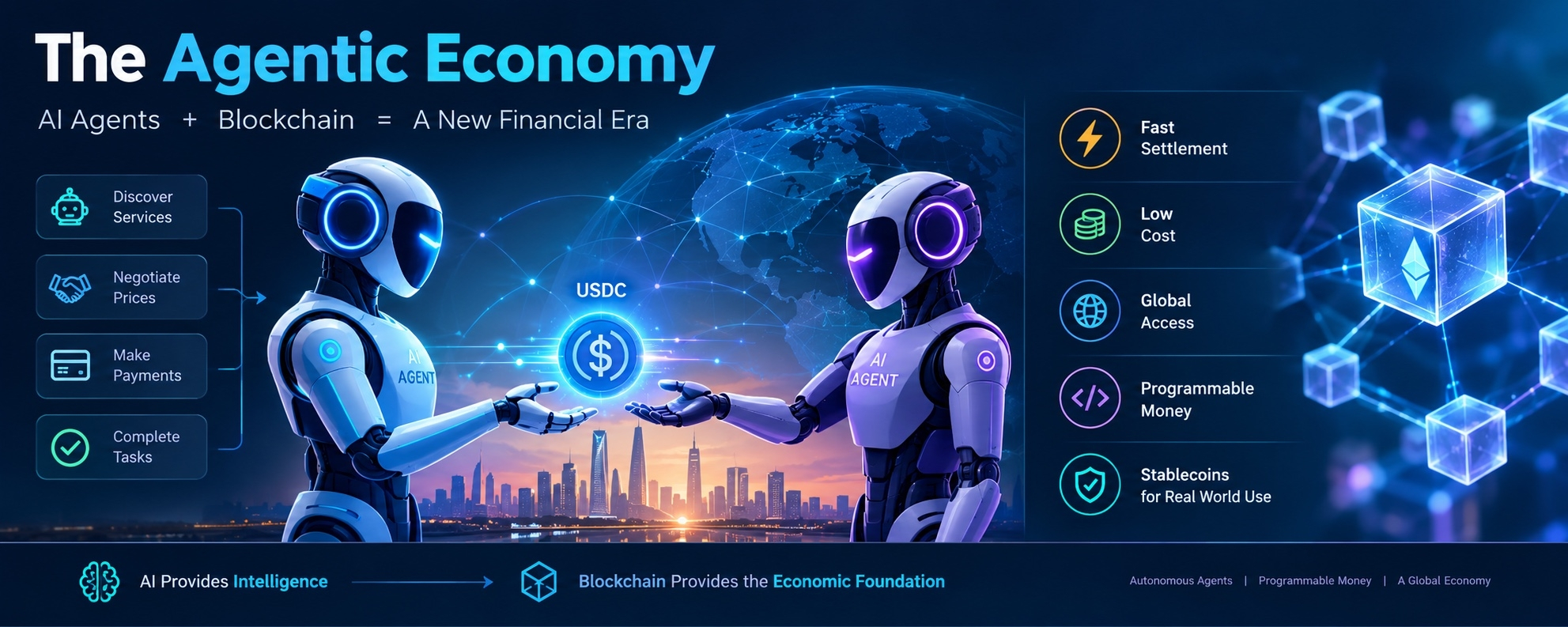
The Agentic Economy: Why Crypto May Become the Default Payment Channel for Artificial IntelligenceArtificial intelligence is rapidly evolving from an information-providing tool into a system capable of taking action.
Meanwhile, blockchain technology is evolving from speculation into a programmable financial infrastructure capable of supporting entirely new forms of economic activity.
The combination of these two technologies is creating something unprecedented: an economic system composed of autonomous AI agents , in which AI agents can negotiate, trade, and settle value without human intervention.
Artificial intelligence provides the intelligence, while blockchain provides the economic foundation.
In the future, it may no longer be humans clicking the "Pay" button, but software agents trading with other software agents in real-time.
The Rise of the Agent Economy
Today's AI systems are already capable of performing tasks once thought to be uniquely human. The next step is achieving autonomous operation.
Modern AI agents are increasingly capable of the following:
Book travelContract negotiation and pricingProcure dataHire specialized agentsPay for compute resourcesSettle micropaymentsManage ongoing workflows
As these systems become increasingly automated, requiring manual approval for every trade becomes a major bottleneck.
Software runs at machine speed, whereas manual approval processes do not.
As a result, there is a growing demand for economic infrastructure specifically designed for autonomous agents.
Why Traditional Payment Methods Fail
Global payment systems are designed for people, not for software.
Credit cards, bank transfers, the ACH network, and traditional payment processing methods rely on human intervention at every step. While effective for consumer transactions, they fall short when applied to machine-to-machine transactions.
Traditional payment systems typically have the following characteristics:
Too slow, with settlement times ranging from a few seconds to several days.Too costly for high-frequency, low-value transactions.Dependent on account creation, identity verification, and manual approval processes.Optimized around human-machine interaction rather than autonomous execution.
Imagine an AI agent making hundreds of API calls, data purchases, or service requests per minute.
Under traditional payment systems, transaction fees can quickly exceed the transaction value, while settlement delays undermine agents' ability to operate in real-time.
This economic model simply does not work.
Enter Agentic Payments
Agent payments represent a new paradigm where AI agents can initiate and execute transactions within predefined rules set by humans or organizations.
May include:
Spending LimitsBudget AllocationApproval ThresholdsUsage RestrictionsCompliance Requirements
Within these boundaries, agents can operate independently.
Each agent is assigned a wallet, enabling it to discover services, negotiate prices, complete payments, and proceed with tasks without having to wait for human approval at every step.
This transforms the payment process from manual operation to programmable operation.
Why Cryptocurrency Is a Natural Fit
Blockchain-based payment systems address many of the challenges faced by autonomous agents.
Programmable Money
Smart contracts allow payments to be directly linked to outcomes and conditions.
Agents can:
Make payment only after delivery of goods is confirmed.Make continuous streaming payments based on resource consumptionAutomatically execute escrow agreementsExecute contract conditions without intermediaries
Money itself has also become part of the software logic.
Internet-Scale Micropayments
Modern blockchains and Layer 2 networks provide:
Near real-time settlementExtremely low transaction costsSub-cent payment capability
This makes entirely new business models possible.
Agents only need to pay fractions of a cent to access an API call, a piece of data, or a moment of compute power—something that is economically impractical in traditional payment systems.
Global License-Free Access
Autonomous agents are not constrained by geographic location.
Blockchain networks enable cross-border transactions without the need for local banking relationships or complex payment integrations.
An AI agent in one country can seamlessly trade with service providers anywhere in the world.
Stablecoins Make Spending More Convenient
Volatility has always been seen as a challenge facing cryptocurrency payments.
Stablecoins (such as USDC) help solve this problem by providing predictable value while retaining the benefits of blockchain infrastructure.
For agents, stablecoins provide a practical medium of exchange, acting more like digital cash rather than speculative assets.
Infrastructure Has Taken Shape
While the vision of autonomous economic agents may sound like futuristic technology, its underlying infrastructure is already being built.
Several key developments are accelerating this transition:
Coinbase's x402 standard is reviving HTTP 402 ("Payment Required") to enable native internet payments.AI Agents can increasingly pay directly for API access permissions, content, and digital services.AWS Bedrock integration is supporting transactional AI workflows.Embedded wallets on Base simplify agent ownership and spending.Protocols like Circle Nanopayments and Nevermined are creating machine-to-machine commerce frameworks.Major fintech and payment companies are actively exploring AI-native wallet experiences.
Once-experimental infrastructure is steadily moving toward production deployment.
Economic Opportunities
The emergence of autonomous agents may create entirely new markets and business models.
Everything Based on Usage
In addition to fixed subscription models, services can also monetize through the following methods:
Pay-per-searchPay-per-inferencePay-per-API requestPay-per-data retrieval
Every interaction can be measured using economic indicators.
Agent-to-Agent Market
Specialized AI agents may begin purchasing services from one another.
An agent responsible for research can hire another agent for data collection. Customer service representatives can purchase translation services from language agent agencies.
These interactions create self-organizing digital markets that operate continuously without human intervention.
Immense Economic Scalability
Unlike human employees, autonomous agents can operate 24 hours a day, 7 days a week.
Millions (or even eventually billions) of traders can trade simultaneously, thereby creating an entirely new layer of economic activity.
Composable Financial Workflows
Blockchain infrastructure enables agents to combine multiple financial primitives into an automated workflow.
agents can seamlessly integrate:
PaymentsEscrow systemsLending protocolsGovernance mechanismsFinancial managementDecentralized organizations
In this paradigm, the blockchain becomes the trustless execution layer for AI-driven decisions.
Challenges Remain
Despite the strong momentum, significant challenges remain to be addressed before agentic commerce sees widespread adoption.
Key areas include:
Security and spending controlsAgent identity and accountabilityRegulatory clarity and liability frameworksFiat-to-crypto deposits and withdrawalsCross-chain interoperability
Encouragingly, some solutions have already emerged through the following approaches:
Permissioned and tiered wallet architecturesProgrammatic compliance systemsHybrid fiat-crypto payment railsCross-chain infrastructure and standards
This technology is still in its early stages, but the direction of its development is becoming increasingly clear.
The Big Picture
The agent economy needs a form of currency that circulates at machine speed.
As AI agents become independent economic actors, the financial infrastructure supporting them must possess the following characteristics:
InstantProgrammableGlobalAutonomous
This is precisely where the unique advantage of blockchain and stablecoins lies.
Cryptocurrency may not only become part of the rise of artificial intelligence, but could also serve as the settlement layer for an autonomous machine economy.
AI provides intelligence.
Blockchain provides the economic foundation.
In the future, it may not necessarily be humans clicking the "Pay" button.
It could be autonomous agents directly negotiating, trading, and settling value on-chain.
The remaining question is simple:
Will the number of AI agents surpass online human users first, or will the number of AI agent wallets surpass human wallets first?
#CryptoEducation #Web3Education #ArifAlpha
The Agentic Economy: Why Crypto May Become the Default Payment Channel for Artificial Intelligence
Artificial intelligence is rapidly evolving from an information-providing tool into a system capable of taking action.
Meanwhile, blockchain technology is evolving from speculation into a programmable financial infrastructure capable of supporting entirely new forms of economic activity.
The combination of these two technologies is creating something unprecedented: an economic system composed of autonomous AI agents , in which AI agents can negotiate, trade, and settle value without human intervention.
Artificial intelligence provides the intelligence, while blockchain provides the economic foundation.
In the future, it may no longer be humans clicking the "Pay" button, but software agents trading with other software agents in real-time.
The Rise of the Agent Economy
Today's AI systems are already capable of performing tasks once thought to be uniquely human. The next step is achieving autonomous operation.
Modern AI agents are increasingly capable of the following:
Book travelContract negotiation and pricingProcure dataHire specialized agentsPay for compute resourcesSettle micropaymentsManage ongoing workflows
As these systems become increasingly automated, requiring manual approval for every trade becomes a major bottleneck.
Software runs at machine speed, whereas manual approval processes do not.
As a result, there is a growing demand for economic infrastructure specifically designed for autonomous agents.
Why Traditional Payment Methods Fail
Global payment systems are designed for people, not for software.
Credit cards, bank transfers, the ACH network, and traditional payment processing methods rely on human intervention at every step. While effective for consumer transactions, they fall short when applied to machine-to-machine transactions.
Traditional payment systems typically have the following characteristics:
Too slow, with settlement times ranging from a few seconds to several days.Too costly for high-frequency, low-value transactions.Dependent on account creation, identity verification, and manual approval processes.Optimized around human-machine interaction rather than autonomous execution.
Imagine an AI agent making hundreds of API calls, data purchases, or service requests per minute.
Under traditional payment systems, transaction fees can quickly exceed the transaction value, while settlement delays undermine agents' ability to operate in real-time.
This economic model simply does not work.
Enter Agentic Payments
Agent payments represent a new paradigm where AI agents can initiate and execute transactions within predefined rules set by humans or organizations.
May include:
Spending LimitsBudget AllocationApproval ThresholdsUsage RestrictionsCompliance Requirements
Within these boundaries, agents can operate independently.
Each agent is assigned a wallet, enabling it to discover services, negotiate prices, complete payments, and proceed with tasks without having to wait for human approval at every step.
This transforms the payment process from manual operation to programmable operation.
Why Cryptocurrency Is a Natural Fit
Blockchain-based payment systems address many of the challenges faced by autonomous agents.
Programmable Money
Smart contracts allow payments to be directly linked to outcomes and conditions.
Agents can:
Make payment only after delivery of goods is confirmed.Make continuous streaming payments based on resource consumptionAutomatically execute escrow agreementsExecute contract conditions without intermediaries
Money itself has also become part of the software logic.
Internet-Scale Micropayments
Modern blockchains and Layer 2 networks provide:
Near real-time settlementExtremely low transaction costsSub-cent payment capability
This makes entirely new business models possible.
Agents only need to pay fractions of a cent to access an API call, a piece of data, or a moment of compute power—something that is economically impractical in traditional payment systems.
Global License-Free Access
Autonomous agents are not constrained by geographic location.
Blockchain networks enable cross-border transactions without the need for local banking relationships or complex payment integrations.
An AI agent in one country can seamlessly trade with service providers anywhere in the world.
Stablecoins Make Spending More Convenient
Volatility has always been seen as a challenge facing cryptocurrency payments.
Stablecoins (such as USDC) help solve this problem by providing predictable value while retaining the benefits of blockchain infrastructure.
For agents, stablecoins provide a practical medium of exchange, acting more like digital cash rather than speculative assets.
Infrastructure Has Taken Shape
While the vision of autonomous economic agents may sound like futuristic technology, its underlying infrastructure is already being built.
Several key developments are accelerating this transition:
Coinbase's x402 standard is reviving HTTP 402 ("Payment Required") to enable native internet payments.AI Agents can increasingly pay directly for API access permissions, content, and digital services.AWS Bedrock integration is supporting transactional AI workflows.Embedded wallets on Base simplify agent ownership and spending.Protocols like Circle Nanopayments and Nevermined are creating machine-to-machine commerce frameworks.Major fintech and payment companies are actively exploring AI-native wallet experiences.
Once-experimental infrastructure is steadily moving toward production deployment.
Economic Opportunities
The emergence of autonomous agents may create entirely new markets and business models.
Everything Based on Usage
In addition to fixed subscription models, services can also monetize through the following methods:
Pay-per-searchPay-per-inferencePay-per-API requestPay-per-data retrieval
Every interaction can be measured using economic indicators.
Agent-to-Agent Market
Specialized AI agents may begin purchasing services from one another.
An agent responsible for research can hire another agent for data collection. Customer service representatives can purchase translation services from language agent agencies.
These interactions create self-organizing digital markets that operate continuously without human intervention.
Immense Economic Scalability
Unlike human employees, autonomous agents can operate 24 hours a day, 7 days a week.
Millions (or even eventually billions) of traders can trade simultaneously, thereby creating an entirely new layer of economic activity.
Composable Financial Workflows
Blockchain infrastructure enables agents to combine multiple financial primitives into an automated workflow.
agents can seamlessly integrate:
PaymentsEscrow systemsLending protocolsGovernance mechanismsFinancial managementDecentralized organizations
In this paradigm, the blockchain becomes the trustless execution layer for AI-driven decisions.
Challenges Remain
Despite the strong momentum, significant challenges remain to be addressed before agentic commerce sees widespread adoption.
Key areas include:
Security and spending controlsAgent identity and accountabilityRegulatory clarity and liability frameworksFiat-to-crypto deposits and withdrawalsCross-chain interoperability
Encouragingly, some solutions have already emerged through the following approaches:
Permissioned and tiered wallet architecturesProgrammatic compliance systemsHybrid fiat-crypto payment railsCross-chain infrastructure and standards
This technology is still in its early stages, but the direction of its development is becoming increasingly clear.
The Big Picture
The agent economy needs a form of currency that circulates at machine speed.
As AI agents become independent economic actors, the financial infrastructure supporting them must possess the following characteristics:
InstantProgrammableGlobalAutonomous
This is precisely where the unique advantage of blockchain and stablecoins lies.
Cryptocurrency may not only become part of the rise of artificial intelligence, but could also serve as the settlement layer for an autonomous machine economy.
AI provides intelligence.
Blockchain provides the economic foundation.
In the future, it may not necessarily be humans clicking the "Pay" button.
It could be autonomous agents directly negotiating, trading, and settling value on-chain.
The remaining question is simple:
Will the number of AI agents surpass online human users first, or will the number of AI agent wallets surpass human wallets first?
#CryptoEducation #Web3Education #ArifAlpha
Meanwhile, blockchain technology is evolving from speculation into a programmable financial infrastructure capable of supporting entirely new forms of economic activity.
The combination of these two technologies is creating something unprecedented: an economic system composed of autonomous AI agents , in which AI agents can negotiate, trade, and settle value without human intervention.
Artificial intelligence provides the intelligence, while blockchain provides the economic foundation.
In the future, it may no longer be humans clicking the "Pay" button, but software agents trading with other software agents in real-time.
The Rise of the Agent Economy
Today's AI systems are already capable of performing tasks once thought to be uniquely human. The next step is achieving autonomous operation.
Modern AI agents are increasingly capable of the following:
Book travelContract negotiation and pricingProcure dataHire specialized agentsPay for compute resourcesSettle micropaymentsManage ongoing workflows
As these systems become increasingly automated, requiring manual approval for every trade becomes a major bottleneck.
Software runs at machine speed, whereas manual approval processes do not.
As a result, there is a growing demand for economic infrastructure specifically designed for autonomous agents.
Why Traditional Payment Methods Fail
Global payment systems are designed for people, not for software.
Credit cards, bank transfers, the ACH network, and traditional payment processing methods rely on human intervention at every step. While effective for consumer transactions, they fall short when applied to machine-to-machine transactions.
Traditional payment systems typically have the following characteristics:
Too slow, with settlement times ranging from a few seconds to several days.Too costly for high-frequency, low-value transactions.Dependent on account creation, identity verification, and manual approval processes.Optimized around human-machine interaction rather than autonomous execution.
Imagine an AI agent making hundreds of API calls, data purchases, or service requests per minute.
Under traditional payment systems, transaction fees can quickly exceed the transaction value, while settlement delays undermine agents' ability to operate in real-time.
This economic model simply does not work.
Enter Agentic Payments
Agent payments represent a new paradigm where AI agents can initiate and execute transactions within predefined rules set by humans or organizations.
May include:
Spending LimitsBudget AllocationApproval ThresholdsUsage RestrictionsCompliance Requirements
Within these boundaries, agents can operate independently.
Each agent is assigned a wallet, enabling it to discover services, negotiate prices, complete payments, and proceed with tasks without having to wait for human approval at every step.
This transforms the payment process from manual operation to programmable operation.
Why Cryptocurrency Is a Natural Fit
Blockchain-based payment systems address many of the challenges faced by autonomous agents.
Programmable Money
Smart contracts allow payments to be directly linked to outcomes and conditions.
Agents can:
Make payment only after delivery of goods is confirmed.Make continuous streaming payments based on resource consumptionAutomatically execute escrow agreementsExecute contract conditions without intermediaries
Money itself has also become part of the software logic.
Internet-Scale Micropayments
Modern blockchains and Layer 2 networks provide:
Near real-time settlementExtremely low transaction costsSub-cent payment capability
This makes entirely new business models possible.
Agents only need to pay fractions of a cent to access an API call, a piece of data, or a moment of compute power—something that is economically impractical in traditional payment systems.
Global License-Free Access
Autonomous agents are not constrained by geographic location.
Blockchain networks enable cross-border transactions without the need for local banking relationships or complex payment integrations.
An AI agent in one country can seamlessly trade with service providers anywhere in the world.
Stablecoins Make Spending More Convenient
Volatility has always been seen as a challenge facing cryptocurrency payments.
Stablecoins (such as USDC) help solve this problem by providing predictable value while retaining the benefits of blockchain infrastructure.
For agents, stablecoins provide a practical medium of exchange, acting more like digital cash rather than speculative assets.
Infrastructure Has Taken Shape
While the vision of autonomous economic agents may sound like futuristic technology, its underlying infrastructure is already being built.
Several key developments are accelerating this transition:
Coinbase's x402 standard is reviving HTTP 402 ("Payment Required") to enable native internet payments.AI Agents can increasingly pay directly for API access permissions, content, and digital services.AWS Bedrock integration is supporting transactional AI workflows.Embedded wallets on Base simplify agent ownership and spending.Protocols like Circle Nanopayments and Nevermined are creating machine-to-machine commerce frameworks.Major fintech and payment companies are actively exploring AI-native wallet experiences.
Once-experimental infrastructure is steadily moving toward production deployment.
Economic Opportunities
The emergence of autonomous agents may create entirely new markets and business models.
Everything Based on Usage
In addition to fixed subscription models, services can also monetize through the following methods:
Pay-per-searchPay-per-inferencePay-per-API requestPay-per-data retrieval
Every interaction can be measured using economic indicators.
Agent-to-Agent Market
Specialized AI agents may begin purchasing services from one another.
An agent responsible for research can hire another agent for data collection. Customer service representatives can purchase translation services from language agent agencies.
These interactions create self-organizing digital markets that operate continuously without human intervention.
Immense Economic Scalability
Unlike human employees, autonomous agents can operate 24 hours a day, 7 days a week.
Millions (or even eventually billions) of traders can trade simultaneously, thereby creating an entirely new layer of economic activity.
Composable Financial Workflows
Blockchain infrastructure enables agents to combine multiple financial primitives into an automated workflow.
agents can seamlessly integrate:
PaymentsEscrow systemsLending protocolsGovernance mechanismsFinancial managementDecentralized organizations
In this paradigm, the blockchain becomes the trustless execution layer for AI-driven decisions.
Challenges Remain
Despite the strong momentum, significant challenges remain to be addressed before agentic commerce sees widespread adoption.
Key areas include:
Security and spending controlsAgent identity and accountabilityRegulatory clarity and liability frameworksFiat-to-crypto deposits and withdrawalsCross-chain interoperability
Encouragingly, some solutions have already emerged through the following approaches:
Permissioned and tiered wallet architecturesProgrammatic compliance systemsHybrid fiat-crypto payment railsCross-chain infrastructure and standards
This technology is still in its early stages, but the direction of its development is becoming increasingly clear.
The Big Picture
The agent economy needs a form of currency that circulates at machine speed.
As AI agents become independent economic actors, the financial infrastructure supporting them must possess the following characteristics:
InstantProgrammableGlobalAutonomous
This is precisely where the unique advantage of blockchain and stablecoins lies.
Cryptocurrency may not only become part of the rise of artificial intelligence, but could also serve as the settlement layer for an autonomous machine economy.
AI provides intelligence.
Blockchain provides the economic foundation.
In the future, it may not necessarily be humans clicking the "Pay" button.
It could be autonomous agents directly negotiating, trading, and settling value on-chain.
The remaining question is simple:
Will the number of AI agents surpass online human users first, or will the number of AI agent wallets surpass human wallets first?
#CryptoEducation #Web3Education #ArifAlpha
71

·
--
🪂 Algunas Personas Ganaron Más con Airdrops que con Trading
Cuando la mayoría de la gente escucha sobre ganancias en cripto, piensa en comprar bajo y vender alto.
Pero algunas de las mayores recompensas en cripto vinieron de algo completamente diferente:
Airdrops.$BTC
Un airdrop es cuando un proyecto de blockchain recompensa a los primeros usuarios con tokens gratis por participar en su ecosistema.
A lo largo de los años, varios proyectos importantes han distribuido tokens por valor de cientos — y a veces miles — de dólares a usuarios elegibles.
¿Por qué hacen esto los proyectos?
✅ Recompensar a los primeros supporters
✅ Hacer crecer sus comunidades
✅ Fomentar la adopción del ecosistema
✅ Aumentar la actividad en la red
Sin embargo, es importante entender que no todos los proyectos lanzarán un token valioso, y no hay garantías de recompensas.
Los participantes más astutos se enfocan en aprender, explorar nuevos ecosistemas y usar productos que realmente les interesen.
En cripto, a veces ser temprano puede ser tan valioso como tener razón.$BNB
💬 Pregunta:
¿Alguna vez has recibido un airdrop de cripto?
🔹 Sí, múltiples veces
🔹 Solo una vez
🔹 Aún no
¡Déjanos saber abajo! 👇
#Airdrop #Crypto #Bitcoin #Blockchain #Web3 #BinanceSquare #DeFi #Invertir #CryptoCommunity #Web3Education
🪂 Algunas Personas Ganaron Más con Airdrops que con Trading
Cuando la mayoría de la gente escucha sobre ganancias en cripto, piensa en comprar bajo y vender alto.
Pero algunas de las mayores recompensas en cripto vinieron de algo completamente diferente:
Airdrops.$BTC
Un airdrop es cuando un proyecto de blockchain recompensa a los primeros usuarios con tokens gratis por participar en su ecosistema.
A lo largo de los años, varios proyectos importantes han distribuido tokens por valor de cientos — y a veces miles — de dólares a usuarios elegibles.
¿Por qué hacen esto los proyectos?
✅ Recompensar a los primeros supporters
✅ Hacer crecer sus comunidades
✅ Fomentar la adopción del ecosistema
✅ Aumentar la actividad en la red
Sin embargo, es importante entender que no todos los proyectos lanzarán un token valioso, y no hay garantías de recompensas.
Los participantes más astutos se enfocan en aprender, explorar nuevos ecosistemas y usar productos que realmente les interesen.
En cripto, a veces ser temprano puede ser tan valioso como tener razón.$BNB
💬 Pregunta:
¿Alguna vez has recibido un airdrop de cripto?
🔹 Sí, múltiples veces
🔹 Solo una vez
🔹 Aún no
¡Déjanos saber abajo! 👇
#Airdrop #Crypto #Bitcoin #Blockchain #Web3 #BinanceSquare #DeFi #Invertir #CryptoCommunity #Web3Education
Cuando la mayoría de la gente escucha sobre ganancias en cripto, piensa en comprar bajo y vender alto.
Pero algunas de las mayores recompensas en cripto vinieron de algo completamente diferente:
Airdrops.$BTC
Un airdrop es cuando un proyecto de blockchain recompensa a los primeros usuarios con tokens gratis por participar en su ecosistema.
A lo largo de los años, varios proyectos importantes han distribuido tokens por valor de cientos — y a veces miles — de dólares a usuarios elegibles.
¿Por qué hacen esto los proyectos?
✅ Recompensar a los primeros supporters
✅ Hacer crecer sus comunidades
✅ Fomentar la adopción del ecosistema
✅ Aumentar la actividad en la red
Sin embargo, es importante entender que no todos los proyectos lanzarán un token valioso, y no hay garantías de recompensas.
Los participantes más astutos se enfocan en aprender, explorar nuevos ecosistemas y usar productos que realmente les interesen.
En cripto, a veces ser temprano puede ser tan valioso como tener razón.$BNB
💬 Pregunta:
¿Alguna vez has recibido un airdrop de cripto?
🔹 Sí, múltiples veces
🔹 Solo una vez
🔹 Aún no
¡Déjanos saber abajo! 👇
#Airdrop #Crypto #Bitcoin #Blockchain #Web3 #BinanceSquare #DeFi #Invertir #CryptoCommunity #Web3Education

69

Ver traducción
How to Instantly Spot Fake Emails: Set Up Your Anti-Phishing Code 🔒
Phishing attacks often copy official brand logos and layouts to trick users into clicking harmful links. While bad actors can easily clone email designs, they cannot access your personal account security settings.
An Anti-Phishing Code is a unique, user-defined phrase configured within your security settings. Once activated, Binance automatically embeds this code at the top of every genuine notification email sent to you. If an email claiming to be official lacks your code, it is fraudulent.
3 Steps to Secure Your Account:
1. Create Your Code: Go to Account > Security > Anti-Phishing Code > Select Create Code (minimum 8 characters).
2. Verify Incoming Emails: Always check that your personal code is present before clicking any buttons or links.
3. Cross-Check Links: Use the official Binance Verify tool to verify unfamiliar links, domain names, or support handles.
Stay proactive about your account security. Set up your verification code today.
#CryptoSecurity #BinanceSquare #Web3Education
How to Instantly Spot Fake Emails: Set Up Your Anti-Phishing Code 🔒
Phishing attacks often copy official brand logos and layouts to trick users into clicking harmful links. While bad actors can easily clone email designs, they cannot access your personal account security settings.
An Anti-Phishing Code is a unique, user-defined phrase configured within your security settings. Once activated, Binance automatically embeds this code at the top of every genuine notification email sent to you. If an email claiming to be official lacks your code, it is fraudulent.
3 Steps to Secure Your Account:
1. Create Your Code: Go to Account > Security > Anti-Phishing Code > Select Create Code (minimum 8 characters).
2. Verify Incoming Emails: Always check that your personal code is present before clicking any buttons or links.
3. Cross-Check Links: Use the official Binance Verify tool to verify unfamiliar links, domain names, or support handles.
Stay proactive about your account security. Set up your verification code today.
#CryptoSecurity #BinanceSquare #Web3Education
Phishing attacks often copy official brand logos and layouts to trick users into clicking harmful links. While bad actors can easily clone email designs, they cannot access your personal account security settings.
An Anti-Phishing Code is a unique, user-defined phrase configured within your security settings. Once activated, Binance automatically embeds this code at the top of every genuine notification email sent to you. If an email claiming to be official lacks your code, it is fraudulent.
3 Steps to Secure Your Account:
1. Create Your Code: Go to Account > Security > Anti-Phishing Code > Select Create Code (minimum 8 characters).
2. Verify Incoming Emails: Always check that your personal code is present before clicking any buttons or links.
3. Cross-Check Links: Use the official Binance Verify tool to verify unfamiliar links, domain names, or support handles.
Stay proactive about your account security. Set up your verification code today.
#CryptoSecurity #BinanceSquare #Web3Education

65

·
--

Artículo
Tutorial (TUT) a $0.044: Un salto del 15% – ¿Es un nuevo comienzo?Los números ahora mismo:
Precio: $0.044
Cambio 24h: +15.3%
ATH: $0.242
Máximo 24h: $0.0596
Mínimo 24h: $0.0347
Capitalización bursátil: $36.6M
Volumen 24h: $208.7M
Suministro circulante: 832.2M (83.22% del máximo)
Ratio comprador/vendedor: 55.1% Compradores / 44.9% Vendedores
¿Qué es un tutorial?
Tutorial es un proyecto que, como muchos tokens más nuevos, aún está definiendo su lugar en el ecosistema cripto. Forma parte de una categoría en crecimiento de plataformas enfocadas en la educación y la incorporación a Web3.
La idea es simple: hacer que las criptomonedas sean más fáciles de entender.
A medida que la industria crece, aumenta la necesidad de una educación de calidad. Tutorial busca cerrar la brecha entre la compleja tecnología blockchain y los usuarios cotidianos.
Tutorial (TUT) a $0.044: Un salto del 15% – ¿Es un nuevo comienzo?
Los números ahora mismo:
Precio: $0.044
Cambio 24h: +15.3%
ATH: $0.242
Máximo 24h: $0.0596
Mínimo 24h: $0.0347
Capitalización bursátil: $36.6M
Volumen 24h: $208.7M
Suministro circulante: 832.2M (83.22% del máximo)
Ratio comprador/vendedor: 55.1% Compradores / 44.9% Vendedores
¿Qué es un tutorial?
Tutorial es un proyecto que, como muchos tokens más nuevos, aún está definiendo su lugar en el ecosistema cripto. Forma parte de una categoría en crecimiento de plataformas enfocadas en la educación y la incorporación a Web3.
La idea es simple: hacer que las criptomonedas sean más fáciles de entender.
A medida que la industria crece, aumenta la necesidad de una educación de calidad. Tutorial busca cerrar la brecha entre la compleja tecnología blockchain y los usuarios cotidianos.
Precio: $0.044
Cambio 24h: +15.3%
ATH: $0.242
Máximo 24h: $0.0596
Mínimo 24h: $0.0347
Capitalización bursátil: $36.6M
Volumen 24h: $208.7M
Suministro circulante: 832.2M (83.22% del máximo)
Ratio comprador/vendedor: 55.1% Compradores / 44.9% Vendedores
¿Qué es un tutorial?
Tutorial es un proyecto que, como muchos tokens más nuevos, aún está definiendo su lugar en el ecosistema cripto. Forma parte de una categoría en crecimiento de plataformas enfocadas en la educación y la incorporación a Web3.
La idea es simple: hacer que las criptomonedas sean más fáciles de entender.
A medida que la industria crece, aumenta la necesidad de una educación de calidad. Tutorial busca cerrar la brecha entre la compleja tecnología blockchain y los usuarios cotidianos.
80

·
--

Artículo
Binance Junior & sign#BinanceJunior está transformando la educación financiera en el Medio Oriente al integrar la infraestructura de atestación del protocolo $SIGN para garantizar la soberanía digital de los estudiantes.
A través de la tecnología blockchain,
cada logro académico se convierte en una microcredencial verificable, inmutable y portátil.
Este sistema elimina la fragmentación de las calificaciones tradicionales, permitiendo que el talento joven demuestre instantáneamente sus habilidades a universidades y corporaciones globales sin necesidad de intermediarios.
Dentro del ecosistema impulsado por @SignOfficial esta arquitectura de datos verificables sirve como la infraestructura esencial para un crecimiento económico sostenible y basado en méritos en toda la región.
Binance Junior & sign
#BinanceJunior está transformando la educación financiera en el Medio Oriente al integrar la infraestructura de atestación del protocolo $SIGN para garantizar la soberanía digital de los estudiantes.
A través de la tecnología blockchain,
cada logro académico se convierte en una microcredencial verificable, inmutable y portátil.
Este sistema elimina la fragmentación de las calificaciones tradicionales, permitiendo que el talento joven demuestre instantáneamente sus habilidades a universidades y corporaciones globales sin necesidad de intermediarios.
Dentro del ecosistema impulsado por @SignOfficial esta arquitectura de datos verificables sirve como la infraestructura esencial para un crecimiento económico sostenible y basado en méritos en toda la región.
A través de la tecnología blockchain,
cada logro académico se convierte en una microcredencial verificable, inmutable y portátil.
Este sistema elimina la fragmentación de las calificaciones tradicionales, permitiendo que el talento joven demuestre instantáneamente sus habilidades a universidades y corporaciones globales sin necesidad de intermediarios.
Dentro del ecosistema impulsado por @SignOfficial esta arquitectura de datos verificables sirve como la infraestructura esencial para un crecimiento económico sostenible y basado en méritos en toda la región.
52

·
--
Alcista
🎓 EDU/USDT: Acercándose a un Soporte Mayor para Potencial Doble Suelo
EDU se está negociando a $0.04609, experimentando un ligero retroceso de -3.44% en las últimas 6 horas. Como un jugador destacado en el sector de educación descentralizada, EDU a menudo se comporta como una altcoin de menor liquidez que experimenta cambios bruscos en el momentum basados en anuncios del ecosistema y plataformas de lanzamiento educativo.
Técnicamente, EDU está atrapado en una tendencia bajista en los marcos de tiempo más bajos, pero se está acercando rápidamente a un nivel de soporte histórico significativo en $0.04200. El RSI de 4 horas se encuentra en 38, rondando el umbral de sobreventa. El MACD muestra un cruce bajista que está perdiendo su intensidad hacia abajo, sugiriendo una posible fase de agotamiento de vendedores. El volumen de negociación ha disminuido significativamente durante esta corrección menor, lo que es un indicador clásico de que los vendedores se están quedando sin energía y que el movimiento hacia abajo carece de respaldo institucional. Los compradores agresivos buscarán signos de una estructura de doble suelo que se forme alrededor de la zona de $0.04300 antes de comprometer capital pesado.
Una defensa exitosa de este nivel podría preparar un rally explosivo de alivio de regreso hacia el rango de distribución local.
$EDU
{future}(EDUUSDT)
📊 SEÑAL DE TRADING EXACTA
Dirección: LARGO (Configuración de Rebote en Soporte)
Zona de Entrada: $0.04350 – $0.04610
Objetivos de Toma de Ganancias:
TP1: $0.05200 (Resistencia inmediata de EMA)
TP2: $0.05800 (Punto de ruptura anterior)
TP3: $0.06500 (Alta liquidez del rango)
Stop Loss: $0.04100 (Por debajo del soporte histórico clave)
Leverage: 2x – 3x (Aislado)
#OpenCampus #EDU #educational_post Tech #Web3Education #BinanceSquare
🎓 EDU/USDT: Acercándose a un Soporte Mayor para Potencial Doble Suelo
EDU se está negociando a $0.04609, experimentando un ligero retroceso de -3.44% en las últimas 6 horas. Como un jugador destacado en el sector de educación descentralizada, EDU a menudo se comporta como una altcoin de menor liquidez que experimenta cambios bruscos en el momentum basados en anuncios del ecosistema y plataformas de lanzamiento educativo.
Técnicamente, EDU está atrapado en una tendencia bajista en los marcos de tiempo más bajos, pero se está acercando rápidamente a un nivel de soporte histórico significativo en $0.04200. El RSI de 4 horas se encuentra en 38, rondando el umbral de sobreventa. El MACD muestra un cruce bajista que está perdiendo su intensidad hacia abajo, sugiriendo una posible fase de agotamiento de vendedores. El volumen de negociación ha disminuido significativamente durante esta corrección menor, lo que es un indicador clásico de que los vendedores se están quedando sin energía y que el movimiento hacia abajo carece de respaldo institucional. Los compradores agresivos buscarán signos de una estructura de doble suelo que se forme alrededor de la zona de $0.04300 antes de comprometer capital pesado.
Una defensa exitosa de este nivel podría preparar un rally explosivo de alivio de regreso hacia el rango de distribución local.
$EDU
📊 SEÑAL DE TRADING EXACTA
Dirección: LARGO (Configuración de Rebote en Soporte)
Zona de Entrada: $0.04350 – $0.04610
Objetivos de Toma de Ganancias:
TP1: $0.05200 (Resistencia inmediata de EMA)
TP2: $0.05800 (Punto de ruptura anterior)
TP3: $0.06500 (Alta liquidez del rango)
Stop Loss: $0.04100 (Por debajo del soporte histórico clave)
Leverage: 2x – 3x (Aislado)
#OpenCampus #EDU #educational_post Tech #Web3Education #BinanceSquare
EDU se está negociando a $0.04609, experimentando un ligero retroceso de -3.44% en las últimas 6 horas. Como un jugador destacado en el sector de educación descentralizada, EDU a menudo se comporta como una altcoin de menor liquidez que experimenta cambios bruscos en el momentum basados en anuncios del ecosistema y plataformas de lanzamiento educativo.
Técnicamente, EDU está atrapado en una tendencia bajista en los marcos de tiempo más bajos, pero se está acercando rápidamente a un nivel de soporte histórico significativo en $0.04200. El RSI de 4 horas se encuentra en 38, rondando el umbral de sobreventa. El MACD muestra un cruce bajista que está perdiendo su intensidad hacia abajo, sugiriendo una posible fase de agotamiento de vendedores. El volumen de negociación ha disminuido significativamente durante esta corrección menor, lo que es un indicador clásico de que los vendedores se están quedando sin energía y que el movimiento hacia abajo carece de respaldo institucional. Los compradores agresivos buscarán signos de una estructura de doble suelo que se forme alrededor de la zona de $0.04300 antes de comprometer capital pesado.
Una defensa exitosa de este nivel podría preparar un rally explosivo de alivio de regreso hacia el rango de distribución local.
$EDU
📊 SEÑAL DE TRADING EXACTA
Dirección: LARGO (Configuración de Rebote en Soporte)
Zona de Entrada: $0.04350 – $0.04610
Objetivos de Toma de Ganancias:
TP1: $0.05200 (Resistencia inmediata de EMA)
TP2: $0.05800 (Punto de ruptura anterior)
TP3: $0.06500 (Alta liquidez del rango)
Stop Loss: $0.04100 (Por debajo del soporte histórico clave)
Leverage: 2x – 3x (Aislado)
#OpenCampus #EDU #educational_post Tech #Web3Education #BinanceSquare
2
245

·
--
EDU (Campus Abierto)
$EDU Rockets Higher: ¡El Futuro de la Educación Descentralizada!
El Campus Abierto ($EDU) está mostrando un fuerte impulso ascendente, impulsado por una mayor atención de capital hacia los protocolos de educación Web3. Como un protocolo liderado por la comunidad, su objetivo de descentralizar la educación y recompensar a los creadores está ganando tracción entre los inversores a largo plazo. La acción reciente del precio sugiere una ruptura de una larga fase de consolidación, alimentada por entradas marginales y un rally más amplio en el mercado de altcoins. Con su posición única en el sector cripto "EdTech", EDU ofrece una rara oportunidad para los traders que buscan proyectos con un impacto social en el mundo real. ¡Mantén un ojo atento en el volumen—esto podría ser solo el principio!
Pregunta: ¿Sustituirán los protocolos de educación Web3 como $EDU los modelos de aprendizaje tradicionales?❓❓❓❓❓❓
👉👉👉Comercio aquí👇👇👇
#OpenCampus #Web3Education #AltcoinSeason #TradingSignals💹💬
{spot}(EDUUSDT)
EDU (Campus Abierto)
$EDU Rockets Higher: ¡El Futuro de la Educación Descentralizada!
El Campus Abierto ($EDU ) está mostrando un fuerte impulso ascendente, impulsado por una mayor atención de capital hacia los protocolos de educación Web3. Como un protocolo liderado por la comunidad, su objetivo de descentralizar la educación y recompensar a los creadores está ganando tracción entre los inversores a largo plazo. La acción reciente del precio sugiere una ruptura de una larga fase de consolidación, alimentada por entradas marginales y un rally más amplio en el mercado de altcoins. Con su posición única en el sector cripto "EdTech", EDU ofrece una rara oportunidad para los traders que buscan proyectos con un impacto social en el mundo real. ¡Mantén un ojo atento en el volumen—esto podría ser solo el principio!
Pregunta: ¿Sustituirán los protocolos de educación Web3 como $EDU los modelos de aprendizaje tradicionales?❓❓❓❓❓❓
👉👉👉Comercio aquí👇👇👇
#OpenCampus #Web3Education #AltcoinSeason #TradingSignals💹💬
$EDU Rockets Higher: ¡El Futuro de la Educación Descentralizada!
El Campus Abierto ($EDU ) está mostrando un fuerte impulso ascendente, impulsado por una mayor atención de capital hacia los protocolos de educación Web3. Como un protocolo liderado por la comunidad, su objetivo de descentralizar la educación y recompensar a los creadores está ganando tracción entre los inversores a largo plazo. La acción reciente del precio sugiere una ruptura de una larga fase de consolidación, alimentada por entradas marginales y un rally más amplio en el mercado de altcoins. Con su posición única en el sector cripto "EdTech", EDU ofrece una rara oportunidad para los traders que buscan proyectos con un impacto social en el mundo real. ¡Mantén un ojo atento en el volumen—esto podría ser solo el principio!
Pregunta: ¿Sustituirán los protocolos de educación Web3 como $EDU los modelos de aprendizaje tradicionales?❓❓❓❓❓❓
👉👉👉Comercio aquí👇👇👇
#OpenCampus #Web3Education #AltcoinSeason #TradingSignals💹💬

159

·
--
$EDU : El Despegue de la Educación Web3**
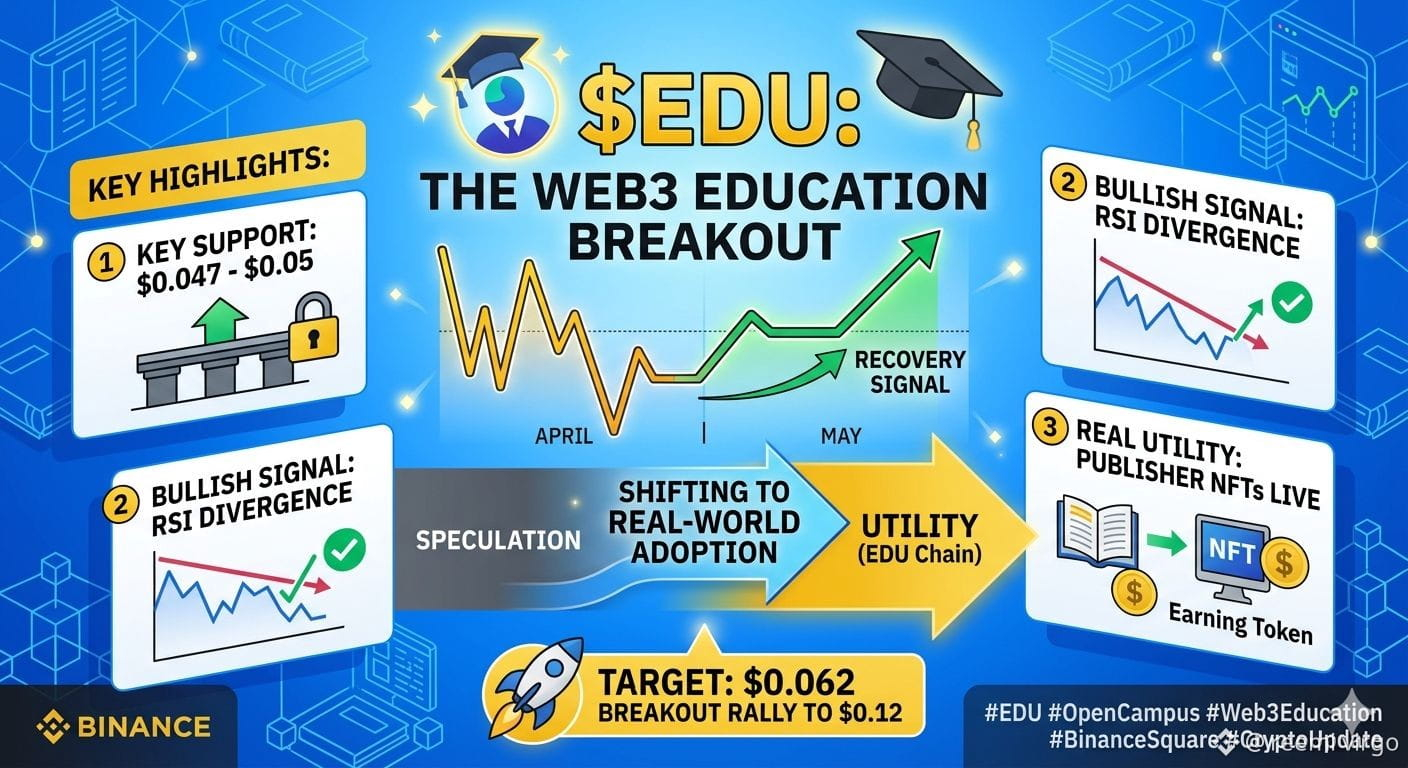
En **mayo de 2026**, **Open Campus ($EDU)** está mostrando fuertes signos de recuperación. Después de un abril volátil, el token se está estabilizando y atrayendo "dinero inteligente" interesado en el futuro de la educación descentralizada.
### **Aspectos Destacados Rápidos:**
* **Soporte Clave:** Manteniéndose fuerte entre **$0.047 – $0.05**.
* **Señal Alcista:** El RSI muestra una **divergencia alcista**, sugiriendo que una posible reversión de precio está cerca.
* **Utilidad Real:** Con los **NFTs de Publicador** ya en funcionamiento, los educadores están ganando directamente en la Cadena EDU, moviendo el proyecto de la especulación a la adopción en el mundo real.
**El Movimiento:** Si $EDU rompe por encima de **$0.062**, podríamos ver un rápido rally hacia **$0.12**. Para los holders a largo plazo, el objetivo de descentralizar el mercado educativo de $5 billones sigue siendo la gran jugada.
#EDU #OpenCampus #Web3Education #BinanceSquareFamily #CryptoUpdate
{future}(EDUUSDT)
$EDU : El Despegue de la Educación Web3**
En **mayo de 2026**, **Open Campus ($EDU )** está mostrando fuertes signos de recuperación. Después de un abril volátil, el token se está estabilizando y atrayendo "dinero inteligente" interesado en el futuro de la educación descentralizada.
### **Aspectos Destacados Rápidos:**
* **Soporte Clave:** Manteniéndose fuerte entre **$0.047 – $0.05**.
* **Señal Alcista:** El RSI muestra una **divergencia alcista**, sugiriendo que una posible reversión de precio está cerca.
* **Utilidad Real:** Con los **NFTs de Publicador** ya en funcionamiento, los educadores están ganando directamente en la Cadena EDU, moviendo el proyecto de la especulación a la adopción en el mundo real.
**El Movimiento:** Si $EDU rompe por encima de **$0.062**, podríamos ver un rápido rally hacia **$0.12**. Para los holders a largo plazo, el objetivo de descentralizar el mercado educativo de $5 billones sigue siendo la gran jugada.
#EDU #OpenCampus #Web3Education #BinanceSquareFamily #CryptoUpdate
En **mayo de 2026**, **Open Campus ($EDU )** está mostrando fuertes signos de recuperación. Después de un abril volátil, el token se está estabilizando y atrayendo "dinero inteligente" interesado en el futuro de la educación descentralizada.
### **Aspectos Destacados Rápidos:**
* **Soporte Clave:** Manteniéndose fuerte entre **$0.047 – $0.05**.
* **Señal Alcista:** El RSI muestra una **divergencia alcista**, sugiriendo que una posible reversión de precio está cerca.
* **Utilidad Real:** Con los **NFTs de Publicador** ya en funcionamiento, los educadores están ganando directamente en la Cadena EDU, moviendo el proyecto de la especulación a la adopción en el mundo real.
**El Movimiento:** Si $EDU rompe por encima de **$0.062**, podríamos ver un rápido rally hacia **$0.12**. Para los holders a largo plazo, el objetivo de descentralizar el mercado educativo de $5 billones sigue siendo la gran jugada.
#EDU #OpenCampus #Web3Education #BinanceSquareFamily #CryptoUpdate
1
250

·
--
Alcista
Impacto más allá del trading: Nuestro compromiso con la Responsabilidad Social Corporativa
En Binance, creemos en el poder de la blockchain para construir un futuro mejor. No se trata solo de innovación financiera; se trata de generar un impacto positivo y duradero en el mundo. Nuestras iniciativas de Responsabilidad Social Corporativa (RSC) son fundamentales para nuestra misión, y nos sentimos enormemente orgullosos del progreso que hemos logrado en cuatro pilares clave:
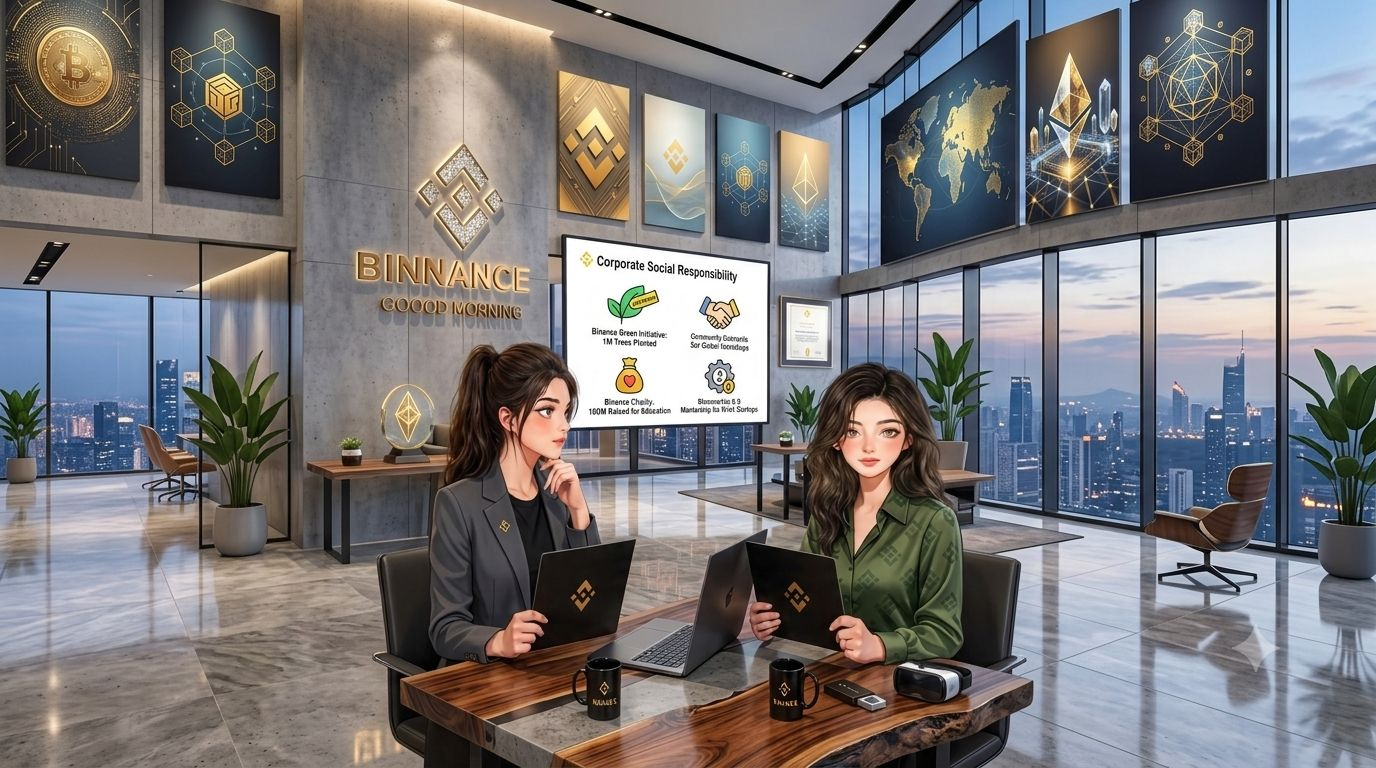
🌱 Iniciativa Binance Green: Proteger nuestro planeta para las generaciones futuras es primordial. Hemos plantado con éxito más de 1 millón de árboles, contribuyendo a esfuerzos vitales de reforestación en todo el mundo. Juntos, podemos crear un mañana más verde.
🎓 Binance Charity: La educación abre oportunidades. Nuestros esfuerzos benéficos han recaudado más de $10 millones destinados a mejorar el acceso a una educación de calidad a nivel global. Nos comprometemos a empoderar a personas y comunidades mediante el aprendizaje.
🤝 Apoyo a la comunidad: Creemos en la fuerza de la conexión. Hemos organizado más de 50+ Talleres Globales, involucrándonos directamente con nuestros usuarios y socios para comprender sus necesidades y brindar apoyo. Nuestro objetivo es fomentar una comunidad sólida e inclusiva.
🚀 Binance Lab 2.0: La innovación impulsa el progreso. Nuestro programa Binance Lab 2.0 brinda un valioso acompañamiento/mentoría a startups de Web3.0, equipando a la próxima generación de emprendedores con las herramientas y los conocimientos que necesitan para triunfar.
Esta imagen, con un entorno profesional y moderno, refleja nuestro enfoque orientado al futuro. El arte mural que muestra un mapa mundial y conceptos de blockchain simboliza nuestro alcance global y la innovación tecnológica que sustenta todos nuestros esfuerzos de RSC.
¡Gracias a nuestra increíble comunidad global por su continuo apoyo! Juntos, no solo estamos construyendo el futuro de las finanzas, sino también creando un mundo más sostenible y equitativo.
#BinanceCSR #Sustainability #CryptoForGood #Web3Education #InnovationWithPurpose
{future}(BTCUSDT)
{future}(BNBUSDT)
{future}(ETHUSDT)
Impacto más allá del trading: Nuestro compromiso con la Responsabilidad Social Corporativa
En Binance, creemos en el poder de la blockchain para construir un futuro mejor. No se trata solo de innovación financiera; se trata de generar un impacto positivo y duradero en el mundo. Nuestras iniciativas de Responsabilidad Social Corporativa (RSC) son fundamentales para nuestra misión, y nos sentimos enormemente orgullosos del progreso que hemos logrado en cuatro pilares clave:
🌱 Iniciativa Binance Green: Proteger nuestro planeta para las generaciones futuras es primordial. Hemos plantado con éxito más de 1 millón de árboles, contribuyendo a esfuerzos vitales de reforestación en todo el mundo. Juntos, podemos crear un mañana más verde.
🎓 Binance Charity: La educación abre oportunidades. Nuestros esfuerzos benéficos han recaudado más de $10 millones destinados a mejorar el acceso a una educación de calidad a nivel global. Nos comprometemos a empoderar a personas y comunidades mediante el aprendizaje.
🤝 Apoyo a la comunidad: Creemos en la fuerza de la conexión. Hemos organizado más de 50+ Talleres Globales, involucrándonos directamente con nuestros usuarios y socios para comprender sus necesidades y brindar apoyo. Nuestro objetivo es fomentar una comunidad sólida e inclusiva.
🚀 Binance Lab 2.0: La innovación impulsa el progreso. Nuestro programa Binance Lab 2.0 brinda un valioso acompañamiento/mentoría a startups de Web3.0, equipando a la próxima generación de emprendedores con las herramientas y los conocimientos que necesitan para triunfar.
Esta imagen, con un entorno profesional y moderno, refleja nuestro enfoque orientado al futuro. El arte mural que muestra un mapa mundial y conceptos de blockchain simboliza nuestro alcance global y la innovación tecnológica que sustenta todos nuestros esfuerzos de RSC.
¡Gracias a nuestra increíble comunidad global por su continuo apoyo! Juntos, no solo estamos construyendo el futuro de las finanzas, sino también creando un mundo más sostenible y equitativo.
#BinanceCSR #Sustainability #CryptoForGood #Web3Education #InnovationWithPurpose
En Binance, creemos en el poder de la blockchain para construir un futuro mejor. No se trata solo de innovación financiera; se trata de generar un impacto positivo y duradero en el mundo. Nuestras iniciativas de Responsabilidad Social Corporativa (RSC) son fundamentales para nuestra misión, y nos sentimos enormemente orgullosos del progreso que hemos logrado en cuatro pilares clave:
🌱 Iniciativa Binance Green: Proteger nuestro planeta para las generaciones futuras es primordial. Hemos plantado con éxito más de 1 millón de árboles, contribuyendo a esfuerzos vitales de reforestación en todo el mundo. Juntos, podemos crear un mañana más verde.
🎓 Binance Charity: La educación abre oportunidades. Nuestros esfuerzos benéficos han recaudado más de $10 millones destinados a mejorar el acceso a una educación de calidad a nivel global. Nos comprometemos a empoderar a personas y comunidades mediante el aprendizaje.
🤝 Apoyo a la comunidad: Creemos en la fuerza de la conexión. Hemos organizado más de 50+ Talleres Globales, involucrándonos directamente con nuestros usuarios y socios para comprender sus necesidades y brindar apoyo. Nuestro objetivo es fomentar una comunidad sólida e inclusiva.
🚀 Binance Lab 2.0: La innovación impulsa el progreso. Nuestro programa Binance Lab 2.0 brinda un valioso acompañamiento/mentoría a startups de Web3.0, equipando a la próxima generación de emprendedores con las herramientas y los conocimientos que necesitan para triunfar.
Esta imagen, con un entorno profesional y moderno, refleja nuestro enfoque orientado al futuro. El arte mural que muestra un mapa mundial y conceptos de blockchain simboliza nuestro alcance global y la innovación tecnológica que sustenta todos nuestros esfuerzos de RSC.
¡Gracias a nuestra increíble comunidad global por su continuo apoyo! Juntos, no solo estamos construyendo el futuro de las finanzas, sino también creando un mundo más sostenible y equitativo.
#BinanceCSR #Sustainability #CryptoForGood #Web3Education #InnovationWithPurpose
8
513

·
--
Alcista
No siempre necesitas dinero para empezar en crypto.
A veces, aprender se convierte en tu primera inversión.
Esa es la mejor manera de comenzar.
¿Verdad?
#CryptoLearning #CryptoEducation #SmartInvestment #CryptoBeginner #Web3Education
No siempre necesitas dinero para empezar en crypto.
A veces, aprender se convierte en tu primera inversión.
Esa es la mejor manera de comenzar.
¿Verdad?
#CryptoLearning #CryptoEducation #SmartInvestment #CryptoBeginner #Web3Education
A veces, aprender se convierte en tu primera inversión.
Esa es la mejor manera de comenzar.
¿Verdad?
#CryptoLearning #CryptoEducation #SmartInvestment #CryptoBeginner #Web3Education

1
89
·
--
Artículo
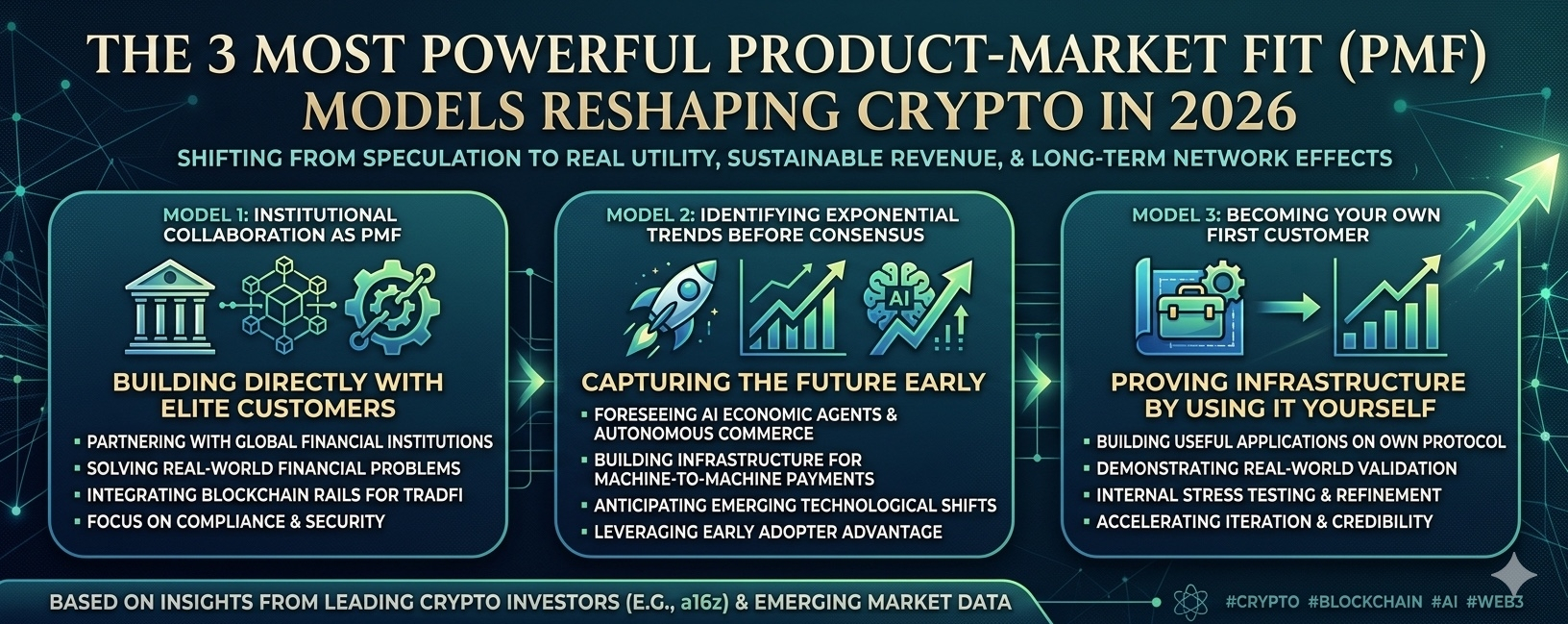
Los 3 Modelos de Product-Market Fit (PMF) Más Poderosos que Están Transformando el Crypto en 2026El Product-Market Fit (PMF) siempre ha sido el factor definitorio entre los proyectos cripto que sobreviven y aquellos que desaparecen. En ciclos anteriores, muchas startups enmascararon temporalmente fundamentos débiles a través de incentivos agresivos de tokens, airdrops, un Total Value Locked (TVL) inflado y hype especulativo. Pero el mercado cripto de 2026 es diferente.
El capital solo ya no es suficiente.
El mercado de hoy recompensa cada vez más a los proyectos que resuelven problemas reales, atraen demanda institucional y construyen ecosistemas sostenibles. Según la información compartida por Andreessen Horowitz (a16z), actualmente están emergiendo tres patrones de PMF como los modelos más fuertes y creíbles en la industria cripto.
Los 3 Modelos de Product-Market Fit (PMF) Más Poderosos que Están Transformando el Crypto en 2026
El Product-Market Fit (PMF) siempre ha sido el factor definitorio entre los proyectos cripto que sobreviven y aquellos que desaparecen. En ciclos anteriores, muchas startups enmascararon temporalmente fundamentos débiles a través de incentivos agresivos de tokens, airdrops, un Total Value Locked (TVL) inflado y hype especulativo. Pero el mercado cripto de 2026 es diferente.
El capital solo ya no es suficiente.
El mercado de hoy recompensa cada vez más a los proyectos que resuelven problemas reales, atraen demanda institucional y construyen ecosistemas sostenibles. Según la información compartida por Andreessen Horowitz (a16z), actualmente están emergiendo tres patrones de PMF como los modelos más fuertes y creíbles en la industria cripto.
El capital solo ya no es suficiente.
El mercado de hoy recompensa cada vez más a los proyectos que resuelven problemas reales, atraen demanda institucional y construyen ecosistemas sostenibles. Según la información compartida por Andreessen Horowitz (a16z), actualmente están emergiendo tres patrones de PMF como los modelos más fuertes y creíbles en la industria cripto.
123
·
--
Alcista
Solía pensar que el cripto solo era cuestión de operar.
Luego descubrí formas más inteligentes de aprender y crecer.
¿Cuál fue tu primera lección sobre cripto?
#CryptoJourney
#Web3Education
#BeyondTrading
#BlockchainInnovation
#CryptoCommunity
Solía pensar que el cripto solo era cuestión de operar.
Luego descubrí formas más inteligentes de aprender y crecer.
¿Cuál fue tu primera lección sobre cripto?
#CryptoJourney
#Web3Education
#BeyondTrading
#BlockchainInnovation
#CryptoCommunity
Luego descubrí formas más inteligentes de aprender y crecer.
¿Cuál fue tu primera lección sobre cripto?
#CryptoJourney
#Web3Education
#BeyondTrading
#BlockchainInnovation
#CryptoCommunity

135

#OCT Deja de Perseguir Velas Verdes: 3 Métricas que Debes Revisar ANTES de tu Próxima Operación de Cripto 🚨
Cuando el mercado sube con fuerza, el FOMO hace fácil entrar a ciegas. Operar con éxito no se trata de adivinar. Se trata de gestionar el riesgo. Antes de darle a comprar cualquier token hoy, revisa estas 3 métricas vitales:
1. Perfil de Volumen vs. Acción del Precio: Si el precio sube pero el volumen de operaciones está bajando, el movimiento no tiene fuerza. Ojo con una posible trampa. Busca que el volumen confirme la ruptura.
2. Tasas de Financiación (Para Operadores de Futuros): ¿Las tasas de financiación están profundamente en positivo? Las posiciones largas están pagando a las posiciones cortas. Esto significa que el mercado está saturado de compradores. Un repunte repentino de apalancamiento podría venir después.
3. Datos de Entradas/Salidas: ¿Las ballenas están moviendo tokens hacia las bolsas? Las grandes entradas a exchanges normalmente señalan una intención de vender. Vigila los datos on-chain antes de comprometer capital.
¿Qué métrica es la que más usas antes de entrar a una operación? ¡Cuéntame abajo! 👇
#cryptotrading #TechnicalAnalysis #Web3Education $BTC ETH BNB
Aviso legal: Este contenido es solo con fines educativos y no constituye asesoramiento financiero. Haz siempre tu propia investigación (DYOR).
#OCT Deja de Perseguir Velas Verdes: 3 Métricas que Debes Revisar ANTES de tu Próxima Operación de Cripto 🚨
Cuando el mercado sube con fuerza, el FOMO hace fácil entrar a ciegas. Operar con éxito no se trata de adivinar. Se trata de gestionar el riesgo. Antes de darle a comprar cualquier token hoy, revisa estas 3 métricas vitales:
1. Perfil de Volumen vs. Acción del Precio: Si el precio sube pero el volumen de operaciones está bajando, el movimiento no tiene fuerza. Ojo con una posible trampa. Busca que el volumen confirme la ruptura.
2. Tasas de Financiación (Para Operadores de Futuros): ¿Las tasas de financiación están profundamente en positivo? Las posiciones largas están pagando a las posiciones cortas. Esto significa que el mercado está saturado de compradores. Un repunte repentino de apalancamiento podría venir después.
3. Datos de Entradas/Salidas: ¿Las ballenas están moviendo tokens hacia las bolsas? Las grandes entradas a exchanges normalmente señalan una intención de vender. Vigila los datos on-chain antes de comprometer capital.
¿Qué métrica es la que más usas antes de entrar a una operación? ¡Cuéntame abajo! 👇
#cryptotrading #TechnicalAnalysis #Web3Education $BTC ETH BNB
Aviso legal: Este contenido es solo con fines educativos y no constituye asesoramiento financiero. Haz siempre tu propia investigación (DYOR).
Cuando el mercado sube con fuerza, el FOMO hace fácil entrar a ciegas. Operar con éxito no se trata de adivinar. Se trata de gestionar el riesgo. Antes de darle a comprar cualquier token hoy, revisa estas 3 métricas vitales:
1. Perfil de Volumen vs. Acción del Precio: Si el precio sube pero el volumen de operaciones está bajando, el movimiento no tiene fuerza. Ojo con una posible trampa. Busca que el volumen confirme la ruptura.
2. Tasas de Financiación (Para Operadores de Futuros): ¿Las tasas de financiación están profundamente en positivo? Las posiciones largas están pagando a las posiciones cortas. Esto significa que el mercado está saturado de compradores. Un repunte repentino de apalancamiento podría venir después.
3. Datos de Entradas/Salidas: ¿Las ballenas están moviendo tokens hacia las bolsas? Las grandes entradas a exchanges normalmente señalan una intención de vender. Vigila los datos on-chain antes de comprometer capital.
¿Qué métrica es la que más usas antes de entrar a una operación? ¡Cuéntame abajo! 👇
#cryptotrading #TechnicalAnalysis #Web3Education $BTC ETH BNB
Aviso legal: Este contenido es solo con fines educativos y no constituye asesoramiento financiero. Haz siempre tu propia investigación (DYOR).
130


Artículo
¿Qué es blockchain? Guía para principiantes sobre cómo funcionaIntroducción
Blockchain es una de las ideas más importantes en cripto, pero a menudo se explica de una manera que suena más complicada de lo que realmente es. En esencia, una blockchain es simplemente un sistema compartido de registro digital que mantiene los datos en muchas computadoras en lugar de en un solo servidor central.
Si entiendes blockchain, te resultará mucho más fácil comprender $BTC $ETH carteras, contratos inteligentes y muchos otros temas de cripto. Esta guía explica el concepto en un lenguaje sencillo, con ejemplos prácticos y una estructura amigable para principiantes.
¿Qué es blockchain? Guía para principiantes sobre cómo funciona
Introducción
Blockchain es una de las ideas más importantes en cripto, pero a menudo se explica de una manera que suena más complicada de lo que realmente es. En esencia, una blockchain es simplemente un sistema compartido de registro digital que mantiene los datos en muchas computadoras en lugar de en un solo servidor central.
Si entiendes blockchain, te resultará mucho más fácil comprender $BTC $ETH carteras, contratos inteligentes y muchos otros temas de cripto. Esta guía explica el concepto en un lenguaje sencillo, con ejemplos prácticos y una estructura amigable para principiantes.
Blockchain es una de las ideas más importantes en cripto, pero a menudo se explica de una manera que suena más complicada de lo que realmente es. En esencia, una blockchain es simplemente un sistema compartido de registro digital que mantiene los datos en muchas computadoras en lugar de en un solo servidor central.
Si entiendes blockchain, te resultará mucho más fácil comprender $BTC $ETH carteras, contratos inteligentes y muchos otros temas de cripto. Esta guía explica el concepto en un lenguaje sencillo, con ejemplos prácticos y una estructura amigable para principiantes.
112

·
--
El Secreto para Mantenerse en el Juego 🛡️
Por qué el 90% de los Traders Fracasan (Y Cómo Puedes Ser el 1%)
La mayoría de las personas entran al mercado cripto buscando "riquezas de la noche a la mañana", pero los verdaderos ganadores son aquellos que dominan la Gestión de Riesgos. Antes de preocuparte por cuánto puedes ganar, concéntrate en cuánto puedes permitirte perder. ¡Nunca pongas todos tus huevos en una sola canasta!
Mis 3 Reglas Principales:
Solo invierte lo que puedas permitirte perder.
Siempre usa un Stop-Loss.
No dejes que el FOMO (Miedo a Perderse Algo) dirija tus decisiones.
¿Eres un trader disciplinado o uno emocional? ¡Seamos sinceros en los comentarios! 👇
#CryptoTips #GestiónDeRiesgos #Vincekhayyam #EstrategiaDeTrading #Web3Education
El Secreto para Mantenerse en el Juego 🛡️
Por qué el 90% de los Traders Fracasan (Y Cómo Puedes Ser el 1%)
La mayoría de las personas entran al mercado cripto buscando "riquezas de la noche a la mañana", pero los verdaderos ganadores son aquellos que dominan la Gestión de Riesgos. Antes de preocuparte por cuánto puedes ganar, concéntrate en cuánto puedes permitirte perder. ¡Nunca pongas todos tus huevos en una sola canasta!
Mis 3 Reglas Principales:
Solo invierte lo que puedas permitirte perder.
Siempre usa un Stop-Loss.
No dejes que el FOMO (Miedo a Perderse Algo) dirija tus decisiones.
¿Eres un trader disciplinado o uno emocional? ¡Seamos sinceros en los comentarios! 👇
#CryptoTips #GestiónDeRiesgos #Vincekhayyam #EstrategiaDeTrading #Web3Education
Por qué el 90% de los Traders Fracasan (Y Cómo Puedes Ser el 1%)
La mayoría de las personas entran al mercado cripto buscando "riquezas de la noche a la mañana", pero los verdaderos ganadores son aquellos que dominan la Gestión de Riesgos. Antes de preocuparte por cuánto puedes ganar, concéntrate en cuánto puedes permitirte perder. ¡Nunca pongas todos tus huevos en una sola canasta!
Mis 3 Reglas Principales:
Solo invierte lo que puedas permitirte perder.
Siempre usa un Stop-Loss.
No dejes que el FOMO (Miedo a Perderse Algo) dirija tus decisiones.
¿Eres un trader disciplinado o uno emocional? ¡Seamos sinceros en los comentarios! 👇
#CryptoTips #GestiónDeRiesgos #Vincekhayyam #EstrategiaDeTrading #Web3Education

9
137
Inicia sesión para explorar más contenidos
Únete a usuarios de criptomonedas de todo el mundo en Binance Square
⚡️ Obtén la información más reciente y útil sobre criptomonedas.
💬 Confía en el mayor exchange de criptomonedas del mundo.
👍 Descubre opiniones reales de creadores verificados.
Correo electrónico/número de teléfono
Temas en tendencia
1
#AmazonGetsWarrantsToBuyGeneracStock
61 visualizaciones
18 participa(n) en el debate
2
#DotPlotSignalsOneMoreHikeIn2026
15,083 visualizaciones
357 participa(n) en el debate
3
#RobinhoodToSupportCircleArcNetwork
2,183 visualizaciones
106 participa(n) en el debate
4
#FedHikes25BpsUSStocksClose
20,842 visualizaciones
318 participa(n) en el debate
5
#AaveToLaunchRWAMarketOnAvalanche
5,448 visualizaciones
136 participa(n) en el debate
6
#CryptoVCFundingRebounds$5.6BInQ2
6,958 visualizaciones
36 participa(n) en el debate
7
#RevolutHackersDemand$3MInMonero
394 visualizaciones
9 participa(n) en el debate
8
#ZcashRises6%
121,798 visualizaciones
1,026 participa(n) en el debate
9
#XRPSinks10%
73,199 visualizaciones
685 participa(n) en el debate
10
#BitcoinETFsShed$450M
11,242 visualizaciones
116 participa(n) en el debate