
#usmaycoreinflationbelowforecast
usmaycoreinflationbelowforecast
119,909 visualizaciones
812 participa(n) en el debate
Populares
Novedades

Artículo
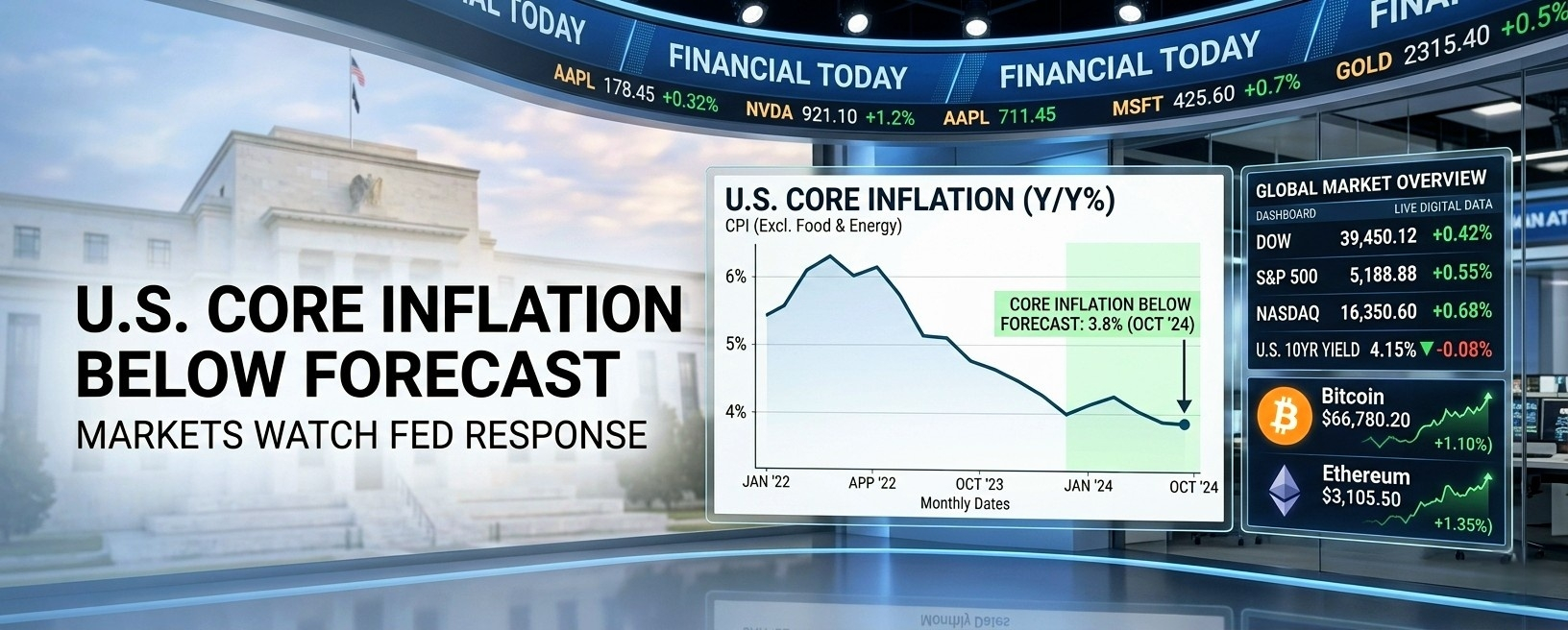
La Inflación Subyacente de EE. UU. Llega Por Debajo de la Previsión: Lo Que Esto Significa Para los Mercados y CriptoLos últimos datos económicos de EE. UU. muestran que la inflación subyacente de mayo llegó por debajo de las expectativas del mercado, lo cual es una actualización clave para los inversores globales. Este informe es seguido de cerca porque ayuda a decidir cómo podría actuar la Reserva Federal en los próximos meses.
Una inflación más baja de lo esperado generalmente significa que la presión de precios en la economía está empezando a enfriarse. Para los traders y los inversores a largo plazo, este tipo de datos a menudo cambia el sentimiento del mercado, especialmente en acciones y activos digitales.
Aquí está lo que podría significar esta actualización:
La Inflación Subyacente de EE. UU. Llega Por Debajo de la Previsión: Lo Que Esto Significa Para los Mercados y Cripto
Los últimos datos económicos de EE. UU. muestran que la inflación subyacente de mayo llegó por debajo de las expectativas del mercado, lo cual es una actualización clave para los inversores globales. Este informe es seguido de cerca porque ayuda a decidir cómo podría actuar la Reserva Federal en los próximos meses.
Una inflación más baja de lo esperado generalmente significa que la presión de precios en la economía está empezando a enfriarse. Para los traders y los inversores a largo plazo, este tipo de datos a menudo cambia el sentimiento del mercado, especialmente en acciones y activos digitales.
Aquí está lo que podría significar esta actualización:
Una inflación más baja de lo esperado generalmente significa que la presión de precios en la economía está empezando a enfriarse. Para los traders y los inversores a largo plazo, este tipo de datos a menudo cambia el sentimiento del mercado, especialmente en acciones y activos digitales.
Aquí está lo que podría significar esta actualización:
128

·
--
#USMayCoreInflationBelowForecast Datos mixtos del IPC = señales mixtas para la Fed 🤔 El titular 4.2% grita aumento de tasas, pero el núcleo 2.8% por debajo de lo esperado dice que no hay que entrar en pánico. La reunión de la Fed del 16-17 de junio será la verdadera decisora. Mantente atento 👀 #USMayCoreInflationBelowForecast
#USMayCoreInflationBelowForecast Datos mixtos del IPC = señales mixtas para la Fed 🤔 El titular 4.2% grita aumento de tasas, pero el núcleo 2.8% por debajo de lo esperado dice que no hay que entrar en pánico. La reunión de la Fed del 16-17 de junio será la verdadera decisora. Mantente atento 👀 #USMayCoreInflationBelowForecast
184


·
--
Con verificación
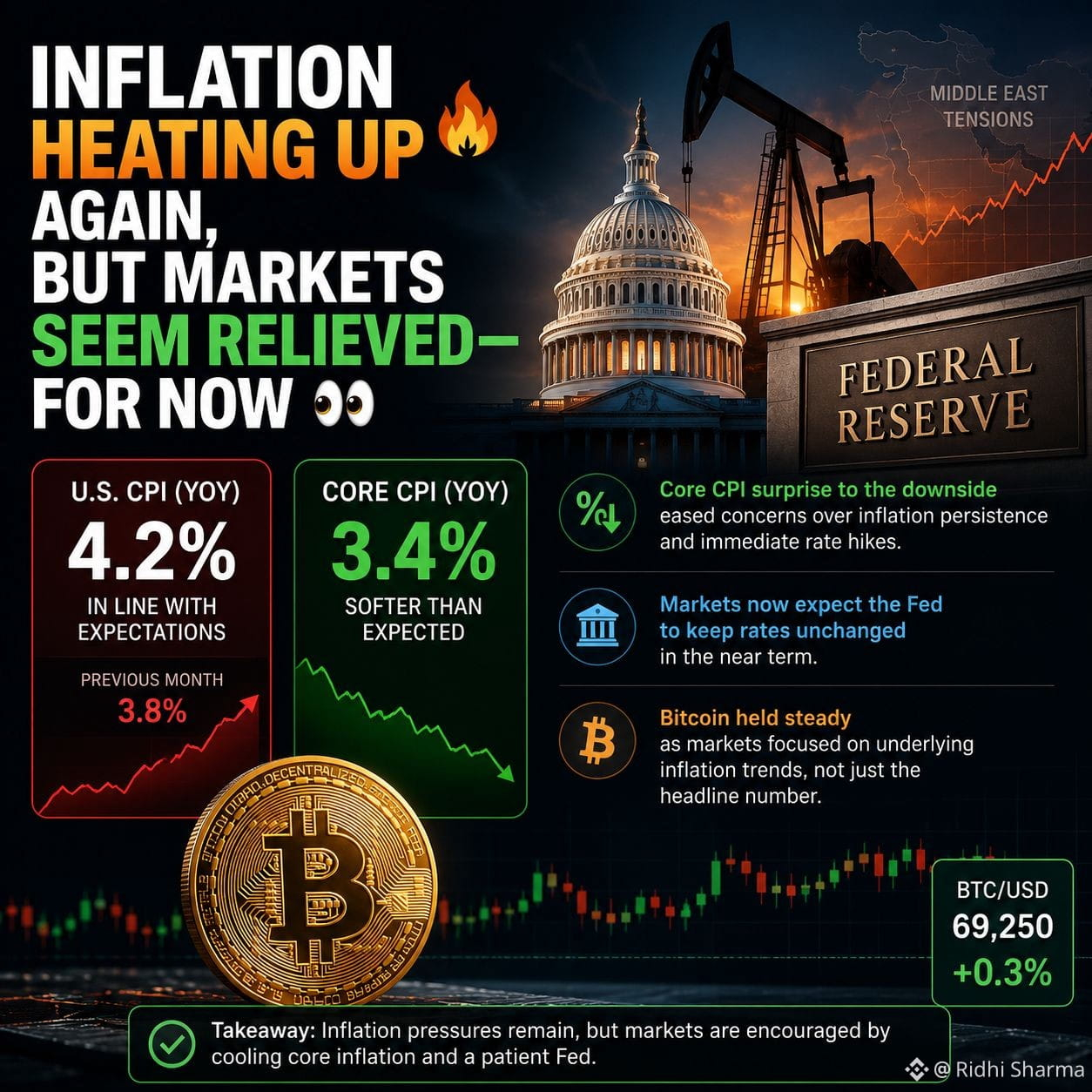
🛑 La inflación está volviendo a calentar, pero los mercados parecen aliviados—por ahora 👀
El último IPC de EE. UU. fue del 4.2% interanual, cumpliendo con las expectativas pero subiendo notablemente desde el 3.8% del mes anterior. El aumento de los precios de la energía, vinculado a las tensiones en el Medio Oriente, sigue siendo un factor importante detrás del incremento.
La sorpresa positiva fue el IPC subyacente, que resultó ser más suave de lo esperado. Eso ayudó a calmar los temores de un aumento inmediato de tasas y reforzó las expectativas de que probablemente mantendrán las tasas sin cambios a corto plazo.
Como resultado, se mantuvo estable después del anuncio, mostrando que los mercados estaban más enfocados en las tendencias subyacentes de inflación que en el número principal en sí.
#USCPISurgesToThreeYearHighOf4.2% #USMayCoreInflationBelowForecast #BinanceAlphaBlindBoxAirdropWithTRUSTAndBLESS #ForwardIndustriesAllStockBidForBreraHoldings
$HMSTR
{future}(HMSTRUSDT)
$H
{alpha}(560x44f161ae29361e332dea039dfa2f404e0bc5b5cc)
$VELVET
{future}(VELVETUSDT)
🛑 La inflación está volviendo a calentar, pero los mercados parecen aliviados—por ahora 👀
El último IPC de EE. UU. fue del 4.2% interanual, cumpliendo con las expectativas pero subiendo notablemente desde el 3.8% del mes anterior. El aumento de los precios de la energía, vinculado a las tensiones en el Medio Oriente, sigue siendo un factor importante detrás del incremento.
La sorpresa positiva fue el IPC subyacente, que resultó ser más suave de lo esperado. Eso ayudó a calmar los temores de un aumento inmediato de tasas y reforzó las expectativas de que probablemente mantendrán las tasas sin cambios a corto plazo.
Como resultado, se mantuvo estable después del anuncio, mostrando que los mercados estaban más enfocados en las tendencias subyacentes de inflación que en el número principal en sí.
#USCPISurgesToThreeYearHighOf4.2% #USMayCoreInflationBelowForecast #BinanceAlphaBlindBoxAirdropWithTRUSTAndBLESS #ForwardIndustriesAllStockBidForBreraHoldings
$HMSTR
$H
$VELVET
El último IPC de EE. UU. fue del 4.2% interanual, cumpliendo con las expectativas pero subiendo notablemente desde el 3.8% del mes anterior. El aumento de los precios de la energía, vinculado a las tensiones en el Medio Oriente, sigue siendo un factor importante detrás del incremento.
La sorpresa positiva fue el IPC subyacente, que resultó ser más suave de lo esperado. Eso ayudó a calmar los temores de un aumento inmediato de tasas y reforzó las expectativas de que probablemente mantendrán las tasas sin cambios a corto plazo.
Como resultado, se mantuvo estable después del anuncio, mostrando que los mercados estaban más enfocados en las tendencias subyacentes de inflación que en el número principal en sí.
#USCPISurgesToThreeYearHighOf4.2% #USMayCoreInflationBelowForecast #BinanceAlphaBlindBoxAirdropWithTRUSTAndBLESS #ForwardIndustriesAllStockBidForBreraHoldings
$HMSTR
$H
$VELVET
2
8
1.5k

·
--
Parcialmente cierto
Artículo
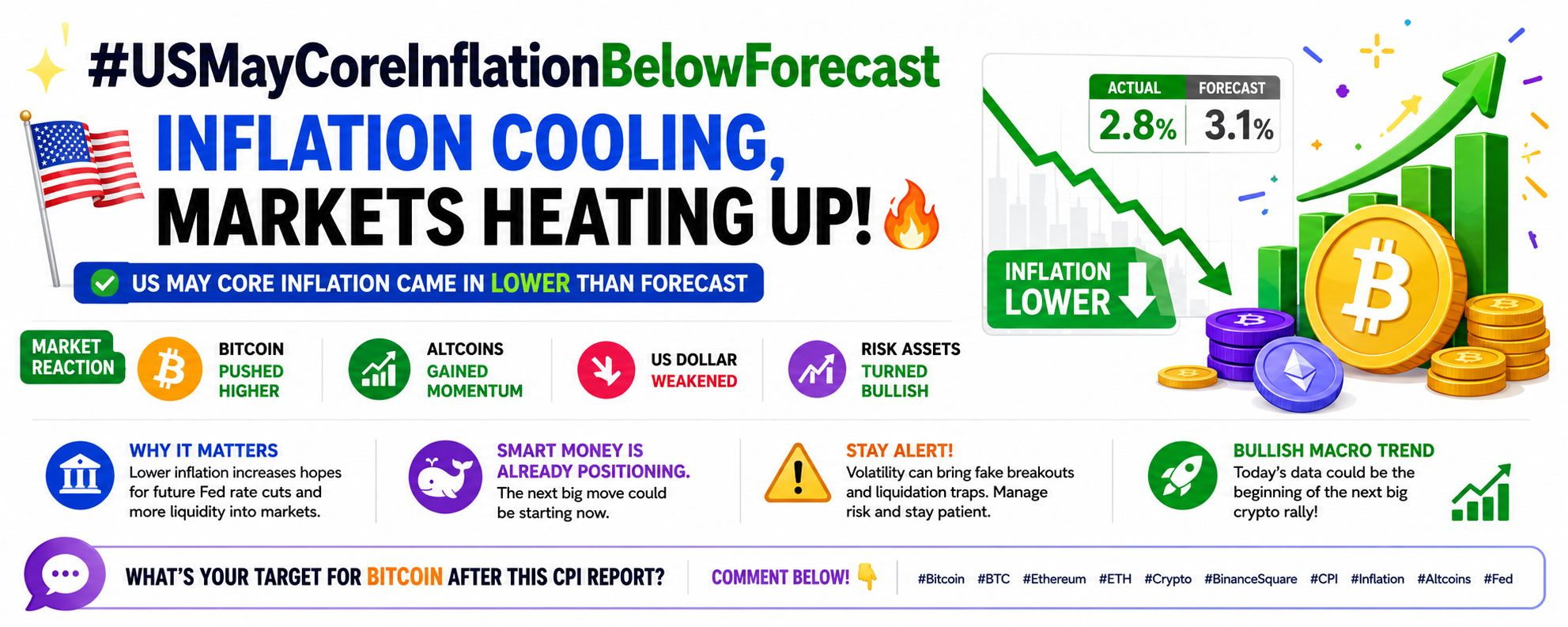
USMayCoreInflationBelowForecast — El mercado cripto se vuelve alcista 🚀Los últimos datos de inflación subyacente de EE. UU. llegaron más BAJOS de lo pronosticado, y los mercados reaccionaron al instante. 📉➡️📈
Esta es una señal importante de que la presión inflacionaria puede estar finalmente enfriándose — aumentando las esperanzas de futuros recortes de tasas por parte de la Fed.
💥 Reacción inmediata del mercado: • Bitcoin subió
• Los altcoins ganaron impulso
• El Dólar estadounidense se debilitó
• Los activos de riesgo se volvieron alcistas
¿Por qué es esto relevante para cripto? 👇
Una inflación más baja significa que la Reserva Federal tiene menos razones para mantener las tasas de interés altas.
Y, históricamente, tasas más bajas = más liquidez fluyendo hacia los mercados de cripto y tecnología.
USMayCoreInflationBelowForecast — El mercado cripto se vuelve alcista 🚀
Los últimos datos de inflación subyacente de EE. UU. llegaron más BAJOS de lo pronosticado, y los mercados reaccionaron al instante. 📉➡️📈
Esta es una señal importante de que la presión inflacionaria puede estar finalmente enfriándose — aumentando las esperanzas de futuros recortes de tasas por parte de la Fed.
💥 Reacción inmediata del mercado: • Bitcoin subió
• Los altcoins ganaron impulso
• El Dólar estadounidense se debilitó
• Los activos de riesgo se volvieron alcistas
¿Por qué es esto relevante para cripto? 👇
Una inflación más baja significa que la Reserva Federal tiene menos razones para mantener las tasas de interés altas.
Y, históricamente, tasas más bajas = más liquidez fluyendo hacia los mercados de cripto y tecnología.
Esta es una señal importante de que la presión inflacionaria puede estar finalmente enfriándose — aumentando las esperanzas de futuros recortes de tasas por parte de la Fed.
💥 Reacción inmediata del mercado: • Bitcoin subió
• Los altcoins ganaron impulso
• El Dólar estadounidense se debilitó
• Los activos de riesgo se volvieron alcistas
¿Por qué es esto relevante para cripto? 👇
Una inflación más baja significa que la Reserva Federal tiene menos razones para mantener las tasas de interés altas.
Y, históricamente, tasas más bajas = más liquidez fluyendo hacia los mercados de cripto y tecnología.
2
10
296

·
--
Alcista
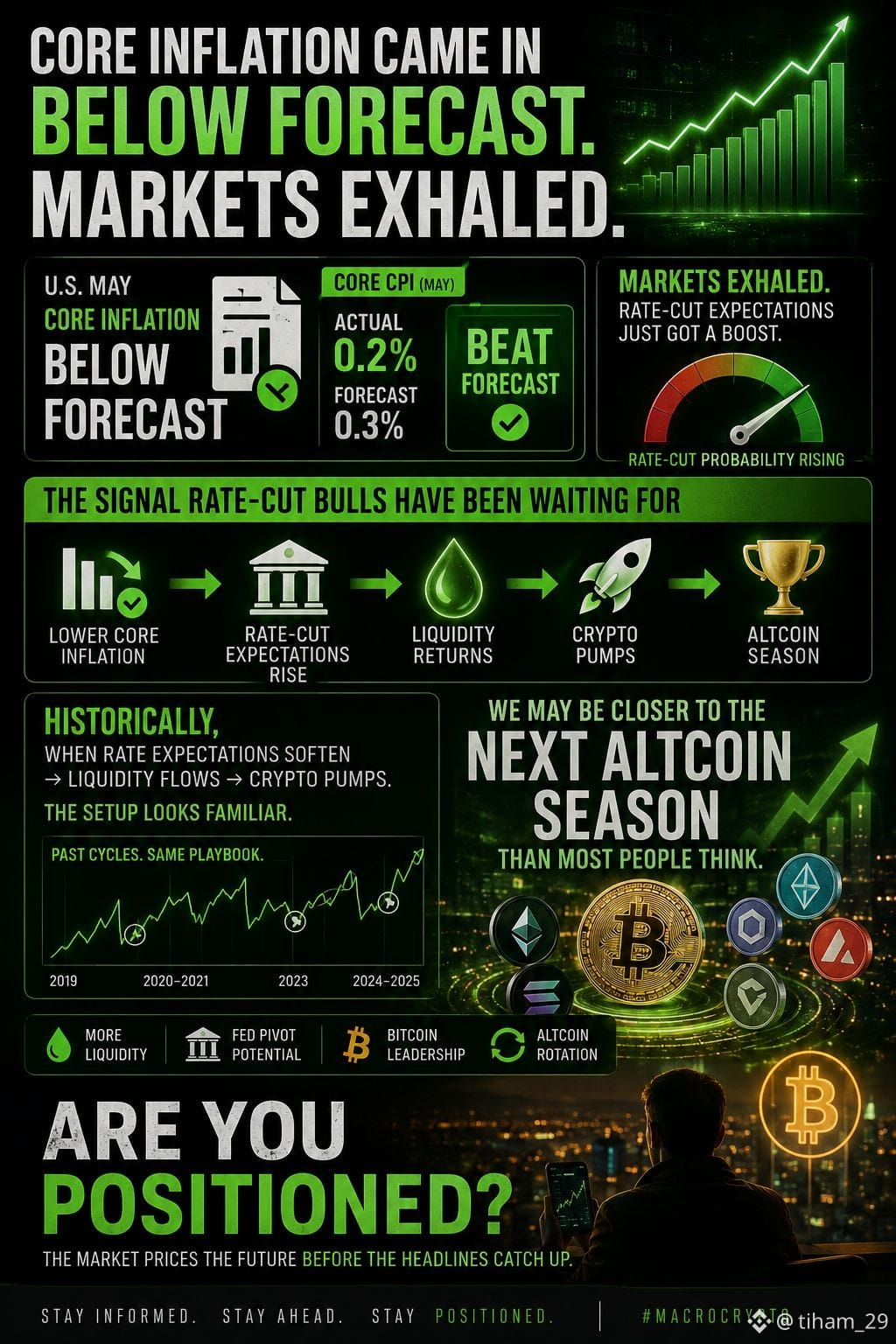
La inflación subyacente llegó POR DEBAJO de lo pronosticado para mayo. Los mercados exhalaron. Esta es la señal que los toros de recortes de tasas han estado esperando. Históricamente, cuando las expectativas de tasas se suavizan → flujos de liquidez → las criptos suben. Podríamos estar más cerca de la próxima temporada de altcoins de lo que la mayoría piensa. ¿Estás posicionado? 🧠
#USMayCoreInflationBelowForecast #AltcoinSeason #MacroCrypto #BTC #FedPivot
La inflación subyacente llegó POR DEBAJO de lo pronosticado para mayo. Los mercados exhalaron. Esta es la señal que los toros de recortes de tasas han estado esperando. Históricamente, cuando las expectativas de tasas se suavizan → flujos de liquidez → las criptos suben. Podríamos estar más cerca de la próxima temporada de altcoins de lo que la mayoría piensa. ¿Estás posicionado? 🧠
#USMayCoreInflationBelowForecast #AltcoinSeason #MacroCrypto #BTC #FedPivot
#USMayCoreInflationBelowForecast #AltcoinSeason #MacroCrypto #BTC #FedPivot
110

Con verificación
#USMayCoreInflationBelowForecast Hola comunidad, el IPC subyacente de mayo sorprendió a la baja: +2,8% interanual (frente al +2,9% esperado) y +0,1% mensual (vs +0,3% estimado). Esto marca tres meses consecutivos en niveles no vistos desde 2021.
¿Por qué importa para las criptomonedas? Porque inflación más baja significa menos presión para que la Fed suba tasas, e incluso abre la puerta a recortes. De hecho, el mercado ya descuenta dos bajadas para 2025. Esto inyecta liquidez al sistema y reduce el atractivo de activos refugio como el dólar, impulsando el apetito por riesgo.
Históricamente, datos de inflación por debajo de lo esperado han provocado rallies en Bitcoin y criptomonedas, y este mayo no ha sido la excepción.
A tener en cuenta: Los aranceles podrían presionar los precios más adelante, y la Fed ya proyecta un IPC subyacente del 3,1% para finales de 2025. Pero por ahora, el escenario es alcista.
#USMayCoreInflationBelowForecast Hola comunidad, el IPC subyacente de mayo sorprendió a la baja: +2,8% interanual (frente al +2,9% esperado) y +0,1% mensual (vs +0,3% estimado). Esto marca tres meses consecutivos en niveles no vistos desde 2021.
¿Por qué importa para las criptomonedas? Porque inflación más baja significa menos presión para que la Fed suba tasas, e incluso abre la puerta a recortes. De hecho, el mercado ya descuenta dos bajadas para 2025. Esto inyecta liquidez al sistema y reduce el atractivo de activos refugio como el dólar, impulsando el apetito por riesgo.
Históricamente, datos de inflación por debajo de lo esperado han provocado rallies en Bitcoin y criptomonedas, y este mayo no ha sido la excepción.
A tener en cuenta: Los aranceles podrían presionar los precios más adelante, y la Fed ya proyecta un IPC subyacente del 3,1% para finales de 2025. Pero por ahora, el escenario es alcista.
¿Por qué importa para las criptomonedas? Porque inflación más baja significa menos presión para que la Fed suba tasas, e incluso abre la puerta a recortes. De hecho, el mercado ya descuenta dos bajadas para 2025. Esto inyecta liquidez al sistema y reduce el atractivo de activos refugio como el dólar, impulsando el apetito por riesgo.
Históricamente, datos de inflación por debajo de lo esperado han provocado rallies en Bitcoin y criptomonedas, y este mayo no ha sido la excepción.
A tener en cuenta: Los aranceles podrían presionar los precios más adelante, y la Fed ya proyecta un IPC subyacente del 3,1% para finales de 2025. Pero por ahora, el escenario es alcista.
203

·
--
Alcista
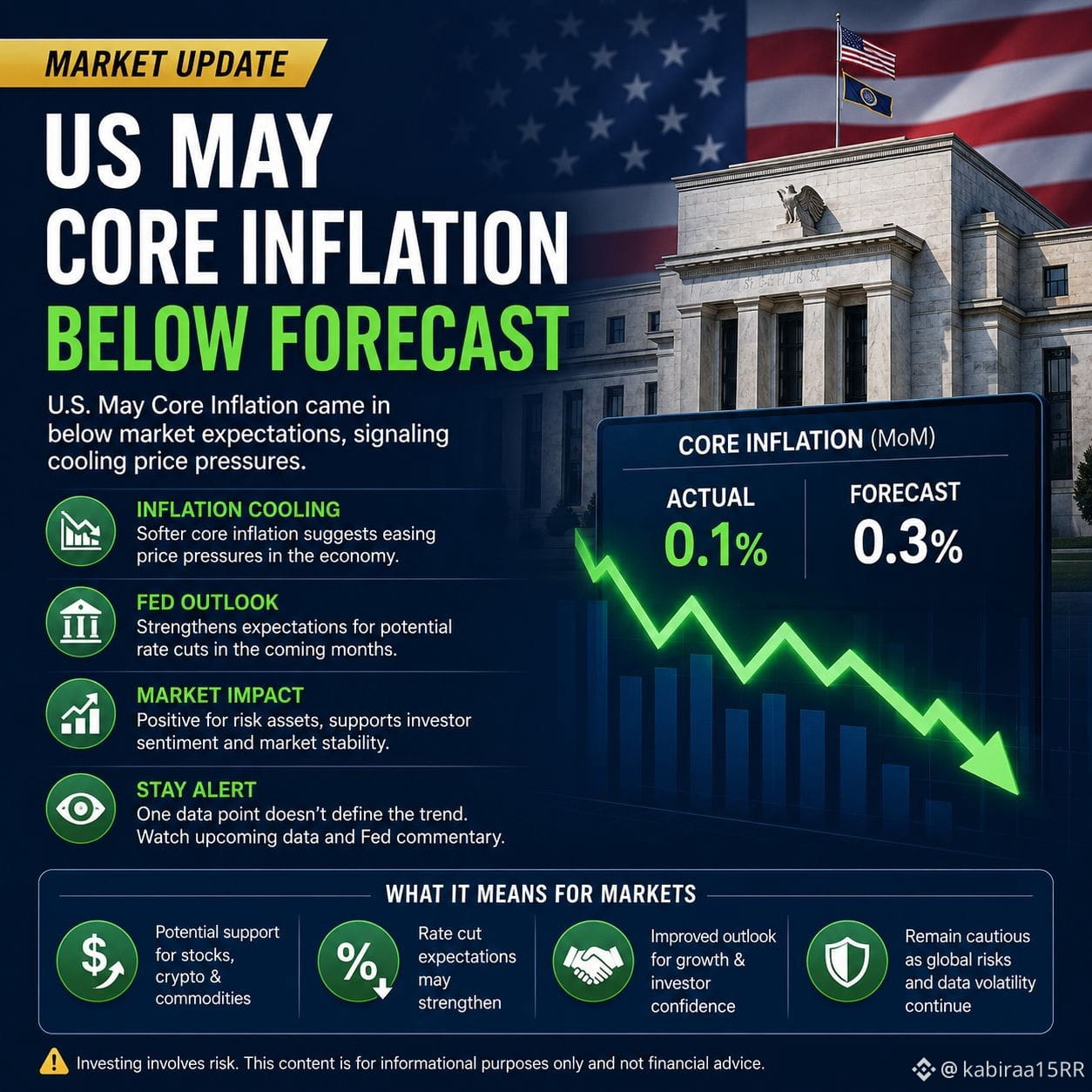
#USMayCoreInflationBelowForecast 📉 La inflación subyacente en EE. UU. de mayo llega por debajo de lo previsto
El enfriamiento de la inflación subyacente está fortaleciendo las expectativas de que la Reserva Federal podría tener más margen para aflojar la política monetaria en los próximos meses.
Los mercados están observando de cerca las tendencias de inflación, ya que una presión de precios más suave podría apoyar activos de riesgo, mejorar el sentimiento del inversor e influir en las decisiones futuras sobre tasas.
Sin embargo, un solo dato no define la tendencia. Los traders deben mantenerse enfocados en los próximos informes económicos y en la guía de la Fed.
#bitcoin
#CryptoMarkets
#FederalReserve
#MarketUpdate
#USMayCoreInflationBelowForecast 📉 La inflación subyacente en EE. UU. de mayo llega por debajo de lo previsto
El enfriamiento de la inflación subyacente está fortaleciendo las expectativas de que la Reserva Federal podría tener más margen para aflojar la política monetaria en los próximos meses.
Los mercados están observando de cerca las tendencias de inflación, ya que una presión de precios más suave podría apoyar activos de riesgo, mejorar el sentimiento del inversor e influir en las decisiones futuras sobre tasas.
Sin embargo, un solo dato no define la tendencia. Los traders deben mantenerse enfocados en los próximos informes económicos y en la guía de la Fed.
#bitcoin
#CryptoMarkets
#FederalReserve
#MarketUpdate
El enfriamiento de la inflación subyacente está fortaleciendo las expectativas de que la Reserva Federal podría tener más margen para aflojar la política monetaria en los próximos meses.
Los mercados están observando de cerca las tendencias de inflación, ya que una presión de precios más suave podría apoyar activos de riesgo, mejorar el sentimiento del inversor e influir en las decisiones futuras sobre tasas.
Sin embargo, un solo dato no define la tendencia. Los traders deben mantenerse enfocados en los próximos informes económicos y en la guía de la Fed.
#bitcoin
#CryptoMarkets
#FederalReserve
#MarketUpdate
82
·
--
#USMayCoreInflationBelowForecast El CPI principal caliente en 4.2% pero la inflación subyacente llegó al 2.8% — POR DEBAJO de las proyecciones 🎯 El repunte energético es temporal, la inflación subyacente se está enfriando. Los toros siguen ganando 🐂 BTC está de acuerdo: +2.77% ✅ #InflaciónCentralDeUSAPorDebajoDeLaProyección
#USMayCoreInflationBelowForecast El CPI principal caliente en 4.2% pero la inflación subyacente llegó al 2.8% — POR DEBAJO de las proyecciones 🎯 El repunte energético es temporal, la inflación subyacente se está enfriando. Los toros siguen ganando 🐂 BTC está de acuerdo: +2.77% ✅ #InflaciónCentralDeUSAPorDebajoDeLaProyección
72

·
--
Alcista
#USMayCoreInflationBelowForecast $ETH
{spot}(ETHUSDT)
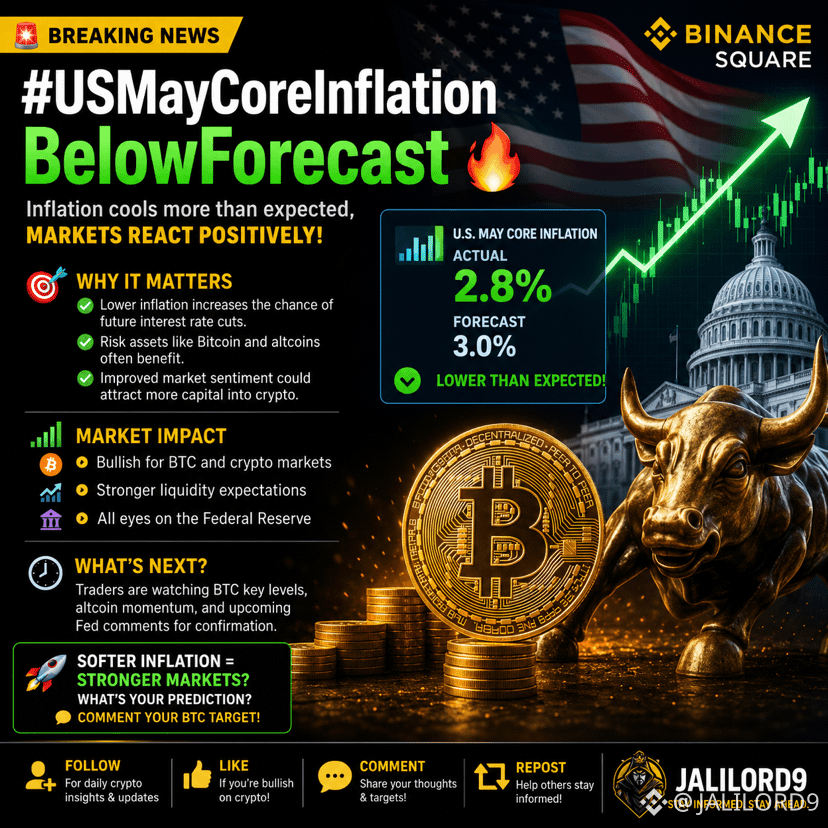
🚨 #USMayCoreInflationBelowForecast 🔥
Los últimos datos de inflación subyacente en EE. UU. llegaron por debajo de las expectativas del mercado, dando a los inversores un nuevo optimismo de que las presiones inflacionarias pueden estar enfriándose más rápido de lo anticipado! 📉
💡 ¿Por qué importa esto?
✅ Una inflación más baja aumenta la posibilidad de recortes en las tasas de interés en el futuro.
✅ Los activos de riesgo como Bitcoin y altcoins suelen beneficiarse de un entorno monetario más favorable.
✅ Un sentimiento de mercado mejorado podría atraer capital fresco a los mercados cripto.
📊 Lo que los traders están observando ahora:
🔹 La reacción de Bitcoin alrededor de niveles de resistencia clave.
🔹 El impulso de altcoins si el sentimiento de riesgo continúa.
🔹 Comentarios próximos de la Reserva Federal para confirmar la tendencia.
🔥 Perspectiva del mercado:
Cuando la inflación disminuye, las expectativas de liquidez mejoran. Históricamente, esto ha sido una señal alcista tanto para los mercados tradicionales como para los activos cripto. Sin embargo, la volatilidad sigue siendo alta, por lo que la gestión del riesgo es esencial.
💬 ¿Cuál es tu predicción?
¿Este dato de inflación más suave empujará a BTC hacia nuevos máximos, o el mercado ya lo está descontando?
👇 ¡Deja tu objetivo para Bitcoin en los comentarios!
🚀 ¡Sigue para obtener información diaria sobre cripto, noticias de última hora y oportunidades de trading!
#USMayCoreInflationBelowForecast #Bitcoin #BTC #CryptoNews #BinanceSquare #Trading #Crypto #Altcoins #Investing #FederalReserve #MarketUpdate #JALILORD9
🔥 ¡Dale like • Comenta • Reenvía si eres alcista en cripto! 🔥🔥🔥
#USMayCoreInflationBelowForecast $ETH
🚨 #USMayCoreInflationBelowForecast 🔥
Los últimos datos de inflación subyacente en EE. UU. llegaron por debajo de las expectativas del mercado, dando a los inversores un nuevo optimismo de que las presiones inflacionarias pueden estar enfriándose más rápido de lo anticipado! 📉
💡 ¿Por qué importa esto?
✅ Una inflación más baja aumenta la posibilidad de recortes en las tasas de interés en el futuro.
✅ Los activos de riesgo como Bitcoin y altcoins suelen beneficiarse de un entorno monetario más favorable.
✅ Un sentimiento de mercado mejorado podría atraer capital fresco a los mercados cripto.
📊 Lo que los traders están observando ahora:
🔹 La reacción de Bitcoin alrededor de niveles de resistencia clave.
🔹 El impulso de altcoins si el sentimiento de riesgo continúa.
🔹 Comentarios próximos de la Reserva Federal para confirmar la tendencia.
🔥 Perspectiva del mercado:
Cuando la inflación disminuye, las expectativas de liquidez mejoran. Históricamente, esto ha sido una señal alcista tanto para los mercados tradicionales como para los activos cripto. Sin embargo, la volatilidad sigue siendo alta, por lo que la gestión del riesgo es esencial.
💬 ¿Cuál es tu predicción?
¿Este dato de inflación más suave empujará a BTC hacia nuevos máximos, o el mercado ya lo está descontando?
👇 ¡Deja tu objetivo para Bitcoin en los comentarios!
🚀 ¡Sigue para obtener información diaria sobre cripto, noticias de última hora y oportunidades de trading!
#USMayCoreInflationBelowForecast #Bitcoin #BTC #CryptoNews #BinanceSquare #Trading #Crypto #Altcoins #Investing #FederalReserve #MarketUpdate #JALILORD9
🔥 ¡Dale like • Comenta • Reenvía si eres alcista en cripto! 🔥🔥🔥
🚨 #USMayCoreInflationBelowForecast 🔥
Los últimos datos de inflación subyacente en EE. UU. llegaron por debajo de las expectativas del mercado, dando a los inversores un nuevo optimismo de que las presiones inflacionarias pueden estar enfriándose más rápido de lo anticipado! 📉
💡 ¿Por qué importa esto?
✅ Una inflación más baja aumenta la posibilidad de recortes en las tasas de interés en el futuro.
✅ Los activos de riesgo como Bitcoin y altcoins suelen beneficiarse de un entorno monetario más favorable.
✅ Un sentimiento de mercado mejorado podría atraer capital fresco a los mercados cripto.
📊 Lo que los traders están observando ahora:
🔹 La reacción de Bitcoin alrededor de niveles de resistencia clave.
🔹 El impulso de altcoins si el sentimiento de riesgo continúa.
🔹 Comentarios próximos de la Reserva Federal para confirmar la tendencia.
🔥 Perspectiva del mercado:
Cuando la inflación disminuye, las expectativas de liquidez mejoran. Históricamente, esto ha sido una señal alcista tanto para los mercados tradicionales como para los activos cripto. Sin embargo, la volatilidad sigue siendo alta, por lo que la gestión del riesgo es esencial.
💬 ¿Cuál es tu predicción?
¿Este dato de inflación más suave empujará a BTC hacia nuevos máximos, o el mercado ya lo está descontando?
👇 ¡Deja tu objetivo para Bitcoin en los comentarios!
🚀 ¡Sigue para obtener información diaria sobre cripto, noticias de última hora y oportunidades de trading!
#USMayCoreInflationBelowForecast #Bitcoin #BTC #CryptoNews #BinanceSquare #Trading #Crypto #Altcoins #Investing #FederalReserve #MarketUpdate #JALILORD9
🔥 ¡Dale like • Comenta • Reenvía si eres alcista en cripto! 🔥🔥🔥
1
70

#USMayCoreInflationBelowForecast La Inflación Básica de EE. UU. No Cumple con las Proyecciones en Mayo – Detalles Clave:
· CPI básico real (interanual): +3.4% (vs. +3.5% esperado)
· CPI básico real (mensual): +0.2% (vs. +0.3% esperado)
· CPI general: +3.3% (vs. +3.4% esperado)
Lo que esto significa:
Las presiones de precios subyacentes se suavizaron más de lo anticipado, impulsadas en gran medida por la moderación en los costos de vivienda y vehículos usados. Esto marca dos meses consecutivos de lecturas básicas en enfriamiento.
Implicaciones para el mercado:
Los datos aumentan la probabilidad de recortes de tasas por parte de la Fed comenzando tan pronto como en septiembre. Los rendimientos de los bonos cayeron inmediatamente después del lanzamiento, mientras que los futuros de acciones subieron.
Advertencia:
La inflación de servicios (excluyendo la vivienda) sigue siendo rígida, por lo que la Fed probablemente necesitará varios meses más de datos similares antes de señalar un pivote explícito.
#USMayCoreInflationBelowForecast La Inflación Básica de EE. UU. No Cumple con las Proyecciones en Mayo – Detalles Clave:
· CPI básico real (interanual): +3.4% (vs. +3.5% esperado)
· CPI básico real (mensual): +0.2% (vs. +0.3% esperado)
· CPI general: +3.3% (vs. +3.4% esperado)
Lo que esto significa:
Las presiones de precios subyacentes se suavizaron más de lo anticipado, impulsadas en gran medida por la moderación en los costos de vivienda y vehículos usados. Esto marca dos meses consecutivos de lecturas básicas en enfriamiento.
Implicaciones para el mercado:
Los datos aumentan la probabilidad de recortes de tasas por parte de la Fed comenzando tan pronto como en septiembre. Los rendimientos de los bonos cayeron inmediatamente después del lanzamiento, mientras que los futuros de acciones subieron.
Advertencia:
La inflación de servicios (excluyendo la vivienda) sigue siendo rígida, por lo que la Fed probablemente necesitará varios meses más de datos similares antes de señalar un pivote explícito.
· CPI básico real (interanual): +3.4% (vs. +3.5% esperado)
· CPI básico real (mensual): +0.2% (vs. +0.3% esperado)
· CPI general: +3.3% (vs. +3.4% esperado)
Lo que esto significa:
Las presiones de precios subyacentes se suavizaron más de lo anticipado, impulsadas en gran medida por la moderación en los costos de vivienda y vehículos usados. Esto marca dos meses consecutivos de lecturas básicas en enfriamiento.
Implicaciones para el mercado:
Los datos aumentan la probabilidad de recortes de tasas por parte de la Fed comenzando tan pronto como en septiembre. Los rendimientos de los bonos cayeron inmediatamente después del lanzamiento, mientras que los futuros de acciones subieron.
Advertencia:
La inflación de servicios (excluyendo la vivienda) sigue siendo rígida, por lo que la Fed probablemente necesitará varios meses más de datos similares antes de señalar un pivote explícito.
168

La inflación subyacente de EE. UU. de mayo estuvo por debajo de las previsiones, aumentando solo un 0.2% mes a mes frente al 0.3% esperado. Mientras que el IPC general saltó a 4.2% debido a los precios más altos de la energía, la lectura subyacente más suave sugiere que las presiones inflacionarias subyacentes permanecen relativamente contenidas. Los mercados ahora están atentos a la Fed en busca de pistas sobre futuras decisiones de tasas. 📊#USCPI #Inflación #Fed
#USMayCoreInflationBelowForecast
La inflación subyacente de EE. UU. de mayo estuvo por debajo de las previsiones, aumentando solo un 0.2% mes a mes frente al 0.3% esperado. Mientras que el IPC general saltó a 4.2% debido a los precios más altos de la energía, la lectura subyacente más suave sugiere que las presiones inflacionarias subyacentes permanecen relativamente contenidas. Los mercados ahora están atentos a la Fed en busca de pistas sobre futuras decisiones de tasas. 📊#USCPI #Inflación #Fed
#USMayCoreInflationBelowForecast
#USMayCoreInflationBelowForecast
187

·
--
#USMayCoreInflationBelowForecast
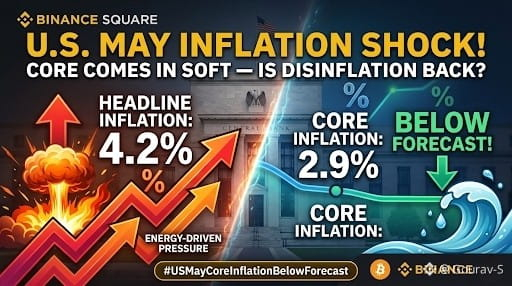
📊 La inflación subyacente de EE. UU. de mayo viene por debajo de lo previsto — la tendencia de desinflación sigue viva bajo la superficie
Los últimos datos de inflación de EE. UU. muestran una señal mixta pero importante: mientras que el IPC general sigue elevado en 4.2%, el dato de inflación subyacente llegó ligeramente por debajo de las expectativas, sugiriendo que las presiones de precios subyacentes no están acelerándose tan rápido como se temía.
El IPC subyacente aumentó alrededor de 0.2% mensual y ~2.9% anual, marginalmente más suave que las previsiones que estaban más cerca del 0.3% mensual. Esta pequeña desviación importa porque la inflación subyacente excluye alimentos y energía volátiles, y es lo que la Fed observa más de cerca para la dirección de política a largo plazo.
La inflación impulsada por la energía sigue dominando el número general, pero debajo de eso, la estructura parece más controlada:
- La inflación de servicios sigue siendo pegajosa pero no se está re-acelerando bruscamente
- La inflación de bienes se mantiene relativamente contenida
- El impulso mensual subyacente está enfriándose ligeramente en lugar de calentarse
Los mercados reaccionaron a esta imagen dividida: la inflación general señala presión, pero los datos subyacentes insinúan estabilización, creando incertidumbre sobre el próximo movimiento de la Fed en lugar de una señal clara de endurecimiento.
🧠 Resumen del mercado:
No se trata de una historia de “aumento limpio de inflación”. Es un entorno de inflación a dos velocidades, la energía empujando el titular hacia arriba, mientras que la inflación subyacente se estabiliza silenciosamente por debajo de las expectativas.
📌 El IPC subyacente imprimiéndose por debajo de lo previsto es una señal sutil pero importante de que la desinflación sigue intacta debajo de la volatilidad, incluso si los números generales son temporalmente ruidosos.
#Binance #cpi #US
#USMayCoreInflationBelowForecast
📊 La inflación subyacente de EE. UU. de mayo viene por debajo de lo previsto — la tendencia de desinflación sigue viva bajo la superficie
Los últimos datos de inflación de EE. UU. muestran una señal mixta pero importante: mientras que el IPC general sigue elevado en 4.2%, el dato de inflación subyacente llegó ligeramente por debajo de las expectativas, sugiriendo que las presiones de precios subyacentes no están acelerándose tan rápido como se temía.
El IPC subyacente aumentó alrededor de 0.2% mensual y ~2.9% anual, marginalmente más suave que las previsiones que estaban más cerca del 0.3% mensual. Esta pequeña desviación importa porque la inflación subyacente excluye alimentos y energía volátiles, y es lo que la Fed observa más de cerca para la dirección de política a largo plazo.
La inflación impulsada por la energía sigue dominando el número general, pero debajo de eso, la estructura parece más controlada:
- La inflación de servicios sigue siendo pegajosa pero no se está re-acelerando bruscamente
- La inflación de bienes se mantiene relativamente contenida
- El impulso mensual subyacente está enfriándose ligeramente en lugar de calentarse
Los mercados reaccionaron a esta imagen dividida: la inflación general señala presión, pero los datos subyacentes insinúan estabilización, creando incertidumbre sobre el próximo movimiento de la Fed en lugar de una señal clara de endurecimiento.
🧠 Resumen del mercado:
No se trata de una historia de “aumento limpio de inflación”. Es un entorno de inflación a dos velocidades, la energía empujando el titular hacia arriba, mientras que la inflación subyacente se estabiliza silenciosamente por debajo de las expectativas.
📌 El IPC subyacente imprimiéndose por debajo de lo previsto es una señal sutil pero importante de que la desinflación sigue intacta debajo de la volatilidad, incluso si los números generales son temporalmente ruidosos.
#Binance #cpi #US
📊 La inflación subyacente de EE. UU. de mayo viene por debajo de lo previsto — la tendencia de desinflación sigue viva bajo la superficie
Los últimos datos de inflación de EE. UU. muestran una señal mixta pero importante: mientras que el IPC general sigue elevado en 4.2%, el dato de inflación subyacente llegó ligeramente por debajo de las expectativas, sugiriendo que las presiones de precios subyacentes no están acelerándose tan rápido como se temía.
El IPC subyacente aumentó alrededor de 0.2% mensual y ~2.9% anual, marginalmente más suave que las previsiones que estaban más cerca del 0.3% mensual. Esta pequeña desviación importa porque la inflación subyacente excluye alimentos y energía volátiles, y es lo que la Fed observa más de cerca para la dirección de política a largo plazo.
La inflación impulsada por la energía sigue dominando el número general, pero debajo de eso, la estructura parece más controlada:
- La inflación de servicios sigue siendo pegajosa pero no se está re-acelerando bruscamente
- La inflación de bienes se mantiene relativamente contenida
- El impulso mensual subyacente está enfriándose ligeramente en lugar de calentarse
Los mercados reaccionaron a esta imagen dividida: la inflación general señala presión, pero los datos subyacentes insinúan estabilización, creando incertidumbre sobre el próximo movimiento de la Fed en lugar de una señal clara de endurecimiento.
🧠 Resumen del mercado:
No se trata de una historia de “aumento limpio de inflación”. Es un entorno de inflación a dos velocidades, la energía empujando el titular hacia arriba, mientras que la inflación subyacente se estabiliza silenciosamente por debajo de las expectativas.
📌 El IPC subyacente imprimiéndose por debajo de lo previsto es una señal sutil pero importante de que la desinflación sigue intacta debajo de la volatilidad, incluso si los números generales son temporalmente ruidosos.
#Binance #cpi #US
2
5
318

#USMayCoreInflationBelowForecast
Corto & Momentum Alcista
¡El IPC Core no cumplió con las previsiones! ¿Alivio para los activos de riesgo?
Los mercados acaban de recibir la impresión de alivio que estaban buscando. Mientras que el IPC general se ve caliente en 4.2% interanual debido a los precios de la energía, el IPC Core se imprimió en 0.2% mensual, quedando por debajo de la expectativa del mercado del 0.3%!
Este #USMayCoreInflationBelowForecast evento representa un cambio de narrativa sólido. Sugiere que la inflación subyacente se está moderando, aliviando la presión inmediata sobre la Fed para que suene ultra-agresiva en la próxima reunión del FOMC.
Ya estamos viendo algunas velas verdes en los principales pares mientras el Índice del Dólar (DXY) cae después de la publicación. 📉 ¿Mover capital de vuelta a los majors o mirar desde la línea de banda? ¿Cuál es tu jugada para las próximas 24 horas?
#BTC #Altcoins #TradingReflections $BTC
{future}(BTCUSDT)
#USMayCoreInflationBelowForecast
Corto & Momentum Alcista
¡El IPC Core no cumplió con las previsiones! ¿Alivio para los activos de riesgo?
Los mercados acaban de recibir la impresión de alivio que estaban buscando. Mientras que el IPC general se ve caliente en 4.2% interanual debido a los precios de la energía, el IPC Core se imprimió en 0.2% mensual, quedando por debajo de la expectativa del mercado del 0.3%!
Este #USMayCoreInflationBelowForecast evento representa un cambio de narrativa sólido. Sugiere que la inflación subyacente se está moderando, aliviando la presión inmediata sobre la Fed para que suene ultra-agresiva en la próxima reunión del FOMC.
Ya estamos viendo algunas velas verdes en los principales pares mientras el Índice del Dólar (DXY) cae después de la publicación. 📉 ¿Mover capital de vuelta a los majors o mirar desde la línea de banda? ¿Cuál es tu jugada para las próximas 24 horas?
#BTC #Altcoins #TradingReflections $BTC
Corto & Momentum Alcista
¡El IPC Core no cumplió con las previsiones! ¿Alivio para los activos de riesgo?
Los mercados acaban de recibir la impresión de alivio que estaban buscando. Mientras que el IPC general se ve caliente en 4.2% interanual debido a los precios de la energía, el IPC Core se imprimió en 0.2% mensual, quedando por debajo de la expectativa del mercado del 0.3%!
Este #USMayCoreInflationBelowForecast evento representa un cambio de narrativa sólido. Sugiere que la inflación subyacente se está moderando, aliviando la presión inmediata sobre la Fed para que suene ultra-agresiva en la próxima reunión del FOMC.
Ya estamos viendo algunas velas verdes en los principales pares mientras el Índice del Dólar (DXY) cae después de la publicación. 📉 ¿Mover capital de vuelta a los majors o mirar desde la línea de banda? ¿Cuál es tu jugada para las próximas 24 horas?
#BTC #Altcoins #TradingReflections $BTC
163

·
--
#usmaycoreinflationbelowforecast
📉 El IPC básico de EE.UU. por debajo de las previsiones: ¿Una señal "fría" en un mercado "caliente"?
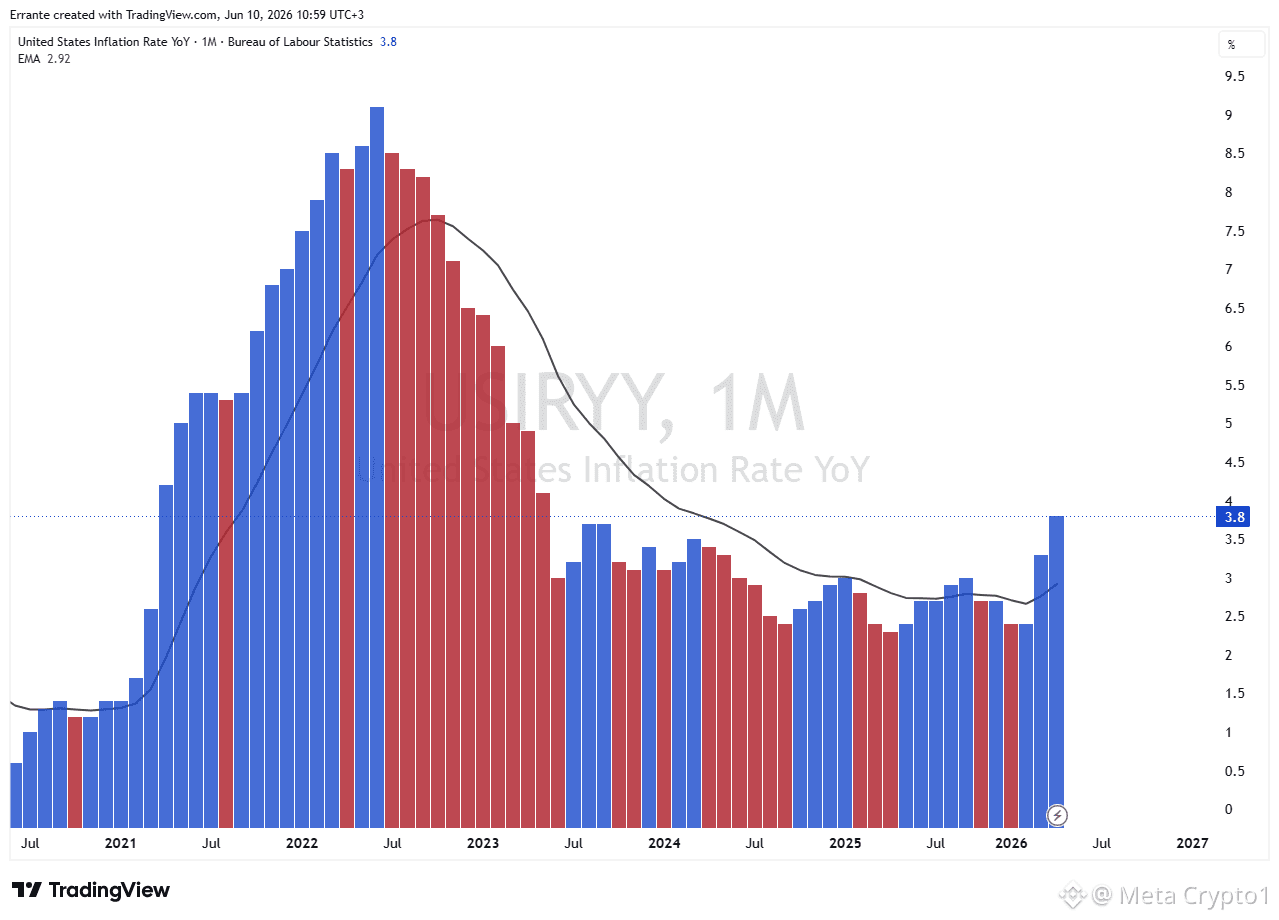
Los datos del IPC de mayo de 2026 publicados ayer (10 de junio) trajeron una "mezcla" para los inversores. Mientras que la inflación general alcanzó un pico de 3 años, el IPC básico proporcionó un rayo de esperanza muy necesario para los toros.
📊 Los Números (mayo de 2026):
IPC general: Aumentó un 4.2% interanual, alcanzando su nivel más alto desde 2023. ¿El principal impulsor? El shock energético de Medio Oriente, que hizo que los precios de la gasolina subieran ~41% interanual.
IPC básico: Aumentó solo un 0.2% mensual, quedando por debajo de la previsión del 0.3%. Esta "impresión fría" es el indicador preferido de la Fed, ya que elimina los costos volátiles de alimentos y energía.
🚀 Reacción del Mercado Cripto:
Bitcoin ($BTC ): Operando de manera resiliente alrededor de $62,539 (+1.7% en 24h). Los datos on-chain muestran que las "Ballenas" absorbieron agresivamente la venta inicial en el nivel de $60k.
{future}(BTCUSDT)
Ethereum ($ETH ): Manteniéndose firme por encima de $1,649. Notablemente, el fondo BitMine de Tom Lee añadió otros 25,000 ETH (~$41M) tras la noticia.
{future}(ETHUSDT)
🕵️ La Conclusión:
El IPC básico más bajo de lo esperado sugiere que la inflación subyacente se está enfriando, lo que podría aliviar la presión sobre la Fed para aumentar las tasas aún más la próxima semana. Sin embargo, con el IPC general en 4.2%, la narrativa de "Más alto por más tiempo" sigue siendo un gran obstáculo para un mercado alcista completo.
🧐 Encuesta Rápida:
¿Es esta impresión "fría" del IPC básico suficiente para desencadenar una temporada de Altcoins?
A) ¡Sí, la Fed cambiará pronto! 🕊️
B) No, el IPC general del 4.2% sigue siendo demasiado alto. 🐻
C) Lateral hasta los datos del PPI esta noche. 🦀
👇 ¡Deja tus pensamientos abajo! ¿Estás Long o Short después de esta impresión?
#cpi
#usmaycoreinflationbelowforecast
📉 El IPC básico de EE.UU. por debajo de las previsiones: ¿Una señal "fría" en un mercado "caliente"?
Los datos del IPC de mayo de 2026 publicados ayer (10 de junio) trajeron una "mezcla" para los inversores. Mientras que la inflación general alcanzó un pico de 3 años, el IPC básico proporcionó un rayo de esperanza muy necesario para los toros.
📊 Los Números (mayo de 2026):
IPC general: Aumentó un 4.2% interanual, alcanzando su nivel más alto desde 2023. ¿El principal impulsor? El shock energético de Medio Oriente, que hizo que los precios de la gasolina subieran ~41% interanual.
IPC básico: Aumentó solo un 0.2% mensual, quedando por debajo de la previsión del 0.3%. Esta "impresión fría" es el indicador preferido de la Fed, ya que elimina los costos volátiles de alimentos y energía.
🚀 Reacción del Mercado Cripto:
Bitcoin ($BTC ): Operando de manera resiliente alrededor de $62,539 (+1.7% en 24h). Los datos on-chain muestran que las "Ballenas" absorbieron agresivamente la venta inicial en el nivel de $60k.
Ethereum ($ETH ): Manteniéndose firme por encima de $1,649. Notablemente, el fondo BitMine de Tom Lee añadió otros 25,000 ETH (~$41M) tras la noticia.
🕵️ La Conclusión:
El IPC básico más bajo de lo esperado sugiere que la inflación subyacente se está enfriando, lo que podría aliviar la presión sobre la Fed para aumentar las tasas aún más la próxima semana. Sin embargo, con el IPC general en 4.2%, la narrativa de "Más alto por más tiempo" sigue siendo un gran obstáculo para un mercado alcista completo.
🧐 Encuesta Rápida:
¿Es esta impresión "fría" del IPC básico suficiente para desencadenar una temporada de Altcoins?
A) ¡Sí, la Fed cambiará pronto! 🕊️
B) No, el IPC general del 4.2% sigue siendo demasiado alto. 🐻
C) Lateral hasta los datos del PPI esta noche. 🦀
👇 ¡Deja tus pensamientos abajo! ¿Estás Long o Short después de esta impresión?
#cpi
📉 El IPC básico de EE.UU. por debajo de las previsiones: ¿Una señal "fría" en un mercado "caliente"?
Los datos del IPC de mayo de 2026 publicados ayer (10 de junio) trajeron una "mezcla" para los inversores. Mientras que la inflación general alcanzó un pico de 3 años, el IPC básico proporcionó un rayo de esperanza muy necesario para los toros.
📊 Los Números (mayo de 2026):
IPC general: Aumentó un 4.2% interanual, alcanzando su nivel más alto desde 2023. ¿El principal impulsor? El shock energético de Medio Oriente, que hizo que los precios de la gasolina subieran ~41% interanual.
IPC básico: Aumentó solo un 0.2% mensual, quedando por debajo de la previsión del 0.3%. Esta "impresión fría" es el indicador preferido de la Fed, ya que elimina los costos volátiles de alimentos y energía.
🚀 Reacción del Mercado Cripto:
Bitcoin ($BTC ): Operando de manera resiliente alrededor de $62,539 (+1.7% en 24h). Los datos on-chain muestran que las "Ballenas" absorbieron agresivamente la venta inicial en el nivel de $60k.
Ethereum ($ETH ): Manteniéndose firme por encima de $1,649. Notablemente, el fondo BitMine de Tom Lee añadió otros 25,000 ETH (~$41M) tras la noticia.
🕵️ La Conclusión:
El IPC básico más bajo de lo esperado sugiere que la inflación subyacente se está enfriando, lo que podría aliviar la presión sobre la Fed para aumentar las tasas aún más la próxima semana. Sin embargo, con el IPC general en 4.2%, la narrativa de "Más alto por más tiempo" sigue siendo un gran obstáculo para un mercado alcista completo.
🧐 Encuesta Rápida:
¿Es esta impresión "fría" del IPC básico suficiente para desencadenar una temporada de Altcoins?
A) ¡Sí, la Fed cambiará pronto! 🕊️
B) No, el IPC general del 4.2% sigue siendo demasiado alto. 🐻
C) Lateral hasta los datos del PPI esta noche. 🦀
👇 ¡Deja tus pensamientos abajo! ¿Estás Long o Short después de esta impresión?
#cpi
1
116

·
--
#usmaycoreinflationbelowforecast
📉 #LaInflaciónNuclearDeUSMayoPorDebajoDeLoPrevisto: ¿Una Señal Positiva para Activos de Riesgo?
Los mercados recibieron noticias alentadoras ya que la inflación nuclear de EE. UU. para mayo resultó ser inferior a las expectativas, sugiriendo que las presiones de precios subyacentes podrían estar disminuyendo más rápido de lo que los analistas anticiparon.
La inflación nuclear se observa de cerca porque excluye precios volátiles de alimentos y energía, proporcionando una visión más clara de las tendencias inflacionarias a largo plazo. Un dato más suave de lo esperado podría fortalecer las esperanzas de que la Reserva Federal tenga más flexibilidad en las decisiones futuras sobre las tasas de interés.
Para los inversores, una inflación nuclear más baja a menudo se considera favorable para los activos de riesgo, incluyendo acciones y criptomonedas, ya que puede mejorar las expectativas de liquidez y reducir la presión de los costos de endeudamiento más altos.
Si bien un informe no establece una tendencia, los mercados estarán atentos a los próximos datos económicos para determinar si la inflación continúa en un camino sostenible hacia abajo.
En el entorno macroeconómico de hoy, cada informe de inflación tiene el potencial de reconfigurar las expectativas del mercado.
#usmaycoreinflationbelowforecast
📉 #LaInflaciónNuclearDeUSMayoPorDebajoDeLoPrevisto: ¿Una Señal Positiva para Activos de Riesgo?
Los mercados recibieron noticias alentadoras ya que la inflación nuclear de EE. UU. para mayo resultó ser inferior a las expectativas, sugiriendo que las presiones de precios subyacentes podrían estar disminuyendo más rápido de lo que los analistas anticiparon.
La inflación nuclear se observa de cerca porque excluye precios volátiles de alimentos y energía, proporcionando una visión más clara de las tendencias inflacionarias a largo plazo. Un dato más suave de lo esperado podría fortalecer las esperanzas de que la Reserva Federal tenga más flexibilidad en las decisiones futuras sobre las tasas de interés.
Para los inversores, una inflación nuclear más baja a menudo se considera favorable para los activos de riesgo, incluyendo acciones y criptomonedas, ya que puede mejorar las expectativas de liquidez y reducir la presión de los costos de endeudamiento más altos.
Si bien un informe no establece una tendencia, los mercados estarán atentos a los próximos datos económicos para determinar si la inflación continúa en un camino sostenible hacia abajo.
En el entorno macroeconómico de hoy, cada informe de inflación tiene el potencial de reconfigurar las expectativas del mercado.
📉 #LaInflaciónNuclearDeUSMayoPorDebajoDeLoPrevisto: ¿Una Señal Positiva para Activos de Riesgo?
Los mercados recibieron noticias alentadoras ya que la inflación nuclear de EE. UU. para mayo resultó ser inferior a las expectativas, sugiriendo que las presiones de precios subyacentes podrían estar disminuyendo más rápido de lo que los analistas anticiparon.
La inflación nuclear se observa de cerca porque excluye precios volátiles de alimentos y energía, proporcionando una visión más clara de las tendencias inflacionarias a largo plazo. Un dato más suave de lo esperado podría fortalecer las esperanzas de que la Reserva Federal tenga más flexibilidad en las decisiones futuras sobre las tasas de interés.
Para los inversores, una inflación nuclear más baja a menudo se considera favorable para los activos de riesgo, incluyendo acciones y criptomonedas, ya que puede mejorar las expectativas de liquidez y reducir la presión de los costos de endeudamiento más altos.
Si bien un informe no establece una tendencia, los mercados estarán atentos a los próximos datos económicos para determinar si la inflación continúa en un camino sostenible hacia abajo.
En el entorno macroeconómico de hoy, cada informe de inflación tiene el potencial de reconfigurar las expectativas del mercado.
191

·
--
🚨 ¡La Inflación Base de EE.UU. Se Enfría! 📉
¡El último informe del IPC de EE.UU. ya está aquí, y es un cóctel de noticias para los mercados!
Los Números:
IPC Base Mensual: 0.2% (Por debajo de la proyección del 0.3%) IPC Base Anual: 2.9% (Cumplió con las expectativas) IPC General Anual: 4.2% (Alcanzó un máximo de 3 años debido a un aumento del 3.9% en los precios de la energía)
Lo que esto significa:
Mientras que la inflación general se disparó por los choques energéticos, la inflación base, más baja de lo esperado, indica que las presiones de precios en la economía en general están disminuyendo.
Impacto en el Mercado:
La Fed: Los traders esperan que la Reserva Federal mantenga las tasas de interés sin cambios en la reunión de junio en lugar de subirlas.
Crypto/Mercado de Cripto: $BTC se mantiene estable en el rango de $60k–$61k mientras el mercado respira aliviado por los datos de inflación base más suaves.
#usmaycoreinflationbelowforecast
🚨 ¡La Inflación Base de EE.UU. Se Enfría! 📉
¡El último informe del IPC de EE.UU. ya está aquí, y es un cóctel de noticias para los mercados!
Los Números:
IPC Base Mensual: 0.2% (Por debajo de la proyección del 0.3%) IPC Base Anual: 2.9% (Cumplió con las expectativas) IPC General Anual: 4.2% (Alcanzó un máximo de 3 años debido a un aumento del 3.9% en los precios de la energía)
Lo que esto significa:
Mientras que la inflación general se disparó por los choques energéticos, la inflación base, más baja de lo esperado, indica que las presiones de precios en la economía en general están disminuyendo.
Impacto en el Mercado:
La Fed: Los traders esperan que la Reserva Federal mantenga las tasas de interés sin cambios en la reunión de junio en lugar de subirlas.
Crypto/Mercado de Cripto: $BTC se mantiene estable en el rango de $60k–$61k mientras el mercado respira aliviado por los datos de inflación base más suaves.
#usmaycoreinflationbelowforecast
¡El último informe del IPC de EE.UU. ya está aquí, y es un cóctel de noticias para los mercados!
Los Números:
IPC Base Mensual: 0.2% (Por debajo de la proyección del 0.3%) IPC Base Anual: 2.9% (Cumplió con las expectativas) IPC General Anual: 4.2% (Alcanzó un máximo de 3 años debido a un aumento del 3.9% en los precios de la energía)
Lo que esto significa:
Mientras que la inflación general se disparó por los choques energéticos, la inflación base, más baja de lo esperado, indica que las presiones de precios en la economía en general están disminuyendo.
Impacto en el Mercado:
La Fed: Los traders esperan que la Reserva Federal mantenga las tasas de interés sin cambios en la reunión de junio en lugar de subirlas.
Crypto/Mercado de Cripto: $BTC se mantiene estable en el rango de $60k–$61k mientras el mercado respira aliviado por los datos de inflación base más suaves.
#usmaycoreinflationbelowforecast
183

·
--
Alcista
Parcialmente cierto
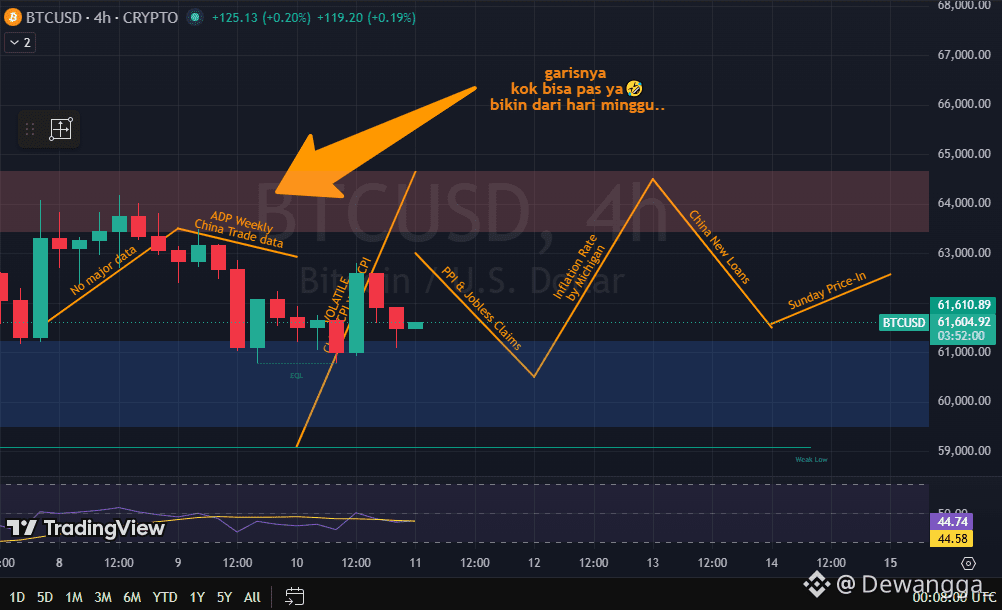
GM Informe del Mercado☕
Jueves, 11 de junio de 2026
$BTC Perspectiva (UTC 0):
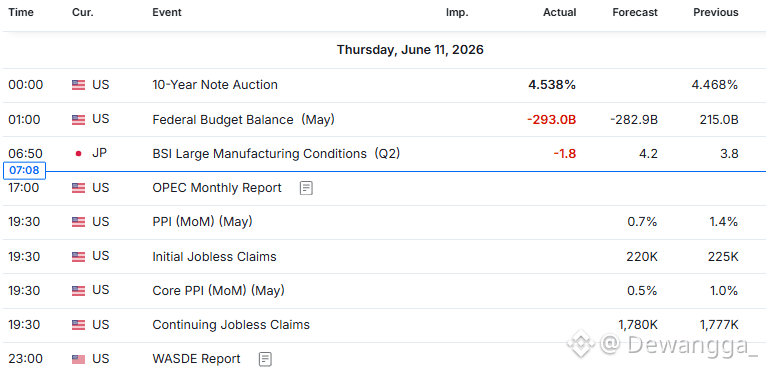
🟨00:00–09:00 → Lento 📊 Digestión post-CPI. BSI de Japón se desplomó -1.8 vs 4.2 pronosticado (gran fallo). Escalación de la guerra durante la noche. Velas Doji a $61.8K indican indecisión institucional.
🟨09:00–11:00 → Lento ☕ Cierre de la sesión asiática. Informe mensual de la OPEP a las 17:00 UTC. Aumentan las preocupaciones sobre el suministro de petróleo. Consolidación movida entre $61K-$62.5K.
🟥11:00–15:00 → A la baja ⚔️ PPI + Solicitudes de desempleo a las 19:30 UTC. Pronóstico: PPI 0.7% (enfriamiento), Solicitudes 220K. Si PPI caliente = confirmación de inflación = DXY se desploma = rechazo de BTC. Prima de guerra pesando.
🟨15:00–18:00 → Lento 🛡️ Digestión post-PPI. Informe WASDE a las 23:00 UTC. El mercado procesa señales mixtas: CPI YoY caliente pero Core MoM fresco. Acción en rango probable.
🟩18:00–00:00 → Al alza RSI 21 extremadamente sobrevendido. Velas Doji = señal de acumulación. El aumento del petróleo impulsado por la guerra puede desencadenar compras como cobertura contra la inflación. Rebote de alivio con objetivo en resistencia de $63K.
Sesgo: Extremadamente Sobrevendido → Prima de Guerra + Acumulación Institucional ➡️
RSI 21 — Zona de capitulación. Velas Doji después de la volatilidad indican posible reversión.
#NFA #DYOR 🔥
No es una señal de futuros
⚔️Escalación total de la guerra: Ataques de EE. UU. a Irán confirmados, destructor americano alcanzado en el Estrecho de Ormuz. SPR agotado, suministro de petróleo ajustándose.
🛢️Inventario de petróleo -7.227M vs -3M pronosticado = gran reducción. Bullrun del petróleo confirmado. Inflación impulsada por energía, no por fallo de política de la Fed. Irresponsabilidad fiscal del gobierno = inflación estructural.
🏛️CPI mixto: YoY 4.2% caliente pero Core MoM 0.2% fresco. La Fed atrapada entre mandato de inflación y desempleo a nivel de 2008. No puede subir agresivamente sin romper el mercado laboral.
💎Estrategia: Esperar el PPI a las 19:30 UTC. Si falla + caída del DXY = long scalp con objetivo en $63K. Si supera = prueba de soporte en $60.5K. RSI 21 grita que el rebote es inminente. Incertidumbre por la guerra = prima de volatilidad. No persigas, espera confirmación.
$PHA $OPN #USCPISurgesToThreeYearHighOf4.2% #USMayCoreInflationBelowForecast #MayCoreCPISofterThanForecastTreasuriesRise #WallStreetPreparesSpaceXIPOInfrastructure
{future}(BTCUSDT)
GM Informe del Mercado☕
Jueves, 11 de junio de 2026
$BTC Perspectiva (UTC 0):
🟨00:00–09:00 → Lento 📊 Digestión post-CPI. BSI de Japón se desplomó -1.8 vs 4.2 pronosticado (gran fallo). Escalación de la guerra durante la noche. Velas Doji a $61.8K indican indecisión institucional.
🟨09:00–11:00 → Lento ☕ Cierre de la sesión asiática. Informe mensual de la OPEP a las 17:00 UTC. Aumentan las preocupaciones sobre el suministro de petróleo. Consolidación movida entre $61K-$62.5K.
🟥11:00–15:00 → A la baja ⚔️ PPI + Solicitudes de desempleo a las 19:30 UTC. Pronóstico: PPI 0.7% (enfriamiento), Solicitudes 220K. Si PPI caliente = confirmación de inflación = DXY se desploma = rechazo de BTC. Prima de guerra pesando.
🟨15:00–18:00 → Lento 🛡️ Digestión post-PPI. Informe WASDE a las 23:00 UTC. El mercado procesa señales mixtas: CPI YoY caliente pero Core MoM fresco. Acción en rango probable.
🟩18:00–00:00 → Al alza RSI 21 extremadamente sobrevendido. Velas Doji = señal de acumulación. El aumento del petróleo impulsado por la guerra puede desencadenar compras como cobertura contra la inflación. Rebote de alivio con objetivo en resistencia de $63K.
Sesgo: Extremadamente Sobrevendido → Prima de Guerra + Acumulación Institucional ➡️
RSI 21 — Zona de capitulación. Velas Doji después de la volatilidad indican posible reversión.
#NFA #DYOR 🔥
No es una señal de futuros
⚔️Escalación total de la guerra: Ataques de EE. UU. a Irán confirmados, destructor americano alcanzado en el Estrecho de Ormuz. SPR agotado, suministro de petróleo ajustándose.
🛢️Inventario de petróleo -7.227M vs -3M pronosticado = gran reducción. Bullrun del petróleo confirmado. Inflación impulsada por energía, no por fallo de política de la Fed. Irresponsabilidad fiscal del gobierno = inflación estructural.
🏛️CPI mixto: YoY 4.2% caliente pero Core MoM 0.2% fresco. La Fed atrapada entre mandato de inflación y desempleo a nivel de 2008. No puede subir agresivamente sin romper el mercado laboral.
💎Estrategia: Esperar el PPI a las 19:30 UTC. Si falla + caída del DXY = long scalp con objetivo en $63K. Si supera = prueba de soporte en $60.5K. RSI 21 grita que el rebote es inminente. Incertidumbre por la guerra = prima de volatilidad. No persigas, espera confirmación.
$PHA $OPN #USCPISurgesToThreeYearHighOf4.2% #USMayCoreInflationBelowForecast #MayCoreCPISofterThanForecastTreasuriesRise #WallStreetPreparesSpaceXIPOInfrastructure
Jueves, 11 de junio de 2026
$BTC Perspectiva (UTC 0):
🟨00:00–09:00 → Lento 📊 Digestión post-CPI. BSI de Japón se desplomó -1.8 vs 4.2 pronosticado (gran fallo). Escalación de la guerra durante la noche. Velas Doji a $61.8K indican indecisión institucional.
🟨09:00–11:00 → Lento ☕ Cierre de la sesión asiática. Informe mensual de la OPEP a las 17:00 UTC. Aumentan las preocupaciones sobre el suministro de petróleo. Consolidación movida entre $61K-$62.5K.
🟥11:00–15:00 → A la baja ⚔️ PPI + Solicitudes de desempleo a las 19:30 UTC. Pronóstico: PPI 0.7% (enfriamiento), Solicitudes 220K. Si PPI caliente = confirmación de inflación = DXY se desploma = rechazo de BTC. Prima de guerra pesando.
🟨15:00–18:00 → Lento 🛡️ Digestión post-PPI. Informe WASDE a las 23:00 UTC. El mercado procesa señales mixtas: CPI YoY caliente pero Core MoM fresco. Acción en rango probable.
🟩18:00–00:00 → Al alza RSI 21 extremadamente sobrevendido. Velas Doji = señal de acumulación. El aumento del petróleo impulsado por la guerra puede desencadenar compras como cobertura contra la inflación. Rebote de alivio con objetivo en resistencia de $63K.
Sesgo: Extremadamente Sobrevendido → Prima de Guerra + Acumulación Institucional ➡️
RSI 21 — Zona de capitulación. Velas Doji después de la volatilidad indican posible reversión.
#NFA #DYOR 🔥
No es una señal de futuros
⚔️Escalación total de la guerra: Ataques de EE. UU. a Irán confirmados, destructor americano alcanzado en el Estrecho de Ormuz. SPR agotado, suministro de petróleo ajustándose.
🛢️Inventario de petróleo -7.227M vs -3M pronosticado = gran reducción. Bullrun del petróleo confirmado. Inflación impulsada por energía, no por fallo de política de la Fed. Irresponsabilidad fiscal del gobierno = inflación estructural.
🏛️CPI mixto: YoY 4.2% caliente pero Core MoM 0.2% fresco. La Fed atrapada entre mandato de inflación y desempleo a nivel de 2008. No puede subir agresivamente sin romper el mercado laboral.
💎Estrategia: Esperar el PPI a las 19:30 UTC. Si falla + caída del DXY = long scalp con objetivo en $63K. Si supera = prueba de soporte en $60.5K. RSI 21 grita que el rebote es inminente. Incertidumbre por la guerra = prima de volatilidad. No persigas, espera confirmación.
$PHA $OPN #USCPISurgesToThreeYearHighOf4.2% #USMayCoreInflationBelowForecast #MayCoreCPISofterThanForecastTreasuriesRise #WallStreetPreparesSpaceXIPOInfrastructure
2
313
·
--
Alcista
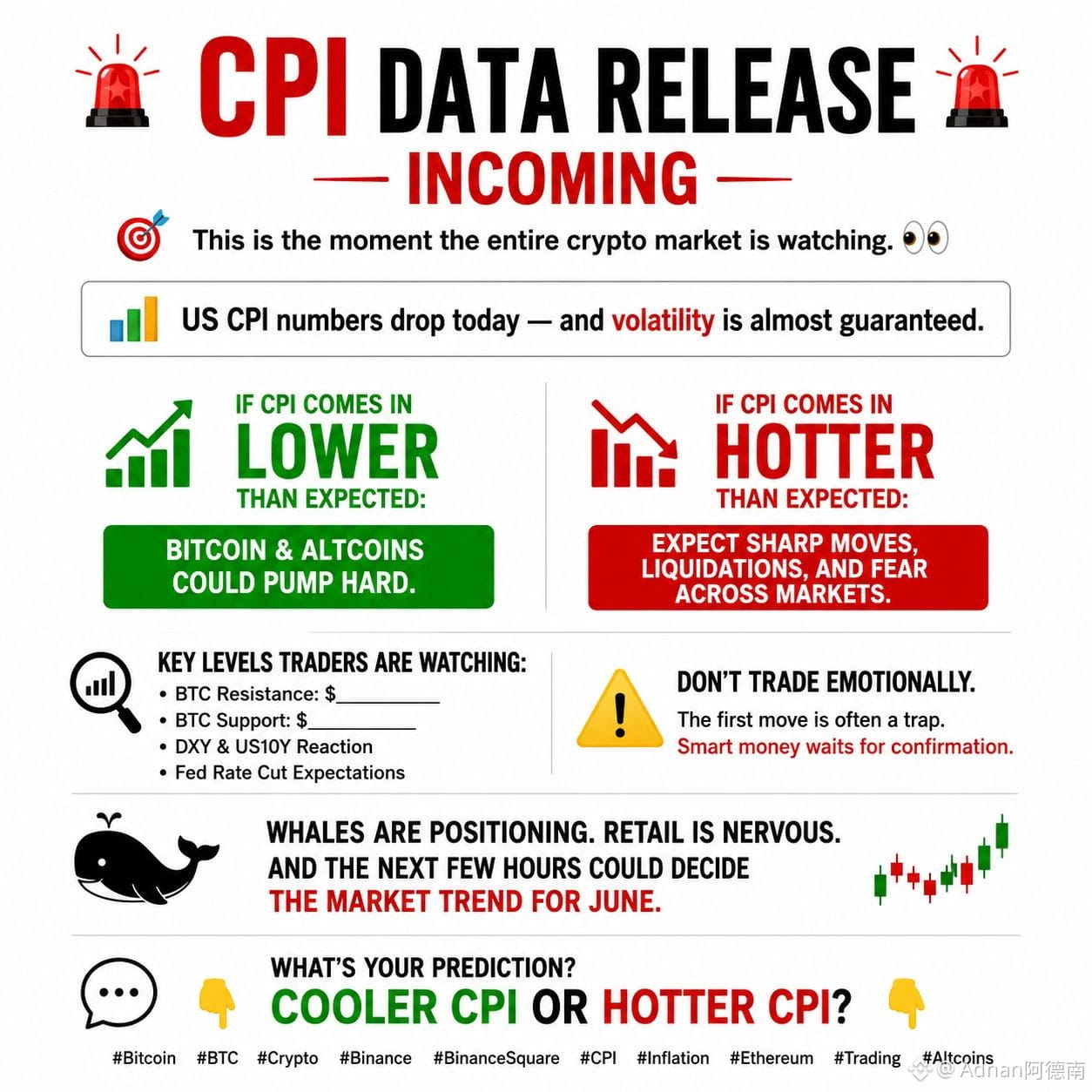
🚨 ¡SE VIENE LA PUBLICACIÓN DE DATOS DEL IPC! 🚨
Este es el momento que todo el mercado cripto está observando. 👀
📊 Los números del IPC de EE. UU. caen hoy — y la volatilidad es casi una garantía.
Si la inflación resulta ser MÁS BAJA de lo esperado:
🟢 Bitcoin y Altcoins podrían pumpear fuerte.
Si el IPC resulta ser MÁS ALTO de lo esperado:
🔴 Espera movimientos bruscos, liquidaciones y miedo en los mercados.
🔥 Niveles clave que los traders están observando:
• Resistencia BTC: $___
• Soporte BTC: $___
• Reacción DXY y US10Y
• Expectativas de recorte de tasas de la Fed
⚠️ No operes emocionalmente.
El primer movimiento a menudo es una trampa. El dinero inteligente espera confirmación.
Las ballenas se están posicionando.
Los retail están nerviosos.
Y las próximas horas podrían decidir la tendencia del mercado para junio. 📈📉
¿Cuál es tu predicción?
👇 ¿IPC más fresco o IPC más caliente?
#Bitcoin #USCPISurgesToThreeYearHighOf4.2%
#USMayCoreInflationBelowForecast
#AskAquestion
🚨 ¡SE VIENE LA PUBLICACIÓN DE DATOS DEL IPC! 🚨
Este es el momento que todo el mercado cripto está observando. 👀
📊 Los números del IPC de EE. UU. caen hoy — y la volatilidad es casi una garantía.
Si la inflación resulta ser MÁS BAJA de lo esperado:
🟢 Bitcoin y Altcoins podrían pumpear fuerte.
Si el IPC resulta ser MÁS ALTO de lo esperado:
🔴 Espera movimientos bruscos, liquidaciones y miedo en los mercados.
🔥 Niveles clave que los traders están observando:
• Resistencia BTC: $___
• Soporte BTC: $___
• Reacción DXY y US10Y
• Expectativas de recorte de tasas de la Fed
⚠️ No operes emocionalmente.
El primer movimiento a menudo es una trampa. El dinero inteligente espera confirmación.
Las ballenas se están posicionando.
Los retail están nerviosos.
Y las próximas horas podrían decidir la tendencia del mercado para junio. 📈📉
¿Cuál es tu predicción?
👇 ¿IPC más fresco o IPC más caliente?
#Bitcoin #USCPISurgesToThreeYearHighOf4.2%
#USMayCoreInflationBelowForecast
#AskAquestion
Este es el momento que todo el mercado cripto está observando. 👀
📊 Los números del IPC de EE. UU. caen hoy — y la volatilidad es casi una garantía.
Si la inflación resulta ser MÁS BAJA de lo esperado:
🟢 Bitcoin y Altcoins podrían pumpear fuerte.
Si el IPC resulta ser MÁS ALTO de lo esperado:
🔴 Espera movimientos bruscos, liquidaciones y miedo en los mercados.
🔥 Niveles clave que los traders están observando:
• Resistencia BTC: $___
• Soporte BTC: $___
• Reacción DXY y US10Y
• Expectativas de recorte de tasas de la Fed
⚠️ No operes emocionalmente.
El primer movimiento a menudo es una trampa. El dinero inteligente espera confirmación.
Las ballenas se están posicionando.
Los retail están nerviosos.
Y las próximas horas podrían decidir la tendencia del mercado para junio. 📈📉
¿Cuál es tu predicción?
👇 ¿IPC más fresco o IPC más caliente?
#Bitcoin #USCPISurgesToThreeYearHighOf4.2%
#USMayCoreInflationBelowForecast
#AskAquestion
1
9
309

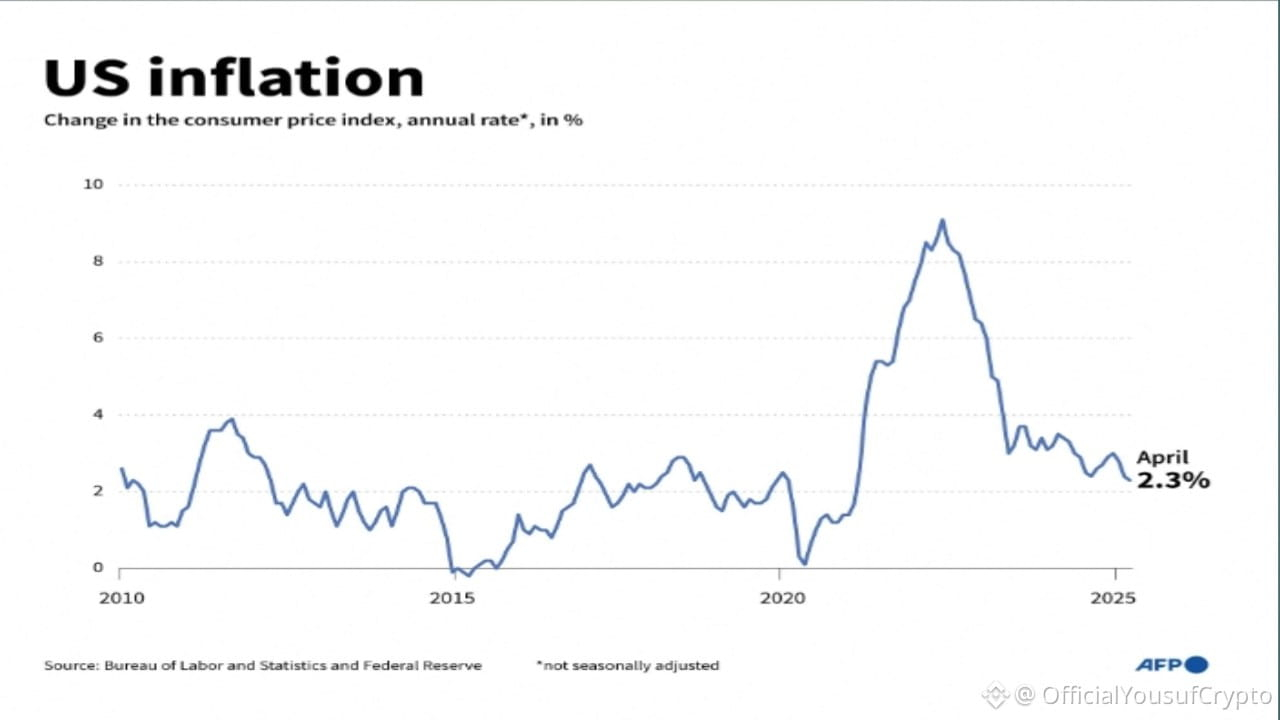
La inflación subyacente de EE. UU. está recibiendo mucha atención en el mercado hoy. 📊
Una inflación subyacente más baja de lo esperado se ve a menudo como una señal positiva, pero no garantiza automáticamente una tendencia alcista. Los mercados pueden reaccionar de manera diferente dependiendo de los datos económicos futuros, las expectativas de tasas de interés y el sentimiento del inversor.
Desde mi punto de vista, la pregunta más importante es si esta desaceleración de la inflación es el comienzo de una tendencia más larga o solo una mejora temporal. Si la inflación sigue enfriándose, los activos de riesgo como las criptos y las acciones podrían beneficiarse. Si no, la volatilidad puede regresar rápidamente.
¿Qué piensas? ¿Fortalece USMayCoreInflationBelowForecast el caso alcista para las criptos, o los inversores se están volviendo demasiado optimistas demasiado pronto?
#USMayCoreInflationBelowForecast
#Crypto #Inflation #Markets
$STG
{future}(STGUSDT)
$EPIC
{future}(EPICUSDT)
$OPN
{future}(OPNUSDT)
La inflación subyacente de EE. UU. está recibiendo mucha atención en el mercado hoy. 📊
Una inflación subyacente más baja de lo esperado se ve a menudo como una señal positiva, pero no garantiza automáticamente una tendencia alcista. Los mercados pueden reaccionar de manera diferente dependiendo de los datos económicos futuros, las expectativas de tasas de interés y el sentimiento del inversor.
Desde mi punto de vista, la pregunta más importante es si esta desaceleración de la inflación es el comienzo de una tendencia más larga o solo una mejora temporal. Si la inflación sigue enfriándose, los activos de riesgo como las criptos y las acciones podrían beneficiarse. Si no, la volatilidad puede regresar rápidamente.
¿Qué piensas? ¿Fortalece USMayCoreInflationBelowForecast el caso alcista para las criptos, o los inversores se están volviendo demasiado optimistas demasiado pronto?
#USMayCoreInflationBelowForecast
#Crypto #Inflation #Markets
$STG
$EPIC
$OPN
Una inflación subyacente más baja de lo esperado se ve a menudo como una señal positiva, pero no garantiza automáticamente una tendencia alcista. Los mercados pueden reaccionar de manera diferente dependiendo de los datos económicos futuros, las expectativas de tasas de interés y el sentimiento del inversor.
Desde mi punto de vista, la pregunta más importante es si esta desaceleración de la inflación es el comienzo de una tendencia más larga o solo una mejora temporal. Si la inflación sigue enfriándose, los activos de riesgo como las criptos y las acciones podrían beneficiarse. Si no, la volatilidad puede regresar rápidamente.
¿Qué piensas? ¿Fortalece USMayCoreInflationBelowForecast el caso alcista para las criptos, o los inversores se están volviendo demasiado optimistas demasiado pronto?
#USMayCoreInflationBelowForecast
#Crypto #Inflation #Markets
$STG
$EPIC
$OPN
554

·
--
#USMayCoreInflationBelowForecast
El IPC de EE. UU. de mayo subió un 4.2% interanual (volviendo por encima del 4%) y un 0.5% mensual, alineándose con las expectativas; el IPC subyacente +2.9% interanual / +0.2% mensual, por debajo de las proyecciones. Los costos de energía son el principal motor, con presiones subyacentes contenidas.
Los datos son en general neutrales sobre la ruta de recorte de tasas de la Fed, pero, combinados con choques geopolíticos en la energía, generan incertidumbre en la política; enfoque en las señales del próximo FOMC.
$ASTR
$HIVE
$GAL
#USMayCoreInflationBelowForecast
El IPC de EE. UU. de mayo subió un 4.2% interanual (volviendo por encima del 4%) y un 0.5% mensual, alineándose con las expectativas; el IPC subyacente +2.9% interanual / +0.2% mensual, por debajo de las proyecciones. Los costos de energía son el principal motor, con presiones subyacentes contenidas.
Los datos son en general neutrales sobre la ruta de recorte de tasas de la Fed, pero, combinados con choques geopolíticos en la energía, generan incertidumbre en la política; enfoque en las señales del próximo FOMC.
$ASTR
$HIVE
$GAL
El IPC de EE. UU. de mayo subió un 4.2% interanual (volviendo por encima del 4%) y un 0.5% mensual, alineándose con las expectativas; el IPC subyacente +2.9% interanual / +0.2% mensual, por debajo de las proyecciones. Los costos de energía son el principal motor, con presiones subyacentes contenidas.
Los datos son en general neutrales sobre la ruta de recorte de tasas de la Fed, pero, combinados con choques geopolíticos en la energía, generan incertidumbre en la política; enfoque en las señales del próximo FOMC.
$ASTR
$HIVE
$GAL
204
Inicia sesión para explorar más contenidos
Únete a usuarios de criptomonedas de todo el mundo en Binance Square
⚡️ Obtén la información más reciente y útil sobre criptomonedas.
💬 Confía en el mayor exchange de criptomonedas del mundo.
👍 Descubre opiniones reales de creadores verificados.
Correo electrónico/número de teléfono
Temas en tendencia
1
#FedRateWatch
11,592 visualizaciones
67 participa(n) en el debate
2
#BitcoinReboundsTo$79K
33,363 visualizaciones
267 participa(n) en el debate
3
#BessentEndorsesFinalClarityActDraft
928 visualizaciones
83 participa(n) en el debate
4
#ZamaOpens16ConfidentialMorphoVaults
708 visualizaciones
53 participa(n) en el debate
5
#USDCOnChainVolumeTops$100Trillion
281 visualizaciones
19 participa(n) en el debate
6
#BitcoinSpotETFsNetInflow$160M
1,313 visualizaciones
67 participa(n) en el debate
7
#SouthKoreaCryptoTaxDelayPetitionTops50000
25,499 visualizaciones
737 participa(n) en el debate
8
#SolanaTransactionV1GoesLiveOnMainnet
18,060 visualizaciones
486 participa(n) en el debate
9
#RussianCentralBankFlagsCryptoAsFinancialRisk
13,581 visualizaciones
404 participa(n) en el debate
10
#GrayscalePutsXRPAt26.11%InAdvisorPortfolio
30,476 visualizaciones
541 participa(n) en el debate