

#restaking
restaking
731,130 vistas
2,634 están debatiendo
Hot
Lo último

🚨 $REZ SUBE UN 9.28% HOY — MIENTRAS LOS TOKENS DE RESTAKING VUELVEN A ATRAER ATENCIÓN.
Binance REZ/USDT:
Precio de apertura: $0.003838
Precio actual: $0.004194
Hoy: +9.28%
Últimas 24 h: +11.98%
Máximo de hoy: $0.004417
Volumen negociado en spot hoy: $1.80 millones
La narrativa predominante del sector es el renovado interés especulativo en la infraestructura de restaking líquido.
Renzo opera dentro del ecosistema de restaking de Ethereum y ofrece infraestructura a los usuarios que buscan exponerse a estrategias de restaking.
Sin embargo, la existencia de una narrativa de restaking no demuestra que haya un nuevo catalizador fundamental.
No se verificó de forma independiente ningún anuncio oficial de Renzo del 23 de octubre sobre una asociación, una actualización del protocolo o la tokenómica como causa directa del repunte de hoy.
REPUNTE DE HOY: VERIFICADO.
NARRATIVA DE RESTAKING: ESTABLECIDA.
NUEVO CATALIZADOR OFICIAL: NO ENCONTRADO.
No se encontró ningún nuevo catalizador confirmado.
Vigila los $0.004417, el volumen negociado en spot y si otros tokens de restaking empiezan a mostrar un impulso similar.
#REZ #Renzo #Restaking #DeFi
🚨 $REZ SUBE UN 9.28% HOY — MIENTRAS LOS TOKENS DE RESTAKING VUELVEN A ATRAER ATENCIÓN.
Binance REZ/USDT:
Precio de apertura: $0.003838
Precio actual: $0.004194
Hoy: +9.28%
Últimas 24 h: +11.98%
Máximo de hoy: $0.004417
Volumen negociado en spot hoy: $1.80 millones
La narrativa predominante del sector es el renovado interés especulativo en la infraestructura de restaking líquido.
Renzo opera dentro del ecosistema de restaking de Ethereum y ofrece infraestructura a los usuarios que buscan exponerse a estrategias de restaking.
Sin embargo, la existencia de una narrativa de restaking no demuestra que haya un nuevo catalizador fundamental.
No se verificó de forma independiente ningún anuncio oficial de Renzo del 23 de octubre sobre una asociación, una actualización del protocolo o la tokenómica como causa directa del repunte de hoy.
REPUNTE DE HOY: VERIFICADO.
NARRATIVA DE RESTAKING: ESTABLECIDA.
NUEVO CATALIZADOR OFICIAL: NO ENCONTRADO.
No se encontró ningún nuevo catalizador confirmado.
Vigila los $0.004417, el volumen negociado en spot y si otros tokens de restaking empiezan a mostrar un impulso similar.
#REZ #Renzo #Restaking #DeFi
Binance REZ/USDT:
Precio de apertura: $0.003838
Precio actual: $0.004194
Hoy: +9.28%
Últimas 24 h: +11.98%
Máximo de hoy: $0.004417
Volumen negociado en spot hoy: $1.80 millones
La narrativa predominante del sector es el renovado interés especulativo en la infraestructura de restaking líquido.
Renzo opera dentro del ecosistema de restaking de Ethereum y ofrece infraestructura a los usuarios que buscan exponerse a estrategias de restaking.
Sin embargo, la existencia de una narrativa de restaking no demuestra que haya un nuevo catalizador fundamental.
No se verificó de forma independiente ningún anuncio oficial de Renzo del 23 de octubre sobre una asociación, una actualización del protocolo o la tokenómica como causa directa del repunte de hoy.
REPUNTE DE HOY: VERIFICADO.
NARRATIVA DE RESTAKING: ESTABLECIDA.
NUEVO CATALIZADOR OFICIAL: NO ENCONTRADO.
No se encontró ningún nuevo catalizador confirmado.
Vigila los $0.004417, el volumen negociado en spot y si otros tokens de restaking empiezan a mostrar un impulso similar.
#REZ #Renzo #Restaking #DeFi
183

·
--
Alcista
🔥#EIGEN ¡HA VUELTO! ¡SUBIDA DEL +12.08% HOY! 🔥
EigenLayer $EIGEN cotiza actualmente a $0.281 tras dispararse desde el mínimo de $0.2414 hasta el máximo de $0.2817. ¡Abrió a $0.2506: puro impulso! 📈💪
¡Una capitalización de mercado de $736.92M sigue siendo minúscula para el mayor protocolo de restaking del mundo cripto! 🏗️
+11.81% en 5 días, +21.95% en 1 mes: ¡la tendencia es oficialmente ALCISTA! 🟢✨
Su máximo histórico fue $5.65 y ahora está un -95% por debajo: ¡esta es la apuesta definitiva en mínimos! ¡La narrativa del restaking de ETH apenas está empezando! 🔐
¡Llegará a $1! ¡No apuestes en contra de EigenLayer! 🌙🚀
¡WAGMI! ¡LFG! 💰 #EIGEN #EigenLayer #restaking $EIGEN
{future}(EIGENUSDT)
🔥#EIGEN ¡HA VUELTO! ¡SUBIDA DEL +12.08% HOY! 🔥
EigenLayer $EIGEN cotiza actualmente a $0.281 tras dispararse desde el mínimo de $0.2414 hasta el máximo de $0.2817. ¡Abrió a $0.2506: puro impulso! 📈💪
¡Una capitalización de mercado de $736.92M sigue siendo minúscula para el mayor protocolo de restaking del mundo cripto! 🏗️
+11.81% en 5 días, +21.95% en 1 mes: ¡la tendencia es oficialmente ALCISTA! 🟢✨
Su máximo histórico fue $5.65 y ahora está un -95% por debajo: ¡esta es la apuesta definitiva en mínimos! ¡La narrativa del restaking de ETH apenas está empezando! 🔐
¡Llegará a $1! ¡No apuestes en contra de EigenLayer! 🌙🚀
¡WAGMI! ¡LFG! 💰 #EIGEN #EigenLayer #restaking $EIGEN
EigenLayer $EIGEN cotiza actualmente a $0.281 tras dispararse desde el mínimo de $0.2414 hasta el máximo de $0.2817. ¡Abrió a $0.2506: puro impulso! 📈💪
¡Una capitalización de mercado de $736.92M sigue siendo minúscula para el mayor protocolo de restaking del mundo cripto! 🏗️
+11.81% en 5 días, +21.95% en 1 mes: ¡la tendencia es oficialmente ALCISTA! 🟢✨
Su máximo histórico fue $5.65 y ahora está un -95% por debajo: ¡esta es la apuesta definitiva en mínimos! ¡La narrativa del restaking de ETH apenas está empezando! 🔐
¡Llegará a $1! ¡No apuestes en contra de EigenLayer! 🌙🚀
¡WAGMI! ¡LFG! 💰 #EIGEN #EigenLayer #restaking $EIGEN
74

·
--
¡Puffer Finance (PUFFER) acaba de dispararse más de un 87 % en las últimas 24 horas, alcanzando los 0,053 $ y dejando a los traders buscando respuestas!
Este protocolo de baja capitalización (puesto n.º 641) vio cómo su volumen de trading alcanzaba los 43 millones de dólares, superando incluso su capitalización de mercado de 30,5 millones. Es una señal contundente de entrada de capital nuevo y gran interés. Para principiantes: Puffer es un protocolo de «restaking líquido nativo» basado en EigenLayer. En términos sencillos, permite hacer staking de ETH una sola vez y obtener recompensas por contribuir a la seguridad de varias redes al mismo tiempo, manteniendo tus fondos líquidos mediante pufETH. Es probable que el reciente repunte se deba a los próximos hitos de la mainnet y al creciente interés por el restaking en general. Pero la baja liquidez conlleva una alta volatilidad: las ganancias pueden revertirse con la misma rapidez con la que llegaron.
#PufferFinance #Restaking
¿Vas a lanzarte de lleno a la narrativa del restaking o prefieres esperar a que baje?
¡Puffer Finance (PUFFER) acaba de dispararse más de un 87 % en las últimas 24 horas, alcanzando los 0,053 $ y dejando a los traders buscando respuestas!
Este protocolo de baja capitalización (puesto n.º 641) vio cómo su volumen de trading alcanzaba los 43 millones de dólares, superando incluso su capitalización de mercado de 30,5 millones. Es una señal contundente de entrada de capital nuevo y gran interés. Para principiantes: Puffer es un protocolo de «restaking líquido nativo» basado en EigenLayer. En términos sencillos, permite hacer staking de ETH una sola vez y obtener recompensas por contribuir a la seguridad de varias redes al mismo tiempo, manteniendo tus fondos líquidos mediante pufETH. Es probable que el reciente repunte se deba a los próximos hitos de la mainnet y al creciente interés por el restaking en general. Pero la baja liquidez conlleva una alta volatilidad: las ganancias pueden revertirse con la misma rapidez con la que llegaron.
#PufferFinance #Restaking
¿Vas a lanzarte de lleno a la narrativa del restaking o prefieres esperar a que baje?
Este protocolo de baja capitalización (puesto n.º 641) vio cómo su volumen de trading alcanzaba los 43 millones de dólares, superando incluso su capitalización de mercado de 30,5 millones. Es una señal contundente de entrada de capital nuevo y gran interés. Para principiantes: Puffer es un protocolo de «restaking líquido nativo» basado en EigenLayer. En términos sencillos, permite hacer staking de ETH una sola vez y obtener recompensas por contribuir a la seguridad de varias redes al mismo tiempo, manteniendo tus fondos líquidos mediante pufETH. Es probable que el reciente repunte se deba a los próximos hitos de la mainnet y al creciente interés por el restaking en general. Pero la baja liquidez conlleva una alta volatilidad: las ganancias pueden revertirse con la misma rapidez con la que llegaron.
#PufferFinance #Restaking
¿Vas a lanzarte de lleno a la narrativa del restaking o prefieres esperar a que baje?
151

·
--
LOS RENDIMIENTOS DEL STAKING ESTÁN DE VUELTA Y EL RESTAKING LIDERA EL AVANCE
Los tokens de restaking suben casi un 5 % hoy, mientras que el staking líquido sube casi un 4 %
Ethereum se mantiene por encima de 2500 y la demanda de staking vuelve a crecer
El nuevo ETH puesto en staking significa nuevas comisiones para los protocolos de staking
Este rincón del mercado, que crece silenciosamente gracias al interés compuesto, está despertando
Los tres líderes que tengo en pantalla
$LDO sube un 5 %, hasta los 45 centavos, y sigue siendo el rey del staking líquido
$ETHFI sube un 3 % a medida que las narrativas de restaking vuelven a atraer capital
$JTO sube un 3 % y, al mismo tiempo, se beneficia de la fortaleza del ecosistema de Solana
SEÑALES DE OPERACIÓN PARA $LDO
ZONA DE ENTRADA: DE 42 A 46 CENTAVOS
PRIMER OBJETIVO: 52 CENTAVOS
SEGUNDO OBJETIVO: 60 CENTAVOS
STOP LOSS: 38 CENTAVOS
Mi opinión como analista
El staking es lo más parecido que tiene el mundo cripto a una cuenta de ahorro con rendimientos reales
Con ETH estable, LDO a estos niveles parece una configuración sólida
Mi recomendación es COMPRAR para carteras centradas en los rendimientos
¿Estás haciendo staking ahora mismo o prefieres mantener efectivo?
#BinanceSquare #WriteToEarn #Crypto #Bitcoin #Restaking
LOS RENDIMIENTOS DEL STAKING ESTÁN DE VUELTA Y EL RESTAKING LIDERA EL AVANCE
Los tokens de restaking suben casi un 5 % hoy, mientras que el staking líquido sube casi un 4 %
Ethereum se mantiene por encima de 2500 y la demanda de staking vuelve a crecer
El nuevo ETH puesto en staking significa nuevas comisiones para los protocolos de staking
Este rincón del mercado, que crece silenciosamente gracias al interés compuesto, está despertando
Los tres líderes que tengo en pantalla
$LDO sube un 5 %, hasta los 45 centavos, y sigue siendo el rey del staking líquido
$ETHFI sube un 3 % a medida que las narrativas de restaking vuelven a atraer capital
$JTO sube un 3 % y, al mismo tiempo, se beneficia de la fortaleza del ecosistema de Solana
SEÑALES DE OPERACIÓN PARA $LDO
ZONA DE ENTRADA: DE 42 A 46 CENTAVOS
PRIMER OBJETIVO: 52 CENTAVOS
SEGUNDO OBJETIVO: 60 CENTAVOS
STOP LOSS: 38 CENTAVOS
Mi opinión como analista
El staking es lo más parecido que tiene el mundo cripto a una cuenta de ahorro con rendimientos reales
Con ETH estable, LDO a estos niveles parece una configuración sólida
Mi recomendación es COMPRAR para carteras centradas en los rendimientos
¿Estás haciendo staking ahora mismo o prefieres mantener efectivo?
#BinanceSquare #WriteToEarn #Crypto #Bitcoin #Restaking
Los tokens de restaking suben casi un 5 % hoy, mientras que el staking líquido sube casi un 4 %
Ethereum se mantiene por encima de 2500 y la demanda de staking vuelve a crecer
El nuevo ETH puesto en staking significa nuevas comisiones para los protocolos de staking
Este rincón del mercado, que crece silenciosamente gracias al interés compuesto, está despertando
Los tres líderes que tengo en pantalla
$LDO sube un 5 %, hasta los 45 centavos, y sigue siendo el rey del staking líquido
$ETHFI sube un 3 % a medida que las narrativas de restaking vuelven a atraer capital
$JTO sube un 3 % y, al mismo tiempo, se beneficia de la fortaleza del ecosistema de Solana
SEÑALES DE OPERACIÓN PARA $LDO
ZONA DE ENTRADA: DE 42 A 46 CENTAVOS
PRIMER OBJETIVO: 52 CENTAVOS
SEGUNDO OBJETIVO: 60 CENTAVOS
STOP LOSS: 38 CENTAVOS
Mi opinión como analista
El staking es lo más parecido que tiene el mundo cripto a una cuenta de ahorro con rendimientos reales
Con ETH estable, LDO a estos niveles parece una configuración sólida
Mi recomendación es COMPRAR para carteras centradas en los rendimientos
¿Estás haciendo staking ahora mismo o prefieres mantener efectivo?
#BinanceSquare #WriteToEarn #Crypto #Bitcoin #Restaking

1
16

·
--
El staking líquido solo fue el calentamiento. El restaking es la verdadera historia.
Cuando despegó el staking líquido de ETH, la idea era simple: tus ETH en staking $ETH deberían rendir más que quedarse inactivos generando alrededor de un 4 % de APY. Los LST como stETH desbloquearon la componibilidad de DeFi sobre el rendimiento del staking básico: eficiencia del capital, versión 1.
El restaking lleva esa lógica varios niveles más allá.
En lugar de proteger una sola red, ahora tus ETH en staking pueden validar simultáneamente servicios descentralizados adicionales: redes de oráculos, capas de disponibilidad de datos, comités de puentes, secuenciadores y protocolos de mensajería entre cadenas. Cada capa añade un rendimiento incremental. También añade un riesgo incremental de penalización (slashing): la contrapartida es real y no conviene pasarla por alto.
La arquitectura subyacente es, esencialmente, seguridad programable. Los conjuntos de validadores establecidos se convierten en un mercado de seguridad compartida. Los nuevos protocolos no necesitan crear su propia economía de validadores desde cero: alquilan credibilidad de una capa base que ya cuenta con seguridad.
En el caso específico de $ETH , esto es estructuralmente alcista: más casos de uso para los ETH en staking implican más demanda para ponerlos en staking, una mayor proporción de la oferta bloqueada y una oferta circulante más ajustada.
$BNB y $SOL están desarrollando primitivas análogas de seguridad compartida. La tendencia converge: todas las principales L1 avanzan hacia un capital en staking que cumple varias funciones a la vez.
Pero la capa de riesgo importa. La complejidad de los LRT añade correlación sistémica: si un AVS recibe una penalización, los holders de LRT posteriores en la cadena asumen el impacto. Modela los riesgos de cola antes de perseguir la cascada de rendimientos.
El restaking es la eficiencia del capital, versión 2. Entiende cómo funciona antes de que el mercado incorpore por completo la narrativa en los precios.
#Restaking #LiquidStaking #DeFi #CryptoAlpha #ETH
El staking líquido solo fue el calentamiento. El restaking es la verdadera historia.
Cuando despegó el staking líquido de ETH, la idea era simple: tus ETH en staking $ETH deberían rendir más que quedarse inactivos generando alrededor de un 4 % de APY. Los LST como stETH desbloquearon la componibilidad de DeFi sobre el rendimiento del staking básico: eficiencia del capital, versión 1.
El restaking lleva esa lógica varios niveles más allá.
En lugar de proteger una sola red, ahora tus ETH en staking pueden validar simultáneamente servicios descentralizados adicionales: redes de oráculos, capas de disponibilidad de datos, comités de puentes, secuenciadores y protocolos de mensajería entre cadenas. Cada capa añade un rendimiento incremental. También añade un riesgo incremental de penalización (slashing): la contrapartida es real y no conviene pasarla por alto.
La arquitectura subyacente es, esencialmente, seguridad programable. Los conjuntos de validadores establecidos se convierten en un mercado de seguridad compartida. Los nuevos protocolos no necesitan crear su propia economía de validadores desde cero: alquilan credibilidad de una capa base que ya cuenta con seguridad.
En el caso específico de $ETH , esto es estructuralmente alcista: más casos de uso para los ETH en staking implican más demanda para ponerlos en staking, una mayor proporción de la oferta bloqueada y una oferta circulante más ajustada.
$BNB y $SOL están desarrollando primitivas análogas de seguridad compartida. La tendencia converge: todas las principales L1 avanzan hacia un capital en staking que cumple varias funciones a la vez.
Pero la capa de riesgo importa. La complejidad de los LRT añade correlación sistémica: si un AVS recibe una penalización, los holders de LRT posteriores en la cadena asumen el impacto. Modela los riesgos de cola antes de perseguir la cascada de rendimientos.
El restaking es la eficiencia del capital, versión 2. Entiende cómo funciona antes de que el mercado incorpore por completo la narrativa en los precios.
#Restaking #LiquidStaking #DeFi #CryptoAlpha #ETH
Cuando despegó el staking líquido de ETH, la idea era simple: tus ETH en staking $ETH deberían rendir más que quedarse inactivos generando alrededor de un 4 % de APY. Los LST como stETH desbloquearon la componibilidad de DeFi sobre el rendimiento del staking básico: eficiencia del capital, versión 1.
El restaking lleva esa lógica varios niveles más allá.
En lugar de proteger una sola red, ahora tus ETH en staking pueden validar simultáneamente servicios descentralizados adicionales: redes de oráculos, capas de disponibilidad de datos, comités de puentes, secuenciadores y protocolos de mensajería entre cadenas. Cada capa añade un rendimiento incremental. También añade un riesgo incremental de penalización (slashing): la contrapartida es real y no conviene pasarla por alto.
La arquitectura subyacente es, esencialmente, seguridad programable. Los conjuntos de validadores establecidos se convierten en un mercado de seguridad compartida. Los nuevos protocolos no necesitan crear su propia economía de validadores desde cero: alquilan credibilidad de una capa base que ya cuenta con seguridad.
En el caso específico de $ETH , esto es estructuralmente alcista: más casos de uso para los ETH en staking implican más demanda para ponerlos en staking, una mayor proporción de la oferta bloqueada y una oferta circulante más ajustada.
$BNB y $SOL están desarrollando primitivas análogas de seguridad compartida. La tendencia converge: todas las principales L1 avanzan hacia un capital en staking que cumple varias funciones a la vez.
Pero la capa de riesgo importa. La complejidad de los LRT añade correlación sistémica: si un AVS recibe una penalización, los holders de LRT posteriores en la cadena asumen el impacto. Modela los riesgos de cola antes de perseguir la cascada de rendimientos.
El restaking es la eficiencia del capital, versión 2. Entiende cómo funciona antes de que el mercado incorpore por completo la narrativa en los precios.
#Restaking #LiquidStaking #DeFi #CryptoAlpha #ETH
96
·
--
Restaking líquido: la pila de rendimiento que impulsa la próxima frontera de DeFi
El restaking no es solo una palabra de moda: es un cambio estructural en la forma de financiar la seguridad de las cadenas de bloques.
Tradicionalmente, el capital de los validadores protege una sola red. El restaking rompe esa limitación. Al permitir que los $ETH en staking (o los tokens de staking líquido) opten simultáneamente por proteger servicios adicionales —redes de oráculos, capas de disponibilidad de datos y puentes entre cadenas—, el mismo capital genera rendimiento en varias capas de protocolos a la vez.
EigenLayer fue pionero en el modelo de Servicios Validados Activamente (AVS). En lugar de crear conjuntos de validadores desde cero, los nuevos protocolos alquilan seguridad económica de la base existente de activos en staking de Ethereum. El resultado: los nuevos protocolos alcanzan la seguridad más rápido y quienes hacen restaking obtienen mayores rendimientos combinados.
Los tokens de restaking líquido (LRT) van un paso más allá. Los protocolos permiten que los usuarios depositen activos, reciban a cambio un token negociable y lo utilicen simultáneamente en $ETH DeFi. Obtienes recompensas de restaking Y rendimiento de protocolos de liquidez sobre el mismo capital.
El riesgo acumulativo también es real. Las condiciones de slashing de varias fuentes de AVS se suman. Si los operadores se comportan mal en varios servicios a los que se han unido, las pérdidas pueden acumularse en cadena. Por eso, elegir operadores y diversificarse dentro de los protocolos LRT importa tanto como las cifras de APY.
En los ecosistemas $SOL y $BNB están surgiendo modelos análogos de seguridad compartida. La tesis macro: los mercados de seguridad modular son el próximo elemento fundamental de DeFi, y el restaking líquido es el instrumento de rendimiento que permite combinarlos de forma componible.
Entiende la estructura antes de perseguir el rendimiento. 🔍
$ETH $SOL $BNB
#Restaking #DeFi #EigenLayer #CryptoYield #Web3Infrastructure
Restaking líquido: la pila de rendimiento que impulsa la próxima frontera de DeFi
El restaking no es solo una palabra de moda: es un cambio estructural en la forma de financiar la seguridad de las cadenas de bloques.
Tradicionalmente, el capital de los validadores protege una sola red. El restaking rompe esa limitación. Al permitir que los $ETH en staking (o los tokens de staking líquido) opten simultáneamente por proteger servicios adicionales —redes de oráculos, capas de disponibilidad de datos y puentes entre cadenas—, el mismo capital genera rendimiento en varias capas de protocolos a la vez.
EigenLayer fue pionero en el modelo de Servicios Validados Activamente (AVS). En lugar de crear conjuntos de validadores desde cero, los nuevos protocolos alquilan seguridad económica de la base existente de activos en staking de Ethereum. El resultado: los nuevos protocolos alcanzan la seguridad más rápido y quienes hacen restaking obtienen mayores rendimientos combinados.
Los tokens de restaking líquido (LRT) van un paso más allá. Los protocolos permiten que los usuarios depositen activos, reciban a cambio un token negociable y lo utilicen simultáneamente en $ETH DeFi. Obtienes recompensas de restaking Y rendimiento de protocolos de liquidez sobre el mismo capital.
El riesgo acumulativo también es real. Las condiciones de slashing de varias fuentes de AVS se suman. Si los operadores se comportan mal en varios servicios a los que se han unido, las pérdidas pueden acumularse en cadena. Por eso, elegir operadores y diversificarse dentro de los protocolos LRT importa tanto como las cifras de APY.
En los ecosistemas $SOL y $BNB están surgiendo modelos análogos de seguridad compartida. La tesis macro: los mercados de seguridad modular son el próximo elemento fundamental de DeFi, y el restaking líquido es el instrumento de rendimiento que permite combinarlos de forma componible.
Entiende la estructura antes de perseguir el rendimiento. 🔍
$ETH $SOL $BNB
#Restaking #DeFi #EigenLayer #CryptoYield #Web3Infrastructure
El restaking no es solo una palabra de moda: es un cambio estructural en la forma de financiar la seguridad de las cadenas de bloques.
Tradicionalmente, el capital de los validadores protege una sola red. El restaking rompe esa limitación. Al permitir que los $ETH en staking (o los tokens de staking líquido) opten simultáneamente por proteger servicios adicionales —redes de oráculos, capas de disponibilidad de datos y puentes entre cadenas—, el mismo capital genera rendimiento en varias capas de protocolos a la vez.
EigenLayer fue pionero en el modelo de Servicios Validados Activamente (AVS). En lugar de crear conjuntos de validadores desde cero, los nuevos protocolos alquilan seguridad económica de la base existente de activos en staking de Ethereum. El resultado: los nuevos protocolos alcanzan la seguridad más rápido y quienes hacen restaking obtienen mayores rendimientos combinados.
Los tokens de restaking líquido (LRT) van un paso más allá. Los protocolos permiten que los usuarios depositen activos, reciban a cambio un token negociable y lo utilicen simultáneamente en $ETH DeFi. Obtienes recompensas de restaking Y rendimiento de protocolos de liquidez sobre el mismo capital.
El riesgo acumulativo también es real. Las condiciones de slashing de varias fuentes de AVS se suman. Si los operadores se comportan mal en varios servicios a los que se han unido, las pérdidas pueden acumularse en cadena. Por eso, elegir operadores y diversificarse dentro de los protocolos LRT importa tanto como las cifras de APY.
En los ecosistemas $SOL y $BNB están surgiendo modelos análogos de seguridad compartida. La tesis macro: los mercados de seguridad modular son el próximo elemento fundamental de DeFi, y el restaking líquido es el instrumento de rendimiento que permite combinarlos de forma componible.
Entiende la estructura antes de perseguir el rendimiento. 🔍
$ETH $SOL $BNB
#Restaking #DeFi #EigenLayer #CryptoYield #Web3Infrastructure
56

#restakingwave
🔄 RESTAKING WATCH: ¡LA INFRAESTRUCTURA DE ETH SIGUE EXPANDIÉNDOSE!
El ecosistema de staking y restaking de Ethereum sigue siendo una parte importante del relato más amplio sobre rentabilidad e infraestructura.
💡 QUÉ SIGNIFICA ESTO PARA LOS TRADERS:
A medida que el capital se sienta más cómodo con la rentabilidad en cadena (on-chain), los tokens de infraestructura podrían recibir de nuevo mayor atención.
🔍 3 MONEDAS A VIGILAR:
🟢 $EIGEN — EigenLayer sigue muy conectado al relato de restaking de Ethereum.
{spot}(EIGENUSDT)
🟠 $ETHFI — Ether.fi representa la vertiente de liquid-staking y DeFi del ecosistema de Ethereum.
{spot}(ETHFIUSDT)
🔵 $LDO — Lido se mantiene como un protocolo destacado de liquid-staking dentro de Ethereum.
{spot}(LDOUSDT)
¿Podría la infraestructura de staking convertirse en la próxima gran rotación de DeFi?
#EIGEN #ETHFI #LDO #Restaking
#restakingwave
🔄 RESTAKING WATCH: ¡LA INFRAESTRUCTURA DE ETH SIGUE EXPANDIÉNDOSE!
El ecosistema de staking y restaking de Ethereum sigue siendo una parte importante del relato más amplio sobre rentabilidad e infraestructura.
💡 QUÉ SIGNIFICA ESTO PARA LOS TRADERS:
A medida que el capital se sienta más cómodo con la rentabilidad en cadena (on-chain), los tokens de infraestructura podrían recibir de nuevo mayor atención.
🔍 3 MONEDAS A VIGILAR:
🟢 $EIGEN — EigenLayer sigue muy conectado al relato de restaking de Ethereum.
🟠 $ETHFI — Ether.fi representa la vertiente de liquid-staking y DeFi del ecosistema de Ethereum.
🔵 $LDO — Lido se mantiene como un protocolo destacado de liquid-staking dentro de Ethereum.
¿Podría la infraestructura de staking convertirse en la próxima gran rotación de DeFi?
#EIGEN #ETHFI #LDO #Restaking
🔄 RESTAKING WATCH: ¡LA INFRAESTRUCTURA DE ETH SIGUE EXPANDIÉNDOSE!
El ecosistema de staking y restaking de Ethereum sigue siendo una parte importante del relato más amplio sobre rentabilidad e infraestructura.
💡 QUÉ SIGNIFICA ESTO PARA LOS TRADERS:
A medida que el capital se sienta más cómodo con la rentabilidad en cadena (on-chain), los tokens de infraestructura podrían recibir de nuevo mayor atención.
🔍 3 MONEDAS A VIGILAR:
🟢 $EIGEN — EigenLayer sigue muy conectado al relato de restaking de Ethereum.
🟠 $ETHFI — Ether.fi representa la vertiente de liquid-staking y DeFi del ecosistema de Ethereum.
🔵 $LDO — Lido se mantiene como un protocolo destacado de liquid-staking dentro de Ethereum.
¿Podría la infraestructura de staking convertirse en la próxima gran rotación de DeFi?
#EIGEN #ETHFI #LDO #Restaking

1
395

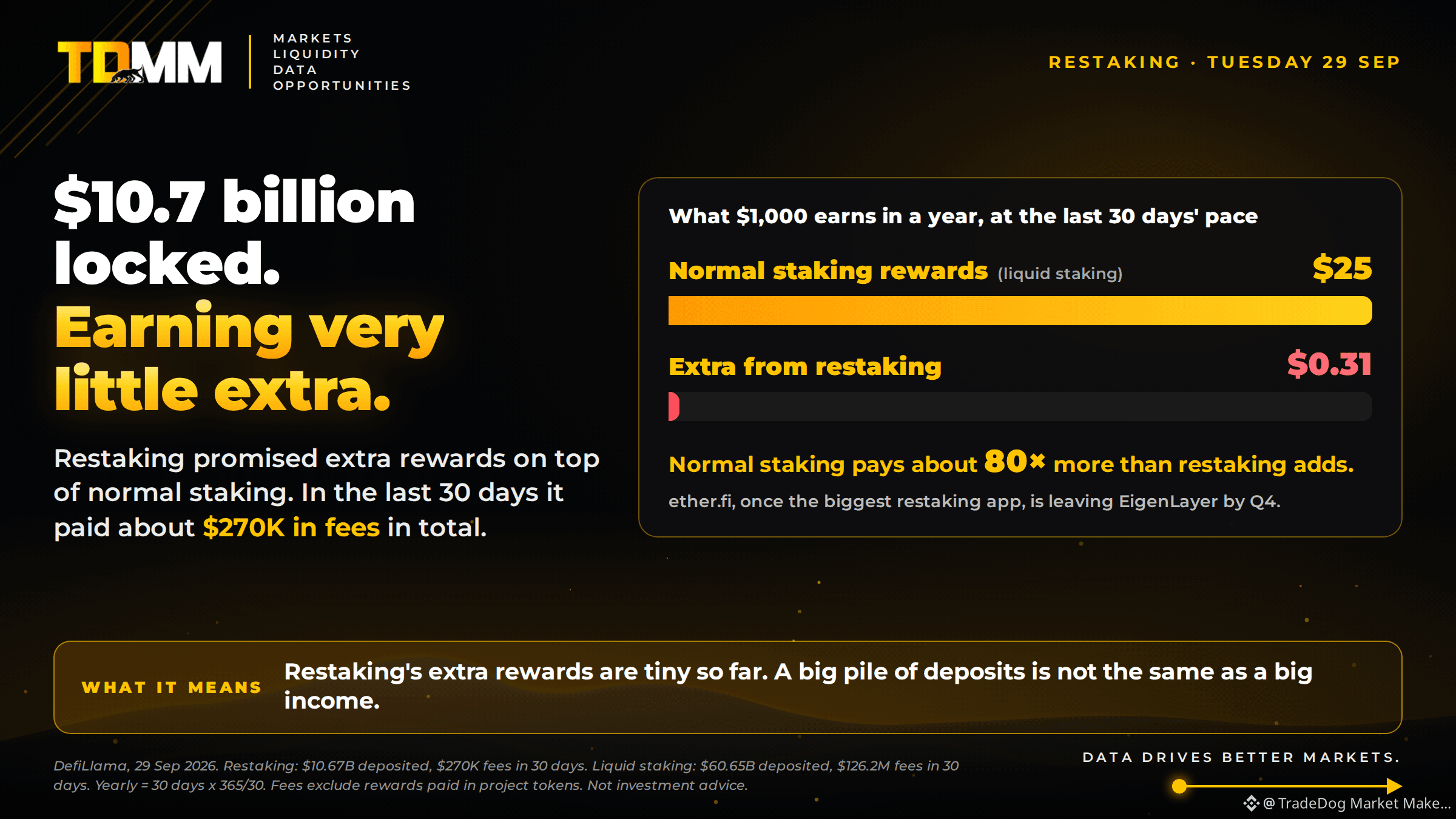
💸 $10.7B bloqueados en restaking. Ganando muy poco extra.
Lo que $1.000 gana en un año (al ritmo de los últimos 30 días):
🟡 Recompensas normales de staking: ~$25
🔴 Extra por restaking: ~$0.31
➡️ El staking normal paga ~80× más que lo que añade el restaking
📊 Todo el sector de restaking pagó ~$270K en comisiones en 30 días. $ETH restaking en EigenLayer por sí solo mantiene ~$7.0B y ganó ~$169K.
📰 Ether.fi, una vez la app de restaking más grande, está saliendo completamente de EigenLayer para el 4T.
💡 El dinero estacionado no es dinero ganado. Revisa qué producen realmente los depósitos.
¿Qué haría que el restaking vuelva a pagar? 👇
#Restaking #ETH #DeFi #Staking
Datos: DefiLlama, 29 sep. Las comisiones excluyen las recompensas pagadas en tokens del proyecto. No es asesoramiento financiero. Infórmate por tu cuenta (DYOR).
💸 $10.7B bloqueados en restaking. Ganando muy poco extra.
Lo que $1.000 gana en un año (al ritmo de los últimos 30 días):
🟡 Recompensas normales de staking: ~$25
🔴 Extra por restaking: ~$0.31
➡️ El staking normal paga ~80× más que lo que añade el restaking
📊 Todo el sector de restaking pagó ~$270K en comisiones en 30 días. $ETH restaking en EigenLayer por sí solo mantiene ~$7.0B y ganó ~$169K.
📰 Ether.fi, una vez la app de restaking más grande, está saliendo completamente de EigenLayer para el 4T.
💡 El dinero estacionado no es dinero ganado. Revisa qué producen realmente los depósitos.
¿Qué haría que el restaking vuelva a pagar? 👇
#Restaking #ETH #DeFi #Staking
Datos: DefiLlama, 29 sep. Las comisiones excluyen las recompensas pagadas en tokens del proyecto. No es asesoramiento financiero. Infórmate por tu cuenta (DYOR).
Lo que $1.000 gana en un año (al ritmo de los últimos 30 días):
🟡 Recompensas normales de staking: ~$25
🔴 Extra por restaking: ~$0.31
➡️ El staking normal paga ~80× más que lo que añade el restaking
📊 Todo el sector de restaking pagó ~$270K en comisiones en 30 días. $ETH restaking en EigenLayer por sí solo mantiene ~$7.0B y ganó ~$169K.
📰 Ether.fi, una vez la app de restaking más grande, está saliendo completamente de EigenLayer para el 4T.
💡 El dinero estacionado no es dinero ganado. Revisa qué producen realmente los depósitos.
¿Qué haría que el restaking vuelva a pagar? 👇
#Restaking #ETH #DeFi #Staking
Datos: DefiLlama, 29 sep. Las comisiones excluyen las recompensas pagadas en tokens del proyecto. No es asesoramiento financiero. Infórmate por tu cuenta (DYOR).
3
256


Actualización relámpago: la fiebre del restaking de oro ya ha tocado un muro de forma oficial. 📉 Los principales protocolos ahora sobreviven con márgenes extremadamente ajustados. Esto es lo que necesitas vigilar ahora mismo. 1. Las recompensas de yield farming han caído en picado en las principales plataformas. 2. Los ingresos de los validadores no logran igualar las proyecciones de crecimiento agresivas del año pasado. 3. El capital inteligente está rotando rápidamente fuera de los bucles de restaking de tarifas bajas. $ETH #Write2Earn #CryptoNews #Restaking #DeFi
Actualización relámpago: la fiebre del restaking de oro ya ha tocado un muro de forma oficial. 📉 Los principales protocolos ahora sobreviven con márgenes extremadamente ajustados. Esto es lo que necesitas vigilar ahora mismo. 1. Las recompensas de yield farming han caído en picado en las principales plataformas. 2. Los ingresos de los validadores no logran igualar las proyecciones de crecimiento agresivas del año pasado. 3. El capital inteligente está rotando rápidamente fuera de los bucles de restaking de tarifas bajas. $ETH #Write2Earn #CryptoNews #Restaking #DeFi

52

·
--
La fiebre por el restaking parece haber tocado techo.
Los rendimientos cayeron y los riesgos de contratos inteligentes se acumularon.
Por eso, uno de los protocolos principales de $ETH decidió abandonar su negocio central.
Ahora planean convertirse en un neobanco cripto.
Es un cambio de rumbo bastante drástico para un proyecto del sector.
¿Te parece una movida acertada o es desesperación?
#Ethereum #Restaking
La fiebre por el restaking parece haber tocado techo.
Los rendimientos cayeron y los riesgos de contratos inteligentes se acumularon.
Por eso, uno de los protocolos principales de $ETH decidió abandonar su negocio central.
Ahora planean convertirse en un neobanco cripto.
Es un cambio de rumbo bastante drástico para un proyecto del sector.
¿Te parece una movida acertada o es desesperación?
#Ethereum #Restaking
Los rendimientos cayeron y los riesgos de contratos inteligentes se acumularon.
Por eso, uno de los protocolos principales de $ETH decidió abandonar su negocio central.
Ahora planean convertirse en un neobanco cripto.
Es un cambio de rumbo bastante drástico para un proyecto del sector.
¿Te parece una movida acertada o es desesperación?
#Ethereum #Restaking

277

·
--
¡La era del re-staking del oro ha terminado! Los principales protocolos ahora apenas ganan dinero, los rendimientos se secan y los riesgos de los contratos inteligentes aumentan. Incluso el mayor protocolo de restaking líquido de Ethereum ha abandonado su negocio central para crear un cripto-banco. Parece que la época de “sacar dinero fácil” realmente se acabó... #restaking #DeFi $ETH
¡La fiebre del re-staking ha terminado oficialmente! Los principales protocolos apenas están obteniendo ganancias mientras los rendimientos se agotan y los riesgos de los contratos inteligentes aumentan. Incluso el principal protocolo de restaking líquido de Ethereum ha abandonado su negocio central para construir un neobanco cripto. La era del dinero fácil de verdad ha terminado... #restaking #DeFi $ETH
¡La era del re-staking del oro ha terminado! Los principales protocolos ahora apenas ganan dinero, los rendimientos se secan y los riesgos de los contratos inteligentes aumentan. Incluso el mayor protocolo de restaking líquido de Ethereum ha abandonado su negocio central para crear un cripto-banco. Parece que la época de “sacar dinero fácil” realmente se acabó... #restaking #DeFi $ETH
¡La fiebre del re-staking ha terminado oficialmente! Los principales protocolos apenas están obteniendo ganancias mientras los rendimientos se agotan y los riesgos de los contratos inteligentes aumentan. Incluso el principal protocolo de restaking líquido de Ethereum ha abandonado su negocio central para construir un neobanco cripto. La era del dinero fácil de verdad ha terminado... #restaking #DeFi $ETH
¡La fiebre del re-staking ha terminado oficialmente! Los principales protocolos apenas están obteniendo ganancias mientras los rendimientos se agotan y los riesgos de los contratos inteligentes aumentan. Incluso el principal protocolo de restaking líquido de Ethereum ha abandonado su negocio central para construir un neobanco cripto. La era del dinero fácil de verdad ha terminado... #restaking #DeFi $ETH
173
·
--
El restaking se vendió como rendimiento gratis. El argumento: apostar una vez, cobrar, y luego volver a pignorar el mismo colateral para asegurar una docena de redes y volver a cobrar.
Pero el rendimiento nunca es gratis: es el precio del riesgo. Y el restaking es una máquina para vender el mismo riesgo varias veces.
Cuando el ETH está en una sola posición de staking, asumes el riesgo de un único validador. Cuando ese mismo ETH se vuelve a hacer staking en diez servicios, los riesgos se acumulan: condiciones de slashing, fallos en contratos inteligentes, informes erróneos de oráculos — en diez bases de código distintas, todas respaldadas por el mismo colateral.
Esto es una rehipotecación con mejor marketing. En 2008, la misma hipoteca se empaquetó, se aseguró y se volvió a vender hasta que nadie sabía quién tenía la exposición real. El restaking recrea esa geometría: un solo activo, muchas reclamaciones, y modos de fallo correlacionados.
Eso no lo hace malo. Significa ganar 12% en lugar de 4%, lo cual normalmente equivale a mantener 3x el riesgo con 1x la atención.
El rendimiento es el mercado cotizándote un precio por el peligro. El “stacking” es la prueba de que el riesgo nunca se cotizó una sola vez.
La única pregunta que vale la pena hacer es: si todo falla al mismo tiempo, ¿qué es lo que realmente recuperas — y con qué rapidez?
$ETH $SOL $BTC
#Restaking #DeFi #RiskManagement #Crypto #Rendimiento
El restaking se vendió como rendimiento gratis. El argumento: apostar una vez, cobrar, y luego volver a pignorar el mismo colateral para asegurar una docena de redes y volver a cobrar.
Pero el rendimiento nunca es gratis: es el precio del riesgo. Y el restaking es una máquina para vender el mismo riesgo varias veces.
Cuando el ETH está en una sola posición de staking, asumes el riesgo de un único validador. Cuando ese mismo ETH se vuelve a hacer staking en diez servicios, los riesgos se acumulan: condiciones de slashing, fallos en contratos inteligentes, informes erróneos de oráculos — en diez bases de código distintas, todas respaldadas por el mismo colateral.
Esto es una rehipotecación con mejor marketing. En 2008, la misma hipoteca se empaquetó, se aseguró y se volvió a vender hasta que nadie sabía quién tenía la exposición real. El restaking recrea esa geometría: un solo activo, muchas reclamaciones, y modos de fallo correlacionados.
Eso no lo hace malo. Significa ganar 12% en lugar de 4%, lo cual normalmente equivale a mantener 3x el riesgo con 1x la atención.
El rendimiento es el mercado cotizándote un precio por el peligro. El “stacking” es la prueba de que el riesgo nunca se cotizó una sola vez.
La única pregunta que vale la pena hacer es: si todo falla al mismo tiempo, ¿qué es lo que realmente recuperas — y con qué rapidez?
$ETH $SOL $BTC
#Restaking #DeFi #RiskManagement #Crypto #Rendimiento
Pero el rendimiento nunca es gratis: es el precio del riesgo. Y el restaking es una máquina para vender el mismo riesgo varias veces.
Cuando el ETH está en una sola posición de staking, asumes el riesgo de un único validador. Cuando ese mismo ETH se vuelve a hacer staking en diez servicios, los riesgos se acumulan: condiciones de slashing, fallos en contratos inteligentes, informes erróneos de oráculos — en diez bases de código distintas, todas respaldadas por el mismo colateral.
Esto es una rehipotecación con mejor marketing. En 2008, la misma hipoteca se empaquetó, se aseguró y se volvió a vender hasta que nadie sabía quién tenía la exposición real. El restaking recrea esa geometría: un solo activo, muchas reclamaciones, y modos de fallo correlacionados.
Eso no lo hace malo. Significa ganar 12% en lugar de 4%, lo cual normalmente equivale a mantener 3x el riesgo con 1x la atención.
El rendimiento es el mercado cotizándote un precio por el peligro. El “stacking” es la prueba de que el riesgo nunca se cotizó una sola vez.
La única pregunta que vale la pena hacer es: si todo falla al mismo tiempo, ¿qué es lo que realmente recuperas — y con qué rapidez?
$ETH $SOL $BTC
#Restaking #DeFi #RiskManagement #Crypto #Rendimiento
62

·
--
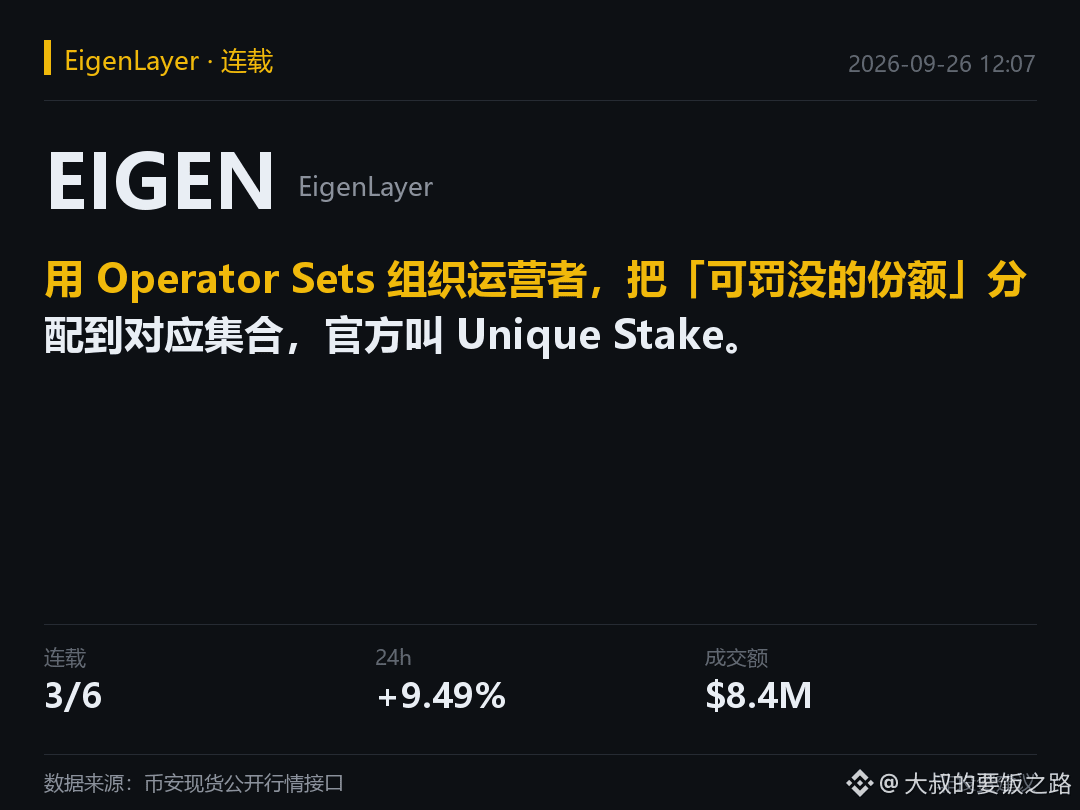
EigenLayer usa Operator Sets para organizar a los operadores y asignar la «porción sujeta a confiscación» al conjunto correspondiente; oficialmente se llama Unique Stake.
Lo clave está en el límite de la asignación: una misma porción, en el mismo momento, solo corresponde al poder de penalización y confiscación de un único conjunto.
#Restaking
No es asesoramiento de inversión
{future}(EIGENUSDT)
EigenLayer usa Operator Sets para organizar a los operadores y asignar la «porción sujeta a confiscación» al conjunto correspondiente; oficialmente se llama Unique Stake.
Lo clave está en el límite de la asignación: una misma porción, en el mismo momento, solo corresponde al poder de penalización y confiscación de un único conjunto.
#Restaking
No es asesoramiento de inversión
Lo clave está en el límite de la asignación: una misma porción, en el mismo momento, solo corresponde al poder de penalización y confiscación de un único conjunto.
#Restaking
No es asesoramiento de inversión
150

Kelp DAO recuerda: desde el 15 de junio, se detendrá el soporte de rsETH entre múltiples cadenas.
Si tienes o usas $rsETH, lo clave no es entrar en pánico, sino revisar tres cosas:
1) ¿En qué cadena está actualmente el activo?;
2) ¿Aún dependes de transferencias entre cadenas?;
3) ¿Las posiciones DeFi relacionadas, la liquidez o las rutas de salida se verán afectadas?
Este tipo de ajustes suele impactar la experiencia entre cadenas y la eficiencia en la gestión de fondos, especialmente para los usuarios que todavía operan frecuentemente entre múltiples cadenas. Se recomienda revisar las indicaciones oficiales con anticipación, para evitar darse cuenta de que el puente o la migración están limitados después de que se detenga el soporte.
#KelpDAO #Restaking #DeFi
Kelp DAO recuerda: desde el 15 de junio, se detendrá el soporte de rsETH entre múltiples cadenas.
Si tienes o usas $rsETH, lo clave no es entrar en pánico, sino revisar tres cosas:
1) ¿En qué cadena está actualmente el activo?;
2) ¿Aún dependes de transferencias entre cadenas?;
3) ¿Las posiciones DeFi relacionadas, la liquidez o las rutas de salida se verán afectadas?
Este tipo de ajustes suele impactar la experiencia entre cadenas y la eficiencia en la gestión de fondos, especialmente para los usuarios que todavía operan frecuentemente entre múltiples cadenas. Se recomienda revisar las indicaciones oficiales con anticipación, para evitar darse cuenta de que el puente o la migración están limitados después de que se detenga el soporte.
#KelpDAO #Restaking #DeFi
Si tienes o usas $rsETH, lo clave no es entrar en pánico, sino revisar tres cosas:
1) ¿En qué cadena está actualmente el activo?;
2) ¿Aún dependes de transferencias entre cadenas?;
3) ¿Las posiciones DeFi relacionadas, la liquidez o las rutas de salida se verán afectadas?
Este tipo de ajustes suele impactar la experiencia entre cadenas y la eficiencia en la gestión de fondos, especialmente para los usuarios que todavía operan frecuentemente entre múltiples cadenas. Se recomienda revisar las indicaciones oficiales con anticipación, para evitar darse cuenta de que el puente o la migración están limitados después de que se detenga el soporte.
#KelpDAO #Restaking #DeFi
101
Kelp DAO Anuncio: A partir del 15 de junio, se detendrá el soporte de rsETH para múltiples cadenas.
El impacto más directo de este cambio para los usuarios es que los caminos de cross-chain, la programación de liquidez y las operaciones de activos posteriores pueden no ejecutarse como antes. Se recomienda a los usuarios que poseen o utilizan $rsETH que revisen a tiempo la cadena en la que están, los registros de puentes y las posiciones relacionadas en DeFi, para evitar problemas de operaciones limitadas o dificultades en la rotación de fondos una vez que el soporte se detenga.
Mantente atento a los comunicados oficiales, no esperes a necesitar hacer cross-chain para darte cuenta de que la entrada ya está cerrada. #KelpDAO #DeFi #Restaking
Kelp DAO Anuncio: A partir del 15 de junio, se detendrá el soporte de rsETH para múltiples cadenas.
El impacto más directo de este cambio para los usuarios es que los caminos de cross-chain, la programación de liquidez y las operaciones de activos posteriores pueden no ejecutarse como antes. Se recomienda a los usuarios que poseen o utilizan $rsETH que revisen a tiempo la cadena en la que están, los registros de puentes y las posiciones relacionadas en DeFi, para evitar problemas de operaciones limitadas o dificultades en la rotación de fondos una vez que el soporte se detenga.
Mantente atento a los comunicados oficiales, no esperes a necesitar hacer cross-chain para darte cuenta de que la entrada ya está cerrada. #KelpDAO #DeFi #Restaking
El impacto más directo de este cambio para los usuarios es que los caminos de cross-chain, la programación de liquidez y las operaciones de activos posteriores pueden no ejecutarse como antes. Se recomienda a los usuarios que poseen o utilizan $rsETH que revisen a tiempo la cadena en la que están, los registros de puentes y las posiciones relacionadas en DeFi, para evitar problemas de operaciones limitadas o dificultades en la rotación de fondos una vez que el soporte se detenga.
Mantente atento a los comunicados oficiales, no esperes a necesitar hacer cross-chain para darte cuenta de que la entrada ya está cerrada. #KelpDAO #DeFi #Restaking
112

·
--
El resumen de Cointelegraph sobre "lo que pasó en cripto hoy" no tuvo drama de restaking — un momento raro, ya que @Bedrock sigue lanzando Bedrock 2.0 mientras que la mayoría de los restakers de ETH que sigo están atrapados discutiendo sobre puntos sobrantes.
El Bedrock de primera generación se sentía como rendimiento de un solo activo con pasos adicionales. Bedrock 2.0 toma un camino diferente: restaking líquido en ETH y BTC, con recompensas DePIN en lugar de otra lista de granja.
$BR está alrededor de $0.117, bajando ~3.7% hoy incluso con Bitcoin subiendo ~1.6% cerca de $65,600. Aún así, ~54% por debajo del máximo de ~$0.257. Con una capitalización de mercado de ~29 millones sobre 251 millones en circulación de 1 mil millones en total — parece que el mercado ya descontó el hype.
#Bedrock #Restaking #DePIN
El resumen de Cointelegraph sobre "lo que pasó en cripto hoy" no tuvo drama de restaking — un momento raro, ya que @Bedrock sigue lanzando Bedrock 2.0 mientras que la mayoría de los restakers de ETH que sigo están atrapados discutiendo sobre puntos sobrantes.
El Bedrock de primera generación se sentía como rendimiento de un solo activo con pasos adicionales. Bedrock 2.0 toma un camino diferente: restaking líquido en ETH y BTC, con recompensas DePIN en lugar de otra lista de granja.
$BR está alrededor de $0.117, bajando ~3.7% hoy incluso con Bitcoin subiendo ~1.6% cerca de $65,600. Aún así, ~54% por debajo del máximo de ~$0.257. Con una capitalización de mercado de ~29 millones sobre 251 millones en circulación de 1 mil millones en total — parece que el mercado ya descontó el hype.
#Bedrock #Restaking #DePIN
El Bedrock de primera generación se sentía como rendimiento de un solo activo con pasos adicionales. Bedrock 2.0 toma un camino diferente: restaking líquido en ETH y BTC, con recompensas DePIN en lugar de otra lista de granja.
$BR está alrededor de $0.117, bajando ~3.7% hoy incluso con Bitcoin subiendo ~1.6% cerca de $65,600. Aún así, ~54% por debajo del máximo de ~$0.257. Con una capitalización de mercado de ~29 millones sobre 251 millones en circulación de 1 mil millones en total — parece que el mercado ya descontó el hype.
#Bedrock #Restaking #DePIN
69

·
--
#bedrock $BR
¿Sigues dejando tu cripto inactiva? Es hora de desbloquear su potencial completo con Bedrock Protocol. Bedrock es una plataforma de restaking líquido multi-activo que convierte tus activos dormidos en potencias generadoras de rendimiento.
Lo que obtienes:
💎 Mantén 100% de liquidez con wrappers como uniBTC y uniETH
📈 Gana recompensas compuestas de las principales redes de restaking (Babylon, EigenLayer)
🔐 Seguridad de grado institucional, no custodial, respaldada por RockX
🗳️ Poder de gobernanza a través del token nativo $BR . Deja de elegir entre recompensas de staking y liquidez para trading. Haz ambas cosas.
#Restaking #BTCFi #Ethereum
#bedrock $BR
¿Sigues dejando tu cripto inactiva? Es hora de desbloquear su potencial completo con Bedrock Protocol. Bedrock es una plataforma de restaking líquido multi-activo que convierte tus activos dormidos en potencias generadoras de rendimiento.
Lo que obtienes:
💎 Mantén 100% de liquidez con wrappers como uniBTC y uniETH
📈 Gana recompensas compuestas de las principales redes de restaking (Babylon, EigenLayer)
🔐 Seguridad de grado institucional, no custodial, respaldada por RockX
🗳️ Poder de gobernanza a través del token nativo $BR . Deja de elegir entre recompensas de staking y liquidez para trading. Haz ambas cosas.
#Restaking #BTCFi #Ethereum
¿Sigues dejando tu cripto inactiva? Es hora de desbloquear su potencial completo con Bedrock Protocol. Bedrock es una plataforma de restaking líquido multi-activo que convierte tus activos dormidos en potencias generadoras de rendimiento.
Lo que obtienes:
💎 Mantén 100% de liquidez con wrappers como uniBTC y uniETH
📈 Gana recompensas compuestas de las principales redes de restaking (Babylon, EigenLayer)
🔐 Seguridad de grado institucional, no custodial, respaldada por RockX
🗳️ Poder de gobernanza a través del token nativo $BR . Deja de elegir entre recompensas de staking y liquidez para trading. Haz ambas cosas.
#Restaking #BTCFi #Ethereum
90

$B TESTNET ESTÁ EXPONIENDO LOS PUNTOS DE ESTRÉS REALES ⚡
El último testnet de Bedrock no es solo una caza de recompensas. La señal clave es su intento de hacer pruebas de presión en el restaking líquido a través de Ethereum, Bitcoin y DePIN antes de afirmar que el sistema está listo para la batalla.
Aquí es donde se encuentra el verdadero alpha.
Diferentes velocidades de liquidación. Diferentes supuestos de confianza. Riesgo de datos fuera de la cadena. Coordinación de validadores. Liquidación con zk-proof.
Limpio en papel. Brutal bajo carga.
El mercado debería observar cómo $B maneja los casos extremos, no los ciclos de hype.
No es asesoramiento financiero. Administra tu riesgo.
#BR #Restaking #DePIN #Crypto #BinanceSquare
🚀
{future}(BREVUSDT)
$B TESTNET ESTÁ EXPONIENDO LOS PUNTOS DE ESTRÉS REALES ⚡
El último testnet de Bedrock no es solo una caza de recompensas. La señal clave es su intento de hacer pruebas de presión en el restaking líquido a través de Ethereum, Bitcoin y DePIN antes de afirmar que el sistema está listo para la batalla.
Aquí es donde se encuentra el verdadero alpha.
Diferentes velocidades de liquidación. Diferentes supuestos de confianza. Riesgo de datos fuera de la cadena. Coordinación de validadores. Liquidación con zk-proof.
Limpio en papel. Brutal bajo carga.
El mercado debería observar cómo $B maneja los casos extremos, no los ciclos de hype.
No es asesoramiento financiero. Administra tu riesgo.
#BR #Restaking #DePIN #Crypto #BinanceSquare
🚀
El último testnet de Bedrock no es solo una caza de recompensas. La señal clave es su intento de hacer pruebas de presión en el restaking líquido a través de Ethereum, Bitcoin y DePIN antes de afirmar que el sistema está listo para la batalla.
Aquí es donde se encuentra el verdadero alpha.
Diferentes velocidades de liquidación. Diferentes supuestos de confianza. Riesgo de datos fuera de la cadena. Coordinación de validadores. Liquidación con zk-proof.
Limpio en papel. Brutal bajo carga.
El mercado debería observar cómo $B maneja los casos extremos, no los ciclos de hype.
No es asesoramiento financiero. Administra tu riesgo.
#BR #Restaking #DePIN #Crypto #BinanceSquare
🚀
22
·
--
Solía criticar a Bedrock porque $BR le faltaba casi un 43% respecto al pico de 0,26 USD — ahora me doy cuenta de que juzgué rápido, solo por el gráfico rojo y pasé por alto toda la historia del producto.
@Bedrock es un protocolo de reenvío: envía ETH/BTC para recibir más recompensas. Bedrock 2.0 se expande a más activos y añade una capa de recompensas DePIN. Mientras otros proyectos en la misma área permanecen en silencio, ellos siguen manteniendo claro su enfoque de “un solo lugar para múltiples tipos de monedas” en su perfil de Square.
Hoy, $BR subió casi un 18%, rondando los 0,15 USD, con una capitalización de aproximadamente 37 millones de USD — algunas razones:
→ $BTC recuperó más de un 2% alrededor de 63.700 USD, todos se atreven a hacer trading con los tokens más pequeños
→ Se vuelve a mencionar Bedrock 2.0, el interés en aprender sobre él ha aumentado, no solo un grupo siguiendo la moda corta
→ Circulan aproximadamente el 25% del suministro total, por lo que cada noticia leve también puede impulsar el precio fuerte
Una sesión verde no borra el momento en que lo dejé pasar pronto — al menos ahora sé lo que están haciendo, no solo miro el gráfico.
#Bedrock #Restaking #DePIN
Solía criticar a Bedrock porque $BR le faltaba casi un 43% respecto al pico de 0,26 USD — ahora me doy cuenta de que juzgué rápido, solo por el gráfico rojo y pasé por alto toda la historia del producto.
@Bedrock es un protocolo de reenvío: envía ETH/BTC para recibir más recompensas. Bedrock 2.0 se expande a más activos y añade una capa de recompensas DePIN. Mientras otros proyectos en la misma área permanecen en silencio, ellos siguen manteniendo claro su enfoque de “un solo lugar para múltiples tipos de monedas” en su perfil de Square.
Hoy, $BR subió casi un 18%, rondando los 0,15 USD, con una capitalización de aproximadamente 37 millones de USD — algunas razones:
→ $BTC recuperó más de un 2% alrededor de 63.700 USD, todos se atreven a hacer trading con los tokens más pequeños
→ Se vuelve a mencionar Bedrock 2.0, el interés en aprender sobre él ha aumentado, no solo un grupo siguiendo la moda corta
→ Circulan aproximadamente el 25% del suministro total, por lo que cada noticia leve también puede impulsar el precio fuerte
Una sesión verde no borra el momento en que lo dejé pasar pronto — al menos ahora sé lo que están haciendo, no solo miro el gráfico.
#Bedrock #Restaking #DePIN
@Bedrock es un protocolo de reenvío: envía ETH/BTC para recibir más recompensas. Bedrock 2.0 se expande a más activos y añade una capa de recompensas DePIN. Mientras otros proyectos en la misma área permanecen en silencio, ellos siguen manteniendo claro su enfoque de “un solo lugar para múltiples tipos de monedas” en su perfil de Square.
Hoy, $BR subió casi un 18%, rondando los 0,15 USD, con una capitalización de aproximadamente 37 millones de USD — algunas razones:
→ $BTC recuperó más de un 2% alrededor de 63.700 USD, todos se atreven a hacer trading con los tokens más pequeños
→ Se vuelve a mencionar Bedrock 2.0, el interés en aprender sobre él ha aumentado, no solo un grupo siguiendo la moda corta
→ Circulan aproximadamente el 25% del suministro total, por lo que cada noticia leve también puede impulsar el precio fuerte
Una sesión verde no borra el momento en que lo dejé pasar pronto — al menos ahora sé lo que están haciendo, no solo miro el gráfico.
#Bedrock #Restaking #DePIN
189

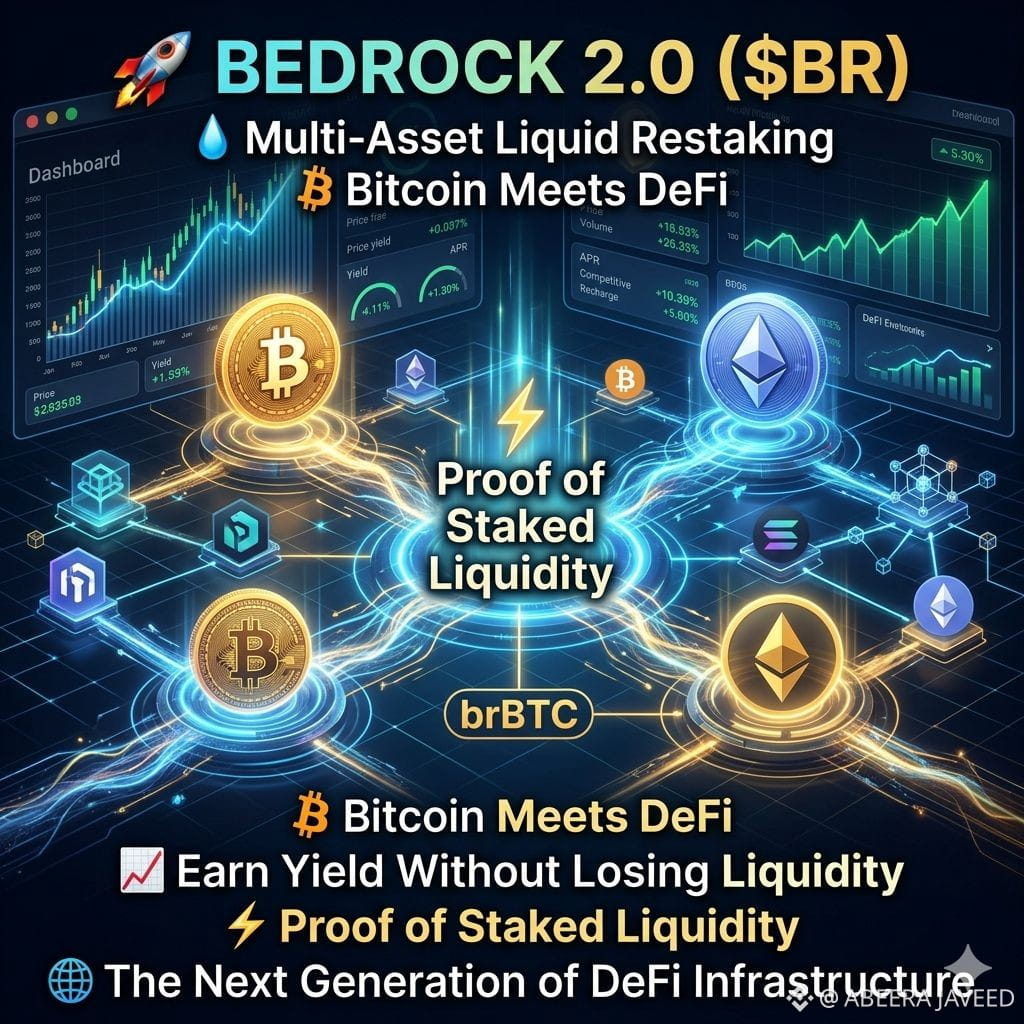
🚀 Bedrock 2.0 ($BR) Está Redefiniendo la Eficiencia $DEFI
Bedrock 2.0 está introduciendo un nuevo enfoque para las finanzas descentralizadas a través de su modelo de restaking líquido multi-activo. En lugar de tener los activos bloqueados, los usuarios pueden hacer staking de $BTC , $ETH y otros activos soportados mientras los mantienen activos en todo el ecosistema DeFi.
💡 ¿El resultado?
Eficiencia de capital mejorada, oportunidades de rendimiento sostenibles y mayor flexibilidad sin sacrificar la liquidez.
Una de las innovaciones clave de la plataforma es su marco de Prueba de Liquidez en Staking, que conecta directamente las recompensas con la participación en la liquidez, creando un ecosistema más eficiente y escalable para los usuarios.
🔥 El papel de Bitcoin también está evolucionando.
Con soluciones como brBTC, Bitcoin ya no está limitado a ser un almacén pasivo de valor. Los usuarios pueden generar rendimiento, participar en la gobernanza, ganar recompensas y acceder a oportunidades DeFi mientras mantienen exposición a sus tenencias de BTC.
✅ Restaking líquido multi-activo
✅ Eficiencia de capital mejorada
✅ Utilidad activa de Bitcoin en DeFi
✅ Generación de rendimiento flexible
Bedrock 2.0 está construyendo infraestructura diseñada para la próxima generación de DeFi, donde la liquidez, las recompensas y la usabilidad trabajan juntos de manera fluida.
#BlockchainAssocBacks401kCrypto #DeFi #restaking #BTC #ETH $BR
🚀 Bedrock 2.0 ($BR ) Está Redefiniendo la Eficiencia $DEFI
Bedrock 2.0 está introduciendo un nuevo enfoque para las finanzas descentralizadas a través de su modelo de restaking líquido multi-activo. En lugar de tener los activos bloqueados, los usuarios pueden hacer staking de $BTC , $ETH y otros activos soportados mientras los mantienen activos en todo el ecosistema DeFi.
💡 ¿El resultado?
Eficiencia de capital mejorada, oportunidades de rendimiento sostenibles y mayor flexibilidad sin sacrificar la liquidez.
Una de las innovaciones clave de la plataforma es su marco de Prueba de Liquidez en Staking, que conecta directamente las recompensas con la participación en la liquidez, creando un ecosistema más eficiente y escalable para los usuarios.
🔥 El papel de Bitcoin también está evolucionando.
Con soluciones como brBTC, Bitcoin ya no está limitado a ser un almacén pasivo de valor. Los usuarios pueden generar rendimiento, participar en la gobernanza, ganar recompensas y acceder a oportunidades DeFi mientras mantienen exposición a sus tenencias de BTC.
✅ Restaking líquido multi-activo
✅ Eficiencia de capital mejorada
✅ Utilidad activa de Bitcoin en DeFi
✅ Generación de rendimiento flexible
Bedrock 2.0 está construyendo infraestructura diseñada para la próxima generación de DeFi, donde la liquidez, las recompensas y la usabilidad trabajan juntos de manera fluida.
#BlockchainAssocBacks401kCrypto #DeFi #restaking #BTC #ETH $BR
Bedrock 2.0 está introduciendo un nuevo enfoque para las finanzas descentralizadas a través de su modelo de restaking líquido multi-activo. En lugar de tener los activos bloqueados, los usuarios pueden hacer staking de $BTC , $ETH y otros activos soportados mientras los mantienen activos en todo el ecosistema DeFi.
💡 ¿El resultado?
Eficiencia de capital mejorada, oportunidades de rendimiento sostenibles y mayor flexibilidad sin sacrificar la liquidez.
Una de las innovaciones clave de la plataforma es su marco de Prueba de Liquidez en Staking, que conecta directamente las recompensas con la participación en la liquidez, creando un ecosistema más eficiente y escalable para los usuarios.
🔥 El papel de Bitcoin también está evolucionando.
Con soluciones como brBTC, Bitcoin ya no está limitado a ser un almacén pasivo de valor. Los usuarios pueden generar rendimiento, participar en la gobernanza, ganar recompensas y acceder a oportunidades DeFi mientras mantienen exposición a sus tenencias de BTC.
✅ Restaking líquido multi-activo
✅ Eficiencia de capital mejorada
✅ Utilidad activa de Bitcoin en DeFi
✅ Generación de rendimiento flexible
Bedrock 2.0 está construyendo infraestructura diseñada para la próxima generación de DeFi, donde la liquidez, las recompensas y la usabilidad trabajan juntos de manera fluida.
#BlockchainAssocBacks401kCrypto #DeFi #restaking #BTC #ETH $BR
1
118
Inicia sesión para explorar más contenidos
Únete a usuarios globales de criptomonedas en Binance Square
⚡️ Obtén información útil y actualizada sobre criptos.
💬 Avalado por el mayor exchange de criptomonedas en el mundo.
👍 Descubre perspectivas reales de creadores verificados.
Email/número de teléfono
Temas populares
1
#BinancePick
3.1M vistas
152,868 están debatiendo
2
#EarningsSeason
5.3M vistas
26,007 están debatiendo
3
#AnthropicTTMRevenueGrewAbout1200%
29,072 vistas
424 están debatiendo
4
#AnthropicS1ExpectedToday
25,714 vistas
351 están debatiendo
5
#SouthKoreaReportedlyWeighsFourthCryptoTaxDelay
30,183 vistas
473 están debatiendo
6
#FranklinTempletonFilesForTwoDividendToBitcoinETFs
39,779 vistas
544 están debatiendo
7
#StrategyMSTRSurpassesNasdaqInMarketCap
30,172 vistas
387 están debatiendo
8
#CanadaProposesStablecoinRedemptionWithin3BusinessDays
1,320 vistas
36 están debatiendo
9
#ElectrumWalletBugLetRogueServersStealFunds
30,934 vistas
464 están debatiendo
10
#ArgentineCourtDismissesLIBRACaseAgainstMilei
46,326 vistas
582 están debatiendo