
#memsync
memsync
3,201 vistas
16 están debatiendo
Hot
Lo último
Verificado
#opg $OPG Desarrollado por #OpenGradient MemSync convierte tu trafico digital en su base de datos de memoria compatible con cualquier IA chatgpt,grok,gemini, incluso deepseek.
tal proceso de adaptación y compatibilidad te permite personalizar al máximo tu experiencia. integra todo tu contexto el cualquier aplicación al ínstate
#MemSync extrae automáticamente recuerdos significativos de conversaciones, documentos, sitios web, perfiles de Twitter y otras fuentes, los organiza de forma inteligente y los hace accesibles mediante búsqueda semántica. Esto permite que sus aplicaciones de IA mantengan el contexto durante todas las sesiones y proporcionen interacciones verdaderamente personalizadas.
#OpenGradient la evolución de la IA al servicio de la descentralización.
{future}(OPGUSDT)
#opg $OPG Desarrollado por #OpenGradient MemSync convierte tu trafico digital en su base de datos de memoria compatible con cualquier IA chatgpt,grok,gemini, incluso deepseek.
tal proceso de adaptación y compatibilidad te permite personalizar al máximo tu experiencia. integra todo tu contexto el cualquier aplicación al ínstate
#MemSync extrae automáticamente recuerdos significativos de conversaciones, documentos, sitios web, perfiles de Twitter y otras fuentes, los organiza de forma inteligente y los hace accesibles mediante búsqueda semántica. Esto permite que sus aplicaciones de IA mantengan el contexto durante todas las sesiones y proporcionen interacciones verdaderamente personalizadas.
#OpenGradient la evolución de la IA al servicio de la descentralización.
tal proceso de adaptación y compatibilidad te permite personalizar al máximo tu experiencia. integra todo tu contexto el cualquier aplicación al ínstate
#MemSync extrae automáticamente recuerdos significativos de conversaciones, documentos, sitios web, perfiles de Twitter y otras fuentes, los organiza de forma inteligente y los hace accesibles mediante búsqueda semántica. Esto permite que sus aplicaciones de IA mantengan el contexto durante todas las sesiones y proporcionen interacciones verdaderamente personalizadas.
#OpenGradient la evolución de la IA al servicio de la descentralización.

106

·
--
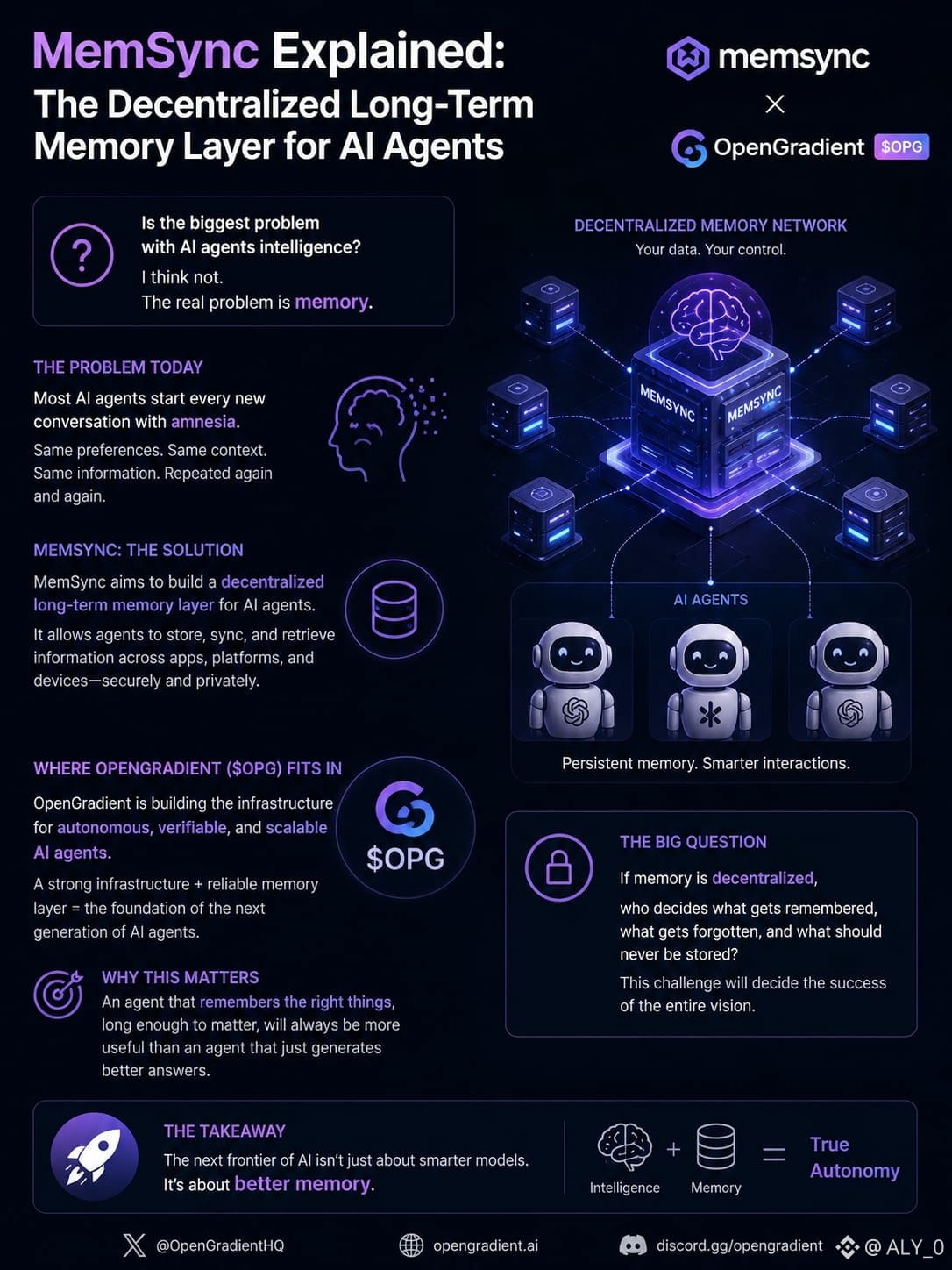
¿Es la mayor problemática con los agentes de IA una falta de inteligencia? No lo creo. El verdadero problema es la memoria.
Recientemente me topé con el concepto de MemSync, y lo que llamó mi atención fue su intento de construir una capa de memoria a largo plazo descentralizada para los agentes de IA. Hoy en día, la mayoría de los agentes de IA comienzan casi desde cero con cada nueva interacción. Pueden completar tareas, pero mantener la consistencia a lo largo del tiempo sigue siendo un desafío.
Aquí es donde proyectos como MemSync y @OpenGradient se están volviendo cada vez más interesantes. OpenGradient ($OPG), en particular, está enfocado en construir infraestructura que permita a los agentes de IA operar de manera más autónoma, verificable y persistente. Si el futuro de la IA está impulsado por agentes, entonces la memoria y la infraestructura pueden volverse tan importantes como los propios modelos.
Creo que la comunidad cripto pasa mucho tiempo discutiendo el rendimiento de los modelos mientras pasa por alto el problema de la memoria. Un agente que pueda retener con precisión decisiones pasadas, preferencias y contexto podría ser mucho más útil que uno que simplemente genera mejores respuestas.
Sin embargo, todavía hay una pregunta abierta importante. Si la memoria se vuelve descentralizada, ¿quién decide qué debe ser almacenado, qué debe ser olvidado y qué nunca debe ser registrado? Ese desafío podría determinar en última instancia el éxito de toda la visión.
Para mí, la próxima fase de la IA no se trata solo de pensar mejor. Se trata de recordar mejor. Por eso, proyectos como MemSync y OpenGradient merecen nuestra atención.
#OPG #AI #Crypto #MemSync #opg $OPG
¿Es la mayor problemática con los agentes de IA una falta de inteligencia? No lo creo. El verdadero problema es la memoria.
Recientemente me topé con el concepto de MemSync, y lo que llamó mi atención fue su intento de construir una capa de memoria a largo plazo descentralizada para los agentes de IA. Hoy en día, la mayoría de los agentes de IA comienzan casi desde cero con cada nueva interacción. Pueden completar tareas, pero mantener la consistencia a lo largo del tiempo sigue siendo un desafío.
Aquí es donde proyectos como MemSync y @OpenGradient se están volviendo cada vez más interesantes. OpenGradient ($OPG ), en particular, está enfocado en construir infraestructura que permita a los agentes de IA operar de manera más autónoma, verificable y persistente. Si el futuro de la IA está impulsado por agentes, entonces la memoria y la infraestructura pueden volverse tan importantes como los propios modelos.
Creo que la comunidad cripto pasa mucho tiempo discutiendo el rendimiento de los modelos mientras pasa por alto el problema de la memoria. Un agente que pueda retener con precisión decisiones pasadas, preferencias y contexto podría ser mucho más útil que uno que simplemente genera mejores respuestas.
Sin embargo, todavía hay una pregunta abierta importante. Si la memoria se vuelve descentralizada, ¿quién decide qué debe ser almacenado, qué debe ser olvidado y qué nunca debe ser registrado? Ese desafío podría determinar en última instancia el éxito de toda la visión.
Para mí, la próxima fase de la IA no se trata solo de pensar mejor. Se trata de recordar mejor. Por eso, proyectos como MemSync y OpenGradient merecen nuestra atención.
#OPG #AI #Crypto #MemSync #opg $OPG
Recientemente me topé con el concepto de MemSync, y lo que llamó mi atención fue su intento de construir una capa de memoria a largo plazo descentralizada para los agentes de IA. Hoy en día, la mayoría de los agentes de IA comienzan casi desde cero con cada nueva interacción. Pueden completar tareas, pero mantener la consistencia a lo largo del tiempo sigue siendo un desafío.
Aquí es donde proyectos como MemSync y @OpenGradient se están volviendo cada vez más interesantes. OpenGradient ($OPG ), en particular, está enfocado en construir infraestructura que permita a los agentes de IA operar de manera más autónoma, verificable y persistente. Si el futuro de la IA está impulsado por agentes, entonces la memoria y la infraestructura pueden volverse tan importantes como los propios modelos.
Creo que la comunidad cripto pasa mucho tiempo discutiendo el rendimiento de los modelos mientras pasa por alto el problema de la memoria. Un agente que pueda retener con precisión decisiones pasadas, preferencias y contexto podría ser mucho más útil que uno que simplemente genera mejores respuestas.
Sin embargo, todavía hay una pregunta abierta importante. Si la memoria se vuelve descentralizada, ¿quién decide qué debe ser almacenado, qué debe ser olvidado y qué nunca debe ser registrado? Ese desafío podría determinar en última instancia el éxito de toda la visión.
Para mí, la próxima fase de la IA no se trata solo de pensar mejor. Se trata de recordar mejor. Por eso, proyectos como MemSync y OpenGradient merecen nuestra atención.
#OPG #AI #Crypto #MemSync #opg $OPG
3
2
137

·
--
Bajista
@OpenGradient
Nunca me cuestioné realmente por qué seguía repitiéndome a mí misma para la IA.
Cada nuevo chat significaba explicar los mismos objetivos.
Las mismas preferencias.
Los mismos proyectos.
Después de un tiempo, simplemente empezó a sentirse normal.
Entonces me di cuenta de algo.
El problema no era que la IA careciera de inteligencia.
El problema era que le faltaba continuidad.
Un asistente no es muy útil si tiene que conocerte por primera vez todos los días.
Piensa en las personas en las que más confías.
No solo responden tus preguntas.
Recuerdan lo que es importante para ti.
Aprenden con el tiempo.
Eso es lo que hace que la interacción se sienta natural.
La IA también se está moviendo en esa dirección.
Pero la memoria a largo plazo crea un desafío nuevo.
Si una IA recuerda tus conversaciones, preferencias, documentos y contexto personal, ¿cómo sabes que esa información se gestiona de la manera que afirma?
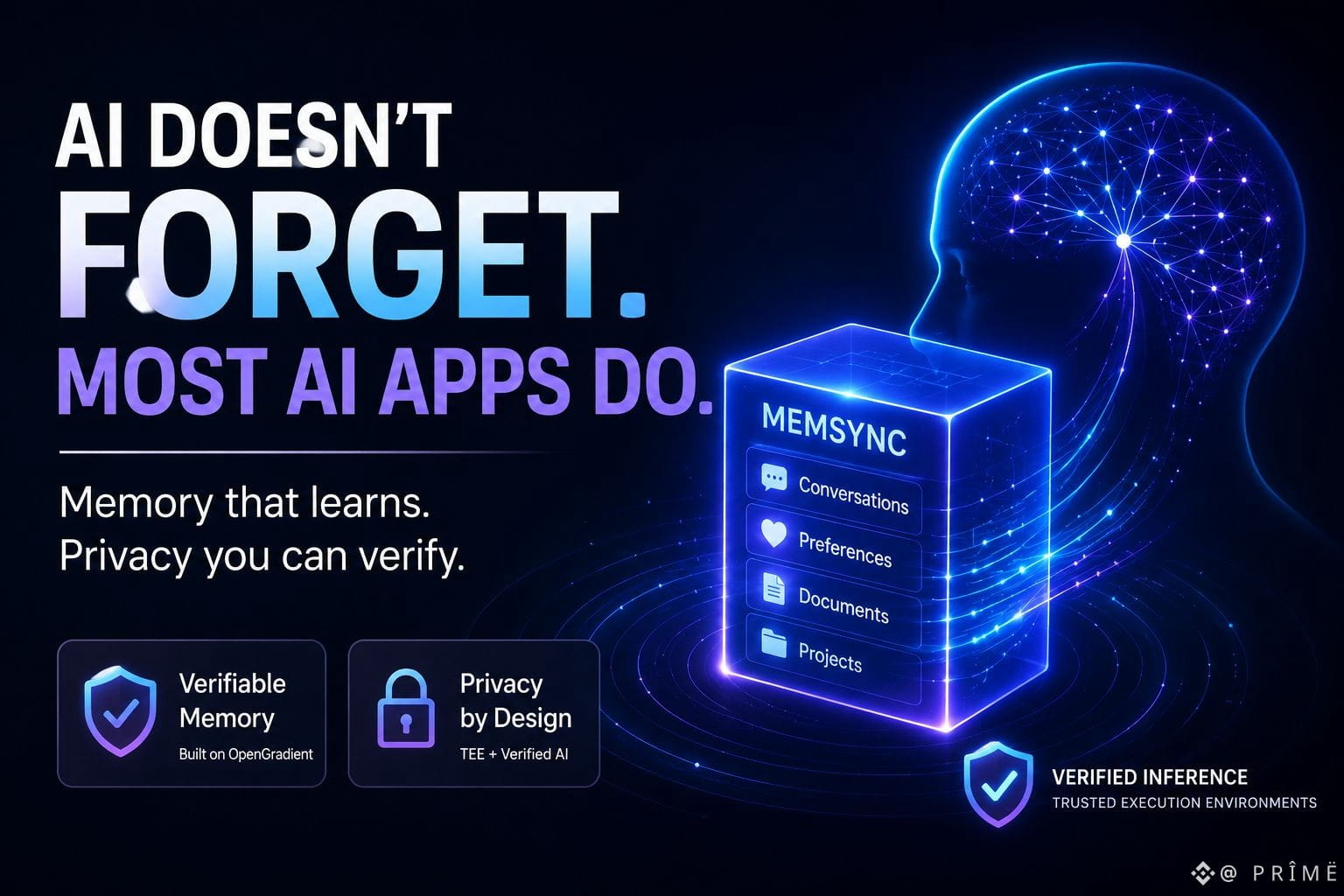
Eso fue lo que me llamó la atención mientras leía sobre MemSync.
En lugar de tratar la memoria como un simple historial de chats, extrae contexto significativo, lo organiza a lo largo del tiempo y lo hace buscable para futuras interacciones.
Más importante aún, esas operaciones de memoria se construyen sobre la infraestructura de inferencia verificable de OpenGradient.
Usando Entornos de Ejecución Confiables (TEE) y procesamiento de IA verificado, el objetivo no es solo lograr que la IA recuerde más.
Es hacer que el procesamiento de la memoria sea verificable, en lugar de pedir a los usuarios que confíen en que todo ocurrió correctamente detrás de escena.
Por supuesto, construir memoria de IA a largo plazo no es fácil.
La relevancia, la privacidad y la verificación deben funcionar juntas.
Ese es un problema difícil de ingeniería.
Pero también se siente como el adecuado para resolver.
Porque el futuro de la IA no se definirá solo por lo inteligentemente que responde.
También puede definirse por lo responsablemente que recuerda.
#OPG $OPG @OpenGradient @openai #OpenAI $OPENAI #MemSync #TEE @OpenGradient @OpenGradient
{future}(OPENAIUSDT)
{spot}(OPGUSDT)
@OpenGradient
Nunca me cuestioné realmente por qué seguía repitiéndome a mí misma para la IA.
Cada nuevo chat significaba explicar los mismos objetivos.
Las mismas preferencias.
Los mismos proyectos.
Después de un tiempo, simplemente empezó a sentirse normal.
Entonces me di cuenta de algo.
El problema no era que la IA careciera de inteligencia.
El problema era que le faltaba continuidad.
Un asistente no es muy útil si tiene que conocerte por primera vez todos los días.
Piensa en las personas en las que más confías.
No solo responden tus preguntas.
Recuerdan lo que es importante para ti.
Aprenden con el tiempo.
Eso es lo que hace que la interacción se sienta natural.
La IA también se está moviendo en esa dirección.
Pero la memoria a largo plazo crea un desafío nuevo.
Si una IA recuerda tus conversaciones, preferencias, documentos y contexto personal, ¿cómo sabes que esa información se gestiona de la manera que afirma?
Eso fue lo que me llamó la atención mientras leía sobre MemSync.
En lugar de tratar la memoria como un simple historial de chats, extrae contexto significativo, lo organiza a lo largo del tiempo y lo hace buscable para futuras interacciones.
Más importante aún, esas operaciones de memoria se construyen sobre la infraestructura de inferencia verificable de OpenGradient.
Usando Entornos de Ejecución Confiables (TEE) y procesamiento de IA verificado, el objetivo no es solo lograr que la IA recuerde más.
Es hacer que el procesamiento de la memoria sea verificable, en lugar de pedir a los usuarios que confíen en que todo ocurrió correctamente detrás de escena.
Por supuesto, construir memoria de IA a largo plazo no es fácil.
La relevancia, la privacidad y la verificación deben funcionar juntas.
Ese es un problema difícil de ingeniería.
Pero también se siente como el adecuado para resolver.
Porque el futuro de la IA no se definirá solo por lo inteligentemente que responde.
También puede definirse por lo responsablemente que recuerda.
#OPG $OPG @OpenGradient @OpenAI #OpenAI $OPENAI #MemSync #TEE @OpenGradient @OpenGradient
Nunca me cuestioné realmente por qué seguía repitiéndome a mí misma para la IA.
Cada nuevo chat significaba explicar los mismos objetivos.
Las mismas preferencias.
Los mismos proyectos.
Después de un tiempo, simplemente empezó a sentirse normal.
Entonces me di cuenta de algo.
El problema no era que la IA careciera de inteligencia.
El problema era que le faltaba continuidad.
Un asistente no es muy útil si tiene que conocerte por primera vez todos los días.
Piensa en las personas en las que más confías.
No solo responden tus preguntas.
Recuerdan lo que es importante para ti.
Aprenden con el tiempo.
Eso es lo que hace que la interacción se sienta natural.
La IA también se está moviendo en esa dirección.
Pero la memoria a largo plazo crea un desafío nuevo.
Si una IA recuerda tus conversaciones, preferencias, documentos y contexto personal, ¿cómo sabes que esa información se gestiona de la manera que afirma?
Eso fue lo que me llamó la atención mientras leía sobre MemSync.
En lugar de tratar la memoria como un simple historial de chats, extrae contexto significativo, lo organiza a lo largo del tiempo y lo hace buscable para futuras interacciones.
Más importante aún, esas operaciones de memoria se construyen sobre la infraestructura de inferencia verificable de OpenGradient.
Usando Entornos de Ejecución Confiables (TEE) y procesamiento de IA verificado, el objetivo no es solo lograr que la IA recuerde más.
Es hacer que el procesamiento de la memoria sea verificable, en lugar de pedir a los usuarios que confíen en que todo ocurrió correctamente detrás de escena.
Por supuesto, construir memoria de IA a largo plazo no es fácil.
La relevancia, la privacidad y la verificación deben funcionar juntas.
Ese es un problema difícil de ingeniería.
Pero también se siente como el adecuado para resolver.
Porque el futuro de la IA no se definirá solo por lo inteligentemente que responde.
También puede definirse por lo responsablemente que recuerda.
#OPG $OPG @OpenGradient @OpenAI #OpenAI $OPENAI #MemSync #TEE @OpenGradient @OpenGradient
5
5
136

·
--
@OpenGradient , Nadie que conozco lleva un diario porque espera que cada página se vuelva importante. La mayoría de las entradas probablemente nunca se vuelvan a leer, lo que probablemente es la razón por la que siempre he encontrado el hábito un poco extraño. Estás invirtiendo tiempo en preservar recuerdos que tal vez nunca revisites. Al menos así es como solía pensarlo.
Por alguna razón, ese pensamiento seguía volviendo mientras leía sobre @OpenGradient . Al principio, asumí que la inteligencia se trataba principalmente de tomar mejores decisiones. Eso parecía obvio. Mejores modelos deberían naturalmente producir mejores resultados. Al menos eso es lo que pensaba.
Pero cuanto más pensaba en ello, menos obvio se sentía esa suposición. Porque las experiencias se acumulan. Las conversaciones continúan. Y la memoria tiene una forma extraña de hacer que la inteligencia se sienta personal. Quizás por eso la memoria persistente se siente tan importante. A medida que los agentes de IA se vuelven más capaces, empiezo a preguntarme si la memoria misma se convierte en parte de la inteligencia.
Cuanto más aprendo sobre @OpenGradient y MemSync, más me pregunto si la continuidad importa más que la información. No estoy seguro. Pero por alguna razón, los diarios seguían viniendo a mi mente.
#OPG #AIAgents #Altcoins #BinanceSquare #crypto #trading #MemSync #bull 🚀📊
$OPG $ESPORTS $DEXE
@OpenGradient , Nadie que conozco lleva un diario porque espera que cada página se vuelva importante. La mayoría de las entradas probablemente nunca se vuelvan a leer, lo que probablemente es la razón por la que siempre he encontrado el hábito un poco extraño. Estás invirtiendo tiempo en preservar recuerdos que tal vez nunca revisites. Al menos así es como solía pensarlo.
Por alguna razón, ese pensamiento seguía volviendo mientras leía sobre @OpenGradient . Al principio, asumí que la inteligencia se trataba principalmente de tomar mejores decisiones. Eso parecía obvio. Mejores modelos deberían naturalmente producir mejores resultados. Al menos eso es lo que pensaba.
Pero cuanto más pensaba en ello, menos obvio se sentía esa suposición. Porque las experiencias se acumulan. Las conversaciones continúan. Y la memoria tiene una forma extraña de hacer que la inteligencia se sienta personal. Quizás por eso la memoria persistente se siente tan importante. A medida que los agentes de IA se vuelven más capaces, empiezo a preguntarme si la memoria misma se convierte en parte de la inteligencia.
Cuanto más aprendo sobre @OpenGradient y MemSync, más me pregunto si la continuidad importa más que la información. No estoy seguro. Pero por alguna razón, los diarios seguían viniendo a mi mente.
#OPG #AIAgents #Altcoins #BinanceSquare #crypto #trading #MemSync #bull 🚀📊
$OPG $ESPORTS $DEXE
Por alguna razón, ese pensamiento seguía volviendo mientras leía sobre @OpenGradient . Al principio, asumí que la inteligencia se trataba principalmente de tomar mejores decisiones. Eso parecía obvio. Mejores modelos deberían naturalmente producir mejores resultados. Al menos eso es lo que pensaba.
Pero cuanto más pensaba en ello, menos obvio se sentía esa suposición. Porque las experiencias se acumulan. Las conversaciones continúan. Y la memoria tiene una forma extraña de hacer que la inteligencia se sienta personal. Quizás por eso la memoria persistente se siente tan importante. A medida que los agentes de IA se vuelven más capaces, empiezo a preguntarme si la memoria misma se convierte en parte de la inteligencia.
Cuanto más aprendo sobre @OpenGradient y MemSync, más me pregunto si la continuidad importa más que la información. No estoy seguro. Pero por alguna razón, los diarios seguían viniendo a mi mente.
#OPG #AIAgents #Altcoins #BinanceSquare #crypto #trading #MemSync #bull 🚀📊
$OPG $ESPORTS $DEXE

226
97
9.8k

·
--
@OpenGradient y el poder de la memoria persistente—¿es el eslabón perdido en la inteligencia de la IA? 🤔
Siempre hablamos de "mejores decisiones", pero ¿y si la continuidad y la memoria personal son lo que realmente cierra la brecha para los agentes de IA? 🤖 Es como llevar un diario; preservamos experiencias que quizás no volvamos a visitar, pero definen quiénes somos. Tal vez la IA se esté convirtiendo en lo mismo. 🧠
👇 ¿Crees que la memoria hace que la IA sea realmente "inteligente"? ¡Discutamos!
$DEXE $ARX
{alpha}(560xd5f6ef5deabe61e6d5cdb49bfb6f156f2c1ca715)
#OpenGradient #AIAgents #MemSync #Aİ #BinanceSquare
@OpenGradient y el poder de la memoria persistente—¿es el eslabón perdido en la inteligencia de la IA? 🤔
Siempre hablamos de "mejores decisiones", pero ¿y si la continuidad y la memoria personal son lo que realmente cierra la brecha para los agentes de IA? 🤖 Es como llevar un diario; preservamos experiencias que quizás no volvamos a visitar, pero definen quiénes somos. Tal vez la IA se esté convirtiendo en lo mismo. 🧠
👇 ¿Crees que la memoria hace que la IA sea realmente "inteligente"? ¡Discutamos!
$DEXE $ARX
#OpenGradient #AIAgents #MemSync #Aİ #BinanceSquare
Siempre hablamos de "mejores decisiones", pero ¿y si la continuidad y la memoria personal son lo que realmente cierra la brecha para los agentes de IA? 🤖 Es como llevar un diario; preservamos experiencias que quizás no volvamos a visitar, pero definen quiénes somos. Tal vez la IA se esté convirtiendo en lo mismo. 🧠
👇 ¿Crees que la memoria hace que la IA sea realmente "inteligente"? ¡Discutamos!
$DEXE $ARX
#OpenGradient #AIAgents #MemSync #Aİ #BinanceSquare
BULLISH 🟢
88%
BEARISH 🔴
12%
16 Voto(s) • Votación cerrada
1
962

·
--
¿Quién posee la memoria de la IA?
La mayoría de las conversaciones sobre IA se centran en la inteligencia.
La gente compara modelos, sigue benchmarks y debate cuál sistema está mejorando más rápido.
Cuanto más tiempo paso investigando la infraestructura de IA, más me molesta esta pregunta.
¿Quién posee la memoria de la IA?
Cuanto más aprendo sobre Gemelos Digitales y MemSync, más siento que son activos digitales a largo plazo en lugar de características ordinarias de IA.
Están diseñados para retener contexto, preservar memoria y mantener continuidad a través de interacciones.
Eso cambia cómo pienso sobre la IA.
Si la inteligencia se vuelve más barata con el tiempo, la memoria podría convertirse en la parte más valiosa del sistema.
El valor de una IA no vendrá solo de lo que sabe hoy, sino de lo que recuerda a lo largo del tiempo.
Quizás estoy equivocado, pero creo que la memoria podría volverse más valiosa que la propia inteligencia.
He explorado muchos proyectos de IA, y la mayoría parece centrarse en hacer que los modelos sean más inteligentes.
@OpenGradient se siente diferente porque plantea una pregunta sobre la persistencia.
Si la IA puede mantener identidad, memoria y continuidad a lo largo del tiempo, entonces la propiedad se vuelve tan importante como la capacidad.
Esa es una razón por la que sigo prestando atención a $OPG .
Si los Gemelos Digitales se convierten en participantes persistentes en la red, y MemSync permite que la memoria se mueva con ellos, entonces la infraestructura que respalda esa memoria podría terminar siendo tan importante como la inteligencia misma.
Quizás el mayor activo de IA no será el modelo.
Quizás será la memoria que se quede con él.
Aún es temprano, y nadie sabe exactamente hacia dónde se dirige la IA.
Pero cuanto más sigo este espacio, menos me interesa preguntar cuál modelo está ganando.
Sigo volviendo a una pregunta diferente.
¿Quién posee la memoria de la IA?
Y si la memoria se convierte en el activo más valioso en la economía de la IA, ¿quién la controlará en última instancia?
{future}(OPGUSDT)
@OpenGradient #OPG $OPG #Aİ #DeAI #DigitalTwins #MemSync
¿Quién posee la memoria de la IA?
La mayoría de las conversaciones sobre IA se centran en la inteligencia.
La gente compara modelos, sigue benchmarks y debate cuál sistema está mejorando más rápido.
Cuanto más tiempo paso investigando la infraestructura de IA, más me molesta esta pregunta.
¿Quién posee la memoria de la IA?
Cuanto más aprendo sobre Gemelos Digitales y MemSync, más siento que son activos digitales a largo plazo en lugar de características ordinarias de IA.
Están diseñados para retener contexto, preservar memoria y mantener continuidad a través de interacciones.
Eso cambia cómo pienso sobre la IA.
Si la inteligencia se vuelve más barata con el tiempo, la memoria podría convertirse en la parte más valiosa del sistema.
El valor de una IA no vendrá solo de lo que sabe hoy, sino de lo que recuerda a lo largo del tiempo.
Quizás estoy equivocado, pero creo que la memoria podría volverse más valiosa que la propia inteligencia.
He explorado muchos proyectos de IA, y la mayoría parece centrarse en hacer que los modelos sean más inteligentes.
@OpenGradient se siente diferente porque plantea una pregunta sobre la persistencia.
Si la IA puede mantener identidad, memoria y continuidad a lo largo del tiempo, entonces la propiedad se vuelve tan importante como la capacidad.
Esa es una razón por la que sigo prestando atención a $OPG .
Si los Gemelos Digitales se convierten en participantes persistentes en la red, y MemSync permite que la memoria se mueva con ellos, entonces la infraestructura que respalda esa memoria podría terminar siendo tan importante como la inteligencia misma.
Quizás el mayor activo de IA no será el modelo.
Quizás será la memoria que se quede con él.
Aún es temprano, y nadie sabe exactamente hacia dónde se dirige la IA.
Pero cuanto más sigo este espacio, menos me interesa preguntar cuál modelo está ganando.
Sigo volviendo a una pregunta diferente.
¿Quién posee la memoria de la IA?
Y si la memoria se convierte en el activo más valioso en la economía de la IA, ¿quién la controlará en última instancia?
@OpenGradient #OPG $OPG #Aİ #DeAI #DigitalTwins #MemSync
La mayoría de las conversaciones sobre IA se centran en la inteligencia.
La gente compara modelos, sigue benchmarks y debate cuál sistema está mejorando más rápido.
Cuanto más tiempo paso investigando la infraestructura de IA, más me molesta esta pregunta.
¿Quién posee la memoria de la IA?
Cuanto más aprendo sobre Gemelos Digitales y MemSync, más siento que son activos digitales a largo plazo en lugar de características ordinarias de IA.
Están diseñados para retener contexto, preservar memoria y mantener continuidad a través de interacciones.
Eso cambia cómo pienso sobre la IA.
Si la inteligencia se vuelve más barata con el tiempo, la memoria podría convertirse en la parte más valiosa del sistema.
El valor de una IA no vendrá solo de lo que sabe hoy, sino de lo que recuerda a lo largo del tiempo.
Quizás estoy equivocado, pero creo que la memoria podría volverse más valiosa que la propia inteligencia.
He explorado muchos proyectos de IA, y la mayoría parece centrarse en hacer que los modelos sean más inteligentes.
@OpenGradient se siente diferente porque plantea una pregunta sobre la persistencia.
Si la IA puede mantener identidad, memoria y continuidad a lo largo del tiempo, entonces la propiedad se vuelve tan importante como la capacidad.
Esa es una razón por la que sigo prestando atención a $OPG .
Si los Gemelos Digitales se convierten en participantes persistentes en la red, y MemSync permite que la memoria se mueva con ellos, entonces la infraestructura que respalda esa memoria podría terminar siendo tan importante como la inteligencia misma.
Quizás el mayor activo de IA no será el modelo.
Quizás será la memoria que se quede con él.
Aún es temprano, y nadie sabe exactamente hacia dónde se dirige la IA.
Pero cuanto más sigo este espacio, menos me interesa preguntar cuál modelo está ganando.
Sigo volviendo a una pregunta diferente.
¿Quién posee la memoria de la IA?
Y si la memoria se convierte en el activo más valioso en la economía de la IA, ¿quién la controlará en última instancia?
@OpenGradient #OPG $OPG #Aİ #DeAI #DigitalTwins #MemSync

191
103
3k

La memoria de la IA puede acabar siendo más valiosa que las respuestas de la IA.
Los modelos pueden reemplazarse.
La memoria de confianza que aprende tu contexto con el tiempo es mucho más difícil de reemplazar.
Si los usuarios siguen volviendo porque su IA recuerda, se adapta y se mantiene verificable, la memoria se convierte en una infraestructura real, no solo en una función.
¿Cuál es el mayor reto? La confianza. Los usuarios necesitan saber qué se almacena, cómo se actualiza y quién la controla.
¿Qué crees que hace que la memoria de la IA sea valiosa a largo plazo?
$OPG $PIVX $VELVET
#AI @OpenGradient #MemSync #Web3AI
La memoria de la IA puede acabar siendo más valiosa que las respuestas de la IA.
Los modelos pueden reemplazarse.
La memoria de confianza que aprende tu contexto con el tiempo es mucho más difícil de reemplazar.
Si los usuarios siguen volviendo porque su IA recuerda, se adapta y se mantiene verificable, la memoria se convierte en una infraestructura real, no solo en una función.
¿Cuál es el mayor reto? La confianza. Los usuarios necesitan saber qué se almacena, cómo se actualiza y quién la controla.
¿Qué crees que hace que la memoria de la IA sea valiosa a largo plazo?
$OPG $PIVX $VELVET
#AI @OpenGradient #MemSync #Web3AI
Los modelos pueden reemplazarse.
La memoria de confianza que aprende tu contexto con el tiempo es mucho más difícil de reemplazar.
Si los usuarios siguen volviendo porque su IA recuerda, se adapta y se mantiene verificable, la memoria se convierte en una infraestructura real, no solo en una función.
¿Cuál es el mayor reto? La confianza. Los usuarios necesitan saber qué se almacena, cómo se actualiza y quién la controla.
¿Qué crees que hace que la memoria de la IA sea valiosa a largo plazo?
$OPG $PIVX $VELVET
#AI @OpenGradient #MemSync #Web3AI

Falcon Trader 1
·
--
@OpenGradient Yo solía pensar que la memoria de la IA era solo una función de conveniencia. Ahora creo que podría convertirse en una de las partes más difíciles de eliminar de la infraestructura de la IA.
La narrativa obvia sobre OpenGradient es la inferencia verificable: ¿puede la red probar que una salida de IA se produjo correctamente?
Pero MemSync plantea una pregunta diferente. Si los agentes de IA se vuelven útiles porque recuerdan el contexto a lo largo de chats, documentos, sitios web y perfiles de usuario, entonces la memoria en sí misma se convierte en infraestructura.
En palabras sencillas para inversores, el valor no está solo en responder un único prompt. Está en convertir el contexto disperso de los usuarios en una capa de inteligencia reutilizable que pueda moverse entre flujos de trabajo y, aun así, seguir vinculada a una computación verificable.
Eso podría importar para la retención. Un modelo puede reemplazarse. Un grafo de memoria limpio y confiable construido con el tiempo es más difícil de abandonar porque mejora con el uso. Si los desarrolladores construyen sobre esa capa, OpenGradient podría capturar más que una demanda de inferencia puntual.
El riesgo es la concentración de confianza. Si los usuarios no entienden qué se recuerda.. cómo se actualiza o quién puede acceder a ello, la memoria puede convertirse en un pasivo en lugar de una fortaleza.
Lo que estoy observando es si MemSync se vuelve lo suficientemente útil como para que los usuarios vuelvan para mantener la continuidad, no solo para obtener respuestas.
#OPG #opg $OPG $ACT $SIREN
¿Qué hace que la memoria de la IA sea valiosa a largo plazo?
La narrativa obvia sobre OpenGradient es la inferencia verificable: ¿puede la red probar que una salida de IA se produjo correctamente?
Pero MemSync plantea una pregunta diferente. Si los agentes de IA se vuelven útiles porque recuerdan el contexto a lo largo de chats, documentos, sitios web y perfiles de usuario, entonces la memoria en sí misma se convierte en infraestructura.
En palabras sencillas para inversores, el valor no está solo en responder un único prompt. Está en convertir el contexto disperso de los usuarios en una capa de inteligencia reutilizable que pueda moverse entre flujos de trabajo y, aun así, seguir vinculada a una computación verificable.
Eso podría importar para la retención. Un modelo puede reemplazarse. Un grafo de memoria limpio y confiable construido con el tiempo es más difícil de abandonar porque mejora con el uso. Si los desarrolladores construyen sobre esa capa, OpenGradient podría capturar más que una demanda de inferencia puntual.
El riesgo es la concentración de confianza. Si los usuarios no entienden qué se recuerda.. cómo se actualiza o quién puede acceder a ello, la memoria puede convertirse en un pasivo en lugar de una fortaleza.
Lo que estoy observando es si MemSync se vuelve lo suficientemente útil como para que los usuarios vuelvan para mantener la continuidad, no solo para obtener respuestas.
#OPG #opg $OPG $ACT $SIREN
¿Qué hace que la memoria de la IA sea valiosa a largo plazo?
308
Inicia sesión para explorar más contenidos
Únete a usuarios globales de criptomonedas en Binance Square
⚡️ Obtén información útil y actualizada sobre criptos.
💬 Avalado por el mayor exchange de criptomonedas en el mundo.
👍 Descubre perspectivas reales de creadores verificados.
Email/número de teléfono
Temas populares
1
#FedRateWatch
649,588 vistas
3,029 están debatiendo
2
#EthereumFallsBelow$2400
154 vistas
25 están debatiendo
3
#USSenateBlocksClarityAct
1,003 vistas
63 están debatiendo
4
#BitcoinSlidesTo$76000
27,033 vistas
130 están debatiendo
5
#BitcoinReboundsTo$79K
63,869 vistas
408 están debatiendo
6
#StrategyMarketCapPassesFord
46,785 vistas
735 están debatiendo
7
#ClarityActOddsHalveOnPolymarket
76,120 vistas
627 están debatiendo
8
#US30YTreasuryYieldTops5.40%
40,207 vistas
411 están debatiendo
9
#BessentEndorsesFinalClarityActDraft
62,591 vistas
790 están debatiendo
10
#ZamaOpens16ConfidentialMorphoVaults
22,020 vistas
386 están debatiendo