

minamium
11.8k Publicaciones

minamium
Denunciar
Bloquear usuario
1 Siguiendo
99 Seguidores
375 Me gusta
Publicaciones
·
--
Ver traducción
Most traders get wiped out not during massive market crashes, but inside quiet consolidation ranges where leverage builds up silently.
That sinking feeling of buying the top of a fakeout or panic-selling right before a violent reversal is almost always engineered by liquidity traps. You think the market is picking a direction, only to watch your position get hunted within minutes.
I have seen this setup play out across multiple cycles, and right now $BTC is sitting right in the crosshairs of a textbook liquidity sandwich. There is a roughly $5K gap forming between two critical liquidation pockets: heavy short exposure overhead at $87.4K and concentrated long leverage resting down at $82.6K.
When price consolidates between these zones, order books thin out until one side inevitably gives way. A push toward $87.4K could ignite a fast short squeeze cascade, while losing $82.6K risks accelerating downside liquidations that could easily drag $ETH and the broader market down with it. The experienced move here is rarely guessing the middle, but waiting to see how price reacts once the leverage gets swept.
Are you waiting for one of these outer zones to get tapped first, or are you already positioned?
#Bitcoin #CryptoTrading #Binance
Most traders get wiped out not during massive market crashes, but inside quiet consolidation ranges where leverage builds up silently.
That sinking feeling of buying the top of a fakeout or panic-selling right before a violent reversal is almost always engineered by liquidity traps. You think the market is picking a direction, only to watch your position get hunted within minutes.
I have seen this setup play out across multiple cycles, and right now $BTC is sitting right in the crosshairs of a textbook liquidity sandwich. There is a roughly $5K gap forming between two critical liquidation pockets: heavy short exposure overhead at $87.4K and concentrated long leverage resting down at $82.6K.
When price consolidates between these zones, order books thin out until one side inevitably gives way. A push toward $87.4K could ignite a fast short squeeze cascade, while losing $82.6K risks accelerating downside liquidations that could easily drag $ETH and the broader market down with it. The experienced move here is rarely guessing the middle, but waiting to see how price reacts once the leverage gets swept.
Are you waiting for one of these outer zones to get tapped first, or are you already positioned?
#Bitcoin #CryptoTrading #Binance
That sinking feeling of buying the top of a fakeout or panic-selling right before a violent reversal is almost always engineered by liquidity traps. You think the market is picking a direction, only to watch your position get hunted within minutes.
I have seen this setup play out across multiple cycles, and right now $BTC is sitting right in the crosshairs of a textbook liquidity sandwich. There is a roughly $5K gap forming between two critical liquidation pockets: heavy short exposure overhead at $87.4K and concentrated long leverage resting down at $82.6K.
When price consolidates between these zones, order books thin out until one side inevitably gives way. A push toward $87.4K could ignite a fast short squeeze cascade, while losing $82.6K risks accelerating downside liquidations that could easily drag $ETH and the broader market down with it. The experienced move here is rarely guessing the middle, but waiting to see how price reacts once the leverage gets swept.
Are you waiting for one of these outer zones to get tapped first, or are you already positioned?
#Bitcoin #CryptoTrading #Binance

·
--
Ver traducción
Picture this: you hold a long position all weekend hoping for a bounce, only to watch $100,000 vanish by Monday's close.
Most traders get emotionally married to a losing thesis and ride a bleeding asset all the way down, refusing to accept when structural momentum has completely broken.
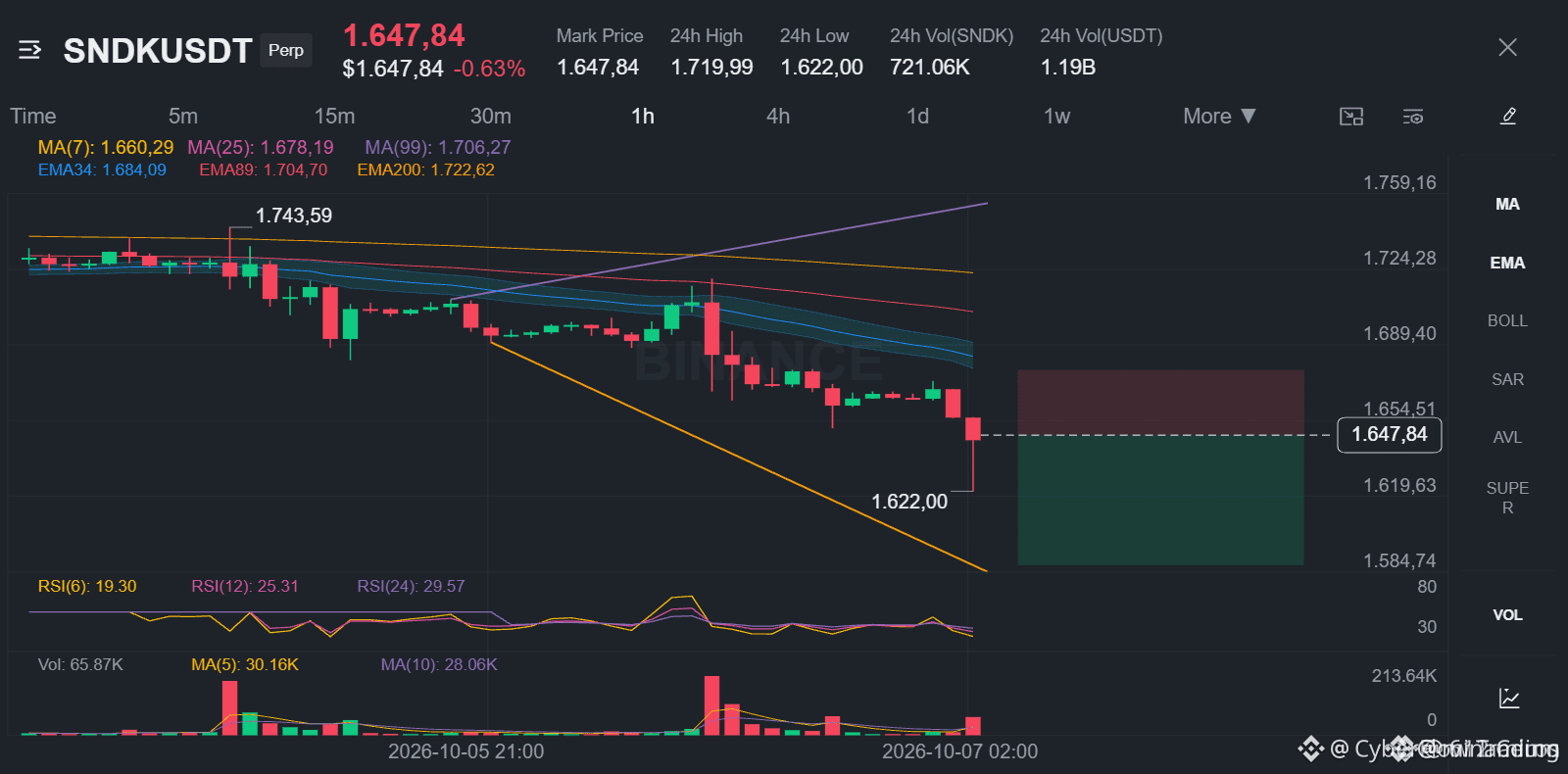
That is exactly what played out with $SNDK before this trader finally flipped the switch. Instead of stubborn diamond-handing, they cut their massive six-figure loss and immediately rotated into a short on SNDKUSDT perpetuals, securing over +139,415 USDT in unrealized gains as the token dropped another 3.20%.
It reminds me of how aggressive trend shifts played out during the capitulation phases of high-beta tokens like $LUNA in past cycles. The crowd kept praying for a V-shaped recovery, yet the real edge came from abandoning bias and riding the actual direction of the market. Surviving in futures is never about being right every time, but about flipping your bias the moment the chart proves you wrong.
How do you usually handle cutting a massive loss when a trade turns against you?
#CryptoTrading #RiskManagement #FuturesTrading
Picture this: you hold a long position all weekend hoping for a bounce, only to watch $100,000 vanish by Monday's close.
Most traders get emotionally married to a losing thesis and ride a bleeding asset all the way down, refusing to accept when structural momentum has completely broken.
That is exactly what played out with $SNDK before this trader finally flipped the switch. Instead of stubborn diamond-handing, they cut their massive six-figure loss and immediately rotated into a short on SNDKUSDT perpetuals, securing over +139,415 USDT in unrealized gains as the token dropped another 3.20%.
It reminds me of how aggressive trend shifts played out during the capitulation phases of high-beta tokens like $LUNA in past cycles. The crowd kept praying for a V-shaped recovery, yet the real edge came from abandoning bias and riding the actual direction of the market. Surviving in futures is never about being right every time, but about flipping your bias the moment the chart proves you wrong.
How do you usually handle cutting a massive loss when a trade turns against you?
#CryptoTrading #RiskManagement #FuturesTrading
Most traders get emotionally married to a losing thesis and ride a bleeding asset all the way down, refusing to accept when structural momentum has completely broken.
That is exactly what played out with $SNDK before this trader finally flipped the switch. Instead of stubborn diamond-handing, they cut their massive six-figure loss and immediately rotated into a short on SNDKUSDT perpetuals, securing over +139,415 USDT in unrealized gains as the token dropped another 3.20%.
It reminds me of how aggressive trend shifts played out during the capitulation phases of high-beta tokens like $LUNA in past cycles. The crowd kept praying for a V-shaped recovery, yet the real edge came from abandoning bias and riding the actual direction of the market. Surviving in futures is never about being right every time, but about flipping your bias the moment the chart proves you wrong.
How do you usually handle cutting a massive loss when a trade turns against you?
#CryptoTrading #RiskManagement #FuturesTrading
1
·
--
Ver traducción
If you are still trying to trade every micro dip while institutions play a completely different game, stop now.
Most retail traders get chopped up obsessing over intraday volatility and miss the macro shift happening right under their noses. While everyone panic sells on minor red candles, corporate balance sheets are quietly absorbing the float.
Strategy just posted a massive 21B dollar Q3 gain, pushing their total stack to 848,000 $BTC. On top of that, they added another 334 Bitcoin and bought back 176M dollars worth of $STRC, proving their playbook has not slowed down a bit.
Remember back in 2021 when Tesla bought in and everyone thought that was the absolute ceiling for corporate treasuries? Compare that cautious entry to what Strategy is pulling off today, turning their entire corporate model into an aggressive Bitcoin engine that leaves traditional treasury plays looking prehistoric.
Do you think other public companies will eventually be forced to copy this playbook, or is this strategy only viable for one giant?
#Bitcoin #Crypto #MicroStrategy
If you are still trying to trade every micro dip while institutions play a completely different game, stop now.
Most retail traders get chopped up obsessing over intraday volatility and miss the macro shift happening right under their noses. While everyone panic sells on minor red candles, corporate balance sheets are quietly absorbing the float.
Strategy just posted a massive 21B dollar Q3 gain, pushing their total stack to 848,000 $BTC . On top of that, they added another 334 Bitcoin and bought back 176M dollars worth of $STRC , proving their playbook has not slowed down a bit.
Remember back in 2021 when Tesla bought in and everyone thought that was the absolute ceiling for corporate treasuries? Compare that cautious entry to what Strategy is pulling off today, turning their entire corporate model into an aggressive Bitcoin engine that leaves traditional treasury plays looking prehistoric.
Do you think other public companies will eventually be forced to copy this playbook, or is this strategy only viable for one giant?
#Bitcoin #Crypto #MicroStrategy
Most retail traders get chopped up obsessing over intraday volatility and miss the macro shift happening right under their noses. While everyone panic sells on minor red candles, corporate balance sheets are quietly absorbing the float.
Strategy just posted a massive 21B dollar Q3 gain, pushing their total stack to 848,000 $BTC . On top of that, they added another 334 Bitcoin and bought back 176M dollars worth of $STRC , proving their playbook has not slowed down a bit.
Remember back in 2021 when Tesla bought in and everyone thought that was the absolute ceiling for corporate treasuries? Compare that cautious entry to what Strategy is pulling off today, turning their entire corporate model into an aggressive Bitcoin engine that leaves traditional treasury plays looking prehistoric.
Do you think other public companies will eventually be forced to copy this playbook, or is this strategy only viable for one giant?
#Bitcoin #Crypto #MicroStrategy

·
--
Ver traducción
If you are still panic selling every time macro headlines turn red, you are handing your money directly to institutions.
Watching your portfolio swing wildly while getting trapped in sudden drawdowns is exhausting. Most retail traders end up selling the bottom right before the real reversal happens.
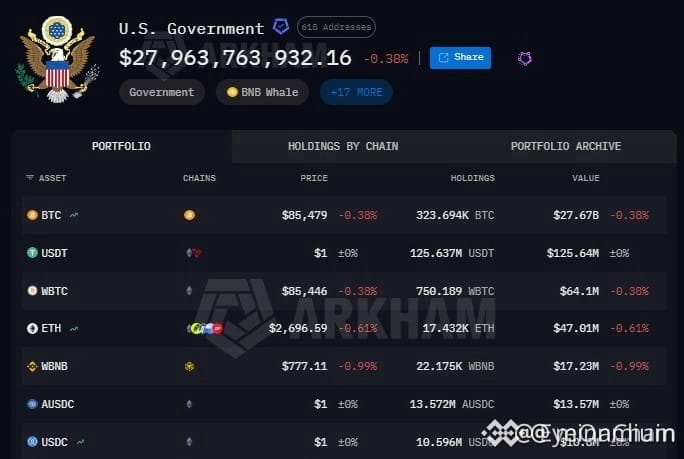
Bitcoin touched $87,400 before pulling back toward $83K, triggering roughly $330M in liquidated positions as oil above $100 spooked the broader market. Yet while retail scrambled to cut losses, large funds quietly absorbed $2.4B worth of $BTC in just one week.
Some traders argue this is the start of a deeper macro correction and that staying in cash is the only rational move. On the other hand, letting short-term fear dictate your strategy is why retail consistently underperforms, especially as automated systems accumulate both $BTC and $ETH around the clock without emotional bias.
Where do you think we go from here, a deeper correction or straight to new highs?
#Bitcoin #CryptoMarket #TradingStrategy
If you are still panic selling every time macro headlines turn red, you are handing your money directly to institutions.
Watching your portfolio swing wildly while getting trapped in sudden drawdowns is exhausting. Most retail traders end up selling the bottom right before the real reversal happens.
Bitcoin touched $87,400 before pulling back toward $83K, triggering roughly $330M in liquidated positions as oil above $100 spooked the broader market. Yet while retail scrambled to cut losses, large funds quietly absorbed $2.4B worth of $BTC in just one week.
Some traders argue this is the start of a deeper macro correction and that staying in cash is the only rational move. On the other hand, letting short-term fear dictate your strategy is why retail consistently underperforms, especially as automated systems accumulate both $BTC and $ETH around the clock without emotional bias.
Where do you think we go from here, a deeper correction or straight to new highs?
#Bitcoin #CryptoMarket #TradingStrategy
Watching your portfolio swing wildly while getting trapped in sudden drawdowns is exhausting. Most retail traders end up selling the bottom right before the real reversal happens.
Bitcoin touched $87,400 before pulling back toward $83K, triggering roughly $330M in liquidated positions as oil above $100 spooked the broader market. Yet while retail scrambled to cut losses, large funds quietly absorbed $2.4B worth of $BTC in just one week.
Some traders argue this is the start of a deeper macro correction and that staying in cash is the only rational move. On the other hand, letting short-term fear dictate your strategy is why retail consistently underperforms, especially as automated systems accumulate both $BTC and $ETH around the clock without emotional bias.
Where do you think we go from here, a deeper correction or straight to new highs?
#Bitcoin #CryptoMarket #TradingStrategy
2
·
--
Ver traducción
Everyone thinks having AI execute your trades guarantees easy profits, but actually it just automates your mistakes at lightning speed.
Most retail traders jump blindly into automated tools during market hype, only to watch their balance bleed out from flawed parameters before they even realize what went wrong.
Think of automated trading like handing the keys of a high-performance sports car to someone without a license. Giving it full throttle will not make you a better driver, it just gets you into a wall quicker. That risk becomes critical with the rollout of the new Binance Intelligence suite. While AI-focused tokens like $BR surged 50.64% and $NMR jumped 43.31% following the news, entering positions without understanding how these tools function is a recipe for heavy drawdown.
The architecture is divided into three distinct tiers: free Binance AI for general market research, Binance AI Pro for converting natural language prompts into live executable strategies, and Binance Agent OS for developers building full AI applications. As ecosystems around $ZRO and machine intelligence expand, the advantage will not belong to whoever generates prompts the fastest, but to traders who thoroughly understand position sizing and risk control before automating their orders.
Where do you think automated AI strategies will have the biggest impact on retail trading this year?
#Binance #CryptoAI #TradingStrategy
Everyone thinks having AI execute your trades guarantees easy profits, but actually it just automates your mistakes at lightning speed.
Most retail traders jump blindly into automated tools during market hype, only to watch their balance bleed out from flawed parameters before they even realize what went wrong.
Think of automated trading like handing the keys of a high-performance sports car to someone without a license. Giving it full throttle will not make you a better driver, it just gets you into a wall quicker. That risk becomes critical with the rollout of the new Binance Intelligence suite. While AI-focused tokens like $BR surged 50.64% and $NMR jumped 43.31% following the news, entering positions without understanding how these tools function is a recipe for heavy drawdown.
The architecture is divided into three distinct tiers: free Binance AI for general market research, Binance AI Pro for converting natural language prompts into live executable strategies, and Binance Agent OS for developers building full AI applications. As ecosystems around $ZRO and machine intelligence expand, the advantage will not belong to whoever generates prompts the fastest, but to traders who thoroughly understand position sizing and risk control before automating their orders.
Where do you think automated AI strategies will have the biggest impact on retail trading this year?
#Binance #CryptoAI #TradingStrategy
Most retail traders jump blindly into automated tools during market hype, only to watch their balance bleed out from flawed parameters before they even realize what went wrong.
Think of automated trading like handing the keys of a high-performance sports car to someone without a license. Giving it full throttle will not make you a better driver, it just gets you into a wall quicker. That risk becomes critical with the rollout of the new Binance Intelligence suite. While AI-focused tokens like $BR surged 50.64% and $NMR jumped 43.31% following the news, entering positions without understanding how these tools function is a recipe for heavy drawdown.
The architecture is divided into three distinct tiers: free Binance AI for general market research, Binance AI Pro for converting natural language prompts into live executable strategies, and Binance Agent OS for developers building full AI applications. As ecosystems around $ZRO and machine intelligence expand, the advantage will not belong to whoever generates prompts the fastest, but to traders who thoroughly understand position sizing and risk control before automating their orders.
Where do you think automated AI strategies will have the biggest impact on retail trading this year?
#Binance #CryptoAI #TradingStrategy

3
·
--
Ver traducción
Have you noticed how $PUMPBTC perps keep turning overleveraged traders into liquidation stats overnight?
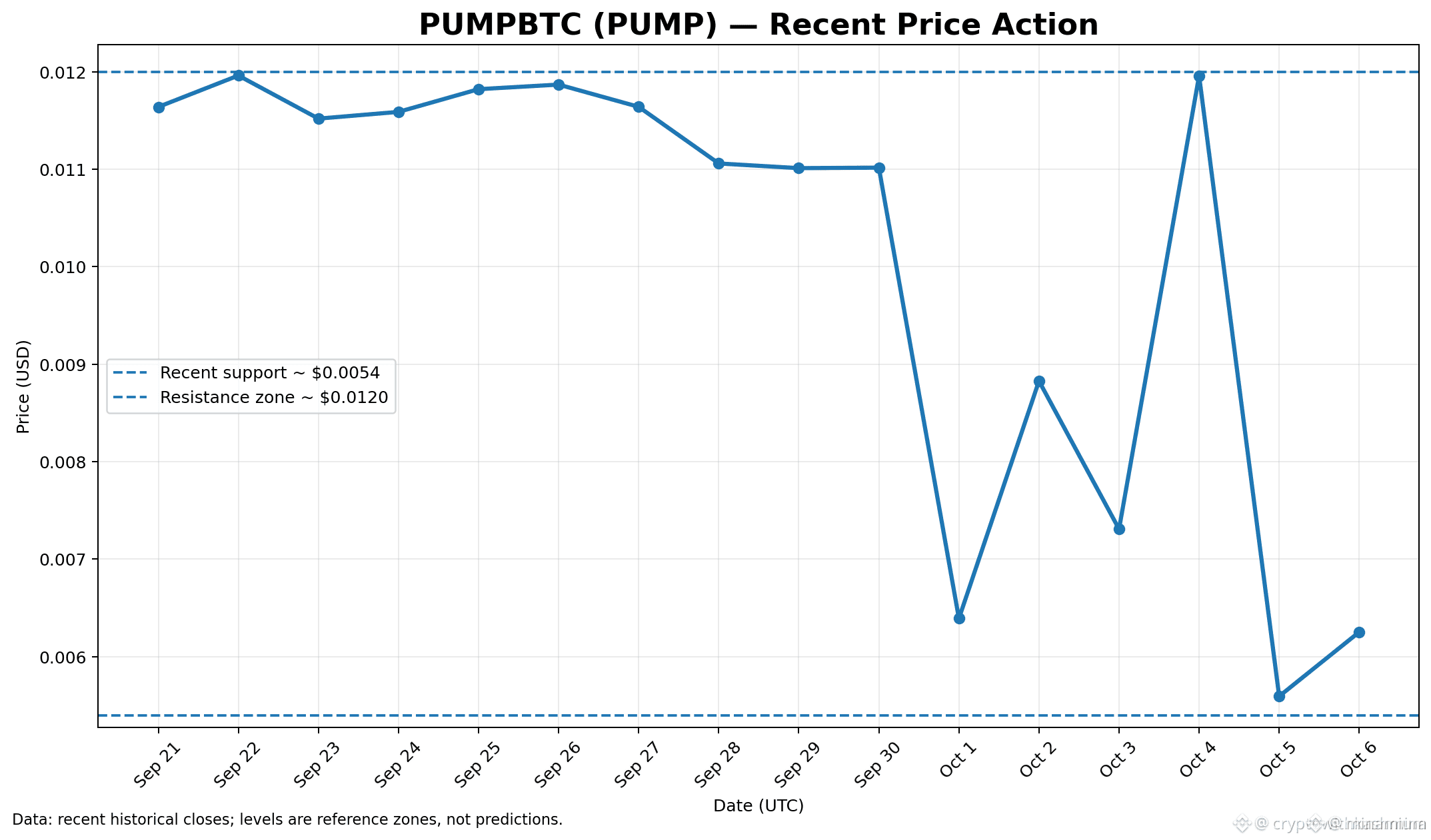
Too many people FOMO these listings like they have $BTC depth, then a 10.21% swing erases 1,745 USDT before they even process what happened.
The platform is not supposed to pause the market or reverse your bad trade. Tokens like this move on thin books and wild funding, nothing like $ETH. Blaming anyone else just delays the lesson.
Cut leverage to 5x or less. Know your exact liquidation price and place a stop with real buffer. Size the position so a 10% dump hurts but does not end you. That is the only process that actually keeps you in the game.
What's your take on handling these high-vol pairs?
#Perps #RiskManagement #Altcoins
Have you noticed how $PUMPBTC perps keep turning overleveraged traders into liquidation stats overnight?
Too many people FOMO these listings like they have $BTC depth, then a 10.21% swing erases 1,745 USDT before they even process what happened.
The platform is not supposed to pause the market or reverse your bad trade. Tokens like this move on thin books and wild funding, nothing like $ETH . Blaming anyone else just delays the lesson.
Cut leverage to 5x or less. Know your exact liquidation price and place a stop with real buffer. Size the position so a 10% dump hurts but does not end you. That is the only process that actually keeps you in the game.
What's your take on handling these high-vol pairs?
#Perps #RiskManagement #Altcoins
Too many people FOMO these listings like they have $BTC depth, then a 10.21% swing erases 1,745 USDT before they even process what happened.
The platform is not supposed to pause the market or reverse your bad trade. Tokens like this move on thin books and wild funding, nothing like $ETH . Blaming anyone else just delays the lesson.
Cut leverage to 5x or less. Know your exact liquidation price and place a stop with real buffer. Size the position so a 10% dump hurts but does not end you. That is the only process that actually keeps you in the game.
What's your take on handling these high-vol pairs?
#Perps #RiskManagement #Altcoins
8
·
--
La mayoría de los traders minoristas no son liquidados durante las fuertes tendencias bajistas, sino justo cuando el mercado parece más imparable.
Con el índice de miedo y codicia en 67, todos se apresuran a abrir posiciones largas en cada pequeño rompimiento sin revisar la profundidad del libro de órdenes. La cruda realidad es que comprar en una zona de resistencia por puro FOMO suele convertirte en liquidez de salida para las ballenas que buscan deshacerse de sus posiciones.
Cuando $BTC alcanza un nivel de resistencia importante y es rechazado, rara vez se trata de un simple retroceso aleatorio. Los creadores de mercado suelen empujar el precio hacia grandes concentraciones de liquidez para activar los stops de los vendedores en corto que entraron tarde, y luego dejan que órdenes de venta de gran volumen absorban todo ese impulso comprador. Observar cómo $SUI o $MINA se desangran poco después de que Bitcoin se estanca te dice todo lo que necesitas saber sobre el interés abierto excesivamente apalancado en todo el mercado.
Si estás entrando en posiciones solo porque una vela verde parecía fuerte, sin esperar a que se confirme la recuperación del nivel, simplemente estás apostando a la esperanza. La demanda real del mercado spot debe respaldar estos movimientos; de lo contrario, las mechas de rechazo están diseñadas para atrapar a los participantes más agresivos una y otra vez.
¿Estás reduciendo el riesgo en estos niveles clave o sigues esperando un último impulso al alza?
#BitcoinRejectedAt #BitcoinTargets2026OpenAt
La mayoría de los traders minoristas no son liquidados durante las fuertes tendencias bajistas, sino justo cuando el mercado parece más imparable.
Con el índice de miedo y codicia en 67, todos se apresuran a abrir posiciones largas en cada pequeño rompimiento sin revisar la profundidad del libro de órdenes. La cruda realidad es que comprar en una zona de resistencia por puro FOMO suele convertirte en liquidez de salida para las ballenas que buscan deshacerse de sus posiciones.
Cuando $BTC alcanza un nivel de resistencia importante y es rechazado, rara vez se trata de un simple retroceso aleatorio. Los creadores de mercado suelen empujar el precio hacia grandes concentraciones de liquidez para activar los stops de los vendedores en corto que entraron tarde, y luego dejan que órdenes de venta de gran volumen absorban todo ese impulso comprador. Observar cómo $SUI o $MINA se desangran poco después de que Bitcoin se estanca te dice todo lo que necesitas saber sobre el interés abierto excesivamente apalancado en todo el mercado.
Si estás entrando en posiciones solo porque una vela verde parecía fuerte, sin esperar a que se confirme la recuperación del nivel, simplemente estás apostando a la esperanza. La demanda real del mercado spot debe respaldar estos movimientos; de lo contrario, las mechas de rechazo están diseñadas para atrapar a los participantes más agresivos una y otra vez.
¿Estás reduciendo el riesgo en estos niveles clave o sigues esperando un último impulso al alza?
#BitcoinRejectedAt #BitcoinTargets2026OpenAt
Con el índice de miedo y codicia en 67, todos se apresuran a abrir posiciones largas en cada pequeño rompimiento sin revisar la profundidad del libro de órdenes. La cruda realidad es que comprar en una zona de resistencia por puro FOMO suele convertirte en liquidez de salida para las ballenas que buscan deshacerse de sus posiciones.
Cuando $BTC alcanza un nivel de resistencia importante y es rechazado, rara vez se trata de un simple retroceso aleatorio. Los creadores de mercado suelen empujar el precio hacia grandes concentraciones de liquidez para activar los stops de los vendedores en corto que entraron tarde, y luego dejan que órdenes de venta de gran volumen absorban todo ese impulso comprador. Observar cómo $SUI o $MINA se desangran poco después de que Bitcoin se estanca te dice todo lo que necesitas saber sobre el interés abierto excesivamente apalancado en todo el mercado.
Si estás entrando en posiciones solo porque una vela verde parecía fuerte, sin esperar a que se confirme la recuperación del nivel, simplemente estás apostando a la esperanza. La demanda real del mercado spot debe respaldar estos movimientos; de lo contrario, las mechas de rechazo están diseñadas para atrapar a los participantes más agresivos una y otra vez.
¿Estás reduciendo el riesgo en estos niveles clave o sigues esperando un último impulso al alza?
#BitcoinRejectedAt #BitcoinTargets2026OpenAt

6
·
--
Ver traducción
Here's what happened when a sharp bounce caught an entire room of dip buyers off guard.
Most traders confuse a quick technical reaction with a macro trend shift, piling in early only to end up trapped in the next leg down.
$PONS managed to rebound from its $0.3639 low back up toward $0.419, showing immediate buyer demand on the shorter timeframes. It looks constructive on the surface, but looking closely reveals the broader market structure hasn't flipped yet.
The daily Supertrend sits way higher at $0.6376, meaning the macro trend is still firmly bearish. Until price reclaims that level, moves like this in $PONS and similar mid-caps like $PENDLE or $PYTH remain relief rallies rather than confirmed trend reversals.
Are you treating this move as a structural bottom or just a textbook dead cat bounce?
#CryptoTrading #TechnicalAnalysis #Altcoins
Here's what happened when a sharp bounce caught an entire room of dip buyers off guard.
Most traders confuse a quick technical reaction with a macro trend shift, piling in early only to end up trapped in the next leg down.
$PONS managed to rebound from its $0.3639 low back up toward $0.419, showing immediate buyer demand on the shorter timeframes. It looks constructive on the surface, but looking closely reveals the broader market structure hasn't flipped yet.
The daily Supertrend sits way higher at $0.6376, meaning the macro trend is still firmly bearish. Until price reclaims that level, moves like this in $PONS and similar mid-caps like $PENDLE or $PYTH remain relief rallies rather than confirmed trend reversals.
Are you treating this move as a structural bottom or just a textbook dead cat bounce?
#CryptoTrading #TechnicalAnalysis #Altcoins
Most traders confuse a quick technical reaction with a macro trend shift, piling in early only to end up trapped in the next leg down.
$PONS managed to rebound from its $0.3639 low back up toward $0.419, showing immediate buyer demand on the shorter timeframes. It looks constructive on the surface, but looking closely reveals the broader market structure hasn't flipped yet.
The daily Supertrend sits way higher at $0.6376, meaning the macro trend is still firmly bearish. Until price reclaims that level, moves like this in $PONS and similar mid-caps like $PENDLE or $PYTH remain relief rallies rather than confirmed trend reversals.
Are you treating this move as a structural bottom or just a textbook dead cat bounce?
#CryptoTrading #TechnicalAnalysis #Altcoins

3
·
--
Si estás corriendo a comprar cada vela verde repentina después de una brutal tendencia bajista, detente ahora.
La mayoría de los traders no pierde su capital en lo más profundo de un mercado bajista, sino al comprar por FOMO rebotes prematuros de alivio justo antes de otro tramo a la baja. Ver cómo tu cartera se desangra con falsas rupturas es la forma más fácil de acabar destrozado.
Por fin estamos viendo que $PONS muestra señales de vida, con nuevo volumen tras meses de caída constante. Los alcistas se apresuran a afirmar que el mínimo local ya quedó atrás y señalan que el impulso a corto plazo está cambiando, mientras líderes del mercado como $BTC se consolidan.
Por otro lado, los bajistas sostienen que esto no es más que una clásica barrida de liquidez que va directo a una fuerte resistencia superior. Aunque el rebote temporal parece alentador en comparación con los recientes $SOL , la verdadera prueba es si el precio puede convertir la oferta anterior en un soporte confirmado, en lugar de atrapar a quienes compran la ruptura. Hasta que la estructura del mercado en marcos temporales superiores se vuelva alcista, es prematuro considerar este movimiento una reversión completa.
¿Hacia dónde crees que irá el precio?
#CryptoTrading #Altcoins #Binance
Si estás corriendo a comprar cada vela verde repentina después de una brutal tendencia bajista, detente ahora.
La mayoría de los traders no pierde su capital en lo más profundo de un mercado bajista, sino al comprar por FOMO rebotes prematuros de alivio justo antes de otro tramo a la baja. Ver cómo tu cartera se desangra con falsas rupturas es la forma más fácil de acabar destrozado.
Por fin estamos viendo que $PONS muestra señales de vida, con nuevo volumen tras meses de caída constante. Los alcistas se apresuran a afirmar que el mínimo local ya quedó atrás y señalan que el impulso a corto plazo está cambiando, mientras líderes del mercado como $BTC se consolidan.
Por otro lado, los bajistas sostienen que esto no es más que una clásica barrida de liquidez que va directo a una fuerte resistencia superior. Aunque el rebote temporal parece alentador en comparación con los recientes $SOL , la verdadera prueba es si el precio puede convertir la oferta anterior en un soporte confirmado, en lugar de atrapar a quienes compran la ruptura. Hasta que la estructura del mercado en marcos temporales superiores se vuelva alcista, es prematuro considerar este movimiento una reversión completa.
¿Hacia dónde crees que irá el precio?
#CryptoTrading #Altcoins #Binance
La mayoría de los traders no pierde su capital en lo más profundo de un mercado bajista, sino al comprar por FOMO rebotes prematuros de alivio justo antes de otro tramo a la baja. Ver cómo tu cartera se desangra con falsas rupturas es la forma más fácil de acabar destrozado.
Por fin estamos viendo que $PONS muestra señales de vida, con nuevo volumen tras meses de caída constante. Los alcistas se apresuran a afirmar que el mínimo local ya quedó atrás y señalan que el impulso a corto plazo está cambiando, mientras líderes del mercado como $BTC se consolidan.
Por otro lado, los bajistas sostienen que esto no es más que una clásica barrida de liquidez que va directo a una fuerte resistencia superior. Aunque el rebote temporal parece alentador en comparación con los recientes $SOL , la verdadera prueba es si el precio puede convertir la oferta anterior en un soporte confirmado, en lugar de atrapar a quienes compran la ruptura. Hasta que la estructura del mercado en marcos temporales superiores se vuelva alcista, es prematuro considerar este movimiento una reversión completa.
¿Hacia dónde crees que irá el precio?
#CryptoTrading #Altcoins #Binance

2
·
--
Ver traducción
everyone thinks a green daily candle means the bottom is in, but actually you might just be longing someone else exit liquidity.
ngl the most painful way to lose money in this market is fomo buying a relief bounce only to watch it roll over into another lower low because you mistook a dead cat bounce for a macro trend shift.
take $PONS right now as a textbook case study. it bounced nicely off the 0.3639 low to around 0.419, but people are already celebrating like we flipped the entire chart. the reality is the daily supertrend is sitting way up at 0.6376 and still screaming bearish, meaning this entire move is just a fragile recovery attempt within a downtrend, not a confirmed reversal.
if you are trading this setup, getting chopped up here is entirely avoidable if you watch the real levels instead of your emotions. local support sits at 0.38 to 0.40, with 0.3639 being the line in the sand. before anyone dreams of targets higher up, buyers have to cleanly chew through the 0.475 to 0.50 resistance zone, and the real boss fight is that heavy 0.61 to 0.64 block where major resistance lives. until those flip, playing mid-cap altcoins like $PONS or other high beta plays like $PENDLE is strictly a range trade, not a buy-and-forget scenario.
where do you think this goes from here?
#CryptoTrading #Altcoins #TechnicalAnalysis
everyone thinks a green daily candle means the bottom is in, but actually you might just be longing someone else exit liquidity.
ngl the most painful way to lose money in this market is fomo buying a relief bounce only to watch it roll over into another lower low because you mistook a dead cat bounce for a macro trend shift.
take $PONS right now as a textbook case study. it bounced nicely off the 0.3639 low to around 0.419, but people are already celebrating like we flipped the entire chart. the reality is the daily supertrend is sitting way up at 0.6376 and still screaming bearish, meaning this entire move is just a fragile recovery attempt within a downtrend, not a confirmed reversal.
if you are trading this setup, getting chopped up here is entirely avoidable if you watch the real levels instead of your emotions. local support sits at 0.38 to 0.40, with 0.3639 being the line in the sand. before anyone dreams of targets higher up, buyers have to cleanly chew through the 0.475 to 0.50 resistance zone, and the real boss fight is that heavy 0.61 to 0.64 block where major resistance lives. until those flip, playing mid-cap altcoins like $PONS or other high beta plays like $PENDLE is strictly a range trade, not a buy-and-forget scenario.
where do you think this goes from here?
#CryptoTrading #Altcoins #TechnicalAnalysis
ngl the most painful way to lose money in this market is fomo buying a relief bounce only to watch it roll over into another lower low because you mistook a dead cat bounce for a macro trend shift.
take $PONS right now as a textbook case study. it bounced nicely off the 0.3639 low to around 0.419, but people are already celebrating like we flipped the entire chart. the reality is the daily supertrend is sitting way up at 0.6376 and still screaming bearish, meaning this entire move is just a fragile recovery attempt within a downtrend, not a confirmed reversal.
if you are trading this setup, getting chopped up here is entirely avoidable if you watch the real levels instead of your emotions. local support sits at 0.38 to 0.40, with 0.3639 being the line in the sand. before anyone dreams of targets higher up, buyers have to cleanly chew through the 0.475 to 0.50 resistance zone, and the real boss fight is that heavy 0.61 to 0.64 block where major resistance lives. until those flip, playing mid-cap altcoins like $PONS or other high beta plays like $PENDLE is strictly a range trade, not a buy-and-forget scenario.
where do you think this goes from here?
#CryptoTrading #Altcoins #TechnicalAnalysis

9
·
--
Ver traducción
Have you noticed how quickly traders mistake a standard relief bounce for a full market reversal?
Most people get trapped FOMO buying the very first green candle after a brutal grind down, only to end up as exit liquidity when higher timeframe resistance rejects the move.
Take the recent price action on $PONS as a clear case study. The asset staged a solid reaction from its $0.3639 low to trade around $0.419, finding dependable demand across the $0.38 to $0.40 support base. But reacting from extreme oversold conditions is very different from proving a structural shift.
The daily Supertrend remains firmly bearish up at $0.6376, which keeps this move classified as a recovery attempt rather than a confirmed pivot. For buyers to build real momentum, price has to clear the immediate $0.475 to $0.50 band before even thinking about challenging major overhead resistance between $0.61 and $0.64. Until leaders like $BTC provide sustained market-wide support, chasing relief moves into supply remains a dangerous game.
Are you taking profits into this upcoming resistance zone, or waiting for a confirmed trend shift?
#CryptoTrading #Altcoins #TechnicalAnalysis
Have you noticed how quickly traders mistake a standard relief bounce for a full market reversal?
Most people get trapped FOMO buying the very first green candle after a brutal grind down, only to end up as exit liquidity when higher timeframe resistance rejects the move.
Take the recent price action on $PONS as a clear case study. The asset staged a solid reaction from its $0.3639 low to trade around $0.419, finding dependable demand across the $0.38 to $0.40 support base. But reacting from extreme oversold conditions is very different from proving a structural shift.
The daily Supertrend remains firmly bearish up at $0.6376, which keeps this move classified as a recovery attempt rather than a confirmed pivot. For buyers to build real momentum, price has to clear the immediate $0.475 to $0.50 band before even thinking about challenging major overhead resistance between $0.61 and $0.64. Until leaders like $BTC provide sustained market-wide support, chasing relief moves into supply remains a dangerous game.
Are you taking profits into this upcoming resistance zone, or waiting for a confirmed trend shift?
#CryptoTrading #Altcoins #TechnicalAnalysis
Most people get trapped FOMO buying the very first green candle after a brutal grind down, only to end up as exit liquidity when higher timeframe resistance rejects the move.
Take the recent price action on $PONS as a clear case study. The asset staged a solid reaction from its $0.3639 low to trade around $0.419, finding dependable demand across the $0.38 to $0.40 support base. But reacting from extreme oversold conditions is very different from proving a structural shift.
The daily Supertrend remains firmly bearish up at $0.6376, which keeps this move classified as a recovery attempt rather than a confirmed pivot. For buyers to build real momentum, price has to clear the immediate $0.475 to $0.50 band before even thinking about challenging major overhead resistance between $0.61 and $0.64. Until leaders like $BTC provide sustained market-wide support, chasing relief moves into supply remains a dangerous game.
Are you taking profits into this upcoming resistance zone, or waiting for a confirmed trend shift?
#CryptoTrading #Altcoins #TechnicalAnalysis

2
·
--
Ver traducción
Most traders see a bounce from multi-month lows and assume the worst is over, but in the last bear cycle over 65 percent of those altcoin recoveries failed to hold once the Supertrend remained bearish.
It is painful watching $PONS grind lower for weeks only to FOMO into the first green candle and get trapped when resistance rejects the move. That fear of missing out has cost more traders their capital than any rug pull.
$PONS currently sits at $0.419 after a strong daily bounce off the $0.3639 low, and buyers have defended it well so far. Yet the daily Supertrend still points down at $0.6376, making this a classic recovery attempt rather than a confirmed trend change. I remember similar setups in 2021 where tokens bounced hard even as $BTC and $ETH showed strength only to roll over again.
Immediate support is clustered between $0.38 and $0.40, with the recent low at $0.3639 acting as the last line of defense. On the upside, $0.475 to $0.50 is the first real test, followed by the major zone at $0.61 to $0.64. Until $PONS can reclaim that Supertrend level with conviction, the path of least resistance stays down, just like we saw with so many alts during the 2022 winter.
Patience is the edge in these markets.
How are you positioning around these potential recovery plays?
#PONS #CryptoTrading #MarketCycles
Most traders see a bounce from multi-month lows and assume the worst is over, but in the last bear cycle over 65 percent of those altcoin recoveries failed to hold once the Supertrend remained bearish.
It is painful watching $PONS grind lower for weeks only to FOMO into the first green candle and get trapped when resistance rejects the move. That fear of missing out has cost more traders their capital than any rug pull.
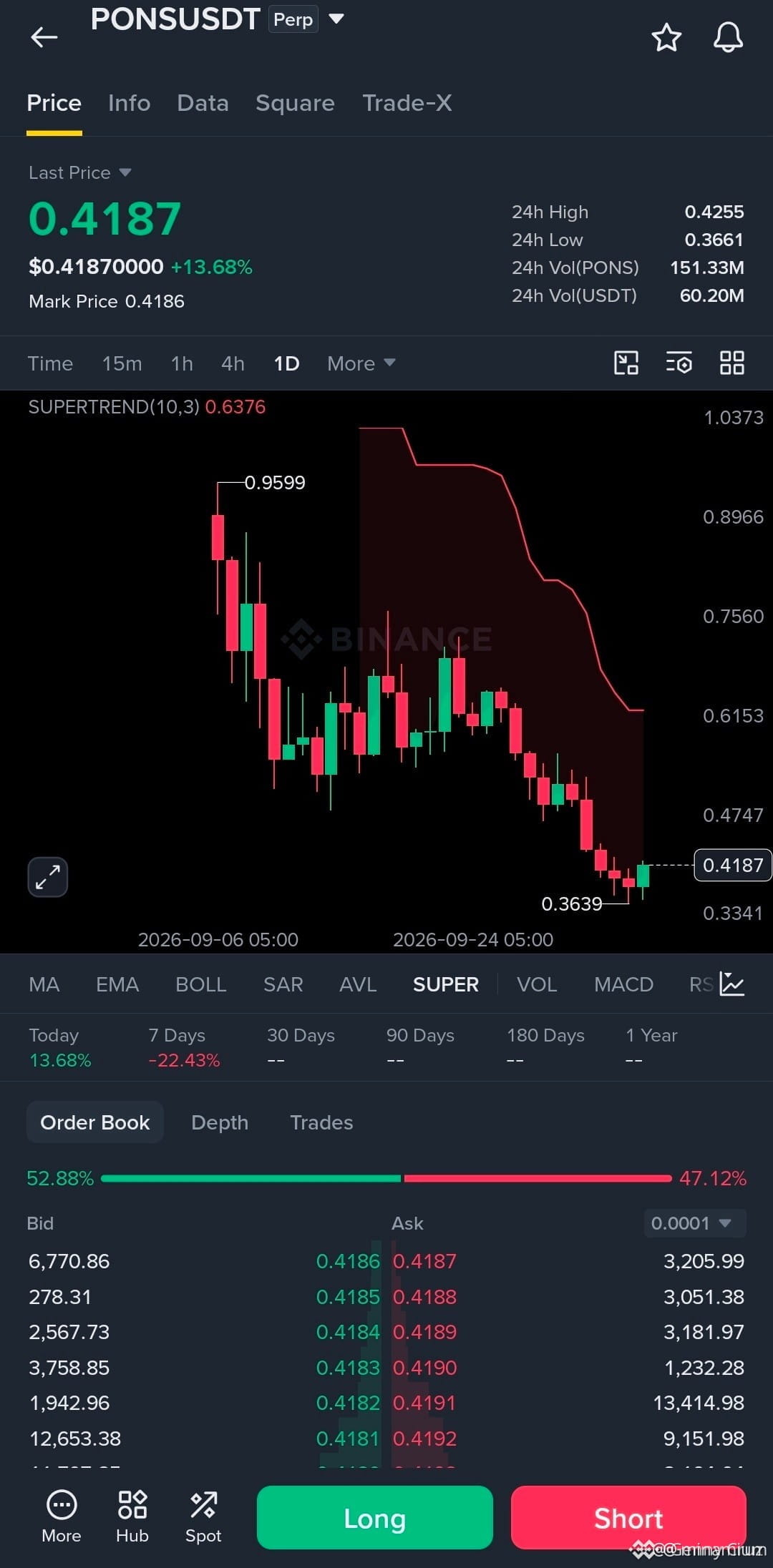
$PONS currently sits at $0.419 after a strong daily bounce off the $0.3639 low, and buyers have defended it well so far. Yet the daily Supertrend still points down at $0.6376, making this a classic recovery attempt rather than a confirmed trend change. I remember similar setups in 2021 where tokens bounced hard even as $BTC and $ETH showed strength only to roll over again.
Immediate support is clustered between $0.38 and $0.40, with the recent low at $0.3639 acting as the last line of defense. On the upside, $0.475 to $0.50 is the first real test, followed by the major zone at $0.61 to $0.64. Until $PONS can reclaim that Supertrend level with conviction, the path of least resistance stays down, just like we saw with so many alts during the 2022 winter.
Patience is the edge in these markets.
How are you positioning around these potential recovery plays?
#PONS #CryptoTrading #MarketCycles
It is painful watching $PONS grind lower for weeks only to FOMO into the first green candle and get trapped when resistance rejects the move. That fear of missing out has cost more traders their capital than any rug pull.
$PONS currently sits at $0.419 after a strong daily bounce off the $0.3639 low, and buyers have defended it well so far. Yet the daily Supertrend still points down at $0.6376, making this a classic recovery attempt rather than a confirmed trend change. I remember similar setups in 2021 where tokens bounced hard even as $BTC and $ETH showed strength only to roll over again.
Immediate support is clustered between $0.38 and $0.40, with the recent low at $0.3639 acting as the last line of defense. On the upside, $0.475 to $0.50 is the first real test, followed by the major zone at $0.61 to $0.64. Until $PONS can reclaim that Supertrend level with conviction, the path of least resistance stays down, just like we saw with so many alts during the 2022 winter.
Patience is the edge in these markets.
How are you positioning around these potential recovery plays?
#PONS #CryptoTrading #MarketCycles
2
·
--
Ver traducción
If you are buying every relief pump thinking it is an instant macro bottom, stop now.
FOMO chasing sudden green candles is the fastest way traders bleed capital while trying to catch falling knives.
$PONS is finally seeing some life, pushing up to $0.419 after rebounding off its $0.3639 low with solid daily buying volume. The bulls are quick to celebrate this momentum, but the daily Supertrend remains firmly bearish overhead at $0.6376. There is decent local support between $0.38 and $0.40, but heading straight into the $0.475 to $0.50 supply zone without building a base usually ends poorly.
Some traders argue this bounce marks an early accumulation phase alongside $BTC stability, but the higher-timeframe reality says this is still just a recovery attempt. Until the market can decisively reclaim the major $0.61 to $0.64 resistance block, treat this as a relief rally rather than a confirmed trend reversal.
Are you treating this move as an actual trend shift or just another exit pump for trapped buyers?
#CryptoTrading #PONS #Altcoins
If you are buying every relief pump thinking it is an instant macro bottom, stop now.
FOMO chasing sudden green candles is the fastest way traders bleed capital while trying to catch falling knives.
$PONS is finally seeing some life, pushing up to $0.419 after rebounding off its $0.3639 low with solid daily buying volume. The bulls are quick to celebrate this momentum, but the daily Supertrend remains firmly bearish overhead at $0.6376. There is decent local support between $0.38 and $0.40, but heading straight into the $0.475 to $0.50 supply zone without building a base usually ends poorly.
Some traders argue this bounce marks an early accumulation phase alongside $BTC stability, but the higher-timeframe reality says this is still just a recovery attempt. Until the market can decisively reclaim the major $0.61 to $0.64 resistance block, treat this as a relief rally rather than a confirmed trend reversal.
Are you treating this move as an actual trend shift or just another exit pump for trapped buyers?
#CryptoTrading #PONS #Altcoins
FOMO chasing sudden green candles is the fastest way traders bleed capital while trying to catch falling knives.
$PONS is finally seeing some life, pushing up to $0.419 after rebounding off its $0.3639 low with solid daily buying volume. The bulls are quick to celebrate this momentum, but the daily Supertrend remains firmly bearish overhead at $0.6376. There is decent local support between $0.38 and $0.40, but heading straight into the $0.475 to $0.50 supply zone without building a base usually ends poorly.
Some traders argue this bounce marks an early accumulation phase alongside $BTC stability, but the higher-timeframe reality says this is still just a recovery attempt. Until the market can decisively reclaim the major $0.61 to $0.64 resistance block, treat this as a relief rally rather than a confirmed trend reversal.
Are you treating this move as an actual trend shift or just another exit pump for trapped buyers?
#CryptoTrading #PONS #Altcoins

6
·
--
Imagínate esto: abriste una posición muy apalancada hace meses, viste cómo el mercado se desplomaba y pasaste todos los días esperando un rebote solo para recuperar tu capital.
La mayoría de los traders conoce esa angustia de mantener una posición en pérdidas mientras ve que el resto del mercado sigue adelante. Es la trampa clásica de negarse a asumir pérdidas hasta que la esperanza se convierte en toda tu estrategia de gestión del riesgo.
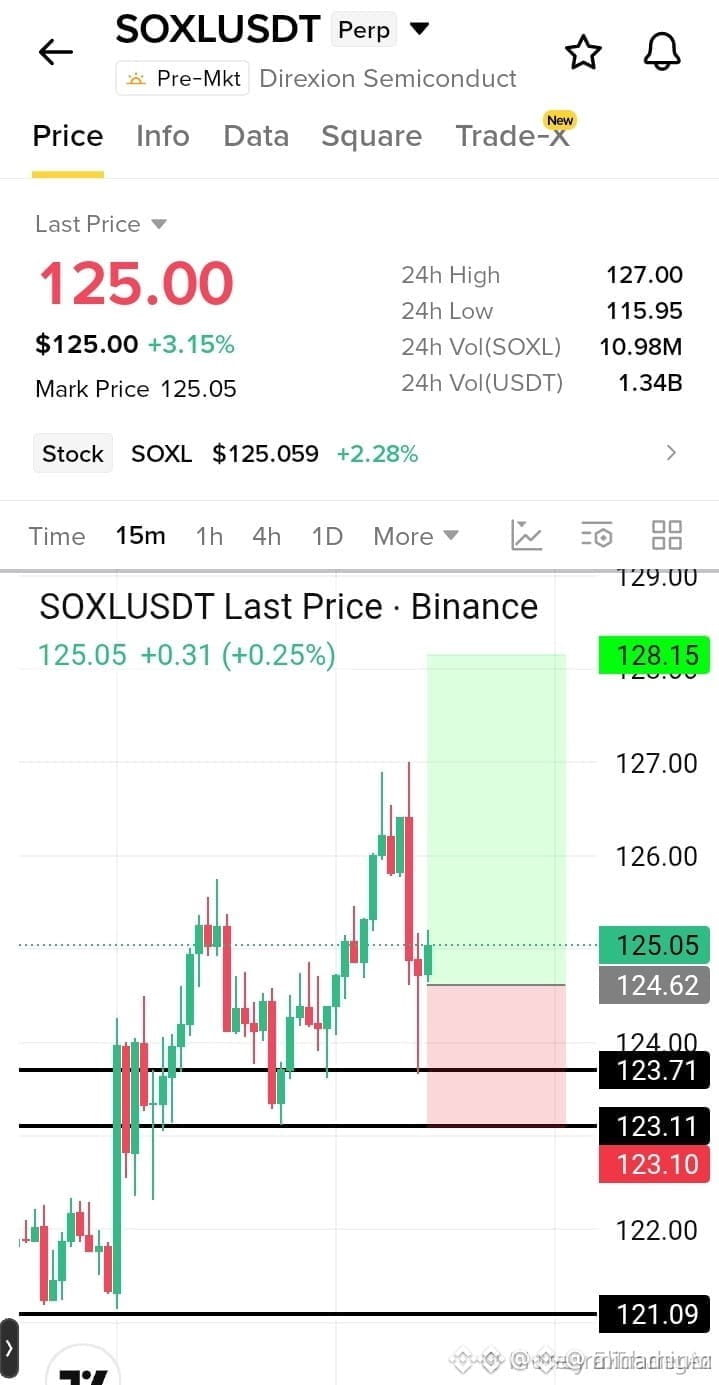
Estamos viendo cómo se repite exactamente este guion con posiciones antiguas $SOXL en este momento. Un trader que mantiene una posición larga perpetua $SOXL sigue soportando una pérdida no realizada de -$6,881.65 USDT, con el activo a la baja un -0.72%, y se aferra obstinadamente mientras el punto de equilibrio por fin se acerca. Se parece mucho a las posiciones largas $BTC y $ETH durante retrocesos anteriores del mercado, cuando las cuentas soportaron meses de pérdidas a la espera de que la liquidez volviera a rotar.
Los productos apalancados castigan la paciencia porque las tasas de financiación y la volatilidad lateral van mermando silenciosamente el saldo de margen. Sobrevivir a una caída tan profunda rara vez depende de una sincronización brillante del mercado; normalmente es una costosa prueba de resistencia frente a la liquidación.
Cuando una posición mantenida durante mucho tiempo y en pérdidas por fin vuelve a acercarse a tu precio de entrada, ¿cierras la posición o esperas a obtener ganancias?
#CryptoTrading #Futures #PsicologíaDelTrading
Imagínate esto: abriste una posición muy apalancada hace meses, viste cómo el mercado se desplomaba y pasaste todos los días esperando un rebote solo para recuperar tu capital.
La mayoría de los traders conoce esa angustia de mantener una posición en pérdidas mientras ve que el resto del mercado sigue adelante. Es la trampa clásica de negarse a asumir pérdidas hasta que la esperanza se convierte en toda tu estrategia de gestión del riesgo.
Estamos viendo cómo se repite exactamente este guion con posiciones antiguas $SOXL en este momento. Un trader que mantiene una posición larga perpetua $SOXL sigue soportando una pérdida no realizada de -$6,881.65 USDT, con el activo a la baja un -0.72%, y se aferra obstinadamente mientras el punto de equilibrio por fin se acerca. Se parece mucho a las posiciones largas $BTC y $ETH durante retrocesos anteriores del mercado, cuando las cuentas soportaron meses de pérdidas a la espera de que la liquidez volviera a rotar.
Los productos apalancados castigan la paciencia porque las tasas de financiación y la volatilidad lateral van mermando silenciosamente el saldo de margen. Sobrevivir a una caída tan profunda rara vez depende de una sincronización brillante del mercado; normalmente es una costosa prueba de resistencia frente a la liquidación.
Cuando una posición mantenida durante mucho tiempo y en pérdidas por fin vuelve a acercarse a tu precio de entrada, ¿cierras la posición o esperas a obtener ganancias?
#CryptoTrading #Futures #PsicologíaDelTrading
La mayoría de los traders conoce esa angustia de mantener una posición en pérdidas mientras ve que el resto del mercado sigue adelante. Es la trampa clásica de negarse a asumir pérdidas hasta que la esperanza se convierte en toda tu estrategia de gestión del riesgo.
Estamos viendo cómo se repite exactamente este guion con posiciones antiguas $SOXL en este momento. Un trader que mantiene una posición larga perpetua $SOXL sigue soportando una pérdida no realizada de -$6,881.65 USDT, con el activo a la baja un -0.72%, y se aferra obstinadamente mientras el punto de equilibrio por fin se acerca. Se parece mucho a las posiciones largas $BTC y $ETH durante retrocesos anteriores del mercado, cuando las cuentas soportaron meses de pérdidas a la espera de que la liquidez volviera a rotar.
Los productos apalancados castigan la paciencia porque las tasas de financiación y la volatilidad lateral van mermando silenciosamente el saldo de margen. Sobrevivir a una caída tan profunda rara vez depende de una sincronización brillante del mercado; normalmente es una costosa prueba de resistencia frente a la liquidación.
Cuando una posición mantenida durante mucho tiempo y en pérdidas por fin vuelve a acercarse a tu precio de entrada, ¿cierras la posición o esperas a obtener ganancias?
#CryptoTrading #Futures #PsicologíaDelTrading
6
·
--
Ver traducción
If you're still averaging down on $MOVR every time it wicks down, stop now.
This sideways action has been trapping traders left and right, with folks FOMO buying the range only to get flushed on the next sweep. It's that painful cycle of thinking you've timed the bottom when it's just more liquidity hunting.
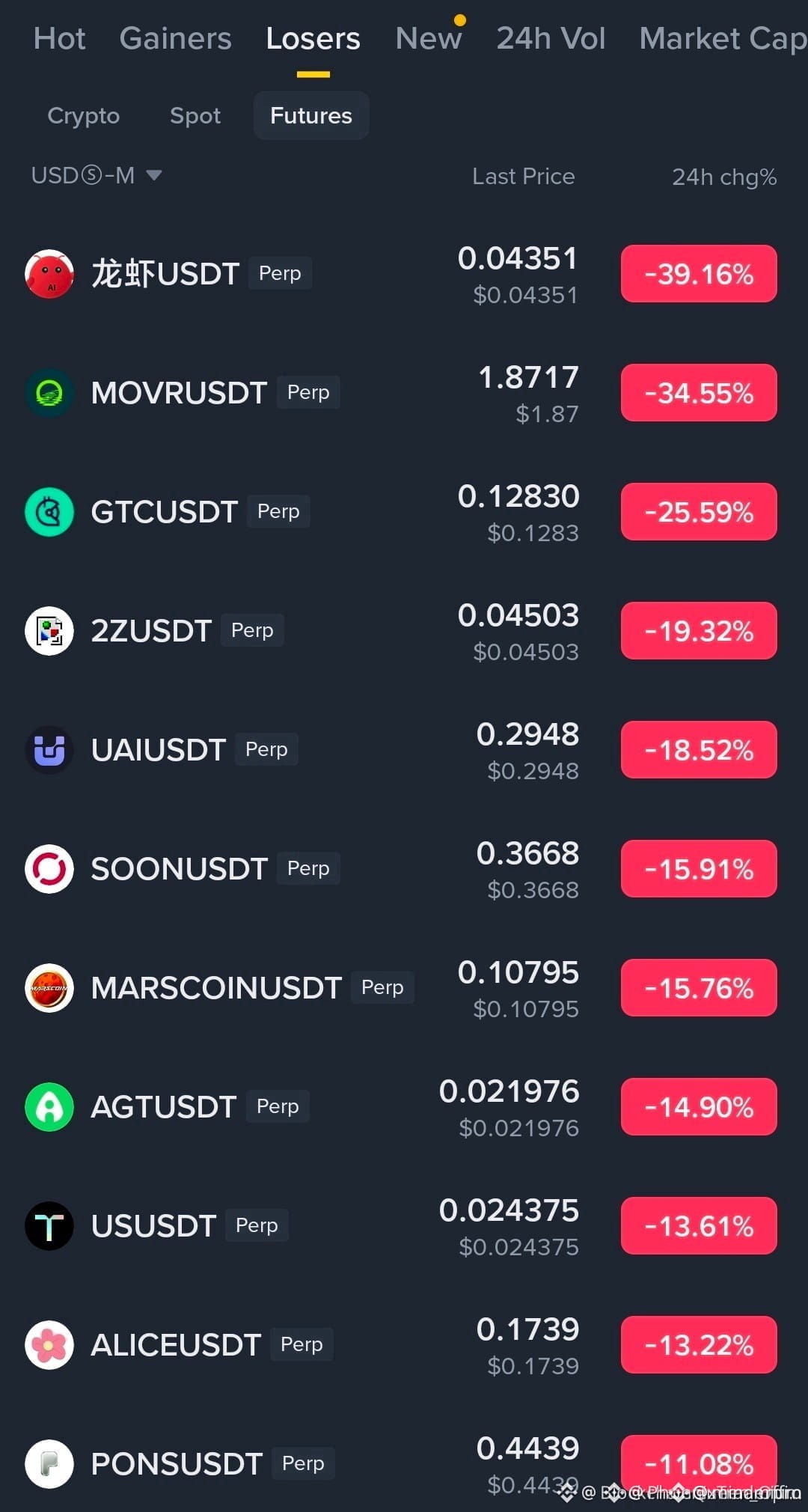
Our earlier calls on $MOVR caught both the decline and the bounce pretty cleanly. Now it's just grinding sideways after soaking up a ton of liquidity. This setup looks a lot like those $KSM parachain charts from last cycle, where the quiet accumulation fooled everyone into thinking a big rally was coming.
I figure it stays range-bound a while longer to pile on even more liquidity. Then one final upward wave to suck in the late buyers before a sharper drop this time around. Competing projects in the $DOT ecosystem have shown similar fakeouts before the real move.
Where do you think this goes from here?
#Moonriver #Kusama #CryptoTrading
If you're still averaging down on $MOVR every time it wicks down, stop now.
This sideways action has been trapping traders left and right, with folks FOMO buying the range only to get flushed on the next sweep. It's that painful cycle of thinking you've timed the bottom when it's just more liquidity hunting.
Our earlier calls on $MOVR caught both the decline and the bounce pretty cleanly. Now it's just grinding sideways after soaking up a ton of liquidity. This setup looks a lot like those $KSM parachain charts from last cycle, where the quiet accumulation fooled everyone into thinking a big rally was coming.
I figure it stays range-bound a while longer to pile on even more liquidity. Then one final upward wave to suck in the late buyers before a sharper drop this time around. Competing projects in the $DOT ecosystem have shown similar fakeouts before the real move.
Where do you think this goes from here?
#Moonriver #Kusama #CryptoTrading
This sideways action has been trapping traders left and right, with folks FOMO buying the range only to get flushed on the next sweep. It's that painful cycle of thinking you've timed the bottom when it's just more liquidity hunting.
Our earlier calls on $MOVR caught both the decline and the bounce pretty cleanly. Now it's just grinding sideways after soaking up a ton of liquidity. This setup looks a lot like those $KSM parachain charts from last cycle, where the quiet accumulation fooled everyone into thinking a big rally was coming.
I figure it stays range-bound a while longer to pile on even more liquidity. Then one final upward wave to suck in the late buyers before a sharper drop this time around. Competing projects in the $DOT ecosystem have shown similar fakeouts before the real move.
Where do you think this goes from here?
#Moonriver #Kusama #CryptoTrading
31
·
--
¿Te has fijado en que los traders que se mantienen sistemáticamente por delante en mercados turbulentos no trabajan más duro, sino que simplemente procesan los datos sin procesar más rápido?
La mayoría de los inversores minoristas pierden capital porque reaccionan a los titulares horas después de que el movimiento ya se haya producido. Observar indicadores rezagados mientras $BTC cae un 0,37 % o $ETH avanza a trompicones en medio de la volatilidad diaria suele llevar a entrar por FOMO emocional y a salir en malos momentos.
El despliegue de Binance Intelligence es un claro caso de estudio sobre hacia dónde se dirige la ventaja en el mercado. Cuando activos importantes del ecosistema como $BNB experimentan rápidas oscilaciones de volatilidad, dibujar gráficos manualmente simplemente no puede seguir el ritmo de los cambios en el sentimiento en tiempo real. Integrar la IA para procesar al instante millones de puntos de datos on-chain y del mercado cambia por completo el enfoque: pasamos de adivinar los movimientos de precios a operar basándonos en un contexto estructurado.
En este ciclo, la verdadera ventaja ya no consiste en quién pasa más tiempo mirando la pantalla, sino en quién entiende primero los datos subyacentes.
¿Cómo crees que las herramientas de IA están cambiando tu rutina diaria de trading?
#CryptoAI #Binance #EstrategiaDeTrading
¿Te has fijado en que los traders que se mantienen sistemáticamente por delante en mercados turbulentos no trabajan más duro, sino que simplemente procesan los datos sin procesar más rápido?
La mayoría de los inversores minoristas pierden capital porque reaccionan a los titulares horas después de que el movimiento ya se haya producido. Observar indicadores rezagados mientras $BTC cae un 0,37 % o $ETH avanza a trompicones en medio de la volatilidad diaria suele llevar a entrar por FOMO emocional y a salir en malos momentos.
El despliegue de Binance Intelligence es un claro caso de estudio sobre hacia dónde se dirige la ventaja en el mercado. Cuando activos importantes del ecosistema como $BNB experimentan rápidas oscilaciones de volatilidad, dibujar gráficos manualmente simplemente no puede seguir el ritmo de los cambios en el sentimiento en tiempo real. Integrar la IA para procesar al instante millones de puntos de datos on-chain y del mercado cambia por completo el enfoque: pasamos de adivinar los movimientos de precios a operar basándonos en un contexto estructurado.
En este ciclo, la verdadera ventaja ya no consiste en quién pasa más tiempo mirando la pantalla, sino en quién entiende primero los datos subyacentes.
¿Cómo crees que las herramientas de IA están cambiando tu rutina diaria de trading?
#CryptoAI #Binance #EstrategiaDeTrading
La mayoría de los inversores minoristas pierden capital porque reaccionan a los titulares horas después de que el movimiento ya se haya producido. Observar indicadores rezagados mientras $BTC cae un 0,37 % o $ETH avanza a trompicones en medio de la volatilidad diaria suele llevar a entrar por FOMO emocional y a salir en malos momentos.
El despliegue de Binance Intelligence es un claro caso de estudio sobre hacia dónde se dirige la ventaja en el mercado. Cuando activos importantes del ecosistema como $BNB experimentan rápidas oscilaciones de volatilidad, dibujar gráficos manualmente simplemente no puede seguir el ritmo de los cambios en el sentimiento en tiempo real. Integrar la IA para procesar al instante millones de puntos de datos on-chain y del mercado cambia por completo el enfoque: pasamos de adivinar los movimientos de precios a operar basándonos en un contexto estructurado.
En este ciclo, la verdadera ventaja ya no consiste en quién pasa más tiempo mirando la pantalla, sino en quién entiende primero los datos subyacentes.
¿Cómo crees que las herramientas de IA están cambiando tu rutina diaria de trading?
#CryptoAI #Binance #EstrategiaDeTrading

31
·
--
Los traders más rentables pasan más tiempo soportando en silencio las velas rojas que haciendo clic activamente en comprar y vender.
Todos hemos sentido ese nudo angustioso en el estómago cuando una posición abierta entra en pérdidas, tentándonos a cerrar presa del pánico justo antes de que comience el verdadero movimiento. Es la clásica trampa de dejar que la ansiedad a corto plazo te saque de operaciones swing bien planificadas.
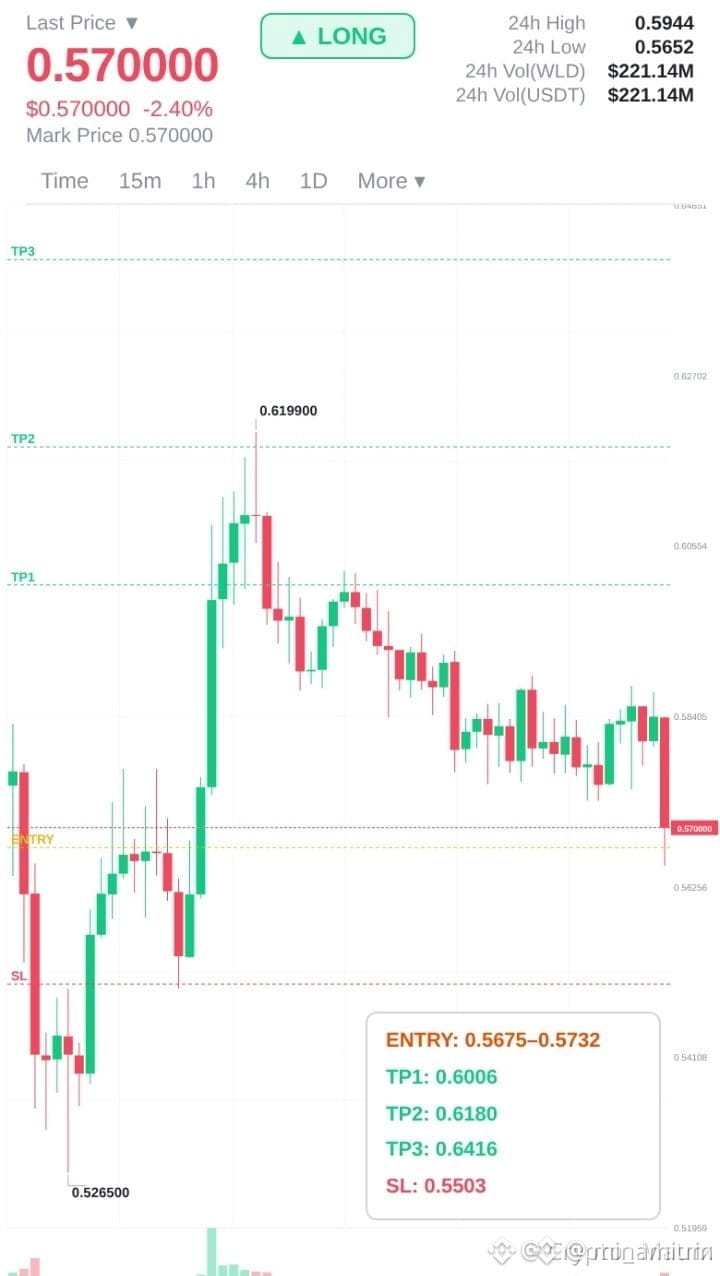
Fíjate en cómo los traders experimentados gestionan la turbulencia en $WLD ahora mismo. Aunque el precio diario ha caído un -3,25 %, uno de los mejores rendimientos de los últimos 30 días mantiene cómodamente una posición larga en un contrato perpetuo, con +12,000.16 USDT de ganancias no realizadas, simplemente por tener paciencia.
En ciclos anteriores con $BTC y grandes movimientos impulsados por narrativas como $FET, las mayores ganancias nunca fueron para los scalpers nerviosos que vigilaban gráficos de 5 minutos. Fueron para los traders que respetaron sus niveles de invalidación, ignoraron el ruido intradía y dejaron respirar sus posiciones ganadoras.
¿Cómo gestionas el impulso emocional de cerrar operaciones swing durante caídas repentinas?
#CryptoTrading #Worldcoin #TradingPsychology
Los traders más rentables pasan más tiempo soportando en silencio las velas rojas que haciendo clic activamente en comprar y vender.
Todos hemos sentido ese nudo angustioso en el estómago cuando una posición abierta entra en pérdidas, tentándonos a cerrar presa del pánico justo antes de que comience el verdadero movimiento. Es la clásica trampa de dejar que la ansiedad a corto plazo te saque de operaciones swing bien planificadas.
Fíjate en cómo los traders experimentados gestionan la turbulencia en $WLD ahora mismo. Aunque el precio diario ha caído un -3,25 %, uno de los mejores rendimientos de los últimos 30 días mantiene cómodamente una posición larga en un contrato perpetuo, con +12,000.16 USDT de ganancias no realizadas, simplemente por tener paciencia.
En ciclos anteriores con $BTC y grandes movimientos impulsados por narrativas como $FET , las mayores ganancias nunca fueron para los scalpers nerviosos que vigilaban gráficos de 5 minutos. Fueron para los traders que respetaron sus niveles de invalidación, ignoraron el ruido intradía y dejaron respirar sus posiciones ganadoras.
¿Cómo gestionas el impulso emocional de cerrar operaciones swing durante caídas repentinas?
#CryptoTrading #Worldcoin #TradingPsychology
Todos hemos sentido ese nudo angustioso en el estómago cuando una posición abierta entra en pérdidas, tentándonos a cerrar presa del pánico justo antes de que comience el verdadero movimiento. Es la clásica trampa de dejar que la ansiedad a corto plazo te saque de operaciones swing bien planificadas.
Fíjate en cómo los traders experimentados gestionan la turbulencia en $WLD ahora mismo. Aunque el precio diario ha caído un -3,25 %, uno de los mejores rendimientos de los últimos 30 días mantiene cómodamente una posición larga en un contrato perpetuo, con +12,000.16 USDT de ganancias no realizadas, simplemente por tener paciencia.
En ciclos anteriores con $BTC y grandes movimientos impulsados por narrativas como $FET , las mayores ganancias nunca fueron para los scalpers nerviosos que vigilaban gráficos de 5 minutos. Fueron para los traders que respetaron sus niveles de invalidación, ignoraron el ruido intradía y dejaron respirar sus posiciones ganadoras.
¿Cómo gestionas el impulso emocional de cerrar operaciones swing durante caídas repentinas?
#CryptoTrading #Worldcoin #TradingPsychology
52
·
--
Imagínate esto: viste cómo Ethereum se movía lateralmente durante lo que parecieron meses, hasta que un día despertaste y viste que $ETH se disparaba un setenta por ciento, mientras todo tu capital seguía aparcado en $USDT.
La mayoría de los traders cae en el mismo ciclo una y otra vez. Dudan durante las aburridas fases de acumulación, se obsesionan con las caídas a corto plazo y terminan comprando por FOMO cerca de los máximos locales, porque ver cómo un activo se dispara sin ellos les parece peor que asumir una pérdida calculada.
Si estudias las subidas anteriores, este explosivo movimiento de recuperación te resultará inquietantemente familiar: recuerda a la clásica rotación de última etapa que vimos cuando monedas veteranas como $ETC despertaron de repente tras importantes repuntes del mercado. Cuando el mercado en general se encuentra claramente en territorio de codicia, el capital no se queda quieto. Rota agresivamente hacia empresas de gran capitalización infravaloradas en cuanto se despejan los cuellos de botella de liquidez y la actividad en cadena vuelve a dispararse.
La verdadera lección no consiste en perseguir hoy las velas verdes, sino en comprender la memoria del mercado. Los mayores movimientos casi siempre empiezan cuando el sentimiento está más apagado, y dejan a la multitud apresurándose a entrar cuando la ruptura ya se ha producido.
¿Te estás posicionando con anticipación para la próxima rotación sectorial o estás esperando una confirmación en los gráficos?
#ETHUp70 #StrategyMarketCapSurpassesRumble
Imagínate esto: viste cómo Ethereum se movía lateralmente durante lo que parecieron meses, hasta que un día despertaste y viste que $ETH se disparaba un setenta por ciento, mientras todo tu capital seguía aparcado en $USDT.
La mayoría de los traders cae en el mismo ciclo una y otra vez. Dudan durante las aburridas fases de acumulación, se obsesionan con las caídas a corto plazo y terminan comprando por FOMO cerca de los máximos locales, porque ver cómo un activo se dispara sin ellos les parece peor que asumir una pérdida calculada.
Si estudias las subidas anteriores, este explosivo movimiento de recuperación te resultará inquietantemente familiar: recuerda a la clásica rotación de última etapa que vimos cuando monedas veteranas como $ETC despertaron de repente tras importantes repuntes del mercado. Cuando el mercado en general se encuentra claramente en territorio de codicia, el capital no se queda quieto. Rota agresivamente hacia empresas de gran capitalización infravaloradas en cuanto se despejan los cuellos de botella de liquidez y la actividad en cadena vuelve a dispararse.
La verdadera lección no consiste en perseguir hoy las velas verdes, sino en comprender la memoria del mercado. Los mayores movimientos casi siempre empiezan cuando el sentimiento está más apagado, y dejan a la multitud apresurándose a entrar cuando la ruptura ya se ha producido.
¿Te estás posicionando con anticipación para la próxima rotación sectorial o estás esperando una confirmación en los gráficos?
#ETHUp70 #StrategyMarketCapSurpassesRumble
La mayoría de los traders cae en el mismo ciclo una y otra vez. Dudan durante las aburridas fases de acumulación, se obsesionan con las caídas a corto plazo y terminan comprando por FOMO cerca de los máximos locales, porque ver cómo un activo se dispara sin ellos les parece peor que asumir una pérdida calculada.
Si estudias las subidas anteriores, este explosivo movimiento de recuperación te resultará inquietantemente familiar: recuerda a la clásica rotación de última etapa que vimos cuando monedas veteranas como $ETC despertaron de repente tras importantes repuntes del mercado. Cuando el mercado en general se encuentra claramente en territorio de codicia, el capital no se queda quieto. Rota agresivamente hacia empresas de gran capitalización infravaloradas en cuanto se despejan los cuellos de botella de liquidez y la actividad en cadena vuelve a dispararse.
La verdadera lección no consiste en perseguir hoy las velas verdes, sino en comprender la memoria del mercado. Los mayores movimientos casi siempre empiezan cuando el sentimiento está más apagado, y dejan a la multitud apresurándose a entrar cuando la ruptura ya se ha producido.
¿Te estás posicionando con anticipación para la próxima rotación sectorial o estás esperando una confirmación en los gráficos?
#ETHUp70 #StrategyMarketCapSurpassesRumble
58
·
--
Ver traducción
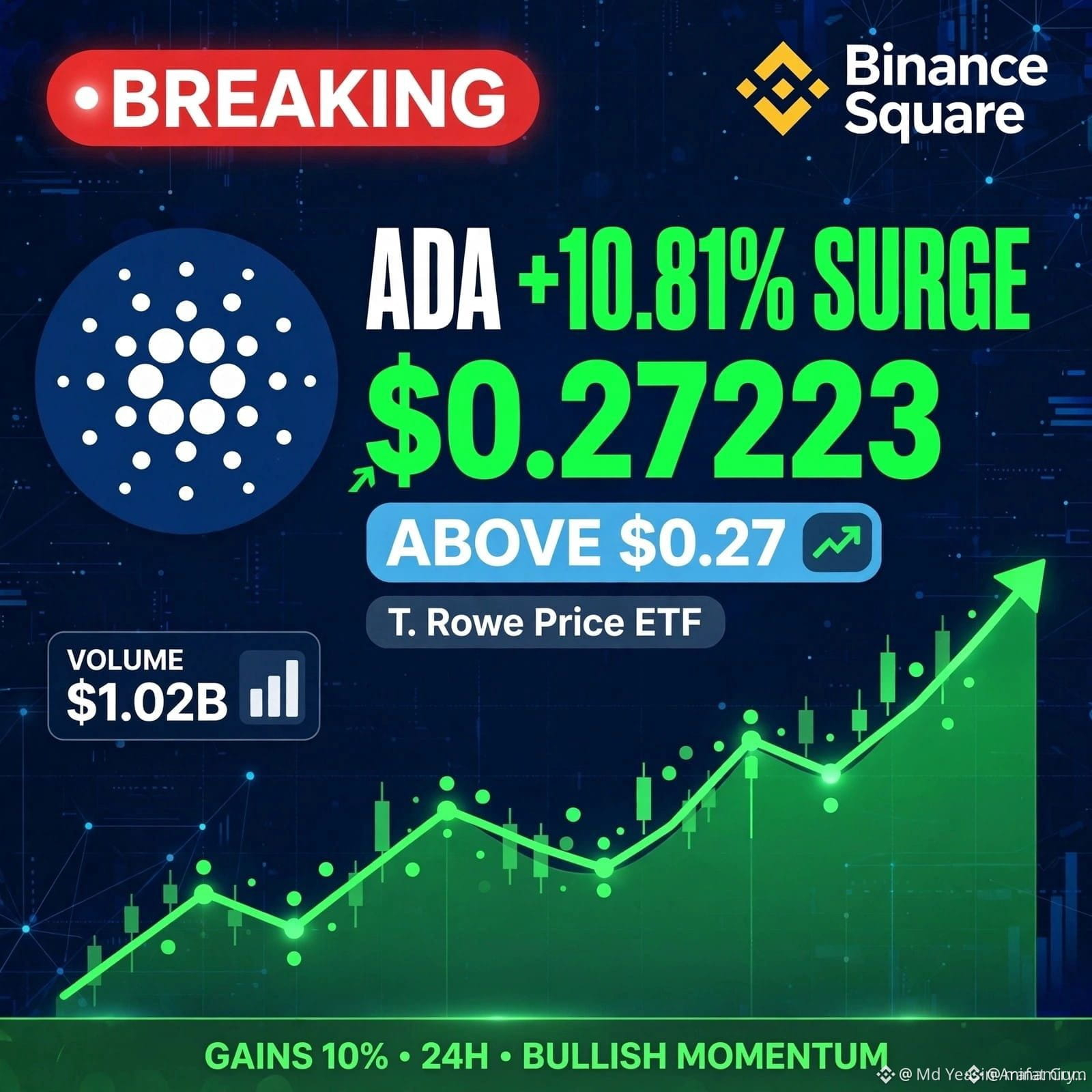
If you're still chasing $ADA after it's already up 10%, stop now.
That late FOMO buy is how people turn a missed entry into months of underwater bags. You watch it run, pile in because everyone is talking, then freeze when it starts giving it back.
I've seen $ADA print this same 10% green day more times than I can count. It always looks like the start of something until $BTC coughs and the whole thing retraces. Greed sitting at 67 does not help. That is usually when the crowd shows up, not when the smart money does.
Meanwhile $ETH already delivered a much larger move with actual demand behind it. Stacking Cardano's one-day pop against that is almost comedy. Same execution questions as last cycle. A 10% candle does not rewrite the chart.
Where do you think this $ADA bounce actually goes compared to what we already saw from $ETH?
#ADAGains10 #ETHUp70 #BitcoinRejectedAt
If you're still chasing $ADA after it's already up 10%, stop now.
That late FOMO buy is how people turn a missed entry into months of underwater bags. You watch it run, pile in because everyone is talking, then freeze when it starts giving it back.
I've seen $ADA print this same 10% green day more times than I can count. It always looks like the start of something until $BTC coughs and the whole thing retraces. Greed sitting at 67 does not help. That is usually when the crowd shows up, not when the smart money does.
Meanwhile $ETH already delivered a much larger move with actual demand behind it. Stacking Cardano's one-day pop against that is almost comedy. Same execution questions as last cycle. A 10% candle does not rewrite the chart.
Where do you think this $ADA bounce actually goes compared to what we already saw from $ETH ?
#ADAGains10 #ETHUp70 #BitcoinRejectedAt
That late FOMO buy is how people turn a missed entry into months of underwater bags. You watch it run, pile in because everyone is talking, then freeze when it starts giving it back.
I've seen $ADA print this same 10% green day more times than I can count. It always looks like the start of something until $BTC coughs and the whole thing retraces. Greed sitting at 67 does not help. That is usually when the crowd shows up, not when the smart money does.
Meanwhile $ETH already delivered a much larger move with actual demand behind it. Stacking Cardano's one-day pop against that is almost comedy. Same execution questions as last cycle. A 10% candle does not rewrite the chart.
Where do you think this $ADA bounce actually goes compared to what we already saw from $ETH ?
#ADAGains10 #ETHUp70 #BitcoinRejectedAt
75
·
--
Ver traducción
Why is almost everyone misreading what a corporate crypto treasury actually means for your portfolio? Most retail traders see a headline like Evernorth completing its SPAC merger and immediately chase the green candle, only to end up holding bags when institutional lockup dynamics play out.
Instead of treating public treasury vehicles as an instant pump signal, you need a clearer framework to trade these events. First, separate balance sheet allocation from open market buying power. When institutions securitize assets like $XRP, capital deployment often happens through OTC desks and structured agreements long before public announcements hit your feed. Chasing the initial headline usually means you are simply providing exit liquidity to early arbitrageurs.
Second, start tracking actual custodial balance changes rather than relying on social hype. Watch how much liquid supply is genuinely locked away versus what gets pledged for corporate operations. In a market where capital rotations into $USDT can abruptly punish overextended momentum plays, monitoring verifiable on-chain constraints will protect your capital far better than guessing intraday tops.
Where do you think this wave of public balance sheet adoption goes from here?
#EvernorthXRPTreasuryCompletesSPACMerger #StrategyMarketCapSurpassesRumble
Why is almost everyone misreading what a corporate crypto treasury actually means for your portfolio? Most retail traders see a headline like Evernorth completing its SPAC merger and immediately chase the green candle, only to end up holding bags when institutional lockup dynamics play out.
Instead of treating public treasury vehicles as an instant pump signal, you need a clearer framework to trade these events. First, separate balance sheet allocation from open market buying power. When institutions securitize assets like $XRP , capital deployment often happens through OTC desks and structured agreements long before public announcements hit your feed. Chasing the initial headline usually means you are simply providing exit liquidity to early arbitrageurs.
Second, start tracking actual custodial balance changes rather than relying on social hype. Watch how much liquid supply is genuinely locked away versus what gets pledged for corporate operations. In a market where capital rotations into $USDT can abruptly punish overextended momentum plays, monitoring verifiable on-chain constraints will protect your capital far better than guessing intraday tops.
Where do you think this wave of public balance sheet adoption goes from here?
#EvernorthXRPTreasuryCompletesSPACMerger #StrategyMarketCapSurpassesRumble
Instead of treating public treasury vehicles as an instant pump signal, you need a clearer framework to trade these events. First, separate balance sheet allocation from open market buying power. When institutions securitize assets like $XRP , capital deployment often happens through OTC desks and structured agreements long before public announcements hit your feed. Chasing the initial headline usually means you are simply providing exit liquidity to early arbitrageurs.
Second, start tracking actual custodial balance changes rather than relying on social hype. Watch how much liquid supply is genuinely locked away versus what gets pledged for corporate operations. In a market where capital rotations into $USDT can abruptly punish overextended momentum plays, monitoring verifiable on-chain constraints will protect your capital far better than guessing intraday tops.
Where do you think this wave of public balance sheet adoption goes from here?
#EvernorthXRPTreasuryCompletesSPACMerger #StrategyMarketCapSurpassesRumble

1
Inicia sesión para explorar más contenidos
Únete a usuarios globales de criptomonedas en Binance Square
⚡️ Obtén información útil y actualizada sobre criptos.
💬 Avalado por el mayor exchange de criptomonedas en el mundo.
👍 Descubre perspectivas reales de creadores verificados.
Email/número de teléfono
Temas populares
BinanceLaunchesBinanceIntelligence
703,190 vistas
4,428 están debatiendo
🧠 ¿Hacer trading como un fondo de inversión experto? ¡Ahora la IA lo hace gratis por ti! 🤖📈
Wilsontrader97
·10 me gusta
·12.2k vistas
BTCFallsBelow$84K
23,556 vistas
90 están debatiendo
DubaiVARAIssuesReserveAssetAuditCircular
4,527 vistas
294 están debatiendo