

CR Insights
11.5k Publicaciones

CR Insights
Denunciar
Bloquear usuario
Crypto trader & Web3 researcher | Crypto explorer sharing market insights, airdrops, ecosystem updates & opportunities
477 Siguiendo
15.0K+ Seguidores
10.4K+ Me gusta
Publicaciones
Todo
Citas
Videos
Live
PINNED
·
--
Verificado
Artículo
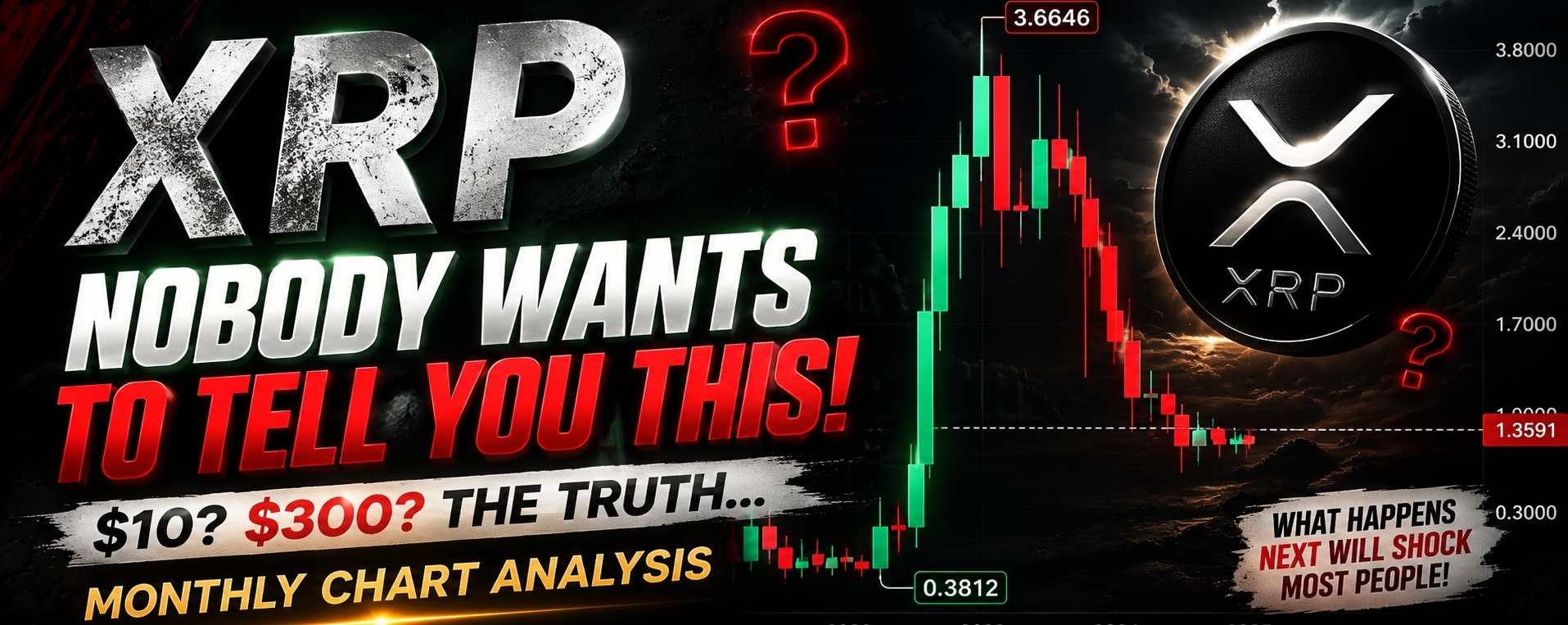
Nadie Quiere Decirte Esto Sobre la Estructura Mensual de XRPLa gente está peleando por $10 $XRP y $300 XRP mientras el gráfico mensual está mostrando literalmente una agotamiento de momentum en tiempo real.
Mira atentamente la estructura.
Gran vela de expansión desde el área de $0.38
Empuje violento hacia $3.66
Luego múltiples velas de rechazo mensual
Cierres más bajos después del pico
Momentum desvaneciéndose en lugar de acelerarse
Eso usualmente me dice una cosa: el mercado está entrando en una fase de enfriamiento o distribución, no en una fase limpia de descubrimiento de precios.
Si $XRP realmente se estuviera preparando para un movimiento instantáneo hacia objetivos extremos, las velas mensuales normalmente mostrarían:
Nadie Quiere Decirte Esto Sobre la Estructura Mensual de XRP
La gente está peleando por $10 $XRP y $300 XRP mientras el gráfico mensual está mostrando literalmente una agotamiento de momentum en tiempo real.
Mira atentamente la estructura.
Gran vela de expansión desde el área de $0.38
Empuje violento hacia $3.66
Luego múltiples velas de rechazo mensual
Cierres más bajos después del pico
Momentum desvaneciéndose en lugar de acelerarse
Eso usualmente me dice una cosa: el mercado está entrando en una fase de enfriamiento o distribución, no en una fase limpia de descubrimiento de precios.
Si $XRP realmente se estuviera preparando para un movimiento instantáneo hacia objetivos extremos, las velas mensuales normalmente mostrarían:
Mira atentamente la estructura.
Gran vela de expansión desde el área de $0.38
Empuje violento hacia $3.66
Luego múltiples velas de rechazo mensual
Cierres más bajos después del pico
Momentum desvaneciéndose en lugar de acelerarse
Eso usualmente me dice una cosa: el mercado está entrando en una fase de enfriamiento o distribución, no en una fase limpia de descubrimiento de precios.
Si $XRP realmente se estuviera preparando para un movimiento instantáneo hacia objetivos extremos, las velas mensuales normalmente mostrarían:
28
6
153
113.4k
PINNED
·
--
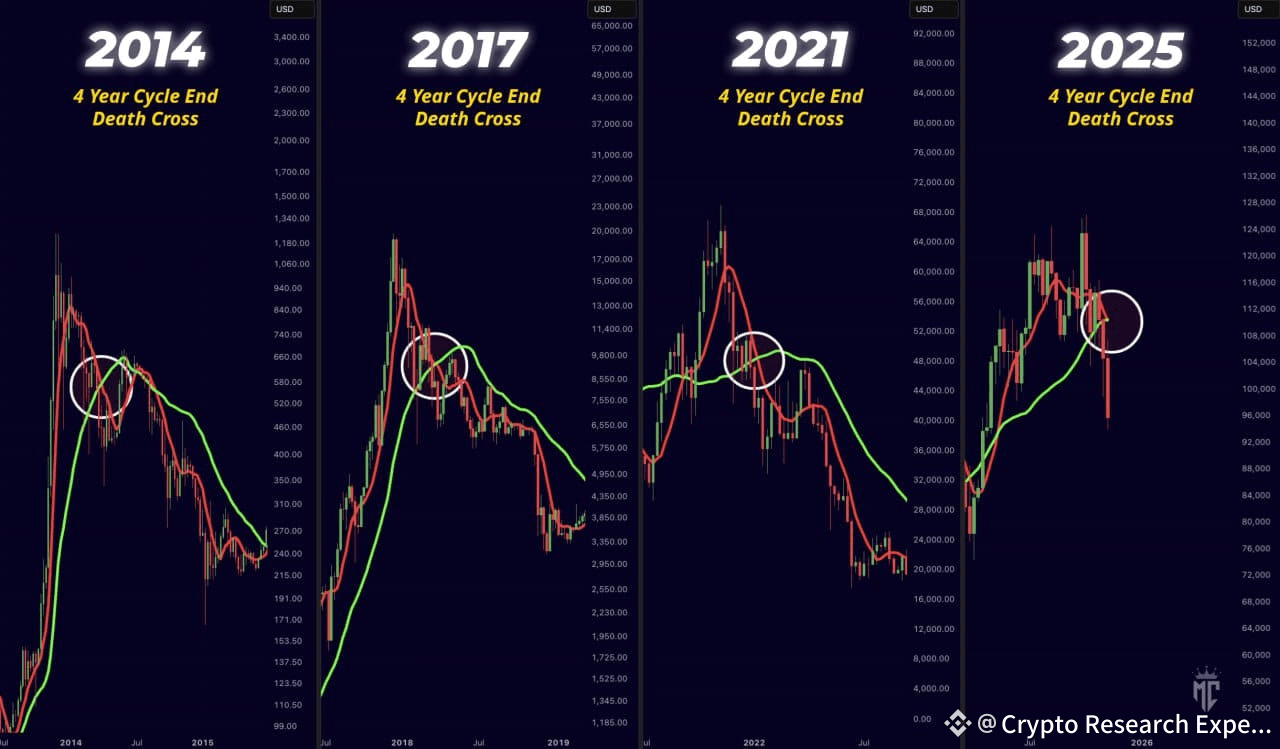
🔥 CADA CICLO DE BITCOIN TERMINÓ CON UN CRUCE DE MUERTE… ¿POR QUÉ SERÍA DIFERENTE ESTA VEZ? ⚠️💀📉$BTC
📊 Cada gran ciclo alcista de BTC que hemos visto — 2013, 2017, 2021 — eventualmente terminó con el legendario Cruce de Muerte en marcos de tiempo más altos.
🤯 Sin embargo, en este momento, Bitcoin está empujando hacia un miedo extremo más rápido que en 2021, la liquidez se está reduciendo y la volatilidad está explotando.
🧩 La historia nos dice que la misma señal regresa en cada ciclo… la pregunta es CUÁNDO, no SI.
⚡ Cualquiera que ignore esto está soñando — los ciclos no cambian, solo cambian las emociones.
🚨 Mantente alerta. Mantente gestionado en riesgos. Al mercado no le importa la esperanza.
🔥 CADA CICLO DE BITCOIN TERMINÓ CON UN CRUCE DE MUERTE… ¿POR QUÉ SERÍA DIFERENTE ESTA VEZ? ⚠️💀📉$BTC
📊 Cada gran ciclo alcista de BTC que hemos visto — 2013, 2017, 2021 — eventualmente terminó con el legendario Cruce de Muerte en marcos de tiempo más altos.
🤯 Sin embargo, en este momento, Bitcoin está empujando hacia un miedo extremo más rápido que en 2021, la liquidez se está reduciendo y la volatilidad está explotando.
🧩 La historia nos dice que la misma señal regresa en cada ciclo… la pregunta es CUÁNDO, no SI.
⚡ Cualquiera que ignore esto está soñando — los ciclos no cambian, solo cambian las emociones.
🚨 Mantente alerta. Mantente gestionado en riesgos. Al mercado no le importa la esperanza.
📊 Cada gran ciclo alcista de BTC que hemos visto — 2013, 2017, 2021 — eventualmente terminó con el legendario Cruce de Muerte en marcos de tiempo más altos.
🤯 Sin embargo, en este momento, Bitcoin está empujando hacia un miedo extremo más rápido que en 2021, la liquidez se está reduciendo y la volatilidad está explotando.
🧩 La historia nos dice que la misma señal regresa en cada ciclo… la pregunta es CUÁNDO, no SI.
⚡ Cualquiera que ignore esto está soñando — los ciclos no cambian, solo cambian las emociones.
🚨 Mantente alerta. Mantente gestionado en riesgos. Al mercado no le importa la esperanza.
100
60
174
399.1k
·
--
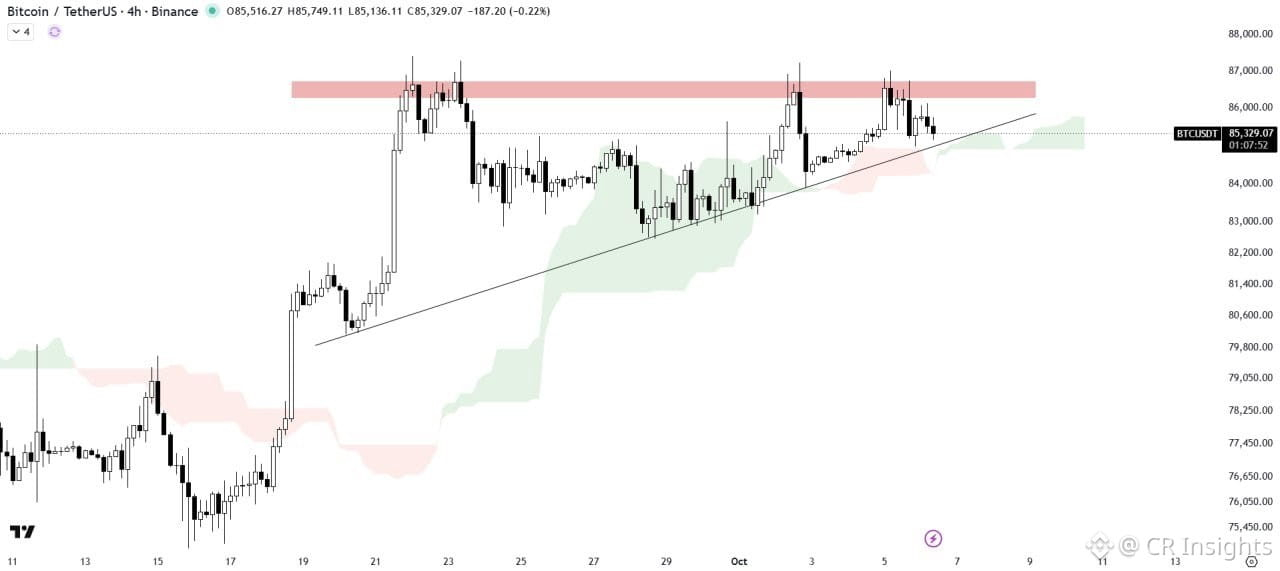
$BTC está justo donde la configuración de 4H empieza a ponerse interesante.
El gráfico muestra un triángulo ascendente, con mínimos cada vez más altos que presionan la misma resistencia de $86.3K–$86.7K. El precio está ahora de vuelta en torno a $84K–$85K, así que se está poniendo a prueba el soporte ascendente.
Si BTC vuelve a superar los $86.7K, quiero un cierre de 4H por encima de la resistencia y luego un retesteo que se mantenga. Eso confirma la ruptura. Entrada en largo: $86.7K–$87K, SL $85.8K, TP1 $87.6K, TP2 $90K, TP3 $92K. Si BTC vuelve a caer por debajo del nivel del retesteo, la configuración de ruptura queda invalidada.
Si BTC pierde los $84.2K, quiero un cierre de 4H por debajo y luego un retesteo fallido desde abajo. Eso confirma la ruptura bajista. Entrada en corto: $83.9K–$84.2K, SL $85.2K, TP1 $83.3K, TP2 $82.5K, TP3 $81.5K. Recuperar los $85.2K invalida la configuración en corto.
Así que el plan de trading es sencillo.
Ruptura de $86.7K + retesteo → Largo → $87.6K / $90K / $92K
Ruptura de $84.2K + retesteo fallido → Corto → $83.3K / $82.5K / $81.5K
Hasta que se confirme uno de los dos escenarios, no hay una operación clara en el medio
$BTC está justo donde la configuración de 4H empieza a ponerse interesante.
El gráfico muestra un triángulo ascendente, con mínimos cada vez más altos que presionan la misma resistencia de $86.3K–$86.7K. El precio está ahora de vuelta en torno a $84K–$85K, así que se está poniendo a prueba el soporte ascendente.
Si BTC vuelve a superar los $86.7K, quiero un cierre de 4H por encima de la resistencia y luego un retesteo que se mantenga. Eso confirma la ruptura. Entrada en largo: $86.7K–$87K, SL $85.8K, TP1 $87.6K, TP2 $90K, TP3 $92K. Si BTC vuelve a caer por debajo del nivel del retesteo, la configuración de ruptura queda invalidada.
Si BTC pierde los $84.2K, quiero un cierre de 4H por debajo y luego un retesteo fallido desde abajo. Eso confirma la ruptura bajista. Entrada en corto: $83.9K–$84.2K, SL $85.2K, TP1 $83.3K, TP2 $82.5K, TP3 $81.5K. Recuperar los $85.2K invalida la configuración en corto.
Así que el plan de trading es sencillo.
Ruptura de $86.7K + retesteo → Largo → $87.6K / $90K / $92K
Ruptura de $84.2K + retesteo fallido → Corto → $83.3K / $82.5K / $81.5K
Hasta que se confirme uno de los dos escenarios, no hay una operación clara en el medio
El gráfico muestra un triángulo ascendente, con mínimos cada vez más altos que presionan la misma resistencia de $86.3K–$86.7K. El precio está ahora de vuelta en torno a $84K–$85K, así que se está poniendo a prueba el soporte ascendente.
Si BTC vuelve a superar los $86.7K, quiero un cierre de 4H por encima de la resistencia y luego un retesteo que se mantenga. Eso confirma la ruptura. Entrada en largo: $86.7K–$87K, SL $85.8K, TP1 $87.6K, TP2 $90K, TP3 $92K. Si BTC vuelve a caer por debajo del nivel del retesteo, la configuración de ruptura queda invalidada.
Si BTC pierde los $84.2K, quiero un cierre de 4H por debajo y luego un retesteo fallido desde abajo. Eso confirma la ruptura bajista. Entrada en corto: $83.9K–$84.2K, SL $85.2K, TP1 $83.3K, TP2 $82.5K, TP3 $81.5K. Recuperar los $85.2K invalida la configuración en corto.
Así que el plan de trading es sencillo.
Ruptura de $86.7K + retesteo → Largo → $87.6K / $90K / $92K
Ruptura de $84.2K + retesteo fallido → Corto → $83.3K / $82.5K / $81.5K
Hasta que se confirme uno de los dos escenarios, no hay una operación clara en el medio
158
·
--
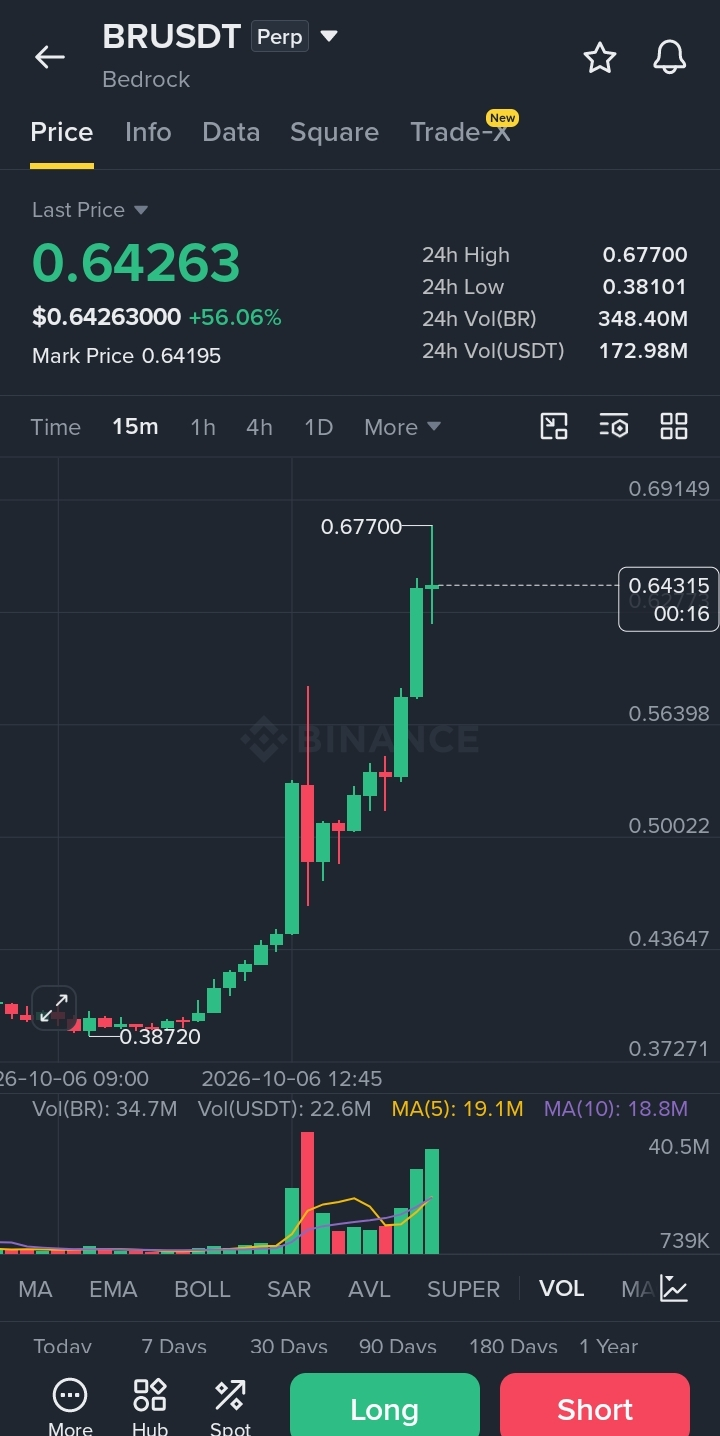
$BR ACABA DE SUPERAR LOS $0.52: AHORA LOS PRÓXIMOS NIVELES ESTÁN CLAROS
BR se mantuvo alrededor de $0.3886, superó los $0.52 y luego se disparó hasta $0.6577, con un volumen negociado de $5.66M.
Ahora hay tres niveles que me importan:
Si se mantiene entre $0.60 y $0.62: se está defendiendo la ruptura. Un nuevo avance por encima de $0.6577 pondría los $0.70 al alcance, y luego los $0.75 si el impulso sigue siendo fuerte.
Si pierde los $0.60: el primer soporte de la ruptura habrá desaparecido. Los $0.52 serán la próxima prueba. Ese es el nivel que decidirá si esto fue una expansión real o solo un pico.
Si pierde los $0.52: dejaría de considerar alcistas las caídas. La próxima zona importante está entre $0.41 y $0.39, donde realmente comenzó el movimiento.
Así que, a partir de aquí:
Se mantiene en $0.60 → $0.6577 → $0.70/$0.75
Pierde $0.60 → $0.52
Pierde $0.52 → $0.41/$0.39
A $0.65, la pregunta no es si BR puede subir más.
Es cuál de estos niveles se alcanzará a continuación.
$BR ACABA DE SUPERAR LOS $0.52: AHORA LOS PRÓXIMOS NIVELES ESTÁN CLAROS
BR se mantuvo alrededor de $0.3886, superó los $0.52 y luego se disparó hasta $0.6577, con un volumen negociado de $5.66M.
Ahora hay tres niveles que me importan:
Si se mantiene entre $0.60 y $0.62: se está defendiendo la ruptura. Un nuevo avance por encima de $0.6577 pondría los $0.70 al alcance, y luego los $0.75 si el impulso sigue siendo fuerte.
Si pierde los $0.60: el primer soporte de la ruptura habrá desaparecido. Los $0.52 serán la próxima prueba. Ese es el nivel que decidirá si esto fue una expansión real o solo un pico.
Si pierde los $0.52: dejaría de considerar alcistas las caídas. La próxima zona importante está entre $0.41 y $0.39, donde realmente comenzó el movimiento.
Así que, a partir de aquí:
Se mantiene en $0.60 → $0.6577 → $0.70/$0.75
Pierde $0.60 → $0.52
Pierde $0.52 → $0.41/$0.39
A $0.65, la pregunta no es si BR puede subir más.
Es cuál de estos niveles se alcanzará a continuación.
BR se mantuvo alrededor de $0.3886, superó los $0.52 y luego se disparó hasta $0.6577, con un volumen negociado de $5.66M.
Ahora hay tres niveles que me importan:
Si se mantiene entre $0.60 y $0.62: se está defendiendo la ruptura. Un nuevo avance por encima de $0.6577 pondría los $0.70 al alcance, y luego los $0.75 si el impulso sigue siendo fuerte.
Si pierde los $0.60: el primer soporte de la ruptura habrá desaparecido. Los $0.52 serán la próxima prueba. Ese es el nivel que decidirá si esto fue una expansión real o solo un pico.
Si pierde los $0.52: dejaría de considerar alcistas las caídas. La próxima zona importante está entre $0.41 y $0.39, donde realmente comenzó el movimiento.
Así que, a partir de aquí:
Se mantiene en $0.60 → $0.6577 → $0.70/$0.75
Pierde $0.60 → $0.52
Pierde $0.52 → $0.41/$0.39
A $0.65, la pregunta no es si BR puede subir más.
Es cuál de estos niveles se alcanzará a continuación.
564
·
--
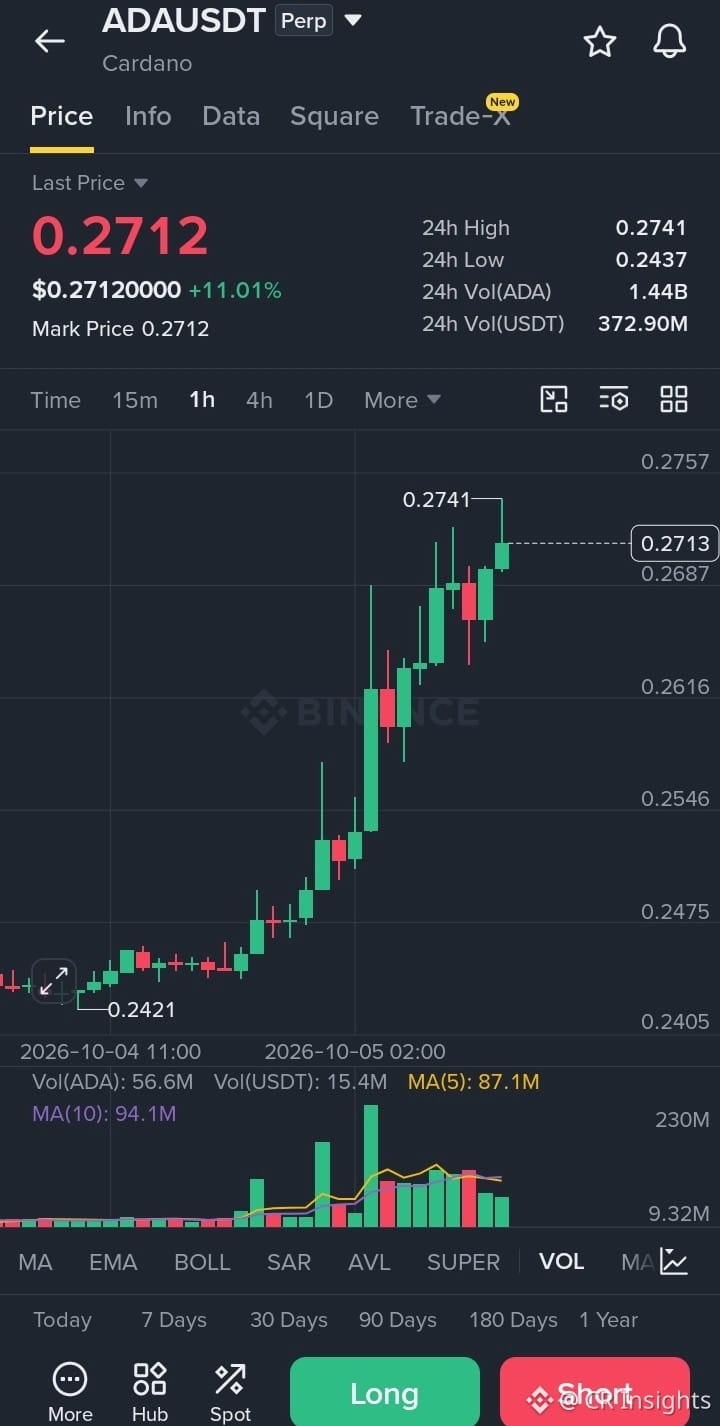
¡ADA ACABA DE TOCAR $0.273— Y LAS COBERTURAS ESTÁN POR ENCIMA DE ESO!
$ADA ha subido de $0.2438 a $0.2731 en aproximadamente dos días. El volumen de hoy ya es fuerte, con volumen de futuros alrededor de $1.04B y open interest cerca de $624M.
Pero la parte útil está justo por encima del precio.
Un mapa de liquidaciones actual estima unos $441K de cortos alrededor de $0.2723. ADA ya está cotizando en esa zona, así que otro impulso al alza puede obligar a esos cortos a cerrar en el movimiento.
Por eso $0.2731 importa más que la vela verde del 11%.
Una ruptura limpia y mantenida por encima puede apretar los cortos cercanos y poner $0.28 en juego.
Si ADA es rechazada y cae de nuevo por debajo de $0.267, el setup del apretón se pierde.
Rompe $0.2731 → busca continuidad.
Pierde $0.267 → no persigas el largo.
#SECHaltsCryptoETFReviewsAmidFundingLapse
¡ADA ACABA DE TOCAR $0.273— Y LAS COBERTURAS ESTÁN POR ENCIMA DE ESO!
$ADA ha subido de $0.2438 a $0.2731 en aproximadamente dos días. El volumen de hoy ya es fuerte, con volumen de futuros alrededor de $1.04B y open interest cerca de $624M.
Pero la parte útil está justo por encima del precio.
Un mapa de liquidaciones actual estima unos $441K de cortos alrededor de $0.2723. ADA ya está cotizando en esa zona, así que otro impulso al alza puede obligar a esos cortos a cerrar en el movimiento.
Por eso $0.2731 importa más que la vela verde del 11%.
Una ruptura limpia y mantenida por encima puede apretar los cortos cercanos y poner $0.28 en juego.
Si ADA es rechazada y cae de nuevo por debajo de $0.267, el setup del apretón se pierde.
Rompe $0.2731 → busca continuidad.
Pierde $0.267 → no persigas el largo.
#SECHaltsCryptoETFReviewsAmidFundingLapse
$ADA ha subido de $0.2438 a $0.2731 en aproximadamente dos días. El volumen de hoy ya es fuerte, con volumen de futuros alrededor de $1.04B y open interest cerca de $624M.
Pero la parte útil está justo por encima del precio.
Un mapa de liquidaciones actual estima unos $441K de cortos alrededor de $0.2723. ADA ya está cotizando en esa zona, así que otro impulso al alza puede obligar a esos cortos a cerrar en el movimiento.
Por eso $0.2731 importa más que la vela verde del 11%.
Una ruptura limpia y mantenida por encima puede apretar los cortos cercanos y poner $0.28 en juego.
Si ADA es rechazada y cae de nuevo por debajo de $0.267, el setup del apretón se pierde.
Rompe $0.2731 → busca continuidad.
Pierde $0.267 → no persigas el largo.
#SECHaltsCryptoETFReviewsAmidFundingLapse
303
·
--
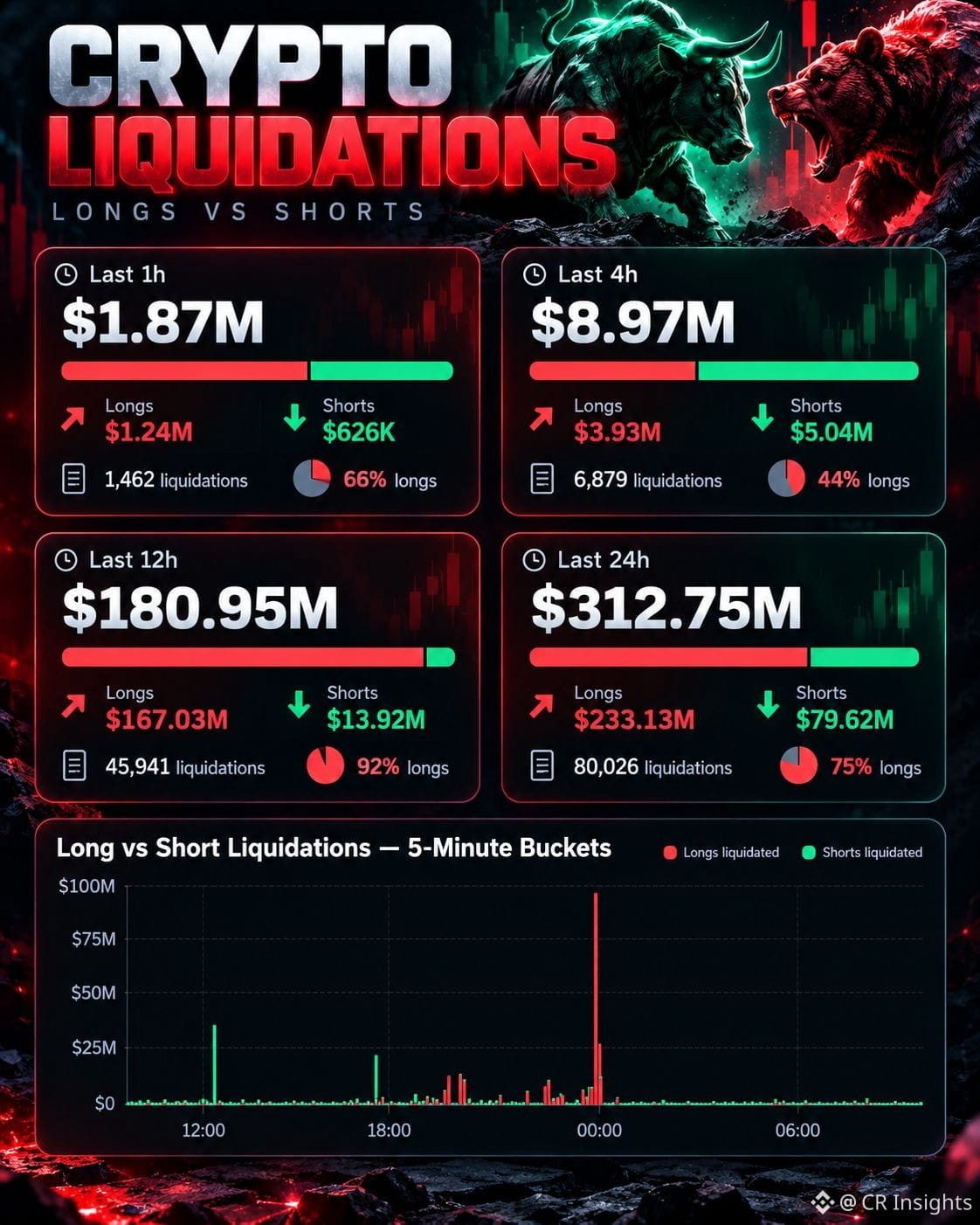
$313M SE LIQUIDARON — EL 75% ERAN LONGS
Las últimas 24 horas borraron $312.75M en posiciones cripto, con $233.13M provenientes de longs. Eso es el 75% del total.
Pero la cifra más grande es lo ocurrido en las últimas 12 horas: $180.95M liquidado, y el 92% eran longs.
Eso es un lavado serio de apalancamiento.
Para los traders, lo importante no es celebrar la cifra de liquidación. Es lo que viene después.
Un mercado que acaba de expulsar a tantos longs deja menos apalancamiento long “abarrotado” debajo. Pero si BTC empieza a moverse hacia otro gran bolsillo de liquidación, esas salidas forzadas aún pueden acelerar el siguiente movimiento.
Así que perseguir el primer rebote no es la configuración.
La mejor operación es el siguiente barrido de liquidez.
Si BTC barre una zona importante de liquidez long y la recupera rápidamente, el “flush” puede convertirse en la confirmación para una posición larga.
Si rompe el bolsillo y sigue aceptando por debajo, no pelees contra la liquidación.
El apalancamiento ya ha mostrado dónde el mercado es vulnerable.
$BTC #liquidate
$313M SE LIQUIDARON — EL 75% ERAN LONGS
Las últimas 24 horas borraron $312.75M en posiciones cripto, con $233.13M provenientes de longs. Eso es el 75% del total.
Pero la cifra más grande es lo ocurrido en las últimas 12 horas: $180.95M liquidado, y el 92% eran longs.
Eso es un lavado serio de apalancamiento.
Para los traders, lo importante no es celebrar la cifra de liquidación. Es lo que viene después.
Un mercado que acaba de expulsar a tantos longs deja menos apalancamiento long “abarrotado” debajo. Pero si BTC empieza a moverse hacia otro gran bolsillo de liquidación, esas salidas forzadas aún pueden acelerar el siguiente movimiento.
Así que perseguir el primer rebote no es la configuración.
La mejor operación es el siguiente barrido de liquidez.
Si BTC barre una zona importante de liquidez long y la recupera rápidamente, el “flush” puede convertirse en la confirmación para una posición larga.
Si rompe el bolsillo y sigue aceptando por debajo, no pelees contra la liquidación.
El apalancamiento ya ha mostrado dónde el mercado es vulnerable.
$BTC #liquidate
Las últimas 24 horas borraron $312.75M en posiciones cripto, con $233.13M provenientes de longs. Eso es el 75% del total.
Pero la cifra más grande es lo ocurrido en las últimas 12 horas: $180.95M liquidado, y el 92% eran longs.
Eso es un lavado serio de apalancamiento.
Para los traders, lo importante no es celebrar la cifra de liquidación. Es lo que viene después.
Un mercado que acaba de expulsar a tantos longs deja menos apalancamiento long “abarrotado” debajo. Pero si BTC empieza a moverse hacia otro gran bolsillo de liquidación, esas salidas forzadas aún pueden acelerar el siguiente movimiento.
Así que perseguir el primer rebote no es la configuración.
La mejor operación es el siguiente barrido de liquidez.
Si BTC barre una zona importante de liquidez long y la recupera rápidamente, el “flush” puede convertirse en la confirmación para una posición larga.
Si rompe el bolsillo y sigue aceptando por debajo, no pelees contra la liquidación.
El apalancamiento ya ha mostrado dónde el mercado es vulnerable.
$BTC #liquidate
189
·
--
$101M DE USDC SE ESTÁ MOVIENDO HACIA INJECTIVE
Al principio, los $101.4M de USDC emitidos en Injective parecen otro número más de adopción.
Lo más interesante es el crecimiento del 33.59% en un mes que se muestra en la captura.
Ese crecimiento está ocurriendo mientras el ecosistema de Cosmos se mueve de Noble USDC a USDC nativo emitido en Injective.
Injective dice que se está haciendo con más de $100M de emisión de USDC existente desde Noble, mientras se convierte en el estándar canónico de USDC en todo Cosmos y dYdX.
Y esto no es solo un cambio de marca.
El USDC nativo le da a las aplicaciones en Injective un activo común en dólares para trading, préstamos, pagos y colateral, mientras que IBC conecta esa liquidez entre las cadenas de Cosmos participantes.
Luego está otra prueba:
Kraken ahora admite depósitos y retiros de USDC nativo directamente en Injective.
Eso elimina un paso extra entre un intercambio y los mercados on-chain de Injective.
Así que no estoy siguiendo el precio de INJ primero.
Estoy observando la emisión y la migración de USDC.
Porque el cambio importante no es simplemente que Injective tenga $100M+ de USDC.
Sino si esa liquidez sigue convirtiéndose en el activo de liquidación común que sustenta el ecosistema.
Si lo hace, el USDC deja de ser solo otro activo en Injective.
Se convierte en parte de la infraestructura financiera de la red.
#İNJ
$101M DE USDC SE ESTÁ MOVIENDO HACIA INJECTIVE
Al principio, los $101.4M de USDC emitidos en Injective parecen otro número más de adopción.
Lo más interesante es el crecimiento del 33.59% en un mes que se muestra en la captura.
Ese crecimiento está ocurriendo mientras el ecosistema de Cosmos se mueve de Noble USDC a USDC nativo emitido en Injective.
Injective dice que se está haciendo con más de $100M de emisión de USDC existente desde Noble, mientras se convierte en el estándar canónico de USDC en todo Cosmos y dYdX.
Y esto no es solo un cambio de marca.
El USDC nativo le da a las aplicaciones en Injective un activo común en dólares para trading, préstamos, pagos y colateral, mientras que IBC conecta esa liquidez entre las cadenas de Cosmos participantes.
Luego está otra prueba:
Kraken ahora admite depósitos y retiros de USDC nativo directamente en Injective.
Eso elimina un paso extra entre un intercambio y los mercados on-chain de Injective.
Así que no estoy siguiendo el precio de INJ primero.
Estoy observando la emisión y la migración de USDC.
Porque el cambio importante no es simplemente que Injective tenga $100M+ de USDC.
Sino si esa liquidez sigue convirtiéndose en el activo de liquidación común que sustenta el ecosistema.
Si lo hace, el USDC deja de ser solo otro activo en Injective.
Se convierte en parte de la infraestructura financiera de la red.
#İNJ
Al principio, los $101.4M de USDC emitidos en Injective parecen otro número más de adopción.
Lo más interesante es el crecimiento del 33.59% en un mes que se muestra en la captura.
Ese crecimiento está ocurriendo mientras el ecosistema de Cosmos se mueve de Noble USDC a USDC nativo emitido en Injective.
Injective dice que se está haciendo con más de $100M de emisión de USDC existente desde Noble, mientras se convierte en el estándar canónico de USDC en todo Cosmos y dYdX.
Y esto no es solo un cambio de marca.
El USDC nativo le da a las aplicaciones en Injective un activo común en dólares para trading, préstamos, pagos y colateral, mientras que IBC conecta esa liquidez entre las cadenas de Cosmos participantes.
Luego está otra prueba:
Kraken ahora admite depósitos y retiros de USDC nativo directamente en Injective.
Eso elimina un paso extra entre un intercambio y los mercados on-chain de Injective.
Así que no estoy siguiendo el precio de INJ primero.
Estoy observando la emisión y la migración de USDC.
Porque el cambio importante no es simplemente que Injective tenga $100M+ de USDC.
Sino si esa liquidez sigue convirtiéndose en el activo de liquidación común que sustenta el ecosistema.
Si lo hace, el USDC deja de ser solo otro activo en Injective.
Se convierte en parte de la infraestructura financiera de la red.
#İNJ

1
513
·
--
BTC OBTUVO EL BUEN DATO DE INFLACIÓN — Y LUEGO PERDIÓ LA OFERTA
Esa es la parte que los traders deberían estar vigilando.
El PCE subyacente salió más suave de lo esperado y el BTC empujó por encima de $85K cuando disminuyó la presión de subidas de tipos de octubre.
Pero el movimiento no se sostuvo.
Los rendimientos del Tesoro de EE. UU. siguen haciendo justo lo contrario de lo que quiere el BTC. El 10Y llegó brevemente a 5.34%, su nivel más alto desde 2002, mientras que el crudo Brent vuelve a estar por encima de $100.
Luego está el flujo de los ETFs.
Después de nueve sesiones seguidas de entradas por aproximadamente $3.1B, los ETFs estadounidenses spot de BTC registraron de repente $148.7M de salidas netas el 30 de septiembre.
Así que el BTC tiene ahora un escenario extraño:
Buen dato de inflación → titular alcista
Altos rendimientos a largo plazo → viento en contra de la liquidez
Entradas de ETFs → recientemente fuertes
Flujos de ETFs → acabaron de volverse negativos
Eso crea la prueba real.
¿Puede el BTC sostener $82K–$83K mientras los rendimientos siguen elevados y la demanda de ETFs se enfría?
Si puede, el mercado está mostrando que la demanda spot es lo bastante fuerte como para absorber la presión macro.
Si no puede, entonces el impulso hasta $85K quizá fue menos un breakout y más una prueba de liquidez.
Estoy observando la reacción alrededor de $82K, no otro titular alcista.$BTC
BTC OBTUVO EL BUEN DATO DE INFLACIÓN — Y LUEGO PERDIÓ LA OFERTA
Esa es la parte que los traders deberían estar vigilando.
El PCE subyacente salió más suave de lo esperado y el BTC empujó por encima de $85K cuando disminuyó la presión de subidas de tipos de octubre.
Pero el movimiento no se sostuvo.
Los rendimientos del Tesoro de EE. UU. siguen haciendo justo lo contrario de lo que quiere el BTC. El 10Y llegó brevemente a 5.34%, su nivel más alto desde 2002, mientras que el crudo Brent vuelve a estar por encima de $100.
Luego está el flujo de los ETFs.
Después de nueve sesiones seguidas de entradas por aproximadamente $3.1B, los ETFs estadounidenses spot de BTC registraron de repente $148.7M de salidas netas el 30 de septiembre.
Así que el BTC tiene ahora un escenario extraño:
Buen dato de inflación → titular alcista
Altos rendimientos a largo plazo → viento en contra de la liquidez
Entradas de ETFs → recientemente fuertes
Flujos de ETFs → acabaron de volverse negativos
Eso crea la prueba real.
¿Puede el BTC sostener $82K–$83K mientras los rendimientos siguen elevados y la demanda de ETFs se enfría?
Si puede, el mercado está mostrando que la demanda spot es lo bastante fuerte como para absorber la presión macro.
Si no puede, entonces el impulso hasta $85K quizá fue menos un breakout y más una prueba de liquidez.
Estoy observando la reacción alrededor de $82K, no otro titular alcista.$BTC
Esa es la parte que los traders deberían estar vigilando.
El PCE subyacente salió más suave de lo esperado y el BTC empujó por encima de $85K cuando disminuyó la presión de subidas de tipos de octubre.
Pero el movimiento no se sostuvo.
Los rendimientos del Tesoro de EE. UU. siguen haciendo justo lo contrario de lo que quiere el BTC. El 10Y llegó brevemente a 5.34%, su nivel más alto desde 2002, mientras que el crudo Brent vuelve a estar por encima de $100.
Luego está el flujo de los ETFs.
Después de nueve sesiones seguidas de entradas por aproximadamente $3.1B, los ETFs estadounidenses spot de BTC registraron de repente $148.7M de salidas netas el 30 de septiembre.
Así que el BTC tiene ahora un escenario extraño:
Buen dato de inflación → titular alcista
Altos rendimientos a largo plazo → viento en contra de la liquidez
Entradas de ETFs → recientemente fuertes
Flujos de ETFs → acabaron de volverse negativos
Eso crea la prueba real.
¿Puede el BTC sostener $82K–$83K mientras los rendimientos siguen elevados y la demanda de ETFs se enfría?
Si puede, el mercado está mostrando que la demanda spot es lo bastante fuerte como para absorber la presión macro.
Si no puede, entonces el impulso hasta $85K quizá fue menos un breakout y más una prueba de liquidez.
Estoy observando la reacción alrededor de $82K, no otro titular alcista.$BTC

256
·
--
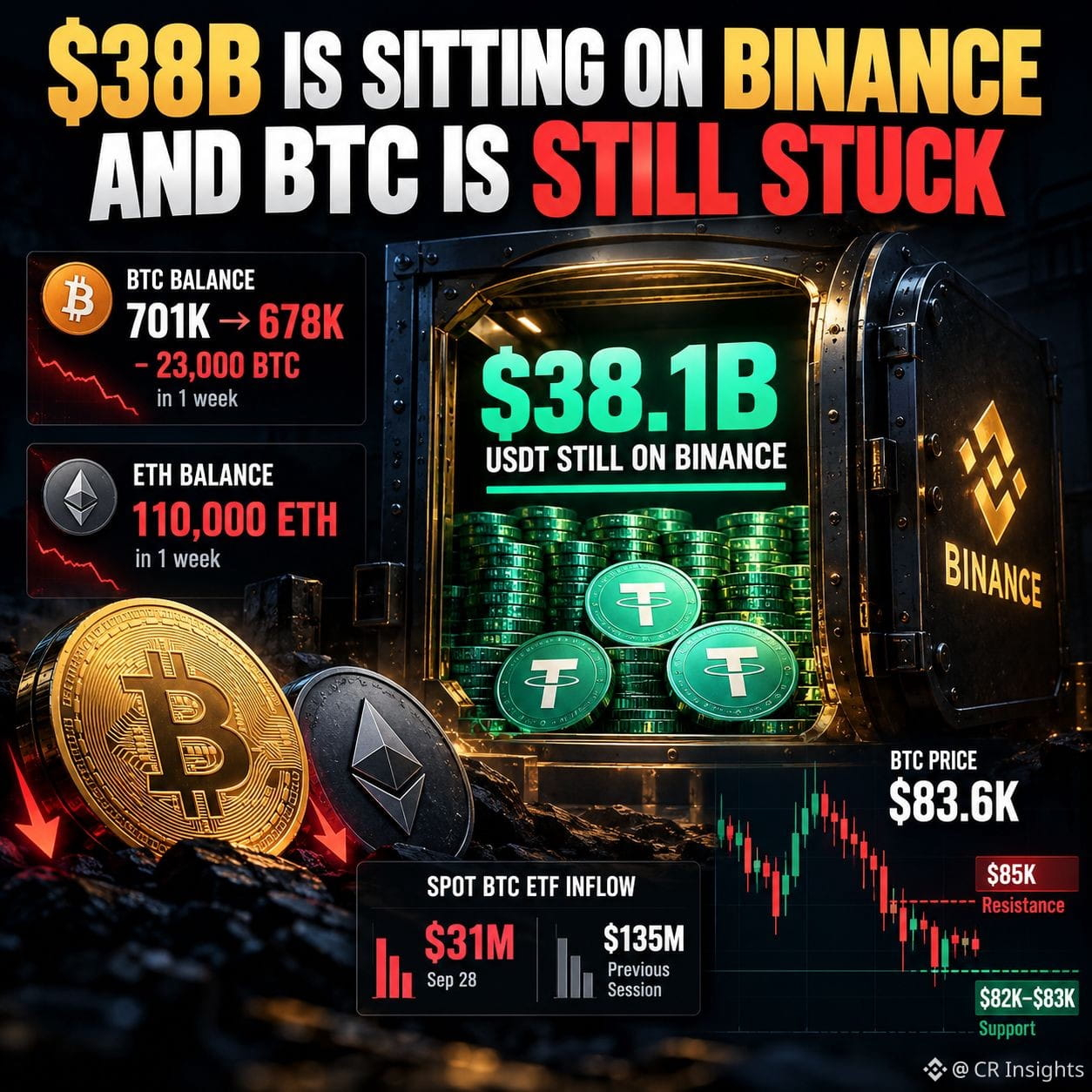
$38B ESTÁ SENTADO EN BINANCE — Y BTC TODAVÍA ATASCADA
Hay una señal de liquidez escondida en los últimos saldos de Binance.
El BTC mantenido en Binance cayó aproximadamente 23.000 BTC en una semana, de alrededor de 701K a 678K. Los saldos de ETH también bajaron en unos 110.000 ETH.
Pero el USDT no se fue.
Binance todavía tenía aproximadamente $38,1B en USDT al 28 de septiembre.
Esa es la parte que me resulta más interesante que otro titular más de “BTC es alcista/bajista”.
El inventario cripto está saliendo del exchange mientras la liquidez en dólares sigue ahí.
Así que el mercado actualmente tiene dos flujos muy distintos ocurriendo en el mismo lugar: menos inventario de BTC/ETH, pero un gran fondo de poder de compra en stablecoins esperando entre bastidores.
Hoy, el BTC ronda los $83,6K, con $82K–$83K actuando como zona de soporte de corto plazo y $85K como la primera resistencia. Las entradas de ETF siguen siendo positivas, pero el ritmo se ha desacelerado: la entrada de BTC spot al ETF del 28 de septiembre fue solo de unos $31M, frente a aproximadamente $135M de la sesión anterior.
Eso deja una prueba de mercado muy simple.
Si BTC recupera $85K mientras ese USDT del exchange se mantiene alto, parte de esa liquidez ociosa podría finalmente empezar a perseguir el spot.
Si BTC pierde $82K, esos mismos $38B cuentan una historia completamente distinta: los traders tenían liquidez disponible, pero no estaban dispuestos a desplegarla.
El siguiente movimiento no se trata solo de cuánto dinero hay en cripto.
Se trata de si el dinero que ya está allí finalmente se mueve.
$BTC $ETH
$38B ESTÁ SENTADO EN BINANCE — Y BTC TODAVÍA ATASCADA
Hay una señal de liquidez escondida en los últimos saldos de Binance.
El BTC mantenido en Binance cayó aproximadamente 23.000 BTC en una semana, de alrededor de 701K a 678K. Los saldos de ETH también bajaron en unos 110.000 ETH.
Pero el USDT no se fue.
Binance todavía tenía aproximadamente $38,1B en USDT al 28 de septiembre.
Esa es la parte que me resulta más interesante que otro titular más de “BTC es alcista/bajista”.
El inventario cripto está saliendo del exchange mientras la liquidez en dólares sigue ahí.
Así que el mercado actualmente tiene dos flujos muy distintos ocurriendo en el mismo lugar: menos inventario de BTC/ETH, pero un gran fondo de poder de compra en stablecoins esperando entre bastidores.
Hoy, el BTC ronda los $83,6K, con $82K–$83K actuando como zona de soporte de corto plazo y $85K como la primera resistencia. Las entradas de ETF siguen siendo positivas, pero el ritmo se ha desacelerado: la entrada de BTC spot al ETF del 28 de septiembre fue solo de unos $31M, frente a aproximadamente $135M de la sesión anterior.
Eso deja una prueba de mercado muy simple.
Si BTC recupera $85K mientras ese USDT del exchange se mantiene alto, parte de esa liquidez ociosa podría finalmente empezar a perseguir el spot.
Si BTC pierde $82K, esos mismos $38B cuentan una historia completamente distinta: los traders tenían liquidez disponible, pero no estaban dispuestos a desplegarla.
El siguiente movimiento no se trata solo de cuánto dinero hay en cripto.
Se trata de si el dinero que ya está allí finalmente se mueve.
$BTC $ETH
Hay una señal de liquidez escondida en los últimos saldos de Binance.
El BTC mantenido en Binance cayó aproximadamente 23.000 BTC en una semana, de alrededor de 701K a 678K. Los saldos de ETH también bajaron en unos 110.000 ETH.
Pero el USDT no se fue.
Binance todavía tenía aproximadamente $38,1B en USDT al 28 de septiembre.
Esa es la parte que me resulta más interesante que otro titular más de “BTC es alcista/bajista”.
El inventario cripto está saliendo del exchange mientras la liquidez en dólares sigue ahí.
Así que el mercado actualmente tiene dos flujos muy distintos ocurriendo en el mismo lugar: menos inventario de BTC/ETH, pero un gran fondo de poder de compra en stablecoins esperando entre bastidores.
Hoy, el BTC ronda los $83,6K, con $82K–$83K actuando como zona de soporte de corto plazo y $85K como la primera resistencia. Las entradas de ETF siguen siendo positivas, pero el ritmo se ha desacelerado: la entrada de BTC spot al ETF del 28 de septiembre fue solo de unos $31M, frente a aproximadamente $135M de la sesión anterior.
Eso deja una prueba de mercado muy simple.
Si BTC recupera $85K mientras ese USDT del exchange se mantiene alto, parte de esa liquidez ociosa podría finalmente empezar a perseguir el spot.
Si BTC pierde $82K, esos mismos $38B cuentan una historia completamente distinta: los traders tenían liquidez disponible, pero no estaban dispuestos a desplegarla.
El siguiente movimiento no se trata solo de cuánto dinero hay en cripto.
Se trata de si el dinero que ya está allí finalmente se mueve.
$BTC $ETH
156
·
--
$BR — LARGO
$BR bota fuertemente desde $0.8300 y ahora está consolidando alrededor de $0.842. Mantenerse por encima de $0.8300 mantiene intacta la estructura de recuperación.
Plan de Operación:
Entrada: $0.8380–$0.8430
TP1: $0.8600
TP2: $0.8780
TP3: $0.8950
SL: $0.8280
$BR — LARGO
$BR bota fuertemente desde $0.8300 y ahora está consolidando alrededor de $0.842. Mantenerse por encima de $0.8300 mantiene intacta la estructura de recuperación.
Plan de Operación:
Entrada: $0.8380–$0.8430
TP1: $0.8600
TP2: $0.8780
TP3: $0.8950
SL: $0.8280
$BR bota fuertemente desde $0.8300 y ahora está consolidando alrededor de $0.842. Mantenerse por encima de $0.8300 mantiene intacta la estructura de recuperación.
Plan de Operación:
Entrada: $0.8380–$0.8430
TP1: $0.8600
TP2: $0.8780
TP3: $0.8950
SL: $0.8280
2
943
·
--
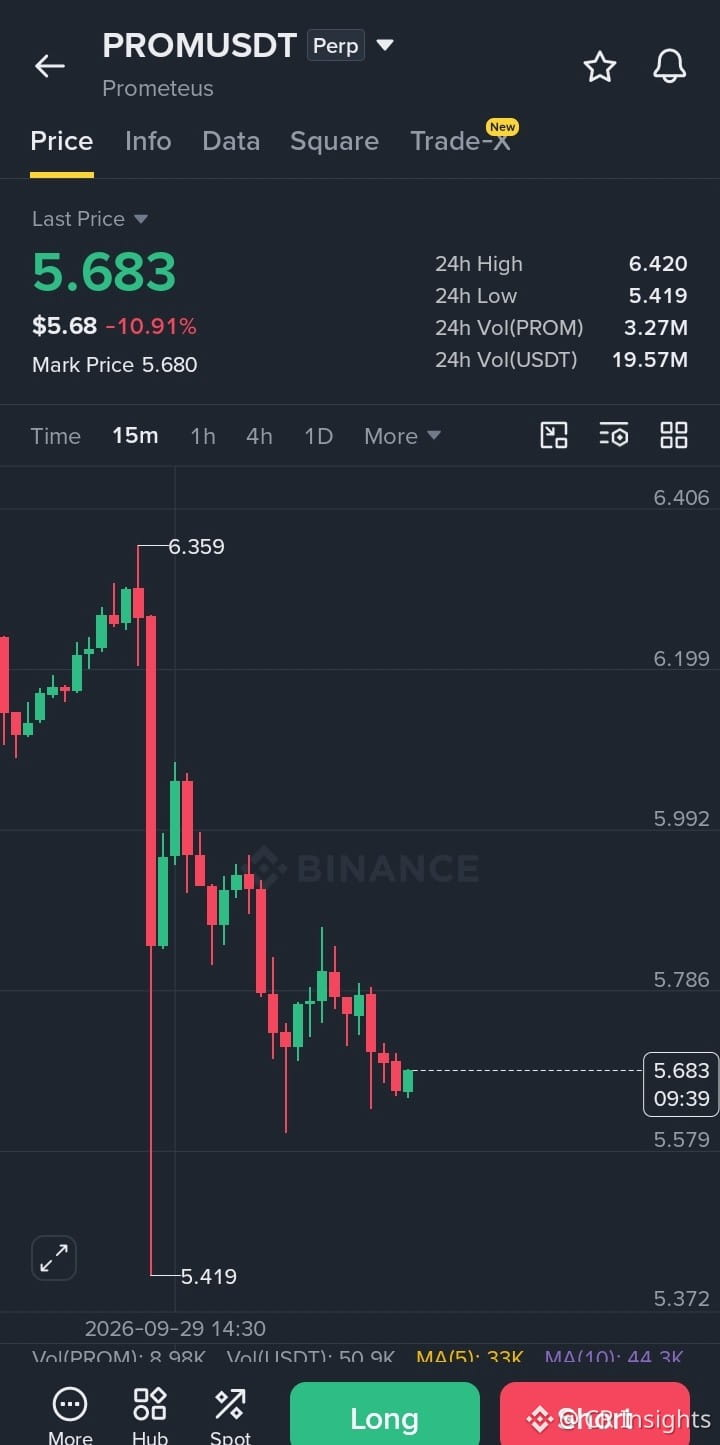
$PROM — CORTO
$PROM rechazado en $6.359 y continúa marcando máximos más bajos y mínimos más bajos. El precio se mantiene cerca de los mínimos de la sesión.
Plan de trading:
Entrada: $5.68–$5.75
TP1: $5.58
TP2: $5.42
TP3: $5.30
SL: $5.88
$PROM — CORTO
$PROM rechazado en $6.359 y continúa marcando máximos más bajos y mínimos más bajos. El precio se mantiene cerca de los mínimos de la sesión.
Plan de trading:
Entrada: $5.68–$5.75
TP1: $5.58
TP2: $5.42
TP3: $5.30
SL: $5.88
$PROM rechazado en $6.359 y continúa marcando máximos más bajos y mínimos más bajos. El precio se mantiene cerca de los mínimos de la sesión.
Plan de trading:
Entrada: $5.68–$5.75
TP1: $5.58
TP2: $5.42
TP3: $5.30
SL: $5.88
254
·
--
$AAVE — LARGO
{future}(AAVEUSDT)
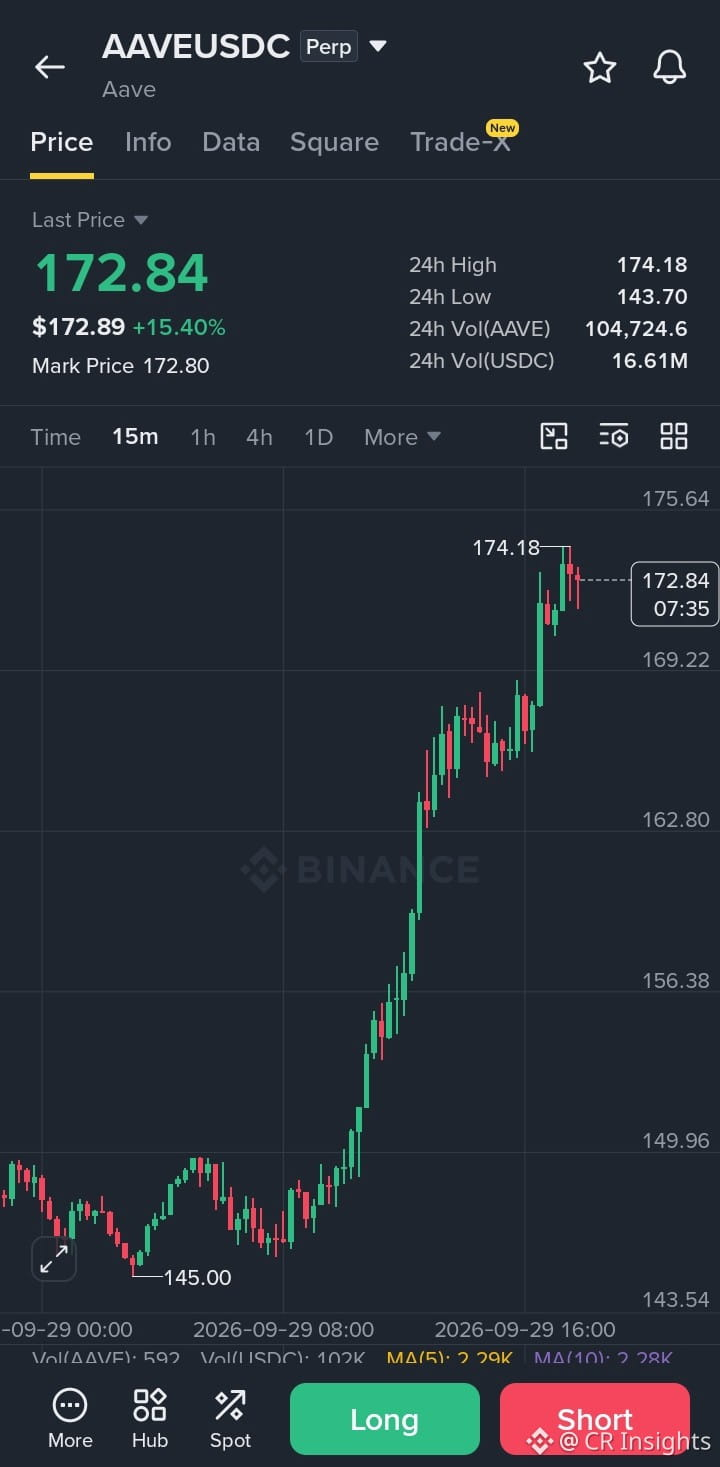
$AAVE está en una fuerte tendencia alcista de 15M después de romper desde la zona de $145. El precio se mantiene cerca del máximo de $174.18, con la estructura de la ruptura aún intacta.
Plan de operaciones:
Entrada: $169.50–$172.00
TP1: $174.20
TP2: $178.00
TP3: $182.00
SL: $166.50
$AAVE — LARGO
$AAVE está en una fuerte tendencia alcista de 15M después de romper desde la zona de $145. El precio se mantiene cerca del máximo de $174.18, con la estructura de la ruptura aún intacta.
Plan de operaciones:
Entrada: $169.50–$172.00
TP1: $174.20
TP2: $178.00
TP3: $182.00
SL: $166.50
$AAVE está en una fuerte tendencia alcista de 15M después de romper desde la zona de $145. El precio se mantiene cerca del máximo de $174.18, con la estructura de la ruptura aún intacta.
Plan de operaciones:
Entrada: $169.50–$172.00
TP1: $174.20
TP2: $178.00
TP3: $182.00
SL: $166.50
120
·
--
$0G — LARGO
{future}(0GUSDT)
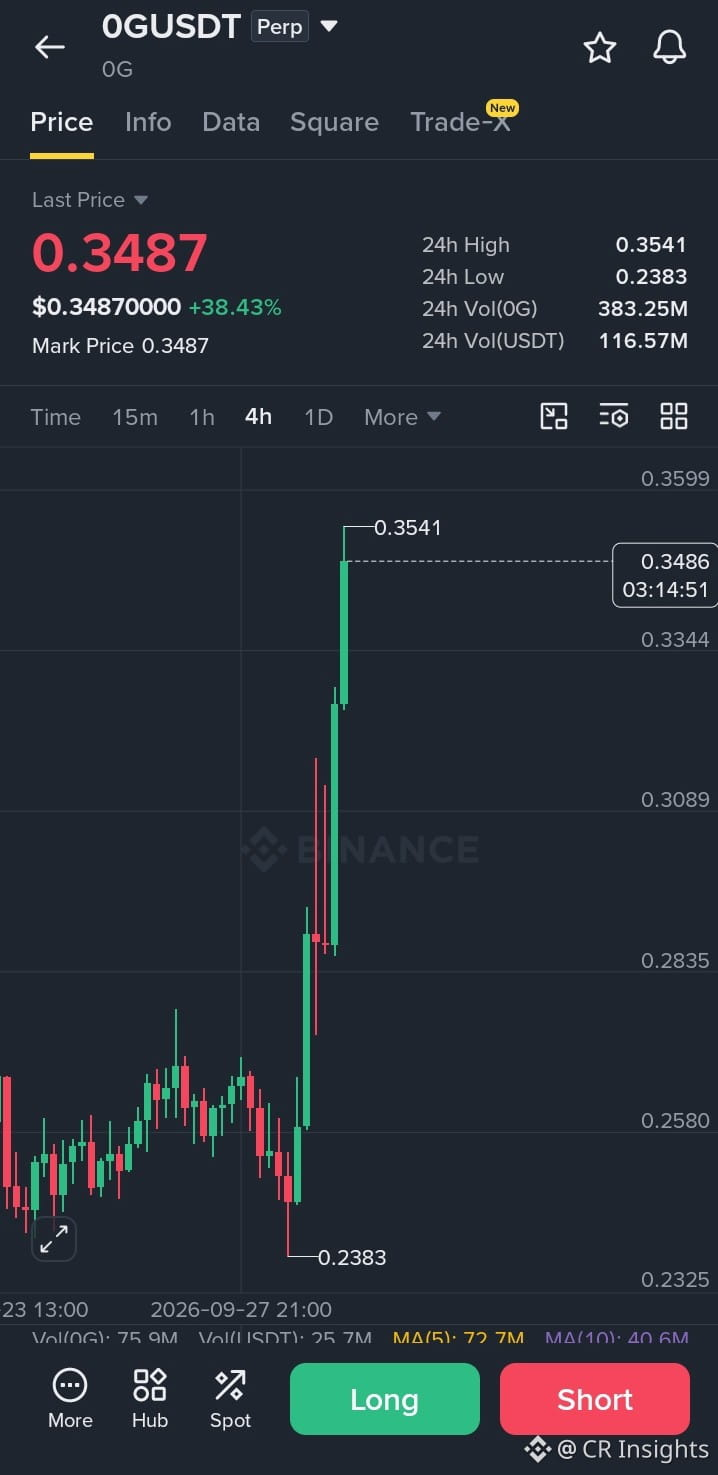
$0G rompió bruscamente desde la zona de $0.258 y ahora se mantiene por encima de $0.334. La estructura de ruptura sigue siendo alcista mientras el precio se mantenga por encima de la zona reciente de ruptura.
Plan de Trade:
Entrada: $0.3300–$0.3400
TP1: $0.3540
TP2: $0.3700
TP3: $0.3900
SL: $0.3150
$0G — LARGO
$0G rompió bruscamente desde la zona de $0.258 y ahora se mantiene por encima de $0.334. La estructura de ruptura sigue siendo alcista mientras el precio se mantenga por encima de la zona reciente de ruptura.
Plan de Trade:
Entrada: $0.3300–$0.3400
TP1: $0.3540
TP2: $0.3700
TP3: $0.3900
SL: $0.3150
$0G rompió bruscamente desde la zona de $0.258 y ahora se mantiene por encima de $0.334. La estructura de ruptura sigue siendo alcista mientras el precio se mantenga por encima de la zona reciente de ruptura.
Plan de Trade:
Entrada: $0.3300–$0.3400
TP1: $0.3540
TP2: $0.3700
TP3: $0.3900
SL: $0.3150
285
·
--
$SYRUP — LARGO
{future}(SYRUPUSDT)
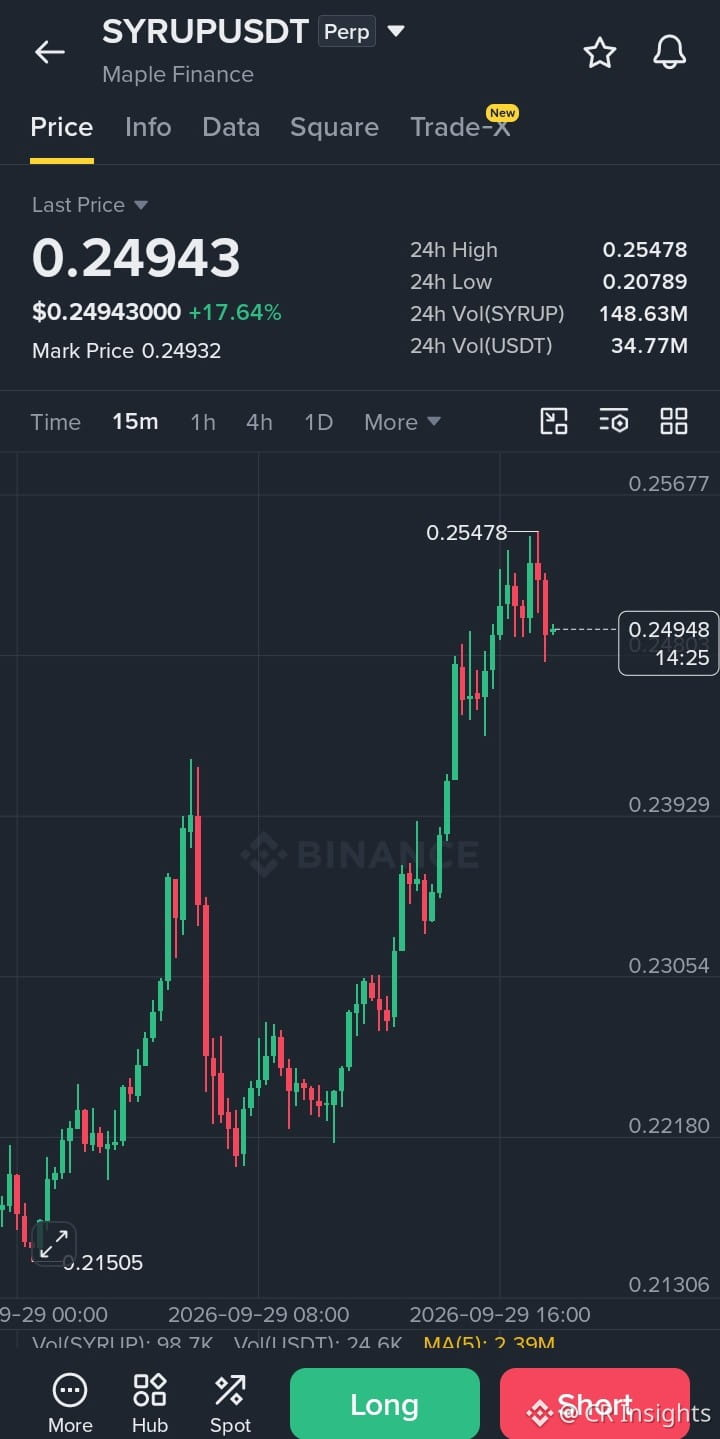
$SYRUP está manteniendo una fuerte tendencia alcista de 15M después de romper por encima de $0.24. El precio está consolidando cerca del máximo de $0.2548, manteniendo intacta la estructura alcista.
Plan de Operación:
Entrada: $0.2440–$0.2480
TP1: $0.2548
TP2: $0.2620
TP3: $0.2700
SL: $0.2370
$SYRUP — LARGO
$SYRUP está manteniendo una fuerte tendencia alcista de 15M después de romper por encima de $0.24. El precio está consolidando cerca del máximo de $0.2548, manteniendo intacta la estructura alcista.
Plan de Operación:
Entrada: $0.2440–$0.2480
TP1: $0.2548
TP2: $0.2620
TP3: $0.2700
SL: $0.2370
$SYRUP está manteniendo una fuerte tendencia alcista de 15M después de romper por encima de $0.24. El precio está consolidando cerca del máximo de $0.2548, manteniendo intacta la estructura alcista.
Plan de Operación:
Entrada: $0.2440–$0.2480
TP1: $0.2548
TP2: $0.2620
TP3: $0.2700
SL: $0.2370
180
·
--
GANANCIAS DE MICRON MAÑANA — NO SOLO ESTOY MIRANDO LOS INGRESOS 👀
Micron reporta mañana y, honestamente, el número de ingresos de $50B no es la parte que más me interesa.
El número al que vuelvo una y otra vez es 86%.
Esa es la guía de margen bruto para el 4T de Micron. En el 3T, ya alcanzó un margen bruto no-GAAP de 84.9%, así que la empresa básicamente le está pidiendo al mercado que crea que los márgenes pueden subir aún más.
Y hay un detalle.
Micron dijo que su perspectiva de margen para el 4T asume una moderación significativa en la tasa de aumentos de precios.
Eso es lo que hace interesante lo de mañana.
Si los precios de la memoria no están subiendo tan rápido, pero Micron aun así puede entregar márgenes de alrededor de 86%, entonces esto empieza a parecerse menos a un pico temporal de precios y más a un ciclo de memoria mucho más fuerte.
Pero si los márgenes salen más débiles y la dirección empieza a hablar de presión de precios, o ajusta la forma en que ve oferta o demanda, entonces el mercado tendrá algo nuevo en qué pensar.
Por eso no me limito a preguntar solo:
“¿Micron superará las ganancias?”
Estoy observando lo que dice la dirección sobre el FY2027.
Porque la prueba real de este superciclo de memoria no es si Micron puede tener un trimestre masivo.
La cuestión es si estos márgenes y la demanda de memoria impulsada por IA pueden mantenerse elevados después de este trimestre.
Mañana debería darnos una respuesta mucho más clara.
$MU
#EarningsSeason #Micron #MU #Semiconductors
GANANCIAS DE MICRON MAÑANA — NO SOLO ESTOY MIRANDO LOS INGRESOS 👀
Micron reporta mañana y, honestamente, el número de ingresos de $50B no es la parte que más me interesa.
El número al que vuelvo una y otra vez es 86%.
Esa es la guía de margen bruto para el 4T de Micron. En el 3T, ya alcanzó un margen bruto no-GAAP de 84.9%, así que la empresa básicamente le está pidiendo al mercado que crea que los márgenes pueden subir aún más.
Y hay un detalle.
Micron dijo que su perspectiva de margen para el 4T asume una moderación significativa en la tasa de aumentos de precios.
Eso es lo que hace interesante lo de mañana.
Si los precios de la memoria no están subiendo tan rápido, pero Micron aun así puede entregar márgenes de alrededor de 86%, entonces esto empieza a parecerse menos a un pico temporal de precios y más a un ciclo de memoria mucho más fuerte.
Pero si los márgenes salen más débiles y la dirección empieza a hablar de presión de precios, o ajusta la forma en que ve oferta o demanda, entonces el mercado tendrá algo nuevo en qué pensar.
Por eso no me limito a preguntar solo:
“¿Micron superará las ganancias?”
Estoy observando lo que dice la dirección sobre el FY2027.
Porque la prueba real de este superciclo de memoria no es si Micron puede tener un trimestre masivo.
La cuestión es si estos márgenes y la demanda de memoria impulsada por IA pueden mantenerse elevados después de este trimestre.
Mañana debería darnos una respuesta mucho más clara.
$MU
#EarningsSeason #Micron #MU #Semiconductors
Micron reporta mañana y, honestamente, el número de ingresos de $50B no es la parte que más me interesa.
El número al que vuelvo una y otra vez es 86%.
Esa es la guía de margen bruto para el 4T de Micron. En el 3T, ya alcanzó un margen bruto no-GAAP de 84.9%, así que la empresa básicamente le está pidiendo al mercado que crea que los márgenes pueden subir aún más.
Y hay un detalle.
Micron dijo que su perspectiva de margen para el 4T asume una moderación significativa en la tasa de aumentos de precios.
Eso es lo que hace interesante lo de mañana.
Si los precios de la memoria no están subiendo tan rápido, pero Micron aun así puede entregar márgenes de alrededor de 86%, entonces esto empieza a parecerse menos a un pico temporal de precios y más a un ciclo de memoria mucho más fuerte.
Pero si los márgenes salen más débiles y la dirección empieza a hablar de presión de precios, o ajusta la forma en que ve oferta o demanda, entonces el mercado tendrá algo nuevo en qué pensar.
Por eso no me limito a preguntar solo:
“¿Micron superará las ganancias?”
Estoy observando lo que dice la dirección sobre el FY2027.
Porque la prueba real de este superciclo de memoria no es si Micron puede tener un trimestre masivo.
La cuestión es si estos márgenes y la demanda de memoria impulsada por IA pueden mantenerse elevados después de este trimestre.
Mañana debería darnos una respuesta mucho más clara.
$MU
#EarningsSeason #Micron #MU #Semiconductors
268
·
--
$TAO — $300 ES EL NIVEL DE TRADING
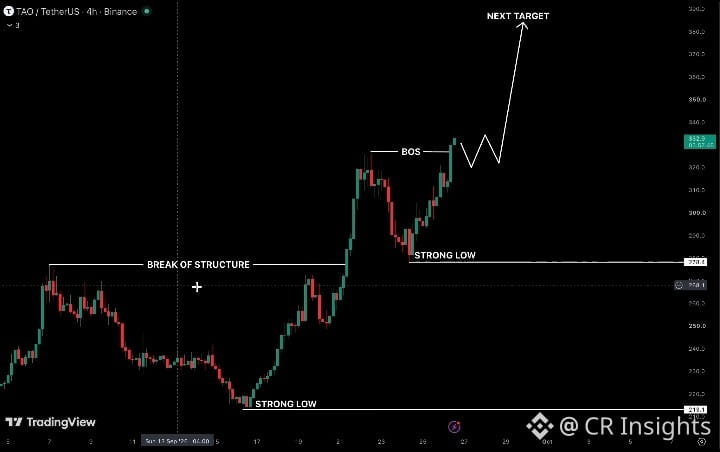
TAO fue de $222 a $341 en diez días. Ahora retrocedió a $300–$316.
Ahí es donde yo juzgaría este movimiento.
Si los compradores defienden esta zona y el precio vuelve a subir por encima de $341, la ruptura todavía tiene margen hacia $428. Pero si se rompe $300, ya no trato el retroceso como una configuración de comprar la caída. $280–$270 se convierte en la siguiente zona que esperaría que el precio pruebe.
Después de un movimiento de $120, comprar solo porque está retrocediendo no es la operación. La reacción alrededor de $300–$316 es la operación.
$TAO #TAO
$TAO — $300 ES EL NIVEL DE TRADING
TAO fue de $222 a $341 en diez días. Ahora retrocedió a $300–$316.
Ahí es donde yo juzgaría este movimiento.
Si los compradores defienden esta zona y el precio vuelve a subir por encima de $341, la ruptura todavía tiene margen hacia $428. Pero si se rompe $300, ya no trato el retroceso como una configuración de comprar la caída. $280–$270 se convierte en la siguiente zona que esperaría que el precio pruebe.
Después de un movimiento de $120, comprar solo porque está retrocediendo no es la operación. La reacción alrededor de $300–$316 es la operación.
$TAO #TAO
TAO fue de $222 a $341 en diez días. Ahora retrocedió a $300–$316.
Ahí es donde yo juzgaría este movimiento.
Si los compradores defienden esta zona y el precio vuelve a subir por encima de $341, la ruptura todavía tiene margen hacia $428. Pero si se rompe $300, ya no trato el retroceso como una configuración de comprar la caída. $280–$270 se convierte en la siguiente zona que esperaría que el precio pruebe.
Después de un movimiento de $120, comprar solo porque está retrocediendo no es la operación. La reacción alrededor de $300–$316 es la operación.
$TAO #TAO
441
·
--
XRP — VIENDO LA LÍNEA DE TENDENCIA INFERIOR
En el gráfico mensual, la línea de tendencia alcista se sitúa alrededor de $0.80–$0.60. Si XRP tiene un retroceso adecuado hacia esa zona, ahí es donde estaría prestando atención.
No porque $0.80 o $0.60 estén garantizados como el mínimo. Lo que importa es la reacción en esa zona.
Si esa línea de tendencia se mantiene y XRP empieza a volver a subir, $3.20–$3.50 es la gran zona que me gustaría volver a ver.
Así que no estoy persiguiendo el movimiento en $1.50. Prefiero ver primero qué hace XRP en la línea de tendencia a largo plazo.
Si se rompe, toda esta idea cambia.
Eso es solo lo que estoy viendo en el gráfico mensual ahora mismo.$XRP
XRP — VIENDO LA LÍNEA DE TENDENCIA INFERIOR
En el gráfico mensual, la línea de tendencia alcista se sitúa alrededor de $0.80–$0.60. Si XRP tiene un retroceso adecuado hacia esa zona, ahí es donde estaría prestando atención.
No porque $0.80 o $0.60 estén garantizados como el mínimo. Lo que importa es la reacción en esa zona.
Si esa línea de tendencia se mantiene y XRP empieza a volver a subir, $3.20–$3.50 es la gran zona que me gustaría volver a ver.
Así que no estoy persiguiendo el movimiento en $1.50. Prefiero ver primero qué hace XRP en la línea de tendencia a largo plazo.
Si se rompe, toda esta idea cambia.
Eso es solo lo que estoy viendo en el gráfico mensual ahora mismo.$XRP
En el gráfico mensual, la línea de tendencia alcista se sitúa alrededor de $0.80–$0.60. Si XRP tiene un retroceso adecuado hacia esa zona, ahí es donde estaría prestando atención.
No porque $0.80 o $0.60 estén garantizados como el mínimo. Lo que importa es la reacción en esa zona.
Si esa línea de tendencia se mantiene y XRP empieza a volver a subir, $3.20–$3.50 es la gran zona que me gustaría volver a ver.
Así que no estoy persiguiendo el movimiento en $1.50. Prefiero ver primero qué hace XRP en la línea de tendencia a largo plazo.
Si se rompe, toda esta idea cambia.
Eso es solo lo que estoy viendo en el gráfico mensual ahora mismo.$XRP
6
1.6k
·
--
Parcialmente cierto
HAEDAL ACABA DE LLEGAR A 1 M$ — PERO MIRA ADÓNDE VA EL DINERO
El Lending Vault de Haedal superó el 1 M$ en liquidez en solo dos días.
Lo que llamó mi atención es que Haedal no está construyendo otro pool de préstamos aislado.
La bóveda recibe depósitos y los asigna automáticamente a través de los mercados de lending de Sui existentes, incluyendo $NAVI.US , Suilend, Scallop, AlphaFi y CurrentSUI.
Así que esos 1 M$ nos dicen más que “Haedal atrajo depósitos”.
Indica que existe demanda por una forma más sencilla de acceder a oportunidades de lending en Sui sin gestionar manualmente los diferentes mercados.
Además, Haedal ha seguido aumentando los topes de la bóveda a medida que entraba la liquidez, y tanto SUI como USDC ya alcanzan una capacidad de 700K.
Eso hace que lo siguiente que vale la pena observar sea bastante simple:
¿En qué terminan realmente quedando la liquidez?
Si uno o dos mercados empiezan a captar una porción mucho mayor, eso podría revelar dónde se concentra la demanda de lending o mejores oportunidades en Sui.
Los 1 M$ son el titular.
La asignación es lo que yo vigilaría.
$HAEDAL $SUI #Haedal @HaedalProtocol
NFA
¿Qué importa más para Haedal a partir de aquí?
HAEDAL ACABA DE LLEGAR A 1 M$ — PERO MIRA ADÓNDE VA EL DINERO
El Lending Vault de Haedal superó el 1 M$ en liquidez en solo dos días.
Lo que llamó mi atención es que Haedal no está construyendo otro pool de préstamos aislado.
La bóveda recibe depósitos y los asigna automáticamente a través de los mercados de lending de Sui existentes, incluyendo $NAVI.US , Suilend, Scallop, AlphaFi y CurrentSUI.
Así que esos 1 M$ nos dicen más que “Haedal atrajo depósitos”.
Indica que existe demanda por una forma más sencilla de acceder a oportunidades de lending en Sui sin gestionar manualmente los diferentes mercados.
Además, Haedal ha seguido aumentando los topes de la bóveda a medida que entraba la liquidez, y tanto SUI como USDC ya alcanzan una capacidad de 700K.
Eso hace que lo siguiente que vale la pena observar sea bastante simple:
¿En qué terminan realmente quedando la liquidez?
Si uno o dos mercados empiezan a captar una porción mucho mayor, eso podría revelar dónde se concentra la demanda de lending o mejores oportunidades en Sui.
Los 1 M$ son el titular.
La asignación es lo que yo vigilaría.
$HAEDAL $SUI #Haedal @Haedal Protocol
NFA
¿Qué importa más para Haedal a partir de aquí?
El Lending Vault de Haedal superó el 1 M$ en liquidez en solo dos días.
Lo que llamó mi atención es que Haedal no está construyendo otro pool de préstamos aislado.
La bóveda recibe depósitos y los asigna automáticamente a través de los mercados de lending de Sui existentes, incluyendo $NAVI.US , Suilend, Scallop, AlphaFi y CurrentSUI.
Así que esos 1 M$ nos dicen más que “Haedal atrajo depósitos”.
Indica que existe demanda por una forma más sencilla de acceder a oportunidades de lending en Sui sin gestionar manualmente los diferentes mercados.
Además, Haedal ha seguido aumentando los topes de la bóveda a medida que entraba la liquidez, y tanto SUI como USDC ya alcanzan una capacidad de 700K.
Eso hace que lo siguiente que vale la pena observar sea bastante simple:
¿En qué terminan realmente quedando la liquidez?
Si uno o dos mercados empiezan a captar una porción mucho mayor, eso podría revelar dónde se concentra la demanda de lending o mejores oportunidades en Sui.
Los 1 M$ son el titular.
La asignación es lo que yo vigilaría.
$HAEDAL $SUI #Haedal @Haedal Protocol
NFA
¿Qué importa más para Haedal a partir de aquí?
More TVL
86%
Where liquidity goes
14%
7 Voto(s) • Votación cerrada
2
3
2.1k
·
--
NO PERSIGAS $ZEC ANTES DE VER ESTO
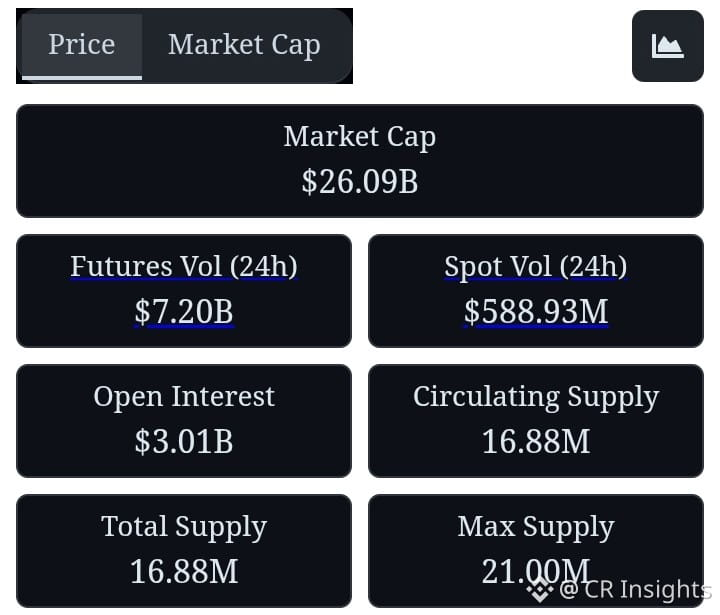
ZEC vuelve a estar alrededor de $1.552, pero los números debajo del precio de hoy son más interesantes que la vela.
Hay alrededor de $7,4B en volumen de futuros de ZEC frente a solo $603M en volumen spot, mientras que el interés abierto se sitúa cerca de $3,03B. Hyperliquid por sí solo tiene aproximadamente $817M en interés abierto (OI), y el financiamiento sigue siendo positivo.
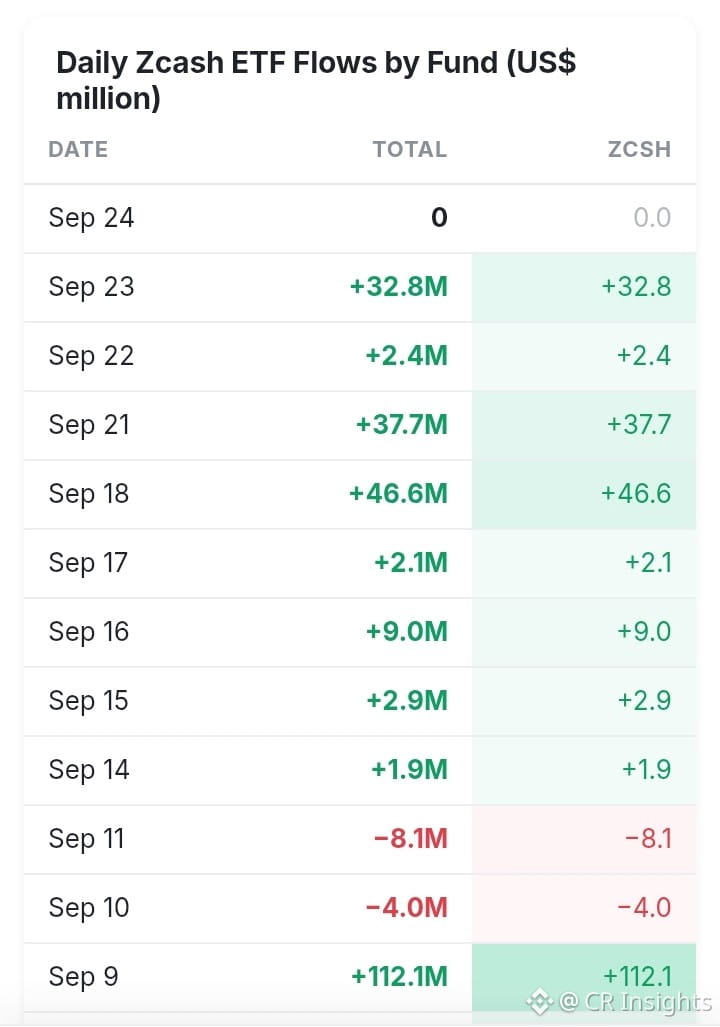
Al mismo tiempo, el dinero real sigue entrando al ETF.
La última sesión reportada trajo otros $32,8M de entradas, llevando la entrada neta del ETF de Zcash a 30 días a unos $306M y las tenencias a cerca de 644.878 ZEC.
Luego, mira lo que pasó durante la última ruptura.
ZEC llegó a rondar $1.693 el 23 de septiembre, pero el movimiento no estuvo acompañado por una explosión nueva del interés abierto en OKX. El OI era de alrededor de $186M, por debajo de los aproximadamente $229M vistos el 17 de septiembre, mientras que la relación cuenta largos/cortos fue solo de 0,48.
Así que ese rally no fue simplemente nuevos largos acumulándose en ZEC.
Los cortos se estaban apretando, mientras que la demanda genuina ya estaba entrando al mercado.
Ahora ZEC se ha retraído por debajo de $1.600, con la estructura actual colocando $1.574–$1.601 alrededor de la zona de resistencia inmediata y aproximadamente $1.518–$1.492 por debajo.
Si los compradores empujan a ZEC de nuevo por encima de $1.600 mientras el volumen spot por fin se expande, la ruptura fallida puede volver a convertirse en una zona de squeeze — especialmente con el financiamiento ya en positivo.
Pero del otro lado hay una trampa.
Si ZEC se dispara por encima de $1.600 mientras el OI aumenta y el spot permanece tan delgado, los últimos largos podrían estar proporcionando la liquidez para otro rechazo.
Eso haría que $1.600 sea más que resistencia. Se convierte en la línea entre una recuperación real y otro falso movimiento impulsado por el apalancamiento.
$ZEC
{future}(ZECUSDT)
#zec
NO PERSIGAS $ZEC ANTES DE VER ESTO
ZEC vuelve a estar alrededor de $1.552, pero los números debajo del precio de hoy son más interesantes que la vela.
Hay alrededor de $7,4B en volumen de futuros de ZEC frente a solo $603M en volumen spot, mientras que el interés abierto se sitúa cerca de $3,03B. Hyperliquid por sí solo tiene aproximadamente $817M en interés abierto (OI), y el financiamiento sigue siendo positivo.
Al mismo tiempo, el dinero real sigue entrando al ETF.
La última sesión reportada trajo otros $32,8M de entradas, llevando la entrada neta del ETF de Zcash a 30 días a unos $306M y las tenencias a cerca de 644.878 ZEC.
Luego, mira lo que pasó durante la última ruptura.
ZEC llegó a rondar $1.693 el 23 de septiembre, pero el movimiento no estuvo acompañado por una explosión nueva del interés abierto en OKX. El OI era de alrededor de $186M, por debajo de los aproximadamente $229M vistos el 17 de septiembre, mientras que la relación cuenta largos/cortos fue solo de 0,48.
Así que ese rally no fue simplemente nuevos largos acumulándose en ZEC.
Los cortos se estaban apretando, mientras que la demanda genuina ya estaba entrando al mercado.
Ahora ZEC se ha retraído por debajo de $1.600, con la estructura actual colocando $1.574–$1.601 alrededor de la zona de resistencia inmediata y aproximadamente $1.518–$1.492 por debajo.
Si los compradores empujan a ZEC de nuevo por encima de $1.600 mientras el volumen spot por fin se expande, la ruptura fallida puede volver a convertirse en una zona de squeeze — especialmente con el financiamiento ya en positivo.
Pero del otro lado hay una trampa.
Si ZEC se dispara por encima de $1.600 mientras el OI aumenta y el spot permanece tan delgado, los últimos largos podrían estar proporcionando la liquidez para otro rechazo.
Eso haría que $1.600 sea más que resistencia. Se convierte en la línea entre una recuperación real y otro falso movimiento impulsado por el apalancamiento.
$ZEC
#zec
ZEC vuelve a estar alrededor de $1.552, pero los números debajo del precio de hoy son más interesantes que la vela.
Hay alrededor de $7,4B en volumen de futuros de ZEC frente a solo $603M en volumen spot, mientras que el interés abierto se sitúa cerca de $3,03B. Hyperliquid por sí solo tiene aproximadamente $817M en interés abierto (OI), y el financiamiento sigue siendo positivo.
Al mismo tiempo, el dinero real sigue entrando al ETF.
La última sesión reportada trajo otros $32,8M de entradas, llevando la entrada neta del ETF de Zcash a 30 días a unos $306M y las tenencias a cerca de 644.878 ZEC.
Luego, mira lo que pasó durante la última ruptura.
ZEC llegó a rondar $1.693 el 23 de septiembre, pero el movimiento no estuvo acompañado por una explosión nueva del interés abierto en OKX. El OI era de alrededor de $186M, por debajo de los aproximadamente $229M vistos el 17 de septiembre, mientras que la relación cuenta largos/cortos fue solo de 0,48.
Así que ese rally no fue simplemente nuevos largos acumulándose en ZEC.
Los cortos se estaban apretando, mientras que la demanda genuina ya estaba entrando al mercado.
Ahora ZEC se ha retraído por debajo de $1.600, con la estructura actual colocando $1.574–$1.601 alrededor de la zona de resistencia inmediata y aproximadamente $1.518–$1.492 por debajo.
Si los compradores empujan a ZEC de nuevo por encima de $1.600 mientras el volumen spot por fin se expande, la ruptura fallida puede volver a convertirse en una zona de squeeze — especialmente con el financiamiento ya en positivo.
Pero del otro lado hay una trampa.
Si ZEC se dispara por encima de $1.600 mientras el OI aumenta y el spot permanece tan delgado, los últimos largos podrían estar proporcionando la liquidez para otro rechazo.
Eso haría que $1.600 sea más que resistencia. Se convierte en la línea entre una recuperación real y otro falso movimiento impulsado por el apalancamiento.
$ZEC
#zec
451
·
--
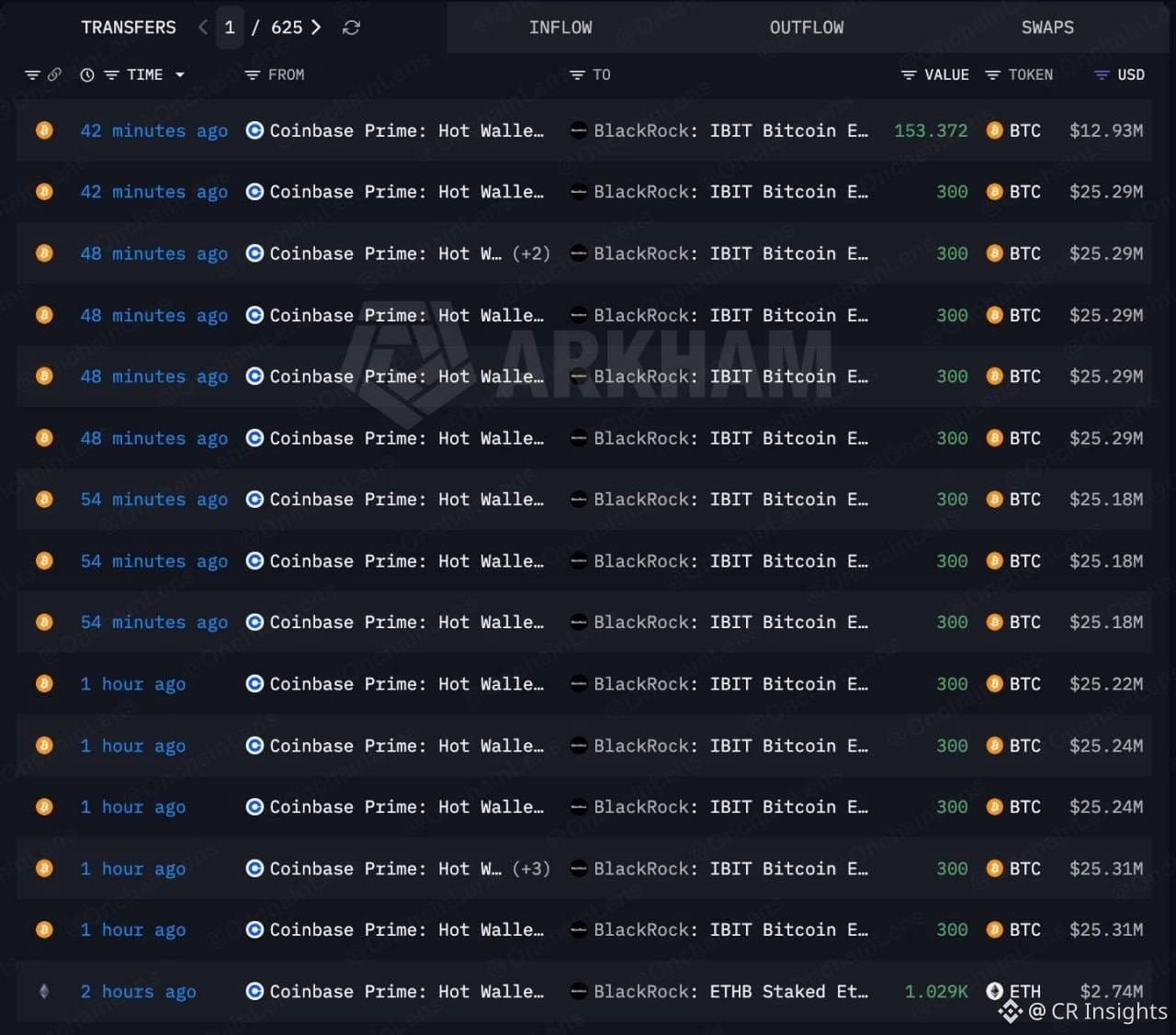
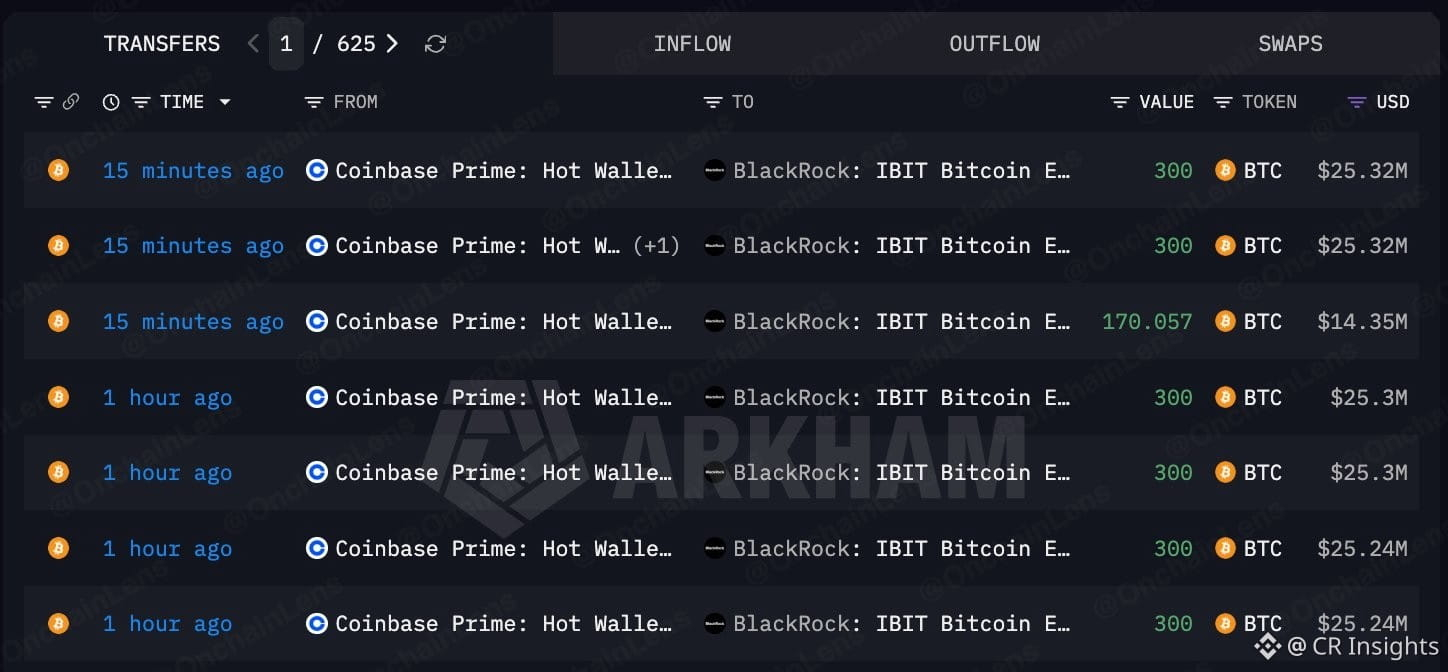
LA COMPRA DE BITCOIN POR 316 MILLONES DE BLACKROCK NO ES LA SEÑAL DE ONDO
BlackRock acaba de mover otros 3.750 BTC — aproximadamente 316 millones de dólares — a IBIT desde Coinbase Prime.
Casi al mismo tiempo, Ondo anunció tres nuevos productos de cartera onchain basados en estrategias desarrolladas por BlackRock.
Titular fácil: BlackRock es optimista con las criptomonedas, así que ONDO debería beneficiarse.
La distinción más útil es que el flujo de 316 millones de dólares en BTC y el desarrollo de ONDO son mecanismos completamente diferentes.
Comprar en IBIT genera exposición a BTC.
El lanzamiento de Ondo crea exposición de carteras tokenizadas basada en estrategias desarrolladas por BlackRock.
Para ONDO, la segunda es la señal que vale la pena seguir.
Porque la prueba real no es si BlackRock compra más BTC.
Es si esas estrategias institucionales realmente atraen capital onchain, liquidez secundaria y uso en DeFi.
Si lo hacen, ONDO ya no solo se beneficia del relato de la “tokenización”: su infraestructura se está usando para empaquetar decisiones de asignación institucional en productos onchain negociables.
Eso hace que el movimiento actual de ONDO tenga algo mucho más útil que observar que el titular de BlackRock:
¿El nuevo producto crea una demanda onchain medible, o el mercado fija el precio del anuncio antes de que llegue el uso?
$ONDO $BTC
LA COMPRA DE BITCOIN POR 316 MILLONES DE BLACKROCK NO ES LA SEÑAL DE ONDO
BlackRock acaba de mover otros 3.750 BTC — aproximadamente 316 millones de dólares — a IBIT desde Coinbase Prime.
Casi al mismo tiempo, Ondo anunció tres nuevos productos de cartera onchain basados en estrategias desarrolladas por BlackRock.
Titular fácil: BlackRock es optimista con las criptomonedas, así que ONDO debería beneficiarse.
La distinción más útil es que el flujo de 316 millones de dólares en BTC y el desarrollo de ONDO son mecanismos completamente diferentes.
Comprar en IBIT genera exposición a BTC.
El lanzamiento de Ondo crea exposición de carteras tokenizadas basada en estrategias desarrolladas por BlackRock.
Para ONDO, la segunda es la señal que vale la pena seguir.
Porque la prueba real no es si BlackRock compra más BTC.
Es si esas estrategias institucionales realmente atraen capital onchain, liquidez secundaria y uso en DeFi.
Si lo hacen, ONDO ya no solo se beneficia del relato de la “tokenización”: su infraestructura se está usando para empaquetar decisiones de asignación institucional en productos onchain negociables.
Eso hace que el movimiento actual de ONDO tenga algo mucho más útil que observar que el titular de BlackRock:
¿El nuevo producto crea una demanda onchain medible, o el mercado fija el precio del anuncio antes de que llegue el uso?
$ONDO $BTC
BlackRock acaba de mover otros 3.750 BTC — aproximadamente 316 millones de dólares — a IBIT desde Coinbase Prime.
Casi al mismo tiempo, Ondo anunció tres nuevos productos de cartera onchain basados en estrategias desarrolladas por BlackRock.
Titular fácil: BlackRock es optimista con las criptomonedas, así que ONDO debería beneficiarse.
La distinción más útil es que el flujo de 316 millones de dólares en BTC y el desarrollo de ONDO son mecanismos completamente diferentes.
Comprar en IBIT genera exposición a BTC.
El lanzamiento de Ondo crea exposición de carteras tokenizadas basada en estrategias desarrolladas por BlackRock.
Para ONDO, la segunda es la señal que vale la pena seguir.
Porque la prueba real no es si BlackRock compra más BTC.
Es si esas estrategias institucionales realmente atraen capital onchain, liquidez secundaria y uso en DeFi.
Si lo hacen, ONDO ya no solo se beneficia del relato de la “tokenización”: su infraestructura se está usando para empaquetar decisiones de asignación institucional en productos onchain negociables.
Eso hace que el movimiento actual de ONDO tenga algo mucho más útil que observar que el titular de BlackRock:
¿El nuevo producto crea una demanda onchain medible, o el mercado fija el precio del anuncio antes de que llegue el uso?
$ONDO $BTC

1
430
Inicia sesión para explorar más contenidos
Únete a usuarios globales de criptomonedas en Binance Square
⚡️ Obtén información útil y actualizada sobre criptos.
💬 Avalado por el mayor exchange de criptomonedas en el mundo.
👍 Descubre perspectivas reales de creadores verificados.
Email/número de teléfono
Temas populares
FedMinutesFocusOnOctoberPause
353,082 vistas
2,163 están debatiendo
🚨 LA FED ACABA DE DAR UNA GRAN PISTA: ¿PAUSA EN OCTUBRE A LA VISTA?
Wall Street apuesta a que la Fed PISARÁ EL FRENO en octubre. Y los operadores de criptomonedas están muy atentos. 👀
Las últimas actas del FOMC han centrado la atención en una posible pausa en la reunión del 27 y 28 de octubre.
📊 El panorama del mercado:
🔥 Mantener las tasas en octubre: aproximadamente un 82,8 % según las últimas probabilidades publicadas.
🔥 Probabilidad de una subida de tasas: aproximadamente un 17,2 %.
🔥 El debilitamiento del mercado laboral hace más difícil justificar una subida inmediata.
Pero aquí viene el giro.
UNA PAUSA NO ES UN RECORTE DE TASAS.
La Fed podría mantener las tasas en octubre y dejar abierta la posibilidad de volver a endurecer la política monetaria más adelante.
Para $BTC, $ ETH y $XAU, esa diferencia importa.
Una pausa podría aliviar la presión inmediata sobre los activos de riesgo. Pero la inflación persistente y los elevados rendimientos de los bonos del Tesoro aún podrían frenar el impulso alcista.
⚠️ LA GRAN PREGUNTA:
¿Se está posicionando Wall Street ante una ruptura alcista de las criptomonedas o preparando otra enorme trampa alcista antes de la próxima decisión de la Fed?
$BTC $ETH $BNB $SOL $XAU
#fedminutesfocusonoctoberpause #BinanceLaunchesBinanceIntelligence #EvernorthDelaysNasdaqDebutToOct12 #RobinhoodAdds25MInBitcoinToBalanceSheet $25MInBitcoinToBalanceSh #SP500AndNasdaqHitRecordHighs
Carmelita Gilliland zXSW
·8 me gusta
·13.2k vistas
VitalikWarnsAICouldWeakenCryptographySecurity
5 vistas
6 están debatiendo
XRPSpotETFsHold$1.7BWeeklyInflowsSlow
151 vistas
17 están debatiendo