
EthanValeX
1.8k Publicaciones

EthanValeX
Denunciar
Bloquear usuario
Sharing market insights, real-world DCA & futures strategies.
No hype. No FOMO. Just discipline.
Follow me.
88 Siguiendo
526 Seguidores
1.7K+ Me gusta
Publicaciones
Todo
Citas
Videos
·
--
$BTC
{spot}(BTCUSDT)
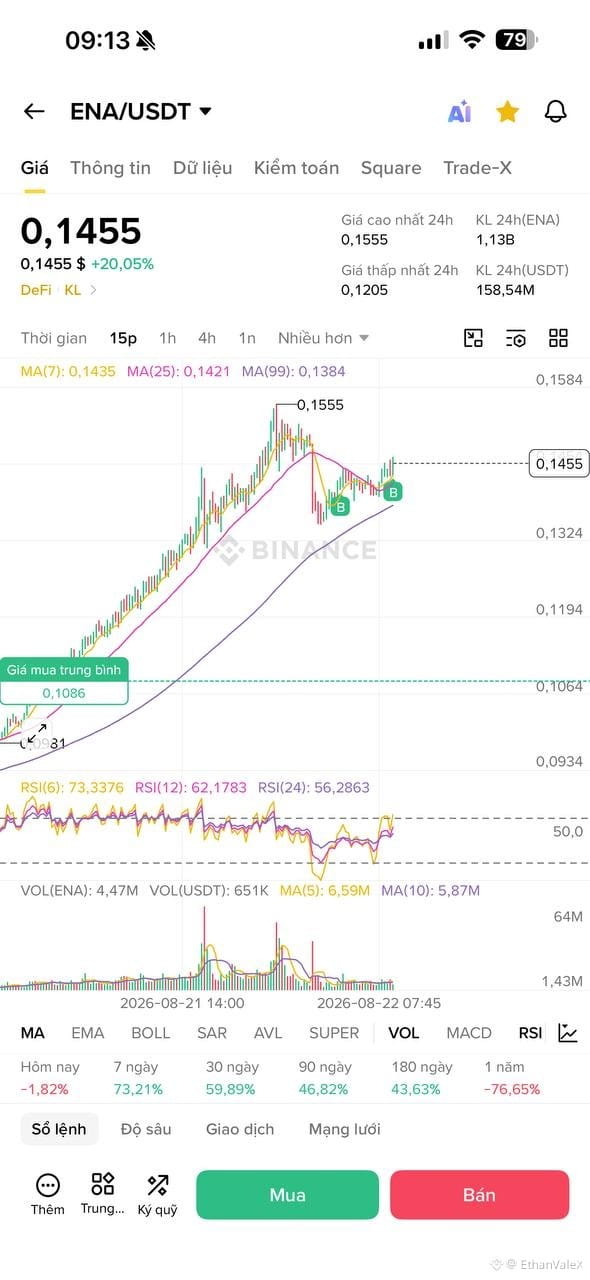
Solo un ajuste ligero. Se viene la próxima temporada.
$ENA $HYPE
{future}(HYPEUSDT)
{spot}(ENAUSDT)
$BTC
Solo un ajuste ligero. Se viene la próxima temporada.
$ENA $HYPE
Solo un ajuste ligero. Se viene la próxima temporada.
$ENA $HYPE
1.7k
·
--
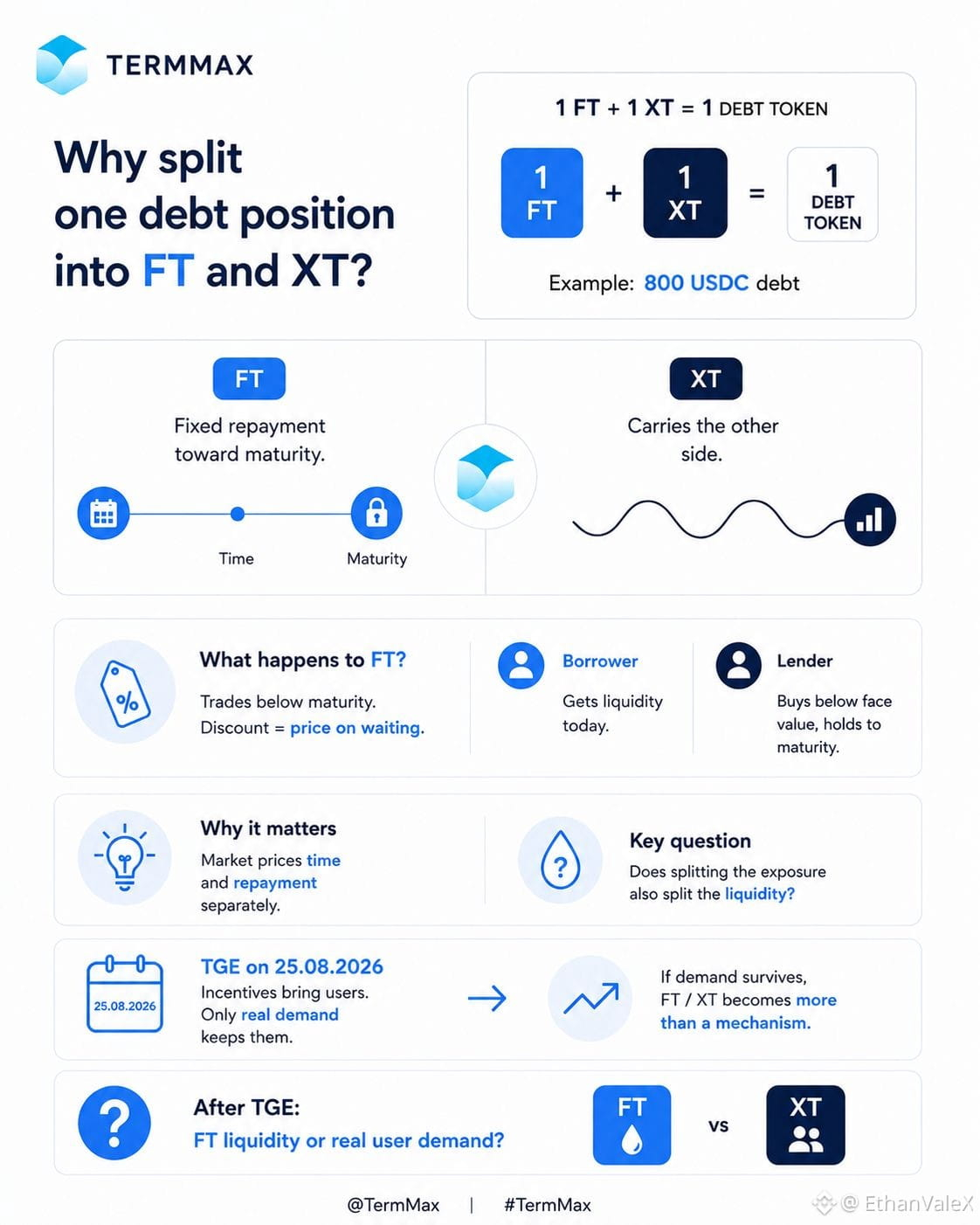
Volví una y otra vez a una pregunta mientras revisaba @termmax : ¿por qué dividir una posición de deuda en FT y XT en absoluto?
La relación es simple: 1 FT + 1 XT = 1 token de deuda. Si un prestatario tiene 800 USDC de deuda, FT representa el lado de repago fijo hacia el vencimiento, mientras que XT lleva el otro lado de la posición.
Al principio, me pareció como añadir otra capa sin una razón obvia. Pero luego miré qué le ocurre a FT.
Puede cotizar por debajo de su valor de vencimiento, lo que significa que el descuento está poniendo un precio efectivo a la espera. El prestatario obtiene liquidez hoy al vender esa reclamación futura, mientras que el prestamista puede comprarla por debajo de su valor nominal y mantenerla hasta el vencimiento.
Esa es la parte que me resulta interesante. TermMax no solo está fijando el APR de un préstamo; está dándole al mercado una manera de tratar el tiempo y el repago de forma diferente, en lugar de mantener toda la posición agrupada.
Pero hay otra pregunta que no puedo ignorar.
¿Dividir la exposición también divide la liquidez?
Si el mercado se vuelve demasiado delgado, en la práctica la separación no significa mucho.
Con el TGE el 25.08.2026, comienza la prueba más interesante. Los incentivos pueden atraer gente a un mercado, pero no pueden decirnos si los usuarios realmente quieren la exposición a tasa fija en sí.
Si esa demanda sobrevive cuando las recompensas importan menos, entonces la estructura FT / XT empieza a verse como algo más que un mecanismo ingenioso.
Esa es la parte que voy a observar después del TGE.
¿Qué te importa más después del TGE: la liquidez de FT o la demanda real de usuarios?
@termmax #TermMax
Volví una y otra vez a una pregunta mientras revisaba @TermMax : ¿por qué dividir una posición de deuda en FT y XT en absoluto?
La relación es simple: 1 FT + 1 XT = 1 token de deuda. Si un prestatario tiene 800 USDC de deuda, FT representa el lado de repago fijo hacia el vencimiento, mientras que XT lleva el otro lado de la posición.
Al principio, me pareció como añadir otra capa sin una razón obvia. Pero luego miré qué le ocurre a FT.
Puede cotizar por debajo de su valor de vencimiento, lo que significa que el descuento está poniendo un precio efectivo a la espera. El prestatario obtiene liquidez hoy al vender esa reclamación futura, mientras que el prestamista puede comprarla por debajo de su valor nominal y mantenerla hasta el vencimiento.
Esa es la parte que me resulta interesante. TermMax no solo está fijando el APR de un préstamo; está dándole al mercado una manera de tratar el tiempo y el repago de forma diferente, en lugar de mantener toda la posición agrupada.
Pero hay otra pregunta que no puedo ignorar.
¿Dividir la exposición también divide la liquidez?
Si el mercado se vuelve demasiado delgado, en la práctica la separación no significa mucho.
Con el TGE el 25.08.2026, comienza la prueba más interesante. Los incentivos pueden atraer gente a un mercado, pero no pueden decirnos si los usuarios realmente quieren la exposición a tasa fija en sí.
Si esa demanda sobrevive cuando las recompensas importan menos, entonces la estructura FT / XT empieza a verse como algo más que un mecanismo ingenioso.
Esa es la parte que voy a observar después del TGE.
¿Qué te importa más después del TGE: la liquidez de FT o la demanda real de usuarios?
@TermMax #TermMax
La relación es simple: 1 FT + 1 XT = 1 token de deuda. Si un prestatario tiene 800 USDC de deuda, FT representa el lado de repago fijo hacia el vencimiento, mientras que XT lleva el otro lado de la posición.
Al principio, me pareció como añadir otra capa sin una razón obvia. Pero luego miré qué le ocurre a FT.
Puede cotizar por debajo de su valor de vencimiento, lo que significa que el descuento está poniendo un precio efectivo a la espera. El prestatario obtiene liquidez hoy al vender esa reclamación futura, mientras que el prestamista puede comprarla por debajo de su valor nominal y mantenerla hasta el vencimiento.
Esa es la parte que me resulta interesante. TermMax no solo está fijando el APR de un préstamo; está dándole al mercado una manera de tratar el tiempo y el repago de forma diferente, en lugar de mantener toda la posición agrupada.
Pero hay otra pregunta que no puedo ignorar.
¿Dividir la exposición también divide la liquidez?
Si el mercado se vuelve demasiado delgado, en la práctica la separación no significa mucho.
Con el TGE el 25.08.2026, comienza la prueba más interesante. Los incentivos pueden atraer gente a un mercado, pero no pueden decirnos si los usuarios realmente quieren la exposición a tasa fija en sí.
Si esa demanda sobrevive cuando las recompensas importan menos, entonces la estructura FT / XT empieza a verse como algo más que un mecanismo ingenioso.
Esa es la parte que voy a observar después del TGE.
¿Qué te importa más después del TGE: la liquidez de FT o la demanda real de usuarios?
@TermMax #TermMax
350
·
--
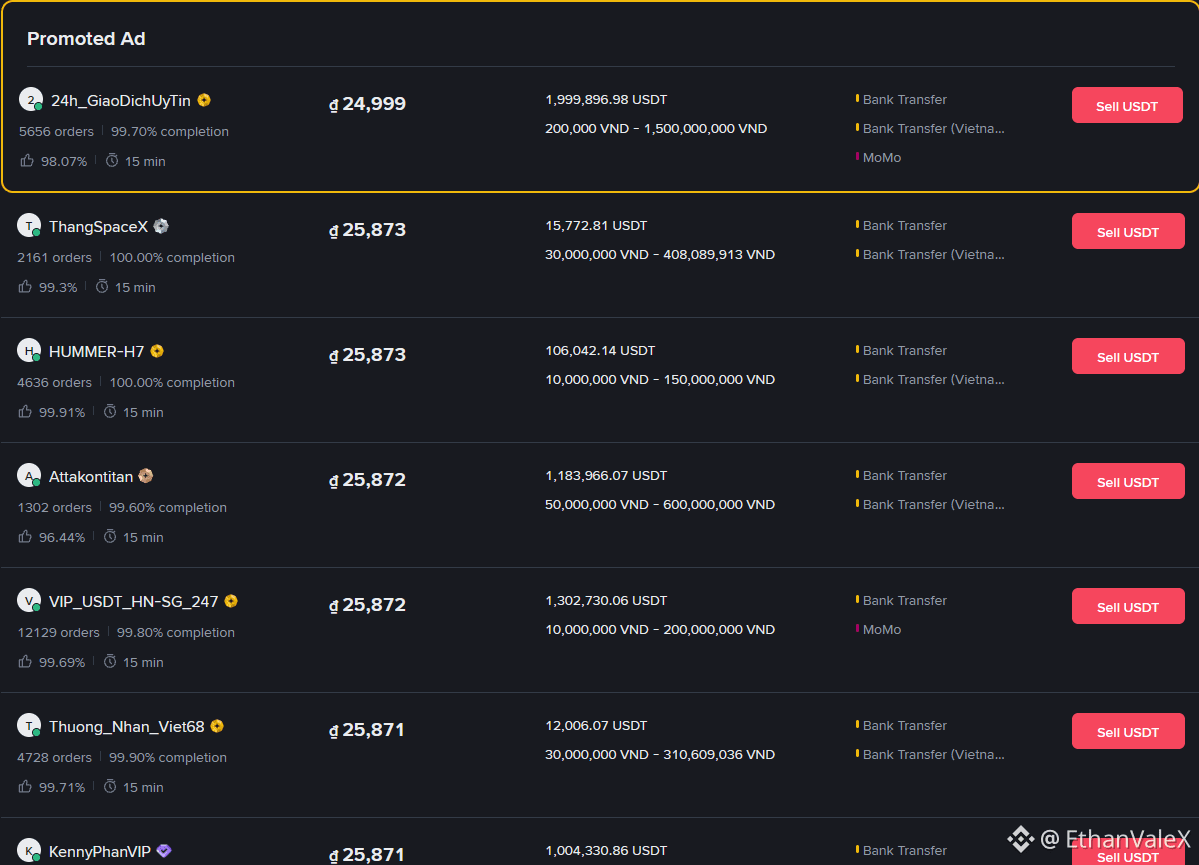
Hermanos que compran P2P recuerden revisar bien la información bancaria, ¿vale? Al transferir, no vean que ya aparece algo y entonces le den sin más.
¡Uf, después de leer este caso, yo recién me doy cuenta de que al hacer la transferencia P2P, a veces uno ve que la información ya está puesta y, por sentirse tranquilo, igual aprieta el botón directo!
Un chico compró 145 USDT, aprox. 3,65 millones de VND. Al pagar, en la parte del banco aparecía SHBVN.
Pero cuando hizo la transferencia, la cuenta receptora resultó ser de Shinhan Bank.
Este punto, si uno está con prisa, es fácil pensar:
“Solo es otro banco, seguro que no pasa nada.”
Él también transfirió de una.
Después de transferir, recién se dio cuenta y revisó mejor: el nombre del destinatario tenía algo raro.
Al verificar el número de teléfono, salió un número de Vietnammobile bastante extraño.
Cuando volvió a contactar para preguntarle al vendedor, del otro lado también dijeron que no sabían quién era la persona dueña de esa cuenta para recibir el dinero.
Con un solo detalle desviado, aún pude preguntar. Pero cuando ya fue otro banco, otro nombre y además un número de teléfono raro, yo seguro me detendría antes.
Cuando me encuentro con órdenes como estas, yo suelo revisar 3 cosas:
🟢 ¿El nombre del destinatario coincide con la información del Pedido (Order)?
🟢 ¿El banco y el número de cuenta están correctos?
🟢 ¿Hay alguna otra información diferente respecto al pago inicial?
Yo, si noto que hay un desajuste en un punto, solo pregunto de nuevo. Mientras el otro me apure más, más me siento y más reviso con cuidado.
Por suerte, al final Binance igual siguió ayudándole a recuperar el dinero. Este caso sí que da miedo.
@Binance_Vietnam #BinanceP2PAnToan
Hermanos que compran P2P recuerden revisar bien la información bancaria, ¿vale? Al transferir, no vean que ya aparece algo y entonces le den sin más.
¡Uf, después de leer este caso, yo recién me doy cuenta de que al hacer la transferencia P2P, a veces uno ve que la información ya está puesta y, por sentirse tranquilo, igual aprieta el botón directo!
Un chico compró 145 USDT, aprox. 3,65 millones de VND. Al pagar, en la parte del banco aparecía SHBVN.
Pero cuando hizo la transferencia, la cuenta receptora resultó ser de Shinhan Bank.
Este punto, si uno está con prisa, es fácil pensar:
“Solo es otro banco, seguro que no pasa nada.”
Él también transfirió de una.
Después de transferir, recién se dio cuenta y revisó mejor: el nombre del destinatario tenía algo raro.
Al verificar el número de teléfono, salió un número de Vietnammobile bastante extraño.
Cuando volvió a contactar para preguntarle al vendedor, del otro lado también dijeron que no sabían quién era la persona dueña de esa cuenta para recibir el dinero.
Con un solo detalle desviado, aún pude preguntar. Pero cuando ya fue otro banco, otro nombre y además un número de teléfono raro, yo seguro me detendría antes.
Cuando me encuentro con órdenes como estas, yo suelo revisar 3 cosas:
🟢 ¿El nombre del destinatario coincide con la información del Pedido (Order)?
🟢 ¿El banco y el número de cuenta están correctos?
🟢 ¿Hay alguna otra información diferente respecto al pago inicial?
Yo, si noto que hay un desajuste en un punto, solo pregunto de nuevo. Mientras el otro me apure más, más me siento y más reviso con cuidado.
Por suerte, al final Binance igual siguió ayudándole a recuperar el dinero. Este caso sí que da miedo.
@Binance Vietnam #BinanceP2PAnToan
¡Uf, después de leer este caso, yo recién me doy cuenta de que al hacer la transferencia P2P, a veces uno ve que la información ya está puesta y, por sentirse tranquilo, igual aprieta el botón directo!
Un chico compró 145 USDT, aprox. 3,65 millones de VND. Al pagar, en la parte del banco aparecía SHBVN.
Pero cuando hizo la transferencia, la cuenta receptora resultó ser de Shinhan Bank.
Este punto, si uno está con prisa, es fácil pensar:
“Solo es otro banco, seguro que no pasa nada.”
Él también transfirió de una.
Después de transferir, recién se dio cuenta y revisó mejor: el nombre del destinatario tenía algo raro.
Al verificar el número de teléfono, salió un número de Vietnammobile bastante extraño.
Cuando volvió a contactar para preguntarle al vendedor, del otro lado también dijeron que no sabían quién era la persona dueña de esa cuenta para recibir el dinero.
Con un solo detalle desviado, aún pude preguntar. Pero cuando ya fue otro banco, otro nombre y además un número de teléfono raro, yo seguro me detendría antes.
Cuando me encuentro con órdenes como estas, yo suelo revisar 3 cosas:
🟢 ¿El nombre del destinatario coincide con la información del Pedido (Order)?
🟢 ¿El banco y el número de cuenta están correctos?
🟢 ¿Hay alguna otra información diferente respecto al pago inicial?
Yo, si noto que hay un desajuste en un punto, solo pregunto de nuevo. Mientras el otro me apure más, más me siento y más reviso con cuidado.
Por suerte, al final Binance igual siguió ayudándole a recuperar el dinero. Este caso sí que da miedo.
@Binance Vietnam #BinanceP2PAnToan
11
20.7k
·
--
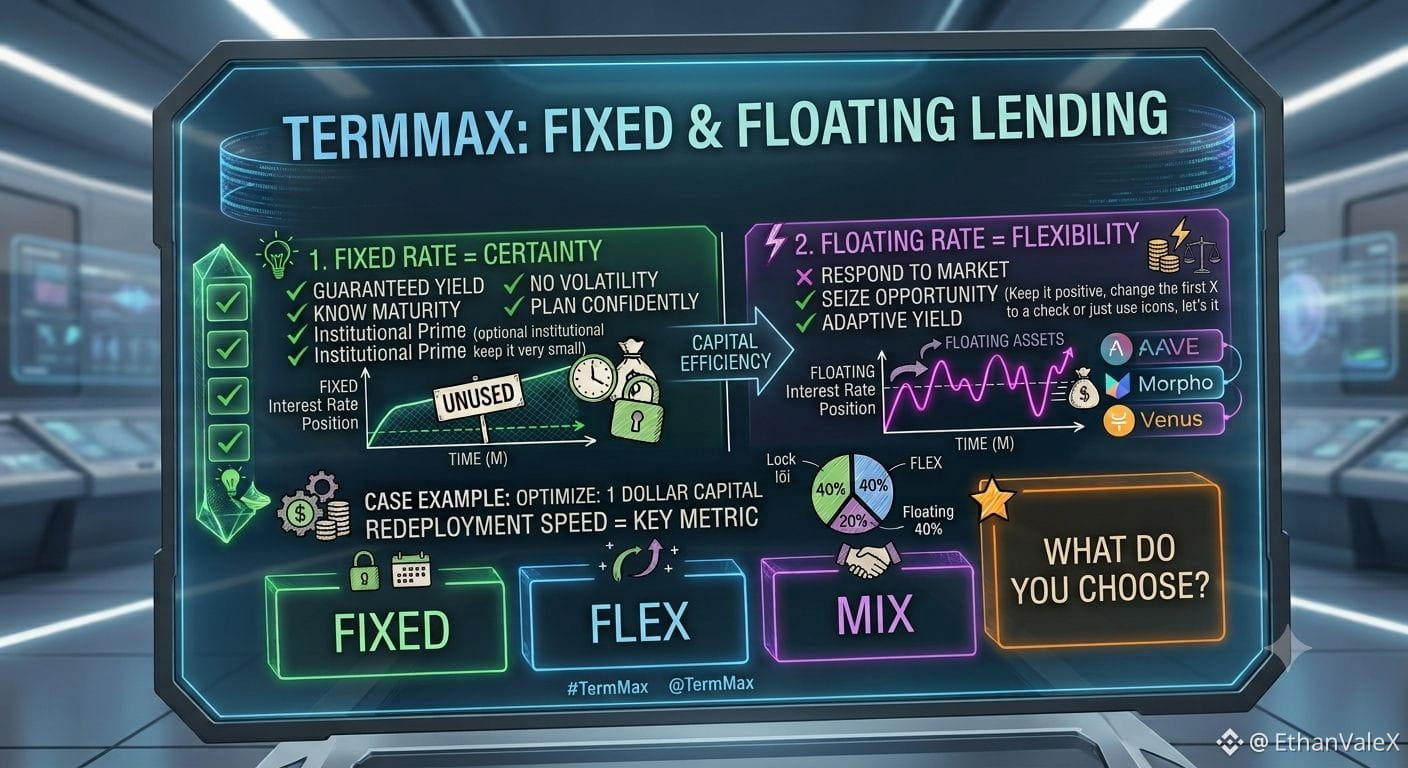
Sigo preguntándome si la “liquidez ociosa” realmente está ociosa cuando ese capital aún está ganando en algún otro lugar.
Eso fue lo que me llamó la atención con la Despliegue del Fondo @termmax .
En un mercado de préstamos típico, el capital espera a un prestatario. Si no hay demanda, esa liquidez puede permanecer sin uso hasta que llegue la siguiente oportunidad. El capital está disponible, pero disponibilidad no significa necesariamente que sea productivo.
TermMax toma un enfoque diferente. En lugar de dejar el capital no prestado allí, puede desplegarse en mercados de tasa variable como Aave, Morpho y Venus mientras espera a prestatarios de tasa fija.
Así, el capital consigue otro trabajo mientras aún no ha llegado su primer trabajo.
Pero no creo que ganar rendimientos en otro lugar demuestre automáticamente la eficiencia del capital.
La prueba real llega cuando la demanda de tasa fija aparece más rápido de lo que ese capital puede ser redeployado. Si la liquidez tarda demasiado en volver, el mercado podría tener mucho capital “en papel” mientras dispone de menos liquidez utilizable de inmediato cuando los prestatarios realmente la necesitan.
Quizá la métrica más interesante de TermMax ya no sea la liquidez ociosa.
Es qué tan rápido puede cambiar de trabajo un dólar de capital cuando aparece la demanda de tasa fija.
Eso me hace estar más interesado en la velocidad de redeploy que simplemente preguntar cuánta liquidez está esperando dentro del protocolo.
¿Verías la velocidad de redeploy o la actividad de crédito por dólar de liquidez para medir esa eficiencia?
#TermMax @termmax
Sigo preguntándome si la “liquidez ociosa” realmente está ociosa cuando ese capital aún está ganando en algún otro lugar.
Eso fue lo que me llamó la atención con la Despliegue del Fondo @TermMax .
En un mercado de préstamos típico, el capital espera a un prestatario. Si no hay demanda, esa liquidez puede permanecer sin uso hasta que llegue la siguiente oportunidad. El capital está disponible, pero disponibilidad no significa necesariamente que sea productivo.
TermMax toma un enfoque diferente. En lugar de dejar el capital no prestado allí, puede desplegarse en mercados de tasa variable como Aave, Morpho y Venus mientras espera a prestatarios de tasa fija.
Así, el capital consigue otro trabajo mientras aún no ha llegado su primer trabajo.
Pero no creo que ganar rendimientos en otro lugar demuestre automáticamente la eficiencia del capital.
La prueba real llega cuando la demanda de tasa fija aparece más rápido de lo que ese capital puede ser redeployado. Si la liquidez tarda demasiado en volver, el mercado podría tener mucho capital “en papel” mientras dispone de menos liquidez utilizable de inmediato cuando los prestatarios realmente la necesitan.
Quizá la métrica más interesante de TermMax ya no sea la liquidez ociosa.
Es qué tan rápido puede cambiar de trabajo un dólar de capital cuando aparece la demanda de tasa fija.
Eso me hace estar más interesado en la velocidad de redeploy que simplemente preguntar cuánta liquidez está esperando dentro del protocolo.
¿Verías la velocidad de redeploy o la actividad de crédito por dólar de liquidez para medir esa eficiencia?
#TermMax @TermMax
Eso fue lo que me llamó la atención con la Despliegue del Fondo @TermMax .
En un mercado de préstamos típico, el capital espera a un prestatario. Si no hay demanda, esa liquidez puede permanecer sin uso hasta que llegue la siguiente oportunidad. El capital está disponible, pero disponibilidad no significa necesariamente que sea productivo.
TermMax toma un enfoque diferente. En lugar de dejar el capital no prestado allí, puede desplegarse en mercados de tasa variable como Aave, Morpho y Venus mientras espera a prestatarios de tasa fija.
Así, el capital consigue otro trabajo mientras aún no ha llegado su primer trabajo.
Pero no creo que ganar rendimientos en otro lugar demuestre automáticamente la eficiencia del capital.
La prueba real llega cuando la demanda de tasa fija aparece más rápido de lo que ese capital puede ser redeployado. Si la liquidez tarda demasiado en volver, el mercado podría tener mucho capital “en papel” mientras dispone de menos liquidez utilizable de inmediato cuando los prestatarios realmente la necesitan.
Quizá la métrica más interesante de TermMax ya no sea la liquidez ociosa.
Es qué tan rápido puede cambiar de trabajo un dólar de capital cuando aparece la demanda de tasa fija.
Eso me hace estar más interesado en la velocidad de redeploy que simplemente preguntar cuánta liquidez está esperando dentro del protocolo.
¿Verías la velocidad de redeploy o la actividad de crédito por dólar de liquidez para medir esa eficiencia?
#TermMax @TermMax
1
506
·
--
Anh em bán P2P, tiền vừa vào mà tên người chuyển không giống tên buyer trên Order thì khoan Release nhé 😭
Cái này mình thấy nhiều anh em hay bỏ qua lắm.
Tiền vào đúng số, notification ngân hàng cũng báo một cái, nhìn qua thấy chẳng có gì sai. Nhưng để ý kỹ mới thấy tên người vừa chuyển tiền lại không phải tên người đang đứng trên Order.
Hồi trước mình cũng hay nghĩ đơn giản thôi:
“Chắc người nhà chuyển hộ.”
Ừ, cũng có thể thật.
Nhưng đã thấy lệch tên thì mình cứ check thêm một chút cho chắc. USDT vẫn đang nằm đó, có mất đi đâu đâu mà phải vội.
Mình thường ngó nhanh mấy cái này:
🟢 ¿El nombre de la persona que envía coincide con la información del comprador en la Order?
🟢 ¿El monto es exactamente correcto?
🟢 En el chat, ¿alguien dice algo sobre cambiar de cuenta, pedirle a otra persona que transfiera o apurarte con el Release?
Anh em también presta atención a las órdenes que tienen un precio claramente fuera de lo habitual. Si están vendiendo y el otro lado insiste en que se procese rápido, entonces yo menos me gusta la prisa.
Especialmente, si el dinero real proviene de una cuenta distinta a la del comprador en la Order, no haré Release solo porque ya llegó el dinero. Quédate con los USDT, revisa bien y luego continúa con el siguiente paso según lo indicado por la plataforma.
P2P a veces no pasa nada grave. Muchas veces solo es que en el notification aparece un nombre y uno está demasiado perezoso como para mirarlo con detenimiento.
@Binance_Vietnam #BinanceP2PAnToan
Anh em bán P2P, tiền vừa vào mà tên người chuyển không giống tên buyer trên Order thì khoan Release nhé 😭
Cái này mình thấy nhiều anh em hay bỏ qua lắm.
Tiền vào đúng số, notification ngân hàng cũng báo một cái, nhìn qua thấy chẳng có gì sai. Nhưng để ý kỹ mới thấy tên người vừa chuyển tiền lại không phải tên người đang đứng trên Order.
Hồi trước mình cũng hay nghĩ đơn giản thôi:
“Chắc người nhà chuyển hộ.”
Ừ, cũng có thể thật.
Nhưng đã thấy lệch tên thì mình cứ check thêm một chút cho chắc. USDT vẫn đang nằm đó, có mất đi đâu đâu mà phải vội.
Mình thường ngó nhanh mấy cái này:
🟢 ¿El nombre de la persona que envía coincide con la información del comprador en la Order?
🟢 ¿El monto es exactamente correcto?
🟢 En el chat, ¿alguien dice algo sobre cambiar de cuenta, pedirle a otra persona que transfiera o apurarte con el Release?
Anh em también presta atención a las órdenes que tienen un precio claramente fuera de lo habitual. Si están vendiendo y el otro lado insiste en que se procese rápido, entonces yo menos me gusta la prisa.
Especialmente, si el dinero real proviene de una cuenta distinta a la del comprador en la Order, no haré Release solo porque ya llegó el dinero. Quédate con los USDT, revisa bien y luego continúa con el siguiente paso según lo indicado por la plataforma.
P2P a veces no pasa nada grave. Muchas veces solo es que en el notification aparece un nombre y uno está demasiado perezoso como para mirarlo con detenimiento.
@Binance Vietnam #BinanceP2PAnToan
Cái này mình thấy nhiều anh em hay bỏ qua lắm.
Tiền vào đúng số, notification ngân hàng cũng báo một cái, nhìn qua thấy chẳng có gì sai. Nhưng để ý kỹ mới thấy tên người vừa chuyển tiền lại không phải tên người đang đứng trên Order.
Hồi trước mình cũng hay nghĩ đơn giản thôi:
“Chắc người nhà chuyển hộ.”
Ừ, cũng có thể thật.
Nhưng đã thấy lệch tên thì mình cứ check thêm một chút cho chắc. USDT vẫn đang nằm đó, có mất đi đâu đâu mà phải vội.
Mình thường ngó nhanh mấy cái này:
🟢 ¿El nombre de la persona que envía coincide con la información del comprador en la Order?
🟢 ¿El monto es exactamente correcto?
🟢 En el chat, ¿alguien dice algo sobre cambiar de cuenta, pedirle a otra persona que transfiera o apurarte con el Release?
Anh em también presta atención a las órdenes que tienen un precio claramente fuera de lo habitual. Si están vendiendo y el otro lado insiste en que se procese rápido, entonces yo menos me gusta la prisa.
Especialmente, si el dinero real proviene de una cuenta distinta a la del comprador en la Order, no haré Release solo porque ya llegó el dinero. Quédate con los USDT, revisa bien y luego continúa con el siguiente paso según lo indicado por la plataforma.
P2P a veces no pasa nada grave. Muchas veces solo es que en el notification aparece un nombre y uno está demasiado perezoso como para mirarlo con detenimiento.
@Binance Vietnam #BinanceP2PAnToan
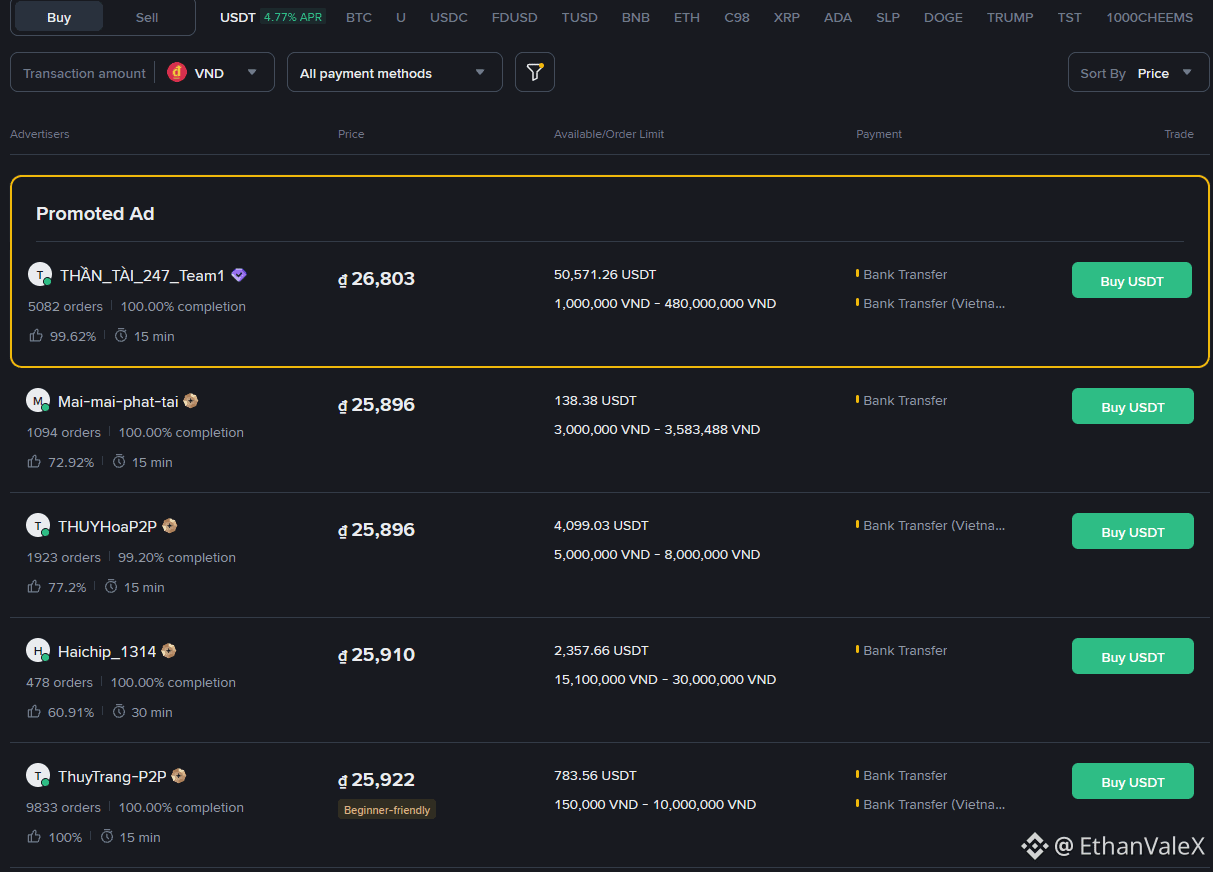
8.3k
·
--
#TermMax @termmax
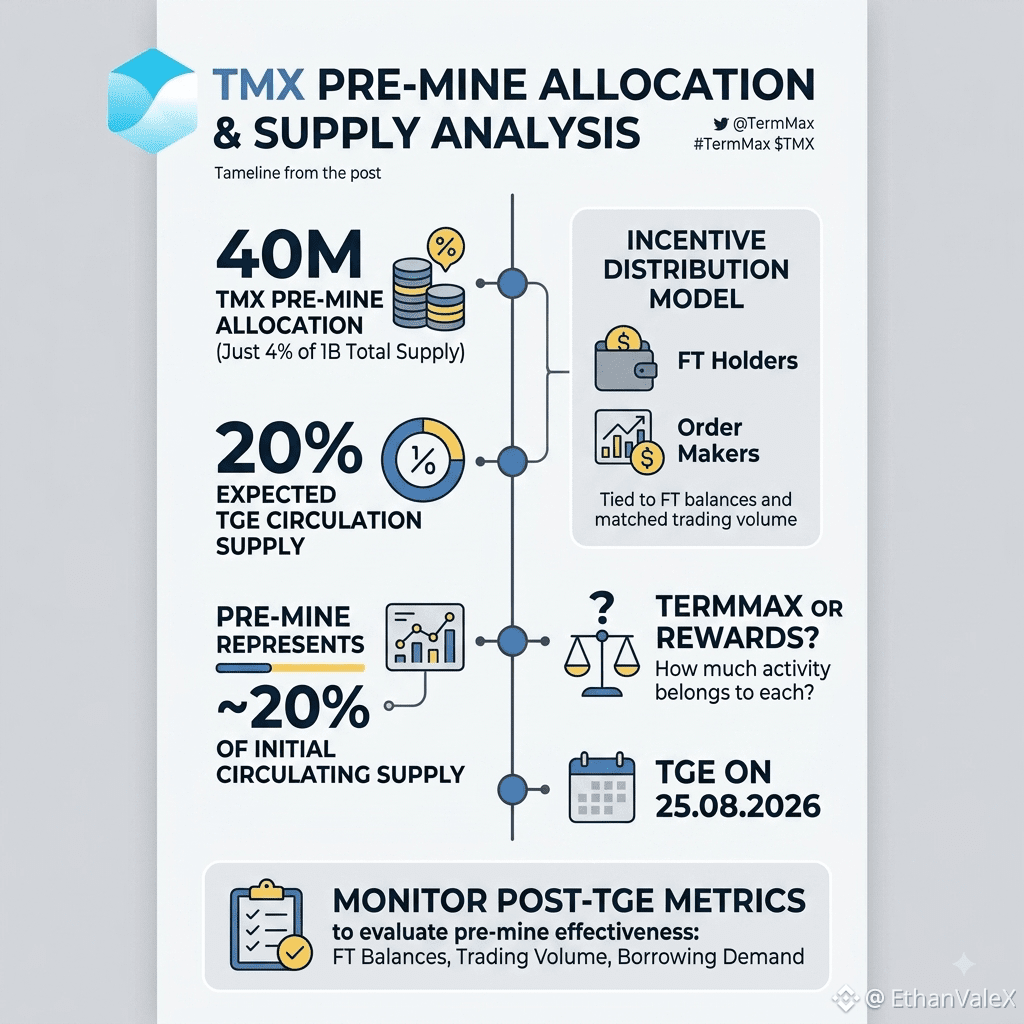
Hoy estaba revisando números de pre-mina @termmax y un dato me hizo detenerme.
40M TMX se asignan a la pre-mina: solo el 4% del suministro total de 1B.
Eso suena pequeño hasta que lo pongo al lado de otro número: se espera que solo el 20% de TMX esté en circulación en el TGE. Así que, solo la pre-mina, representa aproximadamente el 20% del suministro inicial en circulación.
Fue entonces cuando empecé a mirar el incentivo de otra manera.
Las recompensas van para los titulares de FT y los Order Makers, vinculadas a los saldos de FT y al volumen de trading ajustado, en lugar de simplemente entregar tokens a cada billetera que aparezca.
Pero esta es la parte que todavía no puedo responder.
¿Cuánto de esa actividad pertenece realmente a TermMax y cuánto pertenece a las recompensas?
El TGE del 25.08.2026 nos da un punto mucho mejor para averiguarlo.
No me importa demasiado cuántos TMX se ganaron antes de entonces. Quiero ver si los saldos de FT, el volumen de trading y la Demanda de Préstamo siguen teniendo algo detrás cuando las recompensas de TMX no son la razón evidente para participar.
Si la actividad se mantiene, la pre-mina parece haber ayudado a construir un mercado.
Si se desvanece rápido, vería los 40M TMX de otra forma.
El titular son 40M TMX.
Para mí, el número más importante viene después del TGE.
¿Qué métrica observarías primero: los saldos de FT, el volumen de trading o la Demanda de Préstamo?
#TermMax @TermMax
Hoy estaba revisando números de pre-mina @TermMax y un dato me hizo detenerme.
40M TMX se asignan a la pre-mina: solo el 4% del suministro total de 1B.
Eso suena pequeño hasta que lo pongo al lado de otro número: se espera que solo el 20% de TMX esté en circulación en el TGE. Así que, solo la pre-mina, representa aproximadamente el 20% del suministro inicial en circulación.
Fue entonces cuando empecé a mirar el incentivo de otra manera.
Las recompensas van para los titulares de FT y los Order Makers, vinculadas a los saldos de FT y al volumen de trading ajustado, en lugar de simplemente entregar tokens a cada billetera que aparezca.
Pero esta es la parte que todavía no puedo responder.
¿Cuánto de esa actividad pertenece realmente a TermMax y cuánto pertenece a las recompensas?
El TGE del 25.08.2026 nos da un punto mucho mejor para averiguarlo.
No me importa demasiado cuántos TMX se ganaron antes de entonces. Quiero ver si los saldos de FT, el volumen de trading y la Demanda de Préstamo siguen teniendo algo detrás cuando las recompensas de TMX no son la razón evidente para participar.
Si la actividad se mantiene, la pre-mina parece haber ayudado a construir un mercado.
Si se desvanece rápido, vería los 40M TMX de otra forma.
El titular son 40M TMX.
Para mí, el número más importante viene después del TGE.
¿Qué métrica observarías primero: los saldos de FT, el volumen de trading o la Demanda de Préstamo?
Hoy estaba revisando números de pre-mina @TermMax y un dato me hizo detenerme.
40M TMX se asignan a la pre-mina: solo el 4% del suministro total de 1B.
Eso suena pequeño hasta que lo pongo al lado de otro número: se espera que solo el 20% de TMX esté en circulación en el TGE. Así que, solo la pre-mina, representa aproximadamente el 20% del suministro inicial en circulación.
Fue entonces cuando empecé a mirar el incentivo de otra manera.
Las recompensas van para los titulares de FT y los Order Makers, vinculadas a los saldos de FT y al volumen de trading ajustado, en lugar de simplemente entregar tokens a cada billetera que aparezca.
Pero esta es la parte que todavía no puedo responder.
¿Cuánto de esa actividad pertenece realmente a TermMax y cuánto pertenece a las recompensas?
El TGE del 25.08.2026 nos da un punto mucho mejor para averiguarlo.
No me importa demasiado cuántos TMX se ganaron antes de entonces. Quiero ver si los saldos de FT, el volumen de trading y la Demanda de Préstamo siguen teniendo algo detrás cuando las recompensas de TMX no son la razón evidente para participar.
Si la actividad se mantiene, la pre-mina parece haber ayudado a construir un mercado.
Si se desvanece rápido, vería los 40M TMX de otra forma.
El titular son 40M TMX.
Para mí, el número más importante viene después del TGE.
¿Qué métrica observarías primero: los saldos de FT, el volumen de trading o la Demanda de Préstamo?
182
·
--
El ID de la orden se volvió más importante de lo que esperaba
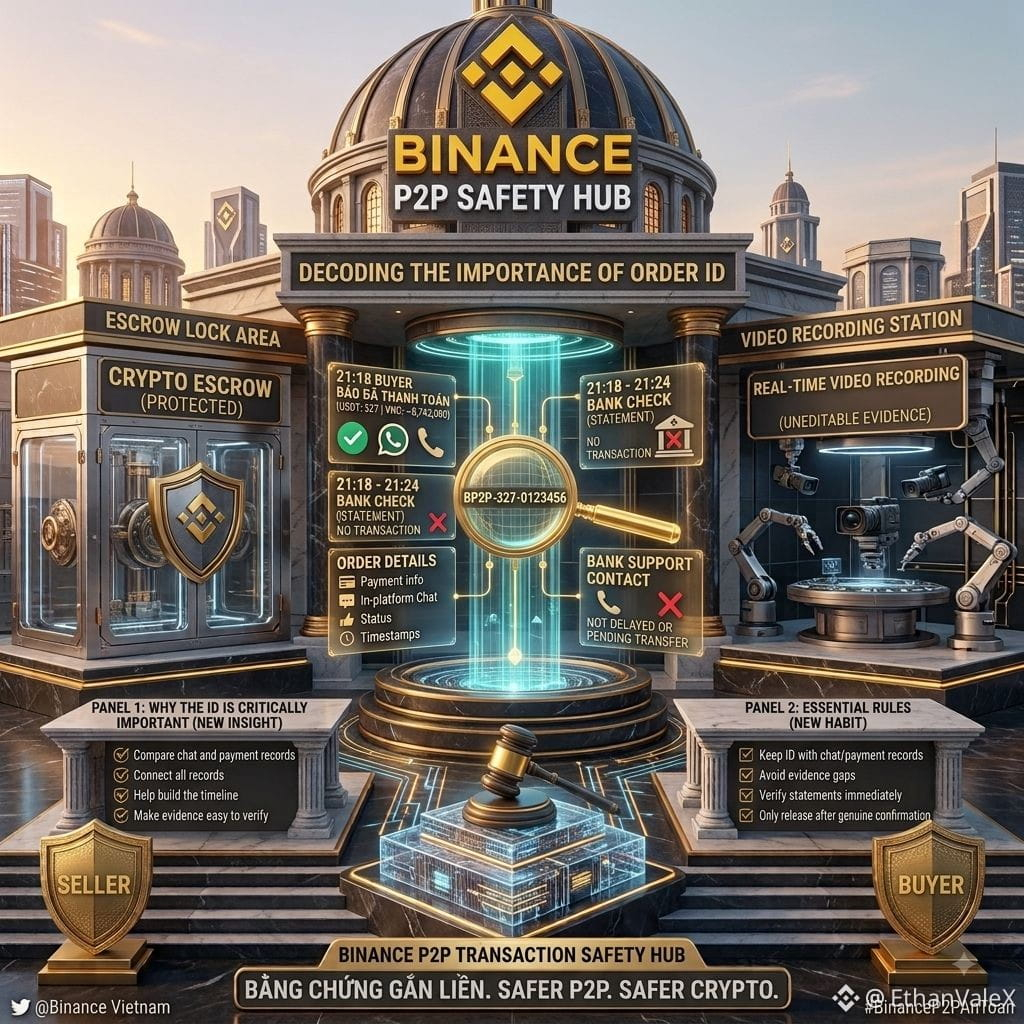
Aprendí esto después de una orden de Binance P2P que involucraba 327 USDT, por un valor de alrededor de 8.742.000 VND. El comprador marcó el pago como completado a las 21:18, pero revisé varias veces el saldo de mi banco y el historial de transacciones y no encontré nada. A las 21:24, la orden seguía activa.
Abrí los detalles de la orden y empecé a revisar todo comparándolo con el ID de la orden. La información del pago, el chat dentro de la plataforma, el estado de la orden y las marcas de tiempo apuntaban todos a la misma transacción.
El comprador había afirmado que el pago estaba completado a las 21:18. Los registros de mi banco mostraban que no había ninguna transacción entrante correspondiente. Contacté a mi banco para comprobar si el pago se retrasó o si estaba pendiente como una transferencia en espera.
No lo estaba.
Fue entonces cuando la línea de tiempo se volvió más importante que la explicación. El ID de la orden me dio un punto de referencia para la afirmación del comprador, el chat, los detalles del pago y lo que realmente mostraba mi banco.
Cuando se revisó la orden, pude aportar esos registros como un caso conectado en lugar de enviar capturas por separado y tratar de explicar qué significaba cada una.
Lo que me sorprendió fue que el propio ID de la orden no probaba nada. Su valor era que hacía que las otras pruebas fueran más fáciles de verificar en relación con la misma transacción.
Desde entonces, mantengo juntos el ID de la orden, el chat dentro de la plataforma y los registros de pago relevantes. El escrow protege las criptomonedas mientras la orden está activa, pero los buenos registros hacen que la transacción sea mucho más fácil de reconstruir cuando algo sale mal.
Antes pensaba que una buena evidencia significaba tener más capturas. Ahora creo que significa dejar menos espacios o vacíos entre ellas.
@Binance_Vietnam #BinanceP2PAnToan
El ID de la orden se volvió más importante de lo que esperaba
Aprendí esto después de una orden de Binance P2P que involucraba 327 USDT, por un valor de alrededor de 8.742.000 VND. El comprador marcó el pago como completado a las 21:18, pero revisé varias veces el saldo de mi banco y el historial de transacciones y no encontré nada. A las 21:24, la orden seguía activa.
Abrí los detalles de la orden y empecé a revisar todo comparándolo con el ID de la orden. La información del pago, el chat dentro de la plataforma, el estado de la orden y las marcas de tiempo apuntaban todos a la misma transacción.
El comprador había afirmado que el pago estaba completado a las 21:18. Los registros de mi banco mostraban que no había ninguna transacción entrante correspondiente. Contacté a mi banco para comprobar si el pago se retrasó o si estaba pendiente como una transferencia en espera.
No lo estaba.
Fue entonces cuando la línea de tiempo se volvió más importante que la explicación. El ID de la orden me dio un punto de referencia para la afirmación del comprador, el chat, los detalles del pago y lo que realmente mostraba mi banco.
Cuando se revisó la orden, pude aportar esos registros como un caso conectado en lugar de enviar capturas por separado y tratar de explicar qué significaba cada una.
Lo que me sorprendió fue que el propio ID de la orden no probaba nada. Su valor era que hacía que las otras pruebas fueran más fáciles de verificar en relación con la misma transacción.
Desde entonces, mantengo juntos el ID de la orden, el chat dentro de la plataforma y los registros de pago relevantes. El escrow protege las criptomonedas mientras la orden está activa, pero los buenos registros hacen que la transacción sea mucho más fácil de reconstruir cuando algo sale mal.
Antes pensaba que una buena evidencia significaba tener más capturas. Ahora creo que significa dejar menos espacios o vacíos entre ellas.
@Binance Vietnam #BinanceP2PAnToan
Aprendí esto después de una orden de Binance P2P que involucraba 327 USDT, por un valor de alrededor de 8.742.000 VND. El comprador marcó el pago como completado a las 21:18, pero revisé varias veces el saldo de mi banco y el historial de transacciones y no encontré nada. A las 21:24, la orden seguía activa.
Abrí los detalles de la orden y empecé a revisar todo comparándolo con el ID de la orden. La información del pago, el chat dentro de la plataforma, el estado de la orden y las marcas de tiempo apuntaban todos a la misma transacción.
El comprador había afirmado que el pago estaba completado a las 21:18. Los registros de mi banco mostraban que no había ninguna transacción entrante correspondiente. Contacté a mi banco para comprobar si el pago se retrasó o si estaba pendiente como una transferencia en espera.
No lo estaba.
Fue entonces cuando la línea de tiempo se volvió más importante que la explicación. El ID de la orden me dio un punto de referencia para la afirmación del comprador, el chat, los detalles del pago y lo que realmente mostraba mi banco.
Cuando se revisó la orden, pude aportar esos registros como un caso conectado en lugar de enviar capturas por separado y tratar de explicar qué significaba cada una.
Lo que me sorprendió fue que el propio ID de la orden no probaba nada. Su valor era que hacía que las otras pruebas fueran más fáciles de verificar en relación con la misma transacción.
Desde entonces, mantengo juntos el ID de la orden, el chat dentro de la plataforma y los registros de pago relevantes. El escrow protege las criptomonedas mientras la orden está activa, pero los buenos registros hacen que la transacción sea mucho más fácil de reconstruir cuando algo sale mal.
Antes pensaba que una buena evidencia significaba tener más capturas. Ahora creo que significa dejar menos espacios o vacíos entre ellas.
@Binance Vietnam #BinanceP2PAnToan
1
103
·
--
#TermMax @termmax
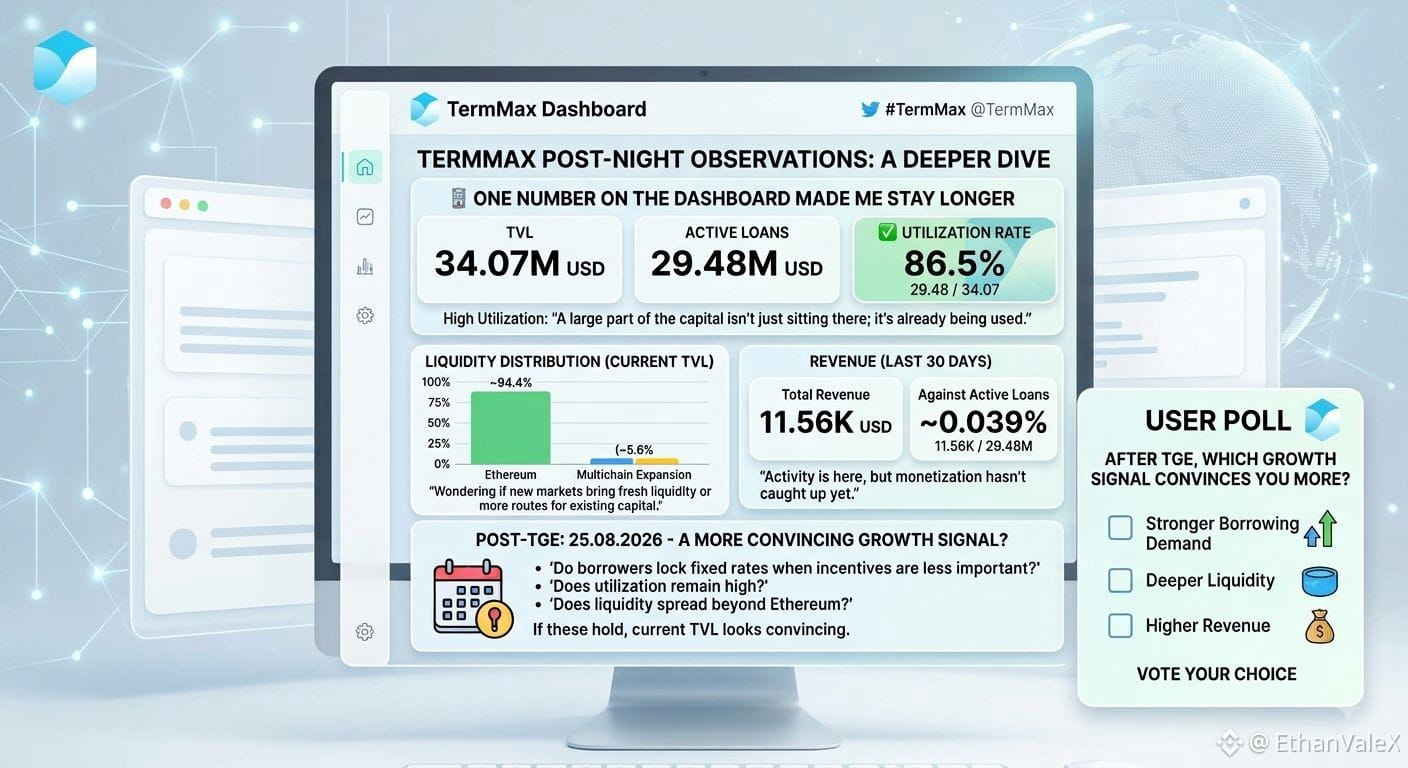
Se suponía que ya debía terminar con @termmax para la noche, pero un número en el panel me hizo quedarme un poco más.
34.07M USD TVL. 29.48M USD Préstamos Activos.
29.48 / 34.07 = alrededor del 86.5%.
En un mercado de préstamos a tasa fija, ese es el primer número que llamó mi atención. Una gran parte del capital no solo está ahí sentado; ya está siendo utilizado.
Luego revisé dónde está realmente ese capital.
Alrededor del 94.4% del TVL aún está en Ethereum. TermMax se ha expandido a través de múltiples cadenas, pero la distribución actual me hace preguntarme si esos nuevos mercados están atrayendo liquidez fresca o simplemente ofreciendo más rutas al capital existente.
Los ingresos me dan otra razón para mantenerme cauteloso.
TermMax generó alrededor de 11.56K USD en los últimos 30 días. En comparación con 29.48M USD de Préstamos Activos, eso es aproximadamente un 0.039%.
Así que hay actividad, pero la monetización todavía no se ha puesto al día.
Por eso me interesa más lo que sucede alrededor del TGE el 25.08.2026 que otra actualización de TVL.
Si los incentivos pasan a ser menos importantes, quiero ver si los prestatarios aún tienen motivos para fijar tasas, si la utilización de préstamos se mantiene alta y si la liquidez empieza a extenderse más allá de Ethereum.
Si esos números se mantienen, el TVL actual empieza a resultarme mucho más convincente.
Después del TGE, ¿qué te convencería más de que TermMax está creciendo de verdad: una mayor Demanda de Endeudamiento, una Liquidez más profunda o unos Ingresos más altos?
#TermMax @TermMax
Se suponía que ya debía terminar con @TermMax para la noche, pero un número en el panel me hizo quedarme un poco más.
34.07M USD TVL. 29.48M USD Préstamos Activos.
29.48 / 34.07 = alrededor del 86.5%.
En un mercado de préstamos a tasa fija, ese es el primer número que llamó mi atención. Una gran parte del capital no solo está ahí sentado; ya está siendo utilizado.
Luego revisé dónde está realmente ese capital.
Alrededor del 94.4% del TVL aún está en Ethereum. TermMax se ha expandido a través de múltiples cadenas, pero la distribución actual me hace preguntarme si esos nuevos mercados están atrayendo liquidez fresca o simplemente ofreciendo más rutas al capital existente.
Los ingresos me dan otra razón para mantenerme cauteloso.
TermMax generó alrededor de 11.56K USD en los últimos 30 días. En comparación con 29.48M USD de Préstamos Activos, eso es aproximadamente un 0.039%.
Así que hay actividad, pero la monetización todavía no se ha puesto al día.
Por eso me interesa más lo que sucede alrededor del TGE el 25.08.2026 que otra actualización de TVL.
Si los incentivos pasan a ser menos importantes, quiero ver si los prestatarios aún tienen motivos para fijar tasas, si la utilización de préstamos se mantiene alta y si la liquidez empieza a extenderse más allá de Ethereum.
Si esos números se mantienen, el TVL actual empieza a resultarme mucho más convincente.
Después del TGE, ¿qué te convencería más de que TermMax está creciendo de verdad: una mayor Demanda de Endeudamiento, una Liquidez más profunda o unos Ingresos más altos?
Se suponía que ya debía terminar con @TermMax para la noche, pero un número en el panel me hizo quedarme un poco más.
34.07M USD TVL. 29.48M USD Préstamos Activos.
29.48 / 34.07 = alrededor del 86.5%.
En un mercado de préstamos a tasa fija, ese es el primer número que llamó mi atención. Una gran parte del capital no solo está ahí sentado; ya está siendo utilizado.
Luego revisé dónde está realmente ese capital.
Alrededor del 94.4% del TVL aún está en Ethereum. TermMax se ha expandido a través de múltiples cadenas, pero la distribución actual me hace preguntarme si esos nuevos mercados están atrayendo liquidez fresca o simplemente ofreciendo más rutas al capital existente.
Los ingresos me dan otra razón para mantenerme cauteloso.
TermMax generó alrededor de 11.56K USD en los últimos 30 días. En comparación con 29.48M USD de Préstamos Activos, eso es aproximadamente un 0.039%.
Así que hay actividad, pero la monetización todavía no se ha puesto al día.
Por eso me interesa más lo que sucede alrededor del TGE el 25.08.2026 que otra actualización de TVL.
Si los incentivos pasan a ser menos importantes, quiero ver si los prestatarios aún tienen motivos para fijar tasas, si la utilización de préstamos se mantiene alta y si la liquidez empieza a extenderse más allá de Ethereum.
Si esos números se mantienen, el TVL actual empieza a resultarme mucho más convincente.
Después del TGE, ¿qué te convencería más de que TermMax está creciendo de verdad: una mayor Demanda de Endeudamiento, una Liquidez más profunda o unos Ingresos más altos?
119
·
--
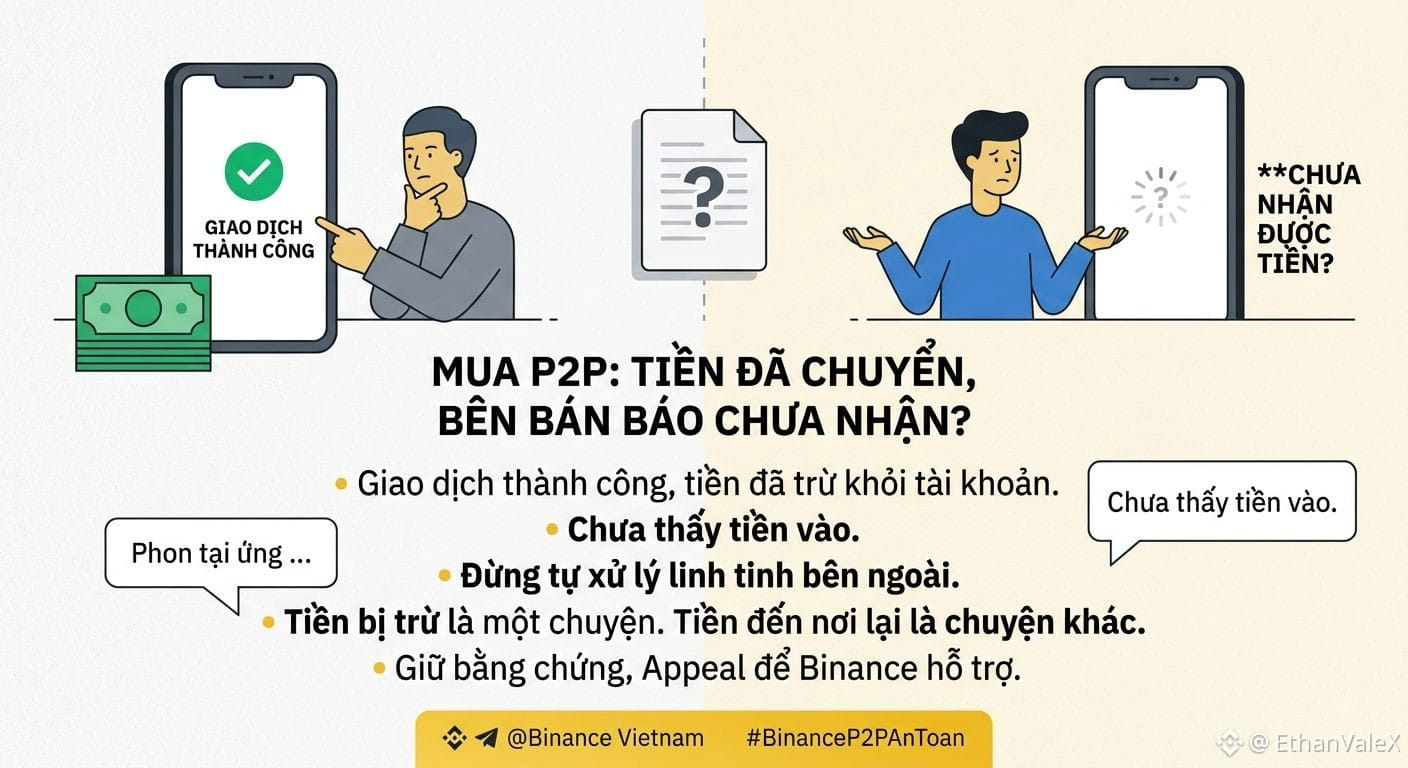
¿Compras P2P, el dinero ya fue transferido pero el vendedor dice que aún no lo ha recibido?
Al principio, cuando me pasó esto, también me puse un poco nervioso, compañeros :))
Tenía una orden de compra P2P; el vendedor me envió la información de la cuenta y yo transferí exactamente el importe según la Orden.
La app del banco indicó que la transacción fue exitosa, y el dinero también se descontó de mi cuenta. Además, tengo el comprobante de la transferencia.
Pero el vendedor me escribió diciendo que no ve el dinero.
Ahí fue cuando empezó la parte difícil =))) Un lado dice “transferencia exitosa” y el otro dice “no he recibido nada”. Si transfiero de nuevo, seguro que no me atrevería, y tampoco sé cuánto tiempo tendría que esperar.
Le pregunté otra vez al vendedor si la información de la cuenta era correcta y revisé el importe y la hora de la transferencia. Por suerte, todavía conservé la Orden y el historial del chat, así que al menos hay con qué comparar.
En ese momento también pensé: mejor no resolver cosas por fuera para hacerlo más rápido. Si las dos partes todavía no confirman la transacción, que quede dentro de la Orden; si hace falta, abrir Appeal para que Binance ayude a revisarlo.
Porque hay algo que me pareció bastante memorable:
Que el dinero se haya descontado de mi cuenta es una cosa. Que el dinero realmente haya llegado a la cuenta correcta del vendedor es otra.
Así que, en casos como este, no voy a transferir más solo porque el otro diga que no ha recibido, ni voy a hacer Release por mi cuenta solo para terminar rápido. Mejor conservar las pruebas y gestionar según la Orden: es mucho más tranquilo.
¿A alguien le ha pasado que el banco marca la transferencia como exitosa pero el destinatario sigue diciendo que nunca vio el dinero? Si les pasa, normalmente esperan más o ya hacen Appeal?
@Binance_Vietnam #BinanceP2PAnToan
¿Compras P2P, el dinero ya fue transferido pero el vendedor dice que aún no lo ha recibido?
Al principio, cuando me pasó esto, también me puse un poco nervioso, compañeros :))
Tenía una orden de compra P2P; el vendedor me envió la información de la cuenta y yo transferí exactamente el importe según la Orden.
La app del banco indicó que la transacción fue exitosa, y el dinero también se descontó de mi cuenta. Además, tengo el comprobante de la transferencia.
Pero el vendedor me escribió diciendo que no ve el dinero.
Ahí fue cuando empezó la parte difícil =))) Un lado dice “transferencia exitosa” y el otro dice “no he recibido nada”. Si transfiero de nuevo, seguro que no me atrevería, y tampoco sé cuánto tiempo tendría que esperar.
Le pregunté otra vez al vendedor si la información de la cuenta era correcta y revisé el importe y la hora de la transferencia. Por suerte, todavía conservé la Orden y el historial del chat, así que al menos hay con qué comparar.
En ese momento también pensé: mejor no resolver cosas por fuera para hacerlo más rápido. Si las dos partes todavía no confirman la transacción, que quede dentro de la Orden; si hace falta, abrir Appeal para que Binance ayude a revisarlo.
Porque hay algo que me pareció bastante memorable:
Que el dinero se haya descontado de mi cuenta es una cosa. Que el dinero realmente haya llegado a la cuenta correcta del vendedor es otra.
Así que, en casos como este, no voy a transferir más solo porque el otro diga que no ha recibido, ni voy a hacer Release por mi cuenta solo para terminar rápido. Mejor conservar las pruebas y gestionar según la Orden: es mucho más tranquilo.
¿A alguien le ha pasado que el banco marca la transferencia como exitosa pero el destinatario sigue diciendo que nunca vio el dinero? Si les pasa, normalmente esperan más o ya hacen Appeal?
@Binance Vietnam #BinanceP2PAnToan
Al principio, cuando me pasó esto, también me puse un poco nervioso, compañeros :))
Tenía una orden de compra P2P; el vendedor me envió la información de la cuenta y yo transferí exactamente el importe según la Orden.
La app del banco indicó que la transacción fue exitosa, y el dinero también se descontó de mi cuenta. Además, tengo el comprobante de la transferencia.
Pero el vendedor me escribió diciendo que no ve el dinero.
Ahí fue cuando empezó la parte difícil =))) Un lado dice “transferencia exitosa” y el otro dice “no he recibido nada”. Si transfiero de nuevo, seguro que no me atrevería, y tampoco sé cuánto tiempo tendría que esperar.
Le pregunté otra vez al vendedor si la información de la cuenta era correcta y revisé el importe y la hora de la transferencia. Por suerte, todavía conservé la Orden y el historial del chat, así que al menos hay con qué comparar.
En ese momento también pensé: mejor no resolver cosas por fuera para hacerlo más rápido. Si las dos partes todavía no confirman la transacción, que quede dentro de la Orden; si hace falta, abrir Appeal para que Binance ayude a revisarlo.
Porque hay algo que me pareció bastante memorable:
Que el dinero se haya descontado de mi cuenta es una cosa. Que el dinero realmente haya llegado a la cuenta correcta del vendedor es otra.
Así que, en casos como este, no voy a transferir más solo porque el otro diga que no ha recibido, ni voy a hacer Release por mi cuenta solo para terminar rápido. Mejor conservar las pruebas y gestionar según la Orden: es mucho más tranquilo.
¿A alguien le ha pasado que el banco marca la transferencia como exitosa pero el destinatario sigue diciendo que nunca vio el dinero? Si les pasa, normalmente esperan más o ya hacen Appeal?
@Binance Vietnam #BinanceP2PAnToan
1.1k
·
--
Hay pedidos P2P que, de principio a fin, parecen bastante normales, pero con solo que te apresures en un tramo, luego ya te lo complicas tú mismo, colegas.
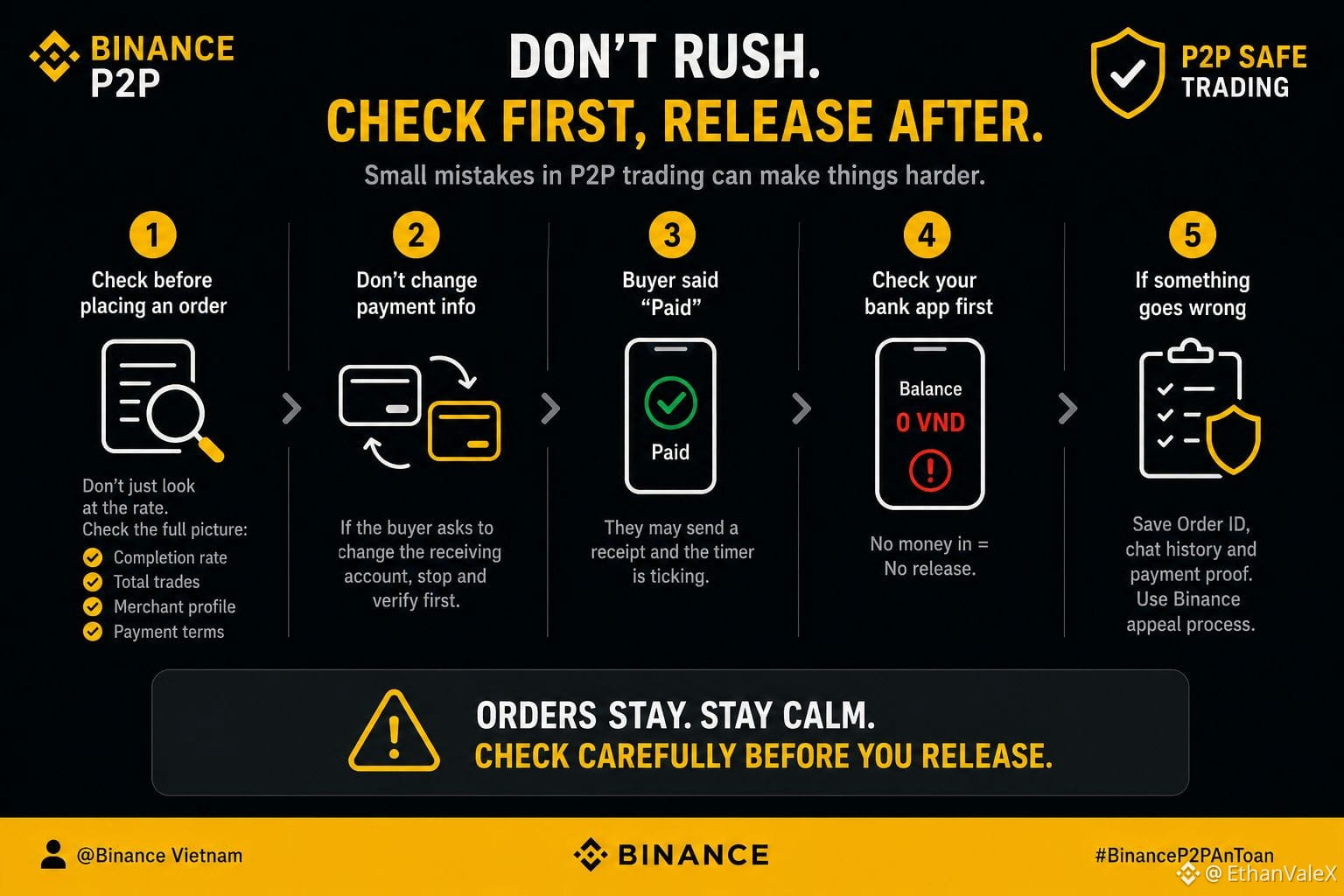
Por ejemplo, veo un anuncio con una tasa bastante buena. Si solo miras el número y colocas la orden, es muy fácil pasar por alto la tasa de finalización, la cantidad de transacciones, el perfil del Merchant o las condiciones de pago. Este es el momento en que yo suelo revisar bien antes de hacer clic.
Después de abrir la orden, todo sigue bien hasta que la otra parte quiere cambiar la cuenta que recibirá el dinero a mitad del proceso. En ese caso, no intento seguir negociando solo para hacerlo más rápido. Si la información de pago es distinta a la de la orden, hay que verificarla de nuevo.
Luego, del otro lado te dicen “Ya he pagado”.
Hay foto del comprobante, hay un estado en la orden, e incluso el reloj está haciendo una cuenta regresiva. Pero aun así abro la app del banco para comprobar el dinero que realmente se acredita. Si aún no veo el ingreso en la cuenta, no hago Release.
Este también es el momento en que es más fácil dejarse llevar por la psicología. Cuanto más corre el reloj, más insiste la otra parte; y más no quiero hacer clic por impulso. Esperar un poco para revisar sigue siendo mejor que hacer Release solo por miedo a que la orden se acabe el tiempo.
Si la operación presenta algún problema, guardo el Order ID, el historial del chat y el comprobante para apelar o pedir ayuda al soporte de Binance. Binance P2P tiene Escrow, chat y un proceso de reclamación, pero aun así necesito operar dentro de la plataforma y seguir bien los pasos para protegerme.
En general, mientras la orden siga ahí, revisa con calma. No se pongan nerviosos solo porque el reloj esté corriendo y hagan clic para terminar, colegas 😂
@Binance_Vietnam #BinanceP2PAnToan
Hay pedidos P2P que, de principio a fin, parecen bastante normales, pero con solo que te apresures en un tramo, luego ya te lo complicas tú mismo, colegas.
Por ejemplo, veo un anuncio con una tasa bastante buena. Si solo miras el número y colocas la orden, es muy fácil pasar por alto la tasa de finalización, la cantidad de transacciones, el perfil del Merchant o las condiciones de pago. Este es el momento en que yo suelo revisar bien antes de hacer clic.
Después de abrir la orden, todo sigue bien hasta que la otra parte quiere cambiar la cuenta que recibirá el dinero a mitad del proceso. En ese caso, no intento seguir negociando solo para hacerlo más rápido. Si la información de pago es distinta a la de la orden, hay que verificarla de nuevo.
Luego, del otro lado te dicen “Ya he pagado”.
Hay foto del comprobante, hay un estado en la orden, e incluso el reloj está haciendo una cuenta regresiva. Pero aun así abro la app del banco para comprobar el dinero que realmente se acredita. Si aún no veo el ingreso en la cuenta, no hago Release.
Este también es el momento en que es más fácil dejarse llevar por la psicología. Cuanto más corre el reloj, más insiste la otra parte; y más no quiero hacer clic por impulso. Esperar un poco para revisar sigue siendo mejor que hacer Release solo por miedo a que la orden se acabe el tiempo.
Si la operación presenta algún problema, guardo el Order ID, el historial del chat y el comprobante para apelar o pedir ayuda al soporte de Binance. Binance P2P tiene Escrow, chat y un proceso de reclamación, pero aun así necesito operar dentro de la plataforma y seguir bien los pasos para protegerme.
En general, mientras la orden siga ahí, revisa con calma. No se pongan nerviosos solo porque el reloj esté corriendo y hagan clic para terminar, colegas 😂
@Binance Vietnam #BinanceP2PAnToan
Por ejemplo, veo un anuncio con una tasa bastante buena. Si solo miras el número y colocas la orden, es muy fácil pasar por alto la tasa de finalización, la cantidad de transacciones, el perfil del Merchant o las condiciones de pago. Este es el momento en que yo suelo revisar bien antes de hacer clic.
Después de abrir la orden, todo sigue bien hasta que la otra parte quiere cambiar la cuenta que recibirá el dinero a mitad del proceso. En ese caso, no intento seguir negociando solo para hacerlo más rápido. Si la información de pago es distinta a la de la orden, hay que verificarla de nuevo.
Luego, del otro lado te dicen “Ya he pagado”.
Hay foto del comprobante, hay un estado en la orden, e incluso el reloj está haciendo una cuenta regresiva. Pero aun así abro la app del banco para comprobar el dinero que realmente se acredita. Si aún no veo el ingreso en la cuenta, no hago Release.
Este también es el momento en que es más fácil dejarse llevar por la psicología. Cuanto más corre el reloj, más insiste la otra parte; y más no quiero hacer clic por impulso. Esperar un poco para revisar sigue siendo mejor que hacer Release solo por miedo a que la orden se acabe el tiempo.
Si la operación presenta algún problema, guardo el Order ID, el historial del chat y el comprobante para apelar o pedir ayuda al soporte de Binance. Binance P2P tiene Escrow, chat y un proceso de reclamación, pero aun así necesito operar dentro de la plataforma y seguir bien los pasos para protegerme.
En general, mientras la orden siga ahí, revisa con calma. No se pongan nerviosos solo porque el reloj esté corriendo y hagan clic para terminar, colegas 😂
@Binance Vietnam #BinanceP2PAnToan
453
·
--
¿Algún hermano ha visto una situación en la que ya se transfirió el dinero, pero el USDT en Binance P2P nunca se desbloquea?
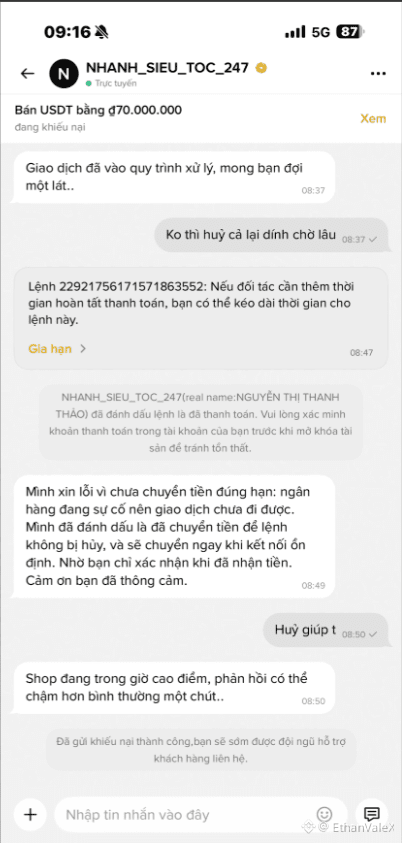
La historia es que acabo de vender 2370 USDT a un comerciante NHANH_SIEU_TOC_247. El comprador marcó “Pagado”, pero yo todavía no he recibido el dinero en la cuenta. Del otro lado explicaron que el banco está teniendo problemas, por lo que la transacción se retrasó y pidieron más tiempo.
Al principio, yo también insistí en esperar porque todavía no había nada que confirmara que el otro tuviera un problema. Pero después de 30 minutos, el sistema aún permitía extender el tiempo de pago, mientras yo ya llevaba bastante rato esperando, y empecé a irritarme. Le envié directamente “Cancelen por favor t”, y luego decidí presentar una queja directamente en Binance para que el equipo de soporte revisara.
Tampoco me apresuré a concluir que fuera una estafa, porque del otro lado seguían diciendo que estaban enfrentando un error bancario. Al abrir la queja, conservé toda la información del pedido (Order), el estado de la orden, el tiempo de la transacción y todo el contenido del chat con la otra parte, para que el Soporte tuviera datos suficientes para contrastar; además, dejé todas las conversaciones en Binance en vez de pasar a otro canal.
Aproximadamente 4 horas después, Binance me ayudó y el dinero se desbloqueó. En ese momento fue cuando realmente me sentí aliviado.
Antes yo pensaba que en P2P bastaba con revisar al Merchant y pagar siguiendo el proceso correcto. Este caso de 70 millones es lo que me hizo notar que, cuando una transacción empieza a tener problemas, conservar toda la información y abrir la disputa a tiempo también es igual de importante.
Desde entonces, desarrollé un hábito: cuando me encuentro con una orden anormal, guardo toda la información del Order, el estado de la transacción y el historial de chat directamente en Binance, y luego escribo al Soporte para que lo procesen siguiendo el procedimiento.
@Binance_Vietnam
#BinanceP2PAnToan
¿Algún hermano ha visto una situación en la que ya se transfirió el dinero, pero el USDT en Binance P2P nunca se desbloquea?
La historia es que acabo de vender 2370 USDT a un comerciante NHANH_SIEU_TOC_247. El comprador marcó “Pagado”, pero yo todavía no he recibido el dinero en la cuenta. Del otro lado explicaron que el banco está teniendo problemas, por lo que la transacción se retrasó y pidieron más tiempo.
Al principio, yo también insistí en esperar porque todavía no había nada que confirmara que el otro tuviera un problema. Pero después de 30 minutos, el sistema aún permitía extender el tiempo de pago, mientras yo ya llevaba bastante rato esperando, y empecé a irritarme. Le envié directamente “Cancelen por favor t”, y luego decidí presentar una queja directamente en Binance para que el equipo de soporte revisara.
Tampoco me apresuré a concluir que fuera una estafa, porque del otro lado seguían diciendo que estaban enfrentando un error bancario. Al abrir la queja, conservé toda la información del pedido (Order), el estado de la orden, el tiempo de la transacción y todo el contenido del chat con la otra parte, para que el Soporte tuviera datos suficientes para contrastar; además, dejé todas las conversaciones en Binance en vez de pasar a otro canal.
Aproximadamente 4 horas después, Binance me ayudó y el dinero se desbloqueó. En ese momento fue cuando realmente me sentí aliviado.
Antes yo pensaba que en P2P bastaba con revisar al Merchant y pagar siguiendo el proceso correcto. Este caso de 70 millones es lo que me hizo notar que, cuando una transacción empieza a tener problemas, conservar toda la información y abrir la disputa a tiempo también es igual de importante.
Desde entonces, desarrollé un hábito: cuando me encuentro con una orden anormal, guardo toda la información del Order, el estado de la transacción y el historial de chat directamente en Binance, y luego escribo al Soporte para que lo procesen siguiendo el procedimiento.
@Binance Vietnam
#BinanceP2PAnToan
La historia es que acabo de vender 2370 USDT a un comerciante NHANH_SIEU_TOC_247. El comprador marcó “Pagado”, pero yo todavía no he recibido el dinero en la cuenta. Del otro lado explicaron que el banco está teniendo problemas, por lo que la transacción se retrasó y pidieron más tiempo.
Al principio, yo también insistí en esperar porque todavía no había nada que confirmara que el otro tuviera un problema. Pero después de 30 minutos, el sistema aún permitía extender el tiempo de pago, mientras yo ya llevaba bastante rato esperando, y empecé a irritarme. Le envié directamente “Cancelen por favor t”, y luego decidí presentar una queja directamente en Binance para que el equipo de soporte revisara.
Tampoco me apresuré a concluir que fuera una estafa, porque del otro lado seguían diciendo que estaban enfrentando un error bancario. Al abrir la queja, conservé toda la información del pedido (Order), el estado de la orden, el tiempo de la transacción y todo el contenido del chat con la otra parte, para que el Soporte tuviera datos suficientes para contrastar; además, dejé todas las conversaciones en Binance en vez de pasar a otro canal.
Aproximadamente 4 horas después, Binance me ayudó y el dinero se desbloqueó. En ese momento fue cuando realmente me sentí aliviado.
Antes yo pensaba que en P2P bastaba con revisar al Merchant y pagar siguiendo el proceso correcto. Este caso de 70 millones es lo que me hizo notar que, cuando una transacción empieza a tener problemas, conservar toda la información y abrir la disputa a tiempo también es igual de importante.
Desde entonces, desarrollé un hábito: cuando me encuentro con una orden anormal, guardo toda la información del Order, el estado de la transacción y el historial de chat directamente en Binance, y luego escribo al Soporte para que lo procesen siguiendo el procedimiento.
@Binance Vietnam
#BinanceP2PAnToan
1
523
·
--
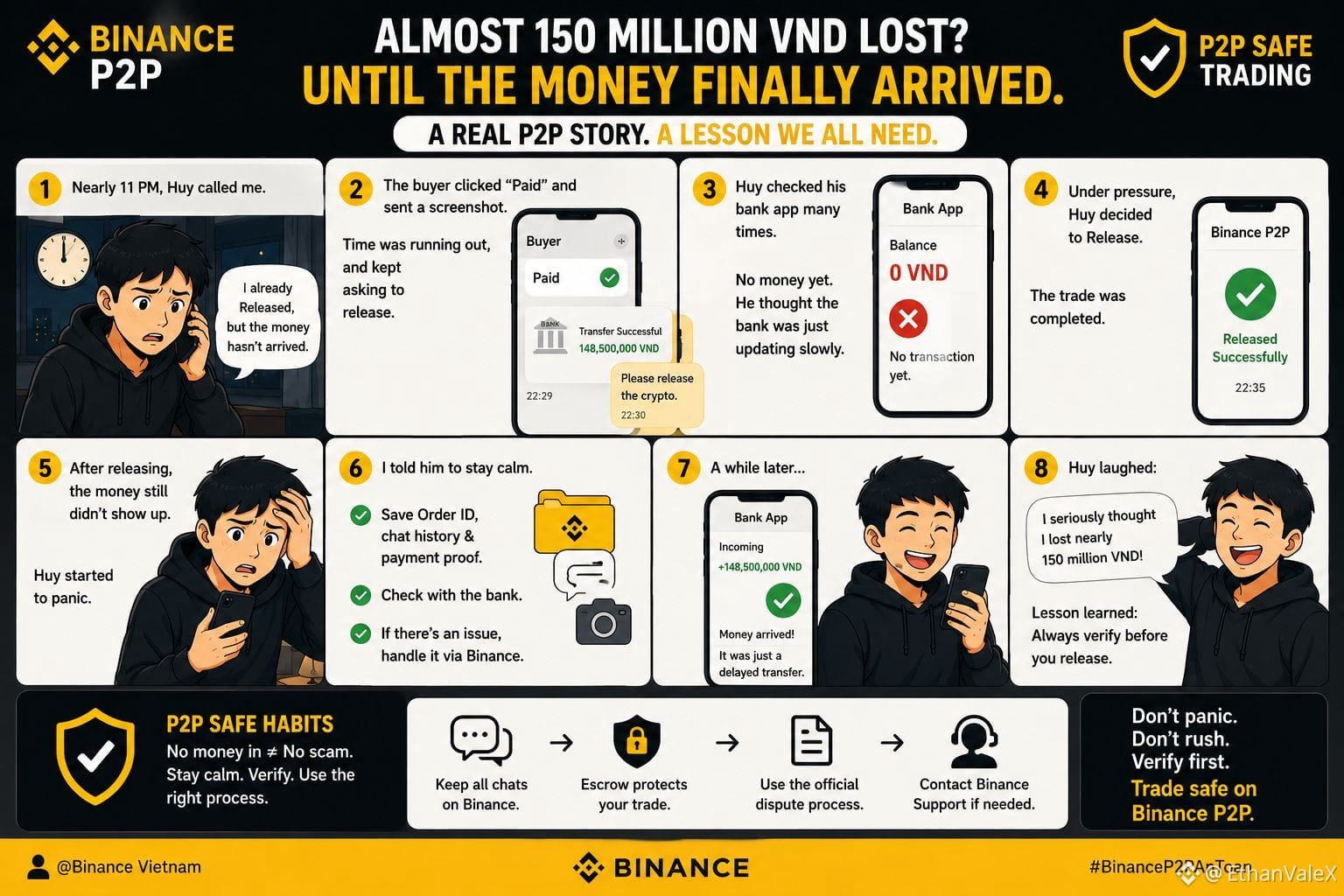
Cerca de las 11 de la noche de ayer, Huy me llamó por una transacción de Binance P2P de casi 150 millones de đồng: su voz en ese momento sonaba bastante asustada: “Ya lo publiqué (Release) pero el dinero todavía no ha entrado.”
Huy contó que el comprador había pulsado “Ya he pagado” y le había enviado de inmediato una foto del comprobante bancario; pero como la transacción estaba a punto de expirar, la otra persona le escribía continuamente preguntando por qué Huy todavía no había liberado el cripto. Él abrió la app del banco para comprobar varias veces, pero no vio el dinero. Al final pensó que el banco debía estar tardando en actualizar, así que siguió pulsando Release.
Cuando todo terminó, Huy volvió a revisar la cuenta y el dinero seguía sin aparecer.
Ahí fue cuando de verdad empezó a preocuparse: pensó que acababa de encontrarse con el peor escenario al vender P2P: el cripto ya estaba liberado, pero el dinero no había llegado.
Le dije que no sacase conclusiones todavía; primero conservar el Order ID, el historial del chat y las fotos de la transacción, y luego comprobar si en el banco había alguna transacción todavía en proceso. También le recordé a Huy que si había algún problema, lo gestionara directamente en Binance.
Un rato después me escribió: “Ya entró el dinero.”
Resultó que ese día el banco estaba tramitando la operación con retraso, así que el dinero llegó más tarde de lo habitual. Al final no hubo ningún scam; solo que Huy se había asustado a sí mismo por completo.
Se rió y dijo: “Antes pensé que se me iban a volar casi 150 millones.”
Yo solo supe decirle que la próxima vez, si no ve el dinero, que se calme y compruebe. Binance P2P tiene Escrow, un sistema de chat y un proceso de reclamaciones; así que cuando una transacción tiene problemas, lo mejor es mantener todo dentro de la plataforma y dejar que el procedimiento oficial se encargue, en lugar de decidir por cuenta propia mientras uno está nervioso.
Esto también es lo que quiero compartir por <t-2/>#BinanceP2PAnToan <t-2/> para que todos, especialmente los que empiezan, tengan un hábito más seguro al operar.
@Binance_Vietnam
Cerca de las 11 de la noche de ayer, Huy me llamó por una transacción de Binance P2P de casi 150 millones de đồng: su voz en ese momento sonaba bastante asustada: “Ya lo publiqué (Release) pero el dinero todavía no ha entrado.”
Huy contó que el comprador había pulsado “Ya he pagado” y le había enviado de inmediato una foto del comprobante bancario; pero como la transacción estaba a punto de expirar, la otra persona le escribía continuamente preguntando por qué Huy todavía no había liberado el cripto. Él abrió la app del banco para comprobar varias veces, pero no vio el dinero. Al final pensó que el banco debía estar tardando en actualizar, así que siguió pulsando Release.
Cuando todo terminó, Huy volvió a revisar la cuenta y el dinero seguía sin aparecer.
Ahí fue cuando de verdad empezó a preocuparse: pensó que acababa de encontrarse con el peor escenario al vender P2P: el cripto ya estaba liberado, pero el dinero no había llegado.
Le dije que no sacase conclusiones todavía; primero conservar el Order ID, el historial del chat y las fotos de la transacción, y luego comprobar si en el banco había alguna transacción todavía en proceso. También le recordé a Huy que si había algún problema, lo gestionara directamente en Binance.
Un rato después me escribió: “Ya entró el dinero.”
Resultó que ese día el banco estaba tramitando la operación con retraso, así que el dinero llegó más tarde de lo habitual. Al final no hubo ningún scam; solo que Huy se había asustado a sí mismo por completo.
Se rió y dijo: “Antes pensé que se me iban a volar casi 150 millones.”
Yo solo supe decirle que la próxima vez, si no ve el dinero, que se calme y compruebe. Binance P2P tiene Escrow, un sistema de chat y un proceso de reclamaciones; así que cuando una transacción tiene problemas, lo mejor es mantener todo dentro de la plataforma y dejar que el procedimiento oficial se encargue, en lugar de decidir por cuenta propia mientras uno está nervioso.
Esto también es lo que quiero compartir por <t-2/>#BinanceP2PAnToan <t-2/> para que todos, especialmente los que empiezan, tengan un hábito más seguro al operar.
@Binance Vietnam
Huy contó que el comprador había pulsado “Ya he pagado” y le había enviado de inmediato una foto del comprobante bancario; pero como la transacción estaba a punto de expirar, la otra persona le escribía continuamente preguntando por qué Huy todavía no había liberado el cripto. Él abrió la app del banco para comprobar varias veces, pero no vio el dinero. Al final pensó que el banco debía estar tardando en actualizar, así que siguió pulsando Release.
Cuando todo terminó, Huy volvió a revisar la cuenta y el dinero seguía sin aparecer.
Ahí fue cuando de verdad empezó a preocuparse: pensó que acababa de encontrarse con el peor escenario al vender P2P: el cripto ya estaba liberado, pero el dinero no había llegado.
Le dije que no sacase conclusiones todavía; primero conservar el Order ID, el historial del chat y las fotos de la transacción, y luego comprobar si en el banco había alguna transacción todavía en proceso. También le recordé a Huy que si había algún problema, lo gestionara directamente en Binance.
Un rato después me escribió: “Ya entró el dinero.”
Resultó que ese día el banco estaba tramitando la operación con retraso, así que el dinero llegó más tarde de lo habitual. Al final no hubo ningún scam; solo que Huy se había asustado a sí mismo por completo.
Se rió y dijo: “Antes pensé que se me iban a volar casi 150 millones.”
Yo solo supe decirle que la próxima vez, si no ve el dinero, que se calme y compruebe. Binance P2P tiene Escrow, un sistema de chat y un proceso de reclamaciones; así que cuando una transacción tiene problemas, lo mejor es mantener todo dentro de la plataforma y dejar que el procedimiento oficial se encargue, en lugar de decidir por cuenta propia mientras uno está nervioso.
Esto también es lo que quiero compartir por <t-2/>#BinanceP2PAnToan <t-2/> para que todos, especialmente los que empiezan, tengan un hábito más seguro al operar.
@Binance Vietnam
375
·
--
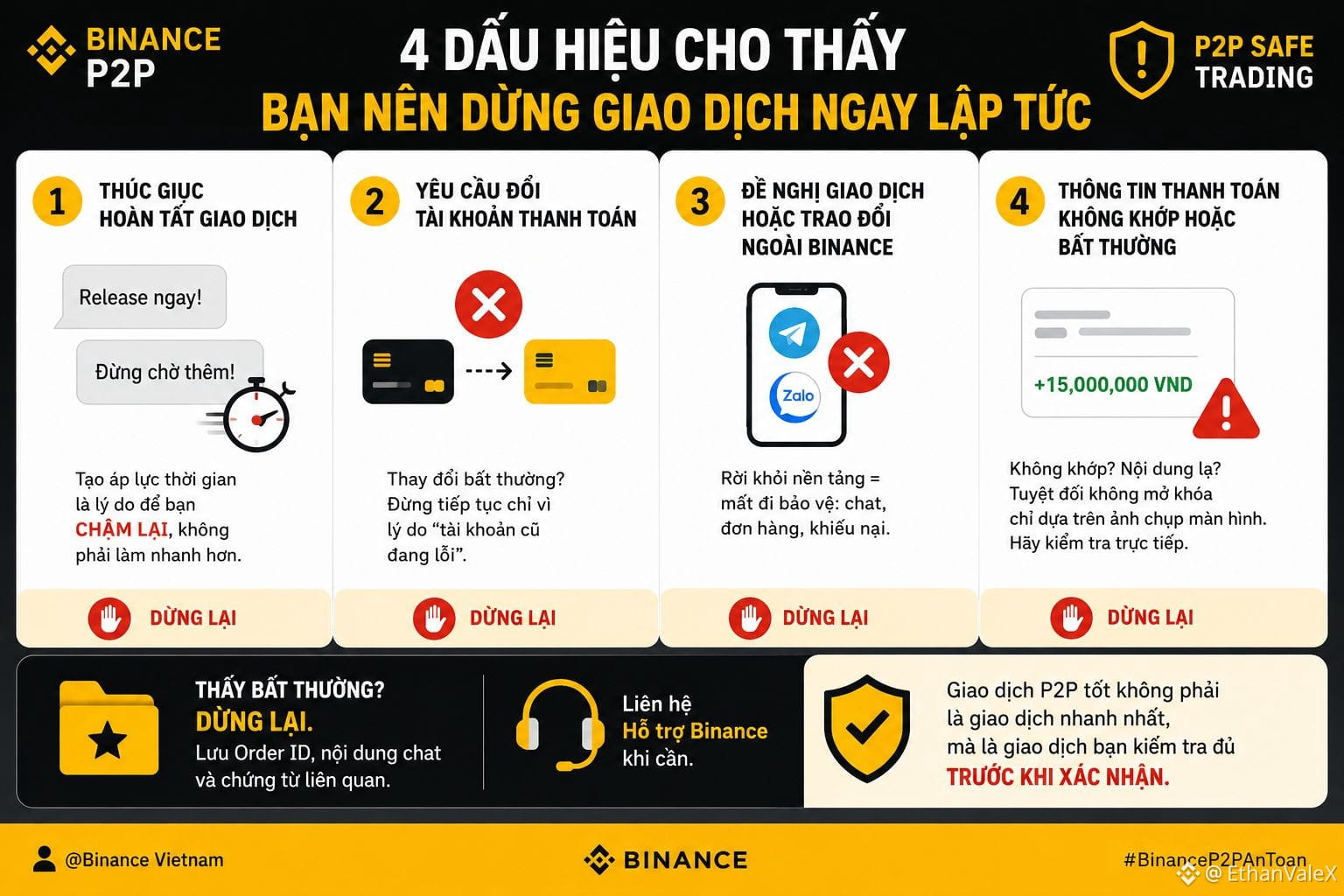
P2P va bien, rencontres ces 4 signes : ne continue pas la transaction
La fois précédente, j’ai fait une transaction P2P, au début c’était normal. Juste avant de finir l’ordre, l’autre partie a commencé à m’envoyer beaucoup plus de messages, puis a ajouté quelques demandes assez bizarres. À ce moment-là, je me suis dit : ok, je vais juste ralentir un peu pour être sûr.
D’abord, il y a eu le “release”. L’autre ne cessait de dire : « frère, aide-moi à release », « je viens de transférer », et a envoyé plusieurs messages d’affilée. Dans ces cas-là, je ne discute pas. J’ouvre simplement l’app de ma banque et je vérifie. Tant que je ne vois pas l’argent crédité, je ne release pas. C’est aussi simple que ça.
Pendant la transaction, l’autre m’a aussi demandé de changer vers un autre compte pour recevoir le paiement. Moi, je n’ai pas continué tout de suite. Quel compte, au nom de qui, et si les informations correspondent bien à l’annonce : je vérifie clairement, puis je continue.
Il y a même des cas où ils invitent à passer sur Telegram ou WhatsApp pour que ce soit “plus pratique”, puis en profitent pour te dire d’annuler l’ordre P2P et de faire directement de l’OTC à la place, avec un prix même meilleur. Ça paraît tentant, mais non merci. Tant que je trade sur Binance, je reste sur Binance ; s’il y a un problème, il y a l’historique des chats, les infos de la commande et la procédure d’assistance pour le résoudre.
Et pour les captures de transfert : ne te fie pas uniquement à la photo. Même si la photo est jolie, ça ne vaut pas le fait que moi j’ouvre l’appli bancaire et que je voie l’argent crédité pour de vrai sur mon compte. Tant que ce n’est pas crédité, j’attends.
Quand je rencontre ces situations pendant une transaction, je stoppe directement : être poussé à release, changer de compte pour recevoir l’argent, être invité à sortir de Binance/OTC, ou qu’on m’envoie une photo de transfert puis qu’on me demande de release.
S’il y a quelque chose qui te met mal à l’aise, reste calme. Enregistre l’Order ID, le reçu et le bout de discussion ; si besoin, contacte le support de Binance.
Tu as déjà rencontré une situation en P2P qui t’a fait arrêter la transaction ?
@Binance_Vietnam #BinanceP2PAnToan #USJulyCPI&PPIDueThisWeek $GENIUS $PENGU
P2P va bien, rencontres ces 4 signes : ne continue pas la transaction
La fois précédente, j’ai fait une transaction P2P, au début c’était normal. Juste avant de finir l’ordre, l’autre partie a commencé à m’envoyer beaucoup plus de messages, puis a ajouté quelques demandes assez bizarres. À ce moment-là, je me suis dit : ok, je vais juste ralentir un peu pour être sûr.
D’abord, il y a eu le “release”. L’autre ne cessait de dire : « frère, aide-moi à release », « je viens de transférer », et a envoyé plusieurs messages d’affilée. Dans ces cas-là, je ne discute pas. J’ouvre simplement l’app de ma banque et je vérifie. Tant que je ne vois pas l’argent crédité, je ne release pas. C’est aussi simple que ça.
Pendant la transaction, l’autre m’a aussi demandé de changer vers un autre compte pour recevoir le paiement. Moi, je n’ai pas continué tout de suite. Quel compte, au nom de qui, et si les informations correspondent bien à l’annonce : je vérifie clairement, puis je continue.
Il y a même des cas où ils invitent à passer sur Telegram ou WhatsApp pour que ce soit “plus pratique”, puis en profitent pour te dire d’annuler l’ordre P2P et de faire directement de l’OTC à la place, avec un prix même meilleur. Ça paraît tentant, mais non merci. Tant que je trade sur Binance, je reste sur Binance ; s’il y a un problème, il y a l’historique des chats, les infos de la commande et la procédure d’assistance pour le résoudre.
Et pour les captures de transfert : ne te fie pas uniquement à la photo. Même si la photo est jolie, ça ne vaut pas le fait que moi j’ouvre l’appli bancaire et que je voie l’argent crédité pour de vrai sur mon compte. Tant que ce n’est pas crédité, j’attends.
Quand je rencontre ces situations pendant une transaction, je stoppe directement : être poussé à release, changer de compte pour recevoir l’argent, être invité à sortir de Binance/OTC, ou qu’on m’envoie une photo de transfert puis qu’on me demande de release.
S’il y a quelque chose qui te met mal à l’aise, reste calme. Enregistre l’Order ID, le reçu et le bout de discussion ; si besoin, contacte le support de Binance.
Tu as déjà rencontré une situation en P2P qui t’a fait arrêter la transaction ?
@Binance Vietnam #BinanceP2PAnToan #USJulyCPI&PPIDueThisWeek $GENIUS $PENGU
La fois précédente, j’ai fait une transaction P2P, au début c’était normal. Juste avant de finir l’ordre, l’autre partie a commencé à m’envoyer beaucoup plus de messages, puis a ajouté quelques demandes assez bizarres. À ce moment-là, je me suis dit : ok, je vais juste ralentir un peu pour être sûr.
D’abord, il y a eu le “release”. L’autre ne cessait de dire : « frère, aide-moi à release », « je viens de transférer », et a envoyé plusieurs messages d’affilée. Dans ces cas-là, je ne discute pas. J’ouvre simplement l’app de ma banque et je vérifie. Tant que je ne vois pas l’argent crédité, je ne release pas. C’est aussi simple que ça.
Pendant la transaction, l’autre m’a aussi demandé de changer vers un autre compte pour recevoir le paiement. Moi, je n’ai pas continué tout de suite. Quel compte, au nom de qui, et si les informations correspondent bien à l’annonce : je vérifie clairement, puis je continue.
Il y a même des cas où ils invitent à passer sur Telegram ou WhatsApp pour que ce soit “plus pratique”, puis en profitent pour te dire d’annuler l’ordre P2P et de faire directement de l’OTC à la place, avec un prix même meilleur. Ça paraît tentant, mais non merci. Tant que je trade sur Binance, je reste sur Binance ; s’il y a un problème, il y a l’historique des chats, les infos de la commande et la procédure d’assistance pour le résoudre.
Et pour les captures de transfert : ne te fie pas uniquement à la photo. Même si la photo est jolie, ça ne vaut pas le fait que moi j’ouvre l’appli bancaire et que je voie l’argent crédité pour de vrai sur mon compte. Tant que ce n’est pas crédité, j’attends.
Quand je rencontre ces situations pendant une transaction, je stoppe directement : être poussé à release, changer de compte pour recevoir l’argent, être invité à sortir de Binance/OTC, ou qu’on m’envoie une photo de transfert puis qu’on me demande de release.
S’il y a quelque chose qui te met mal à l’aise, reste calme. Enregistre l’Order ID, le reçu et le bout de discussion ; si besoin, contacte le support de Binance.
Tu as déjà rencontré une situation en P2P qui t’a fait arrêter la transaction ?
@Binance Vietnam #BinanceP2PAnToan #USJulyCPI&PPIDueThisWeek $GENIUS $PENGU
1
2
771
·
--
Casi desbloqueo temprano solo porque pensé: “Este tipo de operaciones es mucho, seguro que está bien”.
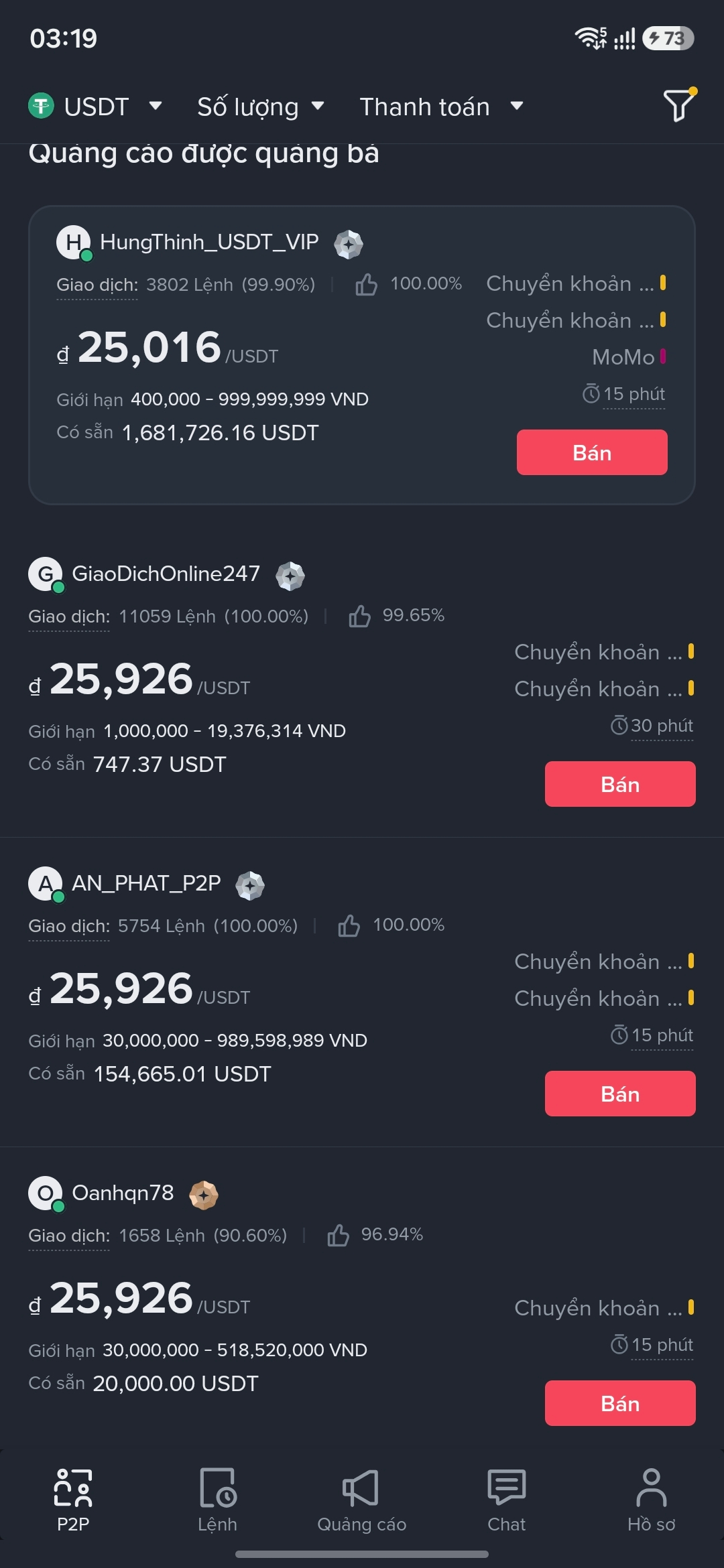
Una vez vendí 600 USDT en Binance P2P. Ese comerciante tenía una tasa de finalización de casi el 100% y un historial de algunos cientos de órdenes. No recuerdo exactamente cuántas, pero con solo echar un vistazo se veía bastante confiable. El precio también era mejor que otras opciones, así que casi lo elegí al instante.
El comprador dijo que ya había pagado, y luego, como a los 30 segundos, me escribió para que revisara y desbloqueara temprano porque necesitaba terminar la transacción. La verdad, en ese momento yo también pensé: “El perfil es tan bueno que seguramente todo estará bien”.
Si una cuenta tiene pocas operaciones y pide que desbloquee temprano, la rechazaría de inmediato. Pero con alguien que tiene un historial de varios cientos de órdenes y una tasa de finalización de casi el 100%, mi reacción fue diferente. Empecé a confiar en su reputación antes incluso de comprobar la transacción.
Abrí la app del banco y todavía no veía el dinero. Le dije que cuando el dinero entrara en la cuenta, entonces desbloquearía; mientras tanto, el comprador seguía escribiéndome diciendo que ya había hecho la transferencia y pidiéndome que lo revisara.
Esta vez no me apresuré. Volví a Orden, comparé el importe y la información del pago, y esperé un poco más. Como a los 90 segundos, el dinero recién entró de verdad en la cuenta. Revisé otra vez y entonces desbloqueé, y la transacción se completó completamente de forma normal.
No pasó nada esa vez, pero me quedé recordando bastante tiempo la sensación de que casi salteo el proceso solo porque vi que la contraparte tenía un historial demasiado “perfecto”.
Desde entonces, sigo viendo el historial de operaciones cuando elijo con quién hacer el intercambio, pero no dejo que eso decida cuándo desbloquear.
Un buen historial me da más tranquilidad, pero lo que realmente decide el siguiente paso es que el dinero entre en la cuenta.
@Binance_Vietnam #BinanceP2PAnToan $BEAT $TUT $CYS
Casi desbloqueo temprano solo porque pensé: “Este tipo de operaciones es mucho, seguro que está bien”.
Una vez vendí 600 USDT en Binance P2P. Ese comerciante tenía una tasa de finalización de casi el 100% y un historial de algunos cientos de órdenes. No recuerdo exactamente cuántas, pero con solo echar un vistazo se veía bastante confiable. El precio también era mejor que otras opciones, así que casi lo elegí al instante.
El comprador dijo que ya había pagado, y luego, como a los 30 segundos, me escribió para que revisara y desbloqueara temprano porque necesitaba terminar la transacción. La verdad, en ese momento yo también pensé: “El perfil es tan bueno que seguramente todo estará bien”.
Si una cuenta tiene pocas operaciones y pide que desbloquee temprano, la rechazaría de inmediato. Pero con alguien que tiene un historial de varios cientos de órdenes y una tasa de finalización de casi el 100%, mi reacción fue diferente. Empecé a confiar en su reputación antes incluso de comprobar la transacción.
Abrí la app del banco y todavía no veía el dinero. Le dije que cuando el dinero entrara en la cuenta, entonces desbloquearía; mientras tanto, el comprador seguía escribiéndome diciendo que ya había hecho la transferencia y pidiéndome que lo revisara.
Esta vez no me apresuré. Volví a Orden, comparé el importe y la información del pago, y esperé un poco más. Como a los 90 segundos, el dinero recién entró de verdad en la cuenta. Revisé otra vez y entonces desbloqueé, y la transacción se completó completamente de forma normal.
No pasó nada esa vez, pero me quedé recordando bastante tiempo la sensación de que casi salteo el proceso solo porque vi que la contraparte tenía un historial demasiado “perfecto”.
Desde entonces, sigo viendo el historial de operaciones cuando elijo con quién hacer el intercambio, pero no dejo que eso decida cuándo desbloquear.
Un buen historial me da más tranquilidad, pero lo que realmente decide el siguiente paso es que el dinero entre en la cuenta.
@Binance Vietnam #BinanceP2PAnToan $BEAT $TUT $CYS
Una vez vendí 600 USDT en Binance P2P. Ese comerciante tenía una tasa de finalización de casi el 100% y un historial de algunos cientos de órdenes. No recuerdo exactamente cuántas, pero con solo echar un vistazo se veía bastante confiable. El precio también era mejor que otras opciones, así que casi lo elegí al instante.
El comprador dijo que ya había pagado, y luego, como a los 30 segundos, me escribió para que revisara y desbloqueara temprano porque necesitaba terminar la transacción. La verdad, en ese momento yo también pensé: “El perfil es tan bueno que seguramente todo estará bien”.
Si una cuenta tiene pocas operaciones y pide que desbloquee temprano, la rechazaría de inmediato. Pero con alguien que tiene un historial de varios cientos de órdenes y una tasa de finalización de casi el 100%, mi reacción fue diferente. Empecé a confiar en su reputación antes incluso de comprobar la transacción.
Abrí la app del banco y todavía no veía el dinero. Le dije que cuando el dinero entrara en la cuenta, entonces desbloquearía; mientras tanto, el comprador seguía escribiéndome diciendo que ya había hecho la transferencia y pidiéndome que lo revisara.
Esta vez no me apresuré. Volví a Orden, comparé el importe y la información del pago, y esperé un poco más. Como a los 90 segundos, el dinero recién entró de verdad en la cuenta. Revisé otra vez y entonces desbloqueé, y la transacción se completó completamente de forma normal.
No pasó nada esa vez, pero me quedé recordando bastante tiempo la sensación de que casi salteo el proceso solo porque vi que la contraparte tenía un historial demasiado “perfecto”.
Desde entonces, sigo viendo el historial de operaciones cuando elijo con quién hacer el intercambio, pero no dejo que eso decida cuándo desbloquear.
Un buen historial me da más tranquilidad, pero lo que realmente decide el siguiente paso es que el dinero entre en la cuenta.
@Binance Vietnam #BinanceP2PAnToan $BEAT $TUT $CYS
1
2
726
·
--
Creí que el comprador tenía algún problema. Resultó que no.
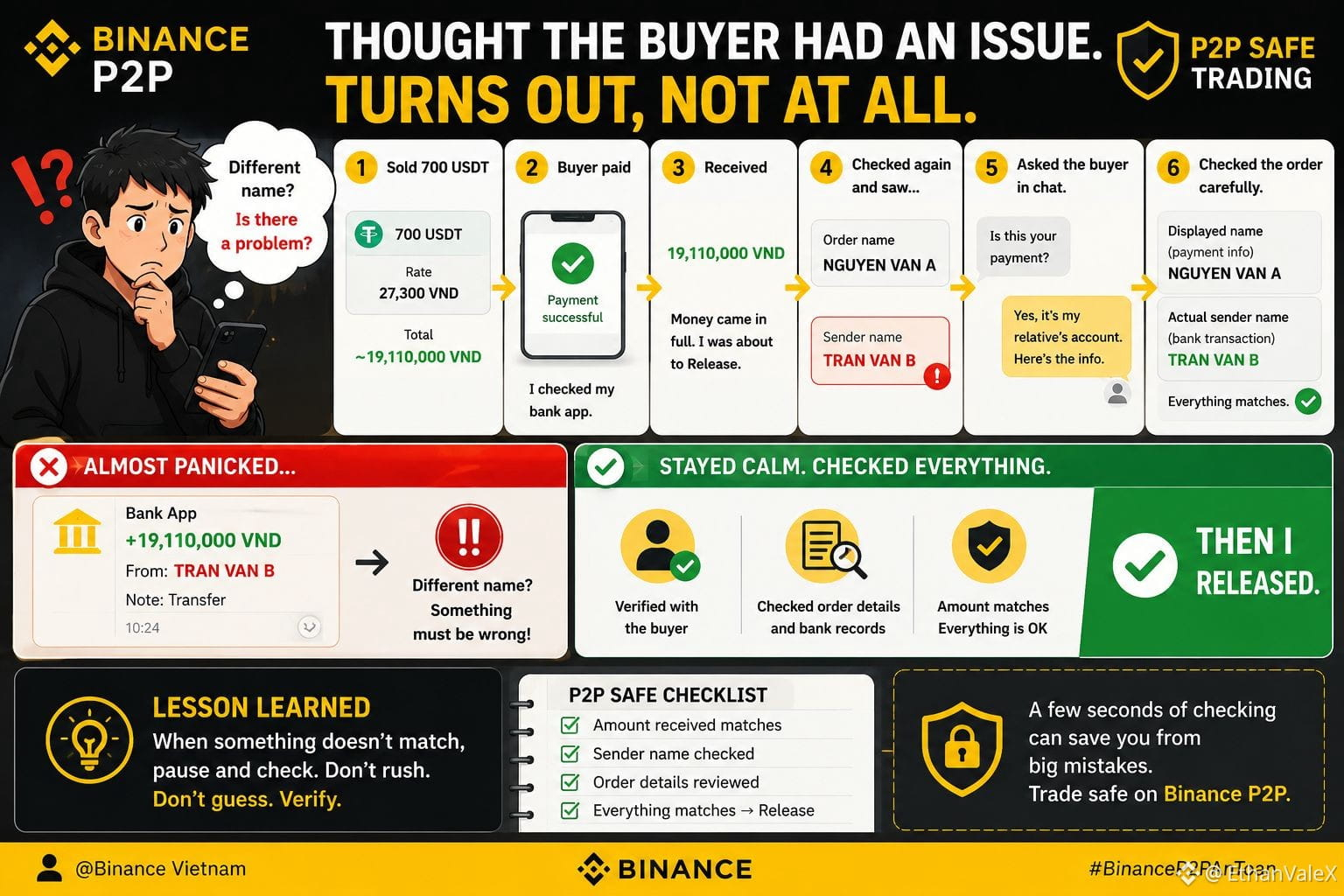
En aquel entonces necesitaba dinero, así que en Binance P2P vendí 700 USDT. El tipo de cambio era aproximadamente 27.300 VND, en total casi 19,11 millones de VND.
Elegí un Merchant con un historial de transacciones bastante estable. Después de colocar la orden, esperé a que el comprador pagara.
Al cabo de un rato, el comprador me informó que ya había hecho la transferencia. Abrí la app del banco para revisar y vi que efectivamente habían entrado 19,11 millones de VND en la cuenta.
El dinero era suficiente, así que pensé en pulsar Release de inmediato.
Pero antes de hacerlo, volví a mirar la información de pago una vez más y vi que el nombre del remitente no coincidía con el nombre que figuraba en la orden.
En ese momento sí me puse un poco nervioso. Casi 20 millones ya habían entrado, pero el nombre del remitente era distinto. Pensé: seguro que pasa algo.
Le escribí de inmediato por el chat de Binance P2P para preguntar al comprador. Ella explicó que era la cuenta de un familiar y me envió más información.
Aún así, no hice Release.
Mientras revisaba de nuevo la orden, recién descubrí algo: el nombre que yo estaba viendo era el nombre que aparece en la información de pago, pero el nombre real del remitente estaba en la parte de las transacciones del banco. Esas dos informaciones no siempre están en el mismo lugar y no siempre puedo verlas bien desde el principio.
Volví a comparar todos los datos y el importe de 19,11 millones también coincidía. Solo entonces me tranquilicé: me había asustado a mí mismo por mirar la información demasiado rápido.
Menos mal que no había apretado Release y tampoco había llegado a concluir que el comprador tuviera algún problema.
A partir de este caso aprendí la lección: en las transacciones P2P, si ves un detalle que no coincide, detente para comprobar antes, no te apresures a suponer.
Los que comercian en P2P: recuerden un paso más. Aunque el dinero ya haya entrado y esté completo, también revisen el nombre del remitente y la Orden antes de hacer Release.
@Binance_Vietnam #BinanceP2PAnToan $CYS
Creí que el comprador tenía algún problema. Resultó que no.
En aquel entonces necesitaba dinero, así que en Binance P2P vendí 700 USDT. El tipo de cambio era aproximadamente 27.300 VND, en total casi 19,11 millones de VND.
Elegí un Merchant con un historial de transacciones bastante estable. Después de colocar la orden, esperé a que el comprador pagara.
Al cabo de un rato, el comprador me informó que ya había hecho la transferencia. Abrí la app del banco para revisar y vi que efectivamente habían entrado 19,11 millones de VND en la cuenta.
El dinero era suficiente, así que pensé en pulsar Release de inmediato.
Pero antes de hacerlo, volví a mirar la información de pago una vez más y vi que el nombre del remitente no coincidía con el nombre que figuraba en la orden.
En ese momento sí me puse un poco nervioso. Casi 20 millones ya habían entrado, pero el nombre del remitente era distinto. Pensé: seguro que pasa algo.
Le escribí de inmediato por el chat de Binance P2P para preguntar al comprador. Ella explicó que era la cuenta de un familiar y me envió más información.
Aún así, no hice Release.
Mientras revisaba de nuevo la orden, recién descubrí algo: el nombre que yo estaba viendo era el nombre que aparece en la información de pago, pero el nombre real del remitente estaba en la parte de las transacciones del banco. Esas dos informaciones no siempre están en el mismo lugar y no siempre puedo verlas bien desde el principio.
Volví a comparar todos los datos y el importe de 19,11 millones también coincidía. Solo entonces me tranquilicé: me había asustado a mí mismo por mirar la información demasiado rápido.
Menos mal que no había apretado Release y tampoco había llegado a concluir que el comprador tuviera algún problema.
A partir de este caso aprendí la lección: en las transacciones P2P, si ves un detalle que no coincide, detente para comprobar antes, no te apresures a suponer.
Los que comercian en P2P: recuerden un paso más. Aunque el dinero ya haya entrado y esté completo, también revisen el nombre del remitente y la Orden antes de hacer Release.
@Binance Vietnam #BinanceP2PAnToan $CYS
En aquel entonces necesitaba dinero, así que en Binance P2P vendí 700 USDT. El tipo de cambio era aproximadamente 27.300 VND, en total casi 19,11 millones de VND.
Elegí un Merchant con un historial de transacciones bastante estable. Después de colocar la orden, esperé a que el comprador pagara.
Al cabo de un rato, el comprador me informó que ya había hecho la transferencia. Abrí la app del banco para revisar y vi que efectivamente habían entrado 19,11 millones de VND en la cuenta.
El dinero era suficiente, así que pensé en pulsar Release de inmediato.
Pero antes de hacerlo, volví a mirar la información de pago una vez más y vi que el nombre del remitente no coincidía con el nombre que figuraba en la orden.
En ese momento sí me puse un poco nervioso. Casi 20 millones ya habían entrado, pero el nombre del remitente era distinto. Pensé: seguro que pasa algo.
Le escribí de inmediato por el chat de Binance P2P para preguntar al comprador. Ella explicó que era la cuenta de un familiar y me envió más información.
Aún así, no hice Release.
Mientras revisaba de nuevo la orden, recién descubrí algo: el nombre que yo estaba viendo era el nombre que aparece en la información de pago, pero el nombre real del remitente estaba en la parte de las transacciones del banco. Esas dos informaciones no siempre están en el mismo lugar y no siempre puedo verlas bien desde el principio.
Volví a comparar todos los datos y el importe de 19,11 millones también coincidía. Solo entonces me tranquilicé: me había asustado a mí mismo por mirar la información demasiado rápido.
Menos mal que no había apretado Release y tampoco había llegado a concluir que el comprador tuviera algún problema.
A partir de este caso aprendí la lección: en las transacciones P2P, si ves un detalle que no coincide, detente para comprobar antes, no te apresures a suponer.
Los que comercian en P2P: recuerden un paso más. Aunque el dinero ya haya entrado y esté completo, también revisen el nombre del remitente y la Orden antes de hacer Release.
@Binance Vietnam #BinanceP2PAnToan $CYS
1
1.3k
·
--
Casi elijo mal al Merchant en Binance P2P por un buen precio
Antes pensaba que elegir Merchant en Binance P2P era muy sencillo: si veía un precio bueno, entonces lo elegía. Después de algunas transacciones, recién entendí que el precio solo es una parte de la decisión.
Ahora, antes de elegir un Merchant, suelo revisar 4 cosas: cantidad de transacciones, Completion Rate, insignia del Merchant y el límite del anuncio.
La cantidad de transacciones me da un poco más de información sobre el historial del Merchant. No creo que muchas transacciones signifiquen seguridad absoluta, pero si entre dos partes el precio está bastante similar, normalmente me inclino por la que tiene un historial más claro.
El Completion Rate también es un número que observo. Si las condiciones entre dos anuncios no difieren mucho, normalmente doy prioridad al Merchant con una tasa de finalización mejor. La insignia del Merchant también. Antes yo solía ignorarla; ahora siempre reviso el perfil antes de hacer la transacción.
El límite del anuncio es más simple. Solo verifico si el monto que necesito comprar o vender está dentro del rango que admite el Merchant. Si no es compatible, elijo otro anuncio.
Pero elegir Merchant no significa que vaya a transaccionar de inmediato. Todavía cotejo el nombre de la cuenta de pago con la información de la orden y mantengo todas las conversaciones en Binance P2P. Si la otra parte quiere pasar a Telegram, Zalo o cambiar de cuenta en el camino, me detengo.
En el paso de pago, tampoco libero solo porque reciba una captura de pantalla o el mensaje de “ya transferí el dinero”. Yo mismo verifico la cuenta y solo desbloqueo el cripto cuando confirmo que el dinero realmente entró.
Para mí, elegir Merchant no es buscar el mejor precio. Lo importante es saber con quién estoy negociando antes de presionar Confirm.
@Binance_Vietnam #BinanceP2PAnToan
$GRVT #CreatorpadVN
Casi elijo mal al Merchant en Binance P2P por un buen precio
Antes pensaba que elegir Merchant en Binance P2P era muy sencillo: si veía un precio bueno, entonces lo elegía. Después de algunas transacciones, recién entendí que el precio solo es una parte de la decisión.
Ahora, antes de elegir un Merchant, suelo revisar 4 cosas: cantidad de transacciones, Completion Rate, insignia del Merchant y el límite del anuncio.
La cantidad de transacciones me da un poco más de información sobre el historial del Merchant. No creo que muchas transacciones signifiquen seguridad absoluta, pero si entre dos partes el precio está bastante similar, normalmente me inclino por la que tiene un historial más claro.
El Completion Rate también es un número que observo. Si las condiciones entre dos anuncios no difieren mucho, normalmente doy prioridad al Merchant con una tasa de finalización mejor. La insignia del Merchant también. Antes yo solía ignorarla; ahora siempre reviso el perfil antes de hacer la transacción.
El límite del anuncio es más simple. Solo verifico si el monto que necesito comprar o vender está dentro del rango que admite el Merchant. Si no es compatible, elijo otro anuncio.
Pero elegir Merchant no significa que vaya a transaccionar de inmediato. Todavía cotejo el nombre de la cuenta de pago con la información de la orden y mantengo todas las conversaciones en Binance P2P. Si la otra parte quiere pasar a Telegram, Zalo o cambiar de cuenta en el camino, me detengo.
En el paso de pago, tampoco libero solo porque reciba una captura de pantalla o el mensaje de “ya transferí el dinero”. Yo mismo verifico la cuenta y solo desbloqueo el cripto cuando confirmo que el dinero realmente entró.
Para mí, elegir Merchant no es buscar el mejor precio. Lo importante es saber con quién estoy negociando antes de presionar Confirm.
@Binance Vietnam #BinanceP2PAnToan
$GRVT #CreatorpadVN
Antes pensaba que elegir Merchant en Binance P2P era muy sencillo: si veía un precio bueno, entonces lo elegía. Después de algunas transacciones, recién entendí que el precio solo es una parte de la decisión.
Ahora, antes de elegir un Merchant, suelo revisar 4 cosas: cantidad de transacciones, Completion Rate, insignia del Merchant y el límite del anuncio.
La cantidad de transacciones me da un poco más de información sobre el historial del Merchant. No creo que muchas transacciones signifiquen seguridad absoluta, pero si entre dos partes el precio está bastante similar, normalmente me inclino por la que tiene un historial más claro.
El Completion Rate también es un número que observo. Si las condiciones entre dos anuncios no difieren mucho, normalmente doy prioridad al Merchant con una tasa de finalización mejor. La insignia del Merchant también. Antes yo solía ignorarla; ahora siempre reviso el perfil antes de hacer la transacción.
El límite del anuncio es más simple. Solo verifico si el monto que necesito comprar o vender está dentro del rango que admite el Merchant. Si no es compatible, elijo otro anuncio.
Pero elegir Merchant no significa que vaya a transaccionar de inmediato. Todavía cotejo el nombre de la cuenta de pago con la información de la orden y mantengo todas las conversaciones en Binance P2P. Si la otra parte quiere pasar a Telegram, Zalo o cambiar de cuenta en el camino, me detengo.
En el paso de pago, tampoco libero solo porque reciba una captura de pantalla o el mensaje de “ya transferí el dinero”. Yo mismo verifico la cuenta y solo desbloqueo el cripto cuando confirmo que el dinero realmente entró.
Para mí, elegir Merchant no es buscar el mejor precio. Lo importante es saber con quién estoy negociando antes de presionar Confirm.
@Binance Vietnam #BinanceP2PAnToan
$GRVT #CreatorpadVN
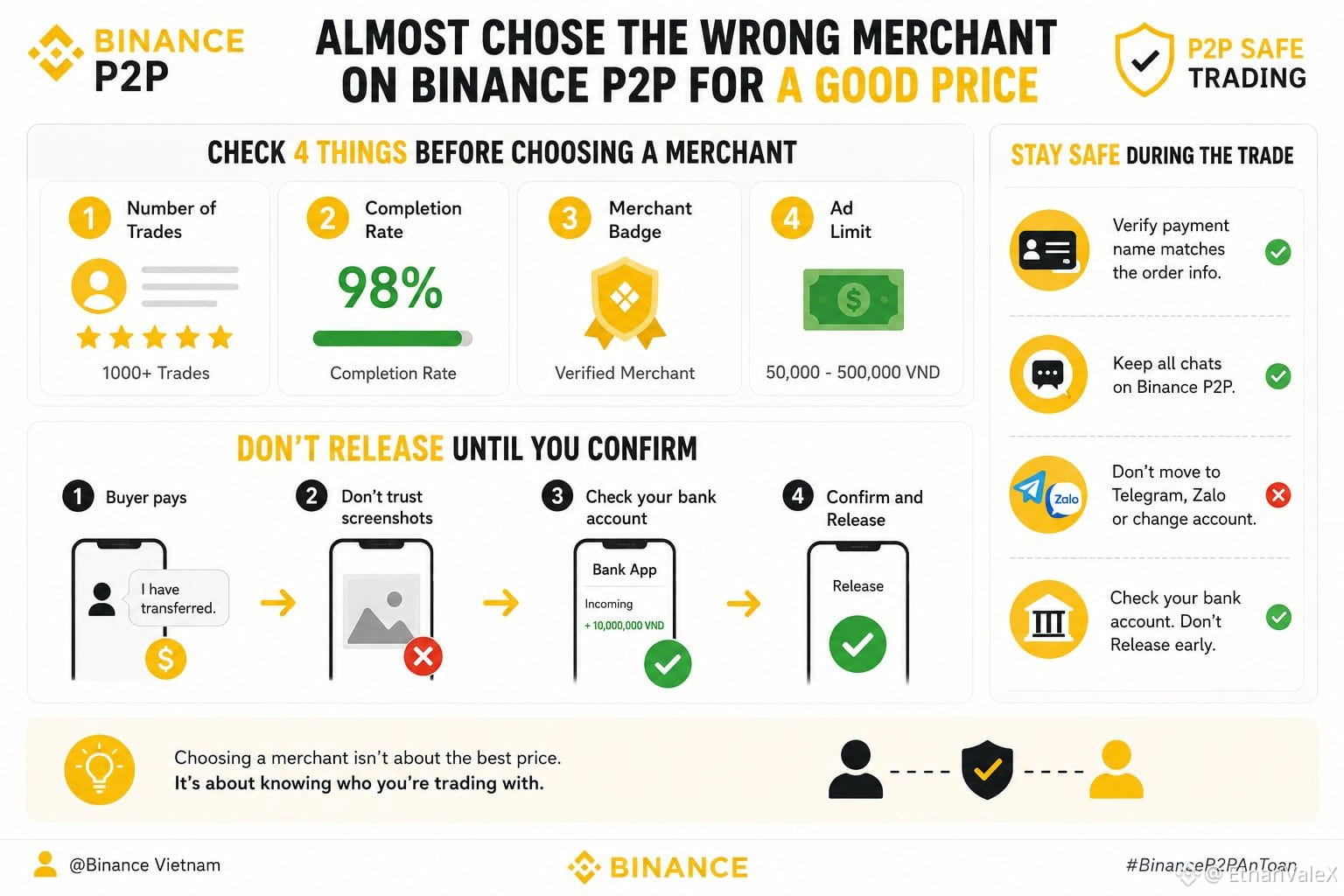
2
738
·
--
¡Pensé que ya estaba todo listo en Binance P2P, hasta que volví a abrir la orden!!!
Resulta que yo vendí 600 USDT en Binance P2P, en ese momento el tipo de cambio estaba aprox. en 27.000 VND; así que, según mis cálculos, esperaba recibir como 16,2 millones de VND.
Elegí un Merchant con historial de transacciones y una tasa de finalización bastante buena. El comprador pagó y, cuando abrí la app del banco para verificar, vi que solo había 15,9 millones en la cuenta.
En ese momento pensé: "¿Eh, faltan casi 300K?"
Volví a la Orden para revisar. El comprador también envió la información de la transacción y dijo que había transferido el importe correcto. Iba a preguntarle de inmediato, pero me senté a revisar la Orden otra vez.
Resultó que 16,2 millones era el dinero que yo mismo calculé con el tipo de cambio inicial, mientras que 15,9 millones era el total real de la Orden una vez que se actualizó la información.
El Merchant no transfirió de menos. El comprador tampoco hizo nada mal. Fui yo quien se confundió mirando.
Por suerte no me apresuré a hacer Release ni a pasar a otro canal para resolver. Volví a cotejar la cantidad de USDT, el tipo de cambio y el total en la Orden, y todo coincidía.
Desde entonces aprendí la lección: antes de confirmar el P2P, siempre vuelvo a revisar el precio, la cantidad y el total final. Si hay algo que difiera de los cálculos iniciales, me detengo a verificar.
Los que negocian rápido seguramente también han pasado por ese momento de mirar una cosa y luego hacer clic en otra, como me pasó a mí.
Revisen bien la Orden antes de negociar, sobre todo cuando el dinero llega a decenas de millones, ¿eh? ¡Muchachos!
@Binance_Vietnam #BinanceP2PAnToan
¡Pensé que ya estaba todo listo en Binance P2P, hasta que volví a abrir la orden!!!
Resulta que yo vendí 600 USDT en Binance P2P, en ese momento el tipo de cambio estaba aprox. en 27.000 VND; así que, según mis cálculos, esperaba recibir como 16,2 millones de VND.
Elegí un Merchant con historial de transacciones y una tasa de finalización bastante buena. El comprador pagó y, cuando abrí la app del banco para verificar, vi que solo había 15,9 millones en la cuenta.
En ese momento pensé: "¿Eh, faltan casi 300K?"
Volví a la Orden para revisar. El comprador también envió la información de la transacción y dijo que había transferido el importe correcto. Iba a preguntarle de inmediato, pero me senté a revisar la Orden otra vez.
Resultó que 16,2 millones era el dinero que yo mismo calculé con el tipo de cambio inicial, mientras que 15,9 millones era el total real de la Orden una vez que se actualizó la información.
El Merchant no transfirió de menos. El comprador tampoco hizo nada mal. Fui yo quien se confundió mirando.
Por suerte no me apresuré a hacer Release ni a pasar a otro canal para resolver. Volví a cotejar la cantidad de USDT, el tipo de cambio y el total en la Orden, y todo coincidía.
Desde entonces aprendí la lección: antes de confirmar el P2P, siempre vuelvo a revisar el precio, la cantidad y el total final. Si hay algo que difiera de los cálculos iniciales, me detengo a verificar.
Los que negocian rápido seguramente también han pasado por ese momento de mirar una cosa y luego hacer clic en otra, como me pasó a mí.
Revisen bien la Orden antes de negociar, sobre todo cuando el dinero llega a decenas de millones, ¿eh? ¡Muchachos!
@Binance Vietnam #BinanceP2PAnToan
Resulta que yo vendí 600 USDT en Binance P2P, en ese momento el tipo de cambio estaba aprox. en 27.000 VND; así que, según mis cálculos, esperaba recibir como 16,2 millones de VND.
Elegí un Merchant con historial de transacciones y una tasa de finalización bastante buena. El comprador pagó y, cuando abrí la app del banco para verificar, vi que solo había 15,9 millones en la cuenta.
En ese momento pensé: "¿Eh, faltan casi 300K?"
Volví a la Orden para revisar. El comprador también envió la información de la transacción y dijo que había transferido el importe correcto. Iba a preguntarle de inmediato, pero me senté a revisar la Orden otra vez.
Resultó que 16,2 millones era el dinero que yo mismo calculé con el tipo de cambio inicial, mientras que 15,9 millones era el total real de la Orden una vez que se actualizó la información.
El Merchant no transfirió de menos. El comprador tampoco hizo nada mal. Fui yo quien se confundió mirando.
Por suerte no me apresuré a hacer Release ni a pasar a otro canal para resolver. Volví a cotejar la cantidad de USDT, el tipo de cambio y el total en la Orden, y todo coincidía.
Desde entonces aprendí la lección: antes de confirmar el P2P, siempre vuelvo a revisar el precio, la cantidad y el total final. Si hay algo que difiera de los cálculos iniciales, me detengo a verificar.
Los que negocian rápido seguramente también han pasado por ese momento de mirar una cosa y luego hacer clic en otra, como me pasó a mí.
Revisen bien la Orden antes de negociar, sobre todo cuando el dinero llega a decenas de millones, ¿eh? ¡Muchachos!
@Binance Vietnam #BinanceP2PAnToan
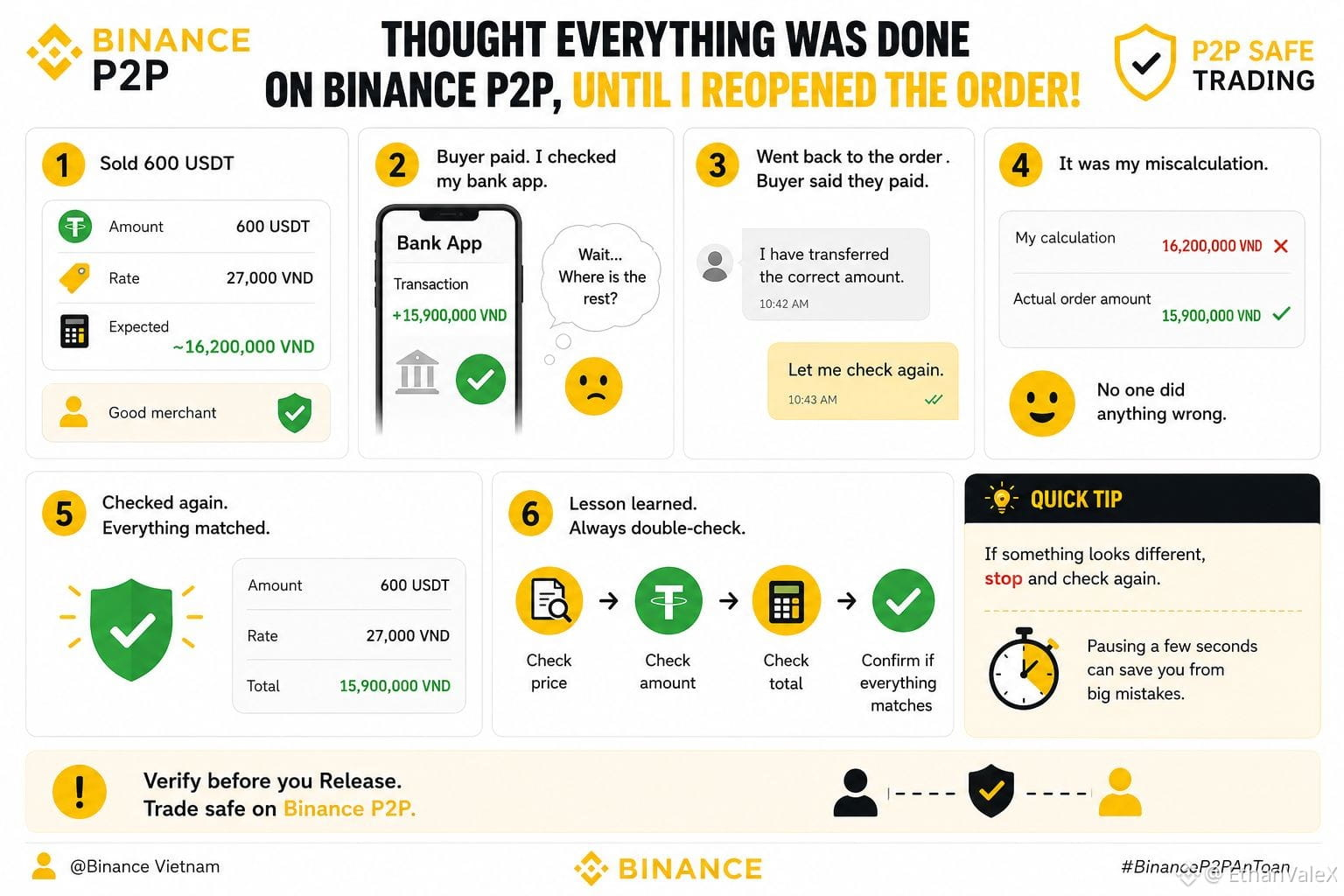
5
5.9k
·
--
Los recién llegados suelen cometer estos 7 errores en Binance P2P
Antes pensaba que operar en Binance P2P era bastante sencillo: encontrar un buen precio, hacer la transferencia y recibir la cripto. Después de algunas operaciones, me di cuenta de que lo más fácil (y en realidad lo más delicado) es justo pulsar Comprar o Vender. Los fallos suelen estar en los segundos justo antes y justo después.
El primer error es mirar solo el precio. Una diferencia pequeña a veces me hace pasar por alto cosas más importantes como la tasa de finalización, el historial de operaciones o el Sello del Comerciante (Merchant Badge). Ahora siempre reviso el perfil del socio antes de volver a fijarme en el nivel de precio.
Otro error es no comprobar que el nombre de la cuenta de pago coincida con la información de la orden. No lo considero un paso innecesario, porque si la información no coincide, me detengo y vuelvo a revisar.
Lo que especialmente evito es liberar (Release) demasiado pronto. Una captura de pantalla o el mensaje de “ya transferí” no es prueba de que el dinero ya haya entrado a la cuenta. Siempre abro la app del banco y compruebo la transacción real antes de desbloquear la cripto.
Tampoco cambio la conversación a Telegram o Zalo solo porque el socio dice “para mayor comodidad”. Mantener todo dentro de Binance P2P me da Escrow, el historial de chat y el proceso de reclamación en caso de que surja algún problema.
Otro indicio que siempre vigilo es que intenten presionarte para que lo resuelvas al instante, que cambien la cuenta de pago a mitad de la operación o que aparezca contenido de transferencia inusual. Cuanto más me presionan, más meticulosamente reviso.
Por último, siempre conservo el ID de la orden (Order ID), el recibo y el historial de chat. Si ocurre algún incidente, detengo la operación y me pongo en contacto con el Soporte de Binance en lugar de intentar gestionarlo por mi cuenta.
Un P2P seguro no tiene que ser demasiado complicado. Para mí, con dejar algunos malos hábitos y comprobar correctamente lo que de verdad importa antes de hacer Release, ya se nota una gran diferencia.
@Binance_Vietnam #BinanceP2PAnToan
Los recién llegados suelen cometer estos 7 errores en Binance P2P
Antes pensaba que operar en Binance P2P era bastante sencillo: encontrar un buen precio, hacer la transferencia y recibir la cripto. Después de algunas operaciones, me di cuenta de que lo más fácil (y en realidad lo más delicado) es justo pulsar Comprar o Vender. Los fallos suelen estar en los segundos justo antes y justo después.
El primer error es mirar solo el precio. Una diferencia pequeña a veces me hace pasar por alto cosas más importantes como la tasa de finalización, el historial de operaciones o el Sello del Comerciante (Merchant Badge). Ahora siempre reviso el perfil del socio antes de volver a fijarme en el nivel de precio.
Otro error es no comprobar que el nombre de la cuenta de pago coincida con la información de la orden. No lo considero un paso innecesario, porque si la información no coincide, me detengo y vuelvo a revisar.
Lo que especialmente evito es liberar (Release) demasiado pronto. Una captura de pantalla o el mensaje de “ya transferí” no es prueba de que el dinero ya haya entrado a la cuenta. Siempre abro la app del banco y compruebo la transacción real antes de desbloquear la cripto.
Tampoco cambio la conversación a Telegram o Zalo solo porque el socio dice “para mayor comodidad”. Mantener todo dentro de Binance P2P me da Escrow, el historial de chat y el proceso de reclamación en caso de que surja algún problema.
Otro indicio que siempre vigilo es que intenten presionarte para que lo resuelvas al instante, que cambien la cuenta de pago a mitad de la operación o que aparezca contenido de transferencia inusual. Cuanto más me presionan, más meticulosamente reviso.
Por último, siempre conservo el ID de la orden (Order ID), el recibo y el historial de chat. Si ocurre algún incidente, detengo la operación y me pongo en contacto con el Soporte de Binance en lugar de intentar gestionarlo por mi cuenta.
Un P2P seguro no tiene que ser demasiado complicado. Para mí, con dejar algunos malos hábitos y comprobar correctamente lo que de verdad importa antes de hacer Release, ya se nota una gran diferencia.
@Binance Vietnam #BinanceP2PAnToan
Antes pensaba que operar en Binance P2P era bastante sencillo: encontrar un buen precio, hacer la transferencia y recibir la cripto. Después de algunas operaciones, me di cuenta de que lo más fácil (y en realidad lo más delicado) es justo pulsar Comprar o Vender. Los fallos suelen estar en los segundos justo antes y justo después.
El primer error es mirar solo el precio. Una diferencia pequeña a veces me hace pasar por alto cosas más importantes como la tasa de finalización, el historial de operaciones o el Sello del Comerciante (Merchant Badge). Ahora siempre reviso el perfil del socio antes de volver a fijarme en el nivel de precio.
Otro error es no comprobar que el nombre de la cuenta de pago coincida con la información de la orden. No lo considero un paso innecesario, porque si la información no coincide, me detengo y vuelvo a revisar.
Lo que especialmente evito es liberar (Release) demasiado pronto. Una captura de pantalla o el mensaje de “ya transferí” no es prueba de que el dinero ya haya entrado a la cuenta. Siempre abro la app del banco y compruebo la transacción real antes de desbloquear la cripto.
Tampoco cambio la conversación a Telegram o Zalo solo porque el socio dice “para mayor comodidad”. Mantener todo dentro de Binance P2P me da Escrow, el historial de chat y el proceso de reclamación en caso de que surja algún problema.
Otro indicio que siempre vigilo es que intenten presionarte para que lo resuelvas al instante, que cambien la cuenta de pago a mitad de la operación o que aparezca contenido de transferencia inusual. Cuanto más me presionan, más meticulosamente reviso.
Por último, siempre conservo el ID de la orden (Order ID), el recibo y el historial de chat. Si ocurre algún incidente, detengo la operación y me pongo en contacto con el Soporte de Binance en lugar de intentar gestionarlo por mi cuenta.
Un P2P seguro no tiene que ser demasiado complicado. Para mí, con dejar algunos malos hábitos y comprobar correctamente lo que de verdad importa antes de hacer Release, ya se nota una gran diferencia.
@Binance Vietnam #BinanceP2PAnToan
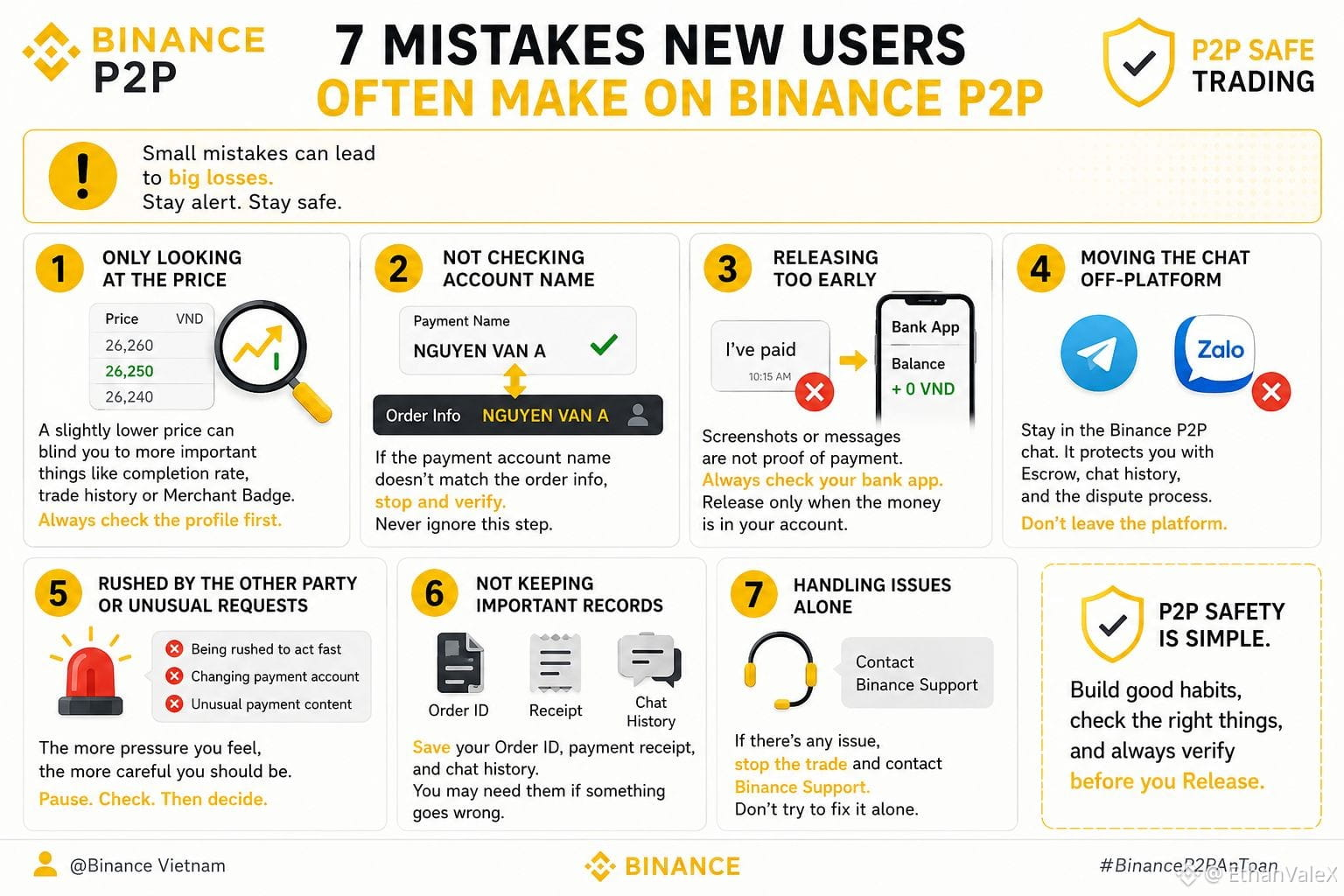
2
4
1.8k
·
--
@Binance_Vietnam #BinanceP2PAnToan
Bandera roja en Binance P2P que no siempre parece sospechosa
Lo que me di cuenta después de muchas operaciones en Binance P2P es que hay una bandera roja que rara vez aparece tal como la gente cree.
Nadie te dice: "Te voy a estafar".
En su lugar, pueden decir: "Me paso a Telegram para mayor comodidad". O: "¿Puedes desbloquear primero? El dinero ya está en proceso". Incluso algo como: "¿Puedes cambiar a otra cuenta para que reciba el pago?"
A primera vista, estas solicitudes parecen completamente normales. Pero descubrí que tienen un punto en común: todas me hacen salir del flujo de seguridad que Binance P2P ha establecido.
Por eso, tengo un principio muy simple. Solo hablo dentro de la ventana de chat de Binance P2P, donde el Escrow, el historial del chat y el proceso de reclamaciones pueden protegerme si surge una disputa. Si la otra parte quiere pasar la conversación a otra plataforma o cambiar la información de pago a mitad de camino, yo detengo la operación y vuelvo a verificar.
Tampoco hago clic en Release solo porque vea una captura de pantalla o un mensaje de "ya se transfirió". En lo que confío es en el saldo real de la aplicación bancaria. Solo cuando el dinero entra a la cuenta termino la operación.
Después, sigo guardando el Order ID, el recibo y el historial del chat. Puede que nunca haga falta usarlos, pero si tengo que contactar con el Soporte de Binance, toda la información ya estará lista.
Ahora ya no me esfuerzo por adivinar quién es bueno y quién es malo. Solo me hago una pregunta: ¿esta solicitud me está haciendo salir del flujo seguro de Binance P2P? Si la respuesta es "sí", me detengo.
@Binance Vietnam #BinanceP2PAnToan
Bandera roja en Binance P2P que no siempre parece sospechosa
Lo que me di cuenta después de muchas operaciones en Binance P2P es que hay una bandera roja que rara vez aparece tal como la gente cree.
Nadie te dice: "Te voy a estafar".
En su lugar, pueden decir: "Me paso a Telegram para mayor comodidad". O: "¿Puedes desbloquear primero? El dinero ya está en proceso". Incluso algo como: "¿Puedes cambiar a otra cuenta para que reciba el pago?"
A primera vista, estas solicitudes parecen completamente normales. Pero descubrí que tienen un punto en común: todas me hacen salir del flujo de seguridad que Binance P2P ha establecido.
Por eso, tengo un principio muy simple. Solo hablo dentro de la ventana de chat de Binance P2P, donde el Escrow, el historial del chat y el proceso de reclamaciones pueden protegerme si surge una disputa. Si la otra parte quiere pasar la conversación a otra plataforma o cambiar la información de pago a mitad de camino, yo detengo la operación y vuelvo a verificar.
Tampoco hago clic en Release solo porque vea una captura de pantalla o un mensaje de "ya se transfirió". En lo que confío es en el saldo real de la aplicación bancaria. Solo cuando el dinero entra a la cuenta termino la operación.
Después, sigo guardando el Order ID, el recibo y el historial del chat. Puede que nunca haga falta usarlos, pero si tengo que contactar con el Soporte de Binance, toda la información ya estará lista.
Ahora ya no me esfuerzo por adivinar quién es bueno y quién es malo. Solo me hago una pregunta: ¿esta solicitud me está haciendo salir del flujo seguro de Binance P2P? Si la respuesta es "sí", me detengo.
Bandera roja en Binance P2P que no siempre parece sospechosa
Lo que me di cuenta después de muchas operaciones en Binance P2P es que hay una bandera roja que rara vez aparece tal como la gente cree.
Nadie te dice: "Te voy a estafar".
En su lugar, pueden decir: "Me paso a Telegram para mayor comodidad". O: "¿Puedes desbloquear primero? El dinero ya está en proceso". Incluso algo como: "¿Puedes cambiar a otra cuenta para que reciba el pago?"
A primera vista, estas solicitudes parecen completamente normales. Pero descubrí que tienen un punto en común: todas me hacen salir del flujo de seguridad que Binance P2P ha establecido.
Por eso, tengo un principio muy simple. Solo hablo dentro de la ventana de chat de Binance P2P, donde el Escrow, el historial del chat y el proceso de reclamaciones pueden protegerme si surge una disputa. Si la otra parte quiere pasar la conversación a otra plataforma o cambiar la información de pago a mitad de camino, yo detengo la operación y vuelvo a verificar.
Tampoco hago clic en Release solo porque vea una captura de pantalla o un mensaje de "ya se transfirió". En lo que confío es en el saldo real de la aplicación bancaria. Solo cuando el dinero entra a la cuenta termino la operación.
Después, sigo guardando el Order ID, el recibo y el historial del chat. Puede que nunca haga falta usarlos, pero si tengo que contactar con el Soporte de Binance, toda la información ya estará lista.
Ahora ya no me esfuerzo por adivinar quién es bueno y quién es malo. Solo me hago una pregunta: ¿esta solicitud me está haciendo salir del flujo seguro de Binance P2P? Si la respuesta es "sí", me detengo.
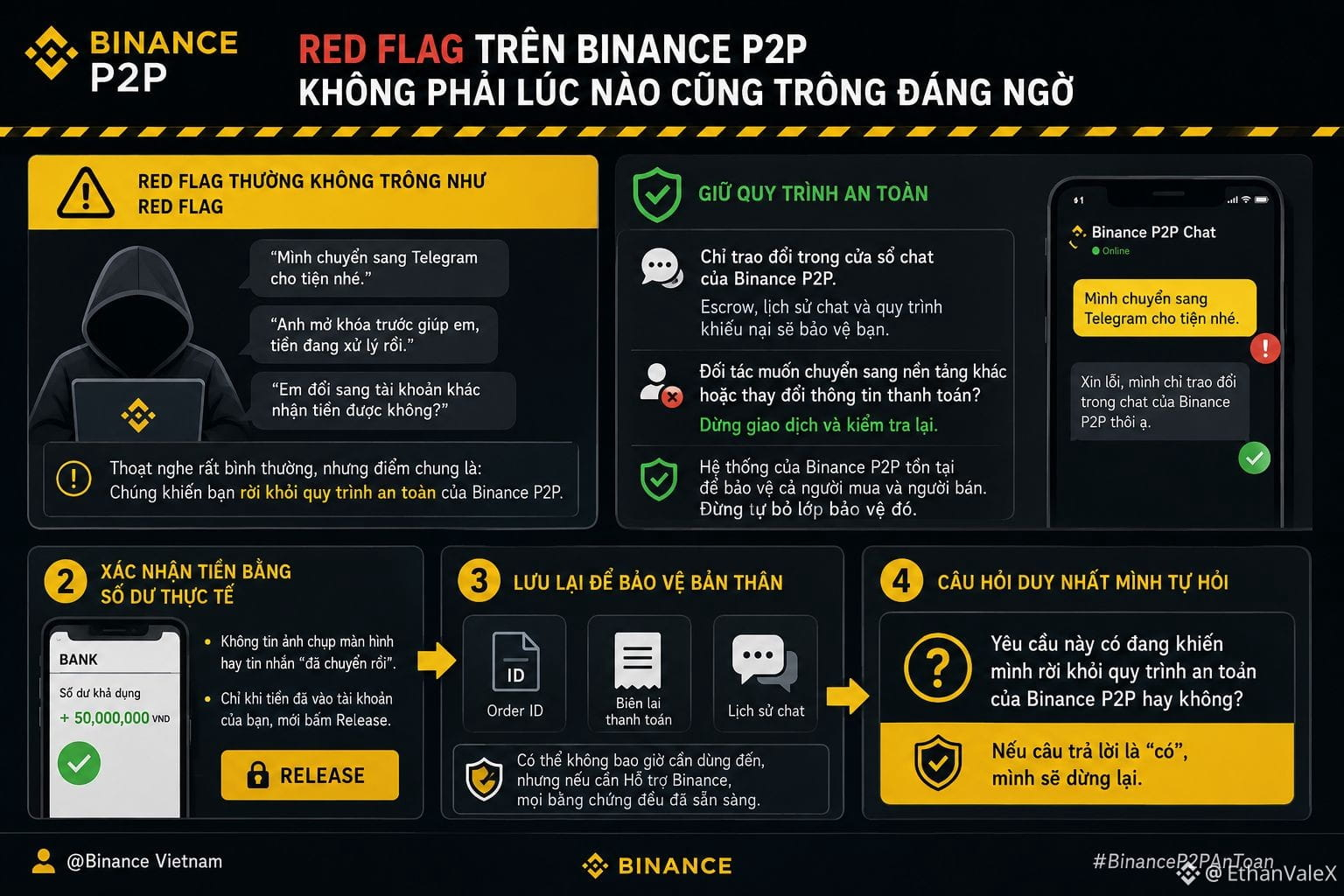
1
1
572
·
--
LARGO $AKE
Entrada 1
0.00422–0.00424 si el precio mantiene el soporte y aparece una vela de confirmación alcista.
Entrada 2
Espera a que la vela de 1H cierre por encima de 0.00434 (superando la MA99) y luego observa el momento del retroceso (retest) para Hacer Long.
Stop Loss
Por debajo de 0.00405.
Take Profit
TP1: 0.00450 TP2: 0.00480 TP3: 0.00520 si hay un breakout fuerte.
$AKE
{future}(AKEUSDT)
LARGO $AKE
Entrada 1
0.00422–0.00424 si el precio mantiene el soporte y aparece una vela de confirmación alcista.
Entrada 2
Espera a que la vela de 1H cierre por encima de 0.00434 (superando la MA99) y luego observa el momento del retroceso (retest) para Hacer Long.
Stop Loss
Por debajo de 0.00405.
Take Profit
TP1: 0.00450 TP2: 0.00480 TP3: 0.00520 si hay un breakout fuerte.
$AKE
Entrada 1
0.00422–0.00424 si el precio mantiene el soporte y aparece una vela de confirmación alcista.
Entrada 2
Espera a que la vela de 1H cierre por encima de 0.00434 (superando la MA99) y luego observa el momento del retroceso (retest) para Hacer Long.
Stop Loss
Por debajo de 0.00405.
Take Profit
TP1: 0.00450 TP2: 0.00480 TP3: 0.00520 si hay un breakout fuerte.
$AKE
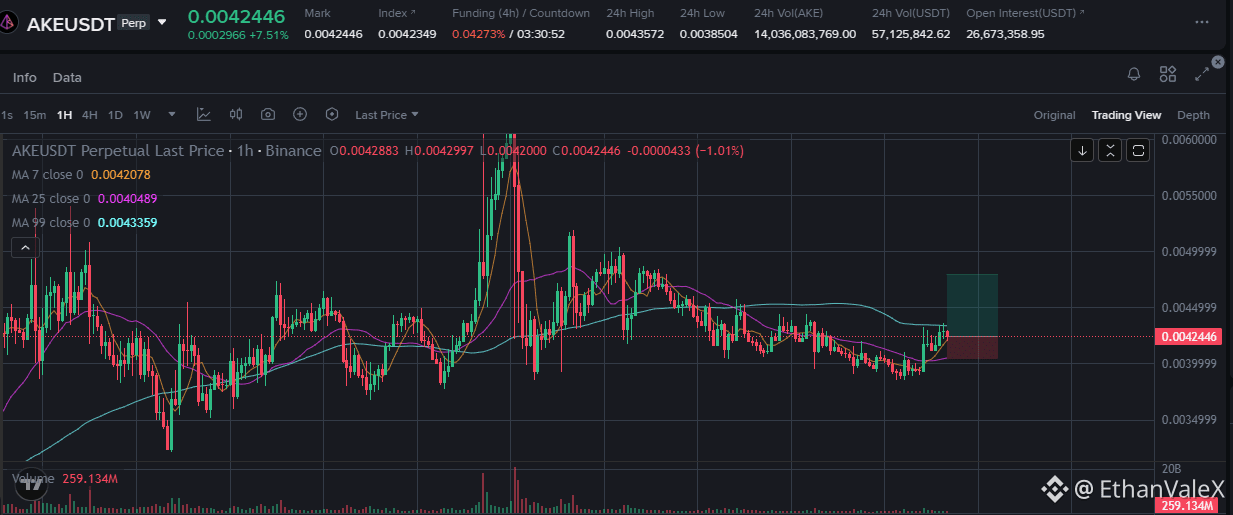
1
1.4k
Inicia sesión para explorar más contenidos
Únete a usuarios globales de criptomonedas en Binance Square
⚡️ Obtén información útil y actualizada sobre criptos.
💬 Avalado por el mayor exchange de criptomonedas en el mundo.
👍 Descubre perspectivas reales de creadores verificados.
Email/número de teléfono
Temas populares
AIStocksWhatNext
385,850 vistas
3,057 están debatiendo
Comparte y gana recompensas de tráfico en nuestra campaña de hashtag en tendencia
✨Tema: ¿Qué otras oportunidades de inversión siguen vigentes mientras las acciones de IA continúan subiendo?
👉Cómo unirte:
Publica una publicación breve o un artículo con el hashtag #AIStocksWhatNext
Comparte si eres alcista o bajista, y publica tus participaciones en acciones de IA o tu operación — usar el widget de operaciones puede mejorar tu elegibilidad.
También puedes fortalecer tu publicación compartiendo datos o gráficos, y evitando imágenes generadas por IA.
✍️Crea contenido basado en los ángulos siguientes:
- Nvidia dice que las ventas de chips se duplicarán el próximo año, y las principales empresas de IA siguen registrando ingresos récord; el gasto en cómputo que hay detrás es igualmente asombroso. ¿La demanda de IA realmente está despegando? ¿Y cuánto tiempo puede durar? Las acciones de IA suben en general. ¿Se trata de una ruptura real o solo de un rebote a corto plazo?
- Líderes de la industria piden frenar el desarrollo de la IA, mientras Trump planea construir una “AI Force”, afirmando que la IA podría representar el 25% del PIB de EE. UU. en el futuro. ¿De qué lado estás? ¿El respaldo a nivel estatal será una victoria a largo plazo para las acciones de IA?
- ¿Estás comprando acciones de IA? Comparte tu operación/tenencias relacionadas con IA con nuestro widget de compartición de operaciones.
⏰Periodo de la campaña:
- 2026-09-22 7:00 - 2026-09-24 4:00 UTC
🎁Recompensa:
- Las publicaciones que cumplan con las pautas anteriores y contengan más de 100 palabras serán revisadas y podrían recibir un impulso aleatorio de tráfico de 500 a 3,000 vistas. Recibirás una notificación de tu secretario/a de feed si tu publicación es seleccionada.
- Obtén la oportunidad de que tu artículo se destaque en Binance Square Official
¿Necesitas ideas para tu publicación? Visita la página del tema #AIStocksWhatNext o la Square Guide on How to Post for Better Reach.
Binance Square Official
·377 me gusta
·927.5k vistas
BitcoinBreaksAboveMayHighNears$86K
16,156 vistas
198 están debatiendo
DogecoinRises15%
51,527 vistas
1,024 están debatiendo