

DrJeeva
163 Publicaciones

DrJeeva
Denunciar
Bloquear usuario
40 Siguiendo
20 Seguidores
46 Me gusta
Publicaciones
·
--
El mercado se sintió inusualmente tranquilo hoy, así que pasé un tiempo profundizando en Dusk en lugar de perseguir las narrativas habituales. Esperaba otra historia de cadenas de privacidad, pero cuanto más avanzaba, más destacaba el enfoque de finanzas reguladas. Lo que me llamó la atención fue cómo Dusk está construyendo dos caminos: herramientas EVM familiares para desarrolladores de Solidity, junto con infraestructura nativa de ZK/WASM para aplicaciones que realmente necesitan privacidad a nivel de protocolo.
Las recientes actualizaciones de Aegis y Boreas también me hicieron detenerme. Aegis introdujo PLONK V3 y cambios más sólidos relacionados con el consenso, mientras que Boreas agregó un manejo de transacciones con conocimiento de versiones y reglas de precios para la VM. Eso me dice que el equipo sigue realizando un trabajo serio a nivel de protocolo en lugar de depender solo de una narrativa.
Aun así, sigo haciéndome la misma pregunta: ¿puede este stack técnico traducirse en un uso significativo? El trabajo de NPEX y Chainlink de Dusk sobre valores tokenizados y datos de mercado regulados es interesante, pero la adopción real es una prueba mucho más difícil que las alianzas sobre el papel.
Para mí, Dusk tiene más sentido para observarlo si te importa la privacidad, los activos tokenizados que cumplen con la regulación y la infraestructura financiera. Estaré atento a la actividad real de la red, a la adopción por parte de desarrolladores y a si estas ambiciones de mercado regulado se convierten en flujos de trabajo cotidianos en cadena. Esa es la parte que aún quiero ver desarrollarse.
@Dusk_Foundation #dusk $DUSK @Dusk_Foundation
El mercado se sintió inusualmente tranquilo hoy, así que pasé un tiempo profundizando en Dusk en lugar de perseguir las narrativas habituales. Esperaba otra historia de cadenas de privacidad, pero cuanto más avanzaba, más destacaba el enfoque de finanzas reguladas. Lo que me llamó la atención fue cómo Dusk está construyendo dos caminos: herramientas EVM familiares para desarrolladores de Solidity, junto con infraestructura nativa de ZK/WASM para aplicaciones que realmente necesitan privacidad a nivel de protocolo.
Las recientes actualizaciones de Aegis y Boreas también me hicieron detenerme. Aegis introdujo PLONK V3 y cambios más sólidos relacionados con el consenso, mientras que Boreas agregó un manejo de transacciones con conocimiento de versiones y reglas de precios para la VM. Eso me dice que el equipo sigue realizando un trabajo serio a nivel de protocolo en lugar de depender solo de una narrativa.
Aun así, sigo haciéndome la misma pregunta: ¿puede este stack técnico traducirse en un uso significativo? El trabajo de NPEX y Chainlink de Dusk sobre valores tokenizados y datos de mercado regulados es interesante, pero la adopción real es una prueba mucho más difícil que las alianzas sobre el papel.
Para mí, Dusk tiene más sentido para observarlo si te importa la privacidad, los activos tokenizados que cumplen con la regulación y la infraestructura financiera. Estaré atento a la actividad real de la red, a la adopción por parte de desarrolladores y a si estas ambiciones de mercado regulado se convierten en flujos de trabajo cotidianos en cadena. Esa es la parte que aún quiero ver desarrollarse.
@Dusk #dusk $DUSK @Dusk
Las recientes actualizaciones de Aegis y Boreas también me hicieron detenerme. Aegis introdujo PLONK V3 y cambios más sólidos relacionados con el consenso, mientras que Boreas agregó un manejo de transacciones con conocimiento de versiones y reglas de precios para la VM. Eso me dice que el equipo sigue realizando un trabajo serio a nivel de protocolo en lugar de depender solo de una narrativa.
Aun así, sigo haciéndome la misma pregunta: ¿puede este stack técnico traducirse en un uso significativo? El trabajo de NPEX y Chainlink de Dusk sobre valores tokenizados y datos de mercado regulados es interesante, pero la adopción real es una prueba mucho más difícil que las alianzas sobre el papel.
Para mí, Dusk tiene más sentido para observarlo si te importa la privacidad, los activos tokenizados que cumplen con la regulación y la infraestructura financiera. Estaré atento a la actividad real de la red, a la adopción por parte de desarrolladores y a si estas ambiciones de mercado regulado se convierten en flujos de trabajo cotidianos en cadena. Esa es la parte que aún quiero ver desarrollarse.
@Dusk #dusk $DUSK @Dusk
72
·
--
El mercado ha estado bastante tranquilo últimamente, así que he pasado más tiempo leyendo proyectos que normalmente pasaría por alto. Así fue como terminé de nuevo en Dusk. Esperaba otra propuesta centrada en una cadena de privacidad, pero cuanto más leía, más específico se volvía el diseño.
Lo que me llamó la atención fue lo mucho que Dusk se está apoyando en las finanzas onchain reguladas. Su stack actual combina divulgación selectiva, liquidación determinista, DuskEVM para herramientas familiares de Solidity y una ruta nativa de privacidad para ZK y aplicaciones confidenciales.
La reciente actualización Boreas también me hizo detenerme. Introdujo un manejo de transacciones con conocimiento de versión y nuevas reglas de ejecución, mientras que el trabajo anterior de Aegis trajo PLONK V3 y otros cambios de consenso. Eso me dice que el equipo sigue trabajando en la capa de protocolo difícil, no solo en el discurso.
Pero sigo cuestionando qué tan rápido puede crecer la adopción real. La infraestructura institucional necesita confianza, liquidez, cumplimiento y usuarios reales, y todo eso es mucho más difícil de demostrar que un hito técnico. Dusk tiene vínculos de ecosistema alrededor de NPEX, Chainlink, Quantoz y la infraestructura de custodia, lo cual es interesante, pero me gustaría ver un uso sostenido más que solo conexiones.
Para mí, Dusk es más interesante para quienes construyen productos financieros regulados donde la privacidad no puede significar perder la auditabilidad. Estaré atento a la actividad real de transacciones, al crecimiento de desarrolladores y a si estos flujos institucionales se vuelven realmente útiles. Todavía tengo curiosidad por ver cómo se ve la red una vez que la tecnología tenga que demostrarse a escala.
@Dusk_Foundation #dusk $DUSK @Dusk_Foundation
El mercado ha estado bastante tranquilo últimamente, así que he pasado más tiempo leyendo proyectos que normalmente pasaría por alto. Así fue como terminé de nuevo en Dusk. Esperaba otra propuesta centrada en una cadena de privacidad, pero cuanto más leía, más específico se volvía el diseño.
Lo que me llamó la atención fue lo mucho que Dusk se está apoyando en las finanzas onchain reguladas. Su stack actual combina divulgación selectiva, liquidación determinista, DuskEVM para herramientas familiares de Solidity y una ruta nativa de privacidad para ZK y aplicaciones confidenciales.
La reciente actualización Boreas también me hizo detenerme. Introdujo un manejo de transacciones con conocimiento de versión y nuevas reglas de ejecución, mientras que el trabajo anterior de Aegis trajo PLONK V3 y otros cambios de consenso. Eso me dice que el equipo sigue trabajando en la capa de protocolo difícil, no solo en el discurso.
Pero sigo cuestionando qué tan rápido puede crecer la adopción real. La infraestructura institucional necesita confianza, liquidez, cumplimiento y usuarios reales, y todo eso es mucho más difícil de demostrar que un hito técnico. Dusk tiene vínculos de ecosistema alrededor de NPEX, Chainlink, Quantoz y la infraestructura de custodia, lo cual es interesante, pero me gustaría ver un uso sostenido más que solo conexiones.
Para mí, Dusk es más interesante para quienes construyen productos financieros regulados donde la privacidad no puede significar perder la auditabilidad. Estaré atento a la actividad real de transacciones, al crecimiento de desarrolladores y a si estos flujos institucionales se vuelven realmente útiles. Todavía tengo curiosidad por ver cómo se ve la red una vez que la tecnología tenga que demostrarse a escala.
@Dusk #dusk $DUSK @Dusk
Lo que me llamó la atención fue lo mucho que Dusk se está apoyando en las finanzas onchain reguladas. Su stack actual combina divulgación selectiva, liquidación determinista, DuskEVM para herramientas familiares de Solidity y una ruta nativa de privacidad para ZK y aplicaciones confidenciales.
La reciente actualización Boreas también me hizo detenerme. Introdujo un manejo de transacciones con conocimiento de versión y nuevas reglas de ejecución, mientras que el trabajo anterior de Aegis trajo PLONK V3 y otros cambios de consenso. Eso me dice que el equipo sigue trabajando en la capa de protocolo difícil, no solo en el discurso.
Pero sigo cuestionando qué tan rápido puede crecer la adopción real. La infraestructura institucional necesita confianza, liquidez, cumplimiento y usuarios reales, y todo eso es mucho más difícil de demostrar que un hito técnico. Dusk tiene vínculos de ecosistema alrededor de NPEX, Chainlink, Quantoz y la infraestructura de custodia, lo cual es interesante, pero me gustaría ver un uso sostenido más que solo conexiones.
Para mí, Dusk es más interesante para quienes construyen productos financieros regulados donde la privacidad no puede significar perder la auditabilidad. Estaré atento a la actividad real de transacciones, al crecimiento de desarrolladores y a si estos flujos institucionales se vuelven realmente útiles. Todavía tengo curiosidad por ver cómo se ve la red una vez que la tecnología tenga que demostrarse a escala.
@Dusk #dusk $DUSK @Dusk
62
·
--
El mercado ha estado bastante tranquilo, así que volví a Dusk esperando otra historia de cadena de privacidad que suena mejor en el papel de lo que funciona en la práctica. Lo que me tomó por sorpresa fue cuánto se ha desplazado el foco hacia la infraestructura real del mercado.
La parte a la que sigo volviendo es Dusk Connect y la nueva wallet. Están abriendo la capa de front-end para DuskDS con descubrimiento de wallets, firmas, staking, transferencias privadas y permisos para dApps, lo cual suena básico hasta que recuerdas con qué frecuencia los proyectos de blockchain dejan esta parte hecha un desastre.
Pero la seguridad me hizo ir más despacio. La actualización AEGIS de Dusk corrigió 39 hallazgos de auditoría, incluidos siete problemas críticos en la VM, la lógica de tarifas y las firmas BLS. Eso tranquiliza en un sentido, pero también me recuerda que lo difícil no es solo prometer privacidad o cumplimiento; lo difícil es lograr que el sistema subyacente sobreviva un escrutinio serio.
También noté que el ecosistema se está volviendo más concreto, con NPEX, Chainlink, Quantoz y la infraestructura de custodia apareciendo alrededor de la tesis de finanzas reguladas.
Así que entiendo el atractivo para emisores, aplicaciones financieras y desarrolladores que necesitan privacidad sin perder auditabilidad. Aun así, quiero ver si estas integraciones se convierten en uso real y no solo en una infraestructura que luce bien. Esa es la parte que seguiré observando. Dusk me parece interesante, pero todavía no estoy listo para dar por terminado el relato.
@Dusk_Foundation #dusk $DUSK @Dusk_Foundation
El mercado ha estado bastante tranquilo, así que volví a Dusk esperando otra historia de cadena de privacidad que suena mejor en el papel de lo que funciona en la práctica. Lo que me tomó por sorpresa fue cuánto se ha desplazado el foco hacia la infraestructura real del mercado.
La parte a la que sigo volviendo es Dusk Connect y la nueva wallet. Están abriendo la capa de front-end para DuskDS con descubrimiento de wallets, firmas, staking, transferencias privadas y permisos para dApps, lo cual suena básico hasta que recuerdas con qué frecuencia los proyectos de blockchain dejan esta parte hecha un desastre.
Pero la seguridad me hizo ir más despacio. La actualización AEGIS de Dusk corrigió 39 hallazgos de auditoría, incluidos siete problemas críticos en la VM, la lógica de tarifas y las firmas BLS. Eso tranquiliza en un sentido, pero también me recuerda que lo difícil no es solo prometer privacidad o cumplimiento; lo difícil es lograr que el sistema subyacente sobreviva un escrutinio serio.
También noté que el ecosistema se está volviendo más concreto, con NPEX, Chainlink, Quantoz y la infraestructura de custodia apareciendo alrededor de la tesis de finanzas reguladas.
Así que entiendo el atractivo para emisores, aplicaciones financieras y desarrolladores que necesitan privacidad sin perder auditabilidad. Aun así, quiero ver si estas integraciones se convierten en uso real y no solo en una infraestructura que luce bien. Esa es la parte que seguiré observando. Dusk me parece interesante, pero todavía no estoy listo para dar por terminado el relato.
@Dusk #dusk $DUSK @Dusk
La parte a la que sigo volviendo es Dusk Connect y la nueva wallet. Están abriendo la capa de front-end para DuskDS con descubrimiento de wallets, firmas, staking, transferencias privadas y permisos para dApps, lo cual suena básico hasta que recuerdas con qué frecuencia los proyectos de blockchain dejan esta parte hecha un desastre.
Pero la seguridad me hizo ir más despacio. La actualización AEGIS de Dusk corrigió 39 hallazgos de auditoría, incluidos siete problemas críticos en la VM, la lógica de tarifas y las firmas BLS. Eso tranquiliza en un sentido, pero también me recuerda que lo difícil no es solo prometer privacidad o cumplimiento; lo difícil es lograr que el sistema subyacente sobreviva un escrutinio serio.
También noté que el ecosistema se está volviendo más concreto, con NPEX, Chainlink, Quantoz y la infraestructura de custodia apareciendo alrededor de la tesis de finanzas reguladas.
Así que entiendo el atractivo para emisores, aplicaciones financieras y desarrolladores que necesitan privacidad sin perder auditabilidad. Aun así, quiero ver si estas integraciones se convierten en uso real y no solo en una infraestructura que luce bien. Esa es la parte que seguiré observando. Dusk me parece interesante, pero todavía no estoy listo para dar por terminado el relato.
@Dusk #dusk $DUSK @Dusk
91
·
--
El mercado ha estado tranquilo últimamente, y terminé investigando Dusk porque quería ver si su enfoque en la privacidad realmente estaba evolucionando o si solo se estaba reutilizando de nuevo. Entré esperando otro L1 construido alrededor de transacciones confidenciales. Lo que encontré fue un sistema mucho más elaborado de lo que recordaba.
La parte que me hizo detenerme fue DuskEVM. Dusk separa la ejecución del asentamiento mediante DuskDS, mientras que Hedger agrega transacciones EVM confidenciales usando cifrado homomórfico y pruebas de conocimiento cero. Esa es una combinación extraña pero interesante: mantener la compatibilidad con Solidity, pero aun así ofrecer a las aplicaciones financieras una vía de privacidad.
Luego noté hacia dónde se inclina mucho el ecosistema: los mercados regulados. NPEX y Dusk trabajan con Chainlink en CCIP, DataLink y Data Streams para valores y datos de mercado, mientras que Quantoz ha llevado su EURQ compatible con MiCA a Dusk.
Aun así, sigo preguntándome si la arquitectura va por delante de la demanda real. Dusk tiene herramientas reales para desarrolladores, aplicaciones como Dusk Trade y Citadel, y trabajos recientes de 2026 sobre su billetera y actualizaciones del protocolo, pero nada de eso prueba automáticamente la adopción.
Puedo ver el atractivo para instituciones y creadores que trabajan con activos donde la privacidad y la divulgación selectiva realmente importan. Lo que seguiré observando es simple: ¿esta pila se convierte en actividad financiera real, o Dusk sigue siendo solo un experimento de infraestructura muy ingenioso? Esa pregunta me interesa más que la narrativa en sí.
@Dusk_Foundation
#dusk $DUSK @Dusk_Foundation
El mercado ha estado tranquilo últimamente, y terminé investigando Dusk porque quería ver si su enfoque en la privacidad realmente estaba evolucionando o si solo se estaba reutilizando de nuevo. Entré esperando otro L1 construido alrededor de transacciones confidenciales. Lo que encontré fue un sistema mucho más elaborado de lo que recordaba.
La parte que me hizo detenerme fue DuskEVM. Dusk separa la ejecución del asentamiento mediante DuskDS, mientras que Hedger agrega transacciones EVM confidenciales usando cifrado homomórfico y pruebas de conocimiento cero. Esa es una combinación extraña pero interesante: mantener la compatibilidad con Solidity, pero aun así ofrecer a las aplicaciones financieras una vía de privacidad.
Luego noté hacia dónde se inclina mucho el ecosistema: los mercados regulados. NPEX y Dusk trabajan con Chainlink en CCIP, DataLink y Data Streams para valores y datos de mercado, mientras que Quantoz ha llevado su EURQ compatible con MiCA a Dusk.
Aun así, sigo preguntándome si la arquitectura va por delante de la demanda real. Dusk tiene herramientas reales para desarrolladores, aplicaciones como Dusk Trade y Citadel, y trabajos recientes de 2026 sobre su billetera y actualizaciones del protocolo, pero nada de eso prueba automáticamente la adopción.
Puedo ver el atractivo para instituciones y creadores que trabajan con activos donde la privacidad y la divulgación selectiva realmente importan. Lo que seguiré observando es simple: ¿esta pila se convierte en actividad financiera real, o Dusk sigue siendo solo un experimento de infraestructura muy ingenioso? Esa pregunta me interesa más que la narrativa en sí.
@Dusk
#dusk $DUSK @Dusk
La parte que me hizo detenerme fue DuskEVM. Dusk separa la ejecución del asentamiento mediante DuskDS, mientras que Hedger agrega transacciones EVM confidenciales usando cifrado homomórfico y pruebas de conocimiento cero. Esa es una combinación extraña pero interesante: mantener la compatibilidad con Solidity, pero aun así ofrecer a las aplicaciones financieras una vía de privacidad.
Luego noté hacia dónde se inclina mucho el ecosistema: los mercados regulados. NPEX y Dusk trabajan con Chainlink en CCIP, DataLink y Data Streams para valores y datos de mercado, mientras que Quantoz ha llevado su EURQ compatible con MiCA a Dusk.
Aun así, sigo preguntándome si la arquitectura va por delante de la demanda real. Dusk tiene herramientas reales para desarrolladores, aplicaciones como Dusk Trade y Citadel, y trabajos recientes de 2026 sobre su billetera y actualizaciones del protocolo, pero nada de eso prueba automáticamente la adopción.
Puedo ver el atractivo para instituciones y creadores que trabajan con activos donde la privacidad y la divulgación selectiva realmente importan. Lo que seguiré observando es simple: ¿esta pila se convierte en actividad financiera real, o Dusk sigue siendo solo un experimento de infraestructura muy ingenioso? Esa pregunta me interesa más que la narrativa en sí.
@Dusk
#dusk $DUSK @Dusk
85
·
--
@babylonlabs_io
Últimamente el mercado ha estado lo bastante tranquilo como para que haya estado leyendo más que operando, y Babylon me ha vuelto a atraer. Antes pensaba que era solo otra historia de “staking” de Bitcoin, pero la dirección más nueva se siente más incisiva. Lo que más me sorprendió fueron las Trustless Bitcoin Vaults: el BTC nativo permanece en Bitcoin, sin monedas envueltas, sin custodio en medio, y las reglas se aplican con transacciones prefirmadas, pruebas BitVM3 y lógica programable. Eso es mucho más serio que el eslogan habitual de BTCFi.
La idea que me hizo detenerme y pensar es sencilla: Babylon intenta que Bitcoin sea productivo sin pedirles a los tenedores que dejen de confiar en el propio Bitcoin. La integración con Ledger lo hace más fácil de imaginar para usuarios habituales; GoMining dice que planea activar hasta 1.000 BTC a través de estas bóvedas, y la asociación con Aegis suma la posibilidad de pedir prestado a tasa fija al panorama, con liquidez de Aave v4 también dentro del stack. Eso no es un cambio narrativo menor; se siente como un intento de construir infraestructura real de colateral para Bitcoin en lugar de otro ciclo temporal de rentabilidad.
Aun así, yo no diría que está resuelto. Los tenedores de Bitcoin tardan en cambiar hábitos, y un diseño ingenioso significa poco si la experiencia de usuario se siente pesada o si la demanda de préstamos nunca aparece. Para mí, Babylon es más relevante para los tenedores de BTC a largo plazo y para quienes construyen y quieren que el Bitcoin nativo haga más sin convertirlo en otra cosa. Seguiré observando si las bóvedas realmente se usan, porque ahí es donde una idea inteligente o se convierte en infraestructura o se queda solo como una idea inteligente.$BTC #baby $BABY
@BabylonLabs_io
Últimamente el mercado ha estado lo bastante tranquilo como para que haya estado leyendo más que operando, y Babylon me ha vuelto a atraer. Antes pensaba que era solo otra historia de “staking” de Bitcoin, pero la dirección más nueva se siente más incisiva. Lo que más me sorprendió fueron las Trustless Bitcoin Vaults: el BTC nativo permanece en Bitcoin, sin monedas envueltas, sin custodio en medio, y las reglas se aplican con transacciones prefirmadas, pruebas BitVM3 y lógica programable. Eso es mucho más serio que el eslogan habitual de BTCFi.
La idea que me hizo detenerme y pensar es sencilla: Babylon intenta que Bitcoin sea productivo sin pedirles a los tenedores que dejen de confiar en el propio Bitcoin. La integración con Ledger lo hace más fácil de imaginar para usuarios habituales; GoMining dice que planea activar hasta 1.000 BTC a través de estas bóvedas, y la asociación con Aegis suma la posibilidad de pedir prestado a tasa fija al panorama, con liquidez de Aave v4 también dentro del stack. Eso no es un cambio narrativo menor; se siente como un intento de construir infraestructura real de colateral para Bitcoin en lugar de otro ciclo temporal de rentabilidad.
Aun así, yo no diría que está resuelto. Los tenedores de Bitcoin tardan en cambiar hábitos, y un diseño ingenioso significa poco si la experiencia de usuario se siente pesada o si la demanda de préstamos nunca aparece. Para mí, Babylon es más relevante para los tenedores de BTC a largo plazo y para quienes construyen y quieren que el Bitcoin nativo haga más sin convertirlo en otra cosa. Seguiré observando si las bóvedas realmente se usan, porque ahí es donde una idea inteligente o se convierte en infraestructura o se queda solo como una idea inteligente.$BTC #baby $BABY
Últimamente el mercado ha estado lo bastante tranquilo como para que haya estado leyendo más que operando, y Babylon me ha vuelto a atraer. Antes pensaba que era solo otra historia de “staking” de Bitcoin, pero la dirección más nueva se siente más incisiva. Lo que más me sorprendió fueron las Trustless Bitcoin Vaults: el BTC nativo permanece en Bitcoin, sin monedas envueltas, sin custodio en medio, y las reglas se aplican con transacciones prefirmadas, pruebas BitVM3 y lógica programable. Eso es mucho más serio que el eslogan habitual de BTCFi.
La idea que me hizo detenerme y pensar es sencilla: Babylon intenta que Bitcoin sea productivo sin pedirles a los tenedores que dejen de confiar en el propio Bitcoin. La integración con Ledger lo hace más fácil de imaginar para usuarios habituales; GoMining dice que planea activar hasta 1.000 BTC a través de estas bóvedas, y la asociación con Aegis suma la posibilidad de pedir prestado a tasa fija al panorama, con liquidez de Aave v4 también dentro del stack. Eso no es un cambio narrativo menor; se siente como un intento de construir infraestructura real de colateral para Bitcoin en lugar de otro ciclo temporal de rentabilidad.
Aun así, yo no diría que está resuelto. Los tenedores de Bitcoin tardan en cambiar hábitos, y un diseño ingenioso significa poco si la experiencia de usuario se siente pesada o si la demanda de préstamos nunca aparece. Para mí, Babylon es más relevante para los tenedores de BTC a largo plazo y para quienes construyen y quieren que el Bitcoin nativo haga más sin convertirlo en otra cosa. Seguiré observando si las bóvedas realmente se usan, porque ahí es donde una idea inteligente o se convierte en infraestructura o se queda solo como una idea inteligente.$BTC #baby $BABY

4
1
119
·
--
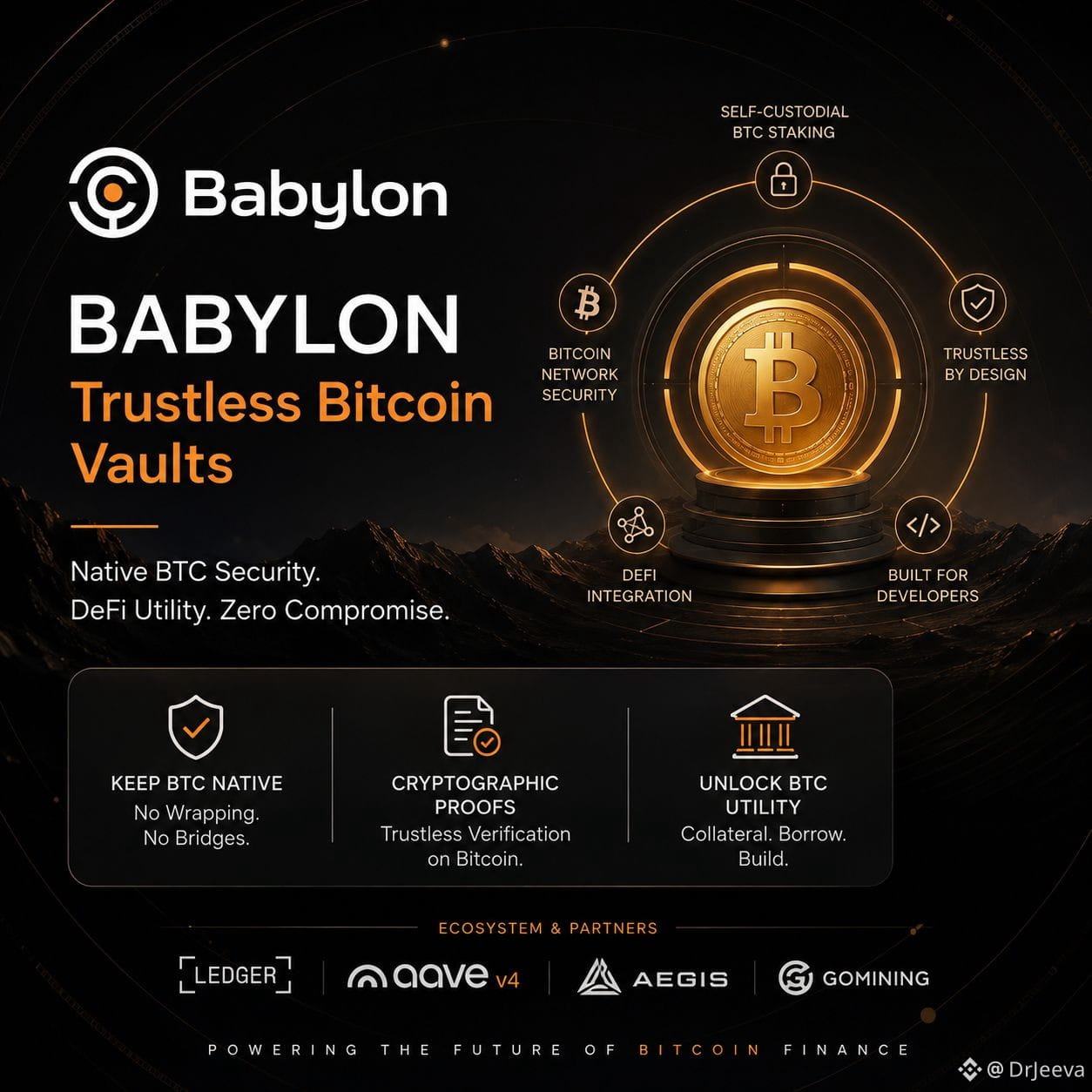
El mercado ha estado moviéndose otra vez en un rango lateral, así que terminé pasando la tarde leyendo Babylon en lugar de quedarme mirando los gráficos de precios. Ya lo conocía por el staking de Bitcoin, pero me intrigaba si su impulso reciente alrededor de Trustless Bitcoin Vaults realmente estaba resolviendo un problema o simplemente dando a BTCFi otra narrativa pegadiza.
Al principio esperaba otro diseño de Bitcoin envuelto con un branding diferente. Cuanto más leía, más me daba cuenta de que el equipo intenta mantener el BTC en la red de Bitcoin, a la vez que lo hace utilizable como garantía mediante pruebas criptográficas en lugar de puentes tradicionales o custodios. Eso me pareció más ambicioso de lo que inicialmente asumí.
La parte que de verdad me hizo detenerme fue el trabajo de Babylon con Aave v4. En vez de mover el propio Bitcoin, el sistema introduce una representación específica para una aplicación del BTC bloqueado, mientras las monedas reales se mantienen bajo el modelo de seguridad de Bitcoin. El soporte de Ledger y los planes para préstamos a tasa fija mediante la colaboración Aegis también sugieren que están pensando más allá de un único caso de uso.
Aun así, aquí es exactamente donde entra mi escepticismo. Los tenedores de Bitcoin han visto demasiadas afirmaciones “trustless” a lo largo de los años, así que la adopción real dependerá de cómo se comporten estos diseños bajo presión y de si los desarrolladores realmente construyen sobre ellos.
Para quienes se niegan a envolver su BTC pero aun así quieren que trabaje más, Babylon se está convirtiendo en uno de los experimentos más interesantes. Me interesan menos las promesas que el hecho de comprobar si la demanda real de préstamos, las integraciones y la seguridad a largo plazo pueden estar a la altura de la visión.
@babylonlabs_io
#baby $BABY
El mercado ha estado moviéndose otra vez en un rango lateral, así que terminé pasando la tarde leyendo Babylon en lugar de quedarme mirando los gráficos de precios. Ya lo conocía por el staking de Bitcoin, pero me intrigaba si su impulso reciente alrededor de Trustless Bitcoin Vaults realmente estaba resolviendo un problema o simplemente dando a BTCFi otra narrativa pegadiza.
Al principio esperaba otro diseño de Bitcoin envuelto con un branding diferente. Cuanto más leía, más me daba cuenta de que el equipo intenta mantener el BTC en la red de Bitcoin, a la vez que lo hace utilizable como garantía mediante pruebas criptográficas en lugar de puentes tradicionales o custodios. Eso me pareció más ambicioso de lo que inicialmente asumí.
La parte que de verdad me hizo detenerme fue el trabajo de Babylon con Aave v4. En vez de mover el propio Bitcoin, el sistema introduce una representación específica para una aplicación del BTC bloqueado, mientras las monedas reales se mantienen bajo el modelo de seguridad de Bitcoin. El soporte de Ledger y los planes para préstamos a tasa fija mediante la colaboración Aegis también sugieren que están pensando más allá de un único caso de uso.
Aun así, aquí es exactamente donde entra mi escepticismo. Los tenedores de Bitcoin han visto demasiadas afirmaciones “trustless” a lo largo de los años, así que la adopción real dependerá de cómo se comporten estos diseños bajo presión y de si los desarrolladores realmente construyen sobre ellos.
Para quienes se niegan a envolver su BTC pero aun así quieren que trabaje más, Babylon se está convirtiendo en uno de los experimentos más interesantes. Me interesan menos las promesas que el hecho de comprobar si la demanda real de préstamos, las integraciones y la seguridad a largo plazo pueden estar a la altura de la visión.
@BabylonLabs_io
#baby $BABY
Al principio esperaba otro diseño de Bitcoin envuelto con un branding diferente. Cuanto más leía, más me daba cuenta de que el equipo intenta mantener el BTC en la red de Bitcoin, a la vez que lo hace utilizable como garantía mediante pruebas criptográficas en lugar de puentes tradicionales o custodios. Eso me pareció más ambicioso de lo que inicialmente asumí.
La parte que de verdad me hizo detenerme fue el trabajo de Babylon con Aave v4. En vez de mover el propio Bitcoin, el sistema introduce una representación específica para una aplicación del BTC bloqueado, mientras las monedas reales se mantienen bajo el modelo de seguridad de Bitcoin. El soporte de Ledger y los planes para préstamos a tasa fija mediante la colaboración Aegis también sugieren que están pensando más allá de un único caso de uso.
Aun así, aquí es exactamente donde entra mi escepticismo. Los tenedores de Bitcoin han visto demasiadas afirmaciones “trustless” a lo largo de los años, así que la adopción real dependerá de cómo se comporten estos diseños bajo presión y de si los desarrolladores realmente construyen sobre ellos.
Para quienes se niegan a envolver su BTC pero aun así quieren que trabaje más, Babylon se está convirtiendo en uno de los experimentos más interesantes. Me interesan menos las promesas que el hecho de comprobar si la demanda real de préstamos, las integraciones y la seguridad a largo plazo pueden estar a la altura de la visión.
@BabylonLabs_io
#baby $BABY
1
1
107
·
--
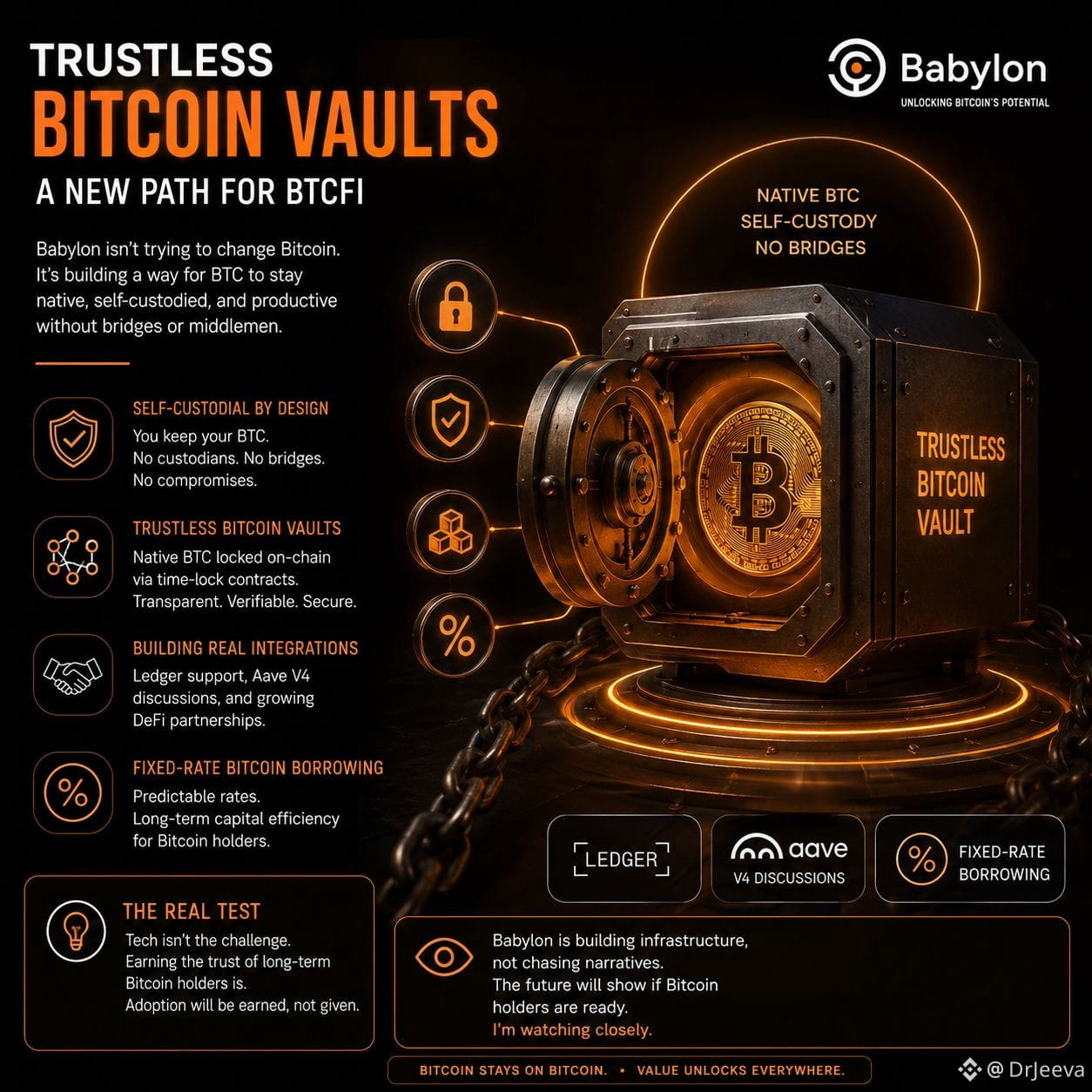
Los últimos días han sido sorprendentemente tranquilos, y normalmente uso ese tipo de mercado para retomar proyectos en lugar de perseguir velas. Babylon terminó de nuevo en mi pantalla, pero esta vez no estaba mirando el staking de Bitcoin. Quería entender si toda la idea del Trustless Bitcoin Vault realmente estaba resolviendo un problema real o simplemente añadiendo otra capa de complejidad.
Esperaba una historia conocida de BTCFi basada en activos tokenizados, pero no fue lo que encontré. Lo que de verdad captó mi atención fue cómo Babylon sigue impulsando el Bitcoin nativo como colateral mientras evita puentes y custodios. Su trabajo reciente con soporte de Ledger, las discusiones en curso sobre Aave V4 y el creciente enfoque en préstamos de Bitcoin a tasa fija sugieren que están intentando construir infraestructura a largo plazo en lugar de otro relato de corta duración.
Dicho esto, todavía creo que la prueba más grande no es técnica. Es si las personas que han mantenido BTC durante años se sentirán cómodas bloqueándolo en un sistema nuevo, incluso si sigue siendo autocustodiado. Los usuarios de Bitcoin rara vez cambian hábitos rápidamente, y esa cautela existe por buenas razones.
Para mí, Babylon resulta más relevante para quienes quieren que el Bitcoin permanezca en la red de Bitcoin mientras, aun así, se convierta en capital productivo. Estaré atento a si la demanda real de préstamos y la adopción por parte de desarrolladores siguen creciendo, porque la infraestructura solo se vuelve significativa cuando la gente empieza a depender de ella en silencio, en lugar de limitarse a hablar de ello. @babylonlabs_io
#baby $BABY $BTC
Los últimos días han sido sorprendentemente tranquilos, y normalmente uso ese tipo de mercado para retomar proyectos en lugar de perseguir velas. Babylon terminó de nuevo en mi pantalla, pero esta vez no estaba mirando el staking de Bitcoin. Quería entender si toda la idea del Trustless Bitcoin Vault realmente estaba resolviendo un problema real o simplemente añadiendo otra capa de complejidad.
Esperaba una historia conocida de BTCFi basada en activos tokenizados, pero no fue lo que encontré. Lo que de verdad captó mi atención fue cómo Babylon sigue impulsando el Bitcoin nativo como colateral mientras evita puentes y custodios. Su trabajo reciente con soporte de Ledger, las discusiones en curso sobre Aave V4 y el creciente enfoque en préstamos de Bitcoin a tasa fija sugieren que están intentando construir infraestructura a largo plazo en lugar de otro relato de corta duración.
Dicho esto, todavía creo que la prueba más grande no es técnica. Es si las personas que han mantenido BTC durante años se sentirán cómodas bloqueándolo en un sistema nuevo, incluso si sigue siendo autocustodiado. Los usuarios de Bitcoin rara vez cambian hábitos rápidamente, y esa cautela existe por buenas razones.
Para mí, Babylon resulta más relevante para quienes quieren que el Bitcoin permanezca en la red de Bitcoin mientras, aun así, se convierta en capital productivo. Estaré atento a si la demanda real de préstamos y la adopción por parte de desarrolladores siguen creciendo, porque la infraestructura solo se vuelve significativa cuando la gente empieza a depender de ella en silencio, en lugar de limitarse a hablar de ello. @BabylonLabs_io
#baby $BABY $BTC
Esperaba una historia conocida de BTCFi basada en activos tokenizados, pero no fue lo que encontré. Lo que de verdad captó mi atención fue cómo Babylon sigue impulsando el Bitcoin nativo como colateral mientras evita puentes y custodios. Su trabajo reciente con soporte de Ledger, las discusiones en curso sobre Aave V4 y el creciente enfoque en préstamos de Bitcoin a tasa fija sugieren que están intentando construir infraestructura a largo plazo en lugar de otro relato de corta duración.
Dicho esto, todavía creo que la prueba más grande no es técnica. Es si las personas que han mantenido BTC durante años se sentirán cómodas bloqueándolo en un sistema nuevo, incluso si sigue siendo autocustodiado. Los usuarios de Bitcoin rara vez cambian hábitos rápidamente, y esa cautela existe por buenas razones.
Para mí, Babylon resulta más relevante para quienes quieren que el Bitcoin permanezca en la red de Bitcoin mientras, aun así, se convierta en capital productivo. Estaré atento a si la demanda real de préstamos y la adopción por parte de desarrolladores siguen creciendo, porque la infraestructura solo se vuelve significativa cuando la gente empieza a depender de ella en silencio, en lugar de limitarse a hablar de ello. @BabylonLabs_io
#baby $BABY $BTC
80
·
--
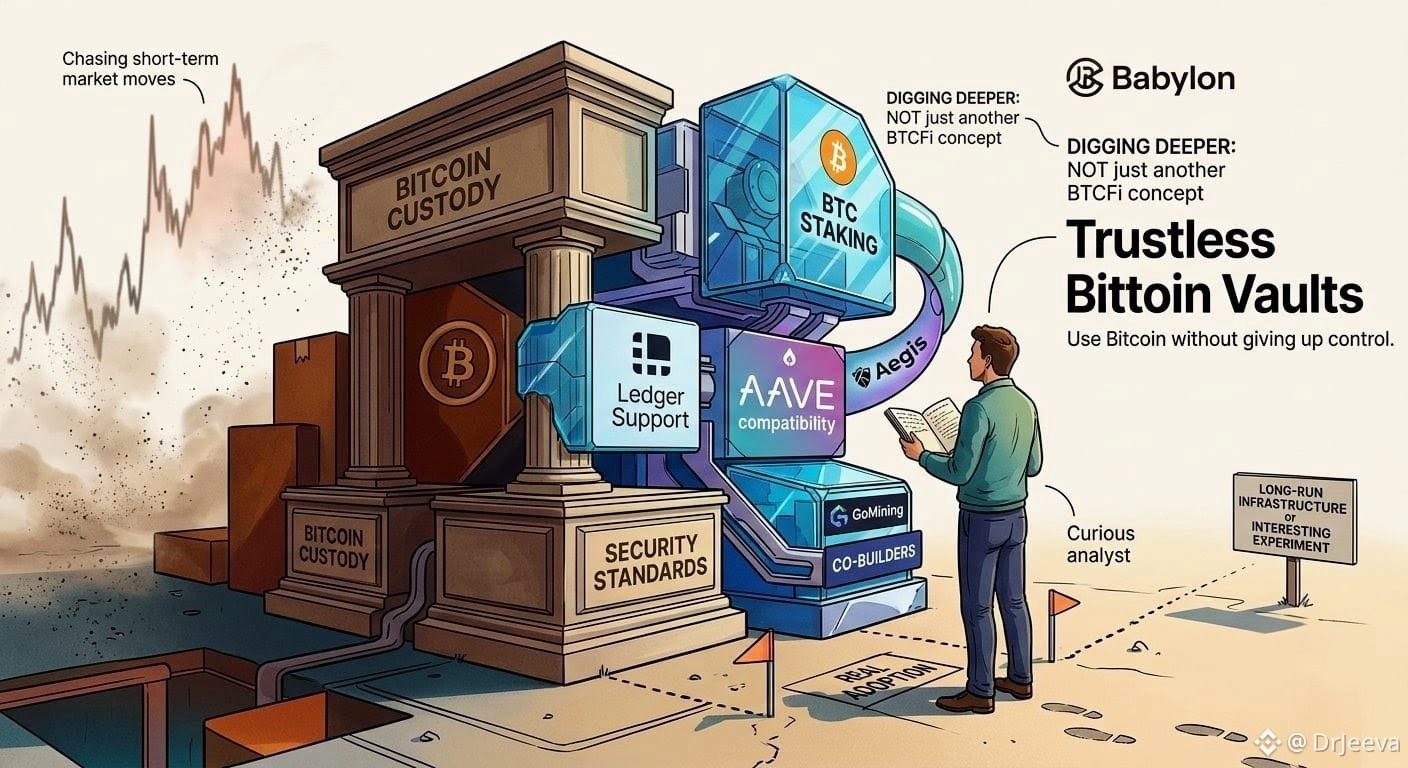
Últimamente me he encontrado dedicando menos tiempo a perseguir movimientos del mercado a corto plazo y más tiempo a explorar lo que realmente están construyendo. Así fue como volví a echarle un vistazo a Babylon. Ya conocía el proyecto para el staking de Bitcoin, pero su rumbo reciente en torno a Trustless Bitcoin Vaults me dio curiosidad suficiente como para profundizar.
Esperaba otro concepto familiar de BTCFi con una etiqueta nueva. En cambio, encontré un diseño que intenta mantener el Bitcoin en autocustodia, permitiéndole además respaldar una actividad más amplia en la cadena de bloques sin depender de activos envueltos. Ese enfoque me parece más ambicioso de lo que asumí al principio. Ver avances en compatibilidad con Ledger, compatibilidad planificada con Aave v4 y colaboraciones con proyectos como Aegis y GoMining me hizo pensar que el equipo está apuntando a un ecosistema más grande, en lugar de a un solo producto.
Eso no significa que la parte difícil haya terminado. Los usuarios de Bitcoin son naturalmente cautelosos, y la confianza se gana con años de rendimiento fiable, no con anuncios. Cada nueva integración tendrá que demostrar que puede cumplir con los estándares de seguridad que la gente espera de Bitcoin.
Para mí, Babylon resulta más interesante para quienes creen en mantener BTC a largo plazo, pero también quieren formas prácticas de usarlo sin renunciar al control. Prestaré mucha atención a la adopción real durante los próximos meses, porque ahí es donde las buenas ideas se convierten en infraestructura significativa o se quedan en simples experimentos interesantes.@babylonlabs_io
#baby $BABY $BTC
Últimamente me he encontrado dedicando menos tiempo a perseguir movimientos del mercado a corto plazo y más tiempo a explorar lo que realmente están construyendo. Así fue como volví a echarle un vistazo a Babylon. Ya conocía el proyecto para el staking de Bitcoin, pero su rumbo reciente en torno a Trustless Bitcoin Vaults me dio curiosidad suficiente como para profundizar.
Esperaba otro concepto familiar de BTCFi con una etiqueta nueva. En cambio, encontré un diseño que intenta mantener el Bitcoin en autocustodia, permitiéndole además respaldar una actividad más amplia en la cadena de bloques sin depender de activos envueltos. Ese enfoque me parece más ambicioso de lo que asumí al principio. Ver avances en compatibilidad con Ledger, compatibilidad planificada con Aave v4 y colaboraciones con proyectos como Aegis y GoMining me hizo pensar que el equipo está apuntando a un ecosistema más grande, en lugar de a un solo producto.
Eso no significa que la parte difícil haya terminado. Los usuarios de Bitcoin son naturalmente cautelosos, y la confianza se gana con años de rendimiento fiable, no con anuncios. Cada nueva integración tendrá que demostrar que puede cumplir con los estándares de seguridad que la gente espera de Bitcoin.
Para mí, Babylon resulta más interesante para quienes creen en mantener BTC a largo plazo, pero también quieren formas prácticas de usarlo sin renunciar al control. Prestaré mucha atención a la adopción real durante los próximos meses, porque ahí es donde las buenas ideas se convierten en infraestructura significativa o se quedan en simples experimentos interesantes.@BabylonLabs_io
#baby $BABY $BTC
Esperaba otro concepto familiar de BTCFi con una etiqueta nueva. En cambio, encontré un diseño que intenta mantener el Bitcoin en autocustodia, permitiéndole además respaldar una actividad más amplia en la cadena de bloques sin depender de activos envueltos. Ese enfoque me parece más ambicioso de lo que asumí al principio. Ver avances en compatibilidad con Ledger, compatibilidad planificada con Aave v4 y colaboraciones con proyectos como Aegis y GoMining me hizo pensar que el equipo está apuntando a un ecosistema más grande, en lugar de a un solo producto.
Eso no significa que la parte difícil haya terminado. Los usuarios de Bitcoin son naturalmente cautelosos, y la confianza se gana con años de rendimiento fiable, no con anuncios. Cada nueva integración tendrá que demostrar que puede cumplir con los estándares de seguridad que la gente espera de Bitcoin.
Para mí, Babylon resulta más interesante para quienes creen en mantener BTC a largo plazo, pero también quieren formas prácticas de usarlo sin renunciar al control. Prestaré mucha atención a la adopción real durante los próximos meses, porque ahí es donde las buenas ideas se convierten en infraestructura significativa o se quedan en simples experimentos interesantes.@BabylonLabs_io
#baby $BABY $BTC
1
100
·
--
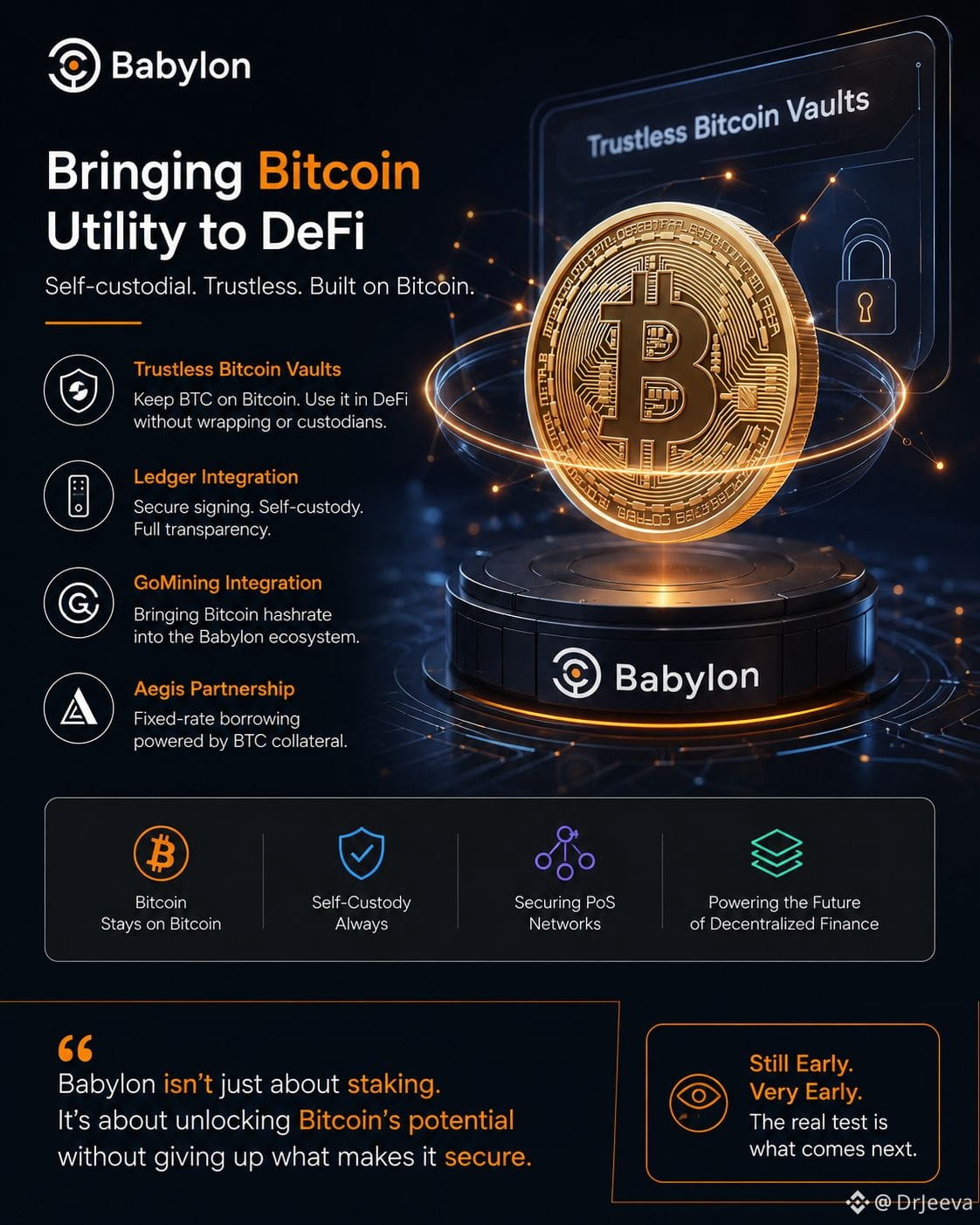
El mercado ha estado moviéndose en un rango lateral el tiempo suficiente como para que dejara de mirar los gráficos de precios y volviera a leer actualizaciones de protocolos. Babylon volvió a llamar mi atención porque la conversación en torno a ella se siente diferente ahora. Esperaba otro proyecto centrado únicamente en el staking de Bitcoin, pero el cambio reciente hacia Trustless Bitcoin Vaults me hizo replantearme qué es lo que realmente está intentando construir el equipo. En lugar de pedirle a la gente que envuelva BTC o que confíe en custodios, el objetivo es permitir que Bitcoin permanezca en su propia red mientras aun así se vuelve útil como colateral en DeFi. El trabajo reciente con soporte de Ledger, la integración planeada con GoMining y una colaboración de préstamos con tasa fija con Aegis muestran que el equipo se está expandiendo más allá de la narrativa original de staking.
Lo que más me sorprendió fue que la idea más grande no es perseguir rentabilidad, sino reducir los compromisos que normalmente los holders de Bitcoin tienen que aceptar. Eso se siente más ambicioso de lo que asumí al principio. Al mismo tiempo, no dejo de preguntarme si desarrolladores e instituciones adoptarán este modelo a la escala que Babylon espera. El diseño suena convincente, pero el uso real siempre es más difícil que una buena arquitectura.
Para quienes creen en mantener BTC a largo plazo y, aun así, quieren más utilidad sin renunciar a la autocustodia, Babylon se está convirtiendo en un proyecto interesante para seguir. Me interesa menos la emoción de corto plazo y más la curiosidad de ver si estas integraciones se traducen en actividad real. Esa es la parte que todavía creo que tiene que ganarse, y por eso exactamente seguiré revisando en lugar de tomar una decisión demasiado temprano.
@babylonlabs_io #baby $BABY $B2
El mercado ha estado moviéndose en un rango lateral el tiempo suficiente como para que dejara de mirar los gráficos de precios y volviera a leer actualizaciones de protocolos. Babylon volvió a llamar mi atención porque la conversación en torno a ella se siente diferente ahora. Esperaba otro proyecto centrado únicamente en el staking de Bitcoin, pero el cambio reciente hacia Trustless Bitcoin Vaults me hizo replantearme qué es lo que realmente está intentando construir el equipo. En lugar de pedirle a la gente que envuelva BTC o que confíe en custodios, el objetivo es permitir que Bitcoin permanezca en su propia red mientras aun así se vuelve útil como colateral en DeFi. El trabajo reciente con soporte de Ledger, la integración planeada con GoMining y una colaboración de préstamos con tasa fija con Aegis muestran que el equipo se está expandiendo más allá de la narrativa original de staking.
Lo que más me sorprendió fue que la idea más grande no es perseguir rentabilidad, sino reducir los compromisos que normalmente los holders de Bitcoin tienen que aceptar. Eso se siente más ambicioso de lo que asumí al principio. Al mismo tiempo, no dejo de preguntarme si desarrolladores e instituciones adoptarán este modelo a la escala que Babylon espera. El diseño suena convincente, pero el uso real siempre es más difícil que una buena arquitectura.
Para quienes creen en mantener BTC a largo plazo y, aun así, quieren más utilidad sin renunciar a la autocustodia, Babylon se está convirtiendo en un proyecto interesante para seguir. Me interesa menos la emoción de corto plazo y más la curiosidad de ver si estas integraciones se traducen en actividad real. Esa es la parte que todavía creo que tiene que ganarse, y por eso exactamente seguiré revisando en lugar de tomar una decisión demasiado temprano.
@BabylonLabs_io #baby $BABY $B2
Lo que más me sorprendió fue que la idea más grande no es perseguir rentabilidad, sino reducir los compromisos que normalmente los holders de Bitcoin tienen que aceptar. Eso se siente más ambicioso de lo que asumí al principio. Al mismo tiempo, no dejo de preguntarme si desarrolladores e instituciones adoptarán este modelo a la escala que Babylon espera. El diseño suena convincente, pero el uso real siempre es más difícil que una buena arquitectura.
Para quienes creen en mantener BTC a largo plazo y, aun así, quieren más utilidad sin renunciar a la autocustodia, Babylon se está convirtiendo en un proyecto interesante para seguir. Me interesa menos la emoción de corto plazo y más la curiosidad de ver si estas integraciones se traducen en actividad real. Esa es la parte que todavía creo que tiene que ganarse, y por eso exactamente seguiré revisando en lugar de tomar una decisión demasiado temprano.
@BabylonLabs_io #baby $BABY $B2
161
·
--
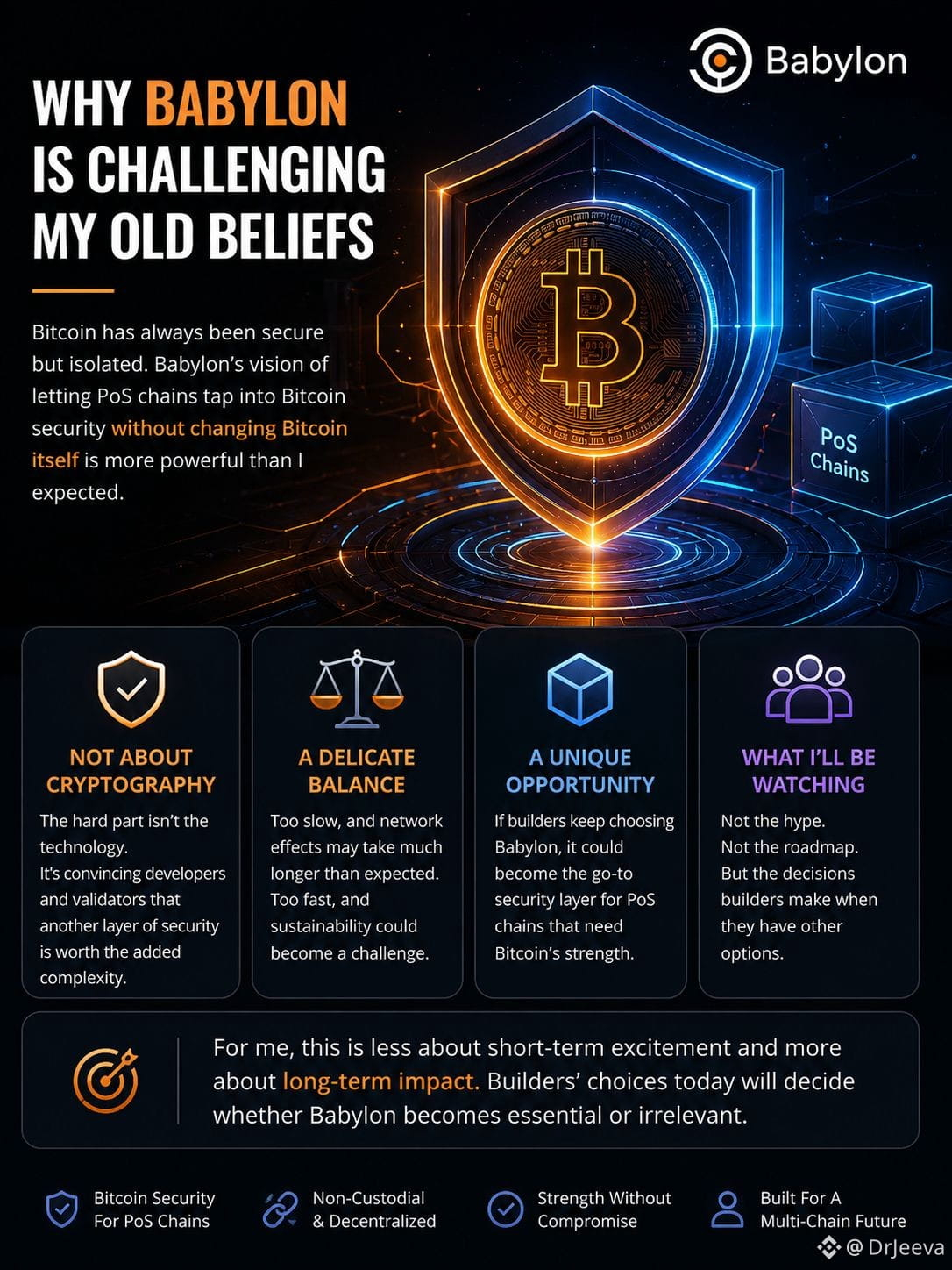
Esta semana estuve leyendo algunas discusiones de desarrolladores porque el mercado se sentía demasiado tranquilo como para perseguir movimientos de precio. Por alguna razón acabé volviendo a leer sobre Babylon, pero esta vez ignoré los titulares sobre el staking y me enfoqué en cómo la red intenta usar la seguridad de Bitcoin para cadenas de bloques completamente distintas.
Siempre había asumido que Bitcoin se mantendría separado del resto de las criptomonedas. Es seguro, pero también está aislado. Babylon desafió esa suposición más de lo que esperaba. La idea de permitir que las redes PoS se beneficien de la seguridad respaldada por Bitcoin sin cambiar el propio Bitcoin resulta más interesante de lo que le di crédito al principio.
Lo que realmente me hizo pensar fue que lo más difícil no es la criptografía. Es convencer a los desarrolladores y a los validadores de que agregar otra capa de seguridad vale la complejidad adicional. La buena tecnología no se adopta automáticamente de forma generalizada, especialmente cuando los sistemas existentes ya funcionan lo suficientemente bien.
También creo que el proyecto enfrenta un complicado ejercicio de equilibrio. Si el ecosistema alrededor de BABY crece demasiado lentamente, los efectos de red podrían tardar mucho más de lo que la gente espera. Por otro lado, si los desarrolladores siguen creando aplicaciones que realmente necesitan la seguridad de Bitcoin, Babylon podría terminar ocupando un nicho que muy pocos proyectos pueden llenar.
Para mí, esto tiene menos que ver con la emoción a corto plazo y más con observar si los creadores continúan eligiendo Babylon cuando tienen otras opciones. Esa decisión probablemente revelará mucho más que cualquier hoja de ruta podría hacerlo alguna vez.
@babylonlabs_io
#baby $BABY $BTC
Esta semana estuve leyendo algunas discusiones de desarrolladores porque el mercado se sentía demasiado tranquilo como para perseguir movimientos de precio. Por alguna razón acabé volviendo a leer sobre Babylon, pero esta vez ignoré los titulares sobre el staking y me enfoqué en cómo la red intenta usar la seguridad de Bitcoin para cadenas de bloques completamente distintas.
Siempre había asumido que Bitcoin se mantendría separado del resto de las criptomonedas. Es seguro, pero también está aislado. Babylon desafió esa suposición más de lo que esperaba. La idea de permitir que las redes PoS se beneficien de la seguridad respaldada por Bitcoin sin cambiar el propio Bitcoin resulta más interesante de lo que le di crédito al principio.
Lo que realmente me hizo pensar fue que lo más difícil no es la criptografía. Es convencer a los desarrolladores y a los validadores de que agregar otra capa de seguridad vale la complejidad adicional. La buena tecnología no se adopta automáticamente de forma generalizada, especialmente cuando los sistemas existentes ya funcionan lo suficientemente bien.
También creo que el proyecto enfrenta un complicado ejercicio de equilibrio. Si el ecosistema alrededor de BABY crece demasiado lentamente, los efectos de red podrían tardar mucho más de lo que la gente espera. Por otro lado, si los desarrolladores siguen creando aplicaciones que realmente necesitan la seguridad de Bitcoin, Babylon podría terminar ocupando un nicho que muy pocos proyectos pueden llenar.
Para mí, esto tiene menos que ver con la emoción a corto plazo y más con observar si los creadores continúan eligiendo Babylon cuando tienen otras opciones. Esa decisión probablemente revelará mucho más que cualquier hoja de ruta podría hacerlo alguna vez.
@BabylonLabs_io
#baby $BABY $BTC
Siempre había asumido que Bitcoin se mantendría separado del resto de las criptomonedas. Es seguro, pero también está aislado. Babylon desafió esa suposición más de lo que esperaba. La idea de permitir que las redes PoS se beneficien de la seguridad respaldada por Bitcoin sin cambiar el propio Bitcoin resulta más interesante de lo que le di crédito al principio.
Lo que realmente me hizo pensar fue que lo más difícil no es la criptografía. Es convencer a los desarrolladores y a los validadores de que agregar otra capa de seguridad vale la complejidad adicional. La buena tecnología no se adopta automáticamente de forma generalizada, especialmente cuando los sistemas existentes ya funcionan lo suficientemente bien.
También creo que el proyecto enfrenta un complicado ejercicio de equilibrio. Si el ecosistema alrededor de BABY crece demasiado lentamente, los efectos de red podrían tardar mucho más de lo que la gente espera. Por otro lado, si los desarrolladores siguen creando aplicaciones que realmente necesitan la seguridad de Bitcoin, Babylon podría terminar ocupando un nicho que muy pocos proyectos pueden llenar.
Para mí, esto tiene menos que ver con la emoción a corto plazo y más con observar si los creadores continúan eligiendo Babylon cuando tienen otras opciones. Esa decisión probablemente revelará mucho más que cualquier hoja de ruta podría hacerlo alguna vez.
@BabylonLabs_io
#baby $BABY $BTC
2
72
·
--
El mercado ha estado lo bastante tranquilo últimamente como para que me encontrara retomando proyectos sobre los que aún no me había decidido, y Babylon fue uno de ellos.
Al principio, esperaba otra historia de Bitcoin con un discurso ingenioso y poco más. Suelo desconfiar cuando un proyecto se apoya demasiado en la palabra «nativo». Pero las actualizaciones más recientes me hicieron detenerme. Babylon ya no solo habla de staking; su enfoque de 2026 se ha desplazado hacia Trustless Bitcoin Vaults, y el equipo afirma que ahí es donde podría estar el verdadero encaje producto-mercado. También han impulsado el soporte para Ledger signer, algo que para mí importa más que titulares llamativos, porque hace que la parte de autocustodia se sienta más real. El plan GoMining, con la idea de activar hasta 1.000 BTC, también me mostró que intentan ir más allá de la teoría y pasar a un uso real.
Lo que más me sorprendió fue cuánto del diseño se construye en torno a mantener el BTC nativo. Sin wrapping, sin dependencia de puentes, sin renunciar a la custodia. Es una idea clara, pero también plantea la pregunta habitual en mi cabeza: ¿qué tan fluido se siente esto cuando entran usuarios normales?
La preocupación que no puedo ignorar es que el propio Babylon admite que todavía existe presión vendedora por las recompensas del staking y una demanda poco clara para BABY más allá del staking. BABY está destinado a gestionar comisiones, gobernanza y seguridad, pero aún tiene que demostrarse con un uso real, no solo en una página del token.
Ahora mismo, creo que esto resulta más interesante para los tenedores de BTC que se preocupan por la autocustodia, y para los creadores que observan BTCFi desde el borde. Seguiré vigilando si el modelo de bóvedas se convierte en algo que la gente usa de verdad, o si termina siendo otra idea elegante que en el papel se veía más fuerte de lo que fue en la práctica.
@babylonlabs_io #baby $BABY $BTC #btc
El mercado ha estado lo bastante tranquilo últimamente como para que me encontrara retomando proyectos sobre los que aún no me había decidido, y Babylon fue uno de ellos.
Al principio, esperaba otra historia de Bitcoin con un discurso ingenioso y poco más. Suelo desconfiar cuando un proyecto se apoya demasiado en la palabra «nativo». Pero las actualizaciones más recientes me hicieron detenerme. Babylon ya no solo habla de staking; su enfoque de 2026 se ha desplazado hacia Trustless Bitcoin Vaults, y el equipo afirma que ahí es donde podría estar el verdadero encaje producto-mercado. También han impulsado el soporte para Ledger signer, algo que para mí importa más que titulares llamativos, porque hace que la parte de autocustodia se sienta más real. El plan GoMining, con la idea de activar hasta 1.000 BTC, también me mostró que intentan ir más allá de la teoría y pasar a un uso real.
Lo que más me sorprendió fue cuánto del diseño se construye en torno a mantener el BTC nativo. Sin wrapping, sin dependencia de puentes, sin renunciar a la custodia. Es una idea clara, pero también plantea la pregunta habitual en mi cabeza: ¿qué tan fluido se siente esto cuando entran usuarios normales?
La preocupación que no puedo ignorar es que el propio Babylon admite que todavía existe presión vendedora por las recompensas del staking y una demanda poco clara para BABY más allá del staking. BABY está destinado a gestionar comisiones, gobernanza y seguridad, pero aún tiene que demostrarse con un uso real, no solo en una página del token.
Ahora mismo, creo que esto resulta más interesante para los tenedores de BTC que se preocupan por la autocustodia, y para los creadores que observan BTCFi desde el borde. Seguiré vigilando si el modelo de bóvedas se convierte en algo que la gente usa de verdad, o si termina siendo otra idea elegante que en el papel se veía más fuerte de lo que fue en la práctica.
@BabylonLabs_io #baby $BABY $BTC #btc
Al principio, esperaba otra historia de Bitcoin con un discurso ingenioso y poco más. Suelo desconfiar cuando un proyecto se apoya demasiado en la palabra «nativo». Pero las actualizaciones más recientes me hicieron detenerme. Babylon ya no solo habla de staking; su enfoque de 2026 se ha desplazado hacia Trustless Bitcoin Vaults, y el equipo afirma que ahí es donde podría estar el verdadero encaje producto-mercado. También han impulsado el soporte para Ledger signer, algo que para mí importa más que titulares llamativos, porque hace que la parte de autocustodia se sienta más real. El plan GoMining, con la idea de activar hasta 1.000 BTC, también me mostró que intentan ir más allá de la teoría y pasar a un uso real.
Lo que más me sorprendió fue cuánto del diseño se construye en torno a mantener el BTC nativo. Sin wrapping, sin dependencia de puentes, sin renunciar a la custodia. Es una idea clara, pero también plantea la pregunta habitual en mi cabeza: ¿qué tan fluido se siente esto cuando entran usuarios normales?
La preocupación que no puedo ignorar es que el propio Babylon admite que todavía existe presión vendedora por las recompensas del staking y una demanda poco clara para BABY más allá del staking. BABY está destinado a gestionar comisiones, gobernanza y seguridad, pero aún tiene que demostrarse con un uso real, no solo en una página del token.
Ahora mismo, creo que esto resulta más interesante para los tenedores de BTC que se preocupan por la autocustodia, y para los creadores que observan BTCFi desde el borde. Seguiré vigilando si el modelo de bóvedas se convierte en algo que la gente usa de verdad, o si termina siendo otra idea elegante que en el papel se veía más fuerte de lo que fue en la práctica.
@BabylonLabs_io #baby $BABY $BTC #btc

3
110
·
--
Algunos de los proyectos que termino respetando más son los que me hacen detenerme y replantearme suposiciones que he sostenido durante años. Para mí, @babylonlabs_io ha sido uno de esos.
Bitcoin siempre me ha parecido increíblemente seguro, pero también algo aislado del mundo DeFi en general. La idea de Babylon de permitir que BTC contribuya a la seguridad de otras redes sin depender de activos envueltos ni de puentes tradicionales fue lo que primero me atrajo a leer su material técnico. Es un intento ambicioso de ampliar el papel de Bitcoin manteniendo su modelo de seguridad en el centro.
En los últimos meses, he notado un progreso constante en lugar de titulares llamativos. El equipo ha seguido construyendo en torno a Trustless Bitcoin Vaults, ha anunciado integraciones con socios como Ledger para el firmado seguro y también ha estado explorando una utilidad más amplia de Bitcoin mediante colaboraciones como Aegis para préstamos respaldados por BTC. Esas actualizaciones hacen que la hoja de ruta se sienta más tangible, en vez de puramente teórica.
Dicho esto, todavía creo que la ejecución es la prueba real. A medida que más capital y aplicaciones interactúen con la infraestructura nativa de BTC, la seguridad, la gobernanza y la experiencia de usuario importarán mucho más que las narrativas. ¿Puede Babylon mantener su diseño minimizado en confianza mientras hace el sistema lo suficientemente simple para una adopción más amplia?
Todavía no tengo una respuesta firme, pero justo por eso sigo siguiendo el proyecto. En cripto, las ideas más interesantes a menudo son las que ganan confianza gracias a entregas constantes más que a un marketing ruidoso.
$BTC $DOGE #Babylon #Bitcoin #BTCFi #DeFi
#baby $BABY
Algunos de los proyectos que termino respetando más son los que me hacen detenerme y replantearme suposiciones que he sostenido durante años. Para mí, @BabylonLabs_io ha sido uno de esos.
Bitcoin siempre me ha parecido increíblemente seguro, pero también algo aislado del mundo DeFi en general. La idea de Babylon de permitir que BTC contribuya a la seguridad de otras redes sin depender de activos envueltos ni de puentes tradicionales fue lo que primero me atrajo a leer su material técnico. Es un intento ambicioso de ampliar el papel de Bitcoin manteniendo su modelo de seguridad en el centro.
En los últimos meses, he notado un progreso constante en lugar de titulares llamativos. El equipo ha seguido construyendo en torno a Trustless Bitcoin Vaults, ha anunciado integraciones con socios como Ledger para el firmado seguro y también ha estado explorando una utilidad más amplia de Bitcoin mediante colaboraciones como Aegis para préstamos respaldados por BTC. Esas actualizaciones hacen que la hoja de ruta se sienta más tangible, en vez de puramente teórica.
Dicho esto, todavía creo que la ejecución es la prueba real. A medida que más capital y aplicaciones interactúen con la infraestructura nativa de BTC, la seguridad, la gobernanza y la experiencia de usuario importarán mucho más que las narrativas. ¿Puede Babylon mantener su diseño minimizado en confianza mientras hace el sistema lo suficientemente simple para una adopción más amplia?
Todavía no tengo una respuesta firme, pero justo por eso sigo siguiendo el proyecto. En cripto, las ideas más interesantes a menudo son las que ganan confianza gracias a entregas constantes más que a un marketing ruidoso.
$BTC $DOGE #Babylon #Bitcoin #BTCFi #DeFi
#baby $BABY
Bitcoin siempre me ha parecido increíblemente seguro, pero también algo aislado del mundo DeFi en general. La idea de Babylon de permitir que BTC contribuya a la seguridad de otras redes sin depender de activos envueltos ni de puentes tradicionales fue lo que primero me atrajo a leer su material técnico. Es un intento ambicioso de ampliar el papel de Bitcoin manteniendo su modelo de seguridad en el centro.
En los últimos meses, he notado un progreso constante en lugar de titulares llamativos. El equipo ha seguido construyendo en torno a Trustless Bitcoin Vaults, ha anunciado integraciones con socios como Ledger para el firmado seguro y también ha estado explorando una utilidad más amplia de Bitcoin mediante colaboraciones como Aegis para préstamos respaldados por BTC. Esas actualizaciones hacen que la hoja de ruta se sienta más tangible, en vez de puramente teórica.
Dicho esto, todavía creo que la ejecución es la prueba real. A medida que más capital y aplicaciones interactúen con la infraestructura nativa de BTC, la seguridad, la gobernanza y la experiencia de usuario importarán mucho más que las narrativas. ¿Puede Babylon mantener su diseño minimizado en confianza mientras hace el sistema lo suficientemente simple para una adopción más amplia?
Todavía no tengo una respuesta firme, pero justo por eso sigo siguiendo el proyecto. En cripto, las ideas más interesantes a menudo son las que ganan confianza gracias a entregas constantes más que a un marketing ruidoso.
$BTC $DOGE #Babylon #Bitcoin #BTCFi #DeFi
#baby $BABY
3
3
142
·
--
Algunas de las ideas más interesantes en cripto no captan mi atención debido al precio. La captan al desafiar supuestos que he aceptado durante años.
Justamente por eso pasé tiempo investigando @babylonlabs_io . Bitcoin siempre ha sido el activo en el que más confío, pero también he aceptado que usarlo en DeFi normalmente significaba envolverlo, hacer el puente o depender de la custodia de otra persona. Babylon intenta replantear ese intercambio.
Lo que llamó mi atención recientemente fue el progreso en torno a Trustless Bitcoin Vaults (TBVs). La arquitectura está diseñada para que el BTC se mantenga en Bitcoin, mientras las pruebas criptográficas coordinan su uso como colateral en Ethereum, en lugar de depender de activos tradicionales envueltos. También me pareció valiosa la atención creciente en integraciones con Aave y las mejoras en el ecosistema de TBV, ya que apuntan hacia una utilidad real en vez de otro experimento aislado.
Dicho esto, todavía me hago una pregunta importante: ¿puede este modelo escalar de forma suficientemente fluida para usuarios cotidianos, o la complejidad técnica seguirá siendo una barrera a pesar del diseño elegante?
No estoy tratando a Babylon como una certeza, y no creo que nadie deba hacerlo. Pero cuando un proyecto sigue impulsando la utilidad de Bitcoin sin abandonar los principios que muchos tenedores de BTC valoran, se gana un lugar en mi lista de investigación. Por ahora, sigo con curiosidad y observando cómo evoluciona el ecosistema antes de formar una convicción más sólida.
@babylonlabs_io • $BABY
#Bitcoin #DeFi
#baby $BABY
Algunas de las ideas más interesantes en cripto no captan mi atención debido al precio. La captan al desafiar supuestos que he aceptado durante años.
Justamente por eso pasé tiempo investigando @BabylonLabs_io . Bitcoin siempre ha sido el activo en el que más confío, pero también he aceptado que usarlo en DeFi normalmente significaba envolverlo, hacer el puente o depender de la custodia de otra persona. Babylon intenta replantear ese intercambio.
Lo que llamó mi atención recientemente fue el progreso en torno a Trustless Bitcoin Vaults (TBVs). La arquitectura está diseñada para que el BTC se mantenga en Bitcoin, mientras las pruebas criptográficas coordinan su uso como colateral en Ethereum, en lugar de depender de activos tradicionales envueltos. También me pareció valiosa la atención creciente en integraciones con Aave y las mejoras en el ecosistema de TBV, ya que apuntan hacia una utilidad real en vez de otro experimento aislado.
Dicho esto, todavía me hago una pregunta importante: ¿puede este modelo escalar de forma suficientemente fluida para usuarios cotidianos, o la complejidad técnica seguirá siendo una barrera a pesar del diseño elegante?
No estoy tratando a Babylon como una certeza, y no creo que nadie deba hacerlo. Pero cuando un proyecto sigue impulsando la utilidad de Bitcoin sin abandonar los principios que muchos tenedores de BTC valoran, se gana un lugar en mi lista de investigación. Por ahora, sigo con curiosidad y observando cómo evoluciona el ecosistema antes de formar una convicción más sólida.
@BabylonLabs_io • $BABY
#Bitcoin #DeFi
#baby $BABY
Justamente por eso pasé tiempo investigando @BabylonLabs_io . Bitcoin siempre ha sido el activo en el que más confío, pero también he aceptado que usarlo en DeFi normalmente significaba envolverlo, hacer el puente o depender de la custodia de otra persona. Babylon intenta replantear ese intercambio.
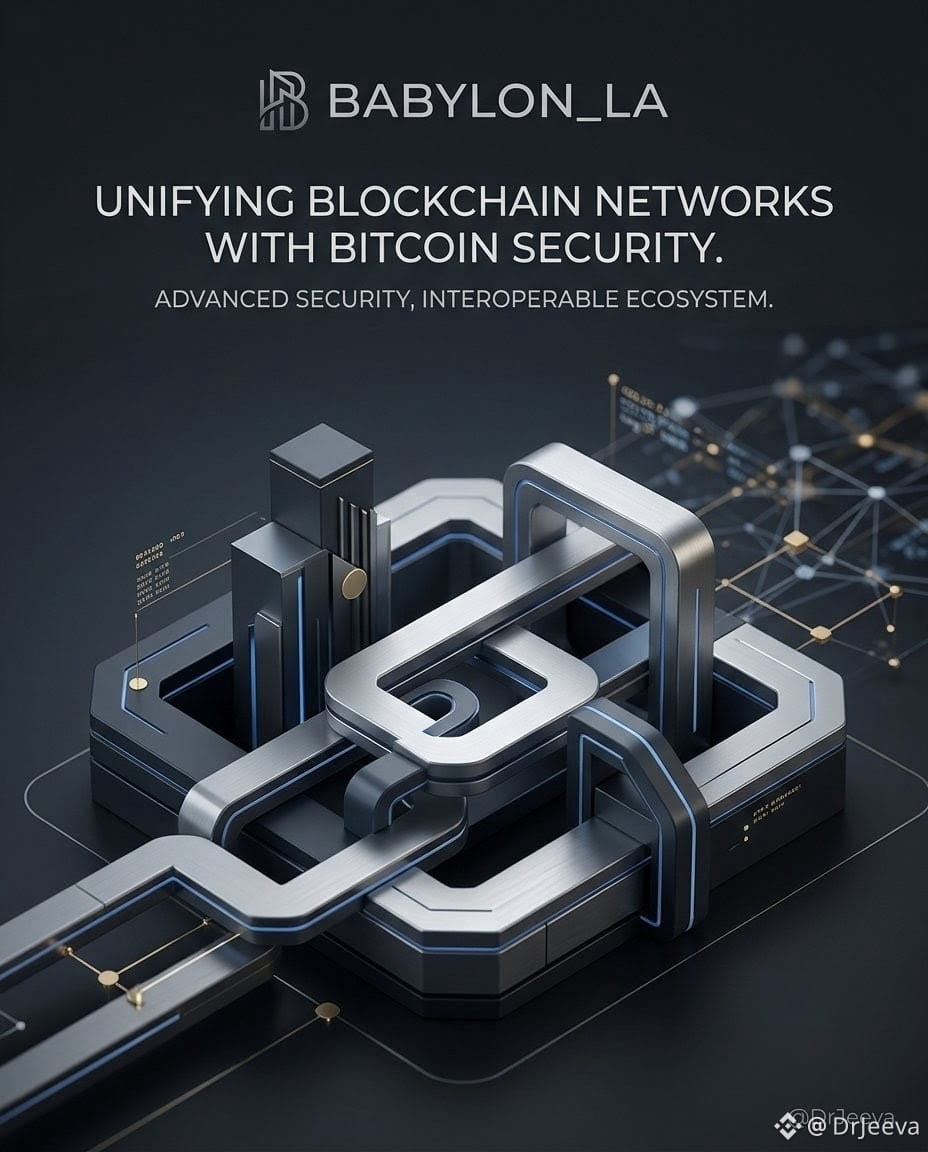
Lo que llamó mi atención recientemente fue el progreso en torno a Trustless Bitcoin Vaults (TBVs). La arquitectura está diseñada para que el BTC se mantenga en Bitcoin, mientras las pruebas criptográficas coordinan su uso como colateral en Ethereum, en lugar de depender de activos tradicionales envueltos. También me pareció valiosa la atención creciente en integraciones con Aave y las mejoras en el ecosistema de TBV, ya que apuntan hacia una utilidad real en vez de otro experimento aislado.
Dicho esto, todavía me hago una pregunta importante: ¿puede este modelo escalar de forma suficientemente fluida para usuarios cotidianos, o la complejidad técnica seguirá siendo una barrera a pesar del diseño elegante?
No estoy tratando a Babylon como una certeza, y no creo que nadie deba hacerlo. Pero cuando un proyecto sigue impulsando la utilidad de Bitcoin sin abandonar los principios que muchos tenedores de BTC valoran, se gana un lugar en mi lista de investigación. Por ahora, sigo con curiosidad y observando cómo evoluciona el ecosistema antes de formar una convicción más sólida.
@BabylonLabs_io • $BABY
#Bitcoin #DeFi
#baby $BABY
3
1
104
·
--
El mercado se ha estado moviendo con tanta calma que me sorprendí pasando más tiempo leyendo actualizaciones de protocolos que mirando gráficos de precios. Babylon terminó volviendo a mi pantalla casi por accidente. Supuse que seguía tratándose principalmente de hacer staking de Bitcoin, y sinceramente esperaba otro intento de hacer que los BTC inactivos parecieran más emocionantes de lo que realmente son.
Cuanto más profundizaba, más me di cuenta de que la conversación sobre Babylon había cambiado. Lo que llamó mi atención no fue el staking en sí, sino la creciente atención a las Trustless Bitcoin Vaults. La idea de usar Bitcoin nativo como garantía sin envolverlo, puentearlo ni entregar la custodia a otra persona se siente como un desafío de diseño mucho mayor de lo que en un principio le había dado crédito. El trabajo reciente con Ledger para firmas de hardware seguras y las integraciones planificadas con infraestructura de préstamos como Aave V4 y Aegis sugieren que el equipo está pensando más allá de un único producto, hacia un stack más amplio de finanzas en Bitcoin.
Aun así, sigo preguntándome si una arquitectura elegante conduce automáticamente a la adopción. Construir infraestructura con menos necesidad de confianza es una cosa; convencer a los tenedores de Bitcoin para que la usen activamente es otra. El modelo de seguridad suena reflexivo, pero todavía necesita demostrarse bajo presión económica real y a una escala significativa.
Puedo entender por qué los desarrolladores y los tenedores de Bitcoin a largo plazo están prestando atención. Si alguien cree que el Bitcoin debería volverse productivo sin sacrificar la autocustodia, Babylon está abordando un problema que muchos proyectos han intentado resolver de formas menos convincentes.
Me interesan menos los titulares que lo que ocurra durante el próximo año. Si estas integraciones atraen usuarios reales en lugar de solo anuncios, mi opinión podría cambiar de nuevo. Probablemente esa sea la parte más interesante de seguir cripto: a veces, los proyectos que descartaste primero terminan haciendo las mejores preguntas.
@babylonlabs_io #baby $BABY
El mercado se ha estado moviendo con tanta calma que me sorprendí pasando más tiempo leyendo actualizaciones de protocolos que mirando gráficos de precios. Babylon terminó volviendo a mi pantalla casi por accidente. Supuse que seguía tratándose principalmente de hacer staking de Bitcoin, y sinceramente esperaba otro intento de hacer que los BTC inactivos parecieran más emocionantes de lo que realmente son.
Cuanto más profundizaba, más me di cuenta de que la conversación sobre Babylon había cambiado. Lo que llamó mi atención no fue el staking en sí, sino la creciente atención a las Trustless Bitcoin Vaults. La idea de usar Bitcoin nativo como garantía sin envolverlo, puentearlo ni entregar la custodia a otra persona se siente como un desafío de diseño mucho mayor de lo que en un principio le había dado crédito. El trabajo reciente con Ledger para firmas de hardware seguras y las integraciones planificadas con infraestructura de préstamos como Aave V4 y Aegis sugieren que el equipo está pensando más allá de un único producto, hacia un stack más amplio de finanzas en Bitcoin.
Aun así, sigo preguntándome si una arquitectura elegante conduce automáticamente a la adopción. Construir infraestructura con menos necesidad de confianza es una cosa; convencer a los tenedores de Bitcoin para que la usen activamente es otra. El modelo de seguridad suena reflexivo, pero todavía necesita demostrarse bajo presión económica real y a una escala significativa.
Puedo entender por qué los desarrolladores y los tenedores de Bitcoin a largo plazo están prestando atención. Si alguien cree que el Bitcoin debería volverse productivo sin sacrificar la autocustodia, Babylon está abordando un problema que muchos proyectos han intentado resolver de formas menos convincentes.
Me interesan menos los titulares que lo que ocurra durante el próximo año. Si estas integraciones atraen usuarios reales en lugar de solo anuncios, mi opinión podría cambiar de nuevo. Probablemente esa sea la parte más interesante de seguir cripto: a veces, los proyectos que descartaste primero terminan haciendo las mejores preguntas.
@BabylonLabs_io #baby $BABY
Cuanto más profundizaba, más me di cuenta de que la conversación sobre Babylon había cambiado. Lo que llamó mi atención no fue el staking en sí, sino la creciente atención a las Trustless Bitcoin Vaults. La idea de usar Bitcoin nativo como garantía sin envolverlo, puentearlo ni entregar la custodia a otra persona se siente como un desafío de diseño mucho mayor de lo que en un principio le había dado crédito. El trabajo reciente con Ledger para firmas de hardware seguras y las integraciones planificadas con infraestructura de préstamos como Aave V4 y Aegis sugieren que el equipo está pensando más allá de un único producto, hacia un stack más amplio de finanzas en Bitcoin.
Aun así, sigo preguntándome si una arquitectura elegante conduce automáticamente a la adopción. Construir infraestructura con menos necesidad de confianza es una cosa; convencer a los tenedores de Bitcoin para que la usen activamente es otra. El modelo de seguridad suena reflexivo, pero todavía necesita demostrarse bajo presión económica real y a una escala significativa.
Puedo entender por qué los desarrolladores y los tenedores de Bitcoin a largo plazo están prestando atención. Si alguien cree que el Bitcoin debería volverse productivo sin sacrificar la autocustodia, Babylon está abordando un problema que muchos proyectos han intentado resolver de formas menos convincentes.
Me interesan menos los titulares que lo que ocurra durante el próximo año. Si estas integraciones atraen usuarios reales en lugar de solo anuncios, mi opinión podría cambiar de nuevo. Probablemente esa sea la parte más interesante de seguir cripto: a veces, los proyectos que descartaste primero terminan haciendo las mejores preguntas.
@BabylonLabs_io #baby $BABY
64
·
--
El mercado ha estado inusualmente tranquilo últimamente y, cuando la acción del precio deja de darme algo interesante, normalmente termino leyendo documentación de protocolos en lugar de quedarme mirando gráficos. Babylon volvió a aparecer en mi radar de esa manera. Supuse que era solo otro intento de exprimir más utilidad de Bitcoin con una narrativa diferente envuelta alrededor.
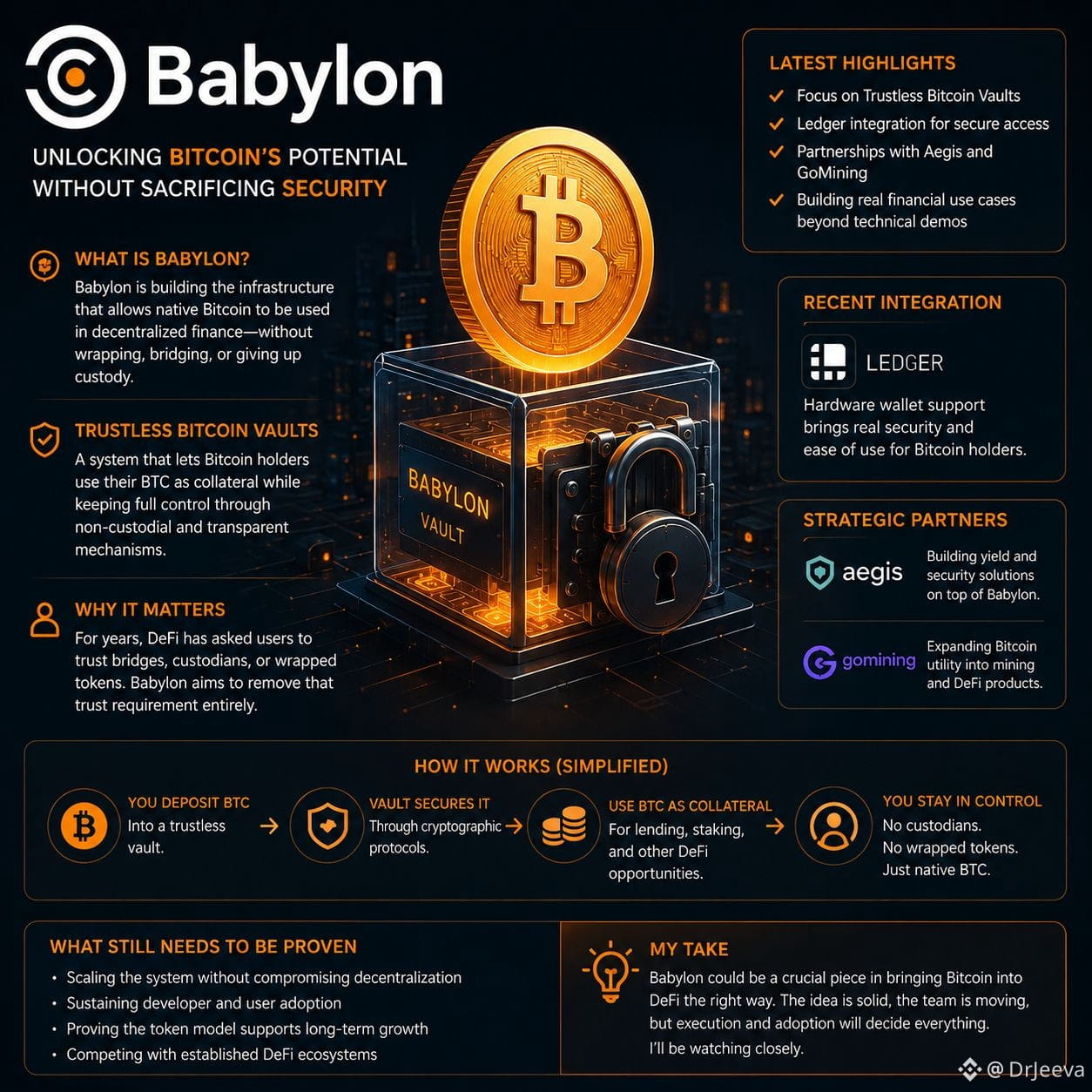
Cuanto más leía, más me daba cuenta de que mi primera impresión era demasiado simplista. Babylon ha desplazado mucha atención hacia Trustless Bitcoin Vaults, donde el objetivo no es envolver el BTC ni entregárselo a un custodio, sino permitir que el Bitcoin nativo sea utilizable como colateral mientras permanece bajo el control del propietario. El trabajo reciente en torno a la integración con Ledger también llamó mi atención, porque el soporte de monederos de hardware elimina una de las barreras prácticas más grandes para los titulares de Bitcoin a largo plazo. Además, las asociaciones con Aegis y GoMining sugieren que el equipo intenta construir casos de uso financieros reales en lugar de quedarse en simples demostraciones técnicas.
Lo que me hizo detenerme no fue la tecnología en sí, sino la filosofía que hay detrás. Crypto ha pasado años pidiéndole a la gente que confíe en puentes y activos tokenizados (wrapped). Babylon intenta evitar por completo ese intercambio, lo cual suena evidente en retrospectiva, pero resulta sorprendentemente difícil de ejecutar bien.
Eso no significa que esté totalmente convencido. El préstamo respaldado por Bitcoin sin comprometer la seguridad es un objetivo ambicioso, y el sistema aún necesita demostrar que puede operar sin problemas a una escala mayor, atrayendo una actividad sostenida de desarrolladores y usuarios. Es probable que la economía de tokens y la adopción del ecosistema importen tanto como la criptografía subyacente.
Puedo ver que esto sería más útil para los titulares de Bitcoin que nunca se han sentido cómodos moviendo sus monedas hacia el DeFi tradicional. La duda es si esa audiencia será lo suficientemente grande.
Por ahora, me interesa menos el ruido de los titulares que si la próxima ola de integraciones convierte este diseño en algo que la gente use de verdad todos los días. Esa es la parte de la historia que quiero seguir.
@babylonlabs_io
#baby $BABY
El mercado ha estado inusualmente tranquilo últimamente y, cuando la acción del precio deja de darme algo interesante, normalmente termino leyendo documentación de protocolos en lugar de quedarme mirando gráficos. Babylon volvió a aparecer en mi radar de esa manera. Supuse que era solo otro intento de exprimir más utilidad de Bitcoin con una narrativa diferente envuelta alrededor.
Cuanto más leía, más me daba cuenta de que mi primera impresión era demasiado simplista. Babylon ha desplazado mucha atención hacia Trustless Bitcoin Vaults, donde el objetivo no es envolver el BTC ni entregárselo a un custodio, sino permitir que el Bitcoin nativo sea utilizable como colateral mientras permanece bajo el control del propietario. El trabajo reciente en torno a la integración con Ledger también llamó mi atención, porque el soporte de monederos de hardware elimina una de las barreras prácticas más grandes para los titulares de Bitcoin a largo plazo. Además, las asociaciones con Aegis y GoMining sugieren que el equipo intenta construir casos de uso financieros reales en lugar de quedarse en simples demostraciones técnicas.
Lo que me hizo detenerme no fue la tecnología en sí, sino la filosofía que hay detrás. Crypto ha pasado años pidiéndole a la gente que confíe en puentes y activos tokenizados (wrapped). Babylon intenta evitar por completo ese intercambio, lo cual suena evidente en retrospectiva, pero resulta sorprendentemente difícil de ejecutar bien.
Eso no significa que esté totalmente convencido. El préstamo respaldado por Bitcoin sin comprometer la seguridad es un objetivo ambicioso, y el sistema aún necesita demostrar que puede operar sin problemas a una escala mayor, atrayendo una actividad sostenida de desarrolladores y usuarios. Es probable que la economía de tokens y la adopción del ecosistema importen tanto como la criptografía subyacente.
Puedo ver que esto sería más útil para los titulares de Bitcoin que nunca se han sentido cómodos moviendo sus monedas hacia el DeFi tradicional. La duda es si esa audiencia será lo suficientemente grande.
Por ahora, me interesa menos el ruido de los titulares que si la próxima ola de integraciones convierte este diseño en algo que la gente use de verdad todos los días. Esa es la parte de la historia que quiero seguir.
@BabylonLabs_io
#baby $BABY
Cuanto más leía, más me daba cuenta de que mi primera impresión era demasiado simplista. Babylon ha desplazado mucha atención hacia Trustless Bitcoin Vaults, donde el objetivo no es envolver el BTC ni entregárselo a un custodio, sino permitir que el Bitcoin nativo sea utilizable como colateral mientras permanece bajo el control del propietario. El trabajo reciente en torno a la integración con Ledger también llamó mi atención, porque el soporte de monederos de hardware elimina una de las barreras prácticas más grandes para los titulares de Bitcoin a largo plazo. Además, las asociaciones con Aegis y GoMining sugieren que el equipo intenta construir casos de uso financieros reales en lugar de quedarse en simples demostraciones técnicas.
Lo que me hizo detenerme no fue la tecnología en sí, sino la filosofía que hay detrás. Crypto ha pasado años pidiéndole a la gente que confíe en puentes y activos tokenizados (wrapped). Babylon intenta evitar por completo ese intercambio, lo cual suena evidente en retrospectiva, pero resulta sorprendentemente difícil de ejecutar bien.
Eso no significa que esté totalmente convencido. El préstamo respaldado por Bitcoin sin comprometer la seguridad es un objetivo ambicioso, y el sistema aún necesita demostrar que puede operar sin problemas a una escala mayor, atrayendo una actividad sostenida de desarrolladores y usuarios. Es probable que la economía de tokens y la adopción del ecosistema importen tanto como la criptografía subyacente.
Puedo ver que esto sería más útil para los titulares de Bitcoin que nunca se han sentido cómodos moviendo sus monedas hacia el DeFi tradicional. La duda es si esa audiencia será lo suficientemente grande.
Por ahora, me interesa menos el ruido de los titulares que si la próxima ola de integraciones convierte este diseño en algo que la gente use de verdad todos los días. Esa es la parte de la historia que quiero seguir.
@BabylonLabs_io
#baby $BABY
3
76
·
--
$BTC | Configuración de Trade BTC/USDT
El reciente retroceso no ha cambiado mi perspectiva general. Bitcoin sigue manteniéndose por encima de una zona de soporte importante, y los compradores continúan defendiendo la estructura actual.
Sesgo: Alcista
Entrada: $65,850 – $66,150
Take Profit 1: $66,900
Take Profit 2: $67,700
Take Profit 3: $68,900
Stop Loss: $65,250
Vista Técnica
Bitcoin está consolidando después de un movimiento fuerte, lo cual a menudo permite al mercado construir impulso antes de la próxima pierna.
La zona de $65.8K–$66.1K vale la pena vigilarla. Si el precio continúa manteniéndose por encima de este rango, la estructura alcista sigue siendo válida.
Un movimiento limpio por encima de $66.9K con aumento del volumen podría abrir la puerta a un avance hacia los objetivos más altos.
Si el soporte se rompe, esperaré una confirmación nueva en lugar de forzar una posición. Proteger el capital siempre es más importante que perseguir cada movimiento.
Riesga solo lo que te sientas cómodo perdiendo y siempre opera con un plan claro.
NFA | DYOR
$BTC @bitcoin
#BTC #Bitcoin #Crypto #Trading #BinanceSquare
$BTC | Configuración de Trade BTC/USDT
El reciente retroceso no ha cambiado mi perspectiva general. Bitcoin sigue manteniéndose por encima de una zona de soporte importante, y los compradores continúan defendiendo la estructura actual.
Sesgo: Alcista
Entrada: $65,850 – $66,150
Take Profit 1: $66,900
Take Profit 2: $67,700
Take Profit 3: $68,900
Stop Loss: $65,250
Vista Técnica
Bitcoin está consolidando después de un movimiento fuerte, lo cual a menudo permite al mercado construir impulso antes de la próxima pierna.
La zona de $65.8K–$66.1K vale la pena vigilarla. Si el precio continúa manteniéndose por encima de este rango, la estructura alcista sigue siendo válida.
Un movimiento limpio por encima de $66.9K con aumento del volumen podría abrir la puerta a un avance hacia los objetivos más altos.
Si el soporte se rompe, esperaré una confirmación nueva en lugar de forzar una posición. Proteger el capital siempre es más importante que perseguir cada movimiento.
Riesga solo lo que te sientas cómodo perdiendo y siempre opera con un plan claro.
NFA | DYOR
$BTC @Bitcoin
#BTC #Bitcoin #Crypto #Trading #BinanceSquare
El reciente retroceso no ha cambiado mi perspectiva general. Bitcoin sigue manteniéndose por encima de una zona de soporte importante, y los compradores continúan defendiendo la estructura actual.
Sesgo: Alcista
Entrada: $65,850 – $66,150
Take Profit 1: $66,900
Take Profit 2: $67,700
Take Profit 3: $68,900
Stop Loss: $65,250
Vista Técnica
Bitcoin está consolidando después de un movimiento fuerte, lo cual a menudo permite al mercado construir impulso antes de la próxima pierna.
La zona de $65.8K–$66.1K vale la pena vigilarla. Si el precio continúa manteniéndose por encima de este rango, la estructura alcista sigue siendo válida.
Un movimiento limpio por encima de $66.9K con aumento del volumen podría abrir la puerta a un avance hacia los objetivos más altos.
Si el soporte se rompe, esperaré una confirmación nueva en lugar de forzar una posición. Proteger el capital siempre es más importante que perseguir cada movimiento.
Riesga solo lo que te sientas cómodo perdiendo y siempre opera con un plan claro.
NFA | DYOR
$BTC @Bitcoin
#BTC #Bitcoin #Crypto #Trading #BinanceSquare
38
·
--
Ethereum ha estado en mi radar después del reciente retroceso. En lugar de desmoronarse por completo, $ETH is todavía respetando una importante zona de soporte, lo que me indica que los compradores aún no han desaparecido.
Estoy vigilando de cerca la zona 1,878–1,885. Mientras el precio siga defendiendo este rango, aún hay posibilidad de una recuperación hacia una resistencia cercana.
Entrada: 1,878–1,885
Objetivos: TP1: 1,900 TP2: 1,930 TP3: 1,955
Stop Loss: 1,860
El fuerte desplome parece haber creado un “liquidity grab” (captura de liquidez), y ahora la reacción desde esta área vale la pena monitorearla. Si los alcistas recuperan el impulso, la estructura actual podría mantenerse intacta. Si el soporte falla, simplemente esperaré el siguiente setup claro en lugar de forzar una operación.
$ETH @Ethereum_official
#ETH #Ethereum #Crypto #BinanceSquare #Trading
Ethereum ha estado en mi radar después del reciente retroceso. En lugar de desmoronarse por completo, $ETH is todavía respetando una importante zona de soporte, lo que me indica que los compradores aún no han desaparecido.
Estoy vigilando de cerca la zona 1,878–1,885. Mientras el precio siga defendiendo este rango, aún hay posibilidad de una recuperación hacia una resistencia cercana.
Entrada: 1,878–1,885
Objetivos: TP1: 1,900 TP2: 1,930 TP3: 1,955
Stop Loss: 1,860
El fuerte desplome parece haber creado un “liquidity grab” (captura de liquidez), y ahora la reacción desde esta área vale la pena monitorearla. Si los alcistas recuperan el impulso, la estructura actual podría mantenerse intacta. Si el soporte falla, simplemente esperaré el siguiente setup claro en lugar de forzar una operación.
$ETH @Ethereum
#ETH #Ethereum #Crypto #BinanceSquare #Trading
Estoy vigilando de cerca la zona 1,878–1,885. Mientras el precio siga defendiendo este rango, aún hay posibilidad de una recuperación hacia una resistencia cercana.
Entrada: 1,878–1,885
Objetivos: TP1: 1,900 TP2: 1,930 TP3: 1,955
Stop Loss: 1,860
El fuerte desplome parece haber creado un “liquidity grab” (captura de liquidez), y ahora la reacción desde esta área vale la pena monitorearla. Si los alcistas recuperan el impulso, la estructura actual podría mantenerse intacta. Si el soporte falla, simplemente esperaré el siguiente setup claro en lugar de forzar una operación.
$ETH @Ethereum
#ETH #Ethereum #Crypto #BinanceSquare #Trading
36
·
--
No esperaba $DOGE volver a captar mi atención, pero cada vez que el mercado se activa, de alguna manera vuelve a entrar en la conversación. Eso no significa que sea ciegamente alcista: solo me recuerda por qué esta moneda se ha mantenido relevante durante tantos años.
Me interesa más saber si $DOGE puede construir un impulso sostenible en lugar de depender solo del hype. Si el mercado la respalda con un volumen fuerte y una estructura de precio saludable, valdrá la pena vigilarla. Hasta entonces, la paciencia sigue siendo mi estrategia.
Seguiré de cerca a @dogecoin_official y cómo continúa evolucionando la comunidad, porque siempre ha sido una de las mayores fortalezas de DOGE.
¿Cuáles son tus expectativas para $DOGE en este ciclo?
#DOGE #Dogecoin #Crypto #BinanceSquare #Memecoin
No esperaba $DOGE volver a captar mi atención, pero cada vez que el mercado se activa, de alguna manera vuelve a entrar en la conversación. Eso no significa que sea ciegamente alcista: solo me recuerda por qué esta moneda se ha mantenido relevante durante tantos años.
Me interesa más saber si $DOGE puede construir un impulso sostenible en lugar de depender solo del hype. Si el mercado la respalda con un volumen fuerte y una estructura de precio saludable, valdrá la pena vigilarla. Hasta entonces, la paciencia sigue siendo mi estrategia.
Seguiré de cerca a @Doge Coin y cómo continúa evolucionando la comunidad, porque siempre ha sido una de las mayores fortalezas de DOGE.
¿Cuáles son tus expectativas para $DOGE en este ciclo?
#DOGE #Dogecoin #Crypto #BinanceSquare #Memecoin
Me interesa más saber si $DOGE puede construir un impulso sostenible en lugar de depender solo del hype. Si el mercado la respalda con un volumen fuerte y una estructura de precio saludable, valdrá la pena vigilarla. Hasta entonces, la paciencia sigue siendo mi estrategia.
Seguiré de cerca a @Doge Coin y cómo continúa evolucionando la comunidad, porque siempre ha sido una de las mayores fortalezas de DOGE.
¿Cuáles son tus expectativas para $DOGE en este ciclo?
#DOGE #Dogecoin #Crypto #BinanceSquare #Memecoin
75
·
--
Seguí volviendo a $BANK hoy. El gráfico se ve emocionante, pero he aprendido que perseguir el impulso normalmente me cuesta más de lo que me recompensa.
Por ahora, estoy esperando ver cómo se comporta el precio alrededor de la resistencia. Si los compradores empiezan a perder el control y entra el volumen de venta, eso podría crear una configuración mucho más limpia que lanzarse a la jugada. La gestión del riesgo siempre viene antes de intentar atrapar cada oportunidad.
Vigilaré de cerca @LorenzoProtocol para ver cómo se desarrolla el ecosistema y si $BANK puede mantener su impulso con un crecimiento sólido de la comunidad y del ecosistema. A veces, la mejor jugada es simplemente esperar a que el mercado revele su próxima dirección.
¿Qué opinas de lo que está pasando ahora?
#BANK #LorenzoProtocol #Crypto #BinanceSquare #Trading $AAPL.US
Seguí volviendo a $BANK hoy. El gráfico se ve emocionante, pero he aprendido que perseguir el impulso normalmente me cuesta más de lo que me recompensa.
Por ahora, estoy esperando ver cómo se comporta el precio alrededor de la resistencia. Si los compradores empiezan a perder el control y entra el volumen de venta, eso podría crear una configuración mucho más limpia que lanzarse a la jugada. La gestión del riesgo siempre viene antes de intentar atrapar cada oportunidad.
Vigilaré de cerca @Lorenzo Protocol para ver cómo se desarrolla el ecosistema y si $BANK puede mantener su impulso con un crecimiento sólido de la comunidad y del ecosistema. A veces, la mejor jugada es simplemente esperar a que el mercado revele su próxima dirección.
¿Qué opinas de lo que está pasando ahora?
#BANK #LorenzoProtocol #Crypto #BinanceSquare #Trading $AAPL.US
Por ahora, estoy esperando ver cómo se comporta el precio alrededor de la resistencia. Si los compradores empiezan a perder el control y entra el volumen de venta, eso podría crear una configuración mucho más limpia que lanzarse a la jugada. La gestión del riesgo siempre viene antes de intentar atrapar cada oportunidad.
Vigilaré de cerca @Lorenzo Protocol para ver cómo se desarrolla el ecosistema y si $BANK puede mantener su impulso con un crecimiento sólido de la comunidad y del ecosistema. A veces, la mejor jugada es simplemente esperar a que el mercado revele su próxima dirección.
¿Qué opinas de lo que está pasando ahora?
#BANK #LorenzoProtocol #Crypto #BinanceSquare #Trading $AAPL.US
200
·
--
El mercado se sintió inusualmente tranquilo hoy, así que en lugar de seguir mirando otra gráfica plana, terminé leyendo sobre Babilonia otra vez. Asumí que encontraría la misma historia de siempre sobre hacer que Bitcoin sea más útil mediante otro activo envuelto o un puente. Ya he visto suficientes cosas de ese tipo como para ponerme escéptico antes incluso de abrir la documentación.
Lo que me tomó por sorpresa fue cuánto ha cambiado la conversación hacia los Trustless Bitcoin Vaults (bóvedas de Bitcoin sin confianza). La idea de usar BTC nativo como garantía sin entregar la custodia a un puente o a un servicio de wrapping es mucho más ambiciosa de lo que esperaba. El trabajo reciente en testnet alrededor de las integraciones de Aave v4, combinado con la verificación de pruebas de conocimiento cero y la propiedad individual de cada bóveda, me hizo ver que Babilonia intenta rediseñar el modelo de confianza en lugar de limitarse a mejorar la experiencia del usuario.
La decisión de diseño que siguió haciéndome pensar no fue la tecnología en sí, sino la determinación de mantener cada bóveda aislada en vez de agrupar depósitos. Se siente más lento y más conservador, pero ese intercambio probablemente refleja cómo los usuarios de Bitcoin realmente piensan sobre el riesgo.
Dicho esto, todavía queda mucho por demostrar. La mayoría de estas ideas aún se mueven por entornos de prueba e integraciones planificadas, y convertir un concepto de investigación elegante en algo que la gente use todos los días nunca está garantizado. Las suposiciones de seguridad, la adopción y el impulso de los desarrolladores importarán mucho más que los diagramas técnicos.
Ahora mismo, creo que Babilonia es más interesante para los tenedores de Bitcoin a largo plazo que se niegan a comprometer la autocustodia, pero aun así quieren explorar las finanzas descentralizadas. Veré si estas bóvedas atraen aplicaciones reales más allá de los préstamos y si los desarrolladores siguen construyendo alrededor del modelo. A veces, los proyectos que permanecen callados durante más tiempo terminan cambiando la conversación más, pero solo si la realidad finalmente coincide con el diseño.
@babylonlabs_io #baby $BABY
El mercado se sintió inusualmente tranquilo hoy, así que en lugar de seguir mirando otra gráfica plana, terminé leyendo sobre Babilonia otra vez. Asumí que encontraría la misma historia de siempre sobre hacer que Bitcoin sea más útil mediante otro activo envuelto o un puente. Ya he visto suficientes cosas de ese tipo como para ponerme escéptico antes incluso de abrir la documentación.
Lo que me tomó por sorpresa fue cuánto ha cambiado la conversación hacia los Trustless Bitcoin Vaults (bóvedas de Bitcoin sin confianza). La idea de usar BTC nativo como garantía sin entregar la custodia a un puente o a un servicio de wrapping es mucho más ambiciosa de lo que esperaba. El trabajo reciente en testnet alrededor de las integraciones de Aave v4, combinado con la verificación de pruebas de conocimiento cero y la propiedad individual de cada bóveda, me hizo ver que Babilonia intenta rediseñar el modelo de confianza en lugar de limitarse a mejorar la experiencia del usuario.
La decisión de diseño que siguió haciéndome pensar no fue la tecnología en sí, sino la determinación de mantener cada bóveda aislada en vez de agrupar depósitos. Se siente más lento y más conservador, pero ese intercambio probablemente refleja cómo los usuarios de Bitcoin realmente piensan sobre el riesgo.
Dicho esto, todavía queda mucho por demostrar. La mayoría de estas ideas aún se mueven por entornos de prueba e integraciones planificadas, y convertir un concepto de investigación elegante en algo que la gente use todos los días nunca está garantizado. Las suposiciones de seguridad, la adopción y el impulso de los desarrolladores importarán mucho más que los diagramas técnicos.
Ahora mismo, creo que Babilonia es más interesante para los tenedores de Bitcoin a largo plazo que se niegan a comprometer la autocustodia, pero aun así quieren explorar las finanzas descentralizadas. Veré si estas bóvedas atraen aplicaciones reales más allá de los préstamos y si los desarrolladores siguen construyendo alrededor del modelo. A veces, los proyectos que permanecen callados durante más tiempo terminan cambiando la conversación más, pero solo si la realidad finalmente coincide con el diseño.
@BabylonLabs_io #baby $BABY
Lo que me tomó por sorpresa fue cuánto ha cambiado la conversación hacia los Trustless Bitcoin Vaults (bóvedas de Bitcoin sin confianza). La idea de usar BTC nativo como garantía sin entregar la custodia a un puente o a un servicio de wrapping es mucho más ambiciosa de lo que esperaba. El trabajo reciente en testnet alrededor de las integraciones de Aave v4, combinado con la verificación de pruebas de conocimiento cero y la propiedad individual de cada bóveda, me hizo ver que Babilonia intenta rediseñar el modelo de confianza en lugar de limitarse a mejorar la experiencia del usuario.
La decisión de diseño que siguió haciéndome pensar no fue la tecnología en sí, sino la determinación de mantener cada bóveda aislada en vez de agrupar depósitos. Se siente más lento y más conservador, pero ese intercambio probablemente refleja cómo los usuarios de Bitcoin realmente piensan sobre el riesgo.
Dicho esto, todavía queda mucho por demostrar. La mayoría de estas ideas aún se mueven por entornos de prueba e integraciones planificadas, y convertir un concepto de investigación elegante en algo que la gente use todos los días nunca está garantizado. Las suposiciones de seguridad, la adopción y el impulso de los desarrolladores importarán mucho más que los diagramas técnicos.
Ahora mismo, creo que Babilonia es más interesante para los tenedores de Bitcoin a largo plazo que se niegan a comprometer la autocustodia, pero aun así quieren explorar las finanzas descentralizadas. Veré si estas bóvedas atraen aplicaciones reales más allá de los préstamos y si los desarrolladores siguen construyendo alrededor del modelo. A veces, los proyectos que permanecen callados durante más tiempo terminan cambiando la conversación más, pero solo si la realidad finalmente coincide con el diseño.
@BabylonLabs_io #baby $BABY
1
67
Inicia sesión para explorar más contenidos
Únete a usuarios globales de criptomonedas en Binance Square
⚡️ Obtén información útil y actualizada sobre criptos.
💬 Avalado por el mayor exchange de criptomonedas en el mundo.
👍 Descubre perspectivas reales de creadores verificados.
Email/número de teléfono
Temas populares
CircleMints500MUSDCOnSolana
18,490 vistas
659 están debatiendo
#CircleMints500MUSDCOnSolana
Circle Inyecta $500M USDC en Solana: Impacto en la Liquidez y el Ecosistema DeFi
El emisor de stablecoins Circle completó la emisión (minting) de 500 millones de dólares en USDC dentro de la red Solana. La operación se ejecutó en dos bloques consecutivos de 250 millones cada uno, captando de inmediato la atención de analistas, traders e inversores institucionales.
🔑 Claves del Evento
Mecánica On-Chain: La acuñación no implica una compra directa de mercado por $500M, sino la gestión de tesorería e inventario por parte de Circle para respaldar la demanda de liquidación, intercambios y aplicaciones DeFi.
Crecimiento en Solana: Solana continúa expandiendo su participación en el suministro total circulante de USDC, consolidándose como la alternativa principal a Ethereum para transacciones de dólares digitales.
Respaldo 1:1: Cada token emitido por Circle cuenta con un respaldo equivalente en dólares estadounidenses o activos líquidos equivalentes en reserva.
🚀 ¿Qué Significa Esto para el Mercado?
1. Inyección de Liquidez On-Chain
Un suministro más amplio de USDC en Solana mejora la profundidad del mercado en exchanges descentralizados (DEXs) como Raydium o Orca, reduciendo el slippage y facilitando transacciones de mayor volumen.
2. Impulso a los Protocolos DeFi
Las aplicaciones de préstamos (lending), rendimiento (yield) y derivados dentro de Solana disponen de más colateral en dólares reales para acomodar el flujo de capital de inversores minoristas e institucionales.
3. Mayor Adopción Comercial
La infraestructura de pagos sobre Solana continúa consolidándose como la opción preferida para soluciones e-commerce y pasarelas de pago globales que buscan reducir costes de procesamiento tradicional.
Nota: La acuñación masiva de stablecoins suele preceder a períodos de mayor actividad transaccional en el mercado cripto, sirviendo como un indicador adelantado de la entrada de capital fíat al ecosistema.
$SOL
$USDC
Joseph RRG S7
·0 me gusta
·133 vistas
PolymarketBankFailureBetsDrawFDICConcern
33,865 vistas
837 están debatiendo
BlackRockBuildsTokenizedPortfoliosForOndo
27,447 vistas
564 están debatiendo