
C Y R O N
5.5k Publicaciones

C Y R O N
Denunciar
Bloquear usuario
Binance KOL & Web3 Mentor

Holder de XPL
Trader frecuente
4.8 año(s)
291 Siguiendo
18.2K+ Seguidores
18.0K+ Me gusta
Publicaciones
Todo
Citas
Videos
Live
·
--
Bajista
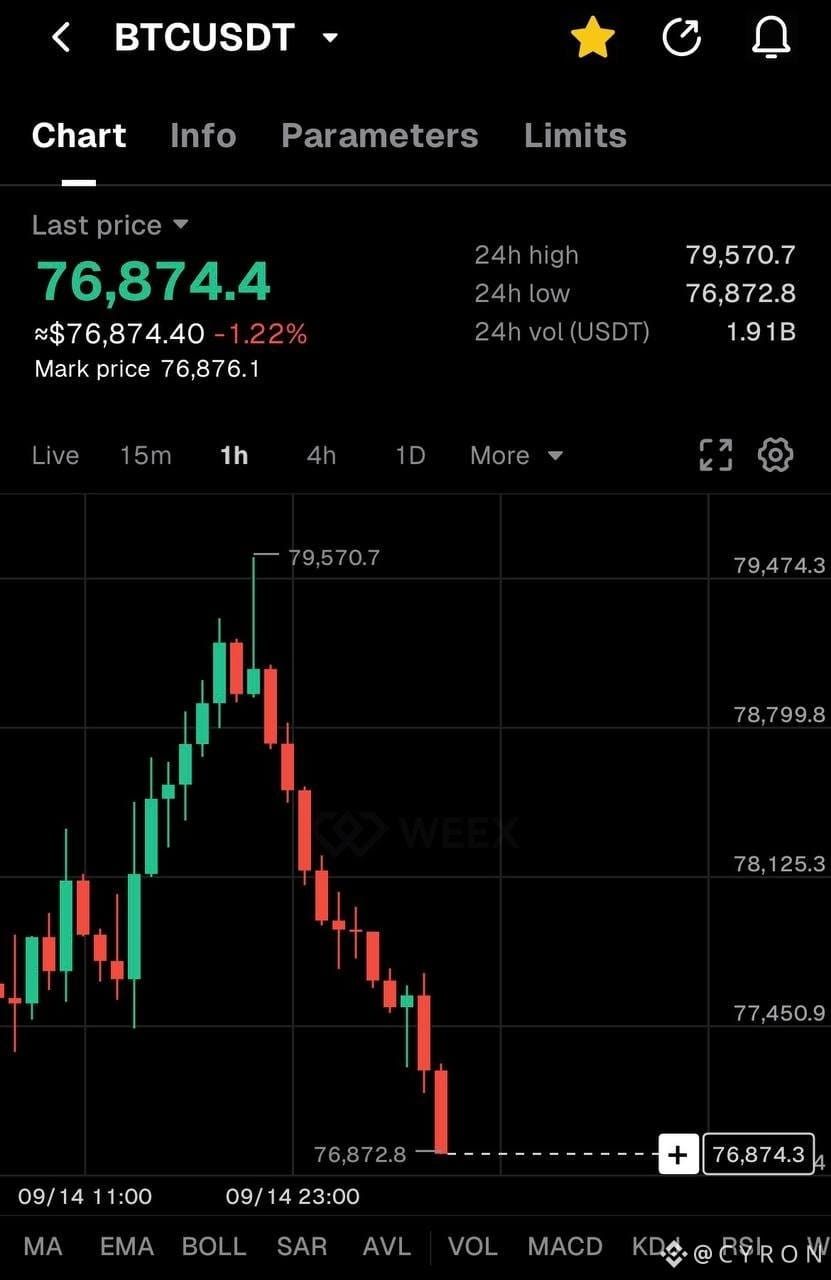
🚨 BITCOIN ACABA DE PERDER 77.000$.
La presión vendedora se está acelerando.
Ahora, 75.000$ es el nivel clave que los alcistas necesitan defender.
Si pierden 75 mil, la caída podría abrirse rápido.
Este es un nivel que estoy observando de cerca.
{spot}(BTCUSDT)
#SolanaTransactionV1GoesLiveOnMainnet
#FedHikeOddsRiseTo89%
🚨 BITCOIN ACABA DE PERDER 77.000$.
La presión vendedora se está acelerando.
Ahora, 75.000$ es el nivel clave que los alcistas necesitan defender.
Si pierden 75 mil, la caída podría abrirse rápido.
Este es un nivel que estoy observando de cerca.
#SolanaTransactionV1GoesLiveOnMainnet
#FedHikeOddsRiseTo89%
La presión vendedora se está acelerando.
Ahora, 75.000$ es el nivel clave que los alcistas necesitan defender.
Si pierden 75 mil, la caída podría abrirse rápido.
Este es un nivel que estoy observando de cerca.
#SolanaTransactionV1GoesLiveOnMainnet
#FedHikeOddsRiseTo89%
1
135
·
--
Alcista
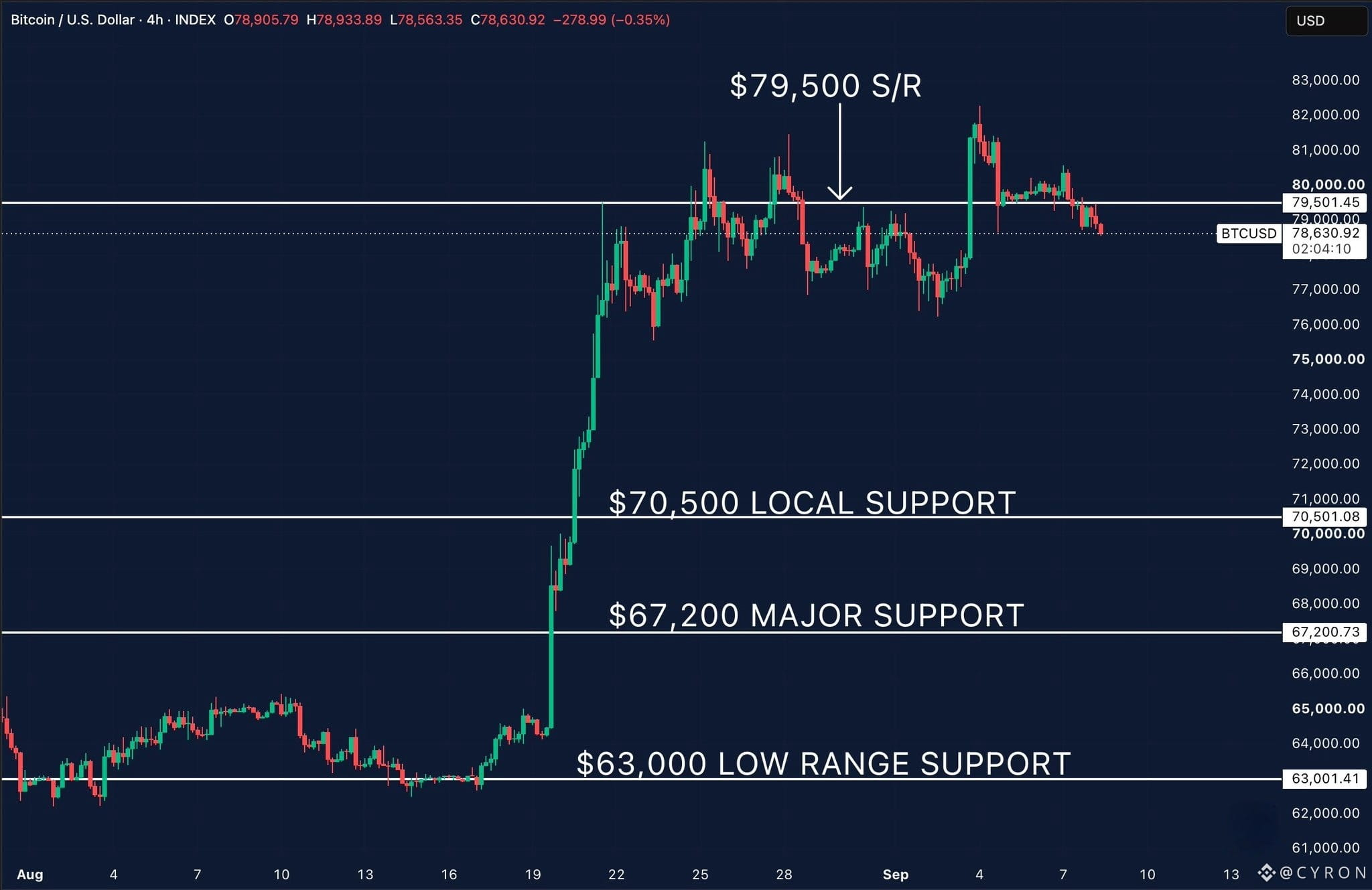
Bitcoin está en un nivel clave.
$79,500 se ha convertido de soporte en resistencia después de que $BTC no lograra mantenerse por encima.
Si recuperamos $79.5K y lo mantenemos, estaría buscando un movimiento de regreso hacia $81K+.
Si perdemos $78K, esperaría que primero se tome la liquidez que está por debajo.
Niveles simples a vigilar.
Recuperar $79.5K = alcista.
Pérdida de $78K = bajista.
Hasta entonces, estoy esperando...
{spot}(BTCUSDT)
#SaudiHaltsSouthernEnergySitesAfterAttacks
#YenBreaks155NearingYearHigh
#USIranTradeTankerStrikesEscalate
Bitcoin está en un nivel clave.
$79,500 se ha convertido de soporte en resistencia después de que $BTC no lograra mantenerse por encima.
Si recuperamos $79.5K y lo mantenemos, estaría buscando un movimiento de regreso hacia $81K+.
Si perdemos $78K, esperaría que primero se tome la liquidez que está por debajo.
Niveles simples a vigilar.
Recuperar $79.5K = alcista.
Pérdida de $78K = bajista.
Hasta entonces, estoy esperando...
#SaudiHaltsSouthernEnergySitesAfterAttacks
#YenBreaks155NearingYearHigh
#USIranTradeTankerStrikesEscalate
$79,500 se ha convertido de soporte en resistencia después de que $BTC no lograra mantenerse por encima.
Si recuperamos $79.5K y lo mantenemos, estaría buscando un movimiento de regreso hacia $81K+.
Si perdemos $78K, esperaría que primero se tome la liquidez que está por debajo.
Niveles simples a vigilar.
Recuperar $79.5K = alcista.
Pérdida de $78K = bajista.
Hasta entonces, estoy esperando...
#SaudiHaltsSouthernEnergySitesAfterAttacks
#YenBreaks155NearingYearHigh
#USIranTradeTankerStrikesEscalate
116
·
--
Alcista
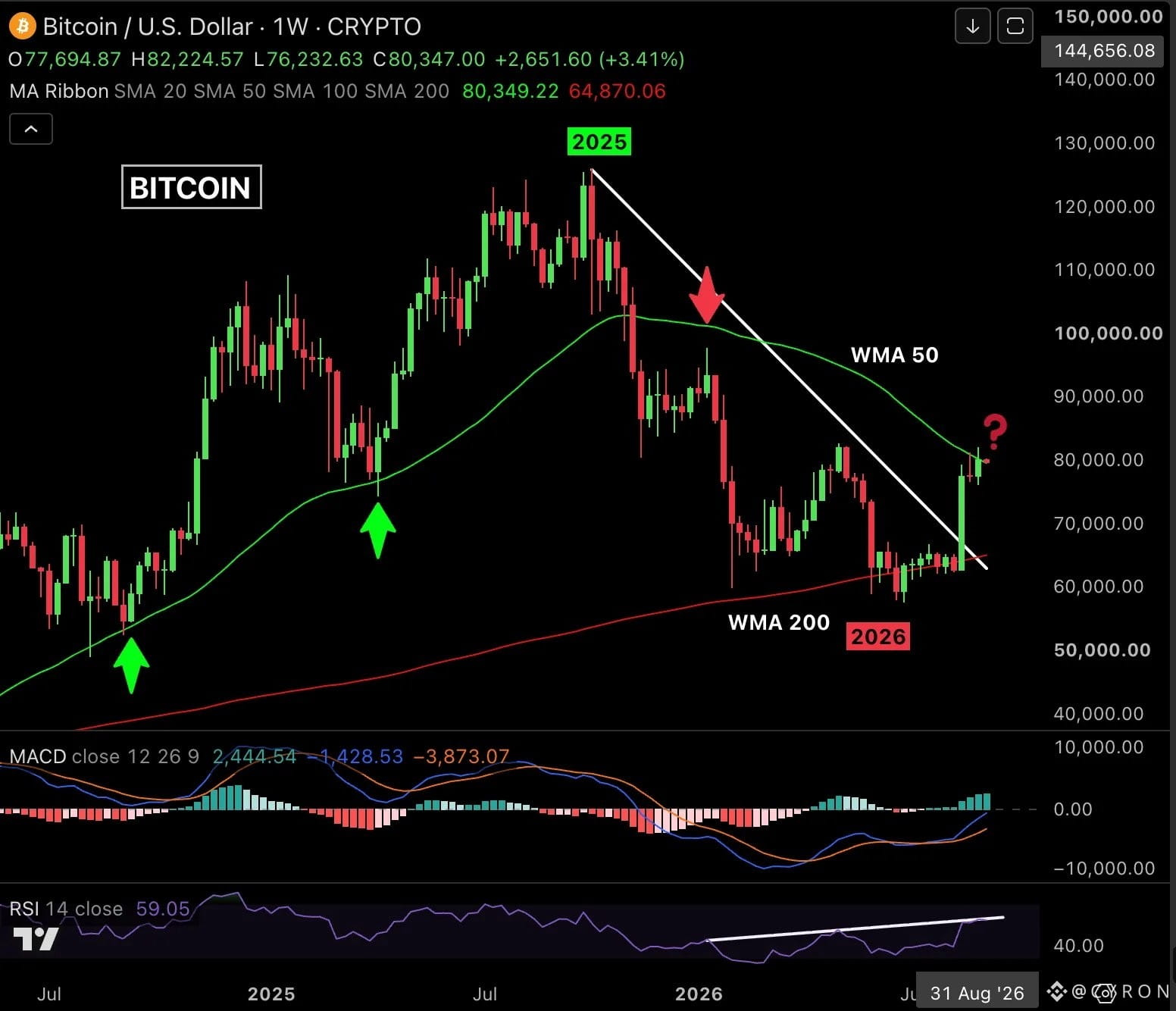
ANÁLISIS SEMANAL DE BITCOIN
Bitcoin cerró la semana justo alrededor de la Media Móvil Semanal 50 cerca de $80,349.
Esta es una prueba importante para $BTC , aún no es un rompimiento confirmado.
Esto es lo que voy a vigilar a continuación 🧵
{spot}(BTCUSDT)
#USIranTradeTankerStrikesEscalate
#IMFSaysElSalvadorBTCNoPublicFunds
#IranSaysItHit3USShips3Tankers
ANÁLISIS SEMANAL DE BITCOIN
Bitcoin cerró la semana justo alrededor de la Media Móvil Semanal 50 cerca de $80,349.
Esta es una prueba importante para $BTC , aún no es un rompimiento confirmado.
Esto es lo que voy a vigilar a continuación 🧵
#USIranTradeTankerStrikesEscalate
#IMFSaysElSalvadorBTCNoPublicFunds
#IranSaysItHit3USShips3Tankers
Bitcoin cerró la semana justo alrededor de la Media Móvil Semanal 50 cerca de $80,349.
Esta es una prueba importante para $BTC , aún no es un rompimiento confirmado.
Esto es lo que voy a vigilar a continuación 🧵
#USIranTradeTankerStrikesEscalate
#IMFSaysElSalvadorBTCNoPublicFunds
#IranSaysItHit3USShips3Tankers
214
·
--
Alcista
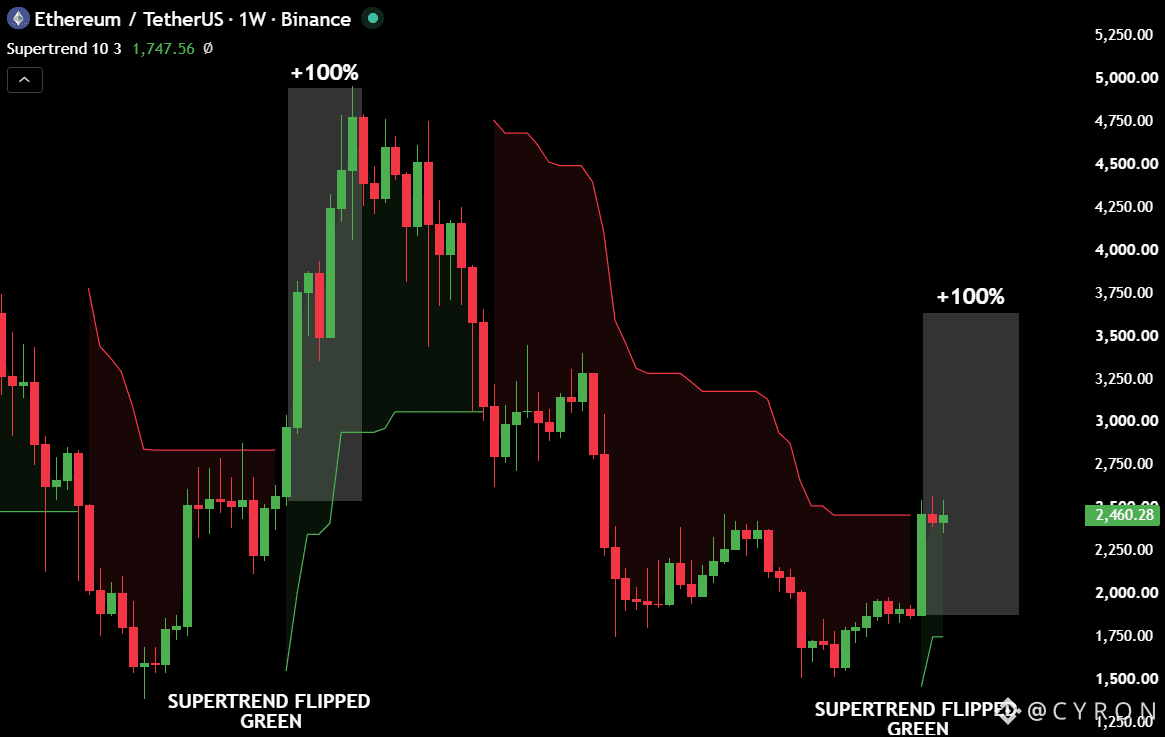
$ETH El Supertrend semanal ha cambiado a verde. 🟢
La última vez que esto ocurrió, ETH subió más de un 100% en solo 6 semanas.
Si la historia se repite, un movimiento similar podría situar a ETH alrededor de $3,600 para octubre.
Una señal no garantiza el mismo resultado.
Pero definitivamente vale la pena seguirlo de cerca. 👀
{spot}(ETHUSDT)
#ZECHitsANewAllTimeHigh
#BitcoinETFsBiggestDailyInflowSinceJanuary
#USAugustJobGrowthNearlyTriplesForecast
$ETH El Supertrend semanal ha cambiado a verde. 🟢
La última vez que esto ocurrió, ETH subió más de un 100% en solo 6 semanas.
Si la historia se repite, un movimiento similar podría situar a ETH alrededor de $3,600 para octubre.
Una señal no garantiza el mismo resultado.
Pero definitivamente vale la pena seguirlo de cerca. 👀
#ZECHitsANewAllTimeHigh
#BitcoinETFsBiggestDailyInflowSinceJanuary
#USAugustJobGrowthNearlyTriplesForecast
La última vez que esto ocurrió, ETH subió más de un 100% en solo 6 semanas.
Si la historia se repite, un movimiento similar podría situar a ETH alrededor de $3,600 para octubre.
Una señal no garantiza el mismo resultado.
Pero definitivamente vale la pena seguirlo de cerca. 👀
#ZECHitsANewAllTimeHigh
#BitcoinETFsBiggestDailyInflowSinceJanuary
#USAugustJobGrowthNearlyTriplesForecast
160
·
--
Alcista
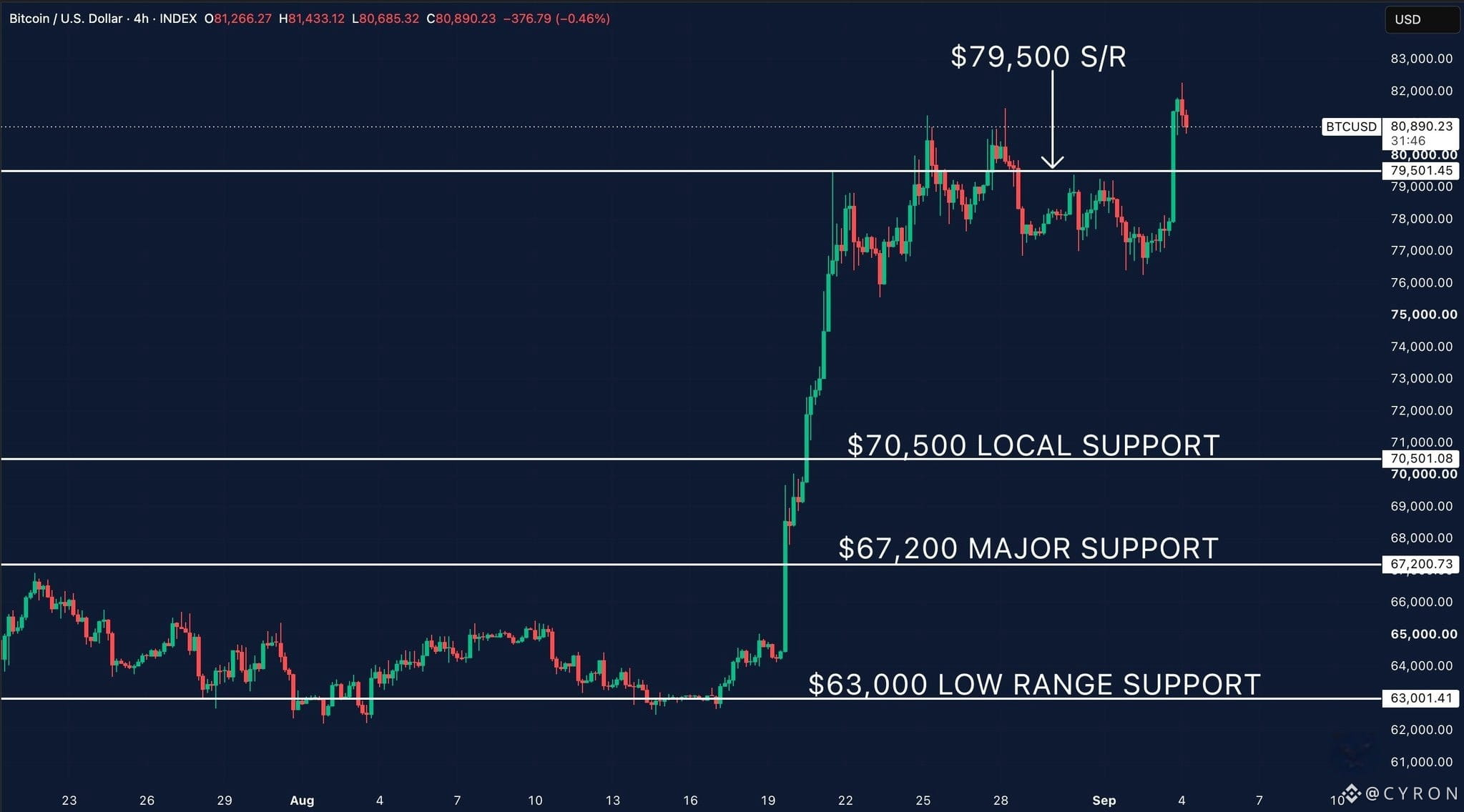
BITCOIN ACABA DE CONVERTIR $79,500 EN SOPORTE 🚨
Bitcoin rompió la resistencia de $79,500 que he estado siguiendo y se impulsó por encima de $80K.
$BTC ahora se está negociando alrededor de $80.9K después de tocar brevemente por encima de $82K.
El nivel clave ahora es simple: $79.5K.
Si Bitcoin se mantiene por encima, estoy mirando $82K a continuación.
Perder $79.5K, y esta ruptura empieza a verse mucho menos convincente.
Por ahora, la estructura ha mejorado significativamente.
{spot}(BTCUSDT)
#USWeeklyInitialJoblessClaimsRiseTo206000
#HousePressesSenateOnCLARITYAct
BITCOIN ACABA DE CONVERTIR $79,500 EN SOPORTE 🚨
Bitcoin rompió la resistencia de $79,500 que he estado siguiendo y se impulsó por encima de $80K.
$BTC ahora se está negociando alrededor de $80.9K después de tocar brevemente por encima de $82K.
El nivel clave ahora es simple: $79.5K.
Si Bitcoin se mantiene por encima, estoy mirando $82K a continuación.
Perder $79.5K, y esta ruptura empieza a verse mucho menos convincente.
Por ahora, la estructura ha mejorado significativamente.
#USWeeklyInitialJoblessClaimsRiseTo206000
#HousePressesSenateOnCLARITYAct
Bitcoin rompió la resistencia de $79,500 que he estado siguiendo y se impulsó por encima de $80K.
$BTC ahora se está negociando alrededor de $80.9K después de tocar brevemente por encima de $82K.
El nivel clave ahora es simple: $79.5K.
Si Bitcoin se mantiene por encima, estoy mirando $82K a continuación.
Perder $79.5K, y esta ruptura empieza a verse mucho menos convincente.
Por ahora, la estructura ha mejorado significativamente.
#USWeeklyInitialJoblessClaimsRiseTo206000
#HousePressesSenateOnCLARITYAct
1
1
142
·
--
Alcista
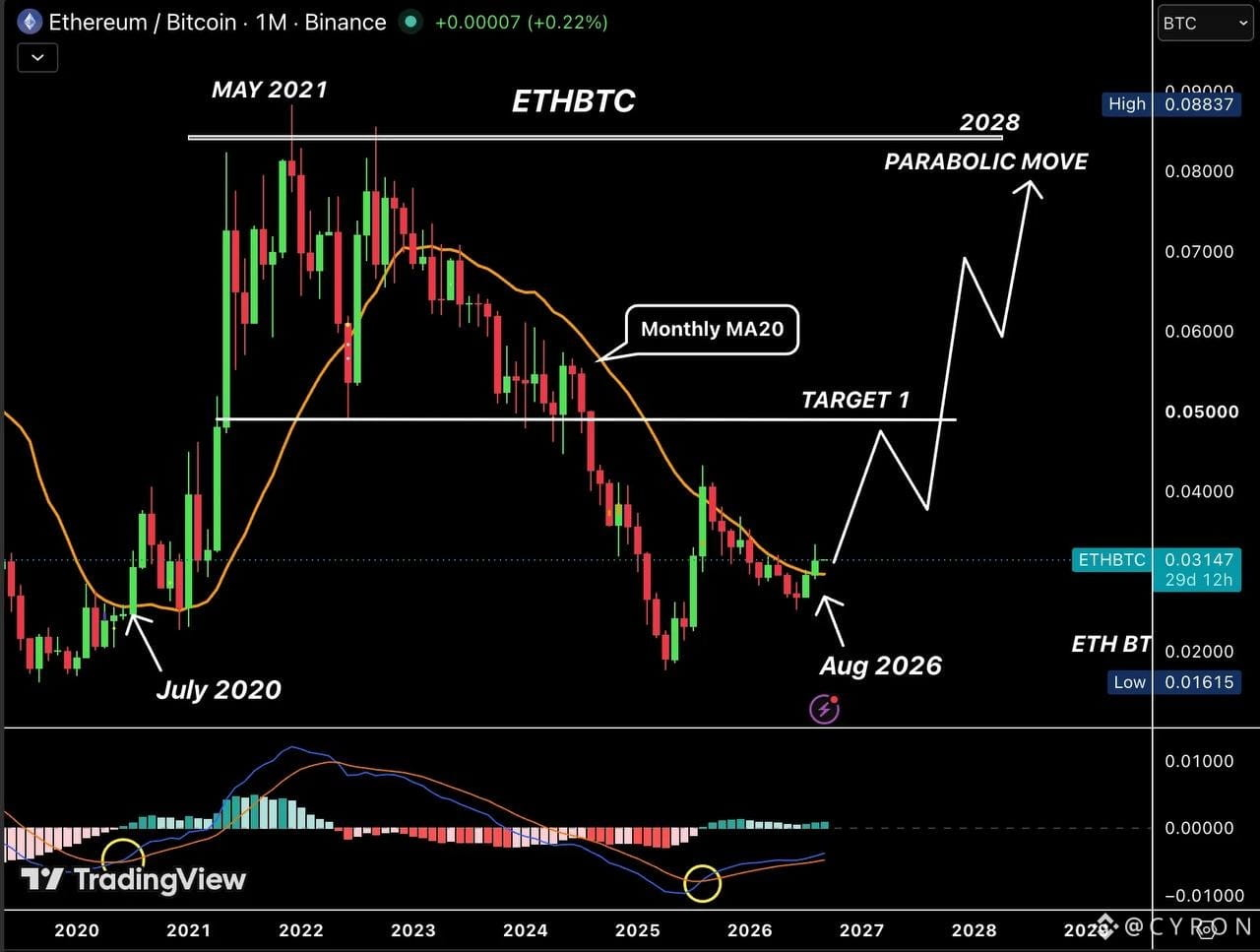
El gráfico mensual ETH/BTC está empezando a verse interesante.
El precio ha cerrado por encima de la MA 20.
El último recobro limpio de este nivel ocurrió en julio de 2020.
¿Qué siguió?
ETH/BTC: 0.0315 → 0.088
ETH: $225 → $4,372
En agosto de 2025, el precio también tocó este promedio, pero no logró mantenerlo y finalmente cayó de nuevo hacia los mínimos.
Esa es la diferencia clave ahora.
ETH/BTC necesita mantenerse por encima de la MA 20.
El MACD también está girando al alza desde una zona similar a la que precedió la ruptura de 2020.
Si el soporte funciona:
Primer objetivo → 0.050
Objetivo ampliado → 0.088
Mientras tanto, el ISM llegó a 54.6 vs. 55.2 esperado, mostrando que el crecimiento sigue aguantando, pero desacelerándose.
Si las condiciones macro continúan moviéndose hacia una política monetaria más flexible, ETH podría tener más margen para superar.
Este escenario definitivamente vale la pena vigilar. 👀
{spot}(BTCUSDT)
{spot}(ETHUSDT)
#BitcoinETFBuyersReturn
#FedHikeOddsRiseTo68%
#G20StatementCitesDigitalAssets
El gráfico mensual ETH/BTC está empezando a verse interesante.
El precio ha cerrado por encima de la MA 20.
El último recobro limpio de este nivel ocurrió en julio de 2020.
¿Qué siguió?
ETH/BTC: 0.0315 → 0.088
ETH: $225 → $4,372
En agosto de 2025, el precio también tocó este promedio, pero no logró mantenerlo y finalmente cayó de nuevo hacia los mínimos.
Esa es la diferencia clave ahora.
ETH/BTC necesita mantenerse por encima de la MA 20.
El MACD también está girando al alza desde una zona similar a la que precedió la ruptura de 2020.
Si el soporte funciona:
Primer objetivo → 0.050
Objetivo ampliado → 0.088
Mientras tanto, el ISM llegó a 54.6 vs. 55.2 esperado, mostrando que el crecimiento sigue aguantando, pero desacelerándose.
Si las condiciones macro continúan moviéndose hacia una política monetaria más flexible, ETH podría tener más margen para superar.
Este escenario definitivamente vale la pena vigilar. 👀
#BitcoinETFBuyersReturn
#FedHikeOddsRiseTo68%
#G20StatementCitesDigitalAssets
El precio ha cerrado por encima de la MA 20.
El último recobro limpio de este nivel ocurrió en julio de 2020.
¿Qué siguió?
ETH/BTC: 0.0315 → 0.088
ETH: $225 → $4,372
En agosto de 2025, el precio también tocó este promedio, pero no logró mantenerlo y finalmente cayó de nuevo hacia los mínimos.
Esa es la diferencia clave ahora.
ETH/BTC necesita mantenerse por encima de la MA 20.
El MACD también está girando al alza desde una zona similar a la que precedió la ruptura de 2020.
Si el soporte funciona:
Primer objetivo → 0.050
Objetivo ampliado → 0.088
Mientras tanto, el ISM llegó a 54.6 vs. 55.2 esperado, mostrando que el crecimiento sigue aguantando, pero desacelerándose.
Si las condiciones macro continúan moviéndose hacia una política monetaria más flexible, ETH podría tener más margen para superar.
Este escenario definitivamente vale la pena vigilar. 👀
#BitcoinETFBuyersReturn
#FedHikeOddsRiseTo68%
#G20StatementCitesDigitalAssets
1
110
·
--
Alcista
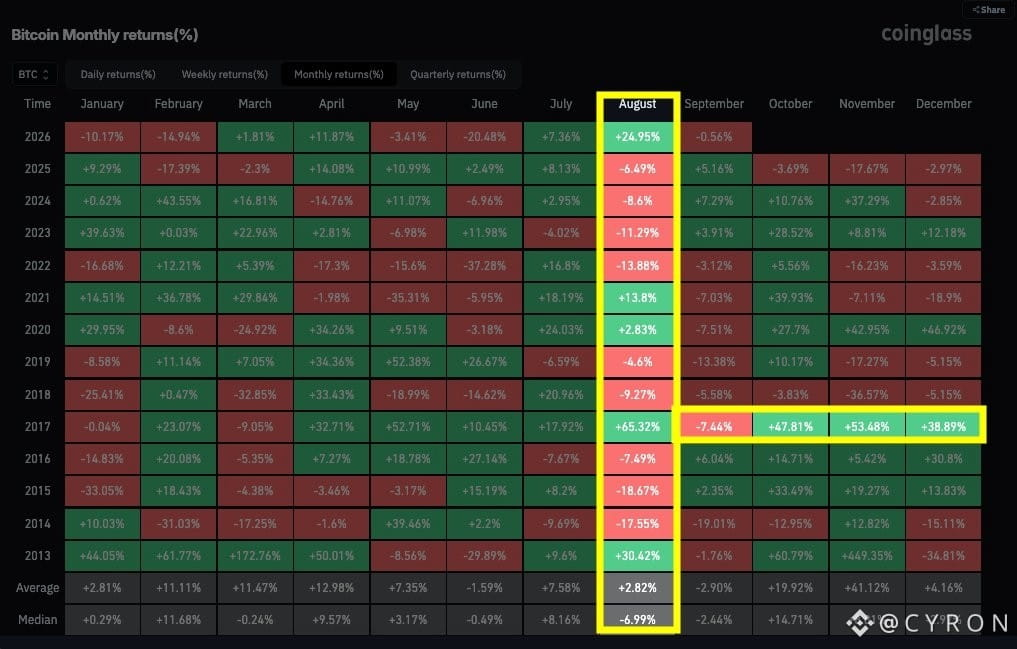
Bitcoin acaba de tener su MEJOR agosto desde 2017.
Agosto 2026: +24.95%
Agosto 2017: +65.32%
Pero esto es lo que pasó después de agosto de 2017:
Octubre: +47.81%
Noviembre: +53.48%
Diciembre: +38.89%
La historia no tiene por qué repetirse.
Pero cuando ves un escenario como este, es difícil no prestar atención. 👀
{spot}(BTCUSDT)
#ARBRises30%OnRobinhoodChainRevenue
#Japan10YYieldHits3%FirstSince1996
#WTIOilRisesAsOpenInterestShrinks
Bitcoin acaba de tener su MEJOR agosto desde 2017.
Agosto 2026: +24.95%
Agosto 2017: +65.32%
Pero esto es lo que pasó después de agosto de 2017:
Octubre: +47.81%
Noviembre: +53.48%
Diciembre: +38.89%
La historia no tiene por qué repetirse.
Pero cuando ves un escenario como este, es difícil no prestar atención. 👀
#ARBRises30%OnRobinhoodChainRevenue
#Japan10YYieldHits3%FirstSince1996
#WTIOilRisesAsOpenInterestShrinks
Agosto 2026: +24.95%
Agosto 2017: +65.32%
Pero esto es lo que pasó después de agosto de 2017:
Octubre: +47.81%
Noviembre: +53.48%
Diciembre: +38.89%
La historia no tiene por qué repetirse.
Pero cuando ves un escenario como este, es difícil no prestar atención. 👀
#ARBRises30%OnRobinhoodChainRevenue
#Japan10YYieldHits3%FirstSince1996
#WTIOilRisesAsOpenInterestShrinks
183
·
--
Bajista
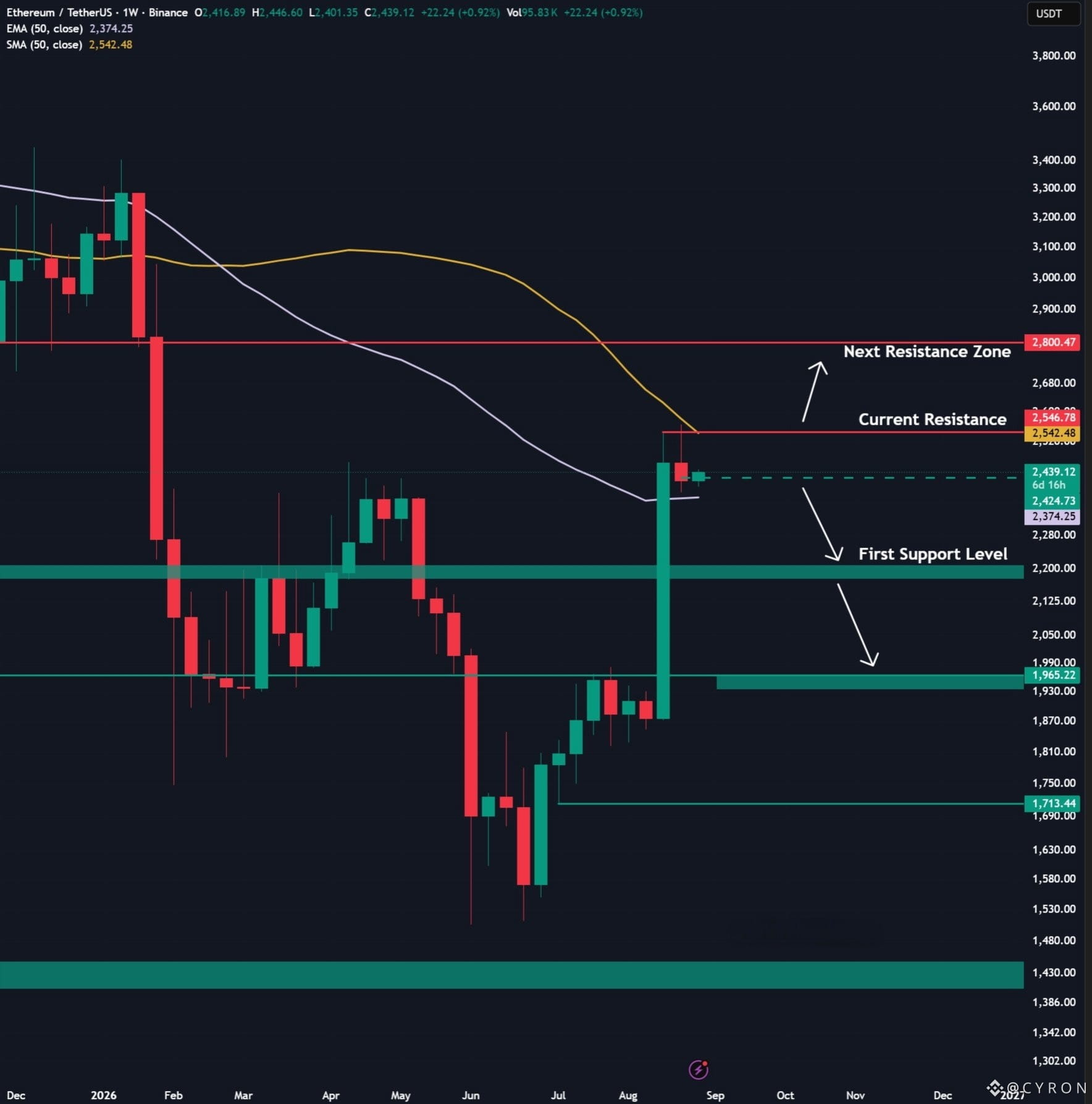
$ETH intentó romper por encima del nivel de $2,550 pero volvió a fracasar.
Por ahora, creo que la mayor parte del potencial alcista a corto plazo de Ethereum ya puede estar descontado.
Es de esperar más movimientos laterales alrededor de estos niveles, con la posibilidad de una pequeña capitulación más antes de una reversión real.
Paciencia aquí.
{spot}(ETHUSDT)
#SKHynixStudiesJapanMemoryChipVenture
#KospiDrops3.6%AsSamsungSKHynixWeaken
#UKReleasesFirstCryptoGainsTaxStats
$ETH intentó romper por encima del nivel de $2,550 pero volvió a fracasar.
Por ahora, creo que la mayor parte del potencial alcista a corto plazo de Ethereum ya puede estar descontado.
Es de esperar más movimientos laterales alrededor de estos niveles, con la posibilidad de una pequeña capitulación más antes de una reversión real.
Paciencia aquí.
#SKHynixStudiesJapanMemoryChipVenture
#KospiDrops3.6%AsSamsungSKHynixWeaken
#UKReleasesFirstCryptoGainsTaxStats
Por ahora, creo que la mayor parte del potencial alcista a corto plazo de Ethereum ya puede estar descontado.
Es de esperar más movimientos laterales alrededor de estos niveles, con la posibilidad de una pequeña capitulación más antes de una reversión real.
Paciencia aquí.
#SKHynixStudiesJapanMemoryChipVenture
#KospiDrops3.6%AsSamsungSKHynixWeaken
#UKReleasesFirstCryptoGainsTaxStats
143
·
--
Alcista
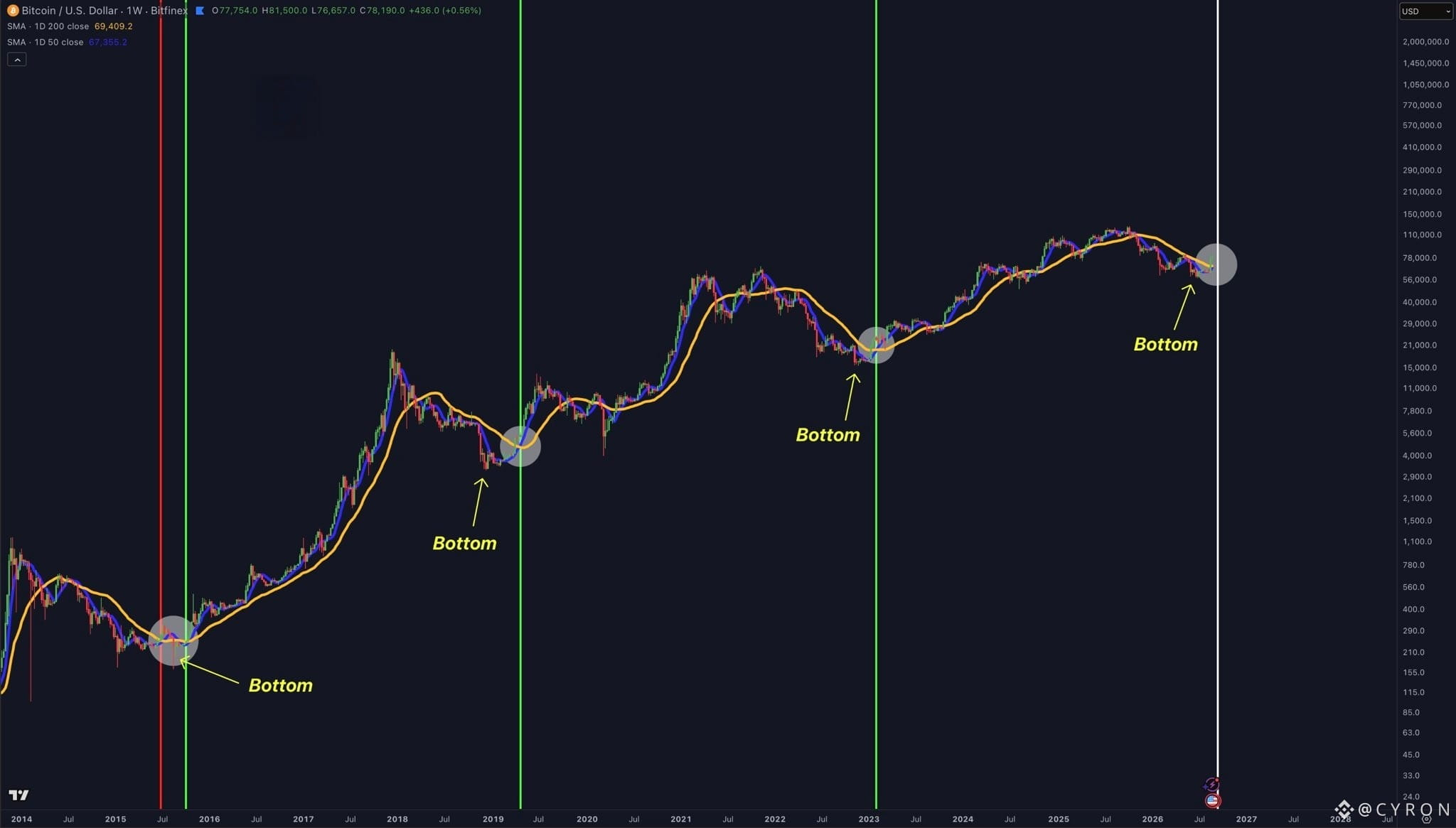
CRUCE DORADO DE BITCOIN EN CAMINO.
Si $BTC puede mantenerse aquí o continuar más arriba hacia septiembre, la Golden Cross diaria confirmará oficialmente.
Ha aparecido 4 veces cerca del final de los mercados bajistas.
3 veces, acertó la dirección.
¿Podría Bitcoin estar preparándose para otra gran reversión de tendencia? 🚀
{spot}(BTCUSDT)
#KoreaSingleStockLeveragedETFTradingFalls
#VietnamPilotsCryptoAssetMarket
#GoldFalls3.24%ThisWeek
CRUCE DORADO DE BITCOIN EN CAMINO.
Si $BTC puede mantenerse aquí o continuar más arriba hacia septiembre, la Golden Cross diaria confirmará oficialmente.
Ha aparecido 4 veces cerca del final de los mercados bajistas.
3 veces, acertó la dirección.
¿Podría Bitcoin estar preparándose para otra gran reversión de tendencia? 🚀
#KoreaSingleStockLeveragedETFTradingFalls
#VietnamPilotsCryptoAssetMarket
#GoldFalls3.24%ThisWeek
Si $BTC puede mantenerse aquí o continuar más arriba hacia septiembre, la Golden Cross diaria confirmará oficialmente.
Ha aparecido 4 veces cerca del final de los mercados bajistas.
3 veces, acertó la dirección.
¿Podría Bitcoin estar preparándose para otra gran reversión de tendencia? 🚀
#KoreaSingleStockLeveragedETFTradingFalls
#VietnamPilotsCryptoAssetMarket
#GoldFalls3.24%ThisWeek
116
·
--
Alcista
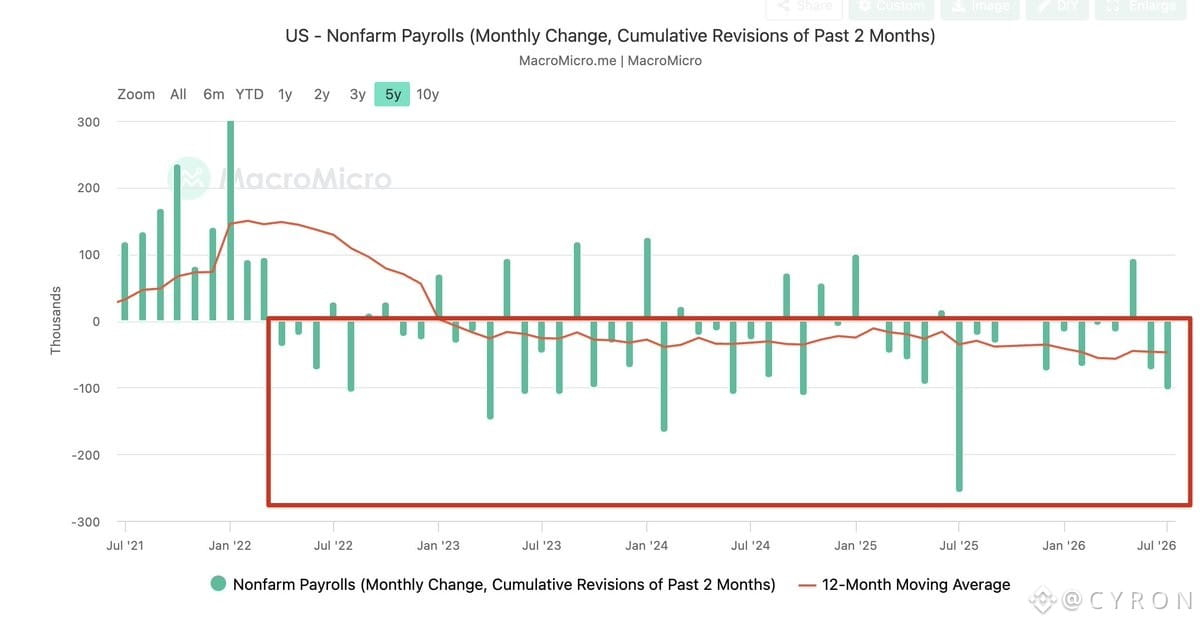
Aquí está la tendencia de los últimos años.
Los datos de nóminas no agrícolas (NFP) siempre están sujetos a revisiones porque la cifra inicial es solo una estimación temprana.
Las cifras revisadas pueden mostrar un panorama muy diferente.
Desde 2022, hemos visto un patrón claro de revisiones mayoritariamente a la baja.
Por ejemplo, un informe que muestre +50K empleos podría luego revisarse a la baja hasta +25K.
Eso significaría que el mercado laboral estaba más débil de lo que se informó inicialmente.
Ahora, la revisión anual de NFP para 2025 se sitúa en -911K empleos, lo que pone de relieve lo grandes que pueden ser estos ajustes.
Así que, si los datos de NFP de hoy se publican con fuerza, el mercado puede ver menos motivos para que la Fed recorte las tasas.
Eso podría presionar a los activos de riesgo como $BTC
{spot}(BTCUSDT)
#SOLJumps20%OnTheWeek
#CaliforniaBillWouldBarOfficialMemeCoins
#TRONMainnetActivatesTVMPragueOsaka
Aquí está la tendencia de los últimos años.
Los datos de nóminas no agrícolas (NFP) siempre están sujetos a revisiones porque la cifra inicial es solo una estimación temprana.
Las cifras revisadas pueden mostrar un panorama muy diferente.
Desde 2022, hemos visto un patrón claro de revisiones mayoritariamente a la baja.
Por ejemplo, un informe que muestre +50K empleos podría luego revisarse a la baja hasta +25K.
Eso significaría que el mercado laboral estaba más débil de lo que se informó inicialmente.
Ahora, la revisión anual de NFP para 2025 se sitúa en -911K empleos, lo que pone de relieve lo grandes que pueden ser estos ajustes.
Así que, si los datos de NFP de hoy se publican con fuerza, el mercado puede ver menos motivos para que la Fed recorte las tasas.
Eso podría presionar a los activos de riesgo como $BTC
#SOLJumps20%OnTheWeek
#CaliforniaBillWouldBarOfficialMemeCoins
#TRONMainnetActivatesTVMPragueOsaka
Los datos de nóminas no agrícolas (NFP) siempre están sujetos a revisiones porque la cifra inicial es solo una estimación temprana.
Las cifras revisadas pueden mostrar un panorama muy diferente.
Desde 2022, hemos visto un patrón claro de revisiones mayoritariamente a la baja.
Por ejemplo, un informe que muestre +50K empleos podría luego revisarse a la baja hasta +25K.
Eso significaría que el mercado laboral estaba más débil de lo que se informó inicialmente.
Ahora, la revisión anual de NFP para 2025 se sitúa en -911K empleos, lo que pone de relieve lo grandes que pueden ser estos ajustes.
Así que, si los datos de NFP de hoy se publican con fuerza, el mercado puede ver menos motivos para que la Fed recorte las tasas.
Eso podría presionar a los activos de riesgo como $BTC
#SOLJumps20%OnTheWeek
#CaliforniaBillWouldBarOfficialMemeCoins
#TRONMainnetActivatesTVMPragueOsaka
114
·
--
Alcista
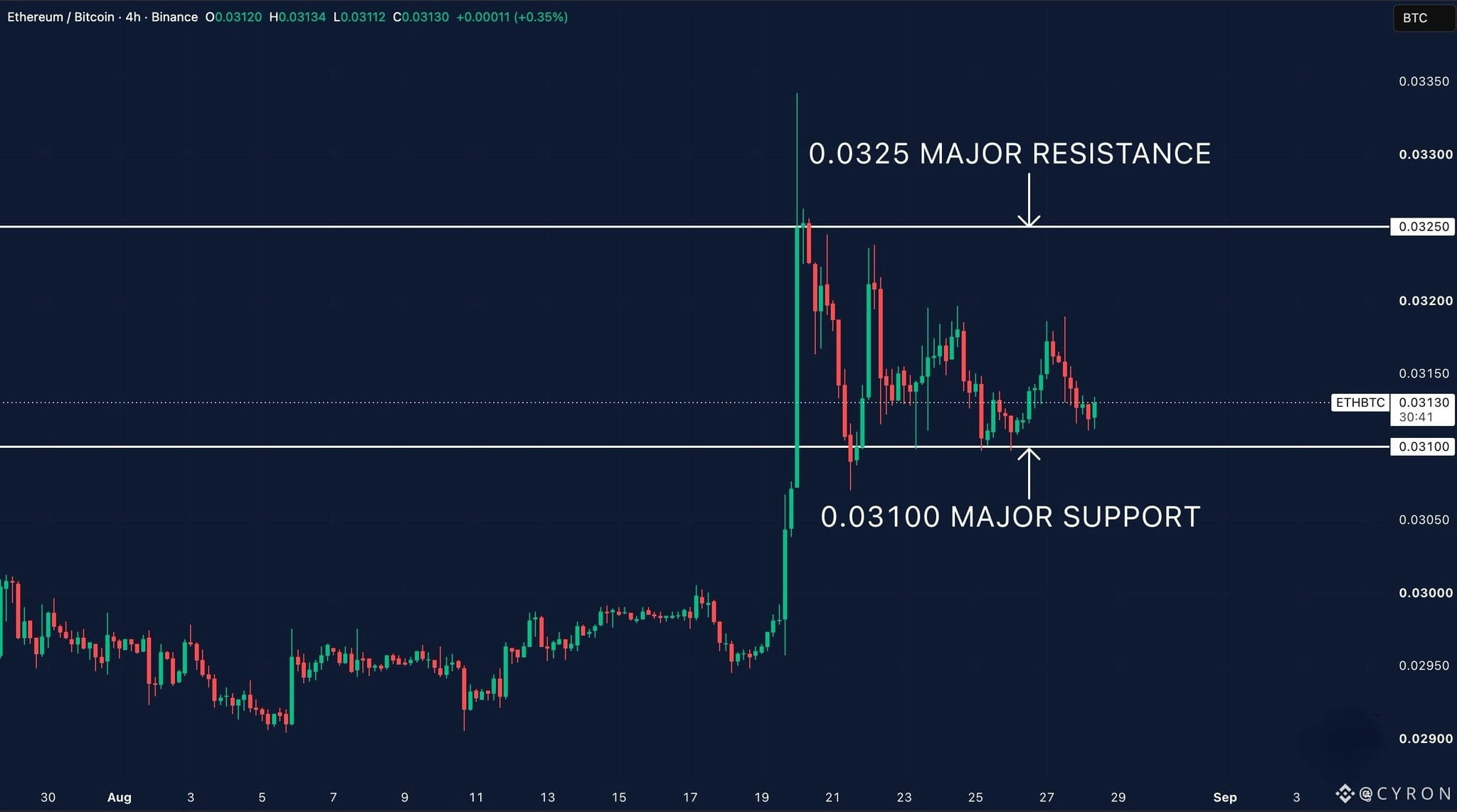
ETH/BTC está manteniendo un nivel que podría ser importante para el próximo movimiento.
El soporte de 0.03100 se ha probado varias veces y, hasta ahora, los compradores lo están defendiendo.
Mantén por encima de aquí → 0.03250 es el siguiente.
Romper 0.03250 de forma limpia → ETH podría empezar a mostrar un rendimiento relativo más fuerte frente a BTC.
Perder 0.03100 → el escenario cambia.
Por ahora, ETH/BTC todavía está sosteniendo su ruptura.
Paciencia antes de perseguir.
{spot}(ETHUSDT)
{spot}(BTCUSDT)
#GoldRisesAbout14%InAugust
#KospiFallsAsAITradingEuphoriaCools
#TaiwanTAIEXRetakes46500OnChipRally
ETH/BTC está manteniendo un nivel que podría ser importante para el próximo movimiento.
El soporte de 0.03100 se ha probado varias veces y, hasta ahora, los compradores lo están defendiendo.
Mantén por encima de aquí → 0.03250 es el siguiente.
Romper 0.03250 de forma limpia → ETH podría empezar a mostrar un rendimiento relativo más fuerte frente a BTC.
Perder 0.03100 → el escenario cambia.
Por ahora, ETH/BTC todavía está sosteniendo su ruptura.
Paciencia antes de perseguir.
#GoldRisesAbout14%InAugust
#KospiFallsAsAITradingEuphoriaCools
#TaiwanTAIEXRetakes46500OnChipRally
El soporte de 0.03100 se ha probado varias veces y, hasta ahora, los compradores lo están defendiendo.
Mantén por encima de aquí → 0.03250 es el siguiente.
Romper 0.03250 de forma limpia → ETH podría empezar a mostrar un rendimiento relativo más fuerte frente a BTC.
Perder 0.03100 → el escenario cambia.
Por ahora, ETH/BTC todavía está sosteniendo su ruptura.
Paciencia antes de perseguir.
#GoldRisesAbout14%InAugust
#KospiFallsAsAITradingEuphoriaCools
#TaiwanTAIEXRetakes46500OnChipRally
120
·
--
Bajista
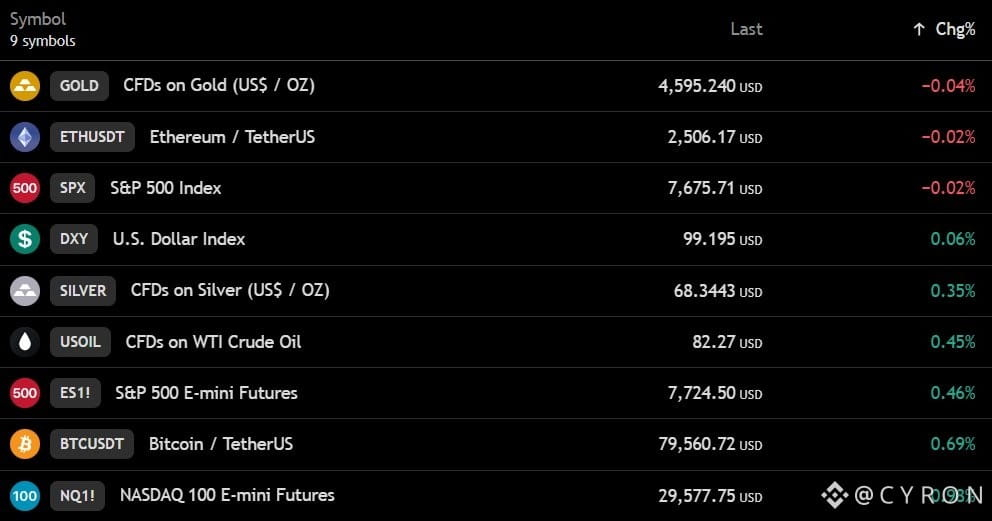
$BTC ha caído por debajo de $80.000.
Mientras tanto, los futuros de acciones de EE. UU. cotizan al alza, con el petróleo y el DXY también subiendo.
Actualización antes de la apertura:
▫️ Futuros del Nasdaq: +0,98% 🟠
▫️ Futuros del S&P 500: +0,46% 🟠
Bitcoin muestra cierta debilidad a pesar de un inicio positivo para los mercados en general.
{spot}(BTCUSDT)
#KospiClosesAtRecordHigh
#ChinaOpposesUSProposed7.5%Tariff
#BankOfKoreaHikesRatesTo3%
$BTC ha caído por debajo de $80.000.
Mientras tanto, los futuros de acciones de EE. UU. cotizan al alza, con el petróleo y el DXY también subiendo.
Actualización antes de la apertura:
▫️ Futuros del Nasdaq: +0,98% 🟠
▫️ Futuros del S&P 500: +0,46% 🟠
Bitcoin muestra cierta debilidad a pesar de un inicio positivo para los mercados en general.
#KospiClosesAtRecordHigh
#ChinaOpposesUSProposed7.5%Tariff
#BankOfKoreaHikesRatesTo3%
Mientras tanto, los futuros de acciones de EE. UU. cotizan al alza, con el petróleo y el DXY también subiendo.
Actualización antes de la apertura:
▫️ Futuros del Nasdaq: +0,98% 🟠
▫️ Futuros del S&P 500: +0,46% 🟠
Bitcoin muestra cierta debilidad a pesar de un inicio positivo para los mercados en general.
#KospiClosesAtRecordHigh
#ChinaOpposesUSProposed7.5%Tariff
#BankOfKoreaHikesRatesTo3%
2
323
·
--
Alcista
Pasé por la tarea de CreatorPad en @Dusk_Foundation esta semana y lo que más se me quedó no estaba en absoluto en el resumen de la tarea: que el puente $DUSK ya lleva más de diez días pausado y nadie en Dusk parece tener prisa por reabrirlo. #dusk
Un contexto rápido para quien se lo haya perdido: el 16 de agosto el equipo detectó actividad inusual en una billetera usada para operaciones de puente, recicló las direcciones afectadas y envió una lista de bloqueos de destinatarios a través de Web Wallet después de que parte del flujo tocara Binance. La mainnet de DuskDS en sí nunca dejó de producir bloques. Esa es la parte a la que seguí volviendo.
Había supuesto que un L1 centrado en la privacidad concentraba su riesgo en un solo lugar: la capa base. Ver la cadena funcionando limpia mientras el puente permanecía congelado dejó claro que así no se dividen realmente los límites de confianza aquí. El puente es su propia responsabilidad: se rige por su propio calendario, independiente de la salud del consenso.
Los usuarios de Binance, arguablemente, estaban protegidos primero, solo por el hecho de que la lista de bloqueos existía antes de que los retiros pudieran enrutarse. El resto sigue esperando "temporalmente".
No estoy seguro de cuál es el umbral real antes de que "temporalmente" empiece a significar otra cosa.
{spot}(DUSKUSDT)
{spot}(BMTUSDT)
{spot}(EDENUSDT)
¿Qué importa más aquí?
Pasé por la tarea de CreatorPad en @Dusk esta semana y lo que más se me quedó no estaba en absoluto en el resumen de la tarea: que el puente $DUSK ya lleva más de diez días pausado y nadie en Dusk parece tener prisa por reabrirlo. #dusk
Un contexto rápido para quien se lo haya perdido: el 16 de agosto el equipo detectó actividad inusual en una billetera usada para operaciones de puente, recicló las direcciones afectadas y envió una lista de bloqueos de destinatarios a través de Web Wallet después de que parte del flujo tocara Binance. La mainnet de DuskDS en sí nunca dejó de producir bloques. Esa es la parte a la que seguí volviendo.
Había supuesto que un L1 centrado en la privacidad concentraba su riesgo en un solo lugar: la capa base. Ver la cadena funcionando limpia mientras el puente permanecía congelado dejó claro que así no se dividen realmente los límites de confianza aquí. El puente es su propia responsabilidad: se rige por su propio calendario, independiente de la salud del consenso.
Los usuarios de Binance, arguablemente, estaban protegidos primero, solo por el hecho de que la lista de bloqueos existía antes de que los retiros pudieran enrutarse. El resto sigue esperando "temporalmente".
No estoy seguro de cuál es el umbral real antes de que "temporalmente" empiece a significar otra cosa.
¿Qué importa más aquí?
Un contexto rápido para quien se lo haya perdido: el 16 de agosto el equipo detectó actividad inusual en una billetera usada para operaciones de puente, recicló las direcciones afectadas y envió una lista de bloqueos de destinatarios a través de Web Wallet después de que parte del flujo tocara Binance. La mainnet de DuskDS en sí nunca dejó de producir bloques. Esa es la parte a la que seguí volviendo.
Había supuesto que un L1 centrado en la privacidad concentraba su riesgo en un solo lugar: la capa base. Ver la cadena funcionando limpia mientras el puente permanecía congelado dejó claro que así no se dividen realmente los límites de confianza aquí. El puente es su propia responsabilidad: se rige por su propio calendario, independiente de la salud del consenso.
Los usuarios de Binance, arguablemente, estaban protegidos primero, solo por el hecho de que la lista de bloqueos existía antes de que los retiros pudieran enrutarse. El resto sigue esperando "temporalmente".
No estoy seguro de cuál es el umbral real antes de que "temporalmente" empiece a significar otra cosa.
¿Qué importa más aquí?
🟢 Mainnet's clean uptime
100%
🔴 Bridge still closed
0%
⚖️ Both equally
0%
🤷 Too early to say
0%
1 Voto(s) • Votación cerrada
1
1
186
·
--
Alcista
A principios de esta semana realicé una transferencia pequeña a través del Web Wallet de Dusk mientras terminaba una tarea de CreatorPad, y me detuvo a mitad de proceso una advertencia de blocklist que no esperaba. Nada dramático, solo una bandera roja antes de que la transacción pudiera enviarse. Para una cadena construida en torno al modelo de privacidad de divulgación selectiva de $DUSK , me resultó algo extraño encontrármelo con #dusk , @Dusk_Foundation .
Resulta que la advertencia se remonta a la blocklist de destinatarios que el equipo envió al Web Wallet después del incidente de mediados de agosto con una wallet de operaciones de bridge comprometida. Filtra las transferencias salientes contra direcciones marcadas antes de que puedas enviarlas.
Asumí que dar prioridad a la privacidad significaba menos puntos de control, no más. Ver que se activó en un intento real lo cambió un poco. El mecanismo solo funciona si alguien está manteniendo y actualizando esa lista en tiempo casi real, lo que significa que hay una capa curatorial sentada en silencio debajo del planteamiento de “confidencial por defecto”.
No digo que esté mal, solo lo estoy notando. La divulgación selectiva y el filtrado de direcciones no son lo mismo, pero ahora viven en la misma wallet. Aún estoy averiguando qué tan cómodo me siento con eso, y quién decide exactamente qué se agrega a la lista a partir de ahora.
{spot}(DUSKUSDT)
{spot}(ONGUSDT)
{spot}(JASMYUSDT)
¿Qué parte de esto te llamó más la atención? 👀
A principios de esta semana realicé una transferencia pequeña a través del Web Wallet de Dusk mientras terminaba una tarea de CreatorPad, y me detuvo a mitad de proceso una advertencia de blocklist que no esperaba. Nada dramático, solo una bandera roja antes de que la transacción pudiera enviarse. Para una cadena construida en torno al modelo de privacidad de divulgación selectiva de $DUSK , me resultó algo extraño encontrármelo con #dusk , @Dusk .
Resulta que la advertencia se remonta a la blocklist de destinatarios que el equipo envió al Web Wallet después del incidente de mediados de agosto con una wallet de operaciones de bridge comprometida. Filtra las transferencias salientes contra direcciones marcadas antes de que puedas enviarlas.
Asumí que dar prioridad a la privacidad significaba menos puntos de control, no más. Ver que se activó en un intento real lo cambió un poco. El mecanismo solo funciona si alguien está manteniendo y actualizando esa lista en tiempo casi real, lo que significa que hay una capa curatorial sentada en silencio debajo del planteamiento de “confidencial por defecto”.
No digo que esté mal, solo lo estoy notando. La divulgación selectiva y el filtrado de direcciones no son lo mismo, pero ahora viven en la misma wallet. Aún estoy averiguando qué tan cómodo me siento con eso, y quién decide exactamente qué se agrega a la lista a partir de ahora.
¿Qué parte de esto te llamó más la atención? 👀
Resulta que la advertencia se remonta a la blocklist de destinatarios que el equipo envió al Web Wallet después del incidente de mediados de agosto con una wallet de operaciones de bridge comprometida. Filtra las transferencias salientes contra direcciones marcadas antes de que puedas enviarlas.
Asumí que dar prioridad a la privacidad significaba menos puntos de control, no más. Ver que se activó en un intento real lo cambió un poco. El mecanismo solo funciona si alguien está manteniendo y actualizando esa lista en tiempo casi real, lo que significa que hay una capa curatorial sentada en silencio debajo del planteamiento de “confidencial por defecto”.
No digo que esté mal, solo lo estoy notando. La divulgación selectiva y el filtrado de direcciones no son lo mismo, pero ahora viven en la misma wallet. Aún estoy averiguando qué tan cómodo me siento con eso, y quién decide exactamente qué se agrega a la lista a partir de ahora.
¿Qué parte de esto te llamó más la atención? 👀
🚫 The blocklist itself
50%
🔑 Who maintains the list
50%
⚖️ Privacy vs. gatekeeping
0%
💭 Something else
0%
2 Voto(s) • Votación cerrada
1
1
193
·
--
Alcista
Volví a revisar esta semana la página de estado del puente Dusk y sigue apareciendo como pausado, igual que desde el incidente del 16 de agosto en el que el equipo señaló actividad sospechosa en una billetera usada para las operaciones del puente. Ese es el detalle que se me quedó mientras cerraba esta tarea de CreatorPad en @Dusk_Foundation , $DUSK , #dusk : más de nueve días después, las direcciones se reciclan, la lista de bloqueo está activa, pero el propio puente aún no vuelve a estar en línea.
La versión oficial fue clara: no era un problema a nivel de protocolo, DuskDS siguió produciendo bloques con normalidad y no se vieron afectados los fondos de los usuarios. Y técnicamente es verdad. Pero entré asumiendo que "no es un bug de protocolo" significaba "arreglo rápido". No fue así. La infraestructura operativa, gestionada por un equipo, incluso en una cadena creada para el asentamiento determinista y la privacidad de nivel de auditoría, sigue un calendario humano cuando algo toca un flujo centralizado.
Lo que más me llamó la atención, más que el incidente en sí, fue la brecha entre la confianza con la que tranquiliza el mensaje y el tiempo que realmente está tardando la remediación. Esas dos cosas no necesariamente están en tensión, pero se leen distinto una al lado de la otra.
Todavía no sé si esto es solo un proceso cuidadoso o algo más estructural sobre cómo se tratan los puentes después de un incidente. Habrá que ver cuándo se reabre de verdad.
{spot}(DUSKUSDT)
{spot}(ZROUSDT)
{spot}(ENAUSDT)
¿Qué parte te llama más la atención? 🤔
Volví a revisar esta semana la página de estado del puente Dusk y sigue apareciendo como pausado, igual que desde el incidente del 16 de agosto en el que el equipo señaló actividad sospechosa en una billetera usada para las operaciones del puente. Ese es el detalle que se me quedó mientras cerraba esta tarea de CreatorPad en @Dusk , $DUSK , #dusk : más de nueve días después, las direcciones se reciclan, la lista de bloqueo está activa, pero el propio puente aún no vuelve a estar en línea.
La versión oficial fue clara: no era un problema a nivel de protocolo, DuskDS siguió produciendo bloques con normalidad y no se vieron afectados los fondos de los usuarios. Y técnicamente es verdad. Pero entré asumiendo que "no es un bug de protocolo" significaba "arreglo rápido". No fue así. La infraestructura operativa, gestionada por un equipo, incluso en una cadena creada para el asentamiento determinista y la privacidad de nivel de auditoría, sigue un calendario humano cuando algo toca un flujo centralizado.
Lo que más me llamó la atención, más que el incidente en sí, fue la brecha entre la confianza con la que tranquiliza el mensaje y el tiempo que realmente está tardando la remediación. Esas dos cosas no necesariamente están en tensión, pero se leen distinto una al lado de la otra.
Todavía no sé si esto es solo un proceso cuidadoso o algo más estructural sobre cómo se tratan los puentes después de un incidente. Habrá que ver cuándo se reabre de verdad.
¿Qué parte te llama más la atención? 🤔
La versión oficial fue clara: no era un problema a nivel de protocolo, DuskDS siguió produciendo bloques con normalidad y no se vieron afectados los fondos de los usuarios. Y técnicamente es verdad. Pero entré asumiendo que "no es un bug de protocolo" significaba "arreglo rápido". No fue así. La infraestructura operativa, gestionada por un equipo, incluso en una cadena creada para el asentamiento determinista y la privacidad de nivel de auditoría, sigue un calendario humano cuando algo toca un flujo centralizado.
Lo que más me llamó la atención, más que el incidente en sí, fue la brecha entre la confianza con la que tranquiliza el mensaje y el tiempo que realmente está tardando la remediación. Esas dos cosas no necesariamente están en tensión, pero se leen distinto una al lado de la otra.
Todavía no sé si esto es solo un proceso cuidadoso o algo más estructural sobre cómo se tratan los puentes después de un incidente. Habrá que ver cuándo se reabre de verdad.
¿Qué parte te llama más la atención? 🤔
🛠️ The framing
50%
⏳ The timeline
0%
🔐 Wallet risk
0%
🤷 Just normal caution
50%
2 Voto(s) • Votación cerrada
4
6
305
·
--
Alcista
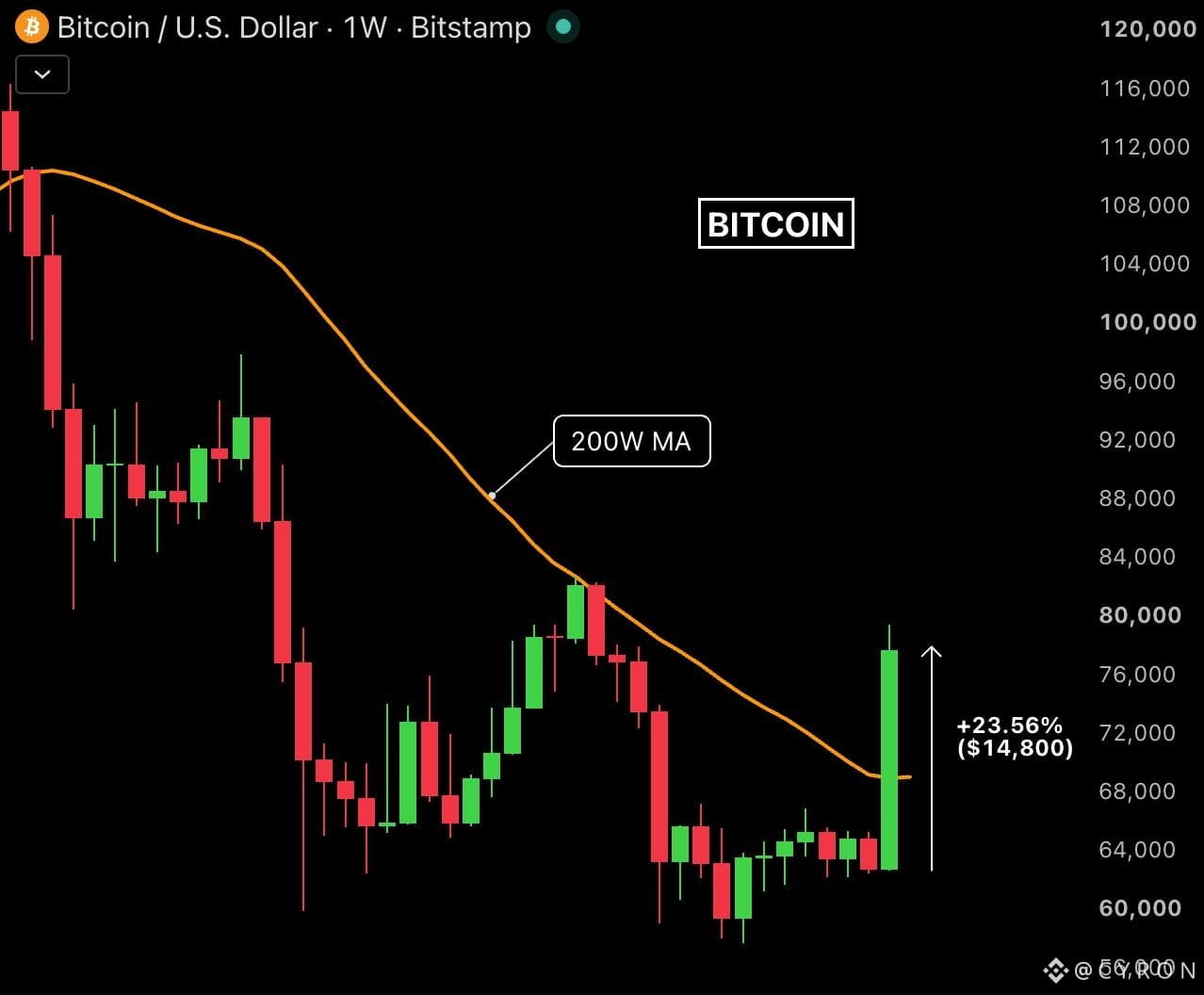
🚨 ÚLTIMA HORA:
Bitcoin acaba de imprimir su mayor vela semanal desde marzo de 2023.
$BTC subió un 23.56%, añadiendo aproximadamente $14,800 en una sola semana.
Ese es un movimiento enorme para Bitcoin en un período tan corto.
El impulso ha vuelto. 🚀
{spot}(BTCUSDT)
#BitcoinStrongestWeekSinceMarch2023
#CanadaUSTradeTalksCollapse
🚨 ÚLTIMA HORA:
Bitcoin acaba de imprimir su mayor vela semanal desde marzo de 2023.
$BTC subió un 23.56%, añadiendo aproximadamente $14,800 en una sola semana.
Ese es un movimiento enorme para Bitcoin en un período tan corto.
El impulso ha vuelto. 🚀
#BitcoinStrongestWeekSinceMarch2023
#CanadaUSTradeTalksCollapse
Bitcoin acaba de imprimir su mayor vela semanal desde marzo de 2023.
$BTC subió un 23.56%, añadiendo aproximadamente $14,800 en una sola semana.
Ese es un movimiento enorme para Bitcoin en un período tan corto.
El impulso ha vuelto. 🚀
#BitcoinStrongestWeekSinceMarch2023
#CanadaUSTradeTalksCollapse
2
119
·
--
Alcista
Leí el brief de CreatorPad sobre $DUSK y me quedé atascado en una línea del aviso de incidente del propio puente de Dusk: el equipo deshabilitó y recicló un conjunto de direcciones después de señalar una actividad inusual en una wallet gestionada por el equipo usada para operaciones de puente, y luego pausó por completo los servicios de puente mientras lo solucionaban. #dusk
Esa fue la parte que me dejó pensando. No el incidente en sí, sino la forma de la respuesta. @Dusk_Foundation dedica la mayor parte de su mensajería a la privacidad del lado del usuario, la divulgación selectiva, los carriles de cumplimiento: todo lo que se construye para la persona que tiene la wallet. Esto no era eso. Era una clave operativa interna con un comportamiento comprometido alrededor de la cual se señaló la actividad, y la corrección fue contundente: pausar todo, reconstruir el conjunto de direcciones y enviar una lista de bloqueo de destinatarios para detectar cualquier cosa que intentara pasar por la web wallet.
Había asumido que el encuadre de "infra regulada" significaba que el lado operativo también estaba endurecido, quizá más que en la mayoría de los L1, dado el enfoque institucional. Resulta que el modo de fallo no fue un exploit de contrato inteligente ni una votación de gobernanza que se saliera de control: fue una wallet gestionada, que es un problema mucho más aburrido y mucho más universal.
Aun así, no estoy seguro de si eso tranquiliza o si es lo contrario.
{spot}(DUSKUSDT)
{spot}(SPKUSDT)
{spot}(MORPHOUSDT)
¿Qué fue lo que más destacó de la respuesta del puente de Dusk?
Leí el brief de CreatorPad sobre $DUSK y me quedé atascado en una línea del aviso de incidente del propio puente de Dusk: el equipo deshabilitó y recicló un conjunto de direcciones después de señalar una actividad inusual en una wallet gestionada por el equipo usada para operaciones de puente, y luego pausó por completo los servicios de puente mientras lo solucionaban. #dusk
Esa fue la parte que me dejó pensando. No el incidente en sí, sino la forma de la respuesta. @Dusk dedica la mayor parte de su mensajería a la privacidad del lado del usuario, la divulgación selectiva, los carriles de cumplimiento: todo lo que se construye para la persona que tiene la wallet. Esto no era eso. Era una clave operativa interna con un comportamiento comprometido alrededor de la cual se señaló la actividad, y la corrección fue contundente: pausar todo, reconstruir el conjunto de direcciones y enviar una lista de bloqueo de destinatarios para detectar cualquier cosa que intentara pasar por la web wallet.
Había asumido que el encuadre de "infra regulada" significaba que el lado operativo también estaba endurecido, quizá más que en la mayoría de los L1, dado el enfoque institucional. Resulta que el modo de fallo no fue un exploit de contrato inteligente ni una votación de gobernanza que se saliera de control: fue una wallet gestionada, que es un problema mucho más aburrido y mucho más universal.
Aun así, no estoy seguro de si eso tranquiliza o si es lo contrario.
¿Qué fue lo que más destacó de la respuesta del puente de Dusk?
Esa fue la parte que me dejó pensando. No el incidente en sí, sino la forma de la respuesta. @Dusk dedica la mayor parte de su mensajería a la privacidad del lado del usuario, la divulgación selectiva, los carriles de cumplimiento: todo lo que se construye para la persona que tiene la wallet. Esto no era eso. Era una clave operativa interna con un comportamiento comprometido alrededor de la cual se señaló la actividad, y la corrección fue contundente: pausar todo, reconstruir el conjunto de direcciones y enviar una lista de bloqueo de destinatarios para detectar cualquier cosa que intentara pasar por la web wallet.
Había asumido que el encuadre de "infra regulada" significaba que el lado operativo también estaba endurecido, quizá más que en la mayoría de los L1, dado el enfoque institucional. Resulta que el modo de fallo no fue un exploit de contrato inteligente ni una votación de gobernanza que se saliera de control: fue una wallet gestionada, que es un problema mucho más aburrido y mucho más universal.
Aun así, no estoy seguro de si eso tranquiliza o si es lo contrario.
¿Qué fue lo que más destacó de la respuesta del puente de Dusk?
🛑 Full pause
60%
🔑 Team wallet risk
40%
🧊 "No impact" claim
0%
🤷 Not surprised
0%
5 Voto(s) • Votación cerrada
2
4
960
·
--
Alcista
Pasé la semana metiéndome a fondo en la infraestructura del puente de Dusk para esta ronda de CreatorPad, y lo que me detuvo no fue una función: fue el aviso del incidente del 16 de agosto. El equipo detectó actividad sospechosa en una wallet que controlaban para las operaciones del puente, y tuvo que desactivar y reciclar de inmediato un lote de direcciones. $DUSK , #dusk , @Dusk_Foundation , Entré con la idea de escribir sobre el impulso de la testnet de DuskEVM. Salí pensando en otra cosa por completo.
Esto es lo que me hizo replanteármelo: el puente en sí no se rompió. La capa zk, el consenso, nada de eso se tocó. Lo que cedió fue una wallet gestionada por el equipo, ese tipo de componente operativo del que depende silenciosamente cada puente y que nadie realmente audita en público. Dusk actuó rápido, pausó servicios y se coordinó con Binance cuando surgió allí parte del flujo. Respuesta razonable. Pero dejó al descubierto la brecha entre "la seguridad a nivel de protocolo" y "los humanos que operan la capa de infraestructura", dos cosas que yo había estado tratando como si fueran una sola.
Había asumido que el riesgo del puente vivía principalmente en el código del contrato. Resulta que la superficie más flexible, la operativa, también es igual de determinante. Aún no estoy seguro de cómo se audita eso.
{spot}(TRUMPUSDT)
{spot}(STXUSDT)
{spot}(POLUSDT)
¿Cuál es el riesgo real del puente?
Pasé la semana metiéndome a fondo en la infraestructura del puente de Dusk para esta ronda de CreatorPad, y lo que me detuvo no fue una función: fue el aviso del incidente del 16 de agosto. El equipo detectó actividad sospechosa en una wallet que controlaban para las operaciones del puente, y tuvo que desactivar y reciclar de inmediato un lote de direcciones. $DUSK , #dusk , @Dusk , Entré con la idea de escribir sobre el impulso de la testnet de DuskEVM. Salí pensando en otra cosa por completo.
Esto es lo que me hizo replanteármelo: el puente en sí no se rompió. La capa zk, el consenso, nada de eso se tocó. Lo que cedió fue una wallet gestionada por el equipo, ese tipo de componente operativo del que depende silenciosamente cada puente y que nadie realmente audita en público. Dusk actuó rápido, pausó servicios y se coordinó con Binance cuando surgió allí parte del flujo. Respuesta razonable. Pero dejó al descubierto la brecha entre "la seguridad a nivel de protocolo" y "los humanos que operan la capa de infraestructura", dos cosas que yo había estado tratando como si fueran una sola.
Había asumido que el riesgo del puente vivía principalmente en el código del contrato. Resulta que la superficie más flexible, la operativa, también es igual de determinante. Aún no estoy seguro de cómo se audita eso.
¿Cuál es el riesgo real del puente?
Esto es lo que me hizo replanteármelo: el puente en sí no se rompió. La capa zk, el consenso, nada de eso se tocó. Lo que cedió fue una wallet gestionada por el equipo, ese tipo de componente operativo del que depende silenciosamente cada puente y que nadie realmente audita en público. Dusk actuó rápido, pausó servicios y se coordinó con Binance cuando surgió allí parte del flujo. Respuesta razonable. Pero dejó al descubierto la brecha entre "la seguridad a nivel de protocolo" y "los humanos que operan la capa de infraestructura", dos cosas que yo había estado tratando como si fueran una sola.
Había asumido que el riesgo del puente vivía principalmente en el código del contrato. Resulta que la superficie más flexible, la operativa, también es igual de determinante. Aún no estoy seguro de cómo se audita eso.
¿Cuál es el riesgo real del puente?
🔐 Contract code
0%
👤 Team wallets
50%
🌉 Message relay
0%
🧩 Upgrade keys
50%
2 Voto(s) • Votación cerrada
2
3
521
·
--
Alcista
Hice una verificación rápida de RPC contra la red de pruebas de DuskEVM antes de desplegar cualquier cosa, solo para confirmar que estaba en la red correcta. Un paso pequeño, pero ayudó a dar base real a la tarea de CreatorPad en lugar de solo capturas de documentación. Bridgé un lote de $DUSK desde DuskDS para financiar la wallet de despliegue y luego envié un contrato Solidity básico a través de Hardhat. #dusk @Dusk_Foundation
Lo que realmente me detuvo no fue que el despliegue saliera bien, sino el desglose de comisiones después. Yo había asumido que "EVM con privacidad" significaba que la privacidad viene incluida en cada transacción de forma predeterminada. No es así. La tarifa de ejecución y la tarifa de disponibilidad de datos para publicar el lote de vuelta en DuskDS eran totalmente visibles, estilo estándar de OP-Stack. No había nada protegido a menos que lo enrutes deliberadamente a través de Hedger.
Es una suposición razonable haberla dado por incorrecta. El mensaje de Dusk se apoya mucho en la confidencialidad, así que es fácil esperar que la capa EVM herede eso por defecto en lugar de que eso se active aparte.
Tiene sentido a nivel arquitectónico: mantener desacopladas las herramientas de settlement y privacidad de la ejecución de propósito general. Aun así, me pregunto cuántos devs construyendo aquí mismo están recurriendo realmente a Hedger, versus simplemente enviar contratos EVM estándar y seguir adelante. Esta es mi propia observación al probar; no es asesoramiento financiero, y no vale la pena profundizar más si estás evaluando el ecosistema.
{spot}(DUSKUSDT)
{spot}(PROMUSDT)
{spot}(NEIROUSDT)
¿Qué parte de construir sobre DuskEVM intentarías primero? 👇
Hice una verificación rápida de RPC contra la red de pruebas de DuskEVM antes de desplegar cualquier cosa, solo para confirmar que estaba en la red correcta. Un paso pequeño, pero ayudó a dar base real a la tarea de CreatorPad en lugar de solo capturas de documentación. Bridgé un lote de $DUSK desde DuskDS para financiar la wallet de despliegue y luego envié un contrato Solidity básico a través de Hardhat. #dusk @Dusk
Lo que realmente me detuvo no fue que el despliegue saliera bien, sino el desglose de comisiones después. Yo había asumido que "EVM con privacidad" significaba que la privacidad viene incluida en cada transacción de forma predeterminada. No es así. La tarifa de ejecución y la tarifa de disponibilidad de datos para publicar el lote de vuelta en DuskDS eran totalmente visibles, estilo estándar de OP-Stack. No había nada protegido a menos que lo enrutes deliberadamente a través de Hedger.
Es una suposición razonable haberla dado por incorrecta. El mensaje de Dusk se apoya mucho en la confidencialidad, así que es fácil esperar que la capa EVM herede eso por defecto en lugar de que eso se active aparte.
Tiene sentido a nivel arquitectónico: mantener desacopladas las herramientas de settlement y privacidad de la ejecución de propósito general. Aun así, me pregunto cuántos devs construyendo aquí mismo están recurriendo realmente a Hedger, versus simplemente enviar contratos EVM estándar y seguir adelante. Esta es mi propia observación al probar; no es asesoramiento financiero, y no vale la pena profundizar más si estás evaluando el ecosistema.
¿Qué parte de construir sobre DuskEVM intentarías primero? 👇
Lo que realmente me detuvo no fue que el despliegue saliera bien, sino el desglose de comisiones después. Yo había asumido que "EVM con privacidad" significaba que la privacidad viene incluida en cada transacción de forma predeterminada. No es así. La tarifa de ejecución y la tarifa de disponibilidad de datos para publicar el lote de vuelta en DuskDS eran totalmente visibles, estilo estándar de OP-Stack. No había nada protegido a menos que lo enrutes deliberadamente a través de Hedger.
Es una suposición razonable haberla dado por incorrecta. El mensaje de Dusk se apoya mucho en la confidencialidad, así que es fácil esperar que la capa EVM herede eso por defecto en lugar de que eso se active aparte.
Tiene sentido a nivel arquitectónico: mantener desacopladas las herramientas de settlement y privacidad de la ejecución de propósito general. Aun así, me pregunto cuántos devs construyendo aquí mismo están recurriendo realmente a Hedger, versus simplemente enviar contratos EVM estándar y seguir adelante. Esta es mi propia observación al probar; no es asesoramiento financiero, y no vale la pena profundizar más si estás evaluando el ecosistema.
¿Qué parte de construir sobre DuskEVM intentarías primero? 👇
🔧 Standard Solidity contract
0%
🕶️ Hedger private execution
0%
🌉 Just the bridge
0%
🤔 Still deciding
0%
0 Voto(s) • Votación cerrada
8
5
181
·
--
Alcista
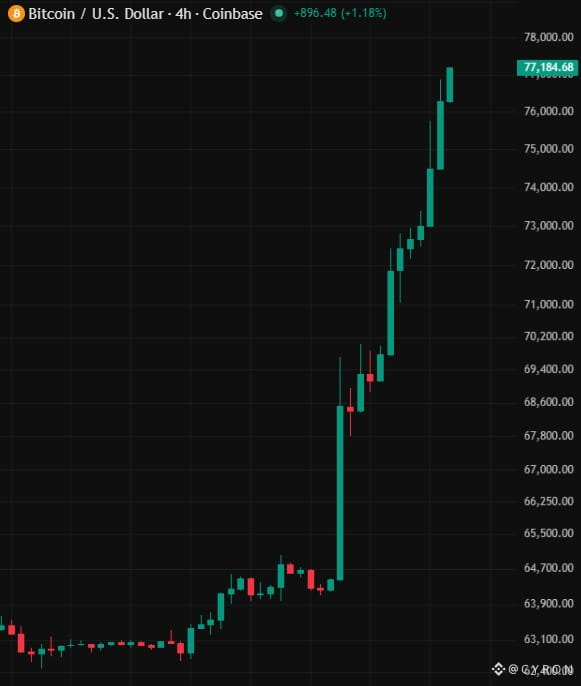
Absolutamente HISTÓRICO.
Bitcoin se está moviendo 140 veces más rápido que el mercado de valores ahora mismo.
$BTC ha subido más de un 20% en menos de cinco días, pasando de aproximadamente $63K a más de $77K.
Como comparación, el S&P 500 históricamente ha devuelto alrededor de un 10% por año.
Bitcoin acaba de entregar ese tipo de rentabilidad en menos de cinco días.
Casi 3 meses de pérdidas borrados en solo 5 días.
Y ahora este es el rally semanal más fuerte de Bitcoin desde febrero de 2024.
Esto es increíble. 🚀
{spot}(BTCUSDT)
#USJoblessClaimsFallTo206000
#TrumpPressesCongressToPassClarityAct
Absolutamente HISTÓRICO.
Bitcoin se está moviendo 140 veces más rápido que el mercado de valores ahora mismo.
$BTC ha subido más de un 20% en menos de cinco días, pasando de aproximadamente $63K a más de $77K.
Como comparación, el S&P 500 históricamente ha devuelto alrededor de un 10% por año.
Bitcoin acaba de entregar ese tipo de rentabilidad en menos de cinco días.
Casi 3 meses de pérdidas borrados en solo 5 días.
Y ahora este es el rally semanal más fuerte de Bitcoin desde febrero de 2024.
Esto es increíble. 🚀
#USJoblessClaimsFallTo206000
#TrumpPressesCongressToPassClarityAct
Bitcoin se está moviendo 140 veces más rápido que el mercado de valores ahora mismo.
$BTC ha subido más de un 20% en menos de cinco días, pasando de aproximadamente $63K a más de $77K.
Como comparación, el S&P 500 históricamente ha devuelto alrededor de un 10% por año.
Bitcoin acaba de entregar ese tipo de rentabilidad en menos de cinco días.
Casi 3 meses de pérdidas borrados en solo 5 días.
Y ahora este es el rally semanal más fuerte de Bitcoin desde febrero de 2024.
Esto es increíble. 🚀
#USJoblessClaimsFallTo206000
#TrumpPressesCongressToPassClarityAct
2
234
Inicia sesión para explorar más contenidos
Únete a usuarios globales de criptomonedas en Binance Square
⚡️ Obtén información útil y actualizada sobre criptos.
💬 Avalado por el mayor exchange de criptomonedas en el mundo.
👍 Descubre perspectivas reales de creadores verificados.
Email/número de teléfono
Temas populares
FedRateWatch
1.4M vistas
6,527 están debatiendo
Comparte y gana recompensas de tráfico en nuestra campaña de hashtag en tendencia
✨Tema: FOMC septiembre, ¿cuál será el próximo movimiento de la Fed?
👉Cómo unirte:
Publica una publicación breve o un artículo con el hashtag #FedRateWatch
Crea contenido basado en los siguientes enfoques:
- El CPI subyacente de agosto aumentó 0.3% mes a mes, y las probabilidades de una subida de 25 pb esta semana ahora están cerca del 90%. ¿Anticipas una subida de tasas esta semana? ¿Es algo puntual o el inicio de un ciclo de subidas más largo?
- Si la subida ocurre, ¿cómo se desarrolla para BTC, acciones tecnológicas y oro? ¿Alcista o bajista?
- ¿Cómo planeas operar a continuación? Comparte tu operación/tenencias de BTC, acciones u oro con nuestro widget para compartir operaciones.
⏰Periodo de la campaña:
- 2026-09-15 11:00 - 2026-09-17 3:00 UTC
🎁Recompensa:
- Las publicaciones que cumplan con las pautas anteriores y tengan más de 100 palabras serán revisadas y podrían recibir un impulso aleatorio de tráfico de 500 a 3,000 visitas. Recibirás una notificación de tu secretario/a de feed si tu publicación es seleccionada.
- Obtén la oportunidad de que tu artículo aparezca destacado en Binance Square Official
¿Necesitas ideas para tu publicación? Visita la página del tema #FedRateWatch o la Square Guide on How to Post for Better Reach.
Binance Square Official
·638 me gusta
·1.6M vistas
ZcashRises6%
38,387 vistas
557 están debatiendo
XRPSinks10%
25,575 vistas
368 están debatiendo