
M-O-N-A-R-C-H
2k Publicaciones

M-O-N-A-R-C-H
Denunciar
Bloquear usuario
NFA | Metals, Oil, BTC & Alts, Stocks | Multi Horizon Momentum Strategy. | Works on Every Market.
67 Siguiendo
593 Seguidores
936 Me gusta
Publicaciones
Todo
Citas
Videos
Live
PINNED
·
--
Alcista
Sigue las señales bajo tu propio riesgo. Haz tu propia investigación (DYOR).
No soy de ese tipo de material para transmisiones en vivo. Así que de mí “No hay live, que se jodan”. Hay una razón detrás de “Mientras mis operaciones como trader sean rentables, ¿por qué gritar?”.
Gracias a Dios, no hay redes sociales en Binance Square, PORQUE MÁS PERSONAS, MÁS RUIDO.
& El ruido mata la concentración.
Nota: Solo los sabios pueden entender.
#TrumpDeadlineOnIran #StrategyBTCPurchase #USJoblessClaimsNearTwo-YearLow #BTCBackTo70K #DriftProtocolExploited


3
2
18
108
PINNED
Artículo
Ver traducción
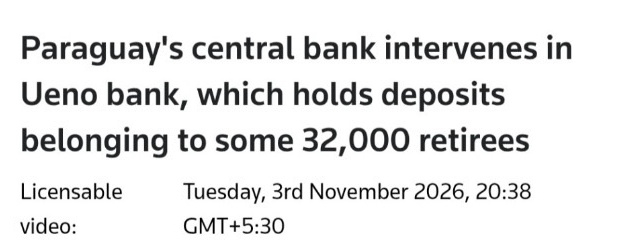
1st :- Banks 2nd :- ???🚨 A massive banking crisis has left millions unable to access their money in Paraguay.
One of the country's biggest digital banks has failed, and the crisis has now reached investment funds, public money and the country's political leadership.
Ueno Bank serves around 3 MILLION customers, equivalent to nearly 60% of Paraguay's adult population.
And the numbers are alarming.
• $4.2 BILLION in previously reported assets.
• $2.8 BILLION in deposits.
• Around $850 MILLION in public funds.
• Roughly $380 MILLION linked to the state pension and health system.
But what's even more shocking is what happened just FIVE DAYS before the collapse.
On October 29, Ueno Bank announced plans to raise another $100 MILLION to strengthen its finances.
The bank said its regulatory capital ratio stood at 13.8%, above the required minimum of 12%.
Then, on November 2, the central bank decided to intervene after financial adjustments revealed that the bank's solvency ratio had fallen below HALF the legal minimum.
By November 3, customers could no longer use their accounts normally.
Withdrawals, bank transfers, debit cards and credit card services were suspended.
But the problems didn't start overnight.
Ueno was one of Paraguay's fastest growing banks.
Since 2021, it had brought more than 1.2 million people into the banking system for the first time.
In 2024, it merged with Visión Banco, significantly expanding its business.
In March 2026, it raised $350 MILLION through an international bond sale, the largest of its kind by a Paraguayan bank.
And in September, the bank was still publicly defending its financial strength.
Now the same bank is undergoing emergency resolution.
And the damage has started affecting other parts of the financial system.
Paraguay's securities regulator has temporarily frozen withdrawals from 13 mutual funds managed by five investment firms because they hold investments linked to Ueno.
These funds have not been declared bankrupt, but investors cannot withdraw money until their investments are properly valued.
Authorities say withdrawals could begin resuming gradually from November 5.
Meanwhile, the crisis has reached the government itself.
• Prosecutors have ordered the arrest of eight people linked to the bank as part of an investigation into suspected wrongdoing.
• Regulators have raised concerns about loans involving companies connected to the bank's owners.
• Paraguay's central bank governor has submitted his resignation after President Santiago Peña requested it.
• The president's previous business ties to the bank's parent group are now facing political scrutiny.
And there's another major problem.
Hundreds of millions in government deposits, including pension and health funds, were held at Ueno.
Lawmakers are now considering emergency legislation to protect those public funds.
For ordinary customers, Paraguay guarantees deposits of up to approximately $38,000 per depositor.
The central bank has announced an initial payment of up to 10 MILLION GUARANÍES, with remaining covered amounts to follow.
Around 97% of depositors are expected to be fully covered, but people with larger balances still face uncertainty.
#USMidterms-WhatAreMarketsExpecting? #BinanceIncidentReport #USOctoberNFP-AreRateCutsStillPossible #AnthropicIPOPricedDownasInvestorsEye$1.5T #BinanceIncidentReport #HongKongToLicenseVirtualAssetCustodyAndAdvisory
1st :- Banks 2nd :- ???
🚨 A massive banking crisis has left millions unable to access their money in Paraguay.
One of the country's biggest digital banks has failed, and the crisis has now reached investment funds, public money and the country's political leadership.
Ueno Bank serves around 3 MILLION customers, equivalent to nearly 60% of Paraguay's adult population.
And the numbers are alarming.
• $4.2 BILLION in previously reported assets.
• $2.8 BILLION in deposits.
• Around $850 MILLION in public funds.
• Roughly $380 MILLION linked to the state pension and health system.
But what's even more shocking is what happened just FIVE DAYS before the collapse.
On October 29, Ueno Bank announced plans to raise another $100 MILLION to strengthen its finances.
The bank said its regulatory capital ratio stood at 13.8%, above the required minimum of 12%.
Then, on November 2, the central bank decided to intervene after financial adjustments revealed that the bank's solvency ratio had fallen below HALF the legal minimum.
By November 3, customers could no longer use their accounts normally.
Withdrawals, bank transfers, debit cards and credit card services were suspended.
But the problems didn't start overnight.
Ueno was one of Paraguay's fastest growing banks.
Since 2021, it had brought more than 1.2 million people into the banking system for the first time.
In 2024, it merged with Visión Banco, significantly expanding its business.
In March 2026, it raised $350 MILLION through an international bond sale, the largest of its kind by a Paraguayan bank.
And in September, the bank was still publicly defending its financial strength.
Now the same bank is undergoing emergency resolution.
And the damage has started affecting other parts of the financial system.
Paraguay's securities regulator has temporarily frozen withdrawals from 13 mutual funds managed by five investment firms because they hold investments linked to Ueno.
These funds have not been declared bankrupt, but investors cannot withdraw money until their investments are properly valued.
Authorities say withdrawals could begin resuming gradually from November 5.
Meanwhile, the crisis has reached the government itself.
• Prosecutors have ordered the arrest of eight people linked to the bank as part of an investigation into suspected wrongdoing.
• Regulators have raised concerns about loans involving companies connected to the bank's owners.
• Paraguay's central bank governor has submitted his resignation after President Santiago Peña requested it.
• The president's previous business ties to the bank's parent group are now facing political scrutiny.
And there's another major problem.
Hundreds of millions in government deposits, including pension and health funds, were held at Ueno.
Lawmakers are now considering emergency legislation to protect those public funds.
For ordinary customers, Paraguay guarantees deposits of up to approximately $38,000 per depositor.
The central bank has announced an initial payment of up to 10 MILLION GUARANÍES, with remaining covered amounts to follow.
Around 97% of depositors are expected to be fully covered, but people with larger balances still face uncertainty.
#USMidterms-WhatAreMarketsExpecting? #BinanceIncidentReport #USOctoberNFP-AreRateCutsStillPossible #AnthropicIPOPricedDownasInvestorsEye$1.5T #BinanceIncidentReport #HongKongToLicenseVirtualAssetCustodyAndAdvisory
4
·
--
Bajista
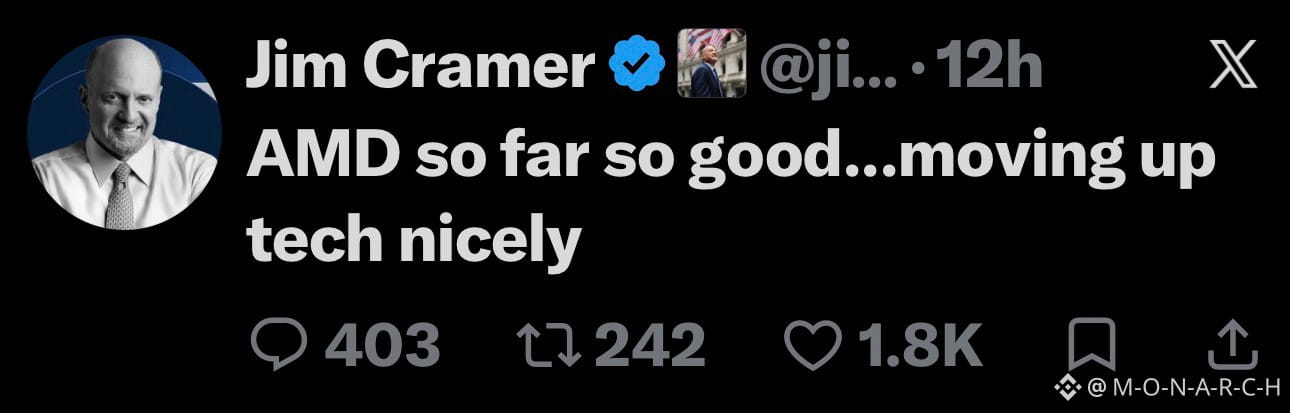
$AMD.US $AMDB está maldito por Jim Cramer.
No es asesoramiento financiero | Investiga por tu cuenta.
#USMidterms-WhatAreMarketsExpecting? #USOctoberNFP-AreRateCutsStillPossible #AMDBeatsExpectations-AINarrativeContinues #BinanceIncidentReport #BinanceIncidentReport
$AMD.US $AMDB está maldito por Jim Cramer.
No es asesoramiento financiero | Investiga por tu cuenta.
#USMidterms-WhatAreMarketsExpecting? #USOctoberNFP-AreRateCutsStillPossible #AMDBeatsExpectations-AINarrativeContinues #BinanceIncidentReport #BinanceIncidentReport
No es asesoramiento financiero | Investiga por tu cuenta.
#USMidterms-WhatAreMarketsExpecting? #USOctoberNFP-AreRateCutsStillPossible #AMDBeatsExpectations-AINarrativeContinues #BinanceIncidentReport #BinanceIncidentReport
23
·
--
Bajista
Ver traducción
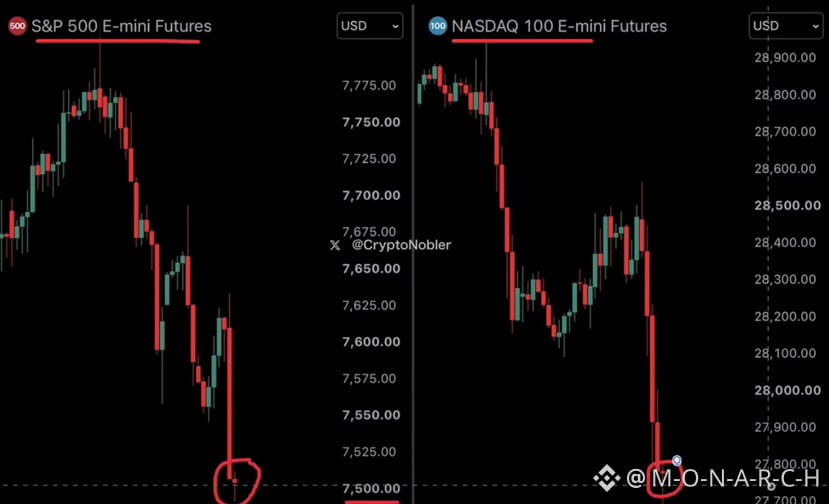
Fresh Update of Indexes, After Elections. Now Crypto Loading…
#USMidterms-WhatAreMarketsExpecting? #USOctoberNFP-AreRateCutsStillPossible #AMDBeatsExpectations-AINarrativeContinues #BinanceIncidentReport #BinanceReopensWithdrawalsForMoreAssets
Fresh Update of Indexes, After Elections. Now Crypto Loading…
#USMidterms-WhatAreMarketsExpecting? #USOctoberNFP-AreRateCutsStillPossible #AMDBeatsExpectations-AINarrativeContinues #BinanceIncidentReport #BinanceReopensWithdrawalsForMoreAssets
#USMidterms-WhatAreMarketsExpecting? #USOctoberNFP-AreRateCutsStillPossible #AMDBeatsExpectations-AINarrativeContinues #BinanceIncidentReport #BinanceReopensWithdrawalsForMoreAssets
11
Artículo
5 golpes para Trump.5 razones por las que el revés electoral de Trump podría ser malo para las criptomonedas:
1. Regulaciones sobre criptomonedas más lentas: Una oposición demócrata más fuerte en el Congreso podría retrasar los planes de Trump para establecer regulaciones más claras y favorables a las criptomonedas.
2. Incertidumbre en el mercado: Las ballenas podrían actuar con más cautela, lo que podría desencadenar ventas masivas de Bitcoin, Ethereum y altcoins.
3. Retraso de la legislación sobre criptomonedas: Los principales proyectos de ley que apoyan las monedas estables, las plataformas de intercambio y el sector de las criptomonedas en general podrían enfrentar más resistencia política.
4. Menor confianza institucional: La incertidumbre política podría hacer que las grandes instituciones financieras duden más a la hora de ampliar sus inversiones en criptomonedas.
5 golpes para Trump.
5 razones por las que el revés electoral de Trump podría ser malo para las criptomonedas:
1. Regulaciones sobre criptomonedas más lentas: Una oposición demócrata más fuerte en el Congreso podría retrasar los planes de Trump para establecer regulaciones más claras y favorables a las criptomonedas.
2. Incertidumbre en el mercado: Las ballenas podrían actuar con más cautela, lo que podría desencadenar ventas masivas de Bitcoin, Ethereum y altcoins.
3. Retraso de la legislación sobre criptomonedas: Los principales proyectos de ley que apoyan las monedas estables, las plataformas de intercambio y el sector de las criptomonedas en general podrían enfrentar más resistencia política.
4. Menor confianza institucional: La incertidumbre política podría hacer que las grandes instituciones financieras duden más a la hora de ampliar sus inversiones en criptomonedas.
49
Artículo
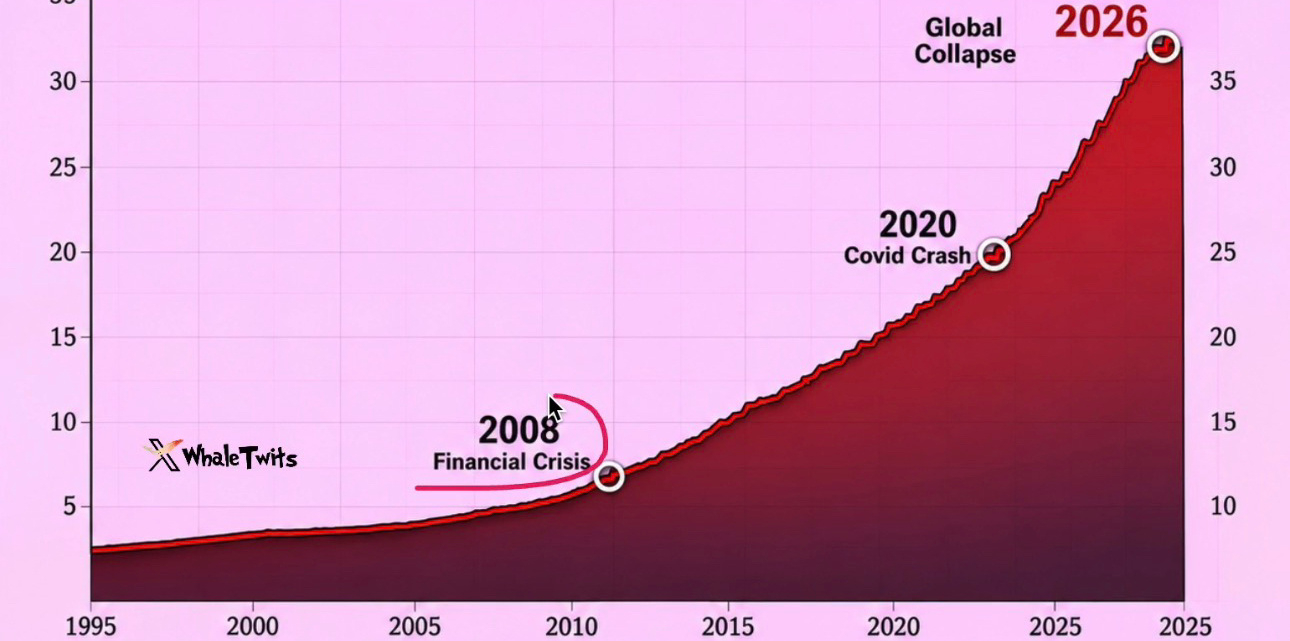
No te conviertas en liquidez de salida. LA BURBUJA DE LA IA ESTÁ EMPEZANDO A RESQUEBRAJARSE Y WALL STREET HUYE EN SILENCIO HACIA LAS SALIDAS.
Mientras los inversores minoristas siguen comprando cada caída, según se informa, los fondos de cobertura están vendiendo MILES DE MILLONES en acciones tecnológicas.
Y LAS CIFRAS SON DEMENCIALES.
Mira lo que está pasando entre bastidores.
20.000 MILLONES DE DÓLARES en acciones tecnológicas vendidas en solo dos semanas.
Cinco sesiones consecutivas de ventas.
Según se informa, los fondos de cobertura borraron todas sus compras netas de acciones de IA desde 2025.
Y aquí viene la parte que debería aterrorizar a los inversores.
NO SOLO ESTÁN ABRIENDO POSICIONES CORTAS.
ESTÁN DESHACIÉNDOSE DE SUS POSICIONES ACTUALES.
No te conviertas en liquidez de salida.
LA BURBUJA DE LA IA ESTÁ EMPEZANDO A RESQUEBRAJARSE Y WALL STREET HUYE EN SILENCIO HACIA LAS SALIDAS.
Mientras los inversores minoristas siguen comprando cada caída, según se informa, los fondos de cobertura están vendiendo MILES DE MILLONES en acciones tecnológicas.
Y LAS CIFRAS SON DEMENCIALES.
Mira lo que está pasando entre bastidores.
20.000 MILLONES DE DÓLARES en acciones tecnológicas vendidas en solo dos semanas.
Cinco sesiones consecutivas de ventas.
Según se informa, los fondos de cobertura borraron todas sus compras netas de acciones de IA desde 2025.
Y aquí viene la parte que debería aterrorizar a los inversores.
NO SOLO ESTÁN ABRIENDO POSICIONES CORTAS.
ESTÁN DESHACIÉNDOSE DE SUS POSICIONES ACTUALES.
218
Artículo
Ver traducción
Slip is Loading.. Hack was Just A Story To Sell.The Chain Held: Bitcoin’s Blockchain, the North Korea Narrative and the ETF Sell-Off Market analysis · November 3, 2026 · Data as of November 2–3
Bitcoin’s blockchain did not fail last week. An exchange did. The $6.3 billion Binance theft, which the FBI attributes to North Korea’s TraderTraitor group, is a story about custody, not about the Bitcoin protocol: the network kept producing blocks on schedule, with hashrate above one zettahash per second and mining difficulty at a record. But the hack still moved markets. Bitcoin fell to about $76,300, US spot ETFs saw $1.04 billion of outflows in two sessions, and traders are watching a pile of stolen coins that cannot be frozen. This article explains what the blockchain data show, why the North Korea narrative is in the market, and how to read the ETF selling.
The short version
The chain: difficulty is at a record 148.4 trillion, hashrate is about 1.06–1.08 zettahash per second, and blocks are averaging just under 10 minutes. The breach was at the exchange, not the protocol.Why the narrative is in the market: the FBI attributed the theft to TraderTraitor on October 31, the same group it blamed for the 2025 Bybit hack, and the analytics firms Elliptic, TRM Labs and Chainalysis agree. About $3.24 billion of the stolen funds is still outside the reach of stablecoin issuers, mostly Bitcoin and Ether, including about 18,270 BTC that has not moved. North Korea denies involvement.The ETF selling: US spot Bitcoin ETFs lost $643 million on October 30 and $399 million on November 2, about $1.04 billion in two sessions and the largest outflow since June. That is about 1% of their roughly $98 billion in assets, and it followed four days of inflows.Scale: two sessions of ETF selling equal roughly 13,000–14,000 BTC. Binance’s own net customer outflows after reopening were around $4.7–$4.9 billion, several times larger.The level that matters: about $76,000, the average cost basis of recent buyers. ETF holders, with an average cost near $81,500–$82,000, are underwater.
1. What the blockchain is, and is not
Bitcoin’s blockchain is a public ledger maintained by miners who compete to add a block roughly every 10 minutes. It has no administrator: no one can freeze an address, reverse a transaction or recover a key. That design is why Bitcoin was untouched by the Binance theft, and also why stolen bitcoin cannot be frozen the way a stablecoin can.
The hack targeted Binance’s infrastructure. Binance first pointed to a compromised engineer’s laptop, then said investigators found additional intrusion points but no evidence that wallet private keys leaked. None of that touches Bitcoin’s consensus rules or its miners.
2. The network today
Difficulty: it rose 5.54% to 148.36 trillion on October 29, a record and the 11th increase in 22 adjustments this year. The next adjustment is due around November 12–16, and estimates point to a small decline of about 1.5%–3.5%.Hashrate: the seven-day average was about 1,065 exahash per second, down from 1,228 a week earlier on mempool.space’s measure, and early November readings are around 1,080. That is above one zettahash per second. Blocks have been averaging about 9 minutes 52 seconds.Issuance: the block subsidy is 3.125 BTC, so about 450 new coins arrive each day, worth about $34 million at $76,000. By my calculation, November 2’s ETF outflow of about $399 million equals roughly 5,200 BTC, or about 11 days of new issuance.Miner economics: miners earned $1.215 billion in October, the best month since November 2025, but hashprice fell to about $33 per petahash per day, down roughly 14%–18% in a month, which squeezes weaker operators.History: difficulty fell about 11% in February after storm curtailments and a price crash, and about 10% in July when hashrate dropped to 886 exahash per second. The network adjusted and kept running both times.
The security budget is at or near record levels even as profit margins thin, which is the opposite of a network under attack.
3. What on-chain holder data say
Recent buyers: Glassnode puts the short-term holder cost basis near $76,000, with the ratio of price to that cost basis at about 1.02, down from 1.20 in late September. Bitcoin defended it, with a low near $76,100–$76,300 on October 30.ETF holders are underwater. Glassnode puts the average cost basis of US spot ETF holders near $81,500 and Bloomberg Intelligence just under $82,000, above the current price. Glassnode has noted that the ETFs were selling again earlier in October.Overhead supply. Long-term holders own about 4 million BTC bought between $85,000 and $118,000, mostly in 2025, and more than half of long-term holder coins were bought above the current price. Rallies toward that zone may meet selling.Capitulation has cooled. The largest daily net realized loss around the October 24 dip was about $27 million, against about $630 million at the August low. Glassnode also notes this bear market never closed below the realized price, the average price paid for every coin.Exchange flows are distorted. Net exchange deposits of about 11,500 BTC and 8,000 BTC on separate days were followed by net outflows of roughly 40,000 BTC, among the largest of 2026. Analysts attribute those outflows mainly to stolen coins and user withdrawals from Binance rather than accumulation.
4. The hack as it appears on the chain
The FBI’s October 31 alert, issued with the Secret Service and IRS Criminal Investigation, listed 19 Bitcoin addresses, 608 Ethereum addresses and one Solana address, and asked THORChain operators, exchanges and DeFi platforms to block them. Elliptic counts $6.43 billion stolen, of which $2.85 billion, about 44%, has been frozen or seized, almost all of it stablecoins.
That leaves about $3.24 billion in attacker-linked addresses, mostly Bitcoin and Ether. Elliptic reports that about 18,270 BTC across 19 addresses had not moved as of November 3, which is about 0.09% of the roughly 20 million coins in circulation and worth about $1.4 billion. By my calculation, that is more bitcoin than the two sessions of ETF selling.
The laundering is automated. In its first three and a half days it used about 12,000 wallets across 11 blockchains, roughly one new wallet every 25 seconds, and more than 40,000 transactions. Since November 2 the attacker has been converting stolen Solana into bitcoin, and the pace picked up on November 3. On Bybit in 2025, only about 3% was frozen, and the cash-out took months. Elliptic expects the same here: slow conversion into bitcoin and sale through over-the-counter brokers.
The blockchain cuts both ways. Its transparency lets anyone watch the stolen coins in real time, and the FBI could publish the addresses within two days. Its immutability means the bitcoin cannot be frozen, and defenders have to rely on exchanges, brokers and bridges refusing to process it.
5. Why the North Korea narrative is in the market
The evidence behind it. The FBI attributed the theft to TraderTraitor, also known as Jade Sleet, UNC4899 and Slow Pisces, and previously made the same attribution for the $1.5 billion Bybit hack in February 2025 and the DMM Bitcoin theft. TRM Labs, Chainalysis and Elliptic reached the same conclusion within hours, and ZachXBT reported that Binance funds mixed on-chain with money from September’s Bitget theft, which was also tied to North Korea. Elliptic found shared service use with three earlier TraderTraitor thefts, from BigONE, WOO X and AFX. It estimates that North Korea-linked actors have stolen more than $6.5 billion in recent years, including more than $1 billion in 2026 before this incident.
The caveats. The FBI’s alert did not disclose the evidence behind its attribution, which rests on on-chain links and infrastructure patterns. North Korea denies it: Kim Yo Jong called the allegation a political provocation. Binance has not published a root cause. An attribution is an assessment, not a court finding.
Why it matters for price, not just security. This section is analysis.
An overhang that cannot be frozen. About $3.24 billion sits in coins that issuers cannot freeze, and traders price the chance that it is sold. The expectation can move the price before any coin does.Conversion flows. The attacker is swapping other assets into bitcoin, which creates visible demand now and potential sales later.A state actor changes the frame. A North Korean attribution frames the event as a sophisticated national-security attack rather than a routine control failure. That does not make it wrong, but it is one reason the story travels. Unverified claims about how the attackers got in have also circulated, and Binance’s co-CEO has denied one of them.Policy follow-through. The FBI is pressing THORChain and others to block addresses, and officials are citing the hack in arguments for tighter oversight of offshore exchanges.Exchange trust. Binance saw net customer outflows of about $4.7 billion by November 2, roughly 3% of its assets, after withdrawals reopened on November 1.
6. The ETF sell-off, in proportion
The numbers. US spot Bitcoin ETFs lost $643.3 million on October 30, the largest since June, and $398.6 million on November 2, with BlackRock’s IBIT losing $405.3 million, its largest outflow in about four months, while Fidelity’s FBTC took in $6.7 million. The funds hold about $98.1 billion, about 6.36% of Bitcoin’s market value, or roughly 1.27 million BTC by my calculation.Context. The two sessions equal about 1.06% of assets and followed about $441 million of inflows from October 26 to 29. For the week of October 26–30, ETFs recorded a net outflow of about $203 million.Mechanics. Redemptions force the funds to sell bitcoin, so ETF outflows are real spot selling, not just sentiment.Several drivers, not one. ETF holders are underwater against an average cost near $81,500–$82,000. The same sessions saw a hot inflation report, a December Fed hike priced at roughly 70%–80%, the S&P 500’s worst day since June and a sharp fall in gold. The Binance headlines landed on top of that, and the data cannot separate the causes.Compared with Binance. Binance’s net customer outflows of $4.7–$4.9 billion were four to five times the ETFs’ two-day outflow.
So “massive” is fair as a daily record since June, but modest as a share of assets. The question for the next few weeks is whether outflows persist or fade as the first-week shock passes.
7. Scenarios and levels
None of these can be given reliable odds.
The overhang stays parked and flows stabilize. The stolen BTC does not move at scale, ETF outflows fade and Binance’s reserve proofs keep landing. Bitcoin ranges between about $76,000 and the ETF cost basis near $81,500–$82,000.The overhang moves or outflows persist. Large movements of the roughly 18,270 BTC, or several more days of ETF selling, would test the $76,000 cost basis. Analysts cite $73,000–$74,000 as the next support and $60,000 as a deeper target.Macro relief. If yields and oil ease, Bitcoin could retake the ETF cost basis, where long-term-holder supply bought above $85,000 would be the next hurdle.
8. What to watch
The 19 Bitcoin addresses: any movement of the roughly 18,270 BTC, tracked by Elliptic and Chainalysis.Enforcement: sanctions or seizures, and whether THORChain nodes block the listed addresses.Binance: the next proof-of-reserves snapshot on November 4, covering more tokens, and its withdrawal and deposit flows.ETF flows: daily figures from Farside and SoSoValue, and Strategy’s Monday filing.The network: the difficulty adjustment around November 12–16 and the hashprice.Macro: the US midterms on November 3, the Bank of England on November 5, US jobs on November 6, US CPI on November 10 and the Fed on December 9.
Bottom line
Bitcoin’s blockchain was never the weak point: it kept running with record difficulty and more than a zettahash of hashrate. The North Korea narrative is in the market because the attribution is backed by the FBI and independent analysts, and because the stolen bitcoin and ether cannot be frozen, which keeps a visible overhang over the price. The ETF selling is real but proportionate, and it has more than one cause. The test over the coming weeks is whether the stolen coins stay parked, whether outflows fade, and whether Bitcoin holds the $76,000 cost basis.
This article is for information only and is not financial advice. Crypto assets are highly volatile and you can lose money. Do your own research.
Sources and data notes
Data are as of November 2–3, 2026, and the situation is changing quickly. ETF flows draw on SoSoValue and Farside Investors as reported by TokenPost, KuCoin News, NewsBTC, CoinDesk and TechFlow. Network data draw on mempool.space as reported by TokenPost, KuCoin, CoinMarketCap, Cointribune, CoinWarz and CryptoTicker. On-chain holder data draw on Glassnode as reported by BeInCrypto, Cryptonews and Glassnode’s research notes, with ETF cost-basis estimates from Glassnode and Bloomberg Intelligence. The attribution and laundering draw on the FBI alert as reported by SecurityWeek, Infosecurity Magazine, The Block and Unchained, plus analysis by Elliptic, TRM Labs, Chainalysis and ZachXBT, and North Korea’s response as reported by The Crypto Times. Binance recovery data draw on Binance statements as reported by CNN, Bitcoin Magazine, Yahoo Finance, Reuters via KuCoin, DefiLlama and Crypto Briefing. Calculations marked as mine use the reported figures. Analyst views are the analysts’ own opinions.
#USMidterms-WhatAreMarketsExpecting? #BinanceIncidentReport #AMDBeatsExpectations-AINarrativeContinues #BinanceReopensWithdrawalsForMoreAssets #BinanceReopensWithdrawalsForMoreAssets #BinanceReopensWithdrawalsForMoreAssets #BinanceHourlyDepositsExceedWithdrawals
Slip is Loading.. Hack was Just A Story To Sell.
The Chain Held: Bitcoin’s Blockchain, the North Korea Narrative and the ETF Sell-Off Market analysis · November 3, 2026 · Data as of November 2–3
Bitcoin’s blockchain did not fail last week. An exchange did. The $6.3 billion Binance theft, which the FBI attributes to North Korea’s TraderTraitor group, is a story about custody, not about the Bitcoin protocol: the network kept producing blocks on schedule, with hashrate above one zettahash per second and mining difficulty at a record. But the hack still moved markets. Bitcoin fell to about $76,300, US spot ETFs saw $1 .04 billion of outflows in two sessions, and traders are watching a pile of stolen coins that cannot be frozen. This article explains what the blockchain data show, why the North Korea narrative is in the market, and how to read the ETF selling.
The short version
The chain: difficulty is at a record 148.4 trillion, hashrate is about 1.06–1.08 zettahash per second, and blocks are averaging just under 10 minutes. The breach was at the exchange, not the protocol.Why the narrative is in the market: the FBI attributed the theft to TraderTraitor on October 31, the same group it blamed for the 2025 Bybit hack, and the analytics firms Elliptic, TRM Labs and Chainalysis agree. About $3.24 billion of the stolen funds is still outside the reach of stablecoin issuers, mostly Bitcoin and Ether, including about 18,270 BTC that has not moved. North Korea denies involvement.The ETF selling: US spot Bitcoin ETFs lost $643 million on October 30 and $399 million on November 2, about $1 .04 billion in two sessions and the largest outflow since June. That is about 1% of their roughly $98 billion in assets, and it followed four days of inflows.Scale: two sessions of ETF selling equal roughly 13,000–14,000 BTC. Binance’s own net customer outflows after reopening were around $4.7–$4.9 billion, several times larger.The level that matters: about $76,000, the average cost basis of recent buyers. ETF holders, with an average cost near $81,500–$82,000, are underwater.
1. What the blockchain is, and is not
Bitcoin’s blockchain is a public ledger maintained by miners who compete to add a block roughly every 10 minutes. It has no administrator: no one can freeze an address, reverse a transaction or recover a key. That design is why Bitcoin was untouched by the Binance theft, and also why stolen bitcoin cannot be frozen the way a stablecoin can.
The hack targeted Binance’s infrastructure. Binance first pointed to a compromised engineer’s laptop, then said investigators found additional intrusion points but no evidence that wallet private keys leaked. None of that touches Bitcoin’s consensus rules or its miners.
2. The network today
Difficulty: it rose 5.54% to 148.36 trillion on October 29, a record and the 11th increase in 22 adjustments this year. The next adjustment is due around November 12–16, and estimates point to a small decline of about 1.5%–3.5%.Hashrate: the seven-day average was about 1,065 exahash per second, down from 1,228 a week earlier on mempool.space’s measure, and early November readings are around 1,080. That is above one zettahash per second. Blocks have been averaging about 9 minutes 52 seconds.Issuance: the block subsidy is 3.125 BTC, so about 450 new coins arrive each day, worth about $34 million at $76,000. By my calculation, November 2’s ETF outflow of about $399 million equals roughly 5,200 BTC, or about 11 days of new issuance.Miner economics: miners earned $1 .215 billion in October, the best month since November 2025, but hashprice fell to about $33 per petahash per day, down roughly 14%–18% in a month, which squeezes weaker operators.History: difficulty fell about 11% in February after storm curtailments and a price crash, and about 10% in July when hashrate dropped to 886 exahash per second. The network adjusted and kept running both times.
The security budget is at or near record levels even as profit margins thin, which is the opposite of a network under attack.
3. What on-chain holder data say
Recent buyers: Glassnode puts the short-term holder cost basis near $76,000, with the ratio of price to that cost basis at about 1.02, down from 1.20 in late September. Bitcoin defended it, with a low near $76,100–$76,300 on October 30.ETF holders are underwater. Glassnode puts the average cost basis of US spot ETF holders near $81,500 and Bloomberg Intelligence just under $82,000, above the current price. Glassnode has noted that the ETFs were selling again earlier in October.Overhead supply. Long-term holders own about 4 million BTC bought between $85,000 and $118,000, mostly in 2025, and more than half of long-term holder coins were bought above the current price. Rallies toward that zone may meet selling.Capitulation has cooled. The largest daily net realized loss around the October 24 dip was about $27 million, against about $630 million at the August low. Glassnode also notes this bear market never closed below the realized price, the average price paid for every coin.Exchange flows are distorted. Net exchange deposits of about 11,500 BTC and 8,000 BTC on separate days were followed by net outflows of roughly 40,000 BTC, among the largest of 2026. Analysts attribute those outflows mainly to stolen coins and user withdrawals from Binance rather than accumulation.
4. The hack as it appears on the chain
The FBI’s October 31 alert, issued with the Secret Service and IRS Criminal Investigation, listed 19 Bitcoin addresses, 608 Ethereum addresses and one Solana address, and asked THORChain operators, exchanges and DeFi platforms to block them. Elliptic counts $6.43 billion stolen, of which $2.85 billion, about 44%, has been frozen or seized, almost all of it stablecoins.
That leaves about $3.24 billion in attacker-linked addresses, mostly Bitcoin and Ether. Elliptic reports that about 18,270 BTC across 19 addresses had not moved as of November 3, which is about 0.09% of the roughly 20 million coins in circulation and worth about $1 .4 billion. By my calculation, that is more bitcoin than the two sessions of ETF selling.
The laundering is automated. In its first three and a half days it used about 12,000 wallets across 11 blockchains, roughly one new wallet every 25 seconds, and more than 40,000 transactions. Since November 2 the attacker has been converting stolen Solana into bitcoin, and the pace picked up on November 3. On Bybit in 2025, only about 3% was frozen, and the cash-out took months. Elliptic expects the same here: slow conversion into bitcoin and sale through over-the-counter brokers.
The blockchain cuts both ways. Its transparency lets anyone watch the stolen coins in real time, and the FBI could publish the addresses within two days. Its immutability means the bitcoin cannot be frozen, and defenders have to rely on exchanges, brokers and bridges refusing to process it.
5. Why the North Korea narrative is in the market
The evidence behind it. The FBI attributed the theft to TraderTraitor, also known as Jade Sleet, UNC4899 and Slow Pisces, and previously made the same attribution for the $1 .5 billion Bybit hack in February 2025 and the DMM Bitcoin theft. TRM Labs, Chainalysis and Elliptic reached the same conclusion within hours, and ZachXBT reported that Binance funds mixed on-chain with money from September’s Bitget theft, which was also tied to North Korea. Elliptic found shared service use with three earlier TraderTraitor thefts, from BigONE, WOO X and AFX. It estimates that North Korea-linked actors have stolen more than $6.5 billion in recent years, including more than $1 billion in 2026 before this incident.
The caveats. The FBI’s alert did not disclose the evidence behind its attribution, which rests on on-chain links and infrastructure patterns. North Korea denies it: Kim Yo Jong called the allegation a political provocation. Binance has not published a root cause. An attribution is an assessment, not a court finding.
Why it matters for price, not just security. This section is analysis.
An overhang that cannot be frozen. About $3.24 billion sits in coins that issuers cannot freeze, and traders price the chance that it is sold. The expectation can move the price before any coin does.Conversion flows. The attacker is swapping other assets into bitcoin, which creates visible demand now and potential sales later.A state actor changes the frame. A North Korean attribution frames the event as a sophisticated national-security attack rather than a routine control failure. That does not make it wrong, but it is one reason the story travels. Unverified claims about how the attackers got in have also circulated, and Binance’s co-CEO has denied one of them.Policy follow-through. The FBI is pressing THORChain and others to block addresses, and officials are citing the hack in arguments for tighter oversight of offshore exchanges.Exchange trust. Binance saw net customer outflows of about $4.7 billion by November 2, roughly 3% of its assets, after withdrawals reopened on November 1.
6. The ETF sell-off, in proportion
The numbers. US spot Bitcoin ETFs lost $643.3 million on October 30, the largest since June, and $398.6 million on November 2, with BlackRock’s IBIT losing $405.3 million, its largest outflow in about four months, while Fidelity’s FBTC took in $6.7 million. The funds hold about $98.1 billion, about 6.36% of Bitcoin’s market value, or roughly 1.27 million BTC by my calculation.Context. The two sessions equal about 1.06% of assets and followed about $441 million of inflows from October 26 to 29. For the week of October 26–30, ETFs recorded a net outflow of about $203 million.Mechanics. Redemptions force the funds to sell bitcoin, so ETF outflows are real spot selling, not just sentiment.Several drivers, not one. ETF holders are underwater against an average cost near $81,500–$82,000. The same sessions saw a hot inflation report, a December Fed hike priced at roughly 70%–80%, the S&P 500’s worst day since June and a sharp fall in gold. The Binance headlines landed on top of that, and the data cannot separate the causes.Compared with Binance. Binance’s net customer outflows of $4.7–$4.9 billion were four to five times the ETFs’ two-day outflow.
So “massive” is fair as a daily record since June, but modest as a share of assets. The question for the next few weeks is whether outflows persist or fade as the first-week shock passes.
7. Scenarios and levels
None of these can be given reliable odds.
The overhang stays parked and flows stabilize. The stolen BTC does not move at scale, ETF outflows fade and Binance’s reserve proofs keep landing. Bitcoin ranges between about $76,000 and the ETF cost basis near $81,500–$82,000.The overhang moves or outflows persist. Large movements of the roughly 18,270 BTC, or several more days of ETF selling, would test the $76,000 cost basis. Analysts cite $73,000–$74,000 as the next support and $60,000 as a deeper target.Macro relief. If yields and oil ease, Bitcoin could retake the ETF cost basis, where long-term-holder supply bought above $85,000 would be the next hurdle.
8. What to watch
The 19 Bitcoin addresses: any movement of the roughly 18,270 BTC, tracked by Elliptic and Chainalysis.Enforcement: sanctions or seizures, and whether THORChain nodes block the listed addresses.Binance: the next proof-of-reserves snapshot on November 4, covering more tokens, and its withdrawal and deposit flows.ETF flows: daily figures from Farside and SoSoValue, and Strategy’s Monday filing.The network: the difficulty adjustment around November 12–16 and the hashprice.Macro: the US midterms on November 3, the Bank of England on November 5, US jobs on November 6, US CPI on November 10 and the Fed on December 9.
Bottom line
Bitcoin’s blockchain was never the weak point: it kept running with record difficulty and more than a zettahash of hashrate. The North Korea narrative is in the market because the attribution is backed by the FBI and independent analysts, and because the stolen bitcoin and ether cannot be frozen, which keeps a visible overhang over the price. The ETF selling is real but proportionate, and it has more than one cause. The test over the coming weeks is whether the stolen coins stay parked, whether outflows fade, and whether Bitcoin holds the $76,000 cost basis.
This article is for information only and is not financial advice. Crypto assets are highly volatile and you can lose money. Do your own research.
Sources and data notes
Data are as of November 2–3, 2026, and the situation is changing quickly. ETF flows draw on SoSoValue and Farside Investors as reported by TokenPost, KuCoin News, NewsBTC, CoinDesk and TechFlow. Network data draw on mempool.space as reported by TokenPost, KuCoin, CoinMarketCap, Cointribune, CoinWarz and CryptoTicker. On-chain holder data draw on Glassnode as reported by BeInCrypto, Cryptonews and Glassnode’s research notes, with ETF cost-basis estimates from Glassnode and Bloomberg Intelligence. The attribution and laundering draw on the FBI alert as reported by SecurityWeek, Infosecurity Magazine, The Block and Unchained, plus analysis by Elliptic, TRM Labs, Chainalysis and ZachXBT, and North Korea’s response as reported by The Crypto Times. Binance recovery data draw on Binance statements as reported by CNN, Bitcoin Magazine, Yahoo Finance, Reuters via KuCoin, DefiLlama and Crypto Briefing. Calculations marked as mine use the reported figures. Analyst views are the analysts’ own opinions.
#USMidterms-WhatAreMarketsExpecting? #BinanceIncidentReport #AMDBeatsExpectations-AINarrativeContinues #BinanceReopensWithdrawalsForMoreAssets #BinanceReopensWithdrawalsForMoreAssets #BinanceReopensWithdrawalsForMoreAssets #BinanceHourlyDepositsExceedWithdrawals
4
Artículo
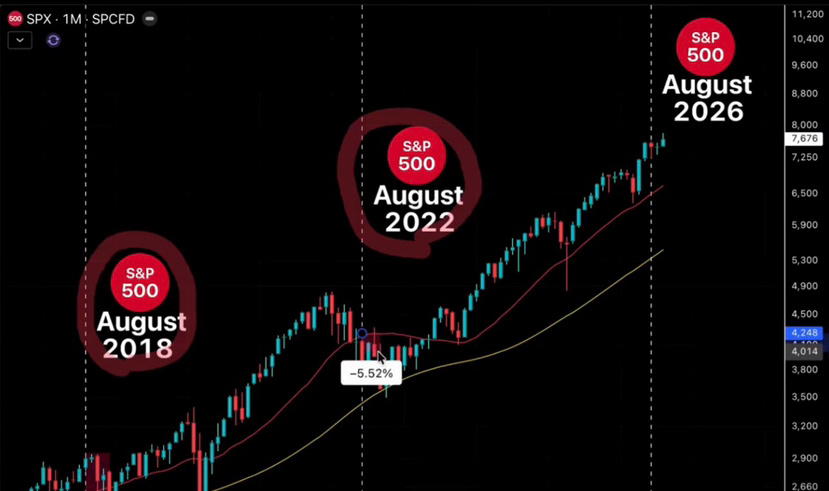
Elecciones de mitad de mandato y caída del S&P cada vez.🚨 CAÍDA DEL S&P 500 DESPUÉS DE AGOSTO EN CADA AÑO RECIENTE DE ELECCIONES DE MITAD DE MANDATO:
1962: -12.3%
1966: -18.2%
1966: -7.1%
1974: -28.6%
1978: -9.3%
1982: -27.1%
1986: -8.4%
1990: -18.2%
1994: -9.3%
1998: -18.3%
2002: -21.1%
2006: -6.9%
2010: -16.0%
2014: -11.2%
2018: -21.2%
2022: -16.9%
NI UN SOLO RENDIMIENTO POSITIVO EN 60 AÑOS
2026 NO SERÁ DIFERENTE
#USMidterms-WhatAreMarketsExpecting? #BinanceIncidentReport #AMDBeatsExpectations-AINarrativeContinues #AnthropicIPOPricedDownasInvestorsEye$1.5T #BinanceReopensWithdrawalsForMoreAssets
Elecciones de mitad de mandato y caída del S&P cada vez.
🚨 CAÍDA DEL S&P 500 DESPUÉS DE AGOSTO EN CADA AÑO RECIENTE DE ELECCIONES DE MITAD DE MANDATO:
1962: -12.3%
1966: -18.2%
1966: -7.1%
1974: -28.6%
1978: -9.3%
1982: -27.1%
1986: -8.4%
1990: -18.2%
1994: -9.3%
1998: -18.3%
2002: -21.1%
2006: -6.9%
2010: -16.0%
2014: -11.2%
2018: -21.2%
2022: -16.9%
NI UN SOLO RENDIMIENTO POSITIVO EN 60 AÑOS
2026 NO SERÁ DIFERENTE
#USMidterms-WhatAreMarketsExpecting? #BinanceIncidentReport #AMDBeatsExpectations-AINarrativeContinues #AnthropicIPOPricedDownasInvestorsEye$1.5T #BinanceReopensWithdrawalsForMoreAssets
30
Artículo
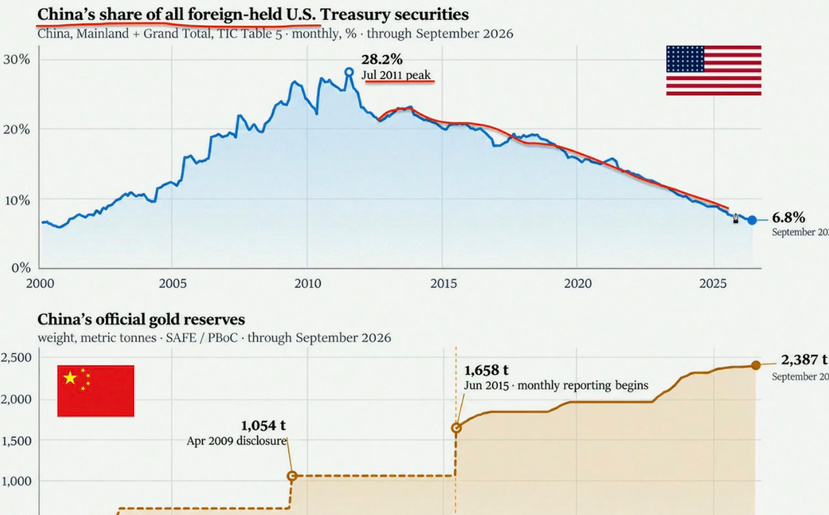
El sistema del oro está detrás del velo. La hegemonía del dólar o del petrodólar se está resquebrajando. ESTO NO ES NORMAL
Mira lo que China ha hecho discretamente:
BONOS DEL TESORO DE EE. UU.: 28,2 % → 6,8 %
ORO: 1.054 t → 2.387 t
Y China ya lleva 22 meses consecutivos comprando oro.
Ahora hazte una pregunta:
¿POR QUÉ ESTÁ SUCEDIENDO TODO ESTO AL MISMO TIEMPO?
Y comprar oro fue solo el primer paso.
Ahora China está incorporando las bóvedas, la compensación, la liquidación, los contratos en yuanes y la infraestructura de pagos que lo rodean:
- Hong Kong puso en marcha un sistema de compensación de oro respaldado por el gobierno y vinculado directamente a la Bolsa de Oro de Shanghái.
- Está ampliando su capacidad de almacenamiento de oro a más de 2.000 toneladas y explorando futuros de oro en RMB con liquidación física.
El sistema del oro está detrás del velo. La hegemonía del dólar o del petrodólar se está resquebrajando.
ESTO NO ES NORMAL
Mira lo que China ha hecho discretamente:
BONOS DEL TESORO DE EE. UU.: 28,2 % → 6,8 %
ORO: 1.054 t → 2.387 t
Y China ya lleva 22 meses consecutivos comprando oro.
Ahora hazte una pregunta:
¿POR QUÉ ESTÁ SUCEDIENDO TODO ESTO AL MISMO TIEMPO?
Y comprar oro fue solo el primer paso.
Ahora China está incorporando las bóvedas, la compensación, la liquidación, los contratos en yuanes y la infraestructura de pagos que lo rodean:
- Hong Kong puso en marcha un sistema de compensación de oro respaldado por el gobierno y vinculado directamente a la Bolsa de Oro de Shanghái.
- Está ampliando su capacidad de almacenamiento de oro a más de 2.000 toneladas y explorando futuros de oro en RMB con liquidación física.
295
Primera señal de fisuras.
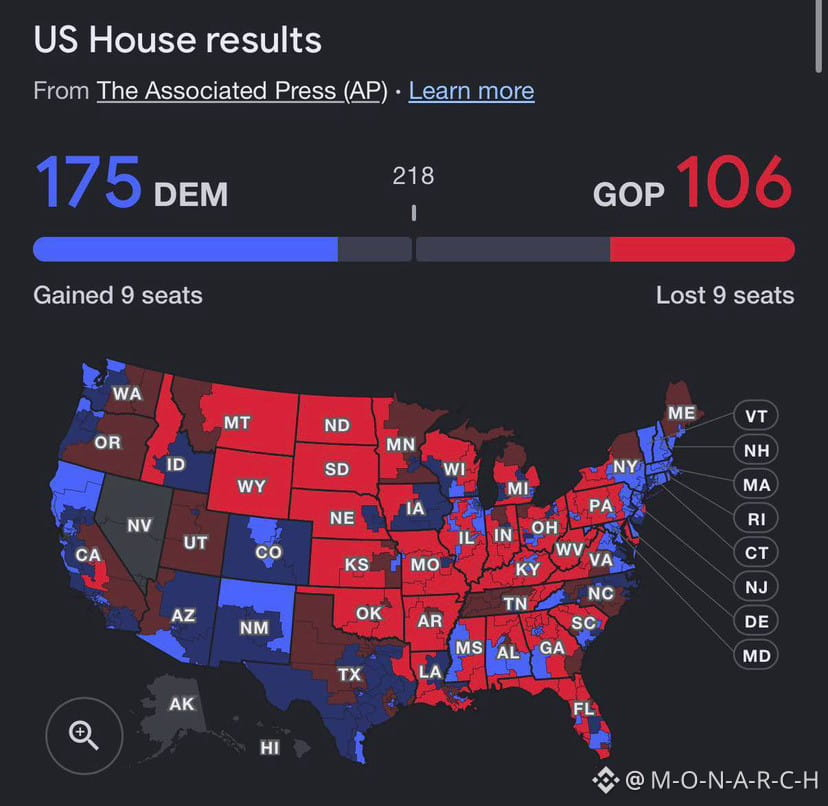
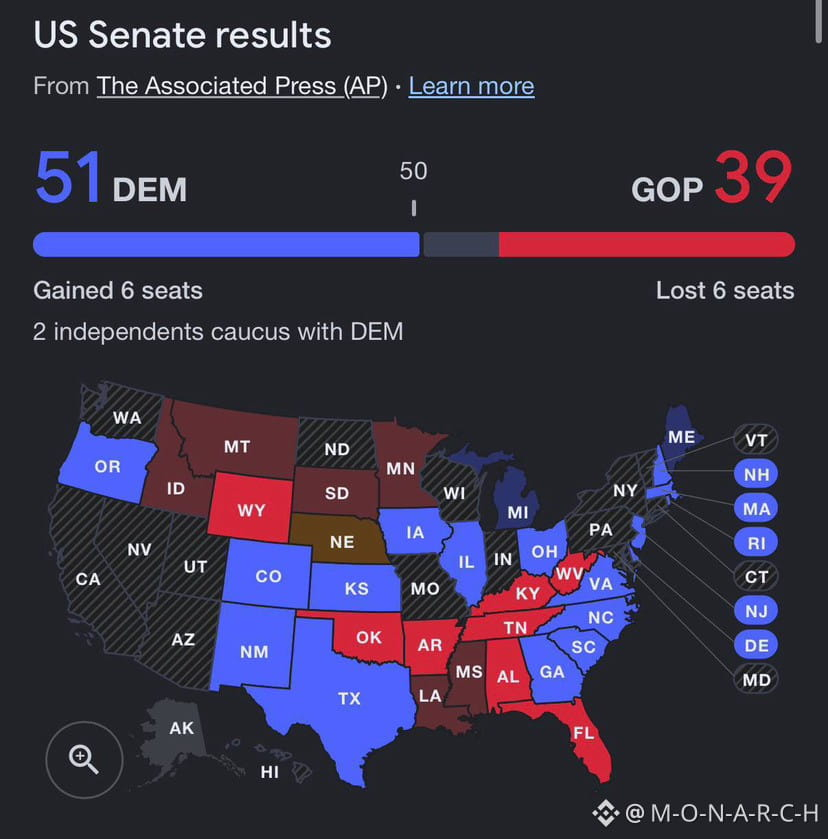
ÚLTIMA HORA: 🇺🇸 Trump ha perdido las elecciones de mitad de mandato, ya que los demócratas están ganando tanto la Cámara de Representantes como el Senado de EE. UU.
Los demócratas planean iniciar un juicio político contra el presidente Trump.
#USMidterms-WhatAreMarketsExpecting? #USOctoberNFP-AreRateCutsStillPossible #AMDBeatsExpectations-AINarrativeContinues #BinanceIncidentReport #BinanceReopensWithdrawalsForMoreAssets
156
·
--
Bajista
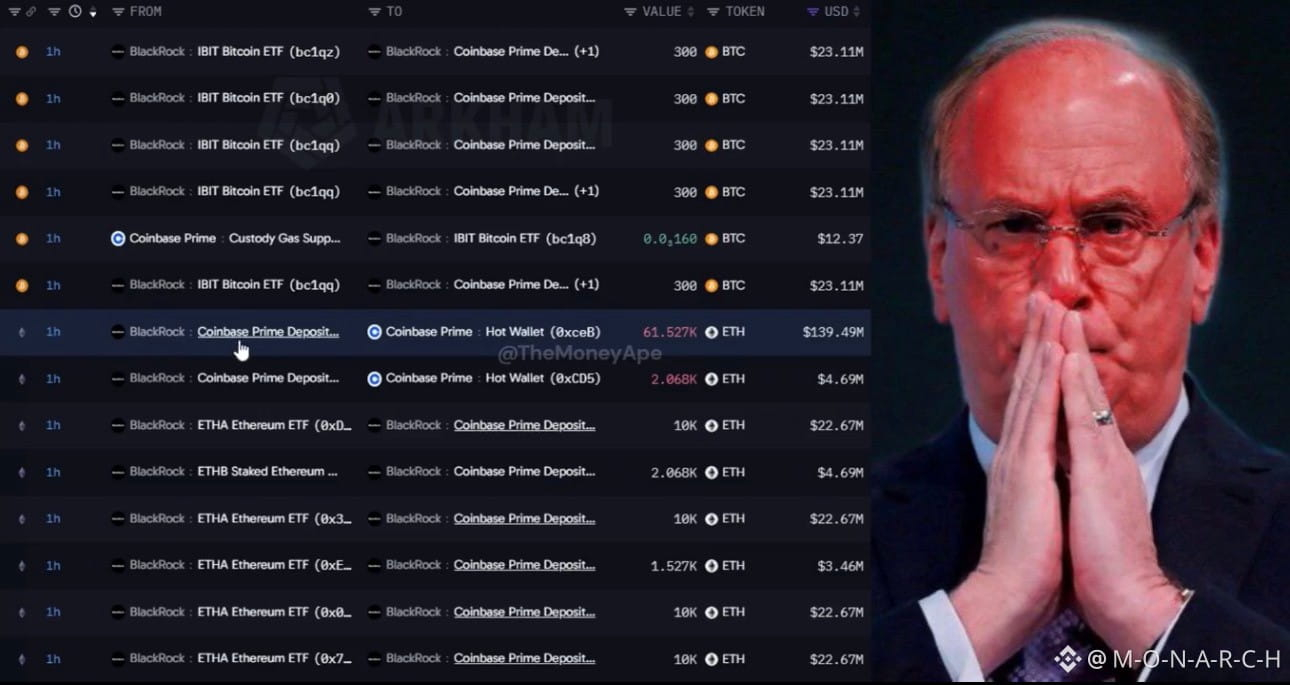
La venta está en marcha; espera a la sesión de Nueva York o hasta antes de que empiece. El mercado muestra debilidad.
ÚLTIMA HORA:
🇺🇸 BlackRock ha vuelto a empezar a deshacerse de sus tenencias de Ethereum y Bitcoin. Vendieron ETH y BTC por valor de 702,5 millones de dólares.
¿Están vendiendo porque BTC cayó un 24 % después de las elecciones de mitad de mandato de EE. UU. de 2022 y esperan que la historia se repita?
#USMidterms-WhatAreMarketsExpecting? #AMDBeatsExpectations-AINarrativeContinues #BinanceIncidentReport #BinanceIncidentReport #BinanceReopensWithdrawalsForMoreAssets
154
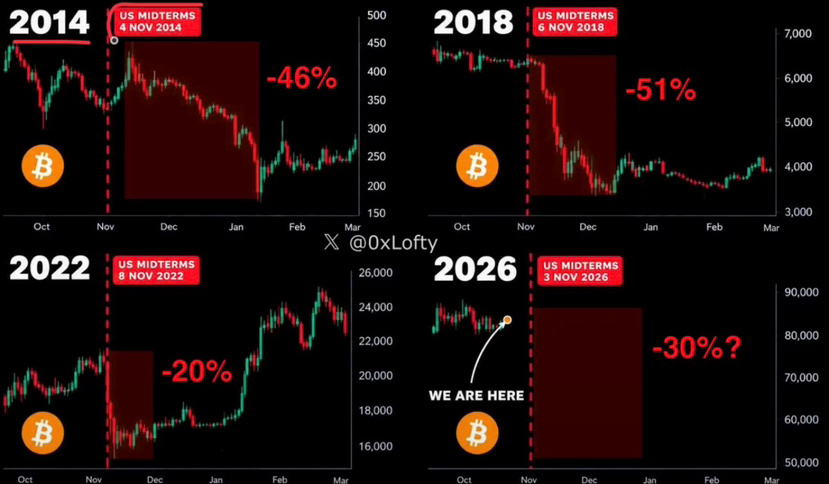
Artículo
Presión sobre las criptomonedas, mientras los índices no lo soportan. El mercado bursátil estadounidense podría abrir hoy con una auténtica masacre.
Los futuros del Nasdaq se han desplomado casi un 2%, mientras que los mercados bursátiles asiáticos también están sufriendo fuertes caídas.
• Nikkei 225 de Japón: bajó alrededor de un 4,5%.
• KOSPI de Corea del Sur: bajó un 4%.
• 95 de las 100 acciones del Nasdaq-100 cayeron en las operaciones posteriores al cierre.
Y ahora, las elecciones legislativas de mitad de mandato en EE. UU. podrían crear otro grave problema para la industria de la IA.
La demócrata Gina Hinojosa lleva la delantera en la carrera por la gobernación de Texas.
Quiere detener la construcción de nuevos centros de datos hasta que se introduzcan regulaciones más estrictas.
Presión sobre las criptomonedas, mientras los índices no lo soportan.
El mercado bursátil estadounidense podría abrir hoy con una auténtica masacre.
Los futuros del Nasdaq se han desplomado casi un 2%, mientras que los mercados bursátiles asiáticos también están sufriendo fuertes caídas.
• Nikkei 225 de Japón: bajó alrededor de un 4,5%.
• KOSPI de Corea del Sur: bajó un 4%.
• 95 de las 100 acciones del Nasdaq-100 cayeron en las operaciones posteriores al cierre.
Y ahora, las elecciones legislativas de mitad de mandato en EE. UU. podrían crear otro grave problema para la industria de la IA.
La demócrata Gina Hinojosa lleva la delantera en la carrera por la gobernación de Texas.
Quiere detener la construcción de nuevos centros de datos hasta que se introduzcan regulaciones más estrictas.
161
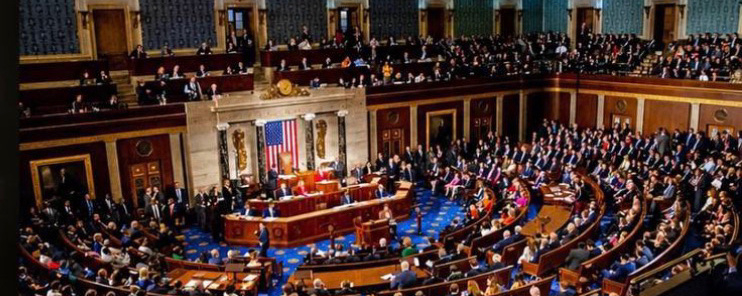
Artículo
Han pasado 24 horas; la sacudida ya comenzó en las primeras horas.LAS PRÓXIMAS 36 HORAS PODRÍAN PROVOCAR UNA SACUDIDA MASIVA EN LOS MERCADOS MUNDIALES
Y la razón son las elecciones de mitad de mandato en EE. UU.
Ahora mismo. Los demócratas tienen alrededor de un 73 % de probabilidades de ganar tanto la Cámara de Representantes como el Senado.
Y, dependiendo de los resultados, las criptomonedas, las acciones de IA y el petróleo podrían reaccionar de formas muy distintas.
SI GANAN LOS REPUBLICANOS:
• Criptomonedas: Trump podría tener más facilidades para aprobar leyes favorables a las criptomonedas, incluida la Ley CLARITY, lo que podría desencadenar un repunte del bitcóin y las altcoins.
• Acciones de IA: Menos restricciones regulatorias podrían beneficiar a las principales empresas de IA y a los fabricantes de chips.
Han pasado 24 horas; la sacudida ya comenzó en las primeras horas.
LAS PRÓXIMAS 36 HORAS PODRÍAN PROVOCAR UNA SACUDIDA MASIVA EN LOS MERCADOS MUNDIALES
Y la razón son las elecciones de mitad de mandato en EE. UU.
Ahora mismo. Los demócratas tienen alrededor de un 73 % de probabilidades de ganar tanto la Cámara de Representantes como el Senado.
Y, dependiendo de los resultados, las criptomonedas, las acciones de IA y el petróleo podrían reaccionar de formas muy distintas.
SI GANAN LOS REPUBLICANOS:
• Criptomonedas: Trump podría tener más facilidades para aprobar leyes favorables a las criptomonedas, incluida la Ley CLARITY, lo que podría desencadenar un repunte del bitcóin y las altcoins.
• Acciones de IA: Menos restricciones regulatorias podrían beneficiar a las principales empresas de IA y a los fabricantes de chips.
1
94
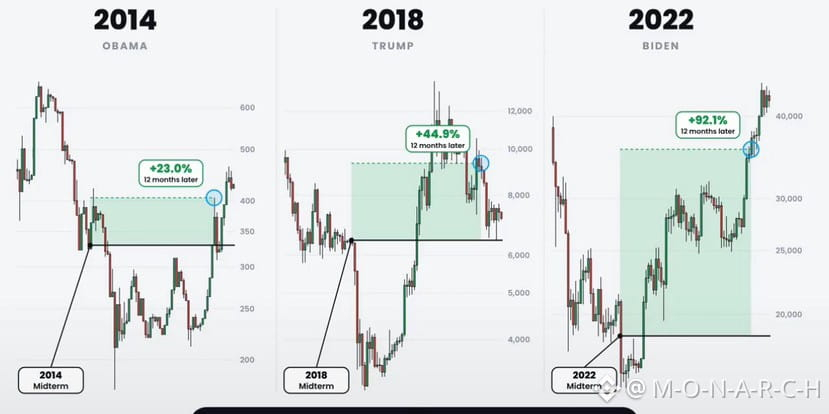
Artículo
Elecciones de mitad de mandato, pero Jim Cramer.🇺🇸 LAS ELECCIONES DE MITAD DE MANDATO EN EE. UU. TERMINAN HOY
Históricamente alcista para Bitcoin a 12 meses:
2014: +24.5%
2018: +44.9%
2022: +92.3%
Esta vez importa más de lo habitual.
La ley CLARITY está estancada en el Senado.
Una victoria demócrata = aún menos posibilidades de que se apruebe.
Además, una posible escalada con Irán → sube el petróleo → sube la inflación.
Ruido a corto plazo.
A largo plazo, la misma historia.
Se disipa la incertidumbre. Fluye la liquidez.
#BinanceHourlyDepositsExceedWithdrawals #BinanceIncidentReport #USMidtermElections #USOctoberNFP-AreRateCutsStillPossible #AppleReportsMixedResults
Elecciones de mitad de mandato, pero Jim Cramer.
🇺🇸 LAS ELECCIONES DE MITAD DE MANDATO EN EE. UU. TERMINAN HOY
Históricamente alcista para Bitcoin a 12 meses:
2014: +24.5%
2018: +44.9%
2022: +92.3%
Esta vez importa más de lo habitual.
La ley CLARITY está estancada en el Senado.
Una victoria demócrata = aún menos posibilidades de que se apruebe.
Además, una posible escalada con Irán → sube el petróleo → sube la inflación.
Ruido a corto plazo.
A largo plazo, la misma historia.
Se disipa la incertidumbre. Fluye la liquidez.
#BinanceHourlyDepositsExceedWithdrawals #BinanceIncidentReport #USMidtermElections #USOctoberNFP-AreRateCutsStillPossible #AppleReportsMixedResults
1
87
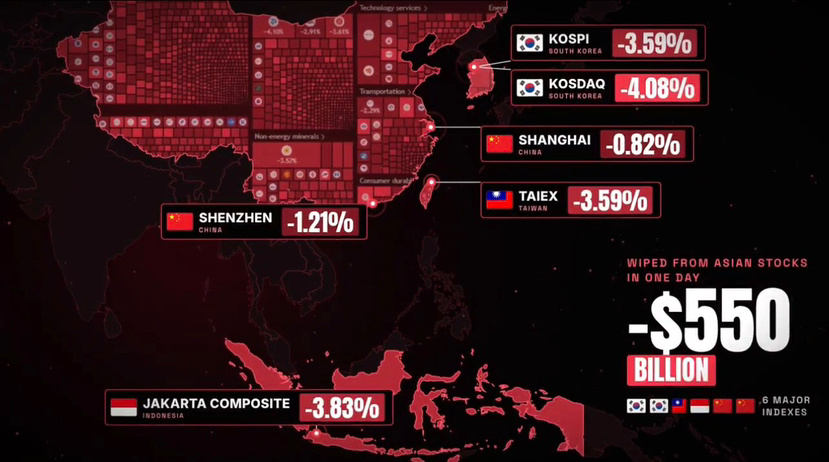
Artículo
Primero, las valoraciones excesivas de la IA; después, los índices; ahora, las criptomonedas y los metales. Joder, día catastrófico para los mercados bursátiles asiáticos:
→ Se ESFUMARON 550.000 millones de dólares de 6 grandes índices asiáticos en UN día, SIN que Tokio siquiera cotizara
→ 🇰🇷 KOSPI -3,59%, KOSDAQ -4,08% — los extranjeros VENDIERON 1,5 billones de wones
→ 🇹🇼 Taiex -3,59% — 1.612 puntos, su 7.ª mayor caída en puntos registrada
→ 🇮🇩 Yakarta fue MÁS brutal que el KOSPI, -3,83% — 🇨🇳 Shenzhen -1,21%, Shanghái -0,82%
→ El repunte de los chips de IA en Asia — EFECTIVAMENTE ACABADO
→ Puerta de salida para el capital extranjero — ABIERTA AHORA
→ Nuevas OPV en China — EN PAUSA
Primero, las valoraciones excesivas de la IA; después, los índices; ahora, las criptomonedas y los metales.
Joder, día catastrófico para los mercados bursátiles asiáticos:
→ Se ESFUMARON 550.000 millones de dólares de 6 grandes índices asiáticos en UN día, SIN que Tokio siquiera cotizara
→ 🇰🇷 KOSPI -3,59%, KOSDAQ -4,08% — los extranjeros VENDIERON 1,5 billones de wones
→ 🇹🇼 Taiex -3,59% — 1.612 puntos, su 7.ª mayor caída en puntos registrada
→ 🇮🇩 Yakarta fue MÁS brutal que el KOSPI, -3,83% — 🇨🇳 Shenzhen -1,21%, Shanghái -0,82%
→ El repunte de los chips de IA en Asia — EFECTIVAMENTE ACABADO
→ Puerta de salida para el capital extranjero — ABIERTA AHORA
→ Nuevas OPV en China — EN PAUSA
28
·
--
Bajista
🚨 ÚLTIMA HORA: Las criptomonedas de baja calidad, según Jim Cramer, quedan descartadas.
Irán ha lanzado un importante ataque con misiles hipersónicos contra varias bases militares israelíes. 🇮🇷🚀🇮🇱
Aún no se han confirmado de forma independiente la magnitud ni el impacto de los ataques reportados. ⚠️
#BinanceIncidentReport #BinanceHourlyDepositsExceedWithdrawals #USMidtermElections #AnthropicIPOPricedDownasInvestorsEye$1.5T #LaOPVdeAnthropicBajaMientrasLosInversoresMiran$1.5T

449
Artículo
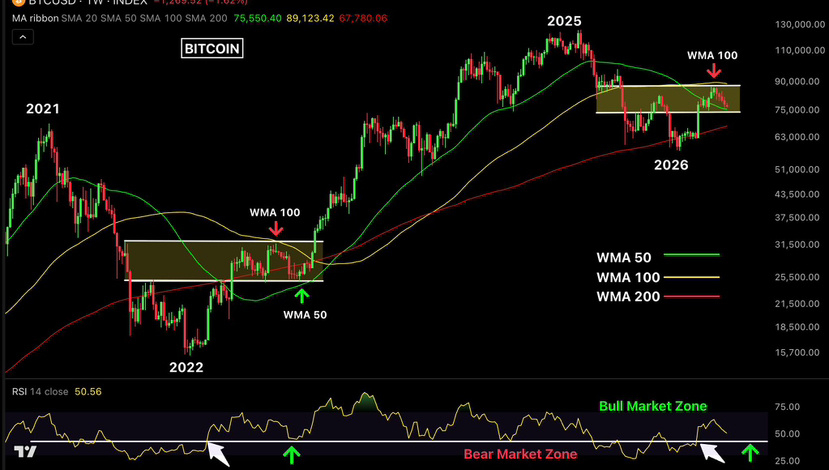
¿Por qué BTC se mantiene en 76.000? Tras la noticia del hackeo.Bitcoin debería estar cayendo mucho más ahora mismo.
La deuda del Tesoro está fuera de control. Lo mismo ocurre con los rendimientos de los bonos a 10 años.
La mayor plataforma de intercambio de criptomonedas del mundo acaba de sufrir un hackeo de 6.300 MILLONES DE DÓLARES, la Fed está adoptando una postura más restrictiva y crece la incertidumbre política en EE. UU.
Sin embargo, BTC sigue manteniéndose en torno a los 76.000–78.000 dólares.
En 2023 ocurrió algo muy parecido.
En aquel entonces, casi todo lo que podía salir mal estaba saliendo mal.
• La crisis bancaria de EE. UU. provocó el colapso de Silicon Valley Bank y Signature Bank.
• Silvergate, uno de los principales socios bancarios del sector cripto, cerró sus puertas.
¿Por qué BTC se mantiene en 76.000? Tras la noticia del hackeo.
Bitcoin debería estar cayendo mucho más ahora mismo.
La deuda del Tesoro está fuera de control. Lo mismo ocurre con los rendimientos de los bonos a 10 años.
La mayor plataforma de intercambio de criptomonedas del mundo acaba de sufrir un hackeo de 6.300 MILLONES DE DÓLARES, la Fed está adoptando una postura más restrictiva y crece la incertidumbre política en EE. UU.
Sin embargo, BTC sigue manteniéndose en torno a los 76.000–78.000 dólares.
En 2023 ocurrió algo muy parecido.
En aquel entonces, casi todo lo que podía salir mal estaba saliendo mal.
• La crisis bancaria de EE. UU. provocó el colapso de Silicon Valley Bank y Signature Bank.
• Silvergate, uno de los principales socios bancarios del sector cripto, cerró sus puertas.
19

Inicia sesión para explorar más contenidos
Únete a usuarios globales de criptomonedas en Binance Square
⚡️ Obtén información útil y actualizada sobre criptos.
💬 Avalado por el mayor exchange de criptomonedas en el mundo.
👍 Descubre perspectivas reales de creadores verificados.
Email/número de teléfono
Temas populares
USMidterms-WhatAreMarketsExpecting?
89,828 vistas
767 están debatiendo
La victoria demócrata en el Congreso sacude las apuestas por Trump en acciones de IA y criptomonedas
Binance News
·12 me gusta
·5k vistas
USOctoberNFP-AreRateCutsStillPossible
248,888 vistas
1,933 están debatiendo
AMDBeatsExpectations-AINarrativeContinues
21,724 vistas
300 están debatiendo