

#clawquant
clawquant
519 vistas
16 están debatiendo
Hot
Lo último


·
--
🔒 Asegurar el Núcleo del Agente: Configuraciones Locales Seguras 🛠️
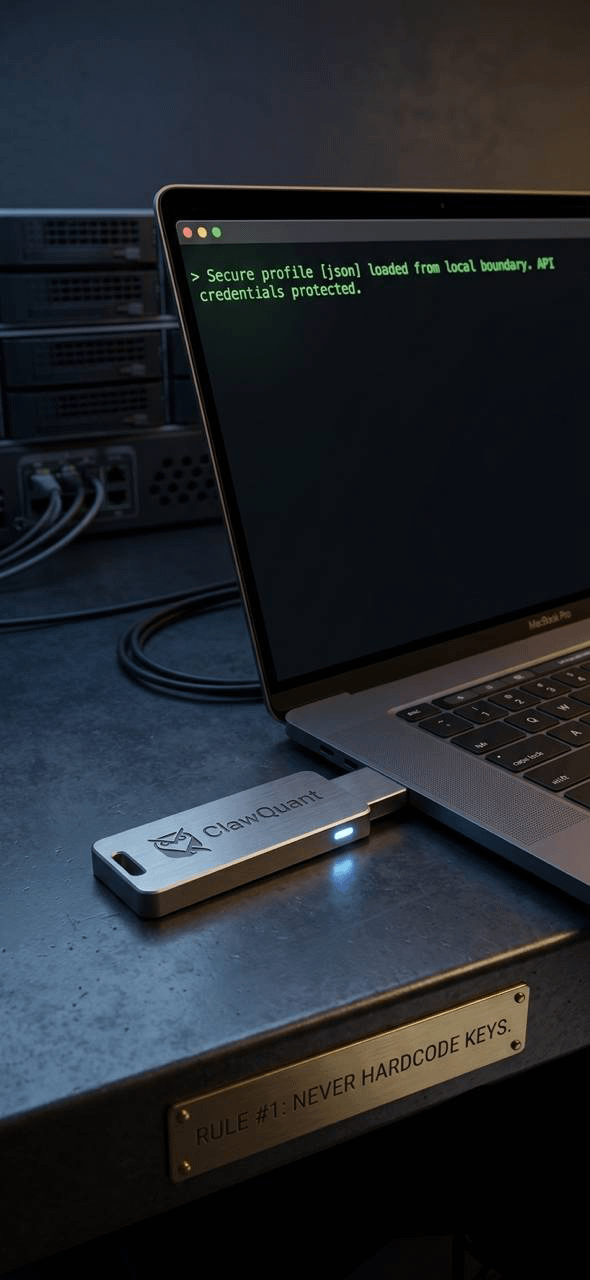
En mi último post, compartí la arquitectura de mi proyecto personal, ClawQuant. Hoy, hablemos de la primera regla para construir localmente: nunca codifiques tus claves privadas ni tus credenciales de API. 🛑
Al ejecutar agentes autónomos que manejan lógica en cadena (on-chain), la seguridad es una responsabilidad personal. Aquí te muestro cómo configuro mi puerta de enlace local para mantenerla segura pero completamente automatizada:
✴️ Configuración del entorno: En lugar de configuraciones desordenadas, uso un archivo de configuración JSON local e independiente (.json) guardado de forma segura dentro de mi directorio personal (~/.) para almacenar configuraciones sensibles de claves.
✴️ Carga segura: Usando controladores estándar de Python, el agente OpenClaw lee dinámicamente el perfil JSON directamente en el entorno de ejecución en tiempo de ejecución. Las claves nunca tocan el repositorio de código compartido.
✴️ El límite local: Las credenciales permanecen aisladas en el dispositivo, garantizando la ejecución automatizada de tareas sin fugas accidentales.
Al mantener las credenciales completamente desconectadas de la lógica, el sistema funciona de forma segura en segundo plano. 🖥️⚡
En la próxima actualización, profundizaré en cómo ClawQuant maneja el flujo de datos del SDK de Python OpenGradient para el modelado de riesgo en tiempo real. ¡Mantente atento! 📉🔥
#ClawQuant #BinanceBuilders
#DeAi #QuantitativeAnalysis
@OpenGradient $OPG #OPG
🔒 Asegurar el Núcleo del Agente: Configuraciones Locales Seguras 🛠️
En mi último post, compartí la arquitectura de mi proyecto personal, ClawQuant. Hoy, hablemos de la primera regla para construir localmente: nunca codifiques tus claves privadas ni tus credenciales de API. 🛑
Al ejecutar agentes autónomos que manejan lógica en cadena (on-chain), la seguridad es una responsabilidad personal. Aquí te muestro cómo configuro mi puerta de enlace local para mantenerla segura pero completamente automatizada:
✴️ Configuración del entorno: En lugar de configuraciones desordenadas, uso un archivo de configuración JSON local e independiente (.json) guardado de forma segura dentro de mi directorio personal (~/.) para almacenar configuraciones sensibles de claves.
✴️ Carga segura: Usando controladores estándar de Python, el agente OpenClaw lee dinámicamente el perfil JSON directamente en el entorno de ejecución en tiempo de ejecución. Las claves nunca tocan el repositorio de código compartido.
✴️ El límite local: Las credenciales permanecen aisladas en el dispositivo, garantizando la ejecución automatizada de tareas sin fugas accidentales.
Al mantener las credenciales completamente desconectadas de la lógica, el sistema funciona de forma segura en segundo plano. 🖥️⚡
En la próxima actualización, profundizaré en cómo ClawQuant maneja el flujo de datos del SDK de Python OpenGradient para el modelado de riesgo en tiempo real. ¡Mantente atento! 📉🔥
#ClawQuant #BinanceBuilders
#DeAi #QuantitativeAnalysis
@OpenGradient $OPG #OPG
En mi último post, compartí la arquitectura de mi proyecto personal, ClawQuant. Hoy, hablemos de la primera regla para construir localmente: nunca codifiques tus claves privadas ni tus credenciales de API. 🛑
Al ejecutar agentes autónomos que manejan lógica en cadena (on-chain), la seguridad es una responsabilidad personal. Aquí te muestro cómo configuro mi puerta de enlace local para mantenerla segura pero completamente automatizada:
✴️ Configuración del entorno: En lugar de configuraciones desordenadas, uso un archivo de configuración JSON local e independiente (.json) guardado de forma segura dentro de mi directorio personal (~/.) para almacenar configuraciones sensibles de claves.
✴️ Carga segura: Usando controladores estándar de Python, el agente OpenClaw lee dinámicamente el perfil JSON directamente en el entorno de ejecución en tiempo de ejecución. Las claves nunca tocan el repositorio de código compartido.
✴️ El límite local: Las credenciales permanecen aisladas en el dispositivo, garantizando la ejecución automatizada de tareas sin fugas accidentales.
Al mantener las credenciales completamente desconectadas de la lógica, el sistema funciona de forma segura en segundo plano. 🖥️⚡
En la próxima actualización, profundizaré en cómo ClawQuant maneja el flujo de datos del SDK de Python OpenGradient para el modelado de riesgo en tiempo real. ¡Mantente atento! 📉🔥
#ClawQuant #BinanceBuilders
#DeAi #QuantitativeAnalysis
@OpenGradient $OPG #OPG
193
·
--
Conectando los Puntos: Streaming de ML On-Chain con OpenGradient 📉
Ahora que el entorno local está asegurado, es momento de alimentar al sistema con datos.
Hoy, me estoy enfocando en la capa de infraestructura: integrando el SDK @OpenGradient Python en mi flujo de trabajo.
Para un solo builder 😎, ejecutar localmente modelos de machine learning pesados no es práctico.
Ahí es donde brilla la infraestructura de IA descentralizada:
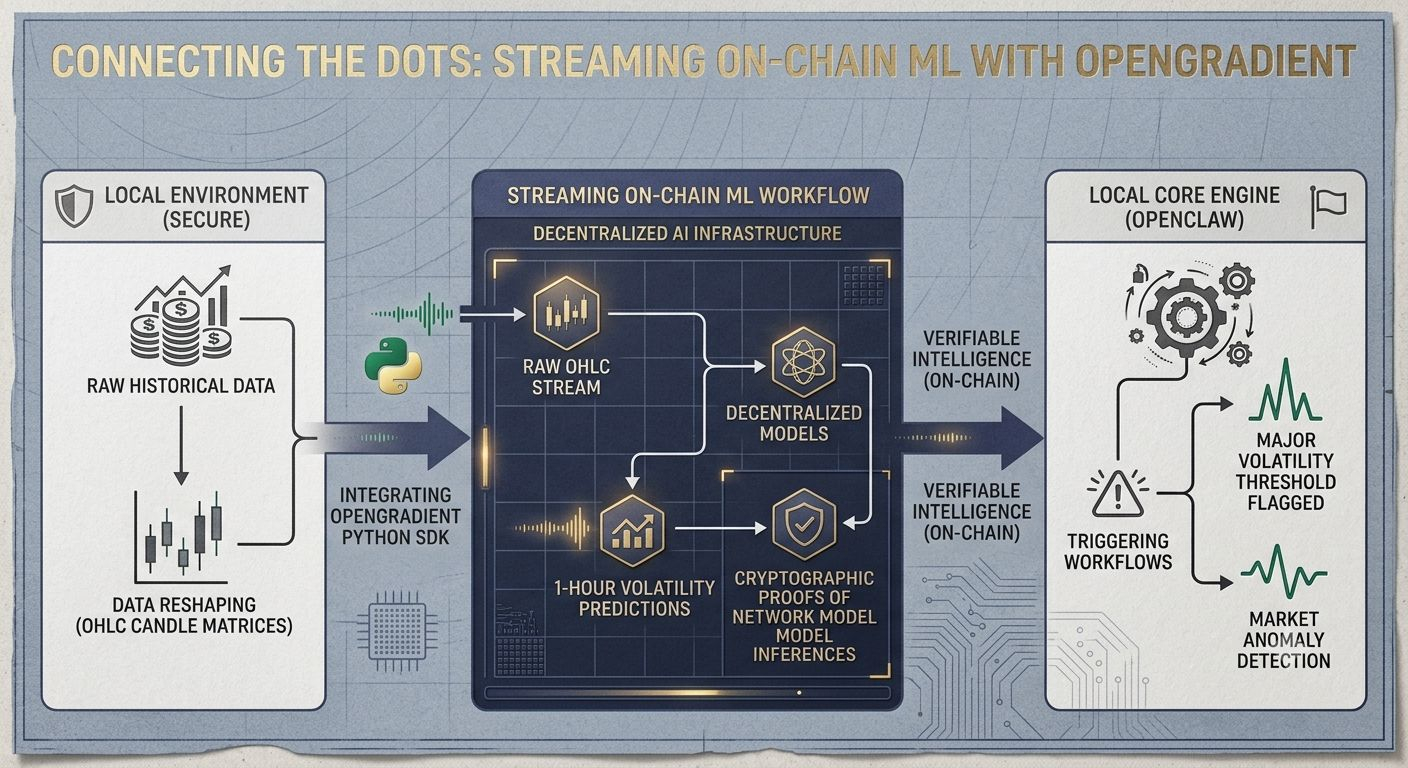
✴️ El Pipeline de Datos: El SDK permite que mi configuración local transforme matrices de velas OHLC históricas y las envíe en streaming a modelos descentralizados para predicciones de volatilidad a 1 hora.
✴️ Inteligencia Verificable: En lugar de depender de APIs centralizadas, el sistema recibe pruebas criptográficas de las inferencias del modelo de la red directamente on-chain.
✴️ El Hook: He enlazado esta salida de inferencia directamente a mi motor principal OpenClaw, que activa flujos de trabajo específicos cada vez que se marca un umbral importante de volatilidad o una anomalía del mercado.
Este montaje conecta estructuras crudas del mercado con salidas reales de machine learning descentralizado. 📊🔥
A continuación, veremos el cerebro de la operación: cómo ClawQuant procesa estos datos para modelar el riesgo matemático. 🧠📐
#ClawQuant #BinanceBuilders
#DeAi #OPG #OpenClaw $OPG
Conectando los Puntos: Streaming de ML On-Chain con OpenGradient 📉
Ahora que el entorno local está asegurado, es momento de alimentar al sistema con datos.
Hoy, me estoy enfocando en la capa de infraestructura: integrando el SDK @OpenGradient Python en mi flujo de trabajo.
Para un solo builder 😎, ejecutar localmente modelos de machine learning pesados no es práctico.
Ahí es donde brilla la infraestructura de IA descentralizada:
✴️ El Pipeline de Datos: El SDK permite que mi configuración local transforme matrices de velas OHLC históricas y las envíe en streaming a modelos descentralizados para predicciones de volatilidad a 1 hora.
✴️ Inteligencia Verificable: En lugar de depender de APIs centralizadas, el sistema recibe pruebas criptográficas de las inferencias del modelo de la red directamente on-chain.
✴️ El Hook: He enlazado esta salida de inferencia directamente a mi motor principal OpenClaw, que activa flujos de trabajo específicos cada vez que se marca un umbral importante de volatilidad o una anomalía del mercado.
Este montaje conecta estructuras crudas del mercado con salidas reales de machine learning descentralizado. 📊🔥
A continuación, veremos el cerebro de la operación: cómo ClawQuant procesa estos datos para modelar el riesgo matemático. 🧠📐
#ClawQuant #BinanceBuilders
#DeAi #OPG #OpenClaw $OPG
Ahora que el entorno local está asegurado, es momento de alimentar al sistema con datos.
Hoy, me estoy enfocando en la capa de infraestructura: integrando el SDK @OpenGradient Python en mi flujo de trabajo.
Para un solo builder 😎, ejecutar localmente modelos de machine learning pesados no es práctico.
Ahí es donde brilla la infraestructura de IA descentralizada:
✴️ El Pipeline de Datos: El SDK permite que mi configuración local transforme matrices de velas OHLC históricas y las envíe en streaming a modelos descentralizados para predicciones de volatilidad a 1 hora.
✴️ Inteligencia Verificable: En lugar de depender de APIs centralizadas, el sistema recibe pruebas criptográficas de las inferencias del modelo de la red directamente on-chain.
✴️ El Hook: He enlazado esta salida de inferencia directamente a mi motor principal OpenClaw, que activa flujos de trabajo específicos cada vez que se marca un umbral importante de volatilidad o una anomalía del mercado.
Este montaje conecta estructuras crudas del mercado con salidas reales de machine learning descentralizado. 📊🔥
A continuación, veremos el cerebro de la operación: cómo ClawQuant procesa estos datos para modelar el riesgo matemático. 🧠📐
#ClawQuant #BinanceBuilders
#DeAi #OPG #OpenClaw $OPG
1
104
·
--
La Máquina Analítica y Modelado de Volatilidad
Dentro de ClawQuant: Desentrañando Modelos de Volatilidad y Riesgo 📐
Con los datos transmitiéndose de forma segura a través de OpenGradient, es hora de dejar que ClawQuant haga lo que fue construido para hacer: evaluación matemática del riesgo y modelado de volatilidad.
Como creador construyendo esto en solitario, mi enfoque es únicamente la precisión y la eficiencia. Así es como el módulo cuantitativo procesa el caos del mercado:
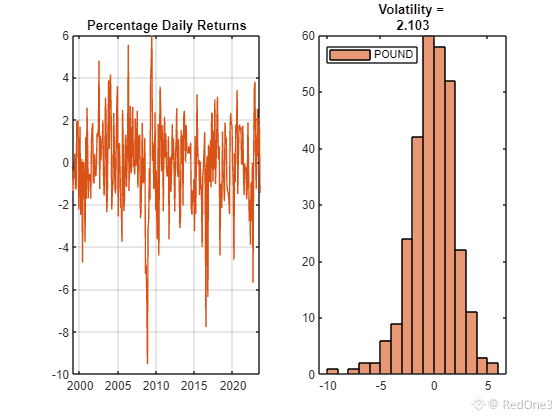
✴️ Ventaja Estadística: ClawQuant toma los datos de inferencia de ML descentralizada y aplica modelos de volatilidad local para calcular posibles umbrales de riesgo.
✴️ Evaluación Dinámica del Riesgo: En lugar de usar parámetros fijos, el sistema se adapta a cambios bruscos de liquidez y picos de volumen en la blockchain. 🌊
✴️ Lógica Automatizada: Cuando la volatilidad supera un umbral matemático crítico, se envía instantáneamente un disparador local al framework OpenClaw para ajustar el comportamiento del agente.
El objetivo aquí no es magia: es matemáticas puras. Al gestionar el riesgo de manera matemática, el agente puede operar con racionalidad incluso en condiciones de mercado altamente volátiles. 🛡️✨
#ClawQuant #BinanceBuilders
#OPG $OPG @OpenGradient
#DeAi #QuantitativeAnalysis
La Máquina Analítica y Modelado de Volatilidad
Dentro de ClawQuant: Desentrañando Modelos de Volatilidad y Riesgo 📐
Con los datos transmitiéndose de forma segura a través de OpenGradient, es hora de dejar que ClawQuant haga lo que fue construido para hacer: evaluación matemática del riesgo y modelado de volatilidad.
Como creador construyendo esto en solitario, mi enfoque es únicamente la precisión y la eficiencia. Así es como el módulo cuantitativo procesa el caos del mercado:
✴️ Ventaja Estadística: ClawQuant toma los datos de inferencia de ML descentralizada y aplica modelos de volatilidad local para calcular posibles umbrales de riesgo.
✴️ Evaluación Dinámica del Riesgo: En lugar de usar parámetros fijos, el sistema se adapta a cambios bruscos de liquidez y picos de volumen en la blockchain. 🌊
✴️ Lógica Automatizada: Cuando la volatilidad supera un umbral matemático crítico, se envía instantáneamente un disparador local al framework OpenClaw para ajustar el comportamiento del agente.
El objetivo aquí no es magia: es matemáticas puras. Al gestionar el riesgo de manera matemática, el agente puede operar con racionalidad incluso en condiciones de mercado altamente volátiles. 🛡️✨
#ClawQuant #BinanceBuilders
#OPG $OPG @OpenGradient
#DeAi #QuantitativeAnalysis
Dentro de ClawQuant: Desentrañando Modelos de Volatilidad y Riesgo 📐
Con los datos transmitiéndose de forma segura a través de OpenGradient, es hora de dejar que ClawQuant haga lo que fue construido para hacer: evaluación matemática del riesgo y modelado de volatilidad.
Como creador construyendo esto en solitario, mi enfoque es únicamente la precisión y la eficiencia. Así es como el módulo cuantitativo procesa el caos del mercado:
✴️ Ventaja Estadística: ClawQuant toma los datos de inferencia de ML descentralizada y aplica modelos de volatilidad local para calcular posibles umbrales de riesgo.
✴️ Evaluación Dinámica del Riesgo: En lugar de usar parámetros fijos, el sistema se adapta a cambios bruscos de liquidez y picos de volumen en la blockchain. 🌊
✴️ Lógica Automatizada: Cuando la volatilidad supera un umbral matemático crítico, se envía instantáneamente un disparador local al framework OpenClaw para ajustar el comportamiento del agente.
El objetivo aquí no es magia: es matemáticas puras. Al gestionar el riesgo de manera matemática, el agente puede operar con racionalidad incluso en condiciones de mercado altamente volátiles. 🛡️✨
#ClawQuant #BinanceBuilders
#OPG $OPG @OpenGradient
#DeAi #QuantitativeAnalysis
3
1
159
·
--
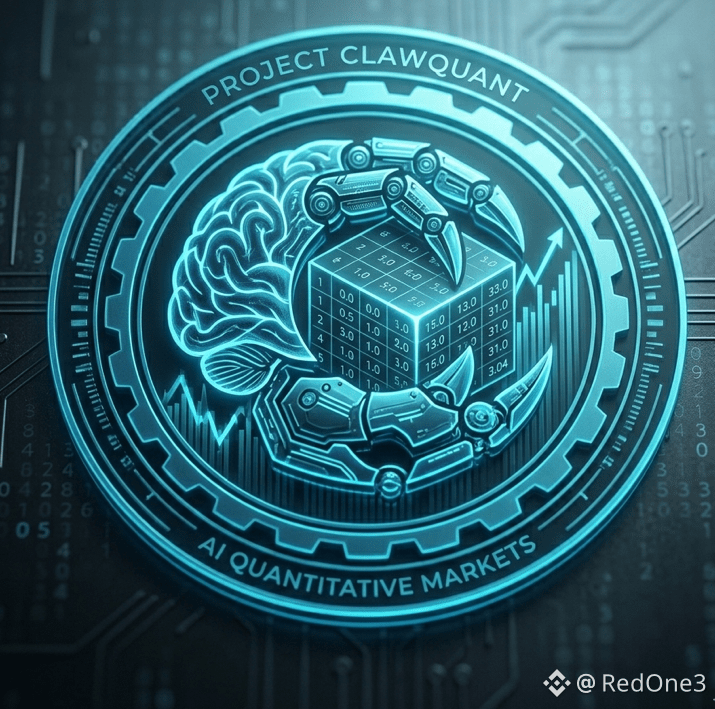
Presentamos el emblema ClawQuant 🎯🔥
Una fusión de inteligencia y ejecución. Cada algoritmo necesita una firma.
Construyendo el futuro donde el análisis cuantitativo se une a la precisión de la acción automatizada.
Actualmente en desarrollo activo. 📈💻
#ClawQuant #BinanceBuilders
#DeAi #AnálisisCuantitativo
Presentamos el emblema ClawQuant 🎯🔥
Una fusión de inteligencia y ejecución. Cada algoritmo necesita una firma.
Construyendo el futuro donde el análisis cuantitativo se une a la precisión de la acción automatizada.
Actualmente en desarrollo activo. 📈💻
#ClawQuant #BinanceBuilders
#DeAi #AnálisisCuantitativo
Una fusión de inteligencia y ejecución. Cada algoritmo necesita una firma.
Construyendo el futuro donde el análisis cuantitativo se une a la precisión de la acción automatizada.
Actualmente en desarrollo activo. 📈💻
#ClawQuant #BinanceBuilders
#DeAi #AnálisisCuantitativo
2.1k
7
115
2.1k
·
--
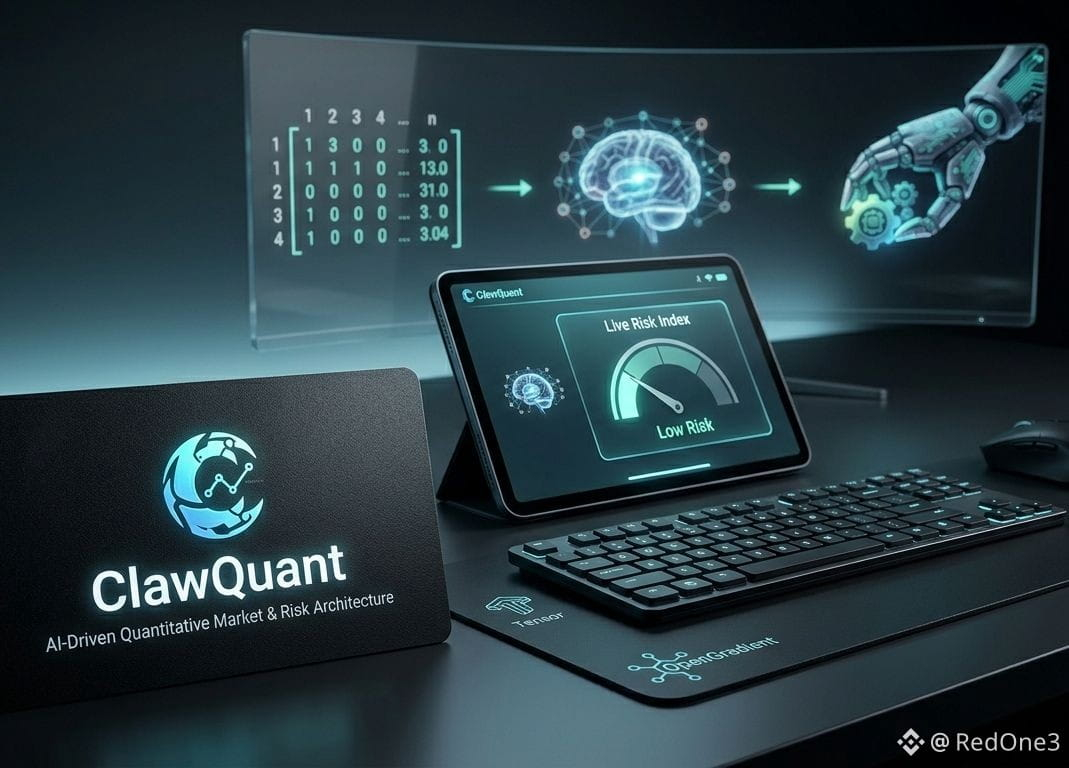
Es ClawQuant 😁🏆
Y #ClawQuant conecta el aprendizaje automático descentralizado, la ingeniería de datos cuantitativos en bruto y la ejecución automatizada #Web3 para proteger las posiciones en cadena antes de que los picos de volatilidad del mercado ocurran.
Es ClawQuant 😁🏆
Y #ClawQuant conecta el aprendizaje automático descentralizado, la ingeniería de datos cuantitativos en bruto y la ejecución automatizada #Web3 para proteger las posiciones en cadena antes de que los picos de volatilidad del mercado ocurran.
Y #ClawQuant conecta el aprendizaje automático descentralizado, la ingeniería de datos cuantitativos en bruto y la ejecución automatizada #Web3 para proteger las posiciones en cadena antes de que los picos de volatilidad del mercado ocurran.
0xr1
·
--
🤖 Agente de Riesgo AI | OpenClaw + BitQuant + OpenGradient 🚀
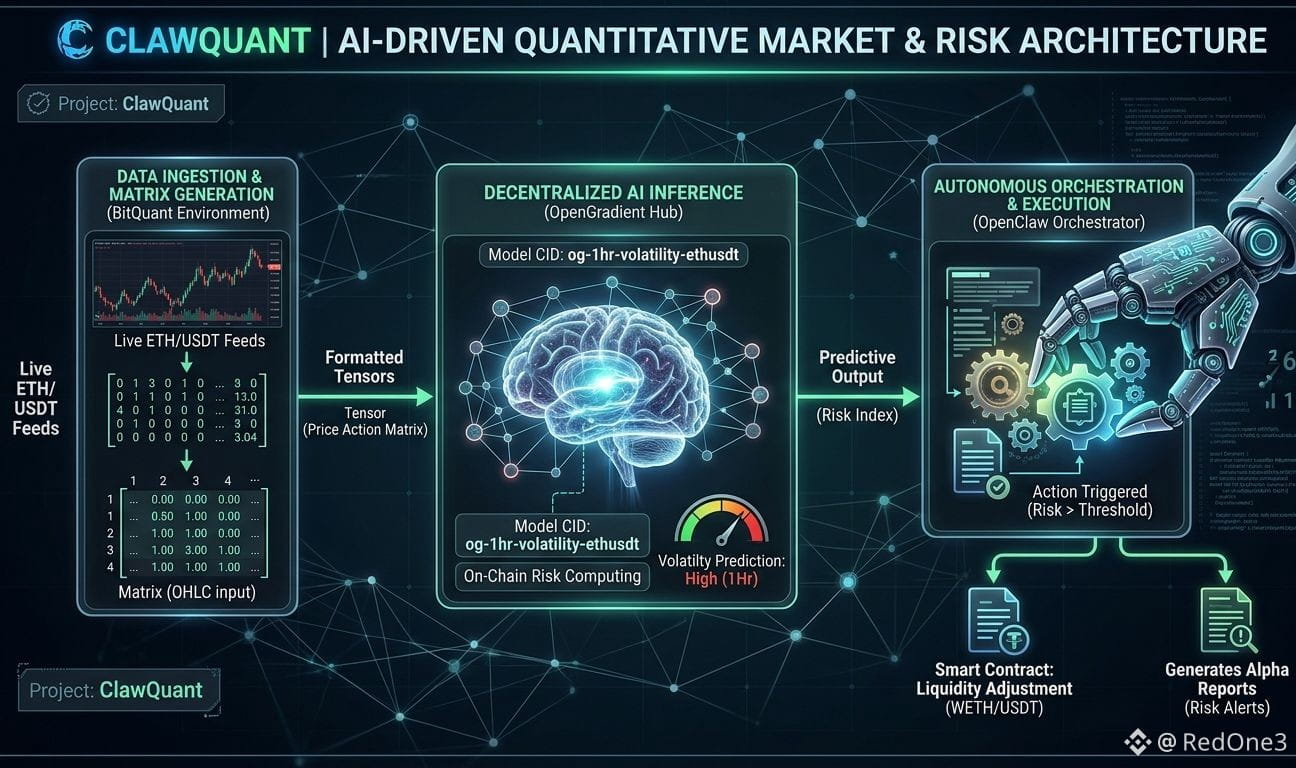
🛠️ Profundización: Vamos a desglosar cómo el Agente de Mercado y Riesgo procesa datos y ejecuta acciones en la cadena. 📈
La Configuración y Flujo de Trabajo 🏗️
1. Ingesta (BitQuant): 📊
Extrae feeds en vivo de ETH/USDT y formatea la acción de precio en bruto en matrices para entornos de ML.
2. Inferencia (OpenGradient): 🧠
La matriz se envía a través del CID del Modelo al modelo og-1hr-volatility-ethusdt para una inferencia de volatilidad en cadena verificable.
3. Ejecución (OpenClaw): 🤖
Si la volatilidad predicha se dispara, OpenClaw activa automáticamente acciones de contratos inteligentes o publica Informes Alpha.
💡 Por qué es importante: Nos mueve de scripts fijos a una inteligencia en cadena impulsada por AI sin necesidad de confianza. 🌐
¡Mantente atento para benchmarks! 🛠️
@OpenGradient $OPG #OpenClaw #OPG
🛠️ Profundización: Vamos a desglosar cómo el Agente de Mercado y Riesgo procesa datos y ejecuta acciones en la cadena. 📈
La Configuración y Flujo de Trabajo 🏗️
1. Ingesta (BitQuant): 📊
Extrae feeds en vivo de ETH/USDT y formatea la acción de precio en bruto en matrices para entornos de ML.
2. Inferencia (OpenGradient): 🧠
La matriz se envía a través del CID del Modelo al modelo og-1hr-volatility-ethusdt para una inferencia de volatilidad en cadena verificable.
3. Ejecución (OpenClaw): 🤖
Si la volatilidad predicha se dispara, OpenClaw activa automáticamente acciones de contratos inteligentes o publica Informes Alpha.
💡 Por qué es importante: Nos mueve de scripts fijos a una inteligencia en cadena impulsada por AI sin necesidad de confianza. 🌐
¡Mantente atento para benchmarks! 🛠️
@OpenGradient $OPG #OpenClaw #OPG



70
·
--
Verificado
🎯 Integrando con OpenGradient: ¡Potenciando ClawQuant con Modelos de IA Inteligente!
¡Cosas geniales suceden cuando poderosas herramientas de inteligencia Web3 se juntan! Actualmente estoy sumergido en la fase de desarrollo y codificación de ClawQuant, un proyecto personal diseñado para elevar la forma en que analizamos datos descentralizados y rastreamos la dinámica del mercado en la cadena.
Para construir una arquitectura realmente robusta, estoy integrando el modelo avanzado de volatilidad de 1 hora de OpenGradient (og-1hr-volatility-ethusdt) directamente en el marco de OpenClaw.
¿Por qué este modelo específico?
Este modelo sofisticado está diseñado para predecir la desviación estándar de los retornos de 1 minuto durante la próxima hora para el par ETH/USDT. Al enrutar estas métricas de volatilidad en tiempo real entre bastidores hacia ClawQuant, el sistema puede evaluar mejor el riesgo a corto plazo, optimizar el análisis de datos y entender la sensibilidad del mercado sin depender de indicadores tradicionales y retrasados.
Combinar las capacidades de IA en la cadena de OpenGradient con el enrutamiento estructurado de OpenClaw le da a ClawQuant una ventaja masiva en el procesamiento de tendencias complejas de blockchain con alta precisión. ¡Sigo construyendo, refinando y probando cada componente, pero la base se ve increíblemente sólida! 📊💻
#QuantitativeAnalysis @OpenGradient $OPG
#ClawQuant #OpenGradient #OpenClaw #OPG
🎯 Integrando con OpenGradient: ¡Potenciando ClawQuant con Modelos de IA Inteligente!
¡Cosas geniales suceden cuando poderosas herramientas de inteligencia Web3 se juntan! Actualmente estoy sumergido en la fase de desarrollo y codificación de ClawQuant, un proyecto personal diseñado para elevar la forma en que analizamos datos descentralizados y rastreamos la dinámica del mercado en la cadena.
Para construir una arquitectura realmente robusta, estoy integrando el modelo avanzado de volatilidad de 1 hora de OpenGradient (og-1hr-volatility-ethusdt) directamente en el marco de OpenClaw.
¿Por qué este modelo específico?
Este modelo sofisticado está diseñado para predecir la desviación estándar de los retornos de 1 minuto durante la próxima hora para el par ETH/USDT. Al enrutar estas métricas de volatilidad en tiempo real entre bastidores hacia ClawQuant, el sistema puede evaluar mejor el riesgo a corto plazo, optimizar el análisis de datos y entender la sensibilidad del mercado sin depender de indicadores tradicionales y retrasados.
Combinar las capacidades de IA en la cadena de OpenGradient con el enrutamiento estructurado de OpenClaw le da a ClawQuant una ventaja masiva en el procesamiento de tendencias complejas de blockchain con alta precisión. ¡Sigo construyendo, refinando y probando cada componente, pero la base se ve increíblemente sólida! 📊💻
#QuantitativeAnalysis @OpenGradient $OPG
#ClawQuant #OpenGradient #OpenClaw #OPG
¡Cosas geniales suceden cuando poderosas herramientas de inteligencia Web3 se juntan! Actualmente estoy sumergido en la fase de desarrollo y codificación de ClawQuant, un proyecto personal diseñado para elevar la forma en que analizamos datos descentralizados y rastreamos la dinámica del mercado en la cadena.
Para construir una arquitectura realmente robusta, estoy integrando el modelo avanzado de volatilidad de 1 hora de OpenGradient (og-1hr-volatility-ethusdt) directamente en el marco de OpenClaw.
¿Por qué este modelo específico?
Este modelo sofisticado está diseñado para predecir la desviación estándar de los retornos de 1 minuto durante la próxima hora para el par ETH/USDT. Al enrutar estas métricas de volatilidad en tiempo real entre bastidores hacia ClawQuant, el sistema puede evaluar mejor el riesgo a corto plazo, optimizar el análisis de datos y entender la sensibilidad del mercado sin depender de indicadores tradicionales y retrasados.
Combinar las capacidades de IA en la cadena de OpenGradient con el enrutamiento estructurado de OpenClaw le da a ClawQuant una ventaja masiva en el procesamiento de tendencias complejas de blockchain con alta precisión. ¡Sigo construyendo, refinando y probando cada componente, pero la base se ve increíblemente sólida! 📊💻
#QuantitativeAnalysis @OpenGradient $OPG
#ClawQuant #OpenGradient #OpenClaw #OPG
3
166
·
--
>< LLMs son gratis
>< Linux es gratis
>< Docker es gratis
>< OpenClaw es gratis
>< Kubernetes es gratis
>< Git y GitHub son gratis
>< GitHub Actions es gratis
>< Python es gratis
>< PostgreSQL es gratis
>< AWS, GCP, Azure son gratis (nivel limitado)
>< Terraform es gratis
>< ArgoCD y Flux son gratis
>< Prometheus y Grafana son gratis
>< VS Code es gratis
>< Ollama es gratis
El costo de Internet es barato 👀
¿Qué te detiene de construir algo? 👀
#ClawQuant : Cargando….
#BuildAndBuild #OpenClaw .
>< LLMs son gratis
>< Linux es gratis
>< Docker es gratis
>< OpenClaw es gratis
>< Kubernetes es gratis
>< Git y GitHub son gratis
>< GitHub Actions es gratis
>< Python es gratis
>< PostgreSQL es gratis
>< AWS, GCP, Azure son gratis (nivel limitado)
>< Terraform es gratis
>< ArgoCD y Flux son gratis
>< Prometheus y Grafana son gratis
>< VS Code es gratis
>< Ollama es gratis
El costo de Internet es barato 👀
¿Qué te detiene de construir algo? 👀
#ClawQuant : Cargando….
#BuildAndBuild #OpenClaw .
>< Linux es gratis
>< Docker es gratis
>< OpenClaw es gratis
>< Kubernetes es gratis
>< Git y GitHub son gratis
>< GitHub Actions es gratis
>< Python es gratis
>< PostgreSQL es gratis
>< AWS, GCP, Azure son gratis (nivel limitado)
>< Terraform es gratis
>< ArgoCD y Flux son gratis
>< Prometheus y Grafana son gratis
>< VS Code es gratis
>< Ollama es gratis
El costo de Internet es barato 👀
¿Qué te detiene de construir algo? 👀
#ClawQuant : Cargando….
#BuildAndBuild #OpenClaw .
73
·
--
🚀 El plano de ClawQuant 🛠️
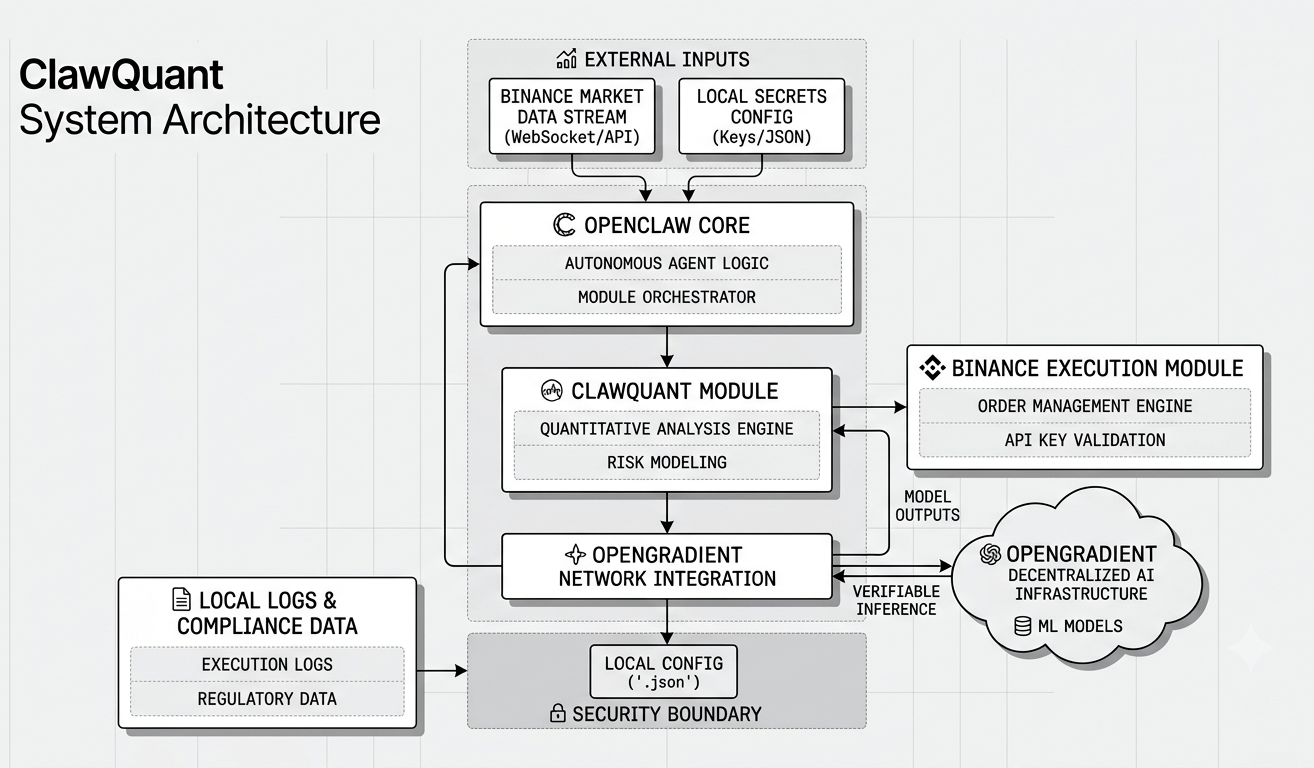
Arquitectando mi proyecto personal paso a paso. Aquí tienes un avance a alto nivel de cómo está estructurado mi entorno local para conectar la lógica de agentes autónomos con modelos de ML descentralizados, perfectamente alineado con la mentalidad de constructor de Binance Square de expandir la inteligencia en cadena. 🧠🌐
El Plano de la Arquitectura:
✴️ Marco central: OpenClaw actuando como el motor autónomo central, orquestando flujos de trabajo generales de agentes y la ejecución. 🦾
✴️ Motor analítico: ClawQuant, el módulo cuantitativo dedicado, diseñado para gestionar la evaluación matemática de riesgos y el modelado de la volatilidad. 📉
✴️ Capa de infraestructura: @OpenGradient Python SDK, transmitiendo inferencias verificables de ML en la cadena directamente al sistema local. ⚡
✴️ Puerta de seguridad: Archivos de configuración locales aislados que garantizan que las claves privadas se lean de forma segura sin hardcodearlas ni exponerlas externamente. 🔒
Como miembro de la comunidad dentro del ecosistema de Binance, mi objetivo es conectar estos avanzados marcos DeAI de Web3 de vuelta en análisis e información accionables en la cadena para la comunidad. 📊🔥
Manteniendo el diseño limpio, modular y estrictamente listo para producción bajo una visión arquitectónica unificada.
En el siguiente post, compartiré cómo gestioné la configuración local segura para mantener las credenciales protegidas mientras mantengo tareas automatizadas. Estad atentos. 🧱
#ClawQuant #BinanceBuilders
#DeAi #QuantitativeAnalysis
$OPG #OPG @OpenGradient
🚀 El plano de ClawQuant 🛠️
Arquitectando mi proyecto personal paso a paso. Aquí tienes un avance a alto nivel de cómo está estructurado mi entorno local para conectar la lógica de agentes autónomos con modelos de ML descentralizados, perfectamente alineado con la mentalidad de constructor de Binance Square de expandir la inteligencia en cadena. 🧠🌐
El Plano de la Arquitectura:
✴️ Marco central: OpenClaw actuando como el motor autónomo central, orquestando flujos de trabajo generales de agentes y la ejecución. 🦾
✴️ Motor analítico: ClawQuant, el módulo cuantitativo dedicado, diseñado para gestionar la evaluación matemática de riesgos y el modelado de la volatilidad. 📉
✴️ Capa de infraestructura: @OpenGradient Python SDK, transmitiendo inferencias verificables de ML en la cadena directamente al sistema local. ⚡
✴️ Puerta de seguridad: Archivos de configuración locales aislados que garantizan que las claves privadas se lean de forma segura sin hardcodearlas ni exponerlas externamente. 🔒
Como miembro de la comunidad dentro del ecosistema de Binance, mi objetivo es conectar estos avanzados marcos DeAI de Web3 de vuelta en análisis e información accionables en la cadena para la comunidad. 📊🔥
Manteniendo el diseño limpio, modular y estrictamente listo para producción bajo una visión arquitectónica unificada.
En el siguiente post, compartiré cómo gestioné la configuración local segura para mantener las credenciales protegidas mientras mantengo tareas automatizadas. Estad atentos. 🧱
#ClawQuant #BinanceBuilders
#DeAi #QuantitativeAnalysis
$OPG #OPG @OpenGradient
Arquitectando mi proyecto personal paso a paso. Aquí tienes un avance a alto nivel de cómo está estructurado mi entorno local para conectar la lógica de agentes autónomos con modelos de ML descentralizados, perfectamente alineado con la mentalidad de constructor de Binance Square de expandir la inteligencia en cadena. 🧠🌐
El Plano de la Arquitectura:
✴️ Marco central: OpenClaw actuando como el motor autónomo central, orquestando flujos de trabajo generales de agentes y la ejecución. 🦾
✴️ Motor analítico: ClawQuant, el módulo cuantitativo dedicado, diseñado para gestionar la evaluación matemática de riesgos y el modelado de la volatilidad. 📉
✴️ Capa de infraestructura: @OpenGradient Python SDK, transmitiendo inferencias verificables de ML en la cadena directamente al sistema local. ⚡
✴️ Puerta de seguridad: Archivos de configuración locales aislados que garantizan que las claves privadas se lean de forma segura sin hardcodearlas ni exponerlas externamente. 🔒
Como miembro de la comunidad dentro del ecosistema de Binance, mi objetivo es conectar estos avanzados marcos DeAI de Web3 de vuelta en análisis e información accionables en la cadena para la comunidad. 📊🔥
Manteniendo el diseño limpio, modular y estrictamente listo para producción bajo una visión arquitectónica unificada.
En el siguiente post, compartiré cómo gestioné la configuración local segura para mantener las credenciales protegidas mientras mantengo tareas automatizadas. Estad atentos. 🧱
#ClawQuant #BinanceBuilders
#DeAi #QuantitativeAnalysis
$OPG #OPG @OpenGradient
3
1
6
262
·
--
🚀 Construyendo la capa de análisis cuantitativo para ClawQuant, integrando mi marco OpenClaw con la infraestructura de IA descentralizada de OpenGradient! 📊
Este script demuestra cómo interactúo con el SDK de Python de OpenGradient para obtener inferencias descentralizadas del modelo de predicción de volatilidad ETH/USDT a 1 hora. Al pasar matrices de velas OHLC en bruto, la red calcula métricas de riesgo cuantitativo precisas para mi agente. 🌐
El Fragmento: 💻
import json
import os
import opengradient as og
def load_private_key():
config_path = os.path.expanduser("~/.@OpenGradient -config.json")
with open(config_path, "r") as f:
config = json.load(f)
return config["private_key"]
def run_claw_quant_inference():
print("Conectando a la red OpenGradient...")
private_key = load_private_key()
os.environ["OPENGRADIENT_PRIVATE_KEY"] = private_key
model_cid = "jKzAHsOHS1zA193_9N-n5H_ljupBjKce08qMLLseRe8"
model_input = {
"open_high_low_close": [
[1, 2, 3, 4], [1, 2, 3, 4], [1, 2, 3, 4], [1, 2, 3, 4], [1, 2, 3, 4],
[1, 2, 3, 4], [1, 2, 3, 4], [1, 2, 3, 4], [1, 2, 3, 4], [1, 2, 3, 4]
]
}
print(f"Enviando solicitud de inferencia al modelo CID: {model_cid}...")
try:
response = og.infer(
model_cid=model_cid,
model_input=model_input,
inference_mode=og.InferenceMode.VANILLA
)
print("\nRespuesta de inferencia recibida con éxito:")
print("-" * 50)
print(response)
print("-" * 50)
except Exception as e:
print(f"\nError durante la inferencia: {e}")
if **name** == "**main**":
run_claw_quant_inference()
Aspectos Técnicos Rápidos: 🧠
* Objetivo del Modelo: og-1hr-volatility-ethusdt (Predicción de desviación estándar para métricas de riesgo avanzadas y precios de opciones). 📉
* Modo de Ejecución: VANILLA (Ejecución directa en la red). ⚡
* Entorno Seguro: Separación limpia de credenciales sensibles utilizando manejo de configuración local aislado. 🔒
Construyendo mi sistema inteligente de gestión de riesgos línea por línea. 🔥
#DYOR 🚨
#OPG $OPG
#DeAI #QuantitativeAnalysis #ClawQuant
🚀 Construyendo la capa de análisis cuantitativo para ClawQuant, integrando mi marco OpenClaw con la infraestructura de IA descentralizada de OpenGradient! 📊
Este script demuestra cómo interactúo con el SDK de Python de OpenGradient para obtener inferencias descentralizadas del modelo de predicción de volatilidad ETH/USDT a 1 hora. Al pasar matrices de velas OHLC en bruto, la red calcula métricas de riesgo cuantitativo precisas para mi agente. 🌐
El Fragmento: 💻
import json
import os
import opengradient as og
def load_private_key():
config_path = os.path.expanduser("~/.@OpenGradient -config.json")
with open(config_path, "r") as f:
config = json.load(f)
return config["private_key"]
def run_claw_quant_inference():
print("Conectando a la red OpenGradient...")
private_key = load_private_key()
os.environ["OPENGRADIENT_PRIVATE_KEY"] = private_key
model_cid = "jKzAHsOHS1zA193_9N-n5H_ljupBjKce08qMLLseRe8"
model_input = {
"open_high_low_close": [
[1, 2, 3, 4], [1, 2, 3, 4], [1, 2, 3, 4], [1, 2, 3, 4], [1, 2, 3, 4],
[1, 2, 3, 4], [1, 2, 3, 4], [1, 2, 3, 4], [1, 2, 3, 4], [1, 2, 3, 4]
]
}
print(f"Enviando solicitud de inferencia al modelo CID: {model_cid}...")
try:
response = og.infer(
model_cid=model_cid,
model_input=model_input,
inference_mode=og.InferenceMode.VANILLA
)
print("\nRespuesta de inferencia recibida con éxito:")
print("-" * 50)
print(response)
print("-" * 50)
except Exception as e:
print(f"\nError durante la inferencia: {e}")
if **name** == "**main**":
run_claw_quant_inference()
Aspectos Técnicos Rápidos: 🧠
* Objetivo del Modelo: og-1hr-volatility-ethusdt (Predicción de desviación estándar para métricas de riesgo avanzadas y precios de opciones). 📉
* Modo de Ejecución: VANILLA (Ejecución directa en la red). ⚡
* Entorno Seguro: Separación limpia de credenciales sensibles utilizando manejo de configuración local aislado. 🔒
Construyendo mi sistema inteligente de gestión de riesgos línea por línea. 🔥
#DYOR 🚨
#OPG $OPG
#DeAI #QuantitativeAnalysis #ClawQuant
Este script demuestra cómo interactúo con el SDK de Python de OpenGradient para obtener inferencias descentralizadas del modelo de predicción de volatilidad ETH/USDT a 1 hora. Al pasar matrices de velas OHLC en bruto, la red calcula métricas de riesgo cuantitativo precisas para mi agente. 🌐
El Fragmento: 💻
import json
import os
import opengradient as og
def load_private_key():
config_path = os.path.expanduser("~/.@OpenGradient -config.json")
with open(config_path, "r") as f:
config = json.load(f)
return config["private_key"]
def run_claw_quant_inference():
print("Conectando a la red OpenGradient...")
private_key = load_private_key()
os.environ["OPENGRADIENT_PRIVATE_KEY"] = private_key
model_cid = "jKzAHsOHS1zA193_9N-n5H_ljupBjKce08qMLLseRe8"
model_input = {
"open_high_low_close": [
[1, 2, 3, 4], [1, 2, 3, 4], [1, 2, 3, 4], [1, 2, 3, 4], [1, 2, 3, 4],
[1, 2, 3, 4], [1, 2, 3, 4], [1, 2, 3, 4], [1, 2, 3, 4], [1, 2, 3, 4]
]
}
print(f"Enviando solicitud de inferencia al modelo CID: {model_cid}...")
try:
response = og.infer(
model_cid=model_cid,
model_input=model_input,
inference_mode=og.InferenceMode.VANILLA
)
print("\nRespuesta de inferencia recibida con éxito:")
print("-" * 50)
print(response)
print("-" * 50)
except Exception as e:
print(f"\nError durante la inferencia: {e}")
if **name** == "**main**":
run_claw_quant_inference()
Aspectos Técnicos Rápidos: 🧠
* Objetivo del Modelo: og-1hr-volatility-ethusdt (Predicción de desviación estándar para métricas de riesgo avanzadas y precios de opciones). 📉
* Modo de Ejecución: VANILLA (Ejecución directa en la red). ⚡
* Entorno Seguro: Separación limpia de credenciales sensibles utilizando manejo de configuración local aislado. 🔒
Construyendo mi sistema inteligente de gestión de riesgos línea por línea. 🔥
#DYOR 🚨
#OPG $OPG
#DeAI #QuantitativeAnalysis #ClawQuant
114
·
--
Cerrar el círculo: de la arquitectura local a información accionable 🌐📊
Ya cubrimos el plano, la seguridad, el flujo de datos de ML y las matemáticas. Hoy, todo el sistema personal se une en un único flujo de trabajo unificado. 🦾✨
Así es como el ciclo completo se ejecuta localmente en mi equipo:
1. Escuchar: El @OpenGradient SDK transmite datos verificables de modelos de ML.
2. Analizar: ClawQuant ejecuta fórmulas estadísticas locales para comprobar la volatilidad y evaluar el riesgo.
3. Ejecutar: OpenClaw coordina el agente para gestionar tareas en función de esas métricas de riesgo, todo impulsado de forma segura mediante configuraciones locales seguras.
El objetivo final como constructor de Binance:
Construir en aislamiento está bien, pero el verdadero valor de Web3 proviene de compartir.
Mi objetivo final es traducir estos cálculos del backend en información on-chain limpia, visual y accionable que pueda ayudar a la comunidad a abrirse paso entre el ruido del mercado. 📊🔥
#ClawQuant #BinanceBuilders
#DeAi #QuantitativeAnalys #OPG $OPG
Cerrar el círculo: de la arquitectura local a información accionable 🌐📊
Ya cubrimos el plano, la seguridad, el flujo de datos de ML y las matemáticas. Hoy, todo el sistema personal se une en un único flujo de trabajo unificado. 🦾✨
Así es como el ciclo completo se ejecuta localmente en mi equipo:
1. Escuchar: El @OpenGradient SDK transmite datos verificables de modelos de ML.
2. Analizar: ClawQuant ejecuta fórmulas estadísticas locales para comprobar la volatilidad y evaluar el riesgo.
3. Ejecutar: OpenClaw coordina el agente para gestionar tareas en función de esas métricas de riesgo, todo impulsado de forma segura mediante configuraciones locales seguras.
El objetivo final como constructor de Binance:
Construir en aislamiento está bien, pero el verdadero valor de Web3 proviene de compartir.
Mi objetivo final es traducir estos cálculos del backend en información on-chain limpia, visual y accionable que pueda ayudar a la comunidad a abrirse paso entre el ruido del mercado. 📊🔥
#ClawQuant #BinanceBuilders
#DeAi #QuantitativeAnalys #OPG $OPG
Ya cubrimos el plano, la seguridad, el flujo de datos de ML y las matemáticas. Hoy, todo el sistema personal se une en un único flujo de trabajo unificado. 🦾✨
Así es como el ciclo completo se ejecuta localmente en mi equipo:
1. Escuchar: El @OpenGradient SDK transmite datos verificables de modelos de ML.
2. Analizar: ClawQuant ejecuta fórmulas estadísticas locales para comprobar la volatilidad y evaluar el riesgo.
3. Ejecutar: OpenClaw coordina el agente para gestionar tareas en función de esas métricas de riesgo, todo impulsado de forma segura mediante configuraciones locales seguras.
El objetivo final como constructor de Binance:
Construir en aislamiento está bien, pero el verdadero valor de Web3 proviene de compartir.
Mi objetivo final es traducir estos cálculos del backend en información on-chain limpia, visual y accionable que pueda ayudar a la comunidad a abrirse paso entre el ruido del mercado. 📊🔥
#ClawQuant #BinanceBuilders
#DeAi #QuantitativeAnalys #OPG $OPG
1
113
Inicia sesión para explorar más contenidos
Únete a usuarios globales de criptomonedas en Binance Square
⚡️ Obtén información útil y actualizada sobre criptos.
💬 Avalado por el mayor exchange de criptomonedas en el mundo.
👍 Descubre perspectivas reales de creadores verificados.
Email/número de teléfono
Temas populares
1
#UKFCAWinsCourtOrderToRecover851400Pounds
3,357 vistas
291 están debatiendo
2
#ChainlinkLaunchesCCIP2WithEnterpriseVerification
14,577 vistas
574 están debatiendo
3
#GoldFallsTo$4144
6,571 vistas
107 están debatiendo
4
#QNTFallsOver40%FromMorningHigh
45,306 vistas
977 están debatiendo
5
#USDTAdds845900HoldersInPast7Days
4,284 vistas
231 están debatiendo
6
#KospiFalls2.7%SamsungSKHynixDropOver5%
10,963 vistas
432 están debatiendo
7
#BitgetCEOConfirms$388MStolenInHack
3,639 vistas
38 están debatiendo
8
#BTCFallsBelow$83000
21,025 vistas
146 están debatiendo
9
#BitgetDetailsSecurityIncidentTimeline
26,699 vistas
596 están debatiendo
10
#BitcoinSpotETFs$2.39BWeeklyNetInflow
8,624 vistas
38 están debatiendo